
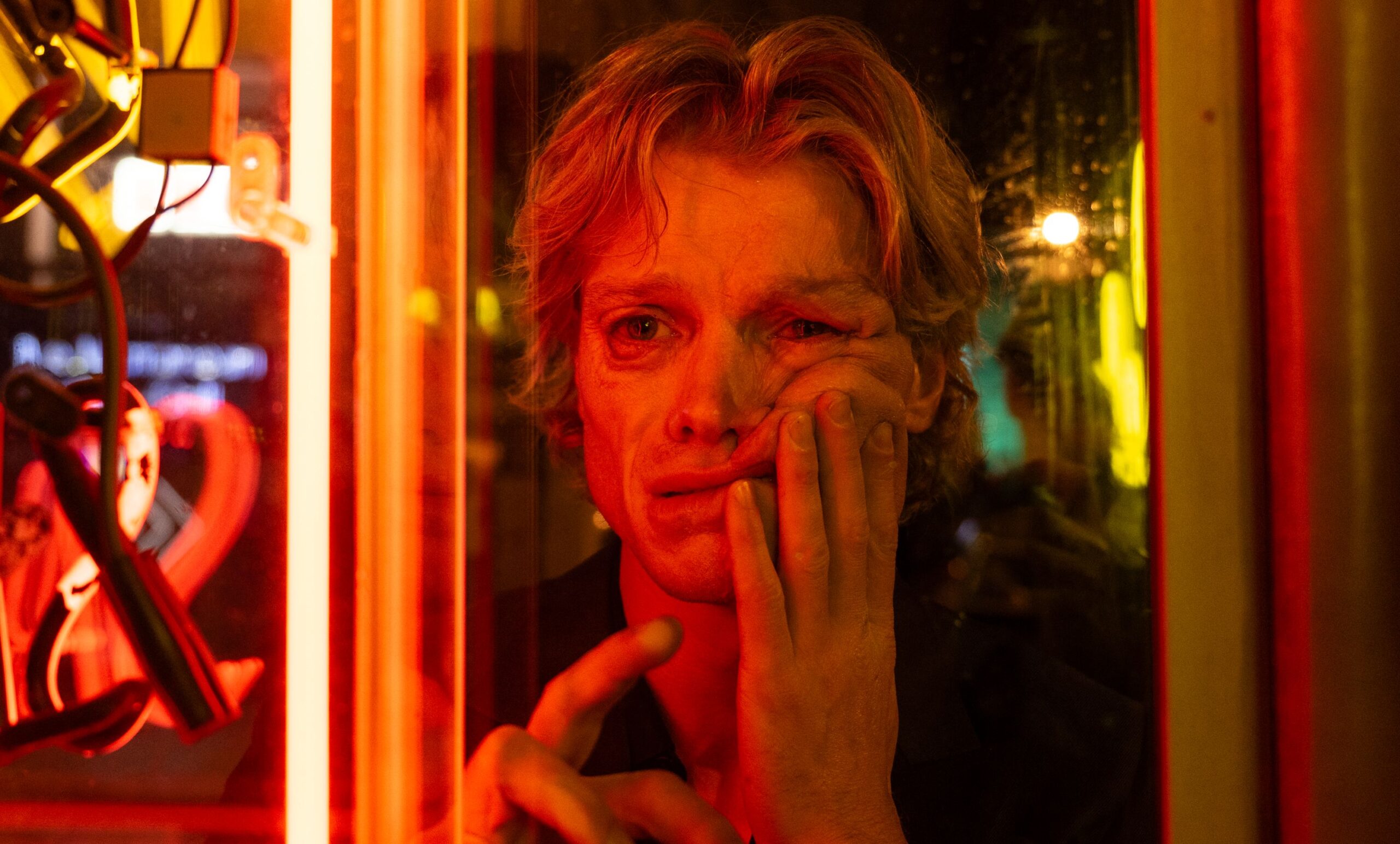
DC Studios’ Clayface is a horror thriller from director James Watkins, starring Tom Rhys Harries in the title role of the cult favourite villain from Gotham’s Rogues’ Gallery. Watkins directs from a screenplay by Mike Flanagan and Hossein Amini, with the story by Flanagan, based on characters from DC.
Matt Hagen’s meteoric rise from Gotham street kid to Hollywood leading man is tragically cut short when a local crime boss’s actions leave him horribly disfigured. Abandoned by his team and with nothing left, Matt seeks out a cutting-edge treatment that miraculously returns him to his former self… but also has troubling physical and psychological side effects that spiral him down a destructive path of all-consuming revenge.
In Conversation With Director James Watkins
Q: How did your journey with CLAYFACE begin?
JAMES WATKINS: I heard about the project and was really interested in it. I got sent an early script. I love the DC world. I loved the journey of this character. And I loved the opportunity to do something in Gotham. And that was the beginning of conversations with [Producers] James Gunn and Peter Safran, and Matt Reeves and Lynn Harris. We discussed how I wanted to find a grounded way of taking the audience on this wild roller-coaster ride so that they never lose sight of the tragic human story with the horror: the emotional tribulations of Matt Hagen as the man becomes a monster. And very early I brought my designer, James Price, onboard—I worked with him a lot when pitching my vision for Gotham and my vision of the story. Our thoughts aligned in terms of how this could be a different take within the DC Universe—an R-rated, slightly edgier and harder horror film, a really dark character journey to take. They really embraced that.
Q: This is a compelling mix of horror, revenge, even tragedy.
JAMES WATKINS: There’s definitely a lot of horror in the story. I think there’s a lot of identifiability in terms of the journey of someone who has everything taken away. We all have those anxieties. Fears of losing our ability to work, our reputations, our identity. These are horrors we can all really identify with—likewise, fears of our bodies going wrong—I think these primal fears make the most compelling horrors, and I wanted to lean into them. I find the dangers of revenge fascinating, because it’s also such a primal human instinct to want to right wrongs. To some extent, we are all hostages to our primal urges and I thought this was an interesting element to Matt’s tragedy: to make the film ask whether we can control our emotions, or do they control us.
JAMES WATKINS: Whether you call them horror or psychological thrillers, I like to operate in the space between those two things. Doing clockwork scares doesn’t particularly interest me. I want to have scares that get under your skin and that speak to anxieties we all share, so when you leave the theater, they stick with you more than just a jump scare. Body horror taps into such a primal fear—essentially fear of our bodies betraying us—and I think both that and Matt’s struggle with his unconscious desires offered such a relatable human story and thematic richness that I could explore through horror set pieces that really get under people’s skin.
Q: How does this all relate to Matt Hagen?
JAMES WATKINS: Our protagonist, Matt Hagen, is a young actor on the up and up. He’s living in Coast City—which is to Gotham what Los Angeles is to New York. He’s on the cusp of getting an Academy Award nomination. He’s a rising star and a nice guy. But I didn’t want him to be too ‘Inside Hollywood.’ It was important to me that he was relatable, that he’d never forgotten who he was and where he came from. He’s polite, he’s loyal to old friends, he’s worked hard to be where he is. He had a tough background, but he’s taken that wound and used it in his acting… in the same way that Caitlyn’s past pain informs her scientific passion.
JAMES WATKINS: He returns to Gotham for a weekend of celebrating with a childhood friend. And through a series of circumstances and bad choices, Matt’s face is disfigured, and his downward journey begins with the loss of his livelihood—an actor’s face really is his instrument and he’s had that taken away. After that, he gradually loses everything, and in a last chance effort, he tracks down Dr. Caitlyn Corr, who’s a revolutionary scientist doing cutting-edge research in nanotechnology. She helps restore his face, but there are side effects—the nanos amplify primal impulses within him. They ramp up his unconscious feelings of hurt and rage and desire for revenge. And that sets him on a dark path to rectify the wrongs done to him by the people around him. He starts out wanting to restore his life, but he winds up chasing down those who ruined it.
Q: What’s fascinating is that this is not what he wanted—he just wanted his life back.
JAMES WATKINS: Yeah, he didn’t intend this. It’s a side effect that he has to learn how to cope with. A worrying new power he and Caitlyn try to understand. Can they harness it as a power for good? Unfortunately, the sort of tragedy of it is that events conspire to turn Matt on this darker path. And there is definitely a point in the journey when he tips over into darkness. In traditional revenge stories, there’s a vicarious thrill: you are on the hero’s side, cheering them on as they walk the line that in real life we daren’t walk. But, with Matt Hagen, it’s interesting to step over that line. It makes for a very interesting dance with the audience to explore at what point a hero becomes an anti-hero. I don’t think he quite reaches the point of being a super villain. For me, the film shows the arrival of Clayface, but there should still be some sympathy towards him. As an anti-hero, he’s done bad things, but he’s not 100% bad. There’s a heartbroken man inside the monster.
Q: Can you talk about the action in the film, specifically in the context of Matt’s burgeoning abilities?
JAMES WATKINS: Action sequences for me become boring when they’re generic, and they’re not tethered to something that’s at the core of the film. It’s like love scenes. They’re boring when they’re two people naked in bed. They’re interesting when they inform character and who these people are. It’s the same with action sequences. They have to be imbued with character. Otherwise, anyone can do anything with enough resources and enough stunts. It becomes about people punching each other and I get ‘stunt fatigue.’ I can’t bear it when heroes in movies suddenly become Navy SEALs when they’re really ordinary people. So, in talking about Matt with the stunt crew and everybody, it was always, ‘He’s an actor.’ It’s not that he suddenly has this incredible ability to fight—but what he does have is this ability to shift, so he can ambush people. And as a brilliant actor, his superpower has a superpower. So, it becomes about the evolution or discovery of his powers throughout the sequence. Stealth, deception, surprise. If someone punches him, and that punch happens to go through his face and the guy hits a wall, then he’s like, ‘Oh, wow!’ He’s learning as we’re learning, and there’s this dark glee when he’s learning it. That ‘dark glee’ was important to me. The playful tone. The ‘permission to enjoy.’ When you are enjoying the ride with Matt, laughing with him, it makes it much more complicated when he crosses a line!
Q: Talk to me about the vision you had for the world of the film, and your process of building it with cinematographer Rob Hardy and production designer James Price?
JAMES WATKINS: I wanted the film to have a certain sort of gritty glamor. I’ve been a fan of Rob Hardy’s cinematography for quite a long time. I like how he’s made films that are very earthy and grounded, and he’s made MISSION: IMPOSSIBLE movies. And I love the work he’s done with Alex Garland. For me, great cinematography is not just about the beauty of the image, but it’s the image telling the story with these emotional kinds of colors: whether that be a super-wide aspect ratio to emphasise isolation or vintage lenses to ‘rough up’ the digital image or the use of the red to signify sex and danger or reflections to mirror Matt’s duality.
JAMES WATKINS: James Price and I have worked together several times. We have a short hand. James fundamentally understands the difference between design, which tells story, and ‘decoration,’ which does not. Gotham is a character: a corrupt city where the trash doesn’t get collected, a city devoid of natural vegetation whose citizens are oppressed under glowering skies and buildings that loom over them so they can barely see the sky. We studied the street photography of New York in the ‘70s, ‘80s and ‘90s. There was an eccentricity to the imagery, because that world was eccentric and all the characters they filmed within that world. There’s a gritty, urban poetry to those images, and I wanted to bring that—in the photography and the palette—into this film. Grey Gotham contrasts with Coast City’s golden sunshine, its bright blue skies and sparkling seas that promise a hope that Gotham never allows.
Producer Matt Reeves
MATT REEVES: After The Batman, I was very excited about this idea. The Batman was not a Batman origin story, but what it did—because it was his first appearance in the city—it was an entree into origin stories for the Rogues’ Gallery. After the movie, when we started working on the script for the next Batman, we began thinking it’d be really exciting to develop a bunch of stories that could be genre stories that related to the Rogues’ Gallery characters and explore their origins. And one of the things I got very excited about was the idea of looking for ways to do really cool, smaller horror films. And [Screenwriter] Mike Flanagan came to me and said he had been a huge fan of Clayface—especially the iteration that came from the animated series—and had a passion about doing a horror story with Clayface at the core. So, we started developing it. And as that story started coming together, becoming this sort of tragic love story—THE FLY meets this horror thriller—James [Gunn] and Peter [Safran] took over DC Studios, and that was one of the first things we pitched to them. They loved it so much, they wanted to make it one of the DCU movies. And we got very excited about the idea of taking this story into the DCU.
Q: Doing a project like this allows for a lot of new kinds of storytelling.
MATT REEVES: I think what’s exciting about this kind of origin story is this idea of doing an anti-hero horror story, where you’re going through a journey with someone and you’re seeing them go into areas that are very… I mean, on top of being a combination of a romance and a sort of horror thriller, it’s also really a revenge story. So, to go on that journey where you’re on that razor’s edge—you know this person’s doing the wrong things but you’re digging into the psychology of it, along with the horror of his actions—that’s a very exciting way to get into the Clayface story. And I think James Watkins did an incredible job with that.

JAMES WATKINS (Director) is a writer and director recognised for his grounded and emotionally charged approach to horror and genre filmmaking. He began his career as a screenwriter with a first look writing deal with Working Title Films. He has also written scripts for Film4, Pathe, BBC Films and Warner Bros. He made his directorial debut with the award-winning cult thriller Eden Lake, winning Best Horror at the 2009 Empire Awards. Most recently, Watkins wrote and directed the Universal psychological thriller vehicle Speak No Evil. He directed the 2012 horror flick The Woman In Black, and the 2016 action thriller The Take. In addition to his film credits, Watkins has also made a name for himself in television; he directed the cult Black Mirror episode ‘Shut Up And Dance’ and co-created and directed the International Emmy-winning crime drama ‘McMafia’, which gave a name to a new ‘McMafia law’ in the UK.
MIKE FLANAGAN (Screenplay by / Story by) is the founder of Red Room Pictures and one of the most influential creators in the industry, having written, directed, edited, and produced numerous successful films and series over the last two decades. As writer-director-editor, he has made eight feature films, including Stephen King adaptations Doctor Sleep and Gerald’s Game, as well as Ouija: Origin of Evil, Hush, Before I Wake, Oculus, Absentia, and most recently, The Life of Chuck, which won the coveted People’s Choice Award at the Toronto International Film Festival. He is also writing, directing, and producing a new take on The Exorcist for Blumhouse and Universal Pictures. In television, Flanagan has served as creator, writer, director, and showrunner on several hit series, including Netflix chart-topper The Fall of the House of Usher, based on the iconic works of Edgar Allan Poe, Emmy nominees Midnight Mass and The Haunting of Bly Manor, the YA series The Midnight Club, and the genre-defining The Haunting of Hill House. Flanagan’s next show, the TV adaptation of the beloved Stephen King book, Carrie, will be released Oct 7th on Amazon.
HOSSEIN AMINI (Screenplay by) is a writer for Film and Television who was nominated for an Oscar for his adaptation of Henry James’ classic novel Wings of a Dove. He also adapted Jude, from Thomas Hardy’s Jude the Obscure which won the Edinburgh Film Festival prize for Best British Film. He also wrote the screenplay for Drive (2011), and Snow White and the Huntsman (2012). In 2014 Hossein made his directorial debut with his own adaptation of Patricia Highsmith’s The Two Faces of January. His limited series, The Alienist, adapted from the novel by Caleb Carr, premiered on TNT in January 2018. His critically acclaimed series McMafia premiered in January 2018 on BBC One. The series won the International Emmy for Best Drama Series. Hossein also wrote several episodes on Star War’s Obi Wan Kenobi (2022).
