

In a career spanning 57 years and over 80 books, King has amassed a towering reputation as one of our greatest storytellers.
56 years ago the journey of the eight-novel epic The Dark Tower began when Stephen King wrote the words: “The man in black fled across the desert, and the gunslinger followed,” sparking an entire universe that makes its long-awaited screen debut, telling of an eternal battle between good and evil, with the fate of multiple worlds at stake.

King began writing what would become The Dark Tower in 1970, when he was a college student at the University of Maine
This is the year he drafted the earliest version of “The Gunslinger,” originally a series of connected short pieces inspired by Robert Browning’s poem “Childe Roland to the Dark Tower Came.”
Although the first published instalment didn’t appear until 1978.
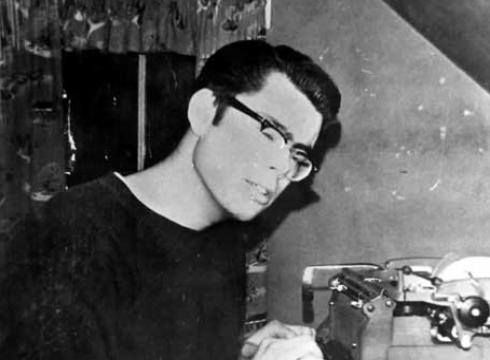
“I started The Dark Tower when I was 22 years old, when I had just graduated from college, so it’s spanned my entire career,” says King. Over time, he says, as the books and stories piled up, “I started to realize that I had all these characters that were referring back to this other world, Mid-World, the world of The Dark Tower. It had become the centerpiece of my fictional universe –characters who showed up in other books would show up in The Dark Tower and vice versa.” Even King himself would become a character in later novels. The Dark Tower series of books would become the nexus for most of the King universe and crosses over into many of King’s other books.
Stephen King’s inspiration for The Dark Tower comes from a fusion of literary, cinematic, and personal sources
The series feels mythic because it is built from mythic sources: a Victorian poem, a cinematic archetype, a fantasy epic, and a medieval legend. King didn’t imitate these influences; he braided them into something that feels both ancient and distinctly American.
Core inspirations behind The Dark Tower
- Robert Browning’s poem “Childe Roland to the Dark Tower Came” — King has repeatedly identified this as the initial spark for the entire saga. The poem’s eerie, quest-driven imagery gave him the idea of a lone wanderer approaching a mysterious tower.
- Sergio Leone’s spaghetti westerns — Especially The Good, the Bad and the Ugly. Clint Eastwood’s “Man with No Name” directly shaped Roland Deschain’s stoic, mythic gunslinger persona.
- J.R.R. Tolkien’s The Lord of the Rings — King has said he wanted to write an American epic with the same sense of scale and mythic sweep. Tolkien influenced the quest structure, world‑building, and even the naming conventions of Mid‑World.
- Arthurian legend — The gunslingers’ lineage from “Arthur Eld” is King’s deliberate echo of the Arthurian mythos, refracted through a dying world.
Additional layers of influence
- Classic Western landscapes and moral codes — The decaying frontier, the code of the gunslinger, and the stark, lonely journey all echo the Western genre’s archetypes.
- King’s own artistic evolution — Later reflections suggest Roland’s long, cyclical quest mirrors King’s own struggles, growth, and shifting creative identity over decades.
The Dark Tower is an eight-novel epic telling of an eternal battle between good and evil, with the fate of multiple worlds at stake.
King was influenced to create his magnum opus by blending together several unlikely sources.
“I was very much under the influence of Lord of the Rings – even though I’m not crazy about elves and orcs and walking trees, I loved what Tolkien did. And around that same time, I saw the movie The Good, the Bad, and the Ugly, and Clint Eastwood’s Man with No Name was also an influence. And there’s a poem by Robert Browning called ‘Childe Roland to the Dark Tower Came,’ and I used that to start an epic fantasy. I wrote the line ‘The man in black fled across the desert, and the gunslinger followed,’ and I didn’t know anything about where he lived, what Mid-World was or how it connected to our world or anything else.”

Danish director Nikolaj Arcel was determined to be the one to bring The Dark Tower to the screen.
It’s an epic that has inspired millions of readers – not least of which was a young boy in Denmark whose imagination was sparked by the events in Mid-World. Now grown, director Nikolaj Arcel was determined to be the one to bring The Dark Tower to the screen.
Growing up with the Dark Tower books, Arcel became so immersed in the stories that the Danish native taught himself English. He recounts, “When I was about 13, there were almost no Stephen King stories translated into Danish. I became infatuated with the few books that I’d read in Danish, even at that age. And so I had to start picking up his English-version novels and I had to teach myself to read adult novel-style English at a very early age. Stephen King taught me English.”
Arcel recalls that when he read The Gunslinger at 17, he was so into the novel that he creating a song, “The Gunslinger,” with his band. (And he still has it on cassette tape.)
For Arcel, the way King weaves together the personal and the larger-than-life elements of the story is why it’s connected to so many readers. “It’s as small as a 14 year-old boy, who has visions, who thinks he’s crazy, and it’s as big as a hero fighting a great villain and trying to save the entire universe. It expands from the very intimate to the very epic.”
And at the center of the story is the Dark Tower. “The Tower is a thing of beauty, it’s a thing of awe, with a powerful presence – it holds the whole world together. I think it’s beyond our comprehension,” says Arcel, “I think every single fan of the books will have their own idea of what the Dark Tower is.”
So who better to ask what it is than the man who created it? “You have to imagine an axle or a spindle, with all of these worlds connected to it,” says King. “You know what happens to a car if you cut the axle – it doesn’t run anymore. The Tower is the stabilizing force, and the Gunslingers are this ancient group of knights dedicated to the idea of protecting the Tower. But they have been wiped out – there’s only one left, Roland. And standing opposite him is an agent of chaos who wants to bring the Tower down.”
“The Tower is a magnetic vortex holding the universes together, and if that Tower falls, the universe goes into anarchic chaos, blackness and demons come out and they take it all over,” says McConaughey. “If that Tower maintains itself, it’s still holding a semblance of balance in the universe. So, what Walter’s going to do is bring down that Tower.”
Because this particular series of novels helped to shape Arcel’s entire artistic sensibilities, he became a perfect choice to direct. “I love films that take us to new worlds, have new ideas and mythologies, and world building,” he says. “Getting this chance to direct a movie of stories that I had dreamt about was incredible – especially coming directly off the boat from Denmark!”
Producer Erica Huggins recalls, “Nikolaj just wanted this project, he knew it well, and the moment we met him we knew he was the right guy. He brought innocence to the project, and he also found his own way into how he would tell the story.”
That way in – Arcel’s vision – was to try to stay true to King’s “mix of modern day and the fantastic. This is what Stephen King does best.”
In The Dark Tower, the fantastical elements would take care of themselves; to make those feel like a Stephen King story, Arcel sought to keep it grounded.
“We had to keep it real; this world is so immense and so complex, and in the novels, at times, even abstract. I really wanted Mid-World, the characters and everything to feel as real as every day. I didn’t want to have some kind of lofty genre and have everyone speaking in odd ways. I wanted it to feel like anybody could take this journey to Mid-World, and understand it, and be there, and feel that these are real people.”
Arcel also wanted the emotional quality of King’s story to permeate the film. “It didn’t feel cynical, or cold; it felt like it was very much about family, friendship, and heart, and the bond of people coming together to fight for the greater good.”
The Screenplay Adaptation
When it came to the screenplay adaptation, because King’s approach is, in his words, so “instinctive” (“I’m not somebody who plans things out in advance,” he says), the filmmakers faced an unusual challenge in bringing The Dark Tower to the screen.
The adaptation had a long, turbulent development history spanning nearly a decade, with multiple studios and creative teams attempting versions before this script was finalised. It wasn’t a quick, contained writing process at all — the screenplay for The Dark Tower (2017) emerged from a decade‑long development cycle, with multiple writers revising, abandoning, restarting, and reshaping drafts as the project moved between studios and creative teams.
The adaptation effort began in 2007, when J.J. Abrams and Damon Lindelof held the rights but ultimately walked away in 2009 because they were “terrified of screwing it up.” In 2010, Ron Howard, Brian Grazer, and Akiva Goldsman took over. Goldsman’s early screenplay work here represents the first major attempt at a full adaptation. Universal halted the project in 2011, and the entire plan collapsed.
From 2011–2015, the project stalled, shifted studios, and underwent multiple rewrites and budget reshaping. These years involved script revisions, reductions, and re-conceptualisations, but no stable greenlit draft. In 2015, Sony and MRC revived the project with Nikolaj Arcel directing. This is when the final writing team — Goldsman, Jeff Pinkner, Anders Thomas Jensen, and Arcel — produced the screenplay that became the 2017 film.
The overall writing journey spans 2007–2017, shaped by shifting visions, collapsing deals, and the challenge of compressing eight novels into one film.
With so much material, where to begin?
“How do you present this to the moviegoing audience so they’ll understand it and feel like they’re immediately in the story, whether or not they’ve read the books?” King asks.
The answer for the screenwriters came in looking at The Dark Tower as a whole, drawing elements from several of the books in the series. “It’s a classical thing – they call it in medias res, which means ‘begin in the middle of the story.’
You begin in the middle and then fill everybody in, and it just moves ahead like a freight train from that point,” King continues.
Not only did King himself bless the screenplay adaptation, which is by Akiva Goldsman & Jeff Pinkner and Anders Thomas Jensen & Nikolaj Arcel; the author was intimately involved in every step of the creative process of the film and an invaluable creative partner throughout the entire process.
Casting of King’s iconic characters: Roland Deschain, the Gunslinger, and Walter, the man in black, the personification of an evil force.
Key to the film, obviously, would be in the casting of King’s iconic characters: Roland Deschain, the Gunslinger, and Walter, the man in black, the personification of an evil force.
Roland Deschain, AKA the Gunslinger, is the last of the long Line of Eld – a legacy of Gunslingers who are peacekeepers and protectors of the Tower, which protects the universe. After the slaughter of the rest of the gunslingers, Roland is now on a quest to save what is left of his world by reaching the mysterious Tower.
“As the last in the line of protectors, Roland is very respected, but by the time we meet him his heart has been broken and blackened,” says Elba. “He’s basically a ghost looking for something he can’t find: The Man in Black, who has goaded and taunted him for years, and who destroyed Roland’s world and in it everyone he loved. On this journey, Roland is propelled by fury to take revenge against his old nemesis.”
Elba says he was excited to take on the role of the Gunslinger as he knew Stephen King to be a creator of deep, complex, and big-universe characters. “He is a very clever, master character builder,” says Elba. “Roland has had a massive journey throughout the books.”
Walter is Roland’s mystical foe and a modern day psychotic who destroyed the Mid-World. He is now on a mission to bring all worlds into chaos, which bringing down the Tower will do.
“The essence of the character is a casual and playful but ruthless and terrifying villain, all while seemingly in total control,” Howard continues. “Matthew McConaughey is the perfect embodiment for the role of the Man in Black – he’s incredibly charming, laid back, and mischievous with deep intensity.”
“Walter has traveled many worlds, throughout many ages – he knows contemporary New York and where he can buy a burger, and at the same time, with his sphere of magic, he can also go to the court of some king,” says Arcel. “His plan for the universe is to bring about the age of the Crimson King – the devil.”
“Walter’s not just a guy with one dimensional evil; he has an interesting way of seeing the world, with a certain delight – even if on the wrong side of the light and dark spectrum,” Arcel continues. “We had a lot of fun with the character and Matthew and I added a lot of layers that were very true to the book – how Walter speaks and moves.”

McConaughey was excited by the opportunity to bring such a dynamic character to life. “It’s an original – it was great that I could come in at the ground level and create a character, and hopefully be part of an original story where I am the author of the Man in Black.”
At the heart of the interplay between Walter and Roland is a dynamic that is both simple and complex. Ultimately, McConaughey says, “Walter is the quintessential bad guy in the mythic battle of good versus evil. If the Tower comes down, Walter takes the seat next to the Crimson King.”
But King has created a multilayered villain in Walter. “Walter walks a fine line with Roland; it’s an interesting little affection that Walter has for Roland,” says McConaughey. “He certainly doesn’t fully believe in Roland’s code of honor and valor and values. But Walter enjoys the game, and he doesn’t want it to end too soon, even if he wins. Roland is the most talented one out there, and when he’s down and losing it, through paranoia or pain, Walter resurrects him, lifts him up, so he stays in the game.”
Still, though Roland and Walter have been locked in this battle for an eternity, from McConaughey’s point of view, it’s been a one-sided battle. “Walter can’t be touched,” he says. “If someone comes at him, he may be a mirage – he might not even be what you think. He doesn’t even break a sweat.”
Between these battling forces comes a young boy from our world who could tip the balance either way. 14-year-old JAKE (Tom Taylor) lives an ordinary life in New York City with his mother Laurie (Katheryn Winnick) and stepfather Lon (Nicholas Pauling). Plagued by outlandish dreams that he doesn’t understand, he draws detailed sketches of otherworldly images which he sees: the Gunslinger, the Man in Black, and the unearthly world in which they live – Mid-World, in which he gets sight of the Tower.

“In many ways, the story is seen through Jake’s eyes, and we’re seeing it in a compelling way because we believe, as he believes, that he might be crazy,” says Huggins. “It’s a terrifying journey that we take with him in the first part of the movie until he realizes that he’s not crazy, he really is seeing this other world, and he’s part of something bigger than himself.
For The Fans
Over the years, Stephen King has established an astounding fan base of die-hard disciples, and the writer has millions of followers on social media. Because the Dark Tower series is the nexus for most of the King universe and crosses over into so many of King’s other books, it was important to the filmmakers to make a few sly nods to King’s other written works which the fans may recognize.
“We had a lot of fun planting hidden Stephen King references in the film,” says Arcel. “I wanted fans to sitting in the audience, thinking, ‘Oh is that from another Stephen King story?’”
Nikolaj Arcel is a Danish filmmaker born in Copenhagen in 1972, known for blending historical drama with sharp genre instincts. He studied at the European Film College before graduating as a director from the National Film School of Denmark in 2001, where his short Woyzeck’s Last Symphony won the Grand Prix at Clermont‑Ferrand. He broke through with the political thriller King’s Game (2004) and achieved international acclaim with A Royal Affair (2012), which won the Silver Bear for Best Screenplay and earned an Academy Award nomination. Arcel later moved into Hollywood with The Dark Tower (2017) and returned to Danish cinema with the acclaimed historical epic The Promised Land (2023). His work is marked by meticulous craft, emotional restraint, and a fascination with power, morality, and mythic storytelling.


Anders Thomas Jensen (Screenplay) is one of Denmark’s most influential screenwriters and directors, known for his darkly comic tone, moral absurdism, and sharply drawn characters. He first gained international attention in the 1990s with a string of acclaimed short films, earning Oscar nominations for Ernst & Lyset (1996) and Wolfgang (1997), and winning the Academy Award for Election Night (1998). Through the late 1990s and 2000s he became the defining voice of modern Danish cinema, writing many of the country’s major hits—including Mifune’s Last Song, In China They Eat Dogs, Open Hearts, Stealing Rembrandt, and Brothers—and establishing a signature blend of violence, tenderness, and existential humour. As a director, he debuted with Flickering Lights (2000) and went on to craft cult favourites such as The Green Butchers, Adam’s Apples, Men & Chicken, and Riders of Justice, often collaborating with Mads Mikkelsen. His work has earned multiple international awards, including an Oscar and the Nordisk Film Award, and he has also ventured into Hollywood as a co-writer on The Dark Tower (2017). Jensen’s films are marked by their offbeat humanity, philosophical undercurrents, and a uniquely Danish blend of brutality and compassion.
Raised in Brooklyn Heights, New York, Akiva Goldsman (Screenplay / Producer) screenwriter, producer, and director whose career spans film, television, and prestige adaptations. He emerged in the mid‑1990s with high‑profile scripts such as The Client and Batman Forever, establishing himself as a go‑to writer for major studio projects. His breakthrough came with A Beautiful Mind (2001), which earned him both the Academy Award and Golden Globe for Best Adapted Screenplay . Goldsman went on to adapt major bestsellers including The Da Vinci Code and Angels & Demons, while also contributing to genre franchises like I, Robot, I Am Legend, and the Star Trek television universe. Raised in Brooklyn Heights by parents who were both clinical child psychologists, he studied at Wesleyan University and later attended NYU’s graduate fiction‑writing program, shaping the literary sensibility that underpins much of his work . Alongside screenwriting, he has directed films such as Winter’s Tale and produced numerous features and series, maintaining a career defined by versatility, commercial reach, and a long‑standing collaboration with major Hollywood filmmakers.


Jeff Pinkner (Screenplay / Executive Producer) is a screenwriter, producer, and television writer whose career has shaped some of the most influential genre series of the past three decades. He studied at Northwestern University and Harvard Law School before moving into television, where he quickly became part of the creative circle around J.J. Abrams. His early breakthrough came on Alias, followed by major work on Lost, where he earned Writers Guild of America nominations for Best Dramatic Series. Pinkner later co‑created and co‑showran Fringe, helping define its blend of science fiction, mystery, and emotional storytelling. In film, he has written or co‑written major studio projects including The Amazing Spider-Man 2, The 5th Wave, Venom, Jumanji: Welcome to the Jungle, Jumanji: The Next Level, and The Dark Tower. His career is marked by long‑standing collaborations with top Hollywood writers and producers, and a consistent focus on character‑driven genre storytelling.
Goldsman, Jeff Pinkner, Anders Thomas Jensen, and Arcel

