
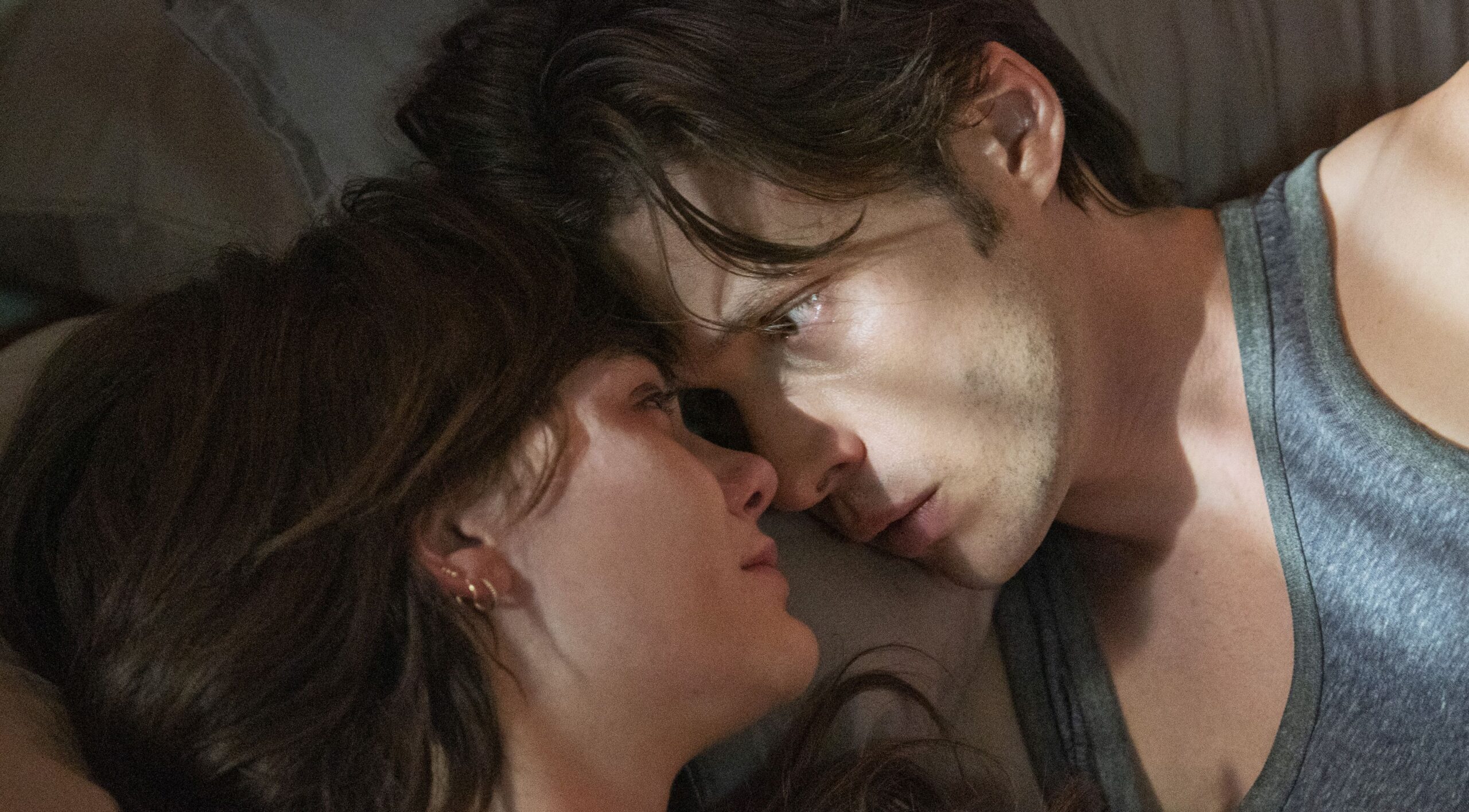
The romance drama Charlie Harper follows two young adults who meet, leave their old lives behind, and attempt to build a future together in a new city.
Tom and Mac met in film school. Tom wanted to be Francois Truffaut and Mac wanted to be John Carpenter. Though they couldn’t be more different, they bonded over a shared love of film and started to expand each other’s tastes. In school, that bond spilled over into their individual projects: They talked through each other’s scripts and sat in editing bays for the other’s short films. Over time, a shared grammar took hold, and a few years after graduating, while Tom was writing studio features and Mac was directing commercials, they decided to make their collaborations official by co-directing the short film ALL THE MEN THAT YOU WOULD SLEEP WITH WERE YOU NOT IN A COMMITTED RELATIONSHIP WITH TYLER WHOM OF COURSE YOU LOVE. Since then, they’ve never looked back, developing projects and creating their first film, CHARLIE HARPER, together.
The screenplay for Charlie Harper was written by Tom Dean.


Director’s Statement:
Film is a medium that lends itself to present tense. Life doesn’t, strangely. Despite being where we always are, we’re almost never, actually, there. Consider the words we use to describe the time we spend in the future: planning, plotting, fretting, yearning. It never ends. Same for the past: remembering, ruminating, pondering, recalling. On and on. Words we have for the present? Being. After that? Nirvana. Everything in between is basically spent somewhere else.
During the earliest stage of developing what would become Charlie Harper, we stumbled into a conversation about nostalgia. First asking: What is it? And then quickly giving up, having learned the hard way that any attempt to answer ‘What is X emotion’ is an endeavor to untangle a paradox. What nostalgia is is what it feels like when you have it, and any attempt to compress that feeling into language creates a kind of ‘observer effect’ whereupon the act of definition dissolves its meaning.
The better question is why we feel it. Other emotions follow a simple logic. Joy, sadness, fear–the whole Inside Out gang, really–offer lessons for our future selves to draw from in a kind of evolutionary game of carrots and sticks. (This make happy; this make sad– proceed…) But nostalgia doesn’t easily fit inside this formula. It’s like a homesickness for the past, except, unlike homesickness, there’s no home to return to. It just sits there beside you, sad and oddly warm— comforting in its way, but, we must admit, not exactly offering much by way of evolutionary utility.
As our conversation continued, we found ourselves sharing stories from relationships we’d had in our late teens through mid-twenties– the period of life where we meet Charlie and Harper; a period commonly associated with turbulent personal change. Trying to navigate that change while also sustaining a relationship with someone experiencing their own turbulence is an agonizing, heartwrenching proposition. And yet as we recalled our own relationships from that time (filled as they were with the aforementioned agony and heartwrench–one ended in marriage, the other in breakup) we each found ourselves aching with fondness. Nostalgic for that time. Not despite the pain it caused but because of it. How? Why? For what purpose?

These are the questions at the heart of Charlie Harper. A story about heartache and love and the way nostalgia reveals their connection by braiding our severed tenses. A story told through memories in the present tense.
As we begin sharing Charlie Harper, our hope is that audiences are left reflecting on the memory of their own great, heartaching romance. And whether those romances found resolution or carry on, we hope this film serves as a quiet reminder to appreciate the staggering and simple gifts we give to—and receive from—the ones we love.
