
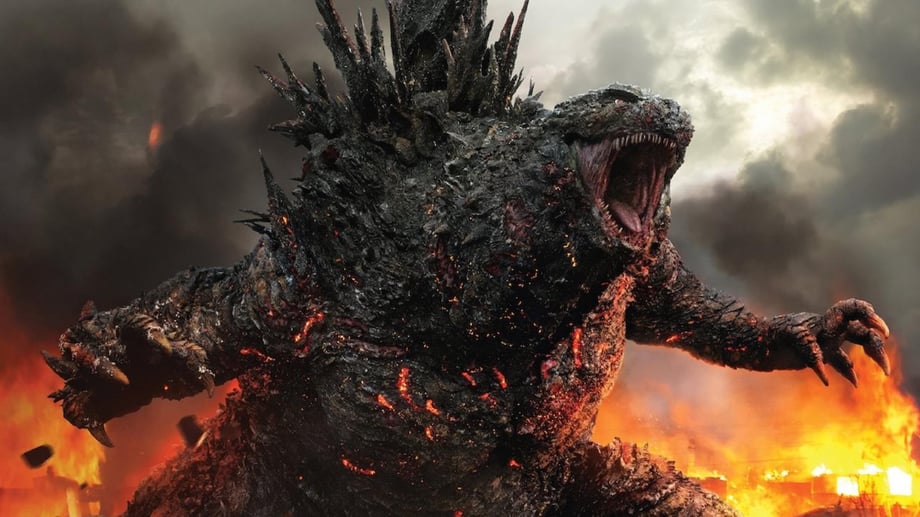
Godzilla Minus Zero (2026), the sequel to Takashi Yamazaki’s acclaimed Godzilla Minus One (2023), is significant not merely as the continuation of a beloved kaiju franchise, but as part of a remarkable revival of Japanese cinema that restored Godzilla to his roots as a symbol of national trauma, resilience, and renewal.
While many modern monster films have focused primarily on spectacle and large-scale destruction, the recent Japanese Godzilla films have distinguished themselves through their emphasis on human stories and emotional depth. Godzilla Minus One was celebrated internationally for reimagining the giant monster as a terrifying force set against the backdrop of post-war Japan, where the nation was already devastated by the consequences of World War II and then plunged even further into despair by Godzilla’s arrival.
The title itself reflected the idea that Japan had been reduced to “zero” by war and then pushed into the negative by the monster’s destruction. Building on this foundation, Godzilla Minus Zero carries the expectation of further exploring themes of recovery, memory, guilt, and redemption.
The significance of the film lies in its continuation of a tradition established by the original 1954 Godzilla, in which the monster functions not only as an entertaining cinematic creation but also as a powerful metaphor. Historically, Godzilla has represented fears surrounding nuclear weapons, war, and humanity’s capacity for self-destruction.
Modern interpretations have broadened this symbolism to include social anxiety, political uncertainty, and collective trauma. What makes the recent Japanese films particularly important is their refusal to reduce Godzilla to a mere action hero. Instead, he remains an overwhelming and almost mythic force, compelling ordinary people to confront their fears and rediscover their courage.
The extraordinary success of Godzilla Minus One demonstrated that audiences around the world respond not only to visual effects but also to stories grounded in authentic human emotion. The film became a critical and commercial triumph, earning widespread acclaim and winning the Academy Award for Best Visual Effects, a historic achievement for the franchise.
Consequently, Godzilla Minus Zero carries considerable cultural weight as the successor to a film that proved Japanese storytelling could stand alongside the biggest Hollywood productions while maintaining its unique identity. The film also represents the enduring relevance of Godzilla after more than seventy years. Unlike many long-running franchises that depend on nostalgia alone, Godzilla continues to evolve, reflecting the fears and concerns of successive generations.
Whether viewed as a monster movie, a historical allegory, or a meditation on survival, Godzilla Minus Zero reaffirms the character’s place as one of cinema’s most enduring and meaningful icons. Its significance ultimately lies in its ability to combine thrilling entertainment with profound emotional and social commentary, reminding audiences that the most memorable monsters are often those that embody humanity’s deepest fears while inspiring its greatest acts of courage.
