
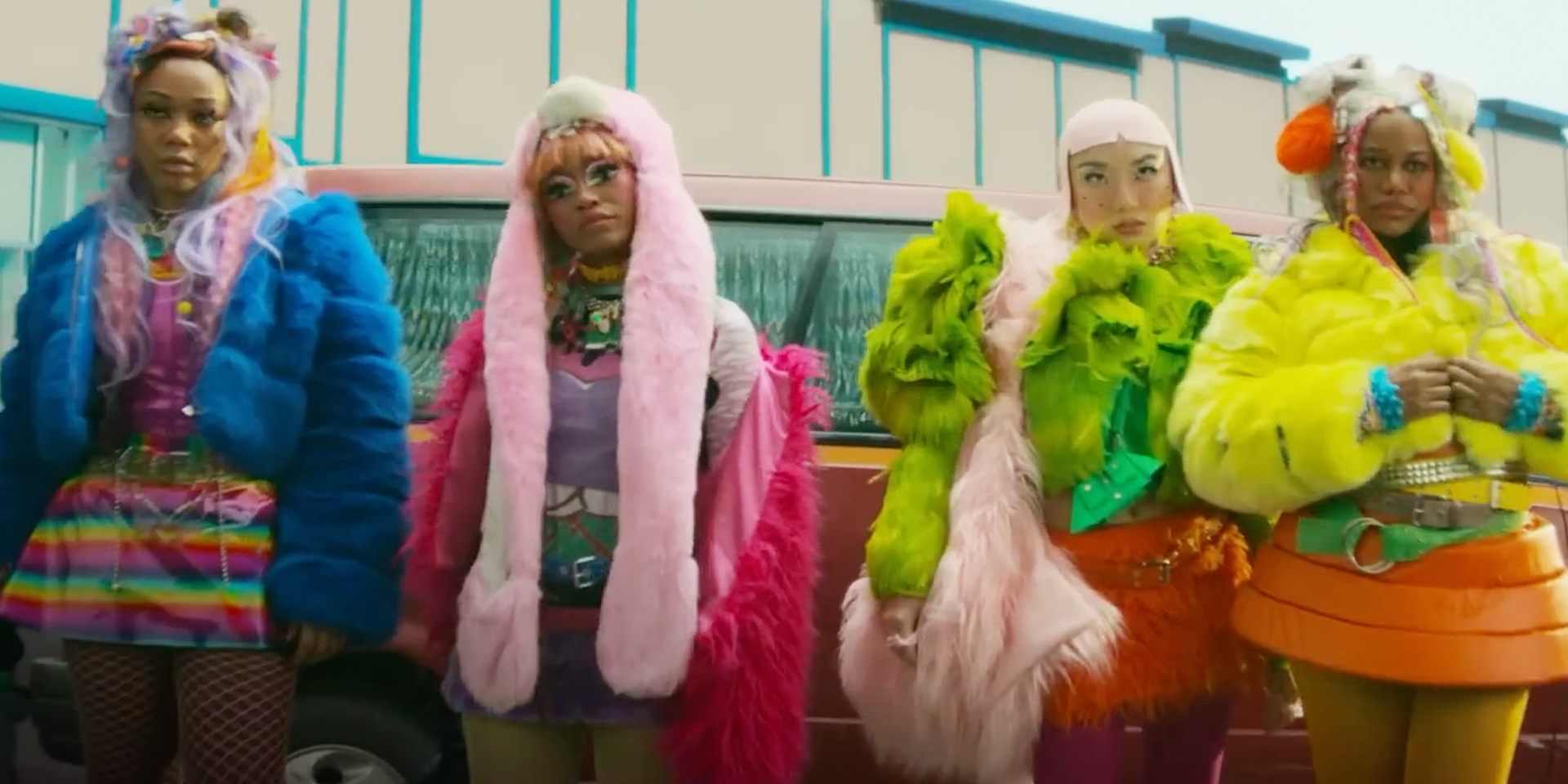
I Love Boosters is a wildly imaginative satire that uses fashion, crime and absurdist humour to explore class inequality, consumer culture, and the relationship between power and desire. Beneath its playful chaos lies a provocative challenge to the economic systems and social values that define modern society.
I Love Boosters is an absurdist crime-comedy written and directed by Boots Riley, known for his acclaimed film Sorry to Bother You.
Boots Riley is a filmmaker, musician, and political activist renowned for his bold satirical style. Following his acclaimed debut film Sorry to Bother You, Riley became known for combining surreal humour with sharp social commentary. His stories often examine capitalism, inequality, race, and labour issues through imaginative and unconventional narratives. I Love Boosters continues this distinctive approach.
The story follows a group of shoplifters known as the Velvet Gang, led by Corvette, who target an influential fashion empire by stealing expensive clothing and reselling it at affordable prices. What they call “fashion-forward philanthropy” becomes a rebellion against a system they view as exploitative, leading them into a surreal and increasingly outrageous conflict with fashion mogul Christie Smith.
The significance of I Love Boosters lies in its sharp critique of consumerism, wealth, and inequality. Beneath its eccentric humour and fantastical elements, the film questions who benefits from luxury industries and who bears the cost of producing the goods society prizes. Through the actions of the Velvet Gang, the story challenges conventional ideas about ownership, value, and economic justice, asking whether systems built on inequality deserve to be disrupted.
The film also explores the power of image and celebrity culture. Fashion becomes a symbol of status, aspiration, and social power, while the characters grapple with idolisation and the influence of public figures. By setting its story within the world of high fashion, I Love Boosters examines how people seek identity and self-worth through material possessions, often at the expense of recognising the labour and exploitation hidden behind luxury brands.
Like much of Boots Riley’s work, the film uses surrealism and comedy to address serious political and social issues. Rather than delivering a straightforward message, it embraces absurdity to expose the contradictions of modern capitalism. Its bizarre humour, imaginative world-building, and unexpected twists encourage audiences to laugh while also reconsidering the structures that shape everyday life.
