
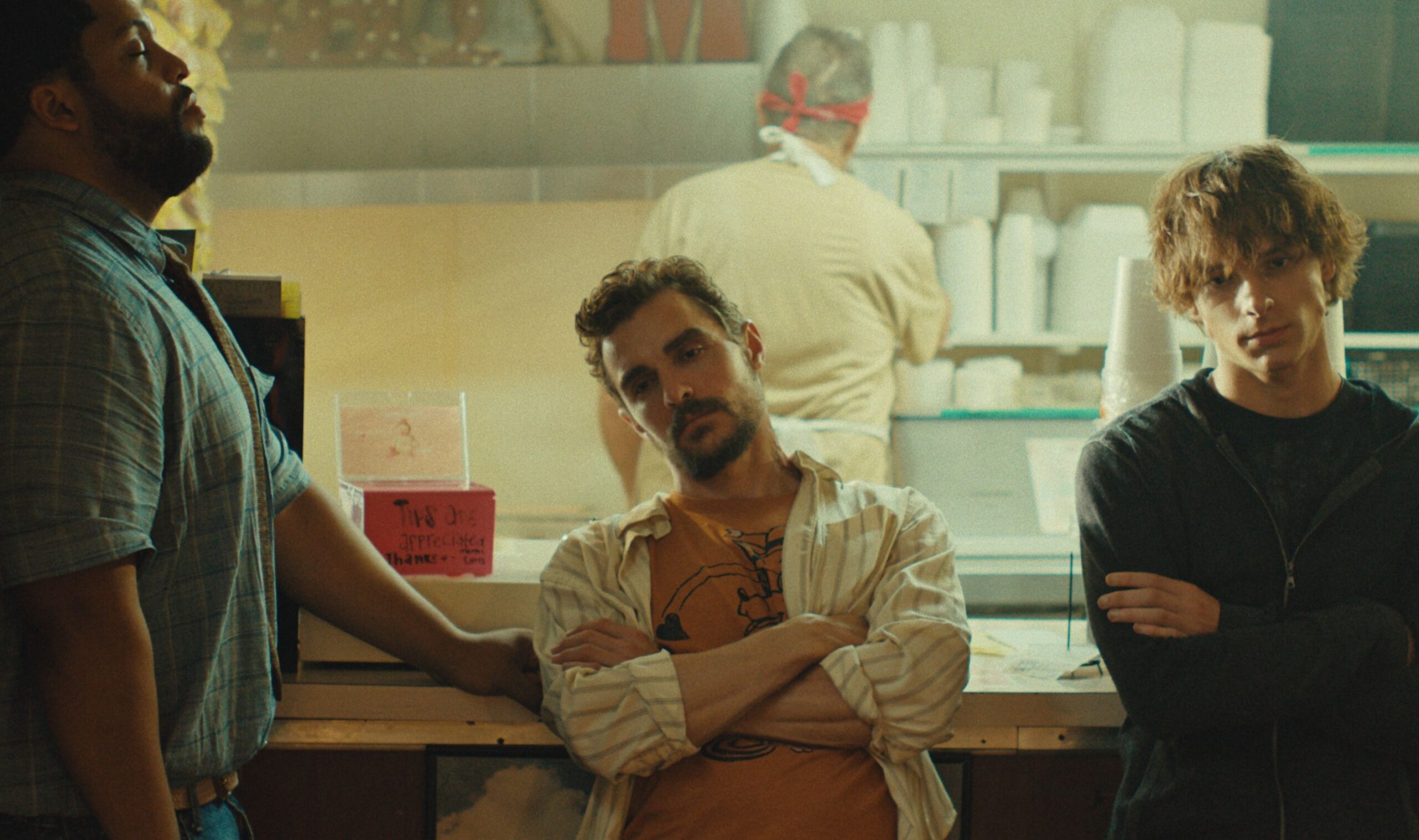
Two rock-bottom drivers transport a wealthy teen to rehab, but their simple job spirals into a chaotic journey of drugs, danger, and crime as their passenger derails their plans.
Written and Directed by Macon Blair. Starring Dave Franco, O’Shea Jackson Jr., Mason Thames, Kiernan Shipka, Killer Mike Render, Nicholas Braun, Peter Dinklage
DIRECTOR’S STATEMENT
My friends and I filmed Idiots earlier last year (2025) in Atlanta. It’s a labor of love. Short money, long hours, sweat equity, cussed determination, you know the drill. I had met the producer Alex Orr many years ago while working on Jeremy Saulnier’s Blue Ruin. We began talking about script ideas and Alex pitched something to do with shady teenager transport operatives. Like teenagers that transport things? No, like people who transport teenagers. Hmm, alright. So, I started a script, and together we had been trying to get it made ever since.
Idiots is a story about two guys with nothing in common (aside from a penchant for making poor decisions) on a strange journey with the troubled teenager they’ve been assigned to deliver to rehab. In the long tradition of road trip movies, things go horribly sideways. Like many indie-ish productions, there have been ups and downs: we almost filmed it in 2017 but things fell apart during pre-production. While discouraging at the time, in hindsight a blessing because it allowed this version of the movie to be the one that got made. And I love this version: it’s the sleazy-sweet earnest-dipshits-on-the-road screwball comedy that I’ve been wanting to make for thirteen years now.
It was always designed to be a broad, scatological, slapstick-y kind of a comedy (exhibit A: our title) but as time went on, and especially after the first version fell apart, it began to resemble more of a film about desperate people trying to do their not-great best, which is always going to be a soft spot for me; and in spite of the characters’ undercurrent of bitterness, I think of it as a fundamentally warmhearted story about found friendships.
The jokes are one thing, but the performances in Idiots are what zaps it to life. I think its greatest special effect is the cast: Dave, O’Shea, Mason, Kiernan, Nick, Killer Mike, Peter D. and a slew of immensely talented actors from Atlanta brought this thing to life with such verve and personality. My hope is that you’d end up liking these characters, or most of them, even if you wouldn’t want to have them in your car. I’m excited for audiences to see these folks blast off.
- Macon Blair, Writer Director
Macon Blair is a multi-hyphenate filmmaker, actor, producer, and writer celebrated for his offbeat, genre-blending storytelling. He first garnered attention as the lead in Jeremy Saulnier’s Blue Ruin (2013) and later delivered standout performances in Green Room (2015), as well as memorable supporting roles in Logan Lucky, The Florida Project, and the blockbuster Oppenheimer. Blair made his directorial and writing debut with I Don’t Feel at Home in This World Anymore (2017), which won the Sundance Grand Jury Prize. In August 2025, his sophomore effort The Toxic Avenger reboot was released to amazing reviews and sits certified fresh on Rotten Tomatoes. The wild/gory/fun update of the cult classic stars Peter Dinklage, Elijah Wood, and Kevin Bacon. Blair’s latest film, Idiots (formerly known as The Shitheads) – is a no-holds-barred road trip comedy starring Dave Franco, O’Shea Jackson Jr., and Peter Dinklage, with Blair serving as writer, director, and producer which premieres at Sundance Film Festival (2026).

