
Visit our YouTube Channel
Evil Dead Burn unleashes the franchise’s most savage and terrifying ride to date, blazing onto big screens with an all-new chapter of carnage and demonic mayhem, a film that drags the iconic franchise deeper into claustrophobic terror while expanding its mythology with fresh emotional stakes.
Directed with ferocious precision by Sébastien Vaniček—the French filmmaker whose breakout horror hit Infested announced him as a new master of tension- and co‑written by Vaniček and Florent Bernard, the film marks the sixth entry in the Evil Dead universe and the third standalone chapter following Evil Dead (2013) and Evil Dead Rise (2023). Vaniček’s approach is both reverent and radical: he honours the franchise’s DNA of possession, body horror, and relentless escalation, yet injects a raw, human vulnerability that makes the terror feel disturbingly intimate.
For more than four decades, Evil Dead has terrified and thrilled audiences with its singular blend of horror, humor and invention.
With Evil Dead Burn, writer-director Sébastien Vaniček and co-writer Florent Bernard deliver a bold new chapter that deepens the mythology while quite literally setting the franchise ablaze.
Set within a fractured family haunted by grief, guilt and something far darker, it returns to the primal fear of the originals while expanding the series’ emotional and visual scope.

For more than four decades, Evil Dead has terrified and thrilled audiences with its singular blend of horror, humor and invention. With Evil Dead Burn, writer-director Sébastien Vaniček and co-writer Florent Bernard deliver a bold new chapter that deepens the mythology while quite literally setting the franchise ablaze. Set within a fractured family haunted by grief, guilt and something far darker, it returns to the primal fear of the originals while expanding the series’ emotional and visual scope.
From the outset, the creative team aimed to make a film that feels immediate and alive—a story that burns with both spectacle and intimacy. Producer Rob Tapert, who has guided the franchise since its earliest days, describes the new entry as a domestic nightmare turned war zone: a family gathering that collapses into carnage. He saw in Vaniček’s approach the same reckless energy that first defined Evil Dead—a willingness to take risks, to find terror in the ordinary, and to make audiences flinch and laugh in the same breath.
Following their collaboration on Vaniček’s debut feature Vermines (Infested)—the Venice-selected creature thriller that announced his kinetic, character-driven style—filmmakers reunited to reimagine Evil Dead for a new generation. Vaniček and Bernard’s screenplay fuses the franchise’s trademark intensity with a deeply human pulse: a story about love, loss and the way grief mutates under pressure. It is both homage and reinvention, crafted with the anarchic spirit that has always defined the series.
Shot on soundstages and locations across Auckland, New Zealand (the production heartland that has hosted every modern Evil Dead installment)* Evil Dead Burn draws on the artistry of a world-class local crew. Their tactile craftsmanship grounds the film’s supernatural horror in physical reality: real fire, real chaos, and real sweat. Every department, from design and stunts to effects and cinematography, channels the franchise’s handmade ethos into something visceral and contemporary.
As its title suggests, Evil Dead Burn is fueled by transformation. It’s a story – and a production – built on combustion: creative, emotional, and literal. What begins as family tension ignites into a full inferno, marking a blazing new chapter in one of cinema’s most enduring horror legacies.
*The filmmakers acknowledge the assistance of the New Zealand Government’s Screen Production Grant.

Reinventing Evil: A Vision of Fire, Family & Fear
French filmmaker Sébastien Vaniček first drew international attention with his debut full-length feature Vermines (Infested), a creature-driven thriller that fused character drama with high-voltage horror. For his second feature, Evil Dead Burn, Vaniček reunites with co-writer Florent Bernard to take on one of cinema’s most storied franchises.
Vaniček describes the experience as both exhilarating and daunting. “It starts with an idea in your apartment in Paris,” he laughs, “and then cut to a crew of 200 in front of three people on fire, in front of a house on fire. It’s pretty crazy, but I’m surrounded by people who are really professional and very good at what they do, so I’m in good hands.” That willingness to push the limits of scale and ambition—without losing the handmade, physical spirit that defines the franchise—became his creative compass.
He recalls the first ideas that coalesced into their script: “Florent and I wanted to primarily focus on characters—fear and action would come later. So, we started with our homework and watched all of the early Evil Dead movies. We realized that they were obviously talking about death, but also about love. So, we thought that death of love would be an interesting idea, and the impact on the in-laws would be kind of universal for an audience.”
From the beginning, the pair’s goal was to deliver something recognizably Evil Dead yet distinctly their own. “There’s obviously an immense respect for the franchise and the fans. That’s where it all begins. But I know I wasn’t offered this role to simply do what the audience expects. Respect is also understanding that Evil Dead is not just about blood and chainsaws. There is so much more to explore in this world. And that’s what I was determined to do. Understand the rules and twist them. Try to bring a new vision, a unique vision to this amazing world. I think that’s why Evil Dead is still alive today – because it gives directors freedom to do new things.”
For Bernard, writing within such an iconic universe was both a challenge and a privilege. “Writing for Evil Dead is an honor and a great pleasure,” he explains. “It’s a recipe with very specific ingredients—horror, action, comedy, suspense, drama—but it’s up to us to decide the right dosage of each.”
Vaniček and Bernard’s partnership thrives on a shared fascination with character and tone. “Sébastien and I talk a lot, mainly about the characters,” Bernard says. “They’re the ones who bring the film’s themes. We talk about them as if they were people we know, asking how they would react in different situations, and then we throw them into the worst possible scenarios.”
Vaniček agrees: “Every day there was a surprise, every day something crazy to shoot. I was not going to a warehouse or an office job… I was making a movie, and that’s incredible.”
Their creative chemistry was what drew producer Rob Tapert (along with franchise originals Sam Raimi and Bruce Campbell) to the young French filmmaker. “One of our team came back from a festival and said, ‘You need to see this new movie, Vermines,” recalls Tapert. “Sam, Bruce and I watched it and we all went, ‘Oh, that’s the guy for the next chapter of Evil Dead.’ In Vermines, he created real tension with minimal resources, which is exactly the kind of fresh vision we want to keep the franchise alive and growing.”
At the heart of Evil Dead Burn is an intimate story of grief and legacy, framed within the larger mythology of the Evil Dead universe. “The connection with [Evil Dead II original character] Raymond Knowby felt essential,” Bernard notes. “[Evil Dead Burn character] Joseph’s narrative arc is about the burden of family legacy—a burden we also carry when writing an Evil Dead. It’s a giant toy chest, and we chose the toys that amused us the most and made the most sense for our characters.”
The result is a tale that turns familiar Evil Dead iconography—the Book of the Dead, the Deadites, the Necronomicon—into symbols of generational trauma and twisted familial bonds.
But before dropping the audience into the iconic world first witnessed in Raimi’s 1981 touchstone, filmmakers wanted to lure viewers in. Per Vaniček: “I wanted to immediately introduce a new generation of characters, and have the audience quickly understand their connections to each other: two brothers, a wife, a girlfriend, a birthday, a cake, a party. There’s a lot of dynamism in that scene, which I think prepares the audience for the energy of what’s coming next.”
Bernard describes the writing process as an exercise in restraint and reinvention. “The biggest challenge was avoiding too much repetition of what had already been done. That’s why we decided not to use a group of friends or people of the same age. But a woman uprooted and stuck with her in-laws—especially after a loss that affects them all—carried real narrative promise. Sébastien didn’t want to make the bloodiest Evil Dead, but definitely the most violent one.”
Together, Vaniček and Bernard have made a film that embodies the franchise’s enduring appeal: fearless, physical and unashamedly cinematic. “If audiences walk out of the theatre feeling like they’ve experienced a horror-action film that’s emotional and funny, as well as uncomfortable and exhilarating,” says Bernard, “that’s what we’re aiming for.”
The Keeper of the Dead: Passing the Torch to a New Generation
Few names are as synonymous with the Evil Dead legacy as Rob Tapert. From producing Sam Raimi’s original cult classic in 1981 to championing its 21st-century resurgence, Tapert has remained the franchise’s steady creative steward by balancing outrageous horror with wicked humor and a fiercely practical filmmaking ethos.
For Tapert, Evil Dead Burn was a chance to bring a bold new voice into the fold.
Tapert recalls that Vaniček arrived with a clear, distinctive vision that was energetic, technically daring, and grounded in story. He admired the young director’s willingness to push beyond convention while staying faithful to the DNA of the series. It was exactly the kind of inventive spirit, he notes, that has kept Evil Dead alive for more than four decades, saying: “I know we’re no longer those young punks… and we have to trust the new young punks to bring something to the audience.”
Tapert was also drawn to Vaniček’s instinct for scale and movement. “Shooting things as a oner has become super popular in all filmmaking,” he says. “Sébastien has a horror oner, and it was something incredibly special. They filmed the rehearsal, and I sent a little shot off my phone to Sam Raimi, who wrote back, ‘Oh my God, it’s a whole new genre—“joy-or”—joy and horror all in one.’” That single sequence, Tapert says, encapsulates what makes Evil Dead Burn distinctive: an audacious mix of artistry, risk and visceral thrill.
For Tapert, the enduring power of Evil Dead lies in its ability to evolve with each new creative voice. Every installment, he says, carries the fingerprints of its filmmaker: from Sam Raimi’s anarchic invention to Fede Álvarez’s ferocity and Lee Cronin’s dark wit. In Vaniček, Tapert recognized a director who could honor that legacy while pushing it somewhere new. Evil Dead Burn, he believes, continues the franchise’s tradition of fearless reinvention with a story that feels both fresh and unmistakably Evil Dead.
On the Edge of Darkness: A Handheld Descent into Horror
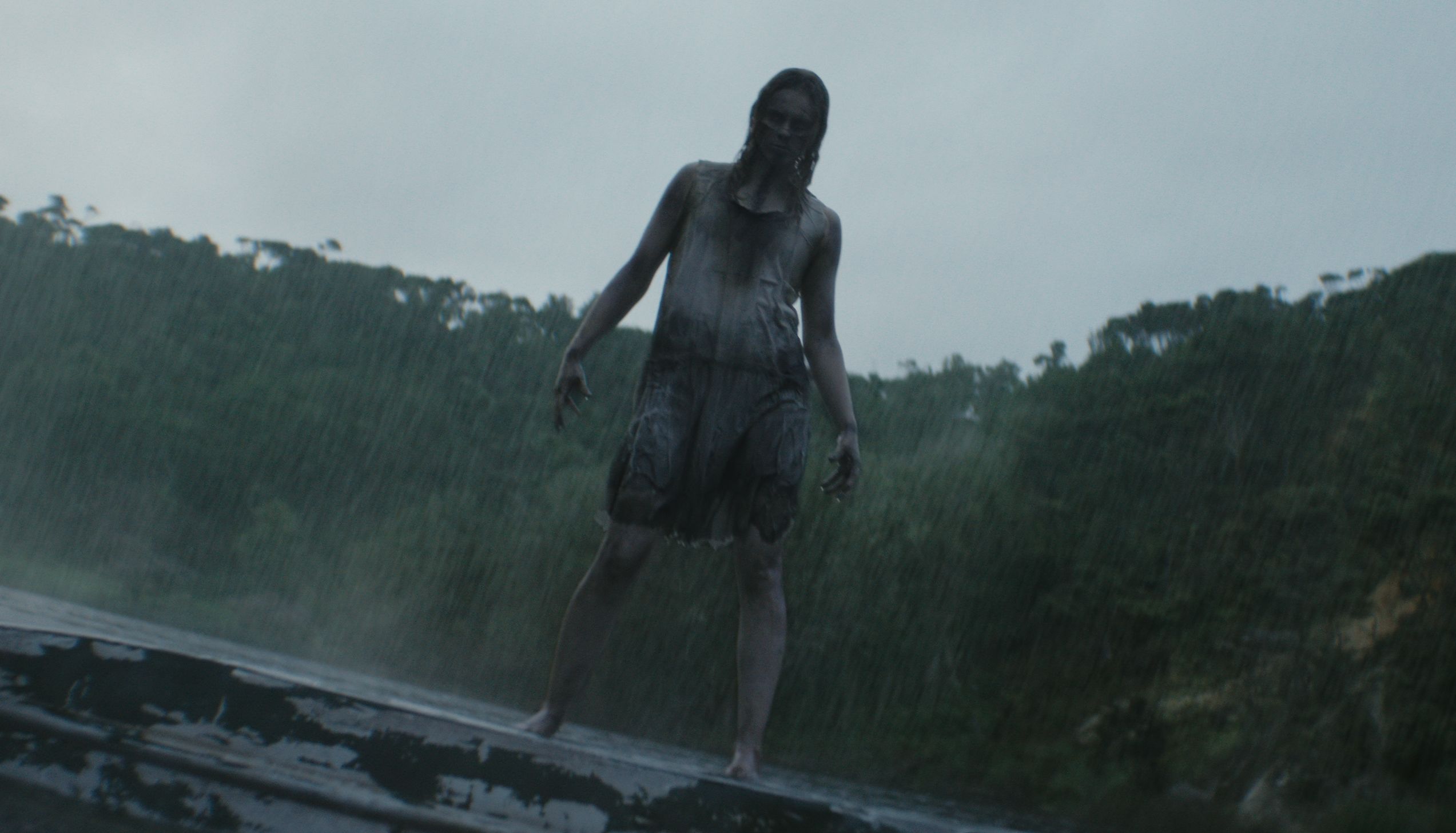
Director of photography Phil Lozano brings a handheld, organic realism to Evil Dead Burn—a visual language built on movement, texture and shadow. Lozano explains, “Séb really wanted the movie to be always handheld and very much organic-looking. Basically, an overcast movie—there’s no sun in the whole thing, and that creates the atmosphere and the mood we wanted for the entire film.”
The collaboration with writer-director Vaniček was defined by energy and ambition. “Sébastien is crazy, just pushing the limits all the time,” he laughs. “In prep, I thought, ‘Oh, we’re not going to be doing half of what he’s imagining.’ But we did everything. It’s so fresh and universal—a mix of real, emotional storytelling and entertainment for everyone.”
Visually, Evil Dead Burn palette is deliberately stripped back and, per Lozano, walks “on the edge of the darkness. A lot of the color palettes were kind of desaturated. Séb definitely didn’t want saturated colors. Flames were an important topic, but otherwise we embraced the darkness. When you can’t see much, your brain starts to imagine what’s hidden. It makes the audience think about what they’re not seeing, and that’s what’s scary.”
That principle extended to every frame. He says, “We were always embracing the low light. There’s almost no static shot—Séb wanted the camera to breathe, to be handheld, organic. It’s very immersive for the audience.”
Even the ambitious one-take sequence followed the same philosophy: “Usually, I’m not a big fan of oners, because they can feel like showing off, but this one is so generous for the audience. So much is happening in the foreground and background. It’s intense and emotional.”
Fire, both literal and symbolic, became one of Lozano’s biggest collaborations with special effects. “The movie’s called Evil Dead Burn, so I definitely didn’t want the fire to be VFX or fake,” he says. “Shooting real fire looks real, and on set, it’s immersive for the actors. You can’t compare that with CG flames. We used a lot of real fire.”
For Lozano, the result is a film that’s raw and immediate, a descent lit by flicker and breath. He closes, “We tried to shoot real stuff, practical, generous, not fake. We took real artistic choices in-camera, and I hope it gives audiences an immersive, generous experience—something you can only really feel on the big screen.”
Rot, Decay and Domestic Terror: Building a Charred House of Nightmares
Production designer Nick Connor shaped Evil Dead Burn’s haunting physical world: a home decaying from the inside out. Having worked on two previous Evil Dead films, he knew the series’ visual DNA well. Connor says, “Having worked on a couple of Evil Dead projects already, they’re invariably just caked in blood. This one felt not as bloody, but very violent, and that contrast was the big shift. It’s not about the gore—it’s about the violence of the world.”
From his earliest talks with Vaniček, Connor understood that the rot had to feel organic—a house mirroring a family’s slow collapse. “Séb always talked about wanting it to feel like the rot is setting in from the inside, much like possession,” he explains. “We built this backstory where on the top floor there’s a water cylinder that’s been leaking for 30 years and that has just slowly seeped into the house. That allowed us to build a column all the way through the three-level set, where the damp and mold and peeling wallpaper could spread. The scenic department loved it.”
That physical decay extended to the film’s subdued palette. Connor recalls, “Séb set the challenge very early on to achieve an in-camera desaturated look. We tried to pull the warmth out of the wood tones and play into a muted color palette—soda blasting, painting furniture, even joinery—to give the film more of a European feel. Once you start going too dark, things just become black holes, so it was about controlling the tone in-camera.”
Across the sets, Connor and his team layered personal traces of a family once full of life. Per the designer: “Our set dressers had a great time. Those little bits—kids’ drawings on the wall of the cellar because the grandfather didn’t want them drawing inside, scraps of carpet pinned on the stairs to keep them safe—they all build that sense of a family that once cared but has decayed. It’s only when our story begins that you start to see the rot truly set in.”
The exterior house, found in rural northwest Auckland, provided the perfect base. He explains, “It was a house that had been used for other films, but this one got the last bite of the cherry. It was about to be chopped into nine bits and relocated, so we had free rein, from browning off grass and swapping out stained glass for our own, to adding peeling paint and heavy aging. We even matched the interiors to it, taking the newel posts and trims straight from the location. When you’ve got something great, you roll with it.”
Fire, as both image and theme, became a defining contrast: “We’re sitting in a very desaturated world until something goes up in flames. Those moments of extreme contrast hit harder because of that restraint. Everything you see is real flame, photographed for compositing—that was Seb’s vision from the start.”
For Connor, Evil Dead Burn continues the franchise’s legacy of tactile, handcrafted horror. He summarized, “Every Evil Dead has its own special sauce. Fede’s film was radical, Lee’s took it vertical, and this one pulls it into a huge, decaying country house. They’re all unique, but they share the same DNA.”
Real Fire, Real Fear: The Mechanics of Mayhem
Special effects supervisor Brendon Durey is no stranger to Evil Dead mayhem. After overseeing the blood-soaked chaos of Evil Dead Rise, he returns to take the franchise into fire and tar. His mandate this time: make it real. Durey explains, “What we do is mechanical, physical special effects. The in-camera, real stuff, not computer or prosthetic make-up. We’re the department that actually makes things move, burn and bleed on set.”
When Durey first read the script, he sensed a shift in tone. He says, “On Evil Dead Rise, we went through more than six metric tons of fake blood. Sébastien wanted to approach this one differently, with less gore, but more violence between the characters.”
Safety dictated everything: “We mostly used propane for flames, because you can turn it off. Once you’ve sprayed liquid fuel and lit it, you’re in for the duration. Propane gave us precision and keeps the cast and crew safe.”
Even with that control, Evil Dead Burn tested his team’s limits. Durey notes with a smile, “Séb’s uncompromising—he’s into the details. He knows exactly what he wants and pushes until we get it right.”
It was a reunion of veterans behind the camera. Durey notes, “We’re working for a great mentor of mine, Rob Tapert, with whom I’ve worked for thirty years, and many of the other HODs, too. People like Clint Elvy in stunts or Jane O’Kane in prosthetics—we all worked together on Xena thirty years ago, so we know each other’s capabilities and work as a team. When we do a blood gag, we pre-vis everything and test it exhaustively before rolling. When stunts do a body burn, we provide the fuels and the fire cover. It’s all about precision and trust.”
For Durey, the reward is simple: the realism that defines Evil Dead. He comments, “You can feel it when it’s real. That’s what these movies are about—the energy of real elements, real danger, real reactions. It’s messy, unpredictable, and completely alive.”
Flesh, Fear and Transformation: The Art of the Deadites
For New Zealand-based make-up and effects designer Jane O’Kane, Evil Dead Burn offered the kind of challenge that rarely comes along: a chance to balance beauty and brutality. Per O’Kane: “I thought it was inspiring, chaotic and a prosthetic artist’s dream—really a playground to play in with lots of challenges, but I was up for it.”
From the outset, O’Kane responded to Vaniček’s siren’s call for precision. She recalls, “Sébastien’s passion from the very beginning was infectious. His attention to detail was inspiring and challenging, and I really felt like we were going to make something not only chaotic and gory, but also beautiful.”
That meticulousness guided the work from the first design tests to the final day in the prosthetics trailer. O’Kane approached possession not as a supernatural curse, but as something organic, a disease consuming its host from within. “I kind of wanted to visualize that they had some form of infectious disease consuming them. The possession was like a contagion—from where their initial wounds were, how they died—and we did it through building layers of this infection.”
Rather than drawing from horror references, she turned to nature. “It was probably more inspired from the real world—textures of decay and rot—to give layers and some interesting angles on the make-up in general.”
Capturing realism without losing performance was central. She notes, “The most challenging thing with prosthetics is always finding the sweet spot between the actor’s performance and the realism of the gore. Not wanting it to sit on them, but come from them, so the performance can still come through.”
O’Kane credits long-standing creative partnerships that achieve this prescribed precision. “We’ve got a long history of figuring out rigs—blood rigs that come from prosthetics. Quite often, there’s blood rigs that we just automatically now put into our prosthetics, knowing what [SFX supervisor] Brendon Durey will be utilizing.”
In the workshop, she again collaborated with makeup and prosthetics co-designer and supervisor Jason Docherty, whom she calls “the brains behind all the prosthetics that we collaborate on—usually complex builds. Jason manages that for me.”
For O’Kane, Evil Dead Burn stands as a celebration of craft, carnage and camaraderie: “Long-time fans of the Evil Dead franchise will appreciate the gore and the twisted, chaotic humour. It hits all the beats of classic horror—but it’s also got story.”
A Dance with Fire: Crafting Chaos Through Control
Coordinating the stunts on Evil Dead Burn fell to stunt supervisor Clint Elvy, a longtime collaborator within the Evil Dead and Xena creative family. The film’s physical demands were extreme even by franchise standards—a blend of practical effects, pyrotechnics and raw performance that pushed both precision and nerve. “Everything in this movie had to feel believable,” Elvy says. “Séb didn’t want slick choreography. He wanted chaos—the sense that a fight could go wrong at any second. It’s messy and unpredictable, and that’s what makes it terrifying.”
Collaboration defined every major set piece. Elvy explains, “On a film like this, stunts, special effects and cinematography all overlap. Phil wants to see everything through the lens, Brendon’s got live flame in play, and Séb wants to stay handheld and in the action. So, we rehearsed it like theatre. Everyone learns the rhythm, then we let the chaos happen safely.”
The film’s practical approach extended to falls, fights and vehicular gags. He points out, “The car fight was crazy. You put three people in this restricted space and put together a fight that lasts for three minutes non-stop. We had rigs going off, airbags firing, people slamming into sunroofs—it was pretty intense.”
For Sébastien Vaniček, “That was one of the coolest scenes to shoot, to be honest. You really need to have the short movie vibes to be able to shoot it in the days we had. Basically, take the camera and be like, ‘Do this. Do that. Go there. I’ll do that. You do this.’ The rest of the work was done by the amazing stunt crew we had—they rehearsed a lot for the crazy things they needed to do in this really close space. We did what we call the previs to know where I would put the camera, how I would shoot that moment, where that stunt would be and where the actors would be. And that’s how we did that. It was pretty intense, pretty cool, and a lot of fun.”
Elvy’s long-standing history with producer Rob Tapert spans more than three decades, a trust he says allows the stunt team to design ambitiously while keeping safety paramount. That principle guided the film’s climactic oner, the continuous sequence threading violence and panic through multiple floors of the set. The supervisor says, “Every breakaway, every collapse, every hit had to land on cue. It was a marathon, but when we got it, you could feel the electricity on set.”
Vaniček closes, “When I started working on Evil Dead Burn, the big challenge was to do something unique and special for an audience that is used to basically all the darkest stuff you can watch in a theater. So how do I bring something unique and something they’ve never experienced? And that’s where I started to think about our cinema in France. And I think something I brought was the legacy of the French extreme. It’s not just about the gore and violence; it’s also about how you shoot it. And I wanted the audience to be completely immersed in this violence and to be completely involved in everything. It’s like the whole movie has to be visceral and not just having fun watching people getting hurt. But I really wanted the audience to be hurt by the movie, to feel the movie physically. So, I think that’s something I tried to bring in. I hope that’s something that they will feel in the theater.”
He quickly adds, “The first movies you do when you are young and you have a camera and you want to do short movies are horror movies. So, when you are an adult and you have a little bit of money to do them, that’s great. That’s a childhood dream.”
SÉBASTIEN VANIČEK (Director / Written by) is a French writer-director and rising voice in contemporary genre cinema. He made his feature directorial debut with the 2023 film Infested (original French title Vermines), which he wrote and directed. The film tells the tense and visceral story of a deadly spider outbreak in a Paris suburb – a genre premise that doubles as commentary on social neglect and marginalization.
Infested premiered at the 2023 Venice International Film Festival as part of the Critics’ Week sidebar and was met with strong critical attention. The film went on to win Best Picture and Best Director at the 2023 edition of Fantastic Fest, positioning Vaniček as an exciting new figure in the global genre space. It was also nominated for the César Award for Best First Film, a notable milestone for a debut feature.
In 2024, Vaniček was tapped by Ghost House Pictures – the genre-focused production banner led by Sam Raimi and Rob Tapert – to direct a new installment in the iconic Evil Dead franchise. The film, titled Evil Dead Burn, was shot in New Zealand in 2025 and is scheduled for theatrical release July 2026.
With the critical success of Infested and his leap onto a major horror franchise, Sébastien Vaniček has quickly emerged as a filmmaker whose work combines visceral tension, sharp social perspective, and a bold genre sensibility – marking him as a compelling new voice in international genre cinema.
FLORENT BERNARD (Written by) is a French screenwriter and director. He first made a name for himself online through his short films and comedy sketches, which gathered millions of views, before moving on to work in television and cinema. Passionate about comedy and genre filmmaking, he is behind the success of the comedy series La Flamme (2020) – the French remake of Burning Love – and won the Grand Prix for Best Film at the Alpe d’Huez Comedy Festival with his feature Meet the Leroys (2024), in which he directed Charlotte Gainsbourg. He later met Sébastien Vanicek while co-writing the film Infested (2023), before collaborating again on Evil Dead Burn (2026). He is currently working on his second feature film as a director, as well as the screenplay for the next adaptation of the cult French comic book Astérix.
FILMOGRAPHY: The Twelve Tasks of Astérix (Coming soon); Starlette, also director (2027); Evil Dead Burn (2026); Meet the Leroys, also director (2024); Infested (2023); Le Flambeau – Les Aventuriers de Chupacabra (2022); Jack Mimoun et les secrets de Val Verde (2022); La Flamme (2020); Bloqués (2015).

