
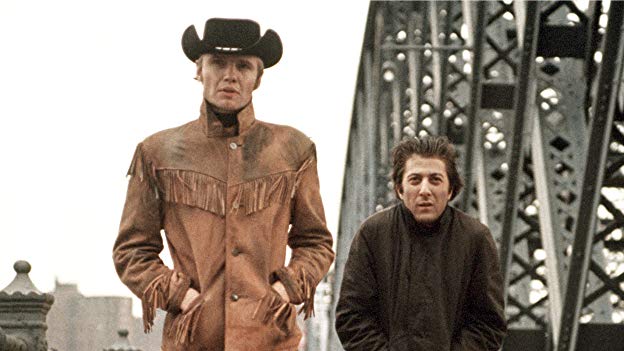
When Midnight Cowboy first appeared on screens in 1969, it shattered Hollywood conventions and dared audiences to confront a side of America often left in the shadows
With its haunting portrayal of two lost souls struggling to survive in the unforgiving streets of New York, the film became more than just a cinematic milestone—it became a mirror to a nation caught between hope and disillusionment. At a time when cultural upheaval and social shifts were rewriting the rules, this gritty masterpiece exposed the loneliness beneath the cowboy swagger and the tender humanity buried inside urban decay.
The screenplay for Midnight Cowboy was written by Waldo Salt, adapted from the 1965 novel by James Leo Herlihy. The film was directed by John Schlesinger, a British filmmaker known for his emotionally rich and socially conscious storytelling.
Salt’s script won the Academy Award for Best Adapted Screenplay, and Schlesinger took home Best Director—both contributing to the film’s historic win as Best Picture. Their collaboration helped shape one of the most daring and influential films of the New Hollywood era.
Midnight Cowboy follows Joe Buck (Jon Voight), a naive Texan who arrives in New York City dressed as a cowboy, hoping to make it big as a male prostitute. Instead, he’s met with harsh realities and urban indifference. Struggling to survive, he forms an unlikely bond with Ratso Rizzo (Dustin Hoffman), a sickly con man with dreams of escaping to Florida. As their friendship deepens, the film explores themes of loneliness, identity, and the collapse of the American Dream—culminating in a heartbreaking journey that redefines both men’s understanding of connection and survival.
Through its haunting depiction of post-60s urban alienation, it exposes the harsh realities that crush idealism. It carved out a bold new path for cinematic storytelling.
Selected for preservation in the National Film Registry, it stands as a turning point in New Hollywood: a movement that championed director-driven vision and experimentation.
Its avant-garde editing, dreamlike sequences, and raw performances offered a new emotional intensity in film, influencing future classics like Taxi Driver.
At its core, Midnight Cowboy remains a poignant study of identity, masculinity, and connection, culminating in one of cinema’s most unforgettable endings.