
Visit our YouTube Channel
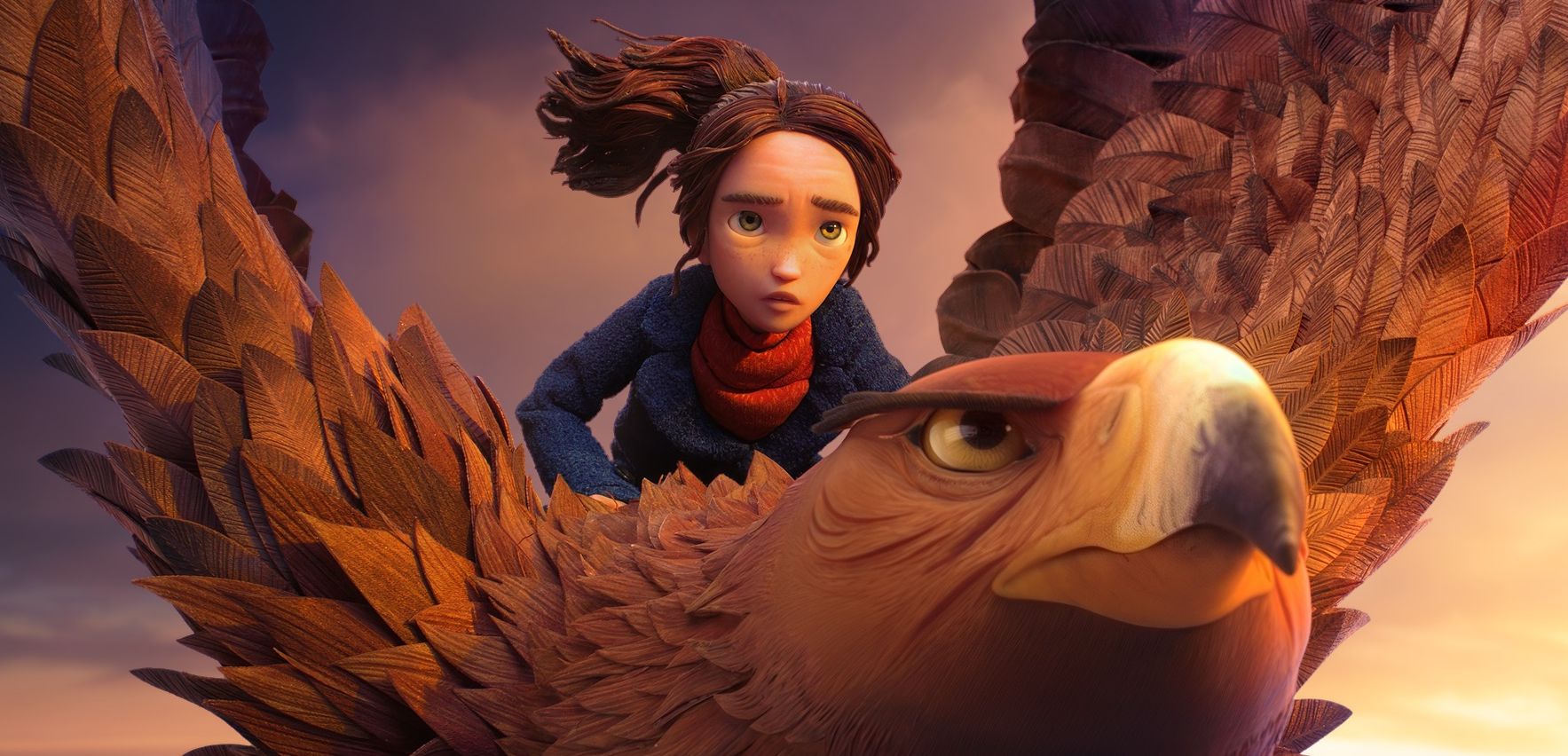
Wildwood is an epic stop‑motion animated fantasy film directed by Travis Knight and written by Chris Butler, adapted from the acclaimed novel by Colin Meloy and Carson Ellis.
The greatest achievement of handcrafted filmmaking is when audiences stop seeing the craft and begin believing the performance
For decades, audiences have celebrated stop-motion for the visible traces of the artist’s hand. With
Wildwood, LAIKA pursued something different. The hand never disappeared from the making of the film. It simply disappeared from the audience’s awareness, allowing performance, rather than technique, to become the emotional point of connection.
“We wanted the emotions in Wildwood to feel true, and recognisably human. Keen feeling doesn’t come from spectacle. It comes from honesty. That belief is woven into every performance, every gesture, every change of light. Our movie was made by hand, a frame at a time, and I believe the audience can feel that human presence in the image. But the craft is never the point. The feeling is the point. Technique is just how we communicate something intimate and alive. We don’t make these movies so people will see the work behind them. We make them so, for a little while, they forget the work entirely and believe in the life in front of them.” — Travis Knight

Director Travis Knight has opined that stop-motion animation, one of cinema’s oldest art forms and first visual effect, is the closest thing to real magic in the movies. Although the foundational principles of stop-motion have remained unchanged over the past 125 years, LAIKA’s artists and technicians have developed a revolutionary, state-of-the-art approach to stop-motion that pairs time-honored techniques with groundbreaking innovation. With each of the studio’s successive films, LAIKA has expanded the thinking around what’s possible to achieve in stop-motion animation. The Portland studio serves as a kind of idea incubator, where some of the most talented professionals working in the film industry today research and develop proprietary techniques that can be used to tell the most epic and emotionally engaging stories imaginable.
As LAIKA’s largest scale project to date, requiring roughly 230 practical puppets across 132 sets, Wildwood saw the studio continue to push the boundaries of stop-motion animation in ways both large and small—from staging the biggest battle sequences ever attempted to making nearly imperceptible tweaks to the puppets’ bodies so that they might feel that more lifelike. “What we’ve tried to do in each one of our movies is progress realism and give our characters new life, and it’s really subtle but groundbreaking,” says LAIKA’s Oliver Jones, Head of Character & Practical Effects.
The story’s true transformation isn’t a spell; it’s recognition. Prue begins convinced that there is no magic in the world. By the end, she sees that reality and fantasy aren’t opposites, but rather one reveals the other. Accepting the reality of Wildwood’s secrets leads her to understand her parents and herself with more compassion. Curtis, who accepted the unreality of Wildwood right from the start, comes away grounded in the belief that he has much more to offer the world. Wildwood brings its characters—and us—back to where we started with new eyes. The world outside hasn’t shifted; our perception has. That’s the quiet miracle at the heart of this film: realising that magic was never somewhere else. It was right here all along, waiting at the edge of the map, or at the end of your driveway, or on your front doorstep.

MESSAGE FROM LAIKA: Twenty years of artistic evolution guided by a simple belief: Stories matter.
Since the beginning, we believed that stories help us make sense of the world. They give shape to our fears and our hopes. They remind us that courage rarely looks like fearlessness, that love often asks something difficult of us, and that even in our darkest moments, there remains the possibility of grace.
Those are the stories we’ve always aspired to tell. Over twenty years, the films we’ve made may differ wildly in style, tone, and setting, but they share a common belief: that the most extraordinary worlds are only meaningful if they illuminate something true about our own.
Wildwood continues that tradition.
On its surface, Wildwood is a grand fantasy adventure, but like all the stories that have inspired us most, its true concerns are profoundly human. It’s a story about grief and love. About the impossible tension between holding on and letting go. About discovering that the world is more complicated, more beautiful, and more interconnected than we imagined. It’s a story about hope and courage and fear, and the impossible choices love sometimes asks us to make.
While much has changed over the past two decades, we brought this story to life with the same fundamental methodology we used on our very first film, Coraline: stop-motion animation, a medium that wears its humanity openly.

We believe there is something profoundly human in the act of making something with great care by hand. Every film we make is built by hundreds of artists working patiently, one frame at a time. Every frame bears the imprint of the artists who brought it to life. Every puppet is a physical object. Every set exists. Every costume was stitched by human hands. Every expression required someone to lean over a puppet, steady their breathing, move an object a fraction of a millimetre, and believe that the accumulation of thousands of almost imperceptible gestures might someday convince a stranger that an assemblage of steel and silicone possesses a soul.
That’s a ridiculous thing to believe. But we believe it.
And yet, the handcrafted nature of our work is not an end in itself. It’s an expression of the devotion,
curiosity, and humanity that each artist brings to the screen. For more than two decades, that has remained unchanged. Technology evolves. Techniques improve. Tools come and go. But the destination is always the same.
To tell stories that live with people long after the lights come up. Stories that remind us that darkness and
light are not opposites but companions, that ordinary people are capable of extraordinary things, and that love remains the most transformative force we know.
Those stories matter. We believe Wildwood is one of them.

After her baby brother is abducted by a murder of crows, headstrong teenager Prue McKeel (Peyton Elizabeth Lee) launches a desperate rescue mission into the Impassable Wilderness—an enchanted forest hidden just beyond Portland, Oregon. Joined by her hapless but loyal classmate Curtis Mehlberg (Jacob Tremblay), Prue navigates a world of talking animals, bandits, and powerful figures driven by grief and ambition. As the pair is drawn into a conflict threatening the balance of the forest itself, Prue must discover the strength and belief she never knew she possessed. If she hopes to save her brother and protect Wildwood’s fragile future, she will have to risk everything. From Oscar®-nominated and BAFTA®-winning LAIKA, Wildwood is a sweeping adventure about love, sacrifice, and the magic that reveals itself when we dare to look beyond the familiar.
Director’s Statement from Travis Knight
When people ask how long I’ve been making Wildwood, I usually say sixteen years. That’s technically true.
The more honest answer is that I’ve been making it my entire life. Long before there was a screenplay or a puppet or a camera, there were the stories my mother read to me. Tolkien. Lewis. Baum. Carroll. Stories that insisted the ordinary world was only ordinary because we hadn’t learned how to look at it properly. That somewhere just beyond the edge of the familiar, hidden behind the trees or around the next corner, wonder was patiently waiting.
Wonder was indeed waiting for me when I first encountered Colin Meloy’s unfinished manuscript for
Wildwood. Long before it found its way into the world as a published novel, Colin’s beautiful prose cast its spell on me. Within a handful of pages, I experienced that rare, unmistakable sensation every creative person secretly fears.
“Oh no. This one’s mine.”
Not legally, of course. Spiritually. Like accidentally making eye contact with an abandoned French Bulldog.
You’re taking it home. You don’t know where it’ll sleep. Or how much it’ll cost. Or whether it’ll destroy the
furniture. But the decision has already been made.
I fell in love immediately.
Then I saw Carson Ellis’ illustrations. No one sees the world quite the way Carson does. She seems to
illustrate the world not as it is, but as it feels to remember it. Trees loom higher. Winters feel colder.
Summers more golden. Childhood stretches toward myth without ever losing sight of the dirt beneath your fingernails. Memory and imagination coexist at the same time. It’s glorious, and it somehow made Wildwood even cooler.
And then I realised the story unfolded in Portland, Oregon. My hometown. Which is a little like discovering The Lord of the Rings only to learn Rivendell is just off Burnside Street, the Balrog occasionally plays indie folk festivals, and Aragorn insists on brewing his own ethically sourced single-origin coffee.
It was extraordinary. It was too good to be true. We absolutely had to make this movie.
Naturally, we acquired the rights to the book. Naturally, we discovered we had absolutely no idea how to
make it. Because wanting to make something and being capable of making it are two entirely different things.
I suppose that’s one of adulthood’s less enjoyable discoveries.
So Wildwood waited.
Not passively. Forests are never passive. They grow while appearing motionless. They gather strength
underground long before branches announce themselves to the sky. Seasons pass through them like slow
thoughts. Everything important happens beneath the surface first.
So Wildwood waited.
Not because it wasn’t ready for us, but because we weren’t worthy of it yet. Sometimes stories know things before we do. Some arrive precisely when you need them, others arrive decades before you’re capable of understanding what they’ve been trying to tell you.4
During those sixteen years we made other films. Each one taught us something. Each one expanded us in
ways both obvious and invisible. We learned new techniques. Solved old problems. Invented new ones.
Failed often enough to become slightly less afraid of failure.
And still Wildwood waited.
Almost without realizing it, gradually, painfully, we became the filmmakers Wildwood required us to be. It
wasn’t because we became more skilled, though I hope we did. Rather, it was because we learned to truly
listen to what the story was asking of us. Along the way, I think I finally came to a clear understanding of what makes the LAIKA process so special, and what makes stop-motion so unique.
I could speak about armatures and replacement faces, silicone skins, miniature costumes, motion-control
cameras, or the astonishing ingenuity of the artists who build entire civilisations no larger than a dining table.
All of that is true. But it’s not the real answer.
The real answer is care.
The thing about stop-motion is that every single thing you see exists because another human being cared
enough to make it. Every frame bears witness to a human decision. Someone sculpted that tree. Someone
stitched that tiny coat. Someone mixed exactly the right shade of green for a leaf that drifts through the
corner of the frame for less than a second before disappearing forever. Nothing simply happened. Everything was cared for into existence.
There is something quite moving about that.
In an age increasingly defined by speed, where moving images are conjured by a few keystrokes, where
entire worlds materialise with a click of a mouse and imagination itself is automated, stop-motion promises something different. It reminds us that some things are worth taking your time for. That attention has value.
That devotion leaves fingerprints. Sometimes quite literally.
We painted most of those out.
But their presence lingers all the same. I wholeheartedly believe that the process of making art remains in the art itself. And in Wildwood, embedded in every frame is the humanity of those who made it. In a strange way, every frame of every shot in every movie is an extraordinary act of faith. Hundreds of people gathered together to insist that tiny handmade puppets can make complete strangers laugh, cry, hope, grieve, and maybe see the world a little differently. When you say it out loud, it sounds completely ridiculous.
And yet…
There they are. Doing exactly that. And after grinding away in the puppet mines for over twenty years, I’ve
become convinced that the world is held together by people doing ridiculous things with unreasonable
conviction. Planting trees beneath whose shade they’ll never sit. Building cathedrals they’ll never see
completed. Spending sixteen years moving puppets less than an inch at a time because they believe
someone, somewhere, might feel a little less alone.
Ridiculous. Magnificent. Possibly the same thing.5
Sixteen years passed. The forest grew. So did we. Looking back, I don’t think we spent sixteen years giving life to the film. I think the film spent sixteen years giving life to us.
Which sounds like something you might find embroidered on an expensive cushion.
But occasionally the expensive cushion is right.
Welcome to Wildwood.
And if you happen to see a crow looking at you with detached superiority… Don’t worry.
They’ve always been like that.
Travis Knight, President & CEO, LAIKA, Director & Producer, Wildwood
INSIDE THE STORY: An epic fantasy as an act of love
Wildwood begins with a terrible, impossible thing: a murder of crows carries Prue McKeel’s baby brother Mac into the forbidden wilderness beyond Portland. Prue does what love sometimes requires of us. She follows. That choice draws her across the boundary of the world she knows and into Wildwood, a place of beauty and danger, old sorrows, and gathering war. What begins as a desperate rescue mission becomes a journey into the hidden life of the forest, and into the darkness and light that reside in all of us.
Prue’s journey first unfolded in the pages of Colin Meloy’s New York Times bestselling novel, brought vividly to life by Carson Ellis’s extraordinary illustrations.
Together, they created a world that transformed the Pacific Northwest into a striking land of fairy tales and myth. It is into that world that Prue ventures, accompanied by her sweetly awkward classmate Curtis Mehlberg, only to discover that the forest is far more than untamed wilderness. It is an ancient civilization poised on the brink of conflict, shaped by the Dowager Governess Alexandra, whose overwhelming grief over the death of her son has set an entire realm on a tragic course. As Prue’s search for Mac grows increasingly urgent, she realises that to save her brother’s life, she will need to risk her own.
Drawing on the timeless tradition of fantasy literature while remaining unmistakably contemporary, Colin Meloy’s novel captured readers with its richly imagined world and emotional honesty.
Among them was Travis Knight, President & CEO of Portland-based stop-motion animation studio LAIKA.
With its compelling heroine, dazzling array of memorable characters and settings and dizzying narrative
scope, Knight felt strongly that the novel would make an ideal project for LAIKA, and he sparked to the idea of adapting the book for the screen long before it was ever published.
“What struck me about Wildwood was that it felt both timeless and entirely of the moment,” Knight recalls. “It had the sweep and strangeness of the great adventures and fairy tales I loved as a child, but there was something bracingly contemporary running beneath it. It was funny and frightening, lyrical and unruly. It could be an eco-fable in one moment, a political satire the next, and then suddenly become a breathless adventure or something intimate and deeply emotional. You could feel the distant influence of writers like Tolkien and Roald Dahl, but Colin and Carson had created a world with its own peculiar rhythms and personality. I knew immediately I wanted to make it. The terrifying part came shortly afterward… realising the scale of what they had imagined and wondering how the hell we could bring it to the screen without diminishing any of its wildness, beauty, or soul.”
Knight realised that the scale of the narrative was beyond what was cinematically possible in stop motion at the time, though that considerable challenge was an undeniable part of the appeal. He and a small group of artists and technologists continued to develop the project while LAIKA’s cinema presence expanded with more released films. That sixteen-year creative incubation period allowed LAIKA to perfect the language of handmade storytelling supported by proprietary tech advances, essential in the studio’s determination to bring stop-motion animation’s most ambitious project, Wildwood, to fans worldwide.
The Screenplay
To pen the screenplay, Knight turned to his longtime collaborator Chris Butler, who had written ParaNorman, Kubo and the Two Strings and Missing Link and was a director himself (ParaNorman, Missing Link). When he first read the novel in 2013, Butler was enchanted, and daunted, by the richly drawn worlds. “With every movie, we try to push the boundaries, but this book was sweeping in scope and, frankly, very frightening as a movie-making proposition,” says Butler.
Given that Wildwood would be his first ever adapted screenplay after a career of original movie scripts, Butler felt that it was important to hew as closely to the source material as possible. He also sought to distinguish this modern-day fairy tale from its many illustrious predecessors—whether such towering literary classics as Alice in Wonderland or more sci-fi inflected favourites like A Wrinkle in Time, all stories about courageous female heroes who mature through their experiences in alien worlds.
Reflecting LAIKA’s 20-year history of walking a different path with each film, Butler was determined that
Wildwood should resist fantasy’s familiar conventions.
“For me, it was always about finding the reality in the fantasy.” Chris Butler
That philosophy shaped every aspect of the adaptation. Rather than treating Wildwood as an escape from
reality, Butler grounded the story in recognizable emotional truth, allowing its extraordinary world to feel
lived-in, consequential, and deeply human. As Butler recalls, “I started thinking about what would this fantasy world be like? Not what would it be like in a typical animated movie. If a fantasy world was real, what would that feel like? Suddenly, talking animals- you don’t quite know where you stand with them. They’re not all cute doe-eyed creatures singing songs, and that was what interested me. If a coyote could talk, what would it say?”
In subverting some of fantasy’s most well-worn tropes, Butler had one important ally—the character of Prue herself. Rather than the typical sort of wide-eyed young protagonist, Prue is a savvy heroine who is well versed in how fairy tales operate. Once she enters the Impassible Wilderness searching for Mac, she’s focused on her mission to retrieve her brother, rather than becoming distracted by the oddities of the world she’s stumbled into.
“With Prue, I really leaned into the idea that this is a young teenager who knows this kind of story—she’s a teen in a fairy tale, but she doesn’t believe in fairy tales,” Butler says. “That’s so different from the heroine who’s bewitched by the wonder of a magical place. Yet even though she is clued up and pretty savvy, she also learns that she doesn’t have all the answers that she thinks she has.”
By contrast, her seemingly hapless companion Curtis initially has no answers at all. After running into Prue at a local coffee shop and accompanying her to the park where Mac is abducted, his fascination with her leads him to follow her into the forbidden forest. There, he’s astonished to be in a world populated by talking animals, bandits and a nefarious matriarch seeking to reclaim her once-powerful station. “Curtis is a very lovable character, but he’s a sidekick that Prue doesn’t want at first,” Butler says. “She has no interest in him tagging along, but they’re flip sides of the same coin in that their perception of what fantasy is and what reality is changes through the course of the movie.”
Specifically, just as Prue learns that there might be more wonder in the world than she realised, Curtis
discovers that the thrill and excitement of realising his boyhood flights of fancy can exact a terrible cost. “It’s very easy to read a comic or play a card game where you’ve got these heroes with swords—but what’s that sword used for?” Butler observes. “The reality of these battles has much more consequence.”
The driving force behind the violence that threatens to overtake Wildwood’s disparate forests is the Dowager Governess Alexandra (voiced by Carey Mulligan), a woman whose traumatic past drives her to commit terrible atrocities. But just as with Prue and Curtis, Butler wanted the character to possess the same fullness and complexity as any human character would. She might resemble evil queens from fairy tales past, but she’s motivated by more than sheer power.
Rather, she’s desperate to find a way to rectify a tragedy from her past. “That seemed like a much more
human motivation for her,” Butler says. “That made her more sympathetic even though she does do some
awful things—you can at least get a grasp on the real side of her. She’s not just a trope. She is a real human being.”
Adds Knight of the character of Alexandra: “She may outwardly resemble the silhouette of a fairy tale villain, but I’ve never thought of Alexandra that way. The most compelling ‘villains’ aren’t really evil, they’re people whose pain has curdled into something dangerous. Alexandra has lost the person she loved most in the world, and she can’t accept that loss. She can’t move through it. So she sets about trying to bend the world to her grief. I understand her. I think most of us can. Grief can make the impossible feel negotiable. It can convince us that, given enough time and power, we might undo what has been done. Alexandra’s tragedy is that she follows that belief to its darkest place. She does terrible things, but they grow from something deeply human: love, loss, and the desperate refusal to let go.”
Surrounded by a sprawling cast of bandits, bureaucrats, coyotes, talking birds and one genial rat, Prue, Curtis and Alexandra anchored Butler’s completed screenplay, which captured all the best themes in Meloy’s work.
Storyboard artists began translating Butler’s words into images in 2018. By the beginning of 2020, the film
had gone into pre-production, just weeks before the outbreak of the COVID-19 pandemic that forced the world into lockdown.
After working on various elements of pre-production from their homes, the crew returned to the studio in
July 2020, and the production shoot officially got underway in 2021 with an eye toward making Wildwood
LAIKA’s most expansive, stunning and stirring production yet.
Produced by Laika Studios, the film stands as one of the most ambitious animated projects of the decade, blending handcrafted artistry with emotional storytelling to create a world that feels both mythic and deeply human. Knight, known for Kubo and the Two Strings and Missing Link, brings his signature craftsmanship and emotional precision to a story that explores courage, friendship, and the fragile balance between civilisation and nature. Butler’s screenplay captures the lyrical tone of Meloy’s prose, transforming the novel’s Pacific Northwest setting into a living, breathing world of wonder and danger.
The film’s inspiration lies in Meloy’s own childhood in Portland, Oregon, and his fascination with the mysterious forest that borders the city — a place that feels both familiar and enchanted. Wildwood was born from that sense of hidden magic within the ordinary, a belief that adventure and transformation await just beyond the edges of the known world. Knight and Butler were drawn to the story’s timeless themes of bravery, belonging, and the power of imagination, seeing in it a chance to craft a modern fairy tale for audiences of all ages. The film’s visual design, inspired by Ellis’s illustrations, merges folk‑art motifs with Laika’s meticulous stop‑motion technique, creating a tactile universe where every leaf, feather, and shadow carries emotional weight.
The significance of Wildwood extends beyond its artistry; it represents a milestone in the evolution of stop‑motion animation. Laika has long been celebrated for pushing the boundaries of the medium, and Wildwood continues that tradition with unprecedented scale and complexity. The film’s production involved thousands of handcrafted puppets, miniature sets, and digital enhancements that preserve the organic texture of stop‑motion while expanding its cinematic scope. In an era dominated by computer‑generated animation, Wildwood reaffirms the enduring power of physical craftsmanship — the beauty of imperfection, the poetry of touch. It is a testament to the idea that animation, at its best, is not just spectacle but storytelling through texture and rhythm.
Thematically, Wildwood resonates as a parable about courage and empathy. It tells the story of Prue McKeel, voiced by Peyton Elizabeth Lee, a young girl who ventures into the forbidden forest known as the Impassable Wilderness to rescue her kidnapped baby brother. Along the way, she encounters Curtis Mehlberg (Jacob Tremblay), a classmate who joins her on the journey, and together they discover a hidden world of talking animals, warring factions, and ancient magic. The forest, ruled by the enigmatic Dowager Governess (Carey Mulligan), becomes a mirror of human society — divided, fearful, and yearning for harmony. Through their trials, Prue and Curtis learn that bravery is not the absence of fear but the willingness to act despite it, and that compassion is the truest form of strength.
The voice cast is a constellation of talent, each bringing depth and nuance to their roles. Angela Bassett lends gravitas to the role of the noble owl Matilda, while Awkwafina provides comic relief as a mischievous raccoon. Mahershala Ali voices the wise and weary bear who guides Prue through her darkest moments, and Tom Waits appears as a mysterious hermit whose cryptic wisdom anchors the story’s moral core. Charlie Day, Amandla Stenberg, and Richard E. Grant round out the ensemble, each contributing to the film’s rich tapestry of voices and personalities. Together, they create a world that feels alive — a chorus of creatures and humans bound by shared longing and fragile hope.
Visually, Wildwood is a triumph of design and atmosphere. The forest itself is a character — vast, unpredictable, and filled with secrets. Knight’s direction emphasizes scale and intimacy, alternating between sweeping vistas and close‑up moments of emotional vulnerability. The lighting shifts from the warm glow of safety to the cool, eerie tones of danger, reflecting Prue’s inner journey from innocence to understanding. The animation captures the tactile beauty of nature — the rustle of leaves, the shimmer of water, the flicker of candlelight — reminding viewers that the world is alive in ways we often forget.
The film’s score, composed by Alexandre Desplat, weaves orchestral grandeur with folk melodies, echoing the story’s blend of myth and modernity. Desplat’s music underscores the emotional arc of the film, from the quiet wonder of discovery to the soaring triumph of reconciliation. The sound design, too, plays a crucial role, immersing audiences in the sensory richness of the forest — the whisper of wind, the hum of insects, the distant call of unseen creatures.
The significance of Wildwood also lies in its message. Beneath its fantastical surface, the film speaks to contemporary anxieties about environmental destruction, social division, and the loss of innocence. The Impassable Wilderness becomes a metaphor for the natural world — neglected, misunderstood, yet vital to human survival. Prue’s journey is not only a rescue mission but a rediscovery of connection: to nature, to others, and to herself. In this sense, Wildwood joins the lineage of animated classics like Spirited Away and The Secret of NIMH, films that use fantasy to illuminate the moral and emotional truths of reality.
As the story unfolds, Prue and Curtis find themselves caught in a conflict between the forest’s factions — the militaristic coyote army and the peaceful avian council — each representing different aspects of human nature. Their quest culminates in a confrontation with the Dowager Governess, whose desire for control stems from fear of chaos. In defeating her, Prue learns that true leadership lies not in domination but in understanding. The film’s resolution, tender and bittersweet, restores balance to the forest and reunites Prue with her family, but it also leaves her changed — aware that the world beyond the trees is no less wild, no less in need of courage.
Wildwood is significant because it redefines what family entertainment can be. It refuses to condescend to its audience, treating children and adults alike as capable of grappling with complexity and emotion. Its humor is gentle, its darkness honest, its hope earned. In a cinematic landscape often driven by speed and spectacle, Wildwood invites viewers to slow down, to look closely, to feel deeply. It is a film that celebrates imagination not as escape but as engagement — a way of seeing the world anew.
Ultimately, Wildwood stands as a testament to the enduring power of storytelling. Travis Knight and Chris Butler have crafted a film that is both intimate and epic, whimsical and profound. It reminds us that the wild places — in nature, in memory, in the heart — are where we find our truest selves. In its artistry, its emotion, and its quiet wisdom, Wildwood is not just a film but a living dream, a handmade miracle that whispers to every viewer: the world is still full of magic, if only we dare to enter the woods.
Travis Knight, p.g.a.: Director, Producer
An award-winning director/producer and President & CEO of LAIKA, Travis Knight makes all key creative and business decisions for the studio. He was lead animator on Coraline and held that position as well as producer on ParaNorman and The Boxtrolls. He was nominated for an Academy Award® and won the Visual Effects Society Award and BAFTA® Award for Best Animated Film for Kubo and the Two Strings. Under his leadership, LAIKA has garnered worldwide distinction for its melding of the age-old craft of stop-motion with the most cutting-edge cinematic advances and manufacturing techniques. As a result, every LAIKA film has been Oscar®-nominated for Best Animated Feature. Knight made his live-action directorial debut in 2018 with Paramount’s Bumblebee and is the director of the Amazon/MGM 2026 summer release Masters of the Universe. He sits on the Board of Directors for LAIKA, NIKE and the Academy Museum of Motion Pictures.
Chris Butler: Screenwriter
Chris Butler won a Golden Globe® for Missing Link, which he wrote and directed. He directed (alongside Sam Fell) and wrote the original screenplay for LAIKA’s second film, ParaNorman. Butler was head of story and a writer on Kubo and the Two Strings and head of story for Coraline. Prior to LAIKA, Butler amassed a decade’s worth of experience designing and storyboarding on numerous high-profile animated projects, including Tim Burton’s Corpse Bride. Butler has received two Academy Award® nominations, a BAFTA® nomination and five Annie Award™ nominations, as well as the first GLAAD Award nomination for an animated feature. In addition to developing a new project for LAIKA, he most recently wrote the screenplay for Masters of the Universe, which is directed by Travis Knight and was released by Amazon/MGM Studios in June 2026.
Wildwood and © 2026 Irish Ivy LLC. All Rights Reserved

