
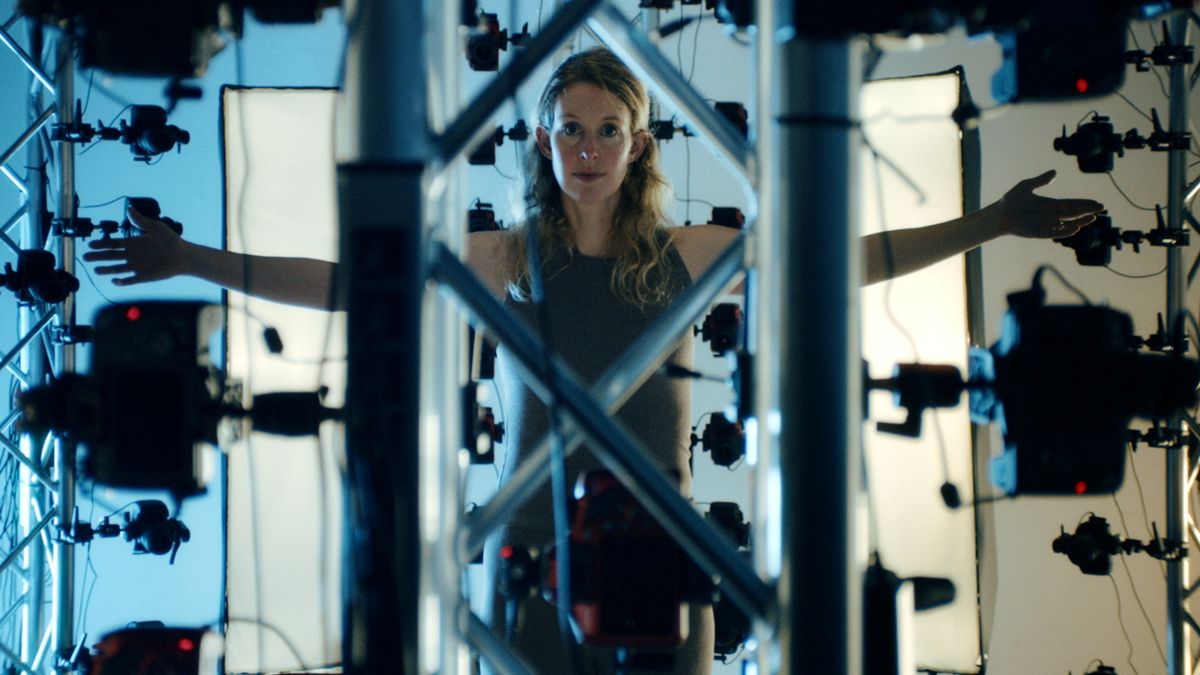
You Can See Everything is a 2026 documentary directed by Nathan Fielder and Lance Oppenheim.
The film follows disgraced Theranos founder Elizabeth Holmes and her partner Billy Evans during the weeks leading up to Holmes beginning her prison sentence for fraud, and continues to document their lives over several years.
Rather than presenting a conventional true-crime documentary, the filmmakers explore questions of truth, performance, self-deception, and how people construct their own narratives
The significance of You Can See Everything lies less in the story of Elizabeth Holmes herself and more in what the film reveals about perception, truth, and the stories people tell about themselves. Rather than simply revisiting the Theranos scandal, the documentary examines how an individual can continue to shape a narrative even after public disgrace and conviction. Through the filmmakers’ persistent questioning and close observation, the film challenges viewers to consider whether people genuinely understand themselves or whether they become trapped within carefully constructed identities.
A central theme of the film is the elusive nature of truth. Director Nathan Fielder repeatedly explores the gap between reality and performance, asking whether a camera can ever capture a person authentically or whether the presence of the camera simply creates another performance. The title, You Can See Everything, is therefore somewhat ironic. Even when the audience is granted extraordinary access to Holmes’ personal life, the film suggests that seeing everything does not necessarily mean understanding everything.
The film is also significant as a meditation on documentary filmmaking itself. By drawing attention to the relationship between filmmaker, subject, and audience, it questions the very idea of objectivity. The documentary becomes as much about the process of observation as it is about its subject, inviting viewers to reflect on how narratives are created and manipulated. Critics have highlighted this self-examining approach as one of the film’s most distinctive achievements.
Ultimately, You Can See Everything is significant because it uses a highly public figure to explore universal questions about memory, identity, denial, and self-awareness. It argues that human beings are often mysteries not only to others but also to themselves, making it a film about the limits of understanding as much as it is about a notorious entrepreneur.
