The film raises complex questions, including: “What is a father..?”; “What is a dream..?”; “What makes a good person, and what is a person with faults..?” and “What are the reasons behind people’s actions – or inactions…?”

It explores and portrays what can be deemed ‘typical’ phases of a relationship between father and son – from “My father is my hero” to “My father is an embarrassment”.


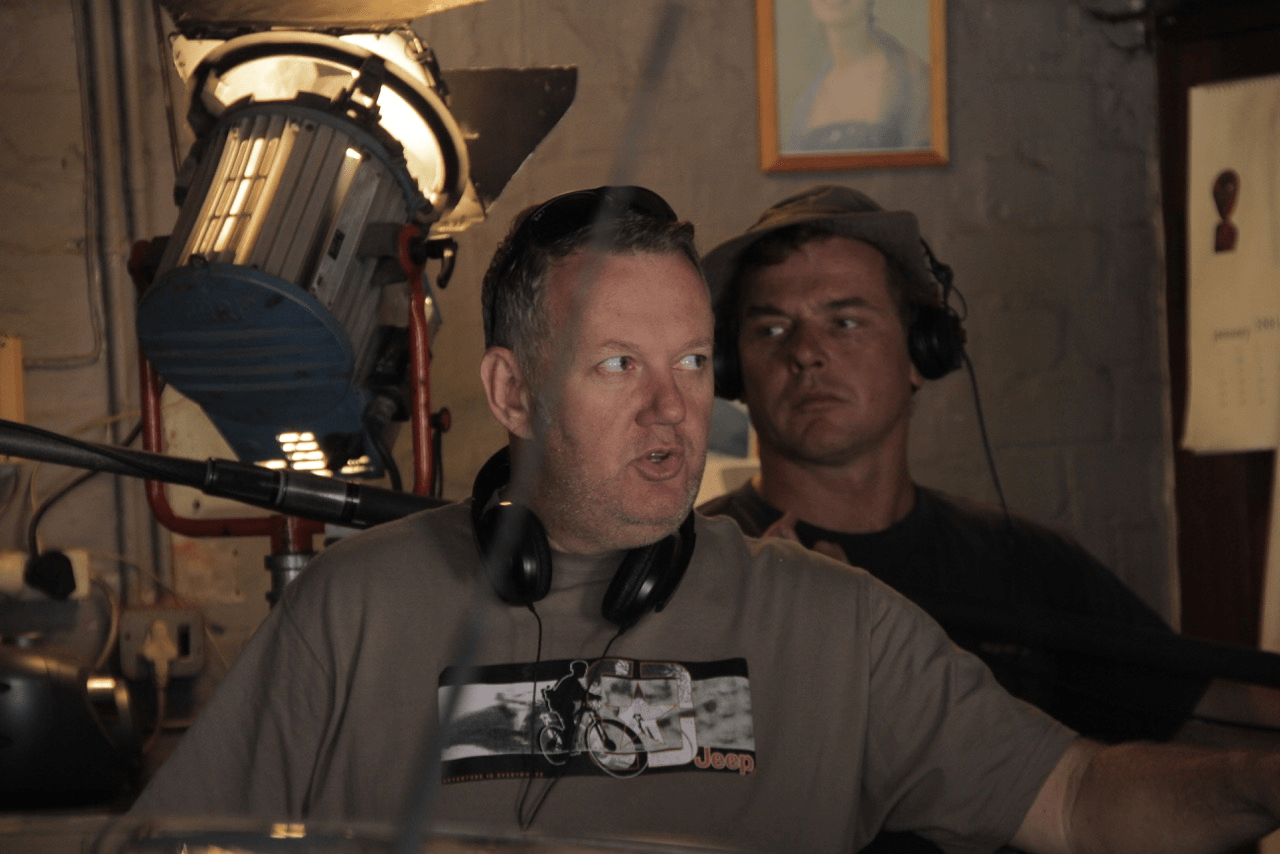
Writer-director Sean Else during the filming of 'n Man Soos My Pa, with actors Lara de Bruijn and Vilje Martitz
Writer-director Sean Else during the filming of ‘n Man Soos My Pa, with actors Lara de Bruijn and Vilje Martitz

Writer and director Sean Else

After obtaining a degree in Drama at the Tshwane University of Technology, Sean started a career as an actor, appearing in numerous award-winning stage productions, films and television series.
In 2005 he started his own record label, Mozi Records, where he produced albums for multi-platinum-selling artists, Bok van Blerk and Lianie May.  These artists’ sensational achievements include the South African Music Award (SAMA) for Top Selling Artist in 2009 (Lianie May) with Bok van Blerk scooping the same award in 2010. As a songwriter, Sean partnered on numerous hit songs, including: ‘De La Rey’, ‘Ons Vir Jou Suid-Afrika’, ‘Tyd Om Te Trek’ and ‘Die Kaplyn’. The videos for these songs have also won Sean numerous “Music Video of the Year” awards.
Sean then produced and co-directed the massive hit theatre shows, ‘My Man Se Vrou Se Man’ (based on ‘Run for Your Wife’ by Ray Cooney), ‘My Boetie se Sussie se Ou’ (based on ‘Caught in the Net’ by Ray Cooney) and ‘As Die Kat Weg Is…’. Together with the award-winning playwright, Deon Opperman, Sean co-wrote the epic musicals, ‘Ons Vir Jou’ (most successful Afrikaans musical in history), ‘Shaka Zulu’, ‘Jock of the Bushveld’ and ‘Lied van my Hart’.
Sean later co-produced, directed and edited his first feature film, ‘Platteland’. On its opening weekend it became the highest-grossing Afrikaans film in history, surpassing ‘Happy Feet 2’ in South African opening weekend sales. He also executive produced “Spud 2: The Madness Continues”, starring John Cleese and Troye Sivan.
Sean wrote, directed and co-produced two local films in 2015: ‘’n Man Soos my Pa’ and ‘Modder en Bloed’ (the latter due for release in 2016).


Daniel Dercksen in conversation with Sean Else

How did the idea for the film originate, and how was the story decided on ultimately?

 Johan Kruger approached me during March/April 2014 with the title and idea to produce a film which would explore the sometimes complex relationships between fathers and sons. It was important for us both that the essence of the story is about the mending of a damaged relationship. I went away and thought about how to tell a story like this in the best possible way. There are, of course, endless possibilities and angles with a story like this, but we ultimately decided to find something on which they would have to work on physically, to represent their relationship in the past. The restoration of the 1968 Volvo Amazon became the instrument which I use to explore their relationship, past and present, and the effect their relationship had on the people in their lives.

Does the film reflect your personal experiences during your growing years and/or your relationship with your father?

As a writer, there are, of course, always elements of yourself in any story. But this is not my story, or Johan’s. It is everyone’s story. Anyone who has had a relationship with their father goes through the stages our characters do, in the film. The father who is your hero in your pre-teen years, the ‘strict’ and ‘unreasonable’ father during your early/late teens. The father who do not ‘understand’ you when you are reckless in your twenties, the father who becomes your hero again the day you have a child – or children – of your own, and you’re beginning to admit your own faults. But unfortunately it is not always as simple as that. There are often very complex layers and steps one has to go through personally when it comes to forgiveness. We saw after the screening of the film at Silwerskerm in August 2015, that the film had everyone talking about their own relationships with their fathers and how the dynamic has changed over the years.

The film plays off over a few decades, from the late 70’s to 2015. What were, logistically and creatively, the most difficult challenges during the production?

 One of the most difficult elements was the logistics of using the same sets for the different periods (and on an extremely tight schedule). The production designer and her team did a fantastic job to make it work within the confines of our shooting schedule. Another difficult element was working around the availability of our actors. The different time periods was a challenge to cut, and we had use a number of conventional and unconventional methods to get it right.

You have used the cream of South Africa’s talent for the various roles. Was it difficult to decide who to ultimately cast for the lead and key support roles, and what were the principle reasons for the choices made?

The most important aspect for us was to get the best actors to give substance and depth to the characters in the script. We also needed to try to cast according to some physical resemblance. I worked long and hard with our actors during pre-production, to get personalities and characteristics as close as we possibly could. Small things like certain mannerisms got a lot of attention. Needless to say, we knew from the outset that we wouldn’t get actors with clear and distinguishable similarities, but with the brilliant actors we have in the film, we managed to get the ‘soul’ of the characters the same, which was far more important than pure physical similarities. Everyone knows it is a story with characters played by actors, and with the brilliance of their performances, physical similarities became much less of an issue.

‘n Man Soos my Pa is your first film as director since Platteland. What is different between the two projects in terms of content and creative strategy?

 The films are completely different genres. What is important for me in any film is that genre and story are approachable and speak to an audience. I honestly do not care if it is a comedy or a tragedy, it is about the elements that make it approachable to an audience, also characters and/or events/situations they can relate to.

Although there has been a couple of exceptions, statistically romantic comedies and musical films have done well at the box office, especially Afrikaans language films. How do you rate the chances of a drama like ‘n Man Soos my Pa at the local box office?

I am not a person who works according to statistics. They have a way of leading you by the nose, and all that happens is that trends are followed and honest stories are not told. I always work from the inside out, irrespective of whether it is film, theatre, or song lyrics. I ask myself: “Does the story speak to me?”; “Will I go see it?” And most important: “Is it universal enough that a wider audience can relate to the content in one way or the other?” We can never predict how a particular film will perform at the box office. All we can do is to apply honesty and expertise in respect of script, production, post-production, and the marketing of the film. The cinema-going public will ultimately determine the commercial success or failure of a film, and if we as filmmakers want a particular film to have a reasonable chance of financial success, we have to respect that what we ultimately produce is for the public, not ourselves or our colleagues.


Vaselinetjie is a warm tribute to the resilience of the human spirit, the power of love and our ability to triumph despite everything that conspires against us.

Acclaimed journalist and writer, Anoeschka von Meck’s Vaselinetjie is a story about defining the meaning and origin of one’s identity and race within the turmoil of post Apartheid South Africa, and brought to life the Big Screen by director Corné Van Rooyen, (Hollywood in my Huis, Sy Klink Soos Lente ) who wrote the screenplay with René van Rooyen (Mooirivier).

”The moment I read this story I was plunged into silence because of the harrowing life in a South African orphanage and the troubled youth who are forced to grow up in ways I could never have imagined,”‘ says Corné Van Rooyen. ”However, the theme spoke to me on a much deeper and almost spiritual level: everyone has a purpose no matter how you were brought into this world. We can’t recreate our past, but we can navigate our future.”

”The film is a warm tribute to the resilience of the human spirit, the power of love and our ability to triumph despite everything that conspires against us. In many ways, Vaselinetjie can be regarded as a youth film, but its mature themes will also resonate with a broader audience. Puberty is challenging, and Vaselinetjie’s journey is more traumatic than those of most people.”

Watch on Showmax

Vaselientjie - Greef and cast
(Back) Royston Stoffels as a loving grandfather who raised Vaselintjie as his own child, writer-director Corné Van Rooyen, novelist Anoeschka von Meck, (front) Marguerite van Eeden as the 16-year-old Vaselinetjie who has adapted well to life in the orphanage, Nicole Bond, as 11-year-old Vaselinetjie, a naive girl who is bullied daily at her school in Eksteenfontein because she’s white, but her grandparents are coloured, and Shaleen Surtie-Richards as Granny Kitta, a 75-year-old brown woman from the Ricthersveld who raised Vaselinetjie as her own child and loves her granddaughter.


A Note From Writer-Director Corné Van Rooyen

The story follows the growing-up years of Helena Bosman. She’s a girl from a tiny town in the vast expanse of the semi-desert in the Northern Cape, South Africa. Her loving grandparents call her Vaselinetjie. She is their little angel from the veldt (bush), and she is the beginning and the end of their world. But Vaselinetjie is white and her grandparents are coloured (an ethnic group of people of bushman or mixed race decent). The coloured children at school brutally tease her, accusing her of being a fake and mock her because she looks different from them. When Vaselinetjie is 11 years old, and the bullying becomes increasingly aggressive, the welfare’s help is called in and she is sent to an orphanage outside of Johannesburg – a place where “Mandela’s reject children” must live and survive.

Vaselientjie 2
Corné has directed over 60 hours of content for the SABC, BBC, National Geographic, kykNET and M-NET as well as several award-winning short films and commercials. Through Stage 5 Films and his own production company Red Letter Day Pictures, Corné released his first feature film as writer and director, namely ‘Hollywood in my Huis’. Corné directed his second feature film ‘Sy Klink Soos Lente’, which was released nationwide in September 2016. Prior to this, Corné worked at Cooked in Africa Films and directed ‘The Ride of Sir Harry Smith’, ‘The Ride’, ‘Mongol Derby,’ ‘Seasons at Terroir’, ‘Cadiz’, ‘Fresh Living TV’, ‘The Ride of the Peacemaker’ and ‘Exploring the Vine’, to name a few. Before Corné started his full-time film career, he was head of Directing at AFDA in Cape Town.

It’s a strange, hard, dangerous world of drop-out children and bad-tempered matrons; a world where children smoke leftover cigarette butts, fight each other with their fists and constantly run away. It’s a world where no one cares about anyone else, where you learn not to give a damn and no one gives a damn about you. Vaselinetjie soon forgets the values her grandparents taught her so she, for the first time, can fit in with her peers. It’s only when a much older Vaselinetjie falls in love with Texan Kirby, a rebellious orphanage boy, that she addresses her biggest challenge and fear: the truth about where she comes from. Vaselinetjie is a film about the search for identity and the long road of growing up to discover who one really is.

The film is set between 1994 and 2001, a time in South African history where the country was on the edge of irrevocable change. So, as the country comes of age, so does our main character, Vaselinetjie. In my opinion, the story could be a meditation on race, race-consciousness and the all-pervasive and persistent effects of Apartheid on our nation’s psyche. It’s a reminder that there was a time when race was a matter of life and death, often literally. However, Vaselinetjie’s life is not without redemption, which arrives in the form of her loving grandparents, the children’s irrepressible humour and a boy in the orphanage called Texan Kirby.

Themes such as lack of love, violence, rape, sex work, racism, drugs and suicide are addressed in a rather raw way.

However, at the end of the day, the film is also about youngsters looking for love and acceptance. The events and characters in the film are based on the author’s experiences as a care worker in a children’s home in Robertson in the Western Cape.

It was very important for me to be as authentic as possible in my casting process. My aim was to use non-professionals combined with regular actors – children and teenagers who can connect with the character’s goal and inner struggles on a personal level.

Considering the presence of children, my reference will always be the direction work of François Truffaut; in more recent times, the work of directors such as Abdellatif Kechiche, Nicolas Philibert, Lynne Ramsay and Jacques Doillon serves as inspiration. I believe professional actors can often propel one’s stories to new heights. However, when you strive for authenticity, you sometimes just can’t beat the real thing. The best way to describe the tone of this film would be ‘social realism through a poetic lens’.

On the one hand, highlighting specific story details and metaphors to communicate characters’ thoughts and feelings through using extreme close-ups, fluid camera work and silent moments lingering in frames within frames. On the other hand, a raw, non-judgmental and observational style with plenty of hand-held camerawork.

I believe images and the sounds should tell the story instead of dialogue or music. My top film references are ‘Ratcatcher’, ‘Girlhood’, ‘Water Lilies’, ‘Ida’ and ‘Mustang’. ‘

Vas’ is a film in which I could pour my soul, creativity and heart, but I also knos this film is much bigger than me. Although I have a strong directorial vision, I need to leave space for the magic of the process and the input of my highly talented and creative crew.

Vaselientjie master
Director Corné van Rooyen during filming.

The Novel

RENE VAN ROOYEN
René van Rooyen is the director, screenwriter and co-owner of the motion picture company Red Letter Day Pictures. She has more than eight years’ experience in directing and writing content for various drama, lifestyle and documentary series for Mzansi Magic, the SABC, kykNET and M-Net, as well as directing several films, including ‘Nantes’, the 2014 Silwerskerm Film Festival short film winner. René also co-wrote and co-produced the feature film ‘Hollywood in my Huis’ and ‘Vaselinetjie’ and was the director and screenwriter of the feature film ‘Mooirivier’. In 2013, she was one of 10 filmmakers selected for the NFVF Female Filmmakers Programme and wrote and directed a 25-minute dystopian short, ‘Pathology’, through Quizzical Pictures. That was the first project in which she was responsible for her own VFX composition. Her filmography also includes ‘The Ride’, ‘Bravo!’, ‘Shore Thing’ and ‘All Access’.

Acclaimed journalist and writer, Anoeschka von Meck, is driven to deliver work that is so inspiring that it results in changing readers’ outlooks while contributing to the process of their inner healing. As a human and writer she is passionate about the fact that the people of South Africa should be reconciled in order to be able to flourish together. “ ‘Vas’ is a photo of South Africa in a certain time. The main character’s strange name refers to two elements that are both available universally, but are especially relevant to our society. Firstly, it refers to a well-known, handy and affordable skin lotion that represents the care of parents (primarily those who struggle financially) for their children. It’s something that’s been known to South Africans for centuries.

More sinisterly, it also refers to something else that’s also been known to generations and is present in many homes. This is the sexual abuse of children where everyday household products are used as lubricants with which to damage young victims’ bodies. On the one hand it therefore speaks of nurturing, care and parents’ love against abuse, meaninglessness, namelessness and the sexual objectification of children.

‘Vaselinetjie’ as the name of the main character of this authentic human story contains within herself the entire spectrum of how one struggles to find one’s true identity, how life scars us and in this case, how she triumphantly overcomes the things she once used to be a victim of and rises above her circumstances. It’s not only the story of a South African orphanage who is uncertain about her race or heritage. It is the story of a nation. At the end of the story, Vaselinetjie isn’t ‘white’ or ‘brown’ or a ‘bastard’ anymore. She is herself. She is comfortable in her own skin, her own life, her own country.

Von Meck partly grew up in McGregor, but regards herself as primarily a Namibian as her parental home was in Henties Bay. She started her career as a journalist at ‘Die Republikein’ in Windhoek and worked as a senior journalist at ‘Rapport’ in Cape Town in later years. She has written three books to date of which ‘Vaselinetjie’ is the most well-known. In 2005, ‘Vaselinetjie’ received three literary prizes, namely the M.E.R. prize for Youth Literature, the Jan Rabie prize for Innovative Afrikaans Fiction and the M-Net prize for Afrikaans texts in short format.

Vaselientjie - Greeff
Journalist and writer, Anoeschka von Meck with the young cast who brought her characters to life

In the following year, ‘Vaselinetjie’ was included as part of the prestigious ‘International Board on Books for Young People’ and as a result, has had the honour of becoming part of a travelling exhibition of the best youth books in the world. This is a remarkable honour as few books that aren’t written in English, make it on this coveted list. ‘Vaselinetjie’ was also awarded with an ATKV Children’s Book Award for Grades 8 to 10 and the book is currently in its 21st print run.

As journalist, Von Meck has also won numerous awards and in 2014, she won the coveted and extremely competitive Hard News category for community newspapers. In 2016, Von Meck, who is fond of dirt roads, travelled on her own through South Africa as ‘Afrikaans se Boesemvriendin: Oppad met Afrikaans’ for Afrikaans.com. The goal was to shoot a series of interviews, from ‘Lekkersing in die Richtersveld tot Rosendal in die Vrystaat’ that demonstrates the beautiful variants of our beautiful language.


Dis ek, Anna, based on two fictionalised, autobiographical, best-selling novels Ek, Anna and Die Staat Teen Anna Bruwer by Anchien Troskie, written under the pseudonym Elbie Lötter, is now a proudly South African film.

Filmmakers Niel van Deventer and Charlené Brouwer of Palama Productions are constantly on the lookout for stories with themes that transcend borders of countries, cultures and languages, and have the potential to translate well to screen. In 2005, van Deventer had read a copy of Ek, Anna and was haunted by Anchien Troskie’s journey. Her strength and fortitude, in the face of unimaginable suffering and abuse, both moved and inspired him. “We all read about cases of abuse and rape, but have to an extent become desensitised to the suffering of others. When you read a first-hand account by someone like Anchien, you are forced to confront this reality head-on”, says van Deventer.

The universal resonance of Anchien’s story immediately struck van Deventer and Brouwer.

“Unfortunately Anchien’s story is not unique, there are many nameless and faceless women and children just like her throughout the world. Sexual abuse occurs in all societies to a greater or lesser degree irrespective of age, race or socio-economic standing”, says Brouwer.

“Sadly, victims are often too afraid to speak out and, when they eventually do, it is too late and irreparable damage has been done. The beauty of Anchien’s story is that while it serves as a warning to all of us, it also offers hope and inspiration to victims of abuse”.

Read the Review


Ek, Anna had all the hallmarks that make a good film and, if handled honestly and sensitively, could potentially be both a critical and commercial success. However, the book had too many loose ends and left too many questions unanswered which made it difficult to adapt.

“The breakthrough came in 2012 when the second, a fictionalised book Die Staat Teen Anna Brouwer was released”, says van Deventer. “This book provided the resolution to the story and by basing our script on both books, we found a way to tell the story”.

At the start of the process, van Deventer reached out to Anchien Troskie to discuss his intention to adapt her story for film but initially sensed that she was not completely comfortable with the idea. “I completely understood her reservations”, recalls van Deventer. “There is a certain sanctity to a story such as this because you are dealing with the violent reality of someone’s life and, in the wrong hands, with the wrong intentions, further damage could be done”. He realised that the only way to allay Anchien’s fears would be to meet face to face.

Together with scriptwriter Tertius Kapp and director Sara Blecher, van Deventer visited Anchien and her husband at their home in the Eastern Cape, to better explain their vision for the film.

“During our discussion around her kitchen table that Saturday morning, she told us things that totally changed our direction and ultimately made for a better screenplay and film”, comments van Deventer. “It was also rewarding to see how, after this get-together, she began to accept us and trust us with her story”.

When work started on the film, van Deventer impressed upon everyone involved the importance of honesty and sensitivity in tackling the story

“This is not just Anchien’s story, but also the story of countless young girls and boys in South Africa and beyond. I knew that if we told the story correctly, Dis ek, Anna had the potential to make a difference in the lives of all these people”.

Casting the film was an intense process with auditions held throughout the country. There was general consensus that the two leads – adult Anna and stepfather Danie du Toit – should be played by actors who were not over-exposed or too well known to audiences. “Our thinking was that we wanted the emotions and feelings that the characters awakened in the audience to be real and honest”, says van Deventer. “This is often difficult when you cast a well-known soapie star who audiences associate too strongly with a specific character”.

Filmmaker Charlené Brouwer, who also delivers a commanding performance in the title role of Dis Ek, Anna

In casting the leads, Charlené Brouwer’s discipline, depth and empathy made her a shoe-in for adult Anna and typical man-next-door Mornè Visser, a natural choice as stepfather Danie du Toit. “Mornè is an everyman and perfect in the role because sexual predators are generally fathers, uncles, brothers, friends, neighbours and that is what makes them so dangerous”, says van Deventer. Nicola Hanekom, one of the country’s finest actresses was an early favourite for the role of Anna’s mother Johanna. She impressed with her ability to bring to the character a fragility, complexity and vulnerability that is so important to our understanding of the character.

Rounding out the cast are some of the country’s biggest names including Marius Weyers as seasoned detective Windhond Webber, Dawid Minnaar as Ds Theron, Elize Cawood as Adv. Gous and Ilze Klink who bring their considerable talent and wealth of experience to the film. They lend gravitas to their characters and give beautifully nuanced performances.

The filmmakers and investors were adamant that, given the nature of the film, they had to bring on board a female director. A name that kept cropping up was that of Sara Blecher, but she doesn’t speak Afrikaans and, initially, that appeared to be an obstacle. However, that quickly changed after they watched Sara’s multi-award winning isiZulu feature Otelo Burning.

Their trust was well placed because in her hands, Dis ek, Anna became everything that that van Deventer and his team had imagined.

“Sara handles the story with great sensitivity, but still manages to convey the horror of Anna’s experience”, says van Deventer. “With her deft touch, she has made a film that is, despite its dark subject matter, beautiful, powerful and inspiring”.

She has been roundly praised for her deft and sensitive handling of the subject matter in Dis ek, Anna, while still delivering a powerful film that unflinchingly shows the devastating consequences of sexual abuse.

“When Niel first approached me to direct this film, I was determined not to do it”, says Blecher.  “Like many other people in South Africa and the world over, I have someone really close to me who was also a victim of sexual abuse, so I was reluctant to take on this project.  However, the more I thought about it, the more I realised that Anchien’s story could offer help to victims of abuse and I felt duty bound to become involved with this film.  I am thrilled that we are able to take this film to an international audience via the various festivals”.

The film travelled to Edinburgh, Scotland for the Africa in Motion Festival, and the producers attended a seminar at the Royal African Society Film Festival in London where they discussed Dis ek, Anna, it also screened in Amsterdam as part of Post-Apartheid Cinema – A South African Focus before heading to the Palm Springs International Film Festival in California. 

Die Ontwaking (‘The Awakening’), a grisly, action-packed thriller that investigates the mind and motivations of an acutely intelligent serial killer, and marks the directorial debut of acclaimed production designer Johnny Breedt (Paljas, Hotel Rwanda, A Long Walk to Freedom, Sergio Replicas Redeeming Love).

Daniel Dercksen shares a few thoughts with producer and writer-director Johnny Breedt

Well done on a film that really hits home and allows us to reconnect with the darkness that lurks in society.  Your views on this?

I learned from Anthony Minghella that making films that had elements of the darker side of life is way more interesting than most. He always chose this as an essential key to the projects that he took on and although he never made that many films, most were brilliant.

Die Ontwaking is an incredibly provocative and alluring title. Tell me about it.

A few years ago I decided I wanted to direct a film in Afrikaans and I popped into a book store to look for inspiration,” says Breedt. “That’s when I came across Chris Karsten’s ‘Abel se Ontwaking’. I read it on a flight to the USA and I could not put it down. I just knew that it could be turned into a fantastic film. The thriller genre is much darker than what I had in mind for my first feature film, but that was also what attracted me to the project. I wanted to challenge myself as a scriptwriter and director and this was the perfect vehicle. I was determined to take the audience with me into places that make people feel uncomfortable.”

Even though it is quite clear from the book title, that Abel Lotz is the serial killer, I wanted to make it not as obvious in the title, so I dropped the first part and decided on “Die Ontwaking” instead. The publishers of the book then very cleverly brought the book out again with my title and Gys De Villiers on the cover.

Production Designer and filmmaker Johnny Breedt talks about Sergio and how the Corona Pandemic has severely impacted the entertainment industry.


What inspired you to write the screenplay, produce the film and then sit in the director’s chair?

I really wanted to be challenged as a filmmaker and wanted to do the same with my audience, take them to a place where they do not necessarily want to go. Honestly, I did not think my first film as a director would be a psycho thriller, but I did know that I was not going to make what everyone else was doing. Producing the film is an entity on its own, especially raising the funds and then delivering the film within that budget. I always wanted to be a director, way before I ended up designing films, so the transition was easy for me. I was also fortunate to work alongside directors like Phillip Noyce, Carrol Ballard, Terry George, and Anthony Minghella, so I really learned from some of the best.

Was it an easy story to write?

No. At first, I thought adapting a book would be easier than starting with an original screenplay, but boy was I wrong. I have written a number of original scripts and they seemed easier as I was the sole creator of the story and the characters. It was difficult to take someone else’s story and characters and try and make them my own. The way I got around it was I eliminated a lot of the backstory details that were in the book. These played off mostly during the Boer war and I figured that if a younger audience were going to be attracted to the story, then I should lose the Boer war story. I also changed some of the characters and added in some of my own ideas and this then started taking the shape that i was after. Chris Karsten wrote a beautiful, almost poetic novel and I butchered to make it work cinematically, but still kept the original concept intact where possible. Chris was very impressed with the final outcome of the film.

Did you write the screenplay with any particular actors in mind? If so, how did this influence your writing of the screenplay?

No…I think that would be a huge mistake…..never write a screenplay for a specific actor. I actually spoke to a couple of actors about playing Abel Lotz, before deciding to go with Gys.  The screenplay must always come first and then the cast and rest follow, well that’s how I feel about it.

Tell me about your cast and how they influenced the film from page to screen.

I had a wonderful mixture of both experienced cast and some new actors. Gys definitely brought Abel’s character to life and he took a different direction than what I had originally imagined. At first, I was a little apprehensive about that, but I soon realized that he was going to give me a character that people would be expecting for a film of this genre. Personally, I think this role was made for Gys and it is one of his best by far. Paul Eilers did the same with his character, as did Gerard Rudolf and Morne Visser. The experience that they brought to the show was incredible and I could see how the younger actors were feeding off them during filming.

Gys De Villiers

You decided to not keep the identity of the killer a secret, but rather take us into his warped life and allow us entry into his mindscape. Still, you manage to maintain an incredible and tangible tension from start to finish.

That was tricky to do. I remember when I first shopped this around to a number of local producers; they all hated the fact that the killer was revealed early. I tried to change that and the result was that Gys’ character only made his first appearance in the middle of the second act and I knew that was going to sink me. So then, I changed who the film was about and made Ella Neser the protagonist and it became her story and how she and her colleagues try to solve this case. That way the audience knows who the killer is, but the detectives don’t….that made a huge difference.

Did you set out to write and direct the film?

Yes. I love writing and I love directing. Sure I would also direct other people’s scripts, but feel closer to the process this way.

Writing and directing a story you feel passionate about is ideal for any storyteller.

If you don’t have a passion or you don’t follow that passion, you die. I follow this mantra in life, not only in writing and directing but in everything I tackle.

The film has a hushed intensity, filled with whispers that set a somber tone. Was this your intention?

Some of it yes…..I wish I had done that even more, but I was often left with 15 mins to complete a scene. The actors were great with this as well and I often kept rolling the cameras, even once the shot was completed and I was surprised at what actors do after they feel they have delivered what was expected on the written page. This is a technique I will keep using. For me, the reality is essential in my films and actors do very real things when they think you are not watching.

There is also a sense of a privileged and sterile existence. Your views on this?

I did not want this to look like an Afrikaans film and rather opted for an almost Scandinavian or European feel to it, but at the same time, the language of the film and the story had to be South African.

The film is filled with incredible sadness and hostility between the characters. Your views on this?

This is life! Abel is a serial killer but we the audience will also have pity on the man. Ella loses the love of her life and then gets tossed into what she thinks will be a simple murder case, only to learn it is a serial killer, Fred Langer is pissed off with his boss as he made Ella the lead detective on his case and Silas Suals just wants to retire. I tried to create a sense of this young woman trying to fit into what is recognized as largely a “man’s world” and with that, you get animosity, hostility, and sadness.

Do you see yourself as a writer or director? What is your main focus?

I am a writer-director, but as I said before I would do either. I am really a storyteller, but I do have an addiction too for carrying out both roles.

Do you find that your celebrated career as a production designer has helped you in writing the screenplay? 

Yes of course. I have worked on over 60 productions and have read hundreds of screenplays in the process. The production design is about creating incredible images that tell a story and we often forget that that is what a film is….moving images. Although good directors don’t have to have been production designers, they are still involved in a large way, in the overall look of the film. They achieve this together with the cinematographer and production designer. In my case, I am able to use my design skills to my advantage, but what I will say, one can never be both on a film. I distanced myself more from the design job on Die Ontwaking and vice versa when I work as a production designer on other projects.

Johnny Breedt

Have you always wanted to be a filmmaker and where did it start for you? When was the first moment that you knew you wanted to be a storyteller and storymaker?

I knew at a very early age that I wanted to do this as a career. At first, my father was not keen and of course today he is my biggest fan. I used to talk a lot of shit when I was younger and people were always amazed by what came out of my mouth and that has never changed. Oddly I would describe myself as an introvert who has the ability to bullshit in a way that people listen.

What excites and motivates you as a filmmaker?

I like stuff that is realistic and I like to take risks, that really motivates me. I really love taking a script from concept to the end product, as a designer or as a director. Writing is where it all starts of course…..without the script we have nothing.

How do you see the current state of the local film industry?

I am excited to see new genres slowly creeping in and some great talent emerging. What we have to be careful of is making crap just because we can. Audiences are not as stupid as many distributors would like to think and they will start to demand great content. Of course, there will always be a place for romantic comedies, but if we want to be more than just a nation that has talent, and rather is known as a nation that makes its own great films, we will have to get our audiences to appreciate local cinema more. Why will Afrikaners watch horror in English but not in Afrikaans? That’s why I don’t specifically make” Afrikaans films”….I make “South African films” that hopefully can stand their own ground internationally, they just happen to be in Afrikaans.

What advice do you have for writers who want to break into the industry?

Never give up, have more than one script, and don’t be afraid to rewrite!

What do you hope audiences will take home from watching Die Ontwaking?

I really hope that people still talk about the film and its characters a day or two after watching it. Although the film is graphic and dark, it is still just a film and i can only hope that people will enjoy it.

Tell me about your future plans.

I am currently busy writing three scripts. “The Border” which is set during the Angolan bush war (also an adaptation), “Toorberg” (adaptation), and a personal story entitled “Hotel Boys” which depicts the life and struggles of two teenage boys growing up in one-star hotels in Apartheid South Africa

How difficult is it to produce a film independently in South Africa and then send it out into the world?

It is extremely difficult. It took me two years to get my film screened in my own country and we have only recently managed to get a foreign sales agent on board. We just never gave up trying and now the rewards are great. When my films go to the cinemas on the 26th of Feb, I will truly feel like I have moved up into the position of director. I was extremely fortunate that I had Charon Landman, a local businesswoman as the benefactor of my film. If it were not for her financial role as executive producer, together with the DTI, this would not have been possible.


ABRAHAM

Abraham is a profound and consummate masterwork

Daniel Dercksen reviews Abraham (October 15, 2015)

Abraham is undoubtedly one of the best South African films ever made, a profound and consummate masterwork from industry legend, Jans Rautenbach that marks his first film in 30 years.

It tells an unforgettable tale that will break your heart, a story that connects with who we are as South Africans and how we fit into the bigger scheme of things.

Interview with Jans Rautenbach


Dann-Jaques Mouton delivers a riveting performance as Abraham, an artist and dreamer from Kannaland in the early 1980s;  an area in the Little Karoo that stretches from the Swartberg in the north to the Langeberg in the south, and from the Anysberg in the west to the Gamkaberg in the east.

Abraham is a dedicated husband and father who struggles to provide for his young wife Katie (a superb performance by Chantell Phillipus) and their four-year-old daughter. But through his creative determination and undying passion he finds patronage in Jong Jans (Hannes Muller) and his wife, Almeri (Franci Swanepoel).

Muller delivers a sensitive and heartfelt performance as a young Jans Rautenbach, who travels from the big city where he works as a filmmaker, to the peace and serenity of his family in Kannaland.

Rautenbach introduces us to the story and narrates it. It is as if he invites us into his home, his own personal space where he shares some wonderful memories of a past that shaped our future.

When Abraham and Katie settle into their new home working for Jong Jans and Almeri, Abraham fiercely supports his wife who battles mental illness and alcoholism and fights his own ambitions as an artist.

Abraham is a dreamer who wishes to rise above his station in life and make his mark on the world, but the harsh realities of his dire circumstances become the deterrent to his happiness.

There are moments in the story where you can feel the story creeping into your soul.

One such moment is when a drunken Katie lies passed out on a dirt road, resting her head on the lap of her four-year-old daughter as the fluid from her spirits bottle seeps into the dry earth.

What makes this scene remarkable is that it does not only signify the emotional death of a woman who desperately cries out for understanding in a world that shuns her but how the young girl finds life in the muddy soil and starts creating a clay figure, just as her father breathes life into wireframes sculpting glorious cement animals and birds.

An Open and Honest Film

It’s an open and honest film that invites us to make sense of our lives in a world where those who live in the shadows of society have to survive on nothing but hope in their hearts, and those who own the world feed this desolate hopefulness with unimaginable dreams.

Rautenbach powerfully reveals these two disparate worlds; one is filled with the shiny clutter of worldly possessions that form a shrine to Western art and culture and civilisation that is as cold as the stone it is built from, and the other world is a home that is warm and homely, where the comfort of a fire in the hearth and oil lamp illuminates the dark void of humble existence.

The two extremes powerfully remind one of how easy it is to observe the world from comfort and ease without ever getting involved in the lives of less fortunate people.

Rautenbach takes us into the intimate spaces of these derelict lives, where happiness and love blossom and combat the harsh reality of outsiders who have no understanding of how difficult it is to be dirt poor.

Beautifully captured by cinematographer Koos Roets, the visual tapestry of Abraham is as soulful as the Karoo,

When Abraham receives as much as R1 for one of the cement chickens that he spent days crafting, he humbly dances with joy and is filled with the gratitude of millions.

Abraham2

Abraham is grounded in an isolated reality that cuts you off from the rest of existence; like its characters, you are imprisoned by the world they live in Kannaland,  with cars and trucks cutting across the highway as an only reminder of life outside its horizon.

It is a film you feel, and one you contentedly succumb to with utter joy.

An inspiring and tragic tale, filled with an evocative music score by Riku Lätti that richly underscores the intimate mindscape of its rich characters’,  Abraham offers an intimate and emotional viewing experience that is meaningful and will change your life, creating an awareness of how important it is to embrace our humanity and those who share our lives, even the strangers who dare to remind us of the unpleasant realities outside our comfort zones.

Abraham is in Afrikaans with English subtitles.

Copyright © 2015 Daniel Dercksen     Published with permission on Biz Community, Oct 15, 2015

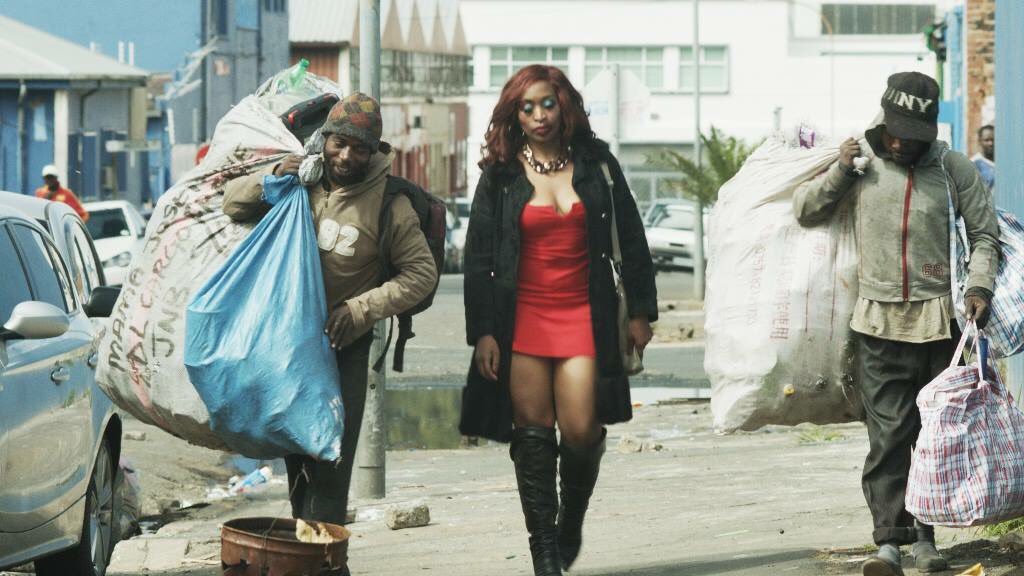
As the founding member of Towerkop Creations, a boutique film production company that has been specializing in female driven heroine stories since inception in 2010, filmmaker Uga Carlini’s Angeliena is story is about the self-love of a formerly homeless parking attendant, who is diagnosed with a fatal disease and dares to put her lifelong dream of traveling the world into motion.

Euodia Samson as the colourful Angeliena. Photo courtesy of Towerkop Creations, Ruth Smith Photography

Carlini’s first short, Good Planets Are Hard To Find, which tells the environmentally-themed story of Elizabeth Klarer, South Africa’s controversial, often ridiculed ‘First Lady of Space’, swept up awards and accolades internationally, was selected from over 7000 entries to be part of Berlin’s 2011 InterFilm Shorts Competition and was a featured short on US-based Snag Films. The much-anticipated hybrid feature length version, Beyond the Light Barrier, will be the world’s 1st part Ethereum funded hybrid documentary, is currently in production.

Uga’s option on the Penguin Random House best-selling book I Have Life has translated into her full-length hybrid feature Alison. Translated into 7 languages and a perennial on Penguin’s best seller list since 1998, the book tells the harrowing story of Alison Botha, who was raped, stabbed and disembowelled – and survived to rebuild her life as an inspirational speaker. Alison became one of South Africa’s most hotly-anticipated and multi award winning films. Deploying a bold mixture of fairy tale idiom and unflinching frankness to tell its story of survival, resilience and triumph, Alison was dubbed “a story of monsters, miracles and hope”.

On the commercial front, Uga was the mastermind behind and directed one of the most successful “end violence against women” campaigns, the #butterflyrevolution which enjoyed broadcast time during the 2016 Olympics world-wide.

In 2018 Uga was crowned one of eight female Filmmakers of the Year in the World of Women’s Cinema at the WOW Middle East Film Festival. The film fair promotes and awards the talents of women in the film industry internationally.

Experience Angeliena on Netflix,

Pictured above: Uga Carlini on set in between a moment with her two sons, Roka & Neo Carlini-Vidulin, who plays Adrianus & Stefanus – the sons of Nurse Debbie

Daniel Dercksen shares a few thoughts with Uga Carlini about Angeliena

Tell me about what inspired Angeliena?

A story gets a hold of me, resonates with me, and then I cannot let go until it’s done. I give birth.

Angeliena was conceptualized out of an argument between two then lovers who did not get each other’s vocations – the creative versus the nine-to-five; but tried none the less. So, an article about an urban legend in the UK was presented to me. It was about a car guard who one day after 25 years of not missing a day’s work, just didn’t show up, and how and where they found him, became Angeliena’s big secret. I was told write that. Ok, fine. Combine that with how I grew up, with a single parent mother working in a local hospital, often taking her two daughters (my sister and I) with during our school holidays, where we got a taste of the inner workings, trials and turbulations of the hospital and the people who worked on the inside and the outside (our local car guard there) – well the blue print for Angeliena was drawn up.  And the coloring in could begin. That was 2011.

On the outside the inspiration is from what we got RIGHT as the rainbow nation since 1994 and on the inside it’s about how self-love really is the greatest middle finger. About how we owe it to ourselves, to love ourselves so fiercely, that when others see you, they know how it should be done.

From left, Nicole Madell (Lily), Kuli Roberts (Tina), Euodia Samson (Angeliena), June van Merch (Auntie Dot) at the Lighthouse.  Photo courtesy of Towerkop Creations, Ruth Smith Photography

It’s story about self-love, and making money, and terminal illness, and racists, and friendships, and hardships, and assholes, and plants, and beauty and loving Nelson Mandela, and dreams and being good enough. More about this?

Finding the magic in the madness is what this film’s all about because it is a film about underdogs and I love a good underdog. There’s nothing more inspiring to me than an underdog or listening to how many times you failed and how shit it was and now here you are. The ‘here you are’ is not what heroes are made of, ‘how you got there’ is the stuff they are made of. And how you keep going to get there, depends on your self-love. Self-love means being at peace with yourself.  It’s loving yourself so fiercely, that when others see you, they know how it should be done.

Was it a difficult story to write?

“Difficult’ is not the word that comes to mind but lengthy is. Everything has its time. Despite Angeliena being conceptualised in 2010, we went into production in 2020. Angeliena is a story I grew up with that’s based on my childhood and my mum working in a hospital. I can only do one project at a time because it consumes me. Every project has its journey and its time. I believe that.. So in a nutshell. Angeliena was conceptualised in 2010. Development funding from NFVF in 2011. Dusting her off begins 2018. Numerous sets of notes, feedback from numerous countries, a final table read. 2020, Angeliena gets greenlit.

Was it a difficult process from page to screen?

The biggest challenge turned out to be Covid. The first wave halted us, for months. We had to replan, cut budget yet again. Then production began in second wave, post in the third. And here she is. Angeliena.

Euodia Samson (Angeliena) shares on off screen laugh with Tshamano Sebe (Mr Majaba) Photo courtesy of Towerkop Creations, Ruth Smith Photography

You mentioned that Angeliena’s Spirit lives in all of us too. Tell me more about this?

Angeliena, her friends and her world of crazy mad , beautiful colours  stands for me for the Spirit of South Africa. South Africa is my biggest inspiration — just look at our flag. Rainbow is the favourite colour there. 

I also drew a lot from my love for South African retro and kitsch and South African Pop Art as well as my Italian influences (my dad is Italian, from Rome).

Combine that with influences from travels and how that (memories) gets reworked into that which inspires us visually in the way we decorate to find and make our little place under the sun – like Angeliena our heroine too. 

So Angeliena’s Spirit is visual as much as it’s Spiritual. South Africans are a cultural mixing pot of influences. I love that about the Spirit of our visual side.

And then, we all have our ‘Angeliena moments’. Her being unapologetically herself, is refreshing and a reminder that that’s where true freedom lies. There is only one you.

While she leaves footprints for us to try on for size, her story can ripple into the psyche of the rest of the world, so we can inspire them, while we inspire ourselves for a change again. Tell me more about his?

Self-love is a very valuable thing. Because if that was intact, we would not be the damaged human race that we are at the moment, because we really are, we are all horrible to each other because we are horrible to ourselves.

And Angeliena needs to learn or rather remind herself, that she is worth it too. She can do it too and that if her dreams don’t scare her, they are not big enough. And then while she and those around her journey through this theme in their own unique ways, they rediscover each other again and more so themselves. And as a nation, as global citizens, we need to start getting to know each other a little better.

And Angeliena the film is inviting everyone. Let’s get to know each other. We might be different, but we all pretty awesome, if we just remind ourselves and each other every now and again.

You mentioned that It’s safe to say, to never judge a bergie or a South African by her cover…

Because there’s more to most of us that what meets the eye. Especially in the photoshopped obsessed world that we currently seem to live. The layers is what I love of humans. Beauty is fickle, when we love someone they become the most beautiful person in the world to us anyway. And my Angeliena is an ‘older woman’. Some have said an ‘unconventional heroine’. Older women have so much to give, so many lines and wrinkles being testimony to so many adventures, good and bad, that only life experience and age can buy. And that’s a superpower, life experience. It’s a gift. A wealth of knowledge of a body and soul that has been lived in. Like good shoes, walked in to fit just right. Something only time can do.

Youth is not the only audience out there. I’m a late bloomer myself. My ‘youth’ was complicated and difficult. I want to go back to that person in her twenties and thirties and promise her it will get better. It did.

Talk Mare of Eastown to me baby. Andy MacDowell in full grey (locks) on the red carpet. Or Halle Berry who found love in her fifties again and says, ‘I am proud of the woman I am today because I went through one hell of a time becoming her’. Now I’m listening. You have my full attention. And THAT you ONLY get with an ‘older woman’ as a kick ass awesome heroine that I for one can really identify with! That you only get by NOT judging a bergie by her cover. But not judging and making assumptions before you have done the homework. The getting to know each other.

How do you see they future for filmmakers and screenwriters in South Africa?

No one can see the future. It can change in a blink of an eye. What we have to work with is the NOW. Today. You can only be certain of that. So it’s best you get cracking. You can read all the screenwriting books in the world. But the only way to get a screenplay done is to sit your ass down and to actually write it. The more you write, the better you will get.

The only way to get a film out there is to go out and make it. And you will have to be resilient and often be your own biggest coach from the side. Your own biggest believer and supporter because if you don’t believe in yourself and your story, how do you expect others to.

The future is NOW. Get busy. There is an audience for everyone and streamers like Netflix has gotten behind us to tell local stories in our voices and the world is ready. There is a global audience. There’s never been a more exciting time for filmmaking and screenwriting than now. So many more options and avenues.

Euodia Samson (Angeliena) with Enver Samuels (The Rasta) at the Rasta Village on Ocean View. Photo courtesy of Towerkop Creations, Ruth Smith Photography

As a proud graduate of the independent training initiative The Writing Studio, how did it shape your first steps as filmmaker and writer and how important do you think initiatives like this is to further the education of writers in South Africa?

It’s extremely important. And in my case and journey, The Writer’s Studio course was one of my first courses ever done. It certainly paved the way and laid a very important foundation to the ‘house’ I’m still building. I remember it well. It was my first date with screenwriter. I even remember being nervous, not sure what to expect. And then having the ‘best date’ of my new screenwriter’s life 🙂 

One can never stop learning. You are never done. Keep honing your craft. And also to remember that not everything might resonate, but even if there is one take away, it’s a win. One takeaway that makes you better, that makes you stand out and makes your script better – in a very competitive world where a lot of people are great at what they do – you have won. 

The Write Journey workshop Uga Carlini attended is now presented as a course via email. The Write Journey not only offers a journey into the world of story, but is equally an introspective exploration into what it takes to be a writer. Read more

Your advice for screenwriters who want to get their work produced?

  • Start writing. The more your write, the better you will get. Cream rises to the top.
  • Every story has an audience. But other factors also come in to play; timing, what’s needed by specific streamers, platforms etc. What other projects similar to yours that might be out there aka you are not the only genius. What’s happening in the world, trends, availability. Don’t take things personality or necessarily as a reflection of your abilities. The more you have in your kitty to dish up, the stronger your position in the market place will become.
  • Get trusted people to give notes, not just industry leaders, also everyday people and choose whose notes you take onboard. And invest in your craft. Get international coverage – not only is it highly beneficial but you can extract the good stuff they might say about your screenplay and put it in cover letters to certain people / key players whose attention you might want to get. But also importantly, when key industry players and producers who are on your side give your notes, listen. It’s a gift to receive notes. People have taken time out of their lives to give to your script. That’s big.
  • The more you know about your craft as a whole, the stronger a screenwriter you will be. Attend workshops, sign up for free industry related newsletters, choose a publication or two of the trades to follow and read up on. Know what’s happening. A general overview will do. Join the Writer’s Guild of South Africa (no brainer).
  • Learn the rules of engagement. You don’t just send someone a script and go, ‘Here you go, read me.’ Before I even read or consider something, it’s the approach of the email. The engagement of the person that shows me they I understand how the industry works, that unsolicited screenplays hold potential legal issues. ND’s need to be signed. If it even gets that far. There’s a professional process. It’s all time and effort and investment for the producer or director to even just get to the point of reading a screenplay. Research who you are approaching. Know their world, what they stand for, what they like. There’s no point sending someone who specializes in female driven heroine stories, a script about a strong male lead for example. Sometimes a coffee is a worthier exercise than an email. Sometimes not. It’s about timing again. You don’t know what’s happening in epople’s lives. So follow up at least once or twice. There might be 10 other emails like yours at that moment in time. Someone might have died. They might be shooting. Don’t assume anything or mind read anyone’s mind but yours.
  • WRITE!
Director & screenwriter of Angeliena, Uga Carlini in discussion with cinematographer Trevor M Brown.  Photo courtesy of Towerkop Creations, Ruth Smith Photography

How has the pandemic changed the South African film industry?

It so has and I have a suspicion it’s not done with us yet. We still in the pandemic. I don’t think it’s over and I think it’s still unfolding. We already, as filmmakers, have to be so resilient, well welcome to the next new ‘normal’ where the invisible enemy has joined the string of challenges we often find to conquer. And of course, we do. We make a plan. We fund a way. Because that’s just what you do when your need to tell a story that matters.

What do hope audiences will get from watching Angeliena?

That:

  • if your dreams don’t scare you, they’re not big enough;-  friendship is more important than revenge
  • never judge a bergie by her cover
  • self-love is the greatest middle finger
  • love yourself so fiercely, that when others see you, they know how it should be done.

Future projects?

The future is now, so Angeliena bedonnerd – which is my current future till about end October. Then that brewing cauldron will get placed backed on the fire all kinds of things will start cooking. Some aliens, some Sex Education meets Shits Creek…. You know….

Experience Angeliena on Netflix, from 8 October worldwide

Knuckle City is a gritty, raw and riveting exploration of the psychology of a boxer from the Eastern Cape that dissects notions of inherited toxic masculinity and the underbelly of the fighting world.

A slice of street life in South Africa’s Mdantsane township, known as the boxing mecca of South Africa, Knuckle City follows the journey of Dudu Nyakama (Bongile Mantsai), a down-and-out ageing boxer as he struggles to attain the one fight that he believes will uplift his fractured family. Contending that the underbelly of the boxing world is rife with criminality, Dudu unwittingly enlists the help of his reckless but resourceful, gangster brother who’s coming out of jail. Haunted by the ghost of their father, Dudu soon finds that the fight at home is far more challenging than any opponent he can possibly face in the ring.


Knuckle City is writer-director Jahmil XT Qubeka’s much-anticipated fourth feature film.

“Growing up in Mdantsane in the ’80s and ’90s was an experience that has shaped the entirety of my life,” says Jahmil. “The energy of the landscape, and the visceral fight for survival that is palpable on the streets, has inspired in me a deep yearning to chronicle the lives of its inhabitants through cinema. “

“Our aim was to bring more awareness to boxing, so we partnered with world boxing champion Zolani Tete to bring authenticity to the movie.,” says producer Layla Swart.

“We are looking at the world of crime in Mdantsane versus the world of boxing,” says Swart. “We are looking at what the fight for survival is about on a deeper level. The film is a gritty and authentic glimpse into the street life of one of South Africa’s largest and oldest townships, packaged in an entertaining and accessible feature film. It’s a tangible manifestation of the evolution of the South African narrative, a slice of life in a largely undocumented corner of the country. The film is a much-needed addition to the canon of South African cinema, where the less discussed aspects of the residue and repercussions of our collective national past, culminating in the immediate issues confronting us in the present day.”

“It was my intention to capture the essence of life in Mdantsane, and the restless pursuit of being a champion within a society that often dictates, you are a failure,” says Jahmil. “I am determined with this film to give audiences a glimpse into a world rarely seen, and a deeper understanding of the multi-faceted individuals inhabiting our land.”

“When I looked at boxers, doing a lot of research about the fighters, it always seemed like the fight at home was always bigger than the actual real fight—the opponent that they were fighting. The day to day seems to always defeat these guys. Obviously, it was taking a very entertaining perspective on the situation, but from a documentarian perspective, there’s a lot to be said about a place like that. Mdantsane post-1994 has produced about 17 world champions in one division or another. Which is insane. Absolutely insane. And it’s literally this reality of going broke—literally giving your all to try and get out of the streets. But a lot of these guys don’t have the skills to deal with life. “

Knuckle City was screened in the Contemporary World Cinema section at the 2019 Toronto International Film Festival (TIFF). Bongile Mantsai won the best actor prize for his portrayal of Dudu at South Africa’s Durban International Film Festival (DIFF) where the movie opened the 40th edition of the festival. He also won Best Actor for his portrayal of Dudu at the Africa International Film Festival (AFRIFF)

Writer-director Jahmil X.T. Qubeka

Jahmil X.T. Qubeka is one of South Africa’s most acclaimed and prolific filmmakers. Jahmil has been internationally and locally acknowledged for his directorial work and has premiered feature films at almost every significant festival across the globe.

Jahmil has directed a plethora of documentaries, television dramas, commercials and feature films. He has received the highest accolades for his work including a Peabody and a BAFTA, and has persevered and triumphed in this testing industry despite coming of age in a turbulent period of this country’s past.

Jahmil’s sophomore feature film ‘Of Good Report’ (2013) went on to garner multiple awards and plaudits. It had its World premiere at the Toronto International Film Festival and is also the first African film to be selected for official competition at the London BFI International Film Festival. The film went on to win a BAFTA, several SAFTAS and multiple African Movie Academy Awards.

In 2016 Jahmil was selected alongside Walter Salles and Jia Zhangke to represent South Africa with his short film ‘Stillborn’ in a BRICS Anthology Collection which premiered in China (2017).

Jahmil’s 2018 film ‘Sew the Winter to my Skin’ was selected for the exclusive Cannes L’Atelier program (2017), awarded the Berlinale World Cinema Fund, premiered at the Toronto International Film Festival and was chosen to represent South Africa at the Academy Awards in the Best Foreign Language Category. The film has won numerous awards including Best Film at the SAFTAs and Best Director at AFRIFF, with critics hailing it as a brave departure from the norm of South African cinema.

Jahmil is co-owner and Creative Director of the award-winning company Yellowbone Entertainment and is a visionary of South African cinema, striving always to create authentic, ground-breaking work of the highest standards.

Daniel Dercksen shares a few thoughts with the creative team behind the hilarious action comedy Thys & Trix: Writer-director Quentin C. Krog, screenwriter Frannie Van Der Walt, and actors/ husband-and wife team Leandie du Randt Bosch and Bouwer Bosch.

Thys and Trix (Bouwer Bosch and Leandie du Randt Bosch) are siblings and eager yet helpless police officers. Their constant feud results in their expulsion after it causes yet another embarrassment for the police service. Detective Solomons is investigating the activities of a crime syndicate in an exclusive golf estate outside Mossel Bay. Due to their ‘vanilla’ appearance, Thys and Trix are singled out for the first time as the most competent team to lead an investigation. However, the fact that they must pretend to be a married couple to make the investigation credible, complicates the situation. Solomons has to accompany them, but isn’t happy that he’ll be their butler. Soon they have an entire list of suspects. On the list are their neighbours: the Janse van Rensburg’s (the alpha-couple); the Marais’ (the alternative hippie couple); the Le Roux’s (the gay couple) and Heidi (the widower who catches Thys’ eye) Are any of Thys and Trix’s new neighbours perhaps involved with the production and distribution of MTHC, a paralysing hallucinogenic

TRIX TEAM

Bouwer Bosch (Credit: keyart.co.za), Quentin C. Krog (Credit: keyart.co.za), Frannie Van Der Walt (Credit: Esther van der Walt) and Leandie du Randt Bosch (Credit: keyart.co.za)

How will you describe Thys & Trix in your own words?

Quentin C. Krog: Miss Congeniality meets The Other Guys. At the heart of it all we follow a story about a brother and sister, who can’t stand each other, trying to put aside their differences for the sake of the greater good. They both come to realize that it’s in their weaknesses that they find strength in the other person.

Frannie Van Der Walt: For me, and I think the audience will agree as soon as the intro credits start rolling, Thys & Trix is a fun-filled, action-packed thrill ride. It’s something that you can just sit back and enjoy, forgetting about the world and its worries for a while. In short, Thys & Trix is the ultimate popcorn movie.

Bouwer Bosch: It’s a fun filled comedy filled with a lot of twists and turns, very quirky comedic moments and the kind of movie you want to see twice to make sure you got all the jokes.

Leandie du Randt Bosch: Thys and Trix is about a brother and sister who hate each other but work together in the Police force. Their quarrels with each other keep them from being promoted and almost gets them fired when they get one last chance to prove their worth by going undercover as a married couple to infiltrate a golf estate to catch a drug syndicate.

Leandie and Bouwer conceptuliased the story and got you to write the screenplay with Quentin? Tell me about this?

Quentin C. Krog: The original Thys & Trix story that was conceptualised by Leandie and Bouwer is vastly different to the one we have now. Essentially we retained the title and the fact that they would be a brother and sister as opposed to the romantic duo. Everything else was re-conceptualised by The Writers Block and written from scratch by Frannie and myself.

Frannie Van Der Walt: The initial brief for Thys & Trix was a simple one: to come up with a story that’s, quite simply, fun. Oh… and Bouwer and Leandie, one of South Africa’s best known couples, do NOT want to star as love interests. So, to counter that, one of the first ideas was to have them play brother and sister. From there the concept just grew. Initially I was only part of the story development, but a few months later, with deadlines looming, Quentin (Krog) phoned me up to ask if I would be willing, and/or keen to help him get the screenplay done. Naturally, I said yes. Three days later we had our first draft of the screenplay for Thys & Trix.

What intrigued you about the concept?

Quentin C. Krog: I’m a big fan of Leandie and Bouwer’s social media antics and thought they were onto a winning recipe by opting to play sibling rivals as opposed to the limiting romantic story arc. I was really intrigued to explore that dynamic and felt it had great comedic potential.

 Frannie Van Der Walt: Besides the fact that I was just keen to have my first feature length film going into production, what excited me about the concept was the sheer absurdity of it all. It’s not often that a writer can let his/her mind wander so far without it being considered procrastination. Plus, I don’t write comedy all that often, so I was over the moon about the opportunity and the challenge (and yes, writing comedy IS a challenge).

Bouwer Bosch: I think the fact that we don’t see a lot of brother sister type films in South Africa.  It’s always romantic comedies or two friends or family drama’s but the concept of a brother and sister that are useless cops that need to go undercover as a married couple is something that you feel you need to see, mainly to see how they screw it up, but there is also a small part inside of you that want to see them succeed as this mission.  It’s a first time a story like is portrayed as well so just to sail on new waters is always an exciting prospect.

Leandie du Randt Bosch: That I get to play brother and sister with my husband in real life. And the fact that there has not been a movie with this storyline in SA yet.

 Filmmaking is ultimately about collaboration, did you find that this was the case with Thys & Trix?

Quentin C. Krog: Absolutely! Speaking of the script collaboration; we developed the script through my script development company The Writers Block. For Thys and Trix we were a group of 8 people in a writers room who broke to story and basic plot together and then Frannie and I did the actual nuts and bolts screenwriting. Then there was constant collaboration and feedback from everyone involved about how the script was developing.

 Frannie Van Der Walt: Absolutely! I was only involved in the script writing element, something that we easily consider to be a one-man-job. But even that eventually came down to almost ten people working on various aspects of the script just to get it done!

Bouwer Bosch: Yes totally. There is no “I” in film……okay wait…..there is an “I”…..but you know what I mean.  The best thing that you as a producer and filmmaker can do is to surround yourself with people better than you, its free education. This film is a testimony of people sharing the same vision but are also open to let other people bring in new ideas and try them out. The more creative freedom you give everyone the more people perform in my opinion so we really wanted to make sure each department had the freedom to do their thing. 

 Leandie du Randt Bosch: 100% – it is such team work – like with a sport team every single person is cricial – especially behind the scenes  (off the field) . There are so many roles in making a movie that team work is the only way going about it and then collaborating with the right teams – like in me and my husband’s case collaborating with The Film Factory and The Writer’s Block.

 Tell me about the process from page to screen, was it an easy journey?

 Quentin C. Krog: It’s never an easy journey, each phase of a film is challenging in its own unique ways. The turnaround for me from first discussions are the idea to the first shooting day was actually quite fast. If I recall correctly we had our first brainstorm sessions at the end of 2016 and we were shooting a few months later in July of 2017. So there was a helluva lot of pressure on us as writers to deliver a decent screenplay in a very short space of time.

Frannie Van Der Walt: Filmmaking is never easy. It is a journey with ups and downs, bumps and bruises and you never come out the other side the same person you were going in. That being said, I have been involved in a few feature films before that seemed to stagnate in some or other stage of production. This never even looked like it would happen to Thys & Trix. The moment the decision was made that we wanted to make a movie, the ball was rolling. And there was no stopping it. In that regard, Thys & Trix was arguably the easiest journey that I have been through in my short filmmaking career.

 Bouwer Bosch: Developing a script takes a lot of time and me and Leandie, Ernst van Wyk and Deon Meiring wrote the very first draft that was quite different in terms of the plot. It was still brother and sister but the whole plot played out differently and then we realised that we are passionate about it but it doesn’t mean we are good writers so once Quinton Krog came involved with his company “The Writers Block” his team, Frannie van der Walt, Sean Daniels and Quinton took over and wrote a beautiful yet funny film.  They were very open to our input and there was a lot of freedom to share ideas but my mantra when it comes to anything creative is to get people better than you involved, and the script is a great example of that.

Leandie du Randt Bosch: It is such a long process of about 2 years. We had the undercover and brother sister parts from day one but the script and storyline looked way different in Draft 1 – until The Writer’s Block came a long and then we started moulding the story into a more realistic and fun one to watch where in the end we filmed on Draft 9 – this took about 8 months, Pre Prod 5 weeks, filming 5 weeks and post anything from 5 weeks to 6 months depending on when your release date is scheduled. This process is a long term investment and can not be rushed.

Thys & Trix is a zany journey with its colourful characters and a film that anyone can relate to… your views on this?

Quentin C. Krog:  I agree, there’s definitely something in it for everyone; good laughs, action, comedy, romance, twists and turns.

Frannie Van Der Walt: The characters for Thys & Trix were written specifically to fit into a South African context. It plays out in such a way that it borders on stereotypes, but it is kept self-aware at all times. The characters portray exaggerated versions of an outsider’s perspective. They are relatable in the positions that they take in South African society. In that regard there is at least one character in this film that each of us can relate to. That is if we remember to never take ourselves too seriously.

Bouwer Bosch: I totally agree.  It’s not the kind of film that are going to confront you with your own issues and struggles, it’s just a sit back and relax type of film. We all love a good spy story and also we all have that inner cop inside of us that want to fight for what is right and always call out people when they are wrong, and in this film you are going to watch it like it’s a cluedo game, it’s all about “who did it”

Leandie du Randt Bosch: Yes this film is really just intended to make people laugh I mean, we want you to forget about your to do lists and troubles at home and just laugh and feel better about yourself, because let’s face it, `thys and Trix are two losers, sjame. And a lot of people will be able to relate to the brother sister relationship as well as the estate living.

What do you think audiences will get from watching Thys & Trix?

Quentin C. Krog:  I want the audience to come out smiling and feeling like their money and time was well spent. Then I want them to encourage everyone they know to go and see it in cinemas!

Frannie Van Der Walt: If I can quote a “certain band”, from a “certain famous sitcom”: “…when it hasn’t been your day, your week, your month, or even your year…” Thys & Trix is that pick-me-up that you need. It’s the perfect opportunity to get together with that friend, loved one or sibling that you haven’t seen in a while and just be reminded once again why you love each other. Ultimately that is what Thys & Trix is all about. That is what audiences will get from it.

 Bouwer Bosch: I think they will get the experience of trying to figure out for themselves who are the criminals. You will feel like an off duty spy eating popcorn while you try to solve this case that Thys and Trix can’t solve.  I also think they will get a fresh new comedy, it’s not slapstick, its clever comedic moments filled with awkward real slice of life moments from each of the quirky characters in this film.

Leandie du Randt Bosch: Laughter and medicine for the soul. Social commentary and maybe a bit of nostalgia from their upbringing with their siblings.

It took me 25 years to be the producer that I was on this movie. To be what you want to be, you must put every part of yourself into it. This is true for anything in life.

She is King is a joyous celebration of Zulu culture in a glossy contemporary setting, showing off the City of Gold as the Broadway of Africa.The film was written by Producer Nicola Rauch and director Gersh Kgamedi

Daniel Dercksen shares a few thoughts with Nicola Rauch

Tell me about co-writing the screenplay?

It was my concept in that I have always wanted to make a musical (a family favourite) and make films about inspirational women. The trick was to integrate culture into a commercial film in a way that was definitely not “edutainment” but an accessible, fun genre movie. I made the film with my two teenage nieces in mind

I did the step outline and hired a writer I knew to do a first draft. I have yet to develop good working methodologies with a writer – I am too bossy. So I ended up writing drafts 2 & 3 myself.

Then I involved Gersh, the Director who is an old friend and we worked for about 8 months to get to a shooting draft. We had some international notes as well as input from our distributor and broadcast partner. Gersh ad I are a good team – I am the structure Queen and he brings the flavour. We also have a shared sense of humour, which helped us through the hard times.

How do you see the future for filmmakers in SA compared to 25 years ago?

I am exceptionally excited at the way the industry is growing. There is a real sense that people are starting to tell their own stories, in varied ways. There have been a couple of solid financial wins that have been the seed of an actual business plan around local black film.

Distributors (particularly Indigenous Film Distribution) are taking more risks, Exhibitors are finally understanding that audiences will support local films and the audience demographics have a predominantly (70%) black audience.

The DTI BBBEE incentive has stimulated rapid growth and the IDC is back in the picture with a number of new approaches planned. Funding is always the most difficult aspect of making independent features and filmmakers are building the business knowledge and financial structures that are needed to survive it all.

I believe that there has never been a better time to make local content.

Advice you have for screenwriters who want to get their work on the big screen?

The most important relationship you will have is with a Producer who believes in your work and your abilities. Even though I wrote/produced this one, I know as a Producer that I cannot carry on doing both unless I only want to make one film every three years. Which is not viable in a business sense.

The next two projects that I will be doing will be scripts from other writers – one with a Director who brought me the script and the other from a writer I have know for a long time. They are experienced writers with mostly TV experience under their belts.

Writers need to have really crafted the script before they ask a Producer to read it. Don’t EVER send out a first draft or something that you are not happy with. Get notes from friends, colleagues and know your target audience clearly. You will probably only get one chance to get a Producer to read your script.

They are busy people and will probably only read the first 15 pages if thy are not engaged by the story and your writing skills.

Whatever you do, don’t send out a script that doesn’t conform to the industry format. You need to look like a pro.

SHE IS KING

Production Information

Explain the choice of title for the film

We wanted a title that causes discussion and entices people to watch the film. Why is She “King” and not “Queen”? Why is She Royal at all? Who is She?

The film is about a young woman following a dream and the obstacles she encounters along the way. There are multiple strong female characters in the film, and the questions is which of them will be the winner, or the titular “King”?

The play within the film tells the story of Queen Mkabayi, Zulu King Shaka’s paternal aunt, one of South Africa’s most powerful female historical icons. Mkabayi was counsellor to her father King Jama and the regent for her young brother Senzangakona after her father’s death.

Mkhabayi selected, groomed, advised and supported kings Shaka, Dingaan and Mpande as leaders of the Zulu Nation. She is also believed to have had both Shaka and Dingaan killed when they endangered the wellbeing of the kingdom. She also commanded the royal Impi and is said to have determined military strategies.

We want audiences to hear Mkabayi’s story, and to understand that the Zulu nation had powerful female leaders and is not as patriarchal as it is sometimes characterized.

Khanyisile comes from kwaNongoma in KZN, which is the historical home of the Zulu royal family. It is the place where Queen Mkabayi ka Jama’s grave is found.

In isiZulu, there is no gender specific third person pronoun – “he” and “she” do not exist. It surely means something that a language, the essence of a culture, does not distinguish gender? When and why did this change?

Mkabayi was, in effect, the architect of the Zulu nation, the power behind five successive kings. Had she been a man, she would have been called king and recognised as such. The title of the movie opens up a debate. In an era of female empowerment, young women grapple with questions of equality at many levels.

Proper names of all cultures have royal connections – Amir, Brendan, Earl, Leroy, Vladimir. The claiming of a royal title is a pop-culture affectation that is designed to express ascendancy and power. Think of performers “Queen Latifah”, Elvis “The King”, Beyoncé (“Queen Bey”) and babies named “King Cairo”, “Royalty”, “Reign” – an association with royalty is aspirational in many cultures.

We also want young women and girls to believe in their own power and ability to be anything they want to be. The word “King” has more power than “Queen” and, in this age of growing equality, we wanted to erase the gender distinction between those terms – just as a woman can be a president, she can also be the king.

Key Themes

When we set out to make “She is King”, there were themes that we wanted to weave into the film. We wanted to show a young woman moving away from her secure rural life into the city, and taking on the entertainment world. People think that success in this industry is about red carpets and glamorous parties. The truth is that it takes hard work.

We were fortunate to cast Gugu Zulu in the lead role of Khanyisile Khumalo. One of the reasons we chose her was because comes from rural KZN, was fairly new in the industry, and had a surname that signifies royal heritage.

Gugu personifies the ides that success takes hard work. Of the 27 shoot days, she was called on for 26. She also worked in the studio to record the songs before we shot, sometimes on her weekly day off. She stayed in a B&B for the duration, and it was the longest that she had ever lived alone. There were times that she was physically and emotionally exhausted but she always found a way to push on.

The movie also shows how, between all the hard work, life happens. You meet people who become your friends, your loves, your irritations. In such a stressed work environment, you are all pushed closer, and you end up being with each other 24/7, enmeshed in each other’s lives.

Gersh

Gersh Kgamedi has honours degrees in drama and film, and history of art. He is a well-established local and international commercials director, working out of Picture Tree, but he has also done a variety of work in the industry for more than 20 years, including award-winning music videos. He is a music-lover and an expert in the genre of musicals with the fine-tuned sensibility of a lifestyle commercials director.

About Making the Film

It took me 25 years to be the producer that I was on this movie. To be what you want to be, you must put every part of yourself into it. This is true for anything in life.

My methodology throughout my career has been to learn the function of every role on a film crew so that I am able to equip each person to be their best, technically and creatively. Only when I felt I had done that, did I feel secure enough to lead the way I want to.

This is a story that I wanted to tell and the most important function of a producer is choosing the right people who will realise that vision with you – people who are technically superb, creative to the bone, and share your passion for the project. And we got so lucky on this film!

When I tell the basic story of our film, many people’s first reaction is to mention Sarafina. And we have so much love and respect for that show/film. In a way, this is the “New South Africa” version of the story.

Twenty-five years ago, Sarafina was held back from realising her dreams by the injustice that was Apartheid. In our film, Khanyi now has the freedom to make her own dream a reality. The film is a celebration of that.

Being able to make a feel-good movie about South Africa is a victory for Gersh Kgamedi and for me. We share a commitment to political activism, and this is a personal way of celebrating the changes that have happened in our land.

We also both believe that movies are meant to be about escapism. We love happy endings. We wanted to make a film that Gersh’s 8-year old son, Mpho’s 10-year old son and my teenage nieces could all watch and enjoy. We want people to laugh, to feel touched and to tap their feet to the music.

Family is a thread that runs through the film. Why?

Family and background shape people in the most fundamental way. We wanted to emphasise that Khanyi’s childhood, was happy and nurturing. She was literally raised by a village – another aspect of African culture that we deeply admire. While westerners may see her childhood as one of third-world poverty, it was rich in all the right ways.

Khanyi’s family is one that sings together. They work hard but also find fun and comfort in each other. Her father is strict and would prefer her to stay safe at home. But he understands that children need to leave home to grow up.

We learn that Khanyi’s mother was not a part of her life and even though she was given all the love she needed from her father’s wife and her wonderful aunties, she has resentment towards her mother for abandoning her. That resentment prevents her from truly becoming herself and is the seed of her confrontational relationship with Gugu Dhlamini, the Diva of the movie and older woman in charge.

 Creative Choices and their Meaning

It is not the norm to tell stories about South Africans that have no violence, sex, swearing or hate. We want to pave the way for a new type of local film that is not attached to these stereotypes of African life. We consciously chose not to be “poverty porn”.  It may be a life that is still imaginary for most South Africans, but it is one that can be attained.

We also want to show aspiration that is not just about fancy cars and branded clothing – a world where aspiration is about deciding what will make your life rich in ways that are not just material. Gugu and Mak are materially wealthy, but we hope that it will be their relationship, the way that they have made it work for them and how they let each other excel, that people most remember.

There is a reason that KZN is called the “Kingdom of Heaven”. It is so rich in natural beauty, good weather and fruitful soil. There is a growing sense in the world that peace lies in being close to the soil, turning off mobile devices, keeping time by the passage of the sun across the sky and going to sleep to the sound of the cattle mooing.

The homestead we chose as Khanyi’s home is beautiful, with turquoise huts clustered around the cattle enclosure. We wanted a marked contrast between her home and the city.

Describe some of the challenges you faced

This film is filled with remarkable female characters across generations because we wanted to show a diversity of female experiences. We also wanted to give some guidance to young women on ways of making choices that don’t require them to compromise who they are.

The “natural hair” debate was at its height while we were writing and we wanted to make the gentle statement that it is a woman’s choice to do whatever she wants with her hair, her body and her personality. As Khanyi arrives in the city, one of the first things her hustler cousin, Ngenz does is get her braided and “beautified” – it was a great way to symbolise her becoming a “city girl”.

Katherine (Zoe Mthiyane), the “Cheeze girl” has long, straight hair that fits her privileged, suburban upbringing. Bongi (Sihle Mooi) has a gorgeous natural ‘fro and Zethu (Mandisa Nduna) has short, spikey, natural dreads that she styles according to her mood. Vivian (Khanyi Mbau) styles her braids artistically and Gugu (Khabonina Qubeka) has a different look almost every day.

Khanyi is faced with a number of love choices – Lu, the gorgeous soapie star (Mbuso Kgarebe), is emblematic of Joburg: he looks rich and sparkly on the outside, but what about under that veneer? Shakes thinks he is irresistible and pursues Khanyi relentlessly.  We wanted to show Khanyi making positive choices on how to deal with them, without resorting to negative stereotypes.

Young women are rediscovering feminism and making it their own, which is why we wanted the younger characters expressing themselves in various ways. Zethu is outspoken and unapologetic in her defence of her friends – she would probably be called aggressive for this. Bongi is outgoing and bouncy, and quite “girly”, but in a way that she chooses. Katherine comes in as a suburban outsider, but is unstinting in her help and support of the other young women. They all become fast friends #SqadGoals!

What about the differences between written and oral history?

The discussions between Khanyi and Mak are about the different “versions” of Mkabayi’s story. Mak has referenced all the written information he can find and has formed a two-dimensional picture of the ruthless warrior who single-mindedly pursued her own “career” and her part in the formation of the Zulu Nation.

But Khanyi’s information comes from the community in which she was brought up – in the heartland of the Zulu Kingdom. Her grandfather was “Isolwazi”— an oral historian who told her the other side of Mkabayi – the listener, the one who gave good advice and helped her subjects with their problems.

That side of her that is knitted into isiZulu language “Buzani ku Mkabayi” (consult Mkabayi), which is still an idiom today.

We want to encourage people to interrogate their own history and culture, and find things within that culture that makes sense to them as individuals, rather than just performing rituals that may not make sense in a modern world

 Describe the creative team

This project is 100% local. It is set in Johannesburg, and all creatives, cast and crew are South African

Nicola Rauch is an  industry veteran who brought to market “Between Friends” in 2014. She worked my way up the production ladder, ran non-profit organisations, started SASFED and studied at the Binger Institute in Amsterdam.

Co-Producer Mpho Ramathuthu is a talented script- and story editor, and has funded and run numerous film training programs. Most importantly she is tuned into the target market and has a unique understanding of the film’s audience.

Director Gersh Kgamedi is a well-established commercials director, working out of Picture Tree, and he has also done a variety of work in the industry for over 20 years, including award-winning music videos. He is a music-lover and an expert on the genre of musicals who also has the fine-tuned sensibility of a commercials director.

Writer-director Etienne Fourie blew our minds with Die Windpomp, captured our hearts with Dis Koue Kos Skat and now bewitches us with the magical Liewe Kersfeesvader

Etienne completed his B.A.(Hons.) in Motion Picture Medium (Screenwriting & Directing) in 2011 at ADFA film school in Cape Town. Etienne’s screenwriting credits include Klein Karoo (2013) for director Regardt van den Bergh, Strikdas (2015), Die Bakker (2017) and Barnard (2017). Etienne also serves as script-doctor on many other projects including Verskeitende Ster (2016) for director Darrell Roodt. In 2013 Etienne made his directorial debut with the critically acclaimed feature film Die Windpomp which he also wrote the screenplay for. Die Windpomp premiered at the Australian Gold Coast Film Festival and was nominated for 9 KykNET Silwerskermfees-awards, of which the film won 5, including Best Film, Best Screenplay and Best Director in 2014. In 2015 Etienne directed Dis Koue Kos, Skat for executive producer Deon Meyer, based on the novel by Marita van der Vyver and co-wrote the screenplay together with the author.

Read review

What is the essence of Liewe Kersfeesvader?

Liewe Kersfeesvader is a story that is incredibly personal to me. It deals with themes of family (being, above all, dramatic), the always-rocky transition from childhood to adulthood and, above all, love. It allows a glimpse into the lives of a typical, seemingly inconsequential family, which undergoes extraordinary challenges. It is a story about choosing to love and accept your family, not despite but rather for their imperfections.

Why did you choose to make a Christmas-inspired film?

With a vast quantity of Hollywood Christmas films – mostly starring Tim Allen – we have a truly wonderful opportunity to make a film that is unique, told by South Africans, about South Africans, for South Africans, with themes that are universally appealing. There is a real sense of pride in that, which motivates me more than anything.

Were your childhood Christmases a very special time for you?

My crush on this holiday is not based on past events – nearly all of my childhood Christmases were utter disasters. Family drama, weather, family being dramatic, fires, illness, annoying dramatic family, financial turmoil, relatives with flares for the dramatic, power cuts and even death. Instead it is the hope, more than anything, that excites me – the hope that next year will be better.

 How did you approach the story?

It was important to me to show how we really do Christmas, but not to romanticize it to the point where the film may start, excuse the pun, to ‘snowball’ into new traditions. One such example is the characters using a true South African icon, the Aloe, as their Christmas tree. Other strong South African imagery is used throughout – Proteas for Christmas ornaments and decorations, “Melktert” as the perfect combination of cookies and milk for Santa, as well as the story being set in the hot, arid environment of the Karoo – as far away from the North Pole as possible.

 Describe the film’s design

The intention with the film’s design is to create a narrative world that, firstly, is familiar to a South African audience, and then turning it on its head – allowing a novel look at a well-established culture.

Tell us about the look of the film

All the elements of the cinematography for Liewe Kersfeesvader, the lighting, composition and camera movement work together to enhance the nostalgic Afrikaans sentiments that the story conveys. The lighting is mostly warm, soft and low-contrast that compliments the colour palette’s warm and soothing hues.

The composition makes use of the Karoo landscape in such a way that it becomes a character in the film. These wide scenic shots are juxtaposed with intimate shots of the characters’ lives and experiences.

Camera movement enhances the characters’ emotions and support the narrative without being overbearing.

 Why did you elect to shoot the film in Prince Albert in the Karoo?

The Karoo is iconic and culturally relevant, but it is a setting that also allows for a dramatic and beautiful juxtaposition between the characters and their environment. When thinking about Father Christmas, images of snow and ice inevitably spring to mind. Having Herman, as Father Christmas, sweating his way through his arid hometown, creates a constant sense of conflict and struggle.

As the characters learn to accept their family – and themselves – they also learn to appreciate the beauty of their town, creating new versions of established traditions in the process

 Tell us about the film’s soundtrack

The iconic song, “Kyk Hoe Glinster die Maan” by Laurika Rauch is the centerpiece of the films soundtrack. The overall score is predominantly melancholic, with moments of upliftment, making use modern folk-rock and elements of classical music.

A gripping, edgy and deeply moving story about coming to the city and struggling to survive.

Vaya is based on the lives of four young men from The Homeless Story Project and rooted in their experiences of coming to the city in search of family and opportunities.

Millions of people in South Africa have left rural communities and travelled to cities. For the poor and the jobless the safety net of family is fast disappearing. Countless migrants to the city find themselves invisible and trapped in places with limited opportunities for survival and abused by the very people whose protection they sought.

The Homeless Story Project gives a voice to the voiceless by creating opportunities for stories to be developed into films or published media.

A Place Called Home

The relationship started with the book Finding Mr. Madini by Jonathan Morgan and The Great African Spider Writers.

The Great African Spider Writers were made of a collective of contributors who were homeless that wrote and continue to write for the newspaper: Homeless Talk. Rififi Pictures (Akin Omotoso, Robbie Thorpe, Rethabile Molatela Mothobi) created a television series based on the book called A Place Called Home.

The major theme in the television series was making ‘the invisible people on our streets: visible’. A Place Called Home ran for three successful seasons on SABC 1 and won five SAFTAS including Best Director (Akin Omotoso and Rolie Nikiwe) and Best Supporting Actress (Nolwazi Shange). It was also selected to participate at the prestigious annual international Public Television ConferenceINPUT.

The Homeless Story Project

In 2010, with the aim of continuing the relationship with the writers and developing their talent, producer Robbie Thorpe set up The Homeless Writer’s Project. Along with Producer Harriet Perlman they run the project and the group which comprises of David Majoka,Tshabalira Lebakeng, Anthony Mafela and Madoda Ntuli, meet once a week to share stories and ideas and create a safe place for discussion.

The film script for Vaya began in story workshops, where participants shared and told stories over a period of 6 years. These lived experiences were written down and crafted into a film script.

The screenplay for Vaya was crafted by Tshabalira Lebakeng, Anthony Mafela, David Majoka, Madoda Ntuli, Craig Freimond, Harriet Perlman, and Robbie Thorpe.

Vaya makes visible the many invisible lives who come to the city in search of dignity and hope. It provides a rare lens into life in the city that is unique, gritty and hard hitting.

When poverty leaves people with few options, how do we judge the moral choices people are forced to make?

Vaya 3

The Story

One train. Four people. Strangers bound for Johannesburg. Each on their own mission. But one event will irrevocably change their lives forever.

Based on real stories, Vaya weaves three separate plots that intersect in a gripping, edgy and deeply moving story about coming to the city and struggling to survive. It’s about strangers who never meet, but share a moment when all their lives explode and change forever.

Four characters arrive by train at Park station in Johannesburg. They are in search of family to help and support them. Each has come with a different but simple task to complete. But when they are betrayed by the people who were meant to protect them, they find themselves trapped in the city and with limited opportunities to survive.

In the first story a rural man, Nhlanhla has been promised a job by his big city cousin. His cousin is an important man, whose patronage the village has relied on for many years. But when he arrives he discovers that the job is not quite what he expected.

In the second story Nkulu, a young man is sent to Jozi to reclaim his father’s body. His mother’s reputation back in rural KwaZulu Natal will be ruined if he doesn’t. But getting the body is not as simple as he expects.

In the third story a young girl Zanele brings her aunt’s child, Zodwa to Joburg to live with her mother for the first time. But her aunt is unable to take care of herself let alone a small child and Zanele has her own plans.

Multiple stories are seamlessly woven together. There are no neat solutions and ends don’t easily tie up. As in real life, people often collide for brief moments. Sometimes these encounters have meaning and consequence and often they don’t and people scurry on in search of dignity and resources to survive.

VAYA 2

The Film

Award-winning Director Akin Omotoso has created a fast paced gritty piece of cinema-verite. Shot on location in Johannesburg and Soweto the visual style accentuates the film’s vision.

Akin OmotosoAkin Omotoso studied drama at The University of Cape Town where he won The Fleur du Cap for Most Promising Student. He also won The Standard Bank Young Artist Of The Year in 2007. Television work includes A Place Called Home (for which he won Best Director at The South African Film and Television Awards (“SAFTA”) and the number one drama on South African television Soul City.

Akin has produced and directed four feature films: God Is African and the award winning Man On Ground (official selection to Toronto and Berlin). His romantic comedy Tell Me Sweet Something was released throughout the continent of Africa in September of 2015 and has subsequently been nominated for 7 Africa Magic Viewer’s Choice Awards. His latest film offerings are Vaya and A Hotel Called Memory. Vaya made it’s world premiere at the Toronto International Film Festival in 2016. It will be making its European premiere on the 11th February 2017 at the Berlin International Festival.

“Vaya tells a story of a reality most people would prefer to hide,” says director Akin Omotoso. “I was first inspired by the sheer grit of these stories.“

Shot from different vantage points, the film is a beautiful depiction of the underbelly of the city in all its complexity. Omotoso says: “We shot people at cockroach level, small and insignificant as they navigate an impending world and contrasted this with aerial shots of a vast and sprawling city that swallows our characters up as events they couldn’t anticipate, take hold of their lives.”


Pictured from left to right: From left to right: Andre Frauenstein (Snr); Thandi Puren; Darrell Roodt: Reine Swart and Samuel Frauenstein

Siembamba Is An Extension Of The Myth. A Modern Nightmare, Founded In The Original Tragedy.

With in excess of 16 years of cinema, movies and production experience André Frauenstein has worked as Product Placement Specialist with leading producers & directors such as Neil Blomkamp (District 9) Regardt van den Bergh (Faith like potatoes) Darrell Roodt (Oscar nominated director) for Yesterday, Cry the beloved country. Under André’s guidance Valhalla & Phoenix have produced 5 feature films in 2015 alone. His latest film Siembamba was co-produced with Samuel Frauenstein whose film credits include Treurgrond, Trouvoete, Skorokoro and Mignon ‘Mossie’ van Wyk.

SIEM-768x328

Returning to her hometown, Eden Rock, and overwhelmed by the birth of her first child, Chloe van Heerden (19) tries to come to terms with motherhood. Despite the support from her mother, Ruby (35), Chloe struggles with the demand of being a new mom.The incessant crying of her baby, the growing sense of guilt and paranoia sends Chloe into a dark depression. With a heightened urge to protect her son, Chloe sees danger in every situation.

Distraught she pays a visit to family psychologist Dr. Timothy Reed (40s) who diagnoses her intrusive thoughts and feelings of anxiousness to a case of baby blues.Yet the thoughts grow worse and more violent. Chloe starts to hear voices and the humming of a childhood lullaby and sees flashes of a strange entity around her child.

Convinced that the entity is real, Chloe does everything in her power to protect her son. Her decline reaches fever pitch, and everybody seems to be moving against her. Desperate, Chloe finds solace in the arms of her childhood friend, Adam Hess (20s).

The world around Chloe implodes and it becomes clear that she and her child are in imminent danger. But from what? Is Chloe haunted by evil or is it just the baby blues?

The film stars Reine Swart, Deànré Reiners, Thandi Puren, and Brandon Auret and directed by world-renowned director Darrell James Roodt (Sarafina! Treurgond, Cry the Beloved Country, Winnie Mandela) from a screenplay by Tarryn-Tanille Prinsloo.

Daniel Dercksen shares a few thoughts with Producer André Frauenstein

Tell us about Siembamba? What is it all about?

Siembamba is a South African psychological thriller. Siembamba plays on old South African folklore, as experienced by a girl coming to terms with motherhood and her relationship with her own mother, while undergoing serious post-partum psychosis – or is it something else?

How does the film relate to the Siembamba folklore?

It is an extension of the myth. A modern nightmare, founded in the original tragedy.

What attracted you to producing the film?

Horror in South Africa is an untapped market and we wanted to produce for the international market. Siembamba is distributed by Monte Cristo International and already sold to the USA; Japan and Canada.

Tell us about Darrel Roodt directing?

Darrell is a phenomenal director. He gets into the feel of the movie and make it a reality! We have worked with Darrell on 4 other movies, but believe this is his best work to date!

Tell us about your cast?

We are blessed with a very talented cast. The leading lady, Reine Swart plays the role of Chloe van Heerden. Reine did a lot of research on Post-Partum Psychosis and plays the role brilliantly. Thandi Puren, in the role of Ruby van Heerden, is an actress to take note off. Deanre Reiners, as Adam Hess, is the boy next door and fulfil the role to its’ maximum.

Judging by the trailer, the film looks terrifying. Is it really that scary?

The trailer is scary yes… but the movie has a lot more to it.

What do you hope the audiences will get from watching Siembamba?

A good fright that stays with them for a few weeks, but more an understanding of Post-Partum Psychosis and a few new actors to follow.

Any thoughts you would like to share?

Go watch the movie… you won’t regret it!

An unpretentious comedy, a film that does not take itself seriously

In the local action-comedy Finders Keepers, a strip joint janitor and a club patron strike up an unlikely friendship as they evade gangsters and Russian mobsters, and try to secure the release of a kidnapped stripper, by trading her for a lucky fish they had stolen

Finders Keepers was conceptualized by director Maynard Kraak back in 2012 when he set up West Five Films, but it was not until early 2014 that he brought his very good friend Strini Pillai,  onboard to write the screenplay – Pillai, who now resides in Australia, is an award winning film, television and stage actor who has branched out into writing and stand-up comedy.

Neels van Jaardsveld and Dalin Oliver in Finders Keepers

Finders Keepers is the pilot film project of the Emerging Black Film Maker initiative, run by the NFVF and the IDC. The film is the third film to be directed by Maynard Kraak, and the fourth that he has produced. The movie is being distributed in Southern Africa by Ster Kinekor Entertainment with the highly anticipated theatrical release of this comedy set for 18th August 2017. The film has already been picked up for US distribution by Tom Cat Films and sales agent Summer Hill Films will be representing international sales (a first sale has already been made). Participation in the NFVF Cannes catalogue would specifically be targeting potential international buyers. In particular, the film would benefit from a market screening in Cannes, and the sales agent would be able to utilize the opportunity to also invite buyers from their database of clients.

The Art Of Collaboration

Director Maynard Kraak

The screenplay is an original work, with the story by Maynard Kraak and Strini Pillai.

They both grew up in Cape Town in neighboring areas Penlyn Estate and Rylands Estate, but met for the first time when they started working on SABC series Generations within a couple of weeks of each other, and subsequently became firm friends.

Only a month difference in age, Kraak and Pillai were teenagers in the Eighties and both frequented a local movie theatre, the iconic Cine 400 in Rylands.

Here they were fed a healthy dose of 80’s popular culture comedies like Revenge of the Nerds, Weird Science, Bad Medicine and Porkies.

Strini-Pillai

Strini Pillai

So, when developing the screenplay, Maynard Kraak and Strini Pillai set out to create a film script that transported them back to their youth, with a film that is targeted predominantly at teenaged boys and young adult males.

Anyone who knows Strini personally, will acknowledge that he is one of the funniest people in the entertainment industry. His personality certainly permeates throughout the humour in the film.

Maynard Kraak on the other hand, has a love for comedy as well as Theatre of the Absurd. His first professional work as a director was his Absurdist stage play Bourgeoisie Gam and he has directed three television sitcom series: Let Heaven Wait, Parys Parys and Loitering in Jozi.

Having produced three feature films in Afrikaans (Vrou Soek Boer, Sonskyn Beperk, Knysna), Maynard Kraak has shifted his focus onto films in the English language.

Where he believes in creating content for the various language groups in South Africa, Maynard also feels strongly that we need to also make English language films, in particular films that can travel beyond our shores.

Finders Keepers is the first of a large slate of projects that West Five Films will be concentrating on over the next three years. The cornerstone of his local productions will be comedic films, with Maynard developing and strengthening relationships with the local comedy industry.

Bringing The Screenplay To Life

Once the screenplay and financing were finalized, long-time collaborator, casting director Thorsten Wedekind came on to cast the film. During the casting of the film, Maynard and Thorsten spent close on three months in auditions and call backs before being finalized.

While producing the film Knysna, Maynard Kraak discussed Finders Keepers with Neels van Jaarsveld (Knysna, Man Soos My Pa, Sonskyn Beperk, Bang Bang Club).

Then directly after that production, an approach was made to stand-up comic Dalin Oliver during the run of his successful one man show I Came, I Taught, I Left at the National Arts Festival in Grahamstown. Maynard Kraak had been tracking the young comedian for a year, catching his stand up shows at venues in Cape Town and Johannesburg.

Lise Slabber, who has risen to prominence in the Starz series Black Sails, is the Russian dancer Sonja, who works at the strip club Pussie Galore. She is the victim of manipulation on the part of the Russian mobster club owners, who have her young daughter.

Grant Swanby (Beyond the River, Modder en Bloed) is an award winning actor and here he makes a hilarious turn as the Russian gangster Kiril. Tyrel Meyer (I Now Pronounce You Black & White) is the younger Russian brother Fedor, the muscle in the criminal organization.

Cape Town comedian Stuart Taylor makes his acting debut as Jackie Jardine, the leader of the Seven’s gang that includes Irshaad Ally (Four Corners) and Khalil Kathrada (Alien Outpost). Clayton Evertson (Honey 3) is Lee, Jackie Jardine’s son. Siv Ngesi steps out of his comfort zone, as the conflicted camp bouncer SS. Then there is Matthew Dylan Roberts (Faith like Potatoes) as the swashbuckling bookie, Sweet George.

Even though the film is skewed towards the ridiculous, true to Maynard Kraak’s Absurd roots, the comedy still originates from a place of truth and honesty.  Finders Keepers is an unpretentious comedy, a film that does not take itself seriously, and aims to provide unashamedly, a vehicle to entertain and make one laugh out loud, without descending into vulgarity and crassness. Bottom line, the film is really very funny

FINDERS-CAT-PIC-2

Creating The World Of Finders Keepers

Finders Keepers is set in Maynard Kraak’s hometown of Cape Town.

After twenty years living in various places including Johannesburg, the UK and the US, Maynard Kraak returned to Cape Town to shoot the action comedy.

As an ex-pat Capetonian, it was important to Kraak to return home to make a film.

Principal photography took place for 30 days in and around Cape Town.

During the development, it was Strini Pillai’s idea to introduce the fish character to the story. Other animals have been commonplace in films, but to have a fish that has to interact with the actors is something novel.

Maynard Kraak, embraced the idea, and engaged the services of Hilton Treves, one of the most experienced Visual Effects Supervisors in South Africa. A 3D fish was designed and animation was undertaken by Lung Animation, with lead animator Claudio Pavan sharing the Visual Effects Supervisor role.

It may have been easier and cheaper to cut Ishy the Fishy from the script, but instead, Maynard Kraak decided to take up the challenge and push out the envelope.

An attack on your culture, is an attack on your identity.

”Identity, a sense of belonging and reconciliation are strong, universal themes in this powerful tale,” says producer-director Roberta Durant of Krotoa,  the poignant story of a feisty, bright, young eleven-year old girl, who is removed from her close-knit Khoi tribe to serve Jan van Riebeeck  at her uncle’s trading partner.

Krotoa is brought into the first Fort, established by the Dutch East India Company in 1652. There she grows into a visionary young woman, who assimilates the Dutch language and culture so well that she rises to become an influential interpreter for van Riebeeck (Armand Aucamp ), who became the first Governor of the Cape Colony. Krotoa (Crystal Donna Roberts – ) ends up being rejected by her own Khoi people and destroyed by the Dutch, when she tries to find the middle way between the two cultures.

Krotoa 3

The history of South Africa, in the 17th century, is strongly intertwined with a Dutch history that deserves more attention. The Dutch’s wealth and strength, during its VOC period, is one-sided. The way in which the Dutch lived their lives in a colony, far from their homeland, and the complexity that this brought along on a social and political level, is under-exposed. The strong characters in this film each have an interesting and refreshing point of view on colonisation, therefore the story is not only rich in diversity, but also provides a unique perspective on a shared South African and Dutch history

The film, written by Kaye Ann Williams and Margaret Goldsmid, was created by a dynamic team of women, with acclaimed filmmaker Roberta Durrant as director and producer.

Roberta is the creator of various award-winning South African television series, including Ring of Lies, Home Affairs (nominated for two International Emmy Awards and as Best Drama at the Banff Film Festival), Montana, Izingane Zobaba, Sokhulu and Partners (nominated for an International Emmy Award and as Best Drama at the Africa Magic Awards), Shreds and Dreams, Saints and Sinners, Zbondiwe, Isikizi and Forced Love; as well as sitcoms like Sgudi Snaysi, Going Up, Madam and  Eve (won a Rose Award for Best comedy  at the Golden Rose Awards in Lucerne), SOS, Fishy Feshuns, Going Up Again, Mazinyo dot Q, and Stokvel. She is also responsible for the children’s film, Felix, which won seventeen international film awards, while other productions like Inside Out, Skilpoppe and Ingoma were also very well received. Ingoma won six SAFTA Awards in 2016.   She is also the producer of the new kykNET drama, Sara se Geheim.

The film conquered the hearts of international film lovers and critics, crowned with more than 8 International Awards, including Best Film at the Harlem International Film Festival held in New York.

This film, has already received six official selections at international film festivals, like the International Film Festival for Environment, Health, and Culture, World Film Awards, Artemis Women in Action Film Festival and the Nashville Film Festival. It has also won eight sought-after awards, including Best Film at the Harlem International Film Festival http://harlemfilmfestival.org/ an Award of Excellence at the International Film Festival for Women, Social Issues, and Zero Discrimination, a Best of Show Award at the Depth Of Field International Film Festival, a Platinum Award at the International Movie Awards, a Diamond Award at the Filmmakers World Festival, a Best of Show Award at the The IndieFEST Film Awards, an Award of Excellence Special Mention: Women Filmmakers at the Accolade Global Film Competition and a World Platinum Award at the World Woman Awards.


Director’s Statement

”The identity of someone, who is in between two cultures, is very relevant in any multicultural society. More specifically, discrimination between conflicting cultures and the (both strong and weak) position of a woman standing in between these cultures, are the two main threads of this story.”

In comparison to men, very few women have been acknowledged for having an impact on South African history. During the struggle, women like Ruth First, Lillian Ngoyi, Bettie du Toit and Sophia Williams-du Bruyn stood their ground in the fight against the apartheid government.

However, if we dig into South Africa’s rich history, we discover that there were other indigenous females – who contributed to the change and development of our great nation – even before the sisters who were involved in the struggle. One of these women, is the focus of this feature film. A tragic heroine – Krotoa: Eva of the Cape.

As the only recorded female interpreter of her time, she became the bridge between the Khoi people and the Dutch Settlers. She aided Jan van Riebeeck in his dealings with the natives and was instrumental in negotiating the end of the first Dutch-Khoi war. Her marriage to Danish surgeon and explorer, Pieter van Meerhof, is the first recorded inter-racial marriage between an indigenous woman and a European man. She was the first recorded indigenous woman to be baptised into the Christian religion of the colonialists. Pieternella, her daughter, birthed many Afrikaner, mixed-race and even black families, establishing Krotoa as a tangible bridge between all cultures in our country.

Krotoa

It is not only important to tell her story because of all these great achievements, but it is also necessary to highlight that she was caught between two ways of life and constantly forced to choose between these two cultures. The tension and mistrust created between Krotoa and her people, because of her skill as interpreter that was frequently used by Jan van Riebeeck and the VOC (The Dutch East India Company), led to the tragic end of this influential woman, but also to the great beginning of a nation. The footprint she left on South African society, although forgotten or unknown by some, still has an impact on all of us today.

The film is inspired by real-life historical events. The filmmaker tried to stay true to facts and deductions made about her life by various historians, while taking dramatic license.

Krotoa5
The contrast between the Dutch and the Khoi is, in keeping with our theme of Krotoa being caught between two worlds, created by the key-characters in her life: Her childhood sweetheart – Doman, her benefactor – Van Riebeeck and her lover / husband – Pieter van Meerhof.

Beginning-period – 1652:

Here Krotoa is a girl of eleven years old, and the visuals depict her innocence and freedom, living her life as a Khoi girl within her tribe. This contrasts with the Dutch fort environment, with its rigidity and strangeness, which she is thrust into as a young servant girl within the Dutch community.

Krotoa 1Period – 1659:

During this period, we see Krotoa blossoming into a young woman through the eyes of Van Riebeeck, who is attracted to her (not only sexually). This is contrasted in the same period when Krotoa loses control over her situation. For example: When she is imprisoned by Maria, coveted by Van Riebeeck and when she returns to her Khoi village in a state of shock, having been violated.

Period – 1662:

Here Krotoa is settled with Van Meerhof. The period before Van Riebeeck leaves and Wagenaar takes over as Governor, is one of reasonable balance, with Krotoa comfortable with her status as Van Meerhof’s partner and Van Riebeeck’s interpreter and negotiator. Once Van Riebeeck leaves and Wagenaar takes over, she is forced into baptism and marriage, and sent off to Robben Island when Van Meerhof – her husband – is put in charge of the penal colony there.

Period – 1665:

Krotoa’s life spirals out of control on Robben Island. In one moment of clarity, she dons her skins and tells the Dutch gathering at the fateful dinner the truth about her experience with the Dutch.

Period – 1672:

Krotoa is imprisoned on Robben Island in 1672.

Period – 1674:

Krotoa dies in prison, on Robben Island, in 1674.

It’s not just for canoeing people, it’s for everyone … It’s a true South African story.

Inspired by the true story of Siseko Ntondini and Piers Cruickshanks, who together won gold in the 2014 Dusi, Beyond the River delivers a nail-biting adventure story about the triumph of the human spirit, and is now available on DVD.

The bonus features include a documentary on the real story, as well as an insightful behind the scenes doccie and interview with writer-director Craig Freimond.

RIVER

Lemogang Tsipa (When We Were Black, Traffic! and Jab), makes his debut as Duma Madlala., with Grant Swanby (Blood Diamond, Mandela-Long Walk to Freedom and Invictus) as Steve Andrews

Brought to the big screen by Heartlines and Quizzical Pictures, the movie was written by Craig Freimond and Robbie Thorpe, directed by Freimond and produced by Thorpe, Harriet Gavshon and Ronnie Apteker. The beautifully shot film showcases some of South Africa’s spectacular KwaZulu-Natal landscapes and has been funded by the National Lotteries Commission, the Department of Trade and Industry, the National Film and Video Foundation and the KwaZulu Natal Film Commission.

Duma is a talented young man who feels trapped by his surroundings and finds himself on the wrong side of the law. After a near miss with the cops, he finds an escape in the world of canoeing, an old passion of his.

Steve is a nine-time Dusi gold medalist whose marriage is on the verge of collapse. His passion for the sport is fueled by his wanting to escape from something in his past that continues to haunt him.

Through a series of unexpected events, the two men find themselves attempting the three-day Dusi Canoe Marathon as a doubles pair. But there are a few things they must overcome, not least of which are the completely different worlds they come from. They realise that the dream they both desperately desire requires them to work together, both in the boat and beyond the river.

Starring Grant Swanby (Blood Diamond, Mandela-Long Walk to Freedom and Invictus) as Steve Andrews, and Lemogang Tsipa (When We Were Black, Traffic! and Jab), who makes his debut lead role as Duma Madlala. Other cast members include Israel Sipho Matseke Zulu, formerly Makoe (Yizo Yizo, Tsotsi and Gaz’lam), Emily Child (Shirley Adams and Village Voices), Mary Twala (Beat the Drum and Lucky), Kgosi Mongake (Invictus, The Bang Bang Club and Mandela – Long Walk to Freedom) and Garth Breytenbach (Black Sails and Mandela – Long Walk to Freedom).

RIVER 3

Beyond the River’s genesis was a powerpoint presentation that Piers Cruickshanks, academic head of the Johannesburg school Kingsmead gave at his school assembly. He had just competed in the 2014 Dusi Canoe Marathon with Siseko Ntondini, overcoming enormous obstacles along the way.

It was a perfect story for the NGO Heartlines which, like Participant Media, the American film production company founded in 2004 by Jeffrey Skoll, is dedicated to entertainment that inspires and compels social change.

Fellow canoeist Brad Fisher had alerted film makers Robbie Thorpe (producer of Vaya (2016), Tell Me Sweet Something (2015) and Material (2012) and Craig Freimond (writer/director of Material (2012), Jozi (2010) and Gums & Noses (2004) to the story, thinking initially it would make a good documentary, but Freimond and Robbie convinced him that it would be great material for a feature film.

According to Freimond, who wrote the screenplay together with Robbie Thorpe, “The film had a very strange genesis. My producer Robbie got a call from these canoeists, basically an older white guy and a younger black guy from very different circumstances, who got together to do the Dusi and had an amazing and unusual experience. What was essentially Piers and Siseko’s story needed more external drama, and more character drama, so we took both of those characters and essentially moved them quite far from Piers and Siseko.”

The story behind the Cruickshanks/Ntondini partnership was the creation of the Soweto Canoe and Recreation Club by members of the Dabulamanzi Canoe club, based in Emmarentia, a leafy suburb of northern Johannesburg.

In 2013, when going for his 10th gold medal in the Dusi, Cruickshanks had a disastrous race, breaking his canoe, but running the last 30 kilometers with his boat to the finish. Ntondini, then 19, had progressed through the ranks at the Development Club, and had come 11th in the same race, just missing his first gold medal.

The following year’s competition would be a doubles race, and Ntondini asked Cruickshanks if they could do it together. They started training, but Ntondini developed a stress fracture in his leg which almost ruled them out. With the intervention of a zero gravity training machine, Ntondini was able to carry on training, and so they were able to start the race, but from right at the back of the batch.

Over the three-day race they managed to make up 53 places, and come seventh, winning Piers his seventh, and Siseko his first gold medal.

Says Swanby: “Beyond the River is one of those films you need to see on the big screen. It’s a genre movie, on one level, it’s a sport level, but on another level it’s about people it’s about togetherness about two men from totally diverse backgrounds working together to achieve an aim.”

“It’s my first time playing the lead in a film,” says Lemogang Tsipa. ”I felt like I was ready for something like this. It’s a really great dramatic story. I found it very challenging, not only playing those parts emotionally, but physically having to learn another skill, and not only look like a paddler but look like a professional paddler, one that can win gold.”

The Director of Photography was Trevor Calverley (Sink, 2016; Leading Lady 2014; Fanie Fourie’s Lobola, 2014; Material 2012).

Says Calverley, “I was very excited about the project. I enjoyed the script. A lot of challenges in the project, and it was interesting to try and solve those and get something that looks realistic on camera. Also, filming in one of the biggest droughts South Africa has had was a major challenge. A lot of the rigs we prepped just had to be abandoned because of the water levels.”

A big part of the challenge for Freimond was that the actors had to learn how to canoe: “Our leads had to be able to canoe, But we were more interested in finding the right actors and training them. We had Olympic canoeing Shaun Rubenstein who was their trainer.”

The two actors were both based in Cape Town and had to train throughout the cold Cape winter.

Said Tsipa: “It was about a four-month learning curve, The first two months we just kept going and falling in, going and falling in. We got to a point where we both doubted ourselves. It was incredibly tough.”

Another major challenge for Freimond was working on water: “Working on water was incredibly technically challenging. How do you film canoeing? Where’s the camera? What’s it on? You’re on a boat, they’re on a boat; you’re unstable, they’re unstable. We developed techniques where we would be on land with a very long lens, hold the front of the boat, they’re going, they’re canoeing, but obviously they’re not moving, but the water is flying, and then we started getting somewhere.”

Piers Cruickshanks and Siseko Ntondini were involved in the making of the film.

Piers was the stunt double for the actor playing himself. Ntondini played as an extra in many of the bigger scenes.

The film made extensive use of drones, as well as using footage from the actual Dusi (filmed by Big Shot Media) which they blended in with footage of the actors.

Nick Costaras was the editor, who managed to make the transitions seamless.

“It’s not just for canoeing people, it’s for everyone” says Grant Swanby. “Everyone who goes to see it is going to have a really amazing film experience.”

“It’s a true South African story” says Lemogang Tsipa. “You’ll see a lot of different sides of South Africa and the country.”

Freimond: “The film is quite different. I can’t think of too many films like it. It’s got a feel-good side to it, but it has also got a lot of depth. People who’ve seen it have responded to the story, the film itself, the actors, the landscapes. People will enjoy this movie.”

‘Inxeba’ boldly explores tradition and masculinity, and the clash between age-old rituals and modernity.

Writer-director John Trengove’s first feature film, ‘Inxeba’ (known internationally as ‘The Wound’) is taking the world by storm and was among the 9 films shortlisted for the 90th Academy Awards Foreign Language Film Category.

The other 8 finalists for nominations in 2017 were: Chile, “A Fantastic Woman”, Sebastián Lelio, director; Germany, “In the Fade”, Faith Akin, director;  Hungary, “On Body and Soul”, Ildikó Enyedi, director; Israel, “Foxtrot”, Samuel Maoz, director; Lebanon, “The Insult”, Ziad Doueiri, director;  Russia, “Loveless”, Andrey Zvyagintsev, director; Senegal, “Félicité”, Alain Gomis, director; and Sweden, “The Square”, Ruben Östlund, director

Read interview with writer-director John Trengrove

Since its world premiere at Sundance, Inxeba has collected more than 18 international awards and has found a home in over 30 territories worldwide.  Most recently, it was awarded Best Foreign Language Film of 2017 by the African American Film Critics Association.

Director Trengrove orchestrates a dynamic examination of sexuality, masculinity, and the clash between traditional and contemporary African values.  The film has been lauded by critics and is considered “a milestone in South African cinema (Variety), however, the leadership of the Xhosa Nation does not support the film’s exposure of its sacred initiation process (ulwaluko), nor its connection to a gay love story.  The filmmakers have faced protests, calls by the Khosa King to ban the film and even death threats.

“The film’s interrogation of toxic masculinity seemed to resonate deeply with the Academy voters, given everything that is going on in the States at the moment, specifically in the film industry,” said producer Cait Pansegrouw.  “Bringing this film to light has been an incredible experience.  We are elated to have made it this far and are ready to push all the way to the end!”

“This is the best possible news to end off an amazing year,” said director John Trengrove. “For our film to be included in such incredible company is exciting and incredibly affirming. Also, I have so much love for the passionate team of producers and cast who have worked tirelessly this last month to make this moment happen.”

INXEBA is an international co-production between South Africa, Germany, The Netherlands and France, and was produced by Elias Ribeiro and Cait Pansegrouw of Urucu Media, directed by John Trengrove and co-written by Trengrove, Thando Mgqolozana and Malusi Bengu.  It is co-produced by Batana Vundla of Cool Take Pictures with local support from The Department of Trade and Industry, M-Net, Indigenous Film Distribution and the National Film and Video Foundation.

Described by Variety magazine as “a milestone in South African cinema”, the film stars musician and novelist Nakhane Touré as Xolani, a lonely factory worker who joins the men of his community in the mountains of the Eastern Cape to initiate a group of teenage boys into manhood. When Kwanda (Niza Jay Ncoyini), a defiant initiate from the city, discovers his mentor’s secret, Xolani’s entire existence begins to unravel.

“Considering the wins around Inxeba, and the prestige of the AAFCA, which is comprised of African American journalists from across the US, this South African film is in the company of the best in the business,” says Helen Kuun, MD of Indigenous Film Distribution which is distributing the film locally. “The AAFCA recognises content that represents the global community, and encourages an environment where multiple voices are welcomed and championed. This award is a huge win for ‘Inxeba’, and for the filmmakers. We are proud to be representing it in South Africa.”

‘Inxeba’ just completed its Academy Awards® campaign in Los Angeles where key members of the creative team represented the film on the ground. “We held 10 exclusive screenings of the film in and around Hollywood over the course of 4 weeks.” explained producer Cait Pansegrouw. “Each screening was followed by a Q&A and a reception where we were able to discuss the film in detail with Academy® members. The film’s interrogation of toxic masculinity resonated deeply with the voters, given everything that is going on in the States at the moment, specifically in the film industry. We are feeling really hopeful about progressing further in the Oscars® race.”

The Oscars® shortlist for Best Foreign Language Film will be announced in the coming days and ‘Inxeba’ will open nationwide in South Africa on 2 February 2018.

  • ‘Inxeba’ (known internationally as ‘The Wound’) has won the Best Film Award in the International New Talent Competition, at the Taipei Film Festival, which runs from 29 June to 15 July. The festival screens 160 films from more than 40 countries to around 100 000 visitors each year and is recognised as the most influential showcase of international cinema in Taiwan.
  • At Cinema Jove, the Valencia International Film Festival, held in Spain from 23 June to 1 July, ‘Inxeba’ was awarded the Luna de Valencia for Best Feature Film, as well as the Best Actor Award for Nakhane Touré.
  • At one of the world’s longest-running film festivals, the Sydney Film Festival, held from 7 to 18 June, ‘Inxeba’ won the Audience Award for Best Feature, with ScreenDaily describing it as “a measured consideration of class, race, self-loathing and self-assertion”.
  • At the 41st Frameline, San Francisco’s international film festival, held from 15 to 25 June and where 147 films were screened, ‘Inxeba’ won the First Feature Award.
  • Shortly before that, it was awarded the prize for Best Feature Film at the 32nd Lovers Film Festival, an LGBTQI festival held in Turin, Italy from 15 to 20 June.
  • In April, the film received the Jury Prize for Best Narrative at the 19th annual Sarasota Film Festival in Florida, in the US. The festival is known as a world-class platform for thought-provoking films from some of the best known and emerging independent filmmakers. At the MOOOV International Film held in March 2017, in Belgium, it garnered a Special Mention.


Writer-director John Trengove

John_TrengoveJohn Trengove is a Johannesburg based writer/director with an MFA in film from New York University.

One of the Mail & Guardian’s 200 Young South Africans, his career spans theatre, television, documentary, commercials and short film.

A Loerie and SAFTA recipient, John is best known for his acclaimed miniseries Hopeville that received the Rose d’Or for best drama and was nominated for an International Emmy. His short film The Goat premiered at Berlinale and Toronto in 2014 and went on to play at over 20 international festivals. John directs fringe theatre in his spare time (Including the cult hit The Epicene Butcher) and heads up the development wing of Urucu Media.

His debut feature film, The Wound, had its world premiere in competition at The Sundance Film Festival and went on to open Panorama at the Berlinale. The film will continue to travel to festivals around the world in 2017.


A significant South African film – a vibrant visual experience with profound food for thought

Reviewed by Daniel Dercksen  (5 May, 2017)

With Johnny Is Nie Dood Nie,  writer-director Christiaan Olwagen delivers a refreshing film that is as radical as the Voëlvry music movement that rebelled against the autocratic dictates of the apartheid government and changed the hearts of a generation of South Africans who wanted to break free from oppressive separatism.

Johnny 11

Roelof Storm as Johnny, with Albert Pretorius and Ludwig Binge,

Olwagen’s enthused adaptation of Malan Steyn’s play Eat Everything, referring to the “Reformed Blues Band” album “Eet Kreef” , is a significant South African film that reveals a truth about our lives that deserves to be seen and will most definitely spark lively debate.

Olwagen’s extensive experience as an actor, writer and   director in plays, cabaret, comedy, drama, puppet theatre, musicals, physical theatre, television and short films, infuses the film with a vibrant and savvy sensibility, reaping powerhouse performances from a potent ensemble cast.

If there’s one reason to see the film, other than for Olwagen’s daring vision and execution, it’s for the outstanding performances by Roelof Storm, Ludwig Binge, Albert Pretorius, Rolanda Marais, and Ilana Cilliers, who crawl under the skin of their characters and bring them to life with passion and sincere honesty.

The film vividly examines the impact of the Voëlvry movement on the personal and political development of a generation of Afrikaners, as well as the havoc the Bush War inflicted on the lives of thousands of young army conscripts – the Voëlvry (Outlawed) Movement was a group of South African musicians who rebelled against the autocratic dictates of the apartheid government and allied themselves around the group called the “Reformed Blues Band” (GBB) a deliberate reference to the Reformed Church.

Johnny 7

The story tells of a group of ordinary people whose extraordinary vision and beliefs challenged the world they lived in during the 80s in South Africa.

Their lives as young, drunken rebels – the grandchildren of Verwoerd – saturated in the protest music of Johannes Kerkorrel, Koos Kombuis and Bernoldus Niemand are severely confronted by the Kerkorrel’s suicide in 2002 when they gather for a braai and reminisce about their days as students in Stellenbosch during the time of the Voëlvry tour.

This tragedy forces them to redeem themselves and re-examine the bond of love and friendship that united and ultimately divided them.

Just as they used music as a weapon to express themselves in a war they had with the autocratic dictates of the apartheid government, so does Olwagen use the film medium as a way to visually tell their story.

The bold and full screen titles of the opening and closing credits, as well as the introduction to the characters and timespan, and style of filmmaking reminds strongly of Andy Warhol’s experimental Underground Films of the 60s that brashly challenged perceptions and traditional conventions, as well as the alternative underground movement in South Africa during an era when 1791 men lost their lives as a result of compulsory military conscription.

The story opens with Lise (Marais), who is awoken from a dream she had about Kerkorrel and throughout the film, Olwagen uses a free-held Steadicam that evokes the feeling of Kerkorrel watching the events unfold as his soul guides us into the mindscape of the characters.

Johnny 2

Director Christiaan Olwagen during filming of Johnny Is Nie Dood Nie

Olwagen’s choices as a visionary are sometimes risky, but ultimately rewarding and meaningful.

He tells the story in motion and brings it vividly to life through the lens of DOP Chris Vermaak, who shot the entire film on Steadicam to achieve Olwagen’s theatrical style of rehearsal on set and to execute the director’s vision of continuous movement whilst shooting.

One scene captures the turmoil and confusion of the characters chatting at a table by letting the camera continuously circle the event, almost intruding on their space, yet keeping a safe distance.

Another scene that stands out is a raucous party scene vignette of 13 minutes,   a continuous take that features the full cast, two rock bands, an accordion player, a violinist, an opera singer, and a full university choir.

This surreal-fantasy scene metaphorically takes us down Lewis Carrol’s Rabbit Hole and like Alice in Wonderland, a drowsy Lisa encounters the Cheshire Cat, a Mad Hatter Tea-Party, Croquet Ground, flamingos,  the White Rabbit, a bottle labelled “Drink Me” and a “caterpillar” smoking a hookah.

This signifies Olwagen’s brilliance as a director, his powerful vision overpowers the senses and offers moments of pure genius, giving the film a haunting realism that allows us to quietly intrude on their lives and thoughts; it’s an introspective journey of inner conflict that forces the characters to reveal their emotions.

Olwagen effectively balances physical confrontations with gentle intimate moments that results in a dynamic cinematic experience.

The film also has a heightened realism where Olwagen uses theatrical devises as exposition.

In one of the most important scenes, we find Johnny (Storm) sitting on a sofa in a garden, as if lit on stage, when he is joined by Hein (Binge); it is here where Olwagen subtly probes the essence of what might have caused Kerkorrel’s torment and forced him to take his own life.

Johnny 13

Forbidden desires and hidden secrets can ultimately destroy lives, and as Johnny Is Nie Dood Nie poignantly reflects upon, is how this impacted on Kerkorrel’s life; it’s very much a reminder of how easy it is to sacrifice ourselves and our sanity for a greater cause.

Sometimes, it’s our humanity that ignites a personal war that is never conquered, but lives on in the hearts of future generations.

The idealistic life and rebellious vigour of singer-songwriter, journalist and playwright Ralph Rabie, who shot to fame as Johannes Kerkorrel, also lives on in Johnny Is Nie Dood Nie, with Storm perfectly capturing the magnetic spirit and enigmatic passion Kerkorrel had in his role as Johnny.

Johnny 1

The film will most definitely allow a younger generation to make sense  of  “the sins  of  their fathers” to understand the world they live in.

Johnny Is Nie Dood Nie is a definite must-see film for discerning viewers looking for escapism that offers an invigorating visual experience with profound food for thought.

© Daniel Dercksen, published with permission in Biz Community Lifestyle (5 May, 2017)

Holiday mayhem is the order of the day in this contemporary South African family comedy.

Daniel Dercksen shares a few thoughts with screenwriter and producer Morné Lane, whose film Kampterrein turns a family holiday inside out!

Kamp 2

The cast features a host of familiar names, including Louw Venter (co-creator of the cult comedy TV series The Most Amazing Show), Juanita de Villiers (Somer Son, 2015), Josias Moleele (Crazy Games, Zero Tolerance, 50/50) and Zenande Mfenyana (Generations), Jurgen Hellberg (Binnelanders), Edrien Erasmus (Vir die Voëls, 2016), Reine Swart (Die Pro, 2015), Kaz McFadden (7de Laan), Ruan Wessels (Agent 2000: Die Laksman, 2014), Johan Botha (Arende, Vyfster, 7de Laan), Lindie Stander (Binneland), Therese Benadie (Home Affairs), and Marlee van der Merwe (Sterlopers).

When the Fouchés, an Afrikaans family, arrive at the ATKV Buffelspoort resort for the holidays, only to find that their regular caravan spot has been taken over by the Khumalos. Much hilarity ensues as the two families engage in madcap tit-for-tat exchanges and shenanigans. Buffelspoort manager Oom Gert and his dopey assistant are doing everything they can to prepare the resort for a surprise visit by an inspector from the Tourism Grading Council of South Africa who will determine whether to award the venue an additional star, or not …Questions start to arise about the interest in a beauty salon that offers far more than manis and pedis … There’s an old lady on holiday with her dog which she struggles to hide as no pets are allowed …  a handyman who can’t fix a thing … and a couple of local celebrities who think they can get away with not being recognised – all set against the backdrop of the beautiful and peaceful natural environment of the resort. The tranquillity is most profoundly disturbed by the ongoing clashes between the Fouchés and the Khumalos. Will they be able to set aside their cultural differences and actually enjoy their escape from the rigours of city life?

‘Kampterrein’ is directed by Luhann Jansen whose previous projects include the acclaimed series Sterlopers 1 and 2 for Kyknet. It is produced by Marcus Muller and Morne Lane of Incense Productions, and the executive producers are Joost Smuts, Johan Mehmeyer and Lizelle Demos.

Tell me about Kampterrein, what inspired writing the screenplay?
Marcus Muller(Actor) approached me with the concept. I immediately saw the potential. We started writing the script. It was a combined venture between my self and Marcus Muller.
Was it a difficult story to bring to the big screen?
There are always challenges. But the making of Kampterrein was so much fun. With the amazing crew and cast that we had it was not that difficult.
Were you closely involved with the process of turning words into action?
As producer and writer I was on on set every day. It was amazing to see the words turned into action.

Kampterrein

Morne Lane was part of the camera crew of his first documentary film Play it as it Lies in 2006. Today, nine feature films, four television series, five live recordings and many corporate productions later, he and business partner Willie Olwage launched Pretoria-based Cross Kine. The company distributes Christian and faith-based movies produced by Incense Productions, including films such as Hartsbegeertes, Forsaken, Rowwe Diamante, ReLoad and Suiderkruis.He has worked with well-known actors and celebrities like Gerhard Steyn, Kurt Darren, Angelique Gerber, Marissa Drummond, Johan Scholtz, Hykie Berg, Gretha Wiid, David Louw, Solomon Cupido and many others.His productions have appeared on Supersport, Kyknet, TBN Africa, ASTV and Kruiskyk TV. He is also a seasoned scriptwriter.

It is said that great writers are born, not made … were you born with the talent to write?

I never knew that writing if so much fun. In one of my previous films, I wrote the story for Rowwe Diamante and David Louw wrote the script. It was my first script that wrote. I’m currently busy writing my next film that we will be producing in June 2017.
As a producer and writer, do you think this helps a writer taking complete ownership of his material? 
Definitely, as a producer you have much more knowledge about production, so that when you are writing the screenplay you can visualize the picture even before it’s been made. This helps with the writing process.
What do you think are 5 elements of a great comedy?
Timing is very important, good comedy acting, a director that understands the genre, and a good screenwriter are very important.
What inspires you as a writer?
Having a good story is a great beginning. I’m a dreamer so sometimes I get great ideas and I then immediately try to put them on paper.
What do you think makes a great writer? 
Difficult question. I’m not sure. I think every writer is different. It all depends what your vision is but if I can mention one thing it must be research. Lots of research.
Do you have a specific process or routine that you follow when you start working on a new story?
I do not write when I’m tired or when I’m not creative. Writing takes time and sometimes I just sit in front of my PC.
How personal are the stories you write, or is it pure fiction?
Kampterrein was not as personal because the concept was brought to me. But that said, I grew up in a family where my dad loved camping and we went camping once a month. This helped the writing because I understood camping and love camping. My next film that I’m busy with was also a concept brought to me by one of my students. It’s about relationships. This is very personal due to my own experience with failed relationships. It helps to have pain that you can go to or joy that you can use when you write.
Your views on the South African Film industry?
It is booming at the moment. It helps that we have the DTI supporting us with funds. We are still so far behind Hollywood but we are getting there. It is a challenge to change the views of South Africans.We are sometimes narrow minded and stuck in common slapstick comedy. It’s time for good, deep stories to be told. But it is great to be in the industry.
How do you see the future of our local industry?
It will grow bigger and bigger. We are getting there and South Africa had a few film up for nomination in the last few years. And the fact that more and more International films are shot in south Africa helps to uplift our Production skills in South Africa.
What advice do you have for new screenwriters who want to get their work on the big screen?
Never stop writing. It might takes 10 or 20 scripts to get to the one. Never be afraid to ask for opinions and always be open to suggestions. What might be good for us might not be good for others. We are making movies for the people. Always be teachable. Know your audience. And write for them.
What excites you about film?  About being a filmmaker?

The ability to take words on paper and converting it to picture and the fact that we can influence peoples life’s with film is amazing. All my previous films were inspirational and the testimonies that came from it was life changing.

What do you hope audiences will get from watching Kampterrein? 
Well first of all to see themselves in the film and have a good laugh. People need to feel good after watching Kampterrein. For the one and a half hour that they sit in the cinema they need to forget about their problems and just laugh.
What’s next for you?
I’m busy writing an Afrikaans drama about relationships. We will be producing this film with our students from Bright Light Film Academy. This is a exiting project. Working with my students that is only in High School is super exiting. What they bring with their excitement and skills is amazing. We will be mentoring them, but giving them freedom to express themselves is important. My next film will be my 10th film and is a milestone for me. I will be celebrating it by doing what nobody has done and using my film academy students. 99% of them are under the age of 19. This is exciting because they think different than the rest. They are kind of free spirits. I have worked with them last year when they produced their short films. It is an eye opening experience when you let youngsters run free.

“This is not “another apartheid movie”

South African filmmaker, Mandla Walter Dube, makes his feature directorial debut with the human drama Kalushi – The Solomon Mhlanga Story.

Sacrificing his short life, through a brutal death in the hands of South Africa’s apartheid police has made Mahlangu a celebrated struggle hero in the revolutionary fight or freedom.

“Our movie follows the journey of this young man who, at the outset, is not at all involved in the politics of South Africa and was not involved in the student uprising on June 16, 1976.  He was trying to make a living as a hawker on the streets of Mamelodi and on the trains in Pretoria. When he had the hero’s call, he refused it, and then, something tragic happens to him which changes the entire course of his life.  When we are hit with adversity we have to start making certain decisions to help us change.  You either going to change or change is going to change you.”

Kalushi4_web

The all South African cast includes Thabo Rametsi (ITV’s Wild at Heart series) in the pivotal role of “Mahlangu”, alongside Thabo Malema (The No.1 Ladies Detective Agency, helmed by The English Patient director, Anthony Mingella), Louw Venter (Semi-Soet, and Kite – alongside Samuel L. Jackson), Marcel van Heerden (Mandela: Long Walk to Freedom), Welile Nzuza (Vehicle 19 with Paul Walker), Shika Budhoo, and Pearl Thusi. Acclaimed poet and playwright, Dr. Gcina Mhlophe plays the role of Martha Mahlangu, and Kalushi’s actual brother, Lucas Mahlangu, serves as a cultural advisor to the production.


Kalushi is a true story about a nineteen-year-old hawker, Solomon Mahlangu from the streets of Mamelodi a ghetto township outside Pretoria in South Africa. He is brutally beaten by police.

Kalushi goes into exile following the 1976 Soweto uprisings to join the liberation movement.

He returns from military training in Angola en route to their mission, his friend and comrade, Mondi, loses control and shoots two innocent people on Goch Street in Johannesburg. Mondi is severely beaten & tortured; Kalushi is forced to stand trial under the common purpose doctrine.

The state seeks the highest punishment from the court, Death by Hanging.

Kalushi has his back against the wall and uses the courtroom as a final battlefield. His sacrifice immortalizes him into a hero of the struggle and an international icon of June 16, 1976.

Dube, makes his feature directorial debut with the human drama, from a screenplay co-written by Dube, and Leon Otto. Kalushi is produced by Walter Ayres (co-producer of Diana, starring Naomi Watts). Dube also serves as a producer.   Kalushi is lensed by American cinematographer, Tommy (Maddox) Upshaw (Iron Man 2, as camera operator) with Chantel L. Carter in charge of Production Design, and Costume design by Ruy Filipe (Mandela: Long Walk to Freedom).

Director’s Statement

Mandla-Walter-Dube

Mandlankayise Walter Dube (Director/Producer/Co-Screenwriter) is a writer and award-winning Cinematographer who hails from in Mabopane, North West of Tshwane. Mandla lectured cinematography at both Wits Television and at Tshwane University of Technology and also consulted in both Cinematography and Heritage Management, obtaining a Master’s degree in both fields. Mandla’s diverse body of work includes documentaries, shorts, theatre and feature films. Sobukwe: A Great Soul, won SAFTA’s 2013 Best Film, Editing, Directing and Educational Documentary, Kalushi, (the Stage play), at the South African State Theatre, The Rivonia Trial stage play. He also produced music videos for Sony, City of Tshwane, and the South African Post Office. Mandla’s work in feature films includes Tsotsi, The Italian Job, Strike Back, Angel Heart, and Umtunzi we Ntaba Mandla’s experience in Short films includes Badger, Sunset Tuxedo, and A Single Rose. In addition to his qualification in Heritage Management, Mandla’s passion and commitment to South African Arts and Heritage has manifested in productions in various media, including the theatre production The Reburial of the Mapungubwe Remains, the photographic exhibition In Pursuit of Liberty in association with the Nelson Mandela Foundation, and the music concerts Moves for Life, and Velvet Opera Sisters.

“This is not “another apartheid movie” the canvas that we are using to tell the story is not set in Apartheid South Africa alone. It’s about events that fuelled him to be able to leave the country, that and tragedies that happened to him and he transitions in a different country, Mozambique where he finds new challenges; he meets a child soldier who is an orphan and that’s the avenue that he uses to escape the challenges that he had as a kid. However, another change has to come, he can’t stay in Mozambique for too long, there’s a reason he went into exile and that’s was to get training to be equipped to fight against oppression.

“Initially, when he gets into the struggle it is because he wants to avenge what happened to him and then he learns that revenge is not a good thing, instead, he learns about the human spirit; being able to accept certain things and then to do something about the things that you can actually change.

“After 6 months he’s rescued from Mozambique, and in his new terrain, Angola, he witnesses civil war where black people are killing black people. This makes him question ‘why are we even doing this, why are we getting into the struggle against apartheid back home?’ He is exposed to literature such as The Pedagogy Of The Oppressed, The Art Of War, Ché Guevara, and he becomes cognizant about what love is: it’s not just about loving yourself, it’s being able to retain love and make it tangible, and you have to fight for it. So the loss of his family back home begins to grow in him, and he questions the reason why he left South Africa.

“The toughest task as a filmmaker was deciding which point of view to tell this story from, and from which angle to approach it. What we did is we played with it a lot, because it’s Court room drama as well. Our points of view include the system structure at the time; Solomon’s; his mother’s, his friends, as well the investigating officer. The entire story embraces human rights, and the strength of the human spirit triumphing over obstacles.

“Growing up we always look up to certain heroes; all of us need a hero to give us hope and courage. This is someone who comes from humble, poverty stricken background, yet he gets up to try to help his family and there are all these trials and tribulations that he overcomes, until he is eventually executed. I think there is universal appeal here, about personal valour and triumph.”

The People In Solomon Mahlangu’s Life

Dube was determined that the entire cast would feature South African performers. “It was critical to find a performer to play the pivotal role of Solomon, an artist who could have resonance from scene to scene, somebody who could carry the emotional beats”, says  Dube. He had already settled on an actor when he came across Thabo Rametsi.  “Actually I had cast somebody and just before we signed him up Thabo walked into the room and tore it apart. He has the look of innocence.”

“The themes of courage, hope and tragedy run hand in hand in this film. We see it not only in Solomon’s character, but also in the characters of Brenda, Van Heerden, Priscilla and Martha Mahlangu. The film focuses on 3 phases in Solomon Mahlangu’s life: his transition from youth to adulthood, his journey as a struggle hero and finally his significant and consequential rise to manhood, so it wasn’t just a matter of Solomon the “struggle icon”, he also represents the voice of all the young people who participated in the Soweto Youth Uprising of June 16th 1976, so I incorporated a lot of characters and let them sing their song through him.”

Expressing admiration for his director, Rametsi says, “Mandla’s vision and passion for the film was an interesting thing because he didn’t want to make a documentary, a docudrama, or an apartheid movie. He wanted to make a movie, to tell this story through film”.

Rametsi says his approach to playing Solomon was partly inspired by comments from his own brother. “He told me that Solomon never portrayed any emotion, he was very still even to his death he never showed any emotion whatsoever. That was a challenge for me as an actor because that ‘down’ type of character is not very interesting for the audience.  So instead of playing him as Solomon Mahlangu I decided to play him as a young man of that generation.”

Perhaps one of the saddest implications of Solomon’s execution is shown through Solomon’s mother, Martha Mahlangu, who not only loses her youngest child but has to live with the advanced knowledge of the date and time of when he will truly be taken away from her.

Dube considers his fortune in casting acclaimed storyteller and poet, Dr. Gcina Mhlophe, in the role of “Martha”, Solomon’s mother. “Martha was a quiet woman and I always wanted a storyteller to play the role, and Gcina brings to this character something I don’t think I could have found in any other lead. She comes from a stage, not film or television background. In her personal life Gcina has had to overcome many challenges and this is reflected in her writing. She is a strong matriarch and I specifically wrote the role for Gcina.”

“Mandla’s vision for Mama Mahlangu was a character who managed to endured unimaginable emotional agony. Martha did not actively fight in the struggle, but she wanted to keep the family together no matter what, pray for them and make sure they live as normal a life as possible. But, to hear the day when your child is going to die….? We know that everyone is going to die but to know the date and the time must have been unbelievable pain for her to endure.”

“I’m grateful for the opportunity to work with Mandla,” says Gcina, “he was very clear about what he wanted from day one and throughout filming he stayed with his original vision. He cares very much about this story and he wants it told with the authenticity, respect and dignity that it deserves.”

Dube also specifically wrote the role of Brenda, Solomon’s girlfriend, with Pearl Thusi in mind. “When I met Pearl I knew she had something we could develop”, says Dube. “She goes through many changes from a privileged 17 year old who is very unaware of the political situation, to witnessing police beat and kill children during the Youth Uprising and then becoming a totally different person.”

“Brenda represents a beacon of hope for Solomon while he’s in Angola”, says Thusi.  “She is his reminder of the life he still has to live when he returns, but he never really gets to experience that, nor does he end up with her”. Here we are faced with one of the tragedies of Solomon’s life. We see what was taken away from him was not only his life but also the life he could have shared with others”.

Kalushi

“It’s about the relationships that we created within apartheid, where there was love and there was happiness. Some sort of happiness, some sort of goodness that people could focus on and the difficulty was how they dealt with that when it was taken away from them, even the little they chose to have in that time could be taken away from them at any time and they could do nothing about it. And it was just the strength of character in that situation, how they dealt with it and how they moved on or how they didn’t move on. It’s all about emotions and experiences.”

The theme of hope is significantly seen in the role of Solomon’s defence lawyer, “Priscilla”, played by award-wining stage actress, Shika Budhoo. “Priscilla plays a very important role in the story by encouraging Solomon to not give up the fight for his justice during his 2 year legal battle for justice. She’s a gutsy human rights lawyer, and you can see the fight in her as she fights for Solomon. She’s very close to him and they find a bond. I think all human rights lawyers have that, that otherness, it’s not just about you. She’s got this hope in her pocket that she almost transfers to him. I think she’s very important in the story in getting him to fight through the struggle.”

Kalushi looks at many aspects of South African life at the time and these multiple layers it apart from other stories set at the time. Dube affirms: “It is the story of many people not only about those who struggled and suffered. We see that the struggle transcended race and creed and this is captured by the role of security police officer, van Heerden (played by Louw Venter) who was handed Solomon Mahlangu’s case.  Van Heerden represents white Afrikaners of the time who have all been painted with the same brush by both history and art”.

Louw Venter unpacks “van Heerden”, a chief inspector forced to investigate this political incident. “I think he’s an empathetic character and it’s a very fresh and original approach to how the ‘apartheid policeman’ is generally portrayed in film. I was very attracted to it because I’m an Afrikaans person myself and I come from a family where there has been a number of policeman and in a sense my motivation of the character is quite human, and quiet noble”. Venter’s approach has been to create a multi-dimensional character on the screen.

Tommy London was another young voice of the struggle and is portrayed by Welile Nzuzas.  “He is the exact opposite of Solomon,” says Dube, “when we first meet Tommy he is murdering a man in an alley, and we know immediately that he is not as innocent as Solomon and we can only wonder what their journey together will bring”.

Nzuza notes that his character is far savvier than Solomon’s and he has experienced far greater oppression at the hands of the government.  “I think having seen oppression and being forced to speak a language that they didn’t want to speak affected Tommy’s brothers and sisters, and he joined the movement against apartheid at a very young age. He immediately stood up and decided to be an adversary of the system and he ended being the guy who took people to the military camps across the border, to Angola, Mozambique and Swaziland. With police all over we understand that he risks the danger in helping Solomon become the man that he was”.


The film opens a window into the lifestyle and subculture of modern-day Indian South Africans; their aspirations, dreams, challenges and the things that make them laugh and love

From the producers of Happiness is Four Letter Word, one of South Africa’s most successful films, comes an all new rib-tickling family comedy – Keeping up with the Kandasamys directed by Jayan Moodley (White Gold).keeping-up-with-the-kandasamys-2

“Keeping up with the Kandasamys has something for everyone,” says director Jayan Moodley.

“The universal story of neighbourhood rivalry, our desperate need for acceptance and the climb for perceived societal success, is something which touches everyone the world over. At the end of the day we can all recognize our quirks and foibles and the funny side of the weird, wonderful and strangely competitive world we live in.”

“I loved making this film in Chatsworth. It’s an iconic place, like District Six or Soweto. It’s vibrant, lively and spirited, and I believe we have managed to not only capture its idiosyncrasies but also its heart and soul, that will make global audiences fall in love with it too, over a barrel full of laughs.”

Produced by Junaid Ahmed and Helena Spring with screenplay by Jayan Moodley and Rory Booth, Keeping up with the Kandasamys, promises audiences some truly funny laughs about families, relationships and “neighbourhood-envy”.

Set in Chatsworth, it stars Jailoshni Naidoo and Maeshni Naicker as the matriarchal rivals of neighbouring families, whose young adult children become romantically involved despite their best efforts to keep them apart, with hilarious results, they are forced to acknowledge that in the end “love will always prevail.”

Shanti Naidoo (played by Maeshni Naicker) is a typical Type-A personality. Always on the move, going out of her way to please people, and overcompensating for her own perceived inadequacies by constantly cooking up a storm in her kitchen. Her life would be just fine, except that her neighbour Jennifer Kandasamy (Jailoshni Naidoo), always seems to have the upper hand.

When Jennifer realizes her daughter Jodi (Mishqah Parthiephal) is in love with Shanti’s son Prinesh (Madhushan Singh), she is determined to break them up. But in order to do that she will have to enlist her rival’s help. Together the two women scheme and plot, recruit prospective partners and generally interfere with their kids wherever they can.  Sound familiar? Just how far will one go to serve one’s own selfish needs? And will they learn that in the end, it really is just happiness that matters.

Director’s Statement

Jayan started her career as an educator with a National Higher Diploma in Education. She completed her BSc degree majoring in Mathematics and Computer Science thereafter.

However, she soon realized that her passion lay in the creative arts and embarked on this new journey in 2005. She has been involved in various projects for the SABC. Her particular interests lies within spirituality and the multi-faith concept. Some of the documentaries she has produced include The Shembes Walk to God, Buddhism – Finding the Peace Within and Ela Gandhi – the Hands that Serve. Her dream came true when she produced, co- directed and wrote the screenplay for the movie White Gold. Jayan takes a keen interest in youth development programmes.  She is currently the producer of the Hindu magazine programme on SABC 3  Sadhana which is into its fifth season.

Kandasamys#2_ASSixty years since the creation of apartheid’s dormitory township of Chatsworth, Keeping up with the Kandasamys is a legacy project that celebrates a unique, vibrant and colourful community in a democratic South Africa.

It is a film not just about space and identity and about place and people, but an in-depth exploration of the largely universal theme of family, love and happiness. It examines also the nature and fragility of complex human relationships, the importance of forgiveness, and ultimately about subduing personal pride for the realisation of our children’s happiness.

Entering the insular world of the two main characters who remain trapped within their contempt of each other, the audience is able to gently uncover their superficial layers to reveal a deep emotional scar that prevents them moving forward.  One an over-compensating mother and wife, and the other an untrusting and aloof professional, both neighbours build a metaphorical wall between their families.

Through the life journey of the two protagonists, the film is a subtle commentary on how personal pride can transform a somewhat peaceful existence into complete turmoil. It speaks to the age-old bane of overbearing and imposing parents, which takes on a new meaning in the insulated and close-knit Indian South African community. Without preachy undertones, it suggests the need for parents to give their children the space to make their own life decisions. Whilst exploring these key themes, it is always light and funny, and using the quirkiness of key characters, and comedic relief at important turning points to always guarantee entertainment value.

In the final analysis, Keeping up with the Kandasamys is a celebration of people, of love and unity, and of the importance of realising that in the end, only happiness matters.

Dr Alwyn Didar Singh, Secretary in the Ministry of Overseas Indian Affairs, confirmed that Durban, KZN has the highest concentration of Indians compared to any other city state overseas[1]. This is an important and yet often underestimated fact, emphasising the unique geopolitical space that KZN holds globally.  The apartheid-created dormitory township of Chatsworth that was designated for South Africans of Indian origin has over the last six decades managed to preserve its unique character.

Keeping up with the Kandasamys is an attempt to provide local and international audiences with a glimpse into the lifestyle and subculture of modern-day Indian South Africans; their aspirations, dreams, and challenges. Like viewers get drawn into the inimitable characteristics of a Harlem or Bronx in New York, so too will Keeping Up transport them into the vibrant and colourful suburb, allowing them a first-hand authentic experience of the local nuances of Indian South African culture.

Whilst the setting for the film is indeed unique, its theme most certainly has universal appeal. Essentially it explores how a deep-seated rivalry between neighbours, Shanti and Jennifer, interferes with the happiness of their children who are madly in love with each other. The story comes alive as the two women scheme and plot, recruit prospective partners and generally create more and more obstacles to prevent their children from continuing a romantic relationship.

Light-hearted, and entertaining, the story is supported by an array of colourful characters that celebrate the rich way of life in Chatsworth, Durban through rib-tickling comedy. There is Jodi, Jennifer’s beautiful daughter, her friend Marlin, the local wedding planner – an epitome of fabulous flamboyancy, the sensitive medical student Pranesh, son of the crowd pleaser Shanti and the two husbands Preggie and Elvis, who always remain in the background, constantly over-shadowed by their dominating wives. Ayah, Jennifer’s elderly (and sickly) mother in law, represents that typical granny in most Chatsworth extended families, with one-liners and funny incites and eventually deep insights that are bound to strike a chord with any audience.

From a directorial point of view, Keeping up with the Kandasamys has been carefully scripted not only to entertain but to remind viewers of the important value of family in modern life. It aims to bring characters to life and to take movie-making in KZN to yet another level. It comes at a time, when the film industry in this Province has finally turned the corner, and will be a catalyst for economic development, whilst ensuring that local KZN talent remains in this beautiful Kingdom of the Zulu.

Snaaks Genoeg (Funny Enough) explores the pain inflicted by humour on the average human being.

Snaaks Genoeg,  an original piece written and directed by David Moore, follows a down-and-out comedian (Casper de Vries) who drifts from one small town to another. Having alienated his audience with his crude comments and dirty humours, his popularity has faded. He hits the road fighting not only for survival, but also to find the spark he once had. He has been reduced to doing shows in small towns and working for food and accommodation.

As he drifts from remote location to remote location, successful comedians are being kidnapped, tortured and murdered in bizarre ways, and he seems to be riding right into the centre of this storm.

The murders and kidnappings are in fact being orchestrated by a genius lawyer, Koos van der Merwe (Tobie Cronje), who gets criminals off their charges in exchange for “sorting out” comedians who offend him and his family name. De Vries has some strange experiences along his journey, some hard and some less so, and all help to make him look at himself and start to re-invent his persona.

In the end, De Vries and Cronje come head-to-head in a somewhat unexpected finale.

The film was shot in the Northern Cape and the Tankwa Karoo – one of the most arid and evocative regions of South Africa.

With four of South Africa’s top comedians playing themselves, the film has a realistic feel to it, and provides the perfect vehicle for them to do what they do best.

A Note From Writer, Producer and Director David Moore

I wrote this story more than 20 years ago while working in a takeaway shop in Epping. I always felt this would be an entertaining film.

It was written for Bill Flynn and Tolla van der Merwe. Sadly, both passed away before it became possible to turn the idea into a reality. We did, however, convince Wicus van der Merwe to do a cameo for the film to represent his family. With the help of two friends, Erich Herbst and Gerry Bezuidenhout, I raised the funds required to complete the film.

david-moore

David Moore has been in the industry for 25 years. He started as a sound engineer and then moved on to creating, shooting and directing his own projects. He produced inserts for SABC3 for several years in the early 90s and went on to winning the highest SA film and television award at the time for a short film, Spring2Mind. He won for directing, creating, and cinematography. David then created the famous cult travel show Going Nowhere Slowly which ran for seven years. His love of drifting and creating stories in odd places led him to finally make his first film Once Upon a Road Trip. This movie was nominated for four Africa Movie Academy Awards (AMAAs) and took one for make-up. David has produced over 300 episodes of various shows for television with travel being his real passion. He writes continuously. His stories are original pieces and it is his plan to make sure all are completed in his lifetime.

We have been granted a rebate from the DTI, which will be made available once the film is in cinemas. I travelled extensively through the lesser known parts of South Africa and more specifically the Karoo.

All the locations featured in the film are authentic and none had to be redesigned or changed. Like the locations for my previous film Once Upon a Road Trip, which was sold to etv, Snaaks Genoeg was also shot in real places, with the story adapted around them. The movie is eccentric, but it has great fun appeal and it has been really well received by those who have seen it.

As with our first film, we believe it will do well with film critics and the public alike. As a Director, I look to keep the style simple and the take odd.

In addition to my love of images, I brought in Steve van Zyl to light and manage the first unit.

The editing process was an interesting one in that we had various ‘directors’ managing the cut. Casper de Vries, a filmmaker in his own right, added great value on the final cut. For me, music is extremely important.

For that reason, we had music and a score written specifically for the film. Luna Paige and Daniel Kemp both produced incredible songs. Pierre Rommelaere who did the score for my first film once again tied the film together with his musical genius.

This has been an incredible journey and one that demanded much, but has also given us the drive to make more movies in the future. Managing a cast and crew of this size and travelling almost 1 500kms while shooting is not easy but I would happily do it all again tomorrow.


Daniel Dercksen shares a few thoughts with writer-director Sallas De Jager about his uproarious comedy Jonathan that deals with a dreamer and wannabe stand-up comedian who embarks on a roller coaster journey of self-discovery.

sallas-on-set

Rikus de Beer, who plays Jonathan, with director Sallas de Jager during the filming of Jonathan

Who is Jonathan?

jonathan-2Jonathan is a classic underdog.  He is in his late 20’s and has big aspirations to become a big time stand-up comedian. His unique simple outlook on life, combined with the fact that he has no filter between his thoughts and what comes out of his mouth, is the foundation of his stand-up comedy humour.  He is unfortunately very entitled as far as life in general goes, and he enters competitions once or twice a year. When he doesn’t win, it’s never his fault and he believes that he was cheated out of his break.  When we meet him in the film he is still living with his parents and his saving grace and his biggest flaw is his brutal honesty. He needs to learn to survive as an outsider and to understand that respect and success is never given to you, you have to earn it.

Describe the story in your own words…

Jonathan, a dreamer and wannabe stand-up comedian in his late 20’s, still lives with parents. After another failed open mic performance he gets drunk and crashes his father’s car on the way home. This is the last straw for his loving but fed up parents and his father kicks him out of the house. Having nowhere to go he becomes a car-guard. After a very hostile reception by the other car-guards, the eldest car-guard decides to take Johnathan under his wing and teaches him the finer art of being a car-guard and more importantly, he teaches Jonathan about life and how to survive as an outcast. Jonathan also falls in love with a girl way out of his league. Will he be able to apply the lessons learned to make peace with his family, earn the forgiveness of his mentor and win the heart of the most beautiful girl he ever met?

sallas

A born raconteur, Sallas has been telling stories through music as a member of the famous Afrikaans group, Klopjag, since 2002. He is not only a magician with lyrics and music, but he has also established himself as a competent writer, director and producer of more than 13 music videos, theatre productions and full feature films. Towards the end of 2008 he was one of the founding members of Bosbok Ses Films(BSF). BSF started work on an adaptation of the book, “Roepman” and Sallas with Jan van Tonder and Piet de Jager wrote the screenplay. The film, Roepman, was released in 2011 under wide critical acclaim. The film was a co-production between BSF and Danie Bester’s company, The Film Factory. During this time, the NFVF chose him as one of nine young writers to partake in the Spark workshops in Cape Town in 2010 and due to the success of his involvement; he was further selected to continue with the NFVF’s Sediba Masters Scriptwriting program in 2011 and successfully completed it in 2012. Sallas was also the producer and scriptwriter of the celebrated Boer War drama, Verraaiers. After the massive critical and commercial success of Verraaiers he made his directorial debut with the award winning drama Musiek vir die Agtergrond in the first half of 2013. In the second half of 2013 he produced Stuur groete aan Mannetjies Roux, which he also co-written with acclaimed South African writer Christopher Torr. Roepman and Musiek vir die agtergrond was sold for release in North America. Musiek vir die Agtergrond was also sold and released in Australia and New Zeeland. Stuur groete aan Mannetjies Roux is sold to be release in Australia, New Zeeland and the UK during the latter part of 2014. Musiek vir die agtergrond was an official selection for the Mumbai Film Festival (MAMI) in the “Above the cut”-section. It was the first Afrikaans language film ever to be selected for MAMI. In 2015 he directs his second feature film, Free State, of which he also wrote the screenplay for. Free State is was an official selection at more than 15 international film festivals across the globe and won 3 awards, including “Best Director” at the Luxor African Film Festival in Egypt as well as “Best Cinematography” at the Garden State Film Festival in New Jersey, USA. The film was released in April 2016 in South Africa and was also sold in Brazil and India. In 2016 he directs, Jonathan, his first comedy. Jonathan is a three part franchise which he created with John-Henry Opperman and Rikus de Beer. He is also the writer and producer. To date the five films he wrote or co-written the screenplays for, won 17 awards and numerous nominations, a testament that he understands character and writing for cinema. He won “Best African Director” at IIFFSA 2014 for Musiek vir die agtergrond. Having proved himself as one of the best dramatic screenwriters of his generation and delivering on expectations as director, Sallas is set to become one of the biggest writer/directors to rise from African shores!

You mentioned that it was an opportunity that arrived at the right time in your life. Tell me about this?

I believe the experience and the lessons learned through the mistakes I made the previous five films armed me with all the tools needed to take on the responsibility of contributing to an already massive brand, and to be able to add value at the same time.

I quickly realised that this kind of action driven old school comedy is much more difficult to write and direct than anything I’ve done previously, but then the experience kicked in, and I quickly realised that the basic principals of story is the key to writing and executing the script during principal photography. By basic principals, I refer to firstly a solid story –  interesting but real characters with relatable objectives – and strictly sticking to causality as far as events and the consequential actions taken by the characters.  There are no grey areas in this genre.

At the start of my career I didn’t have the patience or the skill to even attempt something like this, and it was even more tough because of the fact that the main character is a household name.  It therefore forced me to be creative within set boundaries of the character of Jonathan, as well as the extreme structural discipline the genre requires.  Because it was such a challenge, is was also almost magical when it all came together, and that sense of job satisfaction is rare and much appreciated.

You followed Jonathan on YouTube… is this a great new resource for filmmakers looking for great ideas?

I get my inspiration from life and people and the way they behave under pressure or react to pressure situations.  I don’t necessarily agree that YouTube is a great resource for filmmakers as far as ideas go.  I do however feel that it is an amazing platform for young performers to build a profile and a following.  When utilised smartly, it can kick start a career.  Year by year the South African Film industry is growing and for us to sustain the momentum and get our films seen, we need to create stars that puts bums on seats. YouTube is definitely one of the many platforms to achieve this.

You have touched our hearts with your screenplay for Verraaiers, and broke our hearts with Free State as writer and director, now you venture into the comedy realm with Jonathan.. tell me about this transition?

The transition was not as massive as I thought it would be. I believe that I’m a storyteller.  I’ve never considered myself as someone who sticks to a specific genre.  I would love to make more comedies in future, as well as action movies, and another genre I would love to explore is crime dramas and psychological thrillers.  I was very blessed to cut my teeth on films like Verraaiers, Free State and Roepman, because all of them forced me to really dig into studying human behaviour in familiar South African situations, at the same time to deal with universal themes.  With every screenplay you learn a little more and this gives you confidence to dig a little deeper in order to explore the core of the theme and the controlling idea of the story you are telling.  More importantly you learn to explore the counter idea, and you are more willing to explore the dark side, and I believe this is key in one’s quest to become a good screenwriter.

jonathan

It is important for a storyteller to explore outside their comfort zone… Your views on this?

Absolutely, I think at this point in my career I began to understand the value and the importance of the years of studying story structure, master plots, and watching thousands of films to understand the application of these building blocks.

If you’re lucky enough to get the opportunities I will advise screenwriters to step out of their comfort zone every opportunity you get.   My biggest fear is creative stagnation.

With your Klopjag success I am sure we can expect a musical in the future?

I will never exclude the possibility. At the moment I prefer to focus on creating music that enhances the tone and emotional journey of the characters.  I love the use of music as a tool to tell stories and I’m a big fan of the master soundtrack composers, and the powerful way melodies or a well placed and chosen song can enhance the emotional connection an audience takes home after a film.  Because of my background in music it helps me a lot to communicate to composers and musicians, and it definitely helps to explain what I want or to communicate what I hear of feel.

What excites you about being a filmmaker in South Africa?

To be part of a new generation of filmmakers in a developing industry excites me the most! At the moment we are still a story driven industry which allows us the rare opportunity to be able to try new things and to dream big dreams.  In the rest of the world, especially in Hollywood, it is very different.  They have a star driven industry which means that the popular actors in their choices of what roles they choose, are basically deciding which screenplays will become movies.  I’ve simplified it immensely now, but that the core truth of it.  In South Africa you can still get funding for a well written screenplay with a good story without having to attach A-list stars to you film.  We should treasure this while it lasts.

The world has also grown smaller and South African films, like Free State, have garnered much success internationally? Your views?

Talent and fresh ideas are our biggest strengths at this point, I believe we are on the brink of showcasing this on a more regular basis at international film festivals.  It took us a good part of ten years to get to a point where South African films are screened at festivals.  Unfortunately these festival selections do not always lead to distribution after the festival screenings.  And in that lies our biggest weakness at the moment.  I think we need more education and assistance in terms of festival strategies as well as understanding the international film markets. These are specialised fields, and at the moment producers and directors are taking the responsibility for this too.  This shouldn’t be the situation. We need to train people who specialise in turning festival selections into sales on a regular basis.  This key skill is seriously lacking in our industry and it’s something that needs to be remedied as soon as possible.  Up to this point institutions like the NFVF and DTI focused mostly, and rightly so,  on selling South Africa as a location and attracting productions to come and shoot their films here, but I think the next step should be to find a balance in terms of attracting productions, and actually selling South African content and building an audience for South African stories on TV and VOD platforms in the rest of the world, which will in time lead to proper theatrical distribution in other territories outside Africa.

This means that South African filmmakers must stop thinking about making a local film, but rather one the world wants to experience…. Your views on this.

Yes, but at the same time No.  It ties in to my answer to the previous question.  The focus in my opinion should be to tell authentic South African stories that deal with universal themes and relatable characters, dealing with universally relatable problems.  The moment we master this on a regular basis, we give ourselves a fair chance to kick open a place for ourselves in the international arena.  A movie that I always refer to, too illustrate this, is the British Film “The Full Monty”.  This film is authentically British and made for a British audience, no big US A-list star, but it tells the universal story of a group of men who needed to get their self confidence back.  It made truckloads of money all over the world and it grew the audience for British films and gave momentum for a lot stories set in Britain for the following 10 years after it’s release.

The future for screenwriters in South Africa is also loaded with potential… your views…

I have to agree with that.  We have fresh voices and new stories.  These are worth gold in places like Hollywood. It is unfortunately quite tough at the moment to make a decent living from screenwriting which means that out of necessity, focus is on volume instead of quality.  The simple reason is you need to eat, pay rent etc.  I cannot stress the importance of proper development funding enough.  I believe we have a lot of skilled writers, but they need to be empowered by being able to write under less financial and time pressure than is the case at the moment. It will benefit the whole industry. The silver lining is that there are a few people who realised this and things are going to change.

What do think are 3 traits of a great screenwriter?

Life experience,

The ability to listen to and then to analyse both sides of an argument and only then form an opinion.

Discipline.

What do you hope audiences will get from a Jonathan encounter?

My brief from my fellow producers was to get back to basics.  Film is in its purest form, escapism and I honestly believe that for 90 minutes the audience will be able to forget about everything else and go on this journey with Jonathan and laugh their asses off while doing so!

So many filmmakers seem to forget that films are about escapism and entertainment….

Absolutely and I must admit, I myself was guilty in this regard, but I feel over the last two of three years I’m getting closer to a balance between the beauty and the power of film, and the entertainment value. I suppose we’ll keep on learning and keep on trying!

What’s next for you?

I’m working on the script for the second Jonathan that will be shot somewhere towards the middle of 2017 and as always,  I’ve got a few other  ideas cooking…we’ll talk about that next time.


Vir Die Voëls is a film about a strong, mature woman and an equally strong man who respects that woman enough to fight for her love.

Vir Die Voëls  was inspired by the true story of Irma Humpel (Simoné Nortmann), a surly tomboy who ends up in a wedding dress, in front of the altar, with the boy who relentlessly teased her as a child. She has always believed that independence was the only form of freedom, until Sampie de Klerk (Francois Jacobs) came along and challenged her convictions on all levels.

Inspired by a true story, the romantic drama Vir Die Voëls was produced by Huisgenoot, in association with kykNET Films as part of their centenary celebrations in 2016.

krog

The film is set in the late 1970s and will make you feel nostalgic. It’s a film about a strong, mature woman and an equally strong man who respects that woman enough to fight for her love. It’s a story about inner conflict and preventing external circumstances and emotional baggage from getting in the way of future happiness.

Watch on SHOWMAX


Daniel Dercksen shares a few thoughts with writer-director Quentin Krog

Tell me about Vir Die Voëls, how did you get involved?

Danie Bester (Producer) approached me about a year ago (Nov 2015) and exlained the Huisgenoot competition which intrigued me to begin with. The first thing I then read after that was the original short story “Slim vang sy baas” written by Irma Humpel herself, and I was immediately attracted to it.

What inspired you about Vir Die Voëls?

Irma’s voice and character in the short story was so strong and clear. It jumped right off the page and I knew immediately that I wanted to tell her story.

How will you describe the film in your own words?

A fiery and independent woman in the 70’s tries her best not to fall in love and ultimately fails.

What do you hope audiences will get from watching the film?

I hope they laugh, cry and fall in love. I hope they are thoroughly entertained.

You directed the film and co-wrote the screenplay with a team of writers, tell me about the process.

The first few drafts of the screenplay were written by Tina Kruger. She spent a lot of time and effort with the real Irma and Sampie to get into their heads and setup the story world. And, with a few exceptions, she mostly stayed true to their real life story and honoured the way things really happened. I was generally happy with the progress made but felt there were a few bumps in the story road that we were struggling to figure out.

I then approached Sean Robert Daniels, an old high school friend who has subsequently become a very talented screenwriter, and asked for an objective opinion. He pointed out some stumbling blocks in the story that we were holding onto (for the sake of staying ‘true’ to the true story) and he suggested we exercise some creative licence and throw those ideas out the window to help with ironing the problem areas out. He also beautifully implemented an idea we came up with  to let Irma break the 4th wall and narrate her story directly into camera. This all helped tremendously in moving the screenplay to the next phase it needed.

By this time Tina was also heavily pregnant and previously committed and engaged as one of the head writers on the full time soap Getroud Met Rugby and, having gone through 2 pregnancies with my Wife, I felt I wanted to give her some space and time to prepare for the upcoming baby and finish off with her other commitments. So I suggested that Sean and I approach the next couple of drafts together to give Tina a well deserved break.

voels1

Sean and I took it from there and essentially shaped it into what is on the screen today. Tina ended up loving the final shooting draft and also managed to do a final translation from English to Afrikaans just in time before the baby arrived. During rehearsals and on set the actors also brought some great ideas and improv moments which gave the final story a lovely layer of depth & charm.

Do you think it is easier writing a screenplay as a team, or solo

When developing the story from scratch, establishing the story world, characters and beats… Hands down the best way is with a team. Sean and I subsequently started a script development company, called The Writers Block, which practices that exact method to a great degree of success with our clients. After some collaborative brainstorming sessions with all the important people involved, we essentially compile a skeleton script which has as much scene detail as possible without adding dialogue, and then we get that skeleton script approved by all parties. Once everyone is happy then writing the dialogue is practically a breeze and best done as an individual.

Do you think it helps being an actor to write a screenplay?

I think so yes. Often I find us coming up with scenes together in the writers room and the acting part of my brain shoots up a red flag and goes; “Wait… if this was me acting I would struggle with this emotional beat here. There hasn’t been enough motivation up to this point to warrant a scene/moment like this…” Then we’ll brainstorm until it feels better. I find this happens quite a lot, so definitely a big plus to have the acting background.

Did you have any actors in mind during the writing process?

Sometimes yes, sometimes no. Most recently with my latest project scheduled for 2017 yes, there is a specific actor I can’t stop seeing as the lead character but can’t get too attached because there’s so many elements at play that could ultimately derail that idea; executive influences, schedules etc. So I try not to picture a face too much, but sometime I can’t help it.

What excites you about the process of writing a screenplay?

I love being able to verbalise (in words) the scenes, moments, rhythms and characters I’m seeing in my mind. It’s quite a liberating experience. And then thereafter to be able to physically create that world with a camera, crew and actors is just an awesome experience.

What excites you about being a filmmaker?

It excites me to think that I have the responsibility of entertaining an audience member. To move them emotionally, or to make them laugh, to get angry or sad. In the same way an actor gets a bit of a rush on stage knowing that he/she has the audience in the palm of their hand… I get that same experience when I’m sitting in the cinema with an audience at a premiere and people respond to what they’re seeing on the screen. It’s a great feeling.

Was it a difficult film to bring the screen? Tell me about any obstacles, etc

Biggest challenge was finding period-correct locations. Nowadays every house and street in the country is completely filled and surrounded by high walls, electric and palisade fencing. It was quite a challenge to find places that still had that open and free environment. We ended up cheating 4 completely different places to appear as one.

How much has the local industry changed since your first involvement?

Even more films are being made now. And there’s definitely a gradual improvement in the quality of what’s coming out. Filmmakers are starting to raise the bar and think out of the box. It’s inspiring.

How do you see the future of screenwriters in South Africa?

I think the future is extremely bright. If they were trying to make it in Hollywood or anywhere else in the world, they’d be 1 in ten thousand wannabe screenwriters in the same town all trying to get their screenplay sold. In South Africa they’d be 1 in a few hundred. We have so many untold authentically South African stories that still need to be written. So much room for growth and opportunity.

voels-
Neels van Jaarsveld, Nicola Hanekom and Leandry Smith

What do you think is the magic ingredient producers are looking for in a screenplay?

To start on page 1 and not stop reading until they’ve reached the end. To be moved, excited and entertained.

How do you feel about the end product, watching it on the big screen?

I’m very proud at what we achieved in a very short space of time. Ideally I would’ve loved a bit more time with every element but our deadline was intense and I had to let go of certain things. Ultimately I’m very proud of what we achieved as a team.

What’s next for you?

A film called ’n Ander Mens inspired by a novel of the same name written by Zirk van den Bergh. The Writers Block is currently developing the screenplay and we’re due to start shooting around April/May of 2017.


A man of many hats; not only is Quentin Krog an established freelance Actor & Voice Artist but also has an affinity for working behind the camera as a Director. Since 2004 Quentin has been involved in some of the best film, television and theatre projects South Africa has had to offer, with all the experience to boot. His most recent Directing credits include the TV Drama Series “Sterlopers” & the film version of “Ballade vir ‘n Enkeling”. Prior to Directing Quentin was an Assistant Director on Donkerland, Getroud Met Rugby Season 4, Drukkersbloed, Thomas@, Hartland, Blitzpatrollie & Wolwedans in die Skemer. He was also previously the owner and Producer at Firestorm Production, a digital marketing & production company based in Cape Town. Quentin also occasionally moonlights as a Photographer in between acting & directing.


Daniel Dercksen shares a few thoughts with Executive Producers and screenwriters Jarrod de Jong and Pieter Oosthuizen, whose film Eintlik Nog Baie is loaded with a good balance of romance, comedy, suspense, tragedy, and is shining with charisma.

Jarrod De Jong, actors André Lötter and Marisa Drummond, and Pieter Oosthuizen. Eintlik Nogal Baie is based on a screenplay entitled Ally, and characters created by Jarrod de Jong (The Blanket, The Final Hours). In the film Jay is a guy at a crossroads in his life and when he meets Ally, his life is changed forever in the most dramatic way.

Tell me about what inspired Ally?

Jarrod de Jong: Ally is a fictional character that was created by an old school friend of mine who assisted with some relationship advice at a time when I was going through a divorce and really gave up on love. She encouraged me to write about what I feel and seek out the happiness in every moment and to stop dwelling on past mistakes. She constantly reminded me that is life is too short to waste on not taking chances, living for the moment and falling in love again. So Jay, the main character in the movie, is very much based on myself.

eintlik

Jarrod De Jong has a diverse business acumen with a colourful background in the media environment. He obtained a degree from UNISA in Media Studies in 2010 and carved his way open in the film industry as an accomplished producer and writer. He is well respected and well connected within the media environment. Jarrod is an energetic individual and exceptionally driven. He has been a key employee with various high profile South African corporations and his extroardinary skills in business strategy and personal relations have secured him several performance awards over the years. He broke into the entertainment industry when joining the travel show Reise & Soetkyse as marketing executive. The extent of his expertise manifested in the show’s sharply increased ratings during his employement, establishing clearly his distinguished flair for and knowledge of these diciplines. He also collaborated on another kykNET series, namely Maatband and he developed and wrote the reality programme Pimp’idladla’ (Pimp my Shack) for SABC 1. He was soon noticed by FC Hamman in 2010, and in association with the British High Commission and FC Hamman Films International they produced the flagship video for the South African Paralympics team for London 2012. He continued his relationship with FC Hamman Films International and served as Line Producer on two full length feature films, namely Angus Buchan’s Ordinary People and Babalas, that has been released domestically and internationally. Jarrod’s enthusiasm and passion for the industry has contributed enormously to the development, production and marketing of both films. Since then he has worked on numerous television projects including shows for major broadcasters SABC and kykNET, as well as in association with a number of big production houses, namely Ingoma Productions, Mushroom Productions, Blazing Sun Entertainment, Grey Cloud Productions and Firegrass Films. Jarrod has acted as producer on multiple corporate productions and short films of note. Eintlik Nogal Baie, slated for release on November 4th, 2016, is his first full length feature film as writer and producer. Jarrod has gradually been shifting his focus to international co-productions, facilitating and developing local projects with international distribution potential. He is currently in post-production on Amandla as producer with new pictures in development and pre-production, namely Retribution, Eight (8), Ingrid, Lammervanger, Speurtak, Fighter X, and River of Blood slated for release in the near future.

Tell me about changing the title to Eintlik Nog Baie?

Jarrod de Jong: I was looking for an artist to write and perform the title track of the film, and found these very talented brothers in Centurion, Pretoria, who called themselves 1925Band. I asked them to write me a love song entitled Ally, or where the name Ally is at least mentioned. The youngest of the brothers, David-Lee Gericke wrote the song Eintlik Nogal Baie and when they came to perform the demo of the song to the director and I, I immediately fell in love with the song. It had the X-factor and I knew we could make it a hit song. And based on the latter, and wanting the film to have a more Afrikaans title that will appeal to our target market, we decided to change the title of the film.

Pieter Oosthuizen: The original title was Ally; however, we felt that the title firstly wasn’t effective enough and with the film being Afrikaans and Ally being an English name, we thought it might be a bit confusing. We struggled with that though, as we couldn’t come up with a new title everyone felt satisfied with. Then the 1925 Band came to pitch the title song to us. It was so beautiful we were all mesmerised by it. They said the song’s title is Eintlik Nogal Baie we all had an a-ha moment right there.

Tell me about the process of writing the screenplay as a team?

Jarrod de Jong:  Pieter, a partner of Madrobot, a product placement company, bought into the concept of Ally but felt we should make the project more commercially viable in order to get a return on investment. At the time the script had a very art house feel to it and even though I loved allot of scenes which was dropped in the end, purely because it was loosely based on my life, it made sense to make it more appealing to a wider audience. It was fun writing with Pieter who has a great sense of humour and he helped me in getting the structure of the film right.

Pieter Oosthuizen: It was an interesting process, a bit unorthodox maybe. Jarrod wrote the first draft of the script. I then came on board to rewrite the movie and from there it was a back and forth process. I would do a complete rewrite and send it to Jarrod who then added to that and send it back to me on which I would do a complete rewrite again until we were all satisfied.

How much as the story changed from the screenplay Ally it is based on?

Jarrod de Jong: A lot has changed. The original script had only 66 scenes and the final script about 120 scenes. We cut down on allot of characters that we felt did not contribute to the story and we wanted to make this very intimate and we wanted the audience to buy into each and every character. The entire main cast remained and we developed their characters more and more so that when you walk out of the cinema, you felt that you have experienced their story with them, as if they are real people.

pieter-2

Pieter Oosthuizen is a film graduate, businessman, professional writer, poet, script consultant, artisan, brand integration specialist, adventurer, historian, gardener, hiker, superhero, dreamer, beard grower and beer brewer. At the Tshwane University of Technology he was awarded Best 4th year scriptwriter and finished his B-Techdegree in Film and Television Production in 2012. After working in the industry for 7 years, he co-founded the brand integration company, MadRobot, and has since expanded from doing additional financing to primary financing for films in 2015. As a writer, Pieter published a book of poetry in 2006 and has since written numerous corporate pieces and adverts for companies from various specialties and consulted on various feature film screenplays. Apart from Eintlik Nogal Baie, which he has co-written, he has written two feature films that are both in development currently. On the subject of brand integration and film finance, he has appeared as a delegate and guest speaker at various film conventions, festivals and the writer’s guild, among other institutions. Pieter has been directly and indirectly involved in over 30 feature films over the past 10 years and has collaborated with industry professionals on some of South Africa’s biggest feature films. He is currently serving as Chief Visionary Officer of MadRobot.

Pieter Oosthuizen: That’s a controversial question! It’s always difficult to take somebody else’s story and then do an overhaul on it and still stay true to the original vision. I would say script wise we probably changed 90% of the original script, but story wise still stayed true to the core plot which is the romantic journey between Jay and Ally and also the subject matters discussed between them and also the space in which it plays out.

Was it a difficult story to bring to the big screen? Tell me about the process, obstacles….

Jarrod de Jong: It’s been a 3 year journey since I started writing the first draft of the script. I would say the biggest obstacle was getting the finance together, as it is with all films. Getting that right partner to buy into your story and believing in the project! But the rest of it was fun. I handpicked the cast and knew exactly what I wanted. I handpicked my entire creative team and were surrounded by top industry professionals. Production went very smooth in comparison with previous productions that I have produced. The director and I planned very meticulously. We had very few obstacles from that point of view and even post-production went as well as it could and the entire journey has been allot of fun but allot of hard work. Over 400 people has altogether worked on the film.

Pieter Oosthuizen: To be honest, it was less difficult than I thought it would be. I think this was largely due to how long we spent in development. Normally pre-production on a local film is about 3 months, in some cases even less. We spent a good 7-8 months planning the production. We were also blessed with a fantastic crew and cast who made all played there part so well that production was smooth sailing. In terms of challenges I’d say funding and time lines are always an issue. We would have loved to have a week and R500K extra to shoot the film, but we still managed. Travelling to Cape Town and shooting many scenes in Pretoria – in October – and passing it off as Cape Town were some of the challenges we had to overcome.

The film is a romance at heart? Your views?

Jarrod de Jong: From the beginning it was going to be a story of the heart. I didn’t want to tell just another romantic story. I didn’t want it to be predictable in anyway. I wanted to take audiences on a rollercoaster ride and I wanted them to really feel emotion. And based of what we have seen so far from audiences reactions we have ticked the right boxes. People are angry, they laugh, kept in suspense, cry, and taken on a journey of the heart with a very distinct message. In the early part of developing the script we had a huge flashback towards the end creating the opportunity that if we could do things over again, would we and how? But in the end we settled that life is too short and that we cannot changed what has happened, and that we must make use of every opportunity and keep moving forward. Life is gonna knock you down, but it is how you get up and keep moving forward that matters.

Pieter Oosthuizen: Definitely. The film has been misclassified as romantic-comedy on some platforms, but it is a Romantic Drama..

The storyline is also loaded with a good balance of comedy, suspense, tragedy, and is shining with charisma. Your views on this?

Pieter Oosthuizen: That is also true. We tried taking a more “real life” approach to the film than the local market may be used to. We took a risk mashing up some genres, but so far it’s being received very well.

Jarrod de Jong: Yes, it is quite a handful. We literally explore every genre except for fantasy all in one. It was a very risky endeavour because we were scared of how audiences and even our distributors would react to this. We wanted to create the rollercoaster effect as I have explained before. We wanted to push the envelope and seriously take people’s emotions to the next level where they honestly feel again, share the pain, share the laughter, and are touched in a way that they can talk about it afterwards and try to make sense of it all. There is an incredible chemistry between the lead characters and we get audiences to buy into that very quickly and then we throw life at them and see how it pans out. It is very realistic and because of that you get drawn into it emotionally.

Tell me about the casting of Jay and Ally?

Jarrod de Jong: This was not an easy process. All the supporting roles was pretty much sorted but getting the leads right was a daunting task. The director and I didn’t just want to throw two leads together and say go and play these characters. It was important for me from the beginning that people really buy into their love and believe their story. There had to be a distinct chemistry between the two of them. We went through numerous casting choices and in the end we decided to cast two not so familiar faces so that you won’t associate them with other films they have made and really buy into their characters. Both Andre Lotter (Jay) and Marisa Drummond (Ally) have never played a leading role in the film and was known for playing villains in soapies on TV. An when I first put them together during casting, I didn’t get them t read at first, I made them wait for an hour and observed from a distance how they would be with each other of camera. They were like two old friends, laughing chatting and I was immediately sold.

Pieter Oosthuizen: We felt like taking calculated risks with the casting too and decided to cast to excellent actors, but who are not known for big screen appearances and backing them up with a stellar supporting cast. André Lötter and Marisa Drummond were both cast on an audition. The chemistry between them were explosive and we all knew after they read their parts that we don’t even need to look further.

What excites you about being a filmmaker?

Jarrod de Jong: I want to inspire people through the power of film and through intelligent storytelling. I want to make my peers know more about the power of films and how simple pieces of footage that are put together to make a film can end up opening many people’s eyes. You can speak out about a problem people are neglecting, you can tell a story about someone’s unfortunate life, you can even make a movie all about how you go to big places with small tools. I believe you can have a huge impact on an audience through just a film.

Pieter Oosthuizen: You know, after the revival of the local industry in the early 2000’s we’re still in infancy at the moment. The most exciting times still lays ahead. The most exciting thing for me is that we still have such a long way to go that everybody in the industry at the moment and especially young guys entering all have the potential to make maverick strides in cementing the foundation and our position on the global stage.

Your views on the state of the local film industry?

Jarrod de Jong: South African filmmaking is still in the midst of a renaissance. We are producing more and more quality films but with this the market has also become very saturated and it is becoming more and more difficult to have success on the domestic front if your film is unable to travel into foreign markets. I haves gradually been shifting his focus to international co-¬‐productions over the past couple of seasons, facilitating and developing local projects with international distribution potential. Even the current film Eintlik Nogal Baie will see distribution in Europe, especially in Dutch countries like Holland and Belgium and the film will be dubbed into Spanish and distributed into the Latin American Film market who finds this genre very appealing. I continuously strive to meaningfully contribute to the culture and nation building of our country by telling highly entertaining, truly South African stories with universal appeal.

Pieter Oosthuizen: I think we’re in an exciting, yet scary state. Production wise it’s the most fruitful the industry has been in decades. Genre and subject wise we’ve been making great strides. Financially, however, we’re still on very uncertain grounds. Government has been stimulating finances fantastically for development and production, but I think more still needs to be done in terms of distribution, and soon, because with the large number of local films being produced at the moment, especially the local market, I’m afraid that we run the risk of imploding if stronger platforms aren’t introduced soon. I also think it’s time for the private sector to become much more involved for mutually beneficial reasons.

Your views on the future for screenwriters in South Africa?

Jarrod de Jong: I have received around 60 script from writers in the past year. There is allot of stories out there and we are growing as a writing nation, but I must honestly admit that we are still far behind countries like USA and Britain. Too many beginners focus only on how to write a script without bothering to learn what it takes to BE a screenwriter. They believe writing a script is easy and only dream of that six-figure sale. All they have to do is get the right software, attend the right classes, read a couple books and bingo! After all, we all have access to a computer keyboard, and we all think we could write. Even I am still learning the craft of writing for screen. Highly successful screenwriters are the most disciplined people I know. They make the time to write, face the blank page, produce a consistent amount of pages every day and deliver high quality scripts on deadline. We as a writing nation must not be content with just producing mediocre work. We should set out standards as high as we can in order to compete at the highest level and ultimately strive of winning the Oscar or any other top international award.

Pieter Oosthuizen: Very exciting! I think South Africa has some of the best storytellers in the world. We also have a very unique way of telling uniquely South African stories. With that I do not mean more stories about Apartheid or of shepherds herding cattle or sheep. Of course those stories should also be told, but there are so much more to South Africa than that. Everyday stories of modern heroes and interesting events that can compete with the best European films and even Hollywood – we can also blow stuff up…

What do you think is that magic ingredient in a screenplay that producers are looking for?

Jarrod de Jong: First you need a good idea of interest that appeals to a large audience. Then you need an interesting main character with a personal goal and a flaw that prevents him from reaching it while eliciting our sympathy. Follow that by an adversarial character who establishes a challenge for the main character that requires him to overcome his flaw in order to resolve the challenge and attain his goal. Add an inciting incident that unexpectedly and ironically propels our main character into conflict while highlighting his flaw and a meaningful theme that links the main character’s flaw and the adversary’s challenge through which the main character can struggle from one thematic pole to the other. Throw in a crisis that forces the main character to finally and fully confront and overcome his flaw in order to resolve the conflict and ultimately attain his personal goal. Add lots of creativity, some aesthetics and lots of sweat and then you blend it all into a well-developed plot which follows the accepted norms of screenplay structure. That’s what we are looking for!

Pieter Oosthuizen:  I don’t think there is a single magic ingredient. There has to be a balance between passion, originality, marketability and craft. Writing is rewriting and as much as it is art it is a technical craft which needs to be honed.

What do hope audiences will get from watching Eintlik Nogal Baie?

Jarrod de Jong: That life is too short. We should make use of every opportunity you get and cherish it. And tell someone you really care about that you love them and what they mean to you. Don’t take things for granted. We live in a cynical world, and we seldom appreciate the beauty around us and the people who infuse our lives with reality.

Pieter Oosthuizen:  Hmmm. That’s a dangerous one. What I hope for most is that it will stir at least 1 person’s soul (hopefully everyone’s!) It’s not a preachy film, but it touches on a very important real life topic that’s relevant to everyone.

Any comments you would like to share regarding Eintlik Nogal Baie.

Jarrod de Jong: Go and watch it. The film is not ground-breaking in the sense that we have reinvented South Africa cinema, but it is a good old fashion romantic story with so much heart and finesse that you will leave the cinema asking questions about yourself, have you loved as freely as you can and have you done enough with your life where you have no regrets. This is a very emotional film and it as real as our own lives. Let’s share the love and pay it forward.

Pieter Oosthuizen: The film is what it is. We didn’t try to impress with any gimmicks or clever marketing. It’s a universal story and we told it as honest as we could. I just sincerely hope the public is satisfied afterwards.

What’s next?

Jarrod de Jong: I have a whole bunch of films on my slate next. 2017 is a bumper year with 3 brand new films going into production. One is a biopic, another a horror and the last and action-packed rollercoaster ride of epic proportions. Let’s hope they all come together as we have envisioned them. 2018 is also heavy traffic with my new script making it to production and maybe a sequel for Eintlik Nogal Baie, answering some of the many questions audiences have had so far and shaking up new drama. The latter can only be achieved if audiences support our film and spread the word for other that this is a must see for the year.

Pieter Oosthuizen:  Don’t know. Seriously. We stirred the pot with this one, I’m just hoping to survive it for now…

Copyright © 2016 Daniel Dercksen.  All Rights reserved

Daniel Dercksen shares a few thoughts with writer-director Judy Naidoo, whose sensational film Hatchet Hour marks her directorial debut and is most definitely a landmark on her 20-year journey as an independent filmmaker in South Africa.

judy


A case of mistaken identity leads to murder in Hatchet Hour. The perpetrator, an ambitious lawyer, fears the impact the act will have on her career at a prestigious law firm and turns to her best friend to help her dispose of the body.

Fiery and ambitious lawyer Belle (Erica Wessels), mistakes an acquaintance for an assailant in her home and shoots him – killing him instantly. Knowing that a criminal charge will destroy her promising career at a top legal firm – never mind how her legendary lawyer father will react – Belle decides to get rid of the body and destroy the evidence. She turns to her best friend Jade (Petronella Tshuma) to help her destroy the body.

When Jade fails to convince Belle to report the matter, they heave the body into Belle’s car and drive up to the Kruger National Park, hoping to dump the body, leaving it – and the bullets which could pin the murder on her – at the mercy of scavengers and predators. The act sets in motion a chain of events that force Jade to confront the horror of the situation – and question her friend’s behaviour. When Jade’s boyfriend Izzy (Adam Croasdell) – no friend of Belle’s – starts to get suspicious, Belle must do everything in her power to stop events spiraling out of control.

Read the review

hatchet-hour-2

Tell me about Hatchet Hour, how did it happen? 

In 2006, I decided to do a short film-making course in NYC. I returned greatly inspired and determined to change my life in such a way that I could focus solely on my passion of making feature films. This decision set in motion a whole series of events that have today culminated in my first feature, Hatchet Hour. Upon my return from NYC my dear friend, writer/director Sofia de Fay offered me the option on a screenplay she had written, she could see my intense passion. The condition was that I rescue the script from an old dying computer. I moved heaven and earth to get that bloody script off that ancient machine and it was so worth it. I loved the story and I could see the potential in the work. This is how I inherited the option to the screenplay, this was in 2006. I spent years trying to make it but couldn’t get the funding together. But in 2012 in association with the NFVF, I finally got the opportunity to develop the screenplay further. It was a long process but it lead to a quality script that was revamped, updated and one which funders were happy to support.

Tell me about the alluring title? 

The film is titled after the comedy show in the film. One of the lead characters, Isaac (Izzy) Friedman, plays a cynical, acerbic comedian whose show is called Hatchet Hour, mostly because he hacks into people with blunt truth. It seemed an appropriate title for the film.

What inspired the journey? 

I could see potential in the work from the start. I also loved the premise of the original screenplay (which has stayed the same even though a lot has changed)

Was it a difficult journey from page to screen? 

There were many challenges. Surprisingly raising the finance was not that difficult as the financiers believed in the script and the director’s vision, but in SA we make films within a certain budget range and this is not necessarily sufficient so we had to come up with inventive ways to make the budget work. Production had great challenges as well, shooting mostly at night, in the middle of winter, is not easy. Post-production was great, mostly because, as a director, I had great synergy with my editor. The biggest challenge to date has been actually getting the film onto screens. It is said that South Africans do not support South African, English-language films, so exhibitors are very skeptical of the film drawing an audience and it is therefore having a limited release despite having success on the festival circuit. The film recently won Best Foreign Film at the LA Femme International Film Festival in Los Angeles.

judy-2

Naidoo, who holds a Masters Degree in Producing from the National Film and Television School (NFTS) in the United Kingdom and a BA (Dramatic Arts) Honours Degree from Wits University (majoring in Directing and Television), is a Ford Foundation International Fellow and a recipient of the Trevor Jones Scholarship (2010). As a producer, Judy has developed and produced many award-winning works, including animation short Kah ā nik ā r (The Storyteller). – The film was long-listed for the Academy Awards in 2012 and won awards at several major festivals around the world – and she has produced and directed several documentaries, short films, commercials and corporate films under the umbrella of her company Ladybug Films (previously Black Heat Productions), which she founded in September 2002.

You wrote the screenplay with Salah Sabiti, based on an original screenplay by Sofia de Fay. Tell me about this? 

Sofia’s trust and faith in me allowed me the freedom to shift and change the script as I desired. Salah was the original writer on the script and I chose him as we have very similar cinematic tastes and he writes brilliant dialogue, but he was unable to see the script through to completion and I took over from first draft stage. He had other work commitments.

Did you write the screenplay as a writer-director? 

I was not a writer at the time. I was just a director/producer, desperate to make a film and it was taking forever. I could also see the pitfalls in the work and I was not willing to spend several more years getting a new writer up to speed to work on it. So you could say I started writing out of sheer desperation… It was through this process and working with an excellent script editor, Karima Effendi, that I discovered I could write. It was only after writing my second screenplay ‘Kings of Mulberry Street’ (my next film), solo, that I considered myself a writer.

The performances in the film are superb… did you write the screenplay with any of the actors in mind? 

No. The actors only emerged later, once I had completed the script and started looking at the reality of making the film.

You mentioned that ‘’This story is an interesting exploration of how far ordinary people are willing to go to keep things in their life on an even keel, and if at all any of our actions can come without consequence’’. Tell me about this? 

We wanted to explore the issue of responsibility. Responsibility being our ability to respond… and then the consequences of that response or action. If we do not take responsibility for all our actions we will pay in the end… or will we? This was the key question that drove the writing of the screenplay and though a decision was made in the script on providing an answer to this question the story evolved in edit and the directorial decision differs somewhat from the script.

hatchet-hourYou commented that it is your intention with Hatchet Hour to take an audience from the comical to the tragic in 90 minutes. Tell me about this? 

We wanted the film to be a journey for the audience, and we were playing around with the thriller genre. There are elements of dark comedy in the film but I wouldn’t label it a dark comedy… I don’t think. The idea was to take the audience on an emotional journey and starting from a point of comedy/ ‘comical’ gave us the opportunity to escalate the stakes as we propelled the story forward and we literally wanted the story to move forward at a pace and not linger and labour.

‘’Opportunities for a young, black, female Wits graduate in directing 20 years ago, were non-existent. It has taken me the longest time to get to this point of directing my first feature… and the journey has been full of challenges…”” Tell me about this and how much the industry has changed for you? 

The industry has evolved albeit at a slow pace. Organizations like the NFVF have made strides towards rectifying the imbalances in the industry by funding more and more female projects, but still, only a handful of us have managed to make our films. I think we (women) need to support each other in developing and producing our own work, and we need to develop the industry, which is growing, but is still quite small.

Do you see yourself as a writer or director? Why? 

At heart, I have always been a director. Ever since the bug bit at university. It’s the thing that has driven me to push and find ways around challenges to make things happen for myself. I have a Masters Degree from NFTS in the UK in producing and even this was a means to an end. I knew I had to learn the business of film if I wanted to make the films that express my voice. BUT, now that I’ve discovered this new ability to write, I actually enjoy it. I find myself yearning to be alone and have time to write. I’m co-writing what I hope will be my 3rd film and I am dying to start writing my 4th film. So now I do see myself as a director/writer.

What excites you about being a filmmaker? 

The process of going from imagining, to realizing characters and the world of the story. I love working with actors. The rehearsal process for me is the most exciting because nothing can go wrong and it’s all play… it work, but it’s playing at work.

When was that first moment in your life that you knew you wanted to be a filmmaker? 

At university, I directed my first play and received a standing ovation for it, I knew directing was what I wanted to do, but I only discovered a year later that I loved telling stories through the lens of a camera, more than on stage.

How do you see the future for screenwriters in South Africa? 

The future looks promising, though there are some challenges. Writers are often caught between writing for TV to earn a living and trying to write screenplays. The latter takes time and unfortunately, the money is not that great, especially if writers are doing it part-time, over a long period of time. There are very few writers who are solely dedicated towards writing screenplays. The Writers’ Guild of SA is doing some great work in developing new talent and I’m sure their efforts will pay off in the future.

What do you think are the ingredients for a screenplay that will attract the attention of producers and distributors? 

There is no substitute for a good story, that’s well told. People have tried to follow commercial trends and base their films on popular genres, but these hardly ever work. A well-crafted, engaging story will have legs, no matter what. I don’t prescribe to any particular recipe for telling a story but I do believe that as a filmmaker you must have something to say, in your own unique voice.

Our reviewer Carol Martin stated that: “As a South African-made film, Hatchet Hour doesn’t have to have Hollywood scripting or acting to be engaging from beginning to end…”Your comments?

The film has a definite South African flavor, but it also has universal appeal. This is an engaging, character-driven story, it’s the type of film I would go to the cinema to watch myself… The fact that there are no international stars or names attached doesn’t impact on the story at all. We have top-quality SA actors who carry the story beautifully. A good story, well-told and crafted, will always find its audience.

What do you hope audiences will get from watching Hatchet Hour?

I think the film works on many different levels and each audience member will take whatever he or she chooses, this is up to them. What I would like for them to leave the cinema with, is a feeling of satisfaction – that this film is a memorable cinematic experience for each person. That is my goal.

Copyright © 2016 Daniel Dercksen. All Rights Reserved

“A moral dilemma is presented — it’s not just ‘thou shall not kill’; it is also ‘thou shall not be taught how to kill’. How do you tell a story about someone who at the same time kills people and is a victim himself?”

Shepherds and Butchers is the true account of the legal process of capital punishment, and the inhumane treatment of prisoners on death row, which took place during the apartheid era in South Africa.

“It’s a film about young people taken by a society, taught how to kill and then left to their own devices,” says director Oliver Schmitz, “it’s very much about apartheid but equally it could be anywhere in the world, where a kid in a situation of war who is given a gun, is told to shoot someone, and must then go home and be normal. It doesn’t work.”

South Africa, 1987. When Leon, a white 19-year-old prison guard (Garion Dowds) commits an inexplicable act of violence, killing seven black men in a hail of bullets, the outcome of the trial – and the court’s sentence – seems a foregone conclusion.

Hotshot lawyer John Weber (Steve Coogan)reluctantly takes on the seemingly unwinnable case.

A passionate opponent of the death penalty, John discovers that young Leon worked on death row in the nation’s most notorious prison, under traumatic conditions: befriending the inmates over the years while having to assist their eventual execution.

As the court hearings progress, the case offers John the opportunity to put the entire system of legally sanctioned murder on trial. How can one man take such a dual role of friend and executioner, becoming both shepherd and butcher?


Statement from director Oliver Schmitz

oliver-schmidt
Oliver Schmitz, born in 1960, grew up and studied fine arts in Cape Town, at the same time joining a collective that ran a cult nightclub SCRATCH. It successfully beat Apartheid segregation laws and nurtured a generation of creative and militant youth. The others are all South African subjects, the previous of which, Life Above All, made it onto the Oscars shortlist for best Foreign Film (2010) and won the jury prize at the Dubai International Film Festival (2010), also winning the Francois Chalais award at Cannes, and the Audience award and Golden Alhambra nomination at the 2011 Granada Film Festival. In the 1980’s he moved between Germany and Souh Africa, making his first feature, MAPANTSULA in 1987. It is the prominent anti-Apartheid cinema icon of the time and Schmitz wrote a fake script to elude police and censors.He has made five movies for cinema, four of which have screened in Un Certain Regard in Cannes – one being the Parisian omnibus film Paris Je T’aime

“What I found fascinating about this story is that it shows what happened to a generation of white South Africans. Yes, they, and we, were all complicit in this society in whatever way, and we have to own up to it and think about it, but these kids under government orders were sent to fight in the war in Angola, or sent into the townships with guns, or to prisons like this and taught to kill other people. Whether they were either traumatized or got to like their jobs, they stopped living normal lives, started fighting with their families. Not being permitted to talk about what they were doing in their work forced them to cut off and suppress their emotions, and they often became aggressive. These ‘official’ killers were left to deal with the inevitable psychological effect alone, were not allowed to seek therapy, and some committed suicide.

“In this story, fictional, one of the warders, Leon Labuschagne, in an incident of road rage kills, seven people because seven is the number that were hanged every time — so there’s a motif. It’s really about what happened to them, but with a question mark — it’s a very important part of South African history. At this time, the younger generation working in government jobs had no options, they were instructed by the older generation what to do in order to enforce an apartheid society.

“Just out of school, Leon didn’t want to go to Angola and fight in the war, so he ended up working on death row, so there is an irony in that because he still participated in killing people.

We have sufficient room in the story to cast doubt as to how he much he liked or got addicted to that process. Speaking today to former warders it’s clear that they became addicted to that process.

“So a moral dilemma is presented — it’s not just ‘thou shall not kill’; it is also ‘thou shall not be taught how to kill’. How do you tell a story about someone who at the same time kills people and is a victim himself?

“Apart from working with brutal material and images, the inhumanity and hangings, the challenges have alsobeen to make the story tangible, how to make the court and death row work together, and how to find the moral dilemma in the lead characters. We had to find a way to bring all these elements together.

“It will be as complex a movie as I hoped it would be. Among all my other films this one has challenged me the most, and has been the most intense experience.”

Development

brian-cox
Brian Cox (writer/producer). Cox’s first film as writer/director was the short The Obit Writer. His first feature film Scorpion Spring, which he also wrote and directed. He wrote and directed Keepin’ It Real, and also wrote and directed El Muerto, which was based upon the Mexican comic book character. As writer/producer, credits include the remake of Hideo Nakata’s Don’t Look Up, directed by Fruit Chan; comedian Faizon Love’s Tao of the Golden Mask, a send-up of Asian martial arts films of the 70s; AmericanEast starring Monk’s Tony Shalhoub; and Kite, adapted from the infamous Japanese anime and starring Samuel L. Jackson. He is a fellow of both the Film Independent’s “No Borders” script development program and the Film Independent Screenwriter’s Lab. Along with Anant Singh, Cox is currently developing a feature film based on the character Fu Manchu, to be directed by Donovan Marsh, and, with Panorama Films of Mexico, a new film from Güeros director Alonso Ruiz Palacios, titled Museo.

The project had its inception in 2012 when producer, Anant Singh, sent his long-time collaborator, screenwriter/producer Brian Cox, a copy of Chris Marnewick’s award-winning novel to see if he would be interested in writing the screenplay. Cox responded to the material right away and very quickly wrote the initial adaptation.

It was Oliver Schmitz’s acclaimed motion picture Life Above All that convinced the two producers thatSchmitz was the ideal filmmaker to bring to the screen Marnewick’s remarkable, true account of the legal process of capital punishment, and the inhumane treatment of prisoners on death row, which took place during the apartheid era in South Africa.

The project also instantly resonated with Schmitz, who not only has an accomplished background of directing anti-apartheid films, but who also was personally involved in political activism in South Africa in the 1980s.

Schmitz elaborates, “I was blown away by the material, and the subject matter is also of personal interest to me because at the end of the 1980s I wanted to make a movie about death row – but an entirely different story – and

during my research I spent a lot of time with one of the prisoners there. It turned out that film was too complicated and too difficult to make, but it stuck with me, and when I read Brian’s script, I thought, ‘it must be fate, because now I have another chance, and this story is even more complex, interesting and riveting’ — so I said yes very quickly.”

Telling the story

Despite the challenge of adapting Chris Marnewick’s extremely detailed 400-page book to a 100-page script, screenwriter Brian Cox says he knew immediately that he wanted to tackle the material.

“Chris Marnewick was a defense attorney who represented a number of criminals up for capital cases, and not only did he know the subject matter first-hand, but he had included an astounding amount of fact-based detail in the book. So, even though you realize you are reading a fictional story, the veracity of Chris’ account, all the factual background, very slyly seduces you into thinking that you’re in a non-fiction world. I found that to be a unique experience, as a reader.”

As Chris Marnewick explains: “The novel is about a prison warder who is forced to participate in the execution of condemned men. The world of the prison – as well as the courts that condemn these men – is presented as it really was. But the fictional part of the novel puts this warder on trial for his life, with the possibility that he will hang on the very same gallows where he worked.”

Cox elaborates, “The historical records, the numbers of men killed, the way the condemned were processed, all of this is true. The fictional device in the story is Leon Labuschagne, who has flipped out from his experiences on death row and has murdered 7 innocent people in an event that is so traumatic to him that he can no longer even remember it– so, like the book, our movie is a fictional account set against a factual backdrop.

“However, in adapting Chris’ book to film, there simply wasn’t enough screen-time available to go into every single aspect of the case that Chris develops so accurately — such as the day-to-day prison administration which he writes about in fascinating detail. So we made the through-line of the story very distinct and streamlined and focused on the central conflict or moral dilemma – which is that Leon is on trial for a crime we know he committed, but the reasons for his actions are what we set out to reveal and discover. And it’s those reasons that propel the story forward.

“I find the conflict element in the story, that space for doubt about Leon, extremely interesting, because it’svery unclear how you should feel about him. From the outset, you see that he’s a murderer. Regardless of what he did, however, you slowly come to understand what caused his breakdown, what caused his actions — so our narrative focuses on that moral grey area and forces you to confront whether you personally think he’s culpable or not.”

“I wrote the book in part to expose what really happened in Maximum Security Prison where the executions took place in secret,” concludes Marnewick. “While the events described in the book took place during the apartheid era, the novel was not intended to be an apartheid book. It was intended to be a book about killing and what it does to the killer who kills with the sanction of the law. And about the society that allows killing to be done in its name.”

Bringing the characters to life

One of the most complex and difficult roles in the film came to young South African actor Garion Dowds who plays Leon Labuschagne. Leon’s actions serve as the catalyst for the story, prompting John Weber’s investigation into the harsh world of the prison system in 1980s South Africa.

shepherds-2

At just 19 years of age, South African actor Garion Dowds stepped into the daunting role of Leon Labuschagne, a young prisoner warder, murderer and defendant, who is also the same age as the young, new and upcoming actor.

Dowds has no misgivings about the significance of Labuschagne’s story and, as a “born-free” South African (bornafter the legislation of democracy) he has a special appreciation of the material. “I think it’s a very important story to tell because even those who are aware of it do not know the reality of what happened in these prisons. It was very secretive; these wardens weren’t allowed to say anything. It’s a real eye-opener for both the South African people who were there, and our new generation. It’s also meaningful for audiences all over the world to see just how far we’ve come in yet another aspect of South Africa’s political history.”

In close proximity to Dowds’ character is the Warrant Officer played by award-winning South African actor DeonLotz. As warder of C-Max Prison in the 1980s, the Warrant Officer is Labuschagne’s superior. “The two characters have avery complex relationship, one part is fear that the Warrant Officer instills in Leon, and another part is a father-son kind of relationship,” says Lotz.

The Warrant Officer is the embodiment of the system that Labuschagne attempts, but fails, to adapt to. Lotz concurs that the Warrant Officer is brutal, “even if he serves under a captain or an officer, he is still the one who physically runs the operation, who ensures that the system operates with efficiency. He would break a prisoner’s arms if he had to, and he expects his staff to work with the same exacting, uncompromising professionalism – if you can call it that.”

Lotz believes the film is profoundly relevant to today’s society. “Everybody these days is shouting ‘bring backthe death penalty’, but is it the right thing to do? That’s the big question, and I think it’s very important that this story is told, to emphasize: ‘you can never be sure’.”

shepherds-and-butchers
Deon Lotz

Steve Coogan’s character, defense attorney John Weber, is the protagonist from whose perspective the storyis told. In preparation for his role as a South African lawyer, Coogan immersed himself not only in South African culture,but in its grim history as well. “I did an awful lot of research of this period of South African history to inform me about the environment in which Weber was living. I felt more comfortable stepping into the role after I submerged myself in modern, democratic South Africa.

“What separates this film from other courtroom dramas, and makes it more difficult for the audience, is that Weber isn’t trying to defend a hero; instead, he’s trying to defend a damaged individual who’s committed a heinouscrime. He’s trying to save a life. And because the person he’s defending is a white man who killed seven black men, it’s not a particularly sympathetic cause. So it’s kind of thankless because even if he is victorious nobody will call him a hero. That’s the poignancy of the entire film, that he’s acting for the sake of humanity although it won’t win him any friends for having done it.”

On the opposite end of the legal battle is Andrea Riseborough’s state prosecutor who is tasked with presenting the case against Labuschagne in order to punish him to the full extent of the law: the death penalty. But her cause is not ignoble. “There’s a part of Kathleen’s fight that has a lot of integrity, in that she’s representing the families of seve innocent victims,” says Riseborough.

Riseborough, who is no stranger to serious dramatic roles, confesses the weight of such grave material was considerable. “It was really wonderful to have all of those feelings, but also really difficult. The courtroom scenes were intense and we had to take a lot of time out, all of us. There was a lot of grim dialogue — even to say some of it alone to yourself at night, in preparation for the next day’s scenes, was tough.”

Well-known South African actor Marcel van Heerden plays Judge J.P. van Zyl who will pass down the verdict as to whether or not young Labuschagne’s life is to be taken away. “My challenge as an actor is to make a human being out of ‘the hanging judge’. I try to bring this human being to life because I believe that everyone has their reasons for their actions, whether good or bad. There is, of course, a subjective element in a judge’s judgments. It’s not entirely objective; they come with certain prejudices which get filtered through a certain human being with a certain personality. Judge van Zyl serves the system in a way that he believes is just and fair.”

In the context of the waning apartheid regime, the political implications of the case’s verdict were naturally quite grave — as van Heerden details: “the case has a strong symbolic meaning in the context of the period. It’s a story about an individual caught in a system which ultimately is on trial. Leon was just an ordinary boy who didn’t want to go to the army because he didn’t want to fight in the war in Angola. Ironically, the job which the government instead recruited him for still involved killing.”

Eduan van Jaarsveld steps into the role of Pedrie Wierda, the public defender who assists John Weber in his fight to save Labuschagne from the death penalty. “Wierda hasn’t been successful thus far in his legal career, and he doesn’t understand that law is a grey area,” says van Jaarsveld, adding that although Wierda is a bit lost and certainly out of his depth, “he has a good heart and genuinely believes he can make a difference.”

Further ensuring the veracity of court procedure, the production called in the assistance of Advocate John van den Berg as a consultant. He explains the legal system’s uncompromising approach to murder in the 1980s: “If you were found guilty of murder, the death sentence was mandatory. There was a burden cast on the accused to justify a sentence other than death. And in the 1980s, young South African policemen were whisked away to Angola and other unnamed places and brought back in body bags.In this story, the reason that young Leon Labuschagne became a young warder was to avoid being posted to the front.”

Regarding the emotional stress of those involved in the death penalty system, particularly the warders who carried out the hangings, van den Berg says “it must have been unbelievably traumatic for anybody to be involved in the executions, let alone a 19-year-old. Dowd plays the young warder in a very subtle and very realistic way that speaks to one emotionally.”

As a person who is relieved that the era of South Africa’s death penalty is behind them, van den Berg believes that the film might carry a meaningful message to other countries that still enforce the death penalty. “This is a very important story that must be told. In that period in South Africa no one had the courage to write about these things, so even publishing fictional accounts was like treading on thin ice.”

”Everybody is so hungry to tell stories, and there is such a wonderful sentiment among all local filmmakers at the moment – it’s nice to be part of an industry where everybody wishes everyone success and room to develop their own voices.”

Daniel Dercksen shares a few thoughts with award-winning actor Stiaan Smith, who stars in the new Afrikaans romantic comedy Sy Klink Soos Lente, and also wrote the screenplay.

stiaan-smith

Stiaan Smith is an award-winning actor and writer for both screen and stage.  After studying at AFDA (Johannesburg), he acquired a BCom degree in Finance from the University of Johannesburg. His play Couchmate garnered various awards.  He co-wrote the successful drama series The Lab.  He also acted in the feature film Sleeper’s Wake, the short film Vuil Wasgoed, as well as the hit web series Chin Up!.  His stage appearances include Brothers (Andre Stoltz) and Skuldeisers (Ilse van Hemert). He co-wrote and directed the Afrikaans mockumentary television series, Hotel, for kykNET.

What do you do when you meet the girl of your dreams and realise you’re not good enough for her?

You lie, of course… Ben (Stiaan Smith), a complacent mechanic meets Linda (Amalia Uys), a beautiful and outspoken auditor in a bar one night. They start chatting and there are immediate sparks, but when Linda asks Ben what he does for a living, he lies and tells her he’s the lead singer in a band. Because not only is Linda out of Ben’s league, her father is also his boss. Linda immediately likes the charming muso, they fall for each other, and Ben has to start a band to conceal his lie and win over the girl of his dreams. “

Sy Klink Soos Lente is an exciting approach to and revival of the Afrikaans Romantic Comedy genre.C orné van Rooyen’s sensitive directing style and Stiaan Smith’s fresh script create a wonderful background for Amalia Uys and Smith’s gripping performances.

What inspired you to write Sy Klink Soos Lente?

I’m a fan of relationship driven stories, whether its friendships or romantic endeavours, and I felt like the time was right to have a go at writing a screenplay. So when the idea for the premise popped into my head, I went with it!

Tell me about the title?

The title of the film is named after the title of the song he (Ben) ends up writing for her (Linda) in the movie. And I like the idea that he was trying to invent a metaphor for what she sounds like to him. Like her voice, and her laugh.

It is a story about love and music?

Yes. Also about what it means to be good enough for someone else, and also about friendships. Ben has a few guys in the workshop who end up helping him out as band members, and there is also a very strong bromance element in the film.

Did the screenplay inspire the music, or how did the selection of music happen?

The Jannie du Toit song, (Liedjie vir jou) was something I wanted to use from the beginning. And the title song was written with the name already in mind. But other than that Bouwer Bosch and Dawie de Jager had free reign to let their genius loose.

Tell me about the process from page to screen, was it a difficult one?

There’s always going to be a bumpy transition period when you hand your script over to a director. Especially if your sticking around to act in the film as well. But Corne van Rooyen made it easy to trust him and I was able to let go of any hangs up I had about what I thought the film should be. This also made it possible to only concern myself with the acting. We also had wonderful support in the production side (Film Factory and Bouwer Bosch Films) which brought a healthy combination of experience and passion to the project, making the transition as seamless as it could have been.

Did you write the screenplay with any specific actors in mind?

I’d rather not comment on this. But I will say that I’ve always wanted to work with James Cuningham (he plays Ryan in the film, the drummer), so that was a very fun experience when we were able to bring him on board.  And it was wonderful to bring an English character into the world of a mainly Afrikaans story. Often the worlds we live in are never as clearly delineated as in stories, and in the South Africa we live in, there’s often a mic of languages, which was a nice dynamic to play with.

Director Corne Van Rooyen said that ‘’Feel-good movies are often shunned as ordinary or overrated, not being able to penetrate the truths of the human condition or to add to the intellectual and collaborative wellbeing of society.  However, something magical happens when a story is told in an authentic, noncliché manner, with which the audience honestly and thoroughly relates.’’ Your views on this?

I agree with anything Corne says. And once again he has put it very well. I think the tendency is becoming more and more the need for realism in the stories we watch. I guess that’s why mocumentaries are having a ball at the moment and reality shows are so appealing. So that’s one thing we were going for. But even beyond that, regardless of how you decide to treat your story stylistically, authenticity is always a must. And I feel that Corne has always had the ability to get right to unlock that extra layer and make it so much easier for an audience member to buy in and get lost in the world of the story.

There’s a saying that writers must write what they know. How do you relate to the character of a mechanic masquerading as the lead singer in a band?  Was this inspired by real-life events?

I think the “what you know” part is true, but goes deeper than the practical level of mechanic/music/auditor. For me it’s about relating with the fun aspect of friends getting together for a bigger cause, and proving yourself worthy of the girl you love. Then the story events and situations become a vehicle to deal with those elements.

How do you see the local film industry?

Young, yet healthy and very much expanding. Everybody is so hungry to tell stories, and there is such a wonderful sentiment amoung all filmmakers at the moment – it’s nice to be part of an industry where everybody wishes everyone success and room to develop their own voices.

Is there a future for screenwriters in South Africa? Your views?

People are never going to stop wanting stories. If you can tell a story well, you will have a future.

What do you think it takes to be a screenwriter in South Africa?

You have to be honest with yourself with regards to whether your work meets up with the required standards. In other you have to be realistic and have the patience to keep deceloping your craft until somebody is willing to make your story. Which is true for any territory, I guess. But in South Africa it’s harder because you can’t just get a job at a studio as a script reader, for instance, which would help with learning the craft while your working. You have to di other work to keep you alive while making time to inch forward with your story. So you have to be determined and patient.

What do you think producers as looking for when they read new screenplays?

They don’t even know. But when they pick up a new screenplay all they hope for is that A, it appears reasonably cost effective to make (the reality of micro-budget filmmaking) and B, that they won’t be able to put it down.

Do you see yourself as a writer or an actor?

It depends what time of day it is. I also recently had the opportunity to direct on a kykNET series, Hotel (a mockumentary I co-created with Bennie Fourie), which is something I immediately took a liking to. So even though I am very passionate about being in front of the camera, I can see myself veering of in the future for stretches of time to write and direct.

You are a seasoned writer for TV and stage and now film.  What is your favourite medium?

Stage is definitely the hardest for me. My imagination often lacks and then I find myself trapped in the limitations of realism. But my tedencies toward realism is also why film and television comes easier to me.

How does it feel to see your story come to life on the big screen?

It really is a dream come true. There’s no way to explain or translate the feeling. It’s just that, and all that.

What do you hope audiences will get from watching the film?

When I buy a movie ticket all I want is to forget about me for a little while and be entertained while I’m transported to another world. Regardless of what I kind of film I make, this will always be my only wish for film goers.

What’s next?

I’m currently working on a new screenplay, and on the acting front I’m very excited about play the antagonist, opposite Bennie Fourie, in a new Nouvanaand Films comedy series, Phil 101, for kykNET.

Copyright © 2016 Daniel Dercksen

A story of unexpected friendships, rediscovering of long-lost passions, and finding out what it means to be ‘good enough’.

sy-klink-soos-lente-1

What do you do when you meet the girl of your dreams and realise you’re not good enough for her? You lie, of course… Ben (Stiaan Smith), a complacent mechanic meets Linda (Amalia Uys), a beautiful and outspoken auditor in a bar one night. They start chatting and there are immediate sparks, but when Linda asks Ben what he does for a living, he lies and tells her he’s the lead singer in a band. Because not only is Linda out of Ben’s league, her father is also his boss. Linda immediately likes the charming muso, they fall for each other, and Ben has to start a band to conceal his lie and win over the girl of his dreams. “Sy Klink Soos Lente is an exciting approach to and revival of the Afrikaans Romantic Comedy genre. Corné van Rooyen’s sensitive directing style and Stiaan Smith’s fresh script create a wonderful background for the gorgeous Amalia Uys and Smith’s gripping performances.”

Interview with actor and screenwriter Stiaan Smith 

Director’s Statement – Corné van Rooyen

corne-van-rooyen

Corne has directed for SABC, BBC, National Geographic, kykNET and Mnet as well several award winning short films and commercials. He holds a BA (Hons) degree in Directing and Screenwriting from AFDA. Through STAGE5FILMS and his own production company RED LETTER DAY PICTURES, Corne released his first feature film nationwide as writer/director for the award winning Hollywood in my Huis in 2015. He directed his second feature film Sy Klink Soos Lente. He is currently in preproduction on his third feature film Vaselinetjie.

Feel-good movies are often shunned as ordinary or overrated, not being able to penetrate the truths of the human condition or to add to the intellectual and collaborative well-being of society. However, something magical happens when a story is told in an authentic, noncliché manner, with which the audience honestly and thoroughly relates.

Sy Klink Soos Lente is such a story, where a boy meets a girl who is out of his league, and everyone roots for the both of them to overcome the barriers of class-difference set by societal expectations. With the above in mind, it would serve to delineate a genre for Sy Klink Soos Lente.

Romantic-comedy, in the traditional sense, would not suffice since the film moves beyond these structures on various levels.

Screenwriter Stiaan Smith has successfully created multidimensional characters finding themselves in unforced, natural storylines, submerged in dialogue-driven, situational comedy.

Sy Klink Soos Lente can therefore be defined as a performance-driven, indie-comedy, propelled by a fresh, unique approach, strong musical undertones and realistic, relevant relationships.

Thematically, the film resonates with the general, Afrikaans, female audience – who enjoy the romantic-comedy genre – but also with the young, working male due to its witty humour and buddy-comedy tone. The screenwriter’s ability to transcend these limitations through his wholesome, comic, realistic tone, makes the film accessible to a broader audience, appealing to young and old.

The challenge lied in translating the strong screenplay into a film that continues to honour these ideologies. As part of the positive revolution of the South African film industry, the opportunity of telling an authentic story in a uniquely, compelling manner, is thrilling and motivates us to push boundaries and overcome obstacles in order to make it happen.

By putting together a strong filmmaking team with a deep understanding of, and thorough experience in, performance-driven comedy, as well as marketing the film to the appropriate audience, Sy Klink Soos Lente should evolve into an extraordinary film. The story reminds people to fall in love with the commonplace and often buried gems such as loyalty and friendship, the pursuit of forgotten dreams and the ultimate triumph of love.


A gritty no-holds-barred drama.

Tess is a hard-hitting journey into the heart of a young prostitute who sells her soul on the streets of Cape Town.

Tracey Farren adapted her novel to film, with Meg Rickards in the director’s chair.

tess

Sassy twenty-year-old Tess (Christa Visser) sells her body on Cape Town’s streets.  She survives by popping painkillers by the bunch and through her wry humour.  But her life turns upside down when she falls pregnant. Though Tess tries to run, her past torments her. She begins to question her own sanity. Tess fights back, fighting her demons, searching for the truth.

When she abandons her daily ritual of popping pills, awful pictures from her past ambush her mind. But Tess does not allow herself to collapse. Instead, she learns – perhaps because of the baby in her belly – to connect with the people around her. The Congolese refugee next door (Nse Ikpe-Etim0 treats her like a daughter. An impotent client shows her his heart. Tess finds sanctuary among strong women in a belly dance studio, and discovers she can dance up a storm. With new courage she tracks down her childhood friend, Dumi, who helps her to face the truth of her past.

Director’s statement

tracey_farren

Tracey Farren

“The fact that Tess is a sex worker is almost incidental.  She’s a young woman who is undergoing a tumultuous journey: facing the truth of her childhood, coming to terms with it and moving forward with her inner dignity intact.

She is so unflinchingly honest that your skin itches; you feel her suffering like a punch in the gut and her catharsis like a purging of your own emotional closet.

meg-rickards

Meg most recently co-directed the documentary, 1994: the bloody miracle, about the lead-up to South Africa’s first democratic elections. The film won the audience award at the Durban International Film Festival and the Writers’ Guild of South Africa award for best documentary script. Internationally, the film was screened by Dutch broadcaster VPRO, and opened the Nobel Peace Laureate Youth Summit as well as the Watch Africa Festival in the United Kingdom. Her miniseries and tele-feature versions of Land of Thirst were translated into several languages and distributed widely.

We have shot a film that inhabits Tess on every level; where the cinematography, sound design and music are all about her experience of the world.

We wanted to get into her eyes, to feel what she is feeling.  Most of the film is handheld, because we want to create the feeling that the camera is present with the actors, moving, reacting and breathing with them.

Stylistically we were inspired by the organic, “honest” quality of films such as Fish Tank (dir. Andrea Arnold) and Biutiful (dir. Alejandro Iñárritu), while working in a very different setting and with an extremely different set of social realities.

We have used exclusively found locations, bathed in intense African light and colour.  The editing style prioritises emotional arc rather than continuity.

Dialogue is in raw “street” Afrikaans and idiomatic South African English.  The score is a brooding and pensive mix of guitar-driven ambiences, often blurring the lines between music and naturally occurring rhythms like heartbeats and train tracks.

”The world of gangsters became our rites of passage.  I found a way out of all this as a writer and storyteller.”

The riveting Noem My Skollie delivers on the themes of friendship, betrayal, forgiveness, acceptance, the desire for a better life, hope and love, and is set on the Cape Flats and in Pollsmoor prison, based on the life of John W. Fredericks, who also wrote the screenplay at the age of 60.

You can currently watch Noem My Skollie (Call Me Thief) on Amazon Prime Video (multiple tiers, including free-with-ads), and—if you’re outside South Africa—Showmax International.


Noem My Skollie tells the true story of a young man in 1960’s Cape Town who gained his status in jail by telling stories and becomes the “prison cinema” but on his release is set to hang when indicted for a murder he did not commit.

Fredericks left school as a teenager and spent many years of his youth in jail. He started writing on his release from prison after participating in a creative writing class sponsored by the ATKV in the early 70’s. At the age of 50 he left his job as a security guard and began writing the screenplay based on his own life story.

“I dreamed the impossible dream. Deep inside my heart, I knew that Skollie is going to make an impact! When I was 70 years old I was blessed with a replica of the OSCAR which takes centre stage on my desk. I manifested this!” says  John W Fredericks

Noem My Skollie Website

The title of the film plays on the old adage that one should not judge a book by its cover and promotes the view that everyone has a gift even if sometimes hard to find and even if that gift comes at a price.

Noem My Skollie tells the story of four teenagers, AB (Austin Rose) and his three best friends Gimba (Ethan Patton), Gif (Joshua Vraagom) and Shorty (Valentino de Klerk) who grow up on the impoverished ganglands of Cape Flats in the 1960s.

Despite their circumstances, the children try to avoid the gangsters who infiltrate their daily lives but when AB goes through a traumatic experience they decide to form a gang to protect themselves.

The four friends, now like brothers, do not commit serious crimes, but the police keep a close watch on them as they grow from teenagers into popular young men. Eventually the now older AB (Dann-jacques Mouton) and Gimba (Gantane Kusch) are arrested whilst breaking into a shop and sentenced to two years in jail.

It is here, in the vicious world of prison, that AB decides to use his storytelling talent to entertain the hardened prisoners and raise his status whilst his friend, Gimba engages on a very different path to ensure his own safety…

When AB is released from prison he picks up on the relationship with his beautiful childhood sweetheart, Jenny (Tarryn Wyngaard) and so tries to focus on writing his stories to impress her, but his gang friends persuade him to join them one last time, a decision that leads to shocking consequences for all of them.

Noem My Skollie marks the first time in South Africa that a film has been set on the Cape Flats in the world of the coloured people that is told by coloured people themselves in the Afrikaans language widely spoken in the Western Cape. Most of the people who speak Afrikaans as a home language in South Africa are in fact coloured.

Daryne Joshua
Daryne Joshua is a talent to look out for. As a writer, director and visual artist, Daryne’s life has been shaped by visual storytelling, from the age of seven when he wrote, illustrated and sold his own comics to his recent accomplishments in directing Television for KykNet and Mzanzi Magic and his successful short films as either writer or director or both.

Both the writer and director are coloured and grew up in the townships of the Cape Flats as did many of the cast and key crew such as the production designer, art director, sound recordist and the composer. More than 60% of the people who speak Afrikaans as a home language are coloured.

The screenplay that John W. Fredericks has written is culturally specific but it is universally understood and highly emotional. Most importantly it is based on his own life, written by a man who was already considered a “write-off” in his early teens. Now as he approaches 70 years of age and after spending time on death row in the 60’s John still types with one finger and still lives on the notorious Cape Flats.

This is truly a South African film for all South Africans, young and old and across all racial divides and will have strong international sales potential and festival appeal.

The theme of the film is “You can’t judge a book by its cover” and hence the ironic title, “Noem My Skollie” – (“Call me thief”) since even the thief who becomes a storyteller and eventually a creative writer is still labelled a thief.

Noem My Skollie is not a ‘gang’ movie but is rather a coming of age tale about a gifted storyteller.

Independent producers David Max Brown and Moshidi Motshegwa produced the film with finance from Mnet, the NFVF, and the DTI.

David is an accomplished producer but this is his first feature film. Moshidi is an accomplished actress best known in South Africa for her role as Naomi in Rhythm City and internationally as the Slave Queen on Black Sails, this film marks her first time venturing into producing.

The film’s director, Daryne Joshua, who makes his directorial debut,  describes the film best…

“The most beautiful thing about this film for me is the fact that its protagonist, Abraham Lonzi, continuously uses storytelling as a way to escape the perils of his grim situation.  Storytelling literally saves his life. How can that not resonate with any filmmaker? But for me, it’s more than that. It resonates with me personally because its that same craft that paved my escape from the most harsh environment that is the Cape Flats. So, the story of these boys – “The Young Ones” (Abraham and his gang) – is also partly mine, and that of all my friends and family who experienced with me those mean streets… but above all, this bittersweet portrait of a gangster must leave the audience with hope. Because that’s what it is based on – the true story of John W. Fredericks. A man, who was a product of his environment and made a few bad decisions, then suffered, but in the end survived to beat the odds – an example of what’s possible, a beacon of hope.”

Noem my skollie 2
When AB (Dann-Jaques Mouton) is released from prison he picks up on the relationship with his beautiful childhood sweetheart, Jenny (Tarryn Wyngaard) and so tries to focus on writing his stories to impress her, but his gang friends persuade him to join them one last time, a decision that leads to shocking consequences for all of them.

And in the words of the writer:

“In our township, there were no heroes. Our idols were old street fighters, who settled their scores in bloody bare-fisted brawls on the streets of the town.

We felt privileged when these old gangsters sent us to a drug dealer to buy their marijuana. It meant that we could hang around them to listen to their stories of gangsters and prison life. Many aspired to become like them. Some succeeded to rise above these childhood fantasies. For others it became their destiny. Short lived and violent. Leaving behind a legacy of heartache and shattered dreams. The world of gangsters became our rites of passage.  I found a way out of all this as a writer and storyteller but dogged by my criminal record nobody took me seriously. I was nobody in a society that seldom or never forgives.”

This film will resonate with all South African audiences but particularly those who are able to confront the violent reality of the world of the story and are willing to celebrate the triumph of the human spirit.

In Dora’s Peace, a Hillbrow prostitute shields a gifted young boy from the violent clutches of organized crime and discovers aspects of her own lost humanity.

Konstandino Kalarytis with actress Khabonina Qubeka

Konstandino Kalarytis with actress Khabonina Qubeka during the filming of Dora’s Peace

Director, producer and editor Kosta Kalarytis, who co-wrote the screenplay of Dora’s Peace with Andrew Herold,  began his career as a cartoonist and illustrator working for The Mail & Guardian and other numerous South African publications.

READ INTERVIEW WITH ANDREW HEROLD

His passion for film led to a stint in the animation and television industry where he also specialized in producing promos and movie trailers.

Under his production company One Man Band he directed his first international feature film, The Company You Keep in 2003 which starred Linden Ashby (Resident Evil), Corbin Bernsen (L.A. Law) and Maria Conchita Alonso (Predator 2). In 2005 he produced and edited the documentary, Mules, a hard hitting expose on drug mules in South Africa and then spent the following years editing numerous feature films.

Dora (Khabonina Qubeka) is a prostitute living out a precarious existence in Hillbrow.  Now in her forties, she has seen it all. She has sold her body on the streets, has been locked-up and used by the cops, abused and beaten by customers. But it hasn’t been all bad – when she was younger and her asking price was a great deal higher, she was in demand. Once she had been in a relationship with Stavro (Danny Keogh), a Greek bookie who she still sees occasionally. But now the years are catching up, and even she knows that the life she has known for so long will soon come to an end.

Into this solitary life comes twelve-year old Peace (Paballo Koza) , a talented artist and the son of one of her neighbours, a druggie who’s landed herself in a whole lot of trouble. Before long Dora will be forced to make a decision – protect Peace from the bad guys or let them win, effectively sentencing an innocent child to death.

What ensues will thrill and chill you, as Dora comes up against her hardest opponent yet – her own truest nature.

How did you get into film?

I started my career working as a cartoonist and an illustrator at The Mail and Guardian around 1990 when South Africa was going through a momentous period following the release of Nelson Mandela. I was always very passionate about film so I was always looking for ways to get a foothold in the film industry.

With the advent of new technology things changed dramatically and I saw an opportunity to make the leap from cartoons to animation. After a few years of doing animation I made the jump to editing where I specialised in producing promos and movie trailers for television. It was while working at SABC that I met a fellow colleague, Andrew Herold, who harboured ambitions as a screenwriter. Due to our shared passion for film, we decided to develop our first feature film and a few years later one of Andrew’s screenplays attracted the interest of some actors in Hollywood. I spent about a year raising finance and then in 2003, without any experience, I jumped into the deep end and directed my first feature film, The Company You Keep starring Linden Ashby (Resident Evil), Corbin Bernsen (L.A. Law) and Maria Conchita Alonso (Predator 2).

Where did the idea for the film originate?

After completing our first feature film, Andrew and I started developing our second , a physiological war drama set in the Congo. Because it would have been too costly to produce at the time we decided to write another film which we could contain and produce on a smaller budget.

That film was Dora’s Peace, a crime drama set in Hillbrow. My influences for the movie were fairly eclectic but mostly I wanted to capture the grittiness of the films shot in New York in the 70’s, movies like Mean Streets and Gloria which Andrew and I were both fans of.

What is unique/most entertaining about the film?

The film deals with various underworld characters that inhabit this big African metropolis, specifically Hillbrow. Aspects of my own Greek culture are also incorporated, and I don’t think this has been done before in film in South Africa.

What were your thoughts on reading the script, and how would you interpret it?

I worked closely with Andrew on the story and the most important aspect was the relationship between Dora and the young boy, Peace. If we could make that relationship work then we stood a good chance of making a good movie.

 What comments do you have on your role as the director of the film?

Since I develop my own films and serve as producer, director and editor, I’m involved from the outset, from the script stage right through until the film’s release. It is therefore extremely important for me to keep creative control of the project so that my vision of the film remains true throughout.

Dora’s Peace was a very emotional experience for me and will forever remain personal due the fact that both my parents passed away during pre-production. So it was with a certain sense of grief and loss that I began shooting the movie, especially since some of the film’s themes mirrored my own relationship with my parents.

Dora

 How did you go about casting? What do the lead actors bring to the film?

I spent a long time auditioning and casting. This was very important, because if you cast well then a big part of your work as a director is done before you walk onto set. I’m always looking for actors who will bring something different to the table and this is why I allow them space to explore their characters. Nothing is sacred for me so this opens up the possibility of discovering new insights the actors might bring to the story.

 Describe the visual identity of the film

Coming from an artistic background, I have a very strong visual sense so I prepare well in advance with regards to production design, costumes and cinematography.

I create a sort of a visual bible that covers the whole look of the film so that all departments are in sync with what I’m trying to achieve. Being a film buff also helps, enabling me to draw on ideas from other movies for inspiration, in the process creating a unique environment for my film. In the case of Dora’s Peace, the religious icons and rich colours that are a central tenet of the Greek Orthodox Church inspired me immensely and I used this inspiration to form the basis of the visual look to compliment the grittiness of the atmosphere throughout the film.

 Describe the making of the film

Even though we contained the film in a few locations – primarily an apartment block in Hillbrow and a few surrounding areas in Johannesburg – it was a tough shoot, mainly because of the tight budget and short shooting schedule. Even so, Hillbrow provided a gritty background that was essential to the story and the characters that inhabit it, but this in turn brought about its own challenges because of the large crowds and high noise levels that are prevalent when you’re shooting in the city.

 What excites you about the film?

After living with the project for so many years it feels good to let go and see how it will be received, so naturally I am excited to see how audiences will react to the film upon its release.

Daniel Dercksen shares a few thoughts with writer-director Craig Gardner, whose film My Father’s War will help facilitate healing for a generation of men, women and children (now adults) who were deeply affected by the South Africa’s Border War  – on and off the battlefield.

The subject has been mostly taboo over the years, but the emotional scars have affected thousands of people in varying degrees – some of it extreme.

Craig Gardner

Writer-director Craig Gardner on set with Edwin van der Walt. My Father’s War is set in 2003 and 19-year-old Dap Smit (Edwin van der Walt) is constantly fighting with his father, Dawid (Stian Bam), a veteran of the Border War. The men don’t see eye to eye on anything, and there seems to be no hope for reconciliation between them. Dawid’s wife, Carina (Erica Wessels) is caught in the middle of their epic battle. Then Dap has a series of dreams in which he is a combat soldier in the Border War in the 1980s. There he meets his father at the same age, and those dreams turn young Dap’s perception – and life – completely upside down. There’s no going back. But what is the way forward? Edwin van der Walt says that the making of this film was a very personal experience for him and that he learnt a lot about love, relationships and the truth. “This film forms part of a specific season in my life and to play with my mentor, Stian Bam, was and will always be one of the highlights in my career. It was a challenging process, but really enriched all of us. I hope and trust that this film will be a step in the right direction for people to heal personal relationships. I hope that everyone learns more about the Border War and about the effect that it had on our Grandfathers, Brothers and Fathers”.

Tell me about My Father’s War, what is the story about?

It centres around the dysfunctional relationship between a 19 year-old young man (Dap) and his father (Dawid), who was a veteran of the Border War. Dawid has been very much of an absentee parent, and Dap resents him, holding onto a lot of anger. He also berates his father for being “a mercenary in a propaganda war”. There’s absolutely no hope for reconciliation between the two of them. Then Dap has a series of dreams in which he goes back in time and is a combat soldier in the war. There, he meets his father at the same age. Witnessing what his father went through being separated from his family, and their shared experiences in battle gives Dap insight and compassion, which leads to forgiveness and reconciliation in real life.

Craig

Craig Gardner is a professional writer, director and producer. He began his career in Los Angeles as an actor/singer, performing in stage musicals and co-starring in several TV series, including Chase (NBC) and The Young and the Restless (CBS). During a vacation to South Africa, Craig was cast in the Westgate Television Series, moving on to a variety of other TV, films and stage roles. He began directing musical specials for the SABC then expanded his career into production – writing, directing and producing comedy segments for magazine-type TV series, as well as corporate videos. He soon started “The Shooting Party”, a multi-award winning below-the-line production company. In 1993 Craig turned his attention to sitcoms. He wrote, directed and was supervising producer on the groundbreaking Suburban Bliss, the first TV series to poke fun at racism in SA. The show won multiple awards for writing, directing and Best Comedy Series, among others. He was also co-creator/writer/director and supervising producer of Joburg Blues, another multi-award winning sitcom. Additionally, Craig directed, co-wrote and produced the mockumentary Miss Pilchards for M-Net. He also directed over 100 episodes of Scandal for E-TV, as well as writing over 200 episodes. Charley Jade, Madam and Eve, Backstage and Egoli are other TV series for which Craig contributed his services. He has written and produced award-winning shows for Nat Geo, Discovery, Animal Planet and the Smithsonian Channel. My Father’s War is Craig’s first feature film as a writer/director.

What inspired you to write the screenplay?

After Peter Lamberti and I decided to do a movie together, he expressed his desire to have to revolve around the Border War. After that “inspiration” came all the “perspiration” of how to turn that thought into a hopefully compelling narrative.

Tell me about your working relationship with Peter Lamberti?

It’s very collaborative. Peter was involved in the evolution of the project, giving his input on what he wanted to achieve through “My Father’s War”. As an ex-special forces soldier, he was my “go-to” guy for research. Once I had worked out the main characters and basic storyline, Peter and I worked closely together on the dreams. My intent was that they serve the story and advance character. Peter’s intent was that they reflected real events and real people, doing justice to what actual combatants went through during the Border War. In the end, it was a happy marriage of both. Together, we achieved a balance of real events with scenes that have dramatic purpose.

Was it a difficult story to adapt from real life to reel life?

The most difficult stumbling block was trying to figure out how to mix a contemporary father/son relationship drama and a period war scenes. Struggled with that for a couple of weeks. Many writers will tell you that their “aha!” moments come at the most unlikely times – in the car, in the shower, walking the dog, etc. Mine came while I was watching something random on television. Suddenly the idea popped into my head: dreams! It was an epiphany. Dap would go back in time during his dreams, and everything he witnessed would have actually happened, in real life. I would set the film in 2003, so that the dreams started in 1983, when Dap’s father received news of his son’s birth while on the border. After I crossed that creative hurdle, the rest was relatively easy.

It took you 7 weeks to write the screenplay? Tell me about the process you used?

There’s a book I really like using as my “mentor” while writing any screenplay. Of course, there are MANY to choose from, but I find Syd Field’s “The Screenwriters Workbook” very useful, to help keep me On Point. With “My Father’s War”, once I decided on the over-arching story and central characters I turned to whose story it actual was that I wanted to tell. I decided that it was both the son’s and the father’s, with a largest emphasis on Dap, who had the biggest emotional journey and character arc. I plotted his arc then hung my story and other characters on it, deciding that four dreams would be the right number to place emotional obstacles in Dap’s path, as well as provide the insight he needed. I always use index cards, on which I lay out individual scenes within the three act structure. I make notes on the cards, to remind myself of emotional “pointers”, set-ups and pay-offs, etc. They are my road map.

… Actually, it’s difficult to describe the writing process. It’s so organic. There are, however, certain “do’s” and “don’ts”. I don’t start writing anything until I’m 100% happy with my scene structure and character arcs. That’s not to say that scenes aren’t dropped and added or shifted during the writing, but at least – on paper – it’s working for me, going in. Then the organic part of the process kicks in as the characters actually tell me what should happen next. I get into their heads, feeling all their emotions. And I try never to force something onto a character or the story just because it suits me. As a writer, I take the journey with my characters. Sometimes they take me in other directions.

The most important thing is not to dawdle. Get the first draft down on paper. You can rewrite and refine later. I try and keep focused. Keep moving forward – one scene at a time. The cards keep me going in the right direction so I can free myself up to be surprised, creatively as the writing progresses.

Were you involved as director from the outset?  If so, did you write the story with any actors in mind?

I always intended to direct. Although this is my first feature film, I had already directed countless hours of television. As far as actors are concerned, I didn’t write with anyone specific in mind.

MY FATHERS WAR

During the last semester of his drama studies at the University of Stellenbosch, Edwin shot to local stardom when he played a lead role in the film Hollywood in my Huis, which was enthusiastically received at the 2014 kykNET Silwerskermfees. Edwin’s role in the highly successful Ballade vir ’n Enkeling made him a favourite with South African audiences. He also played the lead role as ‘Tiaan’ in the first Afrikaans surfing film, Die Pro and he was just seen in the period drama Modder en Bloed.

Was it a difficult film to make?  Tell me about the obstacles?

I had a dream crew who helped make the filming as easy as making a film can be – which is still extremely difficult. Time is always your enemy. We shot MFW in only 24 days. The biggest obstacles were presented by the filming of the dreams. After almost three weeks of shooting a domestic drama we were suddenly thrown into a week of war! It was as if we were making two movies at the same time. The dreams took much longer to film because of the technical side of things, like special effects and setting up shots for the VFX in post-production. I also created my own difficulties, like crafting a single two-and-a-half minute hand-held take done in one single shot.

You mentioned that this definitely not a political film. Tell me about this?

The SA Border War may form a backdrop to the film, but we don’t take sides, although we present both sides. Dap shares one view when he confronts his father about being a mercenary in a propaganda war. Dawid justifies his participation as defending the country against communism. Another character shares that Dawid had no choice but to go. Another states that the brave thing to do would have been being a conscientious objector. I feel that we’re balanced in our presentation of events. If there is a political stance taken it’s that – if one is against the war – the blame should be placed on the government at the time, not the soldiers. That said, I’m sure that viewers will have their own takeaway on the subject, irrespective of what I may state. That’s our nature. We see and believe the things we want to see and believe, regardless of what we’re being presented with.

You hope that this film will resonate with anyone who was touched by the war: soldiers, wives, husbands, children and parents to see it. ”

It will hopefully be a cathartic experience, bringing back memories, exorcising ghosts and helping to bring more understanding to viewers – even those who had absolutely nothing to do with the war. Anyone with parent/child issues has something to gain from watching this movie. It is, at its core, a statement that any relationship can be healed – no matter how “un-healable”.

That’s what we hope. Whether it’s true or not still remains to be tested after the film comes out. And although some may say there are relationships definitely beyond healing, if you truly want to forgive and reconcile, anything is possible.

You mentioned Saving Private Ryan and Black Hawk Down as an inspiration, tell me about this?

Not an inspiration for the movie but for the way we approached filming the dreams. Both those films changed the angle of the camera shutter, to create a heightened realism – especially during explosions, so that the particles of debris are much more vivid, and you’re able to see them in a way you can’t when shot at normal speed. When we looked at how to make the dreams different from the present day drama, this was one device we employed. We wanted to make the dreams more “real” than real life.

You also shot the film in 2 languages, Afrikaans and English, shooting a local and international version at the same time. Tell me about this?

We won’t be showing two versions of the film. In South Africa, it will only be released in cinemas in its bilingual form – that is, about 40-50 percent Afrikaans (with subtitles) and the remainder in English. We did shoot all the Afrikaans scenes in English, so that we would have an all-English version, should an international distributor require it. We believe this is a first for this country. It certainly created challenges and chewed up lots of time during the shoot! I felt sorry for the actors, having to “give their all”, emotionally, then have to do it all over again in another language. But we’re pleased with the result, and it’s great to have the English-only version in hand when we need it.

my fatherswar

Stian Bam is a South African actor known for his roles in the television series 7de Laan, Feast of the Uninvited, Boland Moorde and Vallei van Sluiers. Bam’s film roles include Die Laaste Tango, Verraaiers and the short film Trippie and more recently Modder en Bloed and Uitvluct. Stian Bam is also an accomplished theatre actor with as many as 40 productions to his credit, including Lang Dagreis na die Nag, Festen, Slaghuis, Vrou van Tevore, as well as Bloed en Rose and In Glas.

From an actor in musical theatre to writing and directing your first feature film: Tell me about this exciting evolution?

Am smiling because you’re asking me to condense the last forty years of my career into a short answer. Arrived in SA as a performer who always wanted to write and direct. After some stage and television musical performances here I formed my own production company – writing, producing, directing and presenting inserts for SABC magazine-type shows and more corporate videos than I’d like to count. My low threshold for boredom led to moving into co-creating and writing/directing TV sitcoms like “Suburban Bliss” and “Joburg Blues”, as well as writing episodes of “Madam and Eve”, among others. Many years and countless episodes of “Backstage” and “Scandal” kept bread on the table. But through all this time, I wanted to move into feature films. Several of my screenplays were optioned by producers in LA. One, “Vanilla Gorilla”, was even three weeks away from filming here in SA, with Pierce Brosnan and Dakota Fanning starring, before the 2008 global financial recession forced the production (and the world economy!) to implode. As my career in television continued, unabated, feature films seemed to elude me. … That is, until three years ago when my producing partner, Peter Lamberti, said that he wanted to do a film about the South African Border War. Now… ALL I want to do with the rest of my career is make more movies as a writer and director. It’s become an overwhelming passion.

Do you see yourself as a writer, director or actor? Or do you find that all three disciplines compliment each other?

These days I see myself as a writer/director, but the acting I did earlier in my career informs my writing and my directing. I try and write dialogue that flows easily off actor’s tongues, and empathize with them while directing, having been both abused and encouraged by directors in my acting career. In our industry, I believe that everything that came before has an impact/influence on what we do now.

Your views on the local film industry?

We have many talented actors in SA. Our crews are world class. The technical quality of movies is top-notch. Beyond that, I’m not qualified to give an opinion on the state of our local film industry. I have my own views, but they could be without foundation, or fueled by ignorance.

What’s next for you?

I have several projects in various stages of development – all to be shot here in SA, but ones that will hopefully appeal to both local and international audiences. What I can state with absolute certainty is that I’m bitten by the movie bug. That’s all I want to do for the rest of my career. But first, I’m going to take a well-deserved break. Making movies is all-consuming and exhausting!

An emotional journey into the heart and soul of a war that divided a nation.

Review by Daniel Dercksen

In this emotional journey into the heart and soul of a war that divided a nation, reconciled revenge forces underdogs to triumph in the spirit of togetherness.

Modder en Bloed 3

It’s a poignant story of man versus himself when incarcerated with other Boer prisoners-of-war on the island of St. Helena in the Atlantic Ocean, but also the story of Afrikaner men tortured emotionally and physically by a monstrous British tyrant during the Anglo Boer War of 1899-1902, as well as the story of a British woman who redeems herself through the horrors she witnesses.

These three narratives are neatly woven into a tapestry of suspense and drama, where the humanity of tortured souls is tested and the evil of dark souls are confronted.

Boer prisoners-of-war are subjected to the most brutal violence and degrading treatment.

They are constantly humiliated by the British commander and his soldiers in an effort to break them down emotionally, and to physically cripple them.

But, despite the untold torture they had to endure and the inhumane suffering they had to bear, their resistance and quest for vengeance, by whatever means, became stronger and stronger by the day.

So, when the gauntlet was thrown down, Willem and his fellow prisoners rose to the challenge, eventually leading to sweet revenge in the most important rugby match of their lives.

Under the thoughtful direction of writer-director Sean Else, the ensemble cast shines, particularly Sian Bam as a Boer warrior and family man, whose wife and only child were killed by British soldiers; Grant Swanby as a hot-headed Imperialist who is in charge of the English concentration camp and rages with a consuming hatred for the Afrikaner. It’s difficult to single out individual performances in such a strong cast, but it’s hard to ignore Marno van der Merwe as the cocky Boer, Altus Theart as a heroic stalwart, and Charlotte Salt as the British Imperialist.

The cast also features Bok van Blerk, Albert Maritz, Michael Richard, Edwin van der Walt, Jacques Bessenger, Altus Theart, Albert Pretorius and Deon Lotz. The British cast includes Charlotte Salt (Beowulf / The Tudors), Patrick Connolly (Inferno / Crushed), Nick Cornwall (Blood Loyal / Retribution) and Josh Myers (The Sweeney / Anti-Social).”

Read an interview with producer Henk Pretorius

Daniel Dercksen shares a few thoughts with storyteller and storymaker Henk Pretorius about the epical Modder & Bloed, a commanding film that changes the face of the South African Film Industry.

Driven to create stories to understand the world better.

Henk

When we first met, you were a high school dreamer learning how to be a screenwriter and filmmaker in my workshop in Pretoria in the late 90s.  Now, as a proud graduate of The Writing Studio, you are a high-powered writer, director and producer on top of the world.  Are you living the dream?

I think “living the dream” to me is living a life full of constant obstacles and rising above them. In this regard I certainly am “living the dream”. Financial freedom may wink at me in the not too distant future, but money only matters when you don’t have it. I found a poem the other day that I wrote as a teenage boy and it states: “you can take anything away from me, but don’t take my freedom of thought”, in my case my thoughts become films and sometimes millions of people get to watch them, that to me is really cool.

So I guess I am living MY dream.

How important do you think independent training initiatives like The Writing Studio is in the South African film industry and how did it help you take your first steps towards that dream?

Learning is not only important, it’s crucial. I might have started my “formal” training at a short course in writing from The Writing Studio at fifteen, but I have continued my studies with a degree at AFDA, have read a library of books and a mountain of newspapers. Realising how little you actually know is so important when you create stories that might touch people to change their lives or ideologies about real world issues. It’s a responsibility that I don’t take lightly and would love to inspire people, if anything, to ask more questions and inspire them to search for those answers.

Courses like The Writing Studio are certainly important, but so is a library card and the curiosity to know more!

Tell me about how you evolved from filmmaker to producer?

I am comfortable with wearing different hats and understand the importance of all the coloboraters in making film happen as well as getting that film to a captivated audience. Producing is in short the ability to make money from the incredibly complex process of making a film. The entertainment industry is one, if not THE most difficult industries in the world to succeed in and it’s exactly this challenge that stimulates me to perform my duties as a producer better.

My incredible business partner, Llewelynn Greeff, has the ability to change this complex problem into a pleasurable challenge that we strategically solve at Dark Matter Studios.

I took producing up initially to make sure that everything that we create under our brand is provided with as much “stamina” as possible to travel, as well as reach as much audience members that we can muster.

Tell me about Dark Matter Studios? 

I co-founded it with Llewelynn Greeff. It’s a multinational media company with office in the UK, SA and now the USA. We operate twenty-four-seven, throughout the world and in different time zones. We have a team of writers working for us, creating IP around the clock. We plan to invest in different facets of the media industry and plan to rapidly grow into a media powerhouse over the next five years. The idea behind Dark Matter Studios was to create a culture where filmmakers can become financially successful. We want to grow into creative giants with real power, both in the financial and creative arena.

Modder en Bloed

Modder en Bloed (Blood and Glory) is an epic, grand scale masterwork that showcases the best of South African storytelling and storymaking?   Your views on this?

Modder en Bloed is one of the most epic films to ever come out of South Africa. We didn’t skimp on budget when creating Sean Else’s film, we went all out. And as fate had it, we were supported by an incredible cast and crew. Everyone joined the party in creating a film that immense potential to change the landscape of South African film, making it almost bursts at the seams.

We will be selling this film all around the world, and if our strategy proofs successful, will do it again on an even bigger scale. We are not afraid to push the envelope and we are honestly excited about what we aim to create at Dark Matter Studios in the next couple of years.

We also credit Sean Else not only for his incredible script, but also his superb vision as director.

After your first-rate Leading Lady, you took a bold step forward with Modder en Bloed, tell me about this?

I have worked with people that feared progress because they didn’t know if they could live up to their future expectations. Leading Lady is a film I will always be proud of as a co-writer, director and co-producer.  I think it opened lots of doors for us and aspiring international filmmakers, but was relatively small compared to Modder en Bloed.

Our culture at Dark Matter Studios is to grow aggressively. I firmly believe that Modder en Bloed will take South Africa and the world by storm. We aim to create even more epic films at Dark Matter Studios in the near future. We are excited about the future and approach it with vengeance. The entertainment industry allows us the incredible luxury to create our own destiny, so let’s see what happens when we push the limits!

Were you ever frightened about choices you made? What does fear mean to you in a cut-throat industry that relentlessly strives for ultimate success?

I have always believed that you are either motivated by fear or passion. I prefer being motivated by passion. Surely we get scared, but it never overrides the joy of progress and solving problems in real time, or in some cases, even before they occur.  The culture of aggressive progress in the face of fear will always cut you from its imaginary ties.

What inspired you to embrace Modder en Bloed?

In short, Sean Else’s incredible passion for the subject matter. Sean really wanted to make this film and I feel that it shows in every frame. We committed to making it in collaboration with his company, Collective Dream. The entire film took us only a year and a half to create from concept to screen. This was a record especially if you take the quality of the end product into consideration.  Even at concept stage it was clear that the film will draw an international audience, something that is cardinally important for our strategy.  Read interview with writer-director Sean Else

What does success mean to you? How does it feel to compete in the international arena?

I measure success on various levels, but to me it means to acknowledge the place where you started from and compare it to the place you are currently at. For a multi-millionaire’s son,  judged by society and the majority, it might be easier to achieve success than for the son of a pauper, but to me it’s always about what you do with the opportunities that you have been given.

I come from a middle class family with parents that loved me unconditionally. I have far to go to repay this great privilege in terms of my definition of success.

So, to answer you question, I don’t see myself as successful yet.

The international arena is massively competitive, but like in most industries, the more severe the competition, the more opportunities there are. I am excited about the next two years and will definately call myself successful one day.

Was it a difficult film to bring to life?  Tell me about the obstacles and how you overcame it?

Llewelynn Greeff, co-producer,  will tell you about the weather challenges Sean and our team had to face on set. It was definitely on-par with the film’s title.  Modder en Bloed is also a film about a bunch of Boers trapped on an island under British rule.  Imagine 60 actors on one set! It might excite some, but it’s a testosterone bomb waiting to explode. Our team’s management skills were tried and tested, but luckily it was a fun shoot for the cast and crew. And then there was the 170 pages plus script to get through.

What do you as a producer look for in screenplays?

A unique story that will emotionally touch its target market. It is as simple and complex as that.

I also look at the writer and ask myself one important question: Will I be able to work with this person? We have a very open approach at Dark Matter Studios and our employees often challenge us. We extend the same culture to the writers working with us.

A writer’s number one goal should always be to create the best film he/she possible can. To challenge and listen creates a fine balance that I believe is crucial in creating an emotionally accessible piece of art.

What excites you about film?

The moments that you rationally didn’t plan, but emotionally can’t forget.

Why do you think you are compelled to create stories?  What drives and motivates you?

I am driven to create stories to understand the world better and in a way, self-actualise myself. I am forever searching for truth and I believe my films offer some alternatives to the harshness of real life. I might be a philosopher at heart, disguised in a capitalist cloak.

Who is the man behind the success?  What do you do when you are not making or writing films?

I travel the world and try to surround myself with intriguing people from all walks of life. I have recently traded my martial arts hobby for snowboarding and want to take up a Spanish class this year. I am a hard and dedicated worker, I train vigorously, socialise and still make time to meditate every day. I challenge ideologies, especially my own and don’t buy into the status quo. I am mostly just grateful to be alive.

You also like to be isolated from the world where you can create stories and write.  Tell me about your journey into the mountains in Los Angeles?

I can easily go months without talking to people. It’s wisdom I learnt when spending time on my own, writing. Although it might look like I contradict my previous answer, I enjoy spending a lot of time alone too. I think it’s a healthy balance living among people and then afterwards contemplate what those interactions mean to you.

I have written in Big Bear and Twain Harte in the States for months on my own. I was in a cabin and snow was falling outside the window. I was writing a thriller at the time and wrote myself into a superstitious panic on some evenings.

Any tips and advice you can give budding screenwriters and filmmakers?

Read a lot of screenplays and don’t buy into your egotistical ideals that you are the smartest person alive. Learn and read as much as you can and acknowledge that filmmaking is a skill, which means you can get better at it by studying it.

Tell me about your exciting upcoming projects?

Films of epic proportions in a bouquet of genres aimed at the world audience and produced for millions and millions of dollars.

If not, why not? #boom

Visit the Modder & Bloed website

More about Henk Pretorius

Henk Pretorius kickstarted his career in 2008 by writing and directing the South African box-office hit, Bakgat! He built on the runaway success of this teen comedy with an even more popular sequel, Bakgat! 2. He continued this success story by producing Bakgat! 3. This became South Africa’s first film trilogy.

Henk developed and partially financed Bakgat!, Hoofmeisie, and Wolwedans in die Skemer. He was the executive producer on all three these South African box-office successes.

In 2011, Henk took on the international film festival circuit and co-wrote and directed Fanie Fourie’s Lobola. To date, the film won three awards: the Audience Award at the 2013 Jozi Film Festival, the Audience Award for Best Comedy Film at the 2013 Sedona Film Festival, and the Audience Award for the Best Film at the prestigious 2013 Seattle International Film Festival.

Henk was nominated by Mail & Guardian newspaper as one of the top 200 most inspirational young South Africans of 2013.

He was also nominated as best director and co-writer at the 2014 SAFTA Awards for his work on Fanie Fourie’s Lobola.

Henk wrote and directed Leading Lady (2014), which made over R8 million at the South African box office alone and was in the top three grossing films in South Africa in 2014, while international distribution of the film continues to gain audiences in America and the rest of the world.

Leading Lady has been such a success that the official trailer has had more than 1.6 million views on YouTube, higher than any other South African film to date.


Daniel Dercksen shares a few thoughts with storyteller Brett Michael Innes, who adapted his bestseller Rachel Weeping into the film Sink, which he also directed.

SINK

I hope that filmmakers leave ‘Sink’ wanting to make movies and that audiences leave it wanting to see the ‘others’ in their lives, be it their domestic workers or employers, spouses or children. I feel the film asks more questions than it gives answers and hope that they will find the answers that they need for themselves.

Writer-director Brett Michael Innes

SINK 2

‘Sink’ is a contemporary drama that explores the themes of entrapment, loss and forgiveness against the backdrop of the current South African class structure and the experience of foreign nationals in the country. After the success of his first novel, ‘The Story of Racheltjie de Beer’, Brett Michael Innes began working on the manuscript for his second novel, ‘Rachel Weeping’, while simultaneously writing the screen adaptation that would go on to be titled ‘Sink’. Born in 1983 in Johannesburg, South Africa, Brett Michael Innes graduated in 2005 as a producer from AFDA, the Oscar-winning South African film school, on a scholarship from the National Film & Video Foundation (NFVF) of South Africa. He spent three years working as a documentary photographer and filmmaker with various NGO’s, a position that has seen him and his camera drive from South Africa to South Sudan twice and kayak through the Okavango Delta. He has also done video work in malnutrition camps in Angola as well as excursions to Tanzania, Mozambique, Malawi, Mongolia, Sierra Leone, DRC, Nepal, Liberia, Lesotho, Zambia, Zimbabwe, the USA, France, England, Switzerland, Italy, Turkey, China, Nigeria and Mexico. Brett’s first novel, ‘The Story of Racheltjie de Beer’, was released in 2012 and became a local bestseller, hitting top positions on both local and Dutch charts. His second novel, ‘Rachel Weeping’, was released in May 2015 and is the manuscript that ‘Sink’ is based on. The novel has since been translated into Dutch and released in the Netherlands in October 2015. Both the SA and Dutch versions have been well received by readers and critics alike. ‘Sink’ is his first feature film and he won the award for Best Screenplay at the 2015 kykNET Silwerskerm Awards. Brett works closely with Joint Aid Management (JAM), a South African based NGO that focuses on bringing food and water relief to South Sudan, Angola, Mozambique and South Africa, and has participated in many of their trips into these regions.

‘Sink’ is a contemporary drama that explores the themes of entrapment, loss and forgiveness against the backdrop of the current South African class structure and the experience of foreign nationals in the country.

It tells the compelling story three people trying to deal with a tragic situation: Rachel (Shoki Mokgapa), is a mother trying to come to terms with the loss of her child and the bitterness that she feels towards the people responsible; Michelle (Anel Alexander), a woman trying to deal with the arrival of her own child and the guilt that she feels towards her involvement in the death of another’s; and Chris (Jacques Bessenger), a man trying to juggle both of the above as well as a relationship with a co-worker that threatens his marriage

Well done a film that really hits home and allows us to reconnect with who we are and our relationships with those who change our lives. Sink is an incredibly provocative and alluring title. Tell me about it?

The film was originally title ‘Rachel Weeping’ (after the English novel it is based on) but as the story was adapted into an Afrikaans/English film we felt it appropriate to choose a title that worked in both languages. The mood that the word ‘sink’ conjured up was one that described the emotional state of all the characters; trapped, suspended, drifting.

What inspired you to write the screenplay?

I read a passage of Hebrew scripture that is echoed in Christian writing which says ‘A voice was heard in Ramah. Lamentation and weeping, great mourning. Rachel weeping for her children refusing to be comforted for they are no more.”

Those two words ‘Rachel weeping’ conjured up the image of a mother sobbing over the body of her dead child and was the seed that birthed the story. My travel through Africa and my life as a South African added the layers of a foreign national’s experience in our country.

Was it an easy story to write?

It was a story that grew on me over years and was as easy as any to write. I did a lot of unintentional research over the years during my time working in malnutrition clinics and war zones across Africa, spaces that introduced me to the world of the character of Rachel. Once we headed into pre-production further layers were added through contributions from script editors Anel Alexander, Sandra Vaughn and Corine du Toit and the book editor Alison Lowrey.

Did you write the screenplay with any particular actors in mind? If so, how did this influence your writing of the screenplay?

I always find a visual reference, international or local, for any character that I write before they are born and I started writing the script with a visual for both Rachel and Michelle. The irony is that my visual for Rachel (Shoki Mokgapa) ended up giving the best audition and my visual for Michelle (Naomi Watts) is a doppelgänger for Anel Alexander. Strangely enough I never one for Chris, he was like this faceless body in my mind, and when Jacques Bessenger got the role he coloured in the lines for me in a beautiful way.

Tell me about your cast and how they influenced the film from page to screen?

I love actors and the way I audition them sometimes is through coffee meet ups where we sit and discuss life with each other. I do this to read our dynamic and to see how connected they are to their space and process. During this time I also try to figure out the actor, to see if they are cerebral (ie. access characters from their head) or emotional (ie. access characters through their emotion). Both come with pros and cons and I believe it is the director’s job to know this and use it to his/her advantage. This includes figuring out if showing an actor dailies will aid their process or hurt it, if they thrive on compliments or need to be handled a little harder.

The core of the film is a deadly secret that you only fully reveal at the end, yet you manage to maintain an incredible and tangible tension from start to finish. Your views on this?

In earlier drafts of the film the secret was revealed up front but it was in the third draft that I decided to mix things up, to add more drama. I was already in talks with Jan Du Plessis from MNET about their involvement in the film and I texted him saying “I figured it out!!!”

I guess it’s all about mystery, taking what is simple and revealing it in a way that is more intriguing and draws the audience in. I was encouraged to risk in this department by the editor Nic Costaras. We cut the film together and with every scene we edited he would ask me if there was more interesting way to reveal the information, whether this meant hiding a reaction or allowing a shot to linger.

Did you set out to write and direct the film? Tell me about this?

I unashamedly wrote this film so that I could direct it. It’s really difficult to get your first directing gig and by writing my own script I set myself up to do it. I love directing and think I’d struggle if my only role in the process was to put words on the page. Writing is too lonely for me and I love watching scenes that have lived in my mind materialize in front of me.

Writing and directing a story you feel passionate about is ideal for any storyteller. Why do you think there’s such a misconception about writers directing their own stories?

I think the caution is that they become too close to the story and make bad choices. Another part of this is that a good writer is not necessarily a good director, the two mediums are so different in their activation and experience. A director needs to understand story structure, actors, cameras, visual language and editing whereas a screenwriter only needs to understand story. Writing is much more specialized whereas directing requires a much broader understanding of the film making process.

The film has a hushed intensity, filled with whispers that set a somber tone. Was this you intention?

My direction from the performance to the camera, the edit to the score has always been ‘give me less’. Every department wanted to show the full range of what they could do, be it cry, score or film and the constant decision was, if you were giving me an ‘8’ I wanted you to pull back to a ‘3’. Less is more became our mantra and I think it paid off.

There is also a sense of a privileged and sterile existence of the married couple? Your views on this?

Anyone who knows me knows that I have a disdain for the suburban existence of beige living and I felt that this was important to bring through for the Jordaans. I wanted to show people who had bought into the value system, one that provides a perception of security but which is in actual fact very fragile.

Sink website

”I always find a visual reference, international or local, for any character that I write before they are born and I started writing the script with a visual for both Rachel and Michelle. The irony is that my visual for Rachel (Shoki Mokgapa) ended up giving the best audition and my visual for Michelle (Naomi Watts) is a doppelgänger for Anel Alexander. Strangely enough I never one for Chris, he was like this faceless body in my mind, and when Jacques Bessenger got the role he coloured in the lines for me in a beautiful way.”

The film is equally loaded with incredible sadness and hostility between the characters? Your views on this?

I believe that the sadness and hostility that we tried to create is a reflection of what many of us see in the relationships that are around us, especially in the one between wealthy home owners and their domestic workers. There is an uneasy tension, a passive hostility which we are still as a people trying to decompress and will continue to as long as this dynamic exists.

It is interesting how the monochrome colour scheme that dominates the setting reflect the mindscape of the characters? Almost as if there’s a world devoid of colour?

Our palette and colour design was informed by my desire to show the value system that the Jordaans are a part of and how it affects them. It is a clean, sterile existence devoid of flavour. The quintessential suburban narrative where troubled waters are hidden by a polite facade.

Do you see yourself as a writer or director? What is your main focus?

I’m more of a director and look forward to one day directing a script that I haven’t written. I’m very interested to see how I’d approach the filmmaking process coming in as an outsider instead of the writer.

Have you always wanted to be a filmmaker and where did it start for you? When was that first moment that you knew you wanted to be a storyteller and storymaker?

As a 5 year old, before I could read and write, I used to draw stories on old fax paper, staple them together and sell books to my parents for R1. I also used to love playing with my cousins Barbie Dolls, making stories and worlds in the sandpit. As I grew up I became that kid who used to make movies on old camcorders with his friends, editing them into ‘movies’ on my parent’s VHS machine. So I think it’s safe to say that story has been in me from a young age.

What excites and motivates you as a filmmaker?

One of the most profound moments of this journey for me was sitting in a cinema with 400 people and feeling this collective respond emotionally to something that I have helped craft. I now sneak out of screenings and watch people watch the movie and I’d be lying if I said I didn’t get off watching grown men wiping tears from their eyes. That is why I do this. To move people, to feel them feel something.

How do you see the current state of the local film industry?

I’m excited at our industry, its growth and the stuff that is coming out. We’re getting to a stage where a film has to be good for people to watch it now and that is a healthy thing. It used to be that you watched a local film because it was in Afrikaans or Zulu but that time is over. Filmmakers are no longer getting special passes by viewers or investors and this means that we’re going to see some incredible work come out as our artists are forced to be better.

What advice do you have for writers who want to break into the industry?

I’d say that if you want to be a writer then write because no one cares about your ideas. Everyone has a good idea for a film but few have the grit to sit down and write it. Writing is the cheapest part of the filmmaking process but the most important. Read scripts and start writing, buy Final Draft and carry on writing. Know that your first draft of your first script is not the one that gets turned into a movie. That is like going to gym for a week and expecting a 6pack. Writing is a craft and you need to do your 10 000 hours.

And then make friends with the right actors or producers. They need you to do what they do and you need them to get the film made. Place yourself in the same circles as other artists and doors will open. Just don’t expect it to happen quickly.

What do you hope audiences will take home from watching Sink?

I hope that filmmakers leave ‘Sink’ wanting to make movies and that audiences leave it wanting to see the ‘others’ in their lives, be it their domestic workers or employers, spouses or children. I feel the film asks more questions than it gives answers and hope that they will find the answers that they need for themselves.

Tell me about your future plans?

I’ve written my next script, a historical epic, and it has been optioned by an international company so it’s a leap ahead of ‘Sink’ in terms of scale. They are currently attaching cast to the project so watch this space!

An action comedy movie with international appeal

It’s great to see graduates of The Writing Studio reaching success! Writer-director Bonginhlanhla Ncube (better known as Mr. B) and screenwriter Carl Roddam have joined forces for Safe Bet, a film that was officially selected in 6 festivals and traveled to entertain audiences in the US and Europe 4 months after completion.

In Safe Bet, Frank (Wandile Molebatsi)’s lifelong friend Khaya (Godfrey Thobejane) turns up with another money-making scheme, Frank is tempted into throwing in the entire boss’s money into a fixed boxing match.

Read an exclusive interview with Writer-director Bonginhlanhla Ncube and screenwriter Carl Roddam

safebet

Safe Bet was completed in July, 2015 and it immediately commenced its festival run. After the private screening held at the Durban International Film Festival, the film immediately got a theatrical release from Sterkinekor, South Africa’s leading and biggest cinema chain. Also from the same festival a worldwide sales deal was secured with Ten10Films, a distribution wing of Restless Global.

The general feedback was that the comedy in the film is of universal nature. As an action comedy movie of an international appeal it was no surprise that the movie was invited to screen at Europe’s largest comedy festival, Comedy Cluj in Romania at one of the largest theatres in Bucharest.

Cinema Florin Piersic, Bucharest, Romania The US tour saw Safe Bet maintaining its 100% win rate when it snatched Best Action Sequence, Best Narrative Feature Film, Best Kids/Family movie and Best International Feature Film missing BET’s $5,000 reward by just an inch since BET was awarding Best Short Film. Safe Bet may as well have earned its highest award when Mr. Bonginhlanhla “Mr. B” Ncube, the Director, received recognition from the California State Assembly for his outstanding work in Safe Bet

Bongiwe Selane is an award winning producer with credits behind her that include Culture Shock, the 2013 SAFTA winner for best reality show, Best South African Short Film at DIFF in 2015 for the short film, Unomalanga and The Witch. Her producing credits include New Directions – M-Net’s skills development initiative that she headed for 8 years which saw the production of over 30 short films across the African continent. She also produced a documentary series called Great Africans for Africa Magic Entertainment. Broadcast in 2014, the series profiled African icons including Nelson Mandela, Julius Nyerere, Wole Soyinka and Wangari Maathai. Bongiwe is currently producing the NFVF’s Female Only Filmmaker project, a series of short narrative films by women filmmakers. Happiness is a Four-Letter- Word is her first feature film.

Bongiwe Selane is an award winning producer with credits behind her that include Culture Shock, the 2013 SAFTA winner for best reality show, Best South African Short Film at DIFF in 2015 for the short film, Unomalanga and The Witch. Her producing credits include New Directions – M-Net’s skills development initiative that she headed for 8 years which saw the production of over 30 short films across the African continent. She also produced a documentary series called Great Africans for Africa Magic Entertainment. Broadcast in 2014, the series profiled African icons including Nelson Mandela, Julius Nyerere, Wole Soyinka and Wangari Maathai. Bongiwe is currently producing the NFVF’s Female Only Filmmaker project, a series of short narrative films by women filmmakers. Happiness is a Four-Letter- Word is her first feature film.

I’m very excited about the state of our industry.

Daniel Dercksen talks to award-winning producer Bongiwe Selane about her new film Happiness is a  Four -Letter Word,  a heart-warming romance that explores the lives of three best friends – Nandi, Zaza and Princess – living the good life in the vibrant city of  Johannesburg.

Nandi (Mmabatho Montsho) who has just been made partner at her law firm is engaged to emerging entrepreneur Thomas. Zaza (Khanyi Mbau) is a trophy wife to the wealthy and successful property developer Bheki. Princess (Renate Stuurman)  is the celebrated owner of one of the trendiest art galleries in town, and is living with her sexy and talented boyfriend Leo. But things aren’t what they seem!

The film is produced by Bongiwe Selane, Junaid Ahmed and Helena Spring and directed by Thabang Moleya. The screenplay was written by Busisiwe Ntintili and Nozizwe Cynthia Jele and filmed in and around Johannesburg during July 2015.

Happiness is a four letter Word is an incredibly provocative and alluring title. Tell me about it?

The film is based on a novel called Happiness is a Four Letter word by Cynthia Nozizwe Jele, which basically offered most of the material for the film.Based on the novel, Happiness is a Four-Letter Word, by Nozizwe Cynthia Jele, these strong, empowered  and highly individual women find themselves having to negotiate new norms of being upwardly mobile black women in a rapidly changing South Africa. In a time when wealth and position seems to be more important than traditional values, each woman will find out that happiness is not found in a one-size-fits-all box. Only through trial and sacrifice will each friend discover what it is that truly makes them happy.

What inspired you to produce the film?

The novel won the M-Net literary award in the film category in 2011. This prize is awarded to the novel best suited for screen adaptation.  The novel read incredibly visual and was reminiscent of the kind of chick-flick I’d seen in films such as Sex and the City, Waiting to Exhale, Think Like a Man etc.– but had a local resonance.  I think it offered a wonderful alternative to the more common SA film narratives of grit, crime, and the struggle – and offered an alternative, glamorous and beautiful South Africa that hadn’t been seen before on the big screen. It just felt new in a sense that nothing like that had ever been done in the South African film context.

Was it an easy story to bring to the big screen?

I think it was easy and not so easy – easy in that the novel itself read visually, and provided great material for a film, but challenging in how that adaptation translates into the visual medium of film. Its always difficult to stay 100% true to the novel and as producers, we had to take creative liberties and decide on what needed to be included (or excluded) to make the book filmic. For instance – the novel is a multi-plot story of 4 friends, but in the film, we decided to combine two characters into one so that we have 3 characters instead of 4. This was a deliberate decision to allow enough screen time for each character and for their stories to unfold in 90mins, and also story arcs for their partners.

Did you produce the film with any particular actors in mind?

No. We had a vigorous casting process, which allowed us to see a wide range of talent, and made a decision on the cast based on what they brought to the table. We did however make deliberate choices with our male leads and cast outside of SA – Chris Attoh who plays Chris is Ghanaian and Tongai Chirisa who plays Thomas, is Zimbabwean born but is based and working in Hollywood. Both bring a wider pan African and international appeal to the film.

happiness-is-a-four-letter-word-cast-khanyi-mbau-mmabatho-montsho-and-renate-stuurman

Khanyi Mbau, Mabatho Montsho and Renate Stuurman

How difficult is it to produce a film in South Africa?   What are the challenges?

I don’t think it’s easy – there are certainly some challenges especially in raising the finance to make a film. It took me 4 years to make Happiness – a lengthy process not only from a development point of view (raising the money to option the novel and the adaptation process), but also raising enough funding to give justice to the story. But what’s positive now is that there’s a lot of doors opening up for emerging talent (writer, producer and director) particularly within government structure such as the NFVF, the DTI’s Black filmmakers Incentive and our distributors are slowly but surely seeing the value of local films. These certainly boost the industry.

What do you as a producer look for in a screenplay?

For me I look at who this film is talking to  -who’s “the audience” (if I can put it that way) – I think its crucial to write a story with an audience in mind. After all they are the ones that are going pay to go watch your film. Second to that, is resonance – who will this story touch, appeal to and resonate with? For me a film is a product – it has to be “manufactured” in such a way that it is consumed by a target audience. And lastly I look at the entertainment value of film. For me as a producer, the film medium is first and foremost an entertainment medium and that’s what draws audiences to a film – whatever genre it is, at the end of it, people go watch movies for many reasons, but top on the list is entertainment.

Your views on the state of the local film and TV industry?

I’m very excited about the state of our industry at the moment. I think we are at a positive and growing place right now and moving in the right direction. Our occupation with the legacy or rather struggle narrative is waning a bit as we are recognize that audiences are looking for something more, something fresh, new and positive about South Africa- about the South Africa of today. There’s also a lot of talent and new voices coming up, and I think South Africans are going to be pleasantly surprised at how many South African films will be gracing their screens soon.  First time film producers (like myself) are being given a chance and invested in and these are positive risks that funders are taking because it’s the only way this industry can grow, the only way that alternative narratives can come out.

Future projects?

I’m currently producing a slate of short films called the Female Only Filmmaker project, which is a development initiative that provides recent female entrants to the industry with an opportunity to make a film in collaboration with other women.  16 x24 minute short films have been produced under this initiative completed in 2014 and 2015 by amazing and talented women filmmakers who I’m certain will only but go on to make features and be a force to be reckoned with in African Cinema. Some of the shorts have been screened at international film festivals, and won at the Durban International Film festival. This year I’ll be calling out for scripts for 10 short films to be produced later in 2016, while also developing my next feature film.

Daniel Dercksen shares a few thoughts with darling superstars of the local film and TV industry, Ivan Botha and Donnalee Roberts, who charmed filmgoers in Pad Na You Hart, and sizzle in their latest charmer Vir Altyd (Forever) which they wrote and co-produced.

An honest and sincere journey into the hearts and souls of two young lovers on the rollercoaster of love and life, it’s a heartfelt film about love and how Cupid’s arrows pierce the hearts of those who want to love but are hopelessly lost in their search for meaning and understanding,  and revered conquerors of love celebrating its joy and anguish.

Botha and Roberts wrote and co-produced Vir Altyd with Danie Bester, whose Johannesburg-based company, The Film Factory produced three of the top six highest-grossing Afrikaans feature films at the South African box office: the very successful teen comedy trilogy Bakgat!, Bakgat! 2 and Bakgat! 3; box office hits Ballade vir ’n Enkeling, Wolwedans in die Skemer, Hoofmeisie and Pad na Jou Hart; as well as the critically acclaimed Roepman and Verraaiers.

Vir Altyd-Ivan
Actor, writer and producer Ivan Botha is known for his work in the award-winning film Pad na jou Hart. The movie was awarded Best Feature Film of the Year and Ivan won Best Actor of the Year at the 2014 Tempo Awards. Together with Donnalee Roberts, Ivan was also responsible for the writing, producing and marketing of this film. Ivan is the co-owner of the Johannesburg-based production company 17 FILMStreet Media, which focuses on the developing of quality stories that promote the film and television industry. 17 FILMStreet Media specialises in the growth, production and marketing of films and handled the marketing for Ballade vir ’n Enkeling in 2014 and 2015. Vir Altyd is a new romantic adventure film of which Ivan is again co-writer and co-producer and in which he is the leading male actor. The film releases on 12 February 2016. Ivan received his National Diploma in Drama in 2006 from the Tshwane University of Technology where he specialised in directing and scriptwriting. He has acted in the following popular television series: 7de Laan, Villa Rosa and Getroud met Rugby. His film credits include Hond se Dinges, Superhelde, Roepman, Verraaiers, Bakgat 1, 2 and 3 as well as Pad na jou Hart. His theatre plays include Dis Ek, Anna (2006), Hel op Hemel en Aarde (2011), and Ben Babsie en Familie (2013).

Well done on a great film.  Where did you meet and did you know then that you would become team up as actors and writers?

Thank you so much, we really appreciate your feedback. We met on the set of 7de Laan in 2009. We worked together for five years and in the process discovered that we shared the same passion for storytelling and the film industry. We then started a production company, and developed and wrote Pad na jou Hart which was released in February 2014.

You mentioned that as writers, you are passionate about symbolism in your work.  In Pad na jou Hart you went on both a realistic and symbolic life journey with the characters.  And in Vir Altyd, the journey has transformed into more of an adventure as we travel through all the seasons of love in one’s life.  Tell me more about this?

Yes, it is exactly as you say, Pad na jou Hart was a literal and symbolic life journey whereas Vir Altyd is an adventure through all the seasons of love, relationships and friendship. We used the adventure to the island of love as a thematical binary and setting. Therefore this thematical binary becomes symbolically ironic to have our characters who are dealing with relationship problems and issues in an environment that is supposed to be synonymous with romance, love and happily ever after.

What inspired the screenplay for Vir Altyd?

As a writer one is always inspired by your own life, lessons learnt, experiences, dreams and hopes. You are also always in tune with moments all around you that inspire stories or characters. Working within the romantic genre with this film we started taking notice of relationships all around us. Couples that are still in the honeymoon phase, older couples that inspire when they still hold hands or even a middle-aged couple who go out for dinner and the only conversation they are able to have is about ‘the special on the menu’. We realised we wanted to open a conversation about relationships and that is how Vir Altyd was born.

Vir Altyd - Donnalee
The South African actress, producer, writer and model Donnalee Roberts is best known for her role as Amory in the award-winning film Pad na jou Hart, which she co-wrote and co-produced. This film received the 2014 Tempo Award for Best Film of the Year and the 2015 Natal Film Commission Sabela Award for Best Feature Film. Donnalee received the 2014 Tempo Award for Best Actress of the Year, as well as a SAFTA 2015 nomination for Actress of the Year. In 2015 she played Carina Human, the lead role in the feature film, Ballade vir ’n Enkeling – the cinematic remake of the well-known and iconic television series for which she won the 2015 Tempo Award for Best Actress of the Year. Apart from being the co-writer and co-producer, she plays the lead role in the romantic adventure feature film Vir Altyd, which releases in February 2016. Donnalee is the co-owner of the Johannesburg-based production company 17 FILMStreet Media. Other acting credits include her role as Cybil Ferreira in the film Klein Karoo and as Annelie in 7de Laan. Donnalee graduated in 2006 with a BA Drama degree from the University of Pretoria, after which she completed a two-year film school course at PALI (Performing Arts and Lifestyle Institute). In 2012 Donnalee studied at the renowned New York Film Academy where she received a diploma in Acting for Film.

They say that you should always write what you know: how do you relate to the journey of your characters in Vir Altyd?

We agree it does help to write what you know. However, a writer’s responsibility is also to explore and research the unknown. Just because we have not lived to be 70 nor have we been in a 50-year relationship like two of our characters, it does not mean we didn’t capture their journey honestly and realistically. As human beings, we can relate to all our characters’ questions and struggles with love and relationships. We explored universal themes and believe everyone will be able to relate to us and our characters.

Love stories will always seduce the senses and allow us to take an emotional journey into love and loving.  What is your view?

We completely agree. As mentioned in our previous answer, ‘love’ is such a universal theme. Whether you are a romantic or not, we have all been in love or loved someone or we’ve been hurt by it or aspire to it. Love as a theme still dominates the film and storytelling world.

Are you a hopeless romantic?

Donnalee: Yes I am a complete hopeless romantic. Within our writing team, I tend to write more from an emotional perspective and Ivan’s strengths can definitely be seen within the story structure and dialogue.

Ivan: Mmm, well I am part of the writing team that created ‘Pad na jou Hart’ and now ‘Vir Altyd’ two very ‘hopeless romantic’ sounding titles. Haha. So I am going for yes.

Were there any other romantic films that inspired or had an impact on writing Vir Altyd?

As writers, we rather try and stay away from watching other films for reference while writing our scripts. We believe this helps us stay true to the story we are trying to tell.

What do you think makes a perfect romance?

Great question. The person who has the answer to the ‘perfect’ romance please contact us, we would like to write the story for it. Haha. We suppose learning to speak each other’s love language helps the romance in a relationship.

Vir Altyd - beach

Do you think it’s possible to live without love?

No, we don’t. Love is something we all aspire to. Sure love does come in different shapes and forms, so what we consider love might not be our neighbours’ perspective on what love is. However the feeling, the emotion, and this love word is what make most things worthwhile in life.

You said that ‘’young people, in general, completely rely on a perfect wedding day instead of taking the life together after this event into account.” Tell me more about this?

One of the things we did during our research was spending time at a bridal expo. It was interesting to witness how young couples get carried away with what is needed to host the so-called perfect day. They become focused on superficial elements to try and make their day more special. Instead of staying focused on what the day really means and should be about, which is the promise, the beginning of a lifetime together.

You hope and dream that Vir Altyd will inspire people to study each other’s love languages, work on a strong friendship, never stop holding hands and not miss out on the moments in between.  Tell me more about this? 

We don’t want to pretend like we have the answers to a perfect relationship, because we don’t. But having researched love languages we realised it is actually such a simple conscience and practical application to help your relationship. We all already speak in different love languages, whether you know it or not, we all have a certain way of showing someone we love them and we have a certain way in which we feel loved. Love languages is not a foreign concept, we just believe people are not always aware of it. Hopefully Vir Altyd opens the conversation or sparks the thoughts in our audience, of how I can learn to speak my partners love language better or even fluently.

I fully agree with you that ‘’Sometimes it’s not the happy ending that matters, but the adventure on your way to the destination.’’ What do you think makes the adventure worthwhile?

The tagline of the film is ‘In ‘n oomblink…” In a moment. What we mean by this it is the little moments in relationships, the here and now that make up the happily ever after.

Vir Altyd kiss

As writers, it has always been important to you to ensure that the audience experiences your characters’ emotions – and also that something will remain in their hearts that they will be able to cherish for the rest of their lives.  Do you think you have fully achieved this with Vir Altyd?

We could not have asked for more. As a writer, you try and write as much life into your characters and their dialogue as you possibly can, but when actors step onto a set and make the words their own and share their souls with the characters, magic happens, it all becomes real. All our actors were able to identify with their characters and the struggles they were going through. This brought honesty to Vir Altyd that could not have been scripted, all the actors gave of themselves for our story and for that we will always be grateful.

As actors, you have a great understanding of what makes characters tick. Did this help you as writers?

It helps a lot. When we write we are constantly acting out scenes and playing the dialogue, even for the other characters. This gives us the opportunity to find honest dialogue with which actors can identify with.

Where did your love for writing start?

Ivan: My love for writing started in high school when I spent a lot of time writing poems and attempting to write songs. Very dramatic and self-indulging, haha, I suppose we all were at that age. The love for storytelling needs to be in you when you sell yourself as a writer.

Donnalee: I truly believe that there is a world of wonder that can only be found within the pages of books and those who do not read will never discover that world…I take it you can clearly see that I have a deep love for stories and at a very young age this love turned into a desire to create stories, I remember lying outside on the lawn for hours just writing and writing and writing and then in the evening I would read those stories to my mom.

Tell me more about working as a team writing Vir Altyd?

Being our second screenplay together the writing process was only a joy. We both have certain writing characteristics that are stronger than the other and we are aware of it and embrace it. We don’t allow ego into the writing process, if you feel strongly about a certain point we believe in convincing each other so that we can both feel as passionate about it. We allowed our director Jaco Smit into the writing process of Vir Altyd, and he in return allowed us into the directing process. It was a creative collaboration that worked. We kept focus on what is best for the story.

Was there a specific process you followed in creating the screenplay?

Yeah, we open the laptop and we start writing. Sometimes as writers we over think writing, so no there is no specific process we follow, we don’t want to clutter the creative process with unnecessary boxed in structure. However, we do believe in the process of research and planning before the writing process starts and we are open for change and the story to take its own shape.

You mentioned that you base the characters on people you have met or have noticed somewhere. Did you write the characters with any specific actors in mind?

Yes and no, because we are involved with all the aspects of the film we are constantly considering potential actors for the characters, but we do believe in auditions.

Are you satisfied with how your words were translated into film?

We could not have asked for more. We are not precious writers, if an actor brings a better suggestion to set we are more than happy to apply it to the script, once again, whatever is best for the story.

How much has the local film industry changed since you made your debut, and what do you think the future holds for the South African film industry?

Ivan: Since BAKGAT 1 the industry has grown into a serious business. We made BAKGAT for less than R1 million, it was all about the passion, there was no market, it has been an amazing journey to be a part of young pioneer filmmakers focused on building an industry and constantly exploring ways for it to grow and be better.

Donnalee: I had the privilege of making my film debut with the very heartwarming romantic comedy Klein Karoo, most of the team were ‘first timers’ so it was also very much a passion project, but I agree with Ivan, since then it has had to become more of a business in order to make it more sustainable for filmmakers. And yes it is a wonderfully exciting place to be at the forefront of pioneering an ever-growing and expanding film industry in which we can tell stories that are homegrown and make films that are truly proudly South African.

What advice do you have for writers who want to break into turning words into action?

Start writing… Sometimes we overthink typing that first word, chances are they are not going to be great, but luckily writing is about re-writing.

Keep writing… So once you finished the first draft, you are not done. Take a step back, but not for too long. Then keep writing.

Always be open to being inspired…by even the smallest of moments.

Vir Altyd couple

What do you hope audiences will get from watching Vir Altyd?

We hope to start conversations with people about relationships. As writers, our goal is not to give people answers but rather to ask questions.

Vir Altyd leaves us wanting more. Is there a sequel in the pipeline, or a third film to complete a ‘Trilogy of Love’?

We like that it left you wanting more. That is what we were trying to say with the film, that it is not about the perfect ending, the ‘happily ever after’. Its about each moment in between. There won’t be a follow-up. But yes we will be making more films together and love, romance; life and adventure will be a big part of it. However for now we are exploring some other themes and stories. So yes there is a new story being developed.

Tell me about your future plans?

We are expanding as a company and will be focusing on growing the marketing and media division of our business. As mentioned above we are developing Stroomop, it will be a strong female-driven cast with adventure awaiting the characters. Donnalee will be playing one of the leads and Ivan will make his Directing debut. Exciting Times!!

The man behind Pawpaw

Family. You want to live without them, but can’t survive without them. That’s the essence of writer-director Koos Roets’ quirky satire ‘n Paw Paw Vir My Darling, which takes us on a humorous and heartfelt journey into the hearts and souls of a needy Afrikaner family living in the fictional Damnville in 2003.

Based on an idea which Roets skilfully adapted from Jeanne Goosen’ bestseller that offered  an intelligent and her sharp observation and understanding of the pshyce of characters and their reactions to the social, cultural and political mileu in which they find themselves, the film adaptation aptly celebrates the core of Goosen’s work.

Daniel Dercksen shares a few thoughts with Koos Roets

PAWPAW KOOS 6

Koos Roets during the filming of ‘n Pawpaw vir My Darling with Brumilda van Rensburg and LidaBotha

Tell me about Pawpaw, how did it happen?

I visited Katinka Heyns at her house in Hermanus and found the book in my bedroom. I started reading it and couldn’t put it down. I immediately thought that it would make a wonderful film.

What intrigued you about the novel when you first read it 5 years ago?

I was always a great fan of Jeanne Goosen and always wanted to adapt her work for a film. Pawpaw struck me as an exceptionally visual and clever way of telling the   story, through the eyes of a dog!

What inspired the process of taking it from novel to film?

I am a great dog-lover ( my family’s life  is totally run by our two Dachshunds and the Schnauzer) so it was right up my sleeve. Apart from that, the fact that Jeanne has no social filters in telling the story, appealed very much to me.

Was it a difficult process and do you have a specific process of writing a screenplay?

The only problem I had in writing the screenplay was what to leave out of the book. There is enough story left for another film! The first draft is normally just a basic outline, a skeleton, if you like and then I start refining the storyline and add dialogue. You unfortunately have to add your own to bridge or shorten certain scenes. On average, my screenplays take between eighteen and twenty drafts.  Faan se Trein had twenty two drafts!

I recently watched all of Jans Rautenbach’s early films and your involvement in the exceptional Jannie Totsien and Pappalap reminded me of the splendid work you did on Abraham? Has Jans been an inspiration in your life?

Absolutely! I have learned most of my film craft from him.

Your transition from master cinematographer to your skilful directing and scripting of ‘n Pawpaw vir My Darling is remarkable. Was it a difficult changeover?

I was fortunate that I was in the position to direct my first film at a very early age.  Die Sersant en die Tiger Moth, TV productions like Koöperasiestories and  later films like Die Groen Faktor happened relatively early on. I never lost my love for cinematography and was in the extremely fortunate position that I could carry on shooting films for Jans whilst directing my own. Later the same thing happened, working with Katinka, so I guess it was a natural transition and not too difficult. I have directed far more films than I have photographed, though.

What excites you about the film medium?

There is absolutely no end to what you can do with visual storytelling! Although all the new technical stuff scares me a bit!

Has film always been a part of your life and how were you bitten by the bug?

I started making films at the age of ten. For a few years my father was the housemaster at the orphanage in Bethlehem and Frank Opperman, the actor’s dad was one of the kids there.  He was quite a bit older than me and one day he showed me what happens if you fill an old bulb with water and then shine a candle through it. The patterns it created  fascinated me no end I started building my own projectors from empty Post-Toastie boxes. Obviously I had a lot of fires but I did manage not to burn the orphanage down! My aunt Katie then gave me ten bob for my birthday and I was persuaded by Elich, the black chap that worked in the kitchen to bet the money on a horse, running in the Durban July. The horse won and I had enough money to buy my first movie camera, an 8mm Kodak Brownie. I still have the camera.

That enabled me and my friend Douglas Hitchcock (no relation to Alfred) to write  scripts and make little short films with a story. Although living in the Free State , we called ourselves Bosveld Film Productions because we loved Jamie’s Daar Doer In Die Bosveld so much! Don’t you think Post Toasties should finance my next film?

You live in the serenity of Meiringspoort, which is far removed from Damnville. Did it take you back to your days living in the suburbs?

Absolutely! I can relate with each and every character in Pawpaw and that helped me a lot!

Regarding relating to the characters, how essential for writers to write a story through their own experience?

I do base most of the characters in my stories on people I know. I suppose that is why I can’t write a ninja or a spy story! When I wrote one of my first scripts, Die Sersant en die Tiger Moth, I based the character played by Don Leonard, on my grandfather and Wena Naude on my grandmother. I realised then, by doing so, I could use the vocabulary of each individual, making each one uniquely different. I then discover that they all speak with a different rhythm as well! Although I didn’t write most of the dialogue in Pawpaw vir my Darling (it is as Jeanne Goosen wrote it) I based them on people I grew up with in a little town in the Free State.

How did your own experience inform the screenplay?

One of the very first things I discover whilst listening to people talk, was that the long monologues that screenwriters so love to write, do not exist in real life! There are constant interjections from the others. I try to keep my lines of dialogue to no more than three lines maximum before somebody else has a say. This way I have discovered that the actors can learn their lines much faster and deliver them with more ease. The Tiger Moth movie was about two youngsters rebuilding an old aircraft in which their parents were killed. Although I loved aircraft and built models from an early age, I could not fly myself. When Scully Levin, the legendary pilot who did all the stunt flying for the film, heard this he said .”How the hell can you make a film about flying if you cant fly? You won’t even know how the pilots speak!” He insisted that I get my licence first before I make the film and every morning at half passed four, I had to report to the Baragwanath airport for flying lessons. I must have been the first student pilot in the world that could do night take-offs and landings before going solo!

But today, 43 years later, the movie is still considered to be one of the better flying movies! Why? Because I got into the minds of the aviators and could speak their language! Does that mean I have to learn to be a ballet dancer before I can make a movie about Swan Lake?  No, I suppose not but I’ll try to find out as much as I can about the dancing as well as the characters before attempting to make it! Pawpaw virr my Darling was easy, they are all Afrikaner people like me! I think I based old Vleis Beeselaar on myself!

Your casting is brilliant and you have an exceptional ensemble. Did you write the screenplay with any particular actors in mind?

No, on this occasion I had nobody in mind except Deon Lotz.  Normally I do have an actor in mind when I write a screenplay and  as I have worked with most of them,  that helps enormously  when writing.

Do you have advice for first-time writers and filmmakers who would like to tell their story on the big screen?

Keep it simple! Remember the audience see all the best American end British films on their screens and there is nothing these filmmakers can’t do. People fly or change into  dragons or walk on the moon, nothing is strange to anybody any more. Tell a story with a heart,  a fresh and unique story with a universal touch …  and polish, polish, polish the script. I was flabbergasted when a young screenwriter told me the other day at the film festival that they shot draft number one! Unfortunately it showed!

How much has the industry changed since working on Jannie Totsiens? It was quite a revolutionary period in South Africa then?

The Industry has changed totally since Jannie Totsiens. For a start the crews were very seldom bigger that six or seven and we all multitasked. Two of the lead actors, Sandra Kotze en Jacques Loots were also the production team.  Dave Dunyarker, my focus puller and myself, were part of the prop department! We also worked extremely long hours. Eighteen hour days, seven days a week were the norm. Everybody was so enthusiastic that it did not bother anybody too much, though. The industry is today much more professional and we certainly have some of the best crews in the world.

What do you hope audiences will get from watching ‘n Pawpaw vir My Darling?

I do hope that they get as much enjoyment from the film as I got making it. Working with a cast and crew like that is still one on the greatest pleasures in life! And I hope they will open up their hearts for the characters with their joys and pains, their hopes and aspirations caught up in particularly challenging social and economic circumstances.

Tell me about your next project?

No new project has been finalised yet but I do have a few that is close to hatching. Making movies is very much like farming, you plant a dozen seeds and one might eventually germinate.  One of them is Don Quixote. Andre Brink gave me permission to adapt his book into modern times and instead of horses, our heroes now ride an old, battered Harley Davidson motorcycle and a Vespa scooter. They have all their weird and wonderful adventures, saving the Karoo from the masters of evil! Andre was very exited about the project and before he passed away, he even gave me a name for the film namely, Donkie-got, the Man from Prieska!  Further more I have finalised the script of a most exiting Biker story (draft number 17) and another flying film, The Skytrap.

Why do you think there’s such a wide gap between the English and Afrikaans filmmakers in South Africa?

This is a very old and difficult question to answer. In the good old days, the SABC had workshops every year and a certain professor Zettel (I think that is how you spell it) from the BBC used to lecture on and judge the local productions and the same query popped up every year. “Why is the Afrikaans productions as good as anything else the BBC produces (his statement) and the English not?” Nobody could answer it.

There are a tremendous amount of highly talented and skilled English actors and directors working in South Africa, for instance Gray Hofmeyer, a director as good as it gets! But then on the other hand, Gray is a “makgemaakte Engelsman” . It might be that the English have the disadvantage that their stories are nor English (British) nor  Afrikaans. But then there is the great Herman Charles Bosman stories to tell, I really have no answer to this one!  The Skytrap is in English, I do hope I do not stumble as well!

A charming tale of humour, pathos and clever social commentary on the life of a family who lives in Damnville.

’n Pawpaw vir my Darling is a tale of humour, pathos and clever social commentary on the life of a family who lives in Damnville.

Pawpaw poaster

Sandra Prinsloo, Willie Esterhuizen, Deon Lotz, Brumilda van Rensburg, Jana Nortier, Deirdre Wolhuter and Lida Botha

Through the eyes of their dog, the pavement special Tsjaka, we see the struggle of the individual family members to adapt to their circumstances and to maintain peace within themselves and among one another, their neighbours and the authorities.

The viewer experiences their desperate and sometimes clumsy attempts at surviving in the post-1994 era – and gets an intimate look at characters and situations.

He or she joins in the sweet and sour, the brief moments of hope, excitement and pleasure, but also the desperation and hopelessness of a bleak existence in a socially and economically challenged environment… and the eventual, resigned acceptance of a life without trimmings.

The Story behind the story

Matthys Jakobus Roets (Koos) was born in South Africa in 1943, and started his career in 1962 as an assistant cameraman, working on Lord Oom Piet for Jamie Uys (The Gods Must Be Crazy). After assisting on a variety of documentaries and feature films, Koos graduated as a camera operator and worked on international features at SA Film Studios. During this time, SA Film Studios was closely involved with the British film industry and Koos had the opportunity to work and train under top British cameramen, among others Irwin Hillier, Denys Coop and Ray Sturgess. He is therefore completely comfortable with the British way of working and has an intimate knowledge of the protocol and etiquette of life on an international set. In 1969, he photographed his first feature, the highly acclaimed Die Geheim van Nantes. After photographing more than a dozen features in a short span of time, winning high critical praise from the media, he graduated as a director for both television and the big screen. His love for the camera ensured that he regularly did camera work, and kept up to date with the latest technology. At one stage, he spent three months at Pinewood Studios in the United Kingdom, learning the intricacies of dealing with stereo, Dolby soundtracks. As a director and Director Of Photography, he regularly works in Super 16, 35 (Arriflex, Moviecam and Panavision) and in the digital format. Koos has the ability to adapt from the glossy, action-packed American style to the moody, slow-moving European style (which he prefers). His expertise can also be applied to commercial and corporate productions. The feature film Brutal Glory is a good example of his action sequences, while Manakwalanners, Koöperasiestories and Faan Se Trein are examples of the opposite. As a Director of Photography, he has won numerous awards, including the Kodak Spectrum, Rapport Artes, Star Tonight, SA Academy for Arts & Sciences, Artes, M-Net Vita, ATKV. He was also honoured with the SASC award for a Lifetime of Excellence in the South African Film Industry. He co-wrote and directed the critically acclaimed and financially successful feature film Faan se Trein, winning Best Director, Best Script, and Best Film at the 2013 kykNET Silwerskerm Festival. His most recent film as cinematographer was Jans Rautenbach’s Abraham. He lives in a small Victorian house in Klaarstroom near Meiringspoort in the Karoo where he finds the tranquil space to write, to be with his dogs and with the love of his life …

Director Koos Roets had already become acquainted with the novel of the same name by Jeanne Goosen in 2010. As a fan of her work, he was once again overwhelmed by her intelligence, and her sharp observation and understanding of the psyche of her characters and their reactions to the social, cultural and political milieu in which they find themselves.

The political confusion of a certain group of Afrikaners post-1994, was of particular relevance. Koos was also amused with their sometimes clumsy and hysterical struggle to find their feet.

It was once again the humour and pathos in one package that spoke to Koos – the no-frills content, stripped of pretentiousness, and the lack of social and political filters of characters and situations which fascinated him.

Koos, with his love for dogs, was immediately interested in the novel. The fact that Jeanne used such an interesting angle to tell they story of a family and their neighbours in Damnville, finally convinced him to write the text.

We get to know the characters through the eyes and commentary of the Beeslaers always famished pavement special, Tsjaka, who has to listen to the dysfunctional Beeslaers’ boring stories and has to witness their family dramas.

The sad love story between Tsjaka and a ‘newcomer’ poodle from Waterkloof is also entwined in the text.

Koos also thought it appropraite to dedicate the film to Jeanne’s late dog, Dolores.

Regarding the casting of the dogs, Koos adapted the text to accommodate the nervous nature of the rescue dog, Zeus. Adjustments were also made during the filming of the scenes with Zeus, as scurrying people, lights, and a rolling camera on a dolly and track didn’t exactly fit into his idea of a fun day out on a film set!

With a lot of patience and collaboration, the battle was finally won and Zeus eventually knew how to react to being in the spotlight… and consumed all his reward snacks with great gusto.

Thanks to carefully considered directing, it was Tsjaka, with his wonderful expresseive eyes, who eventually emerged as the winner at the end of the day.

Koos, when casting the humans, had a lot of respect for ‘glamourous actresses’ such as Brümilda van Rensburg, Sandra Prinsloo and Deirdre Wolhuter who were prepared to appear on screen in less flattering guises – and still deliver outstanding performances.

The metamorphosis of the character Soufie, who eventually loses all her hair, is testament to Deirdre Wolhuter’s professionalism. This challenge to transform an actress with a full head of hair into a convincing bald-headed character was achieved by the talents of a team of special makeup artists.

While writing the script, Koos had already visualised Marcel van Heerden as Tango du Toit, with his bald head and big moustache – and due to the capable hands of the makeup team, Marcel could flamboyantly display his perfectly styled ‘Royal Airforce’ moustache!

The story and characters

n Pawpaw vir my Darling is a glimpse into the life of the Beeslaer family who lives at 24 Frik du Preez Street in Damnville. Set in 2003, their experiences are observed and conveyed via their dog Tsjaka, a pavement special, who is the main character in the story.

Other central characters are Vleis (Deon Lotz) and Soufie (Deirdre Wolhuter) Beeslaer and their children Elvis (Hannes Brümmer), Rusty (Martelize Kolver) and Mabel (Jana Nortier). Sally Caravan (Lida Botha) is Soufie’s tough-as-nails grandmother who lives in her caravan in the Beeslaers’ backyard.

Girla (Marga van Rooy) is Vleis’ mother. She lives in Huis Herfsblaar in Witbank and on two ocassions she arrives at the Beeslaers with different boyfriends.

One boyfriend is the fast-talking ‘swank’ Tango du Toit (Marcel van Heerden) – who is a ‘man of mystery’; and the other is the humourless Salty Sprinkelgras, portrayed by Jan Engelen.

The two gossipy neighbours are Hannie van Oorkant (Sandra Prinsloo) and the eccentric Huibie Hozapfel (Hèléne Truter).

Basil (Willie Esterhuizen) and Gissie (Brümilda van Rensburg) Bonthuis are the Beeslaers’ next-door neighbours. The relationship between the Beeslaers and Bonthuise is troubled. On the one hand, due to the Beeslaers’ rowdy partying on their front and back porches with their friends Hillies Grobbelaar (Ester von Waltsleben) and Wouter Bungalow (André Odendaal).

Vleis, on the other hand, experiences extreme pressure because of the Bonthuis’ twin daughters who never stop messing about on an off-tune piano; combined with the smelly chicken coop on the border of his property.

When the Bonthuis daughters tease the poor, bald Soufie, who has lost her hair due to stress, the situation reaches a climax. Vleis loses control, which culminates in a fight between him and Basil – and causes extreme chaos in Frik du Preez Street.

The Beeslaers are representative of white Afrikaners who experienced an existensial confusion post-1994 and who, despite their best intentions, often lose their way in their attempts to adjust to a new political system, and when addressing social issues.

This is represented in their relationship with their gardener Cyril Phosa; police officer Sergeant Kennedy Banda; and Minah Naidoo, their son Elvis’ Indian girlfriend.

Soufie, especially, has a hard time dealing with Cyril’s cheeky attitude; Elvis’ girlfriend; and their gay daughter Rusty’s girlfriend, Thalita.

Tsjaka, the main character, is the Beeslaers’ always ravenous and anxious dog – a dog with a free spirit who is imprisoned behind the closed gate of 24 Frik du Preez Street.

However, there is a glimmer of hope when he falls in love with Mignon, a lost poodle ‘girl’ from Waterkloof.

Other dog friends are Knoffel, the one who imagines greyhound blood runs through his veins; and Makkie, the plump ‘lady’ dog who also visits Tsjaka at the front gate.

n Pawpaw vir my Darling is a tale of survival in a bleak existence, a story comprising humour and pathos, love and loss, joy and sorrow, yearning, and hope… and the eventual acceptance of a life without trimmings.

A film about love in all its crazy wonder and confusion

Trouvoete (2015) marksTarryn-Tanille Prinsloo’S second screenplay. The film is set against the backdrop of a Christmas wedding, with Erica Wessels and Bouwer Bosch playing the romantic leads in a story about love with a comedic touch amongst some serious moments.

Daniel Dercksen shares a few thoughts with Tarryn-Tanille Prinsloo

Tell me about Trouvoete, what is about in your own words?
Trouvoete is really just a film about love in all its crazy wonder and confusion. The film comments about how love can ruin you whilst at the same time rescuing you. It is about weddings, bridezillas, groomzillas, misunderstandings and happy endings. It was inspired by the true life events of every broken heart, every love, at first sight, every true love and every happily ever after.

How did you get to write the screenplay?
I am the in-house writer for Phoenix Films and I write most of the screenplays.

Why did you write Trouvoete?
I sat with producer Samuel Frauenstein in a brainstorming session and what was clear from the start was that we wanted a slice of life, the romantic film most people who have been or are in a relationship, not limited to romance, can relate to. It had to be a reminder of the love that has been lost and new love that pulls the carpet right from under our feet.

Did you ever have ‘trouvoete’?
Uhm… I’ve had “birthday feet – yearly”, “heartbroken feet – more often than not”, “happy feet – almost always” and I’ve spotted a few “crow’s feet” but no sign of “trouvoete”.

Was it a difficult screenplay to write?
Every screenplay has its own challenges and with “trouvoete” it was difficult to write something that is fresh and somewhat unpredictable. Films are set in a world where everything is scripted; everyone has sharp comebacks, knee-numbing dialogue, and perfect timing, unlike life. I enjoy watching films that I can relate to and trying to translate that onto paper and ultimately onto screen, can be a challenge at times.

Were there any particular films that inspired your screenplay?
A personal tradition to my festive season is to watch Love Actually and although I’ve been inspired by the film it was rather the idea that there exists this seasonal film, that I can watch anytime throughout the year but almost always on Christmas. There has yet to be such an Afrikaans film. Films that resemble a similar tonality to “trouvoete” is for instance You’ve Got Mail, Bridget Jones’s Diaries, Notting Hill and (500) days of Summer.

What do you think it is about ”wedding films” that makes it such a winning formula?

Melancholia written by Lars Von Trier is a great example of the way in which a wedding forces family and friends together to celebrate a couple’s matrimony. But then again Von Trier prides himself in showing unsettling relationships between his distinct characters. Saying “I do” is a big deal, and many films in the past including Konfetti written by Louw Venter, have emphasised just how big of a deal organising a wedding can be. The list of “wedding films” is extensive. It comes down to conflict and action. Conflict reveals character. Although “trouvoete” is not in any way similar to Melancholia there are two simultaneous conflict triggering events that manage to send the characters through a fair deal of ups and downs i.e. a wedding during silly season. I find the idea of a “winning formula” somewhat contrived and restrictive, as I believe each screenplay has a life and mind of its own. What makes writing so much fun and challenging at the same time is to constantly try to tell the same story differently by relentlessly turning the formula on its head.

Did you write the screenplay with any actors in mind?
No, not specifically. It’s far more liberating to write interesting characters placed in fascinating universes as opposed to keeping actors and their repertoire in mind.

Trouvoete3
Lika Berning and Erika Wessels in Trouvoete

Briefly tell me what the process was from page to screen.
It’s often the case that once the screenplay is submitted to a production studio the writer surrenders and walks away only seeing the finished product for the first time on screen. Being part of Phoenix Films we have brainstorm sessions around the screenplay, along with inputs from the director and producers. After the first draft is submitted, we discuss the screenplay after which rewrites ensue. The number of drafts and rewrites per screenplay can vary anything between three and seven, with that said a lot of rewriting takes place within a single draft. Writing is rewriting. Once the script is locked, scheduling and casting happen followed by production which usually lasts up to four weeks. Post-production takes up most of the time before the film releases along with the marketing campaigns and creatives. It is a gruelling process of non-stop management, administration, deadlines and deliveries from sound to colour grading, picture-lock, and music clearance in order to ultimately sit in front of the big screen and watch the culmination of everyone’s hard work. It is an overwhelming feeling which makes everything worth it.

Were you happy with the end result? Watching it on screen?
Rita Mae Brown says that “you sell a screenplay like you sell a car. If someone drives it off a cliff, that’s it.” I have yet to see one of my screenplays driven off a cliff. The Phoenix Films crew and the team have done a wonderful job with this screenplay.

What was the most exciting part of writing the movie?
I suppose one can only say this in hindsight, but the rewrite stage is as exciting as it is agonising. Shifting scenes around, polishing dialogue, and editing the words, plot points and characters until everything slots into place is exhilarating. It’s like you’re playing pickup sticks, trying to move crucial parts without the entire structure falling apart. It’s a balancing act.

Your views on the future of screenwriters in the local industry?
More and more films are being produced yearly in South Africa which shows that there exists a definite future for screenwriters. Yet to a screenwriter an unproduced screenplay means nothing. Screenwriters writing specifically for the local industry can only grow and become established when given the opportunity of having their screenplays produced. It is crucial that the role of the screenwriter is not undermined or bypassed. The screenplay is the foundation.

What do you think makes a great screenwriter?
It is different for everyone. I would say that patience with yourself and the process is vital, a willingness to evolve and be challenged, and resilience yet receptiveness towards critique.

Any advice for screenwriters who want to see their name on the big screen?
Aaron Sorkin, a master screenwriter of dialogue says it best: “The trick is to follow the rules of classic storytelling. Drama is basically about one thing: Somebody wants something, and something or someone is standing in the way of him getting it. What he wants—the money, the girl, the ticket to Philadelphia—doesn’t really matter. But whatever it is, the audience has to want it for him.” Apart from that, I would say, write every single day, finish your screenplays, send your polished screenplays to producers, keep your eyes open and your ears on the ground and persevere.

What is your next project?
I have two films releasing early next year, Skorokoro in February 2016 and Mignon “Mossie” van Wyk which releases in April 2016. Apart from the new releases I have a screenplay that is set to be filmed in February 2016.

What do you hope audiences will get from watching the film?
That’s the great thing about films. In a cinema with a certain amount of people, not one of the audience’s experiences will be the same. They each walk out with their own personal satisfaction or dissatisfaction. Films prod, poke and provoke, they remind us about memories, people, our mistakes and our triumphs. To everyone who walks out after seeing “trouvoete”, my hope is that they walk out with at least one of these experiences.


Screenwriter Tarryn-Tanille Prinsloo’s career as a screenwriter was launched in 2914 as a full-time screenwriter at Phoenix Films with Treurgrond, which dealt with farm murders and the destructive impact of farm attacks and murders on the community by following the narrative of Lukas van Staden (Steve Hofmeyr) and his family.

Trouvoete (2015) marks her second screenplay. The film is set against the backdrop of a Christmas wedding, with Erica Wessels and Bouwer Bosch playing the romantic leads in a story about love with a comedic touch amongst some serious moments.

She also crafted the screenplay of Skorokoro (2016), which she co-wrote with director Darrell Roodt. It tells the tale of Happiness, a small-town taxi driver who falls in love with the Chief’s daughter, Rose. Unfortunately, Happiness can’t afford the lobola and then decides to partake in a race in a bid to win the cash prize. Mignon “Mossie” van Wyk releases in April 2016 marking my third solo screenplay to be produced. It is a story about love, naturally, but it’s more about being a teenager and how rough life can be. It’s a story about monsters and running shoes. About letting go and holding on. About friendship. It’s a story about how Mignon “Mossie” van Wyk and how she learns to fly. During my free time I adjudicate at Public Speaking festivals, as well as freelance as a choreographer.

A remarkable new South African film that will break your heart

Review by Daniel Dercksen (November 15, 2015)

The deeply moving ‘n Man Soos My Pa is one of those exceptional films steeped in the tradition of classic films like East Of Eden that grabs hold of you emotionally and never lets go, and with its powerful finale, makes its mark significantly as a spiritual cinematic experience you will remember long after watching the film.

Its epic intimacy is hushed and quiet, filled with a wonderful sense of nostalgia. It’s a film that leaves you wanting more at the end of its rousing emotional journey.

Man soos Pa

Neels van Jaarsveld delivers an emotionally gripping performance as Attie, a man whose dreams is bigger than his impoverished lifestyle

Writer-director Sean Else has a unique gift as storyteller and storymaker: as a consummate storyteller he knows how to tell a story well, his vision as a filmmaker breathes life into his words, and his astute sensibility as director in making characters truthful is evident in the sincere and honest performances he draws from his talented cast.

Although it is an Afrikaans film, it is subtitled in English and accessible to anyone looking to escape into a proudly South African story.

In ‘n Man Soos My Pa we follow the lives of 3 fathers from the 70’s to the year 2015.

It tells the affecting story of fathers whose flawed humanity destroys their families, and whose love for their relations ultimately sets them on a powerful path of transformation and redemption.

It’s about guiltless children and compassionate women who are subjected to their atrocious and immoral behaviour and have to build their own lives on broken dreams, and through their sacrifices shine a bright light on the importance of family.

Else’s sincere introspective journey into these shattered lives is heart-breaking and soulful, taking us from the tragedy of a father who is poisoned by alcoholism, to the torment of an abusive father, and balances the two extremes with that of a father who struggles to find reason and is drowning in a sea of mindlessness.

If there’s one reason to see this film, it’s for its powerful ensemble cast, showcasing the best talent South Africa has to offer.

Neels van Jaarsveld delivers an emotionally gripping performance as Attie, a man whose dreams are bigger than his impoverished lifestyle, and who tries to escape from reality, losing himself in a world of fantasy and booze to the detriment of his wife Nakkie (Antoinette Louw) and son, Juan (Vaughn Else)

Else is great as the young Juan, with Vilje Maritz shining as the spirited teenage Juan who desperately tries to find his way in the world and create a meaningful bond with his father.

Greg Kriek is mesmerising with his moody performance as the adult Juan, a husband and father who badly wants to overcome his hatred for a man who has ruined his life.

As the older Attie, Albert Maritz delivers a moving performance, capturing the essence of a father and husband who embraces his weakness to combat his battle with alcoholism.

PA1

Greg Kriek and Albert Maritz

Deon Lotz is equally brilliant as the atrocious Colonel Nieuwoudt, a single father and soldier whose violent and tyrannical behaviour sparks heated conflict that leads to a shocking conclusion.

As the women in the lives of these men, Zonika De Vries is radiant as the young Ellie, with Lara De Bruijn brittle and fragile as the teenage Ellie, and Elma Postma delivering a strong performance as the adult Ellie who cradles the guilt and hostility that threatens her happiness.

Antoinette Louw is sensational as Attie’s young wife Nakkie, who has to cope with her husband’s fragile disposition, and Sandra Prinsloo is magnificent as the older Nakkie whose unfortunate illness brings a sad but poignant resolution.

‘n Man Soos My Pa is a layered story that spans four generations and could easily have spun out of control and become complicated, but with Else’s meticulous script and sensible direction, the plot seamlessly takes us through the lives of these colourful characters with ease and comfort.

To underscore the rich emotional journey of the characters, Else’s choice of music is excellent.  The evocative score by Benjamin Willem and songs like Koos Du Plessis’ Kinders Van Die Wind result in a nostalgic journey that allows us to bond with the characters and share their lives.

In an age where families are striving to heal festered wounds and unite peacefully, ‘n Man Soos My Pa succeeds admirably, reminding us of how important it is to honour a past that informs our future and seals our respective destinies.

Yes, it is a tearful (but not depressing) experience that will leave you with a lump in your throat and showering your loved ones with gifts of gratitude, but it is ultimately a fulfilling and uplifting film that will make you feel good about having the power to love wholeheartedly, and to right the wrongs that challenge your humanness.

If ever there was a film to bring families together, it’s ‘n Man Soos My Pa, and even if you do not have a family, it’s time to reflect without any regrets.

‘n Man Soos My Pa releases nationwide on November 20.

BiancaBianca Isaac Is At The Top Of Her Game

By Daniel Dercksen

Bianca Isaac’s TV series Swartwater, which she produced with Quizzical Pictures, won 4 SAFTA Awards this year , including Best Drama Series. She is writing the third Season of Umlilo for ETV,  she produced the film The Jakes Are Missing, and made her directorial debut with 3 Days To Go

I first met Bianca when she was a guest speaker at The Writing Studio’s weekend workshop for screenwriters during the release of the film Getroud Met Rugby, which she produced.   Her bubbly and spirited personality had everyone in the palm of her hand and a group of new South African screenwriters left the workshop inspired.

The Industry has changed drastically since then.  During that time a maximum of 3 local films were released a year. Today more than one local film is released monthly, one such film being Isaac’s proud baby, The Jakes Are Missing, which she wrote and produced.

It was good touching sides with Bianca, sharing thoughts about The Jakes, what it takes to be a successful producer-writer in South Africa, and some great advice for new filmmakers and writers.

It’s been a while since you were a guest speaker at one of our workshops for screenwriters in Johannesburg.  How has the industry been treating you?

The industry has been great to me. I have had a successful run in the television and film sector. With Quizzical Pictures, I produced a film called RISE for Mzanzi Magic, 2 seasons of a drama series called Swartwater which won 4 awards at the 2015 SAFTA’s, including best drama series. Another Quizzical Pictures partnership, I produced 1 season of the hit drama series for ETV called Umlilo and I am currently writing on Season 3 of Umlilo. Figjam Entertainment is my production company and I had been writing films under this company and finally got to make The Jakes Are Missing which releases this Friday 23 October in cinemas nationwide. I am currently writing my next feature film The Last Tour which my lead actress Mampho Brescia is co-producing with me. And working with the guys that brought us Neck Tie Youth: Elias Ribeiro and Writer /Director John Trengove on his movie The Wound

Everyone is talking about The Jakes Are Missing.  In you own words, what is the film about?

The Jakes is a romantic comedy. It is a beautiful film for the entire family which features characters that we have all interacted with at some point in our lives. It’s a film that can make you laugh, cry, fall inlove, laugh some more and then fall inlove again. It deals with love on various scales – the older love that stood the test of time with Darlington Michaels and Abigail Kubeka. The modern love with lead actress Mampho Brescia and Pope Jerrod and then the love at first site with teenagers Mpho Sebeng and Nomzamo Mbatha. The film deals with aspects of life and marriage that the modern day society deals with and I think it’s a fun movie that everyone would love. The music supervised by Gregory Mthanji is extraordinary and gives the film a whole new life. I created these wanna be bad guys that are lead by Jody Abrahams and they are a laugh a minute.

What inspired you to write the screenplay?

The Jakes family as always been in my mind. When I wanted to make another film – they were the first option. I wanted to make a Romcom that can show off SA in a way I wanted the world to see us. We can make films as good as can the US and other places, we just need a chance to do it. The film shows off SA’s beautiful landscapes in Johannesburg and Clarens and more so I wanted to talk about love.

As a producer on the film, does this influence your writing process?

It’s a tricky one. I have my writer hat that goes with the imagination and no budget constraints and then I have my Producer hat that says nope…. We don’t have budget for that:). So I was always fighting with myself on that one. I had to change a few things to fit the schedule and the budget but in the end it all worked out for the best

Was it a difficult process from page to screen?  

It was challenging more than difficult. I had imaged a few things differently but when the team translated to screen it super ceded my expectations, so that was great. It was much easier in some aspects because I knew the characters well and so translating that to the directors and the actors and eventually onto screen was much easier,

What are the obstacles for new screenplays in South Africa and getting your film to an audience?

It’s about creating strong characters that audiences will invest in, when they go to watch the film. Whether you love them or hate them – it is great. They are there to evoke emotions in you and that’s important

You have two directors on board for The Jakes Are Missing, Neal Sundstrom and Denny Miller, tell me about this?

It was great. Denny did the beginning of the film process and Neal did the shoot into the Post process. The nice part was me being the constant which means that flow, look and feel always had the same root.

Premiere Invitation - The Jakes are Missing

Did you write the screenplay with specific actors in mind?

Mampho Brescia was always my Janice. So that was great. Darlington Michaels was always going to be my Reverend. Celeste Ntuli, Heidi Mollentze and Nicole Bailey were my 3 girls and Jody Abrahams my lead wannabe gangster. I always had these actors in mind and I was lucky enough to have them on board. The rest of the cast just fitted in perfectly as we went along. Even my good friend Annie Malan came along to play a part in the film.

What excites you about the process of writing a screenplay?

The fact that you can create anything from your imagination. I really like how something starts off as 1 thing and then as a writer you breath life into all of it. Watching that come together was an exciting experience for me. Also it was my first time writing so I it made the process even more enjoyable.

What excites you about making a film?

Entertaining, I love every aspect of film making. In fact if I didn’t do this, I wouldn’t know what to do with my life:). From the day I sit with the script, the process begins for me. Long nights, 7 days a week until this baby is done dusted and delivered. It’s in my blood.

What do you as a producer look for in new screenplays? What is it that makes you say: “I have to make this film!”

The story must have heart and interesting characters across any genre. If it is a captivating drama – I am there in a minute. With Romantic Comedies – one has to achieve the correct balance between the love and comedy.

How difficult is it for new screenwriters to get their screenplays produced? Why?

I think is it hard. There are so many screenwriters with scripts but the sad reality is that we do not have the money to make all films. I think the industry is at a great place in terms of churning out more local films, South African needs to support the local industry so it can be profitable and more screenplays can be turned into films

What excites you about the local industry? Why?

The fact that we have evolved from telling stories only about poverty and sickness to genre stories set in our country. Our generation is a great one, with great ideas and the more we can put that on screen, the better for the industry. I’m excited for all young producers, writers and directors in our country – to make films that can entertain us all.

How different is the Industry now compared to when you did Getroud Met Rugby?

Very different. When I made Getroud Met Rugby, films in SA were just picking up – we were 1 of 3 films released that year. But now we can release a local film almost every month – which is a great success for local Producer.

What advice do you have for new writers and directors who would like to become filmmakers?

Don’t hesitate, just do it. If you never make that film, you will never know if it would have worked or not. Rather learn from your mistakes, than wait for the perfect one. When you commit to making a film – do not ever turn back, no matter how hard it gets.

What do you hope audiences will get from watching the film?

I hope audiences will acknowledge that film in our country has evolved and we can tell entertaining stories like any other country.  Specifically from the Jakes – I hope they walk out with the lesson of love eternal and how important it is to acknowledge that and live that. I hope they would spread the word and more people come watch so the film can last longer at cinemas

Any comment you would like to share?

  • Support The Jakes Are Missing releasing on the 23rd October nationwide
  • Follow us on Twitter @JakesTheMovie
  • For each person that reads this article and watches the film, Please tell at least 5 people to watch the film in cinemas and support local film so we can keep making more.

Copyright © 2015 Daniel Dercksen