
Visit our YouTube Channel
Motor City roars onto the screen as a bruising, 1970s‑set action‑crime thriller that fuses muscular genre filmmaking with a character‑driven emotional core.
Directed by Potsy Ponciroli and written by Chad St. John, the film channels the gritty spirit of classic American crime cinema while carving out its own identity through a story steeped in betrayal, revenge, and the desperate hope for redemption.
Director’s Statement
We set out to make Motor City to be a true cinematic experience. A film that’s kinetic, immersive, and designed to be felt as much as seen. From the action-packed sequences to the intimate moments, every explosion, ambient sound and even the silence is calibrated for maximum impact, where audiences can be
swept up in the rhythm of the story.
Though the film contains little dialogue, it’s anything but silent. The absence of words allowed us to lean fully into the physical language of the characters. The score, pacing, sound design, and music drive the emotional and narrative momentum. The result is a high-octane experience where tension builds with precision on a very sonic level. The lack of speech isn’t a constraint; it’s an invitation for audiences to engage more viscerally. You start to track every glance, every gesture, every shift in tone, listening for any clue that may move the story along. The performances, cinematography, and audio landscape all work in sync to keep you leaning forward, heart racing, eyes wide. You don’t just watch this film… you feel it.
We’ve seen how this approach creates a unique connection with audiences. By stripping away language, we make space for a raw, universal intensity. Our goal was to create a cinematic experience that transcends language, A film that can be experienced by everyone around the world the same way. No translation needed.
Like the revenge-driven working-class hero who is the beating heart of R-rated action-thriller Motor City, the film drove director Potsy Ponciroli to embark on a relentless mission to bring the unique and visceral genre flick to the big screen
“I first got the script, I read it, and loved it,” he explains. “I had known the producer Jon Berg for a couple of years, so I worked up this pitch. I thought hard about how to go about it, the challenges of a no-dialogue movie, and it was the best pitch I’ve ever done in my life. I remember it was a Tuesday.”
It was also the day that Berg and Greg Friedman, the executive producers, suggested that the director meet with the film’s lead, Reacher’s Alan Ritchson, who also serves as an executive producer.
They hit it off. It was Friday. “They did my deal over the weekend, and I started work on Monday,” Ponciroli recalls. “The second time I pitched, they could tell that I couldn’t live without this movie. I sat with it, I really wanted it, and it consumed me from that point.”
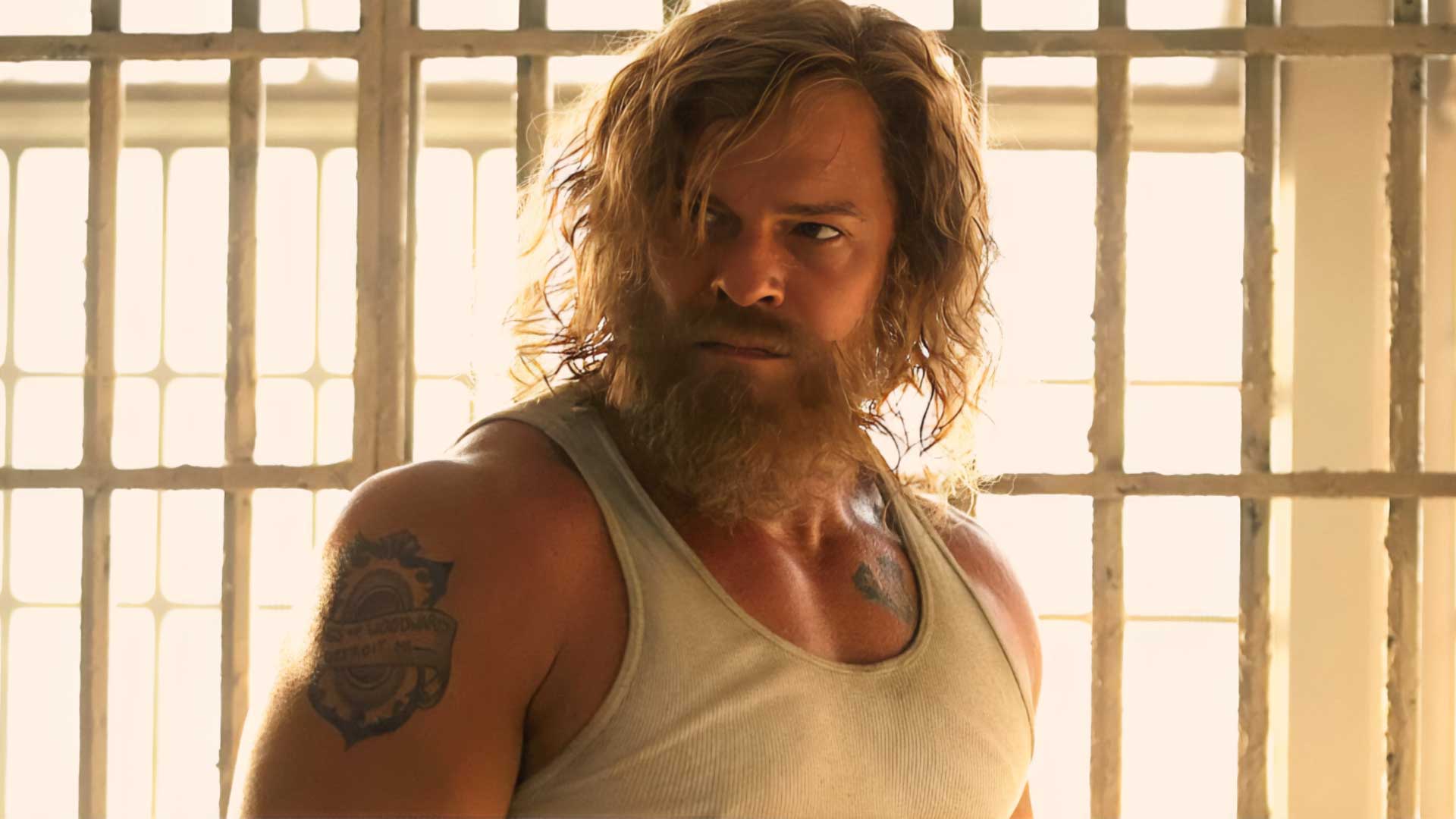
Set in the 1970s, Motor City sees Ritchson play John Miller, a working-class veteran framed by a ruthless gangster, Reynolds (Ben Foster), who is in love with Miller’s girlfriend, Sophia (Shailene Woodley). For years, Miller languishes in jail while Reynolds and Sophia embark on a deep and toxic love affair. Released after years behind bars, Miller has one mission: revenge. His life ruined, the brokenhearted and musclebound hero plots a revenge campaign against the man who stole his girl away, and he won’t let anything get in his way.
With operatic scale, Motor City unleashes a barrage of brutal action, magnetic performances, and striking imagery, fueled by a thunderous rock score, precision-crafted action, and immersive sound design, creating a visceral, propulsive spectacle built to electrify audiences this summer. And Motor City achieves all that with almost no dialogue. That was one of the unique elements that cinematographer John Matysiak saw as an opportunity and an “interesting challenge” he couldn’t turn down.
“A lot of times with movies, the visual language will support the story and the narrative, but with so much of this, the visual language is that story and the narrative, because we remove the dialogue. The visual language becomes the narration,” he says.
“We really understood that the visual language, and ultimately the world we were creating in that, had to sustain those moments, the tension, and the drama. It stemmed from the characters, their story, and we have these larger-than-life mythological, for lack of a better word.” As a result, Ponciroli and Matysiak knew that every frame in Motor City, their second collaboration, had to tell a story or “hold that emotion.”
“As a filmmaker and an artist, you’re trying to support these prolific actors, so every frame had to stand apart. If anything felt off within the frame, you would lose the story we were telling, and that visual narration would be broken,” the DP continues. “As a viewer, you need to be locked in. It wasn’t until we started seeing it with an audience that we fully realised that if you give yourself over to the film, it’s almost hypnotic.”
While very little is actually said in the film’s 1 hour and 43-minute runtime, the script was 86 pages long.
“It was a full script, and very descriptive,” the director says. “Chad St. John is an amazing writer, and he just sells that vibe so well. Reading it is one thing, but showing that emotion, with little clues here and there, was something we had to dig into and figure out. I spent a lot of time watching other silent films and seeing what worked and what didn’t work, and if they didn’t work, why not?” Ponciroli never saw the lack of spoken words as a gimmick but rather as an opportunity to tell the story “in an authentic way.”
“From the beginning, the mindset we went into this was with no pantomiming, no over exaggeration, everything is subtle, you have to feel that emotion, and sell it in the pauses and in the looks.”
When it came to other influences, all of the creatives behind the camera, including costume designer Amy Roth and editor and music supervisor Joe Galdo, found them in everything from graphic novels and fashion to even the work of celebrated painter Edward Hopper, known for his realist depictions of modern American life and landscapes. His iconic Nighthawks painting was a major influence on Motor City’s cinematography. Unsurprisingly, several classic films also inspired their work.
“We wanted to ground it in reality as much as possible,” Matysiak recalls. “We were making an independent film, so we didn’t have the luxury of relying heavily on visual effects, so we had to create that practically. In terms of the tones and pushing colours, I looked at The Terminator. I also looked at some film noir, but modern versions like Blade Runner.”
He adds, “With the nature of the action and what Alan brings to the table, it’s going to be a heightened and elevated experience, so he needed to fit into that. We had to believe the world he’s in and support that as much as possible.”
“From the beginning, the mindset we went into this with was with no pantomiming, no overexaggeration, everything is subtle, you have to feel that emotion, and sell it in the pauses and in the looks.”
Ponciroli drew his references more directly from the period in which Motor City is set.
Ponciroli drew his references more directly from the period in which Motor City is set. “I was looking at 70s movies like Bullitt and The French Connection, where the action was real and crunchy. It wasn’t super stylized or outlandish; it was raw and real. Matysiak and I also had a ton of photo books of Detroit from that period, and we spent a lot of time going through them. In our street scene, when Alan’s driving down the road, and you see the POV out the window, we had photographs that we almost duplicated. There’s a
guy selling newspapers and a couple of people standing in line at a bus stop, and we tried to recreate as many of those authentic moments in that city at that time as we could.”
For Galdo’s editing style on this unique project, he drew inspiration from “old school Brian DePalma.”
“Blowout was a big one for me. I don’t want to say that the shooting style was the same, but the editing and the way that movie was put together felt similar.”
Like Motor City’s director, Roth, whose other period costume work includes Motherless Brooklyn and The Mastermind, turned to the Hollywood stars of the day.
Motor City is fused by drama and action and wrapped in a throbbing, stellar soundtrack that boasts some of the biggest names in classic rock of the era, from Fleetwood Mac to David Bowie. It feels like the soundtrack you’d expect to hear blasting out of cars as they drove down the street and transistor radios propped up on window sills and perched on stoops. It envelops the audience and transports them back to the 70s, right into the middle of it all. Both of those elements influenced everything from where the action takes place to how it is presented and what you hear as it happens. It’s a complete and intricate package that packs a punch.
While Ponciroli and Galdo were on the same creative page, they approached their roles differently.
“I always put everything together silently,” the editor shares. “I always put everything together, and I’ll start dropping stuff in, and seeing how it feels. For me, one leads to the other. I put the thing together, the story works, everything feels really good, and then, once that’s there, what does that feel like? And that influences the music.” Sometimes, what that music is, whether it’s a track or an original score, depends on that cut.
Filmmaker Potsy Ponciroli is known for his compelling visual storytelling and deeply grounded characters.
A strong emotional core and a dedication to authentic, impactful cinema mark Ponciroli’s films. He began his career in the music video industry before founding Hideout Pictures. He co-created Still The King, a Viacom half-hour comedy starring Billy Ray Cyrus, and served as showrunner, writer, and director.
Potsy later EP’d Jay and Silent Bob reboot with Kevin Smith and TED K, starring Sharlto Copley. He
wrote and directed the feature Old Henry, which premiered at the Venice Film Festival in 2021. The
film made the National Board of Review’s Top 10, and Obama’s Top Films of 2021. His follow-up, Greedy
People, starring Joseph Gordon-Levitt, Lily James, and Himesh Patel, was released in theatres by Lionsgate. Potsy is currently writing the highly anticipated sequel to The Goonies for Warner Brothers, produced by Steven Spielberg and Chris Columbus.
Chad St.John is a screenwriter plucked out of a Florida bar by Bruce Willis and thrown into Hollywood.
Twenty years later, he’s written for nearly every studio and has had four feature films produced. Chad is
based in Nashville, TN where he spends his time chasing bourbon and not missing Los Angeles.

