
Visit our YouTube Channel
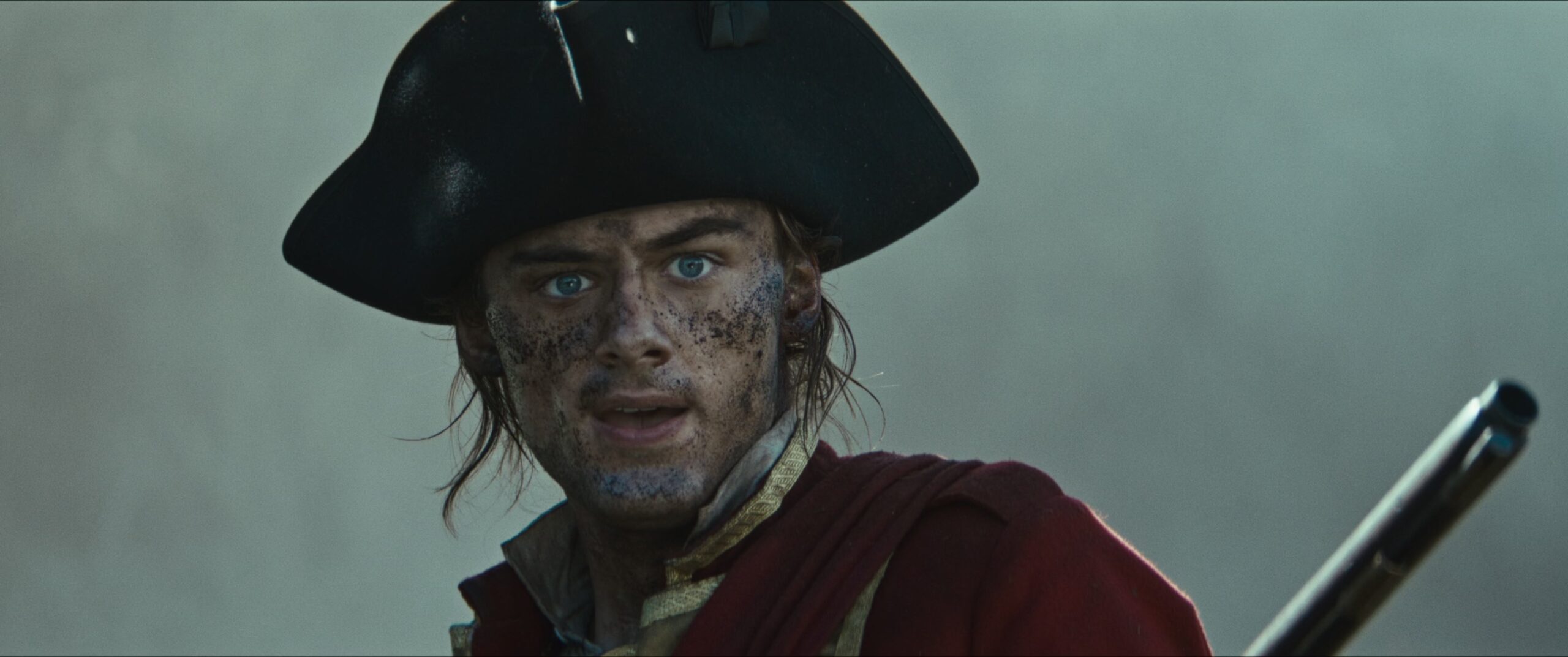
Young Washington (2026), directed by John Erwin and Daniel Edwards, is a sweeping historical drama that turns its gaze toward the formative years of George Washington, long before he became the mythic figure etched into American memory.
Adapted from Peter Stark’s Pulitzer Prize–winning biography, the screenplay was crafted by Jon Erwin, Diederik Hoogstraten and Aaron Boyd.
The film explores Washington not as the marble statue of legend but as a young, ambitious, often insecure man navigating the brutal realities of frontier warfare, political missteps, and the volatile world of colonial ambition. Erwin, whose filmmaking blends emotional clarity with historical reverence, approaches Washington’s early life with a storyteller’s instinct: he strips away the iconography to reveal the human being beneath it. In doing so, he crafts a film that is both intimate and epic, a portrait of a future leader forged not by destiny but by failure, resilience, and the relentless pursuit of honour.
The inspiration for the film lies in Stark’s biography, which reframes Washington’s youth as a crucible of misjudgment, courage, and painful lessons. Erwin was drawn to the idea that Washington’s greatness was not innate but earned — shaped by humiliating defeats, moral dilemmas, and the unforgiving wilderness of the Ohio River Valley. Rather than presenting Washington as a flawless hero, the film embraces the complexity of a young man who often stumbled, who made decisions that cost lives, and who struggled to reconcile personal ambition with moral responsibility. This approach allows Young Washington to speak to contemporary audiences: it reminds us that leadership is not born from perfection but from the willingness to grow, to confront one’s own limitations, and to rise after falling.
The film’s significance lies in its refusal to mythologise Washington. In an era when historical narratives are being re‑examined and national myths interrogated, Young Washington offers a nuanced, humanistic portrayal that neither glorifies nor condemns. Instead, it invites viewers to understand the messy, complicated process through which character is formed. Erwin’s film becomes a meditation on the nature of leadership itself — how courage is tested, how ambition can both elevate and corrupt, and how the choices made in youth echo across a lifetime. By focusing on Washington’s early years, the film reveals the emotional and psychological foundations of the man who would later guide a nation through revolution. It suggests that the seeds of greatness are planted not in triumph but in adversity.

Visually, the film is a triumph of historical immersion. Erwin and his cinematographer craft a world of dense forests, icy rivers, and treacherous mountain passes — a landscape that mirrors Washington’s internal turmoil. The frontier is not romanticised; it is harsh, unpredictable, and indifferent to human ambition. The production design recreates the colonial world with meticulous detail: the cramped quarters of military outposts, the smoky interiors of taverns where political alliances are forged, and the tense council meetings between colonial officers and Indigenous leaders. The film’s palette shifts from earthy browns and greens to stark whites and greys as Washington’s journey becomes increasingly perilous, reflecting his emotional descent into doubt and self‑recrimination.
The cast brings extraordinary depth to the narrative. The actors are William Franklyn‑Miller as George Washington, Ben Kingsley as Robert Dinwiddie, Andy Serkis as General Edward Braddock, Kelsey Grammer as Lord Fairfax, and Joel Smallbone as William Fairfax..
The narrative follows Washington from his early days as a surveyor through his disastrous expedition into the Ohio Valley, culminating in the infamous Battle of Fort Necessity — a humiliating defeat that would haunt him for years. Erwin frames these events not as failures but as essential turning points. Washington’s misjudgments, including his role in sparking a conflict that escalated into the French and Indian War, are depicted with unflinching honesty. Yet the film also highlights his courage, his willingness to take responsibility, and his capacity for growth. The emotional core of the film lies in Washington’s internal struggle: his desire for honour, his fear of inadequacy, and his dawning realisation that leadership requires humility as much as ambition.
The film’s climax is both harrowing and transformative. As Washington confronts the consequences of his decisions, he is forced to reckon with the limits of his knowledge and the weight of his actions. The final scenes, quiet and contemplative, show Washington returning home — not triumphant, but changed. Erwin uses this moment to underscore the film’s central theme: that greatness is not bestowed but forged through hardship. Washington’s future achievements are not shown; instead, the film ends with the young man standing at the threshold of possibility, shaped by failure but strengthened by experience.
Young Washington is significant because it redefines how we understand historical figures. It challenges the notion that leaders are born fully formed, offering instead a portrait of a young man whose journey was marked by doubt, error, and painful growth. In doing so, it speaks to modern audiences who grapple with their own uncertainties and aspirations. Erwin’s film becomes a reminder that leadership is not about perfection but about perseverance, self‑reflection, and the courage to confront one’s own flaws.
Ultimately, Young Washington stands as one of the most compelling historical dramas of its time — a film that breathes life into the past while illuminating timeless truths about ambition, responsibility, and the human heart. It is a story of becoming, of learning, and of the fragile, powerful process through which a young man begins to understand what it means to lead.
Jon Erwin is an acclaimed, multi-GMA Dove Award-winning director, writer, producer and entrepreneur. He is the creative force behind HOUSE OF DAVID and serves as Chief Creative Officer for Wonder Project. He is also the first and only director to receive an A+ CinemaScore® four times. His 2023 film JESUS REVOLUTION grossed $52M worldwide and was a breakout hit for Lionsgate. Along with his brother Andrew, Jon co-wrote, produced and co-directed films like MOMS’ NIGHT OUT, WOODLAWN, and the surprise hit I CAN ONLY IMAGINE, which became the #1 independent film of 2018, earning more than $83 million at the box office. In 2019, Jon and Andrew launched Kingdom Story Company. The first film from that venture was I STILL BELIEVE, a biopic about CCM megastar Jeremy Camp which was released by Lionsgate in 2020, followed by AMERICAN UNDERDOG in 2021, which told the story of NFL MVP and Hall of Famer Kurt Warner.


