Visit our YouTube Channel

Solo Mio (2026) is a quietly resonant romantic comedy‑drama whose significance lies in its blend of emotional sincerity, mature characterisation, and the luminous charm of its Italian setting.

Directed by Chuck Kinnane and Dan Kinnane, and written by Patrick Kinnane, John Kinnane, and Kevin James, the film marks a notable shift for James, who steps into a gentler, more vulnerable register than his usual broad comedic roles.

Shot on location in Rome and Tuscany, the film uses its landscapes not as postcard backdrops but as emotional terrain, mirroring the protagonist’s journey from heartbreak to renewal.

The inspiration behind Solo Mio is rooted in the Kinnane Brothers’ interest in stories of second chances and unexpected human connection. The film also carries a unique cultural resonance through the presence of Andrea Bocelli, appearing for the first time in a fictional feature film, a casting choice that deepens the film’s themes of healing, music, and emotional generosity.


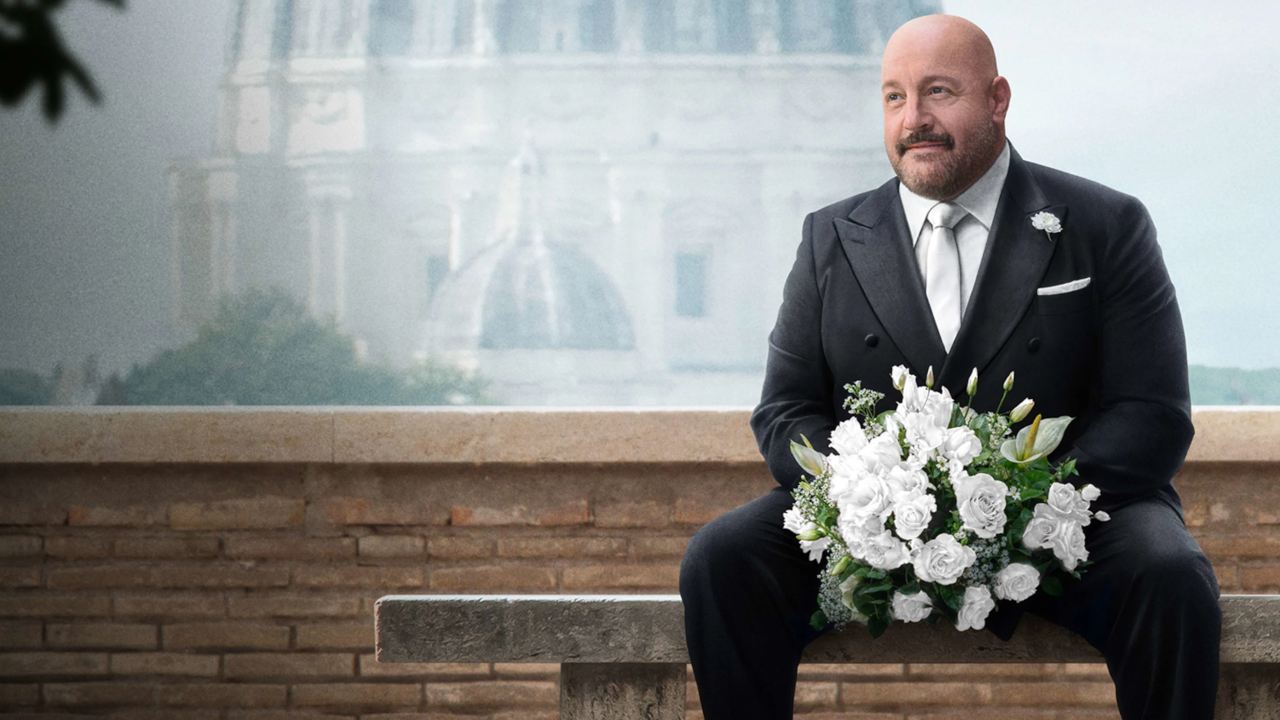
Matt Taylor (Kevin James) travels to Italy for his wedding only to be abandoned at the altar by his fiancée, Heather (Julie Ann Emery). Humiliated but determined, he continues the prepaid honeymoon alone, and what begins in heartbreak slowly becomes a journey of renewal. Along the way, he meets two married couples — Jules (Kim Coates) and Meghan (Alyson Hannigan), and Neil (Jonathan Roumie) with Donna (Julee Cerda) — whose humour and honesty help him regain his footing. Matt’s turning point comes when he meets Gia (Nicole Grimaudo), a warm café owner who shows him a more intimate Italy and invites him to her family’s countryside villa, where he discovers her connection to Andrea Bocelli. As their bond deepens, Matt’s unresolved heartbreak threatens to undo everything, leading to a confession that forces both of them to confront vulnerability and the possibility of starting again.


Director Chuck Kinnane is known for his work with the eight-brother filmmaking collective, The Kinnane Brothers. The brothers started making home movies as kids and got their first big break creating viral short films (“Sound Guy,” “Nature Planet”) for Kevin James’s YouTube channel. Their first feature film, “Home Team,” produced by Adam Sandler and starring Kevin James, was the #1 movie on Netflix for two weeks and reached the Top 10 in 90 countries. Their next film, “Water Brother: The Sid Abbruzzi Story,” a documentary about the legendary surfer and skateboarder, was released in theaters in 2024.

Dan Kinnane is a director and one of the eight brothers behind the independent film company, the Kinnane Brothers. What began as making home movies as kids led them to creating viral short films like “Sound Guy” and “Nature Planet” for Kevin James’ YouTube channel. Their first feature film, Home Team, produced by Adam Sandler, hit #1 on Netflix and landed in the Top 10 in 90 countries. Their latest documentary, Water Brother: The Sid Abbruzzi Story, premiered to a sold-out crowd of over 5,000 fans.

Patrick Kinnane is one of the key creative forces behind Solo Mio, serving as one of the film’s writers alongside his brothers John Kinnane and director Kevin James. As part of the Kinnane Brothers filmmaking collective, Patrick has built a reputation for crafting warm, character‑driven stories that blend humour, emotional sincerity, and a strong sense of human connection. His work on Solo Mio reflects the group’s signature approach: intimate storytelling rooted in vulnerability, second chances, and the quiet transformations that occur when ordinary people are pushed into extraordinary emotional circumstances.

John Kinnane is one of the central creative voices within the Kinnane Brothers filmmaking collective, known for their warm, human‑centred storytelling and their collaborative approach to writing and directing. As a co‑writer of Solo Mio, John brings a blend of emotional clarity, gentle humour, and character‑driven insight that has become a hallmark of the brothers’ work. His background in editing and visual storytelling shapes his writing style: scenes are built with rhythm, emotional pacing, and a strong sense of cinematic flow. John’s contribution to Solo Mio reflects his instinct for stories about vulnerability, second chances, and the quiet, transformative moments that define real human connection.

Kevin James brings a surprising emotional depth to the project, marking a meaningful evolution in his creative career. Known primarily for broad, physical comedy and mainstream studio vehicles, James steps into a more intimate, character‑driven mode as both co‑writer and star. His contribution to the screenplay — developed with Patrick and John Kinnane — reflects a shift toward gentler humour, grounded emotion, and stories centred on vulnerability rather than spectacle. James’s writing on Solo Mio is shaped by themes that have long interested him: ordinary people facing unexpected upheaval, the healing power of connection, and the quiet comedy found in human imperfection. What distinguishes his work here is the sincerity of tone. The script leans into heartbreak, humility, and rediscovery, allowing James to craft a protagonist who is wounded, open, and deeply human. His comedic instincts remain present, but they serve character rather than punchlines, giving the film its warm, lived‑in charm.


Unlock a new creative language. The Writer–Artist Lab is an immersive workshop where writers, visual artists, designers, photographers, and performers collaborate to build stories across mediums. Through cross‑pollination exercises, silent creation, worldbuilding, you’ll discover how story lives beyond the page — in colour, gesture, rhythm, and image.

This 3‑hour creative workshop is designed to bring writers and visual artists together in a shared storytelling space. The workshop offers a unique blend of text, image, and enhanced creativity.

Participants will explore cross‑medium exercises, including visual‑to‑text translation, behavioural storyboarding, silent collaboration, and worldbuilding through mixed media.

“This is not a writing class,” says Daniel Dercksen of The Writing Studio. “It’s a creative laboratory where story becomes visual, emotional, and cinematic.”

The workshop is open to writers, artists, designers, photographers, and anyone curious about hybrid storytelling.

This innovative new workshop from The Writing Studio forms part of the Open-Studios weekend in Prince Albert. The workshop runs from 2pm to 5 pm on Sunday, 14 June, and offers a unique blend of text, image, and enhanced creativity.

For more information


The year 2026 marks the 40th anniversary of Top Gun (1986), a film that redefined the modern action blockbuster, and embedded naval aviation into pop‑culture mythology.

Paramount is commemorating the milestone with a major theatrical re‑release on 13 May 2026, returning the original film to cinemas worldwide almost exactly forty years after its debut. This marks the film’s fourth major theatrical release, following its original 1986 run, the 2013 3D re‑release, and the 2021 pre‑Maverick re‑release, underscoring its enduring cultural power and its status as a generational touchstone.

The anniversary arrives in a moment of renewed interest in the franchise, following the record‑breaking success of Top Gun: Maverick (2022), which reignited global enthusiasm for the world of naval aviators and placed the original film back into the cultural spotlight.

The anniversary underscores the film’s lasting influence: its soundtrack, its aerial photography, its fashion, its quotable dialogue, and its mythic framing of American aviation have all become cultural shorthand. Forty years later, Top Gun remains not just a movie but a generational rite of passage, a film that continues to pull audiences back into the danger zone.

The screenplay for Top Gun (1986) was written by Jim Cash and Jack Epps Jr., working from and expanding upon Ehud Yonay’s 1983 California magazine article “Top Guns.”

Jim Cash and Jack Epps Jr. crafted the screenplay for Top Gun through a long‑distance, two‑man process built on research, immersion, and a deep fascination with the psychology of fighter pilots.

Their partnership began years earlier at Michigan State University, where Cash was Epps’s screenwriting professor; by the time Top Gun came along, they had already written seven unproduced scripts together and had developed a rhythm in which Epps handled field research while Cash shaped the material into narrative form.

According to Epps, Paramount had eight potential concepts in development when the studio presented them with Ehud Yonay’s 1983 California magazine article “Top Guns,” which profiled the elite fighter‑pilot program at NAS Miramar. Epps, who held an amateur pilot’s license, immediately seized on the idea, partly because he hoped it would get him into a jet, and soon found himself embedded with Navy pilots at Miramar, taking multiple back‑seat flights in F‑5 and F‑14 aircraft, observing dogfights, and even attending a real Top Gun graduation exercise.

While Epps was gathering the visceral details, the speed, the competition, the rituals, the swagger, the physical strain, Cash remained in East Lansing, receiving Epps’s notes, scene maps, and technical insights, and transforming them into a dramatic structure that could support character arcs, rivalries, romance, and the film’s now‑iconic aerial set pieces.

Their process was built on division of labour: Epps fed Cash the raw material, and Cash shaped it into a story.

Together, they invented the film’s characters, their emotional conflicts, the training exercises, and the competitive spirit that defines the narrative. Epps has said that the key breakthrough came during his flights, when he realised that fighter pilots are essentially athletes, competitive, ego‑driven, constantly pushing themselves and each other, a revelation that shaped everything from the Top Gun trophy to the volleyball sequence to the film’s emphasis on rivalry and self‑mastery.

The duo also understood early that the film’s success would depend on capturing extraordinary aerial footage, and they wrote the script with that requirement in mind, building scenes that would justify the Navy’s cooperation and allow director Tony Scott to shoot the F‑14s in full cinematic glory.

Despite rumours that the script changed dramatically during production, Epps has clarified that the first draft was not radically different from the final film, meaning the core structure, characters, and emotional beats were already in place from the earliest version.

What makes their screenplay distinctive is the way it blends authentic military detail with mythic emotional architecture: Maverick’s need for speed, his rivalry with Iceman, his guilt over his father, his romance with Charlie, and his struggle to balance instinct with discipline. Cash and Epps wrote the film as a story about identity, competition, and the cost of ambition, wrapped in the spectacle of aerial combat.

Their writing process, one man in the sky, one man at the typewriter, produced a screenplay that feels both grounded and larger‑than‑life, a fusion of research and imagination that became the foundation for one of the most iconic action films ever made.

Jim Cash (left) and Jack Epps Jr. (right)

Jim Cash (1941–2000) was an American screenwriter and longtime Michigan State University professor whose partnership with former student Jack Epps Jr. became one of the most successful writing duos of the 1980s. Cash remained in East Lansing throughout their career, collaborating remotely with Epps in California as they co‑wrote a string of major studio films, including Top Gun (1986), Legal Eagles (1986), The Secret of My Success (1987), Turner & Hooch (1989), and Dick Tracy (1990). Known for his structural clarity, character‑driven humour, and ability to shape high‑concept ideas into emotionally accessible stories, Cash left a lasting legacy as both a teacher and a Hollywood craftsman, establishing scholarships and mentoring writers until his death in 2000.

Jack Epps Jr. (born 1949) is an American screenwriter, producer, and educator best known as the co‑writer of Top Gun (1986), a film that became a defining cultural landmark of the 1980s. Raised in the Detroit area, Epps studied at Michigan State University, where he met professor Jim Cash and began a writing partnership that would span more than two decades. After moving to Hollywood, Epps became the duo’s on‑the‑ground researcher, embedding himself in environments ranging from naval air bases to police departments to gather the technical and behavioural detail that shaped their scripts. Together, Cash and Epps wrote a series of studio hits, including Legal Eagles, The Secret of My Success, Turner & Hooch, and Dick Tracy. Epps later transitioned into teaching, becoming a prominent screenwriting professor at the USC School of Cinematic Arts, where he continues to mentor emerging writers and preserve the craft principles that defined his career.

The Plot Pilot: MSU’s Pivotal Role in Blockbuster Career


Beast refuses the glossy triumphalism that often defines the genre and instead embraces a raw, bruised realism that interrogates the emotional, physical, and existential cost of fighting as both a profession and an identity.

During the production of Land of Bad on the Gold Coast in September 2022, Russell Crowe and writer-producer David Frigerio were locked in the grind—long days of filming followed by longer nights
rewriting Crowe’s Reaper character. The energy on set was fierce, the collaboration alive with momentum.
Amid the chaos, Frigerio saw an opening. With Dan Macpherson already on board, he pitched Crowe his
next project, Beast, and sent him an early draft.

After the Land of Bad shoot, Crowe’s reply came back unfiltered and unmistakably his, “Mate, there’s a
good story there, but we can make it great. When can you get to Sydney?”

Frigerio didn’t blink. “When the best actor in the world asks when you can come to see him, you don’t wait.” That night, he booked a one-way flight from Los Angeles. Fifteen hours later, he was in Sydney, ready to work. For two relentless weeks, Crowe and Frigerio lived in the script.

They worked eighteen-hour days fueled by coffee and creative obsession. Scenes were built, torn apart, and rebuilt stronger. Each pass pushed the story closer to something real. Between writing sessions, they traded stories from the trenches, Cinderella Man, Gladiator, LA Confidential, etc…lessons from legendary boxing trainer, CusD’Amato, and long talks about legacy, redemption, and the price of greatness.

By the end, the exhaustion was total, but so was the reward. The two had forged a deep creative bond
born from mutual respect and shared fire. What emerged wasn’t just a new draft—it was a story that
pulsed with life, raw emotion, and purpose. Beast became more than a script. It became a mission. A
story worth fighting for.

From there, Frigerio, along with fellow producers John Schwarz, Michael Schwarz and Tim O’Hair, set out
to develop a film that wasn’t just another fight drama but one rooted in authenticity. Inspired by classics
like ROCKY, WARRIOR and THE FIGHTER, they wanted BEAST to capture the grit, spirit and sacrifice behind combat sports.

“We’re telling a story through combat sports, and we’re using the drama of the conflict to tell that story,”
explains John Schwarz.

© The Beast Film Holdings Production Pty Ltd 2026

Statement from Director Tyler Atkins

On behalf of our team, I present BEAST. In directing this film, I drew from my own lived experiences of struggle, redemption, and the search for belonging.

BEAST tells the story through the eyes of Patton, a former MMA fighter who walked away from the spotlight after being incarcerated for many years, in search of a more honest life. The film reflects what it means to live with the weight of your past while still finding the strength to chase your own dreams, and I hope the audience feels that intense journey of isolation, pressure, release, and hope alongside him.

I explore this world not only through Patton but also through the eyes of his wife, Luciana, who watches her husband lose his spark in life. Their relationship becomes a powerful lens into love, sacrifice, marriage, and the pressures of survival. Patton’s complex relationship with his coach, Sammy (Russell Crowe), further deepens this exploration, embodying themes of tough love, forgiveness, and the hope of reconciliation.

We shot the film across Australia and Thailand, two regions that provide not only stunning cinematic backdrops but also a visceral sense of atmosphere that heightens the intensity of the story. The hard, raw coastal landscapes of Australia, combined with the vibrant yet unforgiving environments of Thailand, mirror Patton’s internal struggles. I used super-speed lenses, handheld and steadicam work, laced with drone footage to balance human intimacy with the scale of the large world around him.

These creative choices allow the audience to feel Patton’s isolation, his distortions of self, and his primal fight to reconnect with who he truly is.

For me, BEAST is not just about MMA—it is primal. It is about fighting for survival as our ancestors once did. It is about redemption, love, forgiveness, and family. These are themes I have searched for throughout my own life, and bringing them to the screen is both deeply personal and healing. MMA fighters embody the spirit of the modern-day gladiator, giving everything they have for their craft through discipline and repetition. With this film, I wanted to explore both the raw brutality and the unexpected beauty of a life where the real battles are fought not only in the cage, but in the quiet struggles of everyday existence.

I believe this story resonates as more than a sports drama; it is a meditation on the human condition.
BEAST reminds us that even in the shadows of complete darkness, there is always a path back to love,
light, forgiveness, and family—and that we can find the courage to keep chasing the dreams that
refuse to die within us.

© The Beast Film Holdings Production Pty Ltd 2026

BEAST follows ex-con Patton James (Daniel MacPherson), who abandoned his mixed martial arts dream
to support his wife, Luciana (Kelly Gale), and daughter. When Patton’s brother Malon suffers a serious
injury in a fight to make good on his debts, Patton has to risk everything to get back in the ring to avenge
him. But to reclaim his old glory and succeed in the ONE Championship, Patton must regain the trust of
his ace trainer (Russell Crowe) and keep his own family together

How Russell Crowe and David Frigerio Crafted the Screenplay for Beast

Russell Crowe and David Frigerio approached the screenplay for Beast with a shared commitment to grounding the story in the lived reality of combat sports, shaping a script that blends bruised masculinity, emotional interiority, and the unforgiving physics of mixed martial arts.

Their collaboration begins with Crowe’s instinct for character, his long‑standing fascination with men who carry their histories in their bodies, whose emotional landscapes are shaped by regret, loyalty, and the slow erosion of physical power. Crowe writes from the inside out: he starts with the psychological wound, the unspoken shame, the unresolved fracture that defines a man’s choices. For Beast, that meant building a protagonist whose life has been shaped by violence, whose identity is inseparable from the cage, and whose journey is less about victory than about confronting the ghosts that have followed him out of it.

Crowe’s writing tends to privilege emotional truth over plot mechanics, so his early drafts focused on the internal architecture of the characters—their relationships, their betrayals, their private rituals, their unspoken debts.

Frigerio, by contrast, brings a structural and genre‑driven discipline to the collaboration. Known for high‑stakes thrillers and muscular genre pieces, he approaches story like an engineer: mapping beats, calibrating tension, and ensuring that every emotional turn is supported by narrative propulsion. Where Crowe leans into the wounded soul of the fighter, Frigerio ensures the story moves with the rhythm of a sports drama—training sequences that escalate pressure, confrontations that reveal character, and a narrative spine that builds toward an inevitable reckoning. His contribution is the scaffolding: the pacing, the escalation, the architecture of conflict. Together, they form a complementary pair, Crowe shaping the emotional musculature, Frigerio shaping the bones.

© The Beast Film Holdings Production Pty Ltd 2026

Their process was also deeply informed by ONE Championship, whose world provided not only the film’s setting but its thematic inspiration. Crowe and Frigerio spent time studying fighters, coaches, and the backstage rituals of MMA, observing how athletes prepare, how they break, how they rebuild, and how the sport’s culture shapes their identities. This research fed directly into the screenplay’s texture: the language of the gym, the hierarchy of respect, the psychological warfare, the economic precarity, and the way fighters carry both pride and trauma in equal measure. They were particularly drawn to the idea that MMA is not merely a sport but a crucible, one that exposes a person’s deepest fears and desires. This became the thematic engine of the script.

Crowe’s influence is most visible in the screenplay’s emotional density. He writes dialogue that is spare, weighted, and often elliptical, lines that reveal more in what is withheld than what is spoken. His characters rarely explain themselves; instead, their histories leak through in gestures, silences, and the physicality of their interactions. He also brings a performer’s instinct to the writing, shaping scenes with an eye toward how actors will inhabit them, how breath and stillness can carry as much power as action.
Frigerio’s influence appears in the screenplay’s momentum. He ensures that the emotional beats are embedded within a clear narrative trajectory: the fall, the call to return, the training, the confrontation, the cost. He shapes the film’s stakes not only through physical danger but through the consequences of failure, financial, familial, and psychological. His structural discipline keeps the story from collapsing into introspection; instead, it moves with the urgency of a man running out of time.

Their collaboration also reflects a shared respect for authenticity. They avoided stylised, superheroic fight choreography and instead wrote sequences that reflect real MMA technique—clinches, ground‑and‑pound, exhaustion, strategy, and the brutal calculus of survival. They wrote the fights not as spectacle but as character expression: every strike reveals something, every round is a psychological chapter.

The screenplay’s emotional core—its exploration of aging, regret, and the fragile masculinity of fighters whose bodies are no longer obedient—comes from Crowe. The screenplay’s shape, its pacing, its escalation, and its narrative clarity come from Frigerio. The world‑building, the gyms, the arenas, the rituals, the culture, comes from their shared immersion in ONE Championship.

Together, they crafted a screenplay that is not merely a sports drama but a study of identity under pressure. Their writing process fused Crowe’s instinct for wounded humanity with Frigerio’s command of genre mechanics, resulting in a film that feels both intimate and explosive, both character‑driven and physically visceral.

In the end, Beast is shaped by the tension between two creative forces: one writing from the heart, the other from the spine, both committed to telling a story where violence is never empty, and every punch carries the weight of a life lived in the shadow of the cage.

© The Beast Film Holdings Production Pty Ltd 2026

RUSSELL CROWE is an Academy Award winner who is regarded as one of the finest actors of our time.
He is celebrated for his versatility, intensity, and powerful performances across various genres. His many acting honours include three consecutive Best Actor Oscar nominations for his work in the acclaimed 1999 drama The Insider; the 2000 Best Picture winner Gladiator, for which he took home the Oscar; and Best Picture winner A Beautiful Mind in 2001.

Born in New Zealand but raised Australia, it was there that Crowe gained international attention for his work on the big screen. He was recognised three consecutive years by the AFI, starting in 1990, when he was nominated for Best Actor for The Crossing; in 1991 when he won Best Supporting Actor for Proof and the following year winning the Best Actor Awards from both the AFI and the Australian Film Critics for his
performance in Romper Stomper.

The 1993 Seattle International Film Festival not only named him Best Actor for his work in Romper Stomper but in Hammers Over the Anvil too. Crowe’s American film debut was in Sam Raimi’s 1995 western, The Quick and the Dead and later went on to earn acclaim for his role in Curtis Hanson’s crime drama L.A. Confidential. His early film credits include Mystery, Alaska, Heaven’s Burning, Virtuosity, The Sum of Us, For the Moment, Love in Limbo, The Silver Brumby, The Efficiency Expert and Prisoners of the Sun. Crowe has since starred in a long and diverse list of film and television credits capturing audiences worldwide.
Crowe started his career as a musician with his first record release in 1982. He has played with various
bands over the years, releasing 5 albums, and is currently the lead singer of Indoor Garden Party. The first
Indoor Garden Party album The Musical came out 2017. Their follow up album, Prose and Cons was
released in 2024. The band toured extensively in Australia in 2023 and have played numerous
international gigs including the Karlovy Vary Festival for 15,000 people and Italy’s Sanremo Festival. Last
year, Indoor Garden Party toured Italy, Ireland, England, France, Scotland and the United States which
included concerts at iconic venues such as the Colosseum in Rome and the ancient amphitheater in
Pompeii.

In 2005, Crowe reunited with Howard in Cinderella Man, and his portrayal of Jim Braddock earned him both Golden Globe and SAG nominations and won him the Australian Film Institute (AFI) Award for Best Actor.

Crowe made his directorial debut in 2015 with the sweeping epic The Water Diviner, in which he also
starred. The film won three Australian Academy of Cinema and Television Arts Awards, including Best
Picture. His second directorial film Poker Face, a thriller in which he also stars, was released in 2022.
Crowe starred in James Vanderbilt’s historical thriller Nuremberg, and wrapped production on several films including the Netflix thriller Unabom; Walden Media’s Cold War thriller Billion Dollar Spy; the action thriller Bear Country; the sports action film Beast in Me; and the period epic The Weight. He next stars opposite Henry Cavill in Amazon MGM Studios’ Highlander.

Recent films include: Sony/Marvels’ Kraven the Hunter, the action-thriller Land of Bad; the thriller Sleeping
Dogs; the supernatural thriller The Pope’s Exorcist; and in Apple’s The Greatest Beer Run Ever, directed by Peter Farrelly. He also played ‘Zeus’ in Taika Waititi’s Thor: Love and Thunder.

Additional film credits include Solstice’s psychological thriller Unhinged; Jed Kurzel’s The True History of
the Kelly Gang, Universal’s The Mummy, Joel Edgerton’s Boy Erased, The Nice Guys, Darren Aronofsky’s
biblical drama Noah; Gabriele Muccino’s Fathers & Daughters; Akiva Goldsman’s Winter’s Tale; Zack
Snyder’s Man of Steel; Tom Hooper’s acclaimed screen adaptation of the musical Les Miserables; and
Allen Hughes’ Broken City. He has worked on several Ridley Scott-directed projects such as A Good Year,
American Gangster, Body of Lies and Robin Hood. Among his other credits are Peter Weir’s Master and
Commander: The Far Side of the World, for which he earned a Golden Globe nomination; Taylor Hackford’s Proof of Life; James Mangold’s 3:10 to Yuma, Kevin Macdonald’s State of Play, Paul Haggis’ The Next Three Days; and in RZA’s The Man with the Iron Fists.

On the television side, Crowe received rave reviews for his performance as Roger Ailes in Showtime’s The
Loudest Voice, starring opposite Naomi Watts and Sienna Miller. He won the Golden Globe for Best Actor
in a Mini-Series or Motion Picture for TV and received SAG and Critics Choice award nominations.

David Frigerio is an American-Italian screenwriter, film producer, and the founder of Broken Open Pictures, a Manhattan Beach, California-based production company. With a keen eye for high-octane storytelling and character-driven narratives, Frigerio has built a reputation for delivering compelling and commercially successful films.
Frigerio wrote the script and is producing, with Tyler Atkins directing. In a groundbreaking collaboration, BEAST has partnered with ONE Championship, the world’s largest MMA fight organisation, to bring an authentic and electrifying depiction of the sport to the big screen.

One of his most recent ventures, the action-thriller LAND OF BAD, which he co-wrote and produced
alongside director William Eubank, showcased his ability to craft gripping narratives. Frigerio’s work also includes BAD HOMBRES, which won the Grand Jury Prize at the Mammoth Film Festival. One of Frigerio’s early career breakthroughs came with THE SIGNAL, a critically acclaimed sci-fi thriller he co-wrote. With a career defined by bold storytelling and genre-defining films, David Frigerio continues to make waves in Hollywood, pushing the boundaries of independent filmmaking

Tyler Atkins is an Australian filmmaker known for crafting emotionally resonant narratives that explore
themes of identity, resilience, and human connection. Atkins’ debut feature, BOSCH & ROCKIT marked a significant milestone in his career. He wrote, directed, and produced the semi-autobiographical drama, which was among the first Australian productions to successfully film during the COVID-19 pandemic. Following this success, Atkins has recently directed BEAST. In 2019, Tyler worked on the upcoming TV series, SHANTARAM, for Apple TV+. He began in the Writers’ Room under Eric Warren Singer (American Hustle), then moved to the Director’s Team, assisting JustinK urzel (Snowtown).


The techno‑thriller Wardriver was written by Daniel Casey and spotlights the art and culture of wardriving: a microcosm of the hacking industry that involves searching for networks from a moving vehicle.

His modern-day Robin Hood-esque character exploits this highly specialised skill to commit high-tech robberies from his laptop, fusing intimate character drama with the escalating anxieties of a world increasingly shaped—and threatened—by digital vulnerability.

“When I first read the script, I felt an immediate pulse—dark, obsessive, and intimate,” says director Rebecca Thomas (Stranger Things). “It had that raw Taxi Driver energy I’ve always loved, and as someone who’s often pegged for female-driven narratives, “I was excited to dive into a story centred on a morally gray male lead. I saw an opportunity to explore something unexpected: a character study built on restraint, guilt, and quiet delusion.”

Crafting the Screenplay

Daniel Casey approached Wardriver as a character‑driven techno‑thriller, building the script around the real subculture of wardriving, the practice of searching for vulnerable Wi‑Fi networks from a moving vehicle. This concept, highlighted in production notes, gave the film its thematic spine: digital vulnerability as both opportunity and danger. Casey’s script centres on Cole, a morally ambiguous hacker whose “modern‑day Robin Hood” logic drives him into high‑tech robberies and deeper ethical compromise.

Casey constructed the narrative as a slow-burning character study disguised as a crime thriller. Rather than leaning solely on hacking spectacle, he wrote Cole as a lonely, guilt‑ridden figure whose skills become both his weapon and his prison.

The screenplay escalates when criminal Oscar discovers Cole’s abilities and forces him to hack the bank account of Sarah, pulling Cole into a web of mob‑connected corruption. Casey uses this twist not just for plot propulsion but to expose Cole’s delusions about helping others, a theme Thomas emphasised as central to the script’s emotional architecture.

Casey’s writing blends technical precision (the mechanics of hacking, the tension of digital heists) with psychological realism, shaping a thriller where every keystroke carries moral weight. The result is a screenplay that fuses cybercrime, noir tension, and intimate character drama, a story about a man who believes he’s doing good, even as every choice pulls him further into danger.


Daniel Casey is a screenwriter and director originally from Detroit. A graduate of the American Film Institute and an alumni of the Sundance Institute’s Directing and Screenwriting labs, Daniel’s upcoming projects include an adaptation of the wildly popular videogame series MASS EFFECT for Amazon, an UNTITLED CRIME THRILLER for Sony Pictures and director Craig Gillespie, a supernatural western called THE PINKERTON for Bad Robot and director Jason Bateman, and more. Presently, Daniel is prepping an indie crime thriller titled THERE IS NO SUCH THING AS SOUTH DETROIT with producers Trevor White and Tim White with Star Thrower Entertainment.

Daniel’s previously produced work includes 10 CLOVERFIELD LANE for producer JJ Abrams and director Dan Trachtenberg, F9 (FAST AND FURIOUS 9) for Universal and director Justin Lin, and KIN for Lionsgate, 21 Laps and directors Josh and Jonathan Baker. 


How to Make a Killing arrives as a wickedly stylish black‑comedy thriller, written and directed by John Patton Ford, the filmmaker behind Emily the Criminal. Adapted from Roy Horniman’s 1907 novel Israel Rank: The Autobiography of a Criminal, and loosely inspired by the classic 1949 Ealing comedy Kind Hearts and Coronets, the film reimagines a century‑old satire for a contemporary audience hungry for stories about power, privilege, and the seductive logic of self‑made success.

With Glen Powell leading a formidable ensemble cast—including Margaret Qualley, Jessica Henwick, Bill Camp, Zach Woods, Topher Grace, and Ed Harris—the film blends dark humour with psychological tension, crafting a narrative that is as entertaining as it is unsettling.

At the centre of the story is Becket Redfellow, a blue‑collar outsider disowned at birth by his obscenely wealthy family. When he discovers that he is, in fact, the rightful heir to the Redfellow fortune, he embarks on a ruthless quest to reclaim what he believes is his due—no matter how many relatives stand in his way. Ford’s screenplay transforms this premise into a sharp, satirical character study, exploring how entitlement, resentment, and ambition can twist into something monstrous when given just enough oxygen. Powell’s performance grounds the film in a charismatic menace: Becket is charming, wounded, and terrifyingly determined, a man who believes that the world owes him a debt he intends to collect.


Back in 2023, Glen Powell says he found himself at a crossroads.

The now 37-year-old star was enjoying a trajectory that had, appropriately enough, taken a stratospheric upwards turn thanks to his standout performance in Top Gun: Maverick. He also had another two movies in the can – Hit Man, that he co-wrote and produced alongside director Richard Linklater, and Anyone But You, his high concept, much-paparazzied rom-com with Sydney Sweeney – that he was confident would cement his status.

But Powell craved something deeper. Something provocative and punchy that would push people’s
buttons while thrilling them with the kind of amoral maze of a movie he’d grown up loving watching
himself. A genre-stretching picture that would satisfy a personal creative itch and have audiences
debating its rights and wrongs long after the credits rolled.

He found precisely what he’d been looking for in How To Make A Killing, the wickedly entertaining
thriller from acclaimed writer-director John Patton Ford, that is about to unleash its gripping revenge
plot and razor-sharp wit on mainstream crowds and avid movie-goers alike, across the world.

Ford had taken that script to STUDIOCANAL, who have produced the film it has now become alongside Blueprint Pictures.

The French-born company had felt it fit perfectly with their ethos to make what its EVP of global production, Ron Halpern, calls “visionary movies driven by directors who have a voice for audiences of today, who are looking for distinctive filmmaking. That’s why we wanted to make this film, with John.”

Significantly, STUDIOCANAL wasn’t only the right studio for the project because of the kind of movies it makes right now but for the many that exist in its vast library of classics too. One very important one, in particular.

“How To Make A Killing is a loose, loose reimagining of the classic Ealing Studios dry comedy Kind Hearts and Coronets, from the ‘40s,” Ford reveals. “This is a more bombastic, American version of it.”

That original movie, directed in 1949 by Robert Hamer, starred the legendary Alec Guinness, who played an unprecedented eight characters in it. “I love the original. There is such a unique tone and wit to it. And over the years, STUDIOCANAL have had various big cheese movie stars come in and say, ‘Wouldn’t it be fun to remake Kind Hearts and Coronets? And how about I play all the parts?’” says How To Make A Killing’s producer, Pete Czernin.

Until now, though, none of the suggested approaches had seemed quite the right fit. “It’s always hard to explain what makes it worth pursuing a new version of something,” Halpern says. “But what John did was make this feel incredibly contemporary. It just worked, the moment you read it. He made the original feel ripe for reappraisal. He took the bones of it, flipped it to America and shook it up.”

Powell had been considering Ford’s new script with his sights set firmly on the lead role

Becket Redfellow, a young man robbed of his birthright to a vast family fortune and determined to get what he feels he’s owed by murdering his way through the family members who stand in his way.

“I loved the script because its concept was just so compelling and had such a great ensemble of characters,” Powell says. “When I read it, I realised that this was the kind of role I’d been looking to
take on – the kind of part I’d never played.”

Powell had been a fan of Ford’s debut movie, the multiple award-winning, critically adored and Aubrey Plaza-starring Emily the Criminal, and when he met with the director, his fandom only amplified.

“I was a huge fan of Emily the Criminal, but then sitting down with John, I became a fan of him as a person too. And then I became a fan of what he was planning on doing with this movie, and how it was going to feel. The movie that John was talking about, on a tonal level and on a taste level, was the kind of movie I hadn’t ever seen in the marketplace,” Powell says.

“We’ve all seen American Psycho. We’ve seen derivatives of it. We’ve seen Taxi Driver. We’ve seen derivatives of that too. But the way John was conceptualising this movie, his vision behind it, I was
like, ‘I’ve never seen that movie – it’s like Ocean’s 11 with murder. It’s rock ‘n’ roll. It’s got swagger.’
John reminded me of a young [Steven] Soderbergh.”

Soderbergh wasn’t the only auteur that Ford was being compared to behind the scenes. Ask How To Make A Killing’s producer, Pete Czernin, what makes him such a special talent, and he’ll namecheck some other filmmaking greats that he believes Ford sits comfortably alongside.

“I’ve been lucky enough to work with Martin McDonagh [on the double-Oscar-winning Three Billboards Outside Ebbing, Missouri], who is just extraordinary. But the Americans seem to bang out this calibre of writer-directors: Quentin Tarantino, Paul Thomas Anderson, John Patton Ford… That writer-director space is very interesting, and John is right in that zone.”

What most interested Powell about the project, and the character of Becket Redfellow himself, was a question of perspective. Specifically, that of the audience. Because here was that rare thing: a movie that, like the American Psycho and Taxi Driver examples he had for so long been seeking, asked its viewers to be complicit in the action themselves. To root for a man doing terrible things. To want him to literally get away with murder.

“That’s exactly what I’d loved about those movies, us following somebody we shouldn’t. That POV where the audience ends up rooting for the antagonist, essentially. Or at least someone who has antagonistic morals,” Powell smiles, delighted to now be playing in the ethical murk.

“The fun of jumping into this world was, ‘How far can I take the audience down this path and still make them root for me?’ That’s what I was always craving, that shift of perspective. This movie isn’t attempting to exist in the same lane as those other exceptional movies. But like them, we’re guiding the audience on a journey they may not at first think they want to go on, but will discover is a blast to go on.”

Powell isn’t the only one for whom making How To Make A Killing represents a personal milestone.

“On a thematic level, this movie is about growing up in the United States, where you’re taught to acquire more than you showed up with. That’s certainly built into my DNA, to get more and more and go further and never quite be satisfied with where you are,” says Ford.

“This is a movie about someone with that disease, who simply can’t accept where he currently is. For reasons beyond his control, he feels he deserves this fortune that he just can’t get. Really this story is all about how far we will go in life to get something we are convinced will make us content, when actually the definition of contentment is being happy with what you have. It’s a movie about that dilemma that we all share.”

The director smiles, overjoyed to be working with his leading man to bring to delicious life a character for the ages played by an actor at the peak of his powers, who is finally getting to unleash his wild side.

“What makes this movie extreme is that it centres around a character who feels emboldened to do things that we just would not do. And Glen is so perfect for that because on one hand he’s so identifiable as a performer and, on the other, he is so charming that you’d almost forgive him for anything,” Ford says.

“Because Becket is like us, up to a point. He’s like us in the sense that he has similar desires, fears and insecurities. But then, for whatever reason, he doesn’t quite have the same ethical hang-ups that we do and is able to do things that we would never, ever consider doing. It’s a story that is designed to give the audience an illicit thrill because we get to follow someone who’s ever so slightly more over the line than we are. It’s a wild ride for sure.”

“One of the most fascinating aspects about making this movie has been exploring the different versions of wealth, and what it does to different people,” Ford says. “It’s not the same for everyone. Each of these characters uses that money and that leverage in their own unique ways.”

JOHN PATTON FORD – Directorwriter

John grew up in rural South Carolina. When he was thirteen, a movie filmed in his hometown, and he was cast in a small role (because he “looked local”) and ended up spending a month on set, following around the director and cinematographer. He quickly became interested in filmmaking. After graduating from The American Film Institute, his thesis film, PATROL, premiered at the 2010 Sundance Film Festival. He found work as a screenwriter soon after, penning scripts for Sony, Universal, and Disney. His directing debut was EMILY THE CRIMINAL, starring Aubrey Plaza. The movie premiered at the 2022 Sundance Film Festival and was nominated for four Independent Spirit Awards, winning Best First Screenplay. He lives in Los Angeles.


From Academy Award winning writer/director Chloé Zhao, Hamnet tells the powerful story of love and loss that inspired the creation of Shakespeare’s timeless masterpiece, Hamlet.

With such nuanced, sensitive and insightful films as 2017’s The Rider and 2020’s Oscar®-winning drama Nomadland, writer-director Chloé Zhao has earned a reputation as one of the most singularly gifted filmmakers of her generation. Now, as writer-producer-director-editor, she brings her visionary approach to Hamnet. The film centers on the marriage between Agnes and William Shakespeare and explores the tumultuous events involving the couple’s son Hamnet, which would ultimately inspire the creation of the Bard’s timeless masterpiece, Hamlet.

The film springs from the pages of Maggie O’Farrell’s acclaimed eighth novel, Hamnet, which won the National Book Critics Circle Award, the Women’s Prize for Fiction and was cited as one of 2020’s five best works of fiction by the New York Times Book Review. For O’Farrell, the story was one she’d hoped to tell for nearly three decades, after having discovered little-discussed details of Shakespeare’s family life, specifically the death of his only son Hamnet, who succumbed to the plague at just 11 years old.

“I always felt it was very unjust to this boy that nobody ever made the connection between this child called Hamnet and the play that was written four or five years later called Hamlet,” O’Farrell says. “This child had become so sidelined, a footnote in his very famous father’s story. So, the whole impetus to me writing the book was to put him on stage and to say that this child was important. He was loved. Without him, we wouldn’t have Hamlet. We owe this child so much, yet he was not part of the conversation at all.”

Although he receives title billing in O’Farrell’s novel, the child is not the central protagonist in her story. That role instead falls to Agnes(O’Farrell calls her character by the name she was given at birth, pronounced Ann-yis, rather than the more familiar Anne). The experienced falconer, forager and healer is as untamed as the lush and verdant landscape that surrounds her home. Her strong connection to the natural world borders on the mystical, and her wild, unconventional demeanor is instantly attractive to Will, who also harbors rebellious feelings toward his domineering father and the strictures of late 16th century society.

Together, they make a formidable duo whose passions are in sync for much of the early years of their marriage. But their bond begins to fray as Will, encouraged by Agnes, pursues his dreams of creative expression. His sojourns from their Stratford-Upon-Avon home to London to work in theater are his lifeblood, something his wife understands all too well, but his absence is felt keenly by his family, particularly little Hamnet. Agnes uses her skills to make a lovely home for the boy and his two sisters, Susanna and Judith, though some forces prove too strong for even the most fiercely protective mother to keep at bay.

After Hamnet’s sudden illness and demise, the family is sent reeling from the loss, yet Agnes must remain steadfast in her commitment to her daughters and her husband. Still, the couple struggles to move beyond tragedy and find a path toward forgiveness, acceptance and fulfillment. Agnes immerses herself in nature, while Will pours his grief into a play that would live on throughout the centuries, Hamlet (which, in the 16th century, was a common variant of his son’s name)—about a teenage prince who outlives his murdered father. Each finds a kind of catharsis in the act of creativity and imagination, giving meaning to the suffering they’ve experienced.

REVIEW


A Statement From Chloé Zhao

Hamnet is about love and death and how these two foundational human experiences can alchemize and transform each other through art and storytelling.

It’s a story of metamorphosis.

I don’t often have words to describe why I choose a project. I’m often guided by instinct, a tight pull on my heart center. Stories appear in my life as if they have chosen me and I have no choice but to surrender to them. Hamnet came into my life like a whisper that grew into a hurricane. By the end of the journey, I was tenderized. I had truly experienced what it feels like to live with an open heart in the eye of a storm – the beauty, the pain, the thrill at the edge of annihilation and the silence.

From the black hole in the spring ground of the old forest to the dark door on the stage of the rain-soaked Globe Theatre, I descended with a village of brave souls and together we held onto each other and let the underground currents of our unconscious take us. In the chaos we asked Agnes and William to guide us. We asked all the women past and present who suffered great pain and loss and the men who suppressed their feelings and ran away from themselves to guide us. We asked the forest, the river, the earth to guide us, and we asked our own wild hearts that desperately yearn for freedom and peace to guide us. In the end, as we danced on and off the stage of the Globe, the veils between reality and fiction, past and present, the seen and the unseen, love and death dissolved. There was no separation. We were one in those precious moments. I felt in my body, in my bones, that love doesn’t die, it transforms.

I have been afraid of death all my life and as a result, I have been afraid of love as well. I didn’t know how to keep my heart open staring at the impermanence of life. I’ve made four films about characters experiencing great loss and finding themselves through acceptance. HAMNET is the accumulation of that journey. With the sacred container of Shakespeare’s Hamlet, I went down deeper into the underworld to retrieve what was lost, that made me so afraid to experience both love and death. Maggie had opened a portal with her book, a bridge for us to connect with Will in ways we haven’t before.

“All things in life must die, passing through nature to eternity.”

“To be or not to be, that is the question.”

“The rest is silence.”

Will had written a story about love and death and I feel honored and fortunate to be able to interpret his messages for today’s audience. We knew, felt, that he was with us.

In our story, Agnes and William fell in love and had a beautiful family until they both found themselves at a threshold after the death of their son. They couldn’t go back to the past and they couldn’t move on. They are frozen in a liminal place, pulled towards opposing directions but cannot move an inch.

It is with such tension ALCHEMY occurred. In physics, when forces pull or push in opposing directions, they create tension. When that tension is too strong, it leads to movement and a new state of equilibrium: in the exact moment when Will finds himself between land and sea, life and death – one of the greatest pieces of literature was born.

Our world is at a threshold. We all feel the immense tension and pressure. We can sense a new state of equilibrium approaching. Many of us are frozen in a liminal place, afraid to move. I see the fears that plague me in others’ eyes. The fear of what will come. The fear that we don’t have control over our own lives. The fear that we are no longer safe in this world. The fear that we will never know unconditional love. And ultimately, the fear of death, a death without meaning.

The deepest reason for making this film is to bring disillusionment to that fear by showing the power of metamorphosis we have within us as human beings and our ability to alchemize our experiences no matter how painful they are.

We are all born into this world feeling the tension of the void. We must make a choice to keep our hearts open and walk through the flames.

Love doesn’t die, it transforms. It is the greatest metamorphosis in this universe, and I hope our film serves as a humble reminder of that.

Director Chloé Zhao with actors Paul Mescal and Jessie Buckley with on the set of their film HAMNET, a Focus Features release. Credit: Agata Grzybowska / © 2025 FOCUS FEATURES LLC

The journey from page to screen

Hamnet’s journey to the screen began when Hera Pictures founder and producer Liza Marshall received an early copy in November 2019, several months prior to the book’s publication in March of 2020. Because I’d read all Maggie O’Farrell’s previous novels and I’m such a super fan, I sat down and read the whole book in one night and completely fell in love with it,” Marshall recalls. “It was such an extraordinary, moving piece of writing.”

Securing the rights to adapt the novel, Marshall eventually came to partner with both Neal Street Productions’ Pippa Harris (1917) and Book of Shadows’ Nicolas Gonda (Knight of Cups) on the project. Harris, too, had read O’Farrell’s novel and found it to be meticulously researched and incredibly moving. Harris’ producing partner, Oscar®-winning filmmaker Sam Mendes, signed on to produce. Joining them was Steven Spielberg’s shingle Amblin Entertainment, with whom Neal Street had made the lauded World War I drama 1917. The film industry legend chose to sign on as a producer on the film as well. 

For the producers, recruiting the right filmmaker to take the reins of the project was critical; they were seeking someone who would respond to the elliptical nature of O’Farrell’s writing and the unconventional nature of her heroine. All agreed that Chinese-born, British-educated writer-director Chloé Zhao, given her impeccable artistic résumé, was an ideal candidate. “Liza, Pippa, Steven and I all felt that Chloé was the perfect director for this material. Not only does she have an entirely unique approach to film making, she is also one of the most empathetic souls I’ve ever met. Her close collaboration with Jessie, Paul and the rest of the cast allowed them to flourish as actors in extraordinary ways, and to make a movie that combines rawness and delicacy in ways I’ve never seen,” notes Mendes. 

“The beautiful and memorable storytelling in Maggie O’Farrell’s best-selling novel deserved to be brought to the screen by a filmmaker who would protect the material’s integrity and demonstrate an intuitive understanding of the emotional and complex journey that the characters—and the audience—take over the course of the story.  There was only one director I knew who would bring Hamnet to the screen with such compassionate care, and that is Chloé Zhao,” says Spielberg. “In adapting the novel with Maggie, Chloé’s inherent humanity, unerring sense of narrative, and gift for getting remarkable performances infuse every frame of Hamnet”.    

The first female of color and first Asian woman to win the best director prize at the Academy Awards® for Nomadland, which also nabbed the best picture Oscar®, Zhaohad earned acclaim as someone whose films, which often featured non-professional actors, were visually arresting tales interrogating the condition of people on society’s margins with great sensitivity and insight.

“Chloé has a rare gift for distilling stories to their purest essence, uncovering the soul within the structure,” says producer Gonda. “She doesn’t just look at the surface of a story — she wants to understand what pulses underneath it. With a figure as iconic and unknowable as Shakespeare, it takes someone with Chloé’s particular sensitivity and curiosity to uncover not just the facts, but the emotional truths hiding between them.”

O’Farrell was excited by the choice. Chloé, with a lot of her work, she’s in a very interesting dialogue with art and authenticity and the relationship between the two and how they pull together and pull apart,” she says. “The film is about why we need art, why we make it, where it comes from, where it’s pulled from in your soul.”

Once Zhao was presented with the novel, she immediately connected to it on a spiritual level. “I felt her book was very immersive,” Zhao says. “It was a very visceral experience. It was a very poetic experience. It read almost like poetry to me, which is the type of cinematic language I love. As a filmmaker, when I was reading it, I was seeing images added together in a rhythm. I felt that there is a heartbeat in this book that matches the rhythm of the heartbeat of me as a filmmaker, and I also loved the story. I’m always looking for stories that are both very, very specific and universal at the same time, and this book really is that.”

“I was also very excited because the story touches on death and impermanence and grief and how the act of creativity and imagination could give meaning to the inevitable suffering that we go through in life,” Zhao continues. “When you have source material like that, it’s gold.”

Not only did she want to direct, but she also wanted to write the HAMNET screenplay together with O’Farrell. She sought to shed the typically stuffy trappings of a costume drama to instead create a film about love, loss and the healing power of great art as something visceral, raw and relatable.“Maggie has immersed herself so much [in this world] that she is the embodiment of all these characters, so collaborating with her was vital for me to be able to be inspired by the authentic world and these characters I have,” Zhao says. “There was just no question for me, I had to do that. And also, she’s an incredible writer. We were true partners.”

Zhao’s intention to faithfully translate the spirit of O’Farrell’s acclaimed work of historical fiction to the screen was present from the duo’s earliest conversations—the film was always intended to be one that devotees of the novel could very much embrace. Although the author was thrilled that HAMNET might hew so closely to her novel, O’Farrell concedes she personally felt some trepidation about reconstructing the story for film yet was delighted to discover her inner screenwriter.

“I know how to put down a narrative for the page and know how to put together the plot of a novel—that’s my job and that’s my heart,” she says. “But I had never written for the screen, and I wasn’t sure if I could do it. The mechanics of the narrative is different, the language is different, and the visual language is, of course, different. Something that appears on the page as an interior thought, you need as a scriptwriter to express that either through the visual language or the actual dialogue. That was a really interesting exercise.”

Despite working in different time zones, Zhao’s clear vision for the chronology of the narrative and for its characters helped propel the writing process. The director would often leave What’s App messages for her screenwriting partner that would help inspire revisions and rewrites; as they sent pages back and forth to one another, HAMNET eventually began to take on its final contours.

“You want the audience to see themselves in these characters,” Zhao says. “I want to try to open the hearts of the audience, soften them so they can feel the emotions these characters are feeling. Once they catch the wave with us, with our characters, then they have a chance to also experience catharsis. That’s always the creative goal of my films. Once they go through that catharsis, then they, like these characters, find some meaning from these difficult life situations, and hopefully become more whole through the experience of viewing the film.”  

Readers familiar with Maggie O’Farrell’s Hamnet understand the hypnotic nature of her prose and the vivid detail with which she evokes every aspect of the Shakespeare family’s daily lives. A testament to the extensive research she completed before sitting down to write the novel, O’Farrell describes the tools of John’s workshop, the earthy aroma of Agnes’s garden, the scratching of Will’s quills against parchment.

Filmmaker Chloé Zhao was committed to capturing that same level of authentic detail on screen, and she partnered with expert craftspeople to ensure that the screen adaptation thrummed with the same kind of vibrant life as its source material. That group included two-time Oscar®-nominated cinematographer Łukasz Żal (The Zone of Interest, Ida), Oscar®-nominated production designer Fiona Crombie (The Favourite), costume designer Malgosia Turzanska (The Green Knight) and hair and makeup designer Nicole Stafford (Speak No Evil).

Building Character: Casting The Film

Even before the screenplay was completed, Zhao had strong ideas about the actors who might take on Hamnet’s immensely challenging leading roles. In fact, she’d informally met with two of them at the 2022 Telluride Film Festival. That year, Irish actors Jessie Buckley and Paul Mescal had traveled to the Colorado mountains, each to promote a different film. For Buckley, it was the drama Women Talking, about a Mennonite community torn apart by sexual assault. For Mescal, it was the moving father-daughter drama Aftersun.

Jessie Buckley stars as Agnes and Joe Alwyn as Bartholomew in director Chloé Zhao’s HAMNET, a Focus Features release. Credit: Courtesy of Focus Features / © 2025 FOCUS FEATURES LLC

“Right from the beginning, Jessie was the actress that Chloé had in mind, and now, when you look at Jessie on screen, you can’t imagine anybody else playing that part,” producer Pippa Harris says of the character, who is so deeply rooted in nature and mysticism. “She embodies Agnes. She has a lot of her character within her. She loves the wilderness. She is quite a wild child in the sense that she’s very much at one with nature. She’s slightly mystical. She believes in the soul and the spirits, and she’s a really caring person—I think that that pulses out of her on screen.”

For her part, Buckley had an overwhelmingly positive response to both the story of Hamnet and to the character of Agnes. Reading the novel for the first time, she devoured the novel in one sitting, totally absorbed in the world O’Farrell had created and the magnetic figure at its center. Later, when she received the screenplay for the film, she was moved to tears. “I was like this is the woman I’ve been looking for,” Buckley says. “She is untethered, free, deeply curious, like a kind of rye whiskey, mischievous, hungry, beautiful soul of a woman. I just love her. She’s like one of those people I wanted to be my new best friend.”

In Will’s absence, Agnes gives John a wide berth and instead turns to her younger brother Bartholomew in moments of crisis. Played by Joe Alwyn (Harriet, The Brutalist), the farmer offers his sister his unconditional love and support. “They’re incredibly close, but they’re not together all the time,” says Alwyn of the siblings. “They’ve been almost forged together off the grid somehow in the forest. Bartholomew is both incredibly protective of her but also understands the strength of her well enough to not get in the way of what she is going to do. So, it’s this nice balance of protectiveness but also giving someone the space and freedom to grow.”

Paul Mescal stars as William Shakespeare in director Chloé Zhao’s HAMNET, a Focus Features release.
Credit: Agata Grzybowska / © 2025 FOCUS FEATURES LLC

As Will, Mescal had the unenviable challenge of humanizing a literary icon. “For hundreds of years, Shakespeare has become this person we hold up on a pedestal, but he must have had all these complicated urges within him to write from the place that he wrote,” Mescal says. “The thing that I had to do was make this character my own. I had to stick to the history, of course, but the main thing that I focused on was his work. The only thing that we really know is that these are the words he put on paper. That is his lived experience. If you dig into the meaning of certain soliloquies, you find the roots of who he is. That was where I put my attention.”

Studying Shakespeare’s words, then bringing his own unique energy to the role, helped Mescal craft a character who felt both real and relatable.

CHLOÉ ZHAO (Director, Co-Screenwriter, Executive Producer, Co-Editor) is a writer, director, editor and producer from Beijing. Her third feature Nomadland earned acclaims including Golden Lion at the 2020 Venice Film Festival, Golden Globe®️ , BAFTA, DGA, PGA Awards and 3 Oscars®️ , including Best Director, Best Actress and Best Picture. Chloé co-wrote and directed Marvel Studios’ Eternals. In 2023, she launched Book of Shadows, a production company, with producing partner Nic Gonda. Most recently, Chloé co-wrote and directed HAMNET starring Paul Mescal and Jessie Buckley, to be released in 2025.

MAGGIE O’FARRELL (Co-Screenwriter) is one of the most loved writers in the English language. Her debut, After You’d Gone, marked the start of a career which has established Maggie as one of the great storytellers of our times. From that point onwards, Maggie has enjoyed critical acclaim and received numerous literary awards. The Hand that First Held Mine won the 2010 Costa Novel Award. HAMNET, which imagined the untold story of Shakespeare’s son, won the 2020 Women’s Prize for Fiction and was Waterstones’ Book of the Year, and was also a no. 1 bestseller.  Her most recent novel, The Marriage Portrait, was shortlisted for the Women’s Prize. Maggie has recently co-written, with Chloé Zhao, the screenplay for HAMNET. The forthcoming film will star Paul Mescal and Jessie Buckley and will be directed by academy-award-winner Chloé Zhao (Nomadland). Hamnet has previously been adapted for the stage by the Royal Shakespeare Company.Maggie is also the author of three books for children, Where Snow Angels Go, The Boy Who Lost His Spark and When the Stutter Came to Stay. She was born in Coleraine in Northern Ireland and grew up in Wales and Scotland. Currently, she lives in Edinburgh.


It is your calling as a writer to write stories, to constantly search for new ideas, to search for ‘the one idea’ that will change the world.

Your life as a writer is informed and fueled by inspiration and driven by passion.

You will have many ideas that you want to develop into a story, and each idea will have its own challenges, beginning as a seed that is planted in the soil, gradually growing into a story, day by day.

An idea is not something you can rush, predict or control; it has its own temperament and knows what it wants to be.

It is equally unpredictable and strikes the writer like a thunderbolt. One day you are searching for an idea, pondering what to write, the following day you are suddenly in its grasp, and for many years you will its obedient slave.

There are times you will feel that your idea is a hopeless case, and times where you don’t have enough hours in the day to shape it into a story you are destined to tell.

Your idea will ignite a burning fire that will rage on until its flames are seen from the moon.

One day there will be nothing, then suddenly EVERYTHING.

Arts is Choice. Choice making is at the heart of all creative expressions, and The Write Journey will make the most of the story you are destined to write.

Make the most of your IDEA

Significant issues

In the 20th Century four major issues have governed screenwriting and screenplays: The Notion of God  – religious and spiritual issues; Democracy – freedom; Male/ Female relationships and Issues of identity in terms of class, culture and sexuality. Does your idea deal with these issues?

Theme

Most stories that are dramatically successful, have resonance, and are universally relevant, express some underlying idea that has universal appeal for audiences and readers, who can identify with the characters and situations. What is the Thematic Purpose of your story? What are you trying to say by writing your story? What is the glue that will bind your story?

Art is a microscope which the artist fixes on the secrets of his soul and shows to people these secrets which are common to all.
Leo Tolstoy

Does your story promise Drama?

You know our story has dramatic potential if you can draw your audience/ readers into a deep involvement so that they will care about the story and the characters, suspend disbelief, and be involved in whatever is happening; if you can hold that involvement, your audience/ readers will be captivated and intrigued from the opening scene to the ending, and experience a rollercoaster ride, eagerly awaiting what happens next; and if your audience/ readers will experience a great rush of excitement and emotional fulfillment and when they reach the end of your story. They will take the story and characters home with them, and it will live in their hearts for eternity.

Something worth writing

Even if screenplays / novels / TV Pilot seem commercial, write something of worth, something you want to write, you can see, and something you are capable of writing.

You cannot write a screenplay if you don’t live the art of storytelling – full stop!! Your passion must last to the end – to the last word – the last note. Your passion must be total. Your passion must never say “Sorry”! Your passion must burn in your eyes. The fever of passion must rack your body with such intensity that it can pulverize any rock of doubt you encounter into the dust of eternity! You must have a total Hunger!!! A physical and mental hunger. Your soul must be racked with hunger. Your body must cry out for food. Then you create! Then you soar into the sky. Then you touch the magic. Then your soul explodes… Then your words flow like vintage wine staining damask cloth into a dark purple of greatness…

Jans Rautenbach, Abraham (2015)

Something in Mind

Don’t select dull ideas whose inner conflicts are not easily dramatised, verbalised and vsualised.

Story urges the creation of works that will excite audiences on the six continents and live in revival for decades. No one needs yet another recipe book on how to reheat Hollywood leftovers. We need a rediscovery of the underlying tenets of our art, the guiding principles that liberate talent. 

Robert McKee, Story

Your idea must promise conflict

Conflict is the heart and soul of writing. It’s the reason we engage with stories. As human beings we tell stories to make sense of the world, to find order in chaos, to process the experience. Without conflict there is no story, simply an account of events. The success of your idea depends on the conflict, there is something at stake that the audience can care about and identify with. This can range from something as huge as the survival of the species to something as personal as being understood. Does the conflict in your story offer enough dramatic potential? 

The Write Journey explores the golden rules of conflict, six types of conflict that will strengthen your story, and common problems of too much conflict in your story.

Will your idea travel the distance?

A potent idea will carry a complete 100 – 110-page screenplay, several chapters, or 900 minutes of intrigue for a TV series; have a gripping set-up that promises lots of complications and ways to spin the audience / readers into different emotions during the confrontation, and ultimately resolve itself in a climactic pay-off, a meaningful and resonating conclusion.

One of the gifts of being a writer is that it gives you an excuse to do things, to go places and explore. Another is that writing motivates you to look closely at life, at life as it lurches by and tramps around… To be a good writer, you not only have to write a great deal but you have to care. You do not have to have a complicated moral philosophy. But a writer always tries, I think, to be a part of the solution, to understand a little about life and to pass this on.

Anne Lamott, Bird by Bird: Some Instructions on Writing and Life

Does your idea promise sensuality and dramatic action?

In his Screenwriting 434, Lew Hunter says that a painter has three primary colours on his palette: red, blue and yellow. As a writer you have two primary emotional colours: sex and violence. This does not mean the horror-slasher genre. In story terms, the words sex and violence means sensuality and dramatic action, not blood and gore and naked bodies. Look at the plot lines of such classics as Medea, Oedipus Rex, Hamlet, King Lear, and works by Ibsen, anything by Tennessee Williams, and Shakespeare. The most extreme form of violence is psychological violence. Even in The Sound of Music: the Nazi’s were the overall threat and the feelings between Maria and the children’s father were sensual.

Is your idea interesting enough?

Will the story be interesting for an hour and a half to two hours? A page-turner? Is it the type of the story the public will pay to see? Will it be interesting two years from today when the film will go into production?

How original is your idea?

A story is not only what you have to say, but also how you say it. Writing urges the creation of works that will excite audiences on the six continents and live in revival for decades. The world of a great artist always strikes audiences as exotic and strange. What you are bringing to the world as a storyteller is your own, unique, individual and ‘original’ voice; a story told in your specific way, from your experience, researched from your history or seen from your perspective. Never mistake eccentricity for originality. Never be different for the sake of being different.

Can you possibly get it sold?

If you do sell it, you do. If you don’t, you’ve created another property for your inventory. Even if any of the stories you write never sell, you must love the process. That should be more important to you than acceptance or sale. Make your principal reward the very act of writing.

The tricky thing about being a writer, or about being any kind of artist, is that in addition to making art you also have to make a living. My short stories and novels have always filled my life with meaning, but at least in the first decade of my career, they were no more capable of supporting me than my dog was. However, part of what I love about both novels and dogs is that they are so beautifully oblivious to economic concerns. We serve them, and in return, they thrive. It is not their responsibility to figure out where the rent is coming from.

Novelist Ann Patchett

Is it a story that is good for you to write?

Focus on the best development of your potential. Will your idea serve the necessary end? As a writer you must ask yourself if the idea will significantly help you develop your potential? Can you best learn from this idea?  Will it show people what a good writer you are? A “calling card” story?

We will do an awful lot for stories – we will endure an awful lot for stories. Moreover, stories, in their turn – like some kind of symbiote – help us endure and make sense of our lives. Many stories do appear to begin as intrinsic to religions and belief systems – many of the ones we have gods or goddesses in them; they teach us how the world exists; they teach us the rules of living in the world. However, they also have to come in an attractive enough package that we take pleasure from them and we want to help them propagate. 

Neil Gaiman

Is your idea worth exploring?

You should always say: That’s the idea I want to do. That’s the idea I can do. That’s the idea I believe is worth doing. Before and after want, can and worth comes quality. Does your idea promise quality? Demand for yourself quality.

What is the most effective medium that will be ideal to showcase your story?

Will your story work best as a novel? If so, write the novel, the adapt is for a stageplay or film.

Do you see your story lived out on stage? Write it as a stageplay, driven by lots of exciting exposition through dialogue. With the advance of technology, anything can happen on stage today as in War Horse (based on a stunning book and brilliant film). Also, most popular sell-out plays are now screening in cinemas worldwide, allowing millions of people to see that play (or opera) projected in the comfort of their cinema.

Do you want your story to be a film, where it is larger than life and magnified 10 times on a big screen, or IMAX, and even bigger screen?

The Write Journey course explores The Write Idea, how to conseptualise ideas, shape your thematic intention, finding the write title, and how to research what you want to write about

Guillermo del Toro’s Frankenstein is inspired by Mary Shelley’s seminal 1818 novel of the same name. “I’ve lived with Mary Shelley’s creation all my life,” says del Toro. “For me, it’s the Bible. But I wanted to make it my own, to sing it back in a different key with a different emotion.”

Mary Shelley’s Frankenstein; or, The Modern Prometheus 

Frankenstein: A Conversation with Guillermo del Toro

Published anonymously on January 1, 1818, the first edition of Mary Shelley’s novel Frankenstein chronicled the saga of Victor Frankenstein, a man driven by hubris to play God only to suffer unimaginable consequences. The gifted scientist bestows life on a nameless Creature made from
scavenged body parts, then turns away from his creation in horror, leaving the being to wander
alone in the world. Rejected by all, the lonely, wounded Creature turns violent, determined
that his maker should never again know comfort or peace.

Now, more than two centuries after Frankenstein was published, Academy Award®-winning filmmaker Guillermo del Toro brings to the screen a definitive new version of the timeless classic. A true passion project that was a lifetime in the making, del Toro’s epic revisits the story to explore what it means to be human, and what it means to be profoundly misunderstood as both a creator and a creature — a father and a son.

FRANKENSTEIN. (L to R) Jacob Elordi as The Creature and Oscar Isaac as Victor Frankenstein. Cr. Frank Ockenfels/Netflix © 2025.

“Mary Shelley’s masterpiece is rife with questions that burn brightly in my soul: existential, tender, savage, doomed questions that only burn in a young mind and only adults and institutions believe they can answer,” del Toro explains. “For me, only monsters hold the secrets I long for.” 

The sprawling epic follows Victor, a brilliant, ego-driven scientist (Oscar Isaac), as he embarks on a quest to bring new life into this world. The Creature (Jacob Elordi) is the result; his very existence provokes questions about what it means to be a human,  a creator, a creature — a father and a son — to crave love and seek understanding. Both Victor and the Creature aim to answer those mysteries and search for meaning in a world that can seem quite mad. 

“The book has a lot of anxiety — the anxiety that you get when you’re an adolescent, and you don’t understand why everybody lies about the world,” del Toro says. He aimed to capture that anxiety by translating “the rhythms of Mary Shelley” for the screen. “When English is your second language, you are trained very acutely to the melody and the rhythms of a language,” he continues. “It has a particular rhythm, the dialogue in the book. I tried to make the dialogue be like that without sounding archaic.” 

In fact, del Toro was passionate about maintaining the modernism of Frankenstein in all aspects of the movie, which is set in 19th-century Europe. “When [Shelley] wrote Frankenstein, it was not a period piece. It was a modern book, so I didn’t want you to see a pastel-colored period piece,” he explains. Instead, the director favored swaggering fashions for Victor and styles that are “luscious and full of color.”

Del Toro hopes his Frankenstein stays with viewers as long as the Creature has resided in his own heart. “May monsters inhabit your dreams and give you as much solace as they have given me, for we are all creatures lost and found,” he says. 

Del Toro has been working on a Frankenstein film for more than a decade. “My favourite novel in the world is Frankenstein. I’m going to misquote it horribly, but the monster says, ‘I have such love in me, more than you can imagine. But, if I cannot provoke it, I will provoke fear.’ ” It’s an idea that inspired del Toro’s career-spanning love for the monsters inside and outside all of us. Now he’s finally returning to the source.

Guillermo del Toro’s Frankenstein is inspired by personal trauma, spiritual inquiry, and a lifelong reverence for Mary Shelley’s novel.

Its significance lies in its intimate reimagining of creation, regret, and forgiveness through a father-son lens.

Guillermo del Toro’s adaptation of Frankenstein is not merely a retelling of Mary Shelley’s 1818 gothic classic—it’s a deeply personal and spiritual excavation. Del Toro has long called Frankenstein his “favorite novel in the world,” a story that has haunted and inspired him since childhood. For decades, he envisioned adapting it, but only recently felt emotionally ready. The catalyst? A profound conversation with his father, Federico del Toro, who was kidnapped in 1998. That traumatic event—and the silence that followed—shaped del Toro’s understanding of pain, regret, and ultimately, forgiveness.

This emotional reckoning became the third pillar of his film’s thematic structure. Del Toro describes Frankenstein as a story about “pain, regret, and forgiveness,” with the latter only emerging after reconciling with his father’s experience. “A grudge takes two prisoners,” he said. “Forgiveness liberates two people”. This insight transformed the film into a meditation not just on monstrous creation, but on the human need to forgive and be forgiven.

© Netflix

Del Toro’s Frankenstein also reclaims the dual narrative of creator and creature. He originally considered making two films—one from Victor Frankenstein’s perspective, the other from the creature’s—but ultimately merged them into a single, operatic tale. This duality allows the film to explore the emotional and moral consequences of creation from both sides. Oscar Isaac plays Victor Frankenstein, while Jacob Elordi embodies the creature, each reflecting the other’s longing, rage, and isolation.

© Netflix

Stylistically, del Toro’s version is both epic and intimate. He envisioned it as a “Catholic retelling” of Shelley’s novel, steeped in spiritual symbolism and familial tension. The father-son dynamic—between Victor and his creation, and mirrored in del Toro’s own life—becomes the emotional core. The film doesn’t just ask what it means to create life; it asks what it means to be responsible for it, to abandon it, and to seek redemption.

The significance of this adaptation lies in its refusal to treat Frankenstein as mere horror. Instead, del Toro elevates it to a mythic parable about broken relationships, inherited pain, and the possibility of healing. In a cinematic landscape saturated with spectacle, his Frankenstein offers something rare: a monster story that is also a spiritual reckoning. It speaks to anyone who has felt abandoned, misunderstood, or trapped in grief—and to those who seek release through compassion.

By weaving personal history into Shelley’s timeless narrative, del Toro transforms Frankenstein into a vessel for emotional truth. It’s not just a film—it’s a ritual of reconciliation, a gothic hymn to the wounded and the forgiven.

Mary Shelley was a pioneering English novelist who wrote Frankenstein at just 18 years old

Inspired by personal loss, intellectual upbringing, and a legendary storytelling challenge during a stormy summer in Switzerland.

Mary Wollstonecraft Shelley was born on 30 August 1797 in London to two radical thinkers: William Godwin, a political philosopher, and Mary Wollstonecraft, a trailblazing advocate for women’s rights. Tragically, her mother died shortly after childbirth, leaving Mary to be raised by her father in a household frequented by poets, philosophers, and reformers. Though she received little formal education, Mary absorbed the intellectual atmosphere around her, reading widely and writing from a young age.

Her life took a dramatic turn in 1814 when she began a relationship with Percy Bysshe Shelley, one of her father’s admirers and a married Romantic poet. They eloped to Europe with Mary’s stepsister Claire Clairmont, enduring scandal, poverty, and the loss of their first child. In 1816, the trio joined Lord Byron and physician John Polidori at Lake Geneva. That summer, marked by relentless storms and philosophical debate, became the crucible for Frankenstein.

One evening, Byron proposed a ghost story contest. Mary, then 18, struggled to find inspiration until a conversation about galvanism and the reanimation of corpses sparked a vivid waking dream. She later described it: “I saw the pale student of unhallowed arts kneeling beside the thing he had put together.” This vision became the seed of Frankenstein; or, The Modern Prometheus, published anonymously in 1818.

The novel fused Gothic horror with Enlightenment anxieties, exploring themes of creation, isolation, and moral responsibility. It was groundbreaking—not only as a work of fiction but as one of the earliest examples of science fiction. Mary’s own experiences of grief, exile, and intellectual struggle deeply informed the emotional landscape of the book.

After Percy Shelley’s death in 1822, Mary returned to England and supported herself through writing and editing. She championed her late husband’s work while continuing her own literary career. Despite personal tragedies—including the deaths of three of her four children—she remained a resilient and prolific figure until her death in 1851 at age 53.

Mary Shelley’s Frankenstein endures as a foundational text in literature and culture, not just for its chilling narrative but for its philosophical depth. It asks timeless questions: What does it mean to create life? What are the consequences of unchecked ambition? And how do we reckon with the monsters we make?

Guillermo del Toro is a visionary Mexican filmmaker, author, and artist known for blending fairy tale aesthetics with gothic horror and emotional depth.

Born in Guadalajara in 1964, he has become one of the most influential voices in modern cinema.
Del Toro’s creative journey began in childhood, nurtured by a Catholic grandmother and a fascination with monsters. He saw them not as threats but as metaphors for power, pain, and misunderstood beauty. This perspective shaped his signature style: dark fantasy infused with poetic visuals, Catholic symbolism, and themes of imperfection and redemption.

He studied filmmaking at the University of Guadalajara and learned special effects makeup from Dick Smith, the legendary artist behind The Exorcist. In the 1980s, del Toro worked as a makeup artist and co-founded Necropia, a special-effects company. His debut feature, Cronos (1993), won nine Ariel Awards and the Critics’ Week prize at Cannes, launching his international career.

Del Toro’s filmography spans Spanish-language masterpieces like The Devil’s Backbone (2001) and Pan’s Labyrinth (2006), as well as Hollywood hits including Blade II (2002), Hellboy (2004), Pacific Rim (2013), and Crimson Peak (2015). His 2017 film The Shape of Water won four Academy Awards, including Best Picture and Best Director.

Beyond directing, del Toro is a prolific producer and writer. He co-authored The Strain trilogy, created the animated Tales of Arcadia franchise, and curated the Netflix horror anthology Cabinet of Curiosities. His work often explores underworld motifs, amber lighting, insectile imagery, and the emotional lives of outsiders.

Del Toro is part of “The Three Amigos of Mexican Cinema” alongside Alfonso Cuarón and Alejandro G. Iñárritu. He’s received numerous accolades, including BAFTAs, Golden Globes, and a star on the Hollywood Walk of Fame. In 2018, Time named him one of the 100 most influential people in the world.

His latest projects, including Frankenstein, reflect a deepening of his spiritual and emotional themes—exploring pain, regret, and forgiveness through mythic storytelling. Del Toro continues to champion stop-motion animation, genre storytelling, and the emotional power of monsters.

In an age of algorithmic precision and instant synonym generators, Roget’s Thesaurus offers a quiet rebellion—a return to language as landscape rather than tool.

Its conceptual architecture invites writers to wander, to dwell, to discover meaning not through replacement but through resonance. Unlike digital thesauri that deliver quick fixes, Roget’s unfolds slowly, thematically, like a conversation with the soul of a word. It fosters an organic writing process rooted in intuition, emotional texture, and the nonlinear rhythm of thought. For those who seek not just clarity but cadence, not just accuracy but atmosphere, Roget’s becomes more than a reference—it becomes a ritual.

Using Roget’s Thesaurus in its physical form differs profoundly from using a computer-based thesaurus or digital writing aid, not just in mechanics but in the kind of mental and emotional engagement it invites.

The tactile experience of flipping through pages, tracing thematic threads with your fingers, and stumbling upon unexpected clusters of meaning fosters a slower, more contemplative rhythm.

It resists the instant gratification of search bars and autocomplete suggestions, encouraging instead a kind of analogue wandering—where discovery is shaped by serendipity, not algorithm.

This slowness is generative

It allows the writer to dwell in the space between words, to feel the weight of nuance, and to be surprised by the proximity of ideas that might never surface in a keyword-driven search.

On a computer, the process tends to be more transactional. You input a word, receive a list of synonyms, and often choose the one that fits best by definition or frequency. It’s efficient, but it can flatten the emotional and conceptual terrain.

Digital tools often prioritise precision and speed, which can be helpful for editing or technical writing, but they rarely invite the kind of associative drift that leads to poetic or unexpected language. Roget’s, by contrast, is organised by idea—not by word—which means that even your entry point is conceptual.

You begin with a feeling, a theme, a notion, and from there, you’re led through a constellation of related expressions. This mirrors the way stories and metaphors unfold—organically, recursively, with detours and echoes.

Using Roget’s Thesaurus as a companion in the writing process can foster a deeply organic and intuitive rhythm, one that mirrors the way thought and emotion naturally unfold. Unlike alphabetical dictionaries that isolate words by definition, Roget’s arranges language by concept—grouping synonyms, antonyms, and related ideas into thematic clusters. This structure invites writers to move laterally through meaning rather than vertically through precision, allowing for a kind of associative wandering that mirrors the way the mind actually works when searching for expression.

It’s about finding the right word

Not just the “correct” word, but the one that hums with the emotional and conceptual frequency you’re chasing.

Roget’s doesn’t hand you a synonym; it opens a corridor.

You start with a notion—say, “loss”—and instead of a neat list, you’re offered a constellation: absence, deprivation, bereavement, eclipse, vanishing. Each carries a different weight, a different shadow.

The right word isn’t just accurate—it’s resonant.

It fits the sentence like breath fits a body.

The physical thesaurus resists distraction.

On a computer, the writing process is often interrupted by notifications, tabs, and the temptation to multitask. Roget’s offers a kind of sanctuary—a quiet, focused space where language is the only terrain. It invites immersion, not fragmentation. And because it’s not optimised for speed, it encourages the writer to listen more deeply to their own voice, to question not just what they’re trying to say but how they want it to feel.

In essence, using Roget’s Thesaurus is less about finding the perfect word and more about entering a dialogue with language. It’s a ritual, a slowing down, a way of letting meaning emerge rather than be selected.

For a writer who values resonance over provocation, this analogue process can be a grounding force. It aligns with your ethos of turning absence into story, of crafting language that breathes and remembers.

Roget’s doesn’t just offer words; it offers pathways. And in those pathways, the organic writing process finds its pulse.

Roget’s fosters a dialogue between intention and intuition, allowing the writer to listen to the echo of a word before committing to its surface meaning.

This is especially powerful in poetic or narrative work, where the cadence and connotation of a word can shape the emotional architecture of a sentence or scene. By engaging with Roget’s, writers are invited to slow down, to dwell in the space between words, and to consider not just what they mean but what they evoke.

This cultivates a writing process that is less about control and more about communion—between language, thought, and feeling.

Moreover, Roget’s encourages risk and play; its conceptual groupings often include unexpected or archaic terms that can jolt a writer out of cliché and into originality.

In this way, the thesaurus becomes a generative force, not just a corrective one. It supports the organic unfolding of voice, allowing writers to discover not just what they want to say, but how they want to say it.

The act of browsing Roget’s can also mirror the way stories or essays evolve—through detours, revisions, and sudden illuminations.

It honors the nonlinear, recursive nature of creativity, where meaning is often found in the margins, in the words we didn’t know we were looking for.

Ultimately, using Roget’s Thesaurus fosters a writing process that is alive, responsive, and rooted in the pulse of language itself. It transforms the search for words into a search for resonance, and in doing so, it helps writers craft work that feels not just polished, but lived-in—language that breathes, that listens, that remembers.

📚 Where to Find Roget’s Thesaurus

South Africa-Based Options

  • Bob Shop (Cape Town-based seller)
    Offers The Everyman Roget’s Thesaurus of English Words & Phrases (Hardcover) for around R125.
    View listing here
    Shipping available nationwide with standard courier options.
  • PriceCheck
    Aggregates deals across South African retailers. You can find various editions, including updated versions with thematic panels and quotation boxes.
    Explore options

International Options

  • Amazon
    Offers a wide range—from the 8th Edition Roget’s International Thesaurus to more niche versions like Roget’s Thesaurus of Words for Writers.
    Browse selections

If you’re drawn to the ritual of secondhand discovery, local bookstores or library sales might yield a vintage edition with its own patina of use. Want help choosing between editions—say, one with more conceptual clustering versus dictionary-style layout? I’d be glad to guide.

Anemone is a 2025 drama film marking the highly anticipated return of Daniel Day-Lewis to acting after his 2017 retirement. Directed by his son, Ronan Day-Lewis, the film explores the intricate emotional bonds between fathers, sons, and brothers, unfolding through personal journeys and generational conflict.

Anemone is a meditation on legacy, reconciliation, and the beauty that can emerge from emotional vulnerability.

Set in northern England, the film follows a family fractured by past choices and unresolved tensions. Daniel Day-Lewis stars as a father confronting the ghosts of his decisions. Sean Bean plays his estranged brother, whose reappearance stirs long-buried resentments. Samantha Morton anchors the story as a maternal figure offering quiet strength and perspective. Samuel Bottomley portrays the son caught between generations, searching for identity and understanding, while Safia Oakley-Green plays a close friend whose insight helps bridge emotional divides.

Daniel co-wrote the screenplay with Ronan, making this a deeply personal collaboration.

The title Anemone draws symbolic weight from the flower’s mythological and emotional associations. In Greek mythology, the anemone is linked to the tragic love story of Adonis and Aphrodite, where the flower is said to have sprung from Adonis’s blood after his death. It’s often seen as a symbol of fragility, loss, and fleeting beauty.

Given the film’s focus on family bonds, emotional wounds, and generational conflict, the title likely reflects the delicate, transient nature of relationships—how love and pain intertwine across time. It’s also a nod to the idea that beauty can emerge from heartbreak, much like the flower itself.

Want to explore how this symbolism plays out in the characters or visual design of the film? I’d love to unpack that with you.

Ronan Day-Lewis (born 1998) is a New York City-based painter and filmmaker known for his emotionally charged visual art and emerging voice in cinema. Raised in rural Ireland, he graduated from Yale University in 2020 with a BA in Art. His paintings, often described as “punk Romantic,” blend haunting landscapes with mythic figures and have been featured in exhibitions across New York, Los Angeles, and Hong Kong. Ronan’s work has appeared in Artnet, Cultured Magazine, Hyperallergic, and Vogue, and he’s directed short films including The Sheep and the Wolf, which won Best Independent Short at the IFS Film Festival. In 2025, he made his feature directorial debut with Anemone, a drama co-written with his father, Daniel Day-Lewis, marking a deeply personal collaboration that explores generational conflict and emotional legacy.

Daniel Day-Lewis (born April 29, 1957) is a legendary English-Irish actor widely regarded as one of the greatest performers in cinematic history. Known for his immersive method acting, Daniel has won three Academy Awards for Best Actor—for My Left Foot (1989), There Will Be Blood (2007), and Lincoln (2012)—making him the only male actor to achieve this feat. He trained at the Bristol Old Vic Theatre School and began his career on stage before transitioning to film, where he became known for his transformative roles and intense character preparation. Daniel famously retired from acting twice, first in the late 1990s to pursue shoemaking in Italy, and again in 2017 after Phantom Thread. His return in Anemone marks a rare and intimate re-entry into film, shaped by his collaboration with Ronan. Daniel is married to filmmaker Rebecca Miller, daughter of playwright Arthur Miller, and together they have two sons, including Ronan.

In Hunting Jessica Brok, director Alastair Orr delivers a visceral survival thriller that pulses with emotional intensity and regional grit. With a screenplay co-written by Orr, David D. Jones, and Garth McCarthy, the film blends brutal action with psychological depth, offering a distinctly African take on vengeance and maternal resilience.

Set against the unforgiving South African wilderness, the film follows a retired special forces operative whose quiet life is shattered when her daughter is kidnapped by a vengeful group of psychopaths.

The film stars Danica De La Rey Jones as Jessica Brok, a retired special forces operative who’s traded combat for quiet—until her past comes roaring back.

Jessica, once a ghost in combat boots, now lives off-grid with her daughter and runs a vulture rescue centre. But when her ex-lover Daniel shows up wounded and hunted, she’s forced to confront a brutal truth: the war she thought she left behind never ended. A group of vengeful psychopaths is coming—and they’ve taken her daughter. What follows is a visceral descent into survival, vengeance, and emotional reckoning.

Creative Synergy Behind the Screen: Crafting Jessica Brok’s Reckoning

The screenplay is the result of an explosive collaboration between David D. Jones, Garth McCarthy, and Alastair Orr, who also directs the film with a visceral edge.

The film was inspired by a fusion of South African survivalist mythos, post-war trauma, and the emotional complexity of motherhood under siege.

The screenplay began as a character-driven survival thriller rooted in South African landscapes and trauma-informed storytelling. Orr, who also directed, worked closely with the writing team to shape Jessica Brok as a figure of maternal vengeance and psychological depth.

Orr and co-writers Jones and McCarthy envisioned Jessica not just as a warrior, but as a woman haunted by her past and forced to weaponise her grief. The idea stemmed from real-world accounts of female operatives who disappeared into civilian life, only to be pulled back into violence when their families were threatened.

In early interviews, Orr described the film as a “chemical reaction of guilt, training, and maternal instinct,” aiming to explore what happens when someone who’s tried to heal is forced to become a weapon again. The African wilderness plays a symbolic role too—both as a physical battleground and a metaphor for emotional isolation and primal survival.

The team also drew inspiration from genre classics like The Brave One and The Night Comes for Us, but grounded the story in distinctly African textures, rhythms, and moral stakes. The result is a film that’s as much about identity and emotional reckoning as it is about combat and revenge.

Their collaboration brings together gritty action, psychological tension, and a distinctly South African pulse, crafting a story that’s as emotionally charged as it is adrenaline-fueled.

Jones brings a calculated intensity to the character work, McCarthy layers psychological tension with brisk dialogue, and Orr injects the action with raw physicality and cinematic grit.

“We weren’t just writing a revenge story,” Orr says, “we were building a character who weaponises pain into purpose.”

Their process reportedly began with a shared desire to anchor high-octane violence in emotional realism—drawing inspiration from South African landscapes and survivalist mythos. The trio’s dynamic reimagines Jessica not just as a warrior, but as a mother haunted by her past and driven by instinctive fury.

The journey from script to screen was a tightly coordinated, all-African production that emphasised emotional grit and technical precision.

Once greenlit, the production was handled by Known Associates Entertainment and A-Game Productions, with post-production completed entirely in South Africa by The Refinery.

How Hunting Jessica Brok’s South African identity shapes the film’s tone, texture, and thematic depth

Set against the stark beauty and hostility of the South African wilderness, the film uses terrain not just as backdrop, but as character. The mountains, arid plains, and vulture sanctuaries become metaphors for emotional isolation, survivalism, and fractured identity. This deeply rooted sense of place separates Hunting Jessica Brok from typical Hollywood thrillers—it carries the pulse of the continent in every scene.

South Africa’s complex history with violence, trauma, and resilience subtly informs Jessica’s psyche. She’s not just a warrior, she’s a woman shaped by inherited scars—what it means to protect, to persevere, to reckon with buried grief. This fusion of local textures and universal emotion makes the film feel both intimate and epic.

Director Alastair Orr leans into the gritty realism that’s increasingly defined South African genre cinema. It’s raw, physical, and unpolished—favoring handheld shots, brutal choreography, and emotional close-ups. This approach amplifies the urgency and authenticity, placing character ahead of spectacle.

Alastair Orr is a South African filmmaker and entrepreneur celebrated for his visceral directing style and genre-defying storytelling. He’s directed cult horror and thriller films such as Indigenous (2014), House on Willow Street (2016), and Triggered (2020). Orr is also the founder of The First Order Group and heads The Refinery, a leading post-production company in Cape Town and Johannesburg. His background in visual effects and editing informs his kinetic, emotionally raw filmmaking. With Hunting Jessica Brok, Orr merges psychological depth with brutal action, continuing his mission to elevate African genre cinema on the global stage.

David D. Jones is a South African screenwriter and producer originally from South Bend, Indiana. He studied Computer Animation at Purdue University before pivoting toward storytelling and screenwriting, where he found his true passion. Jones has written and created multiple television series and feature films, often blending genres to explore psychological tension and moral ambiguity. His credits include Triggered and Hunting Jessica Brok, where his character-driven approach adds emotional weight to high-stakes narratives. Known for his versatility and genre fusion, Jones continues to develop projects that challenge conventional storytelling.

Garth McCarthy is a South African writer, director, and producer whose work spans independent cinema and international co-productions. He’s known for films like Blink, A Tragic Tale (2015), The Groom (2018), and Hunting Jessica Brok. McCarthy founded Rorschach Pictures, a production company aimed at creating globally viable films shot in South Africa. His screenplays often explore psychological trauma, survival, and moral reckoning, and he’s recognised for his ability to craft emotionally charged thrillers with regional authenticity and international appeal.


Adapted from Holden Sheppard’s award-winning novel, the series dives deep into the lives of queer teens in Geraldton, Western Australia, during the 2017 same-sex marriage plebiscite. Set in the remote coastal town of Geraldton, the series uses the harsh landscape — windblown trees, desert edges — as a metaphor for the emotional isolation and resilience of its characters.

Exploring identity, trauma, friendship, and visibility, especially for queer youth in conservative environments, the series explores identity, trauma, friendship, and visibility, especially for queer youth in conservative environments.

Created and directed by Nicholas Verso, with a writing team including Sheppard himself, Enoch Mailangi, Allan Clarke, and Declan Greene, Verso described the adaptation as a way to externalize the novel’s introspective emotions, blending personal truths with cinematic storytelling.

Invisible Boys isn’t just a TV show — it’s a cultural reckoning

Viewers and critics have praised the show for sparking conversations around identity, mental health, and acceptance — not just among queer audiences, but also their families and communities. Cast members like Joseph Zada and Zach Blampied have spoken about how the roles helped them access vulnerability and reflect on their own experiences, adding layers of emotional truth to the performances.

What Sets Invisible Boys Apart

Invisible Boys stands out in the landscape of Australian queer television by pushing boundaries that other shows often tread more cautiously. While series like Heartbreak High, Please Like Me, and Head On have each carved out space for LGBTQIA+ narratives, Invisible Boys dives deeper into the raw, regional, and often uncomfortable realities of queer adolescence.

Groundbreaking for its time, Head On (1998) featured a Gay Greek-Australian protagonist and explored cultural repression and sexuality. Heartbreak High (2022–2024), covered a broad LGBTQIA+ spectrum, including neurodivergent and nonbinary characters.

Critics have called it a “gloriously messy marvel” and praised its refusal to dilute queer experiences for mainstream comfort. It’s less about neat resolutions and more about emotional truth — which makes it feel like a spiritual successor to Head On, but with the ensemble depth of Heartstopper and the emotional intimacy of Please Like Me.

The adaptation of Invisible Boys was sparked by a deeply personal and cultural resonance felt by creator Nicholas Verso

He discovered Holden Sheppard’s novel through word of mouth and a glowing review from a friend, and immediately felt it was “completely up [his] alley” — the characters, themes, and setting spoke to him with clarity and urgency. Verso was moved by the novel’s raw portrayal of queer youth in regional Australia, especially during the 2017 same-sex marriage plebiscite — a time he remembers with anger and heartbreak. He wanted to capture the emotional fallout of that moment, when queer lives were debated publicly, often cruelly, under the guise of politics.

Verso had previously filmed in Western Australia and was seeking another project that could be shot there. Invisible Boys fit perfectly — both logistically and artistically. He saw the novel as a chance to create a contemporary queer series that could stand alongside iconic Australian films like Head On, but speak directly to today’s youth.

He recognized a gap in Australian television: a lack of raw, authentic queer stories. Stan’s interest in queer programming made it a natural home for the series. Verso also wanted to challenge sanitized portrayals of intimacy in mainstream media, opting instead for sex-positive, realistic depictions that embrace awkwardness and vulnerability.

“I always knew we would start with Charlie (Joseph Zada, pictured). He was the best way in,” director Nick Verso told Drama Quarterly. “Then I just thought it would be really great to let the point of view start to blur and meld and come together as the show went on, as the boys get to know each other better and they really intertwine.” (Supplied: Stan)

The Writer’s Room

The writers’ room — including Sheppard himself — focused on expanding the novel’s introspective tone. Verso emphasised the importance of multiple entry points for viewers, crafting four distinct lead characters to reflect varied experiences of masculinity, identity, and trauma.

The adaptation of Invisible Boys diverges from Holden Sheppard’s novel in several key ways — not to dilute its emotional truth, but to amplify it for the screen. Nicholas Verso and the writing team reshaped the introspective tone of the book into a visceral, cinematic experience that externalizes the characters’ inner turmoil.

The novel focuses primarily on three boys — Charlie, Zeke, and Hammer — while the series introduces Matt Jones as a fourth lead, adding complexity and unpredictability to the ensemble. Each episode centers on a different character’s perspective, creating intimate portraits that weren’t as segmented in the book.

The novel leans heavily on internal monologue and emotional introspection. The series translates this into visual metaphors — broken TVs, buzzing bees, windblown landscapes — and raw dialogue that externalises pain and desire. The show introduces moments of dark comedy to offset tension, a tonal shift from the novel’s more solemn voice.

The novel was an “exorcism” for Sheppard — raw, personal, and cathartic. The series, while faithful to that emotional core, becomes a collective reckoning: a story not just of survival, but of visibility, resistance, and chosen family.

Joining Sheppard is Enoch Mailangi, a sharp, queer voice celebrated for their satirical edge and intersectional lens. As the creator of All My Friends Are Racist, Mailangi infused Invisible Boys with Gen Z emotional texture, blending irreverence with lived truth.

Allan Clarke, a First Nations writer and director known for The Bowraville Murders and Incarceration Nation, brought investigative grit and cultural urgency to the team. His influence is most felt in Hammer’s arc, adding layers of Indigenous identity and systemic pressure.

Rounding out the group is Declan Greene, a queer dramaturg whose theatrical work like Moth and Eight Gigabytes of Hardcore Pornography is known for surrealism and emotional daring. Greene helped translate the novel’s internal monologue into visual metaphor and sonic storytelling, threading bees, wind, and broken televisions into scenes that pulse with unease and longing.

Together, this team didn’t just adapt Invisible Boys—they refracted it, creating a series that feels emotionally expansive, politically resonant, and cinematically fearless.

Geraldton is a hyper-masculine environment, the domain of fishers, surfers and footy players. (Pictured: Zach Blampied (left) as Hammer and James Bingham as Blakey) (Supplied: Stan)

Invisible Boys has made a striking impact on queer representation in Australia

Unlike shows that lean into glossy portrayals of queer life, Invisible Boys embraces the raw, messy, and often painful realities of growing up queer in conservative towns like Geraldton, refusing to sanitize or simplify the lived experiences of LGBTQIA+ youth — especially those in regional communities.

By centering four distinct protagonists — Charlie, Zeke, Hammer, and Matt — the series dismantles the idea of a singular queer experience. Each character navigates different intersections of identity, including race, class, religion, and masculinity. The show doesn’t shy away from depicting queer intimacy. It uses intimacy coordinators to portray sex and desire with realism and vulnerability, challenging the “respectability politics” often imposed on LGBTQIA+ media.

Set in Western Australia during the 2017 same-sex marriage plebiscite, the series highlights how queer youth in rural areas often feel invisible — and how visibility can be both liberating and dangerous – it critiques the notion that queer people must conform to heteronormative standards to be accepted, pushing back against sanitized narratives and offering a more nuanced view of queer adolescence.

Nicholas Verso is a Logie Award–winning Australian screenwriter, director, and producer whose work pulses with emotional intensity, surreal flair, and a deep commitment to youth and queer storytelling. He made his feature debut with Boys in the Trees (2016), a Halloween fantasy drama that premiered at the Venice International Film Festival and went on to screen at Toronto, Busan, and Sitges, winning Best Narrative Feature at the Austin Film Festival. Verso’s short film The Last Time I Saw Richard won an AACTA Award and was honored by the Académie des César in Paris, showcasing his early talent for blending horror with psychological depth. In 2023, he created Crazy Fun Park, a horror-comedy inspired by the death of young friends, which earned him a Logie and stirred controversy by beating Bluey for Most Outstanding Children’s Program. His latest triumph is Invisible Boys (2025), a critically acclaimed adaptation of Holden Sheppard’s novel, which explores the lives of queer teens in regional Western Australia during the 2017 same-sex marriage plebiscite. Verso’s television credits span genres and include Nowhere Boys, The Unlisted, Itch, In Our Blood, and Swift Street. He’s trained internationally with Song of the Goat Theatre in Poland, attended the Berlinale Talent Campus, and was awarded a Churchill Fellowship to study showrunning in the US and UK. Known for his cinematic storytelling and emotionally fearless direction, Verso continues to redefine Australian television with work that is haunting, heartfelt, and unapologetically queer

Holden Sheppard is an award-winning Australian author whose writing blends visceral honesty with poetic grit. Born in the coastal town of Geraldton, Western Australia in 1988, Sheppard grew up navigating a conservative environment that shaped his fearless approach to storytelling. He studied English literature at Edith Cowan University and later became an Adjunct Creative Fellow there, grounding his craft in both academic insight and lived experience. His debut novel Invisible Boys (2019) won numerous accolades, including the T.A.G. Hungerford Award and the WA Premier’s Book Award, for its emotionally raw portrayal of queer youth in regional Australia. The book’s impact deepened when it was adapted into a critically acclaimed television series in 2025, with Sheppard co-writing two of the episodes. His follow-up novels — The Brink and King of Dirt — cemented his reputation as a literary voice unafraid to confront masculinity, trauma, and identity. Openly gay and married to fellow writer Raphael Farmer, Sheppard lives in Perth’s far north, balancing advocacy for mental health and LGBTQIA+ rights with his rugged charm — bourbon ads and V8 utes included. Described as the “lovechild of Rambo and Rimbaud,” his work speaks to outsiders who refuse to be silenced, turning emotional vulnerability into a kind of rebellion. Let me know if you’d like a closer look at King of Dirt or how his style compares to Christos Tsiolkas.


With their 2022 debut feature and horror phenomenon Talk to Me, filmmakers Danny and Michael Philippou established themselves as some of the most exciting new voices in genre filmmaking. Where that movie, in which teenagers chase the high of conjuring spirits to possess them at house parties, was
partly inspired by the recklessness they’d experienced as high school students, it was grounded, and elevated, by a very real sense of consequences.

“With the movies that we make, whether it’s horror or any other genre, we really want our stories to have a strong emotional core. The stuff we want to create, we want it to work on multiple levels,” said Michael of their first feature. Danny agrees, emphasising that their features so far are clearly and confidently
a work of genre. “We don’t want to be scared of something that’s a horror movie. We want to embrace that it’s a horror film, and be proud of making a horror film.”

Danny and Michael Philippou on the set of A24’s BRING HER BACK. © 2025 CTMG, Inc. All Rights Reserved

It is with masterful control of the genre, and how audiences respond to their stories, that the brothers are able to combine horror, dark emotional undercurrents, and surprising comedy to maximum effect — putting real, relatable characters through the ringer to reach something more effective and far more
memorable in the end.

The filmmakers cite the wave of Korean genre films of the 2000s, notably Bong Joon-ho’s Memories of
Murder, as an inspiration in this way, how the now-Oscar-winning auteur was able to place queasy humor, slapstick, and the long emotional tail of trauma at the core of a film about the fundamentally unknowable mind of a serial killer.

Now, two years after their breakout film, the Philippou’s follow-up is Bring Her Back, returning the writing-directing duo to an excavation of the horrors of suburban family life that is heightened by the deepest emotional shocks and gnarliest gore of any genre film in recent memory.

When two step-siblings are placed in the care of a mysterious foster mother, they find themselves drawn into a world where grief and memory blur the line between reality and the unknown. Set in a remote home steeped in silence and secrets, Bring Her Back is a haunting exploration of love, loss, and the lengths we go to hold on — even when letting go might be the only way forward.


It began with a much softer, more innocent inspiration

“Our friend’s little sister is non-sighted, and there was a situation with her family where she really wanted to go and catch the bus by herself, but her parents wouldn’t let her do it,” Danny says. “She was trying to communicate with them that she’s going to have to learn to navigate the world without everyone babying her all the time, that she needs to have her own independence.”

Sally Hawkins on the set of A24’s BRING HER BACK. © 2025 CTMG, Inc. All Rights Reserved

That thematic core, of a teenage girl making her first steps towards independence, would manifest in the story of Piper (Sora Wong), who has low vision, shielded from the darkness of life by her protective older brother, Andy (Billy Barratt). Andy tends to paint the world in rose-colored hues for Piper, sheltering her
from its worst because he can’t bear to share a world that is so ugly with his little sister. But after the two siblings experience a tragedy and its unavoidable horror, they are flung into far more unthinkable circumstances.

Piper and Andy land under the care of Laura (Sally Hawkins), a child-care worker and counsellor living in a secluded home with the orphaned, and increasingly troubled, Oliver (Jonah Wren
Phillips). As brother and sister slowly unravel the horrible truth behind Oliver’s disturbing behaviour, his deterioration appearance, and a mysterious empty swimming pool at the center of Laura’s property, the Philippous methodically reveal the internal underworld of their tale, through snippets of horrific found footage and the dawning realisation of their new circumstances.

“Talk to Me feels like a party horror film, but this film is more character-driven,” Danny says. “We liked the challenge of a contained story about these three characters, focusing on their relationships.”

Sora Wong and Billy Barratt on the set of A24’s BRING HER BACK. © 2025 CTMG, Inc. All Rights Reserved

A Fractured Family

For Laura, whose secrets drive the narrative, the brothers were inspired in part by a lineage of films stretching at least as far back as the 1962 classic What Ever Happened to Baby Jane?, which focus on broken characters who withdraw from the real world into a dark fantasy of their own creation. When the fantasy is shattered by the world around them, their response to that incursion is often one of violent withdrawal — there are few things more powerful than a comforting delusion.

The characters in these films are “not necessarily bad people to begin with, but the world is bad, and bad things have happened to them and they’ve internalized everything,” Danny says. “And so, with Laura, what was exciting was trying to write a character that you uncomfortably sympathize or identify with.”

Jonah Wren Phillips and Sally Hawkins on the set of A24’s BRING HER BACK. © 2025 CTMG, Inc. All Rights Reserved

The Philippous instantly thought of Academy Award-nominated actress Sally Hawkins (The Shape of Water), whose dramaticrange and ability to embody a character’s fragile past made her a dream fit for the role. They were also intrigued by the fact that she had never quite tackled a film like this before — even if the emotional intensity was more similar to her work with the great Mike Leigh in Happy-Go-Lucky and Vera Drake.

“Seeing all these different characters that she would build big backstories for, that was so exciting to me, the idea of someone bringing that much care to her characters,” Danny says.

Adds Michael: “Laura is written almost in a more outwardly confident way, but Sally brought this depth to it and portrayed it in a different, more interesting way. Laura struggles with what she’s doing in the film, and that is what humanizes her, I think.”

Hawkins, for her part, was deeply impressed by the young film makers, the character-driven way they were building the film, and their way of working with the cast.

“Danny and Michael will storm the world. They have never-ending energy and drive, which can only inspire those around them.

They are so smart, so witty, and coupled with such emotional intelligence and integrity,” Hawkins says. “It’s a delicate piece and dealing with delicate subject matter, albeit in a rather terrifying frame or mask. I felt completely supported and trusted and given the space needed to do what I felt I needed to do.”

Sally Hawkins and Jonah Wren Phillips on the set of A24’s BRING HER BACK. © 2025 CTMG, Inc. All Rights Reserved

On Gore and Lore

First with the ghastly other-side souls of Talk to Me and now with the encroaching demonic presence of Bring Her Back, the Philippous never tire of dreaming up work for their talented makeup design teams. They enlisted both Sydney-based Make-up Effects Group (M.E.G.) and Larry Van Duynhoven’s
Melbourne-based Scarecrew Studios for the film.

“We love practical effects and building stuff and trying to find things that haven’t been done on film before,” Danny says.

All of this is in service of the built-in lore of the film. The lore of Talk to Me was potent but still somewhat willfully obscured by the way the Philippous chose to tell that story. It was, in fact, part of the film’s narrative engine that there was this mysterious hand with a lost legend that everyone in the film was trying to understand and piece together. In reality, the directors had written at length about all of the spirits the kids in the film were connecting with by engaging with the hand, as well as the experience of every kid who engaged with it.

The same is true of Bring Her Back, with its dark and foreboding ritual seen in fleeting VHS glimpses throughout the film. That ritual holds the immediate answer for what’s going on with Oliver, but it only scratches the surface of the film’s internal mythology.

“I always like when you don’t over-explain that stuff. You hint at it,” Danny says. “If you read the original script of The Shining, where you know that Jack Nicholson is actually a reincarnation of this other person that used to live at the hotel. All that stuff is completely stripped out in the movie, and then it’s the photo at the end where people are, like, ‘Wait a second.’”

The practical effects and world-building, and the way the film makers draw audiences in, are all in service of the central and terrifying logic of the film, one that lands with an emotional wallop when audiences realize the truth about Oliver’s condition.

“Oliver as a character is a manifestation of grief and the way it can eat you alive,” Danny concludes. “That’s the monster in this story: the consuming, never-ending pain of unresolved grief. The VHS tapes of the ritual are essentially a corrupted inversion of Laura’s home videos, another reflection of her unnatural grieving process.”

Just as Talk To Me ended on a thrillingly expansive note, showing that the story in the film was just one part of a larger, fully-fledged world, Bring Her Back’s unshakeable and haunting impact is achieved by the sense of reality and dedication to craft that the filmmaking duo bring to their new film.

Twin brothers Danny and Michael Philippou are an Australian writer-director duo, known for their online presence in comic horror and action

Danny and Michael’s passion for storytelling began on YouTube where their videos have been watched over 1.5 billion times with over 6.7 million subscribers. They gained notoriety from their homemade slasher videos, stunts, and comedy sketches. In 2015, RackaRacka’s channel was awarded the Streamy’s Best International YouTube Channel, landed on Variety’s 2016 Fame Changers, and ranked 5th on Financial Review’s Cultural Power List. In their home country, RackaRacka won numerous awards at
Online Video Awards and the Australian Academy of Cinema and Television Arts Award for Best Web Show.

Danny and Michael Philippou on the set of A24’s BRING HER BACK. © 2025 CTMG, Inc. All Rights Reserved.

From Backyard Mayhem to Global Screens

Danny and Michael Philippou are twin brothers best known for their visceral blend of horror, comedy, and emotional storytelling. They rose to fame through their YouTube channel RackaRacka, which launched in 2013 and quickly gained a cult following for its chaotic, stunt-heavy videos that fused pop culture parodies with outrageous physicality.

They began filming backyard wrestling videos at age 11, inspired by WWE, often staging elaborate (and dangerous) stunts with friends. Their YouTube channel exploded with viral hits like Harry Potter vs Star Wars, earning millions of views and multiple awards, including the Streamy for Best International Channel. Their film industry breakthrough was launched when they worked behind the scenes on The Babadook (2014), which helped refine their cinematic instincts.

Known for their Greek heritage and DIY ethos, the brothers blend genre spectacle with emotional depth, often using horror as a lens to explore grief, identity, and obsession. Their feature debut, Talk to Me (2023), premiered at Sundance and was lauded for its psychological intensity. Bring Her Back (2025) followed, cementing their reputation as emotionally driven genre filmmakers.

They’ve described their work as a way to “exorcise demons” — not just for their characters, but for themselves.

As for Talk to Me 2, the brothers Philippou have written two different versions of the sequel, one that is directly connected to its predecessor, and another that’s more of a “sidequel.” Both stories are centered on new characters.

“One is continuing the story exactly on, and then another one is focusing on a new set of characters,” Danny Philippou shares. “We’ve written two sets of different characters in two different worlds that focus on two different themes.”

Screenwriter Bill Hinzman’s first credit was Talk to Me, which he co-wrote with director Danny Philippou. He has worked with both Danny and Michael on a range of projects since 2011.


Crafting a personal story—especially for screen or page—is a delicate interplay of vulnerability, precision, and emotional architecture

It’s not simply about recounting events; it’s about shaping raw experience into something deliberate and resonant. Vulnerability invites the audience into the private chambers of memory, while precision ensures each word, gesture, or image serves a larger emotional truth. And like any structure built to carry weight, emotional architecture determines how those truths are scaffolded—what holds, what bends, and what ultimately breaks open.

Yet this act of transformation is not without its risks. To narrate one’s life—or a life imagined with fragments of one’s own—is to thread emotion through form, intuition through technique. It asks the writer to sit with uncertainty long enough for meaning to cohere, to distinguish feeling from flourish, and to choose not just what to say, but how to say it with integrity. Especially in mediums where silence, timing, and subtext shape interpretation, the challenge lies in balancing artistic control with emotional surrender.

The First Steps of Crafting a Personal Story

Before a single word is written, there’s a quieter beginning—one that takes shape in the writer’s interior landscape. It’s the moment of recognition that a particular memory, emotion, or question has weight. The first steps aren’t about plot points or narrative arcs; they’re about listening inward, locating the heartbeat of what needs to be told. Whether it arrives as a scene, a line of dialogue, or a fleeting image, it marks the threshold where lived experience begins to take on form.

These early choices—what to include, what to protect, what to emphasize—lay the emotional and structural foundations of the story. They ask the writer to clarify intent: Is this confession, exploration, transformation? Is it meant to confront, soothe, or connect? The process demands courage and clarity in equal measure, as every decision will ripple through the narrative’s spine.

Begin with emotional truth

Start by asking: What feeling won’t let you go? The best personal stories aren’t always autobiographical—they’re emotionally authentic. Emotional authenticity is what transforms a personal anecdote into something resonant and lasting. You can write about a place you’ve never been, a time you never lived through, or a character utterly unlike yourself—and still reveal something deeply true about your inner world. When emotions are genuine, the story resonates. That’s why a fictional scene about a family at war with itself can feel more honest than a memoir; because the writer bled something real into the cracks between the plot

Shape memory into narrative

Real life is messy. Stories need shape. Choose the moments that best express the arc you want to tell: rise, fall, reckoning, and transformation. It’s not about documenting everything—it’s about distilling what matters.In storytelling, we’re not historians; we’re sculptors. We take the raw stone of memory or imagination and chip away until only the essential remains. A glance instead of a monologue. A door closing instead of a breakdown. The mess still lives underneath—but the structure lets an audience feel it without getting lost in it.

Create distance through invention

Fiction can protect and empower.  When you bend the facts, you often get closer to the emotional core. Absolutely. There’s something paradoxically honest about reshaping the truth. When you’re no longer bound by what happened, you’re free to tell the story of what it felt like. And often, that’s the part readers connect to most. It’s especially powerful for writers processing real events—trauma, longing, regret. Fiction lets you step to the side of your own experience, give it a new shape, and examine it from safer angles. It grants control without requiring detachment. Think of how a fabricated town can hold your real childhood, or how a fictional character can grieve in the way you never could. That emotional distance becomes a lens, focusing the truth rather than distorting it.

Anchor your story in character

Your characters are emotional surrogates. They let the audience feel with you, not just for you. Exactly. Characters don’t just tell your story—they embody it. They allow readers or viewers to experience your inner world through external actions, gestures, silences, and contradictions. When you give a character your shame, your longing, or your stubborn hope, they carry that emotional weight for you, often more clearly and powerfully than memoir ever could. It’s not about making the audience pity them. It’s about making them recognise themselves in the echo. That’s why even the smallest choices—how a character avoids eye contact, or hesitates before saying goodbye—can land like emotional thunder. Because when those moments are grounded in something real, your audience doesn’t just understand. They feel it in their chest.

Don’t be afraid to confront the ugly

Personal stories are rarely clean. Betrayal, grief, shame—these things live in the corners. that’s where the richest storytelling often hides. The corners. The unfinished conversations, the glances that last too long, the silence after someone leaves the room. These are the moments that fiction can hold with such tenderness—because it doesn’t need to resolve them. It just needs to recognize they’re there. Personal stories that embrace those jagged edges invite readers into a deeper intimacy. They don’t tell us what to feel—they let us feel with the storyteller. And often, it’s in the quiet mess of betrayal or the blur of grief that something universal takes root.

When crafting a personal story—especially one rooted in emotion and memory—there are some key pitfalls to watch for

Over-explaining emotions Let the audience feel rather than be told what to feel. Trust in your characters’ actions, the subtext in dialogue, and the silence between lines to do some of the emotional heavy lifting.

Getting lost in the literal You don’t need to recount events exactly as they happened. Rigid loyalty to facts can dilute emotional truth. If a fictional shift gets you closer to what it felt like, go there.

Holding back the hard stuff It’s tempting to protect your characters (and yourself). But the moments you’re hesitant to explore—shame, failure, betrayal—are often where the story’s honesty lives. Lean into the discomfort.

Writing for approval instead of expression Trying to sound “literary” or “impressive” can flatten your voice. Personal stories work best when they’re written with clarity and emotional precision, not polish for polish’s sake.

Tying it up too neatly Real stories don’t always end with resolution—and that’s okay. Let ambiguity breathe if it’s honest. Sometimes the most powerful ending is a question that lingers.

Some of the most powerful personal stories come from writers who dared to fictionalise their truths

Screenwriters

  • Gillian Flynn – Gone Girl: Flynn drew on her own experiences with media culture and gender expectations to craft this razor-sharp thriller. While not autobiographical, the emotional undercurrents—resentment, reinvention, and the masks we wear—are deeply personal.
  • Noah Baumbach – The Squid and the Whale: A semi-autobiographical film about his parents’ divorce, Baumbach’s script is raw, awkward, and emotionally precise. It captures the confusion of adolescence with unflinching honesty.
  • Mike Mills – Beginners: Inspired by his father coming out late in life, Mills wrote a tender, visually poetic film about identity, love, and generational silence. It’s a masterclass in using fiction to process grief and joy simultaneously.
  • Greta Gerwig – Lady Bird: Gerwig has said the film isn’t strictly autobiographical, but it’s emotionally true. Her depiction of a mother-daughter relationship in Sacramento is filled with specificity and heartache that clearly comes from lived experience.

Novelists

  • James Baldwin – Go Tell It on the Mountain: Baldwin’s debut novel is a deeply personal exploration of faith, family, and identity, drawn from his own upbringing in Harlem. It’s both a coming-of-age story and a spiritual reckoning.
  • Karl Ove Knausgård – My Struggle series: This six-volume autobiographical novel series is a radical act of personal exposure. Knausgård writes with brutal honesty about fatherhood, failure, and the mundane beauty of life.
  • Maya Angelou – I Know Why the Caged Bird Sings: A memoir written with the lyricism of fiction, Angelou’s account of her early life is a landmark in personal storytelling—unflinching, poetic, and transformative.
  • Ocean Vuong – On Earth We’re Briefly Gorgeous: Though technically a novel, Vuong’s debut reads like a letter to his mother and a meditation on inherited trauma, queerness, and language. It’s a stunning example of emotional authenticity through fiction.

Poets

  • Sylvia Plath – Her collection Ariel is a searing example of emotional authenticity. Plath transformed personal anguish into mythic, lyrical force—writing not just about her life, but through it.
  • Ocean Vuong – In both his poetry (Night Sky with Exit Wounds) and his novel, Vuong explores grief, queerness, and inherited trauma with aching precision. His work is a masterclass in how personal history can become universal through image and rhythm.
  • Anne Sexton – A pioneer of confessional poetry, Sexton wrote candidly about mental illness, motherhood, and desire. Her poems are raw, intimate, and often unsettling—because they don’t flinch.
  • Langston Hughes – While not confessional in the modern sense, Hughes infused his poetry with the rhythms and realities of Black American life. His personal and cultural identity shaped every line.
  • Sharon Olds – Known for her fearless honesty, Olds writes about family, sexuality, and the body with visceral clarity. Her poems often feel like emotional X-rays, revealing what lies beneath polite surfaces.

Scott Frank’s journey to becoming a writer started with his love for storytelling and film. He studied film studies at the University of California, Santa Barbara, graduating in 1982.

While working as a bartender, he wrote his first screenplay, Little Man Tate, which eventually led to his breakthrough in Hollywood.

His early career saw him writing scripts for films like Plain Clothes (1987) and Dead Again (1991), but it was his adaptation of Elmore Leonard’s novel Get Shorty (1995) that earned him industry recognition. This success reignited his passion for screenwriting, leading to collaborations with Steven Soderbergh (Out of Sight) and Steven Spielberg (Minority Report).

Frank’s ability to craft sharp dialogue, layered characters, and emotionally resonant stories made him one of Hollywood’s most sought-after screenwriters. His transition into directing and producing came later, with projects like The Queen’s Gambit and Dept. Q showcasing his storytelling mastery.

Scott Frank directed both The Queen’s Gambit and Dept. Q. He was the creator, writer, and director of The Queen’s Gambit, which became a massive success on Netflix. For Dept. Q, he co-created the series and directed several episodes.

Scott Frank’s influences span classic noir films, literary thrillers, and psychological dramas. He has cited Elmore Leonard as a major inspiration, particularly in how Leonard crafts sharp dialogue and morally complex characters. He also admires Philip K. Dick, whose philosophical sci-fi shaped Frank’s approach to Minority Report. Additionally, Scandinavian crime fiction, especially Jussi Adler-Olsen’s Dept. Q series, inspired his adaptation of Dept. Q, where he infused British crime drama sensibilities into the storytelling.

Scott Frank’s collaboration on Dept. Q was deeply influenced by British crime dramas like Happy Valley and Broadchurch, which focus on complex characters rather than just dark situations. He admired the depth and psychological nuance of Scandinavian noir but wanted to bring a British storytelling sensibility to the adaptation.

Scott Frank has a collaborative and actor-focused approach when working with directors and performers. He believes in giving actors space to interpret their roles while ensuring that the emotional depth of the story remains intact. He ensures that every role has psychological complexity, helping actors fully embody their characters.

Frank often rewrites roles to better fit an actor’s strengths. For Dept. Q, he adjusted Carl Morck’s character to suit Matthew Goode’s performance, working closely with Goode. Despite Goode’s reputation for playing “posh” characters, Frank saw his intensity and versatility, knowing he could bring emotional depth to the role. The setting was also a major focus—Frank and producer Rob Bullock wanted Edinburgh to feel like a character in itself, using its gothic atmosphere to enhance the show’s psychological tension. He even experimented with aspect ratios in key episodes to reflect a character’s isolated mental state.

“Matthew brings an intensity that makes Carl Morck feel both brilliant and broken. He understood the character’s isolation immediately, and that made all the difference,” says Frank.

Scott Frank structured Dept. Q to emphasise psychological depth, slow-burn tension, and emotional complexity. Each episode unfolds like a puzzle, revealing new details about cold cases while deepening the characters’ struggles. – Instead of heavy exposition, Frank lets the environment and interactions reveal the backstory with subtle World-Building. Every case builds toward a powerful emotional climax, ensuring that the audience is invested in both the mystery and the characters.

DEPT Q. REVIEW

Scott Frank’s screenplay structure is built on tight pacing, emotional depth, and character-driven storytelling.

He follows a few key principles to craft compelling narratives:

  • Start with Character, Not Plot – Frank believes that a story should emerge organically from the characters rather than forcing them into a predetermined structure. He has emphasised that when characters are well-developed, their choices and conflicts naturally shape the narrative, making it feel authentic and emotionally resonant. In The Queen’s Gambit, Beth Harmon’s internal struggles and ambitions drive the story forward, rather than a predetermined sequence of events. Similarly, in Dept. Q, Carl Morck’s trauma and guilt influence how he approaches investigations
  • Emotional Climax is Essential – He ensures that every screenplay delivers a powerful emotional payoff, making the audience feel deeply invested. He crafts narratives that build toward deeply resonant moments, ensuring that audiences feel invested in the characters’ journeys. In The Queen’s Gambit, for example, Beth Harmon’s final chess match isn’t just about winning—it’s about self-acceptance and overcoming personal demons. Frank’s approach ensures that his stories don’t just entertain—they leave a lasting impact.
  • Avoid Overwriting – He keeps his scripts lean and efficient, using minimal stage directions and trusting actors and directors to bring scenes to life. Scott Frank believes in lean, efficient storytelling, avoiding excessive exposition or unnecessary details. He has said that screenwriting is about terseness, where saying a lot with a little is key. Instead of overloading scripts with lengthy descriptions, he trusts actors, directors, and cinematography to bring scenes to life.
  • Subvert Genre Expectations – Whether it’s a crime thriller or a Western, Frank finds ways to reinvent familiar tropes, making his stories feel fresh and unpredictable, taking familiar tropes and reshaping them into something fresh and unexpected. His ability to reinvent genres keeps his work engaging and unpredictable. The Queen’s Gambit turns chess into a thrilling, cinematic experience, proving that intellectual battles can be just as intense as physical ones. He reinvented the crime thriller genre with Dept. Q by blending Scandinavian noir with British crime drama sensibilities. Instead of a straightforward procedural, he crafted a psychological mystery where the setting, characters, and atmosphere play as much of a role as the cases themselves.
  • Let the Story Breathe – He avoids excessive exposition, allowing visual storytelling and subtext to carry the narrative. He is known for his minimalist approach to storytelling—he trusts the audience to pick up on nuances and visual cues instead of relying on excessive dialogue or exposition.

His approach results in immersive, intelligent screenplays that feel both cinematic and deeply personal.

Fine Tips for Writers

Scott Frank has shared valuable insights for writers. Here are five key tips from him:

  1. Write Every Day – Even if it’s just for 10 minutes, consistency keeps creativity flowing.
  2. Deliver an Emotional Climax – A story should build toward a powerful emotional payoff, making it resonate with audiences.
  3. Characters Should Be in the Grey Area – No one is all good or all bad—complexity makes characters feel real.
  4. Embrace Genre Tropes, Then Reinvent Them – Understanding the style and form of a genre allows you to subvert expectations effectively.
  5. Don’t Be Too Precious with Your Material – Be open to rewriting and adapting, especially when working on adaptations.

DEPT Q. REVIEW


When Dinosaurs Dream Again: The Timeless Myth Behind Jurassic Park’s Science

Jurassic World Rebirth was conceived almost immediately after 2022’s Jurassic World Dominion brought the second trilogy to a close and retired the cast of characters of both series, when revered blockbuster screenwriter David Koepp, who wrote the screenplay for the original Jurassic Park and The Lost World: Jurassic Park, got a call from Steven Spielberg. “He said, ‘Hey, do you want to make another one of these?’” Koepp says. The answer, of course, was yes. “Developing stories with Steven is so much fun because he’s so good at it and we have such a great vibe and rapport.”

Spielberg and Koepp commenced the collaboration by riffing on the central theme of the series. Their brainstorming focused on imagining the state of the world following the events of Dominion, which left the entire planet suddenly overrun by dinosaurs running amok. Returning to Michael Crichton’s books for inspiration and leaning into his science-based premises, they decided this new age of human-dinosaur co-existence wouldn’t last long because most of the modern world would be inhospitable, if not toxic, to creatures indigenous to the Mesozoic Era. And so, in Rebirth, dinosaurs are in danger of extinction once more. The only places they continue to thrive are the tropical climes along the equator.

Here, warm-water leviathans like the Mosasaurus troll for food near Ile Saint-Hubert, located 227 miles off the northeastern coast of South America. A lush rain forest of low mountains and mangrove swamps, the island is also dotted with ruins of an ancient civilization and the blight of a more recent endeavor: a secret R&D facility run by InGen, the firm that cloned dinosaurs for the ill-fated theme parks of the first two Jurassic trilogies. Something went catastrophically awry deep in the jungle 18 years ago, and now, Ile Saint-Hubert is a forbidden zone, haunted by the horrendous consequences of reckless hubris.

Having forged a new “lost world” for Rebirth, and a rather lethal one at that, Koepp and Spielberg now needed a credible reason to visit it. They concocted a mission plot about a pharmaceutical giant that tasks a team of covert operations experts (and one sensible scientist) to infiltrate Ile Saint-Hubert and extract DNA from three colossal Cretaceous-period creatures, each the largest of their general type: Quetzalcoatlus (avian), Mosasaurus (aquatic), and Titanosaurus (terrestrial). The reason: to use the genetic material of these (literally) big-hearted animals to manufacture medicines that can cure cardiac disease.

“While doing research, I found that certain dinosaurs, larger ones in particular, did have extraordinarily long lifespans and the reason was they had remarkably low incidences of heart disease,” says Koepp. “That led to the idea that a drug could be synthesized from their DNA, because the greatest killer of humans is heart disease. The nice thing about that premise was that it was true to the core theme, ‘life finds a way.’ Life extension! Everyone can get onboard with that! To me, that seemed a valid reason—combined with the promise of a massive payday for the covert operations team—for smart, competent people to take the risk of going on an adventure into the most dangerous place in the world.”

To create complications for this quest, Koepp and Spielberg spun a subplot about a shipwrecked family, the Delgados, whose plight troubles the goals and consciences of the dino-hunting team. Koepp and Spielberg also devised strange new creatures—creepy misbegotten byproducts of InGen’s ill-fated genetic experimentation—to terrorize the characters. One was inspired by a memorable afternoon of yard work at Koepp’s house. “We had these old columns that were rotting, so we had to replace them,” says Koepp. “I was spraying off one of these things when two clawed hands came crawling out of the column at the top. They were followed by these long arms that just kept coming, followed by the head. It was this huge bat, soaking wet from the water. I thought: ‘I’m putting you in a movie!’”

Spielberg and Koepp also wanted to create action sequences unlike any seen before in a Jurassic film. Spielberg was particularly intrigued by the possibilities suggested by a Mosasaurus roaming the oceans. Koepp swam with it. “I loved the idea that part of the movie could be a seafaring adventure,” says Koepp. “Not only have I never seen that before in a Jurassic film, but it would be a new way for the franchise to capture the raw beauty of the natural world, which I believe all these films should do.”

Koepp and Spielberg found further inspiration in material from Crichton’s novels that had gone unused in the first two Jurassic films, including a suspenseful stretch on a river in which characters come upon a T. rex slumbering in a lagoon, sleeping off a feast of fresh kill. “We always loved that moment in Michael’s Jurassic Park novel,” says Koepp. Back in the early ’90s, when they were making the first Jurassic film, Koepp says, “there was discussion of putting that scene in that movie, but the number of shots that one could do with CG at that time was limited, and for reasons of pacing and budget and time, it was never fully pursued. So, one of the first things Steven and I decided when we started working on Rebirth was to get the scene into this story. Besides, the T. rex is the star of these movies; it had to at least make a cameo. This scene seemed like the perfect amount of T. rex.”

Prior to writing the script for Rebirth in earnest in the fall of 2023, Koepp reviewed the six previous movies and created a list of commandments: the nine rules that all Jurassic films should follow. “I’m afraid they’re now official trade secrets, so the list is now locked up somewhere inside Universal,” Koepp says. Still, he’s willing to share a few of them: Jurassic films should embrace plausible science as much as possible; they must keep continuity with past films; and they should be funny. “Humor is oxygen for movies like these,” Koepp says. “Not in a self-conscious way, but in an utterly believable, character-oriented way. To me there’s nothing funnier in films like these where you have characters trying to stay calm in the face of extreme peril by understating it.”

The first thing Koepp wrote was the Mosasaurus attack at sea, which dominates the first act of the film. “Shooting on water is always very tricky,” Koepp says, with a chuckle. “I remember thinking: “Oh, the poor people who will actually have to do this!’ But I’m just the writer! That’s their problem, not mine!”


A New Epic At Epic Speed

Accepting the challenge of solving the script’s seemingly impossible scenes were veteran Jurassic producers Frank Marshall and Patrick Crowley, who also recently produced Twisters for Universal. First, though, they had to get over the shock that the challenge even existed. “When we finished releasing Dominion in 2022,we had no doubt there would be another Jurassic film, but we had no idea Steven was cooking up a new one or that it would be ready so soon,” Crowley says. “We were focused on wrapping up Twisters when suddenly this script from David Koepp arrives in December of 2023. It really snuck up on us.”

With an accelerated production schedule, Rebirth needed a director with a proven record for big-budget franchise filmmaking. Enter Gareth Edwards, whose résumé made him ideally suited for telling the story of Rebirth and re-energizinga franchise: 2010’s Monsters, an ingeniously designed low budget creature feature; 2014’s Godzilla, which reintroduced the towering atomic kaiju to a new generation of moviegoers; and 2016’s Rogue One, a Star Wars tale with a heist-movie engine. He was also, unbeknownst to Spielberg at the time, perhaps the legendary director’s longest and most devoted student.

Edwards grew up in in England loving and studying Spielberg’s films. At the age of 10, he decided to learn storyboarding and special effects after watching a documentary on the making of Indiana Jones and the Temple of Doom. “Most of my films have been secret attempts to make my own Jurassic Park film, sometimes more obviously than others,” Edwards says.

Director Gareth Edwards (center; pointing) on the set of JURASSIC WORLD REBIRTH

Edwards also impressed screenwriter David Koepp. “Gareth has a 3-D imagination that can visualize things that are spectacular,” Koepp says. “But what makes him gifted is he can not only visualize them, but also he can figure out how to bring them to reality. That’s the line that separates a director who’s good from one who’s terrific.”

Still, the call to Jurassic adventure arrived at a moment when Edwards’ energy was at an ebb. He was feeling depleted after finishing The Creator, and part of him hoped Koepp’s script would give him a reason to say no. But much like life, good writing finds a way. Edwards was riveted by the Rebirth script,from its thrilling story to its implicit love letter nostalgia for the films of Spielberg. “I wanted to not like it,” Edwards says. “I wanted to be able to say, ‘Thank you very much, but I’m going to take a break.’ But when I got to the end and closed the script, I went, ‘Oh, f—.’ I knew I had to do it.”

Indeed, Edwards could probably write another four-page essay about Koepp’s Rebirth screenplay. “It’s a mission story that becomes a survival story with some great curveballs thrown along the way,” Edwards says. “It elegantly balances and intertwines a story about these adventurers on a quest and an emotional family story. It’s a journey of distinct chapters set in interesting environments, sea, land, and air. Each one is their own short story thrill ride that adds up to one roller-coaster of epic story. At times, it’s like Jaws, at other times, it’s like Indiana Jones, and in between, it delights in the majesty of nature like a David Attenborough film. Truth be told, when I was reading the script, I thought if it presented one opportunity to do anything as cinematic and intense as the T. rex attack in Jurassic Park, I’d probably do it. But David’s script presented multiple opportunities, and I just got excited by the thought of making all of them.”

Besides an accelerated prep, the most intimidating challenge Edwards faced prior to rolling film in June of 2024 was getting over the pinch-me awe of working for Steven Spielberg. “Say you’re a composer who admires Mozart. Well, Mozart lived long ago, so he’s like a mythical person,” Edwards says. “But the great cinematic master of today is still very much with us, and I’ve now sat in rooms with him, and I can tell you, it’s a surreal experience; it’s like learning Santa Claus is real.”

As for his vision for Rebirth, Edwards wanted to use Spielberg’s original Jurassic Park as his tonal touchstone. “Jurassic Park was presented as a family film, but I always thought of it as a horror film in a witness protection program pretending to be a family film,” Edwards says. ”Jurassic Park is perfect pure cinema. You’re never going to get close to beating what Steven did with the original, and I never once thought I could. But I do hope we’ve made a film that’s worthy of it. Jurassic World Rebirth should feel as if Universal went into the vault and found a movie that they’d forgotten they’d made, a sequel to Jurassic Park from the nineties, with the vibe and style of the original.”


From Page To Screen

Jurassic Park Rebirth was shot in Thailand, Malta, the United Kingdom and New York. Principal photography began on June 13, 2024, and wrapped  in October.

To craft the world of Rebirth, director Gareth Edwards enlisted production designer James Clyne, who also served as his production designer on The Creator. “Jurassic Park was a seminal movie for me and in film history and I wanted to pay tribute to that as much as possible,” says Clyne. “The aesthetic of Rebirth feels very much like nineties-era Jurassic Park, especially on the island, with the concrete buildings and fences and use of colors like red and yellow. But there were some areas, such as the depiction of technology, where we borrowed from the Jurassic World movies and even pushed the futurism while always remaining as grounded as possible.”

To serve as director of photography, director Gareth Edwards enlisted John Mathieson, a two-time Oscar nominee (Gladiator films, Logan), known for his many collaborations with legendary auteur Ridley Scott. Fresh off lensing Gladiator II, Mathieson brought valuable experience shooting in the horizon tanks at Malta Film Studios, where Scott had staged Gladiator II’s battleship sequences.

Shot with Panavision cameras and anamorphic lenses, just as 1993’s Jurassic Park had been, Rebirth is the first feature that Edwards has made using 35mm film rather than digital. “I wanted that vintage look, the kind of texture that made Jaws and Jurassic Park so special,” says Edwards, who also credits Mathieson for encouraging him to embrace film. “Shooting in the jungle environments, film brings out colors in a way that digital just doesn’t. And when I held that Panavision camera, it felt alive. It vibrated in my hands like an animal.”

The challenge of designing Rebirth’s dinosaurs and bringing them to life on set and screen was a team effort across multiple departments, led by director Gareth Edwards, visual effects supervisor David Vickery andvisual effects producer Carlos Ciudad. The creature effects department was led by CFX creative supervisor John Nolan (Jurassic World Dominion, The Witcher).

Rather than jumping between physical builds and CF creatures during the movie, Edwards’ goal was to keep a consistent aesthetic by sticking to one clear methodology and use VFX to create all the dinosaurs in Rebirth. That approach allowed the team to focus on developing the fully realized digital assets—some of which took nearly a year to complete.

Introduced with a splash in Jurassic World, the Mosasaurus was the Jaws of the Late Cretaceous period, only bigger: a massive, muscular eating machine, and technically, not a dinosaur but a close reptile cousin. The Titanosaurus is one of the biggest sauropods ever seen. This massive herbivore from the Late Cretaceous period, whose name aptly means Titanic lizard, is around 50 feet tall, 70 feet long, weighed more than 30 tons and had legs the size of Redwoods, each measuring about eight feet in circumference. The Quetzalcoatlus is a gigantic pterosaur from the Late Cretaceous period. This massive omnivore is one of the largest known flying animals of all time. It stands 16 feet and seven inches high when on the ground and has a 30-foot wingspan when in flight. It sports a six-feet-long razor-sharp beak and weighs approximately 550 pounds. A fan favorite since their first appearance in Jurassic Park III, the Spinosaurus is a massive, amphibious predator. The Spinosaurus, whose name means “spine lizard,”first lived during the Late Cretaceous period. They are 39 feet long and 13 feet high, with thick, powerful bodies, massive claws, razor-sharp teeth and six-feet-high sail fins. Inspired by Ray Harryhausen’s iconic creature work and staying loyal to the incredible designs created by previous Jurassic teams, the VFX concept artists set out to evolve the T. rex for Rebirth—creating something meaner, recognizable, but distinct. Inspired by Koepp’s creepy close encounter with a giant bat that crawled out of a rotted column on his property, the Mutadon is roughly the size of a raptor, measuring 6-7 feet high, 16 feet long and weighing approximately 550 pounds. Other creatures include two new Velociraptors, The Dilophosaurus is a theropod from the Early Jurassic period, the well armored herbivore packs Ankylosaurus, and the Compsognathus, a small bipedal theropod dinosaur the size of a chicken.

To create the score for Jurassic World Rebirth, director Gareth Edwards turned to a distinguished friend, two-time Oscar® winner Alexandre Desplat (The Grand Budapest Hotel, The Shape of Water), who worked with Edwards on Godzilla. “I feel very fortunate to be doing the music for a movie franchise like this, which entertained me so greatly, as a filmgoer, for decades,” Desplat says. “I dreamed of writing music for movies like this since I was a teenager, and now, here I am,” he adds with a laugh, “part of Jurassic World, almost a teenager.”

“I wanted to make a film about the people who are usually ignored—the servants. They see everything, they know everything, but they are invisible,” says director Robert Altman, an influential American filmmaker known for his unconventional storytelling, ensemble casts, and satirical approach to cinema.

Altman’s big break came with MASH* (1970), a dark comedy that redefined war films. He became known for overlapping dialogue, improvisation, and a focus on character-driven narratives, including Nashville (1975), The Player (1992), Short Cuts (1993). His impact on independent filmmaking remains profound.

“The servants are the real witnesses to history. They see everything, even when they are invisible to those they serve,” says British screenwriter, novelist, actor, and producer Julian Fellowes, best known for his work on Gosford Park and Downton Abbey, which became a global phenomenon Born on August 17, 1949, in Cairo, Egypt, Fellowes was raised in a British diplomatic family. His screenplay for Gosford Park (2001) won an Academy Award, establishing him as a leading writer of period dramas.

Set in 1932, Gosford Park unfolds over a weekend at a lavish English country estate, where wealthy aristocrats and their servants gather for a hunting party. Beneath the surface of elegance and social formalities, tensions simmer between the privileged guests and the hardworking staff. When a murder disrupts the gathering, the film shifts from a satirical exploration of class dynamics to a compelling mystery.

“Gosford Park” is the kind of generous, sardonic, deeply layered movie that Altman has made his own. As a director he has never been willing to settle for plot; he is much more interested in character and situation, and likes to assemble unusual people in peculiar situations and stir the pot. Here he is, like Prospero, serenely the master of his art.” Roger Ebert


Rather than focusing solely on solving the crime, Gosford Park offers a rich tapestry of interconnected lives, revealing secrets, alliances, and the stark divide between those upstairs and downstairs. With its sharp dialogue, layered storytelling, and poignant critique of British society, the film stands as a brilliant blend of drama, mystery, and social commentary.

The inspiration behind Gosford Park came from a blend of classic murder mysteries, British period dramas, and a desire to explore class dynamics in a unique way.

  • Agatha Christie-style Whodunits: Producer Bob Balaban initially suggested creating a film in the vein of Agatha Christie’s mysteries, featuring a murder at a grand estate with multiple suspects.
  • Jean Renoir’s The Rules of the Game: Director Robert Altman was influenced by this 1939 French classic, which similarly examines the interactions between the upper class and their servants.
  • British Aristocracy & Servant Culture: Julian Fellowes, who wrote the screenplay, drew from his own knowledge of British high society to craft an authentic portrayal of the upstairs-downstairs dynamic.
  • Hollywood’s Role in the Story: Balaban also introduced the idea of including an American film producer character, adding a layer of self-referential humor about Hollywood’s fascination with British period dramas.

The collaboration between writers and directors is often a delicate dance of creativity, where ideas evolve and transform through mutual understanding and artistic synergy. This relationship is often likened to a dance, where both partners must be in sync to create a seamless narrative. The writer brings the story to life on the page, while the director breathes motion and emotion into it through framing, pacing, and performance.

The collaboration between writers and directors is a dynamic interplay of vision and execution, where ideas evolve through mutual understanding and artistic synergy. Writers craft the foundation—the script, the dialogue, the emotional arcs—while directors interpret and translate these elements into a visual and cinematic experience.

This process is not without challenges. Creative differences, budget constraints, and logistical hurdles can test the strength of the partnership. Yet, overcoming these obstacles often leads to innovative solutions and groundbreaking cinema.

Navigating Creative Difference

  • Director’s Interpretation vs. Screenwriter’s Intent – A director may see a script differently than the writer, leading to alterations in tone, pacing, or even structure.
  • Budget Constraints – What works beautifully on paper doesn’t always translate within financial limits. Expensive set pieces, large-scale sequences, or intricate visual effects sometimes need to be simplified or reimagined.
  • Casting & Performances – Characters are written with distinct voices, but actors bring their own interpretations. Sometimes, performances shift the story’s emotional balance or nuance.
  • Editing & Post-Production – A tight, well-structured script can change dramatically in the editing room. Scenes may be cut for pacing or clarity, affecting the overall narrative flow.
  • Studio & Market Demands – The commercial side of filmmaking often dictates final changes. Producers and distributors may request adjustments for mass appeal, sometimes altering a film’s core themes.
  • Genre & Audience Expectations – A screenplay might push boundaries, but audience expectations (and ratings boards) can lead to compromises in storytelling.

Many great films have undergone significant transformations from script to screen—sometimes for the better, sometimes losing key elements of what made the script special.

Director’s Interpretation vs. Screenwriter’s Intent

The screenwriter lays the foundation, crafting the story’s structure, dialogue, and themes, but the director is responsible for translating those words into a visual experience. This can lead to differences in interpretation, where a director might shift tone, alter pacing, or even change key elements for artistic or practical reasons. Sometimes these creative clashes result in cinematic magic, but occasionally, they create tension between the original vision and the final film. Stephen King hated Stanley Kubrick’s adaptation of The Shining, claiming it missed the heart of his novel and altered fundamental character motivations. While David Fincher kept much of Aaron Sorkin’s dialogue intact in The Social Network, his visual execution added an atmospheric tension that wasn’t necessarily evident in the original script.

Genre & Audience Expectations

Screenwriters often push boundaries, but once a film enters production, studios, distributors, and even ratings boards play a role in shaping the final cut to ensure marketability. The studio forced an explanatory voice-over and happier ending in the theatrical release of Blade Runner (1982)to ensure mainstream appeal, while Ridley Scott’s later version restored his original vision. Audience feedback can influence rewrites or re-edits. Fatal Attraction originally had a much darker ending, but test audiences reacted negatively, leading to the final, more commercially viable version.

Many legendary screenwriters have shaped cinema with their storytelling brilliance

  • Billy Wilder – Known for classics like Sunset Boulevard and Some Like It Hot, Wilder mastered sharp dialogue and complex characters, influencing generations of filmmakers.
  • Aaron Sorkin – His fast-paced, intelligent dialogue in The West Wing and The Social Network set a new standard for screenwriting.
  • Quentin Tarantino – His unconventional storytelling and stylised dialogue (Pulp Fiction, Kill Bill) redefined modern screenwriting.
  • Charlie Kaufman – His mind-bending narratives (Eternal Sunshine of the Spotless Mind, Being John Malkovich) pushed the boundaries of storytelling.
  • Francis Ford Coppola – His adaptation of The Godfather transformed the crime genre and set a benchmark for cinematic storytelling.
  • William Goldman – His work on Butch Cassidy and the Sundance Kid and All the President’s Men set a gold standard for storytelling, blending humor, suspense, and realism.
  • Paul Schrader – Known for Taxi Driver and Raging Bull, Schrader’s introspective, psychologically complex characters have influenced generations of filmmakers.
  • Diablo Cody – Her witty, unconventional writing (Juno, Young Adult) brought fresh, authentic voices to modern cinema.
  • David Mamet – His sharp, rhythmic dialogue (Glengarry Glen Ross, The Untouchables) redefined how characters speak in film.

In The Write Journey course, we guide writers through the entire screenwriting process—from the spark of inspiration to the first page—while delving into filmmaking’s art and craft. We explore the language and visual dynamics that shape compelling stories and bring characters to life on screen.

Pictured above: Barry Keoghan as Lee and Abel “The Weeknd” Tesfaye as Abel in Hurry Up Tomorrow. Photo Credit: Andrew Cooper

Hurry Up Tomorrow is a major cultural moment at the intersection of music, cinema, and artistry. It
marks The Weeknd’s first leading film role, bringing his creative vision into a new medium in
collaboration with director Trey Edward Shults and a compelling ensemble cast. The film’s unique
approach bridges artistic disciplines, creating a cinematic event that reflects the evolution of
storytelling in both music and film.

Hurry Up Tomorrow is a deeply personal project for Abel Tesfaye, also known as The Weeknd. The psychological thriller explores themes of mental health, identity, and artistic struggle, drawing inspiration from Tesfaye’s own experiences. The film follows a musician plagued by insomnia who embarks on an existential journey with a mysterious stranger, unravelling the core of his existence.

Tesfaye has described the film as his most personal work yet, revealing that it was born out of one of the darkest moments of his life. He lost his voice during a 2022 concert, which led to a crisis of identity and purpose—an experience that heavily influenced the film’s narrative. The movie also incorporates elements of sleep paralysis, a condition Tesfaye has struggled with, using it as a metaphor for psychological distress.

Directed by Trey Edward Shults, Hurry Up Tomorrow blends cinematic influences from Ingmar Bergman’s Persona and Terrence Malick’s Tree of Life, creating a visually and emotionally immersive experience. The film marks Tesfaye’s transition from music to filmmaking, showcasing his evolution as an artist.

It has already generated significant buzz for its raw and introspective storytelling. Fans and critics alike are eager to see how Tesfaye’s struggles translate into this ambitious cinematic endeavour.


A note from writer-producer Abel Tesfaye

Film and storytelling have always been at the core of everything I do, and discovering new films has played a huge role in shaping that. I remember one year at TIFF, I saw Trey’s film Waves, and I instantly connected with his visual style and the way he captured such layered, complex emotions. It stuck with me. Years later, as I started to hone in on what I wanted to say with Hurry Up Tomorrow, it became clear that Trey was the perfect director to bring that vision to life.

Trey and I connected deeply as artists, and we just understood each other from the first time we met. I gave him my initial ideas for the film, and I really wanted him to feel connected to the material – as much as it’s my story, he needed to see himself in it as well. We had a lot of long conversations on the phone that were like therapy sessions where we would talk through our ideas and build out the story – I could tell how passionate he was, how much he cared, and that built a lot of trust between us. We continued to work very closely throughout the writing process and all the way through production.”

This character is based on my personal experience as an artist – a fictional version of myself in an alternative reality if things took a very dark turn. We meet my character when he’s at a breaking point and follow him through a mind-bending odyssey.

Jenna is a force on screen and behind the camera – her performance was incredibly mesmerising and keeps you immersed in every scene. She’s also a creative force behind the scenes and was a real asset as an executive producer.

Barry’s a great friend and having him in this role was an honor. He’s a selfless performer and was really patient with me on set. He’s also incredibly dynamic, which allowed us to really explore the themes of identity and self-awareness with his character in unique ways.”

This is an experimental film that follows the emotional journey of a tormented artist and explores the complex mental health struggles that so many of us experience.

Abel “The Weeknd” Tesfaye as Abel and Writer/Director Trey Edward Shults in Hurry Up Tomorrow. Photo Credit: Andrew Cooper

A Note from Trey Edward Shults – Director / Writer / Executive Producer

Writer-Director Trey Edward Shults is widely known for his vibrant storytelling and the depth of character that he captures in his films, as seen in the coming-of-age drama, Waves (A24), and the psychological horror, It Comes at Night(A24). His directorial debut, Krisha (A24), is an emotionally charged drama that sparked his career and won several awards including the National Board of Review’s Best Directorial Debut, The Independent Spirit John Cassavetes Award, The Bingham Ray Breakthrough Director Award at the Gothams, and both the Grand Jury Award and Audience Award at SXSW.

My producers Kevin Turen and Harrison Kreiss said Abel had an idea for a movie and was a fan of mine so he wanted to meet. We had a meeting and I instantly loved Abel. He was not what I expected. Kind, down to earth, and he had very similar taste to mine. He pitched me the idea for HURRY UP TOMORROW with the caveat that the only way it or us collaborating would work is if I put all my heart and soul into it and made it my own film. Shortly after the meeting I got crazy inspired, the most inspired I had been with anything since I wrote Waves, and I went on a writing binge writing the first outline for this film. Everything continued to click into place and we were shooting the film months later, and that’s never happened to me before. It was exhilarating and inspiring.

He had the idea for the film and then I got inspired. We would start with long phone calls that went from bouncing ideas back and forth from structure, character, and themes to doing kind of therapy sessions with Abel where I’d find out all about this past, where he was at mentally in different phases of his life, etc. These led[AE1] to us creating a character of Abel that’s more how Abel could’ve turned out if things went differently in his life, while also combining very vulnerable and personal elements into his character and the film. So it started in the writing phase and it was just effortless. We bounced everything back and forth and I would go away and do a ton of writing to interject my own stuff. That kind of effortless collaboration then continued into the shooting and post-production. I think we have an enormous amount of trust built up between us and we push ourselves to do our best work.

Well, Abel is perfect because he’s literally playing a version of himself, haha. It inspired me so much though that he was brave enough to go the places this film required him to go. I truly feel like we’ve never seen a film do this before. Having a massive pop star playing a version of himself in such a bold yet vulnerable way. I was also blown away by his skills as an actor. I really didn’t know what to expect because my only frame of reference was his music videos but I thought he was fantastic in them, but obviously a film requires much more skill as a performer and he delivered beautifully. I think by the end of the film he’s doing something so vulnerable and putting his true heart and soul out there. Jenna was initially Abel’s idea, and I didn’t know her work terribly well. I thought she was great in X and Scream, but that’s all I had seen, and knew this film required her to go to some heavy vulnerable places and require incredible nuance. Abel and I took a meeting with her, and I loved her. Then once we were shooting, she blew me away every day. She’s one of the best actors I’ve ever worked with and, at the time of shooting, she was only 20 years old! The end of the film literally wouldn’t work without her performance. It’s so exciting because I feel like I’ve never seen Jenna in a role like this and I can’t imagine anyone else on the planet doing what she did. Barry was already friends with Abel, and I was a huge fan of Barry. We had a meeting one night, and he agreed to do the movie without reading a script. We just talked about the film and what his character was and me promising him that he’d have room to play and discover. Jenna’s approach was so refined and dialed in, but Barry was like this tornado of exciting energy. Every day he showed up on set I didn’t know what he was gonna do or what I was gonna get and it was incredibly exciting. I just had to make sure I captured everything he was giving us. I also loved that he really fought for his character’s nuance. There are times where it would be easy to vilify Lee and for Barry’s performance to take the easy route, but he always brought the deeper layer and nuance to the character.

I’m terrible at talking about my own films but with everything I make I have the ambition to try to make something fresh that feels like something we haven’t seen before, and I truly believe I’ve never seen a film quite like this. I think it’s a riveting, singular experience. I also think if you’re a fan of The Weeknd [AE2] and love his music then you will LOVE this movie, but it’s also designed in a way to where you don’t have to be a fan of his to LOVE this movie. For me, HURRY UP TOMORROW is a rich character piece and singular cinematic experience that plays with dream and reality in a way that is interesting and honest to our story and characters.

I tried to design the movie to work on two levels. If you just wanna take everything in the movie at face value and go on a ride, I think it works on that level. If you want to look deeper and interpret the movie and its characters at a deeper level I think it also works incredibly well. I think in simplistic terms audiences can expect something fresh that they haven’t seen before. It’s a great movie and a wild ride. The movie was designed for the big screen. We shot on 35mm and have many intricate shots and set pieces. We worked on the music and sound design for a very, very long time with incredibly talented people. All with the goal of making a visceral, cinematic, and singular experience.

Jenna Ortega as Anima in Hurry Up Tomorrow. Photo Credit: Andrew Cooper

A Note from Reza Fahim – Writer / Producer

Reza Fahim is an Iranian-American writer and producer for film and television whose fast rising career includes co-creating an HBO series. Born in Hamburg, Germany, Fahim spent his early childhood in Tehran, Iran, and fled to the US as a refugee when he was four years old. At that young age, Fahim watched his family establish new roots in Virginia through a sandwich shop where he realized the beauty in creating experiences for people, something his mother also liked to do. At the age of 17, Fahim moved to California to advance his studies at UCSB and UCLA in California. While in school he discovered a love for writing and storytelling and soon kickstarted his career in the film industry when he landed a job working alongside legendary producer David Permut, who became his first mentor in the business.

Abel and I have been close for the past ten years. Early on in our friendship we realized that we both had very similar ambitions outside of our current careers, which was to become filmmakers. From that point we started sharing ideas and building stories that we wanted to tell. Abel came to me one day with the concept for a film that would be loosely tied to a new music project, and it felt incredibly personal and bold. The more we started building out the story, the more we understood how singular this project would be – something that audiences have not seen before.

I loved working with these two brilliant minds. Our goal with this film was to do something that highlighted the convergence of music and film, and we wanted to do that in a unique way. I love films like Purple Rain and The Wall because they both are an expression of artistic merit and not something intended to drive metrics and aggregation. With Abel’s perspective as an artist and musician and Trey being known for weaving sound and music into his storytelling, the stars aligned perfectly during the creative process.”

Abel was a vital part of this cast since he plays an iteration of himself in an alternate universe. I don’t think any other artist could have accomplished this performance except for Abel. Jenna is truly just a brilliant talent. She captures Ani’s duality so well, portraying her softness but also her intensity perfectly. And for Barry, we’ve been friends with him for a while, he and Abel have great banter which is essential when portraying the role of a manager, to really establish that these two characters have been working together for years. Barry also strikes this unique balance of playing someone that Abel can trust but also blends that manipulative quality of his character so subtly. I can’t think of a better choice for this character.”

Trey is a true visionary first and foremost. I highly regard his work in Krisha, It Comes at Night, and Waves. He approaches filmmaking in such a caring and thoughtful way, and he really took the concept and made it his own. Between his cinematography and how he’s able to weave music in as a driver of a film’s narrative, we knew he was the right choice for Hurry Up Tomorrow.

Audiences can expect a visual and sonic experience that delves deep into an artist’s psyche. It’s a cerebral journey with a lot of genre bending between thriller, horror, drama, etc. I also hope audiences can see a new side to Abel, his performance (alongside Jenna and Barry’s brilliance) is impressive.”

Abel Tesfaye as Abel in Hurry Up Tomorrow. Photo Credit: Andrew Cooper

    It’s a bit like examining a ripple in a pond: the story is the pebble, but the ripples are its “outer life,” influencing and being influenced by the world around it.

    The outer life of a story turns it into more than a standalone narrative—it becomes a living, breathing entity interacting with the broader world.

    Let’s dig deeper into the outer life of a story—there’s so much richness to explore:

    • Genre and Tradition: How does the story fit into its genre or challenge it? Is it part of a larger tradition, like Gothic fiction, science fiction, or mythic storytelling? Examining its relationship to genre can reveal how it interacts with or disrupts established norms.
    • Audience Interaction: What role does the audience play in the story’s outer life? Has the audience interpreted the story in ways the creator didn’t anticipate? Is there fan culture or debate surrounding it?
    • Symbolism in the Real World: Sometimes, stories become symbolic or emblematic of broader ideas. For example, “1984” is often referenced as a symbol for surveillance and authoritarianism—its outer life exists in political discourse and cultural memory.
    • Legacy and Longevity: How has the story endured over time? Has it gained new meaning in different eras? Stories like Shakespeare’s plays or classic novels often evolve in relevance, as they’re reinterpreted through fresh cultural lenses.
    • Interdisciplinary Links: Stories can connect with other areas like philosophy, psychology, or science. For instance, a story about artificial intelligence might spark discussions in ethics and tech development.

    When considering the outer life of a story in the context of a screenplay versus a novel, the differences become even more intriguing.

    Here’s how these formats shape and interact with the “outer life” of a story:

    In essence, a screenplay’s outer life is deeply interconnected with the broader ecosystem of the film industry, while a novel’s outer life tends to be shaped by literary traditions and reader connections. Exploring both formats illuminates how the “ripples” from each story reach into different aspects of culture and society. Are you thinking about adapting a story, or analyzing an existing one?

    For a writer, understanding both the inner and outer life of a story is crucial for crafting a work that resonates deeply with audiences and leaves a lasting impact.

    Screenplay and Its Outer Life

    • Cinematic Influence: A screenplay’s outer life is closely tied to the final film or TV show. The success and cultural impact of the visual medium can significantly amplify the story’s reach and influence. Example: The Godfather began as a novel, but its screenplay (and resulting film) cemented its iconic status in popular culture.
    • Adaptation and Collaboration: Screenplays invite collaboration, meaning the “outer life” includes contributions from directors, actors, and production teams. These interpretations shape how audiences perceive the story. Example: A director’s stylistic choices can elevate a screenplay into a visual masterpiece or even reinterpret its meaning.
    • Audience Impact: Screenplays that turn into films often gain massive audiences, leading to phenomena like fandoms, critical discourse, or even socio-political movements (e.g., Black Panther sparked cultural conversations about representation).
    • Global Reach: The visual nature of a screenplay-turned-film transcends language barriers, broadening the outer life of the story to international audiences.

    Novel and Its Outer Life

    • Literary Legacy: Novels often live longer as standalone works of art, existing within literary traditions and continuing to inspire discussions, adaptations, and reinterpretations over decades or centuries. Example: Jane Austen’s novels have a rich “outer life,” influencing countless adaptations and modern takes on her themes.
    • Reader Intimacy: Novels build direct connections with readers, often leaving a personal imprint on them. This individual relationship can lead to cult followings, book clubs, or academic analysis, all parts of the story’s outer life. Example: J.D. Salinger’s The Catcher in the Rye sparked widespread debate and interpretation among generations of readers.
    • Cultural Reflections: Novels often reflect the time they were written in, and their outer life may include being studied as historical or cultural artifacts, contributing to an understanding of a particular era or place.
    • Adaptability: Many novels live a dual “outer life” as they are adapted into other media, including films, TV shows, or stage plays. These adaptations can sometimes overshadow the original (e.g., Forrest Gump as a movie vs. its novel).

    The Inner Life of a Story is where the emotional, psychological, and thematic core resides.

    Being aware of this allows a writer to:

    • Create Depth: By delving into characters’ emotions, motivations, and conflicts, the writer adds layers of complexity that engage readers or viewers on a personal level.
    • Establish Themes: The inner life drives the story’s meaning and message. Without awareness of this, a story risks feeling shallow or aimless.
    • Foster Authenticity: Knowing the inner life ensures characters and events feel genuine and relatable. It helps the writer stay true to the story’s essence.

    The Outer Life of a Story encompasses the story’s context, connections, and influence.

    Awareness of this helps a writer:

    • Situate the Story: By understanding the societal, historical, or cultural backdrop, the writer can weave the narrative into larger conversations, making it more relevant and impactful.
    • Predict Reception: Awareness of the story’s potential outer life can guide the writer in tailoring the work to resonate with intended audiences or spark desired conversations.
    • Shape Legacy: Considering how the story might be interpreted or adapted over time can elevate its significance, ensuring it has a lasting presence in culture or discourse.

    Balancing Both

    A strong story bridges the inner and outer lives seamlessly:

    • A deeply personal narrative (inner life) may become universally meaningful when it speaks to shared experiences or challenges (outer life).
    • Stories rooted in specific contexts (outer life) gain emotional power when they focus on authentic characters and conflicts (inner life).

    Ultimately, when a writer embraces both aspects, they not only create a story that captivates but also one that lingers in minds, conversations, and even history.

    Exploring The Inner Life of Your Story


    South African Filmmaking

    Directed and written by husband-and-wife duo Carla Fonseca Mokgata and Nthato Mokgata, A Scam Called Love promises a blend of romance, comedy, and heartfelt moments set against the stunning backdrop of Cape Town.

    The inspiration behind A Scam Called Love comes from the directors’ desire to create a film that is both funny and deeply rooted in South African culture. Nthato Mokgata shared that they wanted to make a “cleverly chaotic, deeply South African, and effortlessly stylish film—a romcom that hits with both sharp wit and real heart”.

    Their goal was to create a film that resonates with audiences, making them laugh, think, and feel seen. The film’s unique blend of romance, comedy, and cultural representation aims to capture the essence of South African life and humor.

    The film is deeply South African, celebrating the country’s humor, resilience, and reinvention. It aims to create a film that is not just funny but also “cleverly chaotic, deeply South African, and effortlessly stylish”

    The film explores themes of love, family, and deception, making it relatable to a wide audience. It highlights the complexities of relationships and the lengths people go to for love and survival.

    A Scam Called Love is poised to captivate audiences with its perfect blend of romance, comedy, and relatable charm.

    Zola (Didintle “Didi” Khunou), an ambitious chef with big culinary dreams, and Julian (Tobi Bamtefa), a free-spirited line cook who thrives on risk, find themselves in a financial bind. To solve their problems, they hatch a wild plan: a green-card marriage. What starts as a simple scheme quickly spirals into a web of hilarious mishaps, tangled emotions, and unexpected family drama. With government officials on their tail and their own families growing suspicious, Zola and Julian must keep up appearances without catching real feelings.


    Carla Fonseca Mokgata and Nthato Mokgata, also known as Spoek Mathambo, have worked on several notable projects: The indie full-length dramatic feature Burkinabe (2019) and Kizazi Moto: Generation Fire (2023 )directed and written by Nthato Mokgata (Spoek Mathambo).

    Carla Fonseca-Mokgata is a multi-disciplinary artist hailing from the rich cultural tapestry of South Africa and Mozambique. She is a director, writer, actress, and musician, known for her audacious and thrilling ideas that have captivated audiences worldwide. Carla graduated from the University of Cape Town in 2010 with a BA in Theatre and Performance. She also attended Pro Arte High School of Arts, where she matriculated with additional drama subjects. Carla is a tireless advocate for cultivating a vibrant storytelling and artistic culture within South Africa. Her creative arsenal spans a diverse range of mediums, all meticulously wielded to achieve her visionary objectives. She draws inspiration from personal experiences, African history, traditions, and global affairs. Carla’s work is deeply rooted in exploring the historical and contemporary societal traumas of South Africa. She has transported her storytelling prowess to numerous countries, leaving her mark on audiences globally. Co-writer and co-director of this highly anticipated South African romantic comedy A Scam Called Love.

    Known by his stage name Spoek Mathambo, Nthato Mokgata is a multifaceted South African artist, producer, singer-songwriter, and rapper. Mokgata grew up in Rockville, Soweto, and later moved to Sandown, Sandton. He attended St John’s College in Johannesburg and initially studied medicine at the University of Cape Town before switching to graphic design. Mokgata’s musical career began in the local rap and electronic music scene in Cape Town. He collaborated with artists like Waddy Jones (Die Antwoord), Simon Ringrose (SiBot), and Markus Wormstorm. Mokgata was named the 2020 Standard Bank Young Artist for Music at the Virtual National Arts Festival. He directed “Future Sounds of Mzansi,” a documentary exploring South Africa’s cultural landscape 20 years into democracy.


    The Monkey is the latest genre experience from writer and director Osgood Perkins, most recently
    famous for helming the staggeringly successful Longlegs of 2024, but known for years as a singular,
    uncompromising stylist in the horror genre. With horror as his canvas, Perkins paints scenes of dread
    replete with terrible places and haunting characters that feel like shared hallucinations experienced by
    audiences. While Perkins’ films are notably often quiet, he knows how to puncture the silence with a
    blade as sharp as the devil himself.

    With The Monkey, longtime fans of the filmmaker will be treated to a Perkins work unlike any other that
    has preceded it. This master of subtle conveyance comes out of the shadows with a cartoon hammer
    in his latest film, and while the writer-director has always had a sense of humour in his work, The
    Monkey
    is as much an absurdist comedy as it is a blood-soaked thrill ride following the travails of one
    cursed family.

    The Monkey is based on the 1980 short story of the same name by Stephen King. It follows a man named
    Hal Shelburn, who is terrorized by a cymbal-banging monkey that rains misfortune down on whoever
    possesses it. Hal first found the object among his father’s belongings in a storage closet, and after the
    discovery he started losing loved ones to tragic accidents. Believing the monkey is connected to the
    catastrophes, Hal throws it in a dry well, but it resurfaces somehow decades later to haunt Hal again. In
    order to break the curse, Hal teams up with his son to try and dispose of it once and for all.


    Adapting King’s work and crafting the screenplay

    The idea for adapting King’s work came to Perkins from James Wan’s Atomic Monster and The Safran
    Company, headed by Peter Safran. The two parties presented Perkins with the short story and a draft of the script. His interest was piqued, and he agreed to come on and start a screenplay from scratch. After reading through the source material once he didn’t consult with it again. This was meant to be a jumping off point for Perkins, and the producers weren’t interested in a “copy paste” job.

    The adaptation that arose from Perkins’ new take kept the broad strokes of the King’s short story in place
    with details added that personalised it to the writer-director.

    The most significant change is that Hal became one of two with a twin named Bill; Perkins wanted a brotherly dynamic at the centre of the film since that’s how he grew up. “In developing it early on, you’re always tasked with figuring out what the mythology is or what the monster is and why it works or how it works, and it’s tricky because this is an inert character,” says Perkins. “It’s not like Chucky or Gremlins or M3gan. It plays its drum and people around it die, so I had to figure out what made sense to me. Because I’m always trying to, in the movies I make, to make it about me.” The dynamic of Bill and Hal, their history together and their reconciliation, was like a biographical insert for the filmmaker.

    “It’s pretty well known that I have experienced some pretty shocking stuff in my life, the loss of both of my parents being pretty wild events,” says Perkins. “I was eager to use this property as a key to sort of healing those experiences by applying a comic and absurdist touch to it. It just felt like the image of the monkey being this sort of iconic indicator of bad things to come, but also kind of approachable and bizarre and surreal in its own right. It just seemed like all those things went together.”

    Theo James and Oz Perkins on the set of The Monkey Courtesy of NEON

    So what is this monkey? That’s a tough question

    It’s not a toy; never call it a toy. But what the monkey contains is vast. On the one hand it is an emotionless merchant of death that seems to function like a bingo ball hopper when it comes to picking victims.

    The monkey himself — or is it a her? Or is it no gender at all? Probably the latter,” says Theo James,
    who plays the grown versions of Hal and Bill. “This monkey has a Malvolian force behind it, a kind of
    ability to cause death and carnage around it at any turn. It also has a strange and opaque way of
    granting wishes, wishes of death. The monkey is a parable for mortality, and death is chasing or looming
    over us at all times. We can’t outrun it. We all kind of get there in the end, but the thing about humanity
    — perhaps it’s a blessing or is it a curse? — we think for most of our relative youth that death doesn’t
    exist in our zeitgeist, but it’s been there since the day we were born. So, it’s how you deal with the
    specter of death and what that does to a person.”

    James even questions whether the monkey is literally there at all, or if it’s just a manifestation of the Shelburn family trauma, a symbol for the cycle of pain or dysfunction they’re too immobilized by to break, no matter what further damage it perpetuates in the process.

    There is also special attention paid to the relationship between the Shelburn boys and their single mother, Lois, played by Tatiana Maslany, who offers another possibility that fits neatly within Perkins’ recurring theme of what’s passed from parent to child, and how our histories inform our futures. “The monkey is a lot of things,” she says. “It’s what do we inherit from the parents we didn’t know, or the parents that we did know? What’s the legacy that’s passed down to us, the things that we can’t help but be or the bad luck we can’t help but carry with us? What is the stuff that people leave us, both emotionally and physically?”

    And Perkins has his own read on the creature: “It became this almost absurd quality of the monkey that
    it doesn’t really do anything. People die all the time. In fact, everybody dies sooner or later, one way or
    another, and sometimes it’s totally normal and natural and sometimes it’s totally terrible and crazy.” The
    writer-director continues, “In my own personal life I’ve had a share of both. I’ve had some pretty
    extreme, tragic deaths in my life. I’ve had some strange things happen. So, I sort of took from there and
    said, ‘What if the monkey is kind of just there?’ Of course it’s causing these things to happen, but I
    leaned into the universal concept of everybody dies, it’s just a question of when.” In that way it’s just like
    the box says right on the top: ORGAN GRINDER MONKEY LIKE LIFE.

    And like life, the monkey does not take requests. You turn the key, and then you take a chance on what happens next.

    If this all sounds like the height of absurdity, a little monkey with a drum that rains hell down on and
    around its chosen stewards, Perkins agrees with you.

    And the story elements taken together provided the perfect avenue for the director to change gears when it came to mood. A thing about Perkins is that, even if the bulk of his filmography does not wave this attribute around like a flag, he is very funny. He’s quick on his feet and adept with a witty turn of phrase. The Monkey production designer Danny Vermette says that while working on Longlegs, he and cinematographer Andres Arochi talked about Perkins finally focusing a script on humour, “We were like, Oz needs to write a comedy. He’s just such a funny dude. He holds nothing back and he’s so giving. He just lets you know what he’s thinking and feeling all the time, and it’s just rooted in humour.”

    Horror and comedy are also united when it comes to the commentary texture that Perkins is compelled by, and Maslany says she sees these same blended elements in the writings of King.

    “There’s so much fun in [Stephen King’s stories], and there’s so much real stuff being talked about in a way that is scary and disturbing, but he always does it with this sense of humour,” says Maslany. “And I think what Oz pulled out of it in such a big way was that sense of humour, that dark humour, which he has in spades.”

    While horror and its fans have always been good to Perkins as a filmmaker, his family’s history makes for
    something of a path predetermined with the director going into the family business. But as he’s gained
    more experience and gotten older, the filmmaker says he feels called by something a little bit different
    right now. “I think I kind of started making horror movies — I don’t want to say by default — but sort of
    because of my dad and it felt like something I would do. And there were horror movies I really loved, so I
    did it a few times, and it’s not that I don’t like it, it’s just that the honest truth is I don’t go for horror,
    especially new ones. I go for old movies, like Eyes Without A Face or Don’t Look Now,” explains Perkins,
    who cites madcap moves like Death Becomes Her and Malignant — which the director calls “fucking
    funny” and is helmed by his producer Wan — as tonal core texts for The Monkey.

    “But horror movies in general make me feel kind of bad. So I have always been aware of that, like, ‘Am I making people feel bad with what I’m potentially doing? I know they like it, but do I like it?’ So, the idea of making something that makes me laugh feels like a natural evolution. I’ll see what I feel like doing next, but it feels like it might be hard to go back to serious.”

    Adorable. Spielbergian. A tribute to the first heyday of Robert Zemeckis. A callback to the magic of seeing
    Gremlins as a child. These aren’t the most expected descriptors from a filmography like Perkins’, but in
    addition to the all-out fun of The Monkey, all that combined is what makes it so exciting as the next step in an established artist’s career. It’s a gift of surprise in a cinematic landscape that can feel like it is serving
    up so much of the same sometimes. It’s a movie that understands the darkness we battle while refusing
    to give up on keeping a tender heart. Which sounds a lot… like life.

    As far as horror goes, which The Monkey has plenty of, Perkins is not leaving it behind even making those
    feel-bad kinds of movies isn’t resonating with him right now.

    Horror, he says, is probably what will be packed into the time capsule of humanity so that “in a billion years” the aliens can find it and see “what humans couldn’t deal with.” It’s the genre that accepts that our world is filled with things we won’t and can’t understand. It is filled with unimaginable cruelties inflicted for no reason, and it is often defined by the power of the will to survive in the face of such cruelty. It contains terror, but it can also contain magic. It is also free to be purposefully ridiculous and hyperbolic. Realism is not the currency here. Imagination is, and with The Monkey, Perkins is imagining in a more fun way than ever before.

    “I think the more movies I make and the more things I work on, the more tangibly aware you are sort of
    the artifice of things. None of this is that big a deal,” says Perkins. “Making movies is not that significant,
    compared to what most people in the world are faced with on a day to day basis. God forbid. I mean the
    ability to mount a movie is like borderline foolishness in the context of the world, so I think that when
    one gets to a certain place with that I think you have to just smile more than not, and it feels like this
    movie does that.”

    Osgood Perkins / Writer, Director


    The magic of Paddington Bear has long captured the hearts of audiences worldwide. He was created by British author Michael Bond as inspired to create Paddington after buying a teddy bear for his wife on Christmas Eve in 1956, and was named after Paddington Station in London, where Bond found the bear in his story. He made his debut in the children’s book A Bear Called Paddington in 1958.

    Paddington has become a beloved figure in British culture and the movies have introduced this charming character to a new generation of audiences worldwide. Each film in the Paddington series has brought something unique to the table, from Paddington’s initial journey to London, his heartfelt quest in the second film, to his return to Peru in the latest installment. The series has captivated audiences with its charm, humour, and positive messages.

    2025 CTMG, Inc. All Rights Reserved.

    • Paddington (2014) introduced audiences to a polite and lovable bear from Peru who finds himself in London after being separated from his Aunt Lucy. Taken in by the Brown family, Paddington’s adventures in the bustling city were filled with humour, heart, and the challenges of adapting to a new life. The film beautifully captured his journey to find belonging and the warmth of the Brown family’s acceptance. Directed by Paul King, the screenplay was written by King, from a story by Hamish McColl.
    • Paddington 2 (2017) followed Paddington as he tried to buy the perfect gift for his Aunt Lucy’s 100th birthday. His quest led him to take on various odd jobs, but his hard-earned money was stolen by a devious neighbour. Paddington’s determination to retrieve the stolen money and his unwavering kindness made for an even more heartwarming and adventurous story. It was directed by Paul King from a screenplay by King, and Simon Farnaby as co-writer.
    • Paddington in Peru (2024) is the latest instalment that takes Paddington back to his roots in Peru. Joined by the Brown family, Paddington travels to the Amazon rainforest and the mountain peaks of Peru to visit Aunt Lucy at the Home for Retired Bears. Along the way, they encounter a mystery that leads to thrilling adventures through the beautiful landscapes of Peru. While this film is slightly longer than its predecessors and directed by Dougal Wilson instead of Paul King, it maintains the emotional and comedic heartbeat of the series. It is directed by Dougal Wilson from a screenplay by Mark Burton, Jon Foster and James Lamont, from a story by Paul King, Simon Farnaby and Mark Burton.

    “Paddington is still happily living with the Browns in Windsor Gardens in London” says director Dougal Wilson, setting up where we find Paddington at the start of this new adventure. “He is writing to his Aunt Lucy to tell her what’s been going on.” However, as time has passed, the Brown family find themselves increasingly busy with their individual pursuits. Judy is applying to university, Jonathan has become a reclusive teenager, and Mr. Brown is preoccupied with a new challenge at work under a demanding boss. Mrs. Brown, the family’s emotional core, notices the growing distance and yearns for a solution to bring everyone together.”

    2025 CTMG, Inc. All Rights Reserved.

    Paddington In Peru asks profound questions about the nature of home and belonging. Dougal elaborates, “What does home really mean? Where really is home? Is it a place? Is it a feeling? Is it where you are from? Or is it where you end up?”

    By contrasting Paddington’s life in London with his roots in Peru, the film offers a rich narrative that resonates on multiple levels.

    “When he was a cub, Aunt Lucy sent Paddington to London, and he didn’t have a choice in the matter” adds Producer, Rosie Alison. “He came and found a home in London, and he’s loved it. Though of course he will think about home and his aunt is still there. It just seemed natural for him to go back and revisit his roots. Paddington is thinking about what family is, what is home, where do I belong?”

    Executive Producer Rob Silva emphasises the film’s expansive scope: “It’s a true adventure film, but in a ‘Paddingtonian’ way. We see huge landscapes, glorious environments, and have chase sequences.” Despite the grandeur of the adventure, Rob assures that “it maintains the charm and warmth that fans love about Paddington.”

    This third chapter in Paddington’s film journey marks the directorial debut of Dougal Wilson who discusses his reactions to be the one to continue Paddington’s story on screen. “I was entirely aware of the legacy I was attempting to continue” he admits. “I was such a fan of the first two films—their style, humour, and creativity. I thought, maybe I could contribute to this series in my own way and continue the story. But I am under no illusions about how much expectation there is for this third film.”

    Dougal sought to carry forward the unique style that Paul King, who remains in Paddington’s world as Executive Producer on the film and as part of the story team, established in the first two films. “I thought it would be great fun to continue the style that Paul King had so brilliantly set up, using the feeling that the stories created in London and applying that to a place that wasn’t London. I aimed to bring that style, tone, and inventiveness to Peru.”

    Dougal’s deep admiration for the previous Paddington films is evident. “I’ve always admired the storytelling, the heightened style, the humour, the gentle warm Britishness, and the ingenious visuals. I also deeply admire the incredible animation from Framestore that makes you believe this little bear is real. I just wanted to jump at the opportunity to be part of all that.”

    For Rosie Alison, and the other producing team it was important that they undertook a careful search for a director to take over from Paul King. “Paul set a very high bar with the first two Paddington films” she says. “So, we thought long and hard and had a very exacting search for a director. We’re absolutely thrilled to have found Dougal. Like Paul, he has a wonderfully inventive visual ingenuity and imagination. He can also make you laugh and cry, which is crucial for Paddington. Dougal really embodies the Paddington spirit.”

    Rob Silva, notes Wilson’s ability to convey comedy and humour in a way that marries perfectly with the tone of the Paddington world. “As a person, he has this effusive generosity of spirit that is so important in making the Paddington films, and it really comes across in the film itself.”

    “He’s constantly dreaming up new, wonderful, inventive ideas, which is right for the films” continues Rosie. “He has a wonderful heart, and the truth of emotion comes through very strongly with Dougal. He is naturally funny, and that always feeds into his work. He had a whole suite of qualities that just felt right for Paddington.”

    Dougal’s approach to directing has garnered admiration from all the cast including British icon Julie Walters who returns as Mrs. Bird. “I love him. I think I might marry Dougal,” she jokes. “He creates a fantastic space for the actors. He’s really funny and open, and that’s important in directing.”

    With Dougal at the helm, the new Paddington film promises to continue the beloved legacy while infusing it with fresh, inventive energy.

    2025 CTMG, Inc. All Rights Reserved.

    Celebrating the vivid, lush, and colourful world of Peru for the film was an exciting challenge for the production, one that required an exceptional blend of on-location shooting and intricate set design. The filmmakers were dedicated to ensuring that the adventure felt as real and immersive as possible, capturing the spirit of Peru through both practical and creative means.

    Rob Silva, Executive Producer, emphasises the importance of using real landscapes and shooting on location in South America to give the adventure a genuine feel. “When we set out to make this film, it was important to us that the adventure felt real. We didn’t want to have CG backdrops and for it to feel inorganic. We went to Peru, we went to Colombia, and we filmed these natural landscapes, so it really feels like it has scale.”

    Dougal Wilson echoes this sentiment, explaining the hybrid approach they adopted. “We went over to South America, and I spent almost two months out in Peru and Colombia looking at locations. We shot a lot in Peru, in the Andes, in and around the Vilcabamba, and also the Machu Picchu area. It was great to continue the Paddington tradition of being a very British production, but we combined that with environments and exterior locations that we shot in South America.”

    Returning to the world of Paddington has been a joyous reunion for Animation Director Pablo Grillo who has been the lead animator for Paddington since the first film. “It has been a while,” he reflects, “and it means a lot of familiar faces, which is so lovely. To be back with the same group of crew, which is so warm and generous, but to also have lots of new faces at the party, brings fresh angles and energy.”

    “In this film we have a lot of movement” Pablo explains, highlighting the adventure Paddington goes on whilst in Peru. “Paddington has to navigate through a lot of leaves and foliage, transforming landscapes, which aren’t just flat ground.” This complexity adds layers to the animation process, making every scene a technical marvel. “When you’re dealing with an ensemble that also makes it very complicated” he adds. “You need to make sure everybody’s looking in the right place.” For the visual effects team, these challenges are solved using innovative solutions. “We have to find novel approaches during principal photography to ensure Paddington’s interactions work with the live-action space. Whether it’s deciding to replace a real plant with a digital one, or using props to mimic Paddington for actor interactions, we constantly make choices to bring him to life.”

    Dougal Wilson emphasizes that Paddington changes the people around him through his good nature. “Paddington embodies qualities that we all admire: integrity, kindness, tolerance, and fair play. These are enduring qualities, universal qualities, and people see Paddington as a wonderful embodiment of them.”

    “I think people feel very protective about Paddington” adds Rosie Alison. “He reminds them of their own most innocent self. In these very challenging times, what could be more necessary than an innocent, good character who shines a light on our world and encourages kindness and fair play in others?”

    Paddington Bear, with his unwavering kindness, curiosity, and optimism, continues to teach us valuable lessons about love, belonging, and the importance of seeing the good in others. In Paddington In Peru his adventures remind us that no matter where we come from, we can find a place to belong and make a difference in the world. In a world that often feels divided, Paddington’s simple yet profound messages of kindness and acceptance are more relevant than ever.


    The Writing Process

    The writing process for the Paddington films is a fascinating blend of creativity, collaboration, and meticulous planning. Here’s a glimpse into how the scripts came to life:

    • Collaborative Effort – The scripts for the Paddington films were a collaborative effort involving multiple writers. For the first two films, Paul King was the primary writer, with contributions from Hamish McColl for the story in the first film and Simon Farnaby for the screenplay in the second film. For “Paddington in Peru,” the writing team expanded to include Mark Burton, Jon Foster, and James Lamont, with the story by Paul King, Simon Farnaby, and Mark Burton.
    • Staying True to the Source Material – The writers aimed to stay true to the spirit of Michael Bond’s original books while bringing Paddington to a modern audience. They carefully crafted storylines that would resonate with both children and adults, capturing the timeless charm and whimsy of the beloved bear.
    • Blending Humor and Heart – A key aspect of the writing process was balancing humor with heartfelt moments. The writers infused the scripts with Paddington’s signature politeness and endearing personality, ensuring that the films would be both funny and emotionally touching. This balance was crucial in creating films that would appeal to a wide audience.
    • Character Development – The writers focused on developing not just Paddington but also the supporting characters, such as the Brown family and the various antagonists. Each character was given depth and personality, contributing to the richness of the story and the overall experience of the films.
    • Incorporating Modern Themes – While staying true to the source material, the writers also incorporated modern themes and settings. For example, “Paddington 2” touches on issues like community and acceptance, while “Paddington in Peru” explores Paddington’s roots and identity, reflecting contemporary societal issues in a way that feels relevant and engaging.
    • Iterative Process – The writing process was iterative, with multiple drafts and revisions. Feedback from producers, directors, and other creative team members was essential in refining the scripts. This iterative process helped ensure that the final scripts were polished, coherent, and ready for production.
    • Challenges and Innovations – Writing for a film that combines live-action with CGI required innovative thinking. The writers had to envision how Paddington would interact with the real world and create scenes that would be visually compelling while staying true to the character’s essence.

    The writing process for the Paddington films was a labor of love, marked by collaboration, creativity, and a deep respect for the original source material. It resulted in films that have delighted audiences around the world and cemented Paddington’s place as a beloved cinematic icon.


    Director Dougal Wilson is well known for his music videos and commercials. His many ads include those for Apple, Ikea, The BBC, and Amnesty International. Wilson’s Christmas adverts for UK department store John Lewis have become a widely talked-about part of British popular culture. Amongst his many industry awards and honours, Wilson’s film, WE’RE THE SUPERHUMANS for the Channel 4 Paralympics, garnered two Black D&AD Pencils and the Film Grand Prix at Cannes Lions.  He was also nominated by the DGA for Outstanding Directorial Achievement in Commercials in 2020. PADDINGTON IN PERU marks his feature film directorial debut.

    Mark Burton is a British television writer, screenwriter, television producer, film producer, and film director. He is known for his work on animated films such as “Madagascar”, “Wallace & Gromit: The Curse of the Were-Rabbit”, and “Shaun the Sheep Movie”. He has also written and directed several other projects, including “Early Man” and “A Shaun the Sheep Movie: Farmageddon”.

    Jon Foster is a British screenwriter and producer. He is known for his collaborations with James Lamont, including writing for “The Amazing World of Gumball”, “Wasted”, and “The Adventures of Paddington”. He also co-wrote the “Paddington meets the Queen” sketch for the Platinum Jubilee of Elizabeth II.

    James Lamont, also credited as J.D. Lamont, is a British screenwriter known for his frequent collaborations with Jon Foster. He has worked on projects such as “The Amazing World of Gumball”, “Wasted”, and “The Adventures of Paddington”. He has won several awards, including BAFTA Children’s Awards and an Emmy for “The Adventures of Paddington”.

    Paul King is a British filmmaker and writer, best known for directing and co-writing the “Paddington” films. He has also worked on various television projects and is recognized for his unique storytelling style.

    Simon Farnaby is a British actor, writer, and comedian. He has written for television shows such as “The Amazing World of Gumball” and “Wasted”, and has appeared in various films and TV series. He is known for his comedic talent and creative contributions to the entertainment industry.


    Though there have been many films set in the Jungles, the residents don’t often get to see themselves on screen in light-hearted stories. “Historically, the narrative behind this neighborhood, the Jungles, is from movies like Training Day and a host of other films that portray this neighborhood in a negative light,” says producer Deniese Davis. “But it’s a neighborhood like any other. People live here. There are families here. People grow up here.”

    In the Jungles and neighborhoods like it, Singleton says, are people that fill the roles the community needs. “You have the matriarch or the mother figure; the person who does your hair; your strivers. I tried to make sure that there was some diversity to reflect the Jungles as it is.”

    When Dreux and Alyssa’s day in the Jungles goes particularly off the rails, that’s drawn from Singleton’s life, too. “When I was in the Jungles, I was usually there when I shouldn’t be,” she laughs. “Being in the Jungles always felt like an adventure—you never knew what was going to happen. There were so many interesting characters and dynamics.”

    Even the comedy around the looming gentrification of the Jungles was drawn from the filmmakers’ lived experiences in South L.A. “It’s a changing neighborhood,” says Singleton. “We’re all seeing and experiencing our neighborhood shift because of gentrification. From the candy house to the ice cream truck and hanging out at Jim Gilliam Park—the movie is filled with moments that felt very real to me, experiences that I had there in the Jungles.”

    The joke Mama Ruth (Vanessa Bell Calloway) tells Dreux about seeing a cat in a stroller as a sign of the coming gentrification apocalypse was pulled directly from producer Issa Rae’s life. “I was doing my daily walk through my neighborhood, and I saw a white couple pushing a cat in a stroller!” Rae says about why she added that hilarious scenario to the script. “It really happened. I was indeed sick!” she laughs.

    Best known as the creator and star of HBO’s “Insecure,” media mogul Rae shepherded this project through her production companies HOORAE Media and ColorCreative, where Singleton’s script was incubated.

    Stories drawn from life—especially funny and rarely told stories—are what ColorCreative is all about. When the company joined forces with TriStar Pictures to develop future films from a new generation of storytellers, movies like One of Them Days was the plan. “The idea was to give emerging screenwriters an opportunity to write and develop their first feature in the studio system,” says Davis. “Syreeta was one of the four writers selected, and it started from a conversation where she pitched a story about two girls trying to find rent, being based in the Jungles.”

    In fact, Singleton was one of the first writers that Rae and Davis incubated, roughly a decade ago, making a pilot called “So Jaded.” When Rae began production on “Insecure,” Singleton joined the project as an assistant to the showrunner, eventually joining the show’s writing staff. Later, when Rae began production on her show “Rap Sh!t,” Singleton was tapped as showrunner.


    “It’s very rare that you get a buddy comedy with two Black women as the leads,” says Davis. In fact, One of Them Days is the first Black women-led buddy comedy since Townsend’s B.A.P.S. premiered nearly thirty years ago. To pull off the chemistry necessary to produce an instant classic in the comedy film canon, the filmmakers of One of Them Days needed to cast two certified stars.

    “Comedy is just how I see things,” says Singleton. “I’m always finding the humor in situations. When I start writing, that’s just how it comes across. When I first started writing, I didn’t even realize—it took Issa, really, to tell me that I had written a comedy.”

    “I love Syreeta’s writing. Everything about it just feels incredibly authentic,” says producer Sara Rastogi. “The humor feels like you’re talking to your friends. It’s truly the definition of seeing yourself in extraordinary circumstances—and more hilarious, because she’s funnier than all of us.”

    The humanity and authenticity in the story also made the project attractive to executive producer Charles D. King, CEO of MACRO. One of Them Days represented a chance to work with some of his favorite artists on a project that aligns with his own goals. “We’re just huge fans of Issa and Deniese—who they are and what they represent in our industry,” he says. “We love the fact that this project was incubated through ColorCreative, which is about shepherding new voices. Our company, MACRO, is all about cinematic excellence and platforming stories from people of color. It was a perfect marriage of missions.”

    And it doesn’t hurt that the film is laugh-out-loud funny. “I read the script and I gave Charles a call and I told him, ‘This is really funny. I think you should read this immediately,’” says producer and president of MACRO Film Studios, James Lopez. “I said, ‘This has the potential to be a cult classic, like Friday. That’s exactly what I said to him.”

    For the filmmakers, One of Them Days was an opportunity to pay homage to their favorite classic comedies. “Of course, we reference Friday,” says Lamont. “Dreux’s character wears a plaid shirt like Ice Cube’s Craig wears a plaid shirt, and it’s set over the course of a day,” he says. “But Superbad was always one of my inspirations. I remember seeing that in high school and just the hijinks and the story of friendship also set up over the course of one day — I can go on and on, but those are the top two influences for me.”

    “It [also pays] homage to B.A.P.S. in so many ways because there just hasn’t been something like this before,” says Rae. “And with the crazy looks and the wardrobe, and the hairstyles,” says Lamont. “Shout out to [B.A.P.S. director] Robert Townsend.”

    With this (late) coming-of-age comedy, Keke Palmer embraced the chance to make a film that would represent everyday struggles in the most hilarious way. “Comedy is the best medicine to be able to relate to these [financial] pressures we’re all experiencing,” she says, “whether it’s student loans, trying to figure out how to climb the corporate ladder, or having five part-time jobs to make ends meet. When I’m doing comedy, it’s because at the core, what makes it funny is also what makes it hurt. It’s like, ‘Damn, that’s real.’ You laugh and then it creates a space for you to really discuss it and have a conversation.”

    The film’s debut director, Lawrence Lamont, agrees that because Dreux and Alyssa’s struggles are very real, comedy was essential to tell the story. “Inflation is through the roof. The middle class is not really the middle class anymore. People really do have struggles trying to make rent. Things are so serious and it’s so chaotic on this planet. But humor is a gateway to happiness and joy. At the end of the day, hope and laughter and happiness override anything else going on,” he says. “So, even when people are down and out, you can have that one uncle or auntie that can make you laugh, and it can make you forget about the struggles.”

    The film was shot on location in the Jungles—the same South L.A. neighborhoods where the film is set—because a love for these streets and the people who live there was baked into the screenplay.

    “You can’t base a movie in South L.A. and not be in South L.A.,” says Rae. “I’d be embarrassed to put a movie out and not have people recognize the landmarks, not recognize the streets. Honestly, as a native, I would be watching this movie sideways,” she says. “There’s a certain essence that you get from shooting there.”

    Capturing that essence was essential to the film’s director. “Lawrence’s central hope for this film is that it feels authentic and real, and not just a glossy movie,” says production designer Monique Dias. “Throughout the entire scout, we took so many reference photos of people’s homes and little details of every single space we saw—even when we knew we weren’t going to shoot there. It set us up for everywhere else we went. We were in South L.A., shooting in authentic spaces, and using the design to amplify those spaces rather than create something completely contrived. The heart of the story is this community.”

    Dias especially cites her set decorator, Esmeralda De La Cruz, as crucial for getting the details right. “She was born and raised in South L.A.,” explains Dias. “She was very excited to be doing this film and pulled a lot of her inspiration and references from people in her own life. She really went to town, bringing a lot of warmth and color and light to the space.”

    The production even employed locals. “One of the things we did when filming in the Jungles is that we let some of the neighbors who actually live there participate as background in some of our scenes,” says Davis. “We were happy to, because it only adds to the authenticity.”

    Of course, when you incorporate the community, there’s an element of comical unpredictability that’s bound to occur. “We were shooting at Jim Gilliam Park one day and a car just drove by in the middle of a scene, and they started shouting at Keke, congratulating her on her performance at the BET Awards the night before,” recalls Rastogi. “Even though it was disruptive, it was hilarious. It was just so nice to be in a community that knows and loves these actresses.”

    Both the scripted and unscripted comedy on set made the shoot a joyful place for the collaborators. “So many scenes made me laugh,” says Rae, “but the payday loan scene–let me tell you. Keke, SZA, Keyla (Monterroso Mejia who played the payday lender), the three of them together—I can’t! Everything that they did, I wish we could have put every take in there,” says Rae. “Keke’s anger, SZA, her aloofness, the addition of Keyla just took it to a whole ‘nother level. She’s so funny. And the three of them playing off of each other. Like it was just… it was perfect.”

    Lamont agrees. “There were takes where I was yelling cut, and I was walking over to give notes and I couldn’t find Keke and SZA. They’re on the ground laughing—on the literal ground.”

    That space for laughter and joy opened up an environment for the collaborators to operate truthfully and earnestly to elevate the work. “What I love about working with you [Lamont] in addition to just being extraordinarily collaborative, is that you think about everything. You think about every single element. You actually dream about it and every time you think about it and every time you put it into practice, it only gets even better,” says Rae. “It’s been three years of it living in your brain and there’s just… it’s fun to watch someone love what they do while they’re doing it and be excited about the little things.”

    For his part, Lamont relied on producer Rae and his other Black women collaborators to help tell the most authentic story. “Honestly, there were moments where I’m rushing and I’m gonna move on, I’m in my director brain, and I have to step back and realize I’m directing a film about Black women and I’m a Black man. So, I listen,” says Lamont. “I love the collaboration. And just your insight, Issa — I don’t know if people have realized, but we’re changing lines on set a lot, you know, and that’s a testament to just your genius brain and the worlds that you help scope. So, I’m happy to be an architect in the world building with you.”


    Detroit-born director and writer LAWRENCE LAMONT (Director) got his start shooting music videos for Grammy Award-winning artist Big Sean. Lamont went on to direct multiple episodes of MAX’s “Rap Sh!t,” produced by HOORAE Productions. He also completed a pilot for MAX and shot the Detroit Pistons’ branding campaign for the 2022-23 season.

    Lamont is in development on two original television projects: “Bundles,” an hour-long crime drama in partnership with producers Stephen Love and Issa Rae, with Syreeta Singleton attached to write the pilot and potentially showrun, and “Break,” is an hour-long grounded sci-fi drama in partnership with Arsalan Asli from FIVE4 Studios, which is currently being developed into a graphic novel.

    Born and raised in South Central, SYREETA SINGLETON (Written by) is a writer on the verge of becoming a household name. Singleton has written HBO’s hit comedy series “Insecure,” Showtime’s “Black Monday,” and Apple TV+’s animated series “Central Park.” She has been the showrunner and executive producer for seasons 1 and 2 of the MAX series “Rap Sh!t,” produced by HOORAE Productions. Up next, Singleton is writing a feature film remake of the hit movie Set It Off for New Line.


    Mad Max: Fury Road is significant because it pushed the boundaries of what an action film could be, blending high-octane entertainment with profound themes and artistic innovation. It’s a true cinematic triumph.

    The film was crafted by George Miller, who collaborated with Brendan McCarthy and Nico Lathouris on the screenplay. Miller’s vision and direction brought the intense and visually stunning post-apocalyptic world to life, making it one of the most acclaimed action films of recent times.

    George Miller found inspiration for Mad Max: Fury Road from his experiences as a doctor. He was deeply affected by the sight of road accident victims in the hospital emergency ward1. This influenced his filmmaking, as he wanted to create a world that reflected the brutal reality of human vulnerability and survival.

    George Miller drew inspiration from a variety of sources for “Mad Max: Fury Road.” One significant influence was silent cinema. Miller was inspired by the visual storytelling techniques used in silent films, such as the work of Buster Keaton and the Russian filmmakers. He wanted to create a movie that could be understood without relying heavily on dialogue, much like a silent film.

    Additionally, Miller was influenced by classic action sequences from other films. He mentioned being impressed by the car chase in Steven Spielberg’s Duel, the chariot race in the 1959 film Ben-Hur, and various scenes from Alfred Hitchcock’s movies. These films helped shape his approach to creating dynamic and visually compelling action sequences.

    Miller also wrote extensive backstories for the characters, including a novella for Furiosa, which helped inform the development of the film and its characters. This deep understanding of the characters and their world contributed to the richness and depth of the story.

    Mad Max: Fury Road relates to the previous Mad Max films by continuing the saga of Max Rockatansky, portrayed by Tom Hardy, a former cop turned road warrior in a dystopian future. While Fury Road is not a direct sequel to any specific Mad Max film, it maintains the spirit and themes of the series—survival, anarchy, and the battle against tyranny. Max is once again thrust into a violent struggle in a desolate wasteland.

    “Max is a man who’s been through hell and back,” says Hardy. “He’s a survivor, but he’s also haunted by his past. Playing him was about tapping into that raw, primal instinct to keep going, no matter what.”

    Max’s character remains consistent with his portrayal by Mel Gibson in the earlier films. He is a haunted loner, plagued by his past and struggling for redemption and sanity. Fury Road introduces new allies and adversaries, like Imperator Furiosa (Charlize Theron), adding depth to the universe. The character of Imperator Furiosa is a groundbreaking example of a powerful, complex female action hero. The film’s feminist themes and the portrayal of strong, independent women fighting for their freedom resonated with audiences and critics alike.

    “Playing Furiosa was a transformative experience,” says Theron. “She’s a character who’s been through so much, and her strength and resilience are what drew me to her. I wanted to bring out her vulnerability as well as her fierce determination to fight for a better world.”

    In a desolate, dystopian future where resources are scarce and humanity has devolved into chaos, Max Rockatansky finds himself captured by the tyrannical warlord Immortan Joe. Max teams up with Furiosa, who has gone rogue in search of redemption and a better life. They embark on a high-octane chase across the wasteland in a battle for survival.

    The post-apocalyptic setting is more elaborately depicted with stunning visuals, chaotic chases, and inventive vehicle designs that stay true to the Mad Max aesthetic. Miller’s commitment to practical effects over CGI set a new standard for action films. The use of real stunts, practical explosions, and real vehicles provided a visceral, tangible quality to the action sequences. The film’s bold, colourful visuals and high-octane action scenes are breathtaking.

    The film’s sparse dialogue and reliance on visual storytelling harken back to the silent film era, yet it feels incredibly modern. This approach allows the story to be understood universally, transcending language barriers.

    Mad Max: Fury Road received widespread critical acclaim and won numerous awards, including six Academy Awards. It was praised for its direction, performances, production design, costume design, sound editing, and sound mixing. Its success demonstrated that action films could also be critically acclaimed masterpieces.

    “Fury Road” is renowned for its stunning cinematography and practical effects. The film features an array of jaw-dropping stunts, explosive action sequences, and visually striking imagery that brings the harsh desert landscape to life.

    The film has had a lasting impact on popular culture, inspiring other filmmakers, artists, and fans. Its distinctive aesthetic, memorable characters, and innovative action sequences have made it a touchstone in the action genre.

    The film also addresses environmental themes, such as the scarcity of resources and the consequences of a world ravaged by ecological disaster. Additionally, it explores the themes of power, oppression, and the fight for human dignity.

    The film has left a lasting impact on the action genre and is considered a modern classic. Its unique style, intense action, and compelling characters have made it a favourite among fans and critics alike.

    Mad Max: Fury Road is rated R, which means it’s not suitable for all audiences, particularly children. The film contains intense sequences of violence, disturbing images, and strong language. Its themes and scenes are crafted for a mature audience. If you’re looking for a more family-friendly movie night, there might be better options out there. However, for those who appreciate high-octane action and compelling storytelling, it’s a cinematic masterpiece.


    “Once I had the basics – in the not-too-distant future, six friends gather at a remote lake house for a weekend of leisure – I immediately began to relate to Iris,” says Hancock. “I thought about every time I had met my girlfriends’ friends and family, and how alienating that feeling is. And the more I related to her, the more I started to think, ‘What if the robot is the most empathetic person in the story?’”

    Hancock was deeply immersed in writing what would become Companion in 2021 when a friend, connected with someone at BoulderLight, slipped him Zach Cregger’s script for the horror Barbarian.

    The filmmaker recalls, “I’m writing ‘Companion’ and I’m reading ‘Barbarian.’ And it was a great reminder that you don’t have to follow all the rules. You can, halfway through the movie, switch POVs and do whatever you want. Just forget about all the structure nonsense. You can do whatever you want, as long as it’s interesting.”

    This revelation gave Hancock the creative freedom to explore unconventional storytelling techniques in his screenplay, transforming Companion into a complex story that weaves together the genres of sci-fi, horror and thriller, laced with a large and very intentional streak of dark comedy. 

    After completing the script, Hancock sent the script to J.D. Lifshitz at BoulderLight, whose response was enthusiastic. Excited by the script’s originality and constant surprises, it quickly caught the attention of other key figures at BoulderLight, including producer Raphael Margules and Vertigo’s Zach Cregger and Roy Lee. 

    Hancock recalls with a smile, “It was 48 hours after I’d written ‘The End’ on the script, and I already had four producers attached.”

    Producer Zach Cregger remembers, “When I read the script, I was surprised continually. I was just never ahead of the movie. I’ve seen so many movies, I’ve read so many scripts, you know, oftentimes I can predict where things are going to go, and I’m disappointed when I’m right. This was one of those scripts where I just had no idea all the way through.”

    Originally set to direct the film, Cregger played a crucial role in transitioning the directorial duties to Hancock himself. During an early discussion, Cregger realized that Hancock had an exceptionally clear vision for the film. This led Cregger to rethink his role in the project: “This guy had the movie in his head so clearly, the best thing I could do was kind of get out of his way and support him in making the movie. I think there’s something really special that happens when the writer is also the director, because they just have an innate understanding of the material and the world.”

    Taking a role as producer, Cregger approached BoulderLight and Vertigo, seeking their approval to offer the director’s chair to Hancock. 

    Hancock admits, “When Zach asked me, I was so caught off-guard that I was like, ‘Oh, I need to think about this…’ But then I realized, I really wanted to take on the challenge.”

    The production of Companion was driven by the team’s shared enthusiasm for its innovative narrative. Producer Raphael Margules says, “We were really lucky that our partners at New Line recognized immediately that they had something special on their hands, and they really opened the doors for us to just get this thing up and running.”

    The journey to writer-director Drew Hancock’sfirst feature film Companion is marked by talent, perseverance and an unwavering dedication to his craft. The film showcases Hancock’s deep passion for the horror genre, blending it with thrills, action and a generous dose of humor.

    Margules offers, “I think people go to the movies for one reason and one reason only: to have fun, to have a good time. And Companion delivers on that and gives you a good time, whether that be as a thriller, a sci-fi movie, a horror movie, a comedy, a hangout movie. It’s a genre picture that combines a lot of genres. It’s a midnight movie. It’s a fun movie.”

    Cregger describes it as “a sci-fi hybrid movie about a young woman who goes on what should be a routine weekend vacation with her boyfriend and his gang, and it devolves into something grizzly and surprising… but not in the slasher kind of standard fare that we’ve all seen a bunch of times. This is definitely a hot twist on an old theme. Drew’s done a really great job of setting up a friend group, a dynamic that feels like it has a lot of history and a lot of backstory.”

    Sophie Thatcher as Iris and Jack Quaid as Josh in New Line Cinema’s “Companion,” a Warner Bros. Pictures release. © 2025 Warner Bros. Entertainment Inc. All Rights Reserved. Photo Credit: Courtesy of Warner Bros. Pictures.

    That young “woman” accompanying her boyfriend Josh on the getaway is the ‘companion’ Iris, who is played by Sophie Thatcher. Thatcher reflects, “When you first meet both of them, I feel like you definitely want to support them. I think they both seem a little bit like outsiders. She’s a little bit stressed, but very put together. She’s very ‘60s. She’s very classic. He’s a bit nerdy, and they seem like a very charming couple. But actually, Iris is in a very codependent relationship, and she’s willing to give anything to make Josh feel loved and cared for.

    “Adding to her stress,” adds Thatcher, “is this house in the woods, which is a character in and of itself. It deepens her feeling of isolation—that nobody can help you. She is actually on her own.”

    Hancock explains, “Iris is someone who initially doesn’t understand her own strength and capabilities. She’s almost like someone suffering from imposter syndrome, feeling out of place and unsure of her own identity. Sophie brings a very incredibly natural quality to Iris as a character… a robot that doesn’t know how to necessarily be human. She brings a quality to the character that is just so deeply human.”

    It’s when Iris realizes that she’s not human that her journey really begins. Thatcher offers, “Her whole world is completely shifted and she realizes that she can’t be with Josh. There’s self-discovery, and she starts finding her own free will and sets out to be independent.”

    Jack Quaid, who plays Josh, was the first actor cast for the film. Margules recounts, “Jack was actually our first attachment, and that really helped get everything moving. He completely got the script immediately.”

    “I remember when I read the script,” says Quaid, “I immediately said, ‘I have to do this,’ and I tried to get a meeting with Drew as soon as I possibly could​​.”

    Described by Hancock as “a character who appears charming and supportive on the surface, but harbors a need for control and dominance over Iris,” Josh’s duality adds layers to his character, making his interactions with Iris more complex and unsettling.

    “It’s a really interesting character to play and a fascinating relationship dynamic to explore,” explains Quaid. “You want the audience to not really suspect anything’s wrong. Part of that comes from Drew, who’s a really funny guy, and he always made sure that the comedy played. Doing that, he’s made this movie that really defies typical genre.” 

    Hancock’s vision for “Companion” was to balance sci-fi, thriller and horror elements without leaning too heavily into any single genre. This balance was likewise reflected in the visual effects strategy.

    “We tried to keep things a nice balance between horror and sci-fi. We didn’t want to go too sci-fi, but we also don’t want to go too horror with it, either,” says Hancock.

    Visual effects supervisor Jamison Goei blended practical effects with digital enhancements to find that balance and maintain a sense of realism. “I don’t like seeing tons of CGI all over the place,” says Goei. “So, whenever I can, I’ll always advocate for doing it practically.” 

    To build the world of “Companion,” Hancock collaborated with production designer Scott Kuzio. The brief was to create a familiar yet subtly futuristic setting, maintaining a sense of ambiguity about the time and place in which the film is set. “We originally discussed a very sci-fi futurist vibe,” says Kuzio. “I think as we got more and more into it, we wanted more minimalism without trying to play too much into sci-fi futurism. We wanted the viewer to always be questioning where they were in time.”

    “I know it is a sci-fi movie at its core, but I didn’t want it to look and feel like a sci-fi movie,” says Hancock. “We wanted it to feel almost like a soap opera a little bit—a relationship drama.” This approach was pivotal in guiding the design choices, aiming to create an atmosphere that felt both familiar and, at the same time, subtly unsettling.

    The setting in the screenplay called for a secluded location. “Drew wrote it to be something that felt isolated,” explains Kuzio. “It’s a classic horror trope: the house, the cabin in the woods.”

    This archetypal horror setting is complemented by modernist design elements that give the house a sense of age and abandonment, despite its luxurious nature. “Although it’s a modernist house, we wanted it to feel like there’s still age to it… like it could have been something that has been let go,” continues Kuzio. “Most of this movie takes place there. We wanted it to immediately feel like it offered a sense of comfort, but then there is the realization that it’s in the middle of the mountains, in the middle of nowhere.”

    With “Companion,” Drew Hancock aims to create a world that feels both familiar and slightly off-kilter, heightening the film’s psychological impact. He reflects, “I felt the key was to ground these characters in reality while allowing for the sci-fi elements to naturally emerge. I hoped this approach would keep the audience invested in their journeys and the unfolding mystery.”

    Along the way, the theme of AI’s place in the modern world emerges. But it’s not what the filmmaker wants to take center stage: “This is not a statement about AI being good or bad. The real bad guy is not Iris, but the company that created her. Iris is special, and no one at the company seems to grasp that. They really don’t comprehend the responsibility of putting that kind of technology in the hands of people who want to use it for other, selfish purposes.”

    He concludes, “In the end, I made a movie that I wanted to make. The whole point of it is to subvert what you’re expecting the next 10 minutes to be. It’s kind of reinventing itself constantly. I think of it as ‘horror adjacent.’ People might be expecting it to be a ‘horror film,’ but hopefully we subvert their expectations and it becomes even more fun—because it’s not the movie that they expect it to be—and they just hang on and fully commit to the ride.”


    After graduating college, Drew Hancock headed west and took on a variety of production roles, eventually finding his way to Channel 101, a pioneering online comedy platform that predates both Funny or Die and YouTube. Channel 101 became a creative playground for Hancock, where he wrote and directed shows such as Cautionary Tales Of Swords, The Mountain and Wastelander. He even took on acting, playing John Oates of Hall & Oates in the iconic Channel 101 series Yacht Rock. Hancock continued to sharpen his skills in television, writing for comedy series such as Blue Mountain State (Spike TV), Mr. Pickles (Adult Swim), and Suburgatory (ABC). He also contributed to multiple high-profile award shows, including the MTV Video Music Awards, Spike TV’s Video Game Awards and Nickelodeon’s Kids’ Choice Awards. In 2018, he created My Dead Ex for Awesomeness TV, a series that earned a Grand Jury Award nomination in the Independent Episodic category at the SXSW Film Festival. Determined to transition out of television, Hancock set his sights on the big screen and wrote the screenplay for Companion, a dark and twisted tale of romance gone awry. The project initially drew the interest of Zach Cregger (Barbarian) as director. However, after recognizing Hancock’s clear vision for the film, Cregger encouraged him to take the helm, opting instead to serve as producer. The result is a film that showcases Hancock’s confidence and skill as a filmmaker, earning him a spot on Variety’s “10 Directors to Watch” list in 2025.


    The story follows Ingrid Jonker (played by Carice van Houten) as she navigates her tumultuous life during the apartheid era in South Africa. The film explores her relationships, struggles with mental health, and her passionate pursuit of love and freedom through her poetry. Ingrid’s life is marked by her strained relationship with her father, Abraham Jonker (played by Rutger Hauer), a prominent politician and chair of the Censorship Board. Despite her challenges, Ingrid’s work gained recognition posthumously when Nelson Mandela read one of her poems during his first speech to the South African Parliament in the 1990s. The film also stars Liam Cunningham as Jack Cope, a writer and one of Ingrid’s lovers.

    Black Butterflies is a significant film because it tells an important story with emotional depth and artistic integrity. It serves as a reminder of the power of poetry and the enduring impact of those who fight for justice and freedom through their art.

    The film brings attention to South African literature and poetry, highlighting the rich cultural heritage of the country. It encourages viewers to explore Jonker’s work and the broader context of South African art and history.

    The film was directed by Paula van der Oest, a celebrated Dutch filmmaker known for her works such as “Zus & Zo” and “The Domino Effect. The screenplay was written by Greg Latter and David Thompson, who crafted the script based on the life of Ingrid Jonker, bringing her story to the screen with a focus on her poetic journey and personal struggles.

    Carice van Houten’s portrayal of Ingrid Jonker is both nuanced and compelling. Her performance captures the complexity of Jonker’s character, balancing her vulnerability with her fierce determination.

    The title is a metaphor that captures the essence of Ingrid Jonker’s life and work. Butterflies are often symbols of transformation, beauty, and fleeting moments. However, the addition of “black” introduces a sense of darkness and tragedy, reflecting the struggles and emotional turmoil Ingrid faced throughout her life. Ingrid Jonker’s poetry was a means of transformation, both for herself and for those who read her work. Her poems were often beautiful and poignant, yet they also carried the weight of her personal battles and the oppressive political climate of apartheid South Africa. The “black butterflies” symbolize this duality—the beauty of her artistic expression intertwined with the darkness of her personal and social struggles. The title encapsulates the tragic beauty of Jonker’s life, a life marked by both remarkable poetic talent and profound personal challenges.

    The film brings Ingrid Jonker’s story to the screen with a poignant focus on her poetic journey and personal struggles. It beautifully captures her passion for poetry, her intense emotional experiences, and the impact of her work against the backdrop of South Africa’s turbulent political landscape.

    Jonker’s poetry is central to the narrative, reflecting her inner turmoil, love, and resistance. Her personal struggles, including her complicated relationship with her father, her battles with mental health, and her romantic entanglements, are depicted with sensitivity and depth. The film not only portrays her as a talented poet but also as a deeply human figure grappling with her own demons.

    It depicts Ingrid Jonker as a literary icon and a deeply complex and flawed individual. Her struggles with mental health, her tumultuous relationships, and her fight for artistic freedom are portrayed with nuance and empathy. The film captures the essence of her poetry, which often reflected her inner battles and her unyielding spirit.

    Ingrid’s life was a powerful testament to the human condition—full of passion, pain, and resilience. Her story is both inspiring and heartbreaking, and the film does justice to her legacy by showing her as a real person with dreams, flaws, and an indomitable will.

    The beautiful and often stark cinematography was handled by Giulio Biccari, adding a visual depth to the story. The haunting and evocative score was composed by Philip Miller, a South African composer known for his work on other significant films like “Long Walk to Freedom.” The film’s authentic and detailed production design was created by Darryl Hammer, adding a historical and atmospheric feel to the film.

    Real-Life Story of Ingrid Jonker

    • Early Life: Ingrid Jonker was born on September 19, 1933, in Douglas, South Africa. She had a troubled childhood, with her mother passing away when she was young and a strained relationship with her father.
    • Poetry: Despite the challenges, Jonker’s poetry became a powerful voice against apartheid and censorship. Her work often reflected her deep emotional struggles and her love for her country.
    • Recognition: One of Jonker’s most famous poems, “Die Kind wat Doodgeskiet is deur Soldate by Nyanga” (“The Child Who Was Shot Dead by Soldiers at Nyanga”), was read by Nelson Mandela during his speech at the opening of the first democratic parliament in South Africa in 1994.
    • Personal Struggles: Ingrid’s life was marked by personal turmoil, including battles with mental health, turbulent relationships, and societal pressures. These aspects are poignantly depicted in the film.
    • Legacy: Despite her tragic death at the age of 31, Ingrid Jonker’s legacy lives on through her powerful poetry and her contributions to South African literature and resistance against apartheid.

    Better Man is based on the true story of the meteoric rise, dramatic fall, and remarkable resurgence of British pop superstar Robbie Williams, one of the greatest entertainers of all time. Under the visionary direction of Michael Gracey, the film is uniquely told from Robbie’s perspective, capturing his signature wit and indomitable spirit. It follows Robbie’s journey from childhood, to being the youngest member of chart-topping boyband Take That, through to his unparalleled achievements as a record-breaking solo artist – all the while confronting the challenges that stratospheric fame and success can bring.

    Better Man is a song that has resonated deeply with audiences since its release. Its powerful lyrics, emotive melody, and impeccable production have contributed to its status as a beloved musical piece.

    “I wanted to find a creatively interesting way into the story, but not for the sake of having a gimmick,” says Michael Gracey. “I wanted to honor the way Rob sees himself. In the recordings we did over the course of a year and a half, he mentioned himself as a performing monkey time and time again. Robbie was incredibly open and honest about his life. He shared stories that were both heartbreaking and inspiring. It was an honor to bring his journey to the screen “

    “I trusted Michael with my story because he understands the highs and lows of fame,” says Robbie Williams. “He’s been through it himself in the visual effects world, and he gets the performing monkey analogy I often use for myself.”

    Better Man shows how I powered through challenges like childhood trauma, fame too early, mental illness, addiction, and rehab. It’s a raw and honest look at my journey. I didn’t derive any joy from all the success that I had. But now, I’m experiencing joy, happiness, and gratitude. These are my golden years.” Robbie Williams’ candid reflections add a personal touch to the film’s narrative

    “The idea of portraying Robbie as a chimpanzee came from his own words. He often referred to himself as a ‘performing monkey,’ and I thought it was a perfect metaphor for his life as a performer. Working with Robbie was a dream, but it wasn’t without its challenges. We had to find the right balance between his real-life experiences and the creative liberties we took to make the film engaging.”

    The creation was a collaborative effort, involving the talents of numerous individuals. Songwriters, musicians, producers, and engineers contributed their skills and expertise to the project. The collaborative process was marked by open communication and a shared vision, resulting in a cohesive and well-crafted final product.

    Director Michael Gracey in Better Man from Paramount Pictures. ©2024 Better Man Au Pty Ltd

    Better Man represents a completely original, daring and innovative approach to the musical biopic genre. And its success hinged on a central character being stylized sufficiently to stand apart from the other characters, yet possessing enough humanity to integrate smoothly into an otherwise realistic live-action setting. It’s a miraculous feat of filmmaking that strikes the perfect balance between mesmerizing cinematic imagery and the grounded reality of one man’s life with all its highs and lows.

    “This is a very honest account of Robbie Williams’ life,” says Gracey. “And there are things people won’t know. So from that point of view, it is very satisfying to share such a raw account of someone’s rise to fame. But for me, it’s perhaps even more exciting that audiences who don’t know Robbie Williams will be meeting him for the first time. If you know the songs, it’s a film where you will hum along to the tunes, and it will feel very satisfying. But if you don’t know the music and are hearing it for the first time within this narrative, then you will always associate these songs with these visuals. Hopefully, the imprint is so strong that people will never be able to hear the song again without thinking back to these moments.”

    And so, as Gracey and the rest of the creative team prepare for this incredible labor of love to go out into the world, the director says that audiences should also expect everything that comes with an epic spectacle musical with song and dance numbers they will never have seen brought to life in this way before. “I want people to feel the joy and the excitement and how remarkable those moments are, but I also want them to experience the desperation, the sorrow, and the sadness that is part of this journey because that’s part of all our lives,” Gracey says. “And one of the joys of crafting these numbers is that you put so much up on the screen that you actually can’t see everything in one sitting, so there is a desire to go back. We have incredible music, an incredible narrative in Rob, and we have technology that is only just now able to pull off what we wanted to do. It’s a moment in time when all those things came together and that’s what makes Better Man so special.”

    Davies thinks that’s exactly why audiences will be kept on the edge of their seats as they’re taken on this high-octane, emotional and euphoric ride. “I also think people will be screaming Robbie Williams’s lyrics for the next three weeks after they watch the film,” says the actor. “And I hope we see Robbie at the top of the charts again, where he belongs.”

    As for the entertainer himself, Williams suggests that when audiences see the film, they may begin to view him in a new light. “Because people may think they know how things were, but they don’t know,” he concludes. “I want people to feel emotionally connected to what they’ve just seen. I want people to leave the cinema or leave their sofa or turn the TV off having thought that it was completely worth their time. This film has been a huge swing for me, for Michael Gracey, for the cast, for everybody. It’s a huge dream. And if it became the fabric of people’s pop culture lives that would be wonderful. If I could dream that big.”

    Robbie Williams in Better Man from Paramount Pictures. ©2024 Better Man Au Pty Ltd

    Born in Stoke-on-Trent in England’s north, Robbie Williams has carved a unique path in the music industry since bursting onto the scene with boy band Take That in the early 1990s. After leaving the band in 1995, lightning struck twice as he embarked on an even more successful, chart-topping solo career. His debut album “Life Thru a Lens” was released in 1996 and showcased his gift for storytelling through music. In the years that followed, Williams evolved into a beloved entertainer known for his captivating stage presence and ability to connect with audiences worldwide.

    One of the most decorated music artists in the world, Williams has had six of the top 100 best-selling albums in British history, a huge 85 million album sales worldwide, 14 number 1 singles and a record 18 BRIT Awards – more than any other artist. He secured his 14th UK number 1 album in 2022 with “XXV,” breaking the record for the solo artist with the most UK number 1 albums. His total chart-topping UK albums across his solo work and records released with Take That now stands at 19. It places him in the top two acts of all time with the most number 1s across their catalog. In 2003, his concerts held at Knebworth attracted 375,000 fans over three nights – a record attendance that has yet to be surpassed.

    Over the years, Williams continued to show versatility as an artist, shifting his musical style to embrace the sound of swing and big band music artists like Frank Sinatra and Dean Martin. His successful 2001 album “Swing When You’re Winning” featured reinterpretations of the classics and cemented his ability to masterfully blend his pop sensibilities with the timeless appeal of the standards, earning him a new legion of fans spanning generations. But through it all, Williams struggled with paralyzing anxiety, along with drug and alcohol issues fueled by rocketing to global stardom when he was still just a teenager.

    Despite his extraordinary career, Williams is known for living in the present, rarely spending too much time taking stock of what has happened over the course of his life. Looking back, he says, only ever happens when he talks to someone who is asking the right questions.

    Better Man’s origins can be traced back to when director, producer and co-writer Michael Gracey was in the midst of making The Greatest Showman in 2016, which starred Hugh Jackman as the American showman, politician, and businessman, PT Barnum. “Whenever Hugh referenced PT Barnum, Hughwould say, ‘Just like Robbie Williams,’” recalls Gracey. “And it became a joke amongst everyone working on the film that whenever he would mention anything about his character, he would reference Robbie Williams, whether it was about the showmanship, the swagger, his musicality or any part of the performance. Robbie Williams was always his North Star.”

    And so when Jackman needed reassurance about the film’s music, Gracey knew there was only one person who could convince him that it was in great shape. “I got a meeting with Robbie on a Sunday and went to see him at his house in LA,” recalls the director. “He listened to the songs, and I could see that he was enjoying them, so I asked him to record a video for Hugh. I think Hugh loved hearing from the greatest showman himself.”

    “We got on like a house on fire straight away,” recalls Williams of that meeting. “I was transfixed on this man and the story he was telling about his film. Then he played me all the music from The Greatest Showman, and song after song was phenomenal. I’m in awe of Michael’s capabilities.”

    The pair gradually became close friends and each time Gracey spent time with Williams, he was reminded of the entertainer’s natural gift for storytelling. “His stories were amazing,” Gracey recalls. “It’s a story of rising to fame but what made it really interesting was the way he told it. He’s very good at remembering the details. So I said to him, ‘You should get these stories down.’ At that point, I didn’t know what it was for but I told him that the next time I was in Los Angeles, I’d come over and we’d hit record and talk. Over the course of 18 months, that’s what we did. There was always a sweet spot where the storyteller in him, the performer in him, loved recounting the life he’s led, and we captured that in a raw, very informal way.”

    Gracey began to go back through the recordings, shuffling them around and editing them together to determine whether there was a narrative arc. “I would shut my eyes and imagine what the film could be,” recalls Gracey of listening to Williams narrate his life story. “And it got me excited because there were universal themes. It’s about following your dreams. It’s also about being able to look at yourself in the mirror and love what you see, and be able to accept the person you are. Rob was a kid from Stoke-on-Trent in Northern England, who is not a musical genius but he has ‘it,’ whatever ‘it’ is. And that took him from Stoke-on-Trent to the entire world.”

    ©2024 Better Man Au Pty Ltd

    With his signature self-deprecation, Williams describes his life story as “very remarkable things happening to a particularly unremarkable person.” He continues, “But what I’ve managed to do, what I’ve managed to achieve, and what I’ve managed to overcome, is the equivalent of stretching an elastic band from Stoke-on-Trent to Mars. Hopefully, people will find that interesting. Everybody has a story in them. Everybody is interesting. Everybody has a hero’s journey. That’s part of being human. I just hope that mine, in particular, appeals to people. And musicals are powerful because of their transformative nature and the ethereal quality that music has. Music talks to you on a soul level, deeper than words alone can.”

    In 2019, Gracey teamed up with longtime friends and creative collaborators Oliver Cole and Simon Gleeson to write the script, and together they developed the themes, added nuance to the characters, and expanded the story beats and key musical numbers of the film. But the script never strayed too far from its foundation in those initial voice recordings. “We discussed the recordings and picked out our favorite moments in the stories Rob was telling,” recalls Cole. “Michael then asked us to come to Sydney for 11 days and nights, and we wrote constantly. At the start, it was a bit of a whirlwind process, but it was refreshing to work creatively under that pressure.”

    “We got excited about it very quickly because Rob is such a unique guy,” adds Gleeson. “His music is good, but he is flawed and he can be silly. His fallibility was the best part. He’s emotionally honest. He was courageous to say to us, ‘Go for it.’ Because we didn’t want to sugarcoat anything. We wanted to tell something truthful and emotional. You don’t get to the level of success Rob has had without caring. So what is his drive and where does it come from? It was really important for us to delve in and show what really motivates him. This biopic is not watered down at all.”

    Williams admits that he isn’t sure where the compulsion to be equally open about both the good and the bad comes from, but at this point in his life he’s stopped questioning it. “For this film, I’ve revealed way more than I should,” he laughs. “But on a day-to-day basis, I also reveal way more than I should about exactly what’s going on in my life.”

    As the trio of co-writers including Gracey developed the project, it quickly became clear that those early recordings should be utilized in the final film. “The majority of the time you hear Rob in the film it is from those original recordings because even when we tried to recreate them, we couldn’t,” shares Gracey. “There’s a certain delivery and conversational manner in which Rob talks in those recordings, which is different to someone being given a script and reading lines.”

    Producer Paul Currie soon came on board and, having known Gracey for many years, the pair were thrilled that they had finally found a project to collaborate on together. “Michael has a unique way of telling stories,” he says. “And with Better Man, we were both at a point in our careers where we could give everything to this bold, amazing and ambitious story that we both felt had to be told. Michael has always loved musicals and his career has been about blowing out sequences and making them visually compelling, while also maintaining the heart and emotion. He has an edge and musicality about everything he does, but there’s also a sense of idealism in his characters. So in tackling a story like Rob’s, you knew that with Michael behind it, it was going to have all the grit and reality but also a sense of wonder and fantasy about the story as well. It has been the most challenging ride and journey of my life, but it’s something that we’re all very, very proud of.”

    Originally from Melbourne, Australia, but now working across the globe, Gracey relocated back to his home country to make the film early in 2021. The majority of the project was shot in Australia over the course of four months, with the exception of some key sequences that took place in the United Kingdom and Serbia. “To go home to shoot this film with the incredible Australian crews and the talent we have there was a joy,” says the filmmaker. “And to have that many people rally around what is a very ambitious film, was really humbling. This movie would never have happened if it wasn’t for Screen Australia and VicScreen and what they allowed us to do. The epic scale of what we were able to realize is only possible thanks to them.”

    “To have someone like Michael be able to return home is a special thing for the growth of the industry because he brings his skills back to the teams of people he works with,” says Currie, who produced the film alongside Gracey,  Coco Xiaolu Ma, Jules Daly, and Craig McMahon. “And the ripple effects of what a large-scale film like this does for the industry are substantial. I hope that when audiences watch Better Man they feel the passion that everyone who worked on this film put into it. This is a movie of sheer defiance, energy, love, collaboration and craft poured into every frame.”

    Jonno Davies as “Robbie Williams” in Better Man from Paramount Pictures. ©2024 Better Man Au Pty Ltd

    As Gracey developed the film, he knew they had an incredible story, but he felt a certain amount of pressure to present it in a novel way. “It’s an original story and Rob’s a unique character,” he says. “And so I wanted to make sure that how we depicted this story and how we lensed it – in terms of where our focus was – was also creatively unique.”

    Whenever Gracey returned to the recordings, he honed in on Williams referring to himself as a monkey over and again. “Rob would say things like, ‘I’m up the back dancing like a monkey,’ or ‘I was completely out of it, but they were dragging me up on stage to perform like a monkey.’ And after a while, I thought, ‘Wouldn’t it be amazing to represent Rob as a monkey in the film?’ Because Robbie is telling this story – just as he was telling me the story in those interviews – and that’s how he sees himself.” 

    Given the way rock stars can shift the energy of a room, making it suddenly seem to orbit around them, the filmmaker also soon discovered that the monkey delivered that same captivating intensity. “When you put a monkey in a scene, you can’t help but be drawn to that monkey, even if he’s not talking,” explains Gracey. “And that captures what it is to be a star. You cannot keep your eyes off that person. So, to me, not only does the monkey satisfy the way Rob sees himself, but there is this other element to it, which is that it creates a real star in every single frame of the film that you become so compelled by. Wētā FX created the lead character of the film, and the work they have done and the passion they put into it is the most impressive thing I’ve ever seen. Long before he was famous, Rob has always been that person that when he walks in the room, he’s the center of attention.”

    “My life always seems to be a tightrope act with no safety harness,” admits Williams. “I could fall off at any moment and a lot of the time I do. So when Michael came to the house and said, ‘Let’s have you be a monkey,’ instantly I felt that it was the biggest swing that could ever happen for this movie. I loved the risk that he was taking so much, and I knew we had to go with it. It made perfect sense to me, and it’s so exciting and different. There is a surrender to the machinery of the industry that requires you to be a robot or a monkey. And I chose a monkey.”

    Another added benefit that unexpectedly arose from this creative choice was the natural human reaction we have to seeing animals go through challenges on screen. “Our hearts go out to animals as there’s an innocence to them,” notes Gracey. “And when you see animals in pain, or being hurt, it’s very confronting. So there was something really powerful about representing Rob as a monkey and watching him go through those darker moments when he is in pain, whether that’s self-harm or a situation where he’s being hurt. You feel so much more for him.”

    But what is perhaps most surprising is how quickly you forget that you’re even watching a monkey. “The first five minutes of a film is where you set the contract with the audience,” explains Gracey. “You’re basically saying, ‘This is what we’re going to be doing.’ Then everyone connects, and you don’t think about it for the rest of the film. You buy into this beautiful character, these amazing performances and these very human qualities. There’s something primal about looking at a monkey and his experiences in a world, where he is quite noticeably different to everyone else. And as an audience, we can relate to that character. Because at the end of the day, we all feel different and often question who we really are. We all look in the mirror – particularly as teenagers – and we go, ‘I’m not this, and I’m not that.’ So watching Rob experience that as a character, as he’s struggling with who he is, is a very relatable and beautiful conceit.”

    For Robbie Williams, songwriting was something he felt he had an inherent ability to do – even before he’d ever tried to write his first song. “I wrote poetry when I was in Take That,” the singer remembers. “And then I’d recite my poetry to people, and they genuinely thought it was something that wasn’t shit. So then I thought, ‘Well, I’ve got to turn this into music. I’ve got to put notes to these words.’ And once I figured out how to do that, I didn’t want to stop. I’ve written about 800 songs, and I just constantly want to keep doing it. I’ve been incredibly fortunate that I get to be creative.”

    When it came to bringing Robbie Williams to the screen in a dramatized telling of his life story, Michael Gracey always knew that a conventional approach would never work for such a unique individual. Instead, Gracey devised a completely original, somewhat audacious method that took advantage of a CGI monkey being the center of practically every scene. To start, Williams himself was digitally scanned and motion-captured while performing a song from the film, so production could authentically reference his facial expressions, mannerisms and performance movements. Gracey then cast two actors to play the younger Robbie Williams – Australian actress Asmara Feik and English actor Carter J. Murphy – with English actor Jonno Davies taking on the lead role of Williams as a teen and adult.  After filming their respective performances via motion capture, Gracey and the groundbreaking, award-winning digital effects house, Wētā FX, fused all of these elements to create the monkey character and deliver a profoundly impactful portrayal of this once-in-a-generation performer.

    “Casting Rob was really difficult,” admits Gracey of finding a lead actor who would carry the majority of the weight of bringing Williams to the screen. “There’s a lot that goes into the character – a lot of heart and a lot of showmanship – and there’s a lot of talent that’s required. Some people had the dramatic chops, some people had the amazing showmanship, some people had the ability to be witty and charismatic. But to find one person who could do all of those things to a degree that satisfied what and who Robbie is, proved almost impossible.”

    So impossible in fact that ten days prior to the start of production, the lead had still not been cast. It was actor Kate Mulvany, who plays Williams’ mother Janet, who suggested Davies, who she’d worked with on the series, Hunters. Davies proved to be the ideal fit to represent all the complexities of Williams, delivering a remarkable performance that perfectly embodies his charisma and physicality with striking accuracy. “Jonno gave this film his all,” raves Gracey. “His commitment to portraying Robbie in a truthful, exciting, and energized way was so impressive. It blew me away. He did a deep study of what makes Robbie Robbie, including his relentless nature. Take after take, he always gave it 150%. This film is as good as it is because of Jonno’s dedication to that performance.”

    For Davies, it was a role he knew he passionately wanted from the get-go, and he inadvertently brought a lifetime’s amount of research to the performance. “It was the lead in a Michael Gracey film playing one of the icons of my childhood,” he says of his excitement at the opportunity. “Robbie was one of the first people I saw live with my parents when I was about nine years old. It was around the time of his Knebworth shows. It is imprinted in my mind. Robbie is a person whose emotion has always been right on the outside layer of his skin and his heart is on his sleeve. We go very deep into that in this film. But no matter what Robbie puts other people through, we’re on his side.” 

    Williams was thrilled with the casting choice, noting that the young actor has something special that translates to not being able to take your eyes off him when he’s performing. “But first and foremost, Jonno is a fantastic human being,” says Williams. “He’s such a lovely person, and he’s immensely talented. Watching him do his thing – which is my thing – was very interesting, confusing, wonderful, and a weird thing to watch. He’s amazing.”

    And while it isn’t Davies’ human face that we see on screen, the performance is very much his, asserts Gracey, with layers then added on top. “The animators created a digital version of Robbie as they had all of this footage of Robbie himself to incorporate into Jonno’s performance,” explains the director. “So there are moments, for example with ‘Let Me Entertain You,’ where there are iconic things that Robbie does – from the way he moves to certain expressions, even in the way he shouts out in the breaks of songs – and we got all of those from Robbie himself. And Jonno, to his credit, would study the way Robbie performs. It was amazing to watch just how much of Robbie was in Jonno’s performance. So it ended up being this beautiful hybrid in moments where we could bring in the real Robbie Williams when we needed to. But Jonno really nailed the performances, even in moments where it’s unspoken and he’s just doing a reaction, he reacts in the way that Robbie would. All biopics need an iconic central performance, and we’ve been so fortunate to have one in this.”

    The amount of his performance that would come through under the guise of the monkey was something Davies himself had wondered about until his first meeting with Gracey made it crystal clear. “Michael assured me that I was the puppeteer, the person pulling the strings for this character,” he recalls. “They captured all my micro-movements, hence the 101 dots that I had attached to my entire body every morning. The monkey was the canvas, but I was the painter. So for the most part, I never played it as a monkey and although that’s the visual representation, I never wanted people to see Robbie as a Neanderthal or a primitive figure because he’s got so much heart, and he’s very complex. But I loved starting with the physical. Apes are chest-forward and have a ‘bring it on’ approach, which I think Robbie has an abundance of, especially when he’s on stage.”

    Raechelle Banno as “Nicole Appleton” and Jonno Davies as “Robbie Williams” in Better Man from Paramount Pictures. ©2024 Better Man Au Pty Ltd

    At the heart of the film is a beautifully complicated father-son story between Robbie Williams and his entertainer father Peter Williams – who went by the stage name Peter Conway (Steve Pemberton) – as well as close and loving relationships between Williams and his mother, Janet (Kate Mulvany) and grandmother, Betty (Alison Steadman). Williams’ parents divorced when he was three, and Peter put all of his energy into stand-up comedy and singing rather than being fully present for his son. Pemberton’s portrayal of Peter infused the role with empathy, comedy, and showmanship; Steadman’s performance as Robbie’s nan added emotional depth to the film and symbolized unwavering love and support; and Mulvany captured the authenticity, heart, and humor of a single mother’s relationship with her son.

    “In all of Rob’s stories, I was drawn to the father-son aspect of it,” shares Gracey. “Someone once said that all rock stars are sons on stage crying out for their dads. But in Rob’s case, he had a unique experience in that he had a father who idolized Frank Sinatra, Dean Martin, and Sammy Davis, Jr., and his excitement and passion for that music was passed on to Robbie. Narratively, there was something beautiful about a father who doesn’t get to realize his dream, but his son does. And in Rob realizing his dream, he allowed his father to stand on stage in front of thousands of people and perform. It’s a very satisfying, unique, and true element to Rob’s story.”

    “There were not many people from where I’m from who would even dream of being in the entertainment industry because it was not available to us to have that kind of dream,” recalls Williams. “But yet, my dad was part of that dream. He lived it. He was in it. So I could see that it was possible. The way my father talked about people in his industry that he admired and loved was like he was talking about the gods. My relationship with my father has been one with him as my hero. He’s charismatic, engaging, and wonderful company. Everybody loves Peter, and no one more than me.”

    And no one could believe it when the production landed Pemberton, the beloved comedian and BAFTA-winning actor to portray the lovable rogue, Peter. “He had to be able to be the clown, but he also had to have heart,” says Gracey of what he was searching for in an actor to play the part. “He had to be the person Rob looks up to, but he’s also flawed as a human, as we all are. What Steve brought to that character was incredible. He’s a comic genius and an amazing writer, so his ad-libs kept the entire crew in stitches. It was pure joy. I remember those days because my cheeks hurt from smiling all day. The way he portrays Rob’s father is incredibly powerful and touching, and in some of the more unlikable moments, he still makes you care for him.”

    “The story is told in an extraordinary way that makes you reevaluate everything you think you know about Robbie Williams,” says Pemberton of why he was drawn to the project. “It’s fun, it’s funny, and it’s dramatic as well. I firmly believe that any drama needs comedy in it and any comedy needs drama in it because life is funny one minute, and dramatic and sad the next. You’ve got to have all of that going on within your performance.”

    Michael Gracey is an Australian filmmaker known for his work in visual effects, music videos, and commercials before transitioning to directing feature films. He grew up in Melbourne and began his career at Animal Logic, an animation and visual effects studio, where he worked as an animator and visual effects compositor. Gracey gained recognition for his innovative and often viral approach to commercials, winning numerous awards for his work on spots like Evian’s “Roller Babies” and T-Mobile’s “Dance” flashmob. His directorial debut came with the 2017 musical film “The Greatest Showman”, starring Hugh Jackman, which became a global success. He followed this with producing “Rocketman” and directing “Pink: All I Know So Far” before releasing his latest film, “Better Man”, a musical biopic about Robbie Williams. Gracey is also set to direct the live-action adaptation of “Tangled”

    Simon Gleeson is an Australian actor, singer, and screenwriter. He is best known for his roles in musical theatre, particularly as Jean Valjean in the Australian production of Les Misérables, for which he won a Helpmann Award. Gleeson has also performed in numerous other productions, including Love Never Dies, Mamma Mia!, and Eureka. He has appeared in television series such as EastEnders and City Homicide, and released a solo album titled Elements in 2015.

    Oliver Cole is an Australian musician and songwriter. He was the frontman for the bands Swampshack and Turn, and has released several solo albums, including Father, Brother, Son. Cole is known for his evolving musical style and has been involved in various musical projects3. He has also contributed to film and television scores, including The Wall and Tempvs.

    The producer’s technical expertise and artistic sensibilities helped shape the sound. Musicians brought their unique talents to the recording sessions, adding depth and character to the performance. Engineers ensured that the recording quality met the highest standards.

    Like any creative endeavour, the production of Better Man faced its share of challenges. Technical issues, scheduling conflicts, and creative differences were all part of the process. However, the team’s commitment to excellence and their ability to problem-solve ensured that these challenges were overcome. Open communication and a willingness to compromise were key factors in navigating these obstacles.

    Better Man stands as a testament to the power of collaboration and the importance of meticulous production. The song’s emotional depth and musical complexity are the result of careful planning, technical expertise, and creative vision.


    Drawing from real-life experiences, the lyrics encapsulate the emotional journey of longing, regret, and the desire for self-improvement. The heartfelt narrative is complemented by a poignant melody that enhances the song’s emotional depth.

    The songwriting process involved multiple stages, beginning with the initial draft of the lyrics. The songwriter meticulously crafted each line to ensure the message was clear and impactful. The melody was then composed to align with the lyrical content, creating a harmonious blend of words and music. Collaborative input from fellow songwriters and musicians helped refine the song, adding layers of complexity and richness.

    The lyrics of are characterised by their raw honesty and emotional intensity. The songwriter employed various literary devices, such as metaphors and similes, to convey the depth of their feelings. Each verse builds upon the previous one, culminating in a powerful chorus that serves as the emotional climax of the song.

    The melody of was crafted to evoke a sense of melancholy and hope simultaneously. The chord progression plays a crucial role in establishing the song’s mood, with minor chords conveying a sense of sadness and major chords providing a sense of resolution. Harmonies were carefully arranged to complement the lead vocals, adding depth and texture to the overall sound.

    The recording sessions for took place in a state-of-the-art studio, equipped with the latest recording technology. The process was meticulously planned and executed, with a focus on capturing the best possible performance. The sessions were marked by a collaborative spirit, with each member of the production team bringing their expertise to the table.

    The instrumental tracks for “Better Man” were recorded using a combination of live instruments and digital enhancements. The production team employed a variety of microphones and recording techniques to capture the unique sound of each instrument. Special attention was given to the acoustic guitar and piano, which play a central role in the song’s arrangement.

    The instrumental tracks were recorded using a combination of live instruments and digital enhancements. The production team employed a variety of microphones and recording techniques to capture the unique sound of each instrument. Special attention was given to the acoustic guitar and piano, which play a central role in the song’s arrangement.

    The production of involved a blend of traditional and modern techniques. The goal was to create a sound that was both timeless and contemporary, appealing to a wide range of listeners. The production team utilized various tools and software to achieve this balance, including digital audio workstations (DAWs), virtual instruments, and effects processors. The mixing process was crucial in shaping the final sound. Each track was carefully balanced to ensure clarity and cohesion. Effects such as reverb and delay were applied to enhance the spatial quality of the recording. The mastering process added the final polish, ensuring that the song sounded great on all playback systems.

    Sound design played a significant role. The team experimented with various soundscapes and textures to create a unique auditory experience. Ambient sounds and subtle effects were incorporated to add depth and dimension to the recording, making it a truly immersive listening experience.

    ©2024 Better Man Au Pty Ltd


    Murphy’s bold approach challenges the audience to reconsider the narrative. By highlighting the brothers’ claims of abuse and questioning the fairness of their second trial, he sparks thought-provoking discussions. He doesn’t just tell a story; he invites us into a dialogue about justice, media influence, and the complexity of human behaviour. It’s not merely a retelling of a crime but a deep dive into the layers that make the case both shocking and thought-provoking.

    Monsters: The Lyle and Erik Menendez Story is the second season of the riveting biographical crime drama anthology series Monster, masterfully created by Ryan Murphy and Ian Brennan for Netflix. This season delves into the notorious case of Lyle and Erik Menendez, whose 1996 conviction for the brutal 1989 murders of their parents, José and Kitty Menendez, shocked the nation.

    The series meticulously unpacks the complex narrative, exploring not only the heinous crime but also the intricate family dynamics, psychological trauma, and the sensational media coverage that surrounded the trial. Through its compelling storytelling, it aims to provide viewers with a nuanced understanding of the Menendez brothers’ motivations and the subsequent legal battles that captivated the public.

    Murphy and Brennan’s keen eye for detail and their ability to humanize even the most controversial figures make this series a profound exploration of crime, punishment, and the often blurred lines between victim and perpetrator.

    Ryan Murphy was inspired to create Monsters: The Lyle and Erik Menendez Story to spark conversations about abuse and the criminal justice system. He wanted to bring the Menendez brothers’ case back into the spotlight and encourage discussions about whether their second trial was fair. Murphy believed that revisiting the case could help people talk about the impact of abuse and the complexities of the legal system.

    He also aimed to present the story from multiple perspectives, giving a voice to the brothers, their parents, and others involved in the case. By doing so, he hoped to create a more nuanced understanding of the events and the people involved.

    Murphy and his team conducted thorough research on the Menendez case, including court transcripts, interviews, news articles, and documentaries to ensure they had a comprehensive understanding of the events and the people involved.

    While they relied heavily on factual information, they also used creative storytelling techniques to fill in the gaps and enhance the narrative. This included imagining conversations and emotional moments that may not have been documented, but were plausible within the context of the story.

    In creating the fictional reality for the series, Murphy and his team often needed to fill in gaps where specific details were unavailable. This is where creative storytelling came into play.

    They crafted dialogues and interactions that might not have been recorded or reported, but were plausible given the context and known behavior of the characters. These imagined conversations helped to add depth and realism to the narrative. When certain historical details were missing or unclear, Murphy’s team used plausible scenarios to bridge these gaps. This helped to maintain a continuous and engaging storyline while staying true to the essence of the real events.

    The series included emotional moments that portrayed the inner struggles and psychological turmoil of the characters. While these moments might not have been explicitly documented, they were rooted in the characters’ experiences and the overall narrative arc. Understanding the motivations behind the actions of Lyle and Erik Menendez, as well as their parents, was crucial. The creators used creative storytelling to explore these motivations, providing viewers with a deeper insight into the characters’ minds and emotions.

    They also employed visual and symbolic elements to convey the emotional and psychological states of the characters. This included using specific lighting, colors, and set designs to reflect the mood and themes of different scenes.

    While the series aimed to be as accurate as possible, it also embraced the flexibility of fiction to create a compelling and cohesive narrative. This balance between fact and fiction allowed the creators to tell a more complete and engaging story.

    By using these creative techniques, Ryan Murphy and his team were able to enhance the narrative and provide a deeper, more immersive experience for viewers. This approach not only made the series more engaging but also allowed it to explore the complex emotions and motivations of the characters involved in the Menendez case.

    The team delved into the psychological and emotional aspects of these individuals, exploring their motivations, fears, and relationships. This helped to humanize the characters and provide a deeper understanding of their actions.

    The series explored the brothers’ motivations, particularly their claims of enduring years of abuse. By delving into their fears and experiences, the creators aimed to provide a deeper understanding of why they might have committed such a heinous crime. The complex relationship between the brothers was a focal point. Their bond, forged through shared trauma, and their loyalty to each other were portrayed in a way that highlighted their dependence and shared secrets.

    José Menendez was depicted as a successful but domineering figure. His ambitions and the pressure he placed on his family were explored to understand the dynamics within the household. The series tackled the allegations of abuse head-on, presenting different viewpoints and leaving it to the audience to ponder the truth. This added complexity to his character, making him more than just a one-dimensional antagonist.

    The portrayal of Kitty Menendez focused on her emotional and psychological struggles. Her alleged complicity in the abuse, as well as her own challenges with mental health, were key elements that added depth to her character. The series highlighted Kitty’s complicated relationships with Lyle and Erik, showing moments of both affection and conflict.

    By presenting these characters with their vulnerabilities, flaws, and emotional struggles, the series aimed to humanize them. This approach allowed viewers to see them as real people with complex motivations, rather than just the perpetrators or victims of a crime.

    The series delved into the intricate family dynamics, showcasing the tensions, expectations, and unspoken rules that governed the Menendez household. This helped to paint a fuller picture of the environment in which Lyle and Erik grew up.

    By focusing on these psychological and emotional aspects, the series provided a more nuanced and empathetic portrayal of the Menendez family, encouraging viewers to consider the complexities behind their actions. It’s a powerful reminder of the multifaceted nature of human behavior and the impact of family dynamics.

    The lead actors played a crucial role in bringing depth and authenticity to the characters. Their performances were instrumental in conveying the complex emotions and psychological struggles of the Menendez family.

    Cooper Koch portrayal of Lyle Menendez captured the intense emotions and psychological trauma of the character. His performance included moments of rage, fear, and vulnerability, providing a deep insight into Lyle’s state of mind. Koch’s chemistry with Nicholas Alexander Chavez, who played Erik Menendez, was pivotal in depicting the strong bond between the brothers.

    “The script became the backbone of my prep because it was the backstory that I didn’t have to write for myself, for the character,” says Koch. “I read it daily, making thoughtful, inquisitive notes along the way. Even with all of the preparation, I was nervous about filming the episode but also very excited to be able to just exist as him for that long and to finally say these words that I had been reading and working on and making my own for such a long time. It was a beautiful experience — but also terrifying and exhilarating.”

    Nicholas Alexander Chavez as Erik Menendez brought a sense of vulnerability and sensitivity to the role of Erik Menendez. His performance highlighted the emotional and psychological impact of the alleged abuse on Erik. Chavez effectively conveyed Erik’s internal struggle and conflicting emotions, making the character relatable and empathetic.

    “When you’re playing a character like this, you want to remove as much judgment as you can and empathize as much as you can,” says Chavez. “That’s what I tried to do first and foremost… I wanted to come from as educated a perspective as I could, so I familiarized myself with plenty of primary and secondary sources as far as research material. I went through the Court TV footage quite a bit.

    The script also helped Chavez to prepare for the role: “Ultimately, I understand that some of the behavior that he has in this show is difficult for people to digest, but my performance sits at the nexus of so many things. It sits at the nexus of the research I have done, the scripts I was given, the direction that I was given and the strong interpretation and point of view that I formed of this person who is, in my view, one of the most enigmatic human beings to have lived in the last 100 years.”

    The actors worked closely with Ryan Murphy and the creative team to understand their characters’ motivations and backstories. This collaboration allowed them to deliver performances that were both authentic and deeply moving. They were encouraged to explore and delve into the psychological aspects of their characters, which helped in portraying them with authenticity and depth.

    The actors underwent physical transformations to accurately represent their characters. This included changes in appearance, mannerisms, and speech patterns. They focused on delivering emotionally authentic performances that resonated with the viewers, making the characters’ experiences and struggles palpable. Through their dedication and nuanced performances, the lead actors brought the Menendez family to life on screen, contributing significantly to the series’ impact and success. Their portrayals allowed viewers to connect with the characters on a deeper level and understand the complexities of their actions and relationships.

    This approach allowed for a more nuanced portrayal of the case and highlighted the complexities of the situation. Presenting the story from multiple viewpoints was a brilliant way to capture the complexities of the Menendez case.

    By focusing on the Brothers’ Perspective, the series delved into their claims of abuse and their emotional and psychological states. This provided insight into their motivations and actions. The portrayal of the brothers’ bond and shared trauma highlighted their intense emotional connection and the impact of their upbringing on their mental health.

    Exploring the parents’ perspective, their lives, personalities, and relationships with their sons, added depth to the narrative. It helped viewers understand the family dynamics and the environment in which the brothers grew up. By presenting different viewpoints on the abuse allegations, the series encouraged viewers to consider the complexity of the situation and the potential impact on the brothers.

    The Legal Teams’ Perspective showcased the strategies and arguments of both the defense and prosecution provided a comprehensive view of the legal battle. This highlighted the intricacies of the trial and the different interpretations of the evidence. The series explored the ethical dilemmas faced by the legal teams, such as the challenges of defending clients accused of a heinous crime and the pursuit of justice.

    By including the media’s role in the case, the series highlighted how the intense media coverage influenced public perception and added pressure to the legal proceedings. The portrayal of the media’s sensationalism and focus on salacious details underscored the impact of media scrutiny on the individuals involved and the broader narrative.

    The inclusion of friends, acquaintances, and other characters provided further context and added layers to the story. Their insights and experiences helped paint a fuller picture of the Menendez family and the case. By weaving these perspectives together, the series created a rich and multi-dimensional narrative that allowed viewers to see the case from different angles. This approach not only made the story more engaging but also encouraged critical thinking about the complexities of the situation and the factors that influenced the outcome.

    The idea that Lyle and Erik Menendez might have been lovers stems from speculation and rumors that emerged during their trials. Some observers suggested that their close bond and shared trauma could have led to an incestuous relationship.

    Various media portrayals, including documentaries and TV shows, have explored this theory to add drama and intrigue to the story. However, it’s important to note that these portrayals often take creative liberties and may not be entirely accurate. The defense team focused on the brothers’ claims of enduring years of abuse by their parents. The exploration of their sexuality was not a central part of the defense strategy, but it added another layer of complexity to the case.

    The speculation about the brothers’ relationship contributed to the sensationalism surrounding the case. It influenced public perception and added to the media frenzy.The exploration of this theory raises ethical concerns about privacy and the potential for sensationalism. It’s important to approach such topics with sensitivity and respect for the individuals involved.

    There is no concrete evidence to support the notion that Lyle and Erik were lovers. The theory remains speculative and should be viewed with caution.

    While the exploration of the brothers’ sexuality adds a layer of intrigue to the Menendez case, it’s essential to remember that it is based on speculation and not proven facts. The focus should remain on the broader issues of abuse, family dynamics, and the criminal justice system.

    The series aimed to capture the emotional depth and psychological struggles of the characters. Murphy worked closely with the actors to ensure their performances were authentic and resonated with viewers. This involved exploring the inner turmoil and conflicts faced by the characters, making their experiences relatable and compelling.

    To capture the emotional depth and psychological struggles of the characters, Ryan Murphy and his team took a detailed and immersive approach. The actors immersed themselves in the characters’ backgrounds, motivations, and psychological states. They studied the real-life figures they were portraying, as well as the broader context of the case, to deliver authentic performances.

    Murphy emphasized the importance of emotional authenticity. The actors were encouraged to tap into the raw emotions and inner turmoil of their characters. This involved exploring feelings of fear, anger, sadness, and desperation, making the characters’ experiences relatable and compelling.

    Murphy employed various visual and cinematic techniques to create an immersive experience for viewers. This included carefully designed sets that accurately reflected the time period, as well as thoughtful cinematography that captured the emotional tone of the series. The use of lighting, camera angles, and color palettes helped to convey the mood and atmosphere of different scenes.

    The use of different camera angles and movements helped convey the emotional tone of the scenes. Close-up shots captured the characters’ expressions and emotions, while wider shots provided context and setting. In some intense or emotional scenes, handheld cameras were used to create a sense of immediacy and rawness, making viewers feel as though they were part of the action.

    The lighting was carefully designed to reflect the mood and atmosphere of each scene. Dim, shadowy lighting was used to create a sense of tension and unease, while brighter lighting highlighted moments of revelation or clarity. Contrasts between light and dark were used symbolically to represent themes such as innocence versus guilt, truth versus deception, and hope versus despair.

    The sets were meticulously designed to accurately reflect the time period and settings of the real events. This included recreating the Menendez family home, courtrooms, and other significant locations. Props and set decorations were chosen to enhance the authenticity and immerse viewers in the story’s environment.

    The color palette was carefully selected to enhance the thematic elements of the story. Muted and somber colors were often used to reflect the dark and tragic nature of the events, while occasional bursts of color highlighted moments of significance or contrast.

    The editing helped control the pacing of the narrative, building tension and maintaining engagement. Quick cuts were used during intense moments, while slower, lingering shots allowed for emotional reflection.

    Flashbacks and montages were used to provide backstory, contextualize events, and convey the passage of time. These techniques added depth to the storytelling and helped viewers understand the characters’ motivations.

    Visual metaphors and symbolic imagery were used to convey deeper themes and messages. For example, certain objects or settings might represent the characters’ emotional states or the overarching themes of the story.

    By employing these visual and cinematic techniques, Ryan Murphy and his team were able to create a rich and immersive experience that drew viewers into the complex world of the Menendez case. These elements combined to make the series both visually captivating and emotionally resonant.


    Ryan Murphy is a prolific figure in the television industry, celebrated for creating groundbreaking and widely popular series. His impressive portfolio includes hits like:

    • Glee, a musical comedy-drama that redefined the genre with its unique blend of humor, heart, and catchy musical numbers.
    • American Horror Story, an anthology horror series that gained a cult following for its chilling storytelling and versatile cast.
    • The Watcher, a mystery-thriller that showcases Murphy’s knack for suspense and gripping narratives.

    Murphy’s ability to tackle a wide range of genres, from musical to horror to thriller, has made him a standout creator in the world of TV.

    Ian Brennan is a key collaborator with Murphy, having co-created Glee with him. Brennan’s contributions were instrumental in shaping the show’s distinct tone and success. In addition to “Glee,” Brennan has worked on other projects, often in collaboration with Murphy, bringing his unique voice and creativity to the table. Together, Murphy and Brennan have proven to be a dynamic duo, consistently delivering compelling and innovative content that captivates audiences.


    AI has become an indispensable companion for writers, offering invaluable assistance in brainstorming ideas for screenplays, fiction, and non-fiction. Whether you’re in search of a surprising plot twist, an engaging character arc, or a fresh perspective on a topic, AI can provide endless suggestions to fuel your creativity. With AI by your side, the possibilities for storytelling are truly limitless.

    By leveraging AI, fiction writers and screenwriters can unlock new levels of creativity and productivity, making storytelling more enjoyable and effective. It’s like having a versatile and insightful writing partner by your side, ready to elevate your work to new heights.

    Overcoming fear and resistance towards embracing an AI companion is key for writers to unlock their full creative potential. Many writers may initially feel apprehensive about incorporating AI into their creative process, fearing that it might stifle their originality or take away from their unique voice. However, once writers push past these fears and open themselves up to the possibilities that AI offers, they can reap substantial benefits.

    AI Conversations: Unlocking the Future of Communication

    AI: Your Tireless Brainstorming Partner for Endless Inspiration

    Imagine having a brainstorming partner who never gets tired, never runs out of ideas, and can access an endless reservoir of knowledge and creativity. Whether you’re working on a captivating novel, crafting a thought-provoking article, or drafting an engaging screenplay, AI stands ready as your ultimate source of inspiration. With AI, every writer gains a tireless companion that offers fresh perspectives, boundless innovative ideas, and the creative boost essential for bringing writing projects to life.

    Research Assistance

    • Speed and Efficiency: AI can process large volumes of data in seconds, extracting the most relevant information. This allows writers to focus on analysis and storytelling rather than sifting through endless documents.
    • Accurate Fact-Checking: AI can cross-reference information across multiple sources, ensuring the accuracy of facts and figures. This is crucial for maintaining credibility and trustworthiness in journalistic and academic writing.
    • Data Analysis: AI can identify patterns, trends, and insights from complex datasets. For example, a journalist investigating a social issue can leverage AI to analyze public records, social media data, and other sources to uncover hidden stories.
    • Content Summarization: AI can condense lengthy reports, articles, and papers into concise summaries, making it easier for writers to grasp the key points and incorporate them into their work.
    • Resource Discovery: AI can recommend additional sources and materials based on the topic at hand. This can introduce writers to new perspectives and enhance the depth of their research.
    • Real-Time Updates: For topics that are constantly evolving, such as breaking news or scientific research, AI can provide real-time updates, ensuring that writers have access to the latest information.
    • Language Translation: AI can translate documents from multiple languages, making global research more accessible. This is particularly useful for writers who need to access international sources.

    By leveraging AI, writers can streamline their research process, uncover valuable insights, and produce well-informed, compelling content in a fraction of the time. It’s like having a team of diligent researchers at your disposal, ready to assist with every aspect of your work.

    AI can elevate you craft

    • Grammar and Spelling Checks: AI can catch errors in grammar and spelling that might slip through a human’s review. This ensures your writing is polished and professional.
    • Style Suggestions: AI can analyze your writing style and suggest adjustments to improve clarity, coherence, and overall readability. It can recommend changes in sentence structure, word choice, and phrasing to make your writing more engaging.
    • Tone Adjustments: Depending on the audience and purpose, AI can help you adjust the tone of your writing. Whether you need a formal, academic tone or a casual, conversational one, AI can provide guidance to ensure your message is appropriately conveyed.
    • Consistency: AI can help maintain consistency in your writing, from character voices in a novel to the tone and style in a series of articles. This is particularly useful for long-form projects.
    • Readability Enhancements: AI can evaluate the readability of your text and suggest ways to make it more accessible to a broader audience. This includes simplifying complex sentences, breaking up long paragraphs, and highlighting jargon that might need clarification.
    • Pacing and Flow: AI can help you maintain a smooth narrative flow by identifying sections that may be too slow or too rushed. This can enhance the overall pacing of your story or argument.
    • Feedback and Revision: AI can provide constructive feedback on your drafts, offering insights on how to strengthen your arguments, enhance descriptions, and improve dialogue. It acts like a virtual editor, helping you refine your work before it reaches human eyes.

    These AI tools act as a virtual writing coach, helping you hone your craft and produce high-quality work with greater ease. They take care of the nitty-gritty details, allowing you to focus on your creativity and the essence of your message.

    Translation and Localization

    For screenwriters and novelists working in multiple languages, AI translation tools can help ensure accuracy and cultural relevance, making it easier to reach a global audience. AI translation tools are revolutionizing the way screenwriters and novelists work across languages, enhancing both accuracy and cultural relevance. Here’s how they make a significant impact:

    • Accurate Translations: AI translation tools use advanced algorithms to provide precise translations, capturing the nuances of different languages. This ensures that the original meaning and tone of the content are preserved, which is crucial for maintaining the integrity of the story.
    • Cultural Relevance: Beyond literal translation, AI can help adapt content to different cultural contexts. This involves understanding idiomatic expressions, local customs, and cultural sensitivities, ensuring that the material resonates with diverse audiences without causing misunderstandings or offense.
    • Consistency: For long-form projects like novels and screenplays, consistency in translation is vital. AI tools can maintain uniformity in terms of terminology, character names, and recurring themes, providing a seamless experience for readers and viewers.
    • Efficiency: AI can significantly speed up the translation process, allowing writers to focus more on creative aspects rather than spending excessive time on manual translation. This is particularly beneficial when working with tight deadlines.
    • Multilingual Collaboration: AI translation tools facilitate collaboration among writers, editors, and publishers from different linguistic backgrounds. This can lead to richer and more diverse creative inputs, enhancing the overall quality of the work.
    • Global Reach: By providing high-quality translations, AI enables writers to reach a broader, global audience. This not only increases the potential readership but also allows stories to transcend linguistic barriers and connect with people from various cultures and regions.

    AI translation tools are empowering writers to create content that is not only linguistically accurate but also culturally resonant, making it easier to share their stories with the world.

    Collaboration

    AI can facilitate collaboration among writers by providing real-time feedback and suggestions, making it easier to co-write and edit their screenplays or novels, bringing efficiency and creativity to co-writing and editing processes. Here’s how AI can enhance collaboration among writers:

    • Real-Time Feedback: AI can provide instant feedback on grammar, style, tone, and structure. This ensures that writers can quickly address any issues and keep the writing process smooth and uninterrupted.
    • Suggestion Tools: AI can offer suggestions for improvements, such as alternative phrasing, vocabulary enhancements, and better ways to articulate ideas. This helps co-writers refine their work and achieve a more polished final product.
    • Track Changes and Comments: AI tools can track changes and add comments, making it easy for writers to see revisions and suggestions from their co-authors. This streamlines the editing process and ensures that all feedback is organized and easy to follow.
    • Version Control: AI can manage different versions of a document, ensuring that all changes are saved and easily accessible. This prevents any loss of work and allows writers to revert to previous versions if needed.
    • Conflict Resolution: AI can help resolve conflicts in writing styles or ideas by suggesting compromises and highlighting the strengths of different approaches. This fosters a more collaborative and harmonious writing environment.
    • Project Management: AI can assist with project management by setting deadlines, tracking progress, and assigning tasks. This keeps the writing team organized and on schedule.
    • Creativity Boost: AI can generate creative ideas, plot points, and character developments, providing a constant stream of inspiration. This helps writers overcome creative blocks and keeps the writing process dynamic and exciting.
    • Remote Collaboration: For writers working remotely, AI tools facilitate seamless collaboration by providing a shared platform where all contributors can work together in real-time, regardless of their physical location.

    Overall, AI acts as a powerful assistant, allowing writers to focus on their creativity and craft while handling repetitive and time-consuming tasks. This synergy between human creativity and AI efficiency creates a dynamic and exciting landscape for writers of all kinds. The combination of human creativity and AI efficiency has opened up a thrilling new frontier for writers. It’s like having the best of both worlds—where human ingenuity and artistic flair meet the relentless precision and speed of AI.

    • Enhanced Creativity: With AI generating ideas, plot points, and character developments, writers have a steady stream of inspiration to draw from. This can lead to more innovative and compelling stories that push the boundaries of traditional storytelling.
    • Increased Productivity: AI takes care of the repetitive and time-consuming tasks, such as proofreading, fact-checking, and formatting. This allows writers to focus on the creative aspects of their work, resulting in higher-quality content produced in less time.
    • Accessibility: AI tools make writing more accessible to a wider range of people, including those who may have struggled with language barriers or disabilities. This democratizes the creative process, enabling more voices to be heard.
    • Global Collaboration: Writers from different parts of the world can seamlessly collaborate using AI translation and editing tools. This fosters diverse perspectives and enriches the content with a global touch.
    • Audience Engagement: AI’s ability to analyze reader preferences and trends ensures that content is tailored to resonate with the intended audience. This increases engagement and builds a stronger connection between writers and their readers.
    • Innovative Storytelling: With AI’s capabilities in generating new ideas and exploring different narrative paths, writers can experiment with innovative storytelling techniques. This can lead to the creation of unique and captivating stories that stand out in the market.

    In essence, this synergy between human creativity and AI efficiency is not just a trend—it’s a revolution that is reshaping the writing landscape. It empowers writers to create more meaningful, impactful, and engaging content, making the future of writing incredibly exciting.


    REVIEW

    The Academy Award-winning director’s latest project is a star-studded Apple TV+ series that makes you think about everything differently. For more than 30 years into a wide-ranging career that spans pictures like the Frances Hodgson Burnett adaptation A Little Princess, the space reverie Gravity, and the memoir-as-film drama Roma, Cuarón was more interested in subtle emotional textures, now he brings his big-screen, big-story gifts to a limited series, an adaptation of Renée Knight’s 2015 psychological thriller Disclaimer.

    “Renée Knight and I have acquaintances in common. She sent me the manuscript, and I really liked it. I just didn’t know how to make it happen as a conventional film. And so time passed, I went to do Roma, and toward the end of that Knight got in touch, saying, Hey, in case you’re interested, the rights are available. And that was a moment when I was very intrigued about exploring episodic TV. I enjoy many series, and they have amazing writing and amazing acting. But only very few have a cinematic approach. So I was intrigued. How can you hijack the conventional, writer-oriented show into something that is closer to cinema?”

    Knight’s novel is lots of things at once: a thriller, a riff on the idea of the unreliable narrator, a meditation on how easy it is, with all the digital means at our disposal, to cancel a career or, worse, ruin a life, simply because we think we know all the facts. Yet in some ways, Cuarón—who also adapted the script—has taken the themes of Knight’s book and intensified them. His take is elegant and suspenseful, but it’s also compassionate. Disclaimer is about, he says, the stories that we build out of our own lives, which we then present to others—to the people closest to us but also to society. “As humans, we’re trying to cope with many different things,” he says, “but mainly, probably, with an immense sense of loneliness.”

    In Disclaimer Catherine Ravenscroft (Blanchett) is an acclaimed journalist and documentary filmmaker living a seemingly perfect life with her adoring husband, Robert (Sacha Baron Cohen) and their surly son Nicholas (Kodi Smit-McPhee). But when a mysterious novel finds its way into her life, she realizes the story tells a long-harbored secret of hers that no one else has ever known—and now she must deal with the consequences of people potentially learning of something she thought was buried away in her past.


    EPISODES& IMAGES

    Multiple characters in Disclaimer believe what they want to believe, easier than reckoning with reality. When Cuarón was young, he’d seen Bernard Queysanne’s 1974 The Man Who Sleeps, written, in the second person, by the experimental novelist Georges Perec. In structuring Disclaimer, Cuarón wanted to try telling the story in first-person, second-person, and third-person voices: Kline’s Stephen is the “I.” The people around Catherine—anyone who might be tempted to judge her—are the third-person observers. And Catherine’s story is told in the second person: she narrates her own arc, as if rendering judgment on her own behavior—accusing rather than defending herself, perhaps.

    The use of the second person, Cuarón notes, is rare in film, and maybe not the sort of approach you could pull off with just any actor. But Blanchett, he says, was more than just the star of the series. Though he usually doesn’t write a script with an actor in mind, this time was different: “I’m writing, and I’m thinking of Cate.” He knew how fortunate he was when she said yes, and he considers her a creative partner on the project. She’d marked up her script à la Dostoyevsky’s manuscripts. “Have you seen those? How he wrote arrows moving up and down, and scratching parts out, and little things that only he understood? That was Cate’s script.” She asked questions that helped him shape the story. And she was the first person, he says, to see the initial cut. Cuarón says her feedback was invaluable. “That was Cate. Incredible! I’m so blessed and lucky.”

    But then, luck comes to those who are open to it. And Cuarón’s MO is to welcome the collaborative gifts of people he trusts, like his longtime friend and creative partner Emmanuel Lubezki, who has shot most of his movies. It was Lubezki’s idea to bring on a second cinematographer, Bruno Delbonnel, whose credits include films as varied in style as Amélie and Inside Llewyn Davis. Lubezki—Cuarón, along with just about everyone else, calls him Chivo—was the one who’d suggested changing the look of the film according to the shifting points of view: there are flashback scenes requiring a softer look, while sequences set in the present might demand higher contrast or slightly crisper images. “It was beautiful,” Cuarón says, “to see the conversations between the two of them collaborating.” Shooting with two cinematographers took a great deal of planning and coordination. But Cuarón is most aware of the demands he made on his actors—and how ably they met them. He had initially planned to write and direct just the pilot for Disclaimer. But once he started writing, he didn’t want to stop, and he agreed to direct the whole series. He decided to treat the project as one long film—which meant shooting more script pages each day, resulting in a much longer schedule.

    Disclaimer is a powerhouse vehicle for both its director—allowing him to both play with different points of view and build an expansive, visually-stunning world filled with fleshed-out characters—and its stars, with indelible performances coming from stars Cate Blanchett, Kevin Kline, and Louis Partridge.

    The show explores themes Cuarón has long explored in his previous work: family relationships, untold narratives, and, above all else, the idea of how masculinity can wind up harming both men themselves, and the women around them.

    Discussions of masculinity come up frequently in the Mexican filmmaker’s work—first in his 2001 coming-of-age film Y T Mamá También starring Diego Luna and Gael Garcia Bernal. That modern classic finds the pair as class disparate best friends Tenoch and Julio, who take a road trip with Luisa (Maribel Verdu), a woman who agrees to join when she discovers that her husband has cheated on her. The trio bond while talking about relationships and sexual experiences, and the overzealous sexuality of both Tenoch and Julio seems to be hiding an attraction they can’t speak about.

    Cuarón’s 2006 dystopian film Children of Men, starring Clive Owen, finds a world where humans have been infertile for two decades and have brought society to the brink of collapse. Owen’s Theo, a former activist turned cynical government worker, is tasked to help stowaway the first pregnant woman in the world Kee (Clare-Hope Ashitey) via a money offer from his ex-wife Julian (Julianne Moore). Theo taps into his caretaking of Kee, and what he could contribute to a new society, in the wake of the loss of his son with Julian.

    And 2018’s Roma, which won Cuarón his second Best Director Oscar (he first won for the space thriller Gravity), is a semi-autobiographical film that follows a Mixteco housekeeper, Cleo (Yalitza Aparicio) for an upper middle class Mexican family in the early ’70s. Cleo bonds with Sofia (Marina de Tavira) the mother of the family, about the indiscretions the men in their lives have caused them. Both of the men in question refuse to take responsibility for their actions that have irrevocably damaged the women’s lives.

    Cuarón takes another look into the ways toxic masculinity can harm both men and the women around them in Disclaimer—a topic he was more than ready to discuss with Men’s Health over Zoom. The 62-year-old director got into it, bespectacled, talking passionately with his hands, about exploring masculinity in his previous work, the men of Disclaimer, and the harm of toxic masculinity.

    “It’s a story where the main character is a woman, and at the end, the audience is confronted not only with a big reveal, but their own judgment. All the other characters around Catherine are silencing her; she’s constantly trying to speak and explain herself. Now, the truth she’s sitting on is difficult to articulate, so she needed time. She needed help; the help of an affectionate relationship that would be supportive. The audience is in a way silencing Catherine with their own judgment [about her secret].”

    Renee Knight worked for the BBC directing arts documentaries before turning to writing. She has had television and film scripts commissioned by the BBC, Channel Four, and Capital Films In April 2013, she graduated from Faber Academy, a school sponsored by the eponymous British publisher, and known for nurturing breakthrough talent. Its alumni include S.J. Watson. Disclaimer is Renee’s first novel.

    Disclaimer has a unique premise. Catherine, a successful documentary film-maker, receives a book entitled The Perfect Stranger. Turning the pages, she’s horrified to read about a day in her own life that occurred 20 years earlier, one she’s tried to forget. Intertwined with Catherine’s narrative is that of Stephen Brigstocke, an older, grieving widower who discovered among his late wife’s possessions, a manuscript that horrifies him. He has it bound into a book, and sends it to Catherine. The book contains details of her most closely guarded, terrible secret, one she’s kept hidden from her husband and son all these years. The only other person who knows what really happened, is dead; but The Perfect Stranger suggests Catherine’s secret is not buried with him.

    Disclaimer has a unique concept. Can you articulate how it came to you?

    I’d written an unpublished novel before this one. There was an event in my adolescence involving an old friend with whom I’ve maintained a friendship over the years. In that first book, I touched on that event, and when the manuscript was completed, it struck me my friend would recognize herself. So, I sent it to her before sending it off to my agent. While waiting to hear back from my friend, I was anxious about it, not wanting to hurt her. I kept thinking about it and the premise stayed with me: Wouldn’t it be shocking if you came across yourself in a book without any warning? One of my favorite things is going to bed at night with a good book–a time when you feel secure yet are at your most vulnerable. When I was waiting to hear back from my friend, the idea for this novel became embedded in my mind. My friend felt fine about my writing of her minor incident. As it turned out, the book wasn’t published, but the situation gave me the idea for this one.

    What made you decide to use the present tense throughout major portions of the novel?

    One character’s story takes place two years before the present time and I thought the present tense would provide immediacy for the reader. I kept thinking how I would feel if I were sitting in bed and came across a book about me. I tried writing in the past tense, but using the present tense seemed to fit better.

    Disclaimer contains portions of The Perfect Stranger within it. In a sense, the novel-within-the novel becomes a character as well. Was that your intention?

    Yes, in a way, it was. The book-within-a-book was the “missing” character. It’s the witness to an event. I found that element–the prose of The Perfect Stranger–the most straightforward to write.

    In Disclaimer, you capture so very well the day-to-day life and feelings of people, both in the past and present times. Are there any novelists who’ve influenced you?

    I think every book I’ve read has left its mark in some way. You can’t help but be influenced by what you read. There are writers who’ve had a direct impact on me. I particularly love the work of Lionel Shriver. I love reading Philip Roth, but I wouldn’t say he influenced my writing. I appreciate the honesty in other writers; actually, a fearlessness that’s apparent when people write.

    What was the transition like going from documentary film-making to penning a novel?

    The film-making was some time ago. My children are teenagers and I stopped working in television when they were quite young. When they were older, I didn’t think I could go back to television. I’d been away from it for a long time and lost the appetite for it. That’s when I started writing. So there was a bridge between the television and novel writing. In between, I tried script writing. It felt closer to what I’d been doing, namely documentaries. I then wrote some short stories, and eventually got into that first novel. The novelistic form seems to come more naturally for me than screenwriting.

    What are the differences for you between script-writing and novels?

    What I love about novel-writing is the interiority of it. I love really being able to get into a character’s head. I think skilled directors can do that in film, but I have much more freedom saying what I want to in prose than I would in film.


    The film poignantly follows the journey of Jude, a young man from Liverpool, who travels to the United States in search of his estranged father. In America, Jude meets Max, a rebellious student, and the two become close friends. Max introduces Jude to his sister, Lucy, and a romance blossoms between Jude and Lucy.

    The core of the story revolves around the romantic relationship between Jude and Lucy and how their love for each other is tested by external events.

    Across the Universe stands out for its bold storytelling, creative visuals, and heartfelt performances, making it a memorable and significant film.

    Overall, Across the Universe offers something for everyone, whether you’re drawn to its music, visuals, historical context, or emotional depth.

    • The film celebrates the transformative power of art and music, using The Beatles’ songs to convey the characters’ emotions and the era’s cultural shifts. The inspiration behind “Across the Universe” is rooted in Julie Taymor’s desire to create a film that captures the spirit of the 1960s through the lens of The Beatles’ music. The Beatles’ Music: The film’s concept revolves around incorporating the iconic and timeless music of The Beatles. The songs serve as the narrative backbone, driving the story forward and expressing the characters’ emotions.

    • The film is set during a tumultuous period in American history, marked by the Vietnam War, the civil rights movement, and the counterculture revolution. Taymor aimed to capture the essence of the era and its impact on young people. The Vietnam War is a central theme, influencing the characters’ actions and beliefs. The film explores the impact of the war on individuals and society. Lucy’s transformation from a sheltered girl to an impassioned activist highlights the spirit of rebellion and the desire for change that defined the 1960s. Lucy’s involvement in anti-war activism and her relationship with radical groups reflect the political unrest and student protests of the time. The film explores the tension between peaceful protest and more radical forms of activism.
    • Taymor’s background in theatre and her distinct visual style influenced the film’s aesthetic. Her previous work, including “The Lion King” on Broadway, showcased her ability to blend realistic and fantastical elements, a technique she brought to Across the Universe, creating a visually stunning and imaginative experience. She drew inspiration from her own experiences and memories of the 1960s, as well as her love for The Beatles and their music.
    • The film addresses issues of racial inequality and the fight for civil rights. This is depicted through characters like Jojo, an African-American musician who faces discrimination and violence. The film includes scenes inspired by real historical events, such as the Detroit riots.
    • The film captures the spirit of the counterculture movement, emphasizing themes of peace, love, and rebellion. Characters like Sadie, a free-spirited singer, and her band symbolize the era’s artistic and musical revolution. The film also portrays the communal living and experimentation with drugs that were part of the hippie lifestyle.

    • The film’s use of vibrant colors, surreal imagery, and The Beatles’ music creates a sensory experience that mirrors the psychedelic culture of the 1960s. Songs like “I Am the Walrus” and “Lucy in the Sky with Diamonds” enhance the film’s exploration of the era’s consciousness-expanding experiences.
    • The characters’ journeys reflect the broader social changes of the 1960s. Their experiences of love, loss, and self-discovery are set against the backdrop of a society in flux, highlighting the personal impact of larger cultural and political shifts. By weaving these elements into the narrative, Across the Universe offers a rich and multifaceted portrayal of the 1960s, making it a significant and evocative film that resonates with audiences.
    • Innovative Use of Beatles’ Music: The film is a musical that uses 34 songs by The Beatles, but none of the original Beatles appear in the movie. Instead, the actors perform the songs, making the music an integral part of the character’s experiences and emotions.
    • Across the Universe appeals to a wide audience, but it is especially enjoyable for Beatles Fans and those who enjoy musicals will appreciate the film’s unique blend of storytelling, music, and visual artistry. The performances and choreography are engaging and creatively executed. Art and Film Lovers will appreciate artistic and imaginative cinema. The striking visuals and innovative use of color and effects create a memorable experience. The film’s setting in the 1960s, a transformative period in American history, makes it appealing to anyone interested in the cultural, political, and social movements of the era.

    • At its core, the film is a love story. The romance between Jude and Lucy is central to the plot, making it a great pick for those who enjoy heartfelt and emotional narratives. The film’s themes of self-discovery, rebellion, and personal growth resonate with younger audiences who are navigating similar experiences.
    “It is definitely a narrative, linear, cinematic story that takes you all over the map of that time. We’re in subways, battlefields, helicopters, riots, bedrooms, schools, gymnasiums. Each song was conceived to take you to a different place. And instead of having production numbers that are just pure dance, which is what Broadway does, I use other techniques—animation and collage—to create what I would call production numbers in film.

    Julie Taymor is an accomplished American director, playwright, and costume designer, born on December 15, 1952, in Newton, Massachusetts. She is best known for her innovative and visually striking work in theater, opera, and film.

    Key Highlights of Her Career: The Lion King: Taymor’s stage adaptation of Disney’s “The Lion King” debuted in 1997 and won her two Tony Awards for Best Direction and Best Costume Design. The show has become one of the longest-running musicals on Broadway.

    Her 2002 film “Frida,” about the life of Mexican artist Frida Kahlo, received five Academy Award nominations and won two Oscars for Best Makeup and Best Original Score.

    Taymor has directed numerous operas and theater productions, including “The Magic Flute,” “Oedipus Rex,” and “Titus Andronicus.” Her work often incorporates elements of puppetry, masks, and Asian-inspired aesthetics.

    Taymor’s unique style and ability to blend different cultural influences have made her a prominent figure in the world of performing arts. She continues to inspire audiences with her creative vision and storytelling.

    The agony of becoming something monstrous against one’s will and turning into a beast is inherently tragic. This struggle between human and beast creates a compelling narrative of identity and horror.

    Werewolves and Wolf Men are not just tragic figures but also forces of chaos. Their transformations often lead to violent rampages, making them both feared and pitied. Films like The Wolf Man (1941) and An American Werewolf in London (1981) highlight the carnage and bloodshed accompanying these transformations, leaving a trail of terror in their wake.

    These characters have left an indelible mark on popular culture. From the classic Universal monsters to modern reinterpretations, Werewolves and Wolf Men continue to fascinate and frighten. They have been depicted in various ways, from fearsome predators to sympathetic victims, reflecting our changing views on monstrosity and humanity.

    They are iconic because they tap into deep-seated fears and emotions, making them enduring figures in the world of horror. Whether they are tragic heroes or terrifying monsters, their stories continue to enthral and terrify audiences worldwide.

    A Wolf Man is a human with wolf traits

    Wolf Man typically refers to a man who has the characteristics of a wolf. Think of it as a person with wolf-like features and behaviours but not necessarily the ability to transform fully into a wolf.

    The Wolf Man (1941) is a cornerstone of werewolf lore in cinema, featuring Dr Larry Talbot who turns into a werewolf, Frankenstein Meets the Wolf Man (1943) is a crossover film bringing together two iconic monsters, The Monster Squad (1987) is a fun horror-comedy where a group of kids takes on classic monsters, including the Wolf Man. Wolf (1994) is a pschological thriller featuring Jack Nicholson as a man who starts transforming into a wolf,and The Wolfman (2010) is a modern reboot of the original 1941 film, offering new special effects and a darker tone to the classic story. From Blumhouse and visionary writer-director Leigh Whannell, comes a terrifying new lupine nightmare Wolf Man (2025).

    Wolf Man films tap into universal themes that resonate deeply with audiences.

    • Transformation and Identity: The concept of transforming into a werewolf explores the duality of human nature. It reflects the struggle between our civilized selves and our primal instincts. This inner conflict is something many people can relate to on a personal level.
    • Fear of the Unknown: Wolf Men are often shrouded in mystery and lore, feeding into our natural fear of the unknown. The idea of a person turning into a beast during a full moon adds an element of unpredictability and suspense that keeps viewers on the edge of their seats.
    • Tragic Heroism: Characters like Larry Talbot in “The Wolf Man” (1941) embody the tragic hero archetype. Their plight evokes sympathy, as they grapple with their curse and the havoc it wreaks on their lives. This blend of horror and tragedy creates a compelling emotional narrative.
    • Visceral Horror: The transformation scenes often involve gruesome special effects and provide a visceral thrill. The physicality of turning into a beast and the subsequent rampages are visually and emotionally impactful.
    • Myth and Legend: Wolf Man films are rooted in ancient myths and folklore. These stories have been passed down through generations, adding a timeless quality to the films. Audiences are fascinated by the rich history and cultural significance of these creatures.
    • Moral Ambiguity: Wolf Man films often explore themes of morality and choice. The protagonists are frequently depicted as struggling with their inner demons, raising questions about free will and destiny. This moral ambiguity adds depth to the narrative.
    • Cultural Reflection: Over the years, Wolf Man films have evolved to reflect contemporary issues and fears. These films adapt to changing societal contexts, keeping the genre fresh and relevant.

    A Werewolf is a mythical creature

    A Werewolf is a mythical creature that can transform from a human into a full wolf, usually during a full moon. This transformation is often depicted as painful and uncontrollable. The lore around werewolves includes various methods of becoming one, such as being bitten by another werewolf or cursed.

    Classic werewolf films include Werewolf of London (1935) features Dr. Glendon, who turns into a werewolf after being bitten by a strange creature, John Landis’ An American Werewolf in London (1981) blends horror and dark comedy, Joe Dante’s The Howling (1981) is known for its intense horror and transformation scenes. The Company of Wolves (1984) is an atmospheric and symbolic adaptation of Angela Carter’s short stories, mixing werewolves with fairy tales. Blackout (2024) follows a small town terrorized by a mysterious werewolf. Hellhounds (2024) offers a unique blend of monster movies and action genres, depicting a secret war between werewolf bikers and those dedicated to hunting them down.

    Boasting propulsive action and credible practical effects reminiscent of 1980s horror high-marks The HowlingAn American Werewolf in London, and Silver BulletWerewolves (2024) blends classic horror, action-adventure, and creepy contagion terror to spawn a new take on the fearsome beasts that have long feasted on our imagination.

    Cult Classics include Ginger Snaps (2000), a Canadian horror film that explores werewolf transformation as a metaphor for puberty, the British film Dog Soldiers (2002) features a group of soldiers who encounter werewolves during a training exercise, and the Underworld series (2003-2016) blends action and horror, focusing focuses on the war between vampires and werewolves.

    In the animated Hotel Transylvania series (2012-present) a friendly werewolf character provides a more humorous take on the creature, and the stop-motion animated film Wallace & Gromit: The Curse of the Were-Rabbit (2005) Wallace and his dog Gromit face a vegetable-ravaging “were-rabbit.”

    Werewolf films have captured audiences’ imaginations for a variety of reasons:

    • Folklore and Mythology: Werewolves have been a part of human folklore for centuries, with stories spanning various cultures. This historical and mythological background adds depth and intrigue to werewolf tales. These mythical creatures have appeared in stories and legends from various cultures around the world. Stories of shape-shifting humans date back to ancient civilizations. The earliest known references to werewolves can be found in Greek mythology, such as the tale of Lycaon, who was turned into a wolf by Zeus. During the Middle Ages, werewolf legends were widespread in Europe. These stories often depicted werewolves as cursed individuals who transformed during the full moon. The fear of werewolves was sometimes associated with witchcraft, leading to trials and executions.
    • Symbolism: Werewolves often symbolize primal instincts, inner demons, or the battle between civilization and savagery. This duality allows for rich storytelling and character development. The symbolism in werewolf lore is rich and multi-layered, which is one reason these stories are so compelling. The primal instincts of Werewolves represent the raw, untamed side of human nature. They embody the primal urges and instincts that lie beneath the surface of our civilized selves. This duality creates an intriguing tension in storytelling. The transformation into a werewolf can be seen as a metaphor for internal struggles and battles with one’s darker side. It’s a powerful way to explore themes of guilt, shame, and the fear of losing control. Werewolves often symbolize the conflict between the orderly, rule-bound aspects of society and the chaotic, savage aspects of the natural world. This can be a reflection of societal fears and the tension between progress and primal instincts. The process of changing into a werewolf can represent broader themes of transformation and identity. This can be particularly resonant during periods of personal change, such as adolescence, where individuals struggle with their evolving identities. Werewolves tap into a deep-seated fear of the unknown and the uncontrollable. The unpredictability of when and how a person might transform adds a layer of suspense and horror to the narrative.
    • Relatability: The concept of transformation and dealing with an inner monster can be seen as a metaphor for personal struggles, such as puberty, addiction, or emotional turmoil. This makes the stories relatable on a deeper level.
    • Suspense and Horror: Werewolf films often blend elements of suspense, horror, and action. The anticipation of transformation and the terror of the creature’s appearance keep viewers on the edge of their seats.
    • Literary Influence: Werewolves have also been a popular subject in literature, from early works like “The Werewolf” by Clemence Housman to more modern novels such as “The Wolfen” by Whitley Strieber and “The Last Werewolf” by Glen Duncan.
    • Modern Popularity: Werewolves continue to be a staple in contemporary horror and fantasy genres, appearing in films, TV shows, and books. They symbolize our primal fears and the struggle between human and beastly natures.

    Finding your unique voice as a writer is an exciting and rewarding journey.

    As you write, you explore and articulate your thoughts, feelings, and experiences. This process of self-discovery helps you understand yourself better and discover new facets of your identity.

    Developing your voice empowers creative freedom and allows you to express yourself authentically and creatively. There are no limitations on how you can convey your ideas, making the process liberating and enjoyable.

    Your unique voice helps you build a strong connection with your readers/audiences. When your writing feels genuine and original, readers are more likely to engage with and relate to your work.

    The process of honing your voice involves continuous learning and improvement. Each piece of writing contributes to your development as a writer, boosting your confidence and skill.

    Finding your voice is a milestone that brings a sense of accomplishment. It signifies that you have developed a distinct style that sets you apart from others. Writing becomes more enjoyable when you embrace your unique voice. You can take pride in your work and find joy in the act of creating something that is truly yours.

    Embracing this journey can transform your writing from a task into a fulfilling creative endeavor.

    Uncover and cultivate your distinctive style

    1. Read Widely and Critically: Expose yourself to a variety of genres, styles, and authors. Pay attention to what you enjoy and why. Notice how different writers use language, structure their sentences, and develop their characters.
    2. Write Regularly: The more you write, the better you understand your preferences and strengths. Experiment with different styles, perspectives, and tones. Don’t be afraid to write badly at first; it’s all part of the process.
    3. Reflect on Your Experiences: Draw inspiration from your life, emotions, and experiences. Authenticity often leads to a unique voice. Think about your passions, struggles, and memories—how can they inform your writing?
    4. Find Your Message: What are the themes or messages you feel passionate about? Understanding what you want to say helps in shaping how you say it. Your voice often reflects your worldview and values.
    5. Listen to Yourself: Pay attention to how you speak and express yourself in conversations. Your natural speech patterns can provide clues to your writing voice. Record yourself talking about a topic you’re passionate about, then try to translate that into your writing.
    6. Seek Feedback: Share your writing with trusted friends, writing groups, or mentors. Constructive feedback can help you identify your strengths and areas for improvement.
    7. Be Patient: Finding your voice takes time. It’s a gradual process of discovery and refinement. Celebrate your progress and enjoy the journey.

    Remember, your voice is a blend of your unique experiences, perspectives, and creativity. Keep writing and stay true to yourself, and your voice will emerge naturally.

    Predictable writing can choke the creativity of both writers and readers, leaving no room for thrilling exploration. Originality is the magic potion that transforms engagement into an unforgettable adventure.

    When audiences and readers can foresee the outcome, the suspense evaporates. The thrill of not knowing what lies ahead keeps the heart racing. Predictable plot twists are like empty promises, reducing the emotional highs and lows, turning key moments into missed opportunities. Without these surprises, a story can feel too mechanical, too clinical.

    Stories following a conventional path lack flavor. They become a rehash of the same old tales, and nobody likes leftovers. Characters that stick to clichés fail to resonate, offering nothing fresh or truly relatable. When character arcs don’t surprise, their journeys feel uninspired.

    Predictable characters often fall into clichés, failing to offer fresh, relatable, or complex portrayals. Without surprising evolution, their journeys lack inspiration.

    Introduce unexpected elements, subvert expectations, and craft unique characters to keep stories engaging and emotionally powerful. These techniques ensure readers remain invested, always eager to see what thrilling surprise is next around the corner.

    • Play with Structure: By leaping between different time periods, telling the story from various vantage points, and weaving in unexpected plot twists, writers can inject life and thrill back into their narratives. These elements keep the stories dynamic and emotionally gripping, ensuring readers remain hooked and eager for the next surprise.
    • Subvert Expectations: Develop characters that defy stereotypes and clichés. Breathe life into them by giving them unique traits, unexpected backgrounds, and surprising depths. These characters will captivate readers and audiences, making the story feel fresh and electrifying.
    • Experiment with Style: Mix short, punchy sentences with longer, more descriptive ones. This combination keeps the narrative dynamic and captivating, holding the reader’s attention. Give your narrator or main character a distinctive voice or tone, one that stands out and adds a unique flavor to your story.
    • Incorporate Themes and Symbols: Use recurring symbols or motifs to add depth and layers to your narrative. These elements enrich the story, making it more intriguing and multifaceted. Explore themes that contrast, creating tension and complexity for a richer reading experience.
    • Evoke Strong Emotions through conflict;: Utilize both internal and external conflicts to propel the story forward, creating a whirlwind of drama that keeps readers hooked. Internal conflicts delve into the characters’ psyche, revealing their fears, desires, and moral dilemmas. External conflicts introduce tangible challenges, riveting readers as characters navigate their environments.
    • Craft characters and situations that readers can emotionally connect with, ensuring they feel every triumph and setback deeply. These elements weave together a rich, engaging narrative that resonates on multiple levels.
    • Use of Setting: Bring your setting to life with vivid, sensory descriptions. Paint a picture with your words—describe the sights, sounds, smells, textures, and even tastes. Make readers feel like they’re right there, immersed in the world you’ve created. From the rustling leaves in the forest to the bustling sounds of a city street, every detail adds depth and vibrancy to your narrative.

    The choice between writing a screenplay and a novel depends on your preferred storytelling style and the type of story you want to tell. Do you want to immerse readers in the inner world of your characters, or do you want to see your story come to life on the screen?

    • A screenplay, also known as a script, is a written work that serves as the blueprint for a film or television show. It outlines the narrative and includes dialogue, character actions, and scene descriptions. Screenwriting often involves collaboration with directors, producers, and other writers to refine the story and ensure it aligns with the vision of the final film or show. Screenplays are an essential part of the filmmaking process, turning creative ideas into structured narratives ready for production.
    • A novel is a long-form work of fiction that tells a story through prose. It allows authors to explore complex characters, detailed settings, and intricate plots over an extended narrative. Novels are a versatile and powerful form of storytelling, offering endless possibilities for creativity and expression. Whether you’re reading or writing one, they provide a deep and immersive experience.

    They have distinct differences and offer unique challenges and rewards

    • Screenplays follow a strict format, with dialogue and action written in a specific way. This makes them quick reads but requires adherence to industry standards. Typically structured around three acts (beginning, middle, and end) with clear turning points and climaxes. Dialogue is crucial in screenplays, driving the story forward and revealing character traits. Screenplays rely on visual and sound elements to tell the story. Descriptions of scenes are usually concise, focusing on what can be seen or heard on screen. Screenwriting often involves working with directors, producers, and actors, making it a more collaborative process. Crafting a screenplay allows you to bring your imaginative vision to life, using dialogue, action, and visual elements to tell a compelling story. You get to create entire worlds, filled with unique characters and settings, and see them come alive on screen. Writing a screenplay can be a fulfilling and transformative experience, offering numerous rewards both personally and professionally.
    • Novels have a more flexible format, allowing for varied styles and structures. They can be long or short, with chapters divided in many ways. Novels provide more room for exploring characters’ thoughts, backgrounds, and inner lives. Authors can delve into subplots and detailed descriptions. Novels allow for creative and descriptive language, with the ability to play with prose, style, and pacing. Novelists have control over the pacing, with the ability to slow down or speed up the narrative as needed. Writing a novel is often a solitary endeavour, requiring self-discipline and extensive revisions. You get to create intricate worlds, characters, and plots, fully immersing yourself in your creative vision. It allows you to express your thoughts, emotions, and imagination in a nuanced and expansive way. Writing a novel can be a transformative experience, offering a blend of emotional satisfaction, creative expression, and professional achievement. Whether it’s a story that’s been bubbling inside you for years or a new idea that’s just taken root, the journey of writing a novel is filled with unique rewards.

    Similarities

    Both require strong storytelling skills, including plot development, character arcs, and thematic depth, offer opportunities for unique creative expression, allow writers to build compelling worlds and characters, and involve crafting multiple drafts and revisions to polish the final piece.

    Turning your Screenplay Into A Novel


    The journey began when a friend once told Halina Reijn about a woman who, across her entire 25-year marriage, had never experienced an orgasm with her husband. She was both awed by and in some ways unsurprised by that possibility.

    In Babygirl, Romy, played by Nicole Kidman, is a product of this internalization. As a polished CEO and a mother and wife living in New York City, she lives in a world of careful control, tight scheduling, and an all-too-keen awareness of how she’s perceived at the heights of a male-dominated field. In her own long-term marriage, she has also never truly found pleasure with her sweet, caring, and artistically driven husband, Jacob (Antonio Banderas).

    As Romy attempts to hold together her gilded persona, she is quickly undone after she meets Samuel (Harris Dickinson), an intern who appears to her almost as an angel come to rescue and torment her from within her cage of suppressed desire. Im- mediately he clocks her, seeing in her a desire to finally lose control, and he begins to prod beyond the surfaces she has so carefully constructed.

    So begins an unconventional love affair between the high-powered female CEO and her young, audaciously puckish male intern. It’s a cat and mouse set-up, one in which the axis of power is constantly, thrillingly shifting, and which at first glance resembles the heyday of sexual thrillers in the ‘90s.

    If Reijn was confronted with the contradiction of sexuality impressed upon women in society — to be constantly sexual- ized and yet to never exercise agency — she found vindication and solace, if a conflicted form of it, in the movies’ depiction of women getting what they want. “Those movies, when I saw them, they were like, ‘Oh, actually, it’s not so crazy, all these things that are going on in my head!’” she says. “These movies are super dear to me, but of course they are almost all directed by men, all written by men.”

    In Reijn’s hands, the genre’s deliberate goading of sexual mores becomes something deeply human and bitingly fun, an erotic thriller for an age where everything is permitted, but the American puritanical moral impulses still run deep. And ulti- mately, at the core of the forbidden fruit is a seductive, tender act of self-acceptance for its protagonist.

    “My question was about self-love. Mainly, how do I love all parts of myself?” Reijn says. This line of thinking was inspired by Ver- hoeven, who directed Reijn, an actress before she became an acclaimed filmmaker, in a major supporting role in Black Book. “Paul Verhoeven always told me I could only make a movie if I had a specific question. For this story I wondered: Are we an- imals or are we civilized? Can we make peace with the animal inside of us? Is it possible for the different parts of ourselves to co-exist and, in turn, for us to love our whole selves without shame?”

    These ideas and Reijn’s approach — to take the edgy, titillating mold of sexual thrillers and witness it through a distinctly contemporary female gaze — was an utterly new experience for Kidman, who speaks about her time shooting the film as a fever dream of sorts.

    “I’ve made many sexual films, but this is different,” Kidman says. “Doing this subject matter in the hands of the woman that wrote the script, that’s directing it and is a really great actress herself — we became one in a weird way, which I’d never had with a director before. When you’re working with a woman on this subject matter, you can share everything with each other.”

    In Kidman’s tour de force turn is a fractured and unusually re- latable portrait of a woman conflicted by her own desires, a performance of a certain kind of powerful, tightly-wound, up- per-crust New Yorker going back to her characters in Eyes Wide Shut and Birth. Romy struggles to balance the unwieldy duali- ties of her desire and her civilized exterior — the accomplished executive and matriarch, and the woman who, underneath it all, wants to give in, let loose, and release herself.

    In other words, Reijn’s film not only earnestly contends with — and teasingly complicates — our ideas around sexuality, gender, and desire, but also our contemporary discourse around those very things. As Romy and Samuel haltingly ex- plore sexual fantasies, laying out then relishing in bending the rules and boundaries of their dalliance, the film confronts our culture’s great thorny shadow — power and sex — only to glee- fully flip it all on its back, upside down, and right side up again.

    “That whole relationship between the two of them is just going: Who’s the cat? Who’s the mouse? Who’s using who? And you could also ask that about Romy and Jacob — who’s using who?” Reijn says, referencing Romy’s theater director hus- band. “Would he live in a house like that with his salary from the theater? I don’t think so. They’re all using each other because they’re all humans.”

    The film becomes what Reijn calls a playground, an entertaining, sexy, and often dangerous-feeling experience in which we can consider the complexity of desire in a safe environ- ment. “It’s not a documentary,” Reijn says. “It’s all fake. We’re all buying a ticket, we’re all going to experience this together.

    We can talk afterwards. I was very sure that it was needed, es- pecially moving to America, where sexual morals seem very suppressed. I wanted to explore that, but in a very human, warm way.”

    That is perhaps most apparent in the film’s depiction of Romy and Samuel’s whirlwind affair, in which the forbidden fruit might very well be the source of their mutual attraction.

    Nicole Kidman, Harris Dickinson / Credit: Niko Tavernise / Courtesy of A24

    “This movie is absolutely a love story and absolutely full of passion and romance for me,” Reijn says of Romy and Samuel’s relationship. “I want the whole audience to fall in love with her, and I want the whole audience to fall in love with him and to be seduced by their love. To want them to be together even though you know it’s not the ‘right’ thing to want.”

    Even as their affair is forbidden, it also provides a sanctu- ary of sorts in which their connection is true and beautiful, a hurricane of passion and real romance. It makes for, in a film structured and driven by lust and unspoken urges, scenes that can go from uncomfortable and funny (and from uncomfortably funny to actually funny), to passionate and sexy, to heartbreak- ing and cathartically tender, all in the span of a few thrilling, tightly staged minutes.

    “Whatever we think about their relationship, within their safe room where they meet each other, they are very honest and they’re incredibly themselves in a raw, moving way,” Reijn says. “There’s a beauty in it despite the fact that they’re doing something that is forbidden. Within that, they are completely themselves and he has the capability to be incredibly warm and empathetic towards her and also towards his own needs and wants.”

    A high-powered CEO puts her career and family on the line when she begins a torrid affair with her much younger intern.


    When Reijn began writing the script for Babygirl, Kidman “was definitely in my mind,” Reijn notes. “I did think she would be one of the very few people who would bring the courage to a character like this. It’s not necessarily from the start a very likable character. She has a lot of layers. You have to be able to play all those different roles.”

    That is, the roles that Romy presents as, and the ones she wants to tamp down. The complexity of her role, and the nakedness underneath when she is stripped of her masks, presented Kidman with what she describes as a bracingly new challenge.

    “I’m always trying to find more inside me,” Kidman says of her approach to her career. “I just need someone to come along and say, I’m going to help bring that out of you.” She found it in Reijn from the start. “We talked for about an hour after I read the script, and we were just completely intertwined from that point on. It really has been the most unusual relationship to me.”

    Halina Reijn, Nicole Kidman / Credit: Niko Tavernise / Courtesy of A24

    “She is so incredibly smart, and the chemistry between her and me was a dream,” Reijn says. “It was almost telepathic communication.” It was a kind of cosmic artistic alignment that was particularly crucial on a film that involved so much vulnerability. Kidman says frankly, “I wouldn’t have made it if it wasn’t with Halina.”

    The same, she notes, can be said for her male counterparts in Dickinson and Banderas, “who were like, yes, we will come and be there with you and be your partners in this storytelling, but we’re not the center of the story. I love them for being there with all their openness. They were so generous to us.”

    In Dickinson, Reijn, who had been immediately drawn to the actor after seeing him in Beach Rats and Triangle of Sadness, found a fluid embodiment of Samuel’s shifting, often competing dualities of confident masculinity and a tender, boyish sense of empathy.

    “It looks almost like it’s improvised, but it’s not,” Reijn says. “It’s so hard to do because he can look in one shot like a 12-year-old little boy, and then in the next, he’s a man, a totally confident 45-year-old guy.”

    When Reijn paired Dickinson up with Kidman over an initial Zoom call, she could immediately sense their ability to slot into the see-sawing power games of their characters.

    “They were very vulnerable, sweet, but also having fun,” Reijn recalls. “I really just looked at them and listened to them and took a step back. There’s an insane amount of respect, but also playfulness between them. I could immediately see they would be each other’s equal.”

    Dickinson, though, admits that he was intimidated by Kidman. “I’d be lying if I said I wasn’t,” he says. “She’s obviously a force of nature as a performer, as a person. Incredibly impressive and professional, but also really dictates the energy on set.”

    The two, Reijn notes, “made a point that they didn’t want to get to know each other too well” before production began, perhaps helping to inspire the somewhat antagonistic distance between their characters in the film, particularly early on.

    On set, though, Dickinson says, “we very quickly got comfort- able with each other. That was necessary for the dynamic that we have as characters. I think Samuel isn’t afraid of her and isn’t intimidated by her, so I had to really just be comfortable in her presence. But she made that very easy. She’s very calm, very cool.”

    Kidman, though, speaks of the space of vulnerability that she entered with Dickinson and Banderas with a kind of rever- ence, a realm of performance that was inhabited rather than discussed. The experience of where they went, it seems, stays mostly between them. “That’s kind of like sacred territory, and I promised Harris, and I promised Antonio, that place of artistic sacredness, we hold it in that bubble — that’s where it exists,” Kidman says. “If that translates into the performances, fantastic. That’s where it stays, and that’s how it stays. But it doesn’t get dissected intel- lectually because it’s all too magical.”

    Antonio Banderas, Nicole Kidman, Credit: Courtesy of A24

    While Dickinson tapped into the young, playfully goading other man, Banderas played Jacob, a theater director and the du- tiful, cuckolded husband, a role that, on paper, might seem diametrically opposed to the character he typically cuts: the dominant, dangerous men in his acclaimed films with Pedro Almodóvar, Tie Me Up! Tie Me Down! and The Skin I Live In. Reijn wanted somebody who was not “shy or obviously intellectual” but rather someone who was particularly masculine, even as “it was not an obvious role for masculine men to play the husband of this very strong and powerful character.”

    “It was very important to me that it is not his problem — it is her journey, it is her problem,” Reijn notes. “It’s not his masculinity. It’s not that he’s not able to be a dominant man in bed. I wanted him to be a very interesting, amazing man. I wanted their mar- riage to be good in essence.”

    Banderas, in some ways the archetype for a kind of suave and sensitive masculinity, seemed perfect. “I thought he would never do it,” Rejin says. “I was so nervous to meet him and speak to him, but he immediately said yes.”

    The actor gravitated immediately to the script, finding it “very courageous about desires that we all human beings have and not all of us have the courage to express that have to do with sexuality and a way to understand our own traumas.”

    Playing the man pushed aside, Banderas, an icon of the screen, was particularly generous and helped set the tone on set in surrendering himself to the production.

    “He was the hardest worker, open to any direction, incredibly playful and sweet, and made everybody feel safe,” Reijn says. “He made Nicole feel super seen and safe in the sex scenes that they had. He brought a vulnerability and a strength that I’m totally grateful for.”

    Banderas, though, directs the praise onto Reijn and Kidman, the two women he credits for shepherding the film. “These two women are a dream — powerhouses,” he says. In particular, the film allowed him to finally work with Kidman, who he calls “one of the best actresses ever.”


    Halina Reijn is a visionary filmmaker, producer, actress, and author known for her ability to craft subversive and provocative narratives that challenge conventions and push boundaries.

    Reijn’s latest feature is the erotic thriller Babygirl, which she wrote, directed and pro- duced with with 2AM for A24. Nicole Kidman, Harris Dickinson and Antonio Banderas star in the film which is making its world premiere at the 2024 Venice Film Festival before being released later this year. Previously, she directed A24’s Bodies Bodies Bodies starring Pete Davidson, Maria Bakalova, Amandla Stenberg, and Rachel Sen- nott. The film had its world premiere at SXSW and earned Reijn a Film Independent Spirit Award nomination for Best Director. Reijn’s critically acclaimed directorial debut, Instinct, premiered at the Locarno Film Festival in 2019, followed by bows at TIFF, BFI London, and Les Arcs. Produced under Reijn’s Man Up banner, the film received a European Film Award nomination for Best Debut Film and was The Netherlands’ sub- mission to the Academy Awards for Best International Feature.

    As an actress, Reijn most recently starred in, created and produced the television series Red Light, earning her the award for Best Actress at the Dutch Film Festival and the series a Dutch film award for Best TV Show. She also starred in the Oscar-nominat- ed film ZUS & ZO, Paul Verhoeven’s Black Book, which premiered at the 2006 Venice Film Festival, and in Valkyrie, opposite Tom Cruise. On stage, Reijn has been recog- nized for standout performances in leading roles in Hedda Gabler, The Taming of the Shrew, and The Human Voice, winning several awards for her performances.


    Read more about Mufasa: The Lion King

    “It’s such a beloved property,” says Favreau, who directed the film from a screenplay crafted by Jeff Nathanson (Catch Me If You Can, Pirates of the Caribbean: Dead Men Tell No Tales), based on the 1994 screenplay by Irene Mecchi, Jonathan Roberts and Linda Woolverton.

    Watch on Disney Plus

    Jon Favreau

    “Disney has had tremendous success with the original animated version and then the Broadway musical. I knew that I had to be very careful with it,” says says Favreau. “I felt a tremendous responsibility not to screw it up. I wanted to demonstrate that we could be respectful of the source material while bringing it to life using mind-blowing techniques and technologies.”

    Widely considered an animated masterpiece, beloved by fans worldwide, Disney’s 1994’s classic The Lion King won Academy Awards for the original song Can You Feel the Love Tonight (Elton John, Tim Rice) and original score (Hans Zimmer). In 1997, the stage production inspired by the film made its Broadway debut, subsequently winning six Tony Awards®; 22 years later, it remains one of Broadway’s biggest hits, recently marking its 9,000th show.

    A FUTURE KING IS BORN – In Disney’s all-new “The Lion King,” Simba idolizes his father, King Mufasa, and takes to heart his own royal destiny. Featuring JD McCrary and Donald Glover as young Simba and Simba, ©2019 Disney Enterprises, Inc. All Rights Reserved.

    Now, with the live-action release audiences can journey to the African savanna where a future king is born. Simba idolizes his father, King Mufasa, and takes to heart his own royal destiny. But not everyone in the kingdom celebrates the new cub’s arrival. Scar, Mufasa’s brother—and former heir to the throne—has plans of his own. The battle for Pride Rock is ravaged with betrayal, tragedy and drama, ultimately resulting in Simba’s exile. With help from a curious pair of newfound friends, Simba will have to figure out how to grow up and take back what is rightfully his.


    “I went on safari to Africa six months prior to first talking to Disney about doing this film,” says Favreau. “I remember when a warthog ran by our safari vehicle, one of the people in our group started singing ‘Hakuna Matata.’ And then when we saw lions up on a rock, they all said, ‘Oh, look, it looks like Lion King.’ This story has become a frame of reference that everybody now knows and accepts. It pops up in music, on TV shows, in comedy routines, as part of sketches. It’s continually referenced. It’s such a deep part of our culture that it felt like there was a tremendous opportunity to build on that and to retell the story in a different medium.”

    THE LION KING – Featuring the voices of Florence Kasumba, Eric André and Keegan-Michael Key as the hyenas, and Chiwetel Ejiofor as Scar, Disney’s “The Lion King” is directed by Jon Favreau. © 2019 Disney Enterprises, Inc. All Rights Reserved.

    Environments were designed within a game engine; state-of-the-art virtual reality tools allowed Favreau to walk around in the virtual set, scouting and setting up shots as if he were standing in Africa alongside Simba.

    According to producer Karen Gilchrist, the director sought to root the film in reality—and did so in unexpected ways. “He wanted to capture those things you can’t quite explain,” she says. “Having director of photography Caleb Deschanel actually working the wheels or having a dolly grip, you get those magical things that happen with the human touch. Not always having the perfect shot, the perfect sunrise, the perfect sky—that was really important to Jon.”

    Once the film was created within VR, Favreau shifted gears and directed the film during the animation process. Ultimately, the complex team of artists, technicians, live-action professionals and cutting-edge animators created what is essentially a new way to make a movie. But is it live action or animation? “It’s hard to explain,” says Favreau. “It’s like magic. We’re reinventing the medium.”

    But, adds the director, “We’re not reinventing the story.”

    For Favreau—much like Walt Disney before him—story comes first. He set out to preserve the soul of the original film, while allowing the performances, artistry, music and humor to unfold organically.

    “I understood going into this how important that powerful inherited relationship was with the original film,” says Favreau. “There is such a rich tradition surrounding this material. We are dealing with archetypes and struggles going back to Shakespeare’s ‘Hamlet’ and earlier. Betrayal, coming-of-age, death and rebirth—the cycles of life—are the foundation of all the myths around the world. Then bring in such strong emotional cues like the music from Africa and the songs that Elton John and Hans Zimmer collaborated on.”

    Much like the Broadway show presented the classic story in a different medium, Favreau’s contemporary approach added dimension, emotion and realism to the film.

    THE LION KING – Featuring the voices of John Oliver as Zazu, and JD McCrary as Young Simba, Disney’s “The Lion King” is directed by Jon Favreau. © 2019 Disney Enterprises, Inc. All Rights Reserved.

    “We definitely are not shy about going back to the old material, but it is amazing how much you can change and update invisibly. And that’s the trick—you don’t want it to feel like you’ve imposed yourself upon the film. We don’t want to cross the line of making something feel too intense, or lose the thread of what we remember about the old film. Comedy works differently. Music works differently. The animals’ natural combat works differently. It’s a family film, an adventure film. But there are areas, even in the original film and in the stage play, which are very intense and emotional. It’s a balancing act because we want to hit those same feelings and the same story points, but we don’t want to overwhelm the audience in a way that the earlier production had not.”


    “Like any good villain story, there’s a price to pay when you try and take a shortcut to doing the right thing, or you try and step outside of who you really are, says Chandor.

    Kraven The Hunter is the action-packed, R-rated, standalone story of how one of Marvel’s most iconic villains came to be. Aaron Taylor-Johnson plays Kraven, a man whose complex relationship with his ruthless gangster father, Nikolai Kravinoff (Russell Crowe), starts him down a path of vengeance with brutal consequences, motivating him to become not only the greatest hunter in the world, but also one of its most feared.

    As Kraven—born Sergei Kravinoff—embarks on a bloody journey of revenge and vigilantism, he gradually becomes a villain. “Kraven believes that he can make the world a better place through breaking basic tenets of society and fundamental rules of decency,” Chandor continues. “But he believes he’s doing that to serve the greater good. He absolutely does.”

    Aaron Taylor-Johnson, who plays Kraven, says that the tragedy of Kraven’s story is that he did not have to be a villain. He has been molded by his father, Nikolai, played by Russell Crowe, to have the inner strength to take over the family business—and to be as unforgiving and violent as his father is. For Taylor-Johnson, the root of Kraven the Hunter is in Sergei’s decision to break free of his family’s legacy of crime and cruelty – but instead of making him a savior, that decision ultimately turns him into an even more terrifying kind of criminal.

    At the heart of it, Taylor-Johnson explains, is his relationship with his brother, played by Fred Hechinger. “Sergei’s younger brother, Dmitri, has been shunned from the beginning as the inferior sibling,” explains Taylor-Johnson. “Dmitri has been living under his father’s disapproval and abuse, and Kraven decides he’s had enough. He can’t tolerate his father’s corruption anymore—he’s going to go on his own path and make things right. Kraven promises his brother that he’s going to protect him.”

    “Ultimately, that promise is his biggest downfall,” Taylor-Johnson continues. “Because even though he says he’s going to be there, his actions show otherwise. By abandoning and neglecting Dmitri, he loses the trust of his brother, and mirrors everything he hates about his father.”

    Directed J.C. Chandor, previously the helmer of such films as A Most Violent Year, All Is Lost, and Margin Call, the screenplay is by Richard Wenk and Art Marcum & Matt Holloway, with a story by Richard Wenk, based on the Marvel comics.


    “One of the amazing opportunities about the film becoming an R-rated film was actually digging into Kraven’s origin,” he says. That was important, Chandor says, because it was the only way to tell the story of Kraven’s journey honestly. “You see this tragic moment when Sergei, this kid filled with testosterone and rage, kills these two guys as a teenager. He’s given a choice—he could have walked away from that incident, and probably never had anyone know that it had happened. But in that moment, there’s some element of bloodlust that he loves. There’s a justification for it: ‘These were bad guys, and I just took them off the planet, and that feels good.’ It’s that uncontrolled rage that is at the heart of this story, but you really would not have been able to walk anywhere near any of those topics in a PG-13 film.”

    For Taylor-Johnson, the volatile mix of tactical skill and violent rage exhibited in the film grounds Kraven and sets him apart. “This is like no other Marvel superhero movie, because Kraven isn’t a superhero,” Taylor-Johnson says. “He’s not an alien. He’s not a monster. He’s a man who has been trained as a skilled hunter and killer.” And as the film continues, Kraven will make big decisions about how to use those skills.

    To tell the story of a street-level villain, Chandor and his team relied on practical filming locations instead of more VFX-heavy environments. “We shot a lot of this film in England,” Chandor says. “The sun is out, the hills are rolling. Everything you see in this film is the real deal.”

    “It grounds the film,” says producer Avi Arad. “All of the action, all of the violence, hits different because it’s the real world.”

    Taylor-Johnson found that the practical locations enabled him to embrace Kraven’s character more deeply. “The best action sequence you’re going to see is Kraven running barefoot through the streets of London,” he says. “He doesn’t care about the broken glass piercing his feet. He’s an animal. He’s a raw beast.”

    “In this scene, Kraven is running along the River Thames, desperately chasing a bunch of guys who have kidnapped his brother,” explains producer Matt Tolmach. “He’s literally running after, climbing on, trying to tear apart a van that’s making its way across the city with his brother in it. They’re heading towards a helicopter, and Kraven is doing everything he can to stop them before they take off.”

    Filling out that real-world landscape is a cast of morally complicated characters. Russell Crowe plays Nikolai, the man at the root of Kraven’s path to villainy. “Nikolai is a very wealthy man, and his kids have grown up with great privilege,” Crowe says. “He’s also a very harsh judge, and he puts his kids under a lot of pressure because he expects them to succeed and excel. As they get a little older, it’s not necessarily a very comfortable place to be when your father is extremely successful and demanding, and has a penchant for violence.”

    Crowe, who played Zeus in Marvel’s Thor: Love and Thunder, enjoyed the chance to explore the darker side of the Marvel universe. “This film has quite a dark tone,” he says. “It probably visits areas of relationships and emotions that some of these other comic book heroes don’t because of that darkness.”

    Along with his training, Kraven gets an assist from a character fans of the comics will immediately recognize: Calypso, played by Ariana DeBose. She becomes one of the few people Kraven trusts. “The relationship between Kraven and Calypso is meant to feel like lightning in a bottle,” says DeBose. “It’s sort of this cosmic, astrological, spiritual meeting of two beings who are just destined to be in each other’s lives.”

    “Calypso is the rock and the anchor of Kraven’s world,” says Taylor-Johnson. “These two characters have a deep connection to one another. She’s spiritual; she has a sort of intuition and an instinct that guides her. And she is just a badass in her own right.”

    As she aids Kraven, Calypso is bolstered by her own family history. “Calypso is exploring who she is, and a part of that is digging into her ancestry,” says DeBose. “I’ve talked a lot in my career about using your lineage and your heritage. It’s a point of pride, it’s a point of strength, it’s what makes you unique.”

    Another comic book character making the jump to the big screen is Aleksei Sytsevich, who becomes the Rhino. Alessandro Nivola, who plays Aleksei, sees the character as fundamentally flawed—driven by his insecurities, he’s ruined by his own hubris. “J.C. really liked the idea of this character as somebody who has some kind of deficiency and is trying to supplement that through science,” Nivola says. “And it ends up causing him more suffering than he had before. There’s the feeling of that person being trapped by his own physicality and not being able to escape that I think is very true to the essence of the character.”

    Finally, Christopher Abbott plays the mysterious assassin known as the Foreigner. “The Foreigner is one of those guys that has nine passports,” Abbott says. “He has fun playing with other people, and in a way, he’s gotten lost in his own multitude of personalities. He assumes a lot of identities, and he almost doesn’t know who he is anymore. He’s a bit of a charmer, a bit of a jokester, but still dangerous.”

    To capture the raw, physical nature of Kraven’s character as he interacts with the characters and world around him, Taylor-Johnson worked closely with the film’s stunt coordinators to make every action sequence feel real. As part of that, Taylor-Johnson also took on much of the stunt work himself. “I trained and put on almost 35 pounds of muscle,” he says. “It was really important for me to do the stunts, because it’s part of the character. It’s the way he moves. That’s why you’re always seeing me on top of a truck or jumping off a building, just like any other stunt man. I want people to believe and know that Kraven is coming from every part of me.”

    Aaron Taylor Johnson in Columbia Pictures and Marvel KRAVEN THE HUNTER. ©
    2024 CTMG, Inc. All Rights Reserved.

    Chandor is an American filmmaker, best known for writing and directing the films Margin Call (2011), All Is Lost (2013), A Most Violent Year (2014), Triple Frontier (2019) and Kraven the Hunter (2024). His accolades include nominations for the Academy Awards, the Golden Bear and two National Board of Review victories for Best Picture. Read more

    Richard Wenk is an American film screenwriter and director best known for his work on The Equalizer film series (2014–2023), which has every installment rated by CinemaScore at the A range. Read more

    Art Marcum and Matt Holloway are an American screenwriting duo, best known for writing the scripts of movies like Iron Man and Punisher: War Zone. Read more


    Cookson developed the script with producer Peter Keegan, his partner at CK Films. After some work shaping the story they felt the time was right to send it to Julia Stuart, Director of Original Film at Sky. “Julia had a major input into the script,” notes Keegan and as it evolved, the team brought on screenwriter Alexis Zegerman.

    In Arthur’s Whisky, Joan and her friends Linda and Susan discover a means to transform. Drinking a special ‘whisky’ invented by Joan’s late husband, their bodies, temporarily, morph into their younger selves. But is this the answer to all the issues that confront the friends as they grow older?

    Director Stephen Cookson, Lulu and Patricia Hodge in Arthur’s Whisky. Photograph: Sky Cinema

    “The moral of the story is, you don’t have to be young to enjoy life to the full,” says Keegan. “They’re all complaining about their aches and pains, regretting growing older, and they get a chance to take this potion. Suddenly they look young again – but is this really for the better.”

    “I liked the idea this is not the more often explored idea of older women revisiting their younger lives. This is older ladies in younger women’s bodies!” says producer Pippa Cross, at CrossDay Productions, who joined to complete development and help shepherd the film into production. She too appreciated the uniqueness of Arthur’s Whisky. “The maturity and the lives they have lived are all still inside them when they’re in their younger bodies, and that feels fresh.”

    Widower Joan (Patricia Hodge) and her two friends Linda (Diane Keaton) and Susan (Lulu) find a new lease of life when they discover her husband’s greatest invention. Distilled in secret, Arthur’s whisky turns back the clock for anyone who takes a sip, giving them a few hours to feel young again. As the wrinkles disappear, Joan and her friends hit the bars and nightclubs with a renewed lust for life. But will they find the secret to happiness before the elixir runs dry?

    The team went out first to the beloved singer and actress Lulu, casting her as Susan – Joan’s friend, who has never been married.

    Lulu was hugely excited by the idea of taking on Arthur’s Whisky. “The script was amazing and the subject matter, I thought, was amazing, too; the fact that it is about these three women who are seemingly so different, but really, they are more alike than they know,” she explains. “Women are just great beings, great as friends. This really showcases the strength of women.”

    The star felt a kinship with her character right from the off. “I think she has a lot of attributes that a lot of women have, and certainly that I have.” With no husband or family to speak of, Susan has put all her energies into hobbies and her friendships. “When our friends revert back to their younger years, they have all sorts of experiences that ‘wake them up’,” Lulu continues. “Bottom line, they’re all looking for love! There’s not a lot of things you generalize about, but aren’t we all? So each of them sets off to deal with their particular situation. Mine is that I actually meet a younger guy. And it’s very, very scary. But with the support of her friends, Susan is able to feel the fear and go for it anyway!”

    When it came to finding an actress to play Linda, Cookson and co. went out to the legendary Diane Keaton. “We wanted an American as part of our ensemble,” says Cookson. “And Diane really liked the project. I had a couple of conversations with her over the phone and she committed to it.” Needless to say, everyone was delighted to secure the services of the Oscar-winning actress. “If you pitch high, then see what you can get!” laughs Keegan.

    With the shoot fast approaching, the production still continued the search for the perfect Joan. Wonderful English actress Patricia Hodge was just becoming available after a gruelling run in London’s West End and luckily as soon as she read the script, she was on board, as well as being delighted when she discovered who her co-stars would be. “In both cases they’re very much women that I wanted to spend time with,” says Hodge.

    The script’s high-concept was something Patricia gave some thought to. “I’m not particularly a fantasist,” says Hodge. “I’m quite a realist, I think. So I had to stretch my mind and think, ‘Well, hmm, this might be interesting.’ And the more I got into it, the more I thought it was making a very good point. What would it be like….? It’s rather like people wondering, ‘What would it be really like to fly?’ You have to stretch your imagination. So, yes, in our story you can turn the clock back and see what happens. Well worth exploring.”

    As Hodge notes, Arthur’s Whisky is very much about the bond between these three women. “Friendships are always based on something not easy to define. I think humour has to be a major part of it, it really does, because these are very disparate women. But they’ve obviously forged a bond through shared laughter and deeper views of life. It’s been enduring. And they’ve always been drawn back to each other.”

    With all three actresses attached, it was a delicious-sounding ensemble – an intriguing mix of acting experience, styles and personality.

    There was little time for rehearsal, especially given Keaton’s busy schedule, so the trio had to hit the ground running when they met. Hodge insisted that she and her co-stars went for dinner before the shoot began, to help forge a bond. “It’s a long friendship. It’s a fifty-year friendship our characters have,” she notes. Cookson joined them and was delighted with the rapport that was so quickly established, and the fun they all had. He was quickly convinced they’d pull it off. “Nobody really knew anybody. But they’ve got so much life experience. They just get on with it and make it feel so believable.”

    With that in mind, the producer Peter Keegan feels that Arthur’s Whisky plays well for a diverse range of ages.

    “What is fun is watching these three twenty-somethings with their sixty-somethings inside them re-visit some of the stuff that happens to us when we’re young. A lot of that is genuinely funny and insightful and I think it should have a broad appeal.” For example, the nightclub scene, with young Joan, Linda and Susan. “I hope the younger audience will laugh, watching these older ladies in younger bodies navigating the club! But also appreciate the value of deep and long friendship.”

    Genevieve Gaunt was cast as Young Linda, Esme Londsdale as Young Joan and Hannah Howland as Young Susan. All three took time to study the actresses whose younger selves they’d play, with Gaunt even going on a binge of Keaton’s past movies. They came in to watch them on set, and also had a chance to meet their alter egos socially when another dinner was arranged. “Obviously they were like sponges, taking in every little thing that they could,” says Cookson.

    More than anything, agrees Hodge, it’s a film about the value of friendship. “Each one of our characters has come through hurdles in their life as everybody does. And they’re able to empathize and share.” Bringing a mix of laughter and tears, the team hope Arthur’s Whisky will delight anyone that sees it.  “It’s not a sequel, it’s not a remake, it’s not a franchise. It is a feelgood film – and there aren’t many being made,” concludes Cookson. “And hopefully there can be more of this sort of British filmmaking, and particularly comedy – as there are so few being made now.”

    :  Boy George, Patricia Hodge, Diane Keaton, Director Stephen Cookson and Lulu.  Photograph: Sky Cinema

    Stephen is an English film director, producer and writer based in London. Prior to developing and going on to direct and produce Arthur’s Whisky he directed Brighton (starring Phil Davis, Larry Lamb, Marion Bailey and Lesley Sharp) which he adapted from the famous stage play Brighton Beach Scumbags, and My Angel which starred Brenda Blethyn, Timothy Spall, Celia Imrie and Mel Smith, and won Best Film, Best Screenplay and Best Director at the Monaco International Film Festival.

    Stephen also directed Stanley a Man of Variety starring Timothy Spall which won over 20 international awards including Best Director and Best Actor, Tell Tale Heart (Steven Berkoff, Henry Goodman and Hugh Skinner) which he adapted from Edgar Allan Poe’s short story, Shakespeare’s Heroes and Villains and The Battle of Cable Street both starring Steven Berkoff, Mumbo Mumbo (Joss Ackland, Brian Blessed and Richard O’Brien) for Warner Bros and  Journey to the Moon – the first movie musical since Alan Parker’s classic Bugsy Malone to feature an entire cast of children playing adults. 

    Alexis is a writer and BIFA-winning actress best known for her roles in Mike Leigh’s stage and screen productions. In addition to Arthur’s Whisky, Alexis has written Dirty Martini, a feature comedy for BBC Films, and an adaptation of Mark Lamprell’s bestseller The Lovers Guide to Rome as an ambitious feature film for Anonymous Content. Alexis also rewrote All Inclusive, a major comedy feature for West End Films, and is currently working on two original TV series, one for Character Seven – a modern, profound comedy drama, and one for Hartswood – a brilliant, funny female ensemble piece, and The Kickback, a drama for Wild Mercury with Emily Hampshire (Schitt’s Creek) attached. On the theatre side, her play The Steingolds was a finalist for the hugely prestigious Susan Smith Blackburn Prize, and Holy Sh!t was the first play staged at the Kiln (previously the Tricycle) Theatre. She also wrote The Fever Syndrome for the Manhattan Theatre Club, which had a successful run at Hampstead, and she’s also developed with Manhattan Portrait of a Man, a powerful and intimate drama about JFK and Elaine de Kooning, also available as a feature screenplay. She’s currently writing a new original for National Theatre Connections.  


    Magpie is a taut modern noir with a killer twist,” says director Sam Yates. “Like all noirs, we are exploring the darkness of the human heart, morally ambiguous behaviour, and alienation. As soon as I read Tom Bateman’s script, I connected with the story on a number of personal levels.”

    Daisy took the project to producer Kate Solomon, who was immediately drawn to the story and worked with them on the script. “I think it’s very unusual to have films where the characters can be so complex and ambiguous. You have one view of Anette, and then it changes and you’re not quite sure why. It also felt very modern because a lot of it is based around the digital world, and the relationships are played out within that world.”

    Daisy Ridley continues to make her mark on Hollywood as one of the most dynamic English actresses of our time. She is best known for her breakthrough role as Rey in the 2015 film, Star Wars: The Force Awakens directed by J.J. Abrams. She reprised her role as Rey in Star Wars Episode VIII: The Last Jedi directed by Rian Johnson in 2017 and in the final film of the Skywalker Saga Episode IX: The Rise of Skywalker directed by J.J. Abrams in 2019.

    Tom Bateman and Daisy Ridley.

    Director Sam Yates came on board soon after, marking his feature film directorial debut. “I immediately connected with the script, especially with the theme of someone who is not saying what they need to say, and is repressed or restricted in expressing what’s inside her, which here is about standing up to a partner who has very certainly devalued her over time, with his behaviour. I really responded to that as a premise. Anette finds expression in the film in a really interesting way, in a way that you don’t expect because she doesn’t say much at all. But nevertheless, she finds this cunning, inner strength to change her situation, which I thought was really beautifully done. And it’s unusual as well, I think, to see a modern noir put together in this way, with a dynamic female protagonist and lots of subversions of the genre, which I found really interesting.”

    He continues, “there is a sense of moral ambiguity and ambivalence. We watch these characters all behaving in pretty interesting ways, and there’s no clear hero so you are not quite sure where to place your loyalties. I also wanted to question the undeclared violence that goes on within marriages. The sort of violence by stealth, which I felt was in the fibres of their relationship, and the desire to take revenge when someone wrongs you, or diminishes you and how you can express that.”

    “Sam had a great emotional response to the script” says Tom. “He questioned how far we can push the secret and the conceit of the piece and reveal it to an audience. He brought huge ambition to the project, referring to Hitchcock and Paul Thomas Anderson as inspirations.”

    Adds Daisy, “He’s both empathetic and sympathetic. He had a very unique sense of what the film was to be. It has been very interesting having his gaze and he is amazingly collaborative, amazing with performances. Right fit, right place, right time.”

    At first, we see Anette seemingly troubled and dissatisfied with being a stay-at-home mother, Alicia being publicly vilified for a personal sex tape, circulating on social media and Ben behaving as a calm, dutiful and sacrificial father, chaperoning his daughter on a film set every day. Then things start to shift and perspectives on the characters change, as Ben becomes shamelessly obsessed with Alicia at the expense of his daughter’s safety, and sympathy grows towards Anette’s frustrating situation at home. She becomes increasingly suspicious of Ben’s behaviour towards Alicia.

    Says Tom, “Anette becomes fixated with Alicia’s image through Ben’s lens. She is obsessed with the woman who is almost the opposite of her. She can travel and is free. She is independent and powerful and admired in the way that stars are.”

    Consequently, cracks begin to widen in Anette and Ben’s relationship. Matilda says of Anette’s character, “When you deal with someone who is constantly lying and manipulating the situation in a very subtle way, it’s really hard to trust the other person. And you start becoming doubtful about yourself and think you are crazy. I think that is what Anette is going through.”

    Says Daisy of the disintegrating relationship between Anette and Ben, “It’s like paper cut after paper cut and before you know it, you’re covered in cuts. How much can one person receive before there’s nothing left? Anette has lost her shine because of Ben.”

    Anette is also struggling with loss. She gave up an exciting career in publishing to be a mother.

    Says Tom, “And she is now possibly losing her husband, losing her child, everything that she’s sacrificed in her life in order to hold together this family unit and to be a good mother and wife. This is a love letter to mothers. I’ve seen mothers sacrifice so much, and I wanted to really shine a light on that.”

    The role of Anette offered an exciting challenge for Daisy. A seemingly unstable stay-at-home mother with an errant husband, sacrificing everything to raise her children, who gains an inner power to break out of her isolated cocoon and achieve enlightenment, presented her with rich possibilities.

    The character of Alicia also plays with the audience’s mind. Says Daisy, “You start by thinking she is a femme fatale because of what is presented of her character to the audience in the beginning.” It is revealed a tape of her lovemaking with her boyfriend has made its way online and as a well known actress she hits the headlines. “And then people make judgements based on this and jump to conclusions. But in fact, she is an innocent.”

    And then there’s Ben himself. A writer who had success with his first novel and is writing his third novel (his second book was less successful), having moved his family to an isolated house in the country. He craves the attention he enjoyed with his first book, and is oblivious to Anette’s own needs as she deals with raising their children. So when the bright and shiny thing that is Alicia crosses Ben’s path, he finds the bait irresistible and “He becomes blinded by his own desires”, says Tom.

    Shazad Latif was immediately drawn to play Ben. Tom’s script offered a multi-layered character to get his teeth into, describing him as “an egotistical zombie cruising only towards what he wants to do.”

    Shazad anticipates audiences are going to be taken on an unexpected rollercoaster ride and will relate to the film depending on their own personal and emotional circumstances. “I think men and women will view this film very differently and many will side with and feel empathetic to Ben rather than Anette, whereas some will completely understand Anette’s point of view. “Men who are not awake or haven’t had any revelations in their life will feel Ben is trapped and they would do the same thing. Anette is holding him back. But I think the men who have had some kind of awakening or are doing some kind of self work, or trying to get rid of that toxic masculinity and patriarchy that’s within them, then they’ll understand and they’ll take sides with Anette.”

    Says Daisy, “I think everyone will have a different response to the film, often quite visceral. And it will be really interesting to see people having a conversation about what it is that really resonates with them upon seeing it.”

    Sam concludes “It’s a film about films, about watching and enjoying a kind of joyride. We are watching people make a film, watching people watch other people and watching people watch us. It’s about seeing how humans behave when they are pushed to the limit. Revenge is pretty sweet in the film and I hope people will get a real kick out of that.”

    Cinematographer Laura Bellingham and director Sam Yates during filming of Magpie.
    © SHINY THINGS FILMS LIMITED 2023

    Sam Yates was named Screen International Star of Tomorrow and a rising star in The Observer. Yates has been described as “a major talent” in The Guardian and “a director of unusual flair” in The Observer for his work in theatre. Magpie marks Yates’ directorial debut. He has most recently returned to the London stage, directing Andrew Scott in Chekhov’s Vanya

    We find Anette in a state of dullness, her sense of self, her agency and her confidence having been slowly diminished by a verbally controlling and disinterested partner. While I didn’t have Anette’s cunning to save me, I did eventually pull myself out of a damaging relationship, and learnt what it means to reclaim yourself after years of doubting yourself. Anette’s journey from fractured to whole is, I hope, one of universal resonance and will speak to anyone who’s survived a toxic relationship.

    I was equally fascinated by Ben. Struggling creatively, and seemingly blaming this on Anette and his children, Ben, like the magpie, has his head turned by luminous objects. I use the word “objects” deliberately, because Ben’s fantasy that Alicia is the solution to his problems, the key to immortality, and the road to endless excitement, is a fantasy of his own creation. He looks outward rather than within for solutions to his malaise, boredom and discontentment. The fact that Alicia is an actor heightens this fantasy, an invitation into a world that appears glamorous, exotic and ceaselessly interesting. Ben has painted Anette as someone he finds undesirable; a mother, and nothing more. He can no longer see the brilliant, beautiful woman he was first attracted to. Such is the distorting power of his gaze.

    While we are drawn into the sexually charged connection between Ben and Alicia we experience the ugly flip side, Anette’s struggle to bear yet another infidelity. However, this time she can’t sit back and do nothing.

    How do we express our anger when we’ve been wronged? What happens when humans repress emotions for too long?

    Anette begins subdued, unstable and in extremis, but throughout the film reclaims her sense of self, applying cunning, ingenuity and strength to take her ultimate, and oh so cold, revenge.

    Cinematographer Laura Bellingham and I pursued the bold visuals of the genre, inspired by Hitchcock and Jonathan Demme (red herrings, unstable perspectives, shadow and light, mirrors and reflection, intense close ups, subjective POV), to keep audiences on the edge of their seats as the story hurtles towards its fatal conclusion. A robust and present score by Isobel Waller-Bridge serves to ratchet tension and deliver a distinctive and universally appealing noir.”

    © SHINY THINGS FILMS LIMITED 2023


    “I’ve always had this dream of making a kick-ass Christmas movie,” laughs Hiram Garcia, writer, producer and president of production at Seven Bucks Productions, founded by Dany Garcia and Dwayne Johnson. “It sounds crazy, but it’s something I’ve always wanted to do. Try and tell an action-packed Christmas story with heart and humor while also approaching holiday mythology in a realistic way. And then one day, I had an idea about how we could do it.

    “We love all holiday films,” says Johnson, who plays the North Pole’s Head of Security, “the classics like ‘Miracle on 34th Street’ and ‘It’s a Wonderful Life,’ as well as the contemporary favourites like ‘Elf’ and ‘Bad Santa.’ We all love them for the same reason: they bring us back to that warm feeling of being with friends and family, the time of year when life slows down for a minute. And there’s nothing better than watching a great Christmas movie with the people you love.”

    So, while Garcia and Johnson were keen to capture that feeling in a holiday film of their own, they also knew they wanted to try something new. Garcia says, “We knew that if we were going to make a holiday film, it had to big and bold and capture something about the holidays that had never been portrayed onscreen. We wanted a Christmas movie that portrayed holiday lore in a grounded way while packing it with action on a grand scale. And once Dany, Dwayne and I started talking about it… we couldn’t stop, and the ideas started flowing.”

    Longtime collaborator producer/writer Chris Morgan was also instantly taken with the story.

    Johnson, who collaborated with director and producer Kasdan on the global sensations Jumanji: Welcome
    to the Jungle and Jumanji: Next Level, says he knew the filmmaker had the vision they needed, Jake Kasdan. “Jake and I had worked together on the Jumanji movies and this seemed like the perfect next chapter to our partnership. Jake is a gifted filmmaker who knows how to tell a funny, heart-warming story in the context of a giant, fantastical action movie. We’ve done it together before and we knew he was the perfect director for us.”

    “Once in a while, there’s an idea that just clicks, immediately. And this was like that for me.” says Kasdan.
    “DJ playing Santa’s head of security, the Commander of the E.L.F… This idea of showing what the North
    Pole really looks like and how it all really works, pulling back the curtain in this very realistic and grounded
    way that we’ve never seen before. I just loved it, right away.”

    Telling a new and unexpected story about the holiday was the core mission of the movie, according to
    Morgan, who is also one of the film’s producers. “In our world, the things we are told about Santa have little bits of truth in them,” he says. “But we are showing the rest of the story. We’ve taken all the things you’ve heard since you were a kid and put a little twist on them.”

    Santa’s story may be one of the most often told in the world, Kasdan muses, but the filmmakers found a
    way to reimagine it in a surprisingly contemporary way. “Our North Pole is a giant crystalline metropolis,
    the manufacturing center for all of the world’s Christmas gifts,” the director says. “And we portray Santa
    himself— or Nick, as his friends call him— in a very different light. To our minds, the coolest Santa ever.
    And from there, we started to build out a whole mythological world of ‘Red One.’”

    But because it was a Christmas movie, the filmmakers also wanted to tell a classic Christmas story, in the
    spirit of the films that inspired them.

    “Within this fantastical adventure, we’re also telling very human stories about our two heroes, Cal and Jack. They are each in the midst of their own, very private crises this Christmas. And they’re going to work
    through them together, whether they like it or not,” says Kasdan. “When you have DJ and Chris Evans,
    who are these action icons and also fantastic actors, you can have both things — you can invest in the
    emotional lives of these action heroes.”

    The story has something to offer everyone, according to Morgan. “It transcends age and has a truly global
    appeal, not just because it’s visually spectacular but because it’s about a group of people who want to make the world a better place.”

    Rule number one, says Garcia, is when doing a Christmas movie, you have got to have fun. “We assembled a talented, kind and collaborative group of people. They bought into this idea a hundred percent and committed to making something that’s going to pour goodness back into the world. We love telling stories about love and family and redemption. What makes this one special is that not only does it have scale and fun and big action, we are going to take you on a crazy ride. We are going to scare you just a little bit. We hope we’re going to make you laugh. But we want to really make sure you have those feels at the end.”

    “Our Santa Claus, a.k.a. Nick, a.k.a. Red One, is the amazing J.K. Simmons,” Garcia says. “

    Simmons admits he was enthralled by the epic nature of the film. “But without comedy, heart and a
    compelling story to tell, the scope doesn’t matter. Like every good Christmas movie, there are a lot of
    laughs, but the essence of it is about the importance of kindness and being good.”

    For the first time in history, the unthinkable has happened: Santa’s (J.K. Simmons) legendary North Pole outpost has been breached and the man himself has been kidnapped. Callum Drift (Dwayne Johnson), Commander of the E.L.F. and head of security for RED ONE (Santa’s code name), springs into action along with Jack O’Malley (Chris Evans), the world’s best tracker and the man responsible for unwittingly revealing Santa’s secret location. As the mismatched duo crisscrosses the globe to bring Santa home in time for his legendary annual run, they will have to confront the most treacherous of Yuletide dangers, from Christmas villains Krampus (Kristofer Hivju) and Grýla (Kiernan Shipka) to a trio of sinister snowmen.

    JAKE KASDAN (Director / Producer) is the son of legendary filmmaker Lawrence Kasdan and grew up on movie sets. A highly acclaimed filmmaker and television director/producer known for his sharp wit and distinct comedic style. With a career that spans decades and mediums, Kasdan’s versatility has allowed him to seamlessly transition from small independent films to hit television series and large-scale action-comedies on the big screen, amassing a diverse and impressive body of work in the process. Most recently, Kasdan directed and produced the action-adventures Jumanji: Welcome to the Jungle and Jumanji: The Next Level. Kasdan also directed and produced the hit comedy Bad Teacher. Additionally, he wrote and directed a film that is often cited one of the greatest parody movies of all time, the cult classic Walk Hard: The Dewey Cox Story. Kasdan’s other notable feature work includes writing and directing The TV Set and Zero Effect, the latter of which he penned at just 22 years old. He also directed the coming-of-age comedy Orange County, starring Colin Hanks and Jack Black. On the small screen, Kasdan is equally as prolific. His television career began as the pilot director and consulting producer for the now-classic series “Freaks and Geeks,” which launched some of the most successful careers in Hollywood today. Kasdan went on to direct and executive produce numerous television pilots and series including the hit “New Girl,”which ran for seven seasons on Fox. In partnership with Melvin Mar, Kasdan’s Disney-based company The Detective Agency has also developed and produced several groundbreaking series including the Critics’ Choice Award nominee “Fresh off the Boat,” which enjoyed a six-seasons run on ABC and was lauded for bringing visibility to the Asian-American experience. Other credits include “Speechless,” “The Grinder,” “Bless This Mess,” “Doogie Kameāloha, MD” and “American Born Chinese.”
    Kasdan.

    CHRIS MORGAN (Writer / Producer) is best known for his extensive work in the Fast & Furious universe, grossing more than $7 billion as Universal Pictures’ most successful franchise. Morgan’s credits in this capacity include Fast & Furious Presents: Hobbs & Shaw (writer, producer), The Fate of the Furious
    (writer, producer), Furious 7 (writer, executive producer), Fast & Furious 6 (writer, executive producer),
    Fast 5 (writer), Fast & Furious (writer) and The Fast and the Furious: Tokyo Drift (writer). He also served
    as executive producer on “Fast & Furious Spy Racers,” an animated Netflix series that aired for six seasons.
    Most recently, Morgan was a writer on Shazam! Fury of the Gods. Morgan is working on sequels to Fast & Furious Presents: Hobbs & Shaw and Bird Box (now in development).

    HIRAM GARCIA (Writer / Producer) serves as president of production for Seven Bucks, a leading
    multi-platform production company pioneering original content for television, film, emerging
    technologies and digital networks. A film and television producer and trusted collaborator with
    co-founders Dwayne Johnson and Dany Garcia, his films have earned over $6 billion at the global box office and often break streaming viewership records. Garcia oversees all production operations for the company from the outset of development through release. Seven Bucks’ titles include Red Notice, Netflix’s most-watched movie of all time; Jumanji: Welcome to the Jungle and its sequel, Jumanji: The Next Level, which between them earned over $1.76 billion worldwide; Fast & Furious Presents: Hobbs & Shaw, which grossed over $760 million; and Jungle Cruise. For Seven Bucks Productions Garcia creatively oversees a robust slate of over 60 film and television projects in active development. Upcoming releases include Benny Safdie’s The Smashing Machine and the eagerly awaited live-action Moana. Seven Bucks’ productions are bolstered by a multi-year first-look film deal with Disney, which offers innovative opportunities to collaborate across various platforms

    At its inception in 2014, Peter Morgan‘s The Crown succeeded in becoming one of the most ambitious television projects of all time — and by the time it concluded its 60 episodes in 2023, his vision for the show had proven to be monumental. Created for Netflix, and premiering in 2016, Morgan’s series which he wrote or co-wrote comprised a six-season landmark depicting the life of Queen Elizabeth II from right before she became the monarch through the year 2005, when then-Prince Charles married the love of his life, Camilla Parker Bowles.

    Peter Morgan / The Crown (TV series) / List of The Crown episodes


    As a writer, Morgan had not always been interested in writing about historical figures.

    “It came to me when I was about 40, so I’ve only been doing it about 20 years. I mention it to my own children, always, somebody said to me, which is that “The best creative years of your life are 40 to 60.” That doesn’t mean it applies to everybody, but it certainly applied to me, and I was told it before I got to 40. Stephen Frears told me that, he said that “Your best years are 40 to 60.”

    Some writers write for TV, some for film or theatre and Morgan was lucky enough to participate in all three media. “I think I felt most home in theatre,” says Morgan. “When you have any idea you must think which media it will suit the best. When I wrote Frost/Nixon I wanted it to be a film. Nobody wanted it for film. So I wrote it for TV and nobody wanted it for TV. So I wrote is for theatre and everybody wanted it for the film. Each time the route is different, but process of writing I find the same. Technically speaking it is the same process.”

    Morgan’s advice for writers is to write.

    “On one hand I would wish everybody a success with their first screenplay, on other hand I have seen many people, who had success with first screen play and it destroyed them and their career cos they have never been able to repeat that. The ultimate goal in the career is to have longevity. For this you have to practice early on and disregard what happen next when it´s done, you get a finance for that or what will be reaction of the audience. It is beyond your control. Only thing you have the control over is whether you get up and write each morning or not. If you don´t you are simply not a writer.”


    When Morgan took on The Crown, one of the most ambitious television projects ever to be planned, he had no sense of what he’d taken on.

    Says Morgan: “Because I think if you do know, you wouldn’t do it. I think you stumble in like an innocent fool, and you thought, “Oh, well, that sounds like fun!” And you assemble a nice group of people, and you think, “Oh, this is nice.” I’m speaking now, just as a freelancer, there’s something unsettling if you’re a writer or a director or an actor, always looking for the next job, or meeting different people or wondering if it works out here, works out there. And a lot of us as artists are unsettled, complicated people from complicated backgrounds with complicated lives.

    So the idea of finding stability and a family — there’s an extraordinarily high percentage of people that made “The Crown” that stayed from Episode 1 to Episode 10 of Season 6. It was such a functional, gorgeous group of human beings. It sort of removes the noise and the nonsense of freelance life, where you’re worried about this, worried about that. “This new person in that job, that new person — do I know them? Will they develop a relationship with them?” We were spared all of that, all that existential crackle, and we’re able to just do our jobs. Because the freelance life, the self-employed life, there can be a cold, whistling wind of discomfort. And I think we were all enormously privileged at a very special time for television to have had that opportunity.

    So when it got very tough, and it always gets tough — a show like this is impossibly tough to do. I’m just talking about how to make it good, rather than personal relationships. I kept pinching myself and reminding myself of what I felt might be a unique moment. And indeed, the climate has changed. Now, I don’t know that the same show would get made again. We were left alone to do it — left alone! I mean, I can’t stress this enough. We were given support, and no notes. This is the show we wanted to make, and it is the way it is because that was how we wanted to make it. I mean, when do you get that?! I mean, I kept thinking, on behalf of all the other people who haven’t been given this opportunity, I’ve got to not screw it up. I’ve got to not drop the ball.”

    One of the most powerful scenes in Season 6 is where Morgan wrote a scene depicting what happened between Diana and Dodi Fayed on the night of her death.

    Says Morgan: “We know everything that happened from the minute they left that hotel suite and went down to the car. We know yard by yard, second by second what happened. But what we don’t know is what they were saying to each other in that hotel room. And that’s where I come in, and I have to use my imagination, but I don’t just sit there, and I don’t just start writing immediately thinking, “Well, I wonder what they had…” — you think really long and hard. Where is this particular character at this moment in their life? So many people both close to Diana and close to Dodi, have spoken about the frames of mind of the two individuals at the time, and you piece together what you imagine to be the case. And if you get it wrong, an audience will tell you. An audience, even without doing the research, will intuit if something is right or not. Audiences are so smart, and you can’t pull a fast one. If it’s implausible, an audience will know it instantly. They’ll just reject it.”

    My harshest critic is not actually a historian, because historians are always pushing their own agenda. They’re often people with a certain point of view. I find an audience’s response much more telling, much more appropriate, because it comes from a huge cross-section of people with different political views, different ages. They reject if they’re being lied to. So we have to do a lot of work, and a lot of thinking.

    And I call it joining the dots — where you know that this happened, you know that this happened. You sort of are reliably told that this person felt this, and this person felt this. But there still leaves this gap. And that’s the gap that a dramatist has to step into, and do their best. And I don’t know, it just so happens to be that I’m drawn to that gap-filling.

    For many writers, it would be too restrictive. They want the wide-open planes of their imagination to be able to go in any direction they want with pure fiction. And for other people, they would want to do real second-by-second recreations of verbatim, where we know what was said, and they would want to recreate that. And I’m somewhere in the middle. For me, the fun is in the imagination. But imagination which is so well backed up with either anecdotal records, personal interviews you can do, historical books, that you can actually then imagine accurately.”

    Figuring out how to map the seasons., Morgan always knew where he wanted to get to.

    “In my head, I always think of The Crown as a train, moving through history. Our train particularly moves at the same pace all the way through, which is a decade a season. So when things suddenly happen in bunch, you think, “Well, we might need three episodes to deal with one year,” the train, its rhythm, is messed up. The bulk of my time, I’d say 60% of my time as a showrunner was spent figuring out the season, mapping out the 10 episodes.

    Once I started writing episodes, I would stick to it. But mapping out the outlines took me many months. And is always a process where I pitch it to the researchers, the researchers grant me permission or give me the red card. The architecture of it — thereafter, every decision is small. Once you’ve mapped out the architecture of the season, after that, everything else is like sure, until you get into the cutting room where things are minute. So you keep going down and down and down in terms of the size of your decisions.”

    “I’m always wrestling, every single day when I am writing a biographical film, I wrestle with the relationship between truth and accuracy. And I have two ways of making myself sleep at night. The first is, if it’s truthful, I feel okay. And the second is I tell myself that what I’m doing ultimately is painting a portrait. When you are in the busi ness of cre-ative writing, there is an unspoken covenant between you and the audi-ence, where the audience is expecting you to bring something to it that is beyond conventional, documentarian, accuracy-based treatments.”

    1. Find the Perfect Platform for Your Story

    Morgan originally conceived The Crown as a feature film. Morgan was initially known for his brilliant work on the stage as a playwright, but he then segued into film, and later, television. He’s the screenwriter behind The Queen (2006), Frost/Nixon (2008), The Damned United (2009), Rush (2013), and Bohemian Rhapsody (2018). As he was developing and researching the feature version of The Crown, he began to see the potential of the overarching story and the real-life characters had through years and years of rule. Rather than focus on a smaller window within that story, he decided it would be better as a series. When you’re developing concepts, pay attention to the stories that you’re trying to tell. And know the differences between the demands of a feature and the demands of a series. So for The Crown, rather than trying to compact years of great stories into a single feature, Morgan decided to shift towards a series approach.

    2. True Stories Still Require Imagination from a Screenwriter

    Many screenwriters struggle handling stories and characters that are based on historical facts and events. They struggle with balancing fact vs. fiction — and don’t understand how to handle creative liberties. As a screenwriter, it’s your job to fill in the blanks and explore what those real-life characters may or may not have been feeling. And it is certainly your job to interpret what they may or may not have been feeling through dialogue and emotional manifestations. If anything, it’s should be considered a freedom — not a constraint. You have the freedom of interpretation. And that requires a lot of imagination. Telling a true story isn’t just about great research. It’s about taking that research and using your imagination to bring it to life in cathartic fashion for the audience.

    3. Look for the Smaller Historical Gems Beyond the Obvious Events

    “In advance of writing every season — each season is approximately a decade long — so I look at that decade and there are the obvious tentpole historical events, and if you don’t, at least in some way, allude to them, it feels like a dishonest representation of that decade. And then there are the surprising ones. And it can often take quite a lot of time to find those.”

    The series handles a lot of the obvious historical events. But where it shines most is with the smaller details that many don’t know about — those hidden historical gems. When audiences watch a series or movie based on historical events and figures, yes, they want to see those tentpole historical events covered. They want to learn more about them. They want to feel like they are getting a look into what really happened — or may have happened. But they also want to be surprised. They also want to learn new things. When you’re researching your screenplay based on historical events, keep your eyes peeled for little gems that you can focus on as well.

    4. Stories of Love are Universal

    Whether it’s between Queen Elizabeth and her beau, Prince Philip — or Princess Margaret and her many romances, especially with Captain Peter Townsend — love stories are an excellent way to help the audience relate to otherwise unrelatable historical figures.

    It’s easy to get lost in the history of everything when you’re dealing with a historical event or figure. You focus so much on the facts and relinquish the emotion that you’d normally find in a feature film or series. You need to find ways to bring the audience in. And you accomplish that by exploring themes that are universal.

    And what better universal theme than love?

    The love of a wife or husband. The history with a former love. The love you always wanted but never had. The love you had, and have never forgotten. The crush. The love affair.

    These are all universal themes. And you can branch out, much like The Crown does, by exploring the love between a mother and daughter, father and son, etc. As well as the complications between those types of relationships.

    Don’t let the historical significance of your screenplay cloud the themes that every great story needs. Find any opportunity to portray those universal themes within your true story screenplays. Facts are interesting and fun to explore. Themes are what keep the audience invested and attached to the story and characters.

    5. Find the Core of Your Story

    “I’m not being presumptuous, I hope, when I say that ‘The Crown’ is a little bit like ‘The Godfather.’ It is essentially about a family in power and survival.”

    Sure, The Crown covers historical events and figures. But when you take on a historical project — or any project, based on history or not — you need to understand the core of the story.

    The Crown isn’t just about the Royal Family. It’s about: What it is like to have power. How different people handle that power. And how others survive through that struggle with power

    What’s the core of your story?  The core of your story is the overarching theme that audiences can relate to most. What’s it really about? That’s what will drive every single choice you make as the writer.

    With this series, it’s not just about presenting the factual details of the historical event portrayed. It’s about the struggle of power and surviving through the decisions made, and the repercussions that follow.


    Hallie Meyers-Shyer has been surrounded by the film world since she was born.  Her parents are veteran writer/directors Nancy Meyers (Private Benjamin) and Charles Shyer (Father of the Bride) who divorced when Hallie was a young girl.

    In 2017, she made her directorial debut in 2017 with Home Again. Meyers-Shyer grew up in Los Angeles and attended The New School in Manhattan and The University of Southern California’s Writing for Screen and Television Program.

    “Taking note of the many forms families take in this day and age, I wanted to write about different
    generations of children from different marriages coming together to form a modern family. Inspired by films like Kramer vs. Kramer and Terms Of Endearment, complex family dynamics have always been at the center of the funny and emotional films I love most and the kind of stories I have always wanted to tell. Goodrich is a movie about coming of age at any age, about sons and daughters, mothers and fathers, marriage and divorce, and about realizing what really matters in life is the ones you love.”

    For Meyers-Shyer, Goodrich is a personal film. “It could only be a personal movie. My father had children when I was in college, and that was complicated for me.  It was a lot to digest and process, and I love those kids. And it was just an interesting thing to watch your parent, parent a new set of kids. So I thought that it should be a movie. I combined all these different themes in my life and I wanted to write a movie for Michael Keaton because I could only see him taking on a role like this.”

    “Michael’s very selective as to what roles he takes on, so I thought there was a very good chance he would say no.  I really just wrote my heart out, and I wrote it to Michael, the way you write to great music.I watched all of his films, I watched interviews with him, and I felt like I got to know him a little bit, and I just wrote as honestly to his talents and his strengths as I could, and prayed that he would say yes, and he did and quite quickly actually.”

    “A lot of the time, as a writer, you can understand your life better by writing about it, and I think it’s a very human story. It’s very relatable. For me, that’s worthy of spending a lot of time on because I think it’s important for smaller, more intimate stories to be kept alive in today’s world. It’s an odd time for filmmaking.”

    Meyers-Shyer thought it would be interesting to explore the idea of the work-life balance for men on screen because it’s talked about a lot for women. She wanted him to be a man of a certain age, because when he parented his first generation of children, which is Mila Kunis, there was a different standard for men. They could go off to work all day and come home for dinner, and that was a little bit excused in the ‘80s and even.

    “I would say, up until recently, really. Now, in 2024, there are different societal standards for men and for fathers and different expectations. So, I thought if he had to parent then and he had to parent now, that would be comedic and interesting to dive into,” says Meyers-Shyer.

    “Because we shot in 25 days, I had done a lot of that chiselling to the script because there’s no time to shoot things that you think may or may not be in the film. So, I had tried to get that script down to what really had to be there. I know some directors kind of do in editing room, “What about if we put this scene here,” and something wacky. That’s not my style. I stick to the script, and the script is pretty much the movie.”

    It started for Hallie in terms of writing. “I’ve always really wanted to be a writer, so if it wasn’t gonna be film, I would wanna be a journalist or something. I’m a writer in my heart, and cinema is something I learned a lot about growing up. It was a big part of our upbringing. They would educate us on Sturges movies and Lubitsch movies, all of the masters, Billy Wilder. I really took to it at a young age and my parents noticed that, so they really encouraged it, and then they would start explaining things to me. There’s a language to film. I’m a parent now, and I notice if my kid is into music, then I start playing him Paul Simon. You want to encourage your kid’s interests, and my parents have a vast knowledge of the history of film, so they imparted that wisdom to me. Then, when I’d be on sets, they would show me things and explain them, “This is why we’re doing it this way.” When we would watch something, they would say, “You see how he did that? Do you see how the blocking of that was a two-shot, and then it pushed in and now it’s a single?” They would explain things to me. I can’t remember a time before I wanted to do this.”

    Melding comedy with drama, Goodrich tests and explores its lead character Andy Goodrich, played by the incomparable Michael Keaton, showcasing both his lovable qualities and his flaws. Andy’s world is quickly upended when he finds himself in the position of being the sole parent of his nine-year-old twins from his second marriage. His life has always largely been consumed by work, causing Andy to never really give his kids the father they deserve while leaning a little too heavily on his adult daughter Grace (Mila Kunis) from his first marriage. Grace, now pregnant with her first child, watches from the sidelines as Andy learns to give his next generation of kids the very thing Grace’s childhood lacked — him. As his work life comes to an end, Andy must grapple with the universe changing his course both personally and professionally, which may ultimately be just what he needs.

    The film Testament of Youth is an unforgettable and profound story of love, war and remembrance, based on the First World War memoir by Vera Brittain, which has become the classic testimony of that war from a woman’s point of view. A searing journey from youthful hopes and dreams to the edge of despair and back again, it’s a film about young love, the futility of war and how to make sense of the darkest times. Directed by James Kent, the screenplay was crafted by Juliette Towhidi.  

    Juliette Towhidi talks about adapting Testament of Youth

    During World War I, Oxford University student Vera Brittain (Alicia Vikander) postpones her studies to serve as a nurse while her suitor, her brother and a secret admirer face death in the trenches.


    Testament 5
    Alicia Vikander and Kit Harington in Testament of Youth.

    In 2008, Christine Langan and Joe Oppenheimer of BBC Films were exploring the BBC archive for dramas with film potential, and, with the centenary of World War 1 looming, their attention turned to the classic 1979 BBC series of Testament of Youth. Rosie Alison, of Heyday Films, had recently worked with Christine Langan on The Boy in the Striped Pyjamas and when she learned of the BBC’s exploratory conversations with the Vera Brittain estate, she made a strong plea for Heyday to produce the film.

    Vera Brittain
    Vera Brittain

    Alison, like Langan, had fallen under the spell of both Vera Brittain’s memoir and the original television series as a schoolgirl – and had retained a passionate attachment to Testament of Youth. BBC Films agreed that Rosie Alison and David Heyman (of Heyday Films) should be the producers for the film.

    Alison and BBC Films undertook an extensive search for writers, before Juliette Towhidi was chosen. Although previously best known for a very different film, Calendar Girls, Towhidi made a passionate pitch to write the script.  Read an interview with Juliette Towhidi

    Says Alison: “Juliette just stood out – she had the emotional intensity and rigorous intelligence to tackle the big story because it’s not only the book of ‘Testament of Youth’, there were also Vera’s diaries, and a wonderful collection of correspondence between Vera and the men in her life. There’s an overwhelming wealth of material to draw from, including Roland Leighton’s frontline poetry, and we needed to find a writer who could tackle all that and not get lost within it.”

    Juliette Towhidi
    Juliette Towhidi

    “My task was to translate Vera’s memoir into a screenplay, which for me meant sticking to the book – that was my beginning and end point for research. I read and re-read and re-read the book and because I come from a journalistic background it is in my DNA to research things thoroughly. I did a lot of research around the First World War, always from a civilian perspective and of course discussing her with Shirley Williams (Vera’s daughter) and Mark Bostridge, (Vera’s biographer) really brought her to life for me.”

    While it was decided not to use a literal first person narrator, Vera’s first person voice is implied through the use of her letters (such an important aspect of Vera’s memoir). Says Alison: “Over two or three years, Juliette’s script evolved to achieve that balance between the big historical story and Vera’s personal journey. We didn’t want a stately biopic; we wanted to make an intimate film where you really felt the interiority of Vera on her extraordinary journey from youth and hope through the war and its losses, and out the other side to a kind of a reawakening of the value and purpose of her life. Juliette brought to the script both Vera’s inner life, and the bigger picture of the times.”

    Says Towhidi: “It’s a little bit like one of the great Russian novels in the sense that you have individuals experiencing a great tide of history that they are powerless to do anything about. Vera’s very personal journey set against this extraordinary epic backdrop of the war is what I think makes the story really special. The fact that she struggled with different forms of expressing her experience – she began by trying to write it as a totally fictionalized novel, and then ended up writing a very personal first-hand account. I think that’s actually what gives the book its power. You feel the truth of it.”

    Testament 2
    Taron Egerton, Alicia Vikander, Kit Harington and Colin Morgan in Testament of Youth

    In condensing a 600 page memoir into a two hour film, it was clear that some omissions and changes would have to be made, to distil the source material.

    During the process of adaptation, the writer and the producers were very mindful of identifying the key aspects of Vera’s story, the bare bones, and building the script around those.

    For example, the film concentrates on two key periods of Vera’s nursing – at the First London General hospital in Camberwell, then at the military camp Etaples in France. This meant that Vera’s period as a nurse in Malta, had to be left out: it felt too much of a digression within the narrative drive of the film. Another example of a conscious change made concerns Vera’s nursing of Edward: although Vera did nurse her wounded brother, in reality this was in the First London General Hospital at Camberwell after he was wounded in the Somme – but the film makers shifted this encounter to a later period of the film, during Vera’s stint as a nurse in France at Etaples; this was to help the pacing of her relationship with Edward through the film. (When Vera Brittain was thinking of fictionalising her war experiences, before she settled on writing a memoir instead, she herself toyed with moving her nursing of Edward to France.)

    There was also the question of where to begin and end Vera’s story.

    The film makers decided to open with Vera on Armistice Day in 1918, drawing from her powerful descriptions of herself as a broken figure on that day, disconnected from the cheering crowds around her; this was to establish a keen, visceral sense of seeing the world with Vera and through her eyes. Through Vera’s memory, the film then flashes back to 1914, as we meet her in her pre-war innocence.

    Much thought also went into where to end the film – how far to show Vera on her journey both as a writer and as a political activist, working for the League of Nations in the 1920s.

    And whether to show the start of her attachment to her future husband, George Catlin. In the end, it felt more dramatically satisfying to keep the timescale of the film more contained than the full scope of Testament of Youth.

    Although we meet, briefly, her future husband George Catlin, the film focuses more on Vera’s determination to honour the memories of Edward, Roland, Victor and Geoffrey.

    We leave Vera at the moment when she first finds her voice as a speaker. And there is the sense that, formed by her wartime experiences, Vera can now go on to write the book of remembrance which defined her legacy, Testament of Youth (which she actually didn’t publish until 1933.)

    Testament 8
    Kit Harington,Colin Morgan and Taron Egerton in Testament of Youth,

    There is a wealth of original source material from which the current adaptation has been able to draw. Aside from the primary source of Vera Brittain’s WW1 memoir Testament of Youth, which she wrote and published retrospectively in 1933, there are also her diaries from those years (published as Chronicle of Youth), and her correspondence with Edward Brittain, Roland Leighton, Victor Richardson and Geoffrey Thurlow (published as Letters From A Lost Generation: First World War Letters of Vera Brittain and Four Friends, edited by Mark Bostridge). There is also a definitive biography of Vera Brittain by Mark Bostridge and Paul Berry, as well as Bostridge’s edited collection of Vera’s poetry and prose (Because You Died). Roland Leighton’s poetry is featured by Vera Brittain within Testament of Youth.

    Vera Brittain’s biographer, Mark Bostridge, was the consultant on the film. Vera’s daughter Shirley Williams was extremely supportive and generous with her time, meeting with the production team and discussing script drafts, and giving insights into her mother.


    In the 1970s, Rodney Alcala embarked on a killing spree, luring women under the guise of being a photographer in search of models. Despite being a registered sex offender who had recently been released from prison, he notoriously appeared on The Dating Game, a show that weekly featured three hidden bachelors answering humorous questions from a female contestant who would then choose one for an all-expenses-paid date.

    Anna Kendrick makes her directorial debut with Woman of the Hour, a taut thriller based on the true story of a woman who reluctantly makes an appearance on the popular 1970s show The Dating Game, and chooses a bachelor who turns out to be a prolific serial killer.

    Told through the vantage points of the victims and survivors, Woman of the Hour serves as a keen reminder of the all too real dangers that women face, and the countermeasures they almost intuitively understand how to deploy, in their interactions with dangerous men.

    Frankly, it’s the type of story only a woman could tell. And with her trademark wit and humor on full display — both in front of and behind the camera — Kendrick presents a shrewdly observed, shockingly funny, and unnerving film in her first turn as director. Here she discusses her personal investment in telling this story, how she came to direct it, and what types of stories she’s attracted to as a director.

    Anna Kendrick directs Woman of the Hour from a screenplay crafted by Ian McDonald.

    The stranger-than-fiction story of an aspiring actress in 1970s Los Angeles and a serial killer in the midst of a yearslong murder spree, whose lives intersect when they’re cast on an episode of The Dating Game. Rodney Alcala was a killer in the midst of a killing spree when he brazenly took part and won a date on the popular TV game show “The Dating Game”.


    Woman of the Hour. Anna Kendrick as Sheryl in Woman of the Hour. Cr. Leah Gallo/Netflix © 2024.

    “As a director, Anna is passionate and meticulous. She’s able to go deep into how characters feel and behave while also keeping the larger narrative in mind. She also just had a very clear, uncompromising vision for how she wanted the film to look and feel, which was inspiring. I can’t say enough good things…Weirdly, we both grew up in Maine about 15 minutes from each other. We were also apparently in a Christmas pageant together when we were kids, and her dad worked as a substitute teacher at my high school. So there’s a way in which it feels like this was meant to be.” — Ian McDonald, Screenwriter

    When did you first get involved with Woman of the Hour and how did you come to eventually take the helm as director?

    Initially, I was attached as an actor and producer. I actually remember telling a friend, “it’ll be nice because it’s a great movie and a great part, but I’m not in every scene so it won’t be too big of a workload.” Little did I know what would happen in the end. I think we were about two years into development when I became aware that I was much more invested in the movie. Usually, I’m a bit laser-focused on my character, but in this case, I found myself asking everybody how they were feeling about every aspect of the movie, from the producers to the writer. Then we suddenly found ourselves with a start date and no director.

    So we started talking about who we could go out to, who seemed like they’d be an interesting fit, and I think for the first 48 hours of this conversation, I had this thought bubbling up that I was resisting so hard. To even have that thought in my brain felt like pushing myself off a cliff.

    I think I first said it out loud to a director friend who I initially got in touch with to see if he wanted to direct the movie. He read the script and he said, “It’s a great script, and there’s part of me that would love to do it. But I think you want to do it and I think you should, and I think you’re ready. Frankly, what’s taken you so long?” And that was really important and validating. I ended up formally pitching myself to direct a couple days later.

    Was the desire to direct something that you’d nurtured for a while? After having produced several films, at what point did you start entertaining the idea? Or was it a matter of just waiting for the right opportunity to come along?

    I think for a long time, in my conscious mind, I was very much holding onto the belief that being a director just takes too much out of you. Subconsciously, I think I was sort of protecting myself because it feels really vulnerable to want to do something and say it out loud or even acknowledge it to yourself. So it was something that was under the surface for a long time, but maybe I just didn’t feel brave enough to admit it until this movie came along. And frankly I think the expedited timeline of this project was the reason why I was able to push myself off that cliff. I think I would’ve chickened out if I’d had more time.

    The subject matter of the movie isn’t one that we’d naturally expect you to want to direct your first time out. It’s pretty dark!

    Funny enough, I asked another director friend to read the script, and he said something along the lines of, “I’m so happy you’re going to direct, but I have to confess I’m surprised that this is what you’re drawn to…I can see there’s a lot of really interesting themes around being a woman in the world and the challenges that come with that.” He also specifically referenced the violence of the opening scene.

    So I really had to sit with that and give it some thought. I ended up saying that I can understand why a movie that opens with an act of violence doesn’t really seem like it’s in my wheelhouse, but I feel like I’ve been through experiences where I can relate to being with another person and suddenly discovering you’re with someone deeply unsafe. And how earth-shattering it is to have that feeling of annihilation suddenly appear in a room that previously felt very safe and warm.

    Those scenes where there’s either violence or the threat of violence don’t feel foreign to me. In fact, I had to fight for that opening scene. Some people wanted a very different opening. But I felt so attached to that scene despite most people knowing me as a comedy gal. So I understand why it would seem surprising, but for me, I felt very connected to the material.

    What was your approach toward portraying the violence? Despite the inherent brutality of some of the scenes, none of the violence toward the women in the film felt gratuitous or salacious.

    In general, my approach was that things that are beautiful should be beautiful, and the things that are awful should be awful. Yet the violence in the movie is rarely literal or explicit. I wanted to be removed from the violence without sanitizing it. Violence is uncomfortable. It shouldn’t be easy to watch. But sometimes the suggestion of it has more impact.

    I’m not especially interested in violence, but I’m interested in the ways people try to survive dangerous individuals and dangerous systems. And there was something about Ian McDonald’s writing that felt so emotionally resonant. The scenes with violence don’t feel like they are really about the act itself. To me, they’re about the risk of annihilation we expose ourselves to through intimacy. They feel like scenes about shame. Whose shame is this? Do I have to take it on for you so that you don’t hurt me? And how badly might you hurt me if I don’t?

    Have you always been attracted to these kinds of true crime stories?

    I think that it’s such a compelling genre because we all are drawn to these terrible stories because our brains believe that it will keep us safe if we know everything about dangerous people and the people they prey upon. It feels like this built-in primordial instinct to keep ourselves safe. I just don’t know how else to explain why so many people, including myself, would want to immerse ourselves in stories like this. Maybe  it indulges the fantasy that you could get a perpetrator to see that what they’ve done is wrong. But that’s just not how these people are wired.

    You mentioned tapping a few of your director friends for guidance. Who did you lean on for advice?

    There were a million people that I leaned on or wanted advice from. But coincidentally my friends, Jake Johnson and Brittany Snow had both just directed their first features right before I started Woman of the Hour. I was texting with Brittany the weekend before we started filming. I was so nervous, my confidence was at such a low point, and she said, “You’ll be fine. You’re freaking out right now, but you’ll get on set and you’ll know what to do.” She was right. It was like stage fright where you think, I can’t go out there. I can’t go out there. Then you hear the first chords of a song and you go, Well, I guess I’ll have to and you muster all your courage. And Jake was always around three months ahead of whatever I was doing, so I was able to call him at each new phase and ask about what to expect and what challenges he faced that he didn’t anticipate.

    The original screenplay for Woman of the Hour made the Black List back in 2017 [then titled Rodney & Sheryl]. What was it like working with writer Ian McDonald?

    Ian’s the absolute best. He’s an angel and is so brilliant at what he does. One of the things we worked on changing together was the ending. I had read this piece about one of Rodney Alcala’s victims — a girl who had survived and how she managed to do that. It became the most interesting part of the story to me.

    A funny story:  I remember going back and forth with Ian working on a draft, and after a while saying to him, “I have a note for you that I feel really weird saying, and it makes me like you so much as a person, but the note is: you keep giving the women too much agency.” [Laughs.] He was like, “I’m sorry! I guess?”

    I completely understood why he’d want to give that to a female character. There were moments when these women were interacting with their boyfriend, or the game show host, or the killer and they’d say something to the effect of, “You’re making me uncomfortable right now.” But I needed to tell him that it would be unrealistic or unsafe for her to say that. And he got it. He understood why we needed to pare those moments back.

    The actual episode of The Dating Game with Cheryl Bradshaw and Rodney Alcala doesn’t exist in its entirety anymore. Only snippets of it live online. What was it like shaping that narrative and filming those scenes? [Editorial Note:  The real woman on whom the character is based is named “Cheryl.”]

    Filming those sequences of The Dating Game was thrilling because Ian used the opportunity to almost write the fantasy version of what we all wish we could have said in a pivotal moment, but usually only say to ourselves in the shower a week later. I also got to talk as fast as I wanted without being told by someone to slow down. Maybe I should have given myself that note, but I was having too much fun.

    We know that the real Rodney Alcala and Cheryl Bradshaw had a conversation after the show that made her decide to forgo the prize date that she won. We don’t know what went on in that conversation, so in the film we’re imagining what happened. Danny Zovatto’s performance took my breath away. It was only day two of filming and I couldn’t believe how dialed in he was. There were takes when I was watching him and telling myself, “Anna, don’t move, don’t even blink. Something incredible is happening and if you do anything that changes his performance at all, I’ll never forgive you.”

    But I think the story itself is so compelling because of the idea that this dangerous and violent man went on a show like The Dating Game, where the goal is to choose a good guy, and won. It’s just comically perverse. I thought Ian took the conceit of “Scary Guy Behind a Wall” and extended that metaphor so beautifully and in that sense, The Dating Game itself really guides the movie thematically. We use the framework of the show as a way to explore the kind of existential terror of being seen, of who we let in, of what it means to be vulnerable. It taps into this question about who we trust.

    What was it like playing Sheryl?

    Sheryl is the most fictionalized piece of the movie. There’s very little public information about the real person, so our Sheryl’s life before The Dating Game is basically an imagined version of a woman in the 1970s. And her story became central in teasing out the thematic elements of the pervasive gender issues that were rooted in that era and persist today.

    What I found really enjoyable about playing Sheryl was finding the constant balance in how she needs to move through the world to keep herself safe — sometimes in very literal life-or-death ways — but also just trying to stay in people’s good graces every day, whether that’s with a casting director, or a neighbor, or a game show host. I had a really good time playing with that dichotomy of who she had to be and in all of those moments, showing the audience how frustrated she is, how formidable she is underneath every little concession and every appeasing statement she makes.

    So in that sense, I loved getting to play out this fantasy of her breaking free and getting a little bit of power back during the taping of the show. There was a point where I was worried that some of the stuff she does on the game show would end up feeling pedantic or petty. Then I realized, if I just play it as though none of the questions I’m asking really matter, and I don’t really care that this guy doesn’t know the difference between astrologer and astronomer, I’m just having the most fun I can, that’s still powerful. Because maybe for the first time in Sheryl’s life, maybe she’s not making herself small.

    You’re the first to admit that every part of making this film was your favorite, but if you were forced to choose, what aspect of directing Woman of the Hour did you end up loving most?

    Working with the actors. I know every department operates with the belief that movies exist to be vehicles for great production design, great cinematography, or great wardrobes and they should, they must. But it’s natural for me, as an actor, to think that movies exist as a vehicle for story and performance.

    Every single actor delivered. I would’ve been so royally screwed if anyone didn’t. Everybody had to be incredible and I had the best time collaborating with the actors. Is there anything more enjoyable than watching great actors give great performances? In this lifetime, for me, there is not.

    Woman of the Hour offers an all too rare take on a serial killer narrative that puts the victims first. What impact do you hope this film has on audiences, especially those who are drawn to true crime stories?

    We definitely wanted to find that balance between telling an emotionally satisfying narrative without glazing over the repeated miscarriages of justice that took place over the course of Alcala’s killing spree. Part of what was so frustrating about his story was learning that no one was looking for him. There were so many heroes who raised the alarm about him and what was happening, and the reality is that things were not set up to protect victims. There’s no happy ending with a story like this.So I hope the movie speaks to anyone who has made themselves small and pleasing because they were just trying to survive physically or financially or mentally. It’s for those of us who have thought “thank god I listened to my gut” and certainly for those of us who know the pain of thinking “I wish I had listened to my gut.” And I hope it encourages people to forgive themselves for doing what they had to do to survive.

    What kind of stories would you be interested in telling next?

    I’ll admit I am sort of surprised by the darkness I’m finding myself drawn to. Of the scripts that I’ve been sent to look at, the ones I’ve really liked seem really diverse, but I did notice that there’s this underpinning in each of them of a man who is very unwell and the story outlines the repercussions of his actions on everyone around him. Then there’s definitely part of me that’s drawn to the lighthearted stuff. I would love it if somebody sent me a comedy that I can just fall in love with. I also want to direct a musical so fucking bad.

    Woman of the Hour. (L-R) Daniel Zovatto as Rodney and Anna Kendrick as Sheryl in Woman of the Hour. Cr. Leah Gallo/Netflix © 2024.

    “Rodney seemed like an impossible ask. It’s such a demanding character. I started watching Station 11 and when Danny came on screen I immediately said, Him. It has to be him. If he’s not available I don’t think I have a movie. Danny was beyond what I hoped for. I couldn’t get over how terrifying he could be in some scenes and how open and vulnerable and safe he was in others. He knows how to balance eruption and restraint. It’s just masterful.” — Anna Kendrick on casting Daniel Zovatto as Rodney

    What attracted Daniel Zovatto to this project?

    One of the things that attracted me was that it was going to be told from the perspective of the women. I thought it would resonate by being told in a way where it had a bit more sensitivity from the other side, and not just Rodney’s. When Anna and I first spoke over Zoom, we had a great meeting where we just bounced ideas about how I perceived the character and what we wanted to focus on. It went really well and right after I remember thinking, Oh my God, Anna’s going to kill it. She was so prepared and so studious in her way of approaching everything.

    How did Daniel Zovatto approach playing Rodney?

    In my research, one of the things I found interesting about Rodney is when a lot of these people commit heinous crimes like these, they usually have some sort of a broken family. Something happened in their childhood, they have traumas, they have something in common in that realm. With Rodney, he committed crimes for many, many years before getting caught, but the research showed that he had a normal childhood. Nobody thought that he was going to go down this path. It was a shock to everyone.

    So I made sure I tried to capture that in the performance. His purpose was that he wants to feel power. He wants to be as close to being God-like as possible. He wants to be the man and he showed that in the way he killed some of his victims. And that was really disturbing to me because what it created was a freedom to allow myself to show charisma and flirtatiousness and invite the woman in. And then once she said something I didn’t like, or once I made up my mind that this is my next victim, you see the other side of the coin. There’s footage of Rodney when he’s older. When he’s already in prison and you see him in court defending his own case. But that’s not the Rodney I played. The Rodney I played was the guy who was onThe Dating Game.

    How does a film like Woman of the Hour set itself apart from the pack in terms of all the true crime stories out there, especially serial killer narratives?

    Again, I think having Anna at the helm makes a huge difference. I love working with female directors. There’s a different sensibility, understanding, and a way of seeing things that distinguishes their voices. They’re telling the same story, it’s just what point of view do we want to make sure that is heard? The point of view of the victims in this film is highlighted with a care I haven’t seen before. I think the performances that each of the actresses give are so full of life. You really feel for them and you fear for them.

    What impact do you hope this film has on audiences?

    I hope what people take away from this film is that there’s a better way of looking at things. Why do we always talk about the killer? Why are we not talking about all the people we lost so that we can really understand what happened, how families are affected? By having a story being told this way, we’re given an opportunity to really look at the bigger picture and not always focus on the bad guy.


    “In 2018, when we were first making Joker, we could have never imagined it would strike such a chord with audiences worldwide. Joaquin and I had talked about a sequel, but never seriously—that changed when we saw audiences’ reaction to Arthur’s story,” says writer/director/producer Todd Phillips. “But if we were going to do it, we knew we had to swing for the fences, we wanted to make something as crazy and fearless as Joker himself. So, Scott Silver and I wrote a script that delved further into the idea of identity. Who is Arthur Fleck? And where does the music that’s inside of him come from?”

    Joker: Folie À Deux stars Joaquin Phoenix once again in his Oscar-winning dual role as Arthur Fleck/Joker, opposite Oscar winner Lady Gaga. The film finds Arthur Fleck institutionalized at Arkham awaiting trial for his crimes as Joker. While struggling with his dual identity, Arthur not only stumbles upon true love, but also finds the music that’s always been inside him.

    Todd Phillips directed Joker: Folie À Deux from a screenplay by Scott Silver & Phillips, based on characters from DC.

    Joker – An original vision of the infamous DC villain

    On how the term “folie à deux” came about for this film…

    “In research that Scott and I would do about mental illness in general and different kinds of conditions, ‘folie à deux’ is an actual term used in—I think it was in DSM IV, one of those books—where it’s this idea of shared madness. In the movie, you can take it many ways. You can say, ‘Oh, well, obviously, it’s a shared madness between the two of them.’ Or is it between Arthur and Joker, his own internal folie à deux? It really depends, to me, on the lens that you’re watching the film through, you know?”

    On why Arthur Fleck resonated with audiences in “Joker,” and how the process of starting on the new film began after the success of the first…

    “Movies tend to hold a mirror up to society, or where we’re at, at that moment in the culture at least. I think that’s where we were on the first movie, for sure. The first one was really such a huge success for us, it was a whirlwind. It was a lot to go through, so it took a long time to kind of get over that. Scott [Silver] and I would talk on the phone about what would we do if we were going to do a sequel, and it just sort of slowly evolved.”

    On what he and co-writer Scott Silver were thinking of, in terms of themes, as they began to explore the story…

    “I thought that the themes in the first film were rather timely. And we started talking the way you talk about any movie, thematically. You’re not talking about structure, and even in a sequel, you’re not talking as much character, because we know Arthur, so you’re talking more themes, what would resonate, or where would we at least hope we’re headed.

    “In the first film, Arthur says, ‘Is it just me or is it getting crazier out there?,’ which kind of was the beginning of the first film. And I think, if you’re watching it, you’re going, ‘No, it’s not just you.’ And in this film, well, I know that a character doesn’t say it out loud, but we were thinking, ‘What the world needs now is love.’ And that was the jumping-off point for writing the screenplay.”

    On how they built on the first film to create something so new for this one…

    “We went back to the things we liked a lot about the first film, and one of those things is Arthur’s fantasies, Arthur’s fantasy life. So, having that tool available to us helped us feel like we could do anything in this one.

    “When you have the opportunity, coming off of something like ‘Joker,’ you go, ‘Well, we could kind of do anything, we could do something that challenges us’—I’m talking about Scott and I as writers, me as a filmmaker, Larry [Sher] as a cinematographer. How can we challenge ourselves in a way that’s something we’ve never done before?

    On the story and themes, generally, of the film…

    “It’s hard to explain what the movie is without getting into the specifics of what it is, but essentially, it’s the story of identity. It’s the story of who is Arthur Fleck and who is Joker, at least through his own eyes. And what does it mean to have to embrace your true self and who you are? Which is what he has to ultimately do at the end. I think this movie is infinitely more hopeful than the first film for Arthur. The first film, weirdly, was kind of similar thematically, as far as the struggle between Arthur and Arthur’s shadow self, which was this idea that we all walk around wearing masks in life, and what happens when you take that mask off and be your true self? In Arthur’s case, it was putting on a mask—which really confuses it all—that made his true self come out.

    On where Arthur is when we meet him in “Joker: Folie À Deux”…

    We’re catching up with Arthur, he’s obviously been heavily medicated by the institution. We wanted to feel him totally disconnected and not really connecting again until he sees [Lady Gaga’s character] Lee. So, it felt right for him not to talk. In fact, the first line in the movie from him is, “Can I have a cigarette?” Which also seemed appropriate.

    On how long Arthur has been at Arkham when we meet him again…

    “We didn’t really think about it that much, but we think it’s kind of unspoken that he’s been in this institution/prison for a couple of years. That was something we didn’t really talk about, even with Joaquin, because we kind of just like to begin where we begin, if you know what I mean? So it’s not so much about, ‘Let’s fill in these two years and figure out where he’s at,’ it’s more like, ‘This is where he is now.’ Arthur is just absolutely disconnected, he’s lost whatever spark he had at the end of the first film, whatever life he had in him at the end of the first film, and we’re kind of meeting a beaten-down, broken Arthur.

    Joaquin Phoenix as Arthur Fleck with director Todd Phillips during the filming of Warner Bros. Pictures’ Joker: Folie À Deux, Copyright: © 2024 Warner Bros. Ent. All Rights Reserved. TM & © DC / Photo Credit: Niko Tavernise/™ & © DC Comics

    On early conversations with Joaquin Phoenix about preparing himself to be in Arthur’s frame of mind and physical state again…

    “It wasn’t like I was first seeing him when that door opened, obviously, because I’d spent months with him before getting there. But he’s the most dedicated actor you can ever work with, so we talked early on in the process about losing the weight again. And I said, ‘Well, there’s a version where Arthur doesn’t have to be as skinny as he was in the first movie, you know, there’s medication and they don’t exercise there, he doesn’t walk up the stairs any more, he’s been locked up.’ I can make an argument that he’s not as skinny. And Joaquin’s like, ‘No, no, no, absolutely’; in fact, he wanted to be skinnier.”

    On Joaquin Phoenix infusing Arthur with grace as in the first film, but taking it to the next level—including tap dancing…

    “It goes back to this idea that I have, that he won’t admit to, but Joaquin can do anything. So, when you challenge him with something as absurd as, ‘Oh, and it turns out Arthur can really dance, not like just that beautiful bathroom dance, but he can tap dance,’ he has it in him. And Joaquin just goes, ‘Okay, let me figure that out,’ and you put him together with Michael Arnold, who’s a phenomenal choreographer, and they work on that tap for months… and then you watch him do it.

    “And nowadays, people go and see movies and they think everything’s CG, everything’s fake. So, I had this thought like, ‘Are people going to think we just put Joaquin’s head on some dancer’s body?’ But he’s doing everything, and he doesn’t miss a tap. It’s just crazy. I mean, Jeff and I sometimes sat in the editing room and just watched other takes looking for a mistake. And it’s like, it’s always just, he just gets it, top to bottom, every time.”

    On the moment that Arthur meets Lee and the transformation that’s going on in him…

    “Well, it’s a tricky scene because, if you notice in the movie, we go into Slo-mo for a second when he sees her. We liked the idea of it being a bit of a mislead, because fool me once, right? In the first film, his relationship with Sophie wasn’t really real. So we kind of leaned into that idea, is this even real? And particularly when she puts the gun to her head, if you’re watching the movie for the first time, you’re going, ‘Oh, I get it. She’s made up, this isn’t real.’ It turns out, she is real, and she’s doing that because they made a TV movie about Arthur, and that was part of it.

    “But yeah, when he gets into that building, and he hears her voice in that song, when she’s singing with the class, kind of cutting through, you can feel it in Arthur, that something’s changing, or that something’s awakening.”

    On Lady Gaga’s character, Lee Quinzel…

    “Lee believes in what Arthur did and what he spoke about on ‘The Murray Franklin Show.’ She’s watched the movie they’ve made about Joker ten times.”

    Joaquin Phoenix as Arthur Fleck and Lady Gaga as Lee Quinzel in Warner Bros. Pictures’ Joker: Folie À Deux, a Warner Bros. Pictures release.Copyright: © 2024 Warner Bros. Ent. All Rights Reserved. TM & © DC Photo Credit: Niko Tavernise/™ & © DC Comics

    On what Lady Gaga brings to this film as Lee who, with Arthur, goes between the reality and fantasy parts…

    “What she brings, in her own way, is a reality to the character. And she really got the first movie. Our first conversations were very much about the first film. And she, I think, rather easily slipped into that world. So, it’s not like she’s trying to be Harley Quinn from another movie, or Harley Quinn from the comic books. She’s being Lee in this world. Again, like both these characters, as well as Harvey Dent, Gotham, all these things have been created before and actors have inhabited those roles before. So, all we’re doing differently is trying to ground them in a real world. And again, they’ve been grounded in real worlds in other films. It’s just through the lens of our world, I should say.”

    On the importance of bringing the audience up to speed on how the world has reacted to Joker in the aftermath of the events of the first film, via his interview with Paddy Myers, played by Steve Coogan…

    “I thought it was important for a few reasons. I think a lot of people had questions at the end of the first movie, because we end with Arthur in an institution. I remember people asking me all the time, ‘Did any of it happen? Was it all just a fantasy?’ So, we thought it’d be fun and engaging, I suppose, to answer some of those questions, in really broad strokes, and explain why here he is, paying the price for it.”

    On running an open set, being willing to try things on the day, and the philosophy behind that…

    “We always have a plan, of course, but we just like the ability to veer from that whenever possible. And I think it helps actors, feeling loose and feeling like anything can happen. It feels like… the day feels more alive. It’s not so much that I prefer it, but if they want to try three different ways of doing something, I would never go, “No, no, this is what Jackie’s like, so I just want to see his three gears or five gears,” or in Joaquin’s case, 19 gears, right? So it’s like, “Yeah, show it all to me,” because a movie gets written three times. A movie gets written by Scott and I, then Larry and I kind of rewrite it, and then Jeff [Groth], the editor, and I do the third draft, the final draft.

    “So, we don’t really know if the Jackie that I wrote a year-and-a-half ago with Scott is gonna be the same Jackie that ends up in the movie. But if Brendan’s willing to do three versions, or play this scene that way, and then try it totally different, it’s only helpful to the last writing assignment, which is the editing, right?”

    On shooting the music performances live, and how that informed the music coming from a more emotional place…

    “That is exactly a great illustration of what I mean, in that you can’t pre-record it in a studio a month-and-a-half before you shoot the film and expect the actors to have the emotion that they’re supposed to have behind the song. So really, the only way to solve that is to sing it live, on the day, in the space. Clearly, she could do that, she’s a professional singer. For Joaquin, I thought it would be a harder thing to convince him, or to get him to do, or for him to be able to do it. But, like he frequently does, he blew my mind. Always. I mean, he’s just… he can do anything.”

    On the music in the film becoming a key element to this story…

    “That was something we had been talking about from even before we were talking about a sequel. This idea was something I talked to Joaquin about really early on, that Arthur has music in him, that there’s some panache to Arthur and a romance to Arthur, even in the first film. And I think that really informed—I hate speaking for Joaquin—but I think that really informed Joaquin, that idea that Arthur has music in him, informed a lot of the first film. Most obviously when he dances in the bathroom, but even his movements throughout the movie. So, we just thought that was a logical, leaping-off point.”

    On the type of music chosen for the film, what he was inspired by…

    “Well, music choice in something like this is a huge thing. I always wanted the music to feel like stuff that Arthur knew, stuff that maybe his mom played in the apartment when he was growing up. So, a lot of it came from that. I mean, if you remember in the first film, he’s listening to Lawrence Welk with his mother on the radio. So we always kind of wanted to embrace the kind of old-school vibe of music.

    “So, for this film, it was very consciously not original songs, because we wanted it to be things that Arthur knew. We didn’t think it would make sense to have some great songwriter come in and write original music, because you’re not going to get near to what we were at with the standards we used, but also it didn’t feel very ‘Arthur’ to create original songs. The songs that exist in the world are the songs in his mind.”

    On the realistic look and feel of the space…

    “I think for every movie—this is not unique to this film—you want it to feel as grounded in reality as possible. That goes with wardrobe and costume and set design, background players. You want it to feel authentic.”

    On the set builds being 360 and why that level of immersion was so important…

    “Well, the 360 set speaks to [production designer] Mark Friedberg, the way [DP] Larry [Sher] and I shoot, but also Joaquin, putting him in a place where there are four walls and where he could go over there, even though we’re set up over here. You don’t want to necessarily dictate with an actor like Joaquin, you want to give yourself the freedom for him to come and feel the space.”

    On the transformative scene with the umbrellas, where color is first introduced, and everything begins to change for Arthur…

    “Well, for me, it really represents that there’s still magic left in Arthur. And so, when they come out of those doors and it’s dreary and it’s raining and they’re putting their umbrellas up, what Arthur sees is the colors. So, the idea being that he’s been here for two years and what’s it been like? In those first 10 or 12 minutes, he’s beaten down. But when he steps outside and he looks up and you realize, ‘Oh, there’s still some magic. There is still a little light. It hasn’t all been extinguished.’ That’s kind of what that represents.”

    On ensuring the film’s color palette, scale, and general look were different from “Joker”…

    “We didn’t want to do anything that was a rehash of the first film. We wanted the movie to feel entirely different, but the first film still had a language that we follow in this movie. I mean, the color palette in the beginning of this film very much reflects where we left off in the first film. And it’s not until Lee is introduced, and it’s not until magic comes back into Arthur’s life and music comes back into Arthur life, that things start to shift for him. [Production designer] Mark [Friedberg] and I talked really early on about it wanting to feel as if you would have made this movie a long time ago, not with CG sets and blue screens. We very much wanted it to feel, at least the sections that were fantasy and the music sections, like a throwback to how they made those movies then.”

    On crafting a truly theatrical experience for audiences…

    “I will forever make movies for theaters. I have friends and colleagues that make movies for streamers, but I just will never do it, ever, no matter what. I’d rather just not make films, because I really believe that the theatrical experience—obviously, this is not something new I’m saying—but it’s second to none and it’s such a huge part of the experience of watching a film. Not just in the shared common space with 400 strangers, but in just the sheer size and sound and feeling you get, and that the film evokes. So, Larry and I, Mark and I, every crew member and I, we make these films for the theatrical experience. And, particularly this one, Larry and I really leaned into the IMAX a lot. And I think if you see this movie in IMAX, particularly the true IMAX, it’s crazy.”

    On what audiences who loved the first film will find when they see “Joker: Folie À Deux”…

    “Well, I think if you love the first film, it’s because you loved Arthur, because really the first film was all Arthur all the time. So, hopefully, there’s still that love for Arthur, the character. And that’s kind of what we leaned into. I think there was a ton more love than we thought. I mean, the movie was way bigger than any of us thought. I think it was big, not just because of what Larry and I did, the way we shot it, not just because of the sets that Mark built, it was because of this love for the character that Joaquin created. So, we just thought if we leaned into that, and we really leaned into taking Arthur apart and breaking Arthur down by the end of it, that just felt right.”

    Joaquin Phoenix as Arthur Fleck in Warner Bros. Pictures’ Joker: Folie À Deux, a Warner Bros. Pictures release.Copyright: © 2024 Warner Bros. Ent. All Rights Reserved. TM & © DC Photo Credit: Niko Tavernise/™ & © DC Comics

    On when—and why—the idea of the sequel to “Joker” came about…

    “Todd and I started talking about finding a new story to tell with the character maybe midway through the shoot of the first one, long before its release. It was something that, even then, I think we both felt like there was more to explore with the character. And I loved the idea and the challenge of continuing the story but finding different tones to play with.”

    On working with filmmaker Todd Phillips…

    “Practically speaking, he’s just a seasoned filmmaker with a very specific and unique perspective, and that’s really the most important thing, at least for me, when working with a director. Additionally, I like the way that he solves problems. And he’s pretty fearless. He thinks very quickly, which is great, so it allows you to really come at a scene in a different way each take if you want. And any time you run into a problem, he just very quickly comes up with a line that just solves the problem. I’ve never worked with anyone quite like him.”

    On his character, Arthur Fleck, having music in him…

    “In the first film, we discovered moments in the way that Arthur and Joker move in the world that felt musical, oddly graceful, in a way—some kind of rhythm that motivates his movements. There was a nostalgia to the music that he listened to, the music in his head, that we kept discovering more and more as we were shooting.”

    On the environments created for the film…

    “The sets that Mark Friedberg built were pretty astonishing. Arkham had multiple levels; they were the kind of sets that you go in, and you get lost, they’re that vast. It’s really impressive and obviously important that you can go from the stage studio world, which is about as far away from the movie as possible, to entering the set and getting lost in those corridors. Everything was accessible and it felt authentic. It’s a huge part of the film, obviously, and also was a huge part of helping the actors find their place within the world.”

    On the introduction of music into the mix…

    “We started talking about music performance very, very early on, long before Todd and Scott [Silver] started really sitting down and working on the script. It eventually became obvious that we wanted it to feel spontaneous and off the cuff and dirty in a way that I don’t think you typically see with movies in that genre. We just felt like we didn’t want it to be like anything you’d ever really seen before, or to do it in a way that people typically perform songs in movies. That was exciting and challenging, because then it felt like we had to actually go out there and perform live in order to perform the songs in ways that felt accurate, authentic, but maybe weren’t the most beautiful renditions of the song. And there was something that felt very exciting about that.”

    On working with pianist Alex Jules to perform the songs live…

    “George Drakoulias is a music supervisor, he works with Todd all the time, and I’ve known him for years. And very early on he introduced me to a pianist named Alex Jules, and we started working together and we clicked. I had told him that I wanted each take to feel different, and we never really set in stone the phrasing or one particular way of singing. It was always changing from take to take. And he was really great at just listening, and at feeling when I might go; there were times where I would sing hard and loud, and other times it would be kind of softer. I just wanted to work with somebody that was going to go with me and be really receptive, listening to me and changing the dynamics live.”

    Joaquin Phoenix as Arthur Fleck and Lady Gaga as Lee Quinzel in Warner Bros. Pictures’ Joker: Folie À Deux, a Warner Bros. Pictures release.Copyright: © 2024 Warner Bros. Ent. All Rights Reserved. TM & © DC Photo Credit: Niko Tavernise/™ & © DC Comics

    On her reaction to the script and her initial feelings about her role in “Joker: Folie À Deux”…

    “My feeling from reading the script initially was that I was excited about how much room there was to play. I felt like while the script was very intentional and it was clear that this was going to be a love story, that the way that we told the love story was going to be unlike anything any of us had made or seen before. And that also meant that Lee should be a character that we had never experienced before. So, one of my favorite things about the script was how real she was.”

    On knowing that Harley Quinn has been portrayed in comic books and on TV, and how this is different…

    “Of course I thought about all of the ways Harley Quinn has been in the world before this script, but it was exciting to me to create Lee in Todd and Joaquin’s world, and their world for ‘Joker’ was so different than anyone that we had seen before. And this story of Arthur Fleck, this story of the birth of Joker, is extremely heartfelt and emotional. So I knew that Lee had to also be grounded in that same kind of humanity for this movie to work. So I worked a lot with Todd and Joaquin every single day on how to bring out her humanity amidst a film and a story that’s wild.”

    On where Arthur is in his mind when he meets Lee…

    “I think at the beginning of the film, Arthur is in a terrible place. And I think Todd has always tried to say something profound about the system and the way that it beats people down. So, I think at the beginning of this film, we see that Arthur barely has a life. And this first meeting is a suggestion that there could be some hope.”

    On the best part of discovering Lee while she portrayed her…

    “I had so much fun discovering Lee on set, and I would say that working with Todd, working with Joaquin as close collaborators every day, was extremely eye opening for me about the filmmaking experience and how I could actually come to set knowing that I might discover the character in the scene. And in what ways do we inhibit ourselves from knowing who a character could be by deciding ahead of time? So it was really fun.”

    On putting in the work to allow for spontaneity…

    “We rehearsed the waltz for months. I learned all of my music for months, so did Joaquin. But we kept everything very loose because this was a big artistic playground, and ultimately the edit would decide the final film, but on set you don’t have to make decisions that are set in stone. We prepared, and then we got to play.”

    On what the term “folie à deux” means…

    “Well, I did research on folie à deux, and looked up the medical explanation of it. Some people refer to it as double insanity. Other people talk about it being this condition where two people who have psychosis, one gives psychosis to the other person, they believe a shared fantasy, a shared delusion to each other and those around them, and they will defend their fantasy at any cost.”

    On defining the line between fantasy and reality…

    “The fantasies in the film are an expression of the way Todd sees the two of them, Arthur and Lee, and they’re an expression of the way Joker and Harley or Lee and Arthur or Joker and Lee and Arthur and Harley are experiencing life. It’s really for the audience to experience and decide.”

    On the intertwined nature of the music and how it connects to the story…

    “You know, Todd always said that there was music inside of Arthur, and it’s hard for me to talk about the genesis of anything in this movie without starting with Arthur and the first film. So to me, music plays a huge role in this movie because it’s part of what brings Joker to life, brings Arthur to life, and I think in a way is, at times, teetering on a metaphor of how Arthur becomes Joker. This music within him. And also it’s, I think, an expression at any given moment of things that just cannot be said in the scene with words. It had to be said in song and in dance.

    “I thought that the music was very artfully chosen for this film; they always put the story first, and everything was connected to a real part of these characters. I don’t know that music would have worked in this film without that. I think part of what makes all of this bonkers activity make sense to our hearts while we’re watching it is the fact that there’s some truth in all of it.”

    On the process of finding Lee’s voice…

    “Working with George Drakoulias, Jason Ruder, Randy Poster, Todd, Joaquin… we worked really hard to find everyone’s voice in the movie. And for me to find Lee’s voice was really an interesting process. I knew after a lot of time working on it that Lee’s not a great singer. She’s doing her best, and that’s sort of a part of this movie, right? Both of these characters are kind of doing their best. And aren’t we all in life just trying to do our best all the time? And so doing her best, given who she is, was the starting point for my vocal performance in the movie.”

    On collaborating with Todd Phillips on the film…

    “Todd took a very big swing with this whole concept and with the script, giving the sequel to ‘Joker’ this much audacity and complexity. There’s music, there’s dance, it’s a drama, it’s also a courtroom drama, it’s a comedy, it’s happy, it’s sad—it’s got all of these elements. Some of the music is fantasy, some of it’s in the scene. It breaks genre, and I think it was very, very bold, and that it’s a testament to him as a director, that he would rather be creative than just tell a traditional story of love. As a filmmaker, I don’t think he would ever land in one particular spot and say, ‘This is exactly what I want you to feel.’ I think he just is exploring these two people. I have always appreciated that he really celebrated Arthur in the first film, and in the second film, he goes even further.”

    On working with Joaquin Phoenix…

    “I loved working with Joaquin. He was just amazing to experience this whole process with. I learned so much about acting, working with him, and I had so much fun doing all of the music with him and the dance routines.”

    On Lee’s feelings for Arthur and Joker, how deep they run…

    “To me, in the beginning of the film, Lee really doesn’t know who she is at all, she’s just… everything is for him. I want to be close to you. I want to be near you. I want to talk to you. I want to break out of here. Lee is kind of unreasonable in her pursuit of Joker and Arthur. I think it’s through that love that she kind of discovers who she’s going to be for the rest of her life.”

    On what audiences can expect when they see this movie in theaters…

    “I think that, without question, this movie was meant for movie theaters, literally the movie is a theatrical experience, but not in the way that anyone would sense. I’m actually very careful not to use the word musical when I describe this film, because I feel like that limits the way that anyone might think about it before they watch it. It’s a movie that the sound, the score, the feeling in the theater, just completely transports you into the minds of the characters and the intention of the director, and it was just an absolute joy to be a part of.”


    TODD PHILLIPS (Director, Co-Writer, Producer) is the director, co-writer and producer of what was until recently the highest-grossing R-rated film in history, the critically acclaimed, Academy Award-winning “Joker,” which earned more than $1 billion at the worldwide box office.  “Joker” is also the biggest global October release of all time, and the sixth Warner Bros. Pictures film to cross the billion-dollar benchmark.  The film also won the top prize at the 2019 Venice Film Festival, the Golden Lion.  His next film, “Joker: Folie À Deux,” is the hugely anticipated follow-up, starring Joaquin Phoenix in the title role opposite Lady Gaga, and releasing in theaters October 4, 2024.

    Phillips was a producer of commercial and critical success “A Star Is Born,” co-written and directed by and produced with his Joint Effort partner, Bradley Cooper, who also starred alongside Lady Gaga.  Released in October 2018, the film grossed over $436 million worldwide and was nominated for eight Academy Awards including Best Picture, winning Best Original Song.

    Phillips wrote, directed and produced the 2016 comedic drama “War Dogs,” starring Miles Teller and Jonah Hill, who was nominated for a Golden Globe award for his performance. In 2009, Phillips directed and produced the blockbuster comedy “The Hangover,” starring Cooper, Ed Helms and Zach Galifianakis, which won a Golden Globe Award for Best Motion Picture – Comedy or Musical.  He then wrote, directed and produced the sequels, “The Hangover Part II” in 2011, and “The Hangover Part III” in 2013.  Collectively, the trilogy grossed over $1.4 billion globally.

    As a writer, Phillips was nominated for an Academy Award for Best Adapted Screenplay for his work on “Borat: Cultural Learnings of America for Make Benefit Glorious Nation of Kazakhstan” in 2006.  He began writing and directing features in 2000 with the cult classic comedy “Road Trip.”  In 2003, he wrote, produced and directed the comedy box office hit “Old School,” starring Luke Wilson, Will Ferrell and Vince Vaughn.  Phillips has also written, directed and produced such comedic successes as “Starsky & Hutch” and “Due Date,” the latter starring Robert Downey Jr. and Galifianakis.  He also served as producer on the outrageous dark teen comedy “Project X.”

    SCOTT SILVER (Co-writer) was nominated for an Academy Award and a BAFTA Award, among numerous others, for best adapted screenplay for “Joker,” which he wrote with the film’s director, Todd Phillips. Silver was nominated for an Academy Award and a BAFTA Award for “The Fighter.” He also wrote “8 Mile.”


    Lonesome is a new feature film by award-winning Australian director, Craig Boreham (Teenage Kicks), exploring sexuality, loneliness and isolation in a world that has never been more connected. 

    Craig Boreham’s writing often delves into the complexities of how people relate to each other and what is hiding under the surface.

    “A big theme that I was exploring in the writing of Lonesome was the erosion of community and the isolation that people can feel emotionally despite the world being more connected than ever before in any time in history,” says Craig.  “Each of the characters that appear along Casey’s journey are struggling with their own search for connection in their own ways. I am always fascinated by the way people present in their exterior versus what is bubbling under the surface, and I wanted to explore that idea in the characters who inhabit this world. Casey and Tib are both people who carry the scars of individual trauma and they have built their walls up hard and high. They have these deeply buried histories and neither of them is truly equipped to be open about them.  It really becomes the hurdle that they need to get over to be able to really see each other.”

    ©Lonesome Pty/Ltd.

    Lonesome is a poignant and timely queer love story, and one that emerges unexpectedly amid the transactional world of casual hook-up culture,” says producer Ben Ferris Craig’s talent as a director allows him a lightness of touch to find the comic in the tragic, while losing none of the authenticity and tenderness at the film’s heart. Dean Francis’ photography lends a cinematic grace to the basements and rooftops of a Sydney less frequently depicted on screen.”

    “I’m excited about Craig’s vision and the great talent we have on board with Josh Lavery and Daniel Gabriel and the other supporting cast,” says producer Ulysses Oliver, “I can’t wait for people to experience this part of Sydney or Australian culture that maybe they haven’t seen before with real authenticity.”

    Daniel Gabriel as Tib and Josh Lavery as Casey in Lonesome. ©Lonesome Pty/Ltd. Photo Credit: Dean Francis

    Casey (Josh Lavery), a country lad running from a small-town scandal, finds himself down and out in the big smoke of Sydney. When he meets Tib (Daniel Gabriel), a city boy, struggling with his own scars of isolation, both men find something they have been missing but neither of them knows quite how to negotiate it.

    Statement from writer-director Craig Boreham

    Writer-director Craig Boreham. ©Lonesome Pty/Ltd. Photo Credit: Dean Francis

    Lonesome is ultimately a journey of connection between two souls who are both leaves blowing in the wind. Casey is lost after a country town scandal tore his world apart. Tib, rejected by his broken family, tumbles through the world without direction and any kind of support network. His only connections are formed through meaningless encounters with random men he finds on hook-up apps. When their worlds collide, both men find something they have been missing but neither of them knows quite how to negotiate it.

    When I started writing Lonesome, I was thinking about where our queer community is right now in Australia. Our connections via social media are constant but the physical community spaces have begun to disappear and our big cities can be trickier places to navigate when you are searching for your people.

    Independent filmmaking is a very collaborative form and I wanted to fill the cast with a mix of LGBTQI+ actors and people drawn from the community that the film explores to have many authentic perspectives informing the storyworld.

    I wanted the film to be honest about the part sex plays in this navigation and the way gay men in particular use it. Whether it is in the pursuit of intimate connection or to purely to pass the time or to express rage or as a transaction, sex is a big part of our day to day but still so often hidden in our screen stories.

    Josh Lavery as Casey and Daniel Gabriel as Tib in Lonesome. ©Lonesome Pty/Ltd. Photo Credit: Dean Francis

    From Page to Screen

    In 2021 producers Ben Ferris and Ulysses Oliver came together to create Breathless Films with the aim to produce a slate of low budget indie feature films from exciting directors who would embrace the indie model. Craig Boreham was one of the directors they approached to see what he was working on.

    “It’s a crazy endeavor but here we are,” says Ulysses. “We did a big creational process and we looked at over 100 scripts and met with about 50 filmmakers which took about six months. We loved the story, Craig has an amazing track record, and we were looking for points of difference, which Lonesome has, but overall, it was the very strong arc and character story of Lonesome that was shining through. It’s very ambitious given the limitations we have. We are a big believer in the idea that it is about the story, and money isn’t the most important factor. Imposing limitations around resources and time makes you make strong creative decisions that will shine through.”

    Craig enlisted longtime collaborator Dean Francis to the project to come on board as a producer and the Director of Photography. “Dean and I first met when we were attending the Berlinale Talent campus many years ago,” says Craig. “We have been creative sounding boards for each other ever since and have always wanted to work on a film together. I love Dean’s camera work. He really has a wonderful eye and his own film Drown, which he shot as well, is full of the bold richness that I wanted to bring to Lonesome. Having such a long creative relationship was a real asset to the filmmaking. We know what each other likes and there was a real ease to the working relationship.”

    Dean says “Craig is one of my oldest friends and we’ve seen each other’s sensibilities develop over a long period of time. This meant we could work quickly from an intuitive shared understanding of the film’s vision. It was an advantage being a producer as well because I could really be in Craig’s corner when it came to protecting his vision from some of the practical challenges the production faced along the way.”

    The filming off Lonesome took place over four weeks all around Sydney in July 2021 between Covid lockdowns. Craig and cinematographer Dean Francis had decided to embrace the light of the cooler months to give the film a cinematic quality that is harder to achieve in the summer months which of course came with its own challenges.

    Casting

    As a director, Craig has the utmost respect for the actor’s craft and was determined to pull together an ensemble cast who would be dedicated to the story world and bring the characters of Lonesome to life.

    Lonesome is a story told with a very queer lens and Craig was very keen to cast actors who would understand the world they were creating. His plan was to fill the cast with a mix of queer actors and authentic people drawn from the community that the film explores.

    This proved a more difficult task than anticipated using traditional casting methods and Craig took a more unconventional approach and began exploring social media and even gay hook-up apps like Grindr to find the perfect cast.

    The story of Lonesome hangs firmly on the shoulders of Casey played by Josh Lavery.

    Josh Lavery as Casey in Lonesome. ©Lonesome Pty/Ltd. Photo Credit: Dean Francis. Josh Lavery plays the lead role of Casey in Lonesome. Josh is an up-and-coming actor based in Melbourne Australia. He was the lead in Meaghan Palmer’s acclaimed ADG Award winning short Tasty and has been seen most recently in collaborations with Melbourne’s Sissy Screens queer filmmaking collective including Alex Cardy’s Bender. Lonesome is Josh’s first feature film lead role.

    Casey is a country lad who has just arrived in Sydney after hitchhiking across the country fleeing from a small-town scandal. He carries a lot of guilt from his past and is struggling to find his feet in the big city. It’s a whole new world, and one that offers Casey an escape from his past if he can just manage to work out how to negotiate it.

    A relative newcomer to screen acting Josh Lavery had previously acted in a couple of bold queer short films but it was a video confessional that caught director Craig Boreham’s attention. Josh had done a short online piece talking about his experience as a young gay kid isolated in the country but reaching out via webcam to older gay men to explore his sexuality. There were a lot of parallels between Josh’s own story and the character of Casey and Craig reached out to Josh via his popular Instagram profile.

    When asked about his initial thoughts of the project, Josh says, “I was excited about the project from the moment I read it, especially given the script was so truthful and sexy and queer. Something I haven’t seen in a lot of other films.  So many queer films are watered down to be more palatable for a wider audience which I always find frustrating. I love movies and art that push against this kind of sanitized representation and conservative morality.  It’s something that drives the creative work I do and the work I want to keep doing.  Lonesome has an authenticity I really relate to as a queer person and have been craving from queer cinema.”

    Director Craig Boreham says of Josh, “I knew he was right for the role from our first meeting. He really understood what Casey was going through and he brought a lot of insight to the role. Josh really jumped into it boots and all, it was important to him that Casey’s journey felt authentic, and he drew on a lot of his own experiences of coming to the city as a young gay kid from the country. I was constantly impressed by what a fearless actor he is and his dedication to telling the story was really impressive.”

    When asked about his character Casey, Josh has this to say, “Casey is a bit lost, a bit naive, a bit sad, a bit wide eyed. It’s a really big journey he takes throughout the film. Through exploring his sexuality and a new city, looking for connections and love in a meaningful way. I grew up in the country as well. I didn’t really have any meaningful connections until I moved to the city and then when I did, I would latch on hard because it was so new. So, I understand Casey and related to what he was going through in that way.”

    “You can be in a shity situation but changing your circumstances can point you in a new direction”, says Josh. “Growing up, I was the only gay in my town, and it was hard. But moving to the city I found a new world. I really hope queer audiences relate to the authenticity of Lonesome and hopefully it reaches out and lets someone in some tiny town know they aren’t so alone.”

    Daniel Gabriel as Tib in Lonesome. ©Lonesome Pty/Ltd. Photo Credit: Dean Francis. Daniel Gabriel plays Tib in Lonesome. Daniel is a queer Sudanese/Egyptian performer based in Sydney. A graduate of Queensland University of Technology Acting degree, their repertoire includes the performance and study of classic texts and development of new and experimental works for stage including Belvoir, Queensland, and Griffin Theatre Companies. On television, Daniel has appeared in Stan’s The Other Guy. Lonesome is Daniel’s first feature film leading role.

    Tib lives by himself in a large warehouse that he has set up as home. He has been on his own since he was young and is a survivor and a loner who prefers to steer clear of emotional entanglements. His only real connections come in the form of anonymous encounters with men he finds on hook-up apps. He makes his money doing odd jobs and is very focussed on saving cash for a visa for his mother who was deported some years ago. 

    “Casting Daniel Gabriel in the role of Tib was a bit of a cosmic miracle”, says director Craig Boreham. “I really wanted to find an actor who understood the layers of the character and could bring that perfect mix of charisma and a guarded exterior, and I really wanted to find a queer actor. Turns out that is a lot harder than it sounds. We were hitting walls with agents who are still, in this day and age, reluctant to let queer performers take on queer roles. Some of them were downright hostile.”

    “I started reaching out to people in the community via hook-up apps like Grindr and Scruff. We were in lockdown and a lot of people were online and there were a bunch of roles in the film that I was keen to cast with interesting people in the community. That’s where I bumped into Daniel. They had a great look and I sent them a message to ask if they had ever done any acting.”

    Daniel was no newcomer to acting. They had completed a degree in performance Queensland University of Technology and since graduating had worked extensively in theatre on projects with Griffin theatre company, Belvoir, and Darlinghurst theatre as well as La Boite and Queensland Theatre in Brisbane.  The Corona virus put a two-year hold on a one person show they were slated to do with Campbelltown Arts Centre.

    “They were understandably pretty skeptical of my initial message,” says Craig, “like ‘who the hell is this sketchy dude telling me he’s making a movie and hitting me up on Grindr?’ But I convinced them I was legit, and we met up for a coffee to talk about it.”

    “I thought he was a spam account. Still do,” says Daniel, with a wink, of that first encounter. What drew me to the project was how blatantly gay and how real it is. A lot of what we see, when we see gay characters, is either complete caricature and stereo-typed or if it’s sexual then it’s totally animalistic and primal and there is no human connection there. I think what this film does so well is that we see that animalistic side of it but that’s just sex, sex is primal, but there are those moments where we get to see soft, queer love. Which is terrific and it’s so pretty to watch. It’s a love story and I think that’s very important right now.”

    Josh Lavery as Casey in Lonesome. ©Lonesome Pty/Ltd. Photo Credit: Dean Francis

    To bring the raw sexuality of Lonesome to the screen, the cast worked with Intimacy Coordinator Leah Pellinkhof.

    Being a lesbian herself, Leah was dedicated to making sure the representations of gay male sex on screen felt real and visceral. She consulted with Craig and the cast to reshape her usual process, that to date had been primarily focused on heterosexual sex scenes, and they developed a process that was consultative and safe but authentic.

    Director Craig Boreham says of working with the Intimacy Coordinator, “Working with Leah was like magic. She creates a space where the actors are able to have fun and perform boldly while always feeling safe and heard. Her process embraces story but speaks to performers in ways they can use practically and authentically.”

    Daniel Gabriel who plays Tib in Lonesome says of the process, “Intimate scenes are extremely delicate terrain, one thing can go wrong, and someone gets traumatised for the rest of their life. Leah created immaculate boundaries for us from day one to fall back on if something felt incorrect and gave us a universal language so that no wires were ever crossed. Her thoroughness and dedication to safety is so tactfully and empathetically implemented that it always felt like a friend was looking after us. She is a genius.”


    Craig Boreham is an award-winning Sydney based writer and director. Boreham’s films have screened at over 200 international festivals: including the Berlin International Film Festival, Sydney Film Festival, Cannes, Palm Springs, Frameline and Outfest. He has received numerous awards and nominations including the Berlinale Teddy Award for his short film Transient and four nominations for the prestigious Iris Prize in Wales. Other awards include Best Film at My Queer Career (Drowning, Ostia La Notte Finale), Mardi Gras Film Festival, The City of Melbourne Best Short Film Award, Melbourne Queer Film Festival and National Film Sound Archive Orlando Award among others. In 2008 a retrospective of Craig’s work, Cinema of True Poison was presented by Fundacion Triangulo in Madrid.

    Craig’s debut feature film Teenage Kicks premiered at the Sydney Film Festival in 2016 to critical acclaim. The Guardian, named Boreham as “a strong new voice in Australian Queer cinema”, and the film was runner up in the Sydney Film Festival Audience Awards. Teenage Kicks was nominated for Best Direction in a feature film at the Australian Directors Guild Awards, and for Best Feature at the Iris Prize Festival, where lead actor Miles Szanto won Best Male Performer. Other nominations include Best Original Score at the AACTA Awards. Craig made MTV’s list of hot Australian ‘filmmakers to watch’ and Teenage Kicks was billed as one not to be missed by Empire Magazine. A graduate of the University of Technology Sydney (UTS) and the Australian Film Television and Radio School (AFTRS), Craig is currently developing several new feature projects.


    ©Lonesome Pty/Ltd.


    Visit our YouTube Channel

    A Supporting Character is a person who plays a role in the life of a story’s Protagonist. Novelists and screenwriters don’t anchor a story around supporting characters, but they use them in the process of worldbuilding to create a compelling backdrop to the main character’s story arc.

    Supporting characters have significant interaction with the Protagonist, and contribute to the major events of a story, but aren’t the primary focus of the story’s narrative.

    Supporting characters offer a different flavour or dimensional element of the story that is different from the Protagonist’s, offer a unique characteristic and perspective to the overall story, enables readers / audiences to find multiple facets of interest in the characters who populate any given story, and will be involved in one or all three of the primary aspects of the plot: conflict, action, and goal.

    A well-written Supporting Character will have a character arc, a strong point of view, and clear personality traits. In many cases they will be the types of characters a reader might recognize from their own life and—like main characters—they will grow and change over the course of the storyline. Characters who don’t change are known as flat characters, and while certain bit parts work just fine as flat characters, the majority of your secondary parts must be dynamic and engaging to a reader or viewer.

    Stereotypes are the unsung architecture of storytelling

    Unlike the Protagonist, the primary function of the Supporting Character is not specifically to achieve the goal of the plot – achieving the goal of the plot always belongs to the protagonist – but to serve / support the Protagonist in attaining the goal, creating an orbit around the protagonist, either aiding or resistance to the attainment of his or her goal in a positive way by teaching, caring, loving, mentoring, etc,

    By crafting Supporting Characters with care and complexity, you can add depth and richness to your stories, making them resonate more deeply with their audience / reader. They might not always be in the spotlight, but their supporting roles build an engaging narrative. They are the pillars that hold up the story and provide the necessary counterbalance to the main characters.

    They are the unsung heroes that can make a story come alive, sheds light on dark situations, offers solutions to insurmountable obstacles, lenfs support to a broken heart and lost soul, and promises hope when a situation is at its worst for the Protagonist.

    Unlike the Mentor or guide (archetypal wise old man or teacher) who has special knowledge, insights and skills, becomes the herald of destiny, triggers the protagonist’s inner awakening and sets him or her on the path of transfiguration, the Supporting Character is not judgemental, but functions on equal measure with the Protagonist as the best friend, love interest. care giver, sidekick, the fool or comic relief.

    The Supporting Character will have an understanding of the Protagonists problems and and allows readers / audience to have an understanding of why the Protagonist is conflicted.

    Supporting characters deserve just as much love and attention as your Protagonist.

    Three excellent examples that demonstrate the effectiveness of a well-written supporting character come from James Cameron’s Titanic, J.K. Rowling’s “Harry Potter” series and J.R.R. Tolkien’s “Lord of the Rings” saga.

    • In Titanic, when we meet Jack, he’s already a “complete” person, he knows who he is, he is comfortable in his own skin, he lives life how he likes and likes his life. Until he hooks up with Rose and the tragic events unfold there is no real story there, apart from his dealings with Rose and their consequences.
    • In Harry Potter, Hermione Granger, and Ron Weasley play the best friend and love interest roles, respectively. Both characters have distinct personality traits, backgrounds, and story arcs contributing to the plot. They also have goals and desires that sometimes align and sometimes conflict with Harry’s, which adds depth to their characters and the story.
    • In “Lord of the Rings,” the fellowship comprises many supporting characters who each bring unique skills, backgrounds, and personalities. Although not the story’s main focus, characters like Samwise Gamgee, Legolas, and Gimli play significant roles and undergo character development throughout the series.

    Action movies hold a unique and vital place in the tapestry of global cinema, captivating audiences with their thrilling sequences, heroic narratives, and the eternal struggle between good and evil.

    These films, characterized by their high-energy storytelling, elaborate stunts, and visually stunning special effects, offer more than just escapism; they embody the quintessence of cinematic spectacle, demonstrating the medium’s power to engage, exhilarate, and inspire.

    At their core, action movies serve as a conduit for experiencing the extraordinary. They transport viewers to a realm where the impossible becomes possible, where ordinary individuals rise to become heroes, facing insurmountable odds with courage and resilience. This genre taps into the universal human desire for adventure and achievement, providing a source of inspiration that resonates with audiences across different cultures and backgrounds.

    Furthermore, action films are important cultural artifacts that reflect and influence societal values and norms. Through their depiction of heroism, sacrifice, and the fight for justice, they reinforce the ideals of bravery and perseverance in the face of adversity. They often explore themes of freedom, identity, and the human spirit, making them relevant and relatable to people from all walks of life.

    In addition to their narrative and thematic significance, action movies are also at the forefront of technological innovation in filmmaking. They push the boundaries of visual effects, sound design, and cinematography, continually setting new standards for what can be achieved on screen. This relentless pursuit of innovation not only enhances the storytelling experience but also drives the industry forward, inspiring filmmakers and audiences alike to imagine new possibilities.

    Hounds of War, with its rich narrative and dynamic action sequences, stands as a testament to the enduring appeal and importance of action movies. It encapsulates the thrill, drama, and spectacle that fans of the genre seek, while also exploring deeper themes of loyalty, honor, and the consequences of violence, making it a compelling addition to the action film canon.

    Hounds of War is a cinematic rollercoaster, a symphony of relentless action and heart-stopping suspense. Audiences will be riveted by edge-of-your-seat stunts, pulse-pounding chases, daring rescues, and explosive combat sequences. From epic battles to gripping martial arts and nail-biting escapes, this film is an exhilarating homage to the art of action. Immerse yourself in a world where the rhythm of adventure beats strongly, and the spirit of heroic defiance never dies.

    In the high-stakes world of covert operations, Ryder and his elite mercenary team represent the pinnacle of skill and ruthlessness. Exclusively employed by the US government, these seasoned warriors have toppled regimes, neutralized high-value targets, and ignited global conflicts — all in service of their country and for a substantial fee. But their vast knowledge and involvement in state secrets turn into a perilous liability. Deemed too dangerous to be left unchecked, the team becomes the target of a chilling presidential decree: The Hounds must be eradicated. Sent into the volatile war zone of Libya under false pretenses, they face what they believe to be a mission of critical national interest. Instead, they walk into a meticulously orchestrated trap set by their own handler. In a brutal turn of events, the team is decimated. Miraculously surviving this deadly encounter, Ryder, the indomitable leader of the group, finds himself fueled by a burning desire for vengeance. With nothing left to lose, he embarks on a perilous crusade against the most powerful adversary imaginable: the President of the United States.

    Writer Jean Pierre Magro’s Statement of Intent

    Revenge, as defined, is the act of causing harm in response to a wrong suffered. To theologians, it’s sinful; to rulers, illegal; and to economists, irrational. However, in Western culture, despite centuries of discourse against honor-based retaliation, the allure of revenge persists. It’s a driving force not just in our actions, often more than we’d like to admit, but also in the plots of films we eagerly watch. Our fascination with revenge, whether acted upon in reality or vicariously experienced through cinema, remains undiminished.

    The modern action-revenge film is marked by a specific emotional journey, echoing theories of narrative genre that date back to Aristotle. We move from indignation at an injustice, through fear and loathing of the perpetrator, to the satisfaction of seeing the wrong avenged.

    Jean Pierre Magro (Writer/producer)

    In today’s complex world, where moral absolutes are rare, the concept of revenge still resonates powerfully. From Bruce Wayne’s crusade born of personal tragedy to geopolitical reactions to national traumas, the theme of retribution continues to pulse through popular narratives.

    Revenge films slice through moral complexities, offering tales of unambiguous, violent vengeance that tap into our most primal instincts. They appeal to anyone who has ever felt wronged, which is to say, nearly everyone.

    Director’s Statement of Intent

    Drama alone cannot satiate our cinematic appetite; we crave the spectacle  of  explosions,  witty  one-liners,  and electrifying guitar riffs. The action genre, enriched by contributions from the US, Hong Kong, and France, transcends cultural barriers with its universal appeal.

    Critics often point out the genre’s reliance on clichés: the muscled heroes, the betrayals by less physically imposing but strategically superior villains, and the inevitable double- crosses. “Hounds of War” embraces these tropes to deliver a narrative that is both familiar and fresh, blending classic action elements with a contemporary, visceral drama.

    At its heart, Hounds of War is a story of loss, resilience, and the indomitable human spirit. The protagonist, driven by the unspeakable tragedy of his brother’s death, channels his grief into a meticulously orchestrated mission, challenging the very foundations of security and power. This narrative arc does more than just captivate the audience with suspense and action; it delves into the complexities of grief, the thirst for justice, and the lengths to which one will go to right a wrong.

    Director Isaac Florentine

    Set in a world rife with corruption and betrayal, the film explores the primal appeal of revenge movies. It’s a tale not just of brutality, but also of redemption. Hounds of War promises to be a cinematic tour de force, transforming violence into a choreographed spectacle, yet retaining a core of emotional depth and moral complexity.

    Producers’ Statement of Intent

    Action films, a staple since the dawn of cinema, truly came into their own during the 1980s, reshaping American pop culture. These films evolved from straightforward Westerns to complex explorations of violence and isolation. Over the past 80 years, the action genre has surged, growing from a mere 4% of top films in the 1930s to over 34% in the 2010s.

    The genre’s resurgence brought a new emphasis on physicality and explicit violence, epitomized by films like Sylvester Stallone’s “First Blood.” The focus was on both the impressive hardware and the physical prowess of the heroes, appealing more to raw adrenaline than to romantic sentiment.

    Post-“Die Hard,” the 90s saw a wave of more relatable action heroes. “Hounds of War” harks back to this era, combining nostalgia for 80s and 90s action films with elements of the modern action cinema. Set against the stunning backdrop of Malta, the film promises a riveting narrative filled with sleek chase scenes and intense action.

    While acknowledging that the action genre has sometimes fallen into repetitive storytelling and over-the-top stunts, “Hounds of War” aims to transcend these clichés.

    It’s not just about spectacle; it’s an emotionally powerful tale of betrayal and vengeance.

    The significance of action movies like Hounds of War lies in their ability to dramatize our deepest fears and desires, presenting them in a world where the stakes are life and death, and the resolution is as cathartic as it is explosive. These films serve as a canvas for showcasing human resilience and ingenuity, especially when faced with seemingly insurmountable obstacles.

    Moreover, Hounds of War pushes the envelope of the genre, blending the classic revenge tale with political thriller elements. It challenges viewers to question the nature of justice and the moral quandaries of taking the law into one’s own hands. The film’s audacious plot, combined with high- stakes action and deep emotional resonance, ensures that it stands out as a memorable and thought-provoking entry in the action and revenge film canon.

    © Gravel Road Distribution Group


    Writer-producer Jean Pierre Magro is a multifaceted screenwriter and producer, renowned for his dynamic and engaging storytelling. He holds a PhD, showcasing his academic prowess, and has a background in creating history documentaries, bringing a depth of knowledge and authenticity to his scripts. Magro’s talent shines in the action film “Hounds of War,” where he skillfully intertwines complex characters and captivating plots. In addition to Hounds of War, Magro’s work includes “Blood on the Crown,” a film that delves into the historical struggle of Malta against its British rulers in 1919, and “Bulgarian Rhapsody,” which explores the nuances of life in Bulgaria during World War II. These projects highlight his ability to handle both action-packed narratives and sensitive historical topics with equal finesse. Magro has produced impactful works such as “We Are Monster” starring Leeshon Alexander and the compelling “Not Without Hope,” directed by Joe Carnahan and starring Zachary Levi.

    Director Isaac Florentine, an acclaimed director and martial artist, is renowned for his expertise in the action genre, particularly in films featuring martial arts. His notable works include “Undisputed II: Last Man Standing” and “Undisputed III: Redemption,” both of which are celebrated for their exceptional fight choreography and action sequences. Florentine’s background in martial arts infuses his films with authenticity and excitement, earning him a dedicated following among action and martial arts enthusiasts. His directorial style is characterized by its fluidity and precision, making his action scenes both visually stunning and technically impressive.


    “Inspector Sun is a homage, a comical satire almost, of the film noir, “whodunnit” genre, but aimed to a younger audience”‘ says director Julio Soto Gúrpide.


    “The film is set in the 1930’s aboard a Pan Am Clipper seaplane during a flight between Shanghai and San Francisco. A crime is committed: powerful Bugsy Spindlethorp is murdered leaving the incredibly beautiful Arabella ‐a Black Widow‐… well… widow. Hard‐boiled Inspector Sun together with young apprentice Janey investigate the crime, dealing with all sorts of critter enemies, including powerful assassin crime lords and a megalomaniac locust‐villain who plans to starve humanity by destroying their crops and other
    sources of food, controlling a mutant super swarm.”


    “In the world of animation, we have seen insects through the lens of wonderful films like Bugs and
    Antz. Zootopia touched slightly the film noir genre, and Who Framed Roger Rabbit was closer
    to the genre but it was a life action‐animation hybrid that was not strictly an animated film. So I am
    therefore confident to say that the originality and radicalism of our approach, what makes this
    movie so unique and appealing is its original designs and its uninhibited sense of humor. We believe that Inspector Sun is a rare gem that will not leave you indifferent,what makes this movie so unique and appealing.”

    “Spiders produce fascination and yet, rejection. Therefore, one of the main concerns of the film was
    to find a way to make children and parents sympathize with their cause. That is why we paid special
    attention to carefully crafted characters, ‐designed by well‐known designers Sylvain Deboissy
    (Storks, Rio, Sharktale, Minions, etc) and Max Kostenko (Fantastic Beasts, Artemis Fowl, Kong, etc)‐
    to make sure we ended up with some very attractive, hilarious characters that everyone will find
    appealing in its “imperfections”.”


    “Insects can be intrinsically very attractive and yet the challenge was to give them real personality, expressivity, etc. Art Deco and 1930’s Asian and world designs were also important, to convey the cosmopolitanism of that period, of Shanghai, and of the wonderful Pan Am Clipper flying hotel. Every prop was also designed accordingly to this philosophy of a world manufactured by and for spiders and other bugs, to create a world of insects that we hope will be the first installment of a very successful franchise.”

    The bug world’s greatest detective must learn to work hand in hand with a new partner to solve a murder mystery on a seaplane and save both the bug world and the human world from a dangerous villain.


    Director & producer Julio Soto Gúrpide

    Julio Soto has been working for over 15 years between the US and Spain as a film director, writer and producer. His credits have spanned across all media forms: from films, documentaries, commercials, TV series and music videos. His latest work is the multi-million 3D animated feature “Deep”, sold worldwide including a theatrical release in the USA. He has also just completed the political drama “Palestine” and is developing a slate of animated features including “Evolution”, “Inspector Sun”, a film-noir set in the 1930s and “Metal Heroes”, a rock music comedy.

    Other recent films include “Dissection of a Storm”, a short film that qualified for the 84th Oscar Academy Awards, the 2009 feature documentary “My Beautiful Dacia” made in co-production with Channel4, MDR-Arte, SVT, the Media Program, CNC and TVR Romania, and “Radiophobia”, a documentary film that broadcast in over 100 countries in channels such as National Geographic, Aljazeera, History Channel, ARTE, Canal+ and that also screened at the UN headquarters.

    – IMDb Mini Biography By: Julio Soto Gurpide

    The backstory is the background information or history of a character, setting, or situation in a narrative, providing context and details about events before the main story, and enriching character motivations and the plot.

    Backstory can encompass a wide range of elements, including past events, family history, childhood experiences, personal beliefs, and more. By revealing these details, the storyteller can create a more immersive and believable world for the audience.

    • Backstory impacts on character development. By revealing a character’s past experiences, the audience gains insight into their personality, motivations, and behavior. It allows the readers to connect with the characters on a deeper level, understanding their motivations and empathizing with their struggles.
    • Backstory helps to create a sense of continuity and coherence within the narrative. It provides a logical explanation for the characters’ actions and decisions, making their behavior more believable and relatable.
    • Backstory adds intrigue and mystery to a story, as it allows for unexpected revelations and plot twists. By carefully revealing elements of the backstory, the storyteller can keep the audience engaged and eager to learn more.

    Backstory, simply put, is whatever comes before the main story. Generally speaking, backstory is the history of the characters or maybe the story world. It could be whatever has happened in the protagonist’s life up to that point, or it could be multigenerational, going into very in-depth world-building and such in different types of stories, whether it’s fantasy or historical or something like that.

    In any type of story, backstory and how you treat will always be a consideration because it is a big deal. It’s very important and can, in a lot of ways, make or break how well the main part of your story comes across.

    In a lot of stories, the backstory will be very important to the main story and will need to be brought out and shared in some way that’s more than just incidental. This is usually the case in stories in which we want to get clear on what is motivating the characters in the main part of the story.

    Pictured Above: Blake Lively and Justin Baldoni in IT ENDS WITH US. © 2023 CTMG, Inc. All Rights Reserved. All images are property of Sony Pictures Entertainment Inc.

    It Ends With Us, the first Colleen Hoover novel adapted for the big screen, tells the compelling story of Lily Bloom, a young woman who’s determined to break free of her traumatic past but finds herself falling into the same patterns she grew up with. “By the time I decided to helm the film adaptation,  It Ends With Us had become the second-best rated romance of all time on Goodreads,” recalls director Justin Baldoni. “Fans really fell in love with Lily. When I read the book, it was clear that there was so much more to it than just a romance.

    The project of adapting It Ends With Us for the screen began before the film’s skyrocket to success. The book was first published in 2016, and Baldoni first reached out to Hoover in 2019 to collaborate on the adaptation. Then, in 2022, It Ends With Us took off as it gained a following among the #BookTok community of readers on TikTok. Since then, the book has spent 140 weeks on The New York Times Bestseller List and has sold almost 10 million copies. Hoover is currently the best-selling author in the U.S., and the book’s sequel, It Starts With Us, became the most pre-ordered book in publisher Simon & Schuster’s history. “It just blew up,” says the filmmaker.

    Colleen Hoover and director Justin Baldoni. © 2023 CTMG, Inc. All Rights Reserved. All images are property of Sony Pictures Entertainment Inc.

    However, Hoover didn’t set out to write a bestseller. Rather, her goal with the novel was simply to better understand her mother, who made the heart-wrenching choice to leave an abusive relationship when Hoover was young. “I had no idea this story would reach as many people as it has,” she says. “My mother has always been a huge role model for me. She’s extremely independent and smart and level-headed. I never understood how she ended up in a relationship with my father. Writing this book helped me to understand both of them better, but it mostly healed a lot in my mother.”

    When Baldoni reached out to Hoover about the film adaptation, Hoover was impressed by his ability to weave sensitive issues into compelling stories—especially considering the success of his directorial debut, Five Feet Apart, which tells the story of two teens with cystic fibrosis who fall in love. “Justin has his finger on the pulse of so many things that are important,” she says. “So I was excited and honored he wanted to take on a story that dealt with the topics in It Ends With Us. I was confident he’d be able to tell it in a way that would honor those who have walked in Lily’s shoes.”

    Director Justin Baldoni during the filming of IT ENDS WITH US. © 2023 CTMG, Inc. All Rights Reserved. All images are property of Sony Pictures Entertainment Inc.

    Baldoni also reached out to producers Alex Saks and Jamey Heath to lend their perspectives to the film. “Justin and I had been cheering on each other’s work from afar for years, and we always promised one another that we’d find a film to work on together,” says Saks. “Then, one day, I got an early-morning text from Justin asking if I had time to talk. I started working on the film a few days later.”

    Once the team was assembled, they got to work developing the adaptation. Heath thought carefully about how to balance the many themes in Lily’s story. “While on the one hand, we were making a movie about ending a cycle of abuse, on the other hand, we were making a movie about love,” he says. “We had to honor that paradox from the first day we began work on the film.”

    Overall, the filmmakers stayed true to what made the book such a phenomenon. “We were thinking about the fans throughout,” says Baldoni. “Colleen has crafted such a beloved story, and it has created such waves culturally, that we wanted to stay true to her vision.”

    With its themes of healing, redemption, and hope, Lily’s story resonates with readers and viewers even if they don’t share her experiences. “What’s beautiful about this film is there is every color of human emotion in it,” says Lively. “There’s levity, there’s joy, there’s humor, there’s hope, there’s pain, there’s tragedy, there’s violence, there’s trauma, there’s sadness, there’s exaltation. Life, death, love, and loss—a kaleidoscope of the human experience.”

    Blake Lively and Brandon Sklenar in IT ENDS WITH US. © 2023 CTMG, Inc. All Rights Reserved. All images are property of Sony Pictures Entertainment Inc.

    In It Ends With Us Lily Bloom (Blake Lively), is a woman who overcomes a traumatic childhood to embark on a new life in Boston and chase a lifelong dream of opening her own business. A chance meeting with charming neurosurgeon Ryle Kincaid (Justin Baldoni) sparks an intense connection, but as the two fall deeply in love, Lily begins to see sides of Ryle that remind her of her parents’ relationship. When Lily’s first love, Atlas Corrigan (Brandon Sklenar), suddenly reenters her life, her relationship with Ryle is upended, and Lily realizes she must learn to rely on her own strength to make an impossible choice for her future.


    A strong adaptation starts, of course, with a strong script

    Baldoni found the perfect screenwriter in Christy Hall. “Colleen tells the story in a way that creates enormous empathy for every character, not just Lily,” he explains. “Making sure the audience has compassion for a person who is doing the things Lily’s husband Ryle does within the context of a two-hour film is a difficult proposition, and Christy nailed it.”

    Baldoni, Hoover, and Hall knew they wanted to preserve the heart and soul of the book, so they assembled a focus group of some of the book’s biggest fans—who call themselves the CoHort—to get their input. “We put out a call on social media and got a tremendous response,” says Baldoni. “When we gathered the group, they all got to meet Colleen, read one of our first drafts, and give us their honest feedback. We got some really important information. At one point, we didn’t know if Lily should say the phrase ‘it ends with us,’ because you try to avoid saying the name of the movie in the movie. So, we tried a draft without it, and immediately the fans were like, ‘what? She didn’t say it!’ Christy and I looked at each other and just laughed, and boom, the line went back in.”

    “I know that their feedback changed some of the things in the script for the better,” says Hoover. “And I just thought that was brilliant. You know, who better to tell you how the script is and what they want to see in the book than the readers themselves, who have been there from the very beginning?”

    “Colleen is so protective of the fans and their experience,” says Lively. “She wanted to make sure that the film captured the heart and soul and essence of the book, and even the details were really important to her. She was an advocate for the fans, to make sure the adaptation captured the spirit of the people we fell in love with.”


    JUSTIN BALDONI (Director; Ryle Kincaid) is an actor, director, producer, New York Times bestselling author, and entrepreneur whose efforts are focused on creating impactful media and entertainment. Baldoni is the co-founder of Wayfarer Studios, an   independent production studio actively developing, producing, and fully financing a slate of highly original, genre-defining, and globally impactful feature films, episodic television, documentaries, unscripted series, and podcasts. He is also the co-founder of BeLove, the non-profit arm of Wayfarer Studios, which seeks to transform the way communities see and respond to the needs of unhoused populations.

    In 2019, Baldoni co-founded Wayfarer Studios with business leader, humanitarian and film producer Steve Sarowitz, disrupting the typical studio model by  producing stories that serve as true agents for social change. In 2020, Baldoni directed and produced  Wayfarer Studios’ first feature film project Clouds, based on the book Fly a Little Higher by Laura Sobiech. The film was acquired by Disney+, becoming Disney’s first-ever narrative acquisition on its global platform.

    Baldoni made his feature film directorial debut in 2019 with Five Feet Apart for CBS Films and Lionsgate, starring Cole Sprouse and Haley Lu Richardson. The film went on to gross $91 million worldwide, making it CBS Films’ third-highest grossing film of all time, and was nominated for several awards including a People’s Choice Award nomination for Drama Movie of 2019 and a Teen Choice Award nomination for Choice Drama Movie.

    Baldoni is the founder of Man Enough, a movement and content studio founded on the belief that by undefining traditional roles and traits of masculinity, men will be able to realize their potential as humans and their capacity for connection. Man Enough is a community for thought leaders, change makers, men, and people of all identities to co-create, discuss, and embark on a journey of growth together. In 2017, Baldoni spoke about his own journey with masculinity in a viral TED Talk, which has since been viewed over 8 million times, and he continues to speak on this topic at college campuses  across America.

    In 2021, as a follow up to his wildly popular TED Talk, Baldoni released his first book Man Enough: Undefining My Masculinity with Harper Collins as part of a three-book deal. With insight and honesty, Baldoni explores a range of difficult, sometimes uncomfortable topics including strength and vulnerability, relationships and marriage, body image, sex and sexuality, racial justice, gender equality, and fatherhood.

    As a complement to Man Enough, Baldoni, along with his longtime collaborator Jamey Heath and prominent masculinity expert Liz Plank, launched the popular, Webby-nominated podcast, “The Man Enough Podcast,” where they engage in intimate, open conversations with high-profile guests to  investigate how traditional structures and attitudes toward success and failure, fatherhood, body image, privilege, relationships, intimacy and other issues hold back and often oppress and negatively affect men, women, and humanity as a whole. Guests have included Shawn Mendes, Alok Vaid-Menon, Jay Shetty, Glennon Doyle, Matthew McConaughey, Emmanuel Acho and more.

    In 2022, Baldoni released his second book on masculinity, Boys Will Be Human: A Get-Real Gut-Check Guide to Becoming the Strongest, Kindest, Bravest Person You Can Be, catered to middle grade and high school boys, which went on to become a New York Times bestseller.

    Baldoni first rose to worldwide fame through his role as Rafael on The CW’s award-winning  phenomenon “Jane the Virgin” opposite Gina Rodriguez, which spanned five seasons.

    CHRISTY HALL (Producer, Writer), a New York City based playwright, moved to LA in 2017 when her original stage play turned screenplay, “Daddio,” was honored in the top 3 on The Black List. A year later, Christy’s original screenplay Get Home Safe was also listed in the top 3 on The Black List 2018. She was named one of Variety’s 10 Screenwriters to Watch 2018 and went on to write, executive-produce and co-create the series “I Am Not Okay With This” for Netflix and 21 Laps, premiering in 2020.

    Hall’s writing for stage includes “Yours, Isabel” (“Top Pick!” DC Theatre Scene; Best Play, DC’s Audience Choice Awards; “GO!” LA Weekly; “WOW!” Stage Scene LA), “To Quiet the Quiet” (“Pick of the Week,” LA Weekly; 2018-19 Woodward/Newman Drama Award Winner), “A Painted Window” (Selected project for the 2016 HB Studio Residency, NYC; Winner of four Pulsar Awards including Best Play and Best Original Script), “Trails” (New York Musical Theatre Festival winner for Best Music, the Stage Entertainment USA Development Award, and runner-up for Audience Choice Award), and “Home” (Invited work of the 2016 Adirondack Theatre Festival and the Bloomington Playwrights’ Project in December 2016).

    Upcoming projects include the adaptations of Stephen King’s The Girl Who Loved Tom

    Gordon for Vertigo and Village Roadshow, and Sony Pictures’s The Husband’s Secret based on Liane Moriarty’s No. 1 New York Times bestseller.

    Christy’s feature directorial debut on her original script, Daddio, starring Dakota Johnson and Sean Penn, was released by Sony Pictures Classics on June 28th, 2023.


    Co-writer Zach Baylin was equally drawn to Sanders’ vision. “I’m a huge admirer of Rupert’s work and I knew he would make something striking and visionary and moving. I also had an affinity for the heartbreak and outsider perspective of the original graphic novel and wanted to honor that tragic love story.”

    For director Rupert Sanders, the love story between the central characters, Eric and Shelly, is the film’s beating heart. “I wanted to invest audiences in their love story, and to have them understand what Eric will do when that love is taken from him,” he says. “So, The Crow is two movies in one: an action-thriller story of revenge, and a romance.”

    Indeed, the tragedy, loss, and grief of Eric and Shelly’s romance drives the film. As producer Molly Hassell notes, “During the film’s development, one of the most pressing considerations was the thought of what we – or someone – would give to have that last moment with the person we loved deeply and lost tragically. To bring to screen the complex feeling of unexpected loss and to honor the complicated landscape that comes in the wake of such loss. Once we brought Rupert aboard, we decided to make something new and imaginative that would touch upon those feelings to which everyone can relate – within a big action-thriller. The Crow hits on a new zeitgeist, and a new way of looking at the world, grief, and ultimately, at healing.”

    Bill Skarsgård in THE CROW. Photo Aleksandar Letic © Lionsgate

    “Rupert brought an authenticity from the original source material and a vision that was totally reimagined for a new generation unlike any other ideas we had seen,” says producer Victor Hadida. “His  version of this dark anti-hero who you could still see humanity within at their darkest hour, and a sense of such anger and frustration reflected throughout the film was tantalizing.”

    The Crow’s look is inspired by the graphic novel’s haunting imagery – and encompasses the casting of Skarsgård as a totally reimagined Eric, with a hardened, gothic aesthetic. The characters are modern, dynamic, have varied artistic interests, and inhabit a contemporary society with intriguingly retro designs.

    Bill Skarsgård adds that The Crow is very much a film for today’s audiences. “That’s what really got me excited about it,” he explains. “This film’s Eric and Shelly are completely contemporary; they’re two outsiders to whom anyone can relate.”

    Bill Skarsgård and FKA twigs in THE CROW. Photo Credit: Larry Horricks © Lionsgate

    In the revenge/action-thriller The Crow, soulmates Eric (Skarsgård) and Shelly (FKA twigs) are brutally murdered when the demons of her dark past catch up with them. Given the chance to save his true love by sacrificing himself, Eric sets out for merciless revenge on their killers, traversing the worlds of the living and the dead to put things right. The film navigates the complexities of love, loss, and grief within the framework of a no-holds-barred story of action and revenge.

    Director Rupert Sanders’ Statement

    The Crow is the original anti-superhero. His story is about tragic loss, about dealing with the pain of everything that comes with losing someone you love, something that all of us have or will encounter at some point in our lives. It is about the dark shadow of grief, about what we would do when something so meaningful is taken from us.

    The original graphic novel is deeply meaningful for so many, and the character, his journey and his need for revenge has inspired a canon of films for the last three decades. Our version goes back to that graphic novel by James O’Barr, who I had the honour of meeting shortly before production, and explores the love story as the primary drive for our film.

    Director Rupert Sanders (right) during filming of The Crow. Photo Credit: Aleksandar Letic © Lionsgate

    What Alex Proyas did with The Crow in 1994 – and Brandon Lee’s iconic embodiment of that character – will forever impact that generation and others to follow. It was a culture-defining film that is beloved to this day and has inspired many other iterations both inside and outside The Crow Universe.

    That film sparked a fire with the youth of that day, a youth who grew up on hard, alternative rock, punk and metal, that binged on MTV and zines. It held a mirror to that generation in the aesthetic of the film, its smoky, rain-drenched streets, stylized and subverted sets, its leather clad hero and chain wielding villains. It expressed its name in a very specific, music-driven vision, that spoke to a young audience who had never been spoken to in that way. It became a cult classic.

    Our interpretation of James’ work also reflects this young generation, whose tastes and references have changed so dramatically from the original film. Hopefully it speaks to them in their language, with their style and music and hopefully will get them to discover Alex Proyas’ film and James O’Barr’s graphic novel, bringing a new audience to the source material.

    Danny Huston as Vincent Roeg and Director Rupert Sanders during filming of The Crow. Photo Credit: Aleksandar Letic © Lionsgate

    For this story is as universal as an epic poem or Greek myth, it deals with the very primal, naturalistic emotions of love, grief and rage and it also deals with the supernatural and physiological imaginings of heaven and hell, the dead and the undead. It explores the great positive force of love and the great negative force of rage and hate that stands in its shadow, it asks what would we do, but also what would we have become by doing so. When Eric slumps to the floor, covered in the blood of the slain, we look deep into his eyes and he asks us…why?

    I am very pleased to have worked with two young actors whose performances are the backbone of this film. Bill Skarsgård is so committed and vulnerable, monstrously violent and delicately tender, he brings so many layers to the complex emotion of a man consumed with so much love and hate, but also a man who will do anything for the woman he loves. He fights, numb with pain and grief, killing and maiming for the one he loves…but to what end? FKA twigs brings the same unique and wondrous talent that she does to her entire volume of work, and her performance and the vacuum created by her absence undoubtedly gives reason for this Crow to be born.

    From Page to Screen

    Bill Skarsgård as Eric in The Crow. Photo Credit: Larry Horricks © Lionsgate

    Sanders’s startling vision for the look of the film hits us from the opening frames, during the title sequence, in which a figure – revealed to be Eric – is seen writhing and undulating in a black liquid.

    “I wanted to make a film that was sophisticated, visceral, and mind-blowing from the start,” says Sanders. In a near freezing room, the filmmakers filled a large animal feed tank with a black food-thickening agent, in which Skarsgård was filmed writhing, splashing, punching, and spitting – all captured at an ultra-high 600 frames per second with a state-of-the-art Phantom camera. The high frame rate facilitated a slow-motion unveiling of the unsettling and striking actions. “We designed it to be an allegory of a fight against the darkness,” Sanders adds.

    When Sanders came aboard The Crow he looked at some of his favorite films from the ‘80s and ‘90s, like Diva and Subway, which, he says, “have this great aesthetic that feels very modern, yet timeless and otherworldly.”

    “I wanted The Crow to have a grounded aesthetic,” Sanders continues. “Even the supernatural elements had to feel authentic. I didn’t want anything to feel too fantastical.”

    Bill Skarsgård during filming of THE CROW. Photo Aleksandar Letic © Lionsgate

    The film moves between the urban, graffitied street culture and nightclubs of Eric’s life, to the more sophisticated ‘90s-inspired apartments of Shelly and her mother, and the heaven-and-hell vibe of the massive, flooded, and abandoned railyard that’s home to Kronos.

    Sanders wanted Eric to have a kind of homemade chop aesthetic, as well as home-grown piercings and tattoos, all of which are central to the character. “I wanted Eric to come from a place that felt resonant to the street culture I grew up with in the ‘90s,” says Sanders. “Many of the kids I used to go out with would cut homemade mullets and piercings, and people would tattoo their own thighs and hands. Eric has been on that kind of journey and has that kind of piecemeal look. It was about him looking aggressive on the outside, but inside being very vulnerable. It’s not a warning of ‘I’m dangerous’; it’s a warning of ‘Keep away; don’t talk to me.’”

    Bill Skarsgård in THE CROW. Photo Credit: Larry Horricks © Lionsgate

    Principal photography of The Crow took place in Prague, Czech Republic. In addition to the volcanic opera house sequence, notable sets created by production designer Robin Brown and his team included Kronos’s in-between world of the living and dead, which was inspired by Andrei Tarkovsky’s landmark 1979 film Stalker.

    The Crow’s theme of loss and grief extended into the lives of the filmmakers.

    The sense of real-life loss extended into this film’s production. The production of this film was marked by a poignant real-life loss. Edward Pressman, who was a producer on the 1994 picture, as well as on the new one, passed away not long after production wrapped.

    “Ed’s sensibility, and his understanding of pop culture and the motion picture universe, were very present when we made The Crow,” says Sanders. “I was lucky when I got to sit with Ed for lunch and screen some of the film for him. Later, Ed saw the first cut of the film, and wrote me a long, beautiful email about how much he loved it, how he thought it was a worthy successor, and how we retained so much of what he loved about the graphic novel. He was a true advocate for the path were taking on The Crow.

    Director Rupert Sanders and Bill Skarsgård during filming of THE CROW. © Lionsgate

    Molly Hassell reminds us that the heart of the film is grief, noting that James O’Barr wrote the graphic novel after his fiancé had passed away in an automobile accident. Moreover, Hassell and fellow producers Victor Hadida and John Jencks had decided to make The Crow in the memory of Victor’s late brother, Samuel Hadida, who had been championing the making of film but passed away in 2018. “At the time, we dedicated the making of The Crow to Samuel Hadida who we lost unexpectedly. This loss was very personal to all of us involved in the film – whether as brother, love, or deep friendship – it was the driving force behind the creation of the new film. Much like O’Barrs original work.” Victor continues, “bringing it to screen is the biggest tribute I can make to his legacy.”

    Hassell says these themes will move audiences. “We wanted to make a film to which audiences can relate, and from which they can take something away,” she continues. “It’s very important to all of us involved in The Crow that audiences leave the cinemas understanding that they’re not alone, and that everyone, at some point, experiences grief or death. It’s not a solo journey; it’s something we can talk about and deal with together.”

    Victor Hadida says “The aesthetic of the film is an experience in itself. But in a dark theater on the big screen with great music and surround sound, you go on this journey with these characters in a beautiful and stylish setting with impressive scope, and it is so very intimate.”

    For William Schneider, working on The Crow was an emotional experience. “When I was a kid, the world that James O’Barr created was so important to me, so being a part of this project was incredibly personal. It felt like Rupert Sanders was leading us through the jungle together, uncovering so many unique moments. It was always challenging work, but very rewarding at the end of the day. It felt like we were making something special.”

    Bill Skarsgård as Eric in The Crow. Photo Credit: Larry Horricks © Lionsgate

    Bill Skarsgård adds that The Crow offers audiences something different. “It’s emotional, dark, gritty, romantic, with a lot of edgy action. I hope the movie speaks to everyone, especially those who don’t see themselves represented much in films today. Eric and Shelly are outsiders, rebels, and misfits, and this is their story.”

    Rupert Sanders concludes, “This story has universal themes: everyone has loved and experienced grief. There’s also the idea about sacrifice – that there are things worth more than a sense of self. The film asks, what would you do for someone else? It taps back into the true beauty of a love story.”

    Bill Skarsgård and FKA twigs in THE CROW. Photo Credit: Larry Horricks © Lionsgate

    Director Rupert Sanders calls the central characters, Eric and Shelly “two kinds of broken and lost souls who find each other in a rehab facility. They come from different worlds; there’s a kind of uptown girl / downtown boy feel about them. Eric is lost and silent. There’s something beautifully damaged about him. Yet, he’s a romantic and can express himself emotionally in a way we don’t typically see in heroes or anti-heroes.”

    Eric’s body is covered in tattoos, which tell others to keep away from him. “They’re a kind of shell,” says Skarsgård. “Eric is tormented, raw, and vulnerable. But there’s another side to him; he’s also gentle and hurting. Eric has grown up in a destructive household and has been living on the streets. He uses drugs and other vices to survive, with only Eric’s creative work in music and drawing giving him purpose.”

    “Then Eric meets Shelly, which transforms him,” the actor continues. “I imagine that can happen with addicts or people close to rock bottom; they meet someone and project a kind of salvation on them. I think Eric feels that Shelly is some kind of angel who’s been sent to save him. Shelly becomes Eric’s savior as well as his lover. She rekindles a fire and purpose in Eric. When she’s taken away from him, it’s all about the lengths that Eric will go to get her back.”

    Sanders says that Shelly’s arrival in Eric’s life is completely unexpected, but “there’s something magical about their draw to one another. She teaches him how to feel and love again. When that’s taken away from Eric, it’s incredibly painful.”

    There’s a supernatural loophole that could bring Shelly back – but at the ultimate cost to Eric. First, he must become a vengeance seeking, unstoppable force.

    Eric’s odyssey of retribution is marked by relentless violence and death, but also points to another of the film’s key themes: self-sacrifice. Says Sanders: “Eric’s great loss leads to a journey of nihilism and destruction, but it’s all to bring Shelly back. He will become a monster and sacrifice his eternal life for her mortal life.”

    Bill Skarsgård and FKA twigs during filming of THE CROW. Photo Aleksandar Letic © Lionsgate

    FKA twigs, a British genre-bending singer, songwriter, and actor, took on the role of Shelly.  Shelly, too, is broken. She had been taken under the wing of a wealthy man whom she saw as a benefactor, but who ultimately forced her to commit an unspeakable act. To escape his further persecution, Shelly flees to the rehab facility where she eventually meets Eric. Their bond is immediate and powerful.

    “Eric offers Shelly comfort, safety, and an unconditional love that she’s not experienced before,” twigs notes. “Shelly, in turn, offers Eric a sense of expression, art, and knowledge. She’s always talking about music and poetry and has lived in beautiful places. Shelly provides Eric with a kind of home to explore and express himself and be the most authentic version of himself. They’re a perfect fit of jigsaw puzzle pieces. So, when she’s ripped away from him, Eric has no choice but to go and find her, no matter what it costs him.”

    In casting the role of Eric, Sanders and Hassell were looking for an actor who could convey authenticity, as well as a critical mix of inner fragility and external violence and rage that fill Eric in his journey to save Shelly. They found all those colliding traits in Bill Skarsgård.

    “Bill, after working in the horror genre [as Pennywise the Clown in the blockbuster film adaptations of Stephen King’s It], was ready to step out from those veils of makeup and become himself,” Sanders explains. “He’s an incredibly emotional actor, with huge eyes that convey feelings of longing, pain, boyish wonder, and love. But when they harden, those eyes become terrifying.”

    The dynamic between Eric and Shelly – and Skarsgård and twigs – had to be magical. “There was indeed something chemical going on between Bill and twigs that was a joy to watch and capture on film,” Sanders tells us. “Without that chemistry, we’d wonder why Eric would go on this war path to bring back Shelly. Eric had to care so deeply about Shelly, and she had to make such an impression on him – and the audience – which she does.”

    “The Crow’s DNA has alway been a deeply romantic helix of horror, music, and violent urban myth and Bill and Twigs are the perfect collaborators to bring that to life,” says Baylin. Beyond the necessary chemistry, Sanders was looking for an actor who could embody Shelly’s magical and unique qualities, “so the audience would feel the vacuum from her disappearance,” he continues. “There was something about twigs that carried a once-in-a-generation feeling. She really turns Shelly into a formidable and iconic figure. “Twigs is such a transcendent performer with a mix of balletic grace and punk outrage that perfectly fit our Crow’s world.”

    FKA twigs felt a strong and immediate connection to the character. “I wanted to play Shelly because she felt like a magnified version of myself. Obviously, we’re not the same, but it felt like Shelly was one side of me that could be ‘blown up’ into the entire character. There’s something really light and child-like about Shelly, even though she’s been enveloped in darkness,” twigs continues. “I feel that in myself, as well. I liked that Eric and Shelly have such a deep love and connection that feels different from those we’ve seen before. They have their own vibe.”

    © Lionsgate


    RUPERT SANDERS – DIRECTOR

    Filmmaker Rupert Sanders is best known for his compelling storytelling and striking visuals across film, television, and advertisements. Sanders started his career in advertising, directing spots for clients including Apple, Nike, and Guinness. He went on to direct award-winning spots such as Diorama for Halo which won two Grand Prix awards for Film and Integrated Film at the Cannes Lions International Advertising Festival. He also directed The Life for Halo which won a Gold Lion for cinematography and Sanders a Silver Lion for directing. He released his first feature film, Snow White And The Huntsman, in 2012. The action-fantasy starred Kristen Stewart, Chris Hemsworth, and Charlize Theron and opened to number one at the box office. Sanders then directed the adaptation of the popular science fiction manga, Ghost In The Shell, starring Scarlett Johannson in 2017. On the TV side, Rupert directed the pilot episode for Apple’s sci-fi epic Foundation. The series premiered to rave reviews and was picked up for a third season.

    ZACH BAYLIN – SCREENWRITER

    Zach Baylin is an Academy Award, BAFTA and WGA-nominated screenwriter and was named one of VARIETY’s “10 Screenwriters to Watch.” Baylin penned the script for the Oscar Nominated King Richard for Warner Bros. Studios, which debuted to rave reviews in 2021 and went on to receive six Oscar nominations, including Best Original Screenplay, Best Film and Best Actor, which Will Smith took home for his performance as Richard Williams.  Most recently, Baylin wrote Bob Marley: One Love, Reinaldo Marcus Green’s Paramount film about the life of Bob Marley, which released on February 14. Previously, Baylin co-wrote the script for Creed III, the third installment of the revamped Rocky series, for MGM. The film stars Michael B. Jordan, who also made his directorial debut with the film, and had the highest grossing opening weekend for a sports film of all time. Baylin also wrote a re-imagining of the upcoming 90’s classic THE CROW for director Rupert Sanders to be released in 2024 and cowrote Sony’s Gran Turismo, directed by Neill Blomkamp, which released on August 25, 2023. Baylin has written projects for Lionsgate, Imagine, TNT, Studio 8, wiip, as well as for acclaimed filmmakers such as James Gray, Jeremy Saulnier, Francesco Munzi, and Jonathan Levine. Together with his wife, Kate Susman, Baylin co-founded Youngblood Pictures, a Film and Television Development Company dedicated to telling true stories about complex, unheralded characters. At Youngblood, Kate and Zach currently have a number of film and TV projects in development, including The Order, a true crime heist thriller set in the dangerous American Militia movement of the 1980’s. The film stars Jude Law, Nick Hoult, Tye Sheridan and Jurnee Smollett. It is directed by Justin Kurzel and will be released in the fall of 2024. The duo is also writing and producing the limited series, Black Rabbit for Netflix, which stars and is executive produced by Jude Law and Jason Bateman (who is also directing). It is currently shooting in New York City for release in 2025.

    WILLIAM SCHNEIDER – SCREENWRITER

    William is an award-winning writer who has established himself as an outstanding voice in crafting original screenplays and demonstrated a passion for adapting compelling IP for a global audience.
    William co-wrote and executive produced the re-imagining of The Crow for director Rupert Sanders. William co-wrote an adaptation of the beloved Konami video game series Return to Silent Hill with Christophe Gans directing. He collaborated with Japanese literary giant Hideyuki Kikuchi to adapt the first book of his best-selling series of novels Vampire Hunter D. He also wrote an adaptation of Tecmo’s groundbreaking horror video game series Fatal Frame. He adapted one of his favorite graphic novels, Hugo Pratt’s Corto Maltese. He currently has Joel Reilly, Jasper Graham, and Patrick Patterson of Undisputed Pictures producing his action thriller script Rain Who Kills Alone. In television, William recently sold his pilot Dynamite to Brett Burlock and Cineflix. The script tells the story of the infamous English wrestler Tom Billington.


    Overcoming writer’s block is a delicate process that is often highly subjective and depends on each individual. But, at the end of the day, it is about conquering self-doubt and knowing that hard work will pay off.

    Writer’s block is a phenomenon experienced by writers that is best described as an overwhelming feeling of being stuck in the writing process without the ability to move forward and write anything new. While overcoming writer’s block is usually a different process depending on the individual, there are ample tools to help writers along the way.

    Writer’s block has various degrees of severity, from difficulty in coming up with original ideas to being unable to produce work for years. This condition is not solely measured by time passing without writing, it is measured by time passing without productivity in the task at hand.

    Writer’s block is triggered by a number of things, depending on the individual. Some people believe that writer’s block stems from a lack of ideas or even talent. However, that’s usually not the case.

    There are four main triggers of writer’s block:

    • Apathy. These writers feel constrained by the “rules” of writing and struggle to find their creative spark.
    • Anger. These writers are often narcissistic and would get angry if something they created went unnoticed.
    • Anxiety. These writers worry that they aren’t good enough.
    • Issues with others. These writers don’t want their writing to be compared to others’ work, resulting in a fear of writing anything at all.


    • Use a different writing tool. When your writing feels stagnant or you feel stuck, try changing your professional writing tools. If you usually type, try switching to pen and paper or typing in a different font. If you usually write by hand, try typing instead. If traditional methods don’t work, try a specialized writing app that hides your text or has a countdown timer that forces you to write without stopping. Switching up your professional writing tools can be as effective as changing locations to help you overcome writer’s block.
    • Take a break. Do something else for a while, and return a few days (or week, or months) later to view your work with a fresh eye. While having a space set aside for writing is important, sometimes what you need is a change of scenery. Write in a coffee shop, the park, get away for the weekend by yourself. That may be just what you need to get your creative juices flowing.“Plots come to me at such odd moments, when I am walking along the street, or examining a hat shop … suddenly a splendid idea comes into my head.” — Agatha Christie
    • Jump ahead. Write smaller pieces of the article, story, or writing project without knowing where they fit. The important thing is to keep going. A lot of problems are resolved in the doing. Avoid areas of high difficulty. Just write. You can always rewrite the first draft—make use of that freedom and get stuff down. Then come back to it.
    • Set a strict writing schedule. Tell anyone who needs to know that aside from an emergency, you’re not available. That should eliminate friends and loved ones assuming “you’re not doing anything right now, so…” It’s crucial you learn to say No. During your writing hours, you’re working.
    • Create a deadline for yourself. Time pressure can create focus and can force you to make decisions that you may be avoiding.
    • Turn off all other media.That means radio, TV, email, or social media. When we feel stuck, our inclination is to break from the work and find something fun to occupy our minds. That’s why Facebook, online shopping, and pictures can keep us from writing.
    • Make your process more visual. Unsure of how to continue a section or chapter? Turn to diagrams, Post-it notes or just plain pen and paper. Sometimes, visualizing the problem can help.
    • Do something thoroughly mundane. Monotonous tasks like showering, cleaning, and so on make your brain go on autopilot, leaving the creative side free to daydream about all kinds of things—including how to solve the issue that’s causing your writer’s block. If you feel like you’re stuck, a non-writing activity may prove helpful. If you stop directly and intensely looking at words, you might find the story you want to tell while doing another task. Pick an activity that lets you step away from the written word: watching movies, solving a puzzle, enjoying a meal, or looking at artwork. You can also turn to your hobbies, which help your brain concentrate, work, and finish tasks.
    • Freewrite. This is good advice for any kind of writer. Write without pausing to worry about sentence structure, grammar, spelling, or whether what you’re saying makes sense or not. Just write without second guessing anything. While most of it will be unusable, it’s a good way to push through the block.
    • Just write. You don’t get better at anything without practice. John Grisham established his writing routine long before he became famous. He got up early every morning and wrote for an hour before work. “Write a page every day. That’s about 200 words, or 1,000 words a week. Do that for two years and you’ll have a novel that’s long enough. Nothing will happen until you are producing at least one page per day.”
    • Make writing a habit. To avoid or overcome writer’s block, think about what time of day you find it easiest to be creative. For many people, creative tasks are easiest in the morning when it’s quiet and emails aren’t piling up. Others prefer writing late at night. Plan to write when you’re naturally most creative, whether it’s at 6 AM or 10 PM.
    • Lower your expectations.You aren’t going to do your best writing every day. Show up anyway, do the necessary research, and write. Even when it’s not your best work.
    • Read. Writers are readers. Good writers are good readers. Great writers are great readers. Read everything you can get your hands on. It’ll help you grow in your craft and inspire you when you come up empty. “If you don’t have time to read, you don’t have the time (or the tools) to write. Simple as that.” — Stephen King. “Read, read, read. Read everything  —  trash, classics, good and bad, and see how they do it. Just like a carpenter who works as an apprentice and studies the master. Read! You’ll absorb it. Then write. If it’s good, you’ll find out. If it’s not, throw it out of the window.” William Faulkner.
    • Clear your mind. A foggy mind can stop you from getting your best ideas out. If you’re having trouble writing because of brain clutter, try doing something calming and introspective. Meditation, yoga, prayer, silent reflection, and other meditative practices will help you focus on the present moment and can improve your ability to concentrate in the long term.
    • Excercise. If you’re feeling sleepy and disconnected or disinterested in your work, try kick-starting your energy with aerobic exercise. It can be running, walking, or dancing: anything that makes you feel happy and gets your heart rate up. Even 10 minutes can help you feel better and write better. Exercise helps your body and mind work their best. It releases endorphins, the hormones that boost your mood. If you feel more productive and energetic, you’ll probably beat writer’s block.

    “In space, no one can hear you scream.” That iconic tagline has resonated in the hearts and souls of generations of moviegoers, and for the past four decades, the “Alien” franchise has set the bar for the sci-fi/horror genre.

    The brilliance of Ridley Scott’s 1979 film forged life into a groundbreaking franchise that features remarkable directors (James Cameron, David Fincher, and Jean-Pierre Jeanuet, among others), never-before-seen creatures, and cutting-edge effects that defined what it means to be truly scared.

    The journey for the latest standalone film in the epic “Alien” franchise began when director/co-writer/executive producer Fede Alvarez (Evil Dead, Don’t Breathe) presented his ideas to acclaimed filmmaker Ridley Scott years ago. Scott was immediately hooked. “Fede Alvarez had a true vision for this movie,” recalls executive producer Tom Moran.

    Scott’s production company, Scott Free, pitched the idea to 20th Century Studios, and with their blessing and Scott’s guidance, Alvarez started working on a screenplay with Rodo Sayagues (“Don’t Breathe 2”). According to producer Michael Pruss (“Boston Strangler”), the biggest challenge was figuring out how to make an “Alien” film for 2024. “The evolution of the franchise is fascinating, but it has been crying out for a new, modern film,” Pruss says.

    The filmmakers needed to understand not just the mythology but also how the characters, the horror, and the suspense—which have historically been fantastic across the “Alien” franchise—can exist today. James Cameron, who wrote and directed 1986’s “Aliens,” met with Alvarez early in the writing process, offering invaluable insight and suggestions on everything from character development to the creation of the aliens.

    READ THE REVIEW

    Director Fede Alvarez on the set of 20th Century Studios’ ALIEN: ROMULUS. Photo by Murray Close.
    © 2024 20th Century Studios. All Rights Reserved.

    The path from inception to filming results from several creative breakthroughs on Alvarez’s part. “There is a deleted scene in ‘Aliens,’ where a bunch of kids are running among the workers in the colony,” explains Alvarez. “I remember thinking about what it would be like for teenagers to grow up in a colony so small and what would happen to them when they reached their early 20s.”

    The premise gave birth to the story of Alien: Romulus, while giving the franchise a new spin. Alvarez’s and Sayagues’s original story is set roughly 20 years after the first “Alien” movie and about 37 years before “Aliens.” While scavenging a decommissioned space station, hoping to find the technology necessary to leave their doomed planet behind, a group of young colonists unwillingly awaken the most terrifying organism in the universe.

    Alien: Romulus is the first film in the “Alien” franchise featuring young adult characters, and the filmmakers set out to ensure they found the best fresh-faced young actors to embody the roles.

    (L-R): Archie Renaux as Tyler and Cailee Spaeny as Rain Carradine in 20th Century Studios’ ALIEN: ROMULUS. Photo courtesy of 20th Century Studios. © 2024 20th Century Studios. All Rights Reserved.

    “The time has come. Prepared to be transported once again to the vacuum of space and all its horrifying unknowns,” says producer Ridley Scott.

    Audiences will be frightened, compelled, and thoroughly entertained when “Alien: Romulus” hits theaters in August. Producer Michael Pruss says, “I know audiences will appreciate that we are bringing a modern spin onto a classic franchise. And hopefully, they’ll be scared out of their wits.”

    “My ambition is for the generation who saw the original movie to love this film and for those who have never seen an ‘Alien’ movie to be introduced to this incredible universe through our film,” says Alvarez. “With any horror movie, you want the people to be terrified and have an experience that leaves them breathless.”

    Isabela Merced as Kay in 20th Century Studios’ ALIEN: ROMULUS. Photo courtesy of 20th Century Studios. © 2024 20th Century Studios. All Rights Reserved.

    “Watching anyone’s version of something I’ve already done (which I had to deal with on ‘Blade Runner’), there is always trepidation,” says Scott, “But I thought ‘Alien’ needed a really fresh view. I had seen three of Fede’s films so I knew what he was capable of, and what I liked was the fact that he cast young people. That was a really valuable asset to what he was doing and what I knew he could do. So, I was excited from day one. I said, ‘You’ve got a huge movie here.’”

    A truly terrifying cinematic experience. The sci-fi/horror-thriller takes the phenomenally successful “Alien” franchise back to its roots: While scavenging the deep ends of a derelict space station, a group of young space colonizers come face to face with the most terrifying life form in the universe.

    Principal photography on “Alien: Romulus” began March 9, 2023, in Budapest, Hungary. The gorgeous Central European capital has become known for hosting a litany of big-budget Hollywood movies because of its beautiful locales, highly experienced local crews, efficient tax incentives, and quality of life. But what particularly drew filmmakers to the city for this project were the soundstages at Origo Studios, where almost all the sets were built.

    To create a visually spectacular world that transports audiences to the darkest corners of the universe, director/co-screenwriter/executive producer Fede Alvarez recruited an impressive creative team, including director of photography Galo Olivares (“Gretel & Hansel”), production designer Naaman Marshall (“Don’t Breathe”), editor Jake Roberts, ACE (“Civil War”), composer Benjamin Wallfisch (“Blade Runner 2049”), visual effects supervisor Eric Barba (“Oblivion”), costume designer Carlos Rosario (“Shogun”), set decorator Zsuzsanna Sipos (“Dune: Part Two”), prosthetics makeup designer Ivān Pohārnok (“Midsommar”), property master Graeme Purdy (“Spider-Man: Far From Home”), and special effects supervisor Gábor Kiszelly (“Poor Things”).

    Xenomorph in 20th Century Studios’ ALIEN: ROMULUS. Photo courtesy of 20th Century Studios. © 2024 20th Century Studios. All Rights Reserved.

    With the blessing of Ridley Scott, Alvarez decided to go back to the basics when shooting the film. “I knew that I wanted to take this chapter back to the beginning, not only story-wise but in terms of visual style,” explains Alvarez. “I wanted to keep it simple and focus on a few characters you could get to know and love.”

    This included the use of visual effects techniques that haven’t been used in ages. “My approach was to create a true horror movie with limited characters and to use practical effects wherever I could,” says Alvarez. “I wanted to tip my hat to all the filmmakers who have come before me and pay homage to the ‘Alien’ franchise in a number of ways.”

    “Fede is a unique filmmaker,” says Ridley Scott. “He does everything himself. He relies on the crew to help him with his vision, obviously. But he is an all-arounder.”

    Adds executive producer Tom Moran, “I’ve never met a director that has loved another director’s movie more than Fede loves Ridley Scott’s ‘Alien.’ Ridley’s approach in 1979 was very practical in terms of visual effects and style. Fede decided to honor that and go back to basics.”

    There are even nods to Jerry Goldsmith and James Horner’s iconic cores from “Alien” and “Aliens” respectively, as well as to Richard Greenberg and Phil Gips’ opening title sequence from “Alien.”

    As a result, every set was originally constructed: every corner of the spaceships, the space station, the colony, the hallways, and the docking bay. Everything, except the exterior colony of Jackson’s Star and the colony affairs, was built on stages or the backlot of Origo Studios.

    Xenomorph in 20th Century Studios’ ALIEN: ROMULUS. Photo courtesy of 20th Century Studios. © 2024 20th Century Studios. All Rights Reserved.

    Alvarez’s essential rule of going back to basics gives Alien: Romulus a very rich visual aesthetic, a textural antiquated futuristic look, yet one possessed with a familiar darkness. Because Alien: Romulus takes place between “Alien” and “Aliens,” the filmmakers dove deep into researching the 1980s and every frame of the two movies.

    Alvarez explains, “Our approach with Naaman was to look at the movie as a period piece. We were inspired by the first two ‘Alien’ movies and researched the futurism of that era.”

    “We wanted Alien: Romulus to be viewed as a part of a trilogy in a movie theater, where you can just go watch it after ‘Alien’ and before ‘Aliens,’” adds Marshall. “It was a real challenge to design something into the pocket of something else. I did a lot of research into Ridley and James Cameron’s movies: lots of screen grabs of textures, colors, shapes, and prosthetics. We leaned back to the future of the 1980s.”

    Adds Alvarez, “We revived techniques that haven’t been used in decades as we dove into the futurism of the ‘80s. Living in the world has been the most fun I’ve ever had. We are excited to put the audience through the same immersive and hopefully thrilling experience.”

    The Xenomorph is the most perfect specimen in the universe, as well as the ultimate weapon. It has concentrated acid for blood, does not require food, and can survive in any atmosphere. It has a skeletal humanoid shape with an elongated, cylindrical head and a bony tail.

    The Xenomorph (or Xeno) is the Endo parasitoid extraterrestrial species that serves as the title antagonist of the “Alien” franchise. Alvarez’s concept in “Alien: Romulus” was to use old-school effects when creating it. According to the Legacy team, four full Xenos were created, requiring the work of 80 artists, including digital artists, concept artists, mold makers, sculptors, painters, and robotics experts. All worked from general design concepts that make all of them functional.

    It was especially important to Alvarez that the actors have the opportunity to interact with a fully-functional animatronics Xenomorph. “Fede wanted the surfaces very rough and sharp. He wanted it to feel as though a shark’s skin; if you touched it, you would be cut,” explains Shane Mahan. Everyone at Legacy Effects was very keen on making the Xeno feel like the original “Alien” movie.

    The Facehuggers

    The iconic facehuggers return in “Alien: Romulus” courtesy of Wētā Workshop’s creative lead Richard Taylor, with some changes and in more numbers than ever before. There are 12 different iterations of facehuggers, all representing the same creature. There are fully animatronic facehuggers that can pry open doors and can be programmed. Some just move a little, some are rigged onto moving vehicles, and some are remote-controlled and run along the ground with legs.

    The facehugger is a parasitoid, a spider-like alien creature with bony fingers and human-looking flesh with a tubular tongue that enters its human host via its mouth and implants a seed that will amalgam with the victim’s DNA and rapidly grow. It has no eyes but tracks humans by their heat signature (body temperature).

    The Chestburster

    The chestburster is a large, larva-like alien creature implanted into its host’s chest cavity by a facehugger. Upon maturation, it exists via the host’s chest.

    One of the most iconic scenes in Ridley Scott’s “Alien” is the chestburster scene, for which the creature was originally designed by the great Swiss surrealist artist H.R. Geiger. Alvarez specifically reached out to Alec Gillis, owner of Studio Gillis, who worked on “Aliens,” “Alien 3,” and “Alien vs. Predator,” to create the chestburster and egg effects in “Alien: Romulus.”

    “I watched the first ‘Alien’ just like everybody else. In fact, I was sitting next to James Cameron, and this was before either of us was even working in the movie business,” says Gillis. “Then five years later, I was on set with Jim on ‘Aliens,’ working for Stan Winston.”

    The chestburster in “Alien: Romulus” is very similar to the original creature, with some modifications. It now has little arms that move, and it was given more articulation. “I feel like the creature effects in ‘Alien’ were so revolutionary and groundbreaking that there was not a lot of place for improvement,” says Gillis.

    © 2024 20th Century Studios. All Rights Reserved.


    Director, writer, and producer FEDE ALVAREZ (Director/Co-Writer/Executive Producer) is a Uruguayan filmmaker known for his visceral approach to film. Alvarez gained international recognition for his directorial debut, the 2013 “Evil Dead” remake, which he also wrote. The film starred Jane Levy, Shiloh Fernandez, and Lou Taylor Pucci and opened to number one at the box office. Following the success of his first film, he wrote, directed, and produced the hit genre film “Don’t Breathe,” which starred Jane Levy, Stephen Lang, and Dylan Minnette. The film premiered to rave reviews, grossed over $157 million globally, and left a lasting impact on the horror community for its innovative storytelling and tension-building scenes. Alvarez also produced and wrote “Don’t Breathe 2” and later produced and wrote 2022’s “Texas Chainsaw Massacre,” which premiered at number one on Netflix’s top 10 list. On the TV side, Alvarez created, directed, and wrote the Apple TV+ series “Calls,” an English adaptation of the French series of the same name. The series stars Aubrey Plaza, Riley Keough, Joey King, and Pedro Pascal, among many others. It won an Emmy® for outstanding motion design and earned Alvarez a WGA nomination for adapted short-form new media.

    RODO SAYAGUES (Co-Writer) was born in Montevideo, Uruguay, where he also grew up. His father, a prominent lawyer, and his mother, an English teacher, were devoted art and culture consumers, inspiring their children to appreciate a variety of art forms–from classical literature and music to theater and films. At an early age, Sayagues developed a passion for cinema and music. He studied classical guitar and, eventually, modern music. He founded several rock bands, with which he played until early adulthood, achieving a career in the local Uruguayan music scene. Music forged his friendship with his long-time creative partner, Fede Alvarez. Soon, they discovered a shared interest beyond music and began shooting homemade short films with a simple VHS camera. His two passions eventually merged, and he started shooting music videos for local rock bands and, in time, for more prominent Uruguayan musicians. Filming, which had been a hobby, gained real estate in his creative life. By 2007, Sayagues directed commercials in the Uruguayan market, receiving several awards. Simultaneously, he and Alvarez were making more short films, for which they won many local and international awards. In November 2009, “Panic Attack” was uploaded to YouTube and went viral in a matter of days. The short caught the attention of acclaimed filmmaker Sam Raimi, who offered Sayagues and Alvarez a deal. After relocating to Los Angeles, they began working on a reimagining of the cult horror classic “Evil Dead” (Sony). The movie premiered at the SXSW Film Festival with horror critical acclaim and became a box-office success, scoring $100 million worldwide. The team reunited for “Don’t Breathe” (Sony) in 2016. The movie was a smash hit, scoring $160 million worldwide and becoming a cult classic. Sayagues and Alvarez found a way to channel their creativity during the COVID-19 pandemic in 2020. Amid the shutdown, they were able to write and produce the series “Calls” for Apple TV+. Sayagues made his feature directing debut with “Don’t Breathe 2” (Sony), the long-awaited sequel to their 2016 hit. The movie performed exceptionally well despite being released during the COVID-19 pandemic in August 2021. He served as a writer and producer for “Texas Chainsaw Massacre” (Netflix) in 2021.


    “Ben has a band called Lucero and he wanted to use one of Danny’s photographs for an album cover,” Nichols recalls. “He had the book sitting on his coffee table, which was the first time I had seen it.”

    The album cover never materialized, but Nichols connected with the photos and text immediately. First published in 1968 and later reissued, The Bikeriders is a chronicle of the four years Lyon spent with the Chicago Outlaws Motorcycle Club, interviewing and photographing longtime members. The book inspired Nichols to create a fictional narrative that incorporates characters based in part on some of the original bikers.

    “I was introduced to what I think was the 2003 edition, which is important,” says Nichols. “That book has a preface that Danny wrote himself. In it, he goes back and recounts what he heard had happened to some of the members. There is just one line about the leader of the club, this guy named Johnny, who had been challenged for leadership. Many people say that incident was the end of the golden age of motorcycles. Just that sentence started giving me the shape of the film and the narrative.”

    Lyon’s preface was steeped in nostalgia, according to Nichols, a nostalgia he believes to be specific to this outsider group. “It was a particular moment in time and once it was gone, it could never come back,” he explains. “It is unique to that moment. There was something beautiful and kind of sad in it that came to inform the whole film.”

    Nichols admits motorcycle culture was not a natural fit for him. “I didn’t grow up riding. I didn’t have family members that rode. I was intimidated by it. And these people in the time period were a lot to be intimidated by. As time went on, I would sometimes pitch a story about a motorcycle club and people would say, oh, that’s really neat, you should do that, but it wasn’t really moving forward.”

    Jeff Nichols Q&A

    Austin Butler as Benny in director Jeff Nichols’ THE BIKERIDERS. Credit: Courtesy of Focus Features. © 2023 Focus Features. All Rights Reserved.

    Over the years he would visit Lyon’s website, Bleak Beauty, revisiting the photojournalist’s gritty, often candid shots of the Outlaws in their heyday, looking for inspiration. “One day I discovered he had posted some QuickTime files of the original audio he used in the text for the book,” Nichols recalls. “It was Kathy, Zipco, all of the real people speaking. The voices were incredible.”

    Hearing them speak for the first time gave Nichols the final push he needed to write a screenplay. “It was such a crucial tool for me as a screenwriter,” he says. “Suddenly I was able to visualize the movie, what it could sound like and look like.”

    The audio tapes also gave Nichols the confidence to reach out to Lyon in 2014. “I introduced myself and told him how much I respected his work. He had seen Mud and liked it. So I went to New Mexico to meet with him.”

    (L to R) Tom Hardy as Danny and Austin Butler as Benny in director Jeff Nichols’ THE BIKERIDERS, a Focus Features release. Credit: Kyle Kaplan/Focus Features. © 2024 Focus Features. All Rights Reserved.

    The Bikeriders takes place on two levels, according to the writer and director. “There is the A-line story, which is about a love triangle, but not a love triangle between two men who are chasing the same woman. It’s a man, Johnny, and a woman, Kathy, who are both chasing Benny. He’s everything that they both want but for different reasons. Everybody is trying to fill Benny up with their hopes and dreams and aspirations, but he isn’t built to contain those. He can’t hold them, and he doesn’t want to. And it’s a tragedy because they both put so much into a thing that was not built to hold anything. That’s not a story that takes place in the book. I took some character inspiration, but my job was to build it into a narrative.”

    The film also tells a deeper story about the psychology of outsider groups, adds Nichols. “The best example I can think of is a monologue that Zipco, played by Michael Shannon, has about going down to the draft board all hung over. He aces all the tests, but he is rejected. When I wrote it, I thought it was pretty funny. When we shot that scene, everybody was laughing just like I expected. But by the end, there was a tinge of sadness, because Zipco actually wanted to go to Vietnam. The army didn’t want him. He was an undesirable. You see these tough guys around the campfire start to nod because they understand. It’s actually affirming everything that they’re feeling about not belonging.”

    After a chance encounter at a local bar, strong-willed Kathy (Jodie Comer) is inextricably drawn to Benny (Austin Butler), the newest member of Midwestern motorcycle club, the Vandals led by the enigmatic Johnny (Tom Hardy). Much like the country around it, the club begins to evolve, transforming from a gathering place for local outsiders into a dangerous underworld of violence, forcing Benny to choose between Kathy and his loyalty to the club.


    I’ve always tried to find a universal theme in my films. The idea being that if you have a universal thought at the core of your story, it is possible to make a very personal, regionally specific film that feels totally unique to a specific time and place that still resonates with a broad and diverse audience.

    The Bikeriders is about our search for identity. It is very much about American, masculine identity, but only thinking of it in those terms misses a bigger idea. We are all desperate to find and build an identity for ourselves. I think this is one of the greatest animating forces at work in our society right now. People no longer simply define themselves by their work or where they went to college. We are turning to our sex, race, culture and history to help us find a deeper, more meaningful identity for ourselves. What I find interesting, and what The Bikeriders directly addresses, is that in our search for a unique identity, we very often turn to groups to help us define ourselves. It is human nature to want to belong, but that feeling is compounded when the group we choose to belong to is more unique. The more specific the group, the clearer the identity. In some instances, this can be a wonderful, powerful thing in our lives. In others, it can be terribly destructive. The Bikeriders represents both.

    When you combine this universal idea, or truth if you want to go that far, with a subculture as complicated, colorful, dangerous, and alluring as American motorcycle culture, I think you have the recipe for a film that will speak to a lot of people. I found Danny Lyon’s book 20 years ago, and it has been an obsession in my life ever since. While illuminating for me all of the thoughts mentioned above, it was also, quite simply, the coolest book I’d ever come across. My hope was to make a film that captured this feeling, and more importantly, transferred it to a larger filmgoing audience. That is my wish for The Bikeriders.

    As he considers the film and the book that inspired it, Nichols sees a pattern that recurs in all societies. “Mainstream culture doesn’t suit everyone,” he says. “Some outsiders are drawn to subcultures and that’s where interesting things happen. Subcultures are where new art comes from. Subcultures are where people can find interesting ways to express themselves. And inevitably those subcultures become interesting to the main culture. They are absorbed by the mainstream and become shadows of themselves.”

    When he first discovered Lyon’s The Bikeriders and its unforgettable photos and text, he was reminded of a subculture he himself had explored as a younger man. “That’s what happened to the punk rock community I experienced in the mid-’90s in Little Rock. There was a great music scene and a great punk rock community. They couldn’t necessarily articulate why they didn’t fit in; they just knew they didn’t. They created their own world out of a desire to be outside of mainstream culture. But it morphed and it became this other thing. As it became more mainstream, punk rock seemed to become a facsimile of itself. It felt cyclical and very similar.” This cycle, he says, feels real and true and universal. “And anytime you land on something that feels universal, it’s worth exploring for a film.”

    THE BIKERIDERS, directed by Jeff Nichols, a Focus Features release. Credit: Kyle Kaplan/Focus Features. © 2024 Focus Features. All Rights Reserved.

    Perhaps best known as fashion-plate femme fatale Villanelle on the acclaimed television series “Killing Eve,” Jodie Comer has also emerged as one the most versatile actresses working today, playing leading roles on television, stage and screen. In The Bikeriders, the British actress transforms herself once again, playing Kathy, a conventional Midwestern girl who falls for an enigmatic young motorcyclist, and serves as the narrator of the film. The actress also listened to about a half hour of audio interviews that made it clear to her that Kathy is an exuberant woman who says exactly what she thinks.

    Much of the film’s extensive narration was adapted from the real Kathy’s taped interviews, according to Nichols. “Kathy has a unique cadence in the way she speaks,” he says. “She’s funny and self-deprecating and has a very strong working-class Chicago accent. Jodie captured that exactly, as well as the way Kathy pauses and the way her voice pitches up when she is being sarcastic. I’ve played the interviews for audiences at festival screenings and they are dumbfounded by how accurate her dialect is. It’s uncanny.”

    Jodie Comer as Kathy and Austin Butler as Benny in director Jeff Nichols’ THE BIKERIDERS, a Focus Features release. Credit: Kyle Kaplan/Focus Features. © 2024 Focus Features. All Rights Reserved.

    To Austin Butler, who shot to worldwide attention as the star of Baz Luhrmann’s biopic Elvis and was recently seen in Dune: Part Two, Benny is a mysterious figure and a man of few words. He comes from a more affluent family than most of the bikers, which sets him apart, says the actor. “He’s fallen out with his family and become a lone wolf. But there’s something in every human being that needs community. When he found the Vandals, he found a father figure in Johnny and camaraderie with all the guys. He and Kathy get married very quickly, but he’s always got one foot out the door. He doesn’t want anybody to need anything from him, but Kathy needs him to stop riding and get out of that life, and Johnny needs Benny to take over the gang.”

    Nichols, he says, created a script with extraordinary care. “He really thought out every character and every angle. By the time that we got to set, he had a blueprint in his mind that was a comforting support system for us all. He encouraged the actors to do whatever they wanted, but you always knew he was taking care of you.”

    (L to R) Director of photography Adam Stone, actor Austin Butler and director Jeff Nichols on the set of THE BIKERIDERS, a Focus Features release. Credit: Kyle Kaplan/Focus Features. © 2024 Focus Features. All Rights Reserved.

    Although the recordings Lyon posted were useful to some of his castmates, there were none of Benny. “I saw it as a blessing because there’s nothing to say that I do or don’t sound like Benny,” says Butler. “I listened to a lot of different recordings of people that Danny made and those were very helpful. But then at the end of the day, it’s more just about Benny’s essence and how that comes through in my voice.”
    Butler grew up around motorcycles — his father and grandfather both rode. When his grandparents moved from California to Arizona when he was a young boy, Butler and his dad would ride the whole way to visit them. “When I was 16, my dad decided it was time for me to learn so he just threw me on a bike in a parking lot. After I spoke to Jeff (Nichols) about this role, I started riding all the time. Then when I was in Australia shooting Elvis, I met a man who fixed up old Harleys and we would go riding together. That was my first time getting on an older bike. It helped get me ready for the film.”

    Tom Hardy as Danny in director Jeff Nichols’ THE BIKERIDERS, a Focus Features release. Credit: Kyle Kaplan/Focus Features. © 2024 Focus Features. All Rights Reserved.

    Tom Hardy plays Johnny, the Vandals’ founder and longtime alpha male. As a senior member of the group, he sets the example for the up-and-comers, but he is starting to feel his age. Johnny wants to appoint Benny as his successor. “When you look at Johnny, you see a man who gets outpaced by the times,” says Nichols. “He has the classic greased-back biker hair, but the younger members no longer look like that.”

    Club member Funny Sonny, played by Norman Reedus, is a recent arrival from California, a hardcore biker who falls in with the Vandals.

    “There were two pieces of pop culture I wanted to bookend this story with,” says Nichols. “The first is The Wild One with Marlon Brando, which is the kickoff for Johnny’s character. The other is Easy Rider.

    Norman Reedus’ character, Funny Sonny, gets paid to sit outside of a movie theater to get people to come in to see it. They’ve become kind of a movie version of themselves. They’re starting to play the part of a biker.”

    When Butler was cast, the only other actor in place was Michael Shannon. “I didn’t even know then which role he was playing,” he recalls. “He’s an incredibly focused actor. He’ll finish a take and then he’ll walk off by himself, come back a few minutes later and just go right back into it.”

    Actor Mike Faist and director Jeff Nichols on the set of THE BIKERIDERS, a Focus Features release. Credit: Kyle Kaplan/Focus Features. © 2024 Focus Features. All Rights Reserved.

    Shannon plays Zipco, a character inspired by an original Outlaw immortalized in Lyon’s well-known photograph, “Funny Sonny Packing with Zipco, Milwaukee.”

    Set primarily in Chicago, The Bikeriders was shot in and around Cincinnati, Ohio, a midsize Midwestern city that afforded the production both urban and rural settings for the film, as well as neighborhoods that could plausibly stand in for 1960s Chicago. The meticulous recreation of the city, it’s denizens and its surrounding areas depended on a close collaboration between the camera, production design, costume, and hair and makeup departments, according to Nichols. “I’ve been lucky enough to work with director of photography Adam Stone, production designer Chad Keith and costume designer Erin Benach on multiple films.”

    The director gave each department head a single specific image: a color photo of Cal, one of the real- life bikers, sitting in a gas station holding a soda bottle. His clothing, his posture, the colors surrounding him would all influence every visual element in the film. “I told them that if we could achieve a frame in this film that looks this dense, this filled with life and specificity, then we’ve won,” he says.

    © 2024 Focus Features, LLC. All Rights Reserved.


    JEFF NICHOLS (Director, Writer) is an acclaimed writer and director who hails from Little Rock, Arkansas. In addition to two nominations for the prestigious Palme d’Or, Nichols has won three awards at the Cannes Film Festival. His critically-acclaimed feature, Loving, received four Critics’ Choice Award Nominations including Best Picture and Best Original Screenplay, and garnered an Oscar nomination for Best Actress for Ruth Negga. Nichols was previously an Independent Spirit Award Best Director nominee for Mud, starring Matthew McConaughey, and Take Shelter, starring Michael Shannon. Nichols and Shannon have collaborated on multiple occasions, beginning with Nichols’ directorial debut, Shotgun Stories, which he also wrote. In addition to numerous festival honors, the short film was also nominated for the John Cassavetes Award. Nichols and Shannon also worked together on the science fiction film Midnight Special, co- starring Adam Driver, Joel Edgerton, and Kirsten Dunst. He is the director of the upcoming film, The Bikeriders, a drama following the rise of a fictional 1960s Midwestern motorcycle club through the lives of its members.


    “Ishana—who wrote a lot of the episodes of “Servant” and directed several of them—has a fantasy bent in her interests. “The Watchers” is an amazing book for her to adapt,” says producer M. Night Shyamalan. “She read it and fell in love, and wanted to both write and direct it. It was a very wonderful, organic way that it came about. We said, “It’s from an Irish author and based in Irish folklore—it would be a beautiful genre movie, and we could shoot it in Ireland.” And we did.”

     “It’s a wonderful book, kind of structured like a movie—it’s so visual,” says Ishana Night Shyamalan. “It begs you to think about how these worlds and characters look. It felt like an unending pool of inspiration to draw from—that’s the dream as both a writer and director. In my writing of the script, it was very much about remembering how I felt the first time that I read the book and what those visuals were. And literally, some scenes that are in the movie are exactly the way that I imagined them the first time that I read the book.”

    OLWEN FOUÉRÉ as Madeline, OLIVER FINNEGAN as Daniel, DAKOTA FANNING as Mina and GEORGINA CAMPBELL as Ciara in New Line Cinema’s and Warner Bros. Pictures’ fantasy thriller “THE WATCHERS,” a Warner Bros. Pictures release. Copyright: © 2024 Warner Bros. Entertainment Inc. All Rights Reserved.
    Photo Credit: Courtesy Warner Bros. Pictures

    The Watchers follows Mina, a 28-year-old artist, who gets stranded in an expansive, untouched forest in western Ireland. When Mina finds shelter, she unknowingly takes her place alongside three strangers who are watched and stalked by mysterious creatures each night. You can’t see them, but they see everything.


    Filmmaker Ishana Night Shyamalan (Director / Screenwriter) recently served as writer and director on the critically acclaimed Apple TV+ series Servant. Among the youngest-ever series writer/directors, beginning at age 19, Shyamalan wrote or co-wrote ten episodes and directed six, including two season finales. She directed second unit on the hit features Old and Knock at the Cabin, both of which topped the box office in their respective opening weekends. Shyamalan also directed four music videos for R&B singer Saleka. Upcoming, she will release her highly anticipated feature directorial debut The Watchers, adapted by Shyamalan from the novel by A.M. Shine, which was the subject of a multi-studio bidding war for the first feature from the writer/director. Shyamalan is a graduate of NYU’s Tisch School of the Arts and resides in New York City.

    Writer-director Ishana Night Shyamalan with producer M. Night Shyamalan

    The story…

    ISHANA SHYAMALAN: “The Watchers” is about a young woman living in Galway, who is taken on this inadvertent adventure through Ireland and gets caught in the middle of a forest—a kind of enchanted forest—in this enclosure. There, she meets three other individuals and learns that they are visited by creatures every single night, who watch them through a window. The movie is very much a journey of uncovering this mystery—figuring out who these creatures are and what they want. Why are they being watched?

    Influences…

    ISHANA SHYAMALAN: I knew upon entry into this film that it was going to be a thriller/horror— it’s not only the feeling and vibe of the book, but it’s also the genre I enjoy the most. There was this darkness that we wanted to be embedded into it. I was very inspired by Lars van Trier’s “Antichrist,”—that witchy, dark, textural kind of tone and feeling—and it’s very connected to nature. That felt the right approach to this. But as we began working on it, there was so much joy and light in the process that it ended up becoming much more tonally vibrant than I ever could have imagined. It’s very rich and full of life in the way it looks and in the characters. All of that emerged with the group that came together.

    OLWEN FOUÉRÉ, Director/Writer ISHANA SHYAMALAN, OLIVER FINNEGAN and GEORGINA CAMPBELL on the set of New Line Cinema’s and Warner Bros. Pictures’ fantasy thriller “THE WATCHERS,” a Warner Bros. Pictures release. Copyright: © 2024 Warner Bros. Entertainment Inc. All Rights Reserved. Photo Credit: Jonathan Hession

    Background…

    ISHANA SHYAMALAN: Very early on in the process I worked with my production designer, Ferdia Murphy, to compile a book of concept images. He was the first crew member that I started collaborating with, months before we knew we were going to shoot. We just dove into what this world could look like. We worked with a concept artist, and the resulting art was just too good not to share with everyone. We sent them to the cast early, before everyone arrived, so they would have a sense of how big this world would be.

    M. NIGHT SHYAMALAN: I think our basis was A.M. Shine’s inspiration and expertise in Irish folklore, which really informed and excited all of us—he was referencing ancient storytellers. We were taking his knowledge and then making it a contemporary thriller. It was lovely to learn the origins were really in Ireland, with the kind of dark insinuations in them—I think the beautiful part about the Grimms’ fairy tales is the darkness underneath it. And Al [Shine] really reminded me of all of that by making it a genre piece. When we went location scouting, we saw the actual table in the pub where he came up with the idea—and later, we ended up shooting there.

    Location…

    ISHANA SHYAMALAN: Al’s book feels very specific in the way that he depicts the world, and particularly Galway. Anyone who talks to him knows how much he loves Galway, so it just felt that the best way to honor his story was to shoot it there—we shot our bar scene in the bar where he wrote the book. Passing by the seat where it happened, it felt spiritually full circle.

    Scouting the forest was one of the most rigorous parts of the prep process. We made three or four trips and looked at all the locations in the area normally used for filming… but we weren’t finding the place that felt right. And all the forests felt very, very different. There’s a different energy to them. Then, we saw Ballinastoe Woods in County Wicklow. It’s incredibly striking and is full of these very stoic, dark trees—some of them you touch and they crumble in your hand. It’s just one of those places caught in time. We knew early on that the forest was going to become its own character, and that definitely came to fruition when we stepped into Ballinastoe Woods. It has an energy and character that seeps through the ground and the trees. Just being in there while we were setting up or in-between takes… if you’d wander off, it truly felt like you were living in the Watchers’ world. So, we had our hero location, and we could build everything else around that.

    M. NIGHT SHYAMALAN: We were always going to shoot in Ireland—this was where it needed to be. And it was important to us to shoot with an Irish crew and use Irish actors in a lot of the roles. It was the right thing for the story. The strongest version of it is the one that rings the most truthful. To believe that there is this forest in Ireland and that this is really happening. To believe that maybe this folklore exists, and maybe that this folklore is true. We want to bring a global audience into this authentic world. Having Ishana steeping everything in Ireland is a beautiful weapon for this story that keeps whispering to the audience, “It’s true… it’s true.”

    The coop…

    ISHANA SHYAMALAN: The coop is such an intriguing place, and it gave us so much to play with and think about when designing the build. In essence, it’s an observatory, but it works two ways—you are looking out, but you’re also being watched. What would a structure look like that was built for two ways of watching, with judgment on both sides? We were really drawn to the idea of almost a play with very theatrical elements and lighting—where any moment you are being observed and on display. That can be a very uncomfortable feeling. So, we leaned into brutalist architecture, and the colors and textures associated with it. We built it on a soundstage—inside it felt isolating. It was very interesting how that shifted their bodies, their performances—the act of being in this space and being observed.

    OLWEN FOUÉRÉ and Director/Writer ISHANA SHYAMALAN on the set of New Line Cinema’s and Warner Bros. Pictures’ fantasy thriller “THE WATCHERS,” a Warner Bros. Pictures release. Copyright: © 2024 Warner Bros. Entertainment Inc. All Rights Reserved. Photo Credit: Jonathan Hession

    Collaboration…

    ISHANA SHYAMALAN: My dad and I have now worked together for a few years. We’ve mastered that kind of balance. It’s a challenging thing—and a beautiful thing—because we’re both artists and we both care about each other very deeply. On this movie, it’s been amazing. I feel even more respect for him as a filmmaker, just in terms of his precision and ability to master the materials. And in the moments when I was finding it all challenging and a bit overwhelming, to see how he does it with such ease and acuity, it was a wonderful thing to think about.

    M. NIGHT SHYAMALAN: Let me tell you a little bit about Ishana, something that I’ve witnessed as her dad, but more as her primary partner in telling stories—I’ve always noticed that she comes from a place of textural senses—experiencing textures, being tactile, looking at fabrics and shapes. She was trained as a ballerina. There’s a sense of classicism to her. Watching as she grew up, she became heavily involved in production design, fashion and painting. She’d come up with these images, these creatures. When she started writing, I was like, “You know, there’s one art form where you can do all of these things.” I knew she was going to be a filmmaker, but I didn’t ever want to say that. I wanted her to come to it organically.

    When she became a storyteller and started writing, she became very interested in genre, with a bent toward fantasy. She’s so good at it. Even the episodes that she directed of “Servant” leant towards fantasy a little. She likes world building. If this were my movie, my bunker would be different. Ishana and Ferdia have come up with this fantastical version of it. There’s so much world building in both the book and her screenplay. Some small little moment turns into something this big. So, we’re just following her. I noticed when we were shooting a scene in the forest, how she found just the right part of the forest, just the right angle of how to tell this scene. She saw that the leaves were this way and the branches were bent that way—she has an eye for that. And it excites her. You can see that’s what makes her very happy. A story that’s rich in those things—this story—allows her to express how she sees the world.

    Director/Writer ISHANA SHYAMALAN on the set of New Line Cinema’s and Warner Bros. Pictures’ fantasy thriller “THE WATCHERS,” a Warner Bros. Pictures release. Copyright: © 2024 Warner Bros. Entertainment Inc. All Rights Reserved. Photo Credit: Jonathan Hession

    A director’s vision…

    ISHANA SHYAMALAN: As a young woman, it’s kind of inevitable that the ideas of femininity, womanhood and motherhood are imbued into the things that I write. And that very much became the center of the story, which to me is a mother/daughter story between the characters of Madeline and Mina. It really became a grounding factor. But this is not just for a female audience; it feels very muscular, bold, fearsome and strong. All the women in this film are all of those things. They’re very powerful. I hope it transcends stereotypes a bit.

    Themes…

    ISHANA SHYAMALAN: Though it is based on an Irish novel, I think it’s a very universal story—this idea of family, which is our center. There are family dynamics and human relationships at the center of everything. In the film, they’re really a family. Despite the fantasy, thriller and horror elements, and everything around them, I think it’s really about how people relate to each other and how to find a way to be connected in a world that’s really tough to be connected in.

    DAKOTA FANNING as Mina in New Line Cinema’s and Warner Bros. Pictures’ fantasy thriller “THE WATCHERS,” a Warner Bros. Pictures release. Copyright: © 2024 Warner Bros. Entertainment Inc. All Rights Reserved. Photo Credit: Courtesy Warner Bros. Pictures

    From the beginning of the design process, director/screenwriter Ishana Night Shyamalan and production designer Ferdia Murphy looked to two overriding ideas in “The Watchers”—containment and claustrophobia. “The sense of being safe somewhere, but also needing to escape from it… there’s a sense of both imprisonment and safety,” explains Murphy. “There are layers of observance—of watching and being watched.”

    “The Watchers’” director Shyamalan and designer Murphy took inspiration from works that conveyed a mixture of fairy tale and nightmare—such films as Guillermo del Toro’s “Pan’s Labyrinth,” Robert Eggers’ “The Witch” and Lars von Trier’s “Antichrist,” along with the work of American photographer Gregory Crewdson.

    Director Shyamalan credits director of photography, Eli Arenson, with “the ability to elegantly bridge the worlds of reality and fantasy, which is just what I was looking for in ‘The Watchers.’” Arenson cites a wide array of references in creating the look of the film—as he puts it, “a kind of mix of highbrow to not so elevated: cinema of [Mexico’s] Carlos Reygadas, [Thailand’s] Apichatpong Weerasethakul, anime, manga, cartoons, and a huge array of other works we wanted to evoke. But overall, we wanted this story to be grounded. Though it deals with folklore, it’s very much rooted in reality.” 

    Mirrors became a recurring element in the design of “The Watchers,” as Shyamalan explored the concept of mirroring and creating spaces that would be the reflections of each other—beginning with Mina and her twin sister, Lucy. Then, there’s the manmade coop and the Watcher-created burrows. And, of course, the massive two-way mirrored wall in the coop. The Watchers themselves also filch mirrors off of automobiles and stash them in the burrows.

    GEORGINA CAMPBELL as Ciara, DAKOTA FANNING as Mina, OLIVER FINNEGAN as Daniel and OLWEN FOUÉRÉ as Madeline in New Line Cinema’s and Warner Bros. Pictures’ fantasy thriller “THE WATCHERS,” a Warner Bros. Pictures release. Copyright: © 2024 Warner Bros. Entertainment Inc. All Rights Reserved.
    Photo Credit: Courtesy Warner Bros. Pictures

    Because of the space limitations within the studio housing sets for “The Watchers” (which could not accommodate the crane required to lift one massive mirror into place), the coop set’s single-piece mirror was actually four individual pieces of glass—each piece took eight crew members to lift. 

    While Ballinastoe Woods in County Wicklow became the “hero” forest for “The Watchers,” production utilized multiple forested locales to come up with their ideal woods for the film. Per designer Ferdia Murphy, “Some of the locations we chose have very distinctive qualities. Some are much softer than others. Some feel almost soporific, a languid quality. Some are really harsh—vertical lines of trees, very prickly. It was great to find that Ireland provided a diversity of looks to offer the film.”

    “The Watchers” production designer Ferdia Murphy found himself putting holes into his sets and incorporating floating walls whenever possible to accommodate director of photography Eli Arenson’s creative camera placements during shooting.

    Per “The Watchers” director Shyamalan, “We used theatrical lighting and elements to really underline the purpose of the coop. It’s a place for these people to be observed, to be on display. It’s an observatory that works two ways, with watching and judgment on both sides.” Production designer Ferdia Murphy and set decorator Jill Turner treated the coop as a stage with different vignettes for the separate areas. There’s a Victorian feel to the wingback chair and old-fashioned gramophone. The television and couch suggest something late Mid-Century. Then, there’s the simple bed, harkening to the 1930’s. The overall goal was one of simplicity, a sparse quality, with furnishings that would not compete with the quartet of occupants once the lights come on for the nightly Watchers’ visit. 

    In “The Watchers,” after Mina has been in the coop for a while, she decorates the floor of the space with charcoal drawings. The drawings themselves were executed in a single night by three crew members, using ladders to maneuver around the furniture and to elevate the artists, keeping them from smudging the works.

    The centerpiece set in “The Watchers” is the coop, which was built on a soundstage. However, a full-size of the exterior was also constructed in the hills near Luggala in County Wicklow, a peak measuring 595 meters.

    In “The Watchers,” Mina sets off on a journey to deliver a golden parrot to its new owner, and when her car breaks down, both Mina and parrot enter the coop. The film’s animal handler located two parrots for the shoot, and the art teams created not only a faux bird, but also multiple iterations of the cage (for different scene requirements). The creation of faux bird/cages took seven weeks to conjure, taking time to ensure all versions would create a seamless whole when filmed.

    For the set of a university professor’s office in “The Watchers,” more than 200 crates of books—along with a significant amount of furnishings and set dressing—were carried up four flights of stairs at an obliging institution.


    READ REVIEW

    Pictured above: L to R: Ryan Gosling, Aaron Taylor-Johnson, Ben Jenkin, Logan Holladay, Justin Eaton, and David Leitch on the set of The Fall Guy. © Universal Studios. All Rights Reserved.

    From a screenplay by Hobbs & Shaw screenwriter Drew Pearce, and based on the television series created by Glen A. Larson, The Fall Guy, Leitch’s early days in the industry were marked by years of hard work and determination as he honed his skills behind the scenes before transitioning into directing. “My love for films began in my high school years,” he says. “Action comedies and dramas like Lethal Weapon and Die Hard left a lasting impact on me. I wanted to be a part of the magic behind the scenes. I had a background in martial arts, and a mix of timing, mentorship and persistence led me to the stunt department.”

    A pivotal moment in Leitch’s career was working as Brad Pitt’s stunt double on Fight Club, which offered a front-row seat to observe director David Fincher’s meticulous approach to filmmaking.

    “As a stunt performer, I had the privilege of watching and learning without anyone rushing me off the set,” Leitch says. “When I saw Fincher work, I became hooked on the filmmaking process. As I continued my stunt career, I began my own filmmaking journey on the side. I filmed shorts, edited them and focused on choreographing, shooting and presenting action sequences as cohesive stories to directors. This was my transition from performing stunts to designing action and choreography.”

    But Leitch’s aspirations went beyond choreography. “I wanted to direct,” Leitch says. “The opportunities to shoot major action sequences as a second-unit director started coming my way, but I knew I had to keep pushing for that goal of directing a full feature. The moment came with John Wick.

    Although the official director credit for John Wick was attributed to Chad Stahelski per the Director’s Guild guidelines, it is widely acknowledged that Leitch directed the film alongside Stahelski, a partnership championed by Leitch’s producing partner, wife and former manager, Kelly McCormick. Since then, Leitch has directed global box office smash-hits Bullet Train, Fast & Furious Presents: Hobbs & Shaw, Deadpool 2 and Atomic Blonde.

    L to R: Ryan Gosling (as Colt Seavers) and Director David Leitch on the set of THE FALL GUY. © Universal Studios. All Rights Reserved.

    In 2019, Leitch and McCormick founded 87North Productions, a world-renowned production and action design company that has, in just a few short years, created films that have garnered a staggering $2.9 billion at the worldwide box office. But despite his directorial success, Leitch remains deeply connected to his roots. “My career is built on 20 years of being a stunt performer, taking hits, riding wires, crashing cars, being set on fire and working closely with every department in the industry,” Leitch says. “My love for moviemaking kept me going. I learned the film production model inside and out through years of working with various departments. If you asked me to stop directing movies and go back to being a stunt coordinator, I’d still be thrilled because there’s no place I’d rather be than on a movie set, making art with my friends.”

    As the success of 87North continued to ascend, Leitch and McCormick were presented an exciting opportunity when Entertainment 360 co-founder and producer Guymon Casady approached Leitch to direct The Fall Guy and invited McCormick and Leitch to produce it alongside him.

    The project was inspired by Glen A. Larson’s 1980s television show of the same name, which aired on ABC from 1981 to 1986. It starred the charismatic Lee Majors as Colt Seavers, a Hollywood stuntman doubling as a bounty hunter. The show, which was infused with thrilling stunt sequences and a good dose of humor, achieved cult classic status and earned substantial success across its five-season run. Alongside Majors, the show’s other main characters included Heather Thomas as Jody Banks, a fellow stunt performer, and Douglas Barr as Howie Munson, Colt’s affable and tech-savvy sidekick and cousin.

    “My journey with The Fall Guy began over 20 years ago,” Casady says. “The show was my absolute favorite show growing up, and that motivated my year-long pursuit of the show’s creator, Glen Larson, for the rights. A dozen lunches and an endless onslaught of impassioned correspondence later, I convinced Glen to entrust me with his rights. I immediately sold it to Warner Bros., where shortly thereafter, the project stalled. There were then other attempts by other creative teams over the years to make the movie, but to no avail. In 2020, I found myself thinking about The Fall Guy, and thus set forth on the journey all over again. After convincing the estate to entrust me with the rights, I decided to approach things differently this time. I employed an altogether new strategy, which was to put the movie together entirely, outside the system, before taking it to the market. And this time, I knew I wanted to start with a director. For me, there was only one choice—David Leitch. I loved his movies, and I loved him, having gotten to know him previously on another project. But it was his background in stunts that made him the perfect guy. David and Kelly said yes, and thus started an exciting next chapter and collaboration.”

    Leitch and McCormick immediately recognized an undeniable connection to the material and the potential that the project gave them to showcase the world of stunts to a broader audience. “We had always kept an eye on it, and when it finally became available and Guymon shared it with us, it was impossible to resist taking a closer look and seeing if we could put our own David Leitch twist on it,” McCormick says. “This was a unique opportunity for David to showcase his intimate knowledge of the world of stunts. David’s personal stories from two decades of life on set made it abundantly clear that this was the story that he had to tell.”

    L to R: Emily Blunt is Judy Moreno and Ryan Gosling is Colt Seavers in THE FALL GUY, directed by David Leitch. © Universal Studios. All Rights Reserved.

    He’s a stuntman, and like everyone in the stunt community, he gets blown up, shot, crashed, thrown through windows and dropped from the highest of heights, all for our entertainment. And now, fresh off an almost career-ending accident, this working-class hero has to track down a missing movie star, solve a conspiracy and try to win back the love of his life while still doing his day job. What could possibly go right?  Ryan Gosling stars as Colt Seavers, a battle-scarred stuntman who, having left the business a year earlier to focus on both his physical and mental health, is drafted back into service when the star of a mega-budget studio movie—being directed by his ex, Jody Moreno, played by Emily Blunt —goes missing.


    “Kelly and I have a fantastic collaborative relationship with Drew,” Leitch says. “We had previously worked together on Hobbs & Shaw, and our rapport and sensibilities aligned perfectly. Our goal was to pay homage to the original series, but we wanted to add our unique twist on it and transform it into more of an origin story. In our version, our protagonist, a stuntman, discovers that his stunt skills are akin to superpowers. Drew came up with a brilliant concept that lent a noirish vibe to the story while combining investigative elements from the original show.”

    Pearce joined the film in November 2019 and dove headfirst into the script development process. “I prepped two versions—a big, Mission Impossible-type movie, and the other, something smaller, almost noir…but still with giant stunts. We decided very quickly to tap more into the reality of David’s stuntman background, which would not only ground the action but also the romance that was increasingly becoming the most important aspect of the film. So the whole thing already has an authenticity running through its DNA.”

    Pearce has an exceptionally personal connection to the 80s show and was thrilled for the opportunity to fulfill one of his childhood dreams. “There is a battered old Hot Wheels that sits in a display case on my writing desk,” Pearce says. “It was a gift from my father when I was six years old—my most prized toy, the GMC from the 80s TV staple The Fall Guy. It was our show. When I think of him, I still kind of think of Lee Majors (though they look nothing alike). And I really wanted to be a stunt person. Each summer, every single day, I trained. I had a course all worked out along the street and I would time myself on the crappy digital watch my dad got me for my birthday. Every day, I tried to shave seconds off my performance. Ultimately, I would discover that I had a gigantic fear of heights, and that killed the stunt person career path. But instead, with this movie… I at least got to write about it. There’s an assumption that when a movie as big as The Fall Guy comes out, that it’s impersonal—just a piece of available intellectual property or a product to shift Big Gulps. Nothing could be further from the truth with this movie.”

    With the narrative blueprint in hand, the team set their sights on finding their leading man, Colt Seavers—a role that required charisma, allure and unparalleled talent. The team set out to find someone who not only embodied the character but could also contribute to shaping the essence of the story. Enter Ryan Gosling, whose talents extend beyond the screen. Gosling’s resume is a testament to his magnetic presence and versatility, and his seamless transition into a multifaceted role behind the scenes sets him apart. So, McCormick, Leitch and Casady were thrilled when Gosling not only agreed to embody Colt Seavers, but also take on the role of producer, adding an extra layer of creative synergy to the project. “When we presented our vision to Ryan, he was immediately enthusiastic,” McCormick says. “We knew he was discerning about his projects, so his immediate interest was a pleasant surprise. From there, we fine-tuned the pitch, put it on camera and created a story pitch. When we took it around town, everyone wanted it, and we ended up partnering with Universal because of our great history of collaboration with them.”

    Ryan Gosling is Colt Seavers in THE FALL GUY, directed by David Leitch. © Universal Studios. All Rights Reserved.

    Gosling eagerly embraced the chance to be part of a film that would illuminate the remarkable achievements of the stunt community. “The opportunity to work with David Leitch was so exciting to me because I’m a fan, but also, the fact that he’s a stunt performer who’s making a film about the stunt community just felt like the perfect fit,” Gosling says. “Setting an action movie within the world of the people who make action movies felt so authentic because they’re the only people who really know how to achieve those things. One of my first acting jobs was on a kids’ action show called Young Hercules, so I’ve almost always had a stunt double. In my experience with stunt doubles, they’ll come in, do all the cool stuff, risk everything, then disappear into the shadows, and the actors take credit for what they’ve done. So, it’s exciting to be part of something that shines a spotlight back onto them and highlights all of the incredible things that they do and the risks they take to do it.”

    The initial pitch for The Fall Guy differed significantly from the final script and what we see on screen. “Our initial vision was to tell the story of a blue-collar hero, a la Rocky, who was not only able to take a punch, but could get back up again and again after getting knocked down,” Casady says. “However, as we delved deeper into the development of the story, the tone shifted to become more comedic and fun. Ryan is incredibly smart and intuitive. His instincts about the character played a significant role in shaping the direction of the movie and resulted in us coming up with an even more original and entertaining story.”

    As the filmmakers developed the narrative, the notion of a profound love story began to take shape. “Ryan played a pivotal role in this aspect,” McCormick says. “He recognized the potential for genuine romance within the story, tapping into his unique ability to convey authentic love on screen. And the romance provides a relatability that grounds the entire story and makes it so compelling. Everyone can connect with the universal themes of love, growth and self-actualization, and that’s what makes this story so unique and special. Colt’s motivation, love, became the driving force behind the film’s wild and daring actions.”

    As the narrative evolved, so did the setting, with Sydney, Australia, providing a picturesque backdrop. The location served as a creative canvas for Leitch and McCormick’s vision to celebrate the hardworking men and women behind the camera by putting them in front of it. “When you work on a film, you forge bonds with your crew members that often turn into lifelong friendships,” Leitch says. “You spend so much time with them that it’s almost impossible not to become friends. These key collaborators are not only essential to the creative work we do but are also our dearest friends. Working together, sharing the highs and lows of a 15-hour filming day, it’s only natural that these relationships become deeply meaningful. Returning to Australia for The Fall Guy allowed me to reunite with many friends and colleagues I had worked with in the past, be it on The Matrix sequels or The Wolverine. Some I hadn’t seen in a decade or two, but it felt like we just picked up where we left off.”

    McCormick adds: “We are fortunate to have a dedicated, close-knit movie family, a team of incredibly talented professionals, who have been with us on this journey and worked with us on various projects over the years. The Fall Guy allowed us to not only celebrate the stunt community but also shine a light on those individuals who operate behind the camera and play crucial roles in the filmmaking process. We value these collaborations, and it’s our way of paying tribute to cinema and the amazing crew members we’ve worked with across the globe.”

    The term ‘fall guy’ has a rich history in the stunt world, originally referring to the performers who take physical hits for the sake of creating cinematic magic. “They’re the ones falling off horses, bikes or down a set of stairs,” Leitch says. “But in our film, we’ve given this term a broader meaning. It’s evolved into a metaphor that we use in various ways. Our fall guy is not just a stuntman taking falls for the camera; he’s someone unfairly taking the blame for something he didn’t do. He’s also a man who’s fallen deeply in love, willing to risk it all to reclaim the love of his life.”

    And for Leitch, The Fall Guy is much more than a filmmaking endeavor. “The Fall Guy, to me, is truly a love letter to stunt performers and the unsung heroes of the film industry—the highly skilled and talented artisans who contribute their passion and dedication to the art of moviemaking,” Leitch says. “It’s a tribute to the production designers, cinematographers, grips, electrics, PAs, ADs, and everyone in between who pours their hearts and souls into crafting the magic of storytelling on screen. This project holds a special place in my heart because it weaves in real-life anecdotes from my journey as a stunt performer and a part of the crew.”

    Aaron Taylor-Johnson in THE FALL GUY, directed by David Leitch. © Universal Studios. All Rights Reserved.

    Glen A. Larson, the creator of The Fall Guy TV series, died in 2014, but his work shaped American culture throughout the 1970s and 80s, with iconic, and still-beloved, series that included Knight Rider, B.J. and the Bear, Mangum P.I., Quincy M.E. and Battlestar Galactica. And although Larson didn’t live to see the film make it to the big screen, Casady thinks he’d be proud of what they’ve achieved. “Looking back on Glen Larson’s contributions, his storytelling instincts and collaboration were invaluable during the initial stages of the movie back in 2003,” Casady says. “While the film’s direction veered from the original concept, we hope to honor his legacy by reinterpreting it for a new audience. Larson’s prolific output, including having eight network television shows on air simultaneously, speaks volumes about his extraordinary talent and lasting impact on the industry.”


    READ REVIEW

    Sauvaire concocts a visceral and immersive thriller out of the complex and grueling lives of grueling lives of emergency medical technicians and the everyday people they live to save and the everyday people they live to save in Asphalt City (originally titled Black Flies) is a 2023 American thriller drama film directed by Jean-Stéphane Sauvaire and written by Ryan King and Ben Mac Brown, based on the 2008 novel Black Flies by Shannon Burke.

    Ryan King is a New York-based screenwriter, playwright, and actor who grew up in Austin and Round Rock, TX. His screenplay Black Flies, about a paramedic’s first grueling year on the job, was selected for the 2018 Black List of most popular unproduced screenplays. He attended the University of Texas at Austin and the Yale Drama School.

    In Asphalt City Upstart paramedic Ollie Cross (Tye Sheridan) courses through adrenaline-fueled nights in an ambulance for the New York City Fire Department in Brownsville, Brooklyn while spending days studying for med-school exams in a Chinatown hovel. Working alongside seasoned first responder Gene Rutkovsky (Sean Penn), Cross discovers firsthand the chaos and awe of a job that careens from harrowing to heartfelt, and occasionally stretches into ethical ambiguity.


    You’re a Frenchman based in New York City. How did you come to settle in Brooklyn?

    I moved to Brooklyn fourteen years ago. I’ve always been fascinated by the city, and visited a few times
    as a tourist, but after my first feature, Johnny Mad Dog, played in Cannes in 2007, I had American agents
    reach out to me and thought it would be wise to move to New York, and shoot a movie there. I knew the
    city mostly from movies—Scorsese, Ferrara, Friedkin, Schlesinger, Lumet, Cassavetes, and their cinematic depictions of subways, bridges and sirens, which we wove into ASPHALT CITY. I wound up buying an abandoned house in the Bushwick neighborhood of Brooklyn and tried to make an English-language experimental film based on Jean Cocteau’s Les Enfants Terribles set inside my damaged house. I couldn’t find the money to make that movie, but from the moment I moved into the neighborhood, I wanted to capture what I felt to be the real New York, with its incredible diversity, vivid texture, and incredible soundscapes. And also its relationship to both violence and hope.

    How did Shannon Burke’s 2008 novel ASPHALT CITY come your way?

    After A Prayer Before Dawn was released, producers sent me this book set in 1990s Harlem, based on the
    experiences of an ambulance paramedic working the night shift. I read it and thought it would be a great
    way to go deeper into New York City. I was intrigued that it was based on the author’s real experiences as
    a paramedic, and I connected quickly with the protagonist. But the novel is different from the film we
    made – it’s set in Harlem in the ‘90s that was more about the so-called crack epidemic. I didn’t want to do
    a period piece and recreate the past. In my films, I like to capture the world and the reality as it is now.

    Talk about shooting in Brooklyn.

    My neighborhood in Bushwick hasn’t changed much, especially underneath the elevated train tracks,
    which still looks like the New York City of The French Connection. In fact the Chinese takeout restaurant
    in ASPHALT CITY was previously the bar that Friedkin filmed in back in the early ‘70s. We filmed around New Utrecht Avenue in South Brooklyn, where the chase scenes in The French Connection were filmed. In a way we’re paying homage to that movie, and the New York of that movie.

    How did you update Shannon’s story to make it your own?

    The central dynamic between upstart paramedic Ollie Cross and his more seasoned superior Gene
    Rutkovsky was already there, and I liked their relationship; it’s faithful to the book. What we changed
    besides the New York City borough and the time period in which it’s set was the origin of Rutkovsky’s
    trauma; in the book it was the Vietnam War and in the movie it’s 9/11. This made sense in the context of
    our story because so many emergency workers in New York City were affected by 9/11, directly or
    tangentially. I thought it would be interesting to build a character out of that trauma. Also, in the book the ‘enemy’ was crack cocaine. In this film, the ‘enemy’ is a broken healthcare system. I wanted to explore
    how the American healthcare system is a form of social violence perpetrated on the many of these same
    communities.

    How did you come to cast Tye Sheridan in the lead role?

    The first actor that came to my mind after I read the book was Tye Sheridan, so I met with him and we
    started working on the project—he’s also a producer on the movie. Then in 2018 I called Shannon Burke
    and he came to New York so that Tye, the screenwriter and I could follow him around Harlem where he
    worked. Tye thought it was good to have a sense of Shannon’s routine—the steps he took and the life he
    led when he was a paramedic. He was very committed to the part. By experiencing this story through
    Tye’s character eyes, we begin to understand how can resist the violence that, initially, hits him full-on.
    How not to lose faith in humanity and be tempted by violence. But rather how to fight it, and as his sworn
    oath, to try to heal it. To be there to accompany souls to the other side if needed, and sometimes to have
    the privilege of saving them.

    Describe your own research process for this movie.

    In order to make a film as authentic and realistic as possible I needed to immerse myself in the world of
    New York City paramedics, I needed to get inside those ambulances and ride along with the first responders. But it was difficult because the FDNY is very bureaucratic. I was lucky because Oscar Boyson, who produced Good Time, put me in touch with Wyckoff Heights Medical Center in Brooklyn, where I met Eric Cardamone, chief of emergency services. He was enthusiastic about our project because nobody has made a paramedic movie set in New York City since Scorsese’s Bringing Out the Dead in 1999. He told me his story, described his routine and allowed me to sit in the back of the ambulance and observe. The hours were typically 7pm to 7am and I rode along for two years. I was determined to pay tribute to their bravery, dedication, and passion for their profession in the face of a completely broken American healthcare system.

    What was interesting to you about the paramedic’s life in New York City?

    It was the rhythm of life, and their world. Cinema for me is based on rhythm, the way you shoot, edit, and
    use music—this is how you find your movie. I wanted to capture the frenetic stop-start rhythm of
    paramedic’s lives, the rush of adrenaline, then the unpredictable downtime, the experience of losing all
    sense of temporality, slipping out of comfort zones, not knowing what day it is. Every night on the job is
    dangerous and stressful—you don’t know what’s going to happen, and you enter into these intimate
    situations with vulnerable people from every conceivable background. They are guardian angels of the
    city, who put their lives on the line every day to help others. I found myself casting and scouting along
    the way, meeting people, hearing different languages, and experiencing new cultures. The New York City
    I discovered through my research was like the Tower of Babel with its diversity.

    Where is your story set, specifically?

    The story plays out in the Brooklyn neighborhoods of East New York and Brownsville, which Wyckoff
    Heights Medical Center serves for emergency calls. Most of the calls depicted in the movie were based on
    actual experiences around Brooklyn, including the shooting victim in the opening scene. These
    neighborhoods for me feel like a fast vanishing side of New York. Bushwick and nearby Bedford-Stuyvesant have become gentrified, but East New York and Brownsville have remained working-class
    and predominantly Black and Latino.

    Many of the actors in this movie are non-professionals. How did you find them?

    I’ve always tried to cast as many non-professionals as possible, and for ASPHALT CITY I wanted to cast
    people from my neighborhood. To also give them a voice and the possibility of sharing their own
    experince of life. I used to own a cabaret in Bushwick that attracted artists, performers, and just regular
    neighborhood people. Lori Eastside, our casting director, has worked on Darren Aronofsky and Abel
    Ferrara movies—she knows New York City in and out. So we did casting around my Bushwick
    neighborhood, holding auditions in my bar and in my home. Karine Nuris, who was an acting coach on
    Johnny Mad Dog and A Prayer Before Dawn, working with former prisoners on that movie, came aboard
    to help the non-professionals get comfortable talking and appearing on camera and workshopping their
    scenes.

    How did you persuade Sean Penn to return to acting for this role?

    Sean was always my first choice for the character of Gene Rutkovsky, and we had been in contact because the French actress Adèle Exarchopoulos had convinced him to watch Johnny Mad Dog while they were making his feature The Last Face. He loved it and we started swapping emails. When ASPHALT CITY was coming together in 2018, I called him and asked him to consider the role of Rutkovsky, but he was preparing to direct his next feature and said he wasn’t acting anymore. He said he would meet with me regardless if I came to Los Angeles, he invited me to stay in his house for a week, which was surreal. But it shows how generous Sean is—he’s not just an actor or movie star, he’s a human being who’s had an incredible experience of life. I couldn’t convince him during that week to take the part, but he wanted to help me cast the movie. Then COVID happened, and Sean started organizing vaccinations with the L.A. fire department. Since he’d had some experience with paramedics, I reached out again and said maybe it’s time to do this movie.

    How did Sean prepare for the role?

    He did research with the L.A. fire department but he also did intense training and ride-alongs with paramedics affiliated with Wyckoff Heights Medical Center—he was in the back of the ambulance
    wearing a hat and mask so nobody recognized him. He took the project very seriously, like Tye Sheridan,
    and became immersed in the role, making sure every gesture was authentic to the character. Because he’s
    also a producer on the film, he became involved in every step of the production. We shot for 23 days with
    a small crew, at times it was chaos, but Sean had this can-do attitude, shooting day and night without any
    of the comforts you might expect for a star of his stature.

    Tye and Sean have great chemistry on screen together…

    They complimented each other both as actors and characters. I like the idea that they almost look like
    each other, and I always saw Tye/Ollie as a younger version of Sean’s character, with Rutkovsky being a
    version, grizzled and worn after years on the job.

    Michael Pitt returns to acting as the volatile paramedic Lafontaine. How did you come to cast him?

    I knew Michael from my Bushwick neighborhood, and he used to play music with his band in my bar. We
    became friends, and I thought he would be amazing as the Lafontaine character; he agreed to do it. He has a different way of approaching a character than Sean or Tye, staying in the craziness of his character at all times. He was always pumped up, and it came alive during editing and made perfect sense—you could see how faithful he was to the character. With Lafontaine, we didn’t want to create a purely villainous character; we wanted to give him some humanity, to try and understand why someone like him could slip so far into darkness. He’s like a fallen angel

    How did Mike Tyson enter the picture?

    I thought it would be amazing to have him in the film because he’s from Brownsville, and his father used
    to live at Sumner Houses in Bushwick, close by my house, where we shot the stabbing scene. I thought
    Mike would be a great person to play the fire department chief because he had experienced violence as a
    youngster but got through those circumstances to become a famous boxer. I loved the arc of his journey,
    and how he came to find peace after his struggles. I called him and explained we were going to shoot in
    his old stomping grounds and he signed on.

    The sound design stands out because it accentuates the chaos of this story. How did it come about?

    Nicolas Becker is a French composer and sound designer who I met on a movie I did in France called
    Punk. Then we did A Prayer Before Dawn before he went on to win the Oscar for Sound of Metal.
    Recently he worked on Alejandro González Iñárritu’s Bardo. I like him because he was a Foley artist
    early in his career, so he understands working with sound and image at the same time. He went on to
    become a sound designer and composer, grasping the importance of making the sound in a movie relevant to the emotions of the characters. Our sound supervisor Ken Yasumoto worked on most of Gaspar Noe’s films, using an immersive approach to sound, making it part of the character of the movie as opposed to a conventional score.

    Most of the camerawork is handheld, also in keeping with the chaos of the story.

    David Ungaro, my close friend who shot A Prayer Before Dawn, did the cinematography, which was mostly handheld camerawork using a stabilizer, allowing David to move with the camera as if he were
    operating a dolly. I wanted him back for this one because I knew it would be a difficult production, and he
    understands the way I like to shoot, which is in long shots that often last for up to ten minutes. It’s a lot of
    work but he’s a great operator and D.P., always working closely with me on organizing the choreography
    of a scene from beginning to end. When you film a scene like this without interruption, you have this
    built-in tension, which worked very well with the emergency calls in ASPHALT CITY.

    What’s your perception of the American health-care system after making this movie?

    It’s hard to believe the U.S. healthcare system could be such a failure. Coming from Europe, where
    healthcare is free, it’s difficult to witness. Medical care is very expensive and if you don’t have money,
    you can’t be treated. From my ride-alongs with Brooklyn paramedics it was easy to see that people in
    low-income neighborhoods simply can’t afford to go to the hospital—they wait until the last minute to
    call 911, and without insurance the cost is exorbitant for the ambulance ride, hospital stay, and follow-up
    care.

    I’m shocked how people manage to survive inside this system, and not just the patients, but the EMS
    workers, whose salaries are low and whose mental health is affected by the long hours and traumatic
    experiences. My greatest satisfaction once the film was completed was to hear from the EMTs, who helped us and were consultants on the shoot, that the film depicts their daily lives in an honest and extremely realistic way.

    Your last three features have depicted and examined violence in various capacities. What is your
    interest in the subject?

    Filmmaking has always been a kind of therapy to me, and my next movie is called Addicted to Violence,
    about my personal relationship with violence. So I’m going to try through that movie to answer that
    question. Violence is also fundamental to our experience as humans. ASPHALT CITY takes a different
    approach to violence; it’s not about committing it, but healing it.


    Jean-Stéphane Sauvaire – Director
    Jean-Stéphane Sauvaire started out as assistant director in 1992 on Les Nuits Fauves (Savage Nights) by
    Cyril Collard. He worked on feature films with directors such as Gaspar Noé, Bernie Bonvoisin, Karim Dridi, Siegfried and Laetitia Masson.
    In 2000, Jean-Stéphane Sauvaire began his career as a director. Following three short films, Jean-Stéphane directed Carlitos Medellin in 2004 which is a feature length documentary filmed in Medellin Colombia during the civil war. It told the story of a young Colombian boy who sets out to save his neighborhood from war and violence. The film garnered critical acclaim, was selected to screen in a number of international film festivals and won Best Film for Children’s Rights at Human Rights International Film Festival.
    Four years later, he wrote and directed Johnny Mad Dog, his first feature film which he co-produced with
    Mathieu Kassovitz. The film was an adaptation of the eponymous novel by Congolese writer Emmanuel
    Dongola, which follows the journey of a small militia of child soldiers during a civil war in Africa. It was
    presented in Un Certain Regard at the Cannes Film Festival and it was awarded the Prix de l’Espoir.
    Johnny Mad Dog went on to screen in approximately fifty festivals throughout the world and won
    multiple awards.
    In 2012, he directed Punk, a television movie for French/German channel Arte. Based on Boris Bergmann’s best-seller, with Béatrice Dalle, Paul Bartel and Marie-Ange Casta, Punk was selected to screen in the international film festivals of London, Montréal, Zurich and La Rochelle where Jean-Stéphane Sauvaire received the Best Director Award.
    In 2017 Jean-Stéphane Sauvaire directed A Prayer Before Dawn based on Billy Moore’s eponymous
    memoir. Joe Cole plays the lead character, fighting for his life in one of Thailand’s most ruthless prisons.
    The film has been chosen for the Official Selection at the 70th Cannes Film Festival. Joe Cole won Best
    actor at the British Independent Film Award for his performance. A24 released the film in the US in 2018


    Film culture has never been more prevalent than now! Its rampant invasion has infiltrated the lives of people from all over the world, becoming accessible to anyone in cinemas and streaming platforms. If a film opens somewhere on the globe, it can be viewed immediately by anyone no matter where they are.

    (Click on Title of Film To Read Full Feature) 2023 FILM RELEASES

    Killers of the Flower Moon – Crafting a story of crime and racism that speaks both to a nation’s past and its future, Martin Scorsese’s epic masterwork speaks to the heart and soul. Scripted by Scorcese and Eric Roth, based on David Grann’s best-selling book, real love crosses paths with unspeakable betrayal at the turn of the 20th century, when oil brought a fortune to the Osage Nation, who became some of the richest people in the world overnight. The wealth of these Native Americans immediately attracted white interlopers, who manipulated, extorted, and stole as much Osage money as they could before resorting to murder. Based on a true story and told through the improbable romance of Ernest Burkhart (Leonardo DiCaprio) and Mollie Kyle (Lily Gladstone).

    Sound of Freedom is based on an incredible true story and shines a light on even the darkest of places. After rescuing a boy from ruthless child traffickers, a federal agent learns the boy’s sister is still captive and decides to embark on a dangerous mission to save her. With time running out, he quits his job and journeys deep into the Colombian jungle, putting his life on the line to free her from a fate worse than death. Directed and co-written by Alejandro Monteverde, it features a powerful performance by Jim Caviezel.

    Martin McDonagh’ The Banshees of Isherin is funny, sad, dark, and full of humanity. Set on a remote island off the west coast of Ireland, it follows lifelong friends Pádraic (Colin Farrell) and Colm (Brendan Gleeson), who find themselves at an impasse when Colm unexpectedly puts an end to their friendship. A stunned Pádraic, aided by his sister Siobhán (Kerry Condon) and troubled young islander Dominic (Barry Keoghan), endeavors to repair the relationship, refusing to take no for an answer. But Pádraic’s repeated efforts only strengthen his former friend’s resolve and when Colm delivers a desperate ultimatum, events swiftly escalate, with shocking consequences.

    A Relevant Story About Human Connection, A Man Called Otto is based on the # 1 New York Times bestseller A Man Called Ove and tells the story of Otto Anderson (Tom Hanks), a grump who no longer sees purpose in his life following the loss of his wife. Otto is ready to end it all, but his plans are interrupted when a lively young family moves in next door, and he meets his match in quick-witted Marisol – she challenges him to see life differently, leading to an unlikely friendship that turns his world around. A heartwarming and funny story about love, loss, and life, A Man Called Otto shows that family can sometimes be found in the most unexpected places.

    Beau if Afraid is an unforgettable character study about an un-lived life. Dense with meaning and aimed squarely at confronting the emotional chaos and collective uncertainty of our present day, writer-director Ari Aster’s mindblowing odyssey follows one man’s odyssey through the depths of the end of history, finding horror and humor at every turn. From the creator of Hereditary and Midsommar comes a crack-pot vision of control, inheritance, and escape—the world as experienced by the unforgettable Beau Wassermann, who lives alone in a downtown apartment building where every moment is a waking nightmare. From one of the most inventive cinematic minds working today comes the story of a man who sets out to visit his mother and discovers a world of malevolent forces and unseen eyes tracking his every move.

    Barbie is a rich layered story, with humanity and heart. To live in Barbie Land is to be a perfect being in a perfect place. Unless you have a full-on existential crisis. Or you’re a Ken. Writer-director Greta Gerwig, who has established herself as one of Hollywood’s most important voices. “Barbie has so much recognition, so much love, and of course a 60-plus-year history, which was exciting for me. As with Little Women, Barbie is a property we all know, but to me she felt like a character with a story to tell, one that I could find a new, unexpected way into, honoring her legacy while making her world feel fresh and alive and modern.”

    Nyad is a remarkable true story of tenacity, friendship, and the triumph of the human spirit. It poignantly recounts a riveting chapter in the life of world-class athlete Diana Nyad. Three decades after giving up marathon swimming in exchange for a prominent career as a sports journalist, at the age of 60, Diana (four-time Academy Award nominee Annette Bening) becomes obsessed with completing an epic swim that always eluded her: the 110 mile trek from Cuba to Florida, often referred to as the “Mount Everest” of swims. Determined to become the first person to finish the swim without a shark cage, Diana goes on a thrilling, four-year journey with her best friend and coach Bonnie Stoll (two-time Academy Award winner Jodie Foster) and a dedicated sailing team.

    Punch is a film about loyalty, love, and liberation from New Zealand writer and director Welby Ings. It tells two, interwoven love stories; one between a father and his son and the other between two young, New Zealand gay men. These characters are flawed but despite their clumsy handling of relationships with each other, they are all in essence, good men.In this film, the gay bashing, the alcoholism, the local boxing fights, the silenced rapes, the tentative outreach of the medical profession, and the transition from sex to love … to letting go, all happen. Such things are specific but universal. As a pushback against a climate where being gay is now seen as relatively normalised, Welby used recent, true incidents to peel back the veneer to expose what can lie just below the surface.

    Other gay-themed films that deserve a mention are Saltburn, a dark and shocking odyssey into the world of blind obsession, Red, White & Royal Blue, an LGBTQ+ rom-com with an unabashed celebration of the genre, the South African Runs In The Family is a positive relationship between a father and a young trans man.

    Heartstopper Season 2 sheds a positive light on teenage Queer culture, The Inspection is an astonishing portrait of survival and one man’s unforgettable journey for acceptance and love, The Whale is a soaring story of a gay man’s transformation and transcendence.

    Our Son poignantly explores what happens when a married male couple of 13 years decide to divorce and sacrifice the future of their son; and in Passages a gay couple whose marriage encounters a crisis when one of the men begins an affair with a young woman.

    Talk To Me is a high-concept horror that reflects current society with a classic lens. In Talk To Me, a group of friends discover how to conjure spirits using an embalmed hand, they become hooked on the new thrill, until one of them goes too far and opens the door to the spirit world, forcing them to choose who to trust: the dead or the living. The real-world horror in the film stems from the consequences of reckless behaviour as an outlet, and the supernatural horror stems from the fallout of repressed feelings breaking free. Also worth mentioning is Scott Derrickson’s Black Phone, fearfully awakening the senses of those who indulge in the Supernatural and Uncanny realms.

    Oppenheimer is an epic thriller that chronicles the life and legacy of the father of the atomic bomb. The films of Christopher Nolan have pushed the limits of cinematic storytelling to tell epic stories about unlikely heroes and audacious schemes that examine the necessity, morality, and hubris of ambitious endeavors. Now, he brings to screen his most ambitious and urgent movie yet, a sweeping, epic thriller that delves deep into the psyche of a singular American mind: the brilliant scientist behind the world-shattering invention that represented the total sum of human ingenuity, an invention that would remake civilization, even as its very existence threatened the future of mankind. Inspired by the Pulitzer Prize-winning book American Prometheus by Kai Bird and Martin J. Sherwin, it features stellar performances from  Cillian Murphy as J. Robert Oppenheimer, Matt Damon as the director of the Manhattan Project, and Robert Downey, Jr. as a founding commissioner of the U.S. Atomic Energy Commission. 

    Noteworthy Films of 2023

    • Saltburn is a dark and shocking odyssey into the world of blind obsession. A student who becomes obsessed with a wealthy fellow student within his college, who invites him to spend the summer at his eccentric family’s estate. A psychological drama written, directed, and produced by Emerald Fennell.
    • Writer-director Todd Field,s TÁR is a searing examination of power, and its impact and durability in today’s society with a commanding performance from Cate Blanchett as the groundbreaking conductor of a major German Orchestra.
    • Babylon is a mesmerizing tale of outsized ambition and outrageous excess
    • El Conde is provocative satire to incite reflection on the persistence of evil
    • Anatomy Of A Fall is a captivating drama
    • Like a dream, Wes Anderson’s Asteroid City is a mix of ideas and places, a story of people in a certain moment of history, a story steeped in the history and myths of two poles of 1950s Americana: the West and Broadway, each with their heroes and legends.
    • Sam Mendes’ Empire of Light is a moving drama about the power of human connection during turbulent times.
    • Writer-director Scott Cooper’s The Pale Blue Eye is a visually haunting and methodically paced murder mystery that places a young Edgar Allan Poe at the center of a detective story.
    • In her lauded documentary Beyond the Light Barrier Uga Carlini explores the extraordinary life of Elizabeth Klarer, a South African meteorologist who devoted herself to proving the existence of Akon, her extraterrestrial lover from the planet Meton in the Proxima Centauri solar system and is streaming on Amazon Prime. Read more
    • The series All the Light We Cannot See is a story of the extraordinary power of human connection, about finding light in times of darkness.
    • Leave the World Behind is a rare story that deals with race, class, what it means to raise kids in today’s world, and how external events start to seep into our consciousness and create fears where maybe there shouldn’t be any.
    • The Little Mermaid is a very modern story about a girl who feels displaced and sees her life differently from anyone around her.
    • The Northman is an astounding epic Viking revenge saga
    • The Flash puts the fan-favorite DC Super Hero front and center in a big-screen outing filled with epic action, surprising humor, and heart, along with the wish-fulfilling superpower of the ability to bend time…

    “Every superhero story should be a lot of fun and take you on an amazing adventure, and at the same time make you feel you’ve learned something from these characters and that you, yourself, have the ability to do good.”

    Aquaman tells the origin story of half-surface dweller, half-Atlantean Arthur Curry that takes him on the journey of his lifetime—one that will not only force him to face who he really is, but to discover if he is worthy of who he was born to be…a king.

    The action-packed adventure spans the vast, visually breathtaking underwater world of the seven seas, and stars Jason Momoa in the title role.

    In Aquaman, Arthur Curry’s quest to unite two worlds begins with a challenge that will test both his strength and the courage of his convictions: to retrieve the Lost Trident of Atlan.  Only the true King of Atlantis can wield it, but to even find it he must partner with Mera, Princess of the ocean kingdom of Xebel, on a treacherous journey over land and sea.

    The first hurdle Arthur must overcome is his own disinterest in being the solution to anyone’s problem—be it the Atlanteans’ or mankind’s.  Up until now, he’s been satisfied operating as something of a super powerful lone wolf, choosing his own waterborne battles and avoiding involvement in any sort of global civil war.

    James Wan directs from a screenplay by David Leslie Johnson-McGoldrick and Will Beall, story by Geoff Johns & James Wan and Will Beall, based on characters created by Paul Norris and Mort Weisinger for DC.

    Read more about Aquaman and the Lost Kingdom 


    Visionary director/co-writer James Wan was excited to undertake the first standalone feature for this complex character.  “Aquaman is a very powerful guy and can handle action on a god-like scale.  But what I love most about him is that what drives him comes from a very human place,” he says.  “To me, the most important thing is the story I’m telling and that audiences care about the characters and want to go along on their adventure.”

    James Wan during the filming of Aquaman. Copyright: © 2023 Warner Bros. Ent. All Rights Reserved.  TM & © DC.  Photo Credit: Christian Black / ™ & © DC Comics

    Producer Peter Safran, who has worked extensively with Wan, states, “James knew the story he wanted to tell, the tone of it and the look of it, and he never wavered from that course.”

    Titular star Jason Momoa underscores his character’s relatability by deftly masking Arthur’s vulnerabilities and playing up his tough, sarcastic side, bringing his unique brand of humor to this new kind of DC Super Hero.  “The script had this beautiful origin story that follows a child as he gets his powers, and ultimately goes on a man’s journey to becoming a king.  But there was definitely a lighter side to him throughout, even as he goes in and fights for his life in James’s incredibly cool underwater galaxy war,” Momoa relates.

    “Superheroes and villains are the embodiment of the best and worst parts of us,” adds Amber Heard, who stars as Mera.  “That duality is what resonates with everyone, especially kids, who are receptive in ways that adults may not be.”  And while, up until now, big screen heroes have primarily been male, the actress was thrilled with the parity she found on the pages of the “Aquaman” screenplay.  “They’re partners from the beginning, and though their personalities are combative, they develop a fun banter and a mutual respect, and there is no question that it will take both of them, working together, for Arthur to fully realize his destiny.”

    Copyright: © 2023 Warner Bros. Ent. All Rights Reserved.  TM & © DC.  

    While Aquaman was introduced to comic book readers in 1941, the story told in the film, written by Wan and executive producer Geoff Johns, was largely inspired by Johns’ Aquaman comic from The New 52, a 2011 series in which DC relaunched its Super Hero line.  “Geoff has a tremendous breadth of knowledge when it comes to the history of Aquaman, and all the DC Super Heroes,” Safran notes.  “He was eager to collaborate with James to tell the version of Arthur’s story we wanted to tell.”

    Geoff Johns (Story, Executive Producer) is a film and television writer and producer and is also one of the most successful comic book writers of his time.  After graduating from Michigan State University, Johns moved to Los Angeles and began assisting legendary film director Richard Donner.  While working on set in New York City, Johns started his comic book career by creating, writing and pitching Stars and S.T.R.I.P.E. and Stargirl for DC Comics. Since then, he has written some of the most-recognized and highly acclaimed stories featuring Superman and the Justice League, and reinvented lesser-known characters with great commercial and critical success, including Aquaman and Shazam!

    Under his Mad Ghost Productions banner, Johns is currently in various stages of production on an extensive list of projects in TV and film.  Among his upcoming projects, he is writing and producing his creation “Stargirl” for the DC Universe streaming service, and co-wrote the second installment of the “Wonder Woman” film franchise, “Wonder Woman 1984,” with director Patty Jenkins.

    On the comic book side, he is continuing to develop the commercial and critical hit Doomsday Clock, and will be launching a line of original, creator-owned titles under the new imprint the Killing Zone.

    Johns observes, “Arthur grew up on land and never knew about his heritage until years later, when he went to Atlantis and discovered this amazing underwater society, the mysteries of the oceans and creatures of different races, beings that live right here on Earth but are as alien as creatures from outer space.  James saw that and realized that Aquaman—who brings with him a great story about someone trying to find his lineage and embrace his heritage—also comes with the environment that he inhabits, which goes for every DC character.  Every one of the icons in the DC universe has this expansive canvas that their stories are painted across, and James had an inspired vision of how to translate Aquaman’s fantastical world to the big screen.”

    Screenwriters David Leslie Johnson-McGoldrick and Will Beall scripted the larger-than-life tale.

    David Leslie Johnson-Mcgoldrick developed an early interest in storytelling and began writing plays in the second grade.  He attended The Ohio State University in Columbus, Ohio, and graduated with a Bachelor of Fine Arts Degree in Photography and Cinema.

    He began his career in film as a production assistant on Frank Darabont’s “The Shawshank Redemption,” which was shot on location in Johnson’s hometown of Mansfield, Ohio.  Johnson spent the next five years as Darabont’s assistant, using the opportunity to hone his craft as a screenwriter.

    His first produced credit was the 2009 thriller Orphan. He later wrote Red Riding Hood (2011) and Wrath of the Titans (2012), and co-wrote The Conjuring 2 with original Conjuring scribes Chad and Carey Hayes and James Wan.  He currently is serving as a writer and consulting producer on the ninth season of The Walking Dead, a position he has held since Season eight. In addition to his role on AMC’s hit zombie show, he has several feature projects in development, including The Conjuring 3, with Michael Chaves attached to direct; The Body Snatchers, based on the novel by Jack Finney; and the animated fantasy adventure Mice and Mystics” with Alex Aja attached to direct.

    Will Beall (Screenplay/Story) previously wrote the script for Gangster Squad (2013.  Other films he’s contributed to include the recent box office hit Venom, and G.I. Joe: Retaliation.  In television, Beall created and ran Training Day for CBS, and spent several years as a writer/producer on Castle for ABC.  He is currently writing two pilots: Deputy for Eone and Fox, and The 77th for HBO. Beall began his writing career as a novelist with the cop thriller LA Rex, which is currently in development as a film to be produced by Scott Rudin.  Before becoming a full-time writer, Beall was a detective with the LAPD.

    “First and foremost, James wanted this to be a fun, globetrotting quest movie,” states Johnson-McGoldrick.  “That said, family is one of the most important aspects of the film.  Aquaman inherits his powers from his mother and his humanity from his father, two people who came from different worlds and fell in love despite all odds.  He is a product of that love…and of growing up after they were torn apart.  Where is he supposed to fit in?”

    Because Arthur’s parents’ relationship was forbidden, to him it feels like a personal affront—one that carries with it the sense of alienation he’s felt his whole life.  What Arthur may not fully realize is that, though his mother, Queen Atlanna, left him after a violent attack on their home forced her to realize the danger she posed to her firstborn, she left him with numerous gifts.  Due to the Atlantean side of his DNA, Arthur discovers as a child that he possesses various superhuman abilities: he can breathe underwater, swim at tremendous speeds, withstand great ocean depths making him almost invulnerable, and, yes, “talk to fish,” telepathically communicating with marine life.  In addition to his underwater prowess, he is also gifted with superhuman traits on land: he has extraordinary strength, enhanced senses and impenetrable skin.  With the escalating conflict between land and sea coming to a head, Arthur must call upon all his resources to defend both the Earth’s land and its oceans…or risk the destruction of both.

    Since the subaquatic world of “Aquaman” is such an extensive part of the story, Wan and his team felt they needed to deliver an Atlantis and its surrounding kingdoms unlike any oceanic environs seen before.  “This is our outer space—a whole different world, limited only by the imagination.  We have no idea what material would look like underwater, or how hair would move.  For Atlanteans, water for them is like air for us.  It’s the environment they grew up in.  So, we had to approach it from their perspective.”

    To translate his vivid imaginings on film, Wan turned to cinematographer Don Burgess to capture the breathtaking world he had devised with production designer Bill Brzeski, and to costume designer Kym Barrett to bring its characters to life.  But perhaps the biggest challenge fell to Wan’s visual effects supervisor, Kelvin McIlwain, and his team, who were to realize every unreal element imaginable—from an underwater megalopolis to warring sea beasts to waving hair and much more.

    Producer Rob Cowan remarks, “Ever since I’ve known James, he’s wanted to make a big action movie, which he did with ‘Furious 7.’  But with ‘Aquaman,’ the idea of being able to create an entire world?  That’s what was attractive to him.  And because it’s James, the action took on elements of horror, romance, the history and mythology of Atlantis… It’s based on canon, but at the same time he was able to be completely original.”

    Beall likens their version of this underwater universe “to Rome—if it never fell—so, there’s modern technology and ancient customs, and they still have the gladiatorial arena.  That’s how I thought of Atlantis: unconquered and isolated, highly advanced and yet still burdened with ancient rights and customs.”

    Copyright: © 2023 Warner Bros. Ent. All Rights Reserved.  TM & © DC.  

    To succeed in his mission and stop a burgeoning war that threatens the future of both the undersea world and his beloved surface, Arthur must fight his half-brother, the power-hungry Orm, played by Patrick Wilson, as well as the vengeful Black Manta, played by Yahya Abdul-Mateen II.  But it’s his past Arthur wrestles with the most, including his anger at the Atlanteans for executing Atlanna, played by Nicole Kidman, after they forced her to leave his dad, human lighthouse keeper Tom Curry, played by Temuera Morrison.  His only tie to his mother’s world is the weapon she left behind, and the occasional visit from Vulko, played by Willem Dafoe, council to the throne of Atlantis who came to the surface in Arthur’s youth to teach him about the powers inherent to his mother’s side.

    “In many ways, the movie is about wish fulfillment, and to me, that was also the bonus of making this film—my wish fulfillment—to make a world-building, world-creation movie,” Wan smiles.  “We cultivated all the different visuals, the characters, the outfits, the creatures…everything.  That’s my dream come true.  Luckily, I had the most creative team behind the scenes and the most talented cast to go on this journey with me.”

    “The world that James has built is not only beautiful, but terrifying, and all…unknown,” says Momoa of the director’s vision for the uncharted universe found in “Aquaman.”  “There aren’t too many movies I’ve been in where kids get to watch, so I’m excited to sit down with my children and watch this one.  That will be a trip!  It was cool to be part of it.  Yeah, all the dreams are coming true.”

    Having taken what amounts to an epic journey himself to realize his vision for the film, in summary, Wan says, “I feel this is a very relevant story, with elements of it reflected in the world we’re living in now, which, to me, is important—telling stories that speak to the times.  I think that, ultimately, every superhero story should be a lot of fun and take you on an amazing adventure, and at the same time make you feel you’ve learned something from these characters and that you, yourself, have the ability to do good.  And you don’t necessarily need a cape to be able to do that!”


    Following winning an Oscar for best original screenplay for Good Will Hunting, their first screenplay which they wrote together, and a friendship of over 40 years, Bostonians Matt Damon and Ben Affleck re-team for the screenplay of The Last Duel, a historical epic based on actual events that unravels long-held assumptions about France’s last sanctioned duel between Jean de Carrouges and Jacques Le Gris, two friends turned bitter rivals.

    See the source image

    Eric Jager’s compelling 2004 book, The Last Duel: A True Story of Crime Scandal and Trial by Combat in Medieval France caught the eye of Matt Damon, who immediately saw its cinematic potential and envisioned Ridley Scott taking the helm.

    Having worked with Scott on The Martian, Damon knew his visual sensibility and experience with big, historical epics throughout four decades in Hollywood was perfectly suited to this true story based on historical source materials about a legendary duel to the death, the last officially recorded trail by combat of its kind. The book brings the turbulent Middle Ages to life in striking detail.

    Two friends and knights, Jean de Carrouges and Jacques Le Gris, must go against each other in a fight to the death after the wife of de Carrouges accuses Le Gris of sexual assault.

    Watch now on Disney Plus


    Telling The Story

    When etiquette, social aspirations and justice were driven by the codes of chivalry, the consequences for defying the institutions of the time – the Church, the nobility at court, a teenage king – could be severe. For a woman navigating these violent times, one who had no legal standing without the support of her husband, the stakes were even higher.

    Jager’s extensive research involved 10 years of tracking down, translating and scrutinizing centuries-old historical records – everything from chronicles, legal records and property deeds to military receipts, architectural plans and historical maps. “I found some documents containing errors or omissions. I also found documents that had either been entirely overlooked or had been mentioned only in very obscure places and that didn’t seem to be a part what historians and scholars knew about the case,” says Jager. “So one of the first big surprises for me was that what historians and legal scholars have been saying for centuries, that Marguerite was mistaken, or even that she had lied, didn’t seem to me to be true.”

    The author took numerous trips to the Normandy region, where he visited the actual castle where Jean de Carrouges’ family resided, the royal palace where Parlement assembled to witness the request for a duel and Saint-Martin des Champs (the old monastery retrofitted to host the duel itself). Jager was even able to view the original, handwritten record of the legal testimony, which, due to the sturdy parchment used in the 14th century, was very well preserved and clearly legible.

    “It (the duel) is remembered like an old family tragedy,” says Jager. “It’s like part of the history of the Normandy region, part of life there. They have festivals where fencing enthusiasts re-enact the duel. People there live close to history, and they’re fascinated by it.”

    Matt Damon as Jean de Carrouges and Adam Driver as Jacques LeGris in 20th Century Studios’ THE LAST DUEL. Photo by Patrick Redmond. © 2021 20th Century Studios. All Rights Reserved.

    With Scott attached as director, Damon and Affleck spent several months speaking to some wonderful screenwriters, but ultimately decided to tackle it themselves.

    “We knew it was an incredible story, the question was how do we tell it in a way that would be really interesting,” says Damon. “And that’s when we came up with the perspectives idea and, ultimately, the kind of the bait and switch, where you have two thirds of a movie with these two men only to discover that this woman is actually the hero of the whole story.”

    Damon and Affleck were soon collaborating on the script with Nicole Holofcener, a writer/director (Lovely & Amazing, Friends with Money) and an Oscar-nominated screenwriter (Can You Ever Forgive Me?), with each writing from the perspective of Carrouges, Le Gris and Marguerite, respectively, to ensure the story effectively captured all three voices.

    Nicole Holofcener

    According to Holofcener, “The reason I came on in is because Matt and Ben are not women. Not that they couldn’t write terrific women, plenty of men do, but I think that’s what I was able to add: my perspective as a female, and a different eye and a different voice as well.”

    Men like Jean de Carrouges and Jacques Le Gris were the heroes of their own stories – but unreliable narrators of history. Marguerite’s perspective is essential, offering a needed correction to the men’s unchallenged views of themselves and the world around them.

    Matt Damon as Jean de Carrouges in 20th Century Studios’ THE LAST DUEL. Photo by Patrick Redmond. © 2021 20th Century Studios. All Rights Reserved.

    “These guys were born into the middle of a hundred year war. They only knew this incredibly violent life, part of which was literally raping and pillaging, which were—and still are—weapons of war, but that was the world that these guys lived in,” says Damon. “It was incredibly, incredibly violent, so when reading the book it felt like the only story that was worth telling was hers; her incredible bravery under this awful pressure, to be interrogated that way, to be shamed that way, but to never relent and, in that culture, tell the truth about what happened to her.”

    When Marguerite de Carrouges is attacked, it is traumatizing on many levels. Holofcener says, “After she is raped, the world becomes different forever for Marguerite. She was brutalized; it was almost a culmination of a woman’s life at that time, because she had no rights, no control and no power and she was treated like a piece of meat, even by her husband.  So the rape was the last straw. I think she didn’t even care at that point what happened to her if she told the truth. She knew that he could kill her just for saying it and she knew it was going to end the way it was going to end without her say.”

    “She admits to her husband that she was raped, which in 14th-century France was an incredibly brave and risky decision for any woman,” says producer Kevin J. Walsh. “Women at that time carried few societal rights and were commonly under the legal guardianship of men. A woman who had the courage to speak out about sexual assault was often terrorized and vulnerable to further violence by her husband and entire community on the grounds of infidelity, promiscuity, and disobedience. Considering these grave risks, Marguerite’s decision to step forth and tell the truth was even more heroic.”

    Adds Affleck, “We found so many aspects of the formal, codified patriarchy of 14th century Western Europe to still be present in vestigial ways (and in some cases almost unchanged) in today’s society. Further, we wanted to examine how institutions, acculturation and social norms had and continue to have such a profound effect on how an individual perceives reality and explore the notion that these factors had a great deal to do with the widely varying historical accounts from the time as well as use perspective to dramatize those private moments which were not recorded by history.”

    Grounded in the story of one extraordinary woman, The Last Duel is an exploration of power and survival, and the cultural forces that conspired to distort that truth. Despite their shared experiences, these characters lived in different worlds…and there can only be one truth.

    Bringing the characters to life

    Matt Damon as Jean de Carrouges in 20th Century Studios’ THE LAST DUEL. Photo by Jessica Forde. © 2021 20th Century Studios. All Rights Reserved.

    Matt Damon, whose credits as an actor include Good Will Hunting, The Departed, The Talented Mr. Riley and the Jason Bourne films, takes on the role of Jean de Carrouges, the seasoned, ambitious knight from a respected family in Northern France who is struggling for power and position. Fighting is all he knows, and while revered for his loyalty and service to the King, he is stubborn, hotheaded and deeply mistrustful.

    Adam Driver, who has starred in films including Marriage Story, BlacKkKlansman, Star Wars: Episode VIII – The Last Jedi and Star Wars: Episode VII – The Rise of Skywalker, plays Jacques Le Gris, the squire accused of assaulting his friend Jean de Carrouges’ wife, Marguerite. As Pierre d’Alençon’s protégé, he is both charming and arrogant.

    Adam Driver as Jacques LeGris in 20th Century Studios’ THE LAST DUEL. © 2021 20th Century Studios. All Rights Reserved.

    Jodie Comer, who co-stars in the BBC hit Killing Eve and can be seen on the big screen in Free Guy, plays Marguerite de Carrouges, a hero ahead of her time who risked her life to stand up for the truth. Married to Jean, she is a devoted wife who manages her husband’s affairs in his absence, but the marriage was negotiated by her father. “For Marguerite, this was an arranged marriage…it wasn’t a marriage that stemmed from love. I think she has respect for Carrouges, but it’s not a happy marriage at all,” says Comer.

    Jodie Comer as in 20th Century Studios’ THE LAST DUEL. Photo by Patrick Redmond. ©2021 20th Century Studios. All Rights Reserved.

    Ben Affleck, whose credits as an actor include The Way Back, Gone Girl and Pearl Harbor, as a director and producer, Argo, and as a writer and director, The Town, is Count Pierre d’Alençon, a wealthy and powerful land baron who is liege lord to Jean de Carrouges. Generous and somewhat impetuous, he relies on one of his vassals, Jacques Le Gris (whom he favors over Carrouges), for the collection of his debts, rewarding him with substantial gifts of land.

    Ben Affleck as Count Pierre d’Alençon in 20th Century Studios’ THE LAST DUEL. Photo by Jessica Forde. © 2021 20th Century Studios. All Rights Reserved.

    To help visually convey the brutal and gritty nature of a colorful world steeped in tradition and fanfare, Scott looked to acclaimed cinematographer Dariusz Wolski, with whom he has worked on five films (beginning with “Prometheus” in 2012), to man the cameras. Some scenes in The Last Duel were shot with six cameras, all filming simultaneously, but every scene was filmed with at least four cameras. Wolski used large-format Arri ALEXA mini LF’s, Angenieux short zooms and Panavison 65mm vintage primes to ensure Scott would have the best looking footage with which to cut the film.

    Production designer Arthur Max and his department began preparing for the jousting portions of the film six months prior to principal photography. Referencing the surviving court documents and Eric Jager’s book and working with models and pre-viz, Max was able to help Ridley Scott better visualize how these scenes would play out.

    Filming with Sensitivity

    “The Last Duel” is grounded in Marguerite de Carrouges experiences more than 600 years ago. She was one person, but her story is a powerful reminder of the legacy of survivors – and all who have quietly, but steadfastly fought for justice – throughout history.

    Medieval Europe was a brutal and unforgiving place for women, as documented in numerous historical records and manuscripts. A woman’s integrity was determined by her chastity and loyalty to her husband, and conforming to these expectations was crucial for survival. The term “rape” was rarely used, and the women who came forward with rape allegations or suffered any kind of sexual abuse were often discriminated against.

    When Marguerite spoke out – in vivid and unambiguous detail – about what happened to her, it placed both her reputation and her life in danger. Like many survivors of sexual assault, she faced an extraordinary burden in proving the truth, as well as the judgment of her community. “The crime was horrible, but death for her husband and herself does not fit the crime,” says Nicole Holofcener. “By today’s standards, she was the victim of a horrific crime, and yet it is the ego and the pride of these two men (Jean de Carrouges and Jacques Le Gris) that becomes the true incentive for the duel.”

    Jodie Comer as Marguerite de Carrouges in 20th Century Studios’ THE LAST DUEL. Photo credit: Patrick Redmond. © 2021 20th Century Studios. All Rights Reserved.

    While the assault is an important part of Marguerite’s story, she does not let it define her, and the film worked to bring her personhood to the forefront. In order to ensure the film remained faithful to Marguerite’s story as a survivor, the studio sought advice from several advocacy organizations on the story’s portrayal of sexual abuse, survivors and recovery.

    The production hired intimacy coordinator Ita O’Brien (“Sex Education”) to assist with the preparation, safety and comfort of everyone during principal photography. “The intimacy coordinator is a practitioner who brings skills and a process and a structure to the film’s intimate content, much like a stunt coordinator would do for the fight scenes,” says O’Brien.

    O’Brien worked closely with the cast and filmmakers to make sure everyone understood how certain sequences would appear to the audience, and that the portrayal of sexual violence and violence against women on screen was handled with sensitivity. Marguerite’s account of what happened to her had been clouded by historical chroniclers and members of the clergy in the centuries that followed, so Ridley Scott felt it was important to depict the assault to leave no doubt about what she went through.

    Shot from two perspectives, but unequivocal on the crime, this scene was filmed without any nudity, as the filmmakers were most interested in capturing the emotional toll of Marguerite’s experience without exploiting it. Scott chose to film the scenes in real time and in chronological order, too.

    Scripts and call sheets were clearly marked as to whose perspective was being filmed when. “We always talked about the different perspectives with Ridley before we shot, because the intention changes depending on whose perspective you are in…always, even in little tiny ways,” says Damon. “The perspectives don’t wildly diverge, except in terms of intention, which then kind of informs the characters’ understanding of what’s happening.”

    It required the actors to alter their performances when shooting scenes for another character’s point of view, as they needed to lean into how that particular’s character sees you. Comer explains, “It’s so important that in each perspective the audience really believes whichever character is narrating it, and that was actually really fun to do. It was also a little dizzying, as sometimes you were shooting three perspectives on the same day.”


    The screenplay is an element in the deal.

    Film is a business. As a writer, you have to not only take ownership of your writing but have to invest in your writing

    Every film project starts with a bit of commerce and a bit of art. The film process begins when someone working in development as a film studio or production company reads a wonderful screenplay.

    You’ve heard it all before. “Selling a script is impossible. It just doesn’t happen. I don’t know anyone in the film business so I have no chance at all. It just isn’t fair. I’m just not a lucky person.” 

    Is your screenplay a viable package?

    Screenplays get read, optioned, bought, rewritten, rewritten, rewritten. Once a deal is struck the production executive send the script to a director, who will hopefully agree to direct the script, then the script goes to stars and once a big enough star agrees to do the film, the studio agrees to fund the film, and words are turned into action.

    Selling your screenplay is not about selling a screenplay, but taking ownership of what you have written and developing your screenplay to its full potential so that it is ready to shake the marketplace and be developed to its full potential as a film, or perhaps even a TV series.

    Just as a homeowner takes ownership of selling a house, by making sure that it is ready to be sold and that it is ready for the right market, so must the screenwriter develop the screenplay and knock it into shape to satisfy producers and investors.


    Some stories are destined to become movies long before they are published. Producers showed interest in turning Anna Todd’s best-selling novel After into a film before the story was published in book form; the story became a publishing sensation after beginning as fan fiction on the social storytelling sharing platform Wattpad, read more than 1.5 billion times on Wattpad.

    Directed by Jenny Gage, who co-wrote the screenplay with Susan McMartin, Tamara Chestna, and Tom Betterton, producer Jennifer Gibgot was struck by the relatable story and characters.

    “Honestly, I love the love story between Hardin and Tessa because it’s a very imperfect love that felt authentic. Their love didn’t feel fluffy. The story is two damaged people coming together and healing each other, and learning to trust one another,” Gibgot comments. “The other thing I really responded to is that it’s about first love. When you read the books, it’s a very visceral emotional experience of what it feels like for a young girl to fall in love for the first time, and it brought me back to being a teenager. Hopefully, everyone has experienced a first love, a first heartbreak, a first time of being touched by the right person, and people want to be brought back to that experience.”

    Just as with readers of the novel, Todd agrees that moviegoers can also find commonality with the characters in the story. “A movie felt like such a far-off concept,” says Todd, a New York Times bestselling author and avid reader, who began writing stories on her phone on Wattpad, the reading and writing multiplatform for original stories.

    “A book made sense because the story was already written word. But honestly, until the movie was set to film, it was compartmentalized in another part of my brain.  Most books that get optioned don’t ever get made into a movie, so I focused on publishing books. The movie would always be a dream, but probably not reality.”

    Tessa Young is a dedicated student, dutiful daughter, and loyal girlfriend to her high school sweetheart. Entering her first semester of college, Tessa’s guarded world opens up when she meets Hardin Scott, a mysterious and brooding rebel who makes her question all she thought she knew about herself — and what she wants out of life.

    WATCH ON SHOWMAX. You can also watch After We Collided (2020), After We Fell (2021), After Ever Happy (2022). After Everything releases in cinemas on 15 Sept, 2023.


    The producers felt it was essential to find the right director who could bring the story to life on-screen without sacrificing any authenticity

    “Particularly for the first movie, because the story is from Tessa’s point of view, it felt completely right for me to have a female filmmaker tell that story,” comments Gibgot.  “I saw Jenny Gage’s documentary which I absolutely loved, and I thought it was so beautifully shot.  I loved how authentic and real it felt, and I really cared about those characters.”

    Once Gage signed on, she immediately went to work on the script. “I met Anna Todd early on in the process of pitching for the project and always loved talking to her about her vision. As I started screenplay revisions, I always bounced ideas off of her,” comments Gage. “She’s captured this amazing story of youth and first love. Anna is the mother of Hardin and Tessa, so she’s a vital part of making this film.”

    Todd appreciated Gage’s take on After. “I wanted a director who could make the movie visually beautiful,” Todd notes, “but I also wanted to make sure that the novel wasn’t taken word for word because I’ve also seen adaptations where it’s exactly like the book and it’s not the best thing.  I wanted somebody who would take the essence of my story but make it modern and visually appealing, and Jenny is a talented photographer.  There was no question that she could make it visually stunning.  She also presented a great mood board and was really in touch with the story itself, and that made me feel comfortable.”

    As the script developed, several writers including Susan McMartin and Tamar Chestna made contributions.

    “In the beginning, Susan McMartin and I worked very, very closely together and she came to be my friend. Then Jenny Gage came along, she wanted a different take,” remembers Todd. “The thing I was most worried about was the story. There’s no way to make a 600-page book into a 90-minute movie without some changes. There will always be scenes that don’t happen, but I always said to everyone involved, that as long as the characters don’t change, I will be very open to things. It’s been a pretty good collaboration. It’s also been a long road and I’m so glad that it took this long because now all the pieces of the team are exactly what they should be.”

    Josephine Langford and Hero Fiennes Tiffin in After


    First and foremost, the filmmakers knew they needed to stay true to the story. “All along we knew a few iconic things in the book that there was no way we were going change: number one was the lake scene, but also Tessa’s arrival to college with her mom and Noah that sets up that fish out of water feeling of her in this new world; when Hardin’s dad gets married; the truth or dare game; and the reveal at the end – those were things that we just didn’t want to touch from the book because we knew that the readers would be upset,” says Gibgot.

    At the same time, the film needed to resonate with more than just the fans of the book. “The messages in this movie are a huge thing that I think about a lot,” shares Gage. “One of the reasons why I was attracted to the project is, in this day and age, everyone has a responsibility to tell authentic, inspiring stories.  First love is never perfect. It’s often messy but that doesn’t mean that it can’t be something that we learn a lot from, and that is inspiring. As a female filmmaker, as a woman, as a mother of a daughter, I think about that all the time when making any art.”

    For Todd, seeing the characters she created come alive on film has been a revelation for the author. “Jenny’s take made the film more of an awakening story. Jenny has pointed to directly what Tessa’s feeling and experiencing through her eyes the entire film, which has been cool to watch.”

    Todd also serves as a producer on the film and was on set daily for the shoot in Atlanta. “We embraced Anna’s involvement, and it’s important that Anna is here is because when you have the author present, she can assure certain iconic lines or moments or items, like the dress, that when you’re a filmmaker you might overlook,” comments Canton. “For instance, she’ll tell us that the fan base is crazy about this maroon dress that Tessa wears. 

    Her fan base is rabid about every detail.” Solomon adds, “Fortunately, we’ve had Anna working with us to have the most important things in the movie. We feel like we have the lines that the fans have been waiting and wanting to hear. We’re bringing their characters to life and they’re living and breathing. The fans can also look forward to the surprises we’re putting in the movie that they very likely aren’t expecting, but that have the blessing of Anna.”

    “I hope audiences will get that same feeling of the old-time love story, like from Pride and Prejudice, Wuthering Heights, or from She’s All That or even Cruel Intentions,” says Todd. “Our movie has a nostalgic feeling of a love story but is very modern, painful, angsty, and happy. The same story that readers loved, but with a couple of surprises I love.”

    An authentic tale of first love and self-discovery, After began as fan-fiction online, posted one chapter at a time, almost daily, with the fans weighing in on what author Anna Todd was creating.

    “The beginning of After was me reading fan fiction,” says author Anna Todd. “I’ve always loved fan fiction, and I saw on Instagram where people were writing fan fiction about the band One Direction. I was the only one of my adult friends who liked One Direction’s music. There’s something infectious about them and their music that makes people happy. I joined the app Wattpad so I could read it. I had never thought about really writing fan fiction myself.”

    Soon Todd had read everything available about the boy band on Wattpad, an online social storytelling platform where you can read and write for free. “I only wanted to read fan fiction about One Direction specifically, so I thought I’d just write a chapter. It was literally this random thought. I’m glad I didn’t really think about it, otherwise, I would’ve never done it,” laughs Todd. “I’ll write a chapter to entertain myself. After about three months it really started picking up, and eventually crashed the website.  Wattpad reached out to me about publishing it as a novel. The book went to an auction and I got to choose the editor and publishing house that I wanted, which is literally like a writer’s dream come true.”

    After becoming Wattpad’s most-read series with over 1.5 billion reads, in the years since Wattpad has grown to a global reach. The print edition of After was published in 2014 by Simon & Schuster and has since been released in over 30 languages with more than 11 million copies sold worldwide. After has been a #1 bestseller across the globe including Italy, Germany, France, and Spain.

    The main male character in the posts was, at first, inspired by one of the band’s popular singers, whose name’s initials matched Anna’s character’s. “But Hardin Scott definitely became the exact opposite of what Harry Styles seems to be in real life. Once I wrote that first chapter, nothing about One Direction stuck in my head, besides their appearances. Nobody in my story is even in a band, no one sings. Nobody is even British in the book, except Hardin. Most of my characters have a bunch of tattoos. When I first started writing the book on Wattpad, Harry Styles had three little tiny tattoos and I had Hardin with his whole chest covered in ink. Then slowly Harry kept getting more tattoos, so that was fun because I just wrote it into the next chapter. Every time Harry would get another tattoo, I would mention one of Hardin’s that looked exactly the same. When Harry’s hair started getting longer, Hardin’s hair got longer too.”

    It took time for Todd to solidify the overall arc of her story and come to choose its somewhat enigmatic title – whose relationship to the story also evolved with time. “In the beginning on Wattpad the book didn’t have a title at all – it literally said ‘A Harry Styles Fan Fiction’ until I was almost halfway done,” remembers Todd.  “Once I started getting into the story and started realizing how the characters were changing through the entire story, the title ‘After’ referred to who Tessa is after she meets Hardin and how she becomes this different person.  But then as the series progressed, the title became more of who he becomes after her.  I’ve had a million interpretations from fans, including what happens after they fall in love.  I like the explanation of what happens after you fall in love, who these people are after they meet each other.”

    Todd really responded to the community on Wattpad. “The best thing to me about Wattpad is that the people that write and read there, for the most part only write and read there, and only do it out of passion,” comments Todd. “The readers are so organic and it’s a place where people literally write stories just because they want to write them, they don’t care about what’s selling, or what their editor thinks. They just write for fun and that is magic to me.”

    As a young Army wife, Todd wrote much of the first book while her husband was deployed. “The fans just wanted to know what happens next. It felt like they were as much owner of the story as I was, because we were doing it together,” Todd adds. “Literally I would write and post, I didn’t edit or re-read. It is a social way of writing and I like it. Later I wrote a book called The Spring Girls and I wrote like a proper writer, sitting in a room by myself, and I was miserable. I’ll never do it again, ever. Writing on Wattpad is way more fun and social and I found I’m not a reclusive type of writer.”

    Todd has hardcore fans – who call themselves Afternators – who have been following her right from the beginning on Wattpad. “Their influence has been this sea of fish that’s a friend for me. Their comments in the beginning sometimes made me write the next chapter. Their passion – having all these people say ‘I need another chapter, I need another chapter’ – really did help me write fast. I wrote a million words in a year,” comments Todd.

    The After Series now includes five published novels: After, After We Collided, After We Fell, After Ever Happy, and Before; as well as two books about an After character in The Landon Series, called Nothing More and Nothing Less. “My foreign publishers have never seen sales like this from an American author writing on a random website with no experience whatsoever,” shares Todd.

    The After series: After (2019), After We Collided (2020), After We Fell (2021), After Ever Happy (2022). After Everything releases in cinemas on 15 Sept, 2023.


    Director Jenny Gage is both a skilled filmmaker and a fine arts photographer, having previously worked in art, fashion, and advertising along with husband, Director of Photography Tom Betterton. Their editorial work included stories for W magazine, Vogue, and Vanity Fair. They have collaborated on advertising campaigns for Ralph Lauren, Estée Lauder, IBM, and Sony. Gage made her mark as a director with the debut of her feature documentary All This Panic in 2016. The project received much critical acclaim, appeared at the Tribeca Film Festival and the Toronto International Film Festival in 2016, and was released in March 2017. The New York Times described the documentary as a “Cinematic Confidant of Teenage Girls.”

    Tom Betterton is known as a Director of Photography, Producer, Director, Cinematography, and Screenplwriter.

    Screenwriter Susan McMartin‘ television credits include “Californication,” “Two and a Half Men,” and “Mom,” which she is currently co-executive producer on. Her feature films include Mr. Church, starring Eddie Murphy and directed by Bruce Beresford, and her feature adaptation of the international bestselling book series by Anna Todd, After. McMartin is currently adapting the novel Miracle on Voodoo Mountain as a feature for Sony and Affirm Studios with Doug Belgrad producing.

    Screenwriter Tamara Chestna was an EP on the final season of “The Art of More” starring Dennis Quaid and Kate Bosworth and spent the last year working on her project “Wildside” for YouTube Premium, with Gary Fleder directing, and “Scartlett’s Method” for Snapchat. It was recently announced that Amy Poehler would direct her adaptation of the Jennifer Mathieu novel, Moxie, for Netflix, with Poehler’s Paper Kite and “Veep”’s Morgan Sackett producing. On the feature side, she wrote Other People’s Love Letters and Revenge Wedding for CBS Films. The latter just brought on Cheryl Hines to direct. Additionally, she wrote Everything’s Cool for Iconolocast/Anonymous Content, and wrote After, which just wrapped with Jenny Gage directing.


    If you want to be a writer, there are some basics you must know from the outset before start thinking about writing your masterwork.

    Writing is an organic process that needs lots of blank space to grow.

    Your writing will be at its best if it’s driven by raw emotion, by inspirational personal experiences that shaped your life, reflecting your true self.

    • You have to fully acknowledge that you are a writer. Accept that you have to write your story and that no-one else can write your story.  You must take responsibility for your state of consciousness. If you are not taking responsibility for your state of consciousness, you are not taking responsibility for life.
    • You have to enjoy writing and being a writer. Enjoyment replaces wanting as the motivating power behind your actions. Your ability to enjoy writing and the quality of your life will increase dramatically. Your joy is the dynamic aspect of Being. Your joy of being is the joy of being conscious.
    • You have to be enthusiastic about your writing and being a writer. Nothing great has ever been achieved without enthusiasm. Your enthusiasm will bring enormous empowerment into what you write.

    Writing is constant struggle to get to the new, undiscovered place and will always remain a mystery.

    • You must discover your own unique process
    • You must find a way inside your own STORY.
    • You must become an emotional archaeologist.

    Always remember that you, the writer, and everything that happens in the story, SERVES THE STORY: the plot, the characters, the dialogue, the theme, and even the style and tone of your writing.

    The story will gradually mutate and evolve into a novel, award-winning film, or television series, or even a stage play, but the heart and soul of all great stories are rooted in a simple story that rules the creative universe.

    That indestructible force begins with you, the writer.

    With El Conde, writer-director Pablo Larraín continues his legacy of producing films that challenge traditional conventions. This time in a parallel and farcical world where dictator Augusto Pinochet is a vampire. The filmmaker had been toying with the idea of Pinochet as a figure that keeps appearing through history, our imagination and our nightmares.

    El Condo is the tenth film directed by Pablo Larraín and the eighth made in Chile; this is another showcase of the unique approach the director has carried throughout his career. From extracts of Chilean history exploring power dynamics, such as No (2012), The Club (2015), and Neruda (2016), to groundbreaking gazes at the fates of women who have become worldwide icons, like Jackie (2016) and Spencer (2021),
    Larraín has definitely left his mark on the film industry.

    El Conde is a dark comedy/horror that imagines a parallel universe inspired by the recent history of
    Chile.The film portrays Augusto Pinochet, a symbol of world fascism, as a vampire who lives hidden in a ruined mansion in the cold southern tip of the continent. Feeding his appetite for evil to sustain his existence. After two hundred and fifty years of life, Pinochet has decided to stop drinking blood and abandon the privilege of eternal life. He can no longer bear that the world remembers him as a thief. Despite the disappointing and opportunistic nature of his family, he finds new inspiration to continue
    living a life of vital and counterrevolutionary passion through an unexpected relationship.


    El Conde. Pablo Larraín as Pablo Larraín in El Conde Cr. Juan Pablo Montalva/Netflix © 2022.

    Director’s Statement

    “I’ve have spent years imagining Pinochet as a vampire, as a being that never stops circulating through history, both in our imagination and nightmares. Vampires do not die, they do not disappear, nor do the crimes and thefts of a dictator who never faced true justice.

    Together with my collaborators on the film, we wanted to show the brutal impunity that Pinochet represents. Showing him head on for the first time so the world can feel his true nature: see his face,
    smell his scent. For that, we have used the language of satire and political farce, where the General suffers an existential crisis and must decide if it is worth continuing his life as a vampire, drinking the blood of his victims, and punishing the world with his eternal evil. An allegorical reminder of why history needs to repeat itself in order to remind us of how dangerous things can become”


    El Conde. Jaime Vadell as El Conde in El Conde. Cr. Diego Araya Corvalán/Netflix ©2023

    “Sometimes ideas come from very specific things and other times they’re more abstract. I had seen some photos of Chilean generals wearing capes and then another photo of Pinochet wearing a cape,” says Pablo Larraín. “That’s when I started connecting the dots. And then I got into vampire literature, which is all about evil and eternity. This was during the pandemic, and I called Guillermo Calderón, who wrote the script with me, and we had a lot of free time. We ended up spending hours on the phone.”

    “Then I called Jaime Vadell, our main actor, and we spoke many times and started discussing the possibility of making this movie. We thought it was interesting that Pinochet could be a vampire and end becoming young again in order to be present in Chile as a leading threat that never goes away – as if to say, this part of history is not over. This could happen again at any minute.”


    El Conde. Jaime Vadell in El Conde. Cr. Pablo Larrain / Netflix © 2023

    “This is my 10th movie, and I did some television too. I have the luxury to work with very wonderful actors, and I’ve never made a movie where the actor pulls off every single take. But with Jaime, this man was just on it on every single take. My fear at first was, who’s going to play Pinochet, but Jaime just nailed it. Pinochet had a very specific way of talking – which was very annoying, by the way – but Jaime was determined not to do that. He came up with his own way of speaking that allowed him to really inhabit the character and that sense of power and violence. Fascism, as we know, starts with fear and then becomes violent.”


    El Conde. Pablo Larraín in El Conde. Cr. Diego Araya Corvalán/Netflix ©2023

    “It was important to shoot the film in black and white because it gives the perception of a different reality. I’m very interested in movies that were made in black and white after color techniques came about. We had all these bold ideas, like Pinochet existing for 250 years over different generations, so black and white was a way to unify our stylistic ideas and create a uniform texture. I’m very grateful we did it like that because I think that making this move in color would give a sense of escapism from the reality of the story. ‘

    “This film shows the essence of impunity – and extends it to 250 years through a vampire – and reveals how dangerous impunity is. When you don’t have justice, that person and his legacy become a permanent problem. Whether this movie leads you to think about that, I don’t know. I don’t have the power to do that. Maybe it’s wishful thinking, but in the 50 years since Pinochet came to power in 1973, I hope that this film and other forms of art can create some healing for the future. Maybe we don’t have that healing now, but the problem is that the friction we’re feeling now is because he never faced
    justice.”

    Director, Producer, Screenwriter Pablo Larraín is a prominent Chilean film director, producer, and screenwriter, as well as a founding partner of Fabula, a company dedicated to film and television production, commercials, podcasts, and production services.

    Larraín has become one of the most significant representatives of Chilean cinema, directing ten feature films and two television series, among other productions, and achieving success at international festivals such as Sundance, Berlin, and Cannes.

    He was nominated for the Academy Awards in 2013 for “Best International Feature Film” with No, and for the Golden Globe Awards in 2015 for The Club and in 2016 for Neruda, both in the same category.
    Larraín began his directing career in 2005 with the feature film Fuga, and since then, he has directed a wide range of acclaimed movies, exploring relevant themes with a focus on social criticism. The filmmaker gained international recognition with films like Tony Manero (2008), Post Mortem (2010), and No (2012), the latter winning the “Best Film” award at the Directors’ Fortnight at the Cannes Film Festival 2012 and receiving an Oscar nomination for “Best International Feature Film.”
    In 2015, his fifth feature film, The Club, premiered in the Official Competition of the Berlin Film Festival and won the Silver Bear for “Special Jury Prize.”

    El Conde. Pablo Larraín in El Conde. Cr. Diego Araya Corvalán/Netflix ©2023

    The same year, he successfully released the biographical film Neruda, starring Gael García Bernal and presented at the Cannes Film Festival, and in 2016,Jackie, starring Natalie Portman, at the Venice Film Festival. The film Ema, starring Mariana Di Girolamo, Gael García Bernal, and Santiago Cabrera, was part of the official selection at the 2019 Venice Film Festival, where it received the ARCA Award. Years later, Larraín directed Spencer (2021) at the Venice International Film Festival. The screenplay, written by Steven Knight, narrates a fictional account of the story of Diana, Princess of Wales, portrayed by actress Kristen Stewart, who received an Academy Award nomination for “Best Actress” for her performance.
    In the television department, Pablo is a producer for series such as El Presidente, directed by Armando Bo and co-produced with Gaumont Distribution and Kapow; both seasons of La Jauría, directed by Lucía Puenzo and co-produced with Fremantle; Homemade for Netflix; Señorita 89, directed by Lucía Puenzo for Starzplay and PANTAYA; 42 Days in the Darkness, directed by Gaspar Antillo and Claudia
    Huaiquimilla for Netflix; El Refugio, directed by Pablo Fendrik for Starzplay and PANTAYA, as well as Midnight Family, directed by Natalia Beristáin for Apple TV.

    Guillermo Calderón is an actor, director, screenwriter, and playwright with an extensive career in the theater and literature world.

    He has also collaborated on notable feature films, participating in the screenplay of Violeta went to Heaven (2011) by Andrés Wood, The Club (2015), and Neruda (2017) by Pablo Larraín.

    In 2022, he wrote the screenplay for the film Burning Patience directed by Rodrigo Sepúlveda, based on the novel of the same name by Antonio Skármeta, which is the first Chilean film produced by Netflix. Additionally, he premiered his directorial debut film, Making it Up (2022), a comedy produced by Fabula
    about the trauma of the pandemic, illness, and economic instability, in Mexico.


    The final novel written by the imperious D.H. Lawrence, Lady Chatterley’s Lover remains a towering achievement in English literature and had frequently been adapted on stage, screen, and radio since it was first published in 1928. And yet a feature-length movie version has not been seen for almost two decades. Producer Laurence Mark set out to change that with a fresh, modern look at a classic story of a passionate affair that crosses the class divide.

    “It seemed to me that sex was well represented in limited series and on television — but was somewhat lacking in movies, so I thought, ‘Well, let’s bring sex back to the movies.’ And Lady Chatterley’s Lover seemed like an ideal place to begin,” says Mark, whose well respected for producing Jerry Maguire, Dreamgirls, and The Greatest Showman.

    “The idea was to take a fresh, modern look at the D.H. Lawrence classic and have it be told primarily from Lady Chatterley’s point of view, which I don’t believe has ever really been done,” says Mark.

    As the idea began to percolate back in 2013, the services of acclaimed screenwriter David Magee were engaged to adapt the book. Also arriving to help shepherd the film into production was Sony’s 3000
    Pictures founder Elizabeth Gabler and Executive Vice President of 3000 Pictures Marisa Paiva, who both previously worked with Magee on Ang Lee’s four-time Oscar winning Life of Pi. When the script came
    their way, they were smitten.

    “I was mesmerized by the extraordinary passion and sweeping romance of the novel. Set against the lush
    backdrop of the English countryside, the story of Connie Chatterley and Oliver Mellors made me believe that true love is possible and real,” says Gabler. “I feel that is a theme that will also inspire modern audiences.”

    Lady Chatterley’s Lover. Emma Corrin as Lady Chatterley’s Lover and Jack O’Connell in Lady Chatterley’s Lover. Cr. Courtesy of Netflix © 2022

    I think everybody wants to find love, and nobody knows where it’s going to come from,” says producer Pete Czernin. “And I think forbidden love is also even more attractive in terms of literature and movies…finding somebody that you can’t have. Finding somebody that you’re destined to be with – it’s an ideal for everyone, isn’t it really? A good, big, old fashioned love story never goes out of style, I don’t think. People crave that connection. And they want to see people find each other, in the hope that they can do the same in their own lives.”

    Czernin, co-founder of Blueprint Pictures with Graham Broadbent, whose works as producer include In Bruges, The Riot Club and The Best Exotic Marigold Hotel, stepped in as soon as he’d read Magee’s draft, convinced that the timeless qualities of Lawrence’s novel would make for a resonant drama for 21st Century audiences.

    “People are always interested in great stories of love with great obstacles,” says Magee. “This holds true whether they were written today or a century ago. “The thing that got me interested in this was that these people [Lady Constance Chatterly (Emma Corrin) and Lord Clifford Chatterley (Matthew Duckett)] became divorced from their emotions.” It was post-World War I England and the world was still reeling from the trauma “Soldiers lost limbs, they lost loved ones and found their lives torn apart. They were broken and had to find their way back into society and learn to trust others and loving other people.”

    David Magee is a veteran screenwriter, his work spanning over 20 years in the entertainment industry including film, theater and television. He wrote the screenplays of Finding Neverland (2004), Life Of Pi (2012) , Mary Poppins Returns (2018) The School of Good and Evil for Netflix (2022), A Man Called Otto (2022) The Graveyard Book (2022) and The Little Mermaid (2023).

    David Magee chose to tilt his story toward the exploration of love despite D.H. Lawrence being a staunch advocate for the free and open expression of sexuality. “Being in touch with your body, your needs, and desire to touch another person.” These two concepts are not mutually exclusive or opposing. Magee believes that Lawrence was more an advocate of  “passion and openness to another person rather than pure physical pleasure.” He wanted to protest agains the British cultural decision to cut themselves off from something so vital that makes us human. “The ruling class have taught themselves to frown upon caring and loving as a sign of weakness.” This emotional disconnection allowed them to send people to war without raising an eyebrow.

    Read more about David Magee discussing Lady Chatterley’s Lover

    As the production gathered pace, the team focused on choosing a visionary director to bring Magee’s script to the screen

    French filmmaker Laure de Clermont-Tonnerre rose to the top of the list, thanks to her beguiling 2019 debut feature The Mustang, a story that similarly to Lawrence’s novel had an innate connection to nature.

    Clermont-Tonnerre had first encountered Lady Chatterley’s Lover when she was in her late teens, later revisiting the story through various screen adaptations. When she read Magee’s script, it resonated with
    her, feeling both timely and timeless.

    “I immediately felt connected to the scenes of imprisonment, and nature and connection,” she says. “And I thought it was a very timely story to tell about human connection, and most importantly, about the freedom of a woman who can control her body. And so all those scenes resonated with me in a very strong way.”

    When Clermont-Tonnerre came on board, she began working with Magee on fine-tuning the script, to tell the story from Connie’s point of view. “And obviously, that was the goal from D.H. Lawrence at the time, because he was expressing a message about glorifying sexuality instead of being ashamed of it,” she says. “So in that sense, he was one of the very few male writers to address female sexual pleasure. And that’s why it was so scandalous. But it was in the sense of really glorifying the revitalization of human beings through connections, sensuality, nature. And it was very avant-garde. No one was really ready to accept
    it. And we are not fully ready yet to accept it today.”

    Clermont-Tonnerre made her directorial debut with The Mustang in 2029 from a screenplay she wrote, followed by the pilot, second and sixth episodes of Hulu’s Emmy-winning The Act, and also directed a block of FX limited series Mrs. America and of the FX limited series Impeachment.

    With Clermont-Tonnerre attached, another vital partnership that was cemented was with Netflix

    The streaming site had joined forces with 3000 Pictures, with Lady Chatterley’s Lover the first film to come out of their first-look deal.

    “Netflix has been an ideal partner, and the executives there have been incredibly smart and sensitive
    about the material – and also remarkably supportive and collaborative” says Mark.

    With the elements falling into place, it was time to bring D.H. Lawrence’s novel to a new generation.

    The search for an actress led the team to Emma Corrin, the rising star who found acclaim for their performance as a young Lady Diana Spencer in the fourth season of Netflix sensation The Crown.

    Lady Chatterley’s Lover. Emma Corrin as Lady Chatterley’s Lover in Lady Chatterley’s Lover. Cr. Courtesy of Netflix © 2022

    Corrin felt excited to bring Connie to the screen for contemporary audiences. “I think it says so much about what it is to be a woman needing sexual pleasure and intimacy and the legitimacy of that need
    and that want. It is not something that you should be ashamed about. It is not something that you
    should deprive yourself of. It is something that we all need. And I think that Connie’s journey is one of realization – she needs to embrace that side of her. To really foreground this in this film has been really
    important to both Laure and I, to really make sure that the journey is really Connie bringing herself alive in that way.”

    BAFTA-winning British actor Jack O’Connell had caught Clermont-Tonnerre’s eye in two heralded films, ’71 and Starred Up, and she sensed a “fine balance between masculinity and femininity” in the actor. “

    Following his appearance on stage, in Tennessee Williams Pulitzer Prize winning play Cat On A Hot Tin Roof, Jack starred in the original Netflix Western drama series Godless.

    Lady Chatterley’s Lover. Jack O’Connell as Oliver Mellors in Lady Chatterley’s Lover. Cr. Courtesy of Netflix © 2022

    When he was approached about the part in Lady Chatterley’s Lover, O’Connell was taken with Lawrence’s novel. “I love the book. I think the book is phenomenal,” he says. “I think it’s probably one of the best pieces of writing I’ve certainly ever encountered. I think it’ll be a constant book that I keep going back to. I think the author…he writes very deeply about a topic, I think, that involves us all really. And that’s a question mark over what love might be, the different versions of love.”

    To find Sir Clifford Chatterley, Connie’s husband who was injured in the war, the team were very keen to open the casting net as wide as possible. The casting process led them to Matthew Duckett, an actor with
    cerebral palsy whose work in the theatre had seen him play Loyal in The Royal National Theatre’s production of Tartuffe.

    “I’ve been in a great many productions where I’ve been allowed to live in my disability, which has been incredibly freeing as an actor,” says Duckett. “It’s a marvelous change to see in the work. But something I was really grateful to see happen was to have someone on-set dedicated to my needs as a disabled artist
    and to the honesty of the production of a disabled character.”

    Lady Chatterley’s Lover. (L to R) Emma Corrin as Lady Constance, Jack O’Connell as Oliver, Matthew Duckett as Clifford in Lady Chatterley’s Lover. Cr. Seamus Ryan/Netflix © 2022.

    This story of a passionate affair that crosses the class divide is one of the most talked about books of the 20th Century

    An erotic classic, and the first work to truly explore female sexual pleasure, it’s frequently been adapted on stage, screen, and radio since it was first published in 1928. And yet a feature-length movie version has not been seen for almost two decades.

    Marrying Sir Clifford Chatterley, Connie’s life of wealth and privilege seems set as she takes the title of Lady Chatterley. Yet this idealistic union gradually becomes an incarceration when Clifford returns from the First World War with injuries that have left him unable to walk. When she meets and falls for Oliver Mellors, the gamekeeper on the Chatterley family estate, their secret trysts lead her to a sensual, sexual awakening. But as their affair becomes the subject of local gossip, Connie faces a life-altering decision: follow her heart or return to her husband and endure what Edwardian society expects of her


    A universal legend that instills fear in both children and adults, the Boogeyman has been around for centuries. But The Boogeyman began its feature film development in impressionistic young minds gleefully terrorized by Stephen King. Everyone from the writers and creative department heads to the producers and director cite the major influence King’s short story had on them growing up.

    “We are all familiar with King’s short stories, but this one, ‘The Boogeyman,’ stuck with us for years and years,” says screenwriter Scott Beck who, along with his childhood friend and writing partner, Bryan Woods, came up with the idea for and co-wrote the initial screenplay.

    The duo, who also wrote “A Quiet Place,” initially struggled over the story’s central storyline. How do you make a feature-length cinematic tale about two people sitting in a room talking? It continued to haunt them; they kept coming back to it. Finally, it dawned on them that perhaps Lester Billings didn’t need to be the main character, and King’s short story could be a scene within a larger narrative, the launchpad into another account with greater scope.

    “When we realized it didn’t necessarily have to be centered on Lester, we thought, what if the story that Lester’s telling this doctor starts to manifest in the doctor’s life, and he starts to see all the same weird things that were happening to Lester are now starting to happen to his daughters,” Woods says.

    “That’s the inciting incident, the stain that is left on this house and this family’s life,” adds Beck. “Once we figured out that inception point, it was a little easier.”

    Beck and Woods laid out the roadmap for the story and wrote the earliest drafts, but by the time the movie got a green light, they were in pre-production on “65,” which they were also directing.

    Mark Heyman (“Black Swan”) came on board to further finesse the script, working closely with Savage to expand the storyline and create additional characters.

    “When the script came to me, Scott and Bryan had created a set of circumstances that fills out the short story into a film,” Heyman says. “My way into it was to dive deeper, starting from the psychological reality of what these characters are dealing with and ultimately what the horror represents beyond just a scary monster. Building out this mythological and supernatural creature led to the monster as this embodiment of grief, an incarnate foe that takes the pain of that experience and metastasizes it. It’s a thing that can rot your entire house and destroy your whole life. I liked the metaphor of that.”

    According to Cohen, “The original was an eight-page short story where you never leave the therapist’s office, and you learn at the end that the therapist is the Boogeyman, and Mark came in with a unique point of view that really opened the story up.”

    Heyman was used to working closely with directors in the writing process, and Savage had many points of reference for the kind of story he wanted to tell. The director’s favorite genre films include “Don’t Look Now,” “The Innocents,” “Ring,” “The Haunting,” and “Evil Dead 2,” among numerous others. “I don’t think you can make horror movies unless you love horror movies and really understand the psychology of horror movies, the language of horror movies,” he says.

    (L-R): Sophie Thatcher as Sadie Harper, Chris Messina as Will Harper, and Vivien Lyra Blair as Sawyer Harper in 20th Century Studios’ THE BOOGEYMAN. Photo by Patti Perret. © 2023 20th Century Studios. All Rights Reserved.

    Of key importance to the filmmakers was ensuring the story was well-grounded in the human experience and the veracity of real-world horror, on top of which supernatural horror would come into play, further exacerbating what the characters are living through. So, they hammered out a detailed outline, and Heyman went to work on the new draft.

    A key addition to the narrative was developing the character of Sadie Harper as the main protagonist. Up to that point, Will Harper had been the center of the story, but Savage’s desire to explore the supernatural terror of the Boogeyman as parasitical to the dysfunction born out of extreme grief made Sadie a more appealing focus.

    “Sadie was the most interesting character because she was pressed between the world of childhood and the world of adulthood,” Savage explains, “and the Boogeyman exists in both of those realms – as childhood dread and parental skepticism. Sadie is right in the middle of that, a broker between these two worlds.”

    Sadie is frustrated at not being taken seriously as an adult but still has one foot in childhood. She is receptive to Sawyer’s claims when she starts to see the Boogeyman but is torn between rationalizing it and believing her kid sister. As a result, there were more dramatic possibilities inherent in Sadie’s character.

    (L-R): Director Rob Savage, Sophie Thatcher as Sadie Harper, and Vivien Lyra Blair as Sawyer Harper on the set of 20th Century Studios’ THE BOOGEYMAN. Photo by Patti Perret. © 2023 20th Century Studios. All Rights Reserved.

    Actress Sophie Thatcher was drawn to the project by the veracity of the story, the multi-layered script that weaves together the pain of loss with the frustration of dealing with a father who can’t or won’t listen, the changing relationship between siblings, and the true horror of high school. And being a fan of horror movies, of course, despite forgetting the physical and psychological demands of the genre, didn’t hurt. “Horror works best when you can create empathy for a character,” Thatcher says, “It takes a lot of time to build the characters and create an arc rather than just go straight into the jump scares. I think that sets ‘The Boogeyman’ apart as being not just another horror movie.”

    The most appealing thing about the script for Vivien Lyra Blair, who plays Sawyer Harper, was the strength of her character. “I liked how Sawyer evolves throughout the movie, from being just the girl who’s scared of her closet to doing something about it,” Blair says. “That drew me to her, how she’s not just waiting for her older sister to save her. She goes out and fights with Sadie. I really look up to Sawyer for that.”

    Vivien Lyra Blair as Sawyer Harper in 20th Century Studios’ THE BOOGEYMAN. Photo by Patti Perret. © 2023 20th Century Studios. All Rights Reserved.

    Sixteen-year-old Sadie (Sophie Thatcher) and her 10-year-old sister, Sawyer (Vivien Lyra Blair), are reeling from their mother’s recent tragic death. Their father, Will Harper (Chris Messina), is trying to do his best for his daughters but is stumbling miserably at connecting with them on an emotional and psychological level. A therapist with a successful home practice, his inability to open up to them and talk about the devastating loss of their mother is tearing at the seams of their already fractured family. When a mysterious new patient, Lester Billings (David Dastmalchian), unexpectedly shows up at their home desperate to unload his grief over the deaths of his children, he leaves behind an evil presence that dwells in the shadows and feeds on the suffering of its victims. Sadie and Sawyer are subjected to a series of terrifying events as a result of the supernatural entity’s manifestation in their home and Will’s inability to believe the girls threaten to destroy the family once and for all.


    “The Boogeyman” was first published in Cavalier Magazine in 1973

    It was then included in King’s book of short stories, Night Shift, which was published in 1978. His interpretation of the creature hiding in the closet became a template for the genre moving forward.

    “I was one of those kids who loved to scare themselves,” producer Dan Levine admits. “My parents had a copy of Night Shift on their shelves, and I read it way too young. ‘The Boogeyman’ was one of the most impactful, traumatic reads of my life. It made me scared of closets, not for a couple of days afterward or weeks, but for years.”

    “We love doing all kinds of storytelling, and we love it when there can be a big idea paired with human stakes and dimension,” says producer Shawn Levy. “And this story, from the master himself, is such a rich story in terms of both event and theme. And that was juicy to us.”

    Director Rob Savage, who directed the award-winning short films “Salt” and “Dawn of the Deaf” in addition to the breakout lockdown feature “Host,” remembers reading King’s novels as a child and keeping himself up at night. “His short stories always wound their way into my brain,” he says. “The scariest King stories are based on an insidious idea that just rattles around your head in the early hours. ‘The Boogeyman’ is one of those. There’s something about it that taps into this kind of existential dread where even the person who is there to help you could turn on you. That kind of unspoken darkness that’s right beneath the surface really resonated with me.”

    Director Rob Savage on the set of 20th Century Studios’ BOOGEYMAN. Photo Patti Perret. © 2023 20th Century Studios. All Reserved.

    “A lot of great horror movies are based around grief,” Savage says, “but the Boogeyman, within our story, represents the unspoken. All these family members living under the same roof are their own separate islands. They’re processing their individual grief alone, not speaking to each other, not validating each other’s experiences which creates this thing that grows and feeds on their separate turmoil. The only way they can push through it is by sharing how they’re feeling with each other. I think that’s the only way that any of us can push through grief.”

    (L-R): Chris Messina as Will Harper, Director Rob Savage, and David Dastmalchian as Lester Billings on the set of 20th Century Studios’ THE BOOGEYMAN. © 2023 20th Century Studios. All Rights Reserved.

    For Savage, the ultimate touchstone of a disquieting breakdown of family communication and grief came from Robert Redford’s 1980 masterpiece, “Ordinary People.” There is virtually no other film in modern cinema that so expertly captures the heart-wrenching disintegration of an American family, whose inability to talk about their grief rends them apart so ardently it is painful to watch, but with such veracity, it is impossible to look away.

    “The scenes in ‘Ordinary People’ are never doing just one thing,” Savage says. “What I love about ‘Ordinary People’ is the layers of complexity and nuance beneath every line and gesture. It’s a movie about three people not communicating, and it is the most devastating thing to watch. It feels like a punch in the gut.”

    “By letting things fester in the darkness, Will’s allowing them to tear apart the family,” Levine acknowledges. “If we took the Boogeyman out, and if we’ve done our job with the script, the performances, the directing, this could be a drama. This could be ‘Ordinary People.’”

    Adds Levy, “The audience isn’t sure if it’s a monster story or an allegory for confronting grief, but that’s the beauty of Stephen King. You have these stories that are pulpy, escapist, and fantastical, but they’re always anchored in humanist themes. And we wanted to make a movie that did just that.”

    “Growth is forced upon the Harpers in order to survive,” Cohen adds. “If the Boogeyman never showed up, this family might have completely dissolved, but because it did, they have to work together, and they have to address what’s going on.”

    “Had the Boogeyman not come,” Levine agrees, “this family would have been worse off.”


    ROB SAVAGE (Director) is an award-winning writer/director who lives and breathes horror movies. He began his career at age 17 with his micro-budget feature film Strings, which he wrote/directed/shot/produced/edited. The film went on to be shortlisted by BAFTA and won a BIFA award. Savage followed that success with work in commercials, television projects for SKY, FX, AMC, and a string of short films that won awards at Sundance, Toronto International Film Festival and London Film Festival.

    At the start of the pandemic, he wrote and directed the feature film Host, which is regarded by many as the best horror film of 2020. The film currently sits atop Rotten Tomatoes with a 99% Certified Fresh rating. Savage quickly followed it up with “Dashcam,” which he co-wrote and directed. The film was produced by Blumhouse and premiered at the Toronto International Film Festival in 2021 before being released theatrically and VOD.

    He currently has numerous projects in development, including horror projects with Sam Raimi and 20th Century Studios. 

    SCOTT BECK & BRYAN WOODS (Co-Screenwriters/Executive Producers) first met as sixth graders in their hometown of Bettendorf, Iowa. After discovering a shared interest in cinema, the duo began collaborating on stop-motion movies with their “Star Wars” action figures. This collaboration continued into high school, where they directed numerous shorts and their first feature films.

    Beck & Woods burst onto the Hollywood scene with Paramount Pictures’ A Quiet Place, based on their original screenplay. The critically acclaimed box-office smash was released on April 6, 2018, and stars Emily Blunt alongside John Krasinski, who also directed.  Certified Fresh with a score of 95% on Rotten Tomatoes, the film earned over $340 million at the worldwide box office and was No. 1 at the domestic box office for two weeks. Beck & Woods serve as executive producers on the film, in addition to co-writing the screenplay with Krasinski.

    In 2018 Beck & Woods were named one of the 10 screenwriters to watch by Variety. For “A Quiet Place,” they were nominated for best original screenplay at the 2019 Critics Choice Awards and the Writers Guild of America Awards. They won best film screenplay at the Saturn Awards. The film won best horror film release at the Saturn Awards and the Critics’ Choice Award for best sci-fi or horror movie.

    Their most recent work is Sony Pictures’ sci-fi thriller 65, an original screenplay written by the duo, which they directed and produced. For the project, they reunited with Sam Raimi, who also produced.

    Beck & Woods wrote and directed an episode of the horror anthology series, “50 States of Fright,” executive produced by Sam Raimi.  Streaming on Quibi, their episode, entitled “Almost There,” is about Iowa’s frightening folklore and stars Taissa Farmiga and Ron Livingston.

    Beck & Woods also co-wrote the sci-fi drama “Sovereign” for Oscar®-winning actor Mahershala Ali and director Marc Munden, based on the original draft of the script by Greg Weidman and Geoff Tock. The film will be produced by 21 Laps.

    Other credits for the duo include 2019’s well-reviewed thriller Haunt, which they wrote and directed ​for producer Eli Roth, Sierra/Affinity, Broken Road Productions, and Nickel City Pictures.  The film had its world premiere as the opening night film at the Popcorn Frights Film Festival, then its international premiere at FrightFest in London. Momentum Pictures released “Haunt” in theaters on Friday, September 13, 2019. The film was the No. 1 most watched movie premiere on Shudder.

    In 2015 Beck & Woods wrote and directed Nightlight, a supernatural thriller released by Lionsgate Entertainment. The film was produced by Herrick Entertainment and Oscar®-nominated producer Michael London (“Sideways”). Beck & Woods subsequently developed another feature for Lionsgate, written by Mark Heyman (“Black Swan”) and produced by filmmaker Darren Aronofsky.

    As teenagers Beck & Woods were shortlisted as two of the top 50 directors (out of 2,000 applicants) for Ben Affleck & Matt Damon’s “Project Greenlight” series on Bravo. While still in college, Beck & Woods’ work caught the eye of MTV Films, which offered the pair a feature film development deal. The duo went on to write and direct an original scripted pilot for MTV and executive producer David Gale (“Election”) and were later listed among the Top 100 Writers on the Verge by Tracking-Board.com.

    Beck & Woods are members of the Directors Guild of America and the Writers Guild of America.

    Mark Heyman

    MARK HEYMAN (Screenwriter) is a writer and producer living in New York. After attending NYU’s graduate film program, Heyman worked as director of development for Protozoa Pictures, the production company of filmmaker Darren Aronofsky.  Heyman was a co-producer on Aronofsky’s film “Wrestler,” and writer on “Black Swan,” for which he received BAFTA, WGA, and Critics Choice Award nominations for best original screenplay. Outside of his work for Protozoa, Heyman was a co-writer on “The Skeleton Twins,” winner of the 2014 Waldo Salt Screenwriting award at the Sundance Film Festival. He was also the creator and executive producer of the Paramount+ television series “Strange Angel,” executive produced by Ridley Scott, which ran for two seasons. He is working on the upcoming Apple TV+ limited series “The White Darkness,” based on the article by David Grann and staring Tom Hiddleston, with Heyman serving as executive producer and co-showrunner alongside Soo Hugh.

    Heyman was born and raised in New Mexico and received his undergraduate degree from Brown University.

    STEPHEN KING (Short Story Author) was born in Portland, Maine in 1947, the second son of Donald and Nellie Ruth Pillsbury King. He made his first professional short story sale in 1967 to Startling Mystery Stories. In the fall of 1971, he began teaching high school English classes at Hampden Academy, the public high school in Hampden, Maine. Writing in the evenings and on the weekends, he continued to produce short stories and to work on novels.

    In the spring of 1973, Doubleday & Co., accepted the novel Carrie for publication, providing him the means to leave teaching and write full-time. He has since published over 50 books and has become one of the world’s most successful writers. King is the recipient of the 2003 National Book Foundation Medal for Distinguished Contribution to the American Letters and the 2014 National Medal of Arts.

    He lives in Maine and Florida with his wife, novelist Tabitha King. They are regular contributors to a number of charities, including many libraries, and have been honored locally for their philanthropic activities.


    Spinning Gold is writer-director Timothy Scott Bogart’s love letter to his father Neil Bogart, the music industry’s most colorful and brilliant music executive. “It’s taken me over twenty years, but I finally get to tell the impossible story of how he broke free from those humble beginnings to go on to define the music of a generation, ultimately becoming the visionary at the helm of legendary Casablanca Records.”

    Casablanca Records is the most successful independent record company of all time. Along with a ragtag team of young music lovers, Neil and Casablanca Records would rewrite history and change the music industry forever. Their mix of creative insanity, a total belief in each other, and the music they were creating, shaped our culture and ultimately defined a generation. 

    “He was born Neil Bogatz in poverty in the Brooklyn projects, where he plotted his dreams and schemes to make his mark on the world, ” says Bogart.

    Bogart says that every single bit of Spinning Gold is true – even the parts that aren’t. “All kids see their dads as larger than life, but my dad really was,” says Bogart. “As the ultimate showman, his gift was in creating the fantasies that everyone around him yearned to be real.  Whether that was the fulfillment of their own dreams, or just taking the magic carpet ride that he was the ultimate conductor of, my father’s gift was to be able to make everyone’s dreams come true, and so for me  – not just as a son, but as a filmmaker – the question was, how to express that?  Did my dad really have Donna Summer stretch out on the floor when she recorded ‘Love to Love You’?  Was he actually in the room at the piano with Gladys Knight, re-imagining ‘Midnight Plane to Houston’ into ‘Midnight Train to Georgia’?  There’s truth in every single story we’ve told, but whose version of that truth?  Well, everyone’s memories are true to them, and that’s the story we set out to tell.”


    Narrated by Neil himself as he sips a drink amidst the gold records hanging in his home, the story takes place over the course of one tumultuous decade from 1966 to 1977.

    Determined to make a name for himself but millions of dollars in debt, Neil turns his love of gambling into a superpower when he takes on artists that the world isn’t ready for, and risks everything to carve out a place for them in the music world.

    “Going head-to-head with Motown’s Berry Gordy, my father decided to launch the biggest independent record label in history,” says Bogart. “He just had no idea that the biggest gamble of his life would blow up in his face so spectacularly.”

    “Most people believe Kiss must have been an instant hit,” producer Jessica Martins explains. “Most assume Donna Summer’s music simply worked, right off the bat. None of that was true. Kiss was a disaster from the moment they were introduced, and  ‘Love To Love You Baby,’ was released and instantly forgotten about. That could have been the end of Casablanca right there.”

    “But my father believed in what he believed in completely, and refused to ever accept anything but success,” Bogart says. “When he was absolutely broke, instead of giving up, he borrowed from the mob and literally gambled in Vegas with house chips to make payroll. He just had this extraordinary gift of knowing what the audience wanted, and he saw where the music and culture were headed. He just needed to give himself enough time for the rest of the world to catch up!  And the history my father created during that extraordinary period became the soundtrack of our lives.”

    To Bogart, this film isn’t just about one person. It’s a love letter to an entire generation of ambitious, passionate artists. “This movie is about so many things,” he says, “but at its heart, it’s about the most important question we all face: what do we challenge ourselves to do with our lives?”

    “For this group of dreamers, it’s about a moment in time, once upon a time, where they lived a fairy tale and made those dreams come true.”

    Spinning Gold is the story of an unsung hero,” says producer Laurence Mark. “People haven’t heard of Neil Bogart, and yet he was responsible for defining the soundtrack of a decade. This movie is going to be a lovely revelation for people.”

    Bringing Neil Bogart To Life

    Bringing Neil to life is Tony Award nominated actor and singer Jeremy Jordan  (Newsies, Bonnie & Clyde). “I had to do some research to find out who Neil was, but there wasn’t a lot out there,” says Jordan. “Tim had all the resources, so he would send me clips from things he had compiled that you can’t find online, interviews with people who had known Neil. I felt like I got to know him that way.

    “What I learned was that Neil very much treated the artists like family,” Jordan says. “That’s kind of his magic – he welcomes them in, he gets them exactly where they’re at in their musical journey, their personal journey, where they are in life, where they are creatively, and makes them feel like they’re part of his family. That’s how he got all these people on board. He had this magnetism that he could back up, because he was smart as a producer and a businessman.”

    Jordan recalls how Bogart realized how to make “Love to Love You” a hit:  “With Casablanca on the verge of bankruptcy, Neil was throwing an end of the world party at his huge LA house when someone arbitrarily put on “Love to Love You.” Now, the song was only 3 minutes long, but then someone asked him to play it again. And then again. And Neil looked around and saw that the song was having a very significant effect on people… let’s just say they were doing more than dancing, and the song was what was driving their bodies. So Neil did something unheard of and decided to make the song 17 minutes long, the perfect length to have sex to without having to restart the record.”

    Jordan will never forget filming the scene in which Neil helps Donna Summer record this new version of “Love to Love You Baby.”   “There are so many stories about how far things went in that recording session, but the only thing we really know is how the song turned out. In the film, Neil is in there with her, and he knows the song has to sell sex to be successful, so he really gets into it with Donna, and it gets a little inappropriate for sure, but you can’t not watch. And feel free to judge him for his methods, but he got Donna to a place with that song that got the rest of the world to see what he had known from the start. The record made her an overnight sensation and launched Donna into the stratosphere.”

    Even as it celebrates his victories, Spinning Gold doesn’t shy away from Neil’s flaws, especially as he navigates the complications of love. “The emotional heart of the movie is centered around his love for two different women, his first wife Beth and his second wife Joyce  – played incredibly by Michelle Monaghan and Lyndsy Fonseca, ” Jordan says. “With Beth there was this deep love, and with Joyce there was a slow burn, a kind of fire. In the movie, Neil falls for these two women in completely different ways. There’s the person who’s with you and adores you, and there’s the person who loves your mind and wants to peel your clothes off.

    “In the end, Neil had three loves in his life,” says Jordan. “Beth, Joyce, and Donna Summer. He had a third kind of love for Donna – a paternal love, in a way.”

    “Jeremy was the perfect actor to bring my father to life on the screen,” says Bogart. “Neil had this incredible, dynamic energy that could light up a room, and Jeremy was able to evoke that energy in the way he lights up the stage. Jeremy’s magnetic passion and connection to music, in so many ways reminded me of my father’s. This movie doesn’t pull any punches in showing my father’s flaws, including the ones he used to his advantage, and Jeremy was really able to capture all of those contradictions.”

    Artists Portraying Artists

    For Executive Music Producer Evan Bogart, a Grammy award-winning songwriter,  music producer and publisher, who has worked with such artists as Beyonce (a collaboration that resulted in the GRAMMY-winning “Halo”), Jennifer Lopez, Jason Derulo, Rihanna, and Lizzo, to name a few, Spinning Gold is a way to see legendary musicians through his father’s eyes. “We wanted that moment of discovery to come across in this film,” he says. “The moment Neil saw that magic in these artists, that lightning in a bottle. My Dad was able to see something in people that they weren’t always able to see in themselves, and then amplify that quality and elevate it.”

    Producer Brad Bogart also wanted to tease out the hidden histories of the Casablanca days. “I hear these stories about my father, and everyone has two or three different versions of the story. No one knows quite what really happened. It was the seventies – there was sex, drugs, and rock and roll. That’s what the era was all about.”

    To do justice to the artists who saw Neil as family, Tim Bogart brought in some of the hottest musicians of today to play them on screen. In these roles, Bogart cast Grammy and Golden Globe nominee Wiz Khalifa as George Clinton, multi-Grammy Award  winner Ledisi as Gladys Knight, Jason Derulo as Ron Isley, Pink Sweat$ as Bill Withers, and Grammy Award nominee Tayla Parx as Donna Summer. Playing the band KISS are musicians/actors Sam Harris as Paul Stanley, Casey Likes as Gene Simmons, and Alex Gaskarth as Peter Criss.

    Acclaimed rapper Wiz Khalifa steps into the role of the legendary George Clinton.

    “Parliament is the DNA of funk – the  band, the thought process, the way they mix genres. With the live experience from Parliament, they were beyond their years…..their music was and still is futuristic,  and I hella respect them for that. You see everybody on stage like it was a real groove – that and the music go hand in hand because you’re bringing the music to life. ” commented Khalifa.

    “Wiz was right on it,” says George Clinton himself. “I thought I heard me in there! I thought they sampled my voice! He did some homework.”

    Portraying Donna Summer is vocalist Tayla Parx, a highly respected songwriter who has co-written several of Ariana Grande’s biggest hits, alongside songs for Panic! At the Disco and Khalid, and has recently begun her own path to singing stardom. “LaDonna Gaines had the voice, but Neil Bogart made Donna Summer a star,” says Parx. “I was fascinated by that – the give and take as those two things combine to create a legend.”

    “The first act of Donna Summer’s story is the most exciting act,” says producer Mark, “and that’s the act we’re doing. People think Donna Summer just popped out fully formed, but that’s not the case at all. She was this religious girl who wasn’t very brash, but Neil worked the dials, and she turned into Donna Summer.”

    “Neil Bogart was a visionary,” says Bruce Sudano, Donna Summer’s husband.  “If he believed in an artist, and the record, there was no stopping him. He would find a way.  He didn’t take no for an answer, he thought outside the box. So much is made of the excesses that went on during this period and at Casablanca, but it was always about the music, and it was driven by the passion and brilliance of Neil.”

    Channeling Gladys Knight as she takes her fans on a Midnight Train to Georgia is Grammy-winning R&B and jazz artist Ledisi.  “How do you play a legend like Gladys Knight? You have to capture both her incredibly sophisticated musicianship and her business sense.  Being a girl from Georgia – a southern girl like me – really helped.  We southern girls love to take songs and make them personal.  When Gladys Knight sings, you believe that she is ready to give up the world she knows for another person.”


    When visionary filmmaker Darren Aronofsky saw lauded dramaturge Sam D. Hunter’s celebrated play The Whale, he knew that he found his next project. “I connected with the themes and ideas, and the way it found beauty in things our prejudices too often make inhuman,” says Aronofsky.

    When the original stage version of The Whale premiered in 2012, there was some initial concern. Even on the compact landscape of a stage, would theater audiences show up to see a show where the protagonist is marooned on the couch the entire runtime? And what about that title?

    As it turned out, all the worrying was for naught. Hunter’s play was a hit. Instead of feeling overly confined, audiences praised it for its expansive, panoramic interrogation of the human spirit, for the authenticity and humor of its characters, and its profoundly moving meditation on grief, compulsion,
    and redemption. Any concern about the possible insensitivity of the title was quickly dispelled as well, once it was understood that Moby-Dick factored prominently into the show, both literally and thematically. Charlie and Ahab were not so unlike, underneath it all; both men caught up in the pursuit of a dream, intoxicated with the could-have-been, obsessed with the fantasy of another future.

    In Darren Aronofsky’s The Whale, Brendan Fraser gives a virtuosic performance as Charlie, an English teacher living with severe obesity whose time is running out. As he makes a last bold attempt to reconcile with his broken family, Charlie must confront, with his full heart and fierce wit, long-buried traumas and unspoken love that have haunted him for decades.

    But The Whale offers much more than just darkness. It’s a soaring character study of a man wrestling with the enormity of his regret, the duty of fatherhood, and the feasibility of goodness itself. At its core, The Whale is a story about transformation and transcendence, one man’s odyssey into himself and out of his body, a journey through the depths of grief towards the possibility of salvation. Through Charlie, the film gives us access to a life that is rarely portrayed with tenderness or intelligence on the big screen.

    Fraser pours himself into the kaleidoscope of Charlie’s inner world, all of its contradictions and longings and fears, with a twinkling, almost-mischievous wit. It’s a brilliant, deeply warm performance; one that crucially does not see empathy as the enemy of honesty, but rather as two sides of the same coin.

    Darren Aronofsky has wanted to adapt Sam D. Hunter’s The Whale as a film ever since he first saw the play a decade ago

    Aronofsky was immediately struck by its intelligence, and the fearless way it interrogates the human condition without offering an easy answer.

    Says Aronofsky, “What I love about The Whale is that it invites you to see the humanity of characters who are not all good or all bad, who truly live in grey tones the way people do, and who have extremely rich, intricate inner lives. They’ve all made mistakes, but what they share are immense hearts and the desire to love even when others are seemingly unlovable. It’s a story that asks a simple but essential question: can we save each other? That feels important in the world right now, especially when people seem more than ever to be turning their backs on one another.”

    For Aronofsky, this is what cinema is all about. “Through the power of emotion, a story like this can put us into the shoes of a man we might otherwise never even wonder about, and remind us that all the promise of love and redemption is there in every human existence.”

    In some ways, The Whale is a hunt, a search to grasp the slippery nature of compassion—why we need it and why we push it away, when we can give it and when we can’t. But the audience also experience the thrill of it blooming in the course of the story’s construction. In the midst of re-examining trust and its boundaries, Charlie breaks down his own borderlines. He has come through weariness to a palpable optimism that lights up these urgent days.

    Charlie asks what Aronofsky sees as one of the story’s most profound questions “Do you ever get the feeling that people are incapable of not caring?”


    Adapting the play

    “Sam D. Hunter’s play made my heart ache, it made me laugh, and I felt inspired by the bravery and grace each character finds,” says Aronofsky. “It took on a question I like to explore in my own work: how do you transport audiences inside of characters they never could imagine being? I didn’t know then if it could be a movie, but I met with Sam and connected with him immediately.”

    The instant bond between Aronofsky and Hunter set things into motion. Both agreed that Hunter should adapt his own work—the only problem was that Hunter had never written a screenplay.

    But encouraged by Aronofsky and his receipt of a MacArthur Genius grant, Hunter began to teach himself the form from scratch, studying cinematic language and working out how to transform his work from stage to screen.

    “Sam is so incredibly gifted, I knew he’d find his way,” says Aronofsky.

    As an avid lover of learning, Hunter savored the challenge. “It was a chance to look at the story again with fresh eyes and to grow as a person as the story grew,” he says.

    It also meant diving back into some of the darkest days of his life. The impetus for writing The Whale had come in part from Hunter’s own experience with obesity in college. Though he’d since lost much of that weight, he knew first-hand what people like Charlie go through physically and socially. And while there
    are many causes of obesity, a multifactorial disease affecting over 40% of Americans, Hunter drew a direct link in his case between his excess weight and unaddressed feelings.

    Sam D. Hunter

    “I know many people who are big, happy, and healthy, but I wasn’t,” Hunter says. “I had a lot of unprocessed emotions from attending a fundamentalist Christian school where my sexuality came to bear in an ugly way, and that emerged in an unhealthy relationship with food. When I started writing The Whale, I think it all just came pouring out of me.”

    Through Charlie, Hunter found a place to explore the trauma and anger he had around his upbringing.
    “Unprocessed grief is the ground floor of everything for Charlie. He’s suffering from congestive heart failure, but maybe he’s really dying of the grief he’s never reconciled,” says Hunter.

    Just before writing the play, Hunter started teaching at Rutgers University, tackling the class every freshman loves to dread— Expository Writing. His experience as a professor inspired the choice to make Charlie an online teacher, a job that allows him to hide physically from the world while still being able to
    engage socially. And it was this choice of career for Charlie that eventually helped Hunter flesh out Charlie’s motivations in the show, and why he’s so desperate to reconnect.

    As a high school teacher, Charlie would be intimately acquainted with how important it is, both in essays and in life, to have a clarity of vision; to defend one’s position, to omit the unnecessary fluff, to get to the heart of the matter as clearly and concisely as possible. It’s this belief system that undergirds Charlie’s desire to reconnect with the people in his life – to tie up loose threads in the anticipation of a strong concluding paragraph —in what he believes are his final days on earth.

    “Nobody likes expository writing, but I remember I got to a point where I was begging my students, please just write something truthful. Write anything you actually believe. That’s when one of my students wrote what is now a line in both the play and movie: ‘I think I need to accept that my life isn’t going
    to be very exciting.’ I will never forget reading that because it was like a sliver of light suddenly opened up on the page, and I could see this person and their humanity illuminated,”

    Hunter explains. “Charlie is looking for that, from himself and from others.”

    Charlie’s pursuit of the truth is what brings him back in contact with his estranged daughter, Ellie.

    “As a teacher, the only way Charlie can even hope to connect with Ellie is through her Moby-Dick essay,” says Hunter.

    When Hunter began writing his play and delving into the dynamic between Charlie and Ellie, the experience felt strange, almost scary for him. He’d never felt so open and exposed before. “It felt completely different to me because I was so much more naked, not hiding behind anything, and it just felt really vulnerable.”

    This vulnerability became part of the very mechanics of the play, a radical kind of honesty and openness that compelled or at least comforted audiences enough that they were willing to follow the show down the rabbit hole. But once Aronofsky was involved and the idea of a film adaptation was on the table,
    there was a new question at the forefront. Could Charlie’s story effectively be told on screen? Is it possible to make a single location, and a mostly static character, cinematic? There was an initial temptation to play with geography, to move some of the action beyond Charlie’s house and into the outside world with new, invented characters, but both Hunter and Aronofsky eventually scrapped that idea.

    “Darren and I were drawn to the challenge of keeping it all in this one space where the characters are trying to save one another. But it had to not feel claustrophobic,” says Hunter.

    “The atmosphere needed to feel inviting enough that audiences could lose themselves inside it.”

    Subtle but significant, Hunter’s changes excited Aronofsky.

    “Sam wasn’t afraid to get innovative,” he says. “One example is the addition of the pizza delivery guy [portrayed by Sathya Sridharan], who creates one of the film’s biggest emotional moments. When I read the scene where he sees Charlie, I was completely convinced I’d seen it in the play, but it was new.
    When your brain turns an image on the page into something you think you saw before, you know it’s powerful.

    It took Aronofsky ten years to find his Charlie

    “I considered everyone—movie stars, unknowns, non-actors—but no one ever made sense,” he recalls. “I needed someone who you could believe was Charlie but had incredible depth. And then I spotted Brendan in a small part in a trailer for a Journey to the End of the Night and I lit up.”

    In February 2020, Aronofsky gathered Fraser and other cast members for a scene-by-scene reading at St. Mark’s Theatre in New York. Something magic happened there. “From moment one, I had chills,” recalls Aronofsky. “I knew this was a movie, and I knew I wanted to make it with Brendan.”

    Hunter, who watched the reading, had that same sense of fate unfolding. “You could see Charlie’s DNA in Brendan,” he says. “He really, really understood what it is to feel loss as Charlie does. And he understood that if you played Charlie in a dark, brooding way, the story might die on the vine. Instead, what Brendan did was to directly connect to the joy and love in Charlie.”

    Brendan Fraser with Darren Aronofsky

    “Everything I’ve got I’ve put on the screen,” Fraser says with raw emotion. “There was nothing I held back. It is all there.” As he seized Charlie by the soul, Fraser did not shrink from his dark side, nor sentimentalize anything about a man whose life as a father, a teacher, a husband, and a boyfriend has come to pieces in his hands. “Charlie is no angel, but he is incredibly human. Inside I think he is Walt Whitman,” says Fraser, referring to the poet’s celebration of the human ability to be “large and contain multitudes.” Adds the actor, “Charlie is a lover of life and all its beauty, but he’s also in hiding.”

    Hunter hopes the film will help break down another storytelling wall

    “I feel it shouldn’t be that novel for someone to write a character with obesity who is also a beautiful, flawed, loving, full human being,” he says. “I would never say this is a story about all people who struggle with obesity, only that it came from my own personal experience. There are many different stories to tell, but hopefully, Charlie will be received on his own terms as someone who was written with compassion and love.”

    As much as Charlie’s physicality is a core element of the story, Fraser hoped his performance would take audiences to a place where what Charlie’s body looks like is ultimately less interesting than what Charlie thinks, feels, and longs for over the course of the film. “We get less than a week to know who this man is,” he says. “I know people will be looking at first for the line between artifice and reality, but I hope it’s invisible. Ultimately, I hope the amazing makeup is so well integrated that it fades into the background as you’re swept up in the story itself.”

    Fraser’s performance became a rare fusion between actor and extensive prosthetic makeup. Aronofsky had envisioned Charlie’s weight to be at the farthest human extreme, severe enough to be life-threatening, but he also wanted to make sure that Fraser’s face wouldn’t be covered in a way that obfuscated his emotional range of expression.

    Aronofsky’s conception of The Whale initially was centered around the script and the performances first and foremost. But he knew that the single-location setting—Charlie’s one bedroom apartment—was a crucial character in the visual narrative of the film. All things considered, The Whale may be the most
    pared-down film Aronofsky has ever made.

    While filming, Fraser wasn’t sure how it would work. But when he saw the finished film, the impact floored him. “I couldn’t leave my chair,” he recalls. “I had to sit there and gather myself. It wasn’t that I was sad; I was just overwhelmed.”

    The finished film was also a form of solace for Aronofsky. He lost both his mother Charlotte and father Abraham this past year, and The Whale is dedicated to them. “My parents were fixtures on all my sets, they acted in several of my movies, and this was the first time they could not come to the set because
    of Covid restrictions,” Aronofsky relates. “My mom passed before I had a cut of the film, but my dad was around, and he was able to see the movie with the dedication to my mother on it.”

    The Whale has been resonating beyond its confines since audiences first met Charlie on stage. For Hunter, the film grants Charlie another new life far beyond expectations. “Mostly, I hope the film is an invitation for people to walk through the door of someone they’ve never met before, and maybe who
    they wouldn’t have imagined meeting,” says the writer. “And once you do accept that invitation, I think the meaning and the joy of it become something very personal.”


    Darren Aronofsky was born and raised in Brooklyn and heads Protozoa Pictures based in Chinatown NYC.

    In 2010, Aronofsky received a Best Director Academy Award nomination for his indie box office phenomenon Black Swan starring Natalie Portman, who won a Best Actress Academy Award for her performance. 2008’s The Wrestler starring Mickey Rourke won the Golden Lion for the best film at the Venice Film Festival. Previous to that were the acclaimed and award-winning films The Fountain (2006), Requiem for a Dream (2000), and π (1998). Aronofsky also wrote and directed 2017’s mother! and the 2014 box office hit Noah .
    As a producer under his Protozoa label, Aronofsky has been responsible for Jackie which garnered three Academy Awards, the documentary Some Kind of Heaven‘ which premiered at the 2020 Sundance Film Festival, artist Prune Nourry’s docu-memoir Serendipity which made its world premiere at the 2019 Berlin Film Festival, Pacified which won the Golden Shell top prize at the San Sebastián International Film Festival, Catch the Fair One’ which premiered at the 2021 Tribeca Film Festival where it won the Audience Award, and the documentary feature The Territory which premiered at the 2022 Sundance Film Festival and won both the Audience Award and Special Jury Award for Craft in the World Cinema Documentary category.
    His also released his first book Monster Club written for middle school readers.


    Samuel D. Hunter grew up in Moscow, Idaho and lives in NYC. He is the recipient of a 2014 MacArthur “Genius Grant” Fellowship for his work as a playwright. His plays include The Whale (Drama Desk Award, Lucille Lortel Award for Outstanding Play, GLAAD Media Award, Drama League nomination for Best Play, and Outer Critics Circle nomination for Best Play), A Case for the Existence of God (New York Drama Critics’ Circle Award for Best Play), A Bright New Boise (Obie Award, Drama Desk nomination for Best Play), Greater Clements (Drama Desk nomination for Best Play, Outer Critics Circle Honoree), Lewiston/Clarkston (Drama Desk nomination for Best Play), The Few, A Great Wilderness, Rest, Pocatello, The Healing, and The Harvest, among others.

    He is the recipient of a Whiting Writers Award and holds an honorary doctorate from the University of Idaho. He was a writer and producer on all four seasons of the FX show Baskets. His work has been produced Off Broadway by Lincoln Center Theater, Playwrights Horizons, LCT3, Signature Theatre, Page 73, Clubbed Thumb, and Rattlestick Playwrights Theater. Elsewhere, his plays have been produced by Theatre Royal Bath, Dallas Theater Center, Seattle Rep, Denver Center for the Performing Arts, Woolly Mammoth, South Coast Rep, and Victory Gardens, among others. Two anthologies of his plays are available from TCG Books, a third is forthcoming. He is a member of New Dramatists and a Resident Playwright at NYC’s Signature Theatre. He holds degrees in playwriting from NYU, The Iowa Playwrights Workshop, and Juilliard.


    The Banshees of Inisherin, Martin McDonagh’s fourth film, began with an ending. As the Covid pandemic loomed, McDonagh found himself in a dark place of his own, struggling to process a failed relationship. And as the writer and director of Three Billboards Outside Ebbing, Missouri and In Bruges is wont to do, processing it meant picking up a pen. “I think I was tapping into being in that sad sort of breakup place,” he says now. “I was getting sad on a daily basis and writing this was like a side of joy.”

    The sadness found a release as he came up with the denizens of a fictional Aran Island off the west coast of Ireland, never having to travel too far from his own feelings as he imagined the trauma of two friends undergoing their own conscious uncoupling. “Every day you think, ‘Oh, this is useful, write it down.’ And at the end of it, you have something decent,” he notes. “I think that was probably one of the things that helped bring me out of it.”

    He insists it’s “the first and probably only time” he’ll work through his own issues so directly with his work, but it seemed fitting that, as the global pandemic started to take hold, McDonagh found himself back on the small, remote island chain on which he’d set two plays, The Cripple of Inishmaan in 1996 and The Lieutenant of Inishmore in 2001.

    In his work as a playwright, McDonagh had set two plays on the Aran Islands, three Rocky isles at the mouth of Galway Bay, in western Ireland, including The Cripple of Inishmaan (1996) and The Lieutenant of Inishmore (2001). McDonagh was established in theatre as an extraordinary wordsmith with extraordinary tales and extraordinary characters; a writer who brings darkness, comedy and humanity, simultaneously, to his stories.

    “That feeling that Colm has, that he might be wasting his time, was a thought I had a lot during the pandemic,” McDonagh says. He’d finished his script before the lockdowns began, but in the year and a half it took to finally get the film on its feet, the notion of an island community dealing with existential issues couldn’t help but be informed by the way life was readjusting around him.

    Indeed, while other films have attempted to literally incorporate the pandemic into their storytelling, The Banshees of Inisherin feels like the first to properly capture a sense that it’s while the world is grappling with big, seemingly insurmountable obstacles that our own much more petty and personal complaints appear to take on disproportionately seismic importance. So, despite the story taking place in 1923, the focus of Martin McDonagh’s new film is on two friends having a tiff, and not on the larger issues going on around them.

    McDonagh borrowed the title from a play he’d written years earlier but had been too embarrassed to publish. The Banshees of Inisheer would have formed the third part of his Aran Islands trilogy, completing a cycle that would have covered the entirety of the small island chain southwest of Galway. But, he says, there is nothing of that play in his new film. He just liked the alliterative ‘sh’ sound of The Banshees of Inisherin as a title, as much as to include a reference to it in the script itself.

    But the banshees of the title might not be quite so elusive. In Irish folklore, banshees are female spirits whose shriek is a portent of death, and McDonagh’s script slides in one of his own in the form of Mrs. McCormick, played with comical wickedness by Sheila Flitton. It’s not that Mrs. McCormick is a literal banshee, but she does seem to appear just when she’s not wanted. And as with the nature of that mythology around the outskirts of his screenplay, McDonagh affords himself the opportunity to stretch the extremities of his story to the heights of emotion and trauma. Blood flies, tears are shed, and death seems destined to come to Inisherin. But in the middle of it all, truths are told and deep heartbreak must be processed.

    There was another desire driving McDonagh’s decision to focus his narrative on Pádraic and Colm: he wanted to reunite Colin Farrell and Brendan Gleeson, with whom he’d collaborated on 2008’s In Bruges. Though the two actors had met and discussed other projects, it was on In Bruges, with McDonagh’s writing to hand, that they became an indelible on-screen pairing. And it had been 14 years since they had shot the film; 14 years since they last worked together.

    McDonagh had wanted to reunite Colin Farrell and Brendan Gleeson ever since their amazing double act in his debut feature, In Bruges (2008). That film is remembered fondly and the writer-director loved the two actors as a pairing. Farrell went on to star in his second film, Seven Psychopaths, but McDonagh spent years thinking of a fit for him and Gleeson in another story. McDonagh was determined not to besmirch In Bruges, by creating something half-cocked.

    “We had so much fun on the first one,” says McDonagh. “I definitely wanted to work with the boys again, but there was a trepidation there too, not to do anything lesser than Bruges. In the years since it had come out, we’ve all had people come up to us to say how much they liked it. You don’t want to disappoint those people, at the same time as you don’t want to replicate exactly what you did before. If In Bruges is a love story between their characters, this is the end of that. The end of love.”

    In that way, Banshees is, suggests Farrell, “In Bruges 10 years later, 90 years before.”

    Colin Farrell in THE BANSHEES OF INISHERIN. Photo by Jonathan Hession. Courtesy of Searchlight Pictures. © 2022 20th Century Studios All Rights Reserved.

    Set on a remote island off the west coast of Ireland, The Banshees Of Inisherin follows lifelong friends Pádraic (Colin Farrell) and Colm (Brendan Gleeson), who find themselves at an impasse when Colm unexpectedly puts an end to their friendship. A stunned Pádraic, aided by his sister Siobhán (Kerry Condon) and troubled young islander Dominic (Barry Keoghan), endeavours to repair the relationship, refusing to take no for an answer. But Pádraic’s repeated efforts only strengthen his former friend’s resolve and when Colm delivers a desperate ultimatum, events swiftly escalate, with shocking consequences.


    The Screenplay

    In late 2019, producer Graham Broadbent was travelling in Argentina when he received an email from Martin McDonagh, the writer-director with whom he had collaborated on three motion pictures at that point – In Bruges (2008), Seven Psychopaths (2012), and Three Billboards Outside Ebbing, Missouri (2017).  “Have a read of this,” McDonagh wrote in his email.

    On a flight from Buenos Aires to Patagonia, Broadbent was plunged into the story of THE Banshees Of Inisherin. The world that McDonagh created – a fictional island off the west coast of Ireland where two friends become estranged, leading to disastrous, anarchic consequences. It had all of the writer-director’s trademarks: it was funny, sad, dark, and full of humanity – distinctly McDonagh.

    The Banshees of Inisherin is the story of an island, the small group of people on that island, and two friends who early on in the film are forced by the decision of one friend to go their separate ways,” says actor Colin Farrell (The Lobster, Minority Report), who plays Pádraic in the film. “The other friend finds that particularly hard to deal with.”

    Brendan Gleeson and Colin Farrell on set of the film THE BANSHEES OF INISHERIN. Photo by Jonathan Hession. Courtesy of Searchlight Pictures. © 2022 20th Century Studios All Rights Reserved.

    Pádraic can’t understand why Colm doesn’t want to be friends with him anymore and won’t accept it. It’s similar to the feelings you feel when you’ve been dumped in a relationship. You think, ‘So did you ever like me, or was I imagining that we were in love?’” says McDonagh.  “It’s interesting to see who the audience identifies with. Can they understand the tough line that Colm, the breaker-upper, has taken, or do they identify with the nice person who is broken hearted?”

    But Colm has his reasons. “He doesn’t want to waste his time anymore,” says McDonagh. “He wants to devote himself to artistic enterprises: music or thought. Pádraic is the fallout from that decision. Until this point things have been easy going. But Colm is older than Pádraic by 15 or 20 years. Colm identifies that time is precious and he sees Pádraic as a waste of time.”

    “Colm decides to embrace art and creativity as the most important thing in life and it leads to hellish consequences,” says Gleeson. “Pádraic chooses to be nice and he ends up with hellish consequences as well. The Irish Civil War was a tragedy – that’s the context here.  Through examining it and trying to understand how things can get dragged out of shape, maybe we can face it down and not take that path.  I hope the film will remind people that making nasty or harmful decisions has a lasting effect.”

    “Do you devote yourself totally to life as an artist,” McDonagh continues, “and disregard friends or lovers or family? Is work the most important thing? Does it matter who gets hurt in the process? It’s a debate that isn’t answered by me or the film. I don’t think that you have to be a self-flagellating or dark or hateful person to do any kind of art, even dark art. But I definitely think the film explores that interesting conundrum.”

    McDonagh had never made a period drama before and revelled in bringing historical towns and characters to life. “When you set something in the past it opens up a lot of possibilities,” he says.

    A period setting also prevents the film from dating as quickly as a story set in modern times. In the film In Bruges, the writer-director tried not to include modern references – in order to create a timeless milieu. Three Billboards also felt like its own self-contained timepiece. The Banshees Of Inisherin does not adhere to the strict boundaries of history. Instead, it is its own self-contained fantasy: a mythical place, wilder than the mainland, a streak of madness permeating its bones.

    The film’s title, for example, refers to a fabled ghostly figure from Irish mythology who wailed at night to foreshadow a death in the locale. “If you’ve heard her belt out her tune,” deadpans Farrell, “it’s already too late for you.”

    Brendan Gleeson and Colin Farrell on set of the film THE BANSHEES OF INISHERIN. Photo by Jonathan Hession. Courtesy of Searchlight Pictures. © 2022 20th Century Studios All Rights Reserved.

    Farrell and Gleeson on McDonagh

    “One of the things I love about Martin’s writing is that it lacks malice,” continues Farrell. “Some of the characters he presents to the audience can be incredibly malicious and cruel and some of the events can be beyond the pale in regards to the macabre, but I never detect any maliciousness from the writer, the voice, the creator of it.”

    “As an actor, you’re looking for someone who has a unique voice, an original way of articulating thoughts and feelings and creating characters and whole worlds.  It’s lovely when you come across a writer that establishes a world that has its own kind of order and sense of aesthetic. Martin’s voice can be extraordinary.” Gleeson describes McDonagh as fearless. “He goes into these awful places finally, armed with compassion and empathy.”

    Farrell and Gleeson, according to McDonagh, explore truthfulness without shying away from the darkness. They are comic actors who don’t play for laughs. The Banshees Of Inisherin is sad yet humorous in places. In Bruges permitted Farrell and Gleeson to develop a shorthand. That same shorthand is evident in Banshees, albeit within very different characters.

    Farrell and Gleeson created a shorthand with McDonagh when they made In Bruges. The Banshees Of Inisherin picked up where they left off.  

    “Martin has clarity of purpose,” remarks Gleeson. “Having tried writing and directing simultaneously myself, you have to be careful.  Writing and directing are two different parts of the process. You have to separate the process of the words and how best to enact them. Martin writes with in-built latitude, so he writes the characters with room to explore in the filming process.”

    Brendan Gleeson and Martin McDonagh on set of the film THE BANSHEES OF INISHERIN. Photo by Jonathan Hession. Courtesy of Searchlight Pictures. © 2022 20th Century Studios All Rights Reserved

    Production

    Production plans for The Banshees Of Inisherin were initially scuppered when the pandemic hit in 2020 – everything was pushed back. But this delay was an advantage for the filmmakers. McDonagh assembled three of his collaborators – production designer Mark Tildesley (No Time to Die, Phantom Thread), Director of Photography Ben Davis, BSC (Three Billboards Outside Ebbing, Missouri, Seven Psychopaths), and first A.D. Peter Kohn (The Greatest Showman, Three Billboards Outside Ebbing, Missouri, La La Land) – in a house in Galway as the pre-production period turned into a year, an unusual amount of time for any film shoot.

    Tildesley was the only member of the team who had not worked with McDonagh before, but he was familiar with his work.  

    The team spent two weeks together, sitting around a fireplace and talking about the script. McDonagh proceeded to storyboard every frame of the film – a process he employs for each project. “When I write a script it’s all about character and dialogue and situations,” he remarks. “It’s not, at that stage, about images, so the storyboarding process is a major phase of the storytelling.”

    Brendan Gleeson in THE BANSHEES OF INISHERIN. Photo by Jonathan Hession. Courtesy of Searchlight Pictures. © 2022 20th Century Studios All Rights Reserved

    Broadbent notes that McDonagh is the only director he has worked with who storyboards every scene long before shooting starts. “As a filmmaker, he’s evolved to the point where he knows exactly how the camera’s going to work with him and how to use the actors and his script to tell the story.”

    In the house in Galway, the writer-director began envisioning a Western theme for his film. The team watched classic movies such as The Night of the Hunter, a 1955 film noir, and referenced the work of John Ford and Sergio Leone. They picked up on the low angle, through-the-feet shots of Leone, and the shots through doors and windows in Ford’s work.  The period setting of Banshees, 1923, leant itself to the idea of a Western.

    “Inisherin is a fictional island, so I didn’t want it to be specifically one place,” says the writer-director. “I wanted it to be more mythical. So, we explored each of the Aran Islands. Inishmore ticked most of the boxes. I’d been there as a kid. My parents were living in Galway along the coast, and you can see the Aran Islands from where they were.”

    McDonagh hopes he has created characters that audiences have not seen before. “You’ll identify with some and disagree with others,” he says. “It’s very funny, but there’s also a sadness that I really wanted to capture. Filmmakers don’t usually try to send an audience away sad. But that was part of it – a sad truth about this story, about Ireland at that time and maybe about life.”


    Martin McDonagh is a playwright and filmmaker born in London to Irish parents in 1970. His plays include The Beauty Queen of Leenane, The Lonesome West, The Lieutenant of Inishmore, The Cripple of Inishmaan, The Pillowman, and Hangmen, all of which have played in both the West End and on Broadway and have now been performed in over 40 countries and translated into more than 30 languages. He has won several awards, including an Olivier Award for Best New Comedy (The Lieutenant of Inishmore), two Olivier Awards for Best New Play (The Pillowman, Hangmen), an Academy Award for Best Live Action Short Film (Six Shooter), two BAFTA Awards for Best Original Screenplay (In Bruges, Three Billboards Outside Ebbing, Missouri), a BAFTA Award for Best Film (Three Billboards Outside Ebbing, Missouri), and a BAFTA Award for Best British Film (Three Billboards Outside Ebbing, Missouri). McDonagh also won Golden Globe Awards for Best Screenplay and Best Motion Picture – Drama (Three Billboards Outside Ebbing, Missouri), and was nominated for Best Director (Three Billboards Outside Ebbing, Missouri). He has received two Academy Award nominations for Best Original Screenplay (In Bruges, Three Billboards Outside Ebbing, Missouri).


    For writer/director Damien Chazelle, Babylon is the result of 15 years of research and world-building that started in his head long before he typed the first draft of the script and stepped behind the camera to bring his long-gestating epic to life.

    The idea that would eventually become Babylon percolated inside Chazelle’s imagination in 2009 when he made his first film, Guy and Madeline on a Park Bench, which intrigued a young executive at Focus Features named Matthew Plouffe so much that he cold-called Chazelle to meet up with him. One of the first ideas that Chazelle pitched to Plouffe at that meeting was a multi-character tragicomic epic set at the twilight of the silent era.

    “At the time, the goal of making a movie like that, just the sheer size and cost of it, felt a whole career away,” says Plouffe, a producer on Babylon, “but we were young, and we dreamed big, and we never stopped talking about it as our friendship and careers developed in the years that followed.”

    These included D. W. Griffith’s Intolerance, William Wellman’s Wings, Jean Renoir’s The Rules of the Game, Robert Altman’s Nashville, Luchino Visconti’s The Leopard, Michael Cimino’s The Deer Hunter, Federico Fellini’s La Dolce Vita, Orson Welles’ Citizen Kane, Francis Ford Coppola’s The Godfather Part II and Apocalypse Now, Paul Thomas Anderson’s Boogie Nights and Martin Scorsese’s Goodfellas.

    Closer to production these screenings would include fellow producer Olivia Hamilton, production designer Florencia Martin, cinematographer Linus Sandgren and costume designer Mary Zophres, as the list of prints grew to include Martin Scorsese’s Mean Streets, Roman Polanski’s Chinatown, Wong Kar Wai’s In the Mood for Love, Orson Welles’ Touch of Evil, Terrence Malick’s Days of Heaven, Stanley Kubrick’s Barry Lyndon, Paul Thomas Anderson’s There Will Be Blood, G. W. Pabst’s Pandora’s Box, Bob Fosse’s Cabaret and Bernardo Bertolucci’s The Conformist.

    Diego Calva plays Manny Torres and Margot Robbie plays Nellie LaRoy in Babylon from Paramount Pictures.

    “It was really important to us that we had the big-screen experience of rewatching those movies together, to remind ourselves what it feels like to see a work of that ambition up there on the big screen as it was originally intended — the kind of ambition that lives beyond the conventions of the time, that becomes timeless.” says Plouffe. “The goal we all had was to make the great American epic about early Hollywood.”

    As Chazelle dug deeper into the history of the silent film era, he came away with an impression of the people who lived through the Roaring Twenties that was radically different from the ways it had been portrayed in the past.

    “We often look at the time period as though maybe the most ‘extreme’ thing that happened was having a few too many martinis,” says Chazelle. “The reality is that these people were operating in a no-holds-barred kind of world where an entire industry and city were being built from the ground up, and that takes a certain kind of madness.”

    Brad Pitt plays Jack Conrad and Li Jun Li plays Lady Fay Zhu in Babylon from Paramount Pictures.

    “A lot of the research really shocked me,” Producer Olivia Hamilton says. “It just cut against so many of my assumptions about the people of the time. Hollywood in particular was a wilder, rowdier, more diverse, more free-form place than people realize.”

    Co-Producer Padraic Murphy helped Chazelle with research, tracking down hard-to-find interviews, off-the-beaten-path oral histories, film clips and photographs. The Getty Museum also opened up its photographic archives to Chazelle, and historians like William Deverell at USC and music collectors like Sherwin Dunner provided Chazelle and Murphy with primary documents and recordings to help augment their research. What emerged was a fuller portrait of the Los Angeles of the time — a desert community growing into a world-class city, an evolution that in some ways was a microcosm of the American experiment.

    “It’s a very American story in that way,” Chazelle says. “A group of outsiders and hucksters and brigands and misfits and dreamers, fleeing the patent trusts, fleeing their hometowns, pitching a tent and building an industry from scratch in the desert, and that industry becoming a global behemoth. And the glory and the tragedy that came from that.”

    Lukas Haas plays George Munn, Brad Pitt plays Jack Conrad and Spike Jonze plays Otto Von Strassberger in Babylon from Paramount Pictures.

    By the time Chazelle finished his first round of research, he had a 100-page single-spaced Word document that Plouffe jokingly called “The Dissertation.” All the seeds for the movie — the sources for the characters, the inspirations for scenes and moments, the broader history against which the story would be told — was there. From that document, Chazelle wrote the first draft of the Babylon script in December 2018 and January 2019. He then spent the next several months revising it, with a completed version ready in May 2019.

     “When I read the script, I was taken on a journey that no one else besides Damien Chazelle could have taken me on,” says Marc Platt, who joined Plouffe and Hamilton as a producer that May. “Through Los Angeles in the 20s and 30s, Hollywood’s silent era, talkies, and a view of that world that I’d never experienced before… It felt at once true to its period and yet completely relevant and resonant for today.”

    Plouffe adds, “We didn’t know that Covid was coming, and we didn’t know who was going to be in the film. We only knew that we had the wildest, most impossible-to-make script in Hollywood, and that as a team we would all do whatever it took to get it made.”

    P.J. Byrne plays Max (Ruth’s AD) and Olivia Hamilton plays Ruth Adler in Babylon from Paramount Pictures.

    Principal photography ran from July 12th to October 20th, 2021, and despite the film being the biggest in scale that many had ever been a part of, the cast and crew knew they were all in great hands with Chazelle.

    “Damien always has the movie in his head, literally frame by frame,” says Platt. “He has a unique and exquisite talent of marrying camera to his story, marrying design to his story, integrating all those disparate pieces into the way he tells a story in every frame. From the camera, the acting, the music, the visual sense of it is integrated in a way that few filmmakers can do. He is a real auteur, and you feel that in every frame of Babylon.”  

    Babylon is an original epic set in 1920s Los Angeles led by Brad Pitt, Margot Robbie and Diego Calva, with an ensemble cast including Jean Smart, Jovan Adepo and Li Jun Li. A tale of outsized ambition and outrageous excess, it traces the rise and fall of multiple characters during an era of unbridled decadence and depravity in early Hollywood.


    Exploring The Early Days Of An Art Form And An Industry

    “I wanted to look under the microscope at the early days of an art form and an industry, when both were still finding their footing,” says Chazelle, “and, on a deeper level, I liked the idea of looking at a society in change. Hollywood underwent a series of rapid and at times seemingly-cataclysmic changes in the 20’s, and some people survived, but many didn’t. In today’s terms, we’d call it disruption. You look at what these people went through, and it gives you a sense of the human cost that accompanied the kind of ambition that attracted so many people to Los Angeles at that time.”

    Director Damien Chazelle on the set of Babylon from Paramount Pictures.

    For Chazelle, who wrote and directed the modern musical La La Land, which earned 14 Oscar nominations, winning six awards, including Best Director for Chazelle, who is the youngest director to receive the award, there a darker side to the story of that transition than I’d seen before.

    Chazelle’s 2014 film, Whiplash, received five Academy Award nominations and three wins, including Best Supporting Actor for J.K. Simmons. His 2013 short, based on the Whiplash screenplay, won the Short Film Jury Prize at Sundance, and the following year the feature film took home both the Jury and Audience Awards from the festival. Chazelle made his first feature, Guy And Madeline On A Park Bench, as an undergraduate student and the film premiered at. Tribeca Film Festival. He most recently directed First Man. The riveting story of NASA’s mission to land a man on the moon

    “It went beyond the arrival of sync sound to include a host of new moral codes — finally culminating in the Production Code of the 30s — and the reorganization of a more free-form, unregulated community into the global corporate industry that we know today. Coinciding with all of this is Los Angeles morphing from a mostly-rural desert town at the start of the 20s to one of the world’s major megalopolises by the decade’s end. A lot of gleaming new buildings and soundstages rose from the ashes, but the human wreckage was considerable.”

    The Journey From Page To Screen

    From the first moment Chazelle started visualizing Babylon, he knew it needed to be in Cinemascope — the widescreen aesthetic that would convey the epic vastness of the L.A. panorama of the movie’s setting.

    He chose to shoot on 35mm film in the anamorphic format, which allows filmmakers to capture a wider field of view than another format would provide. “To me, L.A. is an anamorphic city. A widescreen city,” says Chazelle. “The horizon feels like it’s receding before your eyes, and I wanted to capture the epic nature of that vision that was sort of the promise of America at that time.”

    “The whole film was push-processed, because we wanted more color and more contrast,” says Linus Sandgren, the cinematographer on Babylon who also worked with Chazelle on First Man and La La Land, for which he won an Oscar. “I think there was no other way in my mind to get where we are with Babylon without shooting on anamorphic 35 push-processed film.”

    Margot Robbie plays Nellie LaRoy in Babylon from Paramount Pictures.

    After his early discussions with Chazelle about the story, Sandgren understood that the camera needed to be able to reflect the widespread chaos surrounding the filmmaking process in those early days while also capturing intimate moments between the characters. For Sandgren, those wild swings in tone mimicked the Wild West nature of the early days of filmmaking.

    “If it’s bright outside it should be really bright outside, and you should overexpose it more than you’re supposed to,” said Sandgren, who was also the Director of Photography on American Hustle and No Time to Die. “In other instances, for example some of the interiors, we would underexpose dramatically, so you get these rich inky shadows and there’s a weight to the colors. It was all about contrast between the outside and the inside, between reality and the fantasy that these early moviemakers were creating, and it became an impressionistic approach. It’s like if you read the American Cinematographer’s Handbook, we did everything wrong. Everything they tell you not to do. We didn’t really follow any rules.”

    “We talked a lot about the fundamental weirdness of the early movie industry in relation to where it was set up, and to Los Angeles as a place,” says Chazelle. “So you’re outside on the movie lot in what is essentially a sunbaked desert location with a panoramic expanse, but then you set foot on one of the silent movie sets, and the colors are rich and lush, and these two things exist at the same time, and it suddenly feels like you’re in this world of make-believe. It’s the magic of the place, but it can also add to this overall feeling of madness, of delirium.”

    Years before any cameras rolled on Babylon, Chazelle turned to his longtime collaborator, Justin Hurwitz, to write the score for Babylon. Chazelle first met Hurwitz when they were both students at Harvard University, where Chazelle directed his first feature film, Guy and Madeline on a Park Bench, which also marked Hurwitz’s first effort as a film composer. Since then, Hurwitz has composed the scores for all of Chazelle’s films, including Whiplash, La La Land and First Man.

    “We wanted to give Babylon a musical universe of its own, a sound that wouldn’t be so anachronistic as to take anybody out of the 1920s, but also a far cry from the usual depiction of quaint 20s jazz,” says Hurwitz. “It’s a lot wilder and more aggressive. Something to keep in mind is that the music which was recorded and survived from the 20s is just a tiny sliver of the music that was actually being played in Los Angeles at the time. There was underground music that was never recorded. We wanted to imagine the depth and variety and wild range of sounds that could have been, though we’ll never know. Music that we felt hadn’t been depicted on film before.”

    Just as Chazelle insisted on using a practical approach to many of the film’s effects, he wanted the sets and locations to feel as real and authentic as possible. He trusted Production Designer Florencia Martin to carry out that mission.

    Diego Calva plays Manny Torres in Babylon from Paramount Pictures.

    “Florencia had this sort of insane challenge with this movie of not just recreating Los Angeles of that time but also recreating each studio experience,” says Chazelle. “And within that, we were recreating each of the fictional movie’s sets, so you’re talking about sets within sets within sets.”

    In an era where entire action sequences can be digitally created in a designer’s computer, the dictum for Babylon was that the onscreen action, wherever possible, had to happen in front of the camera for real — the way it would in the silent era. That meant replicating the stunts and old-school practical effects that early performers and crews filmed on a daily basis in those days. The battlefield sequence alone included more than 30 stunt performers, 10 horseback riders, a full 30-piece orchestra, extensive fight choreography, and numerous explosions designed and executed by Special Effects Coordinator Elia Popov.

    “It feels very contemporary in the way the story is told and yet you’re living in the period of the 20s and 30s. You feel the dust of LA in the 20s. You feel the heat of the sun or the lights on set making a film. You feel the beauty of the filmmaking. The ability to integrate all those aspects of filmmaking, frame by frame, is what elicits such a visceral response in all the films that Damien makes,” says Platt.

    Director Damien Chazelle and Director of Photography Linus Sandgren on the set of Babylon from Paramount Pictures.

    “As much as the silent era of Hollywood is tied to the Roaring Twenties, I don’t think that moniker fully captures the ‘wild west’ atmosphere of that time,” says Chazelle. “There was an incredibly diverse group of pioneers building an industry from scratch combined with a manic pace of creativity that created a strange brew of sex, drugs and music that may never be duplicated. It’s that alchemy that attracted so many fascinating characters to the edge of the desert to create a new industry and turn motion pictures into a new art form that was still really in its infancy when the movie begins. That’s what I wanted to explore — the madness and the ambition and the drive of the people who were first in line in creating this art form and this industry, because through all the pain and the heartbreak, the highs and lows of their crazed lives, all that they gained and all that they lost, what they pioneered still lives on today.”

    German director Edward Berger has adapted the famous 1929 novel of the same name by German solider and journalist Erich Maria Remarque, bringing to the screen the harrowing experiences of the German army fighting on the frontlines in World War I.

    Berger is the third director to adapt Remarque’s novel and the first German director to do so. Moldovan-American director Lewis Milestone was behind the first adaption in 1930 and American director Delbert Mann was behind the 1979 adaption.

    Edward Berger

    This German world bestseller is able to convey the inhuman terror of war perhaps more impressively than any other literary work. For me, creating its first German film adaptation is one of the most exciting challenges of all.“ — Edward Berger

    Edward Berger (JackPatrick Melrose) directed the film from a screenplay by Berger, Ian Stokell, and Lesley Paterson.


    All Quiet on the Western Front tells the story of a time period when mankind was getting to know the kind of destruction it was capable of doing. It tells the story of the infamous Armistice of Compiegne, where the Germans surrendered (unofficially) to the French in the year 1918. But “All Quiet on the Western Front” is not about war. It is not about patriotism. It is about the realization that a soldier goes through while he stands on the frontline and faces the bullets of the enemy forces. 

    As 17-year-old German soldier Paul Bäumer (Felix Kammerer) and his comrades fight against the French on the Western Front, with catastrophic losses on both sides, behind trench lines, some powerful men were trying to put an end to the war.

    Felix Kammerer and Albrecht Schuch. Copyright NETFLIX: Photo: Reiner Bajo

    One of those men was Matthias Erzberger, a German writer and politician. In 1917, he became the authorized representative of the Reich government and signed the armistice between Germany and the Allied Powers, bringing an end to World War I on November 11, 1918.

    In Berger’s All Quiet on the Western Front on Netflix, German politician Matthias Erzberger (Daniel Brühl) plays a key role throughout the movie, a storyline missing from the original 1929 novel and the previous two adaptations.

    Berger told Newsweek he felt it was “important” to include the Erzberger storyline from the very beginning of the movie to “foreshadow what was going to come next,” referring to the outbreak of World War II on September 1, 1939.

    “First of all, the film is very much about contrasts to loud, quiet, peace, destruction, nature, luxury, mud, so [Erzberger] put a contrast to those endless battle scenes but more importantly, in terms of story, or in terms of what it means is that Remarque wrote this book in the 1920s, 100 years ago, and he didn’t have the perspective of the Second World War yet,” says Erzberger.

    “I wrote it under the impression of the First and this was very present because it literally just happened, and he was in it and people remembered it and it was like current affairs and now we’ve forgotten a lot about it.”

    In All Quiet on the Western Front, audiences watch as Erzberger fights to strike a peace deal with the Allied powers and is met with resistance. Chief Allied negotiator, Frenchman Marshal Ferdinand Foch, was unwilling to make any concessions to Germany.

    Ultimately, on November 11, 1918, the armistice was signed.

    Berger continued: “This moment in the train is a very important event in German history in terms of the Second World War because that character, Erzberger, he was basically picked on or sort of picked as a patsy by the military to sign this armistice because they didn’t want to admit that they were going to lose this. They basically, a week later, they started saying, ‘well, we would have won, politics betrayed us’ to save face.

    “Four years later, Matthias Erzberger, Daniel Brühl’s character, was actually assassinated by nationalists. We included this storyline, to not really tell that story, but to hint at what was going to come next and that this was just the beginning of it and that’s a perspective that we now have, 70 years after or 80 years after World War II, but that Remarque didn’t have so I felt I had some license to include the outlook on the future, on the history.”

    Copyright NETFLIX: Photo: Reiner Bajo

    Director’s Note

    The title is symbolic of the hypocrisy of the regime and the leaders, who once led their countries into one of the most devastating wars of our times. They said that it was “All Quiet on the Western Front.” As per the records, no one moved. As per the statistics, both sides didn’t lose out on much. As per the power wielders, everything was under control. But when everything was quiet on the western front, millions of soldiers fell prey to that silence. Millions of soldiers died while trying to feed the egos of men who were too self-absorbed to look beyond themselves.

    Throughout our cinematic history, we have glorified war. But if you ask a soldier what was going inside his mind when he was on the frontline, he would create a kind of picture that would ruin your expectation and definitely the patriotism-soaked narrative that we see in most of our films. A soldier will tell you that there is no nobility in losing one’s life. There is no nobility in killing another man. Maybe a soldier, after a point of time, doesn’t even realize why he came there in the first place. The whole facade becomes a struggle to save one’s life and come out of it alive. Ask a soldier if he feels that he is victorious after his country has won a war, and you will get your answer. There might be a winner for those who sit comfortably on the sidelines and are fortunate enough to not have lost anyone in the war. The ones who are on the frontlines are made privy to that one eternal truth: there is no winner in a war.

    When an individual witnesses a calamity such as World War 1, something very intrinsic inside him changes its shape and form. He is never the same person who once entered the battlefield feeling patriotic about his country and eagerly wanting to do anything and everything that his superiors commanded. He realizes that maybe he doesn’t want to be a part of such reckless hate. He realizes that maybe there was no such great cause that drove the leaders other than their own personal greed and agendas. He realizes that he has been fooled. Patriotism was but a ploy to deceive the people into believing that they needed to sacrifice their lives for the welfare of the country.

    But the trenches of World War I didn’t lie to them. It told them that there was no such thing as the welfare of the country. Nobody cared about that, especially not the leaders. The General told his soldiers to make the last hours of war count and avenge the deaths of their brothers. It was an example of how humans are capable of living a lie and making it their reality. Whatever he and the other leaders spoke was a big lie, just like the title, “All Quiet on the Western Front.”

    Nothing was ever the same again on the western front. It was tainted with blood, cries, hopelessness, and everything else that millions of soldiers experienced in those last few moments of their lives. Grief changes you. Death makes you realize the true nature of life. You are made privy to your worst fears every single moment. Nothing remains the same. The world loses its luster, and you don’t know where to hide or how to lead your life after that.

    “All Quiet on the Western Front” is a story about that deafening chaos and stands as a testimony to the fact that what happens when we are ruled by men who have a false sense of pride and personal worth.” 

    The idea for the story of DC League of Super-Pets came to filmmaker Jared Stern precisely the place one might hope. When he helped his wife out who volunteers at a pet shelter he was looking at a bunch of adorable kittens ready for adoption, he thought, ‘What if they got superpowers?’

    “While I was at the pet shelter, I was looking at a bunch of adorable kittens in the front room—it’s a wonderful thing for any pet to be adopted, but I felt like the kittens were probably going to get adopted fairly soon.  But there was this back room of the shelter with some older pets and other pets that I felt probably might live in that shelter for a while, and they just seemed so powerless.  I mean, it was great that they were being taken care of by the team at this shelter, but I really wanted them to have a home, too,” says Jared Stern who worked as a veteran writer/consultant on the “LEGO®” movies, and makes his animated feature film directorial debut.

    Stern says he believes that “combining superheroes with pets is interesting because for a lot of people, pets are their heroes without superpowers; being a pet is a superpower in itself,” he smiles.  “They provide so much love and they are heroes to people every day just in the way they love us and help take care of us.  I think our pets, in some ways, are our real life superheroes.”

    “I’d been working on ‘The LEGO Batman Movie’ and knew a lot about the DC characters, so that subject was always on my mind, but here I thought there may be a way to combine pets and powers into one, and that’s kind of the origin story of the film,” says Jared Stern, directing from a screenplay he wrote with frequent collaborator John Whittington, based on characters from DC, Superman created by Jerry Siegel and Joe Shuster. 

    In DC League of Super-Pets, Krypto the Super-Dog and Superman are inseparable best friends, sharing the same superpowers and fighting crime in Metropolis side by side. When Superman and the rest of the Justice League are kidnapped, Krypto must convince a rag-tag shelter pack—Ace the hound, PB the potbellied pig, Merton the turtle and Chip the squirrel—to master their own newfound powers and help him rescue the Super Heroes.


    It’s a big movie with big characters

    Dwayne Johnson, who stars as the voice of Krypto the Super-Dog, and also serves as a producer on the film under his Seven Bucks banner, observes, “When you think about the conceit of what this is, about the pets of these Super Heroes, and the fact it has never been done before in cinema history!?  That is pretty remarkable, considering the genre of superheroes films as a whole.  What kind of pets would your favourite DC Super-Heroes have, from Superman to Wonder Woman to Batman to Flash to Green Lantern?  So, when I first heard the idea, I was in without hesitation, 100%.  And when you think about the players—from Warner Bros. to DC, and the love that we at [our production company] Seven Bucks Productions have for the superhero genre and for animation as well—we jumped at the partnership and the opportunity.”           

    Hart’s Ace is the de facto leader of the shelter pack.  The actor was drawn to the story right away, noting, “It’s a big movie with big characters.  I feel like there are so many moments throughout the script where the verbiage on the page popped, and they put the right people into those positions and the material just blows you away—they did a great job casting.  That’s what you want in a movie like this—to be part of an amazing ensemble that feels special.  You really feel, ‘Hey, we got something here.’”

    When it comes to turning that kernel of an idea into the high concept feature story, Johnson comments, “I give credit to Jared Stern.  And I’ve worked with a few writer/directors in my career, but he’s one who truly will leave his ego at the door—he just wants to create and deliver the best product.  And I think when you work in animation, you realize that you have multiple opportunities to actually continue to work on the writing and the animation, to always be thinking about upping the game, and I think that puts you in a great mind space.  I love the creativity that went into the Super-Pets—what they look like, what their superpowers are.  I love that their superpowers are earned over time through lessons, takeaways and experience; they have to learn to embrace their superpowers, too, which I think is a great addition to the story. And I think it’s also a great thread for kids and families around the world to talk about after the movie’s done.”           

    Producer Patty Hicks remarks, “It’s hard to find a fresh niche in the superhero genre.  With DC characters, so much has been done, but we get to take it in a different direction—you know Superman, but do you know Superman’s dog?  I think this was a really fun new idea and in this movie, we get to explore this fresh take on superheroes just by wondering, what are their pets like?  We get to see Superman’s life but from his dog’s point of view.  And I love that we meet them and they’re not superheroes, that they come into their powers and we get to go on that journey with them.”           

    The ensemble that the filmmakers assembled to voice the four-legged reluctant heroes and delightfully villainous baddies featured in the film include Vanessa Bayer as potbellied pig PB, Diego Luna as scaredy squirrel Chip, Natasha Lyonne as vision-impaired turtle Merton, Kate McKinnon as evil genius guinea pig Lulu, with Lulu’s main mutant guinea pig recruits, Keith and Mark, voiced by Thomas Middleditch and Ben Schwartz.

    “In an animated movie, the most important thing is that the actor’s voice is the perfect voice for the character, but we got lucky that they also happened to be huge movie stars,” Stern smiles.  “I mean, when you think of Krypto, Superman’s dog, he is full of bravado, and who can bring that better than Dwayne Johnson?  Or when you think of a dog like Ace, who is rough around the edges, Kevin Hart was perfect for that.  So we really tried to cast the right voice to the characters, and we just got lucky that they’re incredibly famous.”

    Johnson summarizes, “There are huge fight scenes.  There’s a huge spectacle and a great scale.  The animation has a really unique quality that almost feels a little vintage, yet still feels very cool and up-to-date.  And our casting is just all-stars across the board.  I’m decently funny in the movie, but everyone else is just home run after home run after home run.”           

    Amidst all the high-flying action and adventure, the film also touches on the importance of friendship and family—and emphasizes that anyone’s real superpower, no matter how many legs you stand on, is being true to yourself.

    Johnson sums up, “I think it has the convergence of great story, great teams working on it, great trusted studio—the home of the Justice League—who knows us very well.  And all that attracted the talent—this incredible talent across the board, well-known actors.  We really cast the heck out of this movie.  Everybody was really excited to come onboard.  And from the beginning, the script was promising, and the early iterations of the animation—that was a combination I was very happy with.  And now I can tell you with great confidence that ‘Super-Pets’ delivers.”


    JARED STERN (Director/Writer/Producer) has become the go-to creator in animation over the last decade, conceptualizing bona fide animated classics while infusing his signature heartfelt, thoughtful and hilarious storylines into every series and film he brings to life onscreen.

    In television, Stern is the creator and executive producer of Netflix’s award-winning animated series “Green Eggs and Ham,” starring Keegan-Michael Key, Michael Douglas, Adam Devine, and Ilana Glazer. The series, which was adapted from the beloved children’s book, released season two in April 2022.

    Stern launched his career at the Walt Disney Animation Studios, writing on films including “ToyStory3,” “Wreck-it Ralph,” “The Princess and the Frog,” and “Bolt.” He went on to work as a part of Warner Animation Group’s “think tank” in 2013, where he served as a creative consultant and writer on the hugely successful LEGO® franchise films, including: “The LEGO® Batman Movie,” starring Will Arnett and Michael Cera, “The LEGO® Ninjago Movie,” and “The LEGO® Movie 2: The Second Part.” His passion for animation projects didn’t stop there, as he executive produced “Storks,” starring Andy Samberg and Jennifer Aniston, and “Smallfoot,” starring Zendaya and Channing Tatum.

    Over the years Stern has seamlessly crossed over into live action feature films, writing and directing the romantic comedy “Happy Anniversary” for Netflix, and was a producer on “It Happened in LA,” which premiered at the Sundance Film Festival. Other screenwriting credits include “Mr. Popper’s Penguins,” starring Jim Carrey, and “The Internship,” starring Vince Vaughn and Owen Wilson.

    A proud Long Island native, Stern graduated from Brown University with a (deeply practical) degree in Modern Culture and Media. He is married to (far superior) filmmaker Michelle Morgan, the two splitting their time between Los Angeles and Idaho. When Stern is not writing, directing, or developing projects through his production company A Stern Talking To, you can find him running mountain trails, watching reality television (he is a self-proclaimed “Real Housewives” junkie) and receiving forehead kisses from Sir Roger, his Boston Terrier.

    JOHN WHITTINGTON (Writer) previously worked on the hit animated features “The LEGO® Batman Movie” and “The LEGO® Ninjago Movie,” as well as the recent “Sonic the Hedgehog 2.”  He also wrote the 2018 live action sci-fi rom-com “When We First Met,” starring Adam Devine and Alexandra Daddario.

    “I found myself deeply affected by the endless scroll through frightening news headlines, mixed ceaselessly with influencer scandals, cancel culture and sponsored ads for skincare that will somehow make you forget that the world is burning,” says writer-director Quinn Shephard. “Writing Not Okay was a way for me to cope with the emotional information overload I was experiencing, and use satire to critique it.”

    A mix of cautionary tale and social satire, its story traces back to writer-director Quinn Shephard’s experience of the cultural collision online during the last few years.

    Not Okay’s characters should be familiar to those with a passing knowledge of the most notorious swindlers of the Internet age.   Its “heroine”, Danni Sanders (Zoey Deutch), is a photo editor at a content mine who aspires to be the next viral sensation. Her co-worker/crush Colin (Dylan O’Brien), is a weed boi influencer. Her nemesis Harper (Nadia Alexander) is a feminist crusader who trades in Ruth Bader Ginsburg think pieces. And her new ally is Rowan (Mia Isaac), a school-shooting survivor turned gun violence advocate; the only virtuous one of the bunch.

    “[The movie] really dives into what we’re dealing with as a generation,” says Nadia Alexander, who plays Harper. “When you scroll on your phone, you see baby goats and influencers next to stories about terrorist attacks and governments toppling and then  it’s like, ‘buy this thing’ and, ‘are you skinny enough, what do you need to do?’ And it’s just this constant information overload.”


    As written by Shephard, they’re all tragic figures, each using the web in an attempt to cope with a collective trauma that their Internet use is making worse by the day.

    Danni wants to carve out a place for herself, and there are only two ways to get famous on the Internet: Be yourself, or be somebody else. After realizing her lifestyle isn’t all that Internet-friendly, Danni decides to do the next best thing: Make some shit up.

    Danni’s plan is to use her photo editing skills to fake an Instagram-friendly trip to Paris in the hopes of supercharging her socials. The scheme works, until a very real incident strikes the city and she decides to maintain the illusion: a cynical decision born of desperation to be noticed and have ‘her pain’, such as she calls it, acknowledged.

    “Danni has a lot of privilege and it’s tied into all of her actions, which the film aims to critique to make a larger point,” says Shephard. “Her co-opting of trauma, her idealization of Internet fame and attention without depth.”

    As Danni’s facade begins to unravel and she faces the wrath of the Internet, Not Okay tackles mob mentality and unpacks an online pastime: high-profile cancellations.

    “Cancel culture is complicated,” says Shephard It can be weaponized or warped into just another form of cyber bullying, and  there can be a lot of misogyny within this too – we as a society delight in watching women like Danni suffer.”

    When it comes to Danni getting what she deserves and consequences for her, Shephard considers it an open-ended question.

    “I don’t necessarily believe in ‘villains’ as a storyteller, but I do think Danni’s actions and the culture she represents are very deserving of criticism,” says Shephard. “Danni is a reflection of her environment, though not a product of it in a way that earns her an excuse for her actions.”

    It’s the natural endpoint of a movie that Shephard wrote to explore and satirize the devil’s bargain that a whole generation has made with the Internet.

    “I don’t think this film is telling audiences to throw their phones in the ocean and that social media is evil,” says Shephard. “But you should definitely take all the noise online with a major grain of salt. And also, to question whose stories get told, and why and how they are told.

    “A lot of good happens online and so does a lot of bad,” she continues. “We definitely need to stop seeking meaning in our lives from it, because the Internet will never love you back. But we have to learn to co-exist peacefully with it, because I’m pretty sure it’s here to stay.”

    You can watch Not Okay on Disney+ from 29 July.

    Quinn Shephard, Writer & Director

    Quinn Shephard is a filmmaker and writer most widely known for her auspicious directorial debut, Blame, which she wrote, directed, and starred in – all before her twenty-first birthday. BLAME premiered at Tribeca Film Festival in 2017, making her the youngest female filmmaker to ever screen a feature at the festival and ultimately earned her an Independent Spirit Award nomination for Best First Screenplay. The film, a contemporary play on Arthur Miller’s The Crucible, received praise from journalists calling her debut “startlingly confident” and one that “radiates with a specific artistic vision and declares the arrival of a brand-new cinematic storyteller.”

    Shephard’s intelligently crafted work centralizes complex female characters in inherently challenging and political settings. She is proudly queer and is passionate about the LGBTQIA+ community, gun control, and women’s rights.

    Before pivoting into filmmaking exclusively, Shephard appeared in several film and television roles including Sundance Grand Jury Prize winner, THE MISEDUCATION OF CAMERON POST and the television show the Hostages.

    When Jancis Robinson, one of the world’s foremost wine authorities, alerted Australian producers, directors and writers Warwick Ross and Rob Coe to the extraordinary rise of four Zimbabwean refugees who were fast becoming South Africa’s top sommeliers, they were immediately drawn to their unique story.

    “We were immediately drawn to their story. Having made the feature documentary Red Obsession four years
    earlier, we knew the wine establishment to be Europe-centric, exclusive and overwhelmingly white,” says Warwick Ross & Rob Coe

    Meet Tinashe, Pardon, Joseph and Marlvin: the world’s unlikeliest sommeliers. Just 10 years ago these Zimbabwean men faced destitution as inflation crippled their homeland. With no job prospects under Robert Mugabe’s brutal regime, and unable to feed their young families, they each made a harrowing decision: to leave their home and everything they’d ever known, and use their last pennies to be smuggled across the border into South Africa.

    But South Africa was just another battleground. Tinashe, Pardon, Joseph and Marlvin weren’t the only ones fleeing their home country – millions of Zimbabwean refugees poured into Johannesburg seeking work. The local residents resented this influx of illegal immigrants, and soon Zimbabweans were the targets of anti-foreigner riots. With nothing but the clothes on their backs, and maligned by their new community, our protagonists slept on the floor of a local church as they searched for work: grave digging, worm farming, labouring – anything they could get.

    Having escaped starvation and tyranny in their homeland of Zimbabwe, four refugees have conquered the odds to become South Africa’s top sommeliers. Driven by relentless optimism, a passion for their craft and unshakeable national pride, they form Zimbabwe’s first ever wine tasting team and set their sights on the coveted title of ‘World Wine Tasting Champions’. From the moment they arrive in France to compete, this team of mavericks turns an establishment of privilege and tradition on its head. A truly uplifting documentary that celebrates just how irrepressible the human spirit can be.


    Directors’ Statement

    Zimbabwe is a country with next to no wine production or wine consumption. So how was it that these four men, who had never even tasted wine before escaping from Robert Mugabe’s brutal regime, were now the head sommeliers at the four best restaurants in Cape Town?

    Even more remarkable was that they were in the process of forming a team to compete against 24 other countries at the WORLD WINE TASTING CHAMPIONSHIPS in France. The first black team ever to do so. Team Zimbabwe.

    What would it take for them to compete at the highest level of the game? How could they believe they even had a chance? The odds against success would be overwhelming. Would the wine world take them seriously?

    We felt compelled to discover more about their journey and what drove them. It would be an opportunity to follow J Tinashe, Pardon, Joseph and Marlvin on their quest against great odds, and to tell a story that could shed light on the lives of refugees, the challenges they face in their new communities, and what “home” means to someone who has been driven out of their country of birth. And we felt strongly their story spoke to the wider quest to break down barriers and bridge cultural and racial divides.

    We discovered that the success and recognition that they had earned in South Africa was the result of their relentless optimism and their fierce determination to make a better life for themselves and their families.

    What moved us about our four protagonists’ ambition to compete on the world stage was the abiding love they each have for Zimbabwe. Despite the deprivations they had suffered, the competition would be a platform to show the world the untapped potential of their mother country.

    They expressed their determination to use this spotlight to inspire young Zimbabweans who had been living under such a repressive regime. This was much more than the story of a competition – This was a story of hope and change.

    WARWICK ROSS – Director, Producer, Writer

    Warwick Ross is an Australian film producer, director and writer best known for the AACTA Award-winning
    feature-documentary RED OBSESSION and the comedy classic, YOUNG EINSTEIN.

    Warwick was born in Hong Kong in 1955 and moved to Australia in 1965. After graduating from the University of Melbourne, he attended film school at the University of Southern California. He started his career on Columbia Pictures’ THE BLUE LAGOON and went on to work on Australian feature films ROADGAMES and THE RETURN OF CAPTAIN INVINCIBLE.

    In 1988 he joined the team of Yahoo Serious, David Roach and Lulu Serious to produce YOUNG EINSTEIN. A
    critical and box office hit, it was the most successful film ever released by Warner Bros in Australia and went
    on to achieve the number one box office position in France, Germany and the UK.

    With the same team, Warwick produced RECKLESS KELLY, distributed internationally by Warner Bros. and
    MR ACCIDENT released internationally by MGM.

    Warwick most recently produced, directed and wrote the feature documentary RED OBSESSION, narrated
    by Russell Crowe. The film premiered at the Berlin Film Festival in 2013, screened in competition at the
    Tribeca Film Festival, and won two AACTA Awards – “Best Feature Length Documentary” and “Best
    Direction in a Documentary” – in 2014.

    He is also a recipient of the 2013 Australian Writer’s Guild Award for RED OBSESSION.


    Warwick has just completed producing and directing feature documentary, BLIND AMBITION, with partner
    Rob Coe under the duo’s newly formed production company, Third Man Films.

    ROB COE – Director, Producer, Writer

    Rob is a Sydney based producer, writer and director. He joined Lion Rock Films as Executive Producer of the
    feature documentary RED OBSESSION narrated by Russell Crowe. The film, released in 2013 by Village
    Roadshow, won the AACTA Award for Best Feature Documentary. The film also screened at Berlin, Tribeca,
    Seattle, Sydney, Melbourne and Busan Film Festivals.

    Rob produced the feature film, BEAST, which premiered at the Toronto International Film Festival in 2015,
    also screening in competition at the Warsaw International Film Festival and Sydney Film Festival in 2016. The
    film, starring Garret Dillahunt and Angeli Bayani, won the ASEAN Skies Prize awards for Best Picture and Best
    Male Performance at the World Premieres Film Festival in the Philippines. BEAST was also nominated for the
    2020 Byron Kennedy Award for best Australian Indie film of the decade.

    Rob has also produced short films, including Tom and Sam McKeith’s A FAREWELL PARTY, and Alex
    Murawski’s SNOW. A FAREWELL PARTY screened at the Hanoi International Film Festival and Australia’s
    Flickerfest, while SNOW was made through the Sydney Film Festival Lexus Fellowship.

    Rob has just completed producing and directing feature documentary, BLIND AMBITION, with partner
    Warwick Ross under the duo’s newly formed production company, Third Man Films.

    PAUL MURPHY – Editor, Writer

    Paul is a film editor and animator who has worked on a wide range of projects, including feature films,
    documentaries, broadcast news, commercials and music videos. To all his projects, he brings strong creative
    ideas, technical expertise and an emphasis on narrative.

    In 2013, he edited the feature documentary RED OBSESSION narrated by Russell Crowe, which won the
    AACTA award (Australian Academy of Cinema and Television Arts) for Best Feature Documentary and
    screened at Berlin, Tribeca and Sydney Film Festivals.

    “This beautifully shot and constructed film…editor Paul Murphy must take a lot of credit for this revelatory
    account.” Margaret Pomeranz, At The Movies.

    He edited the sports documentary AUSSIE RULES THE WORLD in 2014, narrated by David Wenham, and the
    feature film BEAST in 2015, which premiered at the Toronto Film Festival and starred Garret Dillahunt and
    Angeli Bayani.

    Paul’s current projects also include directing the feature documentary THE MUSIC MADE THEM DO IT about
    the rift between a rock band in the 1980s and the conservative Christian group who protested their shows, as
    well as writing ‘The John Todd Tapes’, an audio podcast about a collection of mysterious tape recordings
    from the 1970s.

    MADELEINE ROSS – Writer, Executive Producer

    Madeleine is an Australian screenwriter and journalist. Her reporting has been featured in The Guardian, The
    South China Morning Post and Asia Tatler, where she worked as Features Editor covering the arts, travel,
    wine and the environment. She has also held roles at FremantleMedia Australia and The Sydney Festival.

    Madeleine was a Creative Consultant on AACTA award-winning feature documentary RED OBSESSION,
    narrated by Russell Crowe, and most recently co-wrote feature documentary BLIND AMBITION, which
    follows four Zimbabwean refugees as they take on the world’s best sommeliers at the World Wine Tasting
    Championships. She holds a Bachelor of Arts degree from the University of Sydney

    Director James Cullen Bressack’s Hot Seat takes place in a setting too familiar for comfort, as characters reveal hidden secrets and navigate tough choices in order to survive the day.

    Orlando Friar is a former hacker with a checkered past who has repositioned himself on the straight and narrow path before he ends up in the Hot Seat. Trying desperately to rebuild his life, he’s landed a minimum wage cyber security job that pays the bills and keeps him mostly out of trouble. At the same time, he’s working to improve his rocky relationship with his wife and be a better father to his young daughter, who’s about to celebrate her birthday. But as hard as Orlando may try to run, the past tends to catch up with everyone…

    Played by Kevin Dillon (known for his roles in The Blob, Platoon, The Doors, A Midnight Clear, and No Escape as well as his portrayal of Johnny “Drama” Chase in the long-running HBO series Entourage), Orlando is both a bad boy and an everyman: He’s someone who made mistakes in the past but wants to move on and become a better person for the people he loves. He hasn’t completely overcome the flaws that led to his current situation, but he’s trying to change.


    That’s where we meet our relatable, heavily-flawed hero.


    Dillon was initially drawn to the script crafted by Leon Langford and Colin Watts because of Orlando’s character.

    “This movie was a lot different than your average movie, for me in particular,” says Dillon, “because my character was stuck in one room with a bomb under his seat. I’m playing most of it in front of a computer in front of these cameras, where the bad guy can see me but I can’t see him.”

    Inspired by the challenge of filming nearly the entire film in such limited space, Dillon rose to the occasion, showcasing a gripping emotional range and dexterity. “Orlando is a super cocky computer hacker, and he was the best. The best in the world,” says Dillon. “And he finds himself in a situation where he’s lost all control and doesn’t know how to get out of the situation. But being that Orlando’s a smart guy, he figures a way out.”

    Orlando frantically works to extract himself from the situation without triggering a massive explosion, while behind the scenes, a bomb squad led by wise, veteran leader Wallace (played by legendary actor and director Mel Gibson) gathers to diffuse the situation. Wallace, along with backup support from his assistant Jackson (Eddie Steeples, My Name Is Earl, Raising Hope, Jiu Jitsu, The Guest Book), cautiously approaches the scene, navigating an intricate maze of bombs along the way.

    Michael Welch (Twilight, Joan of Arcadia, Star Trek: Insurrection), who plays sly but lovable Enzo, admires the film for its sustained tension and the script’s compelling, multifaceted characters.

    Bressack finds a way to hone in and amplify the film’s most compelling scenes. “He has the vantage point of not only being a master craftsman as a filmmaker, but a real fan of movies,” says Welch. “And if anything ever seems like it’s boring or lagging or things that he would complain about as a viewer, he’s able to recognize that on the spot and fix it right then and there. Not a lot of directors have that ability, I’ll be honest.”

    A coworker and the perfect foil to Orlando’s goal-oriented spirit, Welch’s character Enzo both is and isn’t what he seems. “He’s kind of a lovable ne’er-do-well,” says Welch. “I think he kind of reminds Orlando of how he used to be in his past: Not a care in the world. Shows up to work late all the time. Really doesn’t seem to take life too seriously.” Enzo’s attitude forms a compelling contrast with Orlando’s more serious, focused approach to getting his life together. “Unfortunately for Enzo, he gets caught up in all Orlando’s nonsense and has to go along for the journey.”

    Tides change: It’s Orlando’s turn in the hot seat. To the outside world, Orlando is set up to look like the perpetrator of the threat: a pawn in a carefully orchestrated, insanely-high-stakes game of chess culminating in a final life-or-death job. It’s Orlando’s turn in the hot seat. He must face his own past sins and outsmart the meticulous bomber before he, and half the city, go up in smoke.

    Part of what makes the film tense is its relatable modernity. “It’s an action-adventure movie, and it’s very suspenseful from start to finish, but it’s also very contained,” says Welch, who sees the digital aspect of the movie’s plot as an invitation to update the genre. “It’s very relevant to the world we’re living in now while playing into old classic action-adventure themes that are timeless and have worked for a hundred years.”

    Throughout the film, hidden secrets come to light as the intense day unfolds, hour by hour.

    Orlando’s co-worker Enzo, for example, is also haunted by his past, which is revealed as the events of the day unfold. Welch, who plays Enzo, brings a charming slipperiness to the role.

    He’s a familiar kind of guy until he isn’t. “He’s a little bit of a likeable sleazeball,” says Welch.

    “I feel like everybody has a friend like this, where we don’t totally approve of the way that he lives his life. He’s kinda always looking for an angle. But you also can’t help but love the guy, because he seems harmless.” Enzo’s case, perhaps, is not so harmless after all.

    “All the characters have a lot of things going on that you don’t know about,” says Dillon, “and as the plot unfolds, you find out more and more about these characters—some good, some bad.”

    The bomb squad, who have been working deftly to reach Orlando in his cubicle, finally manage to outwit the bomber–only to realize that there’s a much bigger, more sinister scheme unfolding.

    Things are not as they first appeared. They’ll have to collaborate to put together the pieces, risking their own lives in the hopes of stopping a madman from enacting violent revenge.

    “Even though we are watching what we think are just regular people going through this extreme event,” says Welch, “what’s cool about this movie is that, throughout the journey, you learn that everyone’s got a secret. Everyone’s got something else going on that, throughout the course of this very intense process, ultimately gets revealed.”

    Director James Cullen Bressack

    American producer, director, and screenwriter James Cullen Bressack received critical attention at the age of eighteen from audiences and critics alike for his debut feature, My Pure Joy. With a knack for pushing boundaries, James followed up his debut with the bold, unapologetic Hate Crime, forcing audiences to bear witness to a brutal home invasion. The first found-footage feature ever made without any cuts, the entire film plays out in painfully real-time. Hate Crime was immediately banned in the U.K. for its fearless, frank storytelling and remains so to this day—one of only three films banned in the last 25 years. Ahead of his time, he next embarked on To Jennifer, the first feature film to be shot entirely on the iPhone 5, which led to a series for which Bressack produced three follow-up instalments. He completed seven more feature films, including Pernicious, 13-13-13, and Blood Lake. After writing and directing the haunting Bethany in 2017, Bressack shifted his focus to producing. He has now produced forty-eight features. His 2019 directorial feature, Beyond The Law, was followed by punk rock icon Glenn Danzig of the Misfits, and he directed legendary action-hero Bruce Willis in the thriller Survive the Game. Bressack recently launched his Production Company, Sandaled Kid Productions, with a focus on working with and supporting new, exciting filmmakers.

    Screenwriters

    Originally from Virginia, writer Leon Langford has a penchant for powerhouse genre work. His writing fuses multi-layered characters to create rich, impactful stories. Most recently, Leon was staffed on Facebook Watch’s KONTACT, starring Andrew Bachelor (King Bach). He also has his voodoo-cop pilot, Blackcraft, set up at Automatik and a biographical miniseries in development with Maven Screen Media. He also wrote Backlash which is currently in development at Voltage Pictures.


    Collin Watts is a Los Angeles-based screenwriter focused on creating genre films with genuine heart. Originally from Illinois, Watts is a graduate of Florida State University as well as UCLA’s professional screenwriting program. With Leon Langford, Watts co-wrote and produced This Land, a topical horror film that crosses the political divide. His new action-thriller, titled 1st Gen, is currently in development.

    A table read (also known as a read-through) is an organized reading of a script in which the speaking parts, stage directions, and scene headings are read out loud. Gathering the cast, writer(s), and director together offers the opportunity for everyone to hear the story out loud, take notes, and come together afterwards to make revisions.

    Table reads are an essential part of the script development and writing process. They’re an invaluable tool that allows writers to fine-tune their stories, sharpen their dialogue, and make other necessary adjustments.

    But before you unleash your carefully crafted words, have you ever heard them spoken aloud?

    A table read puts your script at a huge advantage and can be crucial to its success. It can even be considered one of the most important parts of your scriptwriting and selling process.


    “One of the cool things about Marvel films is this ability to embrace various genres within a single film,” says filmmaker Taika Waititi. “It keeps audiences guessing, and the characters within these different genres then feel different all the time. When we came up with Thor: Love and Thunder, we knew the fans would really freak out about it, and it really does suggest a lot of what the film is about.”

    For Waititi, a native New Zealander, who made his Marvel Cinematic Universe (MCU) directorial debut with 2017’s Thor: Ragnarok, the third instalment of Thor, Thor: Love and Thunder was a departure for the God of Thunder.

    “I don’t think it’s far-fetched to expect a change in a character like Thor,” says Waititi. “He’s been around for a long time, so there’s time for him to go through different phases. I was relieved when I knew how high he was testing in the ‘Ragnarok’ screenings, but it was also a sense of pride that we’d managed to reinvent this character in a way that made the film do well but also made people want to see more of him. Waititi directed the film from a screenplay he crafted with Jennifer Kaytin Robinson.

    Since 2011, Thor has appeared in seven MCU features as well as Marvel Studios’ “What If …?” animated series, becoming the first character to lead four franchise films.

    To fans around the world, Chris Hemsworth simply is Thor and, yet, he still feels compelled to explore and evolve his role. “There was a huge amount of pressure coming into this,” admits Hemsworth. “Thor is the only character to make a fourth film so far, so I wanted to do something different. I want to always do better with this character.”

    “What sets this movie apart is that, at its heart, it’s a love story,” says producer Brian Chapek. “We’ve seen Thor grow so much over the years. After the events of ‘Avengers: Endgame,’ we started to see cracks in his armour. He started to feel some ownership over all the people he’s lost in his life.”

    On his search for meaning, Thor makes a stunning discovery: Jane Foster, his ex-girlfriend and a world-renowned astrophysicist, has proven herself worthy of wielding his magical hammer, Mjolnir, as the Mighty Thor — a transformation that masks a very personal battle.

    Natalie Portman, who portrayed Jane Foster in 2011’s “Thor” and 2013’s “Thor: The Dark World,” was thrilled about her return to the MCU. “Taika came over to my house to talk because I’d been out of the Marvel world for a while,” says Portman. “When he explained how Jane would become the Mighty Thor, it was fascinating to consider what that experience could be like. Working on the film was a really exciting challenge because it was so improvisatory, and Taika really keeps you on your toes.”

    “To bring her back in this new iteration, in this storyline from ‘The Mighty Thor’ in which Jane Foster becomes a Super Hero, is exciting,” says Waititi. “It’s brilliant to see Natalie in a way that we don’t expect. She’s such a great actor, and in keeping with reinventing this franchise again and again, we didn’t want to go back to seeing her in the same role. We don’t want to see her just being a scientist on Earth waiting for Thor.”

    (L-R): Natalie Portman as Mighty Thor and Chris Hemsworth as Thor in Marvel Studios’ THOR: LOVE AND THUNDER. Photo by Jasin Boland. ©Marvel Studios 2022. All Rights Reserved.

    “Jane is a really interesting character because she’s human, but she gets this amazing power,” says Chapek. “How is she going to deal with having that power? I think audiences are going to be able to relate to Jane and her journey in a really meaningful way because she is a mortal who is dealing with very human issues.”

    “Thor: Love and Thunder” also reveals more about Jane and Thor’s relationship and eventual breakup, allowing both Hemsworth and Portman to showcase their comedic chops. “Natalie was hugely enthusiastic and up for anything collaborative, with a great sense of humor,” says Hemsworth. “This is a very different direction for the character, so it was like a rebirth. She was down for it. It was so much fun.”

    In Thor: Love and Thunder the God of Thunder embarks on a journey unlike anything he’s ever faced — one of self-discovery. But his efforts are interrupted by a galactic killer known as Gorr the God Butcher, who seeks the extinction of the gods. To combat the threat, Thor enlists the help of King Valkyrie, Korg and ex-girlfriend Jane Foster, who — to Thor’s surprise — inexplicably wields his magical hammer, Mjolnir, as the Mighty Thor. Together, they venture out on a harrowing cosmic adventure to uncover the mystery of the God Butcher’s vengeance and stop him before it’s too late.


    Love is a resounding theme that carries throughout Thor: Love and Thunder

    “‘Thor: Love and Thunder feels similar to Ragnarok in terms of tone and style, but we wanted to double down on how vibrant and crazy the worlds are and the situations we put Thor in,” says Waititi. “Because when you’re dealing with outer space and a Viking, if you run and embrace that incredible combination as the thing that powers the story, you’re only really limited by your imagination.”

    “If Ragnarok was a 1980s synth-pop album, ‘Love and Thunder’ is a metal album,” says producer Brad Winderbaum. “We knew we wanted a title that would evoke a 1980s rock ‘n’ roll feeling. And ‘Love and Thunder’ just seemed to do that.”

    “At Marvel Studios, every film is a new frontier,” says Winderbaum. “We want to make something exciting and new, and we want to delve even deeper into these characters. Thor is a very existential character, and one of the things audiences will see in Thor: Love and Thunder is not just a hero who’s funny, who gets out of situations using his wit and charisma, but a guy who feels very deeply.”

    Love is featured in the title, felt throughout the story and soaked into every frame of “Thor: Love and Thunder” owing to a stellar cast and crew who devoted 89 days to the Australia-based production beginning January 2021.

    Chris Hemsworth as Thor in Marvel Studios’ THOR: LOVE AND THUNDER. Photo by Jasin Boland. ©Marvel Studios 2022. All Rights Reserved.

    Thunderstruck

    When Thor first appears in “Avengers: Endgame,” he’s clearly experiencing an existential crisis, having recently suffered a series of brutal blows. He’s lost family and friends, his home of Asgard, Mjolnir and his battle with Thanos — not to mention his god-like physique.

    He’s also lost his will to lead, as King of New Asgard, and after Iron Man’s snap restores the Universe, Thor bestows his title upon Valkyrie and hitches a ride with the Guardians of the Galaxy. “Thor travels off with the Guardians and — much to their discomfort and irritation — plants himself firmly in the centre of their posse and tries to dictate how things should be run,” says Hemsworth.

    Waititi says he takes inspiration from the film’s main character. “I really feel like Thor, more than any other character in the MCU, lends himself towards big, inventive, colourful creatures from different worlds,” says Waititi. “He has a casualness and a sort of swagger about him when he encounters these aliens. I really feel like we’re making it a funnier, bigger adventure with even cooler characters and a really kickass soundtrack.”

    But no matter the size of his conquests, Thor’s internal void is even bigger. He declares his Super Hero days over and sets out to discover the man he’s truly meant to be. “Most people who are trying to find themselves are running away from something,” says Winderbaum. “What he’s running from is love because, in his experience, everyone he loves dies. Whether or not he can articulate it, he believes he’s cursed.”

    (L-R): Natalie Portman as Mighty Thor and Chris Hemsworth as Thor in Marvel Studios’ THOR: LOVE AND THUNDER. Photo by Jasin Boland. ©Marvel Studios 2022. All Rights Reserved.

    Christian Bale joins the MCU as the terrifying antagonist

    Unfortunately, Thor’s seclusion is short-lived, as a terrifying new foe threatens to upend the galaxy. Gorr the God Butcher has waged a war on the gods, killing them one by one with a weapon of immense, dark power.

    Thor has faced off against countless enemies — from Laufey, King of the Frost Giants, to his sister Hela, the Goddess of Death, to Thanos, the Mad Titan — but filmmakers chose to raise the stakes even higher in “Thor: Love and Thunder.” “We needed to step up from Hela and find a villain who was somehow even more formidable,” says Waititi, “and we found that in Gorr, who is played by the remarkable Christian Bale.”

    Once a peaceful, pious man, a crushing loss propels Gorr on a mission fueled by his desperate need for revenge. “Gorr played by the rules, and so when he realizes he’s been betrayed by the gods, he’s overtaken by a rage that hits such a fever pitch that he gains an evil, ancient power and sets out to rid the universe of these gods, who don’t take care of their humans,” says Winderbaum.

    Christian Bale as Gorr in Marvel Studios’ THOR: LOVE AND THUNDER. Photo courtesy of Marvel Studios. ©Marvel Studios 2022. All Rights Reserved.

    “There’s so much drama and insanity around Gorr, but Christian Bale managed to pull the focus right into each moment,” says Hemsworth. “You can’t take your eyes off him.

    The character is fascinating because like all good villains, Gorr has a point. He may not be going about it the right way, but there’s empathy in the script and Christian brought so many more layers and so much more depth to Gorr.”

    As Gorr blazes a deadly trail through the galaxy, Thor appeals to his allies, and his own ego, to put aside any differences and take up arms. The team even attempts to enlist the support of the legendary king of the gods, Zeus, played by Russell Crowe. Zeus spends his days living in excess and seems oblivious to the growing number of gods gone missing.

    Thor will need all the help he can get to contend with the God Butcher. “Gorr is on a scorched-earth policy, and so what we have in ‘Thor: Love and Thunder’ are our heroes trying to stop a killer before he strikes again, travelling the cosmos, deducing where he’s going to strike next and racing to protect his next victim,” says Winderbaum


    Director Sophie Hyde spent a lot of time working with writer Katy Brand on the script of Good Luck To You, Leo Grande before it approached a final draft, giving the thoughtfulness and care needed to balance a story with powerful themes relating to human intimacy.

    Pictured are: Sophie Hyde, Emma Thompson, Katy Brand and Darryl McCormack attend the “Good Luck to You, Leo Grande” Premiere at the Sundance Film Fest: London at Picturehouse Central on June 09, 2022 in London, England. (Photo by Dave J Hogan/Getty Images)

    “The kind of director that I am, when I come onto a project, I want to really get my hands dirty, really get in on the script,” explains Hyde. “I have to feel like I can make it from inside of myself. And so there began a process between Katy and I where we would take what was there and expand on it. We worked together to sculpt it into what it is now. I asked a lot of questions to Katy, Debbie and Emma to make sure that I understood the kind of film they wanted to make, and that it was the one that I could make.”

    Hyde and Brand worked through several drafts asking themselves questions about how to push the film into really interesting territory. “How can we ensure that the story is really pleasurable for an audience? How can we make sure that we’re consulting sex workers and that we’ve got the right material to tell that story, that’s not harmful, that’s perhaps empowering in some way?”

    Hyde recollects. “I would give Katy a lot of notes on the script originally and she would respond with certain things. She was very generous with allowing me to find things as well, and those became part of the story.”

    “I had a fantastic time working with Sophie,” says Brand. “Her director’s notes and insights were the best I’ve had. We were always talking, and I knew that she was going to create the atmosphere on set and create that intimacy and trust with the actors.” According to Gray, this is one of the qualities that made Hyde perfect for the project. “Sophie brought a strong point of view and a fearless ability to lean into the material,” says Gray.


    Director’s Statement By Sophie Hyde

    Good Luck To You, Leo Grande: How a brilliant idea evolved into an irresistible film


    Hyde’s attention to detail brought depth to the script for Thompson and McCormack as well. “I thought, this is gonna be great,” Thompson says of Hyde’s attachment to the project. “She’s really going to examine this forensically, this piece, and really really take us through it, little piece by little tessellated piece you know and really make it specific.”

    Given the comedic aspects of the film, Thompson says, without Hyde it wouldn’t have become what it had the potential to be. “It could have been a bit generalised. Because it’s funny and touching and unafraid.”

    “Whilst I was working with her and reading through the script with her she was spotting everything that I was spotting and I just kind of instantly began to trust her so much because she was seeing the same film that I was seeing,” explains McCormack.

    Integral to the film was making sure that sex workers were consulted through every stage. “I did a lot of research with sex workers,” says Hyde. “We had some wonderful consultants with lived experience and their stories and insights were just brilliant. We wanted to make sure that what we were saying was not harmful in any way, and that it felt real to people that were engaged in this kind of work that is deeply intimate work, it is working with people very closely.”

    It was also important to make sure sex work wasn’t depicted in a binary way in the film. “That we weren’t saying ‘all sex work is really cool and empowering’, but also not saying that sex work is bad and there’s a deep, dark traumatic side to every sex worker,” explains Hyde. “It is a job. For some people this is what they do for a living, and they enjoy it and they’re good at it, and finding that part of Leo was really important to me.”

    It was also crucial for Daryl McCormack to depict the job accurately. “Meeting with sex workers that Sophie had been consulting with was massively important for me in preparing for the role,” explains McCormack. “I’m not representing all sex workers in the role because the work and workers are so diverse it would be impossible to do. But it was important to speak to them about their profession, their experiences and hear them as people to help us to understand Leo’s character.”

    Emma Thompson and Daryl McCormack in Good Luck To You, Leo Grande

    Getting Vulnerable


    In a script that approaches intimacy and sex with comedic way, vulnerability and openess were vital. “To get to the place that I think we got to, and that I’m really happy with, Emma and Daryl had to be really willing to go somewhere,” explains Hyde. “They were both ready for this film in a certain way, and they were willing to put themselves physically on the line, to reveal themselves.”

    Thompson and McCormack even surprised themselves while rehearsing the funny but deeply intimate script. “We used to rehearse, and we used to not sometimes be able to get through our rehearsals because we were laughing so much. We’d be just doing the lines and just not able to get them out but then when we came to do them, sometimes they would end up being very upset and quite emotional,” says Thompson.

    Because of the nature of the story, communication and respect of boundaries were constantly evolving and being discussed. Hyde explains, “With the nakedness for instance, it could have been that there was no nudity in it at all, that we filmed it in a way that it was suggested. Alternatively, we could have had a lot of nudity. So we discussed a lot and tested together a lot and there was always an openness to their decisions in it as well as them listening to what I felt we could do. And there was certainly always an idea that they could change their minds.”

    Rehearsal was an important part of deciding how these screenings would take shape and building a comfortable space for both the actors and filmmaking team. “Emma is really amazing at this work too, she was really ready for it and set the scene in that rehearsal room for us. A lot of it came from the rehearsal room. I felt like Emma, Daryl and I stepped onto set knowing the level we wanted to go to and felt in control of that,” says Hyde. “The way that we worked up to the intimacy is we talked a lot, about nudity, about sexual touch and how we were going do that in the film. We did a lot of workshops, exercises, games, and I led them through a process of opening up to each other so they could feel comfortable.”

    Emma Thompson and Daryl McCormack in Good Luck To You, Leo Grande

    Having a crew that was sensitive to the material and incredibly capable also helped to set the environment and keep Thompson and McCormack feeling safe. At the request of the actors, the crew operated under closed sets whenever there were sexual scenes or nudity. Emma and Daryl would come onto set, they would disrobe together, make themselves comfortable and then the crew that needed to be there would come on, Hyde describes. “It felt like they were leading the set in those moments, it always felt like they were in control of how they were being seen and what they were doing.”

    Ultimately, it was a trust and ability to communicate openly between Thompson, McCormack, Hyde and the crew that made the scenes possible. “The great thing about Emma and Daryl is that they created, not just in the rehearsal room but between them, a really comfortable space,” says Hyde.

    “They got to know each other very well and they chose how to create the film and the characters, and I feel that at all times they were in control of that. And I very much felt my job was to set up the potential for that and protect it.”

    Sophie Hyde is a founding member of the film collective Closer Productions. She lives and works on the lands of the Kaurna people in South Australia and makes provocative and intimate films and television.

    Her debut feature drama 52 Tuesdays (director/producer/co-writer) won the Directing Award at Sundance and the Crystal Bear at the Berlin Film Festival. She directed and produced the Australian/Irish co-production Animals which premiered in Sundance 2019 and won a BIFA for Best Debut Screenplay. She created, produced and directed the episodic series F*!#ing Adelaide, which premiered in competition at Series Mania and screened on ABC Australia. She created, produced and directed (EP4) series The Hunting, which won two Australian Academy Awards for Best Screenplay in Television and Best Supporting Actor for Richard Roxburgh and the Australian Writers Guild award for Best Series.

    It is network SBS’s highest-rated commissioned program to date. Sophie was nominated for two Australian Directors Guild awards in 2020 for the feature films Animals and The Hunting.

    Sophie’s feature documentaries include Life in Movement (producer /co-director), winner of the Australian Documentary Prize, Shut Up Little Man! An Audio Misadventure (producer) and Sam Klemke’s Time Machine (producer), which both premiered at Sundance Film Festival and In My Blood It Runs (Producer) which premiered at Hotdocs, had a very successful cinema run, and has screened on PBS (USA), ABC (Australia) and ARTE (France and Germany).

    At the time Good Luck To You, Leo Grande came across her desk, Hyde was reading scripts but hadn’t found the next perfect project. “I got the message that this was Emma Thompson in a story in which she hired a sex worker, and it was all set in one space. And I just thought well, I want to do that, that sounds amazing.” Both the concept of the story and Emma’s involvement were exciting for Hyde. “There are times where there’s an idea that’s great, or there’s an actor attached that’s exciting, but when those two things meet like this you just know that it’s going to be something really interesting and there’s so much room in there to create something.”

    With Hyde on board to direct Good Luck To You, Leo Grande and financing in place, finding the perfect Leo came about quickly .before shooting

    Good Luck To You, Leo Grande: How a brilliant idea evolved into an irresistible film

    The Art of Collaboration – Crafting the screenplay of Good Luck To You, Leo Grande


    Director’s Statement By Sophie Hyde

    Good Luck To You, Leo Grande is a reminder that someone unlikely might free you from your own limitations in a small but significant way. And that the search for intimacy and connection can be powerful, brave and necessary.

    This film is simple – two actors in one room exploring intimacy, connection, sex, frustration and shifting power dynamics – but in our currently divided world, these intimate stories about connection feel even more vital. Our bodies, our shame, our miscommunications, our sexual connections and sexual frustrations are funny, touching and often tragic and, I believe, we are longing for stories that reflect us and challenge us and allow us to consider how we treat each other.

    There is much to be said between two characters who meet to have good sex, and much that cannot be expressed in words. I love to work with desire, our wants and needs, the way our wants compete with each other and the way we try to reject them or embrace them.

    Nancy is a wonderful character, repressed but motivated to make a huge change. She is unflinchingly honest about her own discomfort around sex and determined to explore what it could be. She can be abrasive and seem uncaring, but over the film she grows to understand that she may have perpetuated values she didn’t believe in. She may have accepted and reinforced a status quo that is unhelpful to those around her and also to herself. This is as much of an awakening as her physical one. Emma is an actor who can switch from witty to heartbreaking instantly and it has been a total joy to work with her in this role.

    Leo is a refreshing character. A truly impassioned and emotionally healthy sex worker is a character we don’t see a lot of onscreen. Leo’s work is therapeutic, warm and emotionally liberating. It is sex-positive, grounded and open. Leo’s deep wounds around his mother are also the thing that gives him great power to be good at what he does. His boundaries are clear, but he is also having a human connection which sometimes doesn’t follow the rules. He is able to decide how to respond to a boundary crossed. Daryl is an actor with warmth and charm, who expanded Leo to have a really connected emotional capacity. It was such a delight to work with him.

    The two characters together allow us to be part of a conversation between two people we might not normally watch interact. As a younger man Leo offers a great foil to the tedium of the life Nancy has felt trapped in, and he also gets to challenge her, call her out on some of her tired attitudes and present a fresh take on pleasure and on consent. But he is also working within a performance and Nancy raises things for him that means that performance cracks sometimes.

    Eventually, it’s their decision to be more open with each other and to consider and challenge their own boundaries that allow them to be changed by the other.

    Nancy is able to accept what Leo offers, which is an exploration of intimacy, both sexual and other. But it’s an intimacy with limitations or boundaries, a professional intimacy because he’s doing his job. He has parts of himself that he allows to be shared for the experience and parts that he protects or are off the table. His professional intimacy is not a lie, it’s a boundary. And a fair enough one. When that boundary gets broken, he has to choose how he will respond.

    Sex and the body are fundamental to the film and I feel grateful to have had two actors who also felt this and were ready, to be frank, and revealed. Leo brings into this interaction a view of sex/touching/pleasure as something that tips over into all interaction – there isn’t a line you step over into sex, it is part of the conversation, always with consent. His youthful, healthy vision of sex is much less delineated than Nancy (and some of our audience) might expect. Nancy has a massive shift in her own relationship with her body. Having been soaked in a culture that teaches us to be ashamed and wants to control and change our bodies, it’s a joy to watch Nancy find pleasure in and appreciation of hers.

    In this film what is sexy is intimacy; the thrill, touch, sensations, the way someone can take your breath away and the reality of two human bodies removed from the signs and symbols of what we are supposed to think is sexy, publicly. How are two bodies and two humans together sexy for real? What happens when two people explore how something feels without limitations of what it is supposed to be or look like? We explore the specificity of these two people exploring the oddities of erotic response which can be funny, moving and arousing.

    Visually we were really going for pleasure – shifting light across walls and bodies, revealing the two, reflections of the outside world on windows, bodies, hands, tiny gestures and expressions that allow us into the world of the characters, never viewing from a distance, never cold. Inside our hotel room is not stale or ordinary but it is neutral, a space for the characters to explore and we never wanted to overpower them. Though the cinematography shifts from the early more composed frames that the characters inhabit, to the more intimate, urgent style later on the texture of the skin, fabric, glass, of the flesh is ever-present.

    I give my thanks to my collaborators Director of Photography and Editor Bryan Mason, Production designer Miren Maranon and costume designer Sian Jenkins for the nuance and talents they used in creating this world with me.

    I think this film is fun and warm with strong performances and I also think it is fresh, with characters who feel familiar and new all at once. My hope is that the audience arrives thinking it will be fun and a bit sexy, but they will leave having felt invigorated, provoked, empowered and uplifted. And also having laughed a lot. And maybe they were a bit aroused too, not by looking at, but by feeling like. And that maybe, they open themselves up just a tiny bit more to others and to themselves.

    Packed with Illumination franchise’s signature subversive humour, Minions: The Rise of Gru brings us the origin story of how the world’s greatest supervillain first met his iconic Minions, forged cinema’s most despicable crew and faced off against the most unstoppable criminal force ever assembled.

    Over four films, beginning with 2010’s Despicable Me, Illumination’s Minions have become international icons of mischief, mayhem and joy.

    Minions: The Rise of Gru is the fifth film in a franchise that continues to thrill and delight audiences in every country and, consequently, has become the biggest animated global franchise in history, earning more than $3.7 billion worldwide.

    Long before he becomes the master of evil, Gru is just an 11 ¾-year-old boy in 1970s suburbia, plotting to take over the world from his basement. It’s not going particularly well. When Gru crosses paths with the Minions, including Kevin, Stuart, Bob, and Otto—a new Minion sporting braces and a desperate need to please—this unexpected family joins forces.

    Steered by the franchise’s original creators, Minions: The Rise of Gru is directed by returning franchise filmmaker Kyle Balda (Despicable Me 3Minions), co-directed by Brad Ableson (The Simpsons) and Jonathan Del Val (The Secret Life of Pets films), from a screenplay by Matthew Fogel.


    “The Despicable Me and Minions movies work because, while on one hand, they’re broad, funny and fun…there’s also an emotional resonance that runs through their centre,” says Illumination founder and CEO Chris Meledandri. “They continue to resonate because of the characters. The Minions charm and delight audiences, and even though Gru is a villain, we still find him highly relatable and want him to succeed in any situation.”

    Together, Gru and the Minions—with Kevin, Stuart and Bob front-and-center —have engaged in some of cinema’s most elaborate criminal master plans and incredible over-the-top action without ever losing their charm or their emotional connection with audiences.

    “While, narratively, movies are generally about protagonists overcoming obstacles, it’s how they do that—and what happens along the way—that needs to surprise and delight,” Meledandri says. “I’m especially proud that our team has been able to create a nostalgic pull toward characters we’ve all grown close to, as well as provide a sense of discovery with all these new elements.”

    The most recent two franchise films were directed by Kyle Balda and Pierre Coffin. Both films earned more than $1 billion worldwide, and Balda now returns as solo director for Minions: The Rise of Gru. The origin story reveals how Gru first met the Minions and forged a bond that has endured the rest of their lives.

    “The first Minions film gave you some background about who the Minions are, what they want and what their goals are, and their main goal was to serve a big boss,” Balda says. “With Minions: The Rise of Gru, we go a step further when we have them meet Gru, their ultimate boss, and we get to see a little bit more about where Gru is in his life as an 11 ¾-year-old aspiring villain. We see how the Minions support his ideas and what he wants to become. Gru is a little resistant toward the Minions in the beginning, so the Minions have a lot of work to do to win him over.”         

    The Rise of Gru takes the franchise into new territory on multiple levels, and, notably, to a new time: The 1970s

    The decade provided the filmmakers with a diamond mine of music, fashion and pop-culture reference to excavate. “I was about the same age that Gru is in our film when I grew up in the ’70s, so it’s very personal to me,” Balda says. “The television, the music, the cars, the hairstyles, the bell-bottoms—there was just a lot of flair to everything. And with the vibrant colours, the sparkles, disco—it was a visual decade, for sure, and very nostalgic to look back at this era for inspiration.”

    One particular aspect of 1970s pop culture provided an opportunity to elevate the action in The Rise of Gru to a level never seen in any Illumination film before. “Another major reference and inspiration was kung fu films of the ’70s,” Balda says. “We scoured a lot of the movies that I enjoyed as a kid. The first one that comes to mind is The 36th Chamber of Shaolin because a lot of the gadgets in that movie were influential to us, but the biggest source of inspiration came through comedic kung fu films. Some of the sequences that we have in this movie are a tribute to that genre and the great work that’s been done in the likes of Jackie Chan’s Drunken Master and Stephen Chow’s Kung Fu Hustle and Shaolin Soccer.”

    That the film looks and feels like no Minions film you’ve seen before is entirely by design. “It’s so important that every film that we make is distinctive, feels fresh and feels like it’s venturing into new terrain,” Meledandri says. “That’s not only important in terms of character, story and comedy, but it’s also important in terms of the visceral experience of watching the film—what it looks like and sounds like. Everything that’s wonderful in these movies comes out of the imagination and expertise of the hundreds of people who are working on each one of them.  They are the fuel that provides the engine of our ability to make them.”

    MINIONS: THE RISE OF GRU

    Among the film’s creative achievements is a new sextet of supervillains known as the Vicious 6, each distinct and unforgettable and all voiced by an extraordinary group of actors beloved by fans worldwide

    “When we came up with the idea for the Vicious 6, it was important to create a band of villains that would be cool on one hand, but at the same time be a little bit ridiculous and funny,” Balda says. “This is a comedy, after all. The actors that we got to play these characters are legends in their own right. The stars that make up the Vicious 6 brought their own texture and flavor to the identity of each of these villains. Our hope is that when you leave, you’d really want to watch a film about each one of these characters independently.”         

    At the beginning of the film, Gru’s dream is to become a member of this illustrious team of outlaws, but when they reject him, he ends up stealing their most prized possession, the powerful Zodiac Stone, and ends up becoming their nemesis instead (with a little accidental “help” from Otto and a Pet Rock.) Over the course of the film, Gru discovers that, to quote the Rolling Stones, you can’t always get what you want, but if you try sometimes, you might find, you get what you need. Gru may think he wants all the powerful things that a villain wants, but what he needs is somewhere to belong.

    What begins as simmering dread becomes a fully-formed nightmare, inhabited by a woman’s darkest memories and fears in visionary filmmaker Alex Garland’s feverish, shape-shifting new horror film.

    A woman alone in a large, secluded house; a walk through the woods and a stranger stalking through the underbrush— this might appear to be a classic horror set-up. But Men is no conventional horror film, even if it deftly employs the genre’s most mesmerizing tropes to get deep under the skin and stick.

    At its core, it is a story about a central crisis of our times— about masculinity and its manifestations; about aggressions great and small; about regret; about pernicious cycles, ancient, unchecked ideas, and cultural expectations. It’s a film uniquely interested in the foundational myths that animate our culture and what audiences bring with them to the theater.

    “It’s about things I’ve been thinking about for a long time and some that have been touched upon in my earlier films,” says writer-director Alex Garland. “But what I wanted to do with it is to make a film that people can project onto as much as possible, where the viewer is a participant in the narrative. The film works in a way as a strange sort of mirror—and people will have their own ideas about what it’s about, or not about, that mean something to them.”

    The film is Garland’s third as writer-director. Already, he has established a singular filmmaking voice, at ease exploring philosophy, science, ethics, and the questions embedded in our times via the framework (and subversion) of genre. His projects tend to challenge, confront, and fuel conversations.

    Garland’s first two movies, Ex Machina and Annihilation, were sci-fi mind-benders. In Men, all the elemental ingredients of folk horror—isolation, nature, strangers, religion, fertility, violation, the uncanny—seem to be in play. True to the genre’s form, the film’s unremitting tension builds to a wildly careening climax of startling images. But Men’s hallucinatory imaginings directly reflect real interactions, social dictates, and gaping divisions we all see in the everyday world.

    “Alex’s creative well is bottomless, but always there is a big question at the centre of his work,” observes Buckley. “And the question this script offered me was the question of manhood and how it relates to what we’re experiencing in the culture at this moment. It’s a very heightened exploration of that. As we shot the film and had lots of conversations, new things were constantly revealed but when it comes to these questions, I think we’re all still searching.”


    The creative process between actors Jessie Buckley and Rory Kinnear, and Garland had an immediate intensity, and began with candid discussions in a lengthy rehearsal period, as many films do. But there was a difference: Garland kept churning those dialogues back into the narrative. The entire film was designed not only to spur dialogue but to be a dialogue, with the story responsive to those making it.

    For Kinnear, this spirit of collaboration provided the necessary safety net to take risks in what needed to be an absolutely unflinching performance, as he dove into a prismatic array of hostile, needful behaviour from shifting angles.

    “For two weeks before we even began filming, Jessie, Alex, and I sat in a room just chatting freely about all the film’s themes, about what we’d like to change, how we felt, and how we personally saw things developing,” he explains. “It was a truly rare experience—to not only have that amount of rehearsal time, but for the rehearsal to feed so directly into the narrative, scenes, and characters.”

    The two lead actors— Jessie Buckley as the vacationing Harper whose refuge is repeatedly invaded; and Rory Kinnear in a polymorphic performance as multiple personas all bearing the same face— brought their own ideas to the story.

    Their roles had to work in absolute synch. For as Harper tries to come to grips with recent grief and the violent turn her marriage took in its haunting final days, she can’t escape a village of encroaching, threatening men, all bearing the same face, played as variations on a theme by Kinnear. There is something increasingly strange about this sinister parade of archetypes, each a seeming fractal of the same source, connected like broken shards to one another, as their all-consuming need encircles Harper.

    “I see the film as part of the intense conversation between men and women we are living through right now,” says Buckley. “So much has happened politically and socially in the last few years, and I see Men as a provocation on all that rather than an answer.”

    Buckley, a native of Ireland, has risen rapidly in the last couple of years, putting her own stamp on a succession of intricate film and television roles—including Craig Mazin’s series “Chernobyl,” Charlie Kaufman’s horror drama I’m Thinking of Ending Things, the hit show “Fargo,” and Maggie Gyllenhaal’s directorial debut The Lost Daughter, for which she garnered her first Oscar nomination

    Kinnear adds, “I think the film expands on tropes of horror to say something about the interactions of men and women, about what men are capable of, both in terms of what they are able to do in society and what they do in relationships. I hope audiences feel as I did when I first read it—that it is deeply felt, offers a great deal of thematic depth, continually surprises, and then it coalesces into something beautiful and revelatory about who we all are.”

    While doubles and doppelgangers have an established home in film history, the chance to play a wider multiplicity of characters—or, perhaps, the many fractals of one personality—comes along rarely in an actor’s career. In most cases, it happens in satires. Alec Guinness played nine roles in Kind Hearts and Coronets, Eddie Murphy seven in The Nutty Professor and Peter Sellers three in Dr. Strangelove. The task for Rory Kinnear was a more darkly psychological one. But the opportunity to tinker with a whole chain of masculine facets as variations on a theme lured him like a magnet.

    A member of the Royal Shakespeare Company, a familiar star of British stage and television, and winner of two Olivier Awards and a BAFTA nomination, Kinnear is most widely known as Bill Tanner, MI6’s Chief of Staff, in the Bond series. But his greatest love is going beyond boundaries. So it was that the uncompromising, unique vision of Men gripped him from his first read of it.

    Operating as it does in the space of primal fears and enduring cultural myths, the film poses many open questions that Garland hopes will engage audiences. “This film leans very hard into the idea that a story is a 50-50 split between the storytellers and the story receivers,” he notes. “More than any film I’ve worked on, this one was anticipating an audience would join the conversation.”

    Yet, the story couldn’t be any more deliberate in its meticulous construction. And ultimately, Men reverses the very tropes it uses to keep the audience entranced—toppling the traditional horror movie structure. The malevolent force, rather than getting stronger, seems to grow only increasingly vulnerable and desperate.

    Says Garland, “It was an interesting thing to work out because it takes away the one thing that, in pure genre terms, makes a horror film scary, which is the power of the monster to be invulnerable to attacks and the power to harm. What happens here diminishes that power massively as that force becomes increasingly pathetic, so it perhaps invites a different kind of response.”

    For Buckley and Kinnear, the impetus to explore to their outer edges came directly from the atmosphere, one set in motion not only by Garland but by everyone on the set, as each person grappled with the film’s depths—with the cultural and psychological issues the story taps into, and the intimate strife they generate. “Everybody on this crew, across the board, in every department was given a space to be their most reflective and creative,” says Buckley. “And we all got so into it that we wanted to go not just to the expected places, but beyond the expected.”

    Writer-director Alex Garland

    Alex Garland began his career as a novelist, most famously writing The Beach and Tesseract. He moved into screenwriting with his debut 28 Days Later, directed by Danny Boyle and produced by DNA Films. Garland made his directorial debut in 2015 with Ex Machina, for which he was nominated for an Academy Award for Original Screenplay along with a BAFTA award for Outstanding British Film, and BAFTA’s Outstanding Debut by a British Director. In 2018, Garland released his second film as writer-director, Annihilation, based on the 2014 novel by Jeff VanderMeer. His other screenplays include Sunshine, Never Let Me Go, Dredd, and the video game Enslaved: Odyssey to the West which
    he co-wrote with Tameem Antoniades in 2010. Garland also executive produced 28 Weeks Later. His original 8-part TV series Devs, for which he is the sole writer and director, was released in 2020 by FX Networks. Garland is currently in production directing his original script Civil War, an action feature set in a near-future America, also for A24 Films

    This image has an empty alt attribute; its file name is tmp_KjXwJE_6268b4135b7748d4_FL27_1_.jpg

    First Love is a movie writer-director A.J. Edwards had wanted to make for 15 years: “A personal story with a timeless theme. It is a modern romance, but one not often portrayed quite like this in other films and books.”

    “I feel that First Love might be my strongest yet because of what the cast brought,” says the auteur who previously directed Age Out starring Tye Sheridan and Imogen Poots and The Better Angels starring Kruger, Jason Clarke, Brit Marling and Wes Bentley. “And how they truly absorbed the script. They all did really soulful, thoughtful work. Everything up to this last point in post-production was so rewarding and I was thrilled at what was being created and finished. That’s what makes the disheartening end such a disappointment.”

    In First Love Jim (Hero Fiennes Tiffin), a senior in high school experiences the highs and lows of his first love with Ann (Sydney Park) as they navigate their pending departure to college. At the same time, Jim’s parents ( Diane Kruger and Jeffrey Donovan) are dealing with the familial fallout of a financial crisis.

    Hero Fiennes Tiffin was intrigued by the “different style of romance” in First Love. He explains, “I was a little nervous doing so many romances because I would be putting myself in a box a bit, but I think I did the opposite by taking on another romance with such a different style.”


    Statemen from writer-director A.J. Edwards

    First Love is about faithfulness, family, and the epiphanies we experience in daily life.

    The story is simple and universal – the title says it all – but it was the structure of the storytelling that attracted me.

    The screenplay is a dual narrative made up of two couples: one in high school, and the other, twenty years into their marriage. In a way, the film picks up where pictures like “Lady Bird” and “Boyhood” leave off, that is, the movie explores less adolescence’s end, and more adulthood’s beginning, with all the responsibility and commitment that demands.

    A.J. Edwards is an emerging filmmaker who has worked closely with director Terrence Malick on films such as To the Wonder and The New World. Edwards made his directorial debut with The Better Angels, a film focused on Abraham Lincoln’s childhood. 

    The central role of ‘Kay Albright’ was written for Diane Kruger. After my first film with her, The Better Angels, I knew I wanted to collaborate again. She is one of the smartest, most surprising, and most committed artists working today. She devours the script like no one else and transforms the entire set around her for the better. Whether the scene is a page-long monologue or silent and relies on behaviour, Diane gives everything – always. She is brilliant.

    The film’s characters, the Albright family, are searching for the everlasting amidst the ever-changing. This search couldn’t be more relevant in today’s altered world. The film is a necessary reminder that we not only come from love but are bound for it.

    Just like the movie’s characters, the setting – 2008 America – is changing, too. Shot entirely in Los Angeles, California, the film is set years after 9/11, but before Covid, when our country was in the midst of a Great Recession that upended decades of stability.

    When visionary filmmaker Baz Luhrmann related his vision for the film Elvis to his longtime collaborator Catherine Martin she realized that Elvis’s rise to fame was “like Icarus flying towards the sun, an extremely poignant and operatic cautionary tale showing the exploitation of fame at all costs.”

    “Baz has always been interested in Elvis so this had been kind of percolating in the background before really coming into focus for us a few years ago,” says Oscar-winning producer Catherine Martin (The Great Gatsby, Moulin Rouge!), who teamed up for the director’s inaugural feature Strictly Ballroom. “Baz has always been interested in Elvis so this had been kind of percolating in the background before really coming into focus for us a few years ago.  I understood his cultural importance.”

    Austin Butler as Elvis. Copyright: © 2021 Warner Bros. Entertainment Inc. All Rights Reserved.

    “While this story is called ‘Elvis,’ it’s also Colonel Tom Parker’s story—the telling of it at least; he’s our way in, our narrator, and an unreliable one at that,” states writer/director/producer Baz Luhrmann, who directed from a screenplay he crafted with Sam Bromell, Craig Pearce and Jeremy Doner, from a story by Luhrmann and Jeremy Doner. 

    A thoroughly cinematic drama, Elvis’s (Austin Butler) story is seen through the lens of his complicated relationship with his enigmatic manager, Colonel Tom Parker (Tom Hanks).  As told by Parker, the film delves into the complex dynamic between the two spanning over 20 years, from Presley’s rise to fame to his unprecedented stardom, against the backdrop of the evolving cultural landscape and loss of innocence in America.  Central to that journey is one of the significant and influential people in Elvis’s life, Priscilla Presley (Olivia DeJonge).


    Lurhmann is a master storyteller and pioneer of pop culture working across film, opera, theatre, events and music. His signature blend of fantasy, romance and decadence fuses high and low culture, a unique sonic and cinematic language and trademark theatrical aesthetic that continuously captivates audiences and ignites imaginations around the world. The Oscar-nominated director, writer and producer burst onto the scene with the first of the Red Curtain Trilogy, Strictly Ballroom (1992), followed by the ambitious modern adaptation of William Shakespeare’s “Romeo + Juliet” (1996) and Academy Award-winning “Moulin Rouge!” (2001), which brought back the movie-musical and cemented Luhrmann’s cult-like following amongst audiences and industry alike.

    Luhrmann extensive research into the music icon Elvis aided in his discovery of the strange partnership behind the artist’s public success and personal struggles. 

    “As I like to say, Colonel Tom Parker was never a colonel, never a Tom, never a Parker, but a fascinating character all the same.  He was a carnival barker dedicated to finding that one great act.

    “Nineteen-year-old Elvis Presley had lived for a period of time in one of the few white-designated houses in a Black section of Tupelo, Mississippi,” the filmmaker continues, “where, along with a group of neighbourhood friends, he absorbed the music of both the local juke joints and the Pentecostal revival tents.  As he grew up, he fused this with his love of country music.  Parker had no ear for music whatsoever, but he was absolutely struck by the effect Elvis’s whole package had on young audiences.  As the Colonel says in the film, ‘It was the greatest carnival act I had ever seen.’”           

    Lurhmann further adds that “In the mid-1950s in parts of America, carnivals were transitioning into music, mainly country and western.  But Parker was always looking for the extraordinary—the one that made the most money had a great costume, excited the audience, had a strange twist… Just something special, like Elvis.”

    Oscar nominee Bazz Luhrmann (The Great Gatsby, Moulin Rouge!) during the filming of Elvis.
    Copyright: © 2021 Warner Bros. Entertainment Inc. All Rights Reserved.

    Luhrmann recruited Oscar winner Tom Hanks to play the role of Parker

    “I’d never worked with Tom previously, but I just told him the story and before I even got to the video I’d brought along to show him what I had in mind, he said, ‘Well, if you want me I’m your guy.’  What a gift!” says Luhrmann.

    Hanks has said of the real-life Parker, “He was both a genius and a scoundrel.  He was a very disciplined man, a wicked smart businessman and a dime-squeezing skinflint, but also a pioneer in a big type of show business that did not exist until Elvis Presley came along.  He knew instantaneously that Elvis was a unique artist, he saw his grand potential and knew that if he didn’t make a ton of money off him, somebody else would.”

    Austin Butler as Elvis with Tom Hanks as Elvis’ enigmatic manager, Colonel Tom Parker. Copyright: © 2021 Warner Bros. Entertainment Inc. All Rights Reserved.

    As Luhrmann reveals in Elvis, money was a key motivator and, as such, Parker was also possibly the first person to see the financial potential beyond the music: merchandising.  “He sees how this boy, Elvis, has an effect on an audience, an effect like he’s never seen before and certainly beyond anything he’s seen on the carnival circuit,” the filmmaker notes.  “To Tom Parker, it’s the greatest carnival act he’s ever witnessed, and he must have it.”

    To bring to life the man whose electrifying art and image have permeated the four corners of the world for more than six decades, the filmmakers conducted an extensive search before coming across Austin Butler.  Says Luhrmann, “I knew I couldn’t make this film if the casting wasn’t absolutely right, and we searched thoroughly for an actor with the ability to evoke the singular natural movement and vocal qualities of this peerless star, but also the inner vulnerability of the artist.  I had heard about Austin Butler from his stand-out role opposite Denzel Washington in ‘The Iceman Cometh’ on Broadway, and then I got a call from Denzel, whom I do not know, going out of his way to state that this young actor had a work ethic like no one else he had seen before.  Through a journey of extensive screen testing and music and performance workshops, I knew unequivocally that I had found someone who could embody the spirit of one of the world’s most iconic musical figures.”           

    Austin Butler as Elvis. Copyright: © 2021 Warner Bros. Entertainment Inc. All Rights Reserved.

    Butler offers, “What always fascinates me about any icon is the fact that they’re first and foremost human.  Elvis was the first of his kind, in a way—a kid who comes from absolutely nothing and then becomes the most famous man on the planet.  It’s the American dream.  He also embodied so many eras that it feels like he lived 100 years; it’s amazing that he was only here for 42.”

    “This story is about Elvis and Colonel Parker’s relationship…a true story told brilliantly and creatively that only Baz [Luhrmann], in his unique, artistic way, could have delivered…a director who put his heart and soul…into this film.  Austin Butler is outstanding. Tom Hanks was Col Parker.”  Priscilla Presley, 4.29.22

    To portray one of the most important people in Elvis’s life, the filmmakers cast Olivia DeJonge, who was born in Melbourne and lived much of her young life in Perth.

    “With Elvis and Priscilla, I think that there was a kind of delicate, innocent romance in the beginning,” Luhrmann surmises.  “By the time they met, Elvis had found it near-impossible to meet anyone who didn’t have some kind of ulterior agenda, so he and Priscilla quickly formed a protective cocoon.  She was also there in the end as a friend, a true friend, and I believe that connection and support was there all the way through his life.  So, I had to find someone who, like Austin, is mature beyond their years and could play this character for a long span of time.  Olivia is just that; she’s very smart and has great self-possession.”

    DeJonge tells, “My initial discussions with Baz were about the collaborative nature of the project, the overall vision for the story, and how the character of Priscilla fit into that.  In the movie, and I think very much in real life, she was kind of what felt like home for Elvis, sort of that collective breath that you take to balance a life that can be so crazy.”

    Austin Butler and Olivia DeJonge in Elvis. Copyright: © 2021 Warner Bros. Entertainment Inc. All Rights Reserved.

    Copyright: © 2021 Warner Bros. Entertainment Inc. All Rights Reserved.

    Elvis is much more than a Biopic

    “This film is much more than a biopic; we owe that to Baz’s deep understanding and appreciation of Elvis not just as a human, but also as a captivating, epic figure through which to tell the story of America,” says producer Gail Berman. “Baz himself is uniquely capable of telling a story that is gripping on its surface while exploring deeper, resonant truths.  Elvis’ story is packed with so much more than many people know, and Baz, with his unmistakable style and mastery of both film and music, is really the only artist I know who could bring this life to the screen.”

    Producer Patrick McCormick found Luhrmann distinctly suited to the subject, observing, “To tell this story involved a certain amount of showmanship—not just Parker’s showmanship or Elvis’s; Baz as a director has those exceptional gifts as well, especially regarding the music element.  Baz is deeply involved in the recording industry and aware of performing artists, and always has fresh ideas about how to recreate and rediscover the music of any period and to infuse his films with it in a way people have never heard before.  He finds a way to interlace all of these things into a cinematic flow that is uniquely Baz.”

    Producer Schuyler Weiss, who has worked closely with the director for many years and on numerous projects, offers additional insight: “Baz always says that Elvis is like wallpaper, he’s become so ubiquitous that everybody knows something about him or his music.  But I don’t think I really did understand Elvis’s journey and the different phases of Elvis’s career, and how much he has served as kind of a prism for music and culture in that he drew in so many influences and then radiated out and influenced so many people in turn. Those were the things I started to discover once we delved into this project and those discoveries made me excited and want to learn more.”

    Austin Butler as Elvis with Tom Hanks as Elvis’ enigmatic manager, Colonel Tom Parker. Copyright: © 2021 Warner Bros. Entertainment Inc. All Rights Reserved.

    Filming took place entirely in Luhrmann’s native Australia

    To take audiences back in time through Elvis’s life, production designers Catherine Martin and Karen Murphy focused on blending historic reference with Luhrmann’s larger-than-life visual storytelling.  With the exception of a few area locations, everything would be accomplished on the massive sound stages and backlot at Village Roadshow Studios in Australia’s Gold Coast.

    Martin has been interpreting Luhrmann’s vision since his first foray into film. 

    “The way we work is something that we’ve done for such a long time,” Luhrmann says of partner Martin, whom he calls CM.  “There’s no mechanics to it, it’s almost like our own language.  I start out with my scribbles and collages and bibs and bobs and tear sheets and a lot of words.  And I know my scribbles and my sketches and my boards are practically illegible, I know it,” he laughs, “but I am able to convey to her how I see things.  And she has many gifts, but one of her extraordinary gifts is that she can take all that jumble and execute it at such a level that is pretty rare.  I am involved in the process all the way; while I might obsess over the hem of a costume or the colours on a set wall, we are a true partnership—there’s a spiritual, creative connection that’s really special.  Since the moment we met, we have always had an ongoing dialogue, and that conversation hasn’t ever stopped.”

    To lens the massive production, Luhrmann turned to frequent collaborator Mandy Walker, with whom he has developed a shorthand over time—an invaluable relationship between director and director of photography on any production, but most especially one of this scope, scale, and precision.

    Walker also says that Luhrmann would frequently “talk to me about the story, about the emotional journey, and I would go through the script and write down notes about what he had said to me in terms of what was going on for each character at the time, or how he wanted the audience to feel, or the emotion that’s portrayed in each scene.  Once I had that then I would start thinking technically about how we could achieve that and express it photographically.  Most of the time we were shooting with at least two cameras and sometimes three, even up to five cameras for the concert scenes.  Baz would sit with all the monitors on and talk to everybody on the cameras the whole time.  He’s like a conductor,” she smiles.  “Part of my job was to make sure he had all the options available to him, really quickly, so we could easily make adjustments in the moment.”

    The Music

    Anyone who’s seen a Baz Luhrmann film, no matter the subject or style of storytelling, knows he takes the score and soundtrack as seriously as any scene, any performance, any frame of film.  “I consider music, the script and the visual language all as one,” he states.  “I have the same sort of depth of collaboration with my music team as I do with the camera—Anton Monsted is the music supervisor on ‘Elvis,’ Elliott Wheeler is the composer and executive music producer, and I’ve worked with them both before.  The music script, the written word, and the visual script—at a certain point with those collaborators, I bring it all into one synthesis, so that when actors come into my world, there’s a visualization already.  There’s ‘musicalization’ already, which I know is not a word,” he laughs, “I use it but I made it up.  Because to me, all the elements, all live at once.  I don’t come in and say now that there’s a script, let’s think about the music.  Music is not a background.”

    Copyright: © 2021 Warner Bros. Entertainment Inc. All Rights Reserved.

    Especially with “Elvis,” the filmmaker asserts.  “To access the inner life of Elvis… He was not a particularly verbal person, but when he opens his mouth and he sings, you feel you know him.  You feel you understand him.  You feel him.  That’s just a very particular gift.”

    Therefore, the performances in the film, while many, had to be executed just so.  “My entire team and I are research junkies,” the director reveals.  “We follow a process that’s both academic and in the field, anecdotal.  But of course, we’re making a feature-length drama of a life of 42 years, so ‘artistic license’ has to be engaged to compress time and take multiple historical events and combine them into a single moment.  The 1956 concert at Russwood Park is a good example.  The rioting crowd incident actually occurred at a concert in Canada not long after, but we folded it into the one dramatic event.”

    That lasting reaction, that undeniable impulse to continue the experience after the director called “Cut” for the day and even long after production wrapped, is exactly what Baz Luhrmann hopes will permeate into the theater when audiences gather to see “Elvis” on the big screen: “I hope they get all the buzz of the highs, the lows, the music, the love, the looks, the fashion, but most of all that they come out and they’re still talking about it when they leave.  That’s the way I look at this movie and that’s why I make movies, to create—to celebrate—that singular experience we can have together in the theater and that we can take with us long after the credits roll.  It’s definitely a feeling I feel Elvis would understand and celebrate.”

    Copyright: © 2021 Warner Bros. Entertainment Inc. All Rights Reserved.

    Says Butler, “Playing Elvis was such an incredible, humbling experience.  There were many moments, right from the very beginning, where I just had to walk into the fire.  For instance, before we started filming, we went to Nashville and Memphis, and recorded at RCA where Elvis actually recorded, in Studio A there.  We had the actual machine that he recorded ‘Heartbreak Hotel’ on.  It was my first time in a recording studio and I was so nervous!  Baz asked all the people from the offices of RCA to come out and be in the audience, and I had to sing ‘Blue Suede Shoes’ to them.  I’d just been cast and now there I was singing these iconic songs in front of all those people!”

    And yet, he understood the logic behind it.  “Slowly and surely, moments like that pushed me so far outside my comfort zone that the fear was still there, but it became a different experience,” the actor concedes.  “And I knew it was the way that Elvis would have felt when he went out on stage for the first time.”

    The Writers

    BAZ LUHRMANN (Writer/Director/Producer) is a master storyteller and pioneer of pop culture working across film, opera, theatre, events and music. His signature blend of fantasy, romance and decadence fuses high and low culture, a unique sonic and cinematic language and trademark theatrical aesthetic that continuously captivates audiences and ignites imaginations around the world.

    The Oscar-nominated director, writer and producer burst onto the scene with the first of the Red Curtain Trilogy, Strictly Ballroom (1992), followed by the ambitious modern adaptation of William Shakespeare’s “Romeo + Juliet” (1996) and Academy Award-winning “Moulin Rouge!” (2001), which brought back the movie-musical and cemented Luhrmann’s cult-like following amongst audiences and industry alike.

    In addition, “Moulin Rouge! The Musical” won Tony Awards for scenic design, costume, lighting, sound design and orchestrations, and a featured acting Tony for Broadway’s favourite Danny Burstein. Sonya Tayeh won for choreography on her Broadway debut, and Alex Timbers won the trophy for best direction of a musical.

    Showing his versatility and talent across all creative fields, Luhrmann’s production company, Bazmark Inq, went on to garner two Tony Awards for the Broadway run of Puccini’s opera “La Bohème” (2002), followed by the sweeping historical epic “Australia” (2008).

    The adaptation of F. Scott Fitzgerald’s “The Great Gatsby” (2013), added to his potent resume, winning two Academy Awards and becoming Luhrmann’s highest-grossing film to date. A collaboration with Netflix later produced “The Get Down” (2016), a critically successful series based on the birth of hip-hop in 1970s South Bronx.

    Luhrmann’s recent directorial projects include “Faraway Downs,” a six-part Hulu series reimagining his 2008 feature film, “Australia,” where he is currently living with his wife and long-time collaborator, Catherine Martin (CM), and their two children. 

    SAM BROMELL (Screenplay by) is a screenwriter whose creative experience spans film, television, musicals, biopics, fashion shorts, art exhibits, literary adaptations and historical dramas.  Occasionally, all-in-one.  He’s penned fashion films for H&M, a series of shorts starring Judy Davis, exhibited at the Metropolitan Museum of Art, and was a co-producer and writer on the Netflix series “The Get Down.”  “Elvis” is his debut feature.

    CRAIG PEARCE (Screenplay by) is the creator, showrunner and writer of “Pistol,” a six-part limited series about the rise and revolution of the Sex Pistols, directed by Danny Boyle and on FX as of May 31st.

    “Elvis” continues Pearce and Luhrmann’s longstanding collaboration, which includes “Strictly Ballroom,” “Romeo + Juliet,” “Moulin Rouge!” and “The Great Gatsby.”

    In 2010, Pearce also wrote the screen adaptation of “Charlie St. Cloud,” starring Zac Efron.  In 2014, Pearce collaborated again with Luhrmann on “Strictly Ballroom: The Musical,” for London’s West End.  In 2017, Pearce completed his first major television project, serving as writer, executive producer and showrunner for TNT’s “Will,” a ten-hour episodic drama about the lost years of William Shakespeare. 

    Pearce was honoured with the Australian Writer’s Guild Lifetime Achievement Award in 2016.  He studied acting at Australia’s National Institute of Dramatic Art.  A keen surfer, he divides his time between Sydney, London and Costa Rica.

    JEREMY DONER (Screenplay by/Story by) works in film and television in the U.S. and France.  He has written and produced the dramas “The Killing” and “Damages,” and penned “Napoleon” for director Ridley Scott.  Additionally, he wrote “Odysseus” and a prequel to “Apocalypse Now.”

    In France, he has made a name for himself as a writer of comedies, including “Sur la Piste du Marsupilami,” which was the highest-grossing French film of 2012, and “L’Arnacoeur” (Heartbreaker) which earned four César nominations, including Best Picture.

    Copyright: © 2021 Warner Bros. Entertainment Inc. All Rights Reserved.

    Writer and producer Marc Frydman wanted to come up with a script and unconventional filmmaking style that would complement the genre. His plan hinged upon three things: a short shooting schedule, limited locations and, incredibly, a lead actor who could improvise his dialogue. Though risky, he was convinced it could work if the right elements fell into place with Last Seen Alive.

    “Like a Rubik’s Cube, I had to line up all the white squares and green squares,” Frydman says. “I was up for the challenge, regardless of the outcome.”

    Frydman’s story focused on Will Spann, a man desperate to find his missing wife. Filmmaking heroes like Sidney Lumet had taught him that realism often lends itself to a more immersive movie. “If it could happen to everyone, the premise grabs you right away,” he says.


    Fryman’s finished screenplay looked different from every other film he had worked on

    The screenplay for Last Seen Alive included scripted dialogue for every actor except the lead. It was also designed to be shot in continuity with the lead actor only seeing a few pages at a time, so he’d never know what might happen next.

    “He wrote this script, and it was like a blueprint,” says director Brian Goodman. “We had a lot of faith in each other.”

    Frydman and Goodman had worked together before on several films, including What Doesn’t Kill You and Black Butterfly, both directed by Goodman.

    “I was thinking Brian would be perfect because this was going to be a very hard movie to do: We’re not gonna have a lot of time, and the prep and the shoot would be very intense,” Frydman says. “And Brian never complains. Never. You know he’s never gonna let you down.”

    © 2022 Vertical Entertainment. ALL RIGHTS RESERVED.

    Actor Gerard Butler (300, Gods of Egypt) signed on to play Will after only seeing 10 pages of the script

    “He and I clicked when we met,” Goodman says. “We were both nervous and creatively challenged. We said, ‘We’ll jump into it together.’”

    “Gerry was interested right off the bat,” Frydman adds. “He was perfect—he has this physicality and interiority that you can’t really learn. … You have it or you don’t.”

    The rest of the cast slowly fell into place, including Jaimie Alexander (Blindspot, Thor), Russell Hornsby (Fences, Lincoln Heights), Ethan Embry (Brotherhood, Grace and Frankie), and Michael Irby (Mayans M.C., Barry).

    “You have to get the right players that are willing to play,” Goodman says. “Not everybody’s up for improvising; they want the script and they want rehearsals. And I respect that, but that’s not this. You gotta be ready to have human instincts and responses because Gerry might not say the line that you’re expecting to be said back.”

    Weeks of preparation included coming up with strict daily shooting schedules, blocking and rehearsing with the actors (except for Butler, of course) and doing everything possible to make sure the shoot went off without a hitch.

    “Prep is the key,” Frydman says. “It’s a lot of conception, it’s a lot of calculating how your days are gonna be set up. But for the actor who walks in, we’re ready to go.”

    Goodman, who is also an actor, prioritized making sure the cast had what they needed to do their best work. Like Butler, many of them signed on because they appreciated the trust and freedom this filmmaking style would afford them.

    “(Being an actor) became an advantage, because you have to trust them,” Goodman says. “You have to let them know that they’re in good hands, and you have to be open to their ideas.”

    “(Brian) has a plan every day, and more importantly, he knows how to explain the plan to actors,” Frydman says. “Actors gravitate to him. He’s very real, and they feel that they are not talking to a Hollywood creature, they’re talking to a guy that became an actor for the right reasons.”

    © 2022 Vertical Entertainment. ALL RIGHTS RESERVED.

    As soon as filming started, it was clear this wasn’t a typical film shoot

    The creative team decided they wouldn’t slate each take; instead, they would leave the cameras rolling and “keep swimming,” as Frydman puts it.

    “You know what Spencer Tracy used to say: When you’re an actor, you’re paid to wait, not to act,” Frydman says. “There is no wait in this. Basically, the actors work their asses off, and there is not a lot of downtimes.”

    Adds Goodman: “It was like, “Shoot! Let’s go!” It was a refreshing, exciting challenge.”

    Butler dove right in, eager to improvise and work with the cast and crew. After he was given a rundown of the scene and a general idea of what needed to happen, he immersed himself in the moment.

    “He’d read the scene like a mission statement: This is what needs to happen, and you can stitch that together any way you want,” Frydman says. “It’s fascinating to watch, and it makes everyone more on the ball.”

    Butler even came up with a flashback scene that appears in the film and gives more context to Will and Lisa’s relationship.

    “Gerard Butler is very smart. He’s got good instincts,” Goodman says. “He’s a beautiful guy, and he was very helpful to this process. I applaud him for what he did.”

    Editor Julia Wong (X-Men: The Last Stand, Child’s Play) worked with Goodman to edit Last Seen Alive. Though it started as somewhat of an experiment, the cast and creative team are excited by the finished film, which was made to honour the genre and give the actors, particularly Butler, more freedom than they usually experience on a movie set.

    “It’s like running a hundred-meter dash with a ball and chain on each foot and holding barbells,” Frydman says of the experience “It’s very difficult, but the challenge is so interesting … and allows the actor and the artist to go for it.”

    Adds Goodman: The whole thing was difficult in the way of the fear of the unknown. But we did pull something off. … It was very team-oriented.”

    When the filmmakers created the character of the legendary Space Ranger Buzz Lightyear for Pixar Animation Studios’ 1995 feature film Toy Story, they realised that every cinephile loves a good hero—someone to admire, someone to root for. Heroes overcome insurmountable obstacles to save the day. And the best heroes—the ones who live on long after their films hit the big screen—are, at heart, human. They have flaws and fears—they’re utterly relatable, even as they soar to greatness.

    Toy Story placed Buzz Lightyear centre stage as the brand-new, highly sought-after action figure that gave vintage pull-string Sheriff Woody a run for his money as Andy’s favourite toy. 21 years later director Angus MacLane (co-director of Finding Dory) found himself asking: What movie inspired Andy to beg for a fancy toy with lasers, karate-chop action and aerodynamic space wings? “Lightyear is the movie that Andy, his friends and probably most of the rest of the world saw,” says MacLane. “I wanted to make something that felt true to those fun, big-budget popcorn films.”

    A sci-fi action-adventure and the definitive origin story of Buzz Lightyear, Lightyear follows the legendary Space Ranger (voiced by Chris Evans) on an intergalactic adventure. “I did a lot of research, breaking down the nature of genre thrillers,” says MacLane, who co-wrote the screenplay with Jason Headley (who co-wrote Onward alongside director Dan Scanlon and writer Keith Bunin.

    HERO’S BEST FRIEND — Disney and Pixar’s “Lightyear” is an all-new, original feature film that presents the definitive origin story of Buzz Lightyear (voice of Chris Evans)—the hero who inspired the toy—following the legendary Space Ranger on an intergalactic adventure. But Buzz can’t do it alone—he shares space with a dutiful robot companion cat called Sox (voice of Peter Sohn). A hidden grab bag of gizmos in a cute kitty package, Sox is Buzz’s go-to friend and sidekick. © 2022 Disney/Pixar. All Rights Reserved.

    “I knew Buzz would have to face a big problem, and I liked the sci-fi element of time dilation,” says MacLane. “There’s a rich history of character-out-of-time heroics: Captain America, Flash Gordon, Buck Rogers, to name a few.

    “They say you can’t live in the past, but what if you could?” continues MacLane. “We all wonder what it would be like to go back in time, but instead we’re jumping forward in time. That’s the truth I wanted to build for ‘Lightyear’—nostalgia for the past while rapidly jumping into the future.”


    Buzz Lightyear gave filmmakers a rich opportunity for exploration

    “Ever since we met the character, Buzz has had this inherent and interesting tendency to view the world in a unique way,” says producer Galyn Susman. “His version of reality is never quite the same as everybody else’s, and there’s something super entertaining about that. He’s an aspirational character. The world really needs more aspirational characters right now.”


    The film kicks off with accomplished Space Ranger Buzz Lightyear, his commander Alisha Hawthorne and a crew of more than 1,000 scientists and technicians heading home from their latest mission. Approximately 4.2 million light-years away from Earth, a sensor signals their proximity to an uncharted but potentially resource-rich planet. Buzz makes the call to reroute their exploration vessel (aka the Turnip) to T’Kani Prime—a swampy planet with aggressive vines and giant swarming bugs. Efforts for a quick exit go horribly awry, culminating in a crash that shatters their fuel cell, leaving Buzz, Alisha and their entire crew stranded on the less-than-welcoming planet.

    “Buzz is the guy who’s been at the top of his game for a while,” says executive producer Andrew Stanton, who contributed to all four “Toy Story” films. “We’re witnessing in this movie his first fall from grace. He’s never experienced that before.”

    TO INFINITY — Disney and Pixar’s “Lightyear” is an all-new, original feature film that presents the definitive origin story of Buzz Lightyear (voice of Chris Evans)—the hero who inspired the toy—introducing the legendary Space Ranger and his dutiful robot companion, Sox (voice of Peter Sohn). © 2022 Disney/Pixar. All Rights Reserved.

    Marooned on the decidedly hostile planet, the crew settles in for the long game. Says co-screenwriter Jason Headley, “Nobody’s going anywhere until the resident scientists can create a new ‘hyperspeed’ crystal that holds up to a test flight. It’ll be years of trial and error.”

    Buzz blames himself. “Burdened with the guilt of having made a critical mistake, Buzz is consumed by the desire to rectify it,” says Susman. “Our story takes place in space— but it’s still something we all face at some point or another. We make bad decisions, but if we spend our lives regretting those bad decisions instead of investing in what’s in front of our eyes, is that really living?”

    Adds MacLane, “Life is never what we plan for. It’s not about dwelling on the past and wishing things were different—that seems like a waste of time. While Buzz is obsessed with righting his wrong, Alisha decides that she’s going to do her best with where she is right now. She wants to make the most of her time regardless of what planet she’s on.”

    Time. Among Buzz’s battles with guilt, technology, chemistry and surprisingly strong vines—it seems time is the most challenging. With each test flight he undertakes to gauge their latest ‘hyperspeed’ fuel concoction, he experiences time dilation. The initial four-minute test flight for Buzz takes four years on T’Kani Prime, and the phenomenon intensifies with each effort. Life is literally passing him by: Alisha and the crew members are living their lives—pursuing interests, building families, getting older—and Buzz virtually stays the same. The math is complex but Buzz sums it up in the film: “The faster I fly, the further into the future I travel. I get it.”

    TEAMING UP – Disney and Pixar’s “Lightyear” is a sci-fi action-adventure and the definitive origin story of Buzz Lightyear (voice of Chris Evans), the hero who inspired the toy. The all-new story follows the legendary Space Ranger on an intergalactic adventure alongside a group of ambitious recruits (voices of Keke Palmer, Taika Waititi and Dale Soules), and their robot companion Sox (voice of Peter Sohn). © 2022 Disney/Pixar. All Rights Reserved.

    Filmmakers liken it to their own experience at Pixar. “Every time you make a film,” says MacLane, “at least four years go by. Then you come up for air and you realize the world has gone on without you.”

    Decades—and friends—pass. Buzz, determined to “finish the mission” and get everyone back to Earth, continues to test fuel in a series of test flights as his crewmates age without him. But just when he’s about to crack the code, everything changes. After a series of impulsive decisions and the arrival of a mysterious alien ship that threatens the colony, Buzz reluctantly teams up with a group of ambitious recruits known as the Junior Zap Patrol. According to Headley, Buzz somehow over- and underestimates the trio’s potential.

    “He starts out thinking, ‘This is perfect! I need an elite squad!’” says Headley. “He assumes they’re the A-Team. But pretty quickly—following a bungled battle with one of Zurg’s robots—Buzz realizes they’re the B-Team—if that. They aren’t trained, they don’t know anything, and he decides ‘they can’t help me. I don’t need them. I’ll do this on my own.’ But he has no idea the effect they’ll have on him.”

    About The Filmmakers

    ANGUS MACLANE (Director/Screenplay by/Story by) joined Pixar Animation Studios as an animator in 1997. He has since worked on a number of Pixar’s feature films including “Toy Story 2,” “Monsters, Inc.,” and the Academy Award®-winning films “The Incredibles,” “WALL•E” and “Toy Story 3.” For his work on “The Incredibles,” MacLane won an Annie Award from ASIFA-Hollywood for outstanding achievement in character animation. MacLane directed the short films “BURN•E” and “Small Fry.” He won an Annie Award for outstanding achievement in direction for his work on the television special “Toy Story OF TERROR!” and co-directed “Finding Dory.” MacLane grew up in Portland, Ore., and received his Bachelor of Fine Arts degree from Rhode Island School of Design. He is a huge LEGO fan and designed the LEGO Ideas WALL•E set released in 2015. MacLane resides in Berkeley, Calif., with his wife, their two children and two cats.

    JASON HEADLEY (Screenplay by/Story By) has written two feature films for Pixar Animation Studios. He co-wrote the Academy Award®-nominated feature “Onward,” alongside director Dan Scanlon and writer Keith Bunin. Outside of his work at Pixar, Headley wrote and directed the SXSW Special Jury Prizewinning feature “A Bad Idea Gone Wrong.” His short films—including the viral videos “It’s Not About the Nail” and “F*ck That: An Honest Meditation”—have been featured at Banksy’s Dismaland, NBC’s TODAY Show, SundanceTV, the TED Conference, Vimeo Staff Picks, and more.
    Headley is also a Cinereach Fellow as well as a former IFP/Gotham Labs Fellow and member of SFFILM FilmHouse. He’s also been commissioned by Heineken, Sony, and Chrysler to write, direct, and produce original short films.

    Amid a classic Fire Island week fueled by underwear parties, dance challenges, karaoke performances, and general debauchery, a gang of gay buddies bickers and banters over potential romantic entanglements in rising comedy star and screenwriter Joel Kim Booster’s Fire Island.

    “Fire Island is my favourite place to be,” says writer, actor and stand-up comic Joel Kim Booster, a Chicago-bred, Los Angeles-based stand-up comedian, writer, and actor who was recently named as one of The Queer Young Comics Redefining American Humor by the New York Times.

    “When I was still struggling to be a success working a day job that I hated and was miserable every day, oppressed by just how straight the rest of the world is, you could go there and you would explode because you could feel so free. You can carve out your own space and find the people that you vibe with.”

    “It’s about identity and being comfortable in your skin. I think the family part is definitely just having people around you who support who you truly are. Good and bad.” 

    Producer John Hodges says, “The structure of the story and the narrative that Joel created is very finite. There is just such beautiful arcs between everything, including the exploration of family, and chosen family.”

    “I love movies like Clueless and 10 Things I Hate About You—movies that have taken a classic text and updated them to a modern setting very effortlessly and seamlessly,” says Hodges. “What Joel did by grafting the commentary on social mores and politics and classism and putting it very specifically into Fire Island was very well executed. Within that was also a really funny script that has a great love story at the core.”

    Bowen Yang and Joel Kim Booster in the film FIRE ISLAND. Photo by Jeong Park. Courtesy of Searchlight Pictures. © 2022 20th Century Studios All Rights Reserved

    In Fire Island, Noah (Joel Kim Booster) and his boys, including best friend Howie (Bowen Yang), and their friends Luke (Matt Rogers), Keegan (Tomás Matos) and Max (Torian Miller), celebrate a week of non-stop partying and hooking up with hot guys. After arriving at the house on Tuna Walk owned by their friend Erin (Margaret Cho) where the group has always stayed, they’re greeted with unsettling news: Erin has run into financial trouble and will soon be forced to sell the vacation house they considered a second home.


    Every summer, gay men, women and people representing all facets of the LGBTQIA+ community flock to the shores of Fire Island to relax, soak in the sun, party with chosen family, and perhaps even fall in love.

    Stretching for 32 miles off the coast of Long Island, the island has served for decades as an invaluable place of refuge, offering vacationers a chance to build camaraderie away from the pressures of conforming to outside societal expectations.

    The Fire Island Pines is a hamlet in the Town of Brookhaven, Suffolk County that has been referred to as America’s first gay and lesbian town. With the most expensive real estate on Fire Island, the Pines has approximately 600 houses and a 100-unit condominium complex on its square mile of location and is only accessible by water. There are no private vehicles in this part of the Island, no paved roads, and the cottages and beach are only accessible using a series of wooden boardwalks.

    Now, the locale serves as the colourful setting for a one-of-a-kind retelling of Jane Austen’s classic Pride and Prejudice, adapted by and starring Booster, seeing single and carefree Noah embark on his annual trip to the island with his closest friends, but this time, he’s determined to orchestrate the perfect hookup for his lovelorn best friend Howie (Saturday Night Live star Bowen Yang). Howie quickly meets an ideal guy, Charlie (James Scully), someone with real relationship potential—the only problem is his insufferably aloof best friend, Will (Conrad Ricamora), to whom Noah takes an immediate dislike.

    Determined to make what might be their last summer together in Fire Island especially memorable, Noah resolves to help lovelorn Howie find the man, or men, of his dreams. To prove just how serious he takes his mission, Noah promises Howie that he will remain abstinent until he succeeds (yeah, right). The week gets off to a promising start after Howie meets charming doctor Charlie (James Scully), and the two quickly hit it off. But the members of Charlie’s wealthy, accomplished social circle vacationing at their house on Ocean Walk seem to look down on Noah, Howie and their crew.

    Matt Rogers, Zane Phillips and Tomas Matos in the film FIRE ISLAND. Photo by Jeong Park. Photo by Jeong Park. Courtesy of Searchlight Pictures. © 2022 20th Century Studios All Rights Reserved

    The idea of transporting Austen’s beloved Regency-era romance to modern-day Fire Island first occurred to Booster on his inaugural visit with a group of friends about 10 years ago. He had brought along a copy of the 19th-century novel, and as he revisited the tale of the turbulent courtship between the fiercely independent Elizabeth Bennet, the second of five sisters of modest means, and aristocratic landowner Fitzwilliam Darcy, he was struck by the surprising ways in which the book’s canny observations about class and society applied to his own surroundings.

    “There is this other side of the island that is scary and alienating in a way—it is oppressively white and inherently classist,” says Booster, who is of Korean descent. “Once you’re here, it can feel very alienating if you’re a person of colour or you’re of a different body type. It’s funny to see how when gay men are together and we are the majority, how we discriminate and divide ourselves even further. I was like, I want to write a story about this.”

    Seeing the concept of found family expressed so beautifully within the context of a raunchy wild comedy replete with illicit drugs, partying and sex also captured the imagination of Korean-American filmmaker Andrew Ahn, who was thrilled with Booster’s cleverly crafted script from the moment he read it. “I laughed out loud so many times,” Ahn says of reading the screenplay for the first time. “What I loved about the script was how funny it was, but at the same time how much heart it had. It was a real Trojan Horse for emotion and interesting themes about gay social class. It felt like it had a little bit of everything wrapped up in a delicious package, and really felt like something I wanted to be a part of.”

    For Booster, Ahn was uniquely positioned to direct the film as he had lived some of the same kinds of experiences the comedian had tried to capture on the page. “There aren’t a lot of gay Asian people in this industry,” Booster says. “It was really important to me to work with someone who understood the core of this movie and the experience of Howie and Noah, and Andrew was that. He had such a beautiful vision for the movie—he knew the story, loved the story and wanted to tell it in a way that complimented my skill set. I don’t know if I’ve ever worked with someone that I’ve trusted more creatively.”

    James Scully, Nick Adams and Conrad Ricamora in the film FIRE ISLAND. Photo by Jeong Park. Courtesy of Searchlight Pictures. © 2022 20th Century Studios All Rights Reserved

    When writing the script, Booster poured many of his own experiences into the story, basing the close relationship between Noah and Howie on his real-life friendship with Yang, who accompanies Booster to Fire Island every year. The pair met after Booster moved from the Midwest to New York and formed an immediate bond.

    “Bowen was the first close gay friend that I had who was also Asian,” Booster says. “There’s so much that we have both experienced that is similar. Finding that person finally and feeling seen for the first time by someone like that is so powerful and important. There’s so much that we can talk about and relate over and so much that goes unsaid that can be shared. We look at each other and it’s like, Oh, I know what you’re feeling right now. This movie was really born out of that experience and that relationship.”

    Booster continues, “A lot of growth has happened over the course of my time coming to Fire Island.”

    Director Andrew Ahn with Joel Kim Booster. Photo by Jeong Park. Courtesy of Searchlight Pictures. © 2022 20th Century Studios All Rights Reserved

    “Lee Krasner. Elaine De Kooning. Camille Claudel. Dora Maar. History is filled with female artists who have supported their more famous husbands or partners,” says writer-director Tom Dolby of The Artist’s Wife, “a tribute to these women, a contemporary imagining of the journey of the stronger woman behind the man—and what happens when the relationship begins to crumble due to circumstances beyond either person’s control.”

    “Showcasing themes of loyalty, new beginnings, personal sacrifice, and life choices in a nuanced way, The Artist’s Wife reclaims the narrative of spouses who support unconditionally,” said Benjamin Cowley, CEO Gravel Road Distribution Group. “The film also inspires with quiet courage in the face of challenging circumstances” he added.

    In The Artist’s Wife, Claire (Lena Olin) lives a domestic life in the Hamptons as the wife of celebrated artist Richard Smythson (Bruce Dern). Once a promising painter herself, Claire now lives in the shadow of her husband’s illustrious career. While preparing work for his final show, Richard’s moods become increasingly erratic, and he is diagnosed with dementia. As his memory and behaviour deteriorate, she shields his condition from the art community while trying to reconnect him with his estranged daughter and grandson from a previous marriage. Challenged by the loss of her world as she knew it, Claire must now decide whether to stand with Richard on the sidelines or step into the spotlight herself.


    Statement from Writer-Director Tom Dolby

    In our cinematic landscape today, the experience of the middle-aged woman as she enters the third act of life is often ignored. In The Artist’s Wife, Claire’s passage is about new beginnings, rediscovering the parts of herself that she left behind during the early years of her marriage, as well as recognizing qualities she never knew she had.

    Stories about women spending their lives supporting their husbands are not, rightly so, where our culture is oriented today. They may strike us as retrograde or as well-trodden ground, not worthy of exploration. In The Artist’s Wife, we wanted to reclaim this narrative, showing the tail end of this journey of living in—and coming out of—the shadows.

    Though we see Claire making great sacrifices, with dignity, to the film’s conclusion, we know she has a future beyond that with her husband. Claire’s story, the part that we see, is one of commitment, of sticking with the life she has chosen, at least until circumstances change. My hope is that The Artist’s Wife honors the many women and men who have stuck by their partners, artists or otherwise, through challenging circumstances.

    Though the film’s story begins with Richard’s disease causing the inciting series of incidents, The Artist’s Wife is not an “Alzheimer’s movie” in the traditional sense. Though there are many fine films in this subgenre, our story is instead about the caregiver, about Claire’s experience with the disease.

    See the source image
    Tom Dolby made his feature film writing and directing debut with Last Weekend. Dolby is the founder of Water’s End Productions, where he and his team have developed a slate of narrative features and documentaries with the goal of supporting provocative and challenging human stories.
    The company funded the development of the Academy Award-winning film Call Me By Your Name, on which he served as an Executive Producer. Tom and Water’s End have also produced the critically acclaimed films Little Men, Regarding Susan Sontag, Scotty and the Secret History of Hollywood, and Little Woods, among others. Upcoming projects include the teen comedy Sid is Dead and an adaptation of the novel Women in Sunlight, by New York Times bestselling author Frances Mayes.
    Bruce Dern and Lena Olin in The Artist’s Wife

    Six years ago, I was inspired by what my mother went through in supporting my father in his struggle with Alzheimer’s. As the years went by after his death, I noticed that in film, the perspective of the caretaker was largely ignored. Whether one views our story as an Alzheimer’s movie or not, Richard’s dementia represents to Claire a call to reclaim her own past when it is, like his memories, in danger of slipping away. His illness prompts her passage into her creative soul, not initially to protect his dignity, but to save her own. These two goals collide at the end of the film, and she must make the decision that is right for her.

    Society and popular culture have told us that the years around sixty are about slowing down, about retiring, a word that originated as meaning “to withdraw to a place of safety or seclusion.”

    But why should the third act of life be one of retreating, repressing, hiding? My hope for Claire at the end of the film is that she is ready for a new chapter, one in which she will shine as brightly as her husband once did. “The problem with being constantly surrounded by bright lights,” she says, “is that they make you feel there’s already enough light in the world.” May the film’s narrative allow Claire to release this belief and let her talent run free, its brilliant beams lighting up the sky.

    For almost three decades, the Jurassic Park and Jurassic World films, based on characters created by author Michael Crichton, have inspired awe and wonder and terror and exhilaration and unfettered joy in almost every living person who has crossed the threshold of a movie theatre in the past 29 years. Under the guidance of filmmaker Colin Trevorrow, who reignited the franchise with Jurassic World in 2015 and has been the series’ creative architect ever since, and long-time franchise producers Frank Marshall and Patrick Crowley, the films have become woven into the cultural DNA of almost every country on Earth.

    For all the ground that the Jurassic World films have broken, for all the records they have shattered, for their almost-incalculable impact on global culture and on cinema itself, no film series has had a more direct, profound and enduring impact on a field of science than the Jurassic franchise.

    Following the debut of Steven Spielberg’s Jurassic Park in 1993, palaeontology would never again be the same. “Jurassic Park was the most important thing that’s happened to palaeontology in the last several decades, because that film brought dinosaurs back to life for a new generation, and it showed dinosaurs in a way they had never been shown before,” says Stephen Brusatte, Professor of Palaeontology and Evolution at University of Edinburgh, who served as the film’s palaeontology consultant. “It led to a public reawakening of dinosaurs, and that led to so many more young people going into palaeontology. It led to more money going into the field, it led to more universities putting on dinosaur courses, it caused museums to put on dinosaur exhibits, and we’re still reaping the benefits of that. We are in the golden age of palaeontology where somebody somewhere around the world is finding a new species of dinosaur once a week on average, and that’s been going on for over a decade now because this is the Jurassic Park generation of palaeontologists.”

    “With these films, I’m sharing the next few chapters of a story we’ve been telling around the campfire for thirty years,” says Trevorrow, who directed Jurassic World Dominion from a screenplay he co-wrote with Emily Carmichael from a story by Derek Connolly (Jurassic World) & Trevorrow, based on characters created by Michael Crichton. “This is a world that Steven Spielberg and Michael Crichton created together, and I have been fortunate enough to be a custodian of it for three films—in collaboration with Jurassic World: Fallen Kingdom director J.A. Bayona, the writers and everyone who’s worked to make this what it is. I’m so grateful to Steven for allowing a new generation to continue telling the story that he and his collaborators began.”

    Read a Q & A with filmmaker Colin Trevorrow


    Jurassic World Dominion is the conclusion of that unprecedented three-decade story, and it is, by design, unlike any Jurassic film that has come before.

    “There is a cataclysmic event in the middle of the trilogy that fundamentally changes everything,” Trevorrow says. “The dinosaurs are taken off the island and released out into the wider world. It was such an amazing opportunity to be able to explore the consequences of that. Jurassic World Dominion is about the need for us to respect the power of the natural world—if we fail, we’ll go extinct just like the dinosaurs. Not only are we finishing the story that began in 2015 in Jurassic World, but we’re also finishing the story that was begun in 1993 with Jurassic Park. That’s a story that takes all the characters in the saga to tell.”

    For the first time, the film does not take place on Isla Nublar, but entirely in our world, and, for the only time in history, the stars of both chapters of the franchise – Laura Dern as Dr. Ellie Sattler, Jeff Goldblum as Dr. Ian Malcolm and Sam Neill as Dr. Alan Grant from Jurassic Park and Chris Pratt as Owen Grady and Bryce Dallas Howard as Claire Dearing from Jurassic World – are united on screen, joining BD Wong who, as Dr. Henry Wu, who appeared in 1993’s Jurassic Park and now all three Jurassic World films. For Trevorrow, these characters are central to this film and are the reason for the franchise’s success all these years. “These characters are rich, and the drama is human and real,” Trevorrow. “The best version of this movie is one that works even without the dinosaurs.” The fusion of those two casts was long-planned. “We designed this trilogy to bring in characters from Jurassic Park,” Trevorrow says.

    Owen Grady (Chris Pratt) in Jurassic World Dominion. © 2022 Universal Studios and Amblin Entertainment. All Rights Reserved.

    Joining the franchise for the first time as Trevorrow’s co-screenwriter on Dominion is Emily Carmichael, who scripted the 2019 Jurassic-themed short film Battle at Big Rock with him.

    “I first met Emily Carmichael when I was in New York City shooting The Book of Henry,” says Trevorrow, who conceived the Dominion story with his fellow Jurassic World and Fallen Kingdom screenwriter Derek Connolly. “Emily made a brilliant short film that was at Sundance, and I called her after I saw it. I found a kinship with her in the way she approaches storytelling, and the kinds of ideas she has. She started having this incredible career as a writer and it gave me the ability to go into the studio and say that this is the screenwriter that I want to partner with. Derek—who became so busy after we had written the story—and I felt like this was an opportunity to be able to bring in a new voice and perspective. I asked Steven Spielberg and the studio if they would support my joining up with Emily; everybody did, and we went from there.”

    For Carmichael, the experience was exciting on every level. “It was wonderful,” Carmichael says. “Learning the voices of the different characters from Jurassic Park was one of the most thrilling parts of the process. Listening to the way that their characters choose words—from Ian Malcolm’s distinctive ‘um’s’ and ‘uhs’ to Henry Wu’s more formal style of speech. Dr Wu doesn’t use conjunctions when another person might. Claire is so heartfelt. Ellie has lightness and effervescence, which we forget about because she’s also hard as nails. And Maisie Lockwood, our teenage character, is starting to come to life. Listening to each character’s diction, the way that they choose words—and writing lines that felt unique and true to each—was exhilarating as a writer.”

    The structure of the screenplay sets up two separate storylines, one with Owen Grady, Claire Dearing and Maisie Lockwood (Isabella Sermon), the other with Dr Ellie Sattler and Dr Alan Grant, that will eventually intersect with Dr Ian Malcolm, Dr Henry Wu and new characters such as Kayla Watts (DeWanda Wise) and Ramsey Cole (Mamoudou Athie) and rocket forward in a powerful, singular narrative. “Colin, Emily and Derek have achieved something truly unprecedented,” Marshall says. “Up until now, humans and dinosaurs have been separated. Now they are an integral part of our world. And to bring these two generations of characters together in such an organic and seamless way is an incredible and powerful achievement.”

    Trevorrow was grateful for the trust his fellow filmmakers placed in their vision. 

    “Universal and Steven Spielberg put a lot of faith in the way that we structured this movie,” Trevorrow says. “We have two stories that draw closer and closer together until they collide in the third act. It’s an epic, sweeping narrative that I think honours all our characters in a fulfilling way. When they finally come together, it is explosive.”

    The return of Lewis Dodgson – a character last seen in 1993’s Jurassic Park handing an empty Barbasol can to the ill-fated, would-be smuggler of dinosaur embryos – and the union of the two generations of the cast was both thrilling and moving for almost everyone on the production. For many of the cast and crew on the set of Dominion, the film proved to be a poetic and poignant full-circle moment in their lives and careers. “People who want to get into film generally do so because of a key film that they saw when they were a kid,” says producer Patrick Crowley, who joined the franchise beginning with 2015’s Jurassic World. “You ask around on any set, and a lot of people have answers about what motivated them. On our set, you would hear more people say that Jurassic Park was the inspiration for them to be in the movie business. It’s wonderful that it’s finally come around for them. Thirty years later, they got a chance to do exactly what they dreamed of as a child.”

    Owen Grady (Chris Pratt) in Jurassic World Dominion. © 2022 Universal Studios and Amblin Entertainment. All Rights Reserved.

    The Dinosaurs

    Animatronics supervisor John Nolan and his creature effects team of designers created 27 individual dinosaurs for the film, 10 of which had never been seen in any of the previous Jurassic films. Brusatte, who served as the film’s palaeontologist consultant, is a professor at the University of Edinburgh. Every dinosaur in the film existed in real life and was approved by Brusatte.

    The inclusion of animatronic creatures was Trevorrow’s goal from the outset and more importantly, he wanted to work with people who shared his passion for dinosaurs.

    For almost three decades, the Jurassic Park and Jurassic World films, based on characters created by author Michael Crichton, have inspired awe and wonder and terror and exhilaration and unfettered joy in almost every living person who has crossed the threshold of a movie theatre in the past 29 years. Under the guidance of filmmaker Colin Trevorrow, who reignited the franchise with Jurassic World in 2015 and has been the series’ creative architect ever since, and long-time franchise producers Frank Marshall and Patrick Crowley, the films have become woven into the cultural DNA of almost every country on Earth.

    “With these films, I’m sharing the next few chapters of a story we’ve been telling around the campfire for thirty years,” Colin Trevorrow says. “This is a world that Steven Spielberg and Michael Crichton created together, and I have been fortunate enough to be a custodian of it for three films—in collaboration with Jurassic World: Fallen Kingdom director J.A. Bayona, the writers and everyone who’s worked to make this what it is. I’m so grateful to Steven for allowing a new generation to continue telling the story that he and his collaborators began.”

    Go behind the scenes of Jurassic World Dominion

    Q & A with Colin Trevorrow

    You directed and co-wrote Jurassic World, then went on to produce and co-write Jurassic World: Fallen Kingdom, and now you have come back to also co-write, produce, and direct the final film of the trilogy. What excited you about this project?

    Jurassic World Dominion is the film I have been waiting to make the whole time. Dinosaurs co-existing with humans in the modern world is something I’ve wanted to see since I was a little kid. It’s the game we all play with our toys in the sandbox. I thought it would be a challenge to bring those ideas to life and an incredible honour to bring back Sam Neill, Laura Dern, and Jeff Goldblum’s characters, to understand how they have changed and how they see this new world.

    All these films somehow manage to grow in size and entertainment value with each new instalment. So, how did you manage to make Jurassic World Dominion bigger, bolder, and even more breathtaking than the previous movies of the series?

    I think our story called for it. This film follows two linear stories that run parallel to each other, each drawing closer and closer together until they meet. It gave the movie a massive scope, allowing us to put dinosaurs in different environments and plunge humans into new forms of terror and adventure all over the world. Our job is to show audiences something they’ve never seen before. That’s why we go to the movies. To deliver on that promise, especially for kids, is the best part of my job.

    In Jurassic World: Fallen Kingdom, we witnessed how Isla Nublar was destroyed; but some dinosaurs were rescued and ended up escaping into our world, where they are roaming free. So, what has happened in these four years that have passed until now?

    They’re just animals trying to adjust to new environments that are extremely foreign to them. They were displaced from their natural habitat and taken to another continent. It’s something that happens in our world every day, and it can be very dangerous and damaging in a lot of ways. They were taken off an island where they had grown comfortably – even though they were already out of their time and didn’t really belong there – and placed somewhere else. That would cause them to be very disoriented, scared and even alarmed at all these new things they’re seeing. In some cases, they’d feel threatened and lash out. It could get dangerous pretty quickly.

    Having the dinosaurs roam among us adds a whole other level to the story and the spectacle. As a filmmaker, the possibilities must have been endless.

    There were so many things I wanted to see, it was hard to not make an endless movie. But I think the final film landed in a great place. We didn’t get so wrapped up in the possibilities that we forgot the characters. When I recently saw it again, I really forgot everything else that was going on in my life and I was immersed in the adventure. To be able to offer audiences that kind of escape is what we reach for as filmmakers, and I think that right now we need it more than ever.

    Let’s talk about the cast, starting with Chris Pratt and Bryce Dallas Howard, who play Owen Grady and Claire Dearing again.

    Chris and Bryce and I have made three films together now, and we’ve grown a lot while making them. We were all relatively young when we shot Jurassic World. We were given a huge responsibility, but we jumped in and did something that felt vital and alive and fresh for all of us. We gave it everything we had, and fortunately for us, the movie worked. When that happens, you are given another opportunity, and in this case, two more. What mattered most to us was that these characters changed and evolved from when we first met them. The Claire you see at the beginning of Jurassic World is completely different from the one we leave at the end of Jurassic World Dominion. And the same can be said about Owen Grady, who takes on a different level of responsibility in this film. Not only is he a parent, but he has formed a really soulful connection with these creatures. Both Claire and Owen genuinely want their daughter and these animals to find their place in the world. Crafting that evolution for the two of them was very important to all of us.

    And they have great chemistry on screen.

    I try to cast actors who all share a bit of personality with their characters. There’s a piece of Claire and Owen in each of them that makes their performance very natural. If you cast two people with the kind of chemistry that Chris and Bryce have, chances are those characters are going to have the same chemistry.

    How was it to have Laura Dern, Sam Neill and Jeff Goldblum reprise their memorable roles and dynamics from the original Jurassic Park? That must have been special to you.

    I really connected with Laura and Sam on the idea of having a second act love story in this film. We found that to be beautiful and rare. In rehearsal, they’d talk to each other in character, and during that process, we found moments that made it into the movie. We wrote stuff together that felt authentic and real to them. And I did the same thing with Jeff in a way, who had all sorts of ideas about how Ian Malcolm had or hadn’t changed and what his perspective on our modern world would be. There is a speech that he gives to an audience of young scientists early in the film that I think feels like Jeff’s voice as much as it does Ian Malcolm’s. I found that embracing the actors as authorities on their characters helped us create something that felt very honest and true. That was the only way we could make a film that truly honoured what Michael Crichton and Steven Spielberg created.

    You also have some exciting new characters and actors in this film. What did Mamoudou Athie and DeWanda Wise bring to the roles of Ramsay Cole and Kayla Watts respectively?

    Mamoudou Athie is one of my favourite actors and someone I wanted to work with so much that I created a role for him. There were no auditions. DeWanda Wise is a force who will be a part of cinema for a long time, and I feel very fortunate to have been able to share her talent with a global audience for the first time. I have no doubt that there will be thousands of young girls dressed up as Kayla Watts for Halloween. She is iconic.

    And then, of course, we have the dinosaurs…

    This film has taken a lot of steps forward when it comes to how we are portraying dinosaurs on screen. In the previous movies, we were still committed to the original idea in Jurassic Park that the genomes were completed with frog DNA — that these were theme park monsters in a way. But in this film, Biosyn has new advanced technologies, which gave us a different set of rules. We have taken all the paleontological discoveries from the past 30 years and embraced the opportunity to have more accurate animals. So now we have dinosaurs with feathers.

    Following up on that, what were the main technical challenges here?

    Visual effects in our movies aren’t created solely on a computer. We built over 100 sets and integrated digital creatures and animatronics into practical environments. We learned a lot over the course of the three movies. And I’m glad we didn’t put dinosaurs into our world until this film because we needed all those lessons learned to really understand how we could make it feel like it was actually happening. We made a huge effort to make sure that most of what you are seeing on screen is practical. We used more animatronics than ever before. I think we had more than a dozen dinosaurs operating at one time on a stage. That was a dream come true.

    And now that the final chapter of the Jurassic World trilogy will be coming out, how do you look back at the whole experience of having made them?

    I’m not sure if I can process my entire experience yet. These movies have been my life for close to a decade. My children were very young when we began, now they’re turning into teenagers. I’m honoured to have been given the chance to create these stories and share them with the world. It was the adventure of a lifetime.

    So, what should the audience expect from Jurassic World Dominion then?

    They should expect to completely escape the world we live in for a couple of hours. And when it’s over, I hope they’ll leave the theatre feeling that this film had something on its mind that was resonant and meaningful. Dinosaurs are evidence that we’ve only been on this planet for a tiny sliver of time. Our existence is fragile. Even the most powerful creatures to ever walk the earth didn’t last forever.

    “It was very interesting to work on a world which resembles our modern reality in many ways,” says screenwriter Alexander Arkhipov of the Russian CTB Film Company’s My Sweet Monster. “A world where heroism is at the centre of an entertainment industry designed to pump money out of simpletons.’

    Arkhipov crafted the screenplay of My Sweet Monster with Maxim Volkov and Dmitriy Novoselov, telling the story of a rebellious princess who runs away from the royal palace and falls into the hands of the monstrous forest bandit Bogey and turns his life upside down. Barbara attempts to dictate her own rules in Bogey’s native forest. Being a creature of the wild, Bogey hates her for that but, as we all know, the line between hatred and love can be very thin…

    “The palace of the inventor-king is populated by robots, while to become a famous knight one has to employ an army of promoters and image-makers because heroic acts are no longer enough,” says Arkhipov.

    “Although this is a world where heroism is at the centre of an entertainment industry designed to pump money out of simpletons, it doesn’t mean that there is no room for true heroes. This is also a story of civilisation’s assault on the natural world, and our hero Bogey is one of its defenders. The plot is very dynamic, but there are deeper themes at play too, one of which highlights the risk of new technologies ending up in the hands of the wrong people. Although we raise some serious issues, we tried to keep the mood light and created a very beautiful musical fairy tale.”

    Copyright CTB Film Company

    “My Sweet Monster is an animated fairy tale for the whole family,” says producer Sergey Selyanov, who founded CTB Film Company in 1992 and since then produced over 100 award-winning feature and documentary films. He is a recipient of the Russian Federation State Award for the film Kukushka (2002), as well as The Russian President’s Award for achievements in the field of the arts for children and youth and the Ikar Film Award for producing films that regularly achieve box-office success.

    “The project took us four years to complete and that’s a long enough period to create something thoroughly and thoughtfully, without haste. International sales have been going well; we’ve sold to 97 territories so far. We hope that our viewers will like the new characters and enjoy this beautiful fairy tale,” says Selyanov, who produced My Sweet Monster with Skazka Animation Studio, which was founded in 2012 as a department of CTB Film Company, and producer Georgi Gitis, who graduated from the Animation and CGI Department of VGIK Film School in 2001.

    “This is a fairy tale about love, or the power of love, to be exact,” says director Viktor Glukhushin, who graduated from the College of Animation Cinematography as a qualified animation artist in 1995.

    Copyright CTB Film Company

    “The story is rather unconventional, with many unexpected twists and turns. We juxtapose two very different worlds: medieval palaces are full of modern technologies, which can be used to create mechanical and living creatures who have feelings and emotions. Out of all the characters I especially like Bundy Joyce who is very loveable, despite being a villain. Another character I really like is the Rabbit – Bogey’s loyal friend and helper. He is mad in the good sense of the word, with sharp wit and good energy. And, of course, I adore Barbara for her innocence and faith in fairy tale endings. The main theme of the film resonates within me too: one shouldn’t seek happiness in the faraway lands for it could be somewhere nearby. We also have wonderful songs which we didn’t originally plan to include, but we later realised what an important part they played.”

    No writer should ever box their story into one medium. Sure, you dream of seeing your screenplay come to life on the big screen, but that is not an easy task. It’s not impossible, but it could take many years and big budgets to realise your dream.

    The novelisation of your screenplay could ignite the imaginations of readers worldwide and become a bestseller, feeding the appetite of producers searching for new stories. Just look at the latest movies and TV shows. Most are adapted from books or short stories. It’s time to shift your game plan and double your odds of success. That goes for novelists, too, who should consider the potential of adapting their novels and short stories into features and TV pilots.

    Take the leap into prose and put your stories on the bookshelves. Share your art while growing your fanbase.


    In the early 80s California Magazine published an article titled Top Guns, which inspired Jim Cash & Jack Epps, Jr. to write the screenplay for the film Top Gun. Now, 36 years later, Top Gun: Maverick is here, as one of the Navy’s top aviators is where he belongs, pushing the envelope as a courageous test pilot and dodging the advancement in rank that would ground him.

    Fresh off Flashdance and Beverly Hills Cop, Don Simpson and Jerry Bruckheimer had found the idea for the movie that would send their partnership stratospheric in the May 1983 issue of California magazine. The article, titled ‘Top Guns’ was written by Ehud Yonay and told the story of an F-14 crew going through TOPGUN class. And it was illustrated with stunning aerial photography from former TOPGUN instructor Chuck “Heater” Heatley. “I thought, ‘Whoa! This is like Star Wars, for real.’ I threw the magazine on Don’s desk and said, ‘We’ve got to get this story,’” says Bruckheimer.

    In 2018, Tom Cruise returned to Miramar, the military base where much of Top Gun was filmed 33 years previously, in the Spring of 1985. He was there to undergo a full ASTC (Aviation Survival Training Curriculum), to qualify for the extensive flying sequences in U.S. Navy F/A-18s that he had personally insisted were essential to the making of its long-awaited sequel.

    As he embarked on a training program unlike any other in film history, it was impossible to not note the parallels between Maverick and the person who plays him; two men constantly testing the limits of themselves and their profession. Two men are also not averse to breaking the odd rule along the way if that means pushing their craft further than anyone ever has before, exploring its possibilities, and stretching its edges.

    “I’d thought about a sequel to Top Gun for all these years,” says Cruise of only now returning, as actor and producer, to perhaps his most iconic ever role. “People had asked for a sequel for decades. Decades. And the thing I said to the studio from the beginning was: ‘If I’m ever going to entertain this, we’re shooting everything practically.

    “I wanted to work with Jerry Bruckheimer. I wouldn’t do this movie without him in a million years. For years, people had said, ‘Can’t you shoot [the movie] with CGI?’ And I always said, ‘No. That’s not the experience.’ I said, ‘I need to find the right story. And we’re going to need the right team. This movie is like trying to hit a bullet with a bullet. I’m not playing.’”

    That Bruckheimer factor is essential in understanding what this movie means to the people who have made it – and what it will mean for the audiences soon to experience it, too. Cruise describes Bruckheimer simply: “He’s a legendary producer. One of the great Hollywood producers.” And he should know. It was on the original Top Gun that Bruckheimer and his late producing partner, the equally legendary Don Simpson, took a then 21-year-old actor who wanted to learn it all under, well, their wing.

    “When we started working on this [new] movie, we were working on the script and I looked across at Jerry and I just felt like a kid again, like I was back in 1985, working with him. [Back then] I wanted to learn everything about being a producer,” Cruise remembers.


    Tom Cruise and Christopher McQuarrie.

    “In Top Gun: Maverick we very much wanted to have a more developed group and a greater sense of the pilots around Maverick,” says writer and producer, Christopher McQuarrie, the Usual Suspects Oscar®-winner who has collaborated with Cruise since writing Valkyrie in 2008, and has since written and directed him in one Jack Reacher and two Mission: Impossible films, with another two on the way.

    “One of the things I said to Tom early on was that the original Top Gun was not just about Maverick. It wasn’t just about Maverick and Goose. It was about a culture,” McQuarrie observes.

    “It was about the culture of these pilots and the competition that they all had with one another, and we wanted to bring some of that in. As a result, all the pilots in this film are more richly drawn. It’s a deeper bench but also a richer canvas. That tapestry of pilots all helps to serve an understanding of who Maverick is now. Obviously, this movie takes place over 30 years later. And we didn’t want to stop the movie and reflect upon what those 30 years were. We wanted you to feel that history unfolding while you were watching the movie.”

    The director of Top Gun: Maverick, Joseph Kosinski (Tron: Legacy, Oblivion, Only The Brave), still vividly remembers the first time he saw the original Top Gun, at the Orpheum Theater in Marshalltown, Iowa. He’d just turned 12 years old, and thought Maverick was one of the greatest characters he’d ever seen on the big screen. He was so inspired by all the state-of-the-art machinery on display that he would later study aerospace and mechanical engineering at Stanford before switching gears and moving into the world of filmmaking.

    For Kosinski, “the original Top Gun is a drama wrapped in an action movie, and I wanted to continue that idea. The most important thing to me was the emotional spine of this film; the story of Maverick reconnecting with the son of his wingman, Goose, and watching that relationship, which has been fractured over time, come together. But it was also about where we find Maverick 35 years later. I was intrigued with the concept of him being on the outer fringes of the Navy, in the experimental world, testing aircraft that people don’t realize exist. I liked the notion of finding Maverick on the outside and then having him called back to TOPGUN and having to confront and reconnect with characters from the original movie. It felt like the right way to get back into this world.”

    Like all movies, Top Gun: Maverick is a product of its parts and its people. “And we really do have the best that’s out there in terms of both,” says Bruckheimer. “This has a story, tone, feeling and look that is totally compelling and very much continues what we started in the first movie. But the audience is also going to get a point of view of what it’s really like to be in the cockpit of one of these planes in a way that no film has been able to do, including the original Top Gun. We’re putting you right in there with Maverick.”

    Producer David Ellison describes, “Top Gun is the film that ignited my lifelong passion for aviation and like so many others had a visceral and profound impact on my life. The picture is a true love letter to aviation. Being part of Top Gun: Maverick allows me to celebrate two things I truly enjoy, my life-long passion for aviation and working to bring large-scale movies that hopefully resonate with audiences in enduring and impactful ways.”

    Cruise says there is a “majesty and beauty” in flying an aeroplane. “It’s both using and defying nature,” he says. “And playing Maverick again, at a different stage of his life, has been an incredible experience for me. Maverick is still Maverick. He still wants to fly Mach 2 with his hair on fire. But you see the transition that Maverick undergoes. The pressure of him losing his best friend, the responsibility he feels about that and how he has carried that with him – and how that incident has changed both his and Rooster’s life forever. Maverick loves Rooster as a son. This film is about family and it’s about friendship and it’s about sacrifice. It’s about redemption and the cost of mistakes.”

    McQuarrie pauses. “I don’t think I’m more proud of a movie that I’ve worked on to date than this film,” he says. “It’s a movie I really can’t wait for audiences to see. This is the kind of movie they don’t make anymore. It’s epic in scale, it’s epic in scope, it’s epic in emotional depth, whether you have seen the original movie or not. It’s very much a modern film, but it’s steeped in classic storytelling.”

    “It’s every emotion,” Cruise says of how making it has felt. “Top Gun: Maverick is a legacy film for me. For us, me and Jerry. Making this movie has been a very emotional experience. When you ask me about that line, ‘It’s not what I am. It’s who I am’… It’s always been that way, in terms of my work and my life and my passion. And to have started this with Tony… And for it now to be finished… And, also, just the responsibility for the audience, which I always feel. You know, it’s 36 years later. I knew we had the story. I knew it was in the palm of our hand. But the emotion of it? Man, making this movie has been everything you can imagine.”

    It was the director of Tootsie who first taught Tom Cruise to fly. The legendary double-Oscar-winner Sydney Pollack had first met the star when he was just 18. Cruise, off the back of his success on Taps, had recently hired talent agency CAA, and began embarking on a series of meetings with their roster of writers and directors.

    “Every film I chose [in my career] was a development in my education,” Cruise says. “Each time, studying and learning. People say to me, ‘You chose well with directors.’ But it wasn’t just directors – it was the overall projects that I was interested in. That director with that particular material. I never felt that thing of, ‘I must make this movie’ or, ‘I have to do this.’

    “The whole thing with movies is, and my whole purpose always was, to entertain. Also, I wanted to make a wide range of films, from fantasy to action to musicals to dramas, but to make each one evaluate and understand that it’s a different way to tell a story.

    McQuarrie remembers the pressure, too. “It’s not often that you are called upon to create a sequel for a film as culturally iconic and era-defining as a film like Top Gun,” he says. “And I made a decision very early on not to try. I wasn’t interested in trying to recreate or recapture any of the magic of the original film, so much of which had to do with the time in which it was released, the music that was popular in the day, the technology that was there, and who Tom Cruise was as an actor and a star compared to who he is now. More than anything, I just wanted to be part of a really good story. And that’s all Tom and I focused on from the very moment that I came on board. We were challenged every day to not focus on the original film, to not be daunted by it or overwhelmed by it. Much in the [same] way that Goose is a spirit that looms over Maverick, the original Top Gun was a spirit looming over us. We knew that we owed fans of that film a film that was just as good, a film that had to stand alone.”

    Aged just four years old, Tom Cruise had a dream. “I grew up watching the space race,” he says. “I grew up wanting to fly these jets. Since I was a little kid, I wanted to be an astronaut, I wanted to be an aviator.” It was recently announced that Cruise will soon reteam with his Edge Of Tomorrow and American Made director Doug Liman, and collaborate with both Elon Musk and NASA, on a currently untitled movie that will be filmed in Space. But, for now, there are other things that need to be seen to be believed, in Top Gun: Maverick.

    Astronaut. Aviator. Pioneer. Not bad for a four-year-old who turned 59. “It’s unbelievable, it really is,” Cruise says, sincerely. “I’m living my dreams.”

    But is this really the end for Maverick? There’s a line in Top Gun: Maverick that plays with that very question. Appropriately, it’s said by the man himself, in a scene in which he’s sat behind the controls of a state-of-the-art flying machine, on the runway and about to launch off into a voyage that no man has ever dared embark on before. “Come on sweetheart,” Maverick whispers to the plane. “One last ride…”

    “What does that line mean? ‘One last ride?’” laughs Cruise, when it’s suggested it might be loaded with subtext as to whether, or not, Top Gun: Maverick is this beloved character’s last hurrah. “I am not going to define that for you. People can and will take that line however they want.” Cruise smiles. “And that’s exactly how it should be.”

    Monica Barbaro and Tom Cruise on the set of Top Gun: Maverick from Paramount Pictures, Skydance and Jerry Bruckheimer Films.

    The Writing Team

    Directed by Joseph Kosinski. Story by Peter Craig and Justin Marks. Screenplay by Ehren Kruger and Eric Warren Singer and Christopher McQuarrie. Based on Characters Created by Jim Cash & Jack Epps, Jr.

    Christopher Mcquarrie (Screenplay By / Produced By) is a writer, producer and director whose credits include The Usual Suspects, Edge of Tomorrow and Mission: Impossible Fallout. He is also known in the industry for his uncredited work as a script doctor, film editor and production consultant across numerous genres. A frequent collaborator of Tom Cruise, he is currently working on the 7th and 8th instalments of Mission: Impossible.

    Ehren Kruger (Screenplay By) is an award-winning, genre-hopping American screenwriter and producer of global blockbusters and independent cinema alike. He is the writer of such international hits as The Ring, directed by Gore Verbinski, Dumbo, directed by Tim Burton, and three instalments of Michael Bay’s multi-billion-dollar Transformers franchise. His other credits include acclaimed suspense dramas, twisty thrillers, and subversive sci-fi and fantasy tales, including Arlington Road, The Skeleton Key, Ghost in the Shell, The Brothers Grimm, and, as producer, Ophelia. Mr. Kruger received the Academy of Motion Picture Arts and Sciences’ prestigious Nicholl Fellowship in Screenwriting in 1996. He is a native of Alexandria, Virginia and a graduate of New York University’s Tisch School of the Arts.

    Eric Warren Singer (Screenplay By) is a highly acclaimed screenwriter who has written movies for such noted directors as David Fincher, Gore Verbinski, Michael Mann, Ron Howard, Ridley Scott, Ben Affleck, and Tom Tykwer. His first script, The Sky Is Falling, sold to Sony and made Mr. Singer an in-demand writer. Mr. Singer’s first feature film, conspiracy thriller The International, opened the 59th Berlin International Film Festival in 2009. His follow-up film, American Hustle, won several best original screenplay awards including the New York Film Critics Circle, BAFTA, and Australian Academy Award as well as earning ten Academy Award nominations. After writing the critically-acclaimed Only the Brave, Singer went on to write Top Gun: Maverick, and also created and executive produced the upcoming Apple series, Shantaram, based on the acclaimed novel.

    Peter Craig (Story By) is a screenwriter and novelist whose first feature was The Town in 2010. He went on to write Parts 1 and 2 of The Hunger Games: Mockingjay with Danny Strong, then the adaptation of his own novel, Blood Father. Before Top Gun: Maverick, Peter contributed to two other Jerry Bruckheimer productions: 12 Strong and Bad Boys For Life. His most recent feature was The Batman, co-written with director Matt Reeves. This winter, Netflix will release The Mother, written with Misha Green, and directed by Niki Caro.

    Justin Marks (Story By) is a screenwriter and television Creator and Executive Producer. In feature film, Justin wrote the Walt Disney Company’s hit film The Jungle Book. A sequel is in development now.  Currently, Justin is writing Netflix’s animated musical The Prince Of Port-Au-Prince based on the life of Wyclef Jean.  Justin also was a writer on the upcoming Top Gun: Maverick. In television, Justin is the creator and showrunner of the FX upcoming epic series Shogun based on the novel by James Clavell. Previously, Justin was the creator and showrunner of the Starz drama Counterpart which ran for two seasons.

    When Daniel Kwan and his filmmaking partner, Daniel Scheinert—the auteur duo otherwise known as Daniels, were first outlining what would become Everything Everywhere All At Once six years ago, a headache-inducing diagram on a wall-sized chalkboard contained over a dozen colour-coded storylines, and scribbles of percolating ideas. “This project came out of our own anxieties about living in the modern world.”

    Kwan was worried that the movie he was working on was just too much. It’s an entirely predictable issue—one written into the title of the movie—that also happens to be what makes the film feel genuinely singular and even, as its cacophony of elements clarifies into something startlingly simple, rather transcendent.

    Watching the finished film today, it retains that sense of maximalist, gonzo energy, and even now, having sorted it all out, the directors still chuckle to each other about how to describe exactly what their movie is.

    “There’s the family drama answer and the sci-fi answer and the philosophy answer,” Scheinert says. Or you could say it’s a kung-fu flick that hops around multidimensional universes, with Michelle Yeoh as a reluctant saviour figure at its centre.

    There’s the answer to generational divides and the internet and the latent dread endemic to living in the modern age. There’s also the early logline that Daniels wrote themselves: a movie simply about a woman trying to do her taxes.

    It’s not exactly wrong—it is, after all, where Everything begins. When the film opens, we meet Evelyn Wang (Yeoh), a harried laundromat owner, living above her business in a cramped apartment and facing a mountain of paperwork amid an audit from the IRS. She is stressed about her ageing father (James Hong) coming to stay and struggles to listen to both her grown daughter Joy (Stephanie Hsu) and her tender-hearted husband Waymond (Ke Huy Quan). But while meeting with an IRS agent (Jamie Lee Curtis), a strange occurrence involving her own husband pulls her into a multidimensional adventure that puts the fate of every universe in her hands—and also forces her to confront who she is to herself and her family.

    Arriving at that last part is the moment when Daniels took a step back and finally saw the tree in a framed work by the artist Ikeda Manabu, “History of Rise and Fall,” sitting on a wall in director Daniel Kwan’s back office in Los Angeles’s Highland Park. It’s an elaborate pen-and-ink drawing featuring a maelstrom of pagodas, gnarled cherry branches, and railroad tracks—a fittingly abundant example of Manabu’s glorious, almost painfully maximalist style.

    “He does these things that hurt your brain when you look at them because they’re so intricate, so detailed, so dense,” Kwan explains. “But when you pull back, you’re like, oh, that’s a tree.”

    “We could say a million things about the story, but the most simple, honest thing is it’s about a mom learning to pay attention to her family in the chaos,” says Kwan.

    The film, as with Daniels’ previous work (Swiss Army Man), rushes headlong into unruly anarchy: Evelyn is plunged into the metaphysical world of “verse-jumping,” veering from the mundane dreariness of an IRS building to the palatial lair of a nihilistic villain named Jobu Tupaki, from the flashing lights of Hong Kong red carpets to a deserted canyon where sentient rocks manage to have a heart-to-heart. But this sense of an unhinged imagination, of endless mayhem, ultimately serves to transform the universal, or the multi-universal, into something intimate—an earnest meditation on truly seeing those near us in a time when it feels as if the centre will not hold.

    “The biggest seed that drove us through, that felt like a metaphor for what we’re going through right now in society, is just this information overload, this stretching,” Kwan says. “People keep saying ‘empathy fatigue’ set in with covid, but I feel like even before covid we were already there—there’s too much to care about and everyone’s lost the thread. That was the last key, turning this into a movie about empathy in the chaos.”

    The film slyly tweaks the ‘hero’s journey’ story beats that audiences have come to expect, squishing and stretching a three-act structure as if the movie itself were jumping through a fracturing multiverse. That sense of infinity—all of the possible worlds, the depthless rabbit holes, all of the tiny moving pieces underneath it—stayed front of mind for the co-directors as they got a grasp on the nuts-and-bolts of the film’s story; it felt crucial that people watching the movie could feel the same sense of vertigo that Evelyn does, that sense of being overwhelmed by the noise and splintering choices of all of her lives. The bold structural gambits were key to creating that experience.

    The film’s thematic heart helped Daniels to alleviate the somewhat itching contradiction that existed in the early inspirations of Everything when the duo went to see a ‘90s double feature a few years back.

    “It was The Matrix and Fight Club, and it was at the New Beverly, and I fell in love again with those movies,” Kwan recalls. “I was like, man, if I could just make something half as fun as The Matrix is, but with our own stamp and our spirits, I would just die happy.”

    Kwan remembers being inspired specifically by The Matrix’s iconic fighting scenes, which harkened back to Daniels’ shared love of kung-fu films. The distinction, Kwan notes, is that “we don’t love violence, but we love action movies.”

    “There’s something so entertaining and visceral about it, and we wanted to try to take that kind of energy and satisfying filmmaking and point it towards love and understanding,” Kwan continues. “Which was another fun challenge that we were like, we don’t know how to do that, but we want to see it on the big screen.”

    Inspirations, writing, and development

    “I was sitting there going: Nah, no one in their right frame of mine is gonna do something like that with hot dog fingers,” Michelle Yeoh says, remembering the first time she read the script for Everything Everywhere All At Once, an early view into where Daniels would take her on their multiverse fever dream including, indeed, a world in which she would have hot dogs for fingers and use them in decidedly unusual, strangely poignant ways with Jamie Lee Curtis.

    Yeoh hadn’t seen Swiss Army Man yet, but had heard good things—perhaps if she had watched that movie, starring Daniel Radcliffe as a flatulent corpse who provides companionship, survival tools, and a glimpse of transcendence for Paul Dano, she might have had a better sense of what she was getting into.

    It was, in fact, on the press tour for Swiss Army Man that the co-directors were really sold on their then-fledgling idea of a sci-fi multiverse movie, after landing on the intriguing concept of going, as Scheinert puts it, “existential nihilism nightmare town” on it. But in between would be the hot dog fingers, along with the colourful tangle of ideas and locales that would come with a Daniels film that explored the infinitude of possible lives.

    “We wrote a draft and everybody was like, this sounds like a $100 million movie, you’re gonna have to rewrite this, guys,” Scheinert says.

    Nevertheless, thanks to their experience in music videos, a field where they learned to create immersive worlds on tight budgets and on computers in their bedrooms, the duo, along with the help of a small, trustworthy crew of friends they’ve worked with for years made a work that doesn’t sacrifice the expansiveness or wildness of a nine-figure idea.

    “The creative tension in our partnership usually comes from me being way too ambitious and him being very cautious of efficiency and cost-effectiveness,” Kwan says. “And that struggle and that tension focus us so that we spend the money where it really matters, and everywhere else we try to skim, skim, skim and compromise.”

    Or, put another way: “Dan has a maximalist aesthetic,” Scheinert says. “Sometimes his ideas will be these kinds of run-on sentence ideas. Like, they say this! And then this happens! And then my job is to just cheerlead.”

    And together the duo find a way to make the run-on sentences into feasible creations. For both of them, the balls-to-the-walls ethos that is a hallmark of their work comes from their early days of creating stuff during the initial waves of Internet content.

    While Everything offers a treasure hunt of eclectic cinematic references—from 2001: A Space Odyssey to In the Mood For Love to Ratatouille—Kwan insists their voice is far from that of a cinephile but was honed rather through things like YouTube videos, “Tim and Eric” sketches, and the form-breaking anarchy of Japanese anime movies.

    “We would put our stuff online, and the algorithm would push it because it was so insane, and then we’d get attention and that positive reinforcement,” Kwan recalls. “We were like, oh, I guess we should be more insane.”

    That feedback, though, threatened at one point to pull them down a rabbit hole of making films that were starting to feel emptily unhinged. “That self-consciousness that we felt, this feeling of wasting our lives, forced us to try to cram something personal into our work, just to see what would happen,” Kwan said.

    “It was this really weird synergy of us collaborating with the algorithm. The algorithm told us: go big, poke through, make weird stuff. And then our hearts were like, but I want to share something that is meaningful—how do we do that?”

    The high-wire achievement of Everything is precisely in embodying this unwieldy tone. The almost schizophrenic imagination that Evelyn falls into causes the film to build towards a conclusion that is surprisingly cathartic; Evelyn’s journey through all of her possible lives helps her understand what matters most in her own.

    “One of our favourite things to do is make people feel emotional while looking at something that is absurd,” Scheinert says. “Whenever we can pull that off it’s just like, oh, what a fun feeling! We feel emotion, but we also feel this kind of mischievous joke has been pulled.”

    In Everything, the personal, human core was partly borne out of Daniels’ conversations about their own mothers and the difficulty of generational divides, a universal experience that has been dramatically enhanced by the onrush of the digital age.

    Kwan explains, “In the end, this character resembles my mom more—the kind of flustered overwhelmed mother who is doing a million things at once, and never really doing any of them with full focus.”

    In the film, Evelyn becomes a Neo-like chosen one specifically because she is the single-most failed version of all her potential selves. “That gives her superpowers to be able to defeat the bad guy,” Kwan says. “But,” Scheinert notes, “mostly she gets distracted by all these lives that she wished she had led.”

    It is also possible to see Evelyn’s many lives as an allegory for the immigrant mother: appealing paths suddenly walled off, like alternate selves, when you leave your home—the new roads you’ve been promised in a land ostensibly rife with opportunity reveal themselves to be largely inaccessible.

    That experience makes the feelings of the next generation, who grow up and live a life of relative stability in a country they feel is innately their home, practically illegible to a mother like her. “Both my parents immigrated here,” Kwan says.

    “When you’re just integrating here, you don’t have the time or the luxury to think about anything other than survival.”

    He references a line from Mike Mills’ Beginners: “Our good fortune allowed us to feel a sadness that our parents didn’t have time for and a happiness that I never saw with them.”

    When you add on the internet and its seismic cultural shifts, a daughter whose life as a queer person is incomprehensible to her parents, and an ageing father, the generational divides in the family further splinter and spread.

    In this sense, it is perfectly apt that Evelyn’s daughter, Joy, is also the multiverse’s villain, Jobu Tupaki—an agent of chaos that is both the thing to defeat and perhaps to save. “Jobu is a manifestation of that kind of weird generation gap, and the multiverse can play as a really funny metaphor for just the Internet,” Kwan says. “The emergence of the Internet was something we grew up on, and it totally affected us and fucked us all up and now we are the way we are, and our parents are trying to play catch up.”

    In 2022, in an era of information overload, extreme polarization, and mass existential dread, the struggle to connect between parents and children might feel less like a banal, everyday experience, and more like an increasingly confounding battle between a loved companion and a mortal enemy. “In a lot of ways, the movie is just a family drama,” Scheinert says, “and then we came up with some of the most insane, enormous, overcomplicated hyperbolic metaphors for generational gaps, along with communication errors and ideological differences within a family.

    Kindness in the chaos

    These days, Kwan says, much of art is broadly struggling to confront two things: “One is this feeling of everything happening all at once—how can you put that in a story in a way that is meaningful? And the other is climate change.”

    Everything Everywhere All At Once is most obviously Daniels’ attempt at trying to encapsulate the first part, but you can sense the latter lurking in the background as well. Of course, in Daniels’ language, if climate dread is an inspiration, it takes on a decidedly different look: in Jobu’s evil plan, an everything bagel-void threatens to swallow the multiverse and destroy us all.

    “This project came out of our own anxieties about living in the modern world, and I think everyone I know is trying to capture that,” Kwan says.

    The feeling was already there when they were writing it in 2016, before the Trump Era and the pandemic. “We already felt overwhelmed. And, and as we were writing it, we were like, ‘Oh my God, what is happening? It’s getting worse—how could it possibly get worse than this?’” Kwan says. “Everyone is trying to process that feeling, the backdrop of doom, the backdrop of chaos.”

    Daniels don’t have a grand answer to a radical new path, but Everything at the very least offers a simple hope in response to the chaos.

    “One of the most powerful things you can do for someone is to pay attention to them,” Kwan says.

    For Evelyn, she has to confront a multiverse on the brink of collapse—an extreme manifestation of the sensory overload that the modern world is increasingly defined by—to see the family that has always been there. “You have to go to the end of the world to find out what really matters to you: your daughter, your husband—would you make another choice?” Yeoh ponders.

    It’s a question and a reminder of sorts for the audience, too: to see what’s in front of you, to reach out, to be kind. That’s what the film became in part for the Daniels themselves. “I would love if audience members take away the idea that kindness can be a powerful way to fight. I think telling this story definitely made us reflect on the idea that,” Scheinert says, slipping into a Bill and Ted voice, “like, ‘Oh yeah, kindness— sick!”

    The Daniels

    Daniel Kwan and Daniel Scheinert, collectively known as DANIELS, have been writing and directing together for over a decade, initially with a slew of viral music videos, commercials, and short films, then with feature films and TV directing.

    They’ve developed a reputation for combining absurdity with heartfelt personal stories. Oftentimes they incorporate a unique brand of visual effects and visceral practical effects into their genre-blending projects.

    They have directed music videos for Manchester Orchestra, Foster the People, and won a VMA for their video for “Turn Down For What,” in which Scheinert bullied Kwan into being the lead actor. Kwan is a really good dancer.

    They wrote and directed the feature film Swiss Army Man, which went on to win the Directing Award at the Sundance Film Festival, received multiple nominations, and gained a large cult following.

    While they were writing & developing their new movie Everything Everywhere All At Once, a kung fu sci-fi dramedy starring Michelle Yeoh, Scheinert went and directed a small redneck dramedy called The Death of Dick Long, also released by A24.

    They both live in Los Angeles. One of them has a son. The other has a goofy dog. But to be honest, Daniel does most of the work.

    When the idea to reimagine Stephen King’s best-selling classic, Firestarter for the 21st century (more than 30 years after the 1984 film adaptation), producers Jason Blum and Akiva Goldsman knew that the time was right: “There’s a new generation of horror movie fans who have maybe heard of the first film, but they haven’t seen it,” Blum says. “We thought it was a great opportunity to make the story a bit more contemporary and discover new faces.”

    Published in 1980, King’s classic is celebrated for its complex, character-driven story, which follows a young girl with extraordinary powers who is fleeing a government agency that wants to harness her powers as weapons. In a new adaptation crafted by screenwriter Scott Teems, who most recently worked with the Blumhouse team on Halloween Kills, and directed by Keith Thomas (The Vigil), a girl with extraordinary pyrokinetic powers fights to protect her family and herself from sinister forces that seek to capture and control her.

    Scott Teems saw an opportunity in this new adaptation to emphasize the peril and impossibly high stakes for the girl, Charlie, and the fears, anxieties and determination of her parents to protect her at any cost. “One of the gifts that we got in making this film is that there had already been a fairly faithful film adaptation of the story,” Teems says. “That gave us a lot of freedom to try a new approach. For me, that meant making it personal. This is a story about the perils of being a parent. I have two daughters, so I connected deeply with that aspect of the book, and used many of my own experiences in shaping the story.”

    For Goldsman, the opportunity to revisit King’s work alongside Blum felt ideal. “Stephen King is first among equals,” Goldsman says. “He is as significant a literary figure and contributor to my imagination as anyone who has ever written. For me, he’s a real-life hero. I found truth and comfort in his view of the world when I was quite young. That may sound like an oxymoron considering what he writes about, but there was just something I understood and yearned for in the magic that he saw behind the world. Jason, on the other hand, is just an old friend. But he does extraordinary things in his corner of the woods. And both of those things are terrifying in the best possible way, so the collision and synthesis of the two is more terror for your dollar.”

    Once they had a draft of the script, the filmmakers set out to find a director who could capture both the story’s mystery and terror and its emotional, character-driven core. And after seeing Keith Thomas’ film The Vigil, Blum was eager to collaborate with him on his next project. “I sat down with Jason and the Blumhouse team and we talked about various projects that I had written, and at one point, Jason had to step out of the room to take a call,” Thomas says. “Eventually, the door burst back open, and Jason came back in and said, ‘I know what your next movie is. It’s Firestarter.’ And of course, I knew the title and thought it was an awesome idea. So, I read the script on the flight home, and by the time I landed, I knew I wanted to do it.”

    “I think the key with this book – which is a little different from other novels of King’s that have more supernatural and horror elements – is that it’s very grounded. I believe Stephen King wrote it when his daughter was roughly the same age as the protagonist, so it was about parenting and personal experience, and also about his fascination with mental powers and conspiracies. I believe it speaks very much to our time now. The late 70s, when he wrote this book, were very paranoid times regarding conspiracy theories, and it feels like we are in similar times today; but what he does that makes him so special, is to write these believable characters that are so relatable.” Keith Thomas

    (from left) Andy (Zac Efron) and Charlie (Ryan Kiera Armstrong) in Firestarter. Copyright © 2022 Universal.

    Goldsman was confident that Thomas would be a great fit. “Keith has this extraordinary combination of naturalism and genre sense, and it’s hard to get those two things together,” Goldsman says. “And something that Jason and the team at Blumhouse do beautifully is create these environments where naturalism and genre have to go hand-in- hand, because they’re done in a way that is grounded. You need the ability to see the real world, but then insert something unreal within it. And somehow, Keith sees the world that way and can craft a vision that way very convincingly.”

    Thomas also had a unique, and unexpected, connection to the story of Firestarter.  In the film, Charlie has inherited her powers from her parents, who acquired their own telekinetic powers as the result of top-secret medical experiments that they had participated in years before her birth. “I had a career in drug research before I started filmmaking, and I did clinical research programs just like the one in the story,” Thomas says. “So, I know that world, and it was fun to bring the knowledge that I had from it into the film.” He laughs. “None of the patients in any of my studies developed any telekinetic powers, though.”

    Once Thomas was on board, he and Teems solidified the script with their combined visions. “Keith and I both have kids around the same ages, so we poured a lot of our shared experiences as fathers into the story and the characters,” Teems says. “As I was writing the script, my oldest daughter was going through the age that Charlie is in the film, and then as we were making the movie, my younger daughter moved through that age. To be able to share those experiences with Keith and weave them through the film was special and powerful.”

    Zac Efron as Andy in Firestarter. Copyright © 2022 Universal. Firestarter is the first horror film that Efron has done, and he was excited to push beyond his comfort zones and into emotional, raw territory. “As a huge fan of the horror genre, I was so excited about this opportunity when it came about,” Efron says. “I remember seeing Firestarter as a kid and absolutely loved it!  It was so much fun working with the cast and crew to bring this Stephen King classic to a younger generation.”

    Through the film’s development process, the producing team was exhilarated to see the themes of King’s novel seamlessly woven into the film

    “There’s something about Firestarter as an echo of human development, and particularly preadolescence, that’s always been quite resonant,” Goldsman says. “Something that Stephen King does so uniquely is he evokes in us the child’s imagination. And although his rules may not follow conventional rules of the boundaries between natural and supernatural, they follow some system that we recognize. I think the most important theme that the story explores is how we manage our own pain. In Firestarter, Charlie’s rage can truly kill. And I think the idea of pyrokinesis—that our rage, our love, our fear—can manifest itself physically and, specifically, in the form of fire, is resonant. It’s an extraordinary way to explore how we handle our own despair and suffering.”         

    Thomas hopes that what he’s delivered to the screen is true to the novel and highlights the depth and breadth of King’s storytelling skills, which transcend genre. “Firestarter is not what I think a lot of people might think of when they think of Stephen King,” Thomas says. “They might think of It or The Shining. But in this, we don’t have ghosts or monsters, so it was important to utilize these interesting characters that King developed and make them feel grounded and realistic, yet impactful and scary, too.”

    Director Keith Thomas with Ryan Kiera Armstrong during the filming of Firestarter. Copyright © 2022 Universal.

    So much of the powerful tension in horror films comes from the danger faced by characters whom the audience can feel for and relate to, so the filmmakers worked hard to ensure that the film’s family was grounded in the emotional truth of real life. “I’ve always been drawn to the depth of characters in King’s stories, especially parent-child relationships,” Teems says.

    “In Firestarter, that parent-child bond and the struggle to raise a child who’s different resonated deeply with me. What it’s like to be bullied, what it’s like to feel alone in the world, how a parent tries to comfort a hurting child, how a parent tries to help when their child has anxiety—all of that is in this story.”         

    At its core, Firestarter is about a family simply trying to survive, and that’s a collective experience all people can all connect with. “I think Firestarter is something that men and women, especially parents, will be able to relate to, even if they don’t like traditional horror films,” Blum says. “Because ultimately, it’s about parents who go to extreme lengths to protect their child, and I think a lot of people will identify with that.”

    “I think the audience should go into Firestarter expecting those fires and flames, and to be scared, but also see the emotional kind of rollercoaster that this family is dealing with, which I hope they find very relatable,” Thomas concludes.

    Ryan Kiera Armstrong as Charlie in Firestarter. Copyright © 2022 Universal. Armstrong doesn’t see her character as a beast or a monster. “Some might see Charlie as a villain because of what she’s capable of, but I think she’s a hero,” Armstrong says. “She doesn’t want to be a monster or to hurt people, and her actions are never intended to be mean. She only uses her powers to protect herself and her family, and I think I would do the same thing for my family, if I was in her position.”

    53 years after Doctor Strange made his first appearance in the Marvel Comic “Strange Tales, at the hands of artist Steve Ditko and writer Stan Lee, the Master of Mystic Arts enjoyed a triumphant a Super Hero’s welcome to the Marvel Cinematic Universe with Doctor Strange, and now returns to unlock the Multiverse and pushes its boundaries further than ever before in Doctor Strange in the Multiverse of Madness.

    At the very beginning of Doctor Stephen Strange’s journey into the mystic arts, The Ancient One told him, “If I were to tell you everything, you would run from here screaming in terror.” At the time no one could have imagined how prophetic her words were, because five years later Sam Raimi, the master of terror and wizard of thrill, took the helm of the second instalment of “Doctor Strange.”

    Raimi is no stranger to superhero movies. He directed and produced Darkman in 1990 and the original Spider-Man trilogy. So, what brings him back to the superhero genre almost 15 years later?

    “When Kevin Feige announced that he wanted to bring a little bit of a horror element to ‘Doctor Strange,’ that was interesting to me,” explains Raimi. “Horror and suspense have always been fun aspects of moviemaking to me. One of the reasons I’m interested in Doctor Strange as a character is because he’s a magician. Growing up, I was a magician for kids’ parties and weddings. I really enjoyed creating illusions. A superhero who is an illusionist and a magician is of particular interest.”

    Those familiar with Raimi’s films will know he uses filmmaking tools to both comic and artistic effect, not afraid to push the boundaries of what audiences might be expected to accept to a place where few directors dare go.

    A longtime and committed fan of comic books, how Raimi uses the camera is heavily influenced by the medium—his trademark extreme close-ups, tilted angles, quick cuts, and mimicking comics.

    Co-producer Richie Palmer reveals what is in store for Doctor Strange at the hands of Sam Raimi

    “We always wanted to make this Marvel Studios’spookiest, scariest and most thrilling movie. We definitely wanted to deliver on that promise, and Sam Raimi is the master of the macabre. He’s definitely the guy to do that. We just had no idea of how crazy it would get!”

    “The first Doctor Strange film really opened up people’s minds, and in Doctor Strange in the Multiverse of Madness, we are going to push it further,” says Raimi. “This film takes us on a journey through different realities in the Multiverse.”

    The film is directed by Sam Raimi, from a screenplay crafted by Michael Waldron, who recently served as head writer and executive producer on Marvel Studios’ Loki series for Disney+

    Benedict Cumberbatch as Dr. Stephen Strange in Marvel Studios’ DOCTOR STRANGE IN THE MULTIVERSE OF MADNESS. Photo courtesy of Marvel Studios. ©Marvel Studios 2022. All Rights Reserved.

    What is the Multiverse?

    The Multiverse Raimi speaks of is infinite parallel universes, each universe home to everything that already exists, but in a different reality. Imagine many different versions of yourself living in different versions of the reality you know, leading different lives with different outcomes to the one you are living.

    Now, with the introduction of America Chavez, who has the power to cross into different universes, those possibilities have increased tenfold, giving filmmakers a passport to explore the Multiverse in a way never before conceived by the MCU. With that power comes all sorts of opportunities.

    “In past Marvel movies we’ve hinted at the idea of Multiverse, this idea that within the Multiverse, there’s every possible version of our world,” says executive producer Eric Hauserman Carroll. “In Doctor Strange in the Multiverse of Madness, Stephen Strange is going to break that wide open for us.”

    Benedict Cumberbatch, who returns as Doctor Strange, whose new adventure in the Multiverse also takes him on a journey of self-discovery, says: “Strange sees, through his experience in the Multiverse and the various versions of him in the Multiverse, how much of a pattern of behaviour he carries. It’s a kind of imprint, an identification of who Doctor Stephen Strange is in any universe and what the dangers of that character are. Is he going to be the hero to his enemy or the enemy to his hero? Who is our Doctor Strange in the Multiverse? He’s literally coming up against versions of himself to figure that out.”

    “Marvel Cinematic Universe fans are interested in the characters. Who are they? What could they have become? Did they make the right choices? Even in ‘Avengers: Endgame,’ choices were made that some of the characters in our movie regret. They see the repercussions of that in this film, which is really interesting. The continuance of Marvel Studios stories can be so rich, and we’re able to explore it in Doctor Strange in the Multiverse of Madness.” says Raimi.

    Benedict Cumberbatch as Dr. Stephen Strange in Marvel Studios’ DOCTOR STRANGE IN THE MULTIVERSE OF MADNESS. Photo courtesy of Marvel Studios. ©Marvel Studios 2022. All Rights Reserved.

    Operation Mincemeat, a compelling new film by the acclaimed director John Madden celebrates storytelling. Many of the characters working in the Twenty Committee are busily writing novels in their spare time. “At a fundamental level, it’s quite consciously a film about storytelling,” says Madden. “The whole community that the film is dealing with is riddled with writers. Everybody’s writing, including one that we all know very well. Ian Fleming is right at the centre of it all.”

    Operation Mincemeat tells a factual story that is far stranger than fiction. This real-life event proved a vital turning point in the Second World War. It is fair to say that it fundamentally altered the future of Europe. As the Allies prepared to invade mainland Europe in 1943, they were desperate to avoid the slaughter of their troops by the German forces that they knew would mass in southern Italy. So they hatched an astounding plan to dupe the Nazis into believing that they would land in Greece rather than Sicily. They came up with a deception which defies belief and which has now been turned into an absorbing movie

    Operation Mincemeat is most definitely a celebration of storytelling,” producer Iain Canning remarks. “Michelle Ashford’s beautiful adaptation of Ben Macintyre’s book being our foundation. The film, through its characters, performances and subject matter celebrates what can be achieved through telling the most compelling of stories.”

    Producer Emile Sherman reiterates the decisive role Fleming plays in the tale. “Ian Fleming is pivotal to the whole story of Operation Mincemeat. He is our narrator, but he is also in real life the person who put together the original Trout Memo. Within the memo was the idea of deceiving Hitler through the use of a dead body carrying papers, which is picked up and run with by the characters in our story. It’s incredibly fun to see a pre-Bond Ian Fleming, living his life and being part of the war effort with all the weight of what he was going to become.”

    Director John Madden during the filming of Operation Mincemeat. ©2022 FilmNation.  All Rights Reserved.

    “The people who were actually coming up with these ideas were essentially writers,” says Madden. “Some of them were published novelists who were writing about criminals who were tricking the police or leaving no trace behind them. So the idea of the twist, the unexpected, all of these kind of things were natural material to them. Telling a story that you want somebody to believe in is the fundamental job that I have. And it’s exactly what they were doing.”


    Operation Mincemeat – A pivotal moment in the global conflict

    Ben Macintyre, the bestselling author on whose book of the same name the film is based, explains why this scarcely credible episode was such a pivotal moment in the global conflict. “Operation Mincemeat was probably the most successful military deception operation ever carried out. What the deceivers had to do was to try to persuade the Germans that black was white and white was black. And they did this in the most extraordinary way. It now sounds like it comes straight out of fiction, which is exactly where it came from.”

    “The story is absolutely the star of this film!” says screenwriter Michelle Ashford, who emphasises how this episode was a game-changer in the progress of the war. “It’s absolutely true that Operation Mincemeat changed the course of the war. If the Allies had not been able to access Europe, they would have been sunk. At that time, Europe was very heavily defended by the Germans. If the British had not been successful with Operation Mincemeat, there would have been a ghastly bloodbath. Without that brilliant plot, there is no way they would have won the war.”

    Macintyre fleshes out the details of the ostensibly hare-brained British scheme that in 1943 outfoxed the Nazis and changed the entire course of the Second World War. “The British decided that the plot would be to get a dead body and to give that body a completely false identity by disguising it as someone totally different. They would dress the body up in a military uniform and pretend that he was a special courier who had come down in a plane crash in the Mediterranean.”

    The British plotters aimed to float the body off the coast of neutral Spain, in the certain knowledge that it would be picked up by Nazi spies there. Those agents would then report the false information planted on the body directly to Adolf Hitler in Berlin. Macintyre continues, “Crucially, the British would give the body an attaché case containing fake documents that would appear to indicate that the vast Allied Armada about to invade mainland Europe was aiming for Greece and not for Sicily. So it was an attempt to put the Nazis off the trail.”

    Michelle Ashford is the creator and executive producer of the Showtime drama Masters Of Sex.  She has written for the HBO miniseries John Adams and The Pacific.  She adapted Undaunted Courage, the Stephen Ambrose account of the Lewis and Clark expedition, also for HBO.  Michelle’s most recent feature scripts include Operation Mincemeat, Cat Person from The New Yorker short-story “Cat Person” which went viral in 2017, and City Of Girls, based on the Elizabeth Gilbert novel for Warner Bros. 

    The fictional origins of the plot, which was codenamed Operation Mincemeat, are very strong. It was conceived by none other than Ian Fleming (played in the film by Johnny Flynn), who of course went on to create the immensely successful James Bond novels. Macintyre goes on to say, “The plot actually did come from fiction. It came originally from a novel by a man called Basil Thompson. No one reads Thompson anymore. But someone who did was Ian Fleming. He was the assistant to Admiral Godfrey, who was the head of Naval Intelligence during the war and later became the model for M in the James Bond stories. Fleming proposed the idea from Thompson’s novel to Godfrey. And so this idea was born almost entirely out of fiction. It came from novels.”

    Ben Macintyre has written a weekly column in The Times since 1998 on history, espionage, art, politics and foreign affairs. Before taking up his current post as Writer at Large and Associate Editor on the newspaper, he was the editor of The Times Weekend Review, a weekly supplement covering the arts and literature.  He joined the newspaper in 1992 as New York Correspondent, and went on to become Paris Bureau Chief and then US Editor, based in Washington, before returning to the UK in 2002 as parliamentary sketch-writer.
     
    He is the author of thirteen non-fiction history books, including the bestselling wartime trilogy Agent Zigzag, Operation Mincemeat and Double Cross

    The fictional origins of the plot, which was codenamed Operation Mincemeat, are very strong. It was conceived by none other than Ian Fleming (played in the film by Johnny Flynn), who of course went on to create the immensely successful James Bond novels. Macintyre goes on to say, “The plot actually did come from fiction. It came originally from a novel by a man called Basil Thompson. No one reads Thompson anymore. But someone who did was Ian Fleming. He was the assistant to Admiral Godfrey, who was the head of Naval Intelligence during the war and later became the model for M in the James Bond stories. Fleming proposed the idea from Thompson’s novel to Godfrey. And so this idea was born almost entirely out of fiction. It came from novels.”

    South African-born actor Johnny Flynn plays Ian Fleming in Operation Mincemeat. ©2022 FilmNation.  All Rights Reserved.

    However, because it was so fantastical, Operation Mincemeat was extremely hard to pull off. Working out of a dingy basement in central London, the top-secret Twenty Committee of Naval Intelligence led by Ewen Montagu (Colin Firth) and Charles Cholmondeley (Matthew Macfadyen) was presented with almost insurmountable challenges. Macintyre reflects that “It proved extraordinarily difficult because, believe it or not, in wartime, it was actually very hard to get hold of a dead body. People were dying all the time. But you had to find a body that looked as if it had drowned at sea and had come from a plane crash.

    “The meat of the story – the mincemeat of the story, if you like – was trying to find a body and then to go through the incredibly complicated system of inventing a completely different character, a new person who’d never existed. And so, they set about it as if they were constructing a novel. And that’s the key to the story: how do you create somebody who never existed?”

    Director John Madden during the filming of Operation Mincemeat. An award-winning director for television, radio and stage, his films include Shakespeare In Love, which received three Golden Globe Awards, four BAFTA’s, and seven Academy Awards including Best Picture, Mrs Brown, Captain Corelli’s Mandolin, Proof, The Best Exotic Marigold Hotel and The Second Best Exotic Marigold Hotel. ©2022 FilmNation.  All Rights Reserved.

    But it is the very incredibility of Operation Mincemeat which makes it such a mesmerising story. Director John Madden outlines what drew him to this tale. “It is a completely wild story, so precarious and so unlikely and so whacked out in every possible sense. Speaking as a filmmaker, that is what’s irresistible about it.

    “The stakes were so high that if Operation Mincemeat had gone wrong, it would have been a catastrophe that would be forever imprinted on everyone’s mind, in the same way that D Day or the Battle of Britain or these other famous wartime events are. It had to work, or it would be a catastrophe. And the idea of this fragile, highly implausible, and very, very difficult-to-pull-off plot sitting against that level of odds is where the power of the story comes from.”

    A highly original kind of war film in that it focuses not on frontline heroes, but on figures in the shadows

    “I came at it knowing that it was a Second World War movie, and what I was concerned about was that it would feel like something that had been done before. But then in reading Michelle’s scripts and understanding what John saw in it, it did feel surprising and twisting and actually strangely modern. It was a different way of approaching a war film, and that was really exciting for me,” says producer Kris Thykier, who is collaborating for the third time with Madden on this film.

    Operation Mincemeat is also a highly original kind of war film in that it focuses not on frontline heroes, but on figures in the shadows. According to Ashford, “It’s a story about the nobility of unsung heroes. People who had fantasies of being warriors on the frontline realised it was their lot to work behind the scenes and do their bit in another way. People should ask themselves, ‘What’s my role in saving the world?’ That’s what these guys did.

    “They said, ‘I don’t need to grab the headlines. I can quietly do my bit behind the scenes’. That is just as worthy, if not more worthy, than the headline grabbers. We live now in a world obsessed with celebrities, but what is tremendous about this story is the notion of praising those working behind the scenes. It’s about those who don’t grab the glory but actually make things happen. It’s important to get that out there.”

    ©2022 FilmNation.  All Rights Reserved.

    The strength of Operation Mincemeat also lies in the fact that it is utterly grounded in reality, an aspect that Macintyre is eager to highlight. “It wasn’t until MI5 began declassifying its files that you could really begin to tell true stories about a subject that’s been so heavily mystified and fictionalised. And so I began to look into the MI5 files, and they really are the most extraordinary cornucopia of detail because they’re written by and for people who never expected them to be made public.

    “They were always intended to be kept secret. And so they’re honest in a way that most official files are not. Most people who know that this material is going to come out one day try to shade it slightly. They try to slightly cover up or make themselves look better or other people look worse. Not in these files. They’re absolutely genuine accounts of what is going on.”

    The film stands out as well because it encompasses moments of great humour, as well as high seriousness. Madden says that “I’m very attracted to films that have a variation of tone in the script, have many ways of communicating and traverse many moods. So Operation Mincemeat can suddenly become absurd and funny at moments that you’re not expecting it to be and then swerve as quickly into something else. I find navigating that very exciting as a filmmaker, and I’ve been around that kind of material a lot.”

    What makes the film all the more remarkable is the fact that the post-production took place under the severe restrictions imposed during the global pandemic. Thykier discloses just how challenging that task was. “It did make post-production complicated. I’m sure this will be something that’s mirrored in other people who’ve been through the post process during the virus.

    “But it brought out the best in us in lots of ways. All of us had to raise our game and figure out how to finish this film remotely. What were the best ways of doing it? How do you cut a picture with people in different parts of the country? I’m very proud of the fact that actually we did it with aplomb, and we did it with a lot of humour even though at times it was incredibly frustrating. We may well have ended up with a better result. I think it meant that we all watched the film over and over and over again and actually dug beneath the surface of it to try and get the core of that story.”

    ©2022 FilmNation.  All Rights Reserved.

    What do the makers of Operation Mincemeat hope that audiences will take away from it?

    Macintyre stresses that it is very different from your usual Second World War drama. “It’s not a wartime story that we’re really that familiar with. This is a story about the effect of imagination. It’s about the uses imagination can be put to. We are all familiar with the Second World War story of bombs and guns and bullets and armies and tactics and so on. But this is a story about what imagination can do in wartime. It’s about how you can actually use lateral thinking, deception, fakes, fraud, counterfeiting, to think your way around a story, and that’s what makes it so fascinating.”

    Thykier concurs. “I’m very proud of the way the film has ended up. The thing that sets it apart from what one would consider the more traditional period or war film is that it’s a ride once you get on it. You’re continually being taken round corners and down different avenues, and it’s constantly exciting and different and surprising.”

    Michelle Ashford wraps up by expressing her hope that Operation Mincemeat will engender in audiences, “A profound respect for how difficult the task was and how much people sacrificed to keep the world safe and free. I hope viewers have a sense of awe about all the people on the right side of history who worked so hard to defeat tyranny.”

    There are definite parallels with the world today. Ashford carries on that, “I hope people have a deep admiration for those people who made it happen and continue to make it happen and fight on the side of right. I hope audiences are quietly humbled by their example and inspired to keep our planet free and fair and out of the clutch of tyrants.

    “I hope this movie will say to people, ‘Wake up! We can’t go around in a fog or slip into a slumber. These forces recur, and we must be on our guard against them’. In the movie, everyone pitches in. Operation Mincemeat reminds us that when we find ourselves in unbelievably complicated and challenging times, we must all do our part.

    “We are all in it together.”

    From filmmakers Tom Gormican and Kevin Etten, The Unbearable Weight of Massive Talent is a sincere, authentic, and hilarious love letter to Nicolas Cage – as you know and love him … and as you’ve never seen him before. It’s the role he was born to play.

    The real Nicolas Cage is nothing less than a screen legend whose landmark pictures include The Rock, Face/Off, Con Air, Moonstruck, Honeymoon in Vegas, and an Academy Award-winning turn in Leaving Las Vegas (Best Actor, 1995). Now, The Unbearable Weight of Massive Talent builds upon that renowned work while turning it upside-down and inside-out with an imagined “Nick Cage.”

    “Nicolas Cage is unbelievably talented and can do any genre,” says director/co-writer Tom Gormican. “You’ve seen him in romantic comedies like Moonstruck. You’ve seen him in comedies like The Family Man. You’ve seen him in dramas. You’ve seen him in avant-garde films like Mandy and Wild at Heart. You’ve seen him in big tentpole franchises, action movies like Con Air and Face/Off and National Treasure. There are very few actors that can do every genre equally well, who can switch from comedy to drama – sometimes within the same project – and that’s fascinating to me.”

    But why imagine an alternative existence for this Hollywood legend?

    “Nick has become something that transcends being an actor,” says Gormican. “He’s become a cultural figure. As culture gets stranger and stranger and fashion choices get more outlandish, you can trace like a direct line back to the patron saint of strangeness, Nicolas Cage. Just seeing his face makes people happy. That’s really interesting and made me want to dig in further and find out who he actually is.”

    Gormican’s intriguing and off-kilter ideas drew Cage in. “I call Tom ‘The Mind,’” he says, “because the film really is his fantasy, culled from perceptions in the media and on the internet, as well as blips in my personal life that have gone public. It’s mixed with knowledge of interviews I’ve done and things that have always interested me and drew me down this path. Essentially, the film is an imagination based on Tom’s interpretation of what my life might be like.”

    Tom Gormican
    Kevin Etten

    The screenplay began as a “leap of faith,” according to co-writer and executive producer Kevin Etten, as the project was written on spec, with their subject having no knowledge of the filmmakers’ plans. “Nick didn’t know us, and we didn’t have a body of work he could check,” he says.

    Cage was initially reluctant to participate. “I had no interest in playing myself in a movie,” he remembers. “But then I received a very nice letter from Tom, and I read his script. The first act really terrified me, and by the time I got to acts two and three, I thought, Tom, is taking us on an adventure that is really quite exciting.”

    The letter, Etten recalls, “outlined in a thoughtful way why we wanted to do the project, which would be a true labour of love for us because we loved Nick and wanted to celebrate him – and work with him.”

    “We wanted to make clear that we were in no way making fun of Nicolas Cage,” adds Gormican. “The film would be a homage to his body of work, and that just as his work spanned so many genres, so would our film.”


    It was Gormican and Etten’s passion for Cage’s work, shared by millions around the globe, that inspired them to develop the idea

    “There’s so much goodwill out there for Nick, and people want him to succeed,” Gormican points out. “We thought, what is he really like as a person?”

    In the movie, “Nick Cage” is a fictionalized version of the star, imagined as a once-highly respected actor who has fallen on hard times and is craving a return to box-office glory and prestige. But his waning career is only one of his problems. The faux Cage’s megalomania has poisoned his relationships with his ex-wife Olivia (Sharon Horgan) and daughter Addy (Lily Sheen), though he can’t see it.

    The fictional Cage is feeling unfulfilled and rejected, but nothing could be further from the real Cage, not least because the actor recently received some of his best reviews (in a career of good reviews) for his performance in Pig. “This is Tom’s invented version of Nick Cage – a neurotic, high-anxiety version of Nick Cage,” he says. “This film is a real head trip for me.”

    In Gormican’s screenplay, Nick becomes frustrated – and a little unhinged – when he loses out on a role that he was desperate to inhabit. Moreover, he’s financially strapped. When his smarmy agent (Neil Patrick Harris) extends him a lifeline with an offer to attend a birthday party for a cool payday of one million dollars, Nick – despite his better instincts – reluctantly agrees, and hops on a plane to meet the birthday boy / Cage superfan, Javi, in picturesque Mallorca, Spain.

    Again, the inspiration came from real life. “I had an actor friend who was going to do an appearance at someone’s birthday party, and he was depressed about it, thinking it was the end of his career and the lowest thing he could possibly do,” says Gormican. “And I thought it would be fun to put Nicolas Cage in that situation.”

    Upon arriving in Mallorca and being greeted personally by Javi, Nick is completely checked out until he discovers that he and his host have much in common and begin to bond. “They’re both cinephiles, sharing a love of everything from The Cabinet of Dr. Caligari to Paddington 2,” says Cage.Javi even has an elaborate wax statue of Nick, which blows Nick’s mind.” Javi serves a kind of stand-in for the filmmakers’ own diehard Cage obsessions. “Javi embodies all of our own fanboy love for Nick,” says Etten.

    Pedro Pascal as Javi and Nicolas Cage as Nic Cage in The Unbearable Weight of Massive Talent. Photo Credit: Katalin Vermes/Lionsgate

    “Much of why I became an actor has to do with Nicolas Cage,” says Pedro Pascal, who plays Javi. “What I loved about the script is that it’s a story of friendship and adventure around an artist we’ve all grown to love over the years. Ultimately, what brings Nick and Javi together is their love of storytelling. It’s the connecting fabric for them.”

    Nick is haunted by a shadow: “Nicky,” also played by Cage, is a young (think Wild at Heart-era Cage) figment of the actor’s considerable imagination who bellows for a single-minded focus on movie stardom.

    “Nicky has this lanky long hair, and he’s riding Nick about his career choices,” says Cage. “For me, Nicky steals the show.”

    In fact, the opportunity to play Nicky was something of a convincer for Cage to join the project. “What really put the hook in me about this movie was the idea of playing Nicky, and the interplay between the two characters really excited me,” says Cage. “Nicky will not rest until his alter ego tries to become a movie star again. It was like a trip down memory lane, rediscovering my energy from years ago.”

    For research, Cage even looked up some of his more unconventional press interviews. Much of Nicky’s look was inspired by Cage’s appearance during those interviews, as well as the wardrobe he donned during the promotion of Wild at Heart, including a black leather jacket, black jeans, and boots.

    Cage describes the character as “a younger version that I would like to kill. Nicky’s energy is very different from Nick’s or from Nicolas Cage’s. Nicky is loud, bold, and unapologetic. He still believes in himself and has his entire world ahead of him. Nicky questions and pushes his older self, sometimes brutally.”

    The confrontations between Nick and Nicky, were, for Gormican, “the most interesting parts of the movie to capture. I think we found some magical moments during the filming.”

    “Nicky is probably the most important character because he represents Nick grappling with the film’s central theme and is core to our own identity – that in order to grow and move forward, we are always struggling with a version of ourselves, which we must eventually leave behind,” Gormican continues. “In our film, it means that Nick, as a father, ex-husband, and actor, was wrapped up in this former version of himself – a big, youthful movie star, who’s a little selfish and narcissistic. He’s grappling with his identity in a way that feels fun and interesting. It also serves as a callback to the time he doubled himself in one of my favourite Nicolas Cage films, Adaptation.”

    Cage and the filmmakers create yet another flavour of the actor, via another persona, “Sergio.” As the Nick character, after rescuing Olivia and Addy, races to ensure their safety in a dangerous compound, Olivia, a makeup artist, uses her considerable skills to transform her ex into the head of an Italian crime family. The production’s actual makeup designer and supervisor/prosthetics artist, Bill Corso, created the startling look.

    Even if the moment is broad, Gormican says that “it’s played real in terms of the prosthetics. Sergio is really kind of magnetic.”

    On another level, the creation of Sergio points to Gormican’s goal of slowly transforming Cage into a movie character he might have once portrayed. “Our character, Nick, has to become one of the action heroes he played in the late-90s and early-2000s in order to complete the mission,” the director says.

    In one scene, Gormican recreates Leaving Las Vegas, the film that earned Cage his Academy Award. In the movie, Cage’s character is at his lowest point, drinking a beer in a swimming pool. “We built a pool and tank on stage, and I explained to Nick that he was to be at the bottom of the pool and have a beer,” Gormican recounts. “When I explained the mechanics of the scene, Nick quickly interjected, ‘Tom, Tom, Tom, I know. I’ve already done it.’ It was where reality and Nicolas Cage’s career collided, and we both just started laughing.”

    Nicolas Cage as Nic Cage and Pedro Pascal as Javi in The Unbearable Weight of Massive Talent. Photo Credit: Katalin Vermes/Lionsgate

    Tom Gormican is a writer, director and producer working in film and television across all genres. He got his start working in the NYC independent film world for Greenestreet Films and Original Media. He created and wrote and produced the television show Ghosted for Fox. The Unbearable Weight of Massive Talent is his second feature film.

    Kevin Etten is the co-writer and executive producer of The Unbearable Weight of Massive Talent. It’s his first film. Before that he worked as a writer and producer on television shows including The Late Show with David Letterman, Desperate Housewives, Scrubs and most recently Chad. He served as the showrunner and Executive Producer on Comedy Central’s Workaholics for seven seasons. He lives in Los Angeles with his wife Elizabeth, their son Charlie, their two cats, Marlowe and Henry, and a squirrel Elizabeth has taken to calling “Taka” whom she feeds every morning and claims is now part of the family.

    Dumbledore has been one of the most revered figures in the Wizarding World canon since he was first introduced some 20-plus years ago.  However, the beloved wizard of the Harry Potter books and movies has an intriguing history that is unveiled in the third film in the Fantastic Beasts series.

    “Dumbledore is such a major figure in J.K. Rowling’s world.  In the Potter books and films, he’s charming, knowledgeable, mischievous, and all-knowing.  One of the things that appealed to us was seeing the younger Dumbledore, in a formative period that will ultimately define the human being he will eventually become, ” says director David Yates, who helmed the last four of the blockbuster “Harry Potter” films before directing Fantastic Beasts and Where to Find Them, taking us to a new era of the Wizarding World created by J.K. Rowling, and Fantastic Beasts: The Crimes of Grindelwald in 2018.

    Based on J.K. Rowling’s original screenplay, the final screenplay for Fantastic Beasts: The Secrets of Dumbledore was written by Rowling and Steve Kloves, both of whom also served as producers on the film. 

    Kloves, who was a producer on the first two “Fantastic Beasts” films, has had a long tenure in the Wizarding World and has also written the screenplays for seven of the “Harry Potter” films.  Yates says, “As a director, this was a treat for me because I love Jo and Steve, as writers and as colleagues.  They are each incredibly gifted, so this was a perfect combination.”

    Caption: (L-R) William Nadylam, Dan Fogler, Victoria Yeates, Callum Turner, Eddie Redmayne and director David Yates on the set of Warner Bros. Pictures’ fantasy adventure “Fantastic Beasts: The Secrets Of Dumbledore,” a Warner Bros. Pictures release. Copyright: © 2022 Warner Bros. Entertainment Inc. All Rights Reserved.  Photo Credit: Jaap Buitendijk

    Fantastic Beasts: The Secrets of Dumbledore is a magical adventure that sends a team of unlikely heroes, led by Newt Scamander, on a mission that could spell their only chance to save both the wizarding and non-magical worlds.  Each has a role to play in this covert operation devised by the ultimate wizarding mastermind: Professor Albus Dumbledore.

    Professor Albus Dumbledore (Jude Law) knows the powerful Dark wizard Gellert Grindelwald (Mads Mikkelsen) is moving to seize control of the wizarding world.  Unable to stop him alone, he entrusts Magizoologist Newt Scamander (Eddie Redmayne) to lead an intrepid team of wizards, witches and one brave Muggle baker on a dangerous mission, where they encounter old and new beasts and clash with Grindelwald’s growing legion of followers.  But with the stakes so high, how long can Dumbledore remain on the sidelines?


    Jude Law, who returns to the role of the wizard destined to be Headmaster at Hogwarts, reveals, “What I enjoyed the most was the opportunity to unpeel more of Dumbledore’s past.  There were hints of it in the last film, but here we are able to delve into his connection with Gellert Grindelwald as young men and the point at which it started to break.  Albus had once shared with Grindelwald quite extreme views about Muggles, which he worked out himself as being wrong and backed away.  But he lives with that dark secret and the fallout from their relationship.”

    David Heyman, the producer of all the Wizarding World features, adds, “It’s about loyalty and misplaced loyalty, and also the ability to correct the errors of one’s past and move on.  I think that is something very potent because we all have regrets in our lives.  That is one of several themes in the film that I think will resonate with people.”     

    Portrayed by Mads Mikkelsen, Gellert Grindelwald had been a wanted man due to his radical beliefs and violent tactics.  Now, the powerful Dark wizard has emerged from the shadows, ready to implement his plot to gain control of the entire wizarding world and wage an all-out war on the Muggles.  This time, however, he is not operating outside the law but within the system while twisting it to his own ends, which makes him all the more dangerous.

    Dumbledore is the one wizard with the power to thwart Grindelwald’s ambitions, but there remains a physical manifestation of their previous relationship that stops him.  Law explains, “The blood oath is the embodiment of the bond between Gellert and Albus, one made through youthful passion and belief.  Even though their lives have taken very different directions, they are still connected in this stalemate, which, from Albus’s point of view, is hugely frustrating.”           

    Jude Law and director David Yates on the set of Warner Bros. Pictures’ fantasy adventure “Fantastic Beasts: The Secrets Of Dumbledore,” a Warner Bros. Pictures release. Copyright: © 2022 Warner Bros. Entertainment Inc. All Rights Reserved.

    Ever the chess master, Dumbledore formulates a plan that involves his friend and former student, Newt Scamander, joining forces with a small band of wizards, witches and one brave Muggle.  Yates observes, “Dumbledore has a checkered history of encouraging people to do crazy things, but we love him for that, nonetheless.”

    “The group that he puts together is a little like Dumbledore’s Army,” notes Heyman, referencing a familiar appellation for Harry Potter fans.  “Every one of them is in some way an outsider, which is another theme that runs through J.K. Rowling’s work.”

    Reprising the role of Magizoologist Newt Scamander, Eddie Redmayne says that although this is not the first time Dumbledore has enlisted Newt to operate on his behalf, their alliance has evolved…at least to some degree.  “The relationship between Newt and Dumbledore started as the master/apprentice, where Newt was blindly puppeteered by Dumbledore and not always given the truth.  And at the end of the last movie, Newt confronted Dumbledore and called him on it.  Here it feels like their relationship has shifted to one in which Dumbledore still doesn’t tell him everything but lets him in as much as he possibly can.  He sends Newt off on another extraordinary adventure but with more honesty and a bit of impetus and status, which is cool.”           

    Newt is joined by some familiar faces, including his older brother, Theseus, played by Callum Turner; Newt’s longsuffering assistant, Bunty, played by Victoria Yeates; Yusuf Kama, played by William Nadylam; and Muggle baker Jacob Kowalski, with Dan Fogler returning in the role.  Though briefly glimpsed in the second “Fantastic Beasts” film, a new witch to the group is Eulalie “Lally” Hicks, a charming Charms professor at the American wizarding school Ilvermorny, played by Jessica Williams.  It is Lally who must convince a reluctant Jacob to venture back into the wizarding world.

    The only Muggle in the group, Jacob is “always out of his depth in the magical world,” says Yates.  “As we go into this third instalment, we wanted to bring back more magic, whimsy and fun.”           

    “Heart, humour and adventure were the three pillars of this film for us,” Heyman relates.  “There are elements of darkness, certainly, but it’s also tender, funny and thrilling.  And of course, it has magic.  I think we all wish we could inhabit a magical world and in ‘Fantastic Beasts,’ like Jacob, you are welcomed as though you belong because you do belong.”

    Interestingly, there is something of a parallel between Gellert Grindelwald and Albus Dumbledore in terms of each having to use others as means to opposite ends.  Mikkelsen offers, “Grindelwald cannot make a move against Dumbledore, but Albus is in the way of Gellert gaining absolute power, so Credence is key for him.  The film makes it very clear what each and every individual is trying to achieve; the question is how they are going to do it.  I think it’s a wonderful story that takes us on a ride through this magical world.”           

    Jude Law and Eddie Redmayne in Fantastic Beasts: The Secrets Of Dumbledore, Copyright: © 2022 Warner Bros. Entertainment Inc. All Rights Reserved.

    Fantastic Beasts: The Secrets of Dumbledore continues the series’ tradition of crossing new borders in the wizarding world 

    Producer Tim Lewis remarks, “It’s exciting to take these films to completely different places, bringing in other magical cultures and entering another Ministry of Magic, this time in Berlin.”           

    The adventure circles the globe—from China to Great Britain, from New York to Germany, and from the Austrian Alps to Bhutan.  The movie also takes audiences back to the beloved Hogwarts School of Witchcraft and Wizardry and the nearby village of Hogsmeade.

    The filmmaking team worked their own brand of magic, fabricating each of those far-flung locations on the soundstages and massive backlot of Warner Bros. Studios Leavesden in England, which has been home to the Wizarding World films for more than two decades.           

    “One of the exciting things about exploring J.K. Rowling’s wider wizarding world is that it can take you, literally, to anywhere on the globe,” Yates says.  “And this film truly has an international canvas, from the snowy streets of Berlin to the beautiful mountains of Bhutan.”

    A team of artists and artisans collaborated with Yates to bring that canvas to life, including production designer Stuart Craig, who realized J.K. Rowling’s vision of the wizarding world, beginning with the first “Harry Potter” film.  On this movie, he teamed with fellow production designer Neil Lamont, who had worked with Craig as a supervising art director on all the “Harry Potter” films.  They were joined by director of photography George Richmond; Yates’ editor of choice, Mark Day; visual effects supervisor Christian Mänz; costume designer Colleen Atwood; and composer James Newton Howard.           

    Redmayne says that the juxtaposition of the wizarding and non-magical world “has always appealed to me—this idea that alongside the world we’re living in, brushing shoulders with us through that wall, is another entire universe that is one of magic and adventure.  It ignites that sense of childlike wonder that anything could be possible.  And to see that unfold in other countries beyond the UK has been astounding.”


    DAVID YATES (Director) grew up in St. Helens, Merseyside, and studied Politics at the University of Essex and at Georgetown University in Washington, DC.  His interest in film making started when he was a teenager and he made numerous short dramas and documentaries at university before training at The National Film and Television School as a director. Yates won his first BAFTA Award for his work on the BBC miniseries “The Way We Live Now,” a period drama starring Matthew Macfadyen and Cillian Murphy.  In 2003, he directed the television drama series “State of Play,” for which he won the Directors Guild of Great Britain (DGGB) Award for Outstanding Directorial Achievement.

    The following year, Yates directed the gritty two-part drama “Sex Traffic,” winning another BAFTA Award and earning his second DGGB Award nomination.  The unflinching look at sex trafficking also won a number of international awards, including eight BAFTA and four RTS Awards, both including Best Drama.

    Yates then went on to helm the last four of the blockbuster “Harry Potter” films, culminating in “Harry Potter and the Deathly Hallows – Part 2,” which brought the record-breaking franchise to an epic conclusion.

    In 2016 he directed the action adventure “The Legend of Tarzan,” starring Alexander Skarsgård, Margot Robbie, Samuel L. Jackson and Christoph Waltz, before helming “Fantastic Beasts and Where to Find Them,” taking us to a new era of the Wizarding World created by J.K. Rowling.  The film was followed by “Fantastic Beasts: The Crimes of Grindelwald in 2018.

    Alongside his directing work, Yates supports emerging writers and directors, with funding for The Bush Theatre in West London, an annual scholarship at The National Film and Television School, and ongoing support for The Watersprite Film Festival in Cambridge.

    Yates is a recipient of the John Schlesinger Britannia BAFTA Award for Excellence in Directing and has an Honorary Fellowship for Outstanding Contribution to the British Film and Television Industry, from the National Film and Television School.

    J.K. ROWLING (Screenwriter/Producer) J.K. Rowling is the author of the enduringly popular, era-defining Harry Potter seven-book series, as well as several stand-alone novels for adults and children, and the acclaimed Strike crime fiction series written under the pseudonym Robert Galbraith.

    Many of her books have been adapted for film and television, and she has collaborated on a play continuing Harry’s story on stage, “Harry Potter and the Cursed Child,” and a new series of films inspired by her series companion volume Fantastic Beasts and Where to Find Them.

    Her first novel for adult readers, The Casual Vacancy, was published in September 2012 and adapted for TV by the BBC in 2015.  Her Cormoran Strike crime novels, written under the pseudonym Robert Galbraith, including The Cuckoo’s Calling, published in 2013; The Silkworm, published in 2014; Career of Evil, in 2015; and Lethal White, in 2018.  They have been adapted for television, produced by Brontë Film and TV.

    Rowling’s 2008 Harvard commencement speech was published in 2015 as an illustrated book, Very Good Lives: The Fringe Benefits of Failure and the Importance of Imagination, and sold in aid of her charity Lumos and university-wide financial aid at Harvard.  Her digital company, Pottermore, was launched in 2012, for fans to enjoy news, features and articles from the Wizarding World.

    STEVE KLOVES (Screenwriter/Producer) wrote the screenplays for seven of the “Harry Potter” films, based on the beloved books by J.K. Rowling.  He also served as a producer on “Fantastic Beasts and Where to Find Them” and “Fantastic Beasts: The Crimes of Grindelwald,” and more recently produced “Mowgli: Legend of the Jungle.”

    His credits also include “Racing with the Moon”; “Wonder Boys,” for which he earned an Oscar nomination for Best Adapted Screenplay; “Flesh and Bone”; and “The Fabulous Baker Boys.”  He also directed the latter two.

    © 2022 Warner Bros. Ent.  All Rights Reserved. 

    Wizarding World™ Publishing Rights © J.K.R.

    WIZARDING WORLD and all related characters and elements are trademarks of and © Warner Bros. Entertainment Inc.

    Packed with high-octane energy and sharp cultural references, The Bad Guys represents a bold, stylish, new artistic direction for DreamWorks Animation.

    The Bad Guys successfully tweaks the heist genre for families and commits to it with energy and cool embedded in everything,” says DreamWorks Animation’s new president, Margie Cohn. “The nonstop energetic pace; innovative, gorgeous production design; cartoony elements in pristine CG animation; lighting; score; our perfect cast—it adds up to an immersive experience with a tone, unlike any other animated movie.” 

    The face on the $100 banknote in the film is of DreamWorks Animation president Margie Cohn.

    Margie Cohn

    The Bad Guys originated as a Scholastic book series from Australian author Aaron Blabey, which multiple studios were looking to option in 2017

    Aaron Blabey is a #1 New York Times Bestselling author with around 30 million books in print. He is the creator of three globally popular book series—The Bad Guys, Pig the Pug and Thelma the Unicorn. His series The Bad Guys has spent well over 100 weeks on The New York Times Bestseller list.

    “I knew the book series was a big deal in Australia, but I had no idea if they would work here in the United States,” says producer Damon Ross, who, at the time, was a senior development executive for DreamWorks. “Aaron flew into town to meet with all the interested parties, and we did our song and dance about why DreamWorks was the right place for The Bad Guys. My commitment to him was, ‘We are going to make the movie a book-plus experience’—that is, capture the essence and the spirit of the book series, while at the same time elevating them so that the characters, story and world appeal beyond just kids.”

    In the new action-comedy from DreamWorks Animation, based on The New York Times best-selling book series, a crackerjack criminal crew of animal outlaws are about to attempt their most challenging con yet—becoming model citizens. After years of countless heists and being the world’s most-wanted villains, the gang is finally caught, Mr. Wolf brokers a deal (that he has no intention of keeping) to save them all from prison: The Bad Guys will go good. Under the tutelage of their mentor Professor Marmalade an arrogant (but adorable!) guinea pig, The Bad Guys set out to fool the world that they’ve been transformed. Along the way, though, Mr. Wolf begins to suspect that doing good for real may give him what he’s always secretly longed for: acceptance. So, when a new villain threatens the city, can Mr. Wolf persuade the rest of the gang to become…The Good Guys?

    About a year and a half into developing the material, DreamWorks brought on screenwriter Etan Cohen to adapt the books

    “Aaron and I both had Etan in mind from the beginning,” Ross says. “He wrote Tropic Thunder, Idiocracy, as well as Madagascar: Escape 2 Africa for DWA, so he had experience in animation and working with us, plus he had written these big, iconic adult comedies. We had a strong instinct that he would respond to the silliness and character comedy of the books and have the mindset to elevate it all and bring it to a bigger platform.” Not a direct adaptation of the first book in the series, Cohen’s script incorporated elements from the first four Bad Guys books.

    Damon Ross

    During the development of The Bad Guys, Damon Ross had been working with filmmaker Pierre Perifel on another project, which was then on hiatus. Then, one day, Perifel came into Ross’ office and pulled out a sketch of the core gang of Bad Guys.

    Rather than mimicking Blabey’s designs from the books, he had drawn his own interpretation. “It was fantastic!” Ross says. “Pierre truly captured the heart and soul of Aaron’s characters and designs. I gave Pierre the script and we talked about it a bit, and then he came back to me and said, ‘I want to do a trailer.’ I replied, ‘What? How are you going to do that?!’ He said, ‘I’ve been watching a lot of trailers for action-heist movies online. I’m just going to piece it together from the script.’”

    After a few weeks, Perifel showed Ross a loose outline. “Then he started drawing and drawing, and it all started to come into focus,” Ross says. “Pierre was already a supremely talented and seasoned animator and was looking for his first solo-directing gig. He knew that to earn that role he’d have to prove himself and do the work. So he locked himself away for five or six weeks and storyboarded a professional-looking trailer. It had never been done before at the studio. He literally broke the mould.”

    For the director, even the briefest moments in life can spark mountains of inspiration. “The day I laid eyes on the cover of ‘The Bad Guys’ is one of those,” Perifel says. “A Wolf, a Shark, a Snake and a Piranha in black suits, lining up against an orange backdrop. There was a clarity, a genius simplicity in how it encapsulated a big idea while making it incredibly appealing and wickedly fun, and Etan Cohen had managed to capture the characters and the tone of the books in such a delightful way that it became instantly obvious these bad guys had to become movie stars.”  

    Perifel wanted to animate them in a way that defied expectation. “The world in which Mr. Wolf and the gang were evolving was crying for a twist on what classic CG animation films were usually delivering,” Perifel says. “In it, I saw the imagery of Steven Soderbergh, Guy Ritchie and Quentin Tarantino; I saw the action maestri of Japanese anime and the graphic silliness of the French graphic novels I had grown up with—all the way to the heist soundtracks and the cool, jazzy swagger of British films. It was all there, and it was delightful.”

    Pierre Perifel
    Screenwriter Etan Cohen is known for penning such films as Idiocracy, Tropic Thunder and Men in Black 3.

    As the project gained momentum, Ross met with producer Rebecca Huntley, who was then an associate producer on DreamWorks Animation’s The Boss Baby and a co-producer on Abominable. “I had known Rebecca for years,” Ross says, “but we’d never worked directly together. Rebecca had an interest in being more involved creatively, and I was looking to better understand the nuts and bolts of physical production. We agreed that ‘I’m going to learn from you, and you’re going to learn from me.’ It was the perfect dynamic/partnership—I would bring one set of skills and experiences to the table, and she would bring another, and together we would fill out the full picture of a producer team.”

    The project was exhilarating for both of them, but not without its challenges. “There was a lot that was new and different on the film that we needed to figure out artistically,” Huntley says. Perifel’s vision was to create a look for this film that was quite different from other DreamWorks movies and other animated movies in the marketplace. “He wanted it to have more of an illustrative quality—stylized, pushed, a unique mixture of 2D and 3D elements inspired by anime and European animation,” Ross says. These included the work of Akira Toriyama, Hayao Miyazaki, Laurent & David Nicolas, Pozla, Patrick Imbert and Benjamin Renner.

    “One of the draws of DreamWorks is that you get to push your artistic boundaries,” producer Huntley says. “You get to stretch as an artist because you’re not doing the same thing show to show. We all want to be able to grow. Being able to do that on each film gives us the opportunity to do work that looks and feels different. It broadens our artists and gives them a greater repertoire of artistic knowledge.”

    The Bad Guys would broaden them in a multitude of ways. “One of the first big tasks was to pull together a brief ‘look test’ that would illustrate—or at least approximate—the design style we were going for. That was a six- or eight-week process, and it yielded about a 90-second test. We ended up playing it in front of our first full screening in the DreamWorks campus theater, and it played like gangbusters.”

    The Bad Guys took a total of six years to make (two-three years of development / and three years of production), requiring 268,987 individual storyboard panels and a crew of 423 people. The film’s artists collaborated across four countries: United States, United Kingdom, France and Canada.

    The film’s opening diner scene, inspired by Tarantino’s Pulp Fiction, is the longest one-shot in DreamWorks Animation history, at 2 minutes, 25 seconds and 7 frames.

    © Dreamworks Animation LLC. All Rights Reserved.

    Bringing The Characters To Life

    Unlike with most animated films, the stars of The Bad Guys often recorded their voice work together. “That is unusual for animation,” producer Rebecca Huntley says. “Typically, it’s an isolating process where actors come in, they perform their lines, and they don’t interact with other performers. Live-action actors are used to playing off another actor, so actually giving them that opportunity in animation is refreshingly different. It’s allowed them to give more natural delivery. The exchange between the characters feels a little more honest, genuine and playful.”

    Sam Rockwell (Mr. Wolf) and Marc Maron (Mr. Snake) recorded together at least five or six times, as did Rockwell with Zazie Beetz (Diane Foxington). “Recording actors together in the same booth can be tricky from a technical standpoint,” producer Damon Ross says.

    “They tend to overlap their lines, making it nearly impossible to get a clean read—but once we pivoted to virtual records, our actors recorded from different locations (often their homes or apartments), which meant their audio feeds were being recorded on separate tracks. There was no way for them to overlap their lines, which meant we could encourage them to play off each other and riff whenever they felt inspired. We got some truly great and memorable unscripted lines from this process.”

    The actors recorded their voice work over 80 sessions, 69 of which took place remotely during the COVID-19 pandemic.

    © Dreamworks Animation LLC. All Rights Reserved.

    The Writer and Director

    Director and screenwriter ETAN COHEN (Executive Producer/Screenplay by) is known for penning such films as Idiocracy, Tropic Thunder and Men in Black 3. His television credits include Beavis and Butt-Head and King of the Hill, for which he won the Annie Award for Best Writing in Animated Television. His directorial debut, Get Hard, which he wrote with Jay Martel and Ian Roberts, starred Will Ferrell and Kevin Hart. Cohen received the Comedy Writer of the Year Award at the 2009 Just for Laughs Comedy Festival in Montreal. In addition to The Bad Guys, Cohen has upcoming projects with Legendary Entertainment and Paramount Animation.

    PIERRE PERIFEL (Directed by) makes his feature director debut with the release of The Bad Guys. He most recently served as head of character animation on the short film To: Gerard and as a director of the short film Bilby, both of which received numerous awards and industry accolades. He joined DreamWorks in 2007 and worked as an animator on Kung Fu Panda, Monsters vs. Aliens, Shrek Forever After, Kung Fu Panda and then stepped into the role of lead character animation and supervising animator on the film Rise of the Guardians. In addition, he directed the short film Le building. In 2008, Perifel received an Annie Award for Best Character Animation in a Television Production/Short Form Content for his work on Kung Fu Panada: Secrets of the Furious Five. His work is heavily influenced by the iconography of French graphic novels and European films, blending the simplification of illustrative animation with the sophistication of live action staging.   A native of the Auvergne-Rhône-Alpes region of Lyon, France, Perifel is a graduate of the prestigious Gobelins, L’Ecole de L’Image in Paris and is a member of the Academy of Motion Picture Art and Sciences (AMPAS). 

    Inspired by such modern action classics as Die Hard and the original Taking of Pelham One Two Three, and 1970s classics like The French Connection and Dog Day Afternoon, Screenwriter Chris Fedak aimed for his screenplay of Ambulance to become the most nerve-wracking two-plus hours audiences could spend in a cinema-going from one critical situation to another with interwoven narratives.

    Fedak had built an impressive career in television as a writer and executive producer on multiple series, including NBC’s Chuck, which he co-created, but he was eager to try his hand at writing for film.

    Around that time, Fedak’s Danish manager, Mikkel Bondesen, introduced him to the Danish thriller Ambulancen, written by Laurits Munch-Petersen and Lars Andreas Pedersen, which had been optioned by Fedak’s friend and university classmate James Vanderbilt and his fellow producers Bradley J. Fischer and William Sherak.

    Fedak immediately saw the potential. The film featured two bank robbers who hijack an ambulance with a heart-attack patient on board. “I loved that core concept, two bank robbers hijacking an ambulance,” Fedak says. “My idea was to take that and turn it into a big action movie,” Fedak says. “I thought, ‘What if you take that small, intimate thriller, put it in Los Angeles, and make it into the biggest, craziest, most action-packed day that you can possibly think of?’”

    Key to Fedak was constructing a narrative in which there were no purely good or bad characters. “There are a number of heroes and villains who keep changing throughout the story—depending upon what they know, what they need, and the information that they have,” Fedak says. “Sometimes they make mistakes. Sometimes they do the right thing; often they make the wrong choice. Cops, bank robbers, paramedics. They all have their lanes and I’m fascinated when the lines blur in a crisis and those lanes run into one another.”

    The producers and Fedak developed the screenplay over several years, and a number of filmmakers were drawn to the high-tension, character-driven crime thriller, but the stars never quite aligned. “What’s unique about this story is that it has this big idea and big hook, but as a thriller and action script it has great characters to latch on to as well,” Bradley Fischer says. “We never had a hard time getting talented filmmakers interested; it just took time for all the right pieces to fall into place.”

    Prior to writing Ambulance, Chris Fedak (Screenplay by) created & co-created numerous hit TV shows including Fox’s Prodigal Son, ABC’s Deception, and NBC’s Chuck. He was also an executive producer on DC’s Legends of Tomorrow and ABC’s Forever. Before that, he was a film archivist at the Academy of Motion Picture Arts and Sciences® and a film student at USC. He grew up mostly in Florida, where he sold glow-in-the-dark necklaces at Disney World

    Lockdown Greenlight: Michael Bay Gets Ambulance Racing

    The action in Ambulance takes place over one day, but it had taken five years to arrive on Bay’s desk.

    In 2020, a worldwide pandemic derailed and delayed film releases and productions across the industry, but for filmmaker Michael Bay, it ignited one. In the fall of 2020, Bay, the visionary director of some of the biggest studio hits of all time including the Transformers franchise, Armageddon, Bad Boys and Bad Boys II, Pearl Harbor and The Rock, was on the hunt for a project that would allow his crew to do a tight shoot in Los Angeles during COVID-19 lockdown protocols.

    In fall 2020, the producers learned that Michael Bay was looking for a project that would allow his crew a quick shoot in Los Angeles during the city’s pandemic lockdown. “Bay was someone we’d always thought it would be a great movie for,” Fischer says. “It hit all of the elements that he does so incredibly well—not just the action sequences and car chases, but it also gave him an opportunity to do something that went back to earlier films of his like Bad Boys and The Rock, ones that have wonderful characters at their centre. His action isn’t just about big, visceral effects. What is inherent in his films are the people, the circumstances they are in and how they are going to get out of them.” As Bay began his preparation, he chose not to watch the Danish film or read the script from that film, to ensure that he was not influenced by it. They planned to shoot the film in a lean 39 days.

    Michael Bay during the filming of Ambulance with Eiza González

    With Bay on board, the project rocketed forward at breakneck speed. Fedak was riveted by Bay’s creative process. “We worked on the script day after day, even during production,” Fedak says. “We talked all the time—rewriting the story, taking it apart, changing pages the day of. We weren’t sure who’d survive in the end; everything was up for debate. I’d advocate for characters that I loved, and he would push to make every scene more dramatic, more cinematic. I loved the interactivity of ‘what if it’s this?’ That unexpectedness and the surprises we found along the way made it a better movie.” That process never stopped.

    “Even on the last day of the shoot, Michael was texting asking for Cheetos jokes, because a couple of the characters were eating them,” Fedak continues. Still, the central tenet he had imagined years prior remained. “From the earliest draft to the time when Michael got on board, every scene was changed and every line of dialogue got zhuzhed,” Fedak says. “But our core story was always the core story.”

    Michael Bay during the filming of Ambulance with Jake Gyllenhaal

    The shoot itself proved to be a masterclass in speed and efficiency. “Watching Michael on set—the way that he shoots, the focus and the pace that he goes—is remarkable,” producer Fischer says. “Everybody would self-drive; no frills; no one had trailers, and that all came from him—small footprint and not a lot of people. In the morning when he would get out of his car, he would immediately go to the camera. No stop for coffee, talk to the AD to review. By the time you heard his car door, he was at camera, and we were rolling in moments. It was that energy and pace, nonstop, all day, until he got back in his car and went home. You see everything on the screen.”

    Over one day across the streets of L.A., three lives will change forever. In this breakneck thriller from director-producer MICHAEL BAY, decorated veteran Will Sharp (Emmy winner Yahya Abdul-Mateen Ii, Candyman, The Matrix Resurrections), desperate for money to cover his wife’s medical bills, asks for help from the one person he knows he shouldn’t—his adopted brother Danny (Jake Gyllenhaal). A charismatic career criminal, Danny instead offers him a score: the biggest bank heist in Los Angeles history: $32 million. But when their getaway goes spectacularly wrong, the desperate brothers hijack an ambulance with a wounded cop clinging to life and ace paramedic Cam Thompson (Eiza González, Fast & Furious Presents: Hobbs & Shaw, Baby Driver) onboard.

    The 10th-anniversary Silwerskerm Film Festival will play out in a brand-new hybrid format from 23 March 2022 when it showcases South African filmmaking at its best.

    The 10th Silwerskerm Film Festival includes nine local feature films in competition for the festival’s prestigious awards and 17 short films produced with the financial support of kykNET and the festival.

    All the events on the hybrid festival’s main programme will take place simultaneously at the Bay Hotel in Camps Bay and the Silwerskerm Film Festival website from 23 March to 26 March 2022, movie lovers from across the country can now sign up to enjoy the festival from the comfort of their homes. The registration fee for the virtual festival and four days of premium local movie entertainment – is R190 and will be donated to the Tribuo Fund, which was created to assist entertainers suffering a loss of income due to the Covid-19 pandemic. To register for the virtual festival, go to the Silwerskerm Film Festival website.

    Please note: All Afrikaans movies at the festival will be screened with English subtitles.

    Besides these exciting films, guests at the Bay Hotel and those attending the festival virtually will also have access to Q&A sessions with the filmmakers, industry discussions and some existing local films that have received limited releases in the past two years.

    Film Festival Programme

    Feature Films In Competition

    In pre-Covid times, the feature films in competition were movies funded by kykNET and M-Net, making their world or South African premieres at the festival. But because the festival, initially planned for August 2020, was put on ice due to Covid restrictions, this year’s line-up will include movies that should have debuted at the 10th-anniversary festival but whose release dates couldn’t be tied to the festival anymore.

    Hence, three of the films in competition that have already been released theatrically or on DStv BoxOffice will only be screened on the Silwerskerm Film Festival website – as part of a special build-up to the festival. 

    These three films are Kaalgat KarelKlein Karoo 2 and South Africa’s official Best Foreign Feature entry for the 2022 Oscars, Barakat. They will make their way to the website on March 3, 10 and 17, respectively.

    The following feature films will form part of the programme between 23 and 26 March:

    Beurtkrag – 23 March at 17:30

    For Beurtkrag, which has its world and South African premiere at the festival, local celeb couple Ivan Botha and DonnaLee Roberts joined forces with director Jozua Malherbe (Griekwastad) to rework the script of a 2015 Silwerskerm Film Festival short film.  TRAILER

    Indemnity 23 March at 20:00

    Travis Taute’s nailbiting action film Indemnity features a top-notch ensemble cast, including Nicole Fortuin, Gail Mabalane and Hlomla Dandala, while Jarrid Geduld delivers a tour de force performance as a fireman fleeing for his life after being framed for the murder of his wife. Following this political thriller’s release on international streaming services, critics raved about its impressive cinematography and special effects.  TRAILER

    Down So Long – 24 March at 17:30

    Down So Long is an experimental satirical comedy-drama about a man who lives in the informal settlement of Hangberg with his wife and extended family. Director Angie Mills and producer Damir Rodonic aimed to tell an authentic story by using only two professional actors. The remainder of the cast hails from the Hangberg community depicted in the movie.

    Stiekyt 24 March at 20:00

    Previous Silwerskerm Film Festival winner Etienne Fourie (Die Windpomp), who also charmed audiences with festival premieres such as Dis Koue Kos, Skat and Liewe Kerfeesvader, changes gears from comedy-drama to thriller with Stiekyt set in the world of drag artists. TRAILER

    Vlugtig – 25 March at 17:30

    Vlugtig is an adaptation of a previous Silwerskerm short film. Producer and director Marinus Gubnitz used many of the actors who starred in his short, but Jane de Wet joined the cast for the feature-film version. Known for her roles in the Showmax series The Girl from St. Agnes and kykNET’s SpoorloosSteynhof, de Wet received the Sillwerskerm Award for Most Promising Young Star in 2019 for her performance in GriekwastadTRAILER

    Gaia25 March at 20:00

    Gaia is the first ecological horror movie in Afrikaans and has not been seen by South African audiences yet. Since its world premiere at the South by Southwest Festival in the US in March last year, this groundbreaking film has garnered several awards at prestigious festivals. Furthermore, Variety named it one of the Top 15 Horror Movies of 2021. It also made igm.com’s Top 13 list and the Forbes Top 10 list. TRAILER

    Short Films In Competition

    The short films in competition span a variety of genres, and this time around, there are more films in the Western Cape Afrikaans dialect, Afrikaaps or Kaaps.

    One of these films in Afrikaaps, My Beskermeris the festival’s first post-apocalyptic science fiction film. Another film in Afrikaaps is Nagvoël, about a guy who fights tik dealers in the hope of being invited to join the South African Superhero League. And, in Net onswe meet two bloodthirsty vampires who meet up on Cape Town’s promenade.

    Two mind-bending psychological thrillers in the slate of short films include Verstikking and Aan/Af, while delightful films such as Die Horries and Twintig Tone in ’n Hangkas, put a new spin on romantic comedies. There is also a unique take on pregnancy in Skyn and Katvis and a film called Vrywater, set in a unique fantasy world where sea worshippers are awaiting the fulfilment of a prophecy. 

    The challenges of modern families are at the cores of Bennie Bingo, Bittersoet and Sporadies Nomadies, while social issues such as isolation and the plight of the homeless are tackled in BergieDie Groensone and Leemtes en Leegheid. 

    The festival includes a sizzling slate of recent films that includes works that have garnered widespread international recognition

    Among these existing works invited to be part of the festival are the 2022 Oscar-nominated documentary Writing with Fire and South African filmmaker Phumi Morare’s  2022 Student Academy-winning live short film Lakutshon’ Illanga [When the Sun Sets].

    Furthermore, festivalgoers – who will either attend the Silwerskerm Film Festival in Camps Bay in person or enjoy the screenings virtually on the festival’s website – can look forward to watching Kariba Ledigo’s beautiful award-winning short film What Did You Dream? Another must-see is the headline-making short film about gender-based violence #WeAreDyingHere, of which Siya and Rachel Kolisi are the executive producers.

    Writing with Fire, presented by Encounters, will be screened in the Theatre on the Bay at 11:00, on Friday, 25 March, and on the festival’s online programme on Saturday, 26 March, at 19:00. This means everyone who has registered for the virtual festival will be able to watch the first Indian film to be nominated for an Academy Award in the category Best Documentary Feature just three days before this year’s Oscar winners are announced.  

    This inspiring documentary, highlighting Khabar Lahariya, the only newspaper in India run by Dalit women (women belonging to an oppressed caste), has already garnered 21 gongs at prestigious award ceremonies across the globe. Its great festival run started with its world premiere at the Sundance Film Festival, where it won the Audience Award and the Special Jury Award. Thereafter, the world’s most prominent critics and international newspapers have not stopped raving about the inspiring story of the influential female journalists who broke traditions with their smartphones in a cluttered news environment. 

    With the exclusion of Writing with Fire, all the films that are not eligible for the Silwerskerm Festival Awards will also be available on a video-on-demand offering on the festival’s website this year. (Note: The films screened in the Rotunda, will also be on the main online programme for registered viewers. Films out of competition screened in the Theatre on the Bay, however, will only be available online as ticketed video-on-demand features.)

    The 10th Silwerskerm Film Festival’s video-on-demand service will run from Wednesday, 23 March, at 09:00, until midnight on Saturday, 26 March.

    For more info about these films, visit the Silwerskerm Film Festival website

    The complete programme for the 10th Silwerskerm Film Festival is available on the website.

    From a screenplay by franchise creator and narrative mastermind James DeMonaco comes The Forever Purge, the next chapter in Blumhouse’s infamous terror franchise, hurtling into innovative new territory as all the rules are broken when a sect of lawless marauders decides that the annual Purge does not stop at daybreak and instead should never end.

    In 2013, in writer/director James DeMonaco’s groundbreaking thriller The Purge, the world was introduced to an unthinkable social experiment. What if, every year—for 12 hours—all crime, including murder, were made legal?

    DeMonaco’s satirical take on class, racism, poverty and oppression became an instant classic in the horror canon, underscoring just how brutal modern society could become if the people and entities in power went unchecked.

    In DeMonaco’s deceptively simple premise, audiences found nods to prescient short stories including Richard Connell’s “The Most Dangerous Game” and Shirley Jackson’s “The Lottery,” as well as shot-across-the-bow films such as American Psycho and A Clockwork Orange.

    As with the most imaginative of allegories, his series speaks to modern deep-seated fears and day-to-day realities, allowing us to ponder, “Could this really happen…?”

    In the chapters that followed: 2014’s explosive The Purge Anarchy, 2016’s political conspiracy The Purge: Election Year and 2018’s The First Purge—which revealed to moviegoers how the experiments of the fictional New Founding Fathers of America (NFFA), grew to become law—the filmmakers delved further into insidious dystopia. With each new entry, DeMonaco and his fellow producers went deeper into the bastardization of government by those who hold the strings.

    Through The Purge series, James DeMonaco has tapped into the dark undercurrents and long-simmering anger of the American public, which, in recent years has been turned up to a rolling boil.

    Movie: The Purge: Election Year — Kyle Reviews Everything
    James DeMonaco

    “People are pissed,” DeMonaco says. “Pissed off about something. Every group is angry. The impoverished and disadvantaged are angry, for example, about the lack of upward mobility. The middle class feels extreme anger about rising medical costs and the democratic elite’s ‘romance’ (that what they’ve called it—not me) of immigrants. African-Americans are angry at racial profiling in cities. White males are angry because women, immigrants and minorities are challenging the political and economic system that had served white males exclusively for over a hundred years. It’s like Howard Beale said: ‘I’m mad as hell, and I just can’t take it anymore!’”

    DeMonaco believes that when this sentiment is coupled with partisan news and/or false information that supports specific agendas, more fury rises among the masses.

    “Suddenly, people look at The Purge as a potentially cathartic exercise to release this up-welling anger,” DeMonaco says.

    “In the films, the NFFA sells The Purge to the American people by saying it will help them release this anger…and ultimately become better citizens. It’s all a psychological ruse. The Purge is nothing more than a grotesque economic tool for the NFFA to rid themselves of the disenfranchised, the impoverished—the very people they should be taking care of. The Purge is nothing more than a means to save money.” 

    For the filmmaker, many themes in his stories are borne from observing the growing faultlines in America over the last decade.

    “With each year, our country seems to be growing even more divided, more exclusionary, angrier, less tolerant,” DeMonaco says. “At points, the country seems like a powder keg ready to blow over some issue—gun control, immigration, religious beliefs, etc. Immigration was the most recent issue creating a deep rift in American thought, and this is what I wanted to tackle in The Forever Purge. I wanted to ask the question, ‘Was one day enough to release all this anger?’ The answer was no.’” 

    Set several years after the third chapter, The Forever Purge centers on Adela and Juan, a married couple forced to abandon their home in Mexico when the drug cartel, in a vendetta against Adela, destroys their home and attempts to assassinate her. As reluctant refugees, Adela and Juan are smuggled to the United States by coyotes and start life anew in Los Feliz Valley, Texas.

    Months after Adela and Juan begin to settle in, they endure and survive their first Purge Night. But the following morning, extremists known as “Forever Purgers” take to the streets and vow to destabilize an already fractured America, targeting everyone from immigrants to the wealthy. Suddenly the couple and the Tuckers— the affluent Texas ranch family for whom Juan works —are both being hunted, and it will fall to Adela and Juan to try and lead their newfound American allies to sanctuary on the southern side of the Mexico border.

    The Producers Align

    James DeMonaco and producer Jason Blum have known each other since the mid ’90s. DeMonaco met his producing partner Sébastien K. Lemercier soon after.

    “Jason optioned a few scripts of mine after he left Miramax,” DeMonaco says. “We’d drink together and discuss movies. We were both young and naive, believing we could get all our films made.” Pause. “Now, we’re both old and naive.” DeMonaco laughs. “Seriously, though, Jason is far from it. I have to remain naive to think anything I write will get made, but with Sébastien and Jason on my side, I have a much better chance of doing that.”  

    The bedrock of the relationship between the three of them is trust.

    “We all trust each other to do our jobs,” DeMonaco says. “We don’t get in each other’s way. We’re also pretty honest—something I learned first working with Sébastien in Europe. We fight and yell and are brutally honest with each other but don’t hold grudges. We scream, and then we’re drinking tequila the next minute.” 

    Together, they’ve made five Purge films and two seasons of The Purge television series, among other projects.

    Lemercier has long believed that what is simultaneously exciting and scary about The Purge’s central tenet is that it is the ultimate nightmare of society writ large.

    Sébastien K. Lemercier - IMDb
    Sébastien K. Lemercier

    “We are protected because we all obey a certain number of rules,” Lemercier says. “When that stops happening, and it’s true all over the world, that’s the most terrifying thing. You see it in countries where there’s a civil war; you see it at times in America, obviously.”

    And, fortunately or unfortunately, the world and America keep giving the trio fertile ground for new Purge chapters.

    “Each time we say, ‘How can we make this even bigger?’” Lemercier says. “This time, James had the idea that people Purge, they get addicted to it, and they can’t stop anymore. The joy of destruction becomes stronger than the love of society and civilization.”  

    There’s palpable, existential danger to that, both in the film and in the real world. “Often we, all of us as citizens, criticize society,” Lemercier says. “We criticize the police force and government, not realizing that without all these institutions—ones that sometimes feel claustrophobic for the individual—it would be far worse if we had to fend for ourselves.”

    Jason Blum has spent his career producing films that push boundaries, and it’s one of the central reasons his partnership with DeMonaco and Lemercier has been so successful.

    “I’ve rarely met more intelligent, reflective and creative filmmakers,” Blum says. “They understand that the movies in The Purge series are designed to challenge the audience. They remind audiences that dark ‘solutions’ could easily come to pass if we all sit idly by and let power go unchecked, and the real heroes are those who rise up and refuse to watch their world collapse.”

    The trio’s fellow series producers—Platinum Dunes’ Michael Bay, Brad Fuller and Andrew Form—have joined forces with them on every Purge film. Initially, none of them expected the journey would lead the franchise where it is today.

    “It’s somehow both astonishing and expected that this franchise has grown into what it’s become,” Brad Fuller says. “James has marshalled a rare mastery at being able to share allegorical stories that shock audiences and make us shake our heads at what we could become. That is a masterful filmmaker who wields that power, and we remain in awe of him.”

    The franchise has been an ideal partnership in all aspects.

    “James’ premise of ‘what if one night….?’ has grown into this intricately detailed world in which violence threatens to explode at any point, and no one is safe from its tendrils,”

    Andrew Form says. “I’m honored that we’ve been able to join them, telling stories that are important for viewers to consider—making them reflect on our shared humanity—as well as giving them hope to become like the heroes of our tales.”

    A New Perspective

    When it came time to find the ideal director to take the helm on The Forever Purge, the filmmakers were seeking, first and foremost, someone whose artistic sensibilities would keep the film anchored in the real world, visually, narratively and emotionally.

    “The main characters in the film are a Mexican couple, very much in love, leaving Mexico and immigrating to America,” James DeMonaco says. “We wanted a director who could bring real authenticity to this story. Everardo Gout is from Mexico; he’s lived in New York, Los Angeles and Paris. We knew there would be no bullshit to his storytelling. More importantly, Sébastien and I loved Everardo’s first film, Days of Grace. Even more important than that, we really like Everardo.”

    DeMonaco found Gout to be a soulful, thoughtful artist who understood the sociopolitical underpinnings of The Purge and could amplify them.

    Director Everardo Gout

    “Everardo saw and recognized the political ideas we were smuggling into the genre narrative,” DeMonaco says. “He brought details to the story that came from his life in Mexico…details I wouldn’t be able to have found in my research. And, like the characters in the movie, Everardo hails from another country and his feelings about The Purge—and what it ultimately means about America and its relationship with violence—are unique and different than the feelings that those of us born in the U.S. may have. It was refreshing to get a new view into our country and into the franchise.”

    And as a bonus, Gout also shared a certain passion with his fellow filmmakers. “Everardo deeply loves tequila, as do Sébastien and I,” DeMonaco says. “So, it was a perfect match. He introduced us to mezcal, good mezcal, and that was very nice, too.”

    For his part, Gout was excited for the opportunity to dive into the rich, layered world that DeMonaco and his fellow Purge filmmakers had created. “I received a treatment, and my agent told me ‘I know this isn’t something you’d think immediately of, but it’s very interesting,’” Gout says. “He wasn’t wrong. I felt that the relevance of the material was perfect for our times. James’ metaphor throughout his vision has been fascinating. With this one, he’s hit the nail on the head.” Gout’s first meeting with DeMonaco peaked his interest even further.

     “James and I had a conversation, and he said, ‘I love my franchise, and I want to let people know the views I have and how important they are to me.’ That’s what I reacted to,” Gout says. “I knew I would have the chance to work on a franchise that gets to so many people—one that excites them and takes them on a thrill ride…but at the same time, as we say in Mexico, ‘hides the vitamins within the cake.’ It’s the best of the scenarios.”  

    He also appreciated that the Purge filmmakers prized direct, honest communication at all times—a rarity in the film industry, to say the least. “My friends know that I’ll come out with no bullshit,” Gout says. “I also love James for that. We clicked from the beginning.”

    Lemercier was impressed and excited by what Gout, who comes from an art-house background, responded to, artistically, in DeMonaco’s material. “Everardo searches for visuals, for challenges in the directing style,” Lemercier says. “There’s a touch to it, a style more based on visual art rather than simply just storytelling. Everardo brought us a touch of poetry, if I may say.”

    Gout was grateful to be seen and valued for those qualities because they’re central to who he is. “I can’t just do work-for-hire; that’s just not who I am,” Gout says. “It was great to find collaborators who trusted my vision.” And who shared his commitment for putting the truth on the screen. “Our producers are cultivated guys with whom you can speak books, you can speak movies,” Gout says. “There’s a lot of shared references and, together, we found inspiration to conjugate the right sentences. That is what we wanted to bring to the table.”

    For Jason Blum, Gout proved to be the ideal filmmaker for The Forever Purge.

    “Although our last film explored what it looks like to fight the machine itself, The Forever Purge offers the idea that American society might just be too far gone,” Blum says. “Everardo’s operatic way of showcasing tenderness among our heroes—amidst inexplicable violence—is such a gift. His work is captivating.”

    © 2021 Universal Studios. www.theforeverpurge.com

    Shang-Chi was a fairly obscure character created by Marvel Comics in the 1970s. When the Marvel creative team, led by producers Kevin Feige and Jonathan Schwartz, delved into the over 40-year-old comics, they were both inspired and challenged, launching Marvel Studios newest Super Hero into the ever-growing and evolving Marvel Cinematic Universe.

    In this origin story, the modern-day, re-imagined Shang-Chi has a close familial connection to the Ten Rings organization. The shadowy Ten Rings organization has been an underlying element of the MCU since 2008, when it surfaced to kidnap Tony Stark in the first Iron Man film. The person behind the Ten Rings organization was deceptively introduced in Marvel Studios’ 2013 film release, Iron Man 3, in the form of Iron Man’s archenemy The Mandarin, who had first appeared in Marvel Comics in 1964, a decade before Shang-Chi. In the film it was revealed that the person purporting to be the Mandarin was actually an actor named Trevor Slattery , played by Ben Kingsley, who was hired by the leader of the Ten Rings to impersonate him and promulgate his agenda.

    The film stars Simu Liu as Shang-Chi, whom we meet living in San Francisco and working as a parking valet, when a group of assassins takes a pendant that his mother gave him when he was young. Shang-Chi and his best friend Katy leave their safe lives and journey to Macau, to warn Shang-Chi’s sister Xialing that danger is coming for her as well. As the film unfolds, Shang-Chi must confront the past he thought he left behind. When he is drawn into the web of the mysterious Ten Rings organization led by his estranged father, Shang-Chi realizes he must stop him and his Ten Rings cabal.

    Shang-Chi and The Legend of The Ten Rings is the story of a young man who realizes that his father is essentially one of the world’s greatest criminals,” says Kevin Feige, producer, “and Shang-Chi has to learn how to process that, and deal with it, in order to evolve beyond it. He must find the heroism needed to break free of his father’s legacy. But there are many sides to all stories. In our film, the world’s perception of his father and his perception of his father prove to be more complex than Shang-Chi initially thought. That was a great driving story for us that we wanted to explore.”

    “While there’s incredible artwork and amazing action—things you’d expect from Marvel in the 1970s—Shang-Chi was also in need of a significant update,” says producer Jonathan Schwartz. “In 1973, Shang-Chi was brought to life by big fans of Kung Fu cinema who put the character at the center of a spy-espionage story, which was very much in vogue after the release earlier that year of the martial arts film ‘Enter the Dragon.’ Looking at it today, over 40 years later, and looking at how stories are told, Shang-Chi didn’t really feel right for modern audiences. We had to think about how we wanted that voice to be heard in a Marvel Cinematic Universe movie.”

    In Shang-Chi and The Legend of the Ten Rings audiences will learn the history of the real person who leads the Ten Rings—Xu Wenwu, Shang-Chi’s father. The power of the actual Ten Rings, which are in Wenwu’s possession, allowed him to build the Ten Rings criminal organizaton.

    (L-R): Xialing (Meng’er Zhang), Shang-Chi (Simu Liu) and Katy (Awkwafina) in Marvel Studios’ SHANG-CHI AND THE LEGEND OF THE TEN RINGS. Photo courtesy of Marvel Studios. ©Marvel Studios 2021. All Rights Reserved.

    Producer Jonathan Schwartz was conscious that bringing to life this particular corner of the Marvel Cinematic Universe in a big, actioon film featuring martial arts was going to be an important first step. “There’s this deep wealth of martial arts–themed characters within the comics that we haven’t really been able to bring to screen yet,” he says. “Shang-Chi felt like a great way into that entire world, to bring the martial arts world that exists as characters in the comics to life in the same way that ‘Doctor Strange’ was able to bring the magic side of the universe to life and that ‘Guardians of the Galaxy’ was able to bring the galactic side of the universe to life.”

    Producers Kevin Feige and Jonathan Schwartz, and executive producers Louis D’Esposito and Victoria Alonso, wanted the film helmed by a director who could help draw out authenticity, and who could craft a story from the history of Shang-Chi that would take audiences by surprise and transport them to a unique Marvel world.

    Maui-born director Destin Daniel Cretton, (The Glass Castle and Just Mercy), was initially wary of going down the superhero route, but when he heard that Marvel specifically wanted an Asian American director to bring an Asian American story to life, he became attracted to that idea. He gravitated towards the universality of the relationship between a father and a son. “The complications of the relationship between Shang-Chi and Wenwu was what really interested me,” admits Cretton. “What moved me from the comics was this complex relationship of a dad who trained his son to be a killer, and now his son is grown up, and he has to face him. That was really exciting to me.”

    (L-R): Director Destin Daniel Cretton, fight instructor Alan Tang, crew camera operator, and Simu Liu on the set of Marvel Studios’ SHANG-CHI AND THE LEGEND OF THE TEN RINGS. Photo by Jasin Boland. ©Marvel Studios 2021. All Rights Reserved.

    The Filmmakers

    Maui-born Destin Daniel Cretton (Director/Screenplay by/Screen Story by) most recently directed Just Mercy and The Glass Castle (2017), Cretton’s feature Short Term 12, won the Grand Jury Prize and Audience Award at the SXSW Film Festival in 2013. He also wrote and directed I Am Not a Hipster (2012).

    Dave Callaham (Screen Story by/Screenplay by) is a Chinese American screenwriter who grew up in Northern California and moved to Los Angeles in 1999, where he worked as an assistant before selling his first script, a thriller, in 2002. Since then he has written across multiple genres, including action films Godzilla and The Expendables; comedy/horror Zombieland: Double Tap; sci-fi Doom; and superhero projects such as Wonder Woman 1984 and Spider-Man: Into the Spider-Verse 2” (releasing in 2022). He has also written en and produced for television, creating the 2017 Jean-Claude Van Johnson for Amazon Prime.

    Andrew Lanham (Screenplay by) is a winner of the Nicholl Fellowships and in 2019 was named one of Variety’s 10 Screenwriters to Watch. He recently wrote The Strange Fascinations of Noah Hypnotik as well as Harbinger, based on the Valiant comic book series. With Destin Daniel Cretton he co-wrote Just Mercy as well as The Glass Castle. His film The Kid, was released in 2019.

    For Israeli film-maker Navot Papushado, the creative process of Gunpowder Milkshake began with one simple idea. “The story started with a mother who discovers that the daughter she was forced to abandon as a child has followed her into the same dangerous profession,” he says.

    “When you start to write, you don’t know where you’re going to land. The idea comes to life,” he says. “The tone of the film is, like his previous films, inspired by the directors he most admires, from Buster Keaton and Charlie Chaplin to Quentin Tarantino and the Coen Brothers via Jean-Pierre Melville, Michael Mann, John Woo, Johnnie To and Jackie Chan. “I mixed violence and humor in Rabies and Big Bad Wolves, and the directors I love always did that,” he says.

    This image has an empty alt attribute; its file name is GUN4-1024x576.jpg

    With the script co-written by Navot Papushado and Ehud Lavski (Big Bad Wolves), Papushado approached producers Andrew Rona and Alex Heineman of The Picture Company in 2018. Says Rona: “I was a big fan of Big Bad Wolves. It was a slick, inexpensively-made movie that came out of nowhere and took the world by surprise that year. 

    Rona and Heineman responded immediately to Papushado’s new screenplay, which combines action and violence with humour. “It was just fun,” says Rona. “I love stylish crime dramas, and Gunpowder Milkshake had a voice to it. It’s a world that I love. It was clearly written by a film lover and cinephile. The gangster genre is something you see time and time again but this was a fresh take on it. And it was really well-written, it was pop, it was fun, it was irreverent.

    “It had a very good balance of humour and violence,” continues Rona. “It reminded me of films of Quentin Tarantino where the humour and the action go hand-in-hand and can’t exist without each other and it’s almost absurdist.”      

    Rona’s producing partner at The Picture Company Alex Heineman concurs: “Navot is a cinephile, he’s a great writer and a visionary director.  Big Bad Wolves really stood out to us because it’s a genre-bending film: it’s a thriller but it also has great moments of levity, it has great characters, and it takes very unexpected turns along the way. We knew that Navot is someone who takes genre movies, but spins them in their own way, just like Quentin Tarantino or Edgar Wright, filmmakers work in specific genres but have a unique approach. As soon as Andrew and I read this script, we knew that although he was working in the assassin genre, he was going do his own thing with it, and that’s always really exciting.”

    Papushado’s screenplay is a story of lessons learnt and shackles broken: when Sam is forced to choose between saving eight-year-old Emily or abandoning her, Sam is brave enough to do the right thing, unlike her mother, Scarlet, 15 years previously. And it’s a story of female empowerment and the tight bond that develops between Emily, Sam, and Scarlet, the mother who abandoned her, enlivened by unpredictable twists and turns, and populated with a cast of colourful, unforgettable characters. Chief amongst these are the Librarians whose library provides a sanctuary for Sam, Scarlet and Emily.

    “I knew I wanted the film to feature librarians because they have always intrigued me,” says Papushado. “As a kid, I spent almost my entire school life hiding in the library reading sci-fi. Librarians have always fascinated and intimidated me; they’re like sheriffs, the original peacekeepers. I thought a library would be the perfect location and alter ego for a group of hired assassins. But it’s also a metaphor: a library holds maybe the strongest weapon of all – knowledge. It felt like a perfect fit: a library as an armoury and librarians as hired assassins, with books acting as a metaphor for knowledge and also a place to hide guns.”

    Says Andrew Rona: “The Librarians, played by Angela Bassett, Michelle Yeoh and Carla Gugino, are not your average librarians: they’re a team of also female assassins who are well-armed and well-trained in different fighting styles. They hunker down in the library and this multi generation of women take down the organisation that has been terrorising them for years.”

    When it came to the style of the film, Papushado had a very clear vision of the look he was after

    Gunpowder Milkshake was initially inspired by the movies of Sergio Leone, Akira  Kurosawa, and Alfred Hitchcock,” he says. “It is a meeting of these genres, spaghetti western, film noir and Samurai/Ronin movies. For me, the plot ideas and genres always come first, and then the characters come to life into that world.”

    The director’s approach certainly paid dividends.

    Says Andrew Rona: “Navot is a true cinephile and his film knowledge and understanding of cinema go way back. He’s influenced by so many filmmakers, from Akira Kurosawa and Sam Peckinpah to Michael Mann, Martin Scorsese and Jean-Pierre Melville. And he’s paying homage to those storytellers, but for a new audience. All those directors found a specific tone for their films. Tone is everything on a film like this. It’s all about characters, it’s all about nuances, it’s all about little moments, about details. It’s about how the characters move and act and interact with each other and I think that’s what Navot does really well. He finds that nuance. He finds that tone. The mise-en-scène, as he says, is very important. Navot wants the frame to be special. He’s very interested in long takes where the action plays out in the frame. He’s not interested in cutting into it. He really wants you to feel like you’re there in the moment. This is not a visual effects movie; this is real. It’s almost a throwback in a lot of ways. He’s very invested in the framing and the choreography of the sequences and the way the actors move within the frame.”           

    With such attention to detail and capturing the aesthetic, it’s a tribute to Papushado’s personality that the shoot was such a breeze. Says Andrew Rona: “In a movie that was this difficult to make (with multiple locations and complicated stunts), it’s really impressive that everyone had a good time and still liked each other at the end of it! I give Navot a lot of credit for that: he put together an incredible cast and crew who really came together. They really enjoyed each other’s company and it shows on the screen. These actors really worked hard on the action scenes and came to trust each other completely. They put the hours with the stunt team and it shows.”

    “There’s always violence there and there’s always comedy,” says Papushado When it’s violence for the sake of violence, it can get a bit nihilistic but when you filter it through comedy and you show the absurdity of it, then it’s not about showing the anatomy of violence. Rather, it’s about heightened reality, it’s about entertainment, it’s about how we perceive violence. Most of the violence was written into the script, part of it is through the editing and the soundtrack which really holds it together.

    “Because this movie mixes so many different genres and so many ideas, the music was always going to be the glue. It’s the same thing that worked for Big Bad Wolves and the same thing that always works for me when I see these genre-blenders,” continues Papushado.

    “When I started talking to composer Frankie (Haim Frank Ilfman), I said I had the Western vibe of Ennio Morricone, the Italian chic of Stelvio Cipriani, and the violent suspense of Bernard Herrmann in mind. The end result is Western mixed with Italian retro chic and the suspense of Bernard Hermann with an electronic vibe that came from Frankie. The soundtrack is retro but modern, it could be played on vinyl or Spotify.”

    From Page To Screen

    While Gunpowder Milkshake is big on explosive action, death-defying stunts and edge-of-your-seat thrills, at its heart it’s the story of a mother/daughter relationship and, as such, the cast was pivotal to its success. When it came to casting, Papushado needed an ensemble which would gel organically and two actors at the centre who would have the audience rooting for their success.

    “The first person we went after was for the character of Sam,” says Andrew Rona. “It’s hard to find somebody who can carry the weight of a movie like this and is also the right age. Karen was one of the first people we thought of. She had just come off of Jumanji and had been in the Avengers films. Navot met with her and it was instant chemistry.”

    “Karen is just awesome,” says Papushado. “She’s rock ‘n’ roll. She’s so committed and passionate and such a hard worker (she did so much training). She also brings a certain tranquillity to the set, and she’s fun to be around.”

    It didn’t take much to persuade Gillan to join the project. She was enthralled from the first page: “When I first read this script I was totally engrossed and felt that this character was something I certainly hadn’t played before,” says Gillan. “Then what really, really captured me were the action sequences. I’ve read a lot of action sequences in scripts before and they’re a lot easier to watch than they are to read and it’s usually because there’s a lot of explanation. On the page it’s quite hard to understand how it’s going to make sense visually, but this was so easy to follow and it was also highly original and full of sequences I hadn’t seen before. I felt that it would be an incredible creative process.

    “I first met Navot in London to talk about the project,” continues Gillan. “I was already keen because the script was one of the best things I’ve read in such a long time and then I met him and I was immediately struck that the person I met was so evidently the person who wrote this script. It was his identity all over. It’s his sense of humour, it’s his brain, it’s even his taste in music. It just made a lot of sense to me.  I’d watched his previous work and so I knew that he was a really exciting up-and-coming director and, combined with this script, turned it into a no-brainer for me.”

    “Because it’s a mother-daughter relationship film, we needed the cast to fit,” says Andrew Rona. “We wanted someone who would make an impact when they appear.  Who’s gonna blow us away? Who is going to make people go wow. And Lena Headey is amazing. She’s coming off of this worldwide hit of Game of Thrones, everyone knows her as that character for eight seasons. We knew Karen and Lena together would be a great pair.”

    “Lena is Woodstock!” says Papushado. “She and Karen just hit it off. The chemistry between them from the first second was amazing. Lena brought all her experience to the set, and it was a huge help to me. I learned a lot from her.”

    Lena Headey was immediately taken by the screenplay. “It’s a really fun script,” she says. “The film has got lots of brilliant women in it and it’s just fresh and fun and I get to fight, and I’ll take anything where that happens!  To see women in traditional male roles and unafraid to be violent in terms of survival and righting wrongs is great.

    Paul Giamatti as Nathan, the man who heads up the secret crime syndicate called The Firm which Sam and Emily are fleeing.

    Says Andrew Rona: “Most of the men in this film are bad guys and all the people who die are men. And most of the killings done by women. Paul Giamatti is the one character who straddles both worlds. He is the guy running The Firm, but he’s not The Firm. He is taking orders from other people and he does have a good heart. He secretly helped Scarlet run away and survive, just as he did the same for Sam 15 years before. Nathan turns out to be a relatively good character. It’s shades of grey, for sure: he’s not a hero, but he’s definitely not the bad guy or the villain. The real bad guys in the movie are played by Ralph Ineson and Adam Nagaitis who play Jim and Virgil. They’re sociopaths. They deserve to die and they die in the most violent way; our Librarians take great joy in killing them!”

    Director Navot Papushado with Paul Giamatti during the filming of Gunpowder Milkshake

    Paul Giamatti’s interest was piqued by the Gunpowder Milkshake universe. “I thought the world of the film was very specific and strange,” he says. “It’s sort of like our world, but not quite. I liked the fact that a lot of it wasn’t explained and that the audience is just dropped into the middle of this odd world. It also had a lot of funny, odd lines. And I liked the whole idea of this kind of Bureau of Female Assassins.” Giamatti was also intrigued by the enigma of Nathan.

    Giamatti responded to the ambiguity in Nathan’s motives. “When I first read the script, I thought Nathan didn’t seem like a horrible person,” he says. “He’s trying to be a good father figure to Sam but she forces his hand and he has to satisfy management. But he does help her. He tries to play both sides so he’s an interesting character. “

    Papushado also allowed the actors some leeway to play with the screenplay. For Giamatti, that made the film a lot more fun to work on. “The majority of my scenes were with Karen Gillan and she’s great!” he says. “She’s a lot of fun, really fun. The scenes I did with her was kind of improvisatory, so we were allowed to mess around with the script, which was fun.”

    But from the beginning, it was always about the storytelling. And for me, the clinic fight also kind of represented little evolutionary step that the movie takes, from something that is more Jackie Chan, Buster Keaton-oriented, like the bowling alley fight, into the more cartoonish kind of Looney Tunes, Chuck Jones meets Who Framed Roger Rabbit? And later on, you have the car chase, which is more of a ’70s kind of a thing. And later on, you have more of a Wild Bunch, Sam Peckinpah, let’s go down in a blaze of glory. This is where we make our stand.

    So we tried to keep engaging with ourselves, with our characters, and also with the audience, with fresh new takes on, okay, not just another thing of what you already got used to seeing. No, let’s try to confuse you and dazzle you and then play with you. I always love to make the audience part of the movie, not just a spectator, keep guessing. So, she’s got her hands paralyzed. Hmm. I wonder what you’re going to do now.

    Although Papushado wrote the screenplay with no intention of making any kind of statement, its timing couldn’t be more prescient as audiences around the world are yearning for more original concept films with strong female leads and original stories about women taking the lead.

    “I think that people will surprised by this movie because it’s such an incredible action movie but it’s so emotionally driven,” says Gillan. “That’s the most important thing and that’s what’s so engaging about this story. Watching the character of Sam develop as a person and evolve so much over the course of one night through very original action sequences is something people haven’t seen before and it’s going to be a very emotionally engaging, satisfying experience.”

    “This is an experience movie,” says Andrew Rona. “Every time a door opens you are surprised by what you see. Navot really is conscious of that, he calls them the fun moments, the wow moments. You have to constantly keep the audience guessing and there’s nothing that happens in this movie that’s expected. It’s really full of surprises and that’s what makes it a fun popcorn, Friday night movie.”

    For Papushado, moving onto his first solo directing and English language gig on such a high-profile film proved more thrilling than he anticipated.  “I had huge support from the get-go, from Alex and Andrew and STUDIOCANAL. They are all such movie buffs who loved the script and were so excited about the film’s vision and how it would be different and unique.”

    He concludes: “I got to work with the most amazing talent the most amazing crew on this crazy, funny, violent…batshit movie,” he smiles. “It’s a genre blended milkshake, and I can’t wait for it to meet the audience!”

    The Ice Road has been a 48-year journey writer-Director Jonathan Hensleigh, who had always wanted to do a project inspired by The Wages of Fear about a group of guys who have to get over a mountain with a truck filled with nitroglycerin, and any wrong move they make could be the end. He was also interested in doing something like Of Mice and Men with a special needs character, and wrote an original treatment based on those two ideas for The Ice Road, and from that the screenplay was developed by producer Bart Rosenblatt.

    It was decades ago that Jonathan Hensleigh first became inspired by the idea: “Ever since I was a young film fan, I was interested in a French film by Henri-Georges Clouzot called The Wages of Fear. I saw it on television when I was about ten, and it’s become a minor classic about a band of losers who are hired to take nitroglycerin across a mountain range. I’ve been obsessed with this film ever since. It was remade by William Friedkin in the 1980s as Sorcerer. Friedkin, whom I have known throughout the years, was also obsessed with this film.”

    “The notion of mismatched blue-collar people who have to go on a journey together – one so perilous that no one without proper motivations would do it – fascinated me. I wanted to make an Of Mice and Men crossed with The Wages of Fear. It’s been a 48-year journey,” says Hensleigh.

    Producer Al Corley also liked the inspiration from The Wages of Fear: “We didn’t want to make the same picture, but something inspired by it. We liked the world of these tough, visceral, blue-collar guys, and thought that an ice road would be a good environment for an action picture in that it’s almost like another world.”

    It was also important to have strong relationships in the story, says Corley: “Audiences are drawn to memorable characters, whether it’s an action movie, or a suspense, or a drama. It’s the unspoken moments between the dialogue and between the actions. The greatest movies have characters where we can put ourselves in their shoes, and you hope good things will happen to these ordinary people.”

    Jonathan Hensleigh Cineplexcom Jonathan Hensleigh
    As the writer of some of the most successful films of all-time including Armageddon, Jumanji (1995), The Rock (uncredited), Dies Hard: With a Vengeance and Con Air, Jonathan Hensleigh’s career started as a corporate lawyer until being discovered as a screenwriter. Early in his career he was brought on to write the Steven Spielberg and Walt Disney Pictures produced A Far Off Place and wrote episodes for George Lucas on The Young Indiana Jones Chronicles for ABC. His directed films include The Punisher, Kill the Irishman and now The Ice Road.

    “In The Ice Road, here’s a guy who’s doing the best he can to take care of his brother, who’s put his own life on hold for his brother, and he finally gets a break. It’s what sets The Ice Road apart from just being about a truck racing across ice or around a mountain. That’s what makes this movie a bit different, and I think people will relate to that,” says Corley.

    As for who would play the lead, the filmmakers set their sights on the best: “Liam Neeson was our first choice, he fits the bill perfectly. He plays working class men really well. He’s an action picture guy, and a fine actor, and it’s rare to be able to do both. He helps us make a movie that people might want to see.

    “There’s an element in the film where he has a brother with aphasia that makes it difficult for someone to express themselves. There’s a relationship there, a certain integrity to the character that goes deeper than a typical action picture. I think that element of the script is what would draw attention to the visceral emotional drama of the character,” says Corley.

    Jonathan Hensleigh says it’s a director’s dream to get an actor like Neeson in a role like this: “There are few leading men in American film that are able to do what Liam does – many can do action but few have the stature. Liam has both: enormous stature, and he s able to bring all that to commercial fare like action pictures. He s quite unique in that way. I could only hope for someone as iconic as Liam.”

    The Ice Road Has Its Charms, Chief Among Them Liam Neeson | Time

    Liam Neeson was drawn to the character he would have the chance to portray: “I play a guy called Mike McCann, and he has a brother Gurty, played by Marcus Thomas. We’re truck drivers for hire. Mike’s a straight shooter and hardworking, blue-collar kind of guy. He takes pride in his job driving these huge trucks, and he looks after his brother who served in Iraq and is suffering from aphasia. He is normal, he speaks sentences, but it’s all garbled. So, I have to kind of interpret for him, you know?”

    “I’m attracted to stories where something comes out in the human spirit, when men and women are in intensely dangerous situations. I thought the script to be a real page-turner, to be honest. I knew there’d be a lot of stuff to do, learn how to drive 18-wheeler trucks and stuff like that. That’s all part of the preparation.”

    “I admire these guys who are driving these enormous trucks, how they can handle them. I see them in New York where I live, and I think to myself, ‘How did they take that huge truck around that corner and not bump up against a car?’ I am always intrigued by those guys and their expertise, so it was interesting to learn a little bit about how they do that,” says Liam.

    “I went out a couple of times with one of the drivers, he kind of showed me the ropes. I was a passenger I was just watching him, and he was driving this thing. I imagined it would be tense, his hands turning the steering wheel, and the gear shift, but it was like a ballet. It was just gentle and very delicate, and this huge machine responding to this delicacy. That was the first thing that struck me about it. And on the back of these cabs where these guys sleep, I mean I’m 6 foot 4 and I can stand up straight in them. I have been in smaller New York apartments.”

    “Gurty is my brother, a veteran who served in Iraq. He received a bullet in his head from a sniper, and the surgeons didn’t take the bullet out, they thought it would have been too dangerous. As a result, he’s got aphasia. I am the only one who can understand what he is saying, and he’s a brilliant mechanic, but he does not like taking orders. So it leads to some friction in our lives, but I care for him and equally he cares for me. I never had brothers, I have three sisters, so it’s nice to play somebody that has a brother that really cares for you,” says Neeson.

    As for who would play Gurty it was an obvious decision, says Al Corley: “We worked with Marcus Thomas before, and Jonathan had also worked on that film. So he knew Marcus and knew his work. When we decided the character had aphasia, Jonathan had Marcus in mind right from the beginning. He wrote it for Marcus. We didn’t look at other actors. Marcus is really good at doing characters, he likes to do different kinds of people, to create a whole character from scratch. That’s his strength. I think that’s why Jonathan wrote the part for him.”

    The Ice Road Cast & Character Guide | Screen Rant
    Marcus Thomas

    About his choice for Gurty, Jonathan Hensleigh says: “Marcus is an actor I remembered from the previous production how good he was physically – at least half of Gurty’s role would need to be performed physically and off-the-line, not on-the-line. I had Marcus meet to work with me in Santa Monica and after the second day, I told the producers, ‘I’ve got my Gurty.’ He got better and better.

    While he doesn’t look like Liam Neeson, he looks like he could be his brother.”

    “I liked the Of Mice and Men dynamic of one brother having to take care of another. It’s touching to me. As a dramatist, I look for angles of a universal human experience. I played with different types of impairments, and got into videos of aphasia sufferers, most common are people who survived strokes.

    You’re very verbal, but the connection of brain to mouth is such that you think you make sense, but you don’t make sense to another listener. It fouls your life up.”

    Hensleigh and Thomas went to meet a group of Wernicke’s Aphasia sufferers, and it helped them to better understand the experiences they go through. Says Marcus Thomas: “It was critical that we meet some of the 2 million people affected by aphasia, see how they are, listen to their concerns, and learn how they deal with everyday life. It was invaluable experience to see how the condition manifests itself.”

    “You hear about people getting a stroke and not being able to speak. Or being paralyzed. I’ve met some people and had family members and friends impacted by a stroke. But never anyone with this particular speech issue.”

    It’s the relationship between Mike and Gurty that’s at the heart of The Ice Road, says Marcus: “It has to do with two brothers. The older one has to take care of the younger one, and there are hardships and complications with that. What drew me in was that these two brothers have to survive. They’re truckers and don’t have a lot of means. The younger brother has aphasia. They finally get an opportunity to better themselves.

    “The role of Gurty was challenging and scared me to death because you have to bring some kind of life to the nonsense while showing the brotherly affection and struggle. When it scares you like that, as an actor, that’s where you want to be, at that edge where you wonder if you can pull it off or not. I was very grateful for this opportunity and hope it worked.”

    An action movie set on the Ice Road will appear on Netflix next month –  Jioforme

    Shooting Ice Road


    The Ice Road was shot in Canada, utilizing locations in the city of Winnipeg and the province of Manitoba. It was shot under real conditions on real ice roads, making it imperative to work with a director like Hensleigh says Bart Rosenblatt: “Jonathan is very specific in how he shoots things and thinks very visually. He brings not only a lot of creative ideas to the project but also a lot of mechanical ideas for how to actually execute very difficult scenes.”

    “Dealing with semi-trucks has been an incredible logistical feat. We have three 18-wheeler rigs in the movie – a red one, black one, and yellow one – and they actually become characters in the movie. The frozen environment that the film was shot in, and the ice roads, they also become characters in the film,” says Bart.

    Jonathan Hensleigh was on a mission to make it all look as real as possible: “I wanted this to be reality-based, to a ‘T’. I insisted to my team that we have no angles that aren’t achievable by a film crew, or any angles not possible through physics. I didn’t want physically impossible angles. I wanted it to look, visually, like a documentary.”

    “When you shoot a picture about driving vehicles, and you’re talking about a driver and a passenger, and that’s hard to do without being in the cab. You can take your vehicle and mount it on a camera car – a trailer – and pull it. It frees the actor to just act without trying to drive. The challenge is, they don’t make mounts for 18-wheel semi-tractors. So, we were stuck. The obvious solution was poor man’s process’ – green out the side windows and back and shoot the background separately. But I hate that. I wanted real background – the ice road, the mountain driving sequences, I wanted it all to look real,” says Jonathan.

    Director Series: Jonathan Hensleigh on Creating The Ice Road's Jaw-Dropping  Action Scenes - Below the Line | Below the Line
    NETFLIX © 2021

    Production Designer Arv Greywal got connected to the team because of previous work he had done on those very same horizons: “I was an art director 20 years ago on a movie called K-19 on Lake Winnipeg and put together an ice road so that we could actually go out onto the lake, about two kilometers out, and build a conning tower which is a submarine coming out of the ice.”

    “Somehow my name got attached to this film because of the work I did on that ice road, and I got a call from the producers and then eventually Jonathan. We talked a lot about how to get the look of an ice road, how to build an ice road, and that’s how the connection came about. I’ve also done a bunch of action movies, so it felt like a good fit,” says Greywal.

    “When I was doing K-19 I was sent to Gimli, Manitoba, and put into a bombardier which is like a box with treads on it. A commercial fisherman named Lawrence Johnson took me out onto the ice. He would reach out and feel the ice and tell me, ‘This is a good place to build it. No this isn’t a good place to build it.’ Just like that. We went around, and Lawrence knew the ice so well that he basically could tell us how and where we should build. Jump ahead 20 years later to The Ice Road, and again we find Lawrence Johnson and he becomes our ice road builder for this one.”

    “The producers were quite skeptical about being out on the ice but once you’ve been out there, you’re not that scared of it anymore. You’re not bothered by the cracking that happens under your feet, or by seeing all the cracks. What I suggested to them was not to build an ice road on a strip of land and CGI around it, but let’s do it for real. So, we explored that early on,” says Arv.

    “We got the idea together and then started thinking about how do we preserve the beauty of the ice because if you need an ice road thick enough to run trucks on it, you’d like to be somewhere around 30 to 40 inches. And if you’re going to thicken up the ice and flood it, it turns into white mush. We got lucky because the ice had frozen early in the season, and all we had to do was keep it clear of snow for a month so that it could get bigger and deeper. We ended up with beautiful clear ice that looks like glass sometimes.”

    “My vision was to make it epic, to get it as big and as grand as possible. So, there was a lot of discussion upfront with Jonathan and Tom about how do we get the large shots, the big shots. We built two kilometers of ice – one going right into the horizon where you see nothing, and the other kilometer along land for a couple of the shots where we needed trees,” says Greywal.

    Bart Rosenblatt really resonated with the idea of vastness: “We were looking for a section of Lake Winnipeg that had zero horizon so it would look like they were way out in the middle of the nowhere and there was no way to save them. We found this section near Finns that had that zero horizon – you might as well have been out on the flat ocean. When the camera looks out, it sees a vast nothingness and you really feel these characters are alone.”

    Latest Film Releases / Rent or Buy DVD / Return to Menu

    *DVD Rental in Prince Albert only

    90 MINUTES IN HEAVEN – Don Piper is involved in a horrific car crash, pronounced dead at the scene and covered by a tarp. Ninety minutes later, having been brought to a hospital, he returns to life and claims to have seen Heaven and visited with deceased relatives while there.a 2015 Christian drama directed by Michael Polish and starring Hayden Christensen, Kate Bosworth, Dwight Yoakam, Michael W. Smith, and Michael Harding. It is based on the bestselling novel by the same name.

    ALL SAINTS is a 2017 American Christian drama film directed by Steve Gomer and written by Steve Armour. The film stars John Corbett, Cara Buono, Myles Moore, Nelson Lee, Barry Corbin, David Keith, Angela Fox, Chonda Pierce and Gregory Alan Williams, and follows a small-town Tennessee preacher who attempts to save his struggling church. Based on a true story, a salesman-turned-pastor Michael Spurlock of a tiny Episcopal (Anglican) church in Smyrna, Tennessee is ordered to shut it down. He attempts to save the church, as well as a group of refugees from Karen State, Myanmar, in Southeast Asia.

    I CAN ONLY IMAGINE is a 2018 American Christian biographical drama directed by the Erwin Brothers and written by Alex Cramer, Jon Erwin, and Brent McCorkle, based on the story behind the group MercyMe’s song of the same name, the best-selling Christian single of all time. The film stars J. Michael Finley as Bart Millard, the lead singer who wrote the song about his relationship with his father (Dennis Quaid). Madeline Carroll, Trace Adkins, Priscilla Shirer, and Cloris Leachman also star.

    I STILL BELIEVE A 2020 American Christian romantic drama directed by the Erwin Brothers and starring KJ Apa, Britt Robertson, Shania Twain, Melissa Roxburgh, and Gary Sinise. It is based on the life of American contemporary Christian music singer-songwriter Jeremy Camp and his first wife, Melissa Lynn Henning-Camp, who was diagnosed with ovarian cancer shortly before they married. Camp’s song “I Still Believe” is the film’s namesake.

    LAST DAYS IN THE DESERT is an American drama film about the temptation of Christ, directed and written by Rodrigo García. As he wanders in the desert, Jesus Christ (Ewan McGregor) tangles with Satan (also McGregor) for the souls of a nomad (Ciarán Hinds) and his family.

    LETTERS FROM MOTHER TERESA Mother Teresa (Juliet Stevenson), recipient of the Nobel Peace Prize, is considered one of the greatest humanitarians of modern times. Her selfless commitment changed hearts, lives and inspired millions throughout the world. The film is told through personal letters she wrote over the last forty years of her life and reveal a troubled and vulnerable woman who grew to feel an isolation and an abandonment by God. The story is told from the point of view of a Vatican priest (Max von Sydow) charged with the task of investigating acts and events following her death. He recounts her life’s work, her political oppression, her religious zeal, and her unbreakable spirit. A 2014 biographical drama film directed and written by William Riead. The film stars Juliet Stevenson, Max von Sydow, Rutger Hauer and Priya Darshini.

    MARY MAGDALENE – In the year AD 30, free-spirited Mary Magdalene flees the marriage her family has arranged for her, finding refuge and a sense of purpose in a radical new movement led by Jesus. The sole woman among his band of disciples, Mary defies the prejudices of a patriarchal society as she undergoes a profound spiritual awakening and finds herself at the center of an Earth-shaking historical moment.A 2018 biblical drama film about the woman of the same name, written by Helen Edmundson and Philippa Goslett and directed by Garth Davis. It stars Rooney Mara, Joaquin Phoenix, Chiwetel Ejiofor, and Tahar Rahim.

    MIRACLES FROM HEAVEN is a 2016 American Christian drama directed by Patricia Riggen and written by Randy Brown. It is based on Miracles from Heaven by Christy Beam, which recounts the true story of her young daughter who had a near-death experience and was later cured of an incurable disease. The film stars Jennifer Garner, Kylie Rogers, Martin Henderson, John Carroll Lynch, Eugenio Derbez, and Queen Latifah.

    RISEN – Roman military tribune Clavius (Joseph Fiennes) remains set in his ways after serving 25 years in the army. He arrives at a crossroad when he’s tasked to investigate the mystery of what happened to Jesus (Cliff Curtis) following the Crucifixion. Accompanied by trusted aide Lucius (Tom Felton), his quest to disprove rumors of a risen Messiah makes him question his own beliefs and spirituality. As his journey takes him to places never dreamed of, Clavius discovers the truth that he’s been seeking. A 2016 biblical drama film directed by Kevin Reynolds and written by Reynolds and Paul Aiello. The film stars Joseph Fiennes, Tom Felton, Peter Firth, and Cliff Curtis, and details a Roman soldier’s search for Yeshua’s body following his resurrection.

    THE STAR A small but brave donkey named Bo yearns for a life beyond his daily grind at the village mill. One day, he finds the courage to break free, embarking on the adventure of his dreams. On his journey, he teams up with Ruth, a lovable sheep who has lost her flock, and Dave, a dove who has lofty aspirations. Along with three camels and some eccentric stable animals, Bo and his new friends follow the Star and become accidental heroes in the greatest story ever told — the first Christmas. A 2017 computer-animated Christian film directed by Timothy Reckart. Inspired by the Nativity of Jesus, the film’s screenplay was written by Carlos Kotkin and Simon Moore.

    THE YOUNG MESSIAH is a 2016 biblical drama film directed by Cyrus Nowrasteh and co-written by Betsy Giffen Nowrasteh and Nowrasteh, based on the novel Christ the Lord: Out of Egypt by Anne Rice. The film stars Adam Greaves-Neal, Sean Bean, David Bradley, Lee Boardman, Jonathan Bailey, and David Burke. The film revolves around a fictional interpretation of a seven-year-old Jesus, who tries to discover the truth about his life when he returns to Nazareth from Egypt.

    Patrick Ness’ celebrated science fiction novel The Knife of Never Letting Go, the first book in the Chaos Walking series, is brought to life on the big screen by filmmaker Doug Liman, who reinvented the action movie with The Bourne Identity and challenged familiar science fiction trope into the original and dazzling film Edge of Tomorrow.

    In the not-too-distant future, Todd Hewitt (Tom Holland) discovers Viola (Daisy Ridley), a mysterious young woman who crash lands on his planet, where all the women have disappeared and the men are afflicted by The Noise – a force that puts all of their thoughts on display. In this dangerous landscape, Viola’s life is threatened, and as Todd vows to protect her, he must discover his own inner power and unlock the planet’s dark secrets.

    A global theatrical experience for all audiences, the screenplay for Chaos Walking was crafted by Ness and Christopher Ford (Spider-Man: Homecoming).

    Patrick Ness is the author of twelve books for adults and teenagers, is published in over forty languages, and, amongst numerous other awards, won the prestigious Carnegie Medal twice in a row. He has worked as a screenwriter for Sony, Material and Entertainment One, created and wrote the eight-part Doctor Who spinoff Class for the BBC, and is currently working on projects for Warner Bros. and Apple. Ness won an Olivier for the stage version of his book A Monster Calls, which he also adapted for the screen (2016, directed by J.A. Bayona and starring Sigourney Weaver and Felicity Jones). His most recent novel, Burn, was published to critical acclaim last year.

    Christopher Ford, whom Liman brought in to co-write the script, calls Chaos Walking, “a heightened sci-fi adventure about what happens when humans arrive on a planet, and due to some incredible circumstances they fall from the high level of technology of Earth in the 26th century. But it’s really about a boy and girl trying to figure out how to interact with one another. It’s such a relatable theme, and that’s why it’s grabbed so many readers, especially young people, who are beginning to try and figure out all those things.”

    Christopher Ford is an award-winning screenwriter based in Oakland, CA. He has written films across genres from comedy to drama to horror and is drawn to stories that explore themes of humanity and technology. Past credits include Spider-Man: Homecoming, Cop Car, the Sundance award winner Robot & Frank, and others.

    What if your innermost thoughts were always on display?

    The story is set in the year 2257 A.D., on a distant planet known as New World, the male settlers are bombarded every second of every day with each other’s thoughts, in the form of an unrelenting cacophony of sounds, called The Noise. It drove the men insane because women could also hear and see their thoughts, while the women’s remained hidden. After the women were killed off, purportedly by the planet’s indigenous species, the men remain haunted, if not tortured, by the endless barrage of their thoughts come to life.

    According to author and co-screenwriter Patrick Ness, the architect of this incredible and foreboding world through his acclaimed trilogy of books, “The Noise is everything you think, fantasize about, wish for, and believe in. It’s the human mind, completely unedited. The disparity between the sexes, which was triggered by The Noise, makes up so much of the history of New World. It’s ever-present – and an intense part of the experience of the film.”

    The Noise is one of the most fascinating and singular aspects of the books and, now, the film, and was one of several key elements that drew filmmaker Doug Liman to the project. Having reinvented the action movie with The Bourne Identity and turned what could have been a familiar science fiction trope into the original and dazzling film Edge of Tomorrow, Liman embraced the fact that The Noise gave him so much to play with in bringing to life the phenomenon’s unique terrors, from which no character can hide their truth.

    Patrick Ness’ celebrated first book in his Chaos Walking trilogy, The Knife of Never Letting Go, was published in 2008, and immediately drew attention for its central conceit – an inventive extrapolation of our world under siege from information overload. 

    “It felt like we were already loud, especially if you’re a sensitive soul,” says the author, who also penned the best-selling novel A Monster Calls, as well as its film adaptation. “We now use technology and media to shout at each other and at the world. So, I thought, what if the next logical step was that you couldn’t get away from the shouting. It’s a terrifying idea because the brain is a messy place and The Noise is the living, breathing face of that mess.

    “When teenagers read the Chaos Walking books, and when they see the film, they aren’t seeing a distant future. They’re seeing an emotional representation of their daily lives,” Ness sums up.

    The visionary filmmaker taking on these bold ideas and characters is Doug Liman, who brings a unique sensibility and perspective to building the world of Chaos Walking.  He is well known for breaking the rules, and that, says Ness, “works perfectly for this story.”

    Doug Liman is a film and television director and producer. His began his career with the 1996 audience favorite Swingers and has directed film titles including Fair Game, The Wall, Go, American Made, The Bourne Identity, Mr. and Mrs. Smith, Edge of Tomorrow / Live Die Repeat, and Locked Down. In the television space, Liman has directed and produced two seasons of the hit series Impulse, based on his feature film Jumper through his Hypnotic label. He also served as executive producer of nine seasons of Suits, the first season of The O.C. (for which he also directed the pilot), five seasons of Covert Affairs, and numerous other TV shows. Liman also works on web, non-linear and VR content through his label 30 Ninjas, which earned a listing in the Guinness Book of World Records for their show Invisible as the first scripted VR series. He serves on the board of the Legal Action Center and the Arthur Liman Public Interest Program at Yale Law School.

    A World-Changing New Arrival

    Ridley’s Viola crash-lands on New World, the sole survivor of a spacecraft scouting for the larger mothership, which was bringing a second wave of settlers to this distant planet. Her impact on the men, who haven’t seen a woman in years, is immediate and powerful, especially on young Todd, who had never before laid eyes on a member of the opposite sex. 

    Ness, and now Liman, envisioned the character as being something readers and audiences had not seen before.

    “I had grown tired of stories where the boy was brave and a little bit thick, and the girl was brainy and sassy, and together they solve crimes,” Ness explains. “I thought, why can’t they be equally smart, scared, messed up, and glorious in their curiosity. Viola is strong, but there are moments when she’s tentative, like Todd. I wanted her to be a fully human, complicated person because that’s what teenagers are about – discovering that they are a contradiction. The story is about them both learning that they have the capability of relying on someone other than themselves, which is a huge step. Their adventure is not about how to avoid failure; it’s about how you address those failures.”

    Among the books’ legions of fans was one Daisy Ridley, fresh off her turns as the heroic Rey in the recent Star Wars Trilogy, who says she “devoured” them upon being asked to portray Viola. “Like the books, our film is an amazing action-adventure, as well as a compelling look at gender politics,” Ridley notes. “What happens if something drastic happens to one gender and not the other? How does that affect the dynamics within a community?  Viola and Todd are on a big adventure, but there is so much underneath that they’re figuring out.”

    Moreover, Ridley appreciated how the story presents “a kind of emotional dystopia and an extension of today’s social media landscape, where people put things out into the world without perhaps thinking of the repercussions. The film reflects our current states of information overload and oversharing.”

    Ridley embraced the character’s failures, strengths, and first, tentative steps to understanding her unexpected partner in adventure, Todd. “Viola is the catalyst of Chaos Walking,” she points out. “Viola and her crewmates had traveled to New World believing they were going to find a better life. But after she crashes on the planet, Viola must recalibrate her expectations and somehow make the best of it. She is isolated and has lost everyone she knows. At the same time, Viola is also the funniest character in the film – not in the sense of making jokes, but in the way she perseveres despite incredible obstacles. She’s relentless on her journey, but naïve about her new environment. That makes for some fun moments.”

    Ridley credits her onscreen partner, Holland, who of course plays your friendly neighborhood Spider-Man in several Marvel Cinematic Universe blockbusters, with helping her build the unusual dynamic between the two characters. “Tom brings so much to the role,” she says. “He plays a young man on the cusp of adulthood, and he makes us understand why Todd chooses to run with Viola. The audience has to really be with the two of them on this journey, and I think the film succeeds with that.”

    Those special moments include a rite of passage for teens: the first kiss. But The Noise once again proves to be an enormous complication. “It’s a sweet thing and also very funny,” says Ridley. “Todd has just met a girl for the first time and his brain, and Noise, are in overdrive.” The Noise renders an audio and visual manifestation of his attraction to Viola, as well as a stew of confusing signals, which surprise, repel, and intrigue the young woman.

    Ridley further asserts that Todd’s awkward, uncomfortable and hilarious gesture, has a lot of relatability. “Audiences will remember that kind of feeling. It also adds to the evolving relationship between Viola and Todd, and it’s nice to see a young man and woman become good friends and help each other out.”

    Screenwriter Ford enjoyed helping shape the character, noting that Viola is “relentless in her mission and she’s super-tough. At times, Todd becomes a kind of sidekick to this really strong woman, who’s not taking any guff.” 

    The story’s principal antagonist is Mayor David Prentiss, the leader of the village outside of which Todd resides. Prentiss is a charming, ruthless, and power-hungry figure whose goal is to rule over all of New World, having already taken control of the settlement that bears his name, Prentisstown. “He’s the boss and nobody gets near that,” warns Mads Mikkelsen (Casino Royale, Hannibal), who takes on the role.

    Mads Mikkelsen

    But there’s an intriguing complexity to Prentiss that sees him assume an almost paternalistic interest in Todd, who’s impressed the imposing leader with his ability to control some of his Noise. Moreover, says Mikkelsen, Prentiss has “a troubled relationship with his son, Davy. Prentiss sees Davy as a disappointment, even though the young man is trying his best to live up to his father’s ambitions.

    Patrick Ness and Nick Jonas

    Of course, none of this sits well with Davy, says Nick Jonas. “Jealousy is a big drive for Davy and his father mentoring Todd drives him crazy, to the point where Davy begins to unravel physically and emotionally. I appreciated how he embodies the town’s physical violence and aggression.”

    “It’s the classic story,” Mikkelsen continues, “about trying to get the approval of your dad, who is looking somewhere else – in this case, at Todd. He thinks Todd has a certain brilliance and potential that he does not see in Davy. Prentiss sees Todd as the future of this pathetic town, and is intrigued that Todd can manipulate The Noise in a more effective manner than others.”

    Creating a New Cinematic Vision

    Visual effects on-set supervisor Jeff White, who has twice been Oscar-nominated for Best Visual Effects (Marvel’s The Avengers, 2012) and winner of an Academy Award Scientific and Technical Award, notes that the key to creating the cinematic vision of The Noise was “finding the balance between something that’s purely abstract, where we’re representing the characters’ emotions through color, line work, and movement; and conveying important story elements through The Noise. The audience will experience what’s happening in the characters’ heads. We wanted them to understand, right away, the importance of The Noise and what it was revealing about New World. The Noise becomes a part of that world; it becomes a physical thing. Each character’s noise is unique.”

    White devised some initial and intriguing concepts for the phenomenon, but it was visual effects supervisor Matt Johnson who came up with the final iteration of The Noise. Early on, Johnson says he “riffed on the idea of noise pollution and of ‘stuff’ in the air. We wanted The Noise to feel organic and not like magic or pixie dust in the sky. The Noise is very much a byproduct of New World.”

    Johnson was inspired by simple but relatable things like the sheen of water vapor emitted by lawn sprinkling systems. “It’s very much in line with the film’s earthy style,” he observes.

    Johnson divided the types of Noise into what he calls different “levels” and always considered the fact that whenever the characters had powerful thoughts, “the audience needed to see them. The effect was triggered by previously recorded audio of the actors recording their thoughts. We analyzed the sounds’ peaks and troughs, and loud percussive dialogue was reflected in the respective imagery of The Noise.”

    Todd’s signature Noise, says Johnson, “can be powerful and realistic because he was born of the planet and of The Noise. For example, when he conjures up a snake.” In addition, Todd has a kind of Noise mantra, in which he repeats his name over and over again as a way of hiding his secrets from others. But some of his deepest thoughts and yearnings, especially those about his new companion, Viola resist even a seasoned Noise practitioner’s control. This points to what Johnson terms The Noise’s “final” level – when images of people or animals appear.

    Another major character, Mayor Prentiss uses his Noise “like a Zen master,” describes Johnson. “He has mastered his thoughts.” Like Todd, he has a mantra, “I am the circle; the circle is me,” to hide his innermost thoughts. “He doesn’t want people to know what he’s thinking, so we created a Noise imagery for him of an ethereal blue spiral, as if he were meditating.”

    The figure of Preacher is all about fire and brimstone, so his Noise needed to frighten the other characters – and the audience. “His Noise is a swarming, flaming mass that would flare and recede around him, and give a violent feeling,” says Johnson, who admits this was his favorite Noise to devise.

    Henk Pretorius during filming of The Unfamiliar.

    One of the first steps Henk Pretorius took before launching his career in filmmaking, was a workshop with The Writing Studio at the age of 15 at the State Theatre in Pretoria. As he filmmaker he rooted his career with some of South Africa’s most loved comedies and dramatic features – the Bakgat trilogy, Fanie Fourie Se Labola, Leading Lady – and co-founded the Britain-based company Dark Matter Studios in 2012 with Llewelynn Greeff. He directed The Unfamiliar in 2020 which was released on the virtual market.

    Henk Pretorius talks about producing the South African film Modder en Bloed.

    Daniel Dercksen shares a few thoughts with Henk Pretorius

    The last time we saw each other we were having drinks in Greenpoint before pursuing our dreams, now we are living in a world we could never have imagined…

    My dad use to say: don’t forget to celebrate life, to slow down sometimes and to acknowledge how mythical it all is. And that’s something that stayed with me and got a more poignant meaning in the current pandemic.  Even though it is devastating to a lot of people’s livelihoods, and I have immense empathy for them, I do feel that the pandemic had a lasting, and dare I say ‘positive impact’ on me. I have never wanted to create more and appreciated that I have always been able to make films than now.

    Although the dreams of many filmmakers were hijacked by the outbreak of the pandemic, you persevered, being fervently proactive in the pursuit of releasing your first film in Hollywood.

    We had to adapt our cinematic release in the USA to a ‘digital release’ overnight. And it was with a clear plan, lots of effort and the support of a major distribution company in the USA that we have been fortunate to still matter as a film in a very cluttered market space.

    I think cinema has changed forever, but in the creative world of storytelling, we have found a new way to reach audiences. There are lots to do still seeing that The Unfamiliar is going out across the globe, and in some countries, cinematically, but we have embraced the opportunity to adapt and to evolve.  

    You moved from familiar grounds in South Africa to The Unfamiliar. What sparked this remarkable journey?

    Thank you for the compliment. When you go to LA and London as a filmmaker, you do start your career over. In South Africa, I was at a point in my career where filmmaking was what I did as a job, and abroad I had to fight for that privilege again.

    What motivated me to take on the fight was my A-type personality, not that I always buy into the concept of having a ‘personality’. But the idea to throw me into a deeper pool and to see if I could swim out it. I knew if I did end up “swimming” I would learn a bunch of new skills, and that may ultimately (hopefully) make me a more well-rounded human and filmmaker.  Yet, to quote my AFDA Professor: there is still a price to pay. The price I had to pay was to give up my entire safety net. Luckily, I have teamed up with a phenomenal business partner and producer: Llewelynn Greeff, and we supported each other in this quest.  

    How different is it being a filmmaker in South Africa, than being a South African filmmaker in Hollywood/ the UK?

    To borrow a rugby analogy: South Africa is like playing the Curry-cup with your national team. And making a film in the UK, for a predominantly USA market is similar to the world cup. You are competing against the best of the bests. And you are honestly learning as you go and hope you know enough to get to the next stage, which will ultimately lead you to a more significant challenge.

    Fortunately, in the filmmaker world, I am still (relatively) young, with hopefully lots of years in front of me. I look forward to growing my skill level and understanding of the human condition as I go along. 

    Your film The Unfamiliar resonated internationally with a world suddenly enveloped in fear? It also strikes an important chord of how families cope when ‘horror’ strikes and divides loyal bonds? 

    You have summed up the thematic very well.

    Horrors have always been a relevant genre abroad, yet I do feel that The Unfamiliar sums up what the world is currently going through. At the core of the film is a mother trying to keep her family safe, and I feel that thematic does strongly resonate with audience members worldwide.

    I recall witnessing the levels of anxiety that the test screening audience walked out with after seeing The Unfamiliar and thought to myself: it kind of feels like I should apologize for scaring them. But that is the point of making a horror film, yet I do apologize in advance for any additional anxiety that was caused by the film.

    Or maybe horror films help us deal with our anxiety through a “safe” space to vent it. That idea makes more sense in my head than when I am saying it aloud, but horror fans often tell me that they enjoyed the film because it allowed them to vent their own (personal) anxiety.

    What inspired The Unfamiliar?

    I was hanging with marines in LA at the time, just after their service in Iraq. I asked them all kinds of deeply personal questions about the war, and they chose to answer some of them. The way they chose not to discuss their own unique PTSD and the scars that the war left really intrigued me and the co-writer. So, we started thinking of creating a horror film that takes a look at a returning soldier with the possibility of him/her having PTSD.

    Jennifer Nicole Stang, the co-writer of the film, told me about the wealth of Hawaiian mythology that she experienced in her research and also visiting the island. She shared these thick books she was reading, and it contained a treasure trove of mythical characters in it.

    We then joined the two ideas together, and The Unfamiliar was born. 

    Did you write the story/screenplay first before teaming up with screenwriter….

    It was a very organic working relationship from day one. We worked together on all the facets of the story, and I can honestly not remember who wrote what.

    Tell me about your process of co-writing the screenplay

    In my career as a filmmaker, I have always enjoyed spotting talent and seeing what facets they can bring to a story. What I liked about Jennifer’s writing were her discipline to the story world we created and her incredible research and work ethic. I worked with loads of different screenwriters before, and sometimes alone too. But every experience is very different. With Jennifer, we would discuss each scene in detail, make notes and plot out the film together. We would then take turns in writing a draft. Whoever didn’t write the draft, will then write the next draft.

    As a screenwriter you need to be subjectively involved while writing a screenplay and then an objective observer after you write it and analyze where the screenplay can be better. Sometimes becoming objective about the screenplay is accelerated when writing with a trusted writing partner, because you get pulled out of your subjectively about your work, quicker. This was the case with our writing relationship on the script.

    Some writers are not secure enough to take criticism or take it as a personal attack on their self-worth, in that case it’s best to just write the screenplay on your own and to suffer through it alone. 

    Writing a screenplay is one of the most rewarding and awfully self-loathing things to do as a career choice. Until you one day realize that the job involves holding up a mirror and what you are really doing is self-actualizing in the process, the more conscious you go through it, the more you get from the actual work as well. When that happens, writing becomes like therapy and that is why I love it now. 

    I have now created content in most genres and formats; however, my grammar and spelling are still poor. Luckily, I have been using my trusted proofreader: Jané Fourie that has helped to hide the fact that English is my second language for years.   

    Was it a difficult process from page to screen?

    It was a tough film to shoot because it was medium intensive with an independent budget, that Producer Llewelynn Greeff headed and raised with a team of indie producers and financiers.

    We also shot the film in England, with a British crew and it felt like making my first film again.

    I am very grateful to have been able to make this film, and it showed me what is possible to work as a team. 

    Llewelynn Greeff and Henk Pretorius

    Fruitful collaboration is gold for any screenwriter / filmmaker – partner Llewelynn Greeff from Dark Matter Studios

    Every aspect of making a film evolves teamwork.  Your film is ultimately only as strong as the sum of all parts, combined with a strong vision. With Llewelynn and myself we each have a separate list of things that we are responsible for, yet we both know that we can always rely on each other should we need to. It is a kind of symbiotic, egoless, relationship that is governed by our mutual goal to create wealth through content.  And with wealth, I also mean a wealth of stories, not just in the monetary sense.

    To find someone that you can trust as a business partner is very rare, but it does accelerate the speed in which one can achieve the sometimes almost impossible, together. Llewelynn calls this phenomenon: ‘the speed of trust’, and this is something that I am grateful to share with him in Dark Matter Studios.

    Tell me about seeing a lot of opportunities in the current landscape

    The consumption of content has grown by 30% since the lockdown, digitally. We have designed a digital marketing strategy that may develop into an agency that specialized in this space. However, we feel that there is a much more potentially lucrative model that we, as a content creator, should look at ‘investing’ in. We are currently building towards filling this space. I am unfortunately not allowed to say anymore, but I do feel that what we are about to do is going to push our reach as a company with our value significantly up.

    How do you see the future for screenwriters/filmmakers in our ‘New Normal’

    I think the market will now be full of people that want to write, but with little producers left that can make/finance your screenplay. I would think smaller budgets, and with smaller cast members. One of the projects I am about to shoot has only six cast members in total and plays off “around the block”, we will probably be able to finance the pilot episode in a few days. This may turn into the next big show. Alternatively, be sold to a list of platforms as a once-off digital piece of content.

    If you aim to make anything bigger than something you can ‘shoot around the block’, I would suggest the attachment of an A – list cast, with enough money and a strong enough concept, to compete internationally. If all goes to plan, we are shooting a similar project in February with this model I will be more informed to comment on it after I have completed the project. 

    What do ultimately hope audiences will get from their ‘Unfamiliar’ experience?

    To not take your safety and security for granted and to enjoy and to protect it. To me, the film is an anti-war film, but I have realized that audiences only get that from viewing it a second time.

    What’s next for Dark Matter Studios?

    We are shooting a pilot for a television show in a few weeks. We are then shooting a feature film that I have been working on for years this coming February. And we are also busy with an entirely new business model that has the potential to be embraced within the brave new world. We shall see, I don’t take much for granted anymore and I am honestly just thrilled to be a position of doing what I love.

    The extraordinary Wesens is a groundbreaking, first of its kind Afrikaans found-footage Sci-Fi film that subverts conventional rules and clichéd notions. This uniquely South African independent film from writer-director Derick Muller offers original storytelling that engages the intellect and provokes the imagination.

    This sci-fi mystery, set in South Africa in 1967, follows four South African Republican Intelligence Agents as they investigate an unidentified object that landed on a farm in the Karoo. They record this footage with their Super 8 and 16mm cameras. What follows is a mystery that will keep you guessing until the very last line.

    Founder and head of Derick Muller is the founder and head of The Suits Communications, an advertising agency in Cape Town, Derick Muller 2007 his debut youth novel Vuil Skottelgoed was named the winner in the Afrikaans category of Human & Rousseau’s ‘Ek is ‘n Skrywer’ competition.

    In 2015, he completed his MA dissertation in creative writing at the University of Cape Town and in 2016, Derick and his wife Karin Muller founded the South African art and literature journal, Ambassadeur, that featured innovative long-format fashion articles for, among others, the international fashion brand Gucci.

    In 2017, he completed his master’s degree in business administration (MBA) at the University of Cape Town’s Graduate School of Business.

    In 2018, he extended his MBA studies with a six-month international exchange at Yale University’s School of Management in Connecticut.

    Visit WESENS website

    Derick and Karin Muller

    Daniel Dercksen shares a few thoughts with Derick Muller

    Wesens is described as a New South African Karoo Sci-Fi film, a first of its kind …

    The Karoo is beautiful and offers an amazing cinematic landscape and as a result it has been featured in numerous South African films. But to my knowledge, there hasn’t been a South African film that merges the science fiction genre with this landscape. The only examples that comes to mind are books Die Hemelblom and Swart Ster oor die Karoo by the South African author, Jan Rabie.

    What inspired you to write the screenplay?

    Two years ago, on a weekend away in Ceres, my wife and I visited one of the local antique stores where we found an old Pentaflex 16 mm camera. Inside the camera box we also discovered a couple of old film reels. I love old cameras and ended up buying the box with everything in it.

    Now I had all these old film reels from the 1960s, but we do not have a film projector, so I started thinking, imagine there is something “crazy” on these reels. Something that you cannot believe. And from there the idea started gestating.

    Was it a difficult process?

    The scriptwriting was very challenging, but I have a passion for writing, and I love doing research, so that made the challenge an enjoyable one. I published my first book back in 2007 and completed a master’s degree in creative writing in 2015, and I found that writing a novel is a lot more challenging than writing a screenplay. I would compare writing the screenplay to writing a novella or even a short story.

    Was it a difficult process from page to screen?

    At the beginning I thought the process from page to screen will be easy. I have been doing editing for many years and therefore write the script with exact shot timings in mind. I literally “time” the shots and add the timecode and music ques to the script. But you can plan as much as you want, it is still incredibly challenging to translate that what is written into a visual medium. 

    Tell me about working with the actors and where you filmed Wesens?

    I started my own advertising agency and production house, The Suits, in 2011 and have been working with great actors for many years. So, I actually wrote the script with some of these actors in mind, which is great, because you know how phenomenal they are and that they will be able to deliver.

    We filmed, Wesens, on a farm on the Ouberg pass, more than an hour outside of Montagu. On the farm there is no electricity, no cell phone reception, no water, nothing. So, logistically it was a very challenging environment to film in. But I think, the isolation and lack of cell phone reception, ensured that all the actors where “present” and full emerged into this world.

    It gives audiences a bit more than a traditional genre film.

    On the surface, the film follows four South African Republican Intelligence Agents as they investigate an unidentified object that landed on a farm in the desolate Karoo landscape. They record this investigation with their Super 8 and 16mm cameras. What follows is a mystery that will keep you guessing until the very last line.

    But on a deeper level Wesens is actually an allegory that subverts the clichéd notions of genre films, blurring the lines between art-house and traditional commercial cinema. The film uses multi-layered metaphors, extensively researched dialogue and long meditative shots as part of its cinematic search for the “absolute truth“.

    What films and filmmakers inspired your journey?

    My favourite subject at film school was Film Appreciation which Professor Martin Botha lectured. In this class we explored the history of film and the various film movements. From there I developed a love for the French New Wave filmmakers such as Jean-Luc Godard and Alain Resnais, as well as for Italian Neorealism. I am almost a huge admirer of the Swedish filmmaker Ingmar Bergman’s work.

    Some of my favourite films include Hiroshima mon amour by Alain Resnais, Crin-Blanc by Albert Lamorisse and Alphaville by Jean-Luc Godard. But I am also inspired by great writers such as Antoine de Saint-Exupéry, Cormac McCarthy, John Steinbeck and Guy de Maupassant.

    Wesens is an independent South African film?

    My wife, Karin, and I both have a passion for creating art and putting something meaningful out there in the world. It all started with the publication of our art and literature journal, Ambassadeur, in 2016. Ambassadeur was a platform through which we showcased the amazing artist and writers we have in South Africa. The only thing with print is that your reach is limited.

    So, Wesens was in a way the organic next step to reach more people. And because it is our first feature film, we wanted complete creative control over the work, and as a results Wesens a self-funded, independent film.

    Have you always wanted to be a filmmaker?  Where did it start for you?

    Yes. A filmmaker and a writer. It all started when I was six or seven years old in Graaff-Reinet, where we lived when I was younger. My parents instilled in me a love for reading and books, and it opened up my imagination. And since then I have been writing.

    I remember the first “book” I ever wrote was Die Spook van Union Dale. I wrote it when I was nine years old and it had illustration and everything. And the funny thing is, to this day the story still scares me every time I read it! 

    From an early age, my father also told me that you can do anything that you set your mind to, as long as you are willing to work hard for it. So, it all started at a very young age for me.

    How do you see the future of the South African film industry, especially now after the COVID pandemic?

    The COVID regulations have definitely had a negative impact on all aspects of the South African film industry. The key now is to re-think the traditional model of filmmaking.

    I started writing the script for Wesens after I returned from my MBA international exchange at Yale University’s School of Management in Connecticut. This placed me in the fortunate position of being able to approach the creative filmmaking process from a business angle. I did a lot of research and downloaded numerous reports to understand how South African films perform in the local and international markets, and from there I worked out what my budget must be to ensure that the film will turn a profit.

    Having a crew of 50 or 100 people on set is not the answer, not for a market of our size. They key is to keep it lean, to manage every expense, and to try and only allocate funds to that which will give you a return on investment.

    And there are so many great, new filmmakers in South Africa that are all employing this lean methodology. So, I think the future of the South African film industry is looking bright!

    Any tips for new screenwriters who would like to get their work produced.

    • Learn how to edit a film.
    • Read as much and as diversely as possible.
    • Write with an exact budget in mind.
    • Have fun with it. 
    • Do not follow the rules, because there actually are no rules.

    For Wesens the found footage technique was specifically selected so that the spiritual quest of the protagonist is revealed through the “real-life” lens of South Africa in the 1960s.

    What intrigues you about the found-footage genre?  Do you have a favourite?

    What I love about the found footage genre is the realism it brings to filmmaking. For Wesens the found footage technique was specifically selected so that the spiritual quest of the protagonist is revealed through the “real-life” lens of South Africa in the 1960s.

    I suffer from severe motion sickness, so I actually cannot watch found footage films. I remember seeing the trailer of The Blair Witch Project and thinking this is the most amazing concept ever!

    Then I went to watch the film and ten minutes later I was vomiting in the bathroom. I physically cannot watch handheld footage, so to be honest I haven’t seen any found footage films, except Project Almanac by South African film director Dean Israelite and the black comedy Project X.

    So, because of my motion sickness we actually filmed Wesens on tripods and gimbals.

    Do you think it’s our human nature of wanting to probe impossible phenomena, to crack the code of the universe?

    If you go onto social media and see what people post and share, then I do not think it is in our nature to try and probe any phenomena nor to crack any codes of the universe. But that is also fine. Everyone has their own diverse interests and things that are important to them. And that is beautiful.

    Our diversity and individual uniqueness is what makes us interesting. And as long as we live with compassion and empathy for one and other, there is no need to crack the code of the universe.

    Wesens, however, cracks the code…

    Blending timeless kid-friendly jokes and themes with vivid animation and the kind of contemporary humor savvy audiences expect from Scooby-Doo and the gang, Scoob! is back on the big screen.

    “There’s something magical about Scooby-Doo,” says director Tony Cervone, a 25-year animation veteran and a leading expert on the Hanna-Barbera and Looney Tune franchises for Warner Bros.

    Cervone started his career in Chicago on Steven Spielberg’s Tiny Toon Adventures and Animaniacs as an animator and storyboard artist. He ended up on the Warner lot in 1994, animating on the theatrical short Carrotblanca. From there, Cervone became the Director of Animation on the 1996 feature film Space Jam. Partnered with collaborator Spike Brandt, Cervone went on to create and produce several television series, including the Emmy Award-winning Duck Dodgers, The Looney Tunes Show and Scooby-Doo! Mystery Incorporated. He also produced and directed several feature-length videos – favorites among them include Scooby-Doo! Camp Scare and “Scooby-Doo! and KISS: Rock and Roll Mystery.

    “The show launched over 50 years ago, and it’s been important to the culture ever since.” A fan first, Says Cervone, “This is a giant, epic, crazy movie and not only is Scooby-Doo at the forefront of the action and the comedy, but we get the chance to learn something new and exciting about him.”

    The Scoob! screenplay was crafted by Adam Sztykiel and Jack C. Donaldson & Derek Elliott and Matt Lieberman, story by Matt Lieberman and Eyal Podell & Jonathon E. Stewart, based on characters created by Hanna-Barbera Productions.

    Adam Sztykiel

    Adam Sztykiel is a Los Angeles based screenwriter and producer. He is currently adapting a feature film version of the DC Comic Black Adam for Warner Bros. and Dwayne Johnson. Sztykiel got his start writing the 2008 movie Made of Honor. He went on to write the 2010 film Due Date, 2015’s Alvin and the Chipmunks: The Road Chip and 2018’s Rampage. In television, he was the creator and executive producer of the NBC sitcom Undateable, which ran for three seasons from 2014-2016. Among Sztykiel’s upcoming projects is Spy Guys.

    Jack C. Donalsdon & Derek Elliot previously penned Ghost Graduation for 20th Century Fox . Their original feature Over/Under was on the 2012 Black List. For television they sold and developed a pilot at Freeform with Timothy Simons (“Veep”) also writing and producing. They have previously sold and developed a TV adaptation of Major League, and developed a pilot at CBS with Eric Tanenbaum producing, based on the life of NFL player Calais Campbell. Last year Donaldson sold and developed a pilot at 20th TV with Milo Ventimiglia producing. Elliot’s feature script Klein was voted onto the 2019 Black List.

    Matt Lieberman (Screenwriter/Story), between November 2018 and January 2021, will have had seven screenplays produced by major studios, including Scoob! They include his Black List script Free Guy, Playing with Fire, The Addams Family, which grossed over $100 million dollars domestically in 2019; and the upcoming Rumble. In addition, he wrote The Christmas Chronicles, a Netflix holiday hit from his spec script, and its upcoming sequel, to be directed by Chris Columbus. Lieberman recently sold his spec script Meet the Machines. He is currently writing The Jetsons, Time Central, Rin Tin Tin and the sequel to The House with A Clock in Its Walls. Additionally, Lieberman wrote Spy vs. Spy, Short Circuit, and Mr. Toad’s Wild Ride. Originally from New Jersey, Lieberman is a graduate of NYU’s Tisch School of the Arts.

    Eyall Podell & Jonathan E. Stewart wrote the story. Eyal Podell is an Israeli-American actor and screenwriter. With partner Jonathon E. Stewart, he wrote the screenplay or story for the films Cars 3 (2017) and The Angry Birds Movie 2 (2019). Jonathon E. Stewart is a screenwriter best known for Cars 3, Smallfoot, and Angry Birds 2, and with writing partner Podell has written both live-action and animated screenplays for Warner Bros., Paramount, ABC Studios, STX, Paramount Animation, Sony Animation, Fox Animation and others.

    Likewise, the loveable, snack-happy Great Dane with the big heart and goofy giggle learns more about his true history than he or his friends ever suspected. And what a surprising, regal history it is!

    Literally, the stuff of legend.

    For Scooby, who is characteristically one part bravado to two parts quivering dread in the face of danger, this is a positively life-altering concept. Always part of the group but never taking the lead, he suddenly sees himself and his potential in a brand new light.

    With a fresh mindset, an inspiring backstory and a cool costume like his idol Blue Falcon, could he actually be… a superhero? Zoinks!

    “This is Scooby-Doo like you’ve never seen him before. He’s usually the comic relief, so in some ways, this really is the first time that he’s the star of his own story,” offers producer Allison Abbate, who, alongside Cervone and fellow animation veteran producer Pam Coats, was instrumental in shepherding the long-anticipated film to fruition—a labor of love that took nearly six years to conceive and execute.

    A longtime member of the Warner Bros. animation team, Abbate says, “I’d never worked with the Hanna-Barbera characters before, so this was an exciting opportunity to realize that world in a big way. And I felt the time was right to give Scooby a story with real cinematic scope. We wanted to amp up the mystery and adventure, while also digging deep into the emotion and the heart of these characters.”

    Adds Cervone, “‘SCOOB!’ puts Scooby and Shaggy into a different spotlight. Typically, they’re put into situations where they’re scared of their own shadows, but in Scoob! we push them forward and make them the heroes. Cravenly reluctant heroes, possibly… but still heroes! The story is really about their friendship. We see how that connection is forged, how it blossoms and grows, and then what happens when it’s challenged—because people do change, opportunities come up and friendships are threatened all the time. It’s a part of life. The question is, do Scooby and Shaggy have what it takes to go the distance?”

    Prolific voice actor Frank Welker voices as Scooby-Doo. It’s a role he’s proudly held for nearly two decades, after accepting the reins in 2002 from his mentor, the legendary Bob Messick, who previously voiced Scoob since the crafty canine’s 1969 debut.

    Sharing his insight about the property’s popularity across cultures and generations, Welker says, “I think the show resonates with fans because of the concept created by Bill Hanna, Joe Barbera, Joe Ruby and Ken Spears, of ghosts, mystery, comedy, friendship, loyalty and resolution. It provided a template for stories that were different, and made you look forward to what kind of mess Scooby and Shaggy would get themselves into and then how the gang would get out of it and break the case.”

    But the stakes are higher now and instead of being on the outside, pursuing some unknown, elusive enemy, Scooby-Doo is the crucial key to a mystery that puts him smack into the middle of everything with no place to run. Or hide. This time, Cervone states, “The threat is real, the world is in jeopardy and ultimately everything will hinge on the decisions of one very scared pooch named Scooby-Doo.”

    The time has come for this dog to have his day. But if Scoob is about to realize his breakout hero moment, where does that leave the faithful Shaggy? If the events unfolding in Scoob! force this famously inseparable duo to part ways forever, it would be downright disastrous, as Will Forte explains.

    “In every Scooby-Doo adventure ever made, you always feel the bond between Scooby and Shaggy. Where Scooby goes, Shaggy goes and vice versa; they’re just eternal best buds.

    “Like a lot of people,” Forte goes on to say, “Scooby-Doo was a part of my life. As a kid, there was my mom and dad, my sister, and Scoob on TV. It’s always fun to watch Scooby and the gang solve a mystery; you never know quite how it’s going to unfold. So, it was especially meaningful for me to be part of his origin story. There’s something very special about seeing them get together for the first time.”

    Ultimately, whatever happens, they must trust in the power of that friendship, symbolized by Scooby’s signature collar: a gift from Shaggy that means Scooby is truly loved and always has a home. And, echoing another of the story’s themes, it’s heartening to see that no matter how difficult, mysterious or scary things get, Fred, Velma and Daphne never give up on rescuing their friends and making things right… as Shaggy and Scoob never give up on each other.

    The film also showcases an eclectic comic collection of some of the most memorable toons around, Cervone notes: “We’re bringing together stars from across the Hanna-Barbera universe: Blue Falcon, Dynomutt, Dee Dee Skyes, Captain Caveman and Dick Dastardly. It’s a rich world to choose from and every single person involved with the film had a ton of fun exploring every corner and sneaking in Easter eggs. Every street sign or billboard is a reference to a Hanna-Barbera character or artist.”

    One of his favorites, he cites, occurs when a 10-year-old Shaggy stops at a food stand on Venice Beach. “The stand is called Casey’s Creations, for the great Casey Kasem, who was the voice of Shaggy for 40 years.”

    Producer Pam Coats says, “I like the idea of putting Scooby and the gang into the cinematic universe with these other characters. It’s fun to watch them interact because these Hanna-Barbera stars of their own series weren’t designed to necessarily belong in the same world. Visually, everything in the movie is familiar and yet enhanced, and that in itself is refreshing, the way they evolve from the small screen to a grand scale.”

    “What I love about animation,” she continues, “is that it’s frame-by-frame insanity. It’s art by committee, in the best possible way. You get to work with incredibly talented people—writers, story artists, layout artists, editors, animators, lighters, surfacing artists—who are all passionate about making a fabulous movie. You have voice talent who bring their best game and animators who have to get inside the minds of these characters. That drive for perfection is what keeps us going and I think it shows in the film. Tony brought so much knowledge and instinct to it; he knows everything about these characters; what moves them, what they would or wouldn’t do.”

    “Every artist in every capacity did their best to honor the characters they love and the people who created them,” Cervone avows.

    “Michael Kurinsky, the production designer, poured his heart into the colors of this world. They’re vibrant and lush, and just feel ‘right.’ Our story people rocked. They brought humor and warmth to every panel. The special effects and lighting teams somehow kept things both realistic and whimsical. And the animators were especially challenged because this is Scooby’s most important mystery ever, and he is a tough dog to animate! He was beautifully designed, originally, by Iwao Takamoto, but creating a fully rendered film performance that kept all his charm and appeal was no easy task.

    Bill Haller, the animation supervisor, and I started with everything we knew and liked about the characters and pushed them. We think they’re all more heartfelt, funny and awesome than ever!

    “I particularly love the sound design in Scoob!’” he continues.

    “Bill Dean, the supervising sound editor and designer scoured the Hanna-Barbera archives for classic sound effects to mix in with the more modern, realistic effects. It’s the perfect blend of nostalgia and cutting edge. This movie sounds like nothing else.”

    Abbate, who met Cervone on the 1996 worldwide blockbuster Space Jam, adds, “What’s great about doing a movie like this, and especially with Tony, who knows this world so well, is that we’re able to bring these personalities to life in a new way, contemporize them, but never lose sight of who they truly are. He can deep-dive into the references and Easter eggs without making it feel bogged down in nostalgia. To Tony, they’re not cartoons; they’re real people.”

    “I think audiences will be surprised that the movie is as broad and exciting as it is. It goes all over the world,” Cervone suggests. “There are big action scenes, monsters, ghosts and robots, and everything else we could throw at them. But even more, I think they’ll be surprised at how much heart the story has. The reasons we love Scooby and Shaggy will be amplified, and we’re going to enjoy all these characters in ways that are richer and more deeply satisfying. I’m hoping that, when the movie is over, people will think, ‘Man, I love these guys more than ever.’”

    Moreover, winks Welker, as any dog owner in the world would understand, “It gives Scoob a chance to prove that he really is man’s best friend.”

    Daniel Dercksen shares a few thoughts with internationally renowned production designer Johnny Breedt about the release of Sergio on Netflix and how the Corona Pandemic has severely impacted on the entertainment industry.

    Having worked as the visual architect on over 50 productions internationally – and designed at least 25 of those – Breedt won the SAFTA award for Mandela – Long Walk To Freedom, a PEABODY award collectively for The Number One Ladies Detective Agency series, and his film Die Ontwaking, which he wrote and directed, is one of the favourite films on Showmax.

    With the release of Sergio on Netflix during the Corona pandemic, Breedt celebrated its debut with his crew via the Internet.

    When I interviewed Breedt during the release of Die Ontwaking, and was invited to do a workshop for screenwriters at Breedt’s Indie Karoo Festival in Prince Albert, I never dreamed that we would end up as neighbours in the heart of the Karoo, chatting over the fence during a pandemic lockdown.

    The Corona Pandemic has severely impacted on the entertainment industry, particularly film?

    I think it will hit the industry hard. There is even the potential that we could lose one or two of the big studios. I also think that the way we make films will now be compromised  and we will have to adapt to newer and stricter regulations. On the upside, there will be a huge gap in the market for content, so I guess that Hollywood will find itself in a major traffic jam of productions, once the restrictions are lifted. You must understand that many TV shows were mid-season when this virus came about and so filming of those shows was halted. These will have to be completed before they can air and the problem is that studio space is going to be limited as other productions have already booked these studios in LA, well in advance. Either way, things will be different, but I still believe there will be work, especially for those that were able to hang in there and wait for a return to full production. maybe it’s a good thing….time will tell.

    Let’s talk about Sergio, based on Brazilian United Nations diplomat Sérgio Vieira de Mello , who worked for more than 34 years in several UN humanitarian and political programs. What inspired you to work on the film?

    The script. I really did not know much about the story beforehand, but when I read the script, I knew that i wanted to do this film. I guess the next step was to watch Greg Barker’s documentary with the same title. I was so impressed by the actions of Sergio Viera de Mello, who clearly made such a difference to so many people’s lives, but never got, or wanted much credit for it.

    How do you as a designer immerse yourself into the world of Brazilian politics and global affairs?

    Sergio was instrumental in the success of several historical events. Even though he was working for the UN, he often broke protocol in order to do his job properly. this was the case when he took it upon himself to negotiate with the Khmer Rouge about the repatriation of thousands of Cambodian refugees, back to their motherland. He also became the viceroy of East Timor and successfully set up an interim government, before the first democratic elections were held in that country. It was through this success, that Kofi Annan, asked him to set up an interim government in Iraq in 2003.

    Was Sergio a difficult project to work on?  Tell me about the obstacles you encountered?

    The film did have many challenges and the biggest one, was the fact that we filmed in three different countries, with three different film crews and three different time zones. We started filming in Brazil, followed by Jordan and finally in Thailand. Because of the time differences, I ended up working virtually seven days a week and very long hours in order to get all the necessary information to my crew. Initially I thought the language barrier would also play a part, but honestly, without sounding to clichéd, the crew all spoke one language, the language of film.

    Is it difficult being the visual architect of a film based on fact?

    A Production Designer is responsible for the entire “look” of the film and so yes, it is often complex. one must also note that although this a very creative position, it also has many other aspects that come with the job description, including logistics, management and control of a budget. Of course, no film is the same and so too the levels of requirements . To give you an example, Mandela – Long Walk To Freedom was an extremely complex film to design as it covered ten decades of Madiba’s life. The fortunate thing was that I was able to be involved on that project on and off for a period of about fifteen years. That on its own was a huge plus as there was more than enough time to research the project properly. Sergio on the other hand, was a relatively low budget film, also about a real-life character, spanning over a shorter period, but still complex to design. The period for research was limited to the seven weeks of pre-production allocated, so whilst I was still researching the various periods, i was already designing the film. A third of this film plays off in a collapsed building after a terror attack of the UN compound in Iraq. I had to engineer this collapsed shaft set in a way that was not only safe for the crew and cast to work in, but still be as realistic as possible visually.  The shaft had to  be designed in a way that was conducive to the cinematography, providing that department with external camera platforms, lighting positions and portals to shoot through. Many of the scenes required various special effects to take place in the shaft during the filming process, including, smoke, electrical sparks, fire and dripping water. My Art Director Fernando Carrion best described the set as a 20m high sculpture, where every piece of concrete or rubble, had to be carefully thought out and placed in the correct position.

    Johnny Breedt with Art Director Fernando Carrion on the set of Redeeming Love.

    Most of the films you work on have a political agenda… it this a genre that interests you?

    I wouldn’t say that most of the films I’ve done have had a political agenda, but a fair amount have. After Hotel Rwanda, I think that these types of projects automatically found their way towards me. Sure, I am probably more attracted to real stories and/or political dramas, but after the success of Hotel Rwanda, I was offered similar genre films like  Catch A Fire, Mandela – Long Walk To Freedom, Eye In The Sky and Sergio. I am very proud of the other genre films that I had the privilege of designing. But yes, political dramas have been very good for my career.

    You have also been successful in the horror genre, particularly Last House on The Left?

    The thing about horror films is that they are a lot of fun to make. I have done a number of horror films, of which  Last House On The Left was probably the most successful. I was offered a lot of horror films after that, but i was afraid of being pigeonholed into that genre. I also ventured into sci-fi, like Replicas, but soon learned that this genre was probably not my strongest, especially when there are not enough funds to achieve the desired effect

    How much freedom do you have as the production designer to create a fictional reality?

    We have a lot of freedom but remember that the Director has the final say and contributes to the look in a big way. Ultimately it is his/her film and we get to help them achieve the final vision. Directors are all different, but they do rely heavily on the Production Designer and Cinematographer to achieve this vision.

    How different is it working as a Production Designer in Los Angeles than in South Africa?

    Very different. The craft remains the same, but in the us we have union restrictions that dictate a lot of what can or can’t be achieved. Elsewhere, there could be less restrictions, but what I learned in the US is that people are real specialists in their respective fields. In South Africa, crew often do more than one job and sadly that means that people do not stay around long enough in a position to become great in that specific department. Ultimately, the way to earn more money here is to become an Art Director or a production designer. Artists in the Props and Set Decoration department, often climb the ladder fast and end up designing films. Some may be great at it, but often they are simply not Designers, whereas they were probably great Prop Masters or Set Decorators prior to that. This does not happen in the US and it is not uncommon to see older more experienced artists in the industry.

    Tell me about being the Production Designer on Redeeming Love that you recently completed in Cape Town.

    Based on a famous Christian book by Francine Rivers, the film plays off during the 1850 gold rush in California and was shot entirely in Cape Town. This in its own was challenging, as we had to build an entire western town, with practical interiors for saloons, churches, brothels and stores. The film is due for release in late 2020 or perhaps even later now due to the corona virus. This was a very rewarding personal experience and I look forward to seeing the final film.

    Johnny Breedt with Emelia Weavind and Robert Van de Coolwyk on the set of Redeeming Love.

    Where did it all start for you, that moment you knew you wanted be a filmmaker?

    When I was 6 years old, I watched a film about a giant robot in our school hall and I was hooked. As a career choice, I knew in High School that I was going to be in the entertainment industry, but I would never have imagined that I would work all over the globe, working with incredible cast and crew.

    What do you enjoy about being a Production Designer?

    Where else can you get to create something from paper, to the final film. we get to travel to exotic places, experience things that one could only dream of, meet famous people and ultimately, call it a job, for which we get paid. What a privilege and a honour.

    How much has the South African film industry changed since you worked on films like Paljas?

    Oh heaps. South Africa has grown up as far as film making nation goes. This country offers some of the best locations, best equipment and best crews in the international film industry. There is still something magical about working on those small intimate films like Paljas, but sadly the industry is so economically driven, so that calibre of local film, is few and far between. There are great local film makers here, but they don’t often have the choice of making the type of films they really want to make.

    How difficult is it to balance your career and personal life living in the rural Prince Albert, and working in different countries?

    I have two personas, namely a work persona and then a home persona. They are two very different worlds and as much as I like making films, I also like taking a break from it. Often that would mean just chilling in the Karoo town of Prince Albert, or hanging out with my wife Yvette in our small apartment in Los Angeles, shopping, indulging in book stores and chomping on “In and Out” burgers. It is good to have a balance, but film making is like an addiction. When you’re in it, it can be crazy and stressful and at times you may say that you want out. However,  a few days after finishing a film, you start inquiring about the next project……weird but yes, it is true.

    Set in a suburban fantasy world, Disney and Pixar’s Onward introduces two teenage elf brothers (voices of Chris Pratt and Tom Holland) who embark on an extraordinary quest to discover if there is still a little magic left out there.

    Pixar Animation Studios’ all-new original feature film is directed by Dan Scanlon and produced by Kori Rae—the team behind “Monsters University.” “Onward” and releases in theaters on March 6, 2020.

    If you want to win an ONWARD movie hamper that includes a backpack, beanie, notebook, patches and a sticker set, tell us who wrote the screenplay.

    Send your answer and contact details with Onward in the subject line to us before 16 March, 2020. Enter Competition here / Read more about the film

    Based on the global blockbuster videogame franchise from Sega, Sonic the Hedgehog is a live-action adventure comedy that centers on the infamously brash bright blue hedgehog from another world who embraces his new home on Earth.

    It seems only right that the cast and filmmakers turning Sega’s landmark and enduring videogame franchise into a motion picture event include Jim Carrey, a comedy icon known for his rapid-fire onscreen antics; Neal Moritz, the producer of the blockbuster motion picture series The Fast and the Furious; and Jeff Fowler, a fast-rising, Academy Award-nominated director who has been a lifelong fan of Sonic the game.

    Moritz notes that he and his team were challenged to include in the film what fans of the game love about Sonic, while ensuring that it be accessible to those unfamiliar with the character.  While developing the project, he learned that the latter audience segment was smaller than he imagined.  “We discovered that more people are aware of Sonic than many other treasured pop culture icons, like Lego,” Moritz points out.  “People enjoy Sonic’s attitude and speed.” 

    “The goal for our movie was to keep all that while adding some unexpected dimensions.  It’s a combination of what we love in movies – incredible action, comedy, and a lot of heart that comes from Sonic’s friendship with the human characters.”

    Tim Miller and Jeff Fowler

    Adds executive producer Tim Miller, who previously helmed a film about another pop culture icon, Deadpool:  “This is the first time Sonic has been placed in a live action world, which brings exciting new possibilities to what he can do and be.”

    Fowler’s relationship with Sonic began at age 13, when he was introduced to the game.  “I knew immediately that it and the character would change videogames forever,” he explains.  “Sonic’s attitude was unique and refreshing; I had never before experienced a personality like his.  He broke the fourth wall, which had never been done before in a game, and it provided a window into his personality.  Sonic behaved like a teenager, which was instantly relatable.  He has confidence, a sense of humor, and a mischievous quality.”

    Fowler wanted to ensure that he honored the spirit of the game and weave into the film elements that fans would recognize, including the golden rings, which provide a portal for Sonic to escape across space and time; his speed, of course; Sonic’s signature red shoes; and the energy emeralds that give him his abilities.

    At the same time, Fowler and screenwriters Pat Casey & Josh Miller wanted to add qualities not in the games.  “We built in some vulnerability to Sonic, so audiences would invest in him emotionally,” he states.  “For all of his sarcasm and fast-talking ways, Sonic is trying to figure out how he fits into this new world.”

    That aspect of vulnerability is central to the character, but Moritz notes that the film still delivers everything fans expect – and more.  “There’s a climactic sequence that sees Sonic and Robotnik in a chase that spans Paris, the Great Wall of China, and the Egyptian pyramids, before culminating back in Green Hills – in a matter of a minutes,” he teases.  “You’ve never seen anything like it before.”

    Moritz was impressed by Fowler’s ability to not only bring to life these kinds of epic action sequences, but his “incredible passion for Sonic and what a movie centered around him could be.  Jeff really wanted to protect the character, and it shows.  He gives the film all the adventure and fun you’d expect, while making it a heartwarming story at its core.” 

    Sonic the Hedgehog’s big screen debut was a memorable experience or the cast and filmmakers. 

    Miller notes that in addition to the action and humor, audiences will spark to Sonic’s aspirational characteristics.  “He runs really, really fast, has great new friends, is kind of edgy, and is always ready with a snappy comeback.  Sonic really hits those sweet spots of wish fulfillment that all ages will enjoy.”

    Moritz concurs, adding, “I’m proud of the film’s tone, heart, and emotional message, but at it’s core, Sonic the Hedgehog is all about big and exciting moments.”

    Carrey shares a story about when he started playing the game with his grandson, who “humiliated me.  I saw how smart and tuned in he was to this universe.  These games have turned kids into jet pilots!  I think audiences will have that same experience and really plug into Sonic’s first movie adventure.”

    Jim Carrey

    James Marsden, who plays Green Hills sheriff “Doughnut Lord,” insists that “Sonic represents the young person in all of us.  Kids will love the fun and adventure, and their parents will enjoy the sharp humor, heart, and of course, the big set pieces.  It’s the best of all worlds and a fun ride for everyone.”

    The last word goes to the filmmaker who embraced the opportunity to direct the character’s first-ever motion picture action-comedy event.  “I’d like to entertain existing fans an create a new generation of Sonic enthusiasts,”

    Fowler sums up.  “Sonic the Hedgehog is a big movie with lots of laughs and heart.  It’s absolutely something to check off on my bucket list, and I couldn’t have more appreciation for our cast and crew, and be happier to share the film with audiences.”

    The journey to the big screen for Official Secrets began in 2003, when Katharine Gun became headline news when she leaked a classified e-mail revealing how the US government’s National Security Agency urged UK cooperation in an intelligence “surge” to gather information on UN Security Council members, with a view to securing a UN resolution to send troops to Iraq.

    Katharine Gun

    The memo ultimately came into the possession of The Observer journalist Martin Bright. A thorough investigation into the authenticity of the e-mail followed, led by Bright and his colleagues, before the story went to print on March 2, 2003, headlined: “US dirty tricks to win vote on Iraq War.” With her department under intense scrutiny, Gun confessed the leak and lost her job. Moreover, she was arrested and – eventually – charged with a breach of the Official Secrets Act.

    “Whistleblowers come in all shapes and sizes, but they do tend to be unusual people,” remarks Bright. “They tend to be loners. They’re often quite strange people. Katharine was amazingly sane. She was very clear about why she’d done what she did.” As he points out, the “principled” Gun only ever leaked one document. “That’s what makes her special. She’s someone who decided to take this stand at considerable cost to her career and her personal life.”

    As the story was reported by the media, word on Katharine’s actions spread. Daniel Ellsberg, the whistleblower behind the infamous leak of the Pentagon Papers, called Gun’s actions: “the most important and courageous leak I have ever seen…no one else – including myself – has ever done what Gun did: tell truths at personal risk, before an imminent war, in time, possibly to avert it.”

    Unfortunately, Gun’s actions did not prevent the invasion of Iraq or the huge loss of life that followed. After a year of anxiety, she went to trial, defended by the highly experienced lawyer Ben Emmerson. Remarkably, the charges were dropped, with many suspecting that the government did not wish to risk further embarrassment after the search for Weapons of Mass Destruction in Iraq – one of the main reasons to go to war – had proved fruitless.

    “It was just a surreal moment,” remembers Gun. “We were prepared to fight. I had declared I wanted to submit a ‘no guilty’ plea. We were prepared to take it all the way. It was almost like pulling the rug from under your feet. I was torn. On the one hand, I was elated because I thought ‘The whole media circus that would’ve ensued if it had gone to a full judge and jury in court, that’s been avoided.’ But on the other hand, I thought the issues we’re going to bring up in court aren’t going to come up now. None of it’s going to be scrutinized.”

    For Gun, the process of bringing her story to the big screen began when Marcia and Thomas Mitchell approached her about writing a book on her experiences.

    Published in 2008, The Spy Who Tried to Stop a War: Katharine Gun and the Secret Plot to Sanction the Iraq Invasion soon led to various attempts to turn her story into a film. This included Official Secrets, a script by husband-and-wife team Gregory and Sara Bernstein, with producer Elizabeth Fowler (Devil’s Knot) attached.

    Such is the slow and often difficult nature of launching an independent film, Gun was skeptical. “I really thought it wasn’t actually going to happen.” But in 2015, producer Ged Doherty was sent the script by the film’s executive producer, Claudia Bluemhuber. “The first time I read the story, I couldn’t believe I didn’t know anything about it,” he says. “I was in London at the time of those anti-war marches, most of my friends were on those marches, and to this day I felt guilty I never went on them.”

    Teaming up with Elizabeth Fowler and fellow producer Melissa Shiyu Zuo, Doherty saw Official Secrets as a chance to tell an important story that “shines a light on what actually happened around that time”. Gun, meanwhile, was delighted with his interest and enthusiasm in getting her story to the screen. “Ged came on board and said, ‘We really want to tell your story’,” she says. “I thought, ‘Wow, this is amazing. It’s fate. It’s finally coming to fruition.”

    As luck would have it, Bluemhuber had also sent the script to director Gavin Hood, the South African-born filmmaker behind the Oscar-winning Tsotsi.

    Writer-director Gavin Hood with Keira Knightley during filming of Official Secrets

    Bluemhuber had worked with Hood on his previous movie, 2015’s Eye in the Sky, which Doherty had produced through his production company Raindog Films. With political dramas like Rendition also on his record, Hood “was born to do” Official Secrets, says Doherty. “It’s totally in his wheelhouse and the kind of thing that he and I love – a bit of controversy, a bit of politics, shining a light on people who’ve done things they shouldn’t and lie to us all.”

    Like Doherty, Hood was hooked by a story that didn’t feel “abstract and theoretical” like, say, the Chilcot report, the Iraq inquiry led by Sir John Chilcott published in July 2016. “When I read the story,” he says, “it felt like this was a way into a very large event through a particular individual. It allowed me to look at this period of time in quite a personal way, through the story of an essentially ordinary person who found themselves in an extraordinary situation.”

    Hood immediately recognized the difficulties in turning Katharine’s hellish year-long odyssey into a movie.

    “The structural challenge from a writing point-of-view and directing point-of-view was that the third act, which is the build-up to the court case, results in a non-event in a way,” he says. “There is no court case.” Working with the Bernsteins initially, Hood began to refine the script.

    Further difficulties included telling a story where, in reality, Katharine only meets Martin Bright just before she goes to trial (Bright didn’t even know who leaked the e-mail until she was arrested). But Hood was determined not to veer off into more fanciful territory. “The real challenge was ‘How can we tell this story in a way that is accurate and true and still have it be dramatic without deviating from the truth in order to create a ‘Hollywood’ movie?’”

    Research became paramount, and Hood spent a year investigating his subject.

    He interviewed extensively Martin Bright, and fellow Observer journalists Peter Beaumont and Ed Vulliamy, who were also key in cracking the story. “Once Gavin was involved, it was very clear that he wanted it to be as close to the original events, with as little poetic license, as possible,” comments Bright. “He was very keen that all the events involving the journalists, all the events involving me, were represented as they happened.”

    This included the horrific moment when The Observer ran the story, only for the leaked e-mail to be deemed fake because it features English not American spellings (the results of an over-zealous intern running the copy through Spell Check). “That Spell Check moment…you couldn’t make that up,” laughs Hood. “It was one of the most awful points of my journalist career, really,” laments Bright. “Comic but appalling.”

    As Hood crafted the story to reflect the details his research was revealing to him, he had one overriding ambition with the script. “The important thing, for the sake of the integrity of the film, was to be sure that we the filmmakers could appear with the actors and Katharine and the key investigative journalists, side-by-side, knowing that the story had been told with integrity. Obviously in compressing a series of events that took place over more than a year into a two-hour film you have to take some dramatic license and compress time and select key moments to focus on, but the material facts have to be accurate in a film of this kind.”

    Hood also spent time with Gun’s lawyer Ben Emmerson, both in person and via e-mail. “When I met Ben, it was quite intimidating because he speaks fast, he speaks with great intelligence, and he doesn’t suffer fools gladly,” says Hood, whose own legal background – as a student, he studied law in South Africa – came in handy. Others on Hood’s radar included James Welch, lawyer at the human rights organisation Liberty, who came to Katharine’s aid, as well as security expert Paul Beaver.

    Above all, crucially, Hood interviewed Katharine Gun.

    “When I first met her, it was quite difficult to win her over,” the director admits. “I sat with her for five days. Each day, I’d come in and we’d work for four or five hours, and then we’d call it quits and she’d go and spend time with her daughter. Over the course of those five days, I’d like to think won her trust. I just let her tell me what really happened without trying to bend it into something that might be more exciting from a ‘Hollywood film’ point of view.”

    Spending all this time with Hood, Gun soon put aside her natural skepticism. “He’s so full of energy and he’s so passionate and so determined to get to the nitty-gritty of everything,” she reflects. “We spent a week and we went through it all, and he wanted me to tell him everything, from A to Z, so that he could get a really clear picture in his head. I was very reassured when I met him. It showed us he really had that drive to get it going.”

    In particular, Hood and Gun discussed the flow of events, which took place over the course of a year but had to be compressed into a two-hour movie. “It’s hard to portray that in a film,” says Gun. In reality, a lot of the experience was “very internal”, as she turned events over in her mind after she was fired from GCHQ. “I immediately lost all my friends. So it was very isolating. But it’s hard to portray someone just sitting there moping! So we had all of these discussions.”

    Another key conversation was regarding Gun’s husband Yasar, who was almost deported during the aftermath of the leak but saved at the eleventh hour. For Hood, it was vital to feature this to show the genuine love between Katharine and Yasar, rocked after the leak. “The emotional feeling of that reconciliation is what re-established their love, their connection, after he’d been pretty frustrated and thrown that she’d [leaked the e-mail] without telling him she was going to do it.”

    Hood’s attempts to convey not only Gun’s story, but the way it unfolded, impressed Bright.

    “The way that it’s written does capture what it’s like to break a big story,” he says. “We had long discussions about the dynamics of a newsroom, because one of the frustrating things as a journalist watching newsroom drama is that it’s very rarely captured well. So we were very keen to make sure the nuts and bolts of that newsroom life were accurately represented.”

    Bringing actors to Official Secrets was always going to be a challenge.

    “When you’re dealing with real-life characters as smart and unique and with the powerful personality of a Ben Emmerson or the genuineness, intelligence, kindness and determination of a reporter like Martin Bright or someone with the spine, courage and integrity of a person like Katharine Gun, you really need to find actors that embody those qualities in themselves,” says Hood.

    The first actor on board was British two-time Oscar-nominee Keira Knightley, cast as Katharine Gun. “We just thought she would be the perfect person,” offers Doherty. “She’d never played anything like this, and if she would be willing to take a risk on it, it would be a phenomenal role for her. That was the main reason and she gravitated towards it straight away, which was brilliant.”


    Knightley was 17 when the Iraq war began in 2003 and admits now that Katharine’s story was not one she recalled. “I didn’t remember Katharine Gun. I was pretty politically aware but at that point I was in America, and it obviously wasn’t really covered there at all. So I thought it was really interesting that there was a story that is such a significant part of modern history that wasn’t really known about or remembered. It was an important story to tell and to put out there.”

    When it came to research, Knightley diligently read the Marcia and Thomas Mitchell book and waded through the hefty Chilcot report. She also read government e-mails from the time that are now in the public domain “to give me the background I needed to play the scenes; the knowledge I felt she probably would’ve had in some way that made her so absolutely certain that leaking that document was the right thing to do”.

    While Knightley also got to spend time with Gun, speaking to her about events wasn’t easy.  “She’s in quite a tricky position because if you question her really on it, she still is bound by the Official Secrets Act. I’m not a journalist, I’m an actress. So I didn’t feel it was my place to push her into revealing to me any more than she felt comfortable with and that she had already revealed to go into the script.”

    Meeting Knightley was also strange for Gun. “I met her before filming took place because she wanted to meet me,” she recalls. “We went out for a meal with Gavin and I felt relaxed quite soon after she walked into the restaurant because she came up to me and gave me a big hug! She had lots of questions. She was really keen to know absolutely as much as she could about how I felt at the time and what was going through my mind.”

    When it came to casting Martin Bright, Doherty suggested The Crown star Matt Smith to Hood, and the director agreed. By chance Bright knew him already. Back when he was political editor of the New Statesman, Bright had been an advisor on the TV show Party Animals, which featured Smith. “I’d shown him around Parliament, as I had with the other actors, as part of my job on that TV programme,” says Bright. “We were able to have quite an easy connection as a result of that.”

    Bright contacted Smith, who was on a beach holiday in Mexico at the time. “It was a strange situation to be in,” says Bright. “I was saying to Matt, ‘This is slightly awkward. Would you like to play me?’” Fortunately, Smith responded swiftly and positively. “I just thought it was a very present and pertinent and interesting story,” the actor says. “Women speaking up and taking a stand…there are a lot of things that feel very present.”

    As Hood recalls, “I love the comment that Martin made about Matt. He said, ‘You know, I think Matt is a better Martin Bright than I am!’” Bright clarifies: “On a very practical level he was just about the same age as I was at the time. He’s got a kind of intensity that is important…that kind of journalism involves a degree of intensity. There’s a seriousness that’s involved that he was very aware of, so it did strike me that he was someone who could take on that role.”

    Having played real characters before, Smith was all too aware of what was required. “It’s not like Prince Philip or Robert Mapplethorpe or Charles Manson where you can try and bottle a vague essence of someone. With this, it was about bottling my version of this journalist in this story. I tried to tell it as simply as possible. There’s a no-frills nature to him.” Smith even took advice from Bright who texted him some wisdom from the Sunday Times’ Nick Tomlin: “The main attributes of a good journalist are: rat-like cunning, plausible manner and a little literary ability.”

    Gun, who now lives with her husband and daughter in Turkey, saw the film on a trip to London.

    “When I saw it, a lot of it is very close to the mark,” she reflects. “It brought things back to me and it was quite weird seeing the same sort of scenes repeated in front of my eyes….it was a bit of an emotional rollercoaster ride.”

    Watching the finished film with relatives, including her father, it invariably stirred up old feelings. “We were all saying how angry we were again about the whole debacle and how really it’s an open sore. I hope it will make people realise how nothing much has changed. It’s been a continuum of the same for the last fifteen years and it’s a really shocking state of affairs. There’s a whole new generation who won’t have caught onto this yet, because they were under 10 when it happened.”

    As Bright puts it, Katharine’s story – and the Iraq war itself – has huge ramifications. “This is a war that corroded all our major institutions – our judicial system, our political system, the intelligence services and the press. So it continues to have a major effect on our public life. If there’s a central core to this story, it’s that. What Katharine was revealing went beyond a simple piece of wrongdoing. What she was revealing was something wrong at the heart of our national and international institutions.”

    As difficult as the process was, Gun is delighted that the British government’s lack of transparency will once again come under the spotlight when Official Secrets is released to audiences worldwide.

    “It’s this whole paradigm of what is national interest?” she says. “So much gets swept under that overall heading. Who is to decide what is in the national interest?” As Fiennes puts it, like fellow whistleblowers Edward Snowden and Chelsea Manning, Katharine Gun needs to be celebrated. “That courage is really rare.”

    “The joy of a creative partnership like ours is that we can write two films at once,” says writer-director team Bryan Woods and Scott Beck, who rose to prominence in 2018 with A Quiet Place, on which they share a writing credit with star and director John Krasinski, and now unleashes hell with Haunt, which they wrote at the same time.

    On its face, their latest film Haunt is a simple affair about a handful of teens who head out in search of fun on Halloween, arrive at an extreme haunted house that promises to feed on their darkest fears. The night turns deadly as they discover that some monsters are real.

    With recent high shockers like Hereditary, The Witch, The Babadook and Get Out, Haunt is proof of why movies like it exist and must continue to exist: for the primal cathartic release of a bloody carnival ride.

    Why Horror Is Having Its Moment

    Beck & Bryan Woods first met as sixth-graders in their hometown of Bettendorf, Iowa. After discovering a shared interest in cinema, the duo began collaborating on stop-motion movies with their Star Wars action figures. This collaboration continued into high school, where they directed numerous shorts and their first feature films.

    As teenagers, Beck & Woods were shortlisted as two of the top 50 directors (out of 2,000 applicants) for Ben Affleck & Matt Damon’s Project Greenlight series on Bravo. While still in college, Beck & Woods’ work caught the eye of MTV Films, which offered the pair a feature film development deal. The duo went on to write and direct an original scripted pilot for MTV and executive producer David Gale (Election) and were later listed as “The Top 100 Writers on the Verge” by Tracking-Board.com.

    In 2015, Beck & Woods wrote and directed Nightlight, a supernatural thriller released by Lionsgate Entertainment.

    They wrote Haunt at the same time as A Quiet Place, not expecting both of them would be made. But in the wake of A Quiet Place, they find themselves able to command a pitch meeting in ways they couldn’t in years past.

    In 2016, those scripts were each a love letter to the horror genre.

    “If A Quiet Place was our ode to “prestige” horror and an attempt to elevate tired genre conventions, then Haunt was our counterpoint – a feeling that horror doesn’t need to be “elevated” to be wonderful,” says Woods and Beck.

    “It was a return to the classic slasher staples, perfected by our heroes like John Carpenter and Tobe Hooper; films that strap you into a terrifying roller coaster and plague your nightmares long after the credits roll.”

    Haunt

    Their approach to Haunt was informed by two infatuations; their love of simple, streamlined B-movies and their shared experience of growing up together in Iowa, frequenting the local haunts as teenagers.

    “Our hometown haunts were not commercially-funded glossy institutions like Universal Horror Nights, but more like abandoned factories of fear. They would scare the community with paired down aesthetics, stripped back to the core of rust, brick, and darkness, using minimalism to feed your imagination. Those early experiences informed our global approach to filmmaking, teaching us the importance of “what you don’t see is scarier”.

    It’s a lesson that stitched itself into the fabric of both A Quiet Place and Haunt, two scripts that were written without a guarantee they would ever have a life on screen.

    But much to their surprise and good fortune, both films were greenlit simultaneously.

    “One of our key Haunt collaborators was Eli Roth,” says Woods and Beck.

    “We grew up as fans of Eli’s filmography and treated his DVD commentaries as a film school of sorts.

    When they got word that Eli loved the script and wanted to come on board as a producer, they were excited but also aware of that adage: “Never meet your heroes”.

    “Much to our relief, Eli was not only a fantastic human and cinephile – he lent tremendous advice throughout the entire process, starting with the script. For a filmmaker who is known for dismemberment and gore, we were surprised to find Eli’s focus always came back to the characters first. We loved this instinct, as it echoed our own: create characters that the audience loves, so when the body count rises, the emotional stakes run higher.”

    Says Woods:”‘On the one hand, we were writing A Quiet Place, which we kind of always perceived as this Spielbergian studio horror film, what you would consider “elevated” horror, and then on the other hand, we’re scoffing at ourselves and going, “Don’t be snobs, you don’t have to elevate horror.” There’s something amazing and beautiful about a low-budget throwback slasher, which is what Haunt was. We were really chasing John Carpenter and Toby Hooper and all those films that we love. So we felt like we were sharing our love for two different sides of horror because we love them both.”

    “What’s kind of funny in the process when Brian and I were writing is we tried to be optimists when going into the script and we know how hard it is to get a movie made,” says Beck.

    “When writing both A Quiet Place and Haunt, we had no expectation that the movie would actually get made. There were little things here and there, and if you’ve seen Haunt, there are two carry-overs of specific moments, one including a nail, that we wrote into both scripts, again from maybe a pessimistic point of view that movies don’t get made, so we want to have a nail gag in at least one. But they both happened to get greenlight at the same time, and we found ourselves in a situation where we’re ripping ourselves off, but for the best reason possible because we got both movies made.”

    Haunt

    “We said to ourselves that if Quentin Tarantino can end every single movie in a Mexican standoff, we can have two nail scenes in two movies,” says Woods. “But we love that there’s a conversation between the two movies and we love that there are two different sides of the same coin in a weird way.”

    “Elevated horror is a topic of great interest for me. It’s a nonsense term. But, when John Krasinski was promoting A Quiet Place, he used that term very earnestly and straight-facedly, and you guys, it sounds like you think it’s a bogus phrase. What do you feel about “elevated horror” being the buzz phrase for this genre?”

    “We throw the term “elevated horror” around in major quotes. We don’t deny the fact that the horror genre being used in an interesting way isn’t unique to our time,” says Beck. “You can point to Night of the Living Dead and Invasion of the Body Snatchers, and look at those as simply great B movies. But there’s something incredible under the surface of both, whether dealing with racism, or politics, or the fear of communism seeping into the United States back in the 1950s and 1960s. We feel that in the undercurrent today, obviously pointing to Jordan Peele with both Get Out and Us, movies that are really hitting social discourse underneath the veil of genre.”

    “What’s really cool, as movie fans, is that we’re getting these amazing movies, what would be considered “elevated,” like Get Out, like The Witch, like It Follows. But that’s not the only game in town! We felt like there was a hole missing in the genre work that we’re seeing right now that we hope Haunt fills from some people,” says Woods.

    The Witch is an interesting example because within the first 10 minutes, something very shocking happens; they don’t wait until the end of the movie to pull that stuff out. But it sounds like the purpose of Haunt is to remind folks that there’s another side to horror, and it’s a more traditional side or at least the side people think of when they think of horror. Maybe that is also why people reach for the term “elevated horror” in the first place?

    What brought Woods and Beck to the idea of Haunt, was looking at family members, friends that have suffered trauma.

    “Sometimes it’s not in a sweeping, dramatic way that you would see on film.” says Beck. “Day to day, you see people having to wake up and deal with poisonous, toxic relationships, or something that may have happened 10 years in their past that’s still affecting them in very subtle ways. To a certain degree, that was the entry point so we could hopefully speak to something real and tangible.”

    “I think horror is, if nothing else, about trauma, whether that’s psychological trauma or physical trauma,” says Woods. “It’s about what scares us, and what damages us, and what we need to heal from. Horror at its best should be cathartic. You want to go to a scary movie and you want to walk out of the theater feeling like you conquered something for yourself personally.”

    ” I think about one of the most impressionable horror movies that I remember seeing as a kid, David Cronenberg’s The Fly; it deals with trauma in a different way,” says Beck. “It’s a tragedy in terms of a love story, and somebody is trying to break cutting-edge science, but they end up destroying themselves and a potential relationship in the process. The end of that film still gets me to this day, how heart-wrenching it really is.”

    “We hope that horror can be a cathartic experience with Haunt,” says Woods.

    “We hope that it can be experiential, and you can feel like you’re taking that journey with the characters, and seeing it not just be, I guess for lack of a better term, pure torture porn for 90 minutes. That’s not something that was ever interesting to us. What was really cool was our producer, Eli Roth, who’s certainly known for his gore and shocking violence, it was wonderful working with him. All of our conversations were about character, making sure that we had time with them and we loved them and related to them, but it was also about the villains and making sure that we understood their motivations. We’re playing it a little bit close to the chest, both in A Quiet Place and in Haunt. We don’t like to get into backstory and reveal all the secrets of why, in A Quiet Place for example, the aliens are here, where they came from. We love putting that on the periphery and letting the audience be a part of the conversation.”

    “And we’re certainly playing that same card in Haunt. Eli really encouraged us to dig into their motivations and their backstories, not to put it onscreen, but just so that we all felt comfortable and felt like we knew what we were doing so that it would add a layer of kind of immediacy that wouldn’t have been there otherwise.”

    “I have to say, we spent, as artists, the last 20 years trying to pull our heads out of our asses” says Woods.

    Haunt

    “It’s hilarious to think that if we went to ourselves in high school and said, “Would you ever make a slasher film that takes place on Halloween?”, we’d be like, “No!” It’s weird. We were immersed in The Criterion Collection and we were devouring the French New Wave and Zhang Yimou and Hou Hsiao-hsien, and all these amazing art house filmmakers. Those were our first heroes. It’s ironic that over time we’ve actually come to appreciate some of the other films and other filmmakers that you might not think of, but also at the same time, all of our heroes started in this world. When you think about Peter Bogdanovich, for example, one of his first films was Targets, and Martin Scorsese, Francis Ford Coppola, James Cameron, all these filmmakers cut their teeth on really fun genre movies. We’re proud to attempt to participate or to attempt to follow in their footsteps.”

    How do they feel about A Quiet Place’s success in this ecosystem, and what do they want for Haunt’s success going forward?

    A Quiet Place put us in a position that we’re incredibly grateful for; when we were writing that years ago, and we would pitch the idea to an executive, they would get this glazed-over look. So we feel validated to a certain extent that there is an appetite for what we consider as original filmmaking amidst the landscape that’s sequels or remakes or, you know, based on existing IP.” says Beck “For us, in the wake of Haunt and even beyond, and extending to some of the stuff we’re working on, we’re trying to capitalize on that momentum. Instead of focusing on sequels per se, it’s about investing back into the ecosystem of original ideas in a massive marketplace.”

    Fox snatched up Beck & Woods’ horror pitch The Boogeyman, based on Stephen King’s iconic short story of the same name. They are currently writing the screenplay for themselves to direct and will also serve as Executive Producers on the film. The short story, first published in 1973 and later released in King’s 1978 collection Night Shift, followed a man who’s recently lost all his children to a creature lurking in the closet.

    Beck & Woods are also writing the sci-fi drama Sovereign for Oscar-winning actor Mahershala Ali, based on the original draft of the script by Greg Weidman and Geoff Tock.

    “We look at it like this: John’s (Krasinski) been building a career for the past 15 years, right? And he’s a celebrity in addition to being a writer and director, and he’s been cultivating a following for years and years and years. So we felt like he should have the spotlight, because he’s been doing this for so long. The film coming out, we were so grateful for the success, and John did such a terrific job, that it’s hard for us to be like, “Oh, we didn’t get enough attention,” you know what I mean? We felt well covered, but let us now take the next 10 years and do our best to put our work out there. If we steal the spotlight, then that’s terrific. But we’ll just be pounding away in our own humble way.”

    In Frozen 2 the Snow Queen and her sister embark on an adventure far away from the kingdom of Arendelle from 6 December.

    In celebration of this joyous film, we are giving away a Frozen 2 movie hamper that includes a spectacular quilted blanket, a DIY snow globe, colourful notebook, and snazzy T-shirt.

    All you have to do is tell us who wrote the screenplay and send your answer and contact details with Frozen 2 in the subject line to us before 31 December.

    ENTER COMPETITION HERE / READ MORE ABOUT FROZEN 2

    The Art Of Screenwriting and Filmmaking

    A RAINY DAY IN NEW YORK is much more optimistic than most of the films that Woody Allen has made during a career that spans more than six decades. “This is a love story, and I was excited by the idea of setting against a romantic portrait of New York in the rain, says Allen.

    CALL ME BY YOUR NAME Italian filmmaker Luca Guadagnino’s emotionally driven Call Me By Your Name is a film intended to sweep over an audience like sunshine. It vividly evokes the feeling of an Italian summer, filled with bike rides, midnight swims, music and art, luscious meals under the sun, and the heady awakening of a 17-year old’s first passion. “I like to think that Call Me By Your Name closes a trilogy of films on desire, together with I am Love and A Bigger Splash,” says Guadagnino. “Where in the former ones desire was driving to possession, regret, contempt, need for a liberation, in Call Me By Your Name we wanted to explore an idyll of youth.

    PAIN AND GLORY Quite unintentionally, Pain and Glory is the third part of a spontaneously created trilogy that has taken Spanish filmmaker and auteur Pedro Almodóvar thirty two years to complete. Pain and Glory reveals, among other themes, two love stories that have left their mark on the protagonist, two stories determined by time and fate and which are resolved in the fiction.

    ZULU WEDDING Unashamedly romantic, glamorous and hilarious, it pays loving tribute to the richness of African culture. It acknowledges the, sometimes schizophrenic, reality of many urban South Africans who live sophisticated modern lives which are nonetheless shaped by their family cultures, traditions and expectations. 

    A hilarious and endearing tale of acceptance, The Addams Family brings Charles Addams’ New Yorker cartoons to life and will inspire people of all ages to embrace a new idea of what is normal.

    For Co-Directors Conrad Vernon and Greg Tiernan, one of the keys to making a fresh Addams Family film was to go back to the main source: Charles Addams’ creepy, spooky, and altogether kooky New Yorker comics. Starting in the 1930s, his shadowy line drawings delivered a subversive pleasure: dark themes, genius chiaroscuro, and zippy one-liners.

    Conrad Vernon and Greg Tiernan

    The approach was unique, for sure — there have been two short-lived animated TV series but never an animated feature film. But what do you do when you’ve got an established property that people know and love that has been turned into live action movies and a TV show and even a Broadway musical? “There’s a nostalgia factor, but it’s not a reboot,” says producer Gail Berman. “I saw it as another way into this world of the Addams family.”

    “We went back to the original cartoons to start at the beginning, when he first came up with these characters,” says Vernon. “In every iteration, the Addams were already this congealed family unit. We wanted to actually start them in different places and see how they came to be.”

    Tiernan agrees: “Nobody ever really went into, how did Gomez and Morticia meet and how did they end up in the house? An origin story. And that immediately set it apart from other Addams material that had come before. It just started to come alive as soon as that was introduced.”

    Added to the brilliant idea to make this an animated film, the team had all the necessary ingredients to breathe new life into this beloved family. “With animation right now, you have more of a believable way to tell stories about things that aren’t necessarily in our world,” says Vernon. “For The Addams Family we started creating moving trees and talking envelopes and at one point, we had tables moving around and shrunken heads that jump up and down and sing. We took all these things the TV show and the live-action movie talked about — you know, that were just kind of like a verbal joke — and we actually brought them in visually and let people see this world. At the time, it probably was too complicated to actually show. With animation, you can show pretty much anything you want.”

    “Of course, any filmmaker has to direct people’s attention where they feel they want to direct it to tell the story,” says Tiernan. But medium aside, ultimately, a great story is a great story. “I don’t think there’s any difference between telling a story in a live-action film and a story in an animated film,” says Vernon. “But the story itself,” says Tiernan. “like any good story, has got to have heart, it’s got to have something that people can connect to. And this one definitely does.”

    With the vibe of this new film in place, the creative team set about figuring out how to adapt the original Addams-verse to the screen. “They don’t look exactly like Charles Addams’ original cartoons, but they’re very much inspired by them and they’re in the same mold, so they do have an original look for our movie,” says Tiernan. “There’s a direct line, a direct thread that goes from what we’re doing all the way back to Charles Addams’ original cartoons, and that was very important for us to keep that.”

    Ask anyone involved in this project why they wanted to be a part of it, and they will all offer some variation of: “Well, it’s The Addams Family.” Like some kind of nostalgia mantra, this sentence drives the sentiment of not only everyone on the creative team, but also audiences who line up for every iteration of this family’s life and legacy. (Including Addams Fest in creator Charles Addams’ hometown of Westfield, NJ, but we’ll get to that later.)

    “I don’t think there’s anyone I could run into on the street today who wouldn’t have a connection to The Addams Family,” says Allison Janney, who voices Margaux Needler. “They are an iconic, classic, ‘American,’ fictional family. They embrace the macabre and the dark and sort of gruesome side of life. And what’s so wonderful about the Addams Family is they have no idea why they’re that weird anyway. It endears you to them.”

    “We’ve really got a wide range of appeal,” says Berman. “It was an opportunity to start something new and feel really fresh. So, we had a desire to have some new blood in the mix and create our own original-feeling group and family, and that’s what happened. I think we succeeded in putting together a very fresh popping group of actors in an animated film, many of whom had never done animation before.”

    When Oscar Isaac, the team’s number one choice for family patriarch Gomez Addams, signed on, The Addams Family began to feel real. “Charlize Theron joined and Nick Kroll and Allison Janney,” says Berman. “It wound up being the dream cast.”

    Like most people, Isaac was familiar with the TV shows and films, but had a more personal connection. “Raul Julia was one of my favorite actors, and to see him play Gomez with such relish definitely made an impression on me when I was young,” says Isaac. “To get to play that role as an homage to him has been really special.”

    Charlize Theron, who voices Morticia, was drawn to the enduring legacy of this quirky clan that, in a subversively delightful way, represents what family really means. “I think at the core, why people really respond to the Addams family, is because ultimately they will always be Addams and they take pride in that and never try to change themselves for anybody,” she says. “We all want to believe that we live our lives authentically, especially within our family circle. And this is a family that lives to the extreme. But there is something that is very grounded, because even though they’re trying to kill each other, they love each other, and you really see that.”

    Everyone involved in the movie also found the Addams Family’s struggle incredibly topical and important. “It is an immigrant story. They come from the old country to America and set up roots and build their life here. And someone from outside their world comes in and tries to set up a neighborhood that they don’t fit into, so she tries to run them out,” says Vernon. “Basically, it’s all about acceptance and how Margaux can’t see past her preconceived notions of what her neighborhood should be and accept these people that might be outside of her norm. And about her coming to terms with that and them learning to accept other ways of life. The Addams Family always accept, you know? They might think people are a little strange, but they always try to understand everyone. It’s about other people having to accept them.”

    “This film reminds us that whatever we think is normal is something very different for each individual,” adds Theron. “Of course, it’s a really fun film to go see, but there is an underlying message: being different is not a bad thing and we need to celebrate that a little bit more. And I love that I’m a part of something that carries that message.”

    Berman agrees. “Charles Addams created a world that is really fun but the themes of The Addams Family — the idea of the outsider being welcomed and absorbed into society — remain a difficult topic,” she says. “They’re looked at as being different and scary or unusual, and yet when you dig a little bit beneath the surface, they’re just a loving extended family, and that’s the beauty of it.”

    “Still, the film is a comedy with lots of dark Addams touches, in the vein of family-friendly horror genre,” says Tiernan. “It was important to the team to assure that like the best animated movies, The Addams Family would entertain on many levels.”

    “It was of utmost importance to us that we not only make this film for six-year-old children; but that we made it for families,” says Vernon. “You’ve got to entertain the parents, too. And, when you have a property like this, that has stretched back to the 1930s, you have people that are ostensibly ninety years old who are fans of The Addams Family. So, we were very careful to make sure that this movie entertained the family and we mean six and eight-year-olds, we mean fourteen-year-olds, we mean twenty-two-year-olds, we mean thirty-five, forty-seven, fifty-six – all the way up. We want to make sure that everyone gets something out of this movie and it’s not just talking down to people.”

    Tiernan and co-writer Matt Lieberman worked hard to find the perfect balance in tone. “We had to be constant in steering everybody away from not only gross humor, but also the fact that these guys are not vampires or werewolves or Freddie Kruger,” says Tiernan. “They’re just a ‘regular normal family’ who happen to have their own way of looking at the world. Peppered throughout, there are homages to various horror movies but it’s a family movie, so it is walking that tightrope.”

    “And of course, there’s a whole generation of younger people that might not know who The Addams Family are,” says Tiernan. “So, we had a very real responsibility to make sure that we can introduce these characters to carry on the legacy that Charles Addams started so long ago. I hope wherever he is, he’s happy with what we’ve done.”

    “When you look at those old Charles Addams cartoons, his gray washes over his artwork. He really paid attention to the way that his cartoons were lit, by candlelight or by a single light and everything else just kind of drifted off into dark grays and black. There was a gloom to it, but there was a cozy gloom,” says Vernon. “So, we didn’t bubble gum it up at all. We did not want to make this a typical animated film and put a bunch of Easter egg colors on it – giant googly eyes and stuff like that. There’s an edge, a sharpness and a darkness to this that the Addams Family deserves.”

    Kevin Miserocchi, spokesperson of the Charles Addams Foundation and Estate speaks on the cultural impact of the beloved characters by saying, “with the exception of two animated television series from Hanna-Barbera in the 1970s and 1990s that drastically interpreted the appearance of the
    characters, this is the first time they have been animated in a look that more closely resembles the Addams originals.”

    The Creative Team

    CONRAD VERNON (Co-Director/Producer/Story/Lurch) is a director, actor and producer who is currently developing The Jetsons for Warner Bros. Vernon directed Shrek 2 (2004), Monsters vs. Aliens (2009) Madagascar 3: Europe’s Most Wanted (2012) and Sausage Party (2016), which he also served as a producer. He was an Executive Producer on the animated series The High Fructose Adventures of The Annoying Orange for Cartoon Network which ran from 2012 – 2014. Vernon’s voice acting work includes ‘Mason the Monkey’ in the Madagascar Franchise, ‘The Gingerbread Man’ in the Shrek Franchise and various roles in Sausage Party. Prior to directing and producing, Vernon served as a storyboard artist at Film Roman on the popular animated television comedy The Simpsons. Other animation work includes writer and storyboard artist on The Ren & Stimpy Show, Hanna-Barbera’s 2 Stupid Dogs and Nickelodeon’s Rocko’s Modern Life. Vernon began his film career in 1991 on the Paramount Pictures film Cool World as an animator, effects animator, gag writer, layout artist and character designer.

    GREG TIERNAN (Co-Director) trained in classical feature animation at the famed Don Bluth Studios in the mid 1980s and has held positions spanning the entire creative spectrum of the animation business during his thirty-four-year career. Tiernan’s resume reads as a who’s who of the industry with over twenty feature animated movies, hundreds of TV episodes, and dozens of TV Commercials, Video Game titles and CD ROM titles under his belt for production companies in the US, Canada, Europe and Asia.

    Most recently Tiernan, along with his Directing partner Conrad Vernon directed the world’s first ‘R’ rated CGI animated feature film Sausage Party. Previously, he served as sole Director on four feature length movies and one hundred television episodes of the iconic pre-school brand Thomas & Friends, all produced at Nitrogen Studios, the production company he and his wife, Producer Nicole Stinn, owned and operated for fifteen years.

    Prior to establishing Nitrogen Studios, Tiernan served as Sequence Director at Klasky Csupo Inc., on the hugely popular Rugrats in Paris and Rugrats Go Wild produced for Nickelodeon/Paramount. Tiernan also served as Director and Animation Director at Creative Capers Entertainment where he directed many CD ROM storybook titles for the Walt Disney Company including The Lion King, Tarzan, The Hunchback of Notre Dame and Hercules among others. He was instrumental in bringing the CD ROM animation industry to the Vancouver market in the late 1990s.

    Even with this extensive background, Tiernan feels that he has barely scratched the surface of what is possible in the animation industry and looks forward to what comes next.

    ERICA RIVINOJA (Story) is currently the creator/showrunner on Marvel’s Tigra & Dazzler series which will debut on Hulu in 2020. Rivinoja spent eleven years as a writer/producer on South Park where she won two Emmy awards. She has also written for numerous television shows including Up All Night, Marry Me, Bad Teacher, Grounded for Life and the short-lived, but much-loved Clone High. She was most recently a Co-Executive Producer on the critically-acclaimed comedy The Last Man on Earth. Rivinoja’s feature credits include Columbia Pictures Cloudy with a Chance of Meatballs 2, DreamWorks Animation’s Trolls and Universal’s Girls Trip.

    MATT LIEBERMAN (Writer) recently sold his spec script Meet the Machines to Lionsgate with Lit Entertainment and Temple Hill producing. He is currently writing The House with a Clock in its Walls 2 for Amblin Partners and Universal and Dance, Dance Revolution for Stampede Ventures. His blacklist script Free Guy is currently in post-production at 20th Century Fox with Berlanti Productions and Lit Entertainment attached to produce and Shawn Levy is attached to direct with Ryan Reynolds starring. Lieberman also wrote Playing with Fire for Paramount Players with Todd Garner producing, which is currently awaiting release with Andy Fickman attached to direct and John Cena attached to star.

    Most recently, Liberman wrote The Christmas Chronicles, which Netflix released in December 2018 starring Kurt Russell, Kimberly Williams-Paisley, Judah Lewis, and Darby Camp. He recently completed writing the sequel, Christmas Chronicles 2 for Netflix, which is currently in pre-production.

    Previously, Lieberman wrote Scooby-Doo for Warner Bros. with Atlas producing, as well as Flintstones and Spy vs. Spy. He also wrote Monster on the Hill based on the Rob Harrell graphic novel for Paramount Pictures with Bradley Raymond attached to direct; Giant Monsters Attack Japan for Paramount Animation; Short Circuit for Dimension with Tim Hill set to direct; sold his spec The Pet to Disney with Scott Rudin producing and Jared Hess set to direct; wrote Mr. Toad’s Wild Ride for Disney with Peter Candeland to direct; wrote Evil Genius with Andrew Gunn producing; and wrote Personal Security for 20th Century Fox with Hugh Jackman attached to star and produce.

    The 10-year-journey from page to screen for producer / director Lineo Sekeleoane’s debut feature film Zulu Wedding began with an idea in the emergency room of a hospital.

    “I formulated a joke scenario for an actress friend of mine Makgano Mamabolo whom I’ve always wanted to write something for,” says
    Sekeleoane. “She liked the joke and the character idea and alas a story was born but as I started to develop the character “Mabo” and shape her world, the focus of the narrative started to change and my interest started to fall on Mabo’s sister “Lungile” and her character journey – ‘Zulu Wedding’ was born.

    Zulu Wedding is an unashamedly romantic, glamorous and hilarious all at the same time and pays loving tribute to the richness of African culture. It acknowledges the, sometimes schizophrenic, reality of many urban South Africans who live sophisticated modern lives which are nonetheless shaped by their family cultures, traditions and expectations. 

    In Zulu Wedding, Lu (Nondumiso Tembe) left South Africa and her Zulu-Sotho heritage behind to become a dancer in America, and when she falls in love with Tex (Darrin Henson), she knows he’s the man to marry. But when she brings Tex home to meet her family, she discovers she’s been promised since birth to a Zulu king (Carl Payne). Caught between two men, two families, and two countries, Lou has to come to terms with who she is so she can fight for what she wants.

    “ I remember having a conversation with Producer and Studio Executive Glendon Palmer about his 10 years dance with ‘Jumping The Broom’ and thinking why would it take so long? I’m about to make my film now…little did I know that I’d be reading from the same script 7 years later.”

    Sekeleoane wrote the treatment for the story and approached Julie Hall to craft the screenplay.

    Julie Hall started her career as a child performer, working in various stage and TV productions both before and after leaving school. She spent five years on the script writing team of Generations, South Africa’s first multi-cultural soap opera set in an advertising agency, where her experience in advertising stood her in good stead. She is story consultant and editor on several feature film projects in development with the assistance of the NFVF and is writing a romantic-comedy screenplay.

    “Julie has a wicked and weird sense of humour – just my type of crack pot – and she agreed to write the screen play. I applied for funding from the NFVF and it took about three draft for us to be approved for production but Julie and I were still not satisfied. We kept on beating out the story and fleshing out the characters on our own.”

    Director’s Notes

    I have always been fascinated with people. What moves them, what makes them tick and what makes us stand out and our distinct differences that keep us interesting as a species. I tend to be drawn more to the obscure, unhinged, people under going metamorphosis, characters that don’t quite have it figured out yet. Everyone has a tale and every tale is significant to the one telling it.

    Image result for Lineo Sekeleoane

    Story development is one of my passions and every story for me starts with a person, instigated by a conversation, an image, a smell, an event. I love everything that is different from me. I love to challenge myself, to learn, to transform my understanding and enrich my thought life, to create. It is for this reason that I became a filmmaker.

    My career in film-making started in Creative and line Producing and I started Directing to explore another avenue of expression concentrating on opposites, on cross-cultural stories that explore characters / people from different races, social classes, political persuasions and religious beliefs. I love comedy, action and drama.

    The beauty of film-making lies in collaboration and film-making allows me the opportunity to work with different people, which makes life exciting.
    Zulu Wedding is my debut feature film which I have been working on and developing since 2008.

    It is an important story to me because it is about love and identity, it explores opposites and engages people from different worlds bringing them together in a unique and exciting way.

    The themes in this film are love and identity, expressed in the controlling idea: you have to know and love yourself (and where you come from) before you can truly love someone else. All of the characters express something about belonging and identity. Identity is part of self-esteem or self-love, and so the characters explore these facets on their journeys to romantic love. Some of the characters sub-plot explore the counter idea that truly loving someone can allow you to find yourself.

    Zulu history and culture is both intriguing and beautiful and should be shared with the world. It’s imagery and meaning is beautiful and it’s been an exciting experience being able to explore it through a love story.

    Identity is a big issue in South Africa, with its mix of cultures, the clash of tradition and modernity, and the South African malaise of an inferiority complex that seems to think anything international, especially American, is better.

    Although funny and light-hearted, these themes have a valuable underlying message, whilst playing with the sometimes bizarre situations our melting pot of cultures and expectations can create. This film is as much about falling in love with yourself and your true identity as it is about falling in love with “the one,”and that you can love other cultures but you must first love and embrace your own. Within the story, chastity and monogamy are promoted as ideals, both within African culture and universally.

    We intend to showcase the real South Africa, not just the violence or the politics but the heart of our people and the beauty of our country. Wrapped up in a highly entertaining package, we want to sell our culture and way of life to the world.

    For Brad Simpson, who produced The Goldfinch with his Color Force partner, Nina Jacobson, Donna Tartt’s best-selling novel, which won the 2014 Pulitzer Prize for Fiction and the Andrew Carnegie Medal for Excellence in Fiction, and spent more than 30 weeks on The New York Times Best Sellers list, it had everything producers look for in a book: “A page-turner with a deeply emotional narrative,” but that would be a challenge to condense more than 700 pages of storytelling into an approximately two-hour movie. 

    The last time 13-year-old Theo Decker saw his mother, she was gliding away from him into another gallery of the Metropolitan Museum of Art.  Seconds later, a terrorist bomb exploded destroying priceless pieces of art…and shattering Theo’s life forever. 

    Theo comes to in a gray moonscape of choking dust, debris and death.  And there, in the rubble, is the painting—his mom’s favorite, the one she had pointed out to him only moments before: Carel Fabritius’s The Goldfinch.  With his dying breath, an elderly gentleman pleads with the young boy to “take it” and, still reeling and in shock, Theo tucks the priceless artwork into his bag and leaves the museum—a life-changing action that will have far-reaching repercussions.

    “At the beginning, you have this young boy who loses his mother in a sudden and stunning manner and then spends the rest of his life seeking some human connection,: says Simpson.  “But every time Theo thinks he’s found it, he’s ripped away, so he clutches onto this one object, the painting, as a substitute for the world that’s been taken away.  That unrelenting sensation of loss and the search for wholeness is one of the story’s central themes.  For Theo, The Goldfinch is not just a painting.”

    Simpson realised that required an extraordinary screenwriter writer, and approached Peter Straughan to tackle the daunting task of the adaptation.

    “Straughan is one of the most respected screenwriters in Hollywood who has successfully adapted rich literary works, from ‘Tinker Tailor Soldier Spy’ to ‘Wolf Hall’, says Simpson. “From the beginning, he had the notion that the only way to tell this story was to essentially fracture it and then put it back together in a non-linear way.  When I read Peter’s screenplay, I was amazed by how intricate it was—how each little piece relied on the others in conjuring the totality of the tale.  Peter truly achieved something special.”

    Straughan earned an Academy Award nomination and won a BAFTA Award for his screenplay for the 2011 dramatic thriller Tinker Tailor Soldier Spy, based on the book by John le Carré (which he co-wrote with his late wife, Bridget O’Connor), and more recently received Emmy and Writers Guild of Great Britain Award nominations for his work on the Masterpiece Theatre miniseries Wolf Hall, an adaptation of the Hilary Mantel book.

    Director John Crowley counts himself among the novel’s biggest fans.  “I am one of the many millions who adore that book,” he states.  “I read it when it first came out and thought it contained a remarkable mix of elements.  It was an interesting way of looking at grief and shame—the way this child gets stuck at the point in his life when he lost his mother and how his dilemma only gets deeper and more complicated as he grows into an adult. 

    “I found it to be a very vivid, extremely memorable and affecting reading experience,” he continues.  “That’s critical when you turn to making a book into a film, because it’s the thing you want to hold on to and what you keep going back to—that first feeling you had as a reader.”

    Crowley agrees with Straughan’s adaptation, noting, “In letting go of the linear structure and moving back and forth between the two time periods in Theo’s life, Peter gave us a cinematic way in.  As we cut between the past and the present, hopefully you get the sense that this young man’s past sits on his shoulders.  It’s never gone.”

    Simpson and Jacobson had begun developing The Goldfinch shortly after Crowley’s acclaimed romantic drama Brooklyn was released.  “‘Brooklyn’ was such a beautiful movie, a wonderful book adaptation that was loved by so many people,” says Simpson.  “We had a couple of great meetings with John, and he spoke from a place of character and emotion and an understanding of how each small detail in the book had great meaning in terms of the characters.  We knew he was the right person to continue the journey of bringing ‘The Goldfinch’ to the screen.”

    Behind the camera of Goldfinch, Crowley had the benefit of teaming with some of the most experienced artisans and craftspeople in cinema, including legendary cinematographer Roger Deakins, production designer K.K. Barrett, editor Kelley Dixon, costume designer Kasia Walicka Maimone and composer Trevor Gureckis.

    The director states, “What I find most exciting about the process of making a film is finding genuine collaborators who will take what you put on the table and challenge it or turn it on its head and come back with something 10 times bigger and better.  It was a gift to work with artists of their caliber to realize the breadth of the canvas of this story.”

    When principal photography wrapped, Crowley completed “The Goldfinch” in post, in collaboration with editor Kelley Dixon and composer Trevor Gureckis. 

    The director remarks, “With the score, I think we’re lucky to witness the arrival of a major new musical voice in Trevor.  As an audition piece, he wrote 12 minutes of music for the film, fully mindful that he might not get the job.  But he won it…and then some.”

    In composing the score, Gureckis says, “I wanted to create a musical tapestry of modern electronics blended with modern orchestra that enhances the great work that’s already there in the scenes.  I was trying to capture what’s happening inside the characters.”

    He goes on to say that the central theme of the score was inspired by Theo’s journey “and how he is always reaching for something.  In the same way, the score is always reaching for a resolution—the whole framework of the composition is set up around one chord that is never resolved until one climactic moment.”

    “Trevor created a musical expression of an idea that Roger and I had come up with as a means of dealing with Theo’s relationship to his memory of his mother in the Met,” Crowley expands.  “He translated that into a repeated musical phrase that would always exit on a note that was not flourishing…that would leave tension in its wake.  And then when you see young Theo and his mother, and you hear her speak for the first time and see her face what Trevor was able to do was to sort of let the music take flight.”

    The director reflects, “It’s an acknowledgement of what Theo’s mother had given him before that awful day—the terrible event, which cannot be changed…which is irredeemable.  She gave him an appreciation of beauty and of the way in which beautiful objects can weave their way into your life and can become the thing that actually binds people together, in a very direct way, across time.  That is something that speaks to an essential humanity and I think it’s a profoundly important message.”

    More than any other of his films, BONG Joon Ho’s Parasite a genre-defying tale of class warfare, about the state of today’s society, and the impossibility of people of different classes living together in a symbiotic relationship.

    At this year’s Oscars, The South Korean Palme d’Or-winning satire  Parasite was named best picture, a first for a foreign-language film and a historic victory that underscored the movie academy’s increasing focus on international cinema. No film from South Korea had previously been nominated for Hollywood’s top prize. It also won Best International Feature, Best Director for Bong Joon-ho and Best Original screenplay for Bong and Han Jin-won.

    It received four nominations at the 73rd British Academy Film Awards, winning Best Film Not in the English Language, Best Original Screenplay. It also became the first non-English film to win the Screen Actors Guild Award for Outstanding Performance by a Cast in a Motion Picture.

    Bong Joon-ho and Han Jin-won Best Original Screenplay at the 2020 Oscars

    In Parasite, Ki-taek’s family of four is close, but fully unemployed, with a bleak future ahead of them. The son Ki-woo is recommended by his friend, a student at a prestigious university, for a well-paid tutoring job, spawning hopes of a regular income. Carrying the expectations of all his family, Ki-woo heads to the Park family home for an interview. Arriving at the house of Mr. Park, the owner of a global IT firm, Ki-woo meets Yeon-kyo, the beautiful young lady of the house. But following this first meeting between the two families, an unstoppable string of mishaps lies in wait.

    The two families in this story have some things in common, both being made up of four members with a son and daughter. But in terms of their everyday lives, they occupy two different extremes. Still, they are brought together in a relationship of employment, leading to an unpredictable outcome.

    BONG Joon Ho has previously tackled class hierarchies in Snowpiercer and the inhuman workings of capitalism in Okja, but in Parasite he delves more closely into the question of co-existence. Is some sort of arrangement possible whereby both sides can co-exist in a symbiotic relationship, or is it inevitable that one side must resort to parasitism? There are no villains in Parasite, but that doesn’t make the inevitable conflict and collision between the two sides any less intense. 

    BONG Joon Ho has won over many fans for the creative manner in which he inverts and disassembles genre conventions. His films combine humor, satire, social criticism, and suspense in wholly unpredictable combinations, making for a particularly dynamic viewing experience.

    Whereas in some of his previous works he has used a particular genre as a starting point, as with the police procedural in Memories of Murder or the monster movie in The Host, in the case of Parasite it is hard to even describe the film in terms of genre.

    BONG himself describes it as a “family tragicomedy,” but acknowledges that some viewers may see it as more of a thriller or black comedy. The unique characters and surprising turns of the plot may resist genre categorization, but audiences are still sure to be entranced by the work’s energy and powerful momentum.

    For a film with such powerfully distinctive characters, and in which the shifting relationships between characters do so much to propel the plot forward, it was essential for BONG Joon Ho to assemble a top-notch cast. Given the director’s reputation and discerning eye it is no surprise that he was able to create an ensemble that features not only top-level talent like SONG Kang Ho but also a host of superbly talented veteran and young actors who display previously hidden sides to their screen personae. Even those actors who appear in smaller, supporting roles end up leaving a powerful impression in their limited screen time.

    Parasite derives much of its energy from the contrast between the lifestyle of the wealthy Park household and the desperate situation faced by Ki-taek and the other members of his family. Moreover, while the plot unfolds, several of the characters adopt alternate roles and personae in order to achieve their goals. This, together with BONG Joon Ho’s distinctive dialogue, gives the actors much material to work with, and they take advantage of it fully to create a memorable and entirely new sort of ensemble performance.

    “It is increasingly the case in this sad world that humane relationships based on co-existence or symbiosis cannot hold, and one group is pushed into a parasitic relationship with another. In the midst of such a world, who can point their finger at a struggling family, locked in a fight for survival, and call them parasites?It’s not that they were parasites from the start. They are our neighbors, friends and colleagues, who have merely been pushed to the edge of a precipice. As a depiction of ordinary people who fall into an unavoidable commotion, this film is: a comedy without clowns,a tragedy without villains,all leading to a violent tangle and a headlong plunge down the stairs.You are all invited to this unstoppably fierce tragicomedy.”

    Parasite is the seventh feature film from the acclaimed BONG Joon Ho, following on from Barking Dogs Never Bite (2000), Memories of Murder (2003), The Host (2006), Mother (2009), Snowpiercer (2013), and Okja (2017). The modern-day classic Memories of Murder delves into the investigation behind a well-known serial murder case that was never solved, depicting the authoritarian era of the time with satire and sharp insight. The Host takes as its basis the abduction of a young girl by a strange creature that crawls out of the Han River, turning the monster movie genre on its head while also issuing stinging social commentary. Mother, the story of a woman trying to protect her son from a murder charge, is a dark portrait of motherly love taken to the extreme, while the SF film Snowpiercer portrays the last remnants of humanity in a future world that has been frozen over due to mankind’s overdone efforts to fix global warming. Finally Okja tells of the country girl Mija’s adventure to rescue the genetically-engineered “super pig” she raised from the profit-driven corporation that owns it.

    Known for his cutting, socially incisive wit and twisting of genre conventions, BONG Joon Ho has continually raised questions about social institutions and the inequities of society with his unique blend of humor, emotion and suspense. In this sense, Parasite is both highly characteristic of BONG Joon Ho’s work, while at the same time evolving to a new level.

    Interview with BONG Joon Ho

    What is the meaning of the title Parasite?

    At first, everyone expected that Parasite would be a creature movie or SF film. Even more so because the title forms a connection with my previous film The Host. But as I have said before, this film’s protagonists are family members living in the real world. There are people who hope to live with others in a co-existent or symbiotic relationship, but that doesn’t work out, so they are pushed into a parasitic relationship. I think of it as a tragicomedy that depicts the humor, horror and sadness that arise when you want to live a prosperous life together, but then you run up against the reality of just how difficult that can be. It’s an ironic title, not unlike the original Korean title of Memories of Murder, which carries the connotation of “warm, pleasant memories.” How can one hold warm, nostalgic memories of a murder? Is it wrong to do so? In the same way that film depicts the memories of an era through the Hwaseong serial murder case, Parasite too carries an ironic nuance in its title. 

    How would you categorize the genre of Parasite?

    It’s a human drama, but one that is strongly imbued with the contemporary. Although the plot consists of a string of unique and distinctive situations, it is nonetheless a story that could very well take place in the real world. One can see it as taking an incident that was on the news or on social media, and putting it on the screen. So in that sense it’s a quite realistic drama, but I wouldn’t object if one were to call it a crime drama, a comedy, a sad human drama, or a horrific thriller. I always try my best to overturn viewer expectations, and I hope Parasite succeeds in this way.

    Who are the families at the center of Parasite?

    They are a lower-class family living in a squalid semi-basement flat who just hope for an ordinary life, not anything special – but even that proves hard to achieve. The father has accumulated numerous business failures, the mother who trained as an athlete has never found particular success, and the son and daughter have failed the university entrance exam on multiple occasions.

    In contrast the family of Mr. Park, who works as the CEO of an IT firm (not connected with any of Korea’s chaebol business conglomerates) is a competent, newly rich family. Mr. Park is something of a workaholic. There is his beautiful young wife, and his cute high school aged daughter and young son. They can be seen as an ideal four-member family among the modern urban elite.

    Tell us about how you cast the roles in the film, and your reasoning behind it.

    For this film it was important to assemble a cast that would play off each other well and form an effective ensemble, as with a soccer team. They needed to project the air of a family at first sight, so I gave it a lot of thought. The first one I cast was SONG Kang Ho, and then as I was shooting Okja with CHOI Woo Shik I thought it would be fun to cast him as SONG Kang Ho’s thin son. After that, the similar-looking PARK So Dam, who has great acting skills and projects a distinctive, vague sense of reality, was cast as his sister. It was important that they resemble each other to express the physical connection between the family members. As for the actress CHANG Hyae Jin, I liked the understated, everyday strength she projected in the film The World of Us and so I placed her in the role of SONG Kang Ho’s powerful wife.

    As for the Park family, I didn’t want the typically clichéd portrayal of the upper class that you see in Korean TV dramas, so instead I needed actors who projected a cultured and kind image. I’ve always been impressed by the multifaceted charm of LEE Sun Kyun, so he was cast as Mr. Park. In the case of CHO Yeo Jeong, she strikes me as resembling an incredibly deep diamond mine that has yet to be fully explored, and so I cast her in the hopes of revealing even a part of it. This isn’t a film with a single protagonist, so the way the actors all responded to each other was extremely important. In the end I was really thankful to them for each playing their part so well, like a well-coordinated soccer team.

    What kind of image of contemporary society did you want to project through this film?

    I think that one way to portray the continuing polarization and inequality of our society is as a sad comedy. We are living in an era when capitalism is the reigning order, and we have no other alternative. It’s not just in Korea, but the entire world faces a situation where the tenets of capitalism cannot be ignored. In the real world, the paths of families like our four unemployed protagonists and the Park family are unlikely ever to cross. The only instance is in matters of employment between classes, as when someone is hired as a tutor or a domestic worker. In such cases there are moments when the two classes come into close enough proximity to feel each other’s breath. In this film, even though there is no malevolent intent on either side, the two classes are pulled into a situation where the slightest slip can lead to fissures and eruptions.  

    In today’s capitalistic society there are ranks and castes that are invisible to the eye. We keep them disguised and out of sight, and superficially look down on class hierarchies as a relic of the past, but the reality is that there are class lines that cannot be crossed. I think that this film depicts the inevitable cracks that appear when two classes brush up against each other in today’s increasingly polarized society.

    What do you hope viewers will get out of this film?

    I just hope that it gives audiences a lot to think about. It is in parts funny, frightening, and sad, and if it makes viewers feel like sharing a drink and talking over all the ideas they had while watching it, I’ll wish for nothing more.

    By any Hollywood standards, Gemini Man underwent an unusually long gestation period of nearly two decades before it would finally go before the cameras. The story idea was strikingly original and presented no end of possibilities for development into a fascinating and highly original thriller…an aging assassin is suddenly pursued by a younger, even more lethal antagonist who turns out to be…himself…at half his current age. The problem was the concept would have to wait for technology to catch up to the point where it could believably be transformed into a feature film.

    The concept tells of a veteran ex-Special Forces sniper turned assassin for a clandestine government organization; and, with the assistance of ground-breaking visual effects, as Junior, the mysterious younger operative with peerless fighting skills who is suddenly targeting him in a global chase.

    “The concept of Gemini Man,” says Will Smith, “with two characters played by one person across generations, the technology didn’t exist until today to be able to deliver this in a timely way. So it’s really the first time that the vision of the film was technologically able to be realized.”

    “The creation of Junior,” says producer Jerry Bruckheimer, “is not de-aging. This is a one hundred percent digital human character as portrayed by Will Smith. And for this, our Oscar-winning visual effects supervisor Bill Westenhofer and his team of artists, including Weta Digital, had to punch through the envelope and navigate their way out of the uncanny valley.“

    For Smith, “I think that the technology in this case is a part of what creates the authenticity. People have played younger characters in a movie where they make the hair all grey and you make the person older, and then you make them younger, and that is an interesting approach, and acting-wise, it’s spectacular to be able to do that. But this technology allows you to see something that is shocking, and jarring, and beautiful, and technologically exquisite.” And playing both roles allowed the actor to reflect on himself at his age now, and who he was as a younger man. “One of the emotional benefits is the connection to mistakes,” he says. “We all have fears, and it’s almost like when you speak to your child, that connective tissue has emotion in it of itself. So, I think that the one person playing both roles gives you an opportunity to see to the core of the other characters in a way you generally don’t.”

    It is directed by Oscar-winning director Ang Lee (Life of Pi, Brokeback Mountain , Crouching Tiger, Hidden Dragon), from a screenplay crafted by David Beniof, who won five Emmy Awards as executive producer and/or writer of the now iconic HBO series Game of Thrones, Billy Ray, who directed and wrote the feature films Shattered Glass, Breach and The Secret in Their Eyes, and Darren Lemke, who directed and wrote the thriller feature film Lost in 2004.

    David Benioff was born in New York City, and graduated from Dartmouth College. He studied Irish literature at Trinity College Dublin, and then joined the creative writing program at the University of California Irvine, receiving a Master of Fine Arts degree. Benioff’s first novel, 25th Hour, was published in 2001, and became a successful film three years later under director Spike Lee, with the author writing the screenplay himself. His short story collection When the Nines Roll Over (and Other Stories) was published in 2004, the same year Benioff wrote the screenplay for the epic Troy. He wrote the scripts for two films directed by Marc Forster, Stay and The Kite Runner, followed by X-Men Origins: Wolverine and Brothers. Benioff’s third novel, City of Thieves, was published in 2008.

    Billy Ray was nominated for multiple honors, including an Academy Award, BAFTA Award and Broadcast Film Critics Association Award, for his screenplay for Captain Phillips, directed by Paul Greengrass and starring Tom Hanks. Ray was raised in Encino, California, and counts Color of Night, Volcano, Hart’s War, Suspect Zero, Flightplan, State of Play, The Hunger Games and Overlord among his screenplays, as well as creating and writing multiple episodes of the television series Earth 2. Ray directed and wrote the feature films Shattered Glass, Breach and The Secret in Their Eyes. For television, Ray also developed and wrote the adaptation of F. Scott Fitzgerald’s The Last Tycoon. Most recently, Ray wrote the screenplay of the highly anticipated Terminator: Dark Fate.

    Darren Lemke attended the School of Visual Arts in Manhattan to study screenwriting. He directed and wrote the thriller feature film Lost in 2004, followed by co-writing Shrek Forever After, Jack the Giant Slayer, Turbo, Goosebumps, Shazam!, and the story for Goosebumps 2: Haunted Halloween. Lemke also wrote the television movies Flashpoint and Winter Dragon.

    Gemini Man was originally set up at Disney and throughout its development phase, the screenplay attracted some of Hollywood’s top screenwriting talent, including Christopher Wilkinson and Stephen J. Rivele, Jonathan Hensleigh and Andrew Niccol.

    Rejecting the use of makeup to either age up or age down the protagonist to effectively portray either his older or younger self, the studio explored options of creating a fully digital character as the younger version of the central character. In the early 2000s, Disney began a series of tests to see whether this was possible, and the conclusion was…not yet.

    As the development process continued, the various, complex themes tackled in the film came to the fore – Nature vs. Nurture, what makes a human, the universal questions surrounding mortality – and needed to be integrated into what became an edge-of-your-seat, inherently cinematic story. The master of this kind of filmmaking, Jerry Bruckheimer, responded to these elements and agreed to assume producer reins in 2006. “I loved the concept,” recalls Bruckheimer. “It was unique, fresh and different. It was not something I had seen before, and I always look forward to making movies that are different in the marketplace.”

    Meanwhile, more visual effects testing was being done to see if advances could finally allow the creation of a believable digital character. “We spent a year and a half on such testing with some of the best visual effects artists in the business,” says Executive Producer Chad Oman, “but it just didn’t work…the technology still wasn’t there to create a fully believable, one hundred percent, photo real leading character in a film.”

    In October 2016, Bruckheimer found a willing and able partner in David Ellison from Skydance Media. Together, Bruckheimer and Ellison found a director with the creative vision and determination to, if necessary, invent not only new technologies to finally bring Gemini Man to life, but also how audiences experience a motion picture.

    “I love how the Gemini Man screenplay explores the dynamic between youthful ambition and hard-earned experience,” says Ellison. “And I knew that if we could assemble the right creative team, we could do justice to this incredible story.”

    Enter two-time Academy Award winner Ang Lee who had worked in a wide range of genres, infusing them with an artful balance of humanism and cinematic innovation. Lee immediately perceived the more complex aspects of the story, as well as its ability to entertain.

    “Ang is a master visual storyteller who can immerse you in an epic tale,” notes David Ellison, “but still crafts characters you can identify and truly fall in love with – and he does it while pushing the boundaries of what’s possible in cinema, which I really admire. I had wanted to work with him for many years, so when Jerry first brought up the idea of Gemini Man to me, I immediately thought of Ang.”

    “I was developing something and I passed through L.A.,” recalls Lee. “I knew that David had been wanting to talk to me for a couple of months. I heard David’s passionate pitch of an assassin meeting his younger self.”
    Lee continues, “There were a few things about the project that really got to me. The concept of a man facing a version of himself in an action thriller, in kind of an existential environment, is a very attractive idea. I think a person facing his younger self, or the younger self facing his future—when they face that conflict and negotiate through each other’s character, what they’re going to learn from each, what the conflict could be—is existential. Not only how a man can look back on his life and see what could be corrected, what could be done better, not only reflecting on one’s life, but all the other issues. It’s a fascinating, very provocative idea.”

    “However, you don’t want to get heavy-handed, we still want to entertain a broader audience,” continues the filmmaker. “It’s an action movie, so the audience needs to get the thrilling and amusing parts of the movie. So the tone of Gemini Man is quite tricky. I want drama and I want levity, and I’ve got to have some kind of a wicked sense of humor to blend the two together.”

    During months of active pre-production – casting the other roles in the film, assembling the team of top-notch behind-the-scenes artists – there was also a huge amount of ongoing research and development to create a landmark photoreal all-digital main human character for the first time. There was also the added layer of Ang Lee’s decision to shoot Gemini Man in 120 frames per second as opposed to the usual 24, as well as in 4K resolution and in 3D, creating a fully immersive experience for the audience, even those watching in theatres not fully equipped to project the film in those formats.

    Says Ang Lee: “Technology helps us to visualize what we want to see. I think that visual effects can be visual art, which we use to tell a story and to visualize what is abstract. You make the impossible visual. You preserve what’s in our imagination. Because movies are photorealistic by nature, digital cinema is more real, immersive, dimensional, our two eyes looking at it as much as we look at life. I think any media, certainly movies, are always progressing. I think taking people to a new world, a new possibility, a new existence, is exciting. Gemini Man has an exciting story to tell, but first we had to create a digital world, a movie world, to make that story possible.”

    “Leveraging 120 fps gave us important information that ultimately allowed us to create the most believable Junior possible,” says David Ellison. “It’s something that’s never been done before and I know audiences will respond when they see it on the big screen. Selfishly, I just love going to the movies, and for the theatrical experience to thrive, we have to continue pushing the boundaries of what’s possible to draw the broadest global audience. I’m really excited about what we have achieved on Gemini Man because, as amazing as the incredible technological advancements are, they’re all in service of the story. Only someone as innovative and thoughtful as Ang Lee could envision how to use this technology so subtly and so seamlessly, while letting Will Smith’s performance and the narrative take center stage.”

    “Ang is completely and almost exclusively focused on the human experience,” notes Will Smith, “so everything in the technology, and everything in the creation of the characters, he has an opinion about that experience that he’s trying to share. And as he uses technology to try to augment the ideas, he’s only trying to figure out how the specific use of that technology has a corresponding vibration in the human soul. So, as an actor it’s great to be with that kind of visionary artist, because you can get hamstrung by technology sometimes. You can get trapped, and you get forced into performing false moments, to cater to the needs of a technological necessity, but Ang is firm in not allowing that to happen.”

    Says the film’s Technical Supervisor, Ben Gervais, “There are several specific elements which define this new medium. The first is 3D, which itself demands digital capture because of the precision and accuracy of synchronizing the two cameras/eyes, which is the second element. When we see movies screened in 3D, our minds want to believe that the images in front of us are real, not a picture on a wall. This changes the viewer’s mindset, and as we become more aware of everything in the image, one of the first things we notice is a blurred, strobing effect. This effect, called judder, is much less noticeable in 2D, and in fact has become part of the 2D filmmaking aesthetic over time.

    “As we watch the same effect in 3D, it becomes intolerable, and the way to mitigate it is through the third element: higher frame rate. At 60 frames per second, the strobe effect is nearly gone and the image becomes watchable. At 120 frames per second, the image becomes remarkably clear, and to achieve an unprecedented level of clarity, fine detail and the proper level of light, we use 3.2K resolution, projecting the images at a brightness of 28 foot lamberts per eye, through 3D glasses, which is four times brighter than the best 3D theatres available now, and eight times brighter than a standard 3D theatre. Audiences have come to accept images which don’t look quite right for the last 100 years. What Ang does is to look at images always from the character and performance point of view. He’s always interested in connecting with the person he’s looking at on screen, and how connects with that person. If there’s too much motion blur, it distracts from that. The only solution is to add more frames Getting us to the 120 frames per second realm with the resolution that Ang likes in 4K and 3D means that your brain is starting to treat the film as something more real and intimate. You’re not a third person viewer, you’re IN the story.”

    “Since we have reduced or removed all of these previous limitations,” says Ang Lee, “we now need a new kind of moviemaking. The combination of these elements: 3D, digital cinematography, high frame rate, high resolution and increased brightness becomes ‘new immersive cinema.’ Because of the rich level of detail we gather, we are able to more directly read into characters through high frame rate.”

    Gervais points out that Ang Lee’s interest in this incredibly advanced technology is at the service of story and character. “Your brain starts to treat what you’re watching as something more real and intimate. You’re not a third person viewer…you’re IN the story. Ang has one of the most intense respects for the history of film. He’s not rejecting what’s come before – what he wants audiences to do is to embrace something new” Adds 3D supervisor Demetri Portelli, “When we met Ang, he said we have to go as explorers and be pioneers of a new aesthetic. Ultimately, we have to serve a good story that people enjoy, and not to call attention to itself.”

    “In an action movie like Gemini Man,” says Gervais, “we can take the audience on a roller coaster ride with this technology that they’ve never experienced before. So how do we make it engaging in a different way? You immerse the audience in the story, make them feel that they’re there, and make it visceral and bring them closer to the characters.”

    Says Gemini Man director of photography Dion Beebe, “Ang has faith in the power of this medium to tell visual stories as a heightened viewing experience. You throw out everything you thought you knew and start again. It’s like storytelling in virtual reality. Ang would be the first to admit that he’s learning and searching every day and trying to better understand and utilize it. This is certainly one of the hardest films I’ve worked on, but it demands that an audience sit up and pay attention.”

    “It’s definitely going to change how movies are made and how movies are seen,” says Will Smith. “Ang is really pushing the limits of how people consume this type of entertainment. He’s pushing really hard to give people an experience in the movie theatre that they can’t get anywhere else.”

    Finally, after its long journey through the wilderness of development, experimentation, and roadblocks, Gemini Man is ready for the big screen. The intention was to create a film which works on its own terms as a gripping and suspenseful international thriller with science-fiction elements, but also with carefully integrated philosophical elements of what it means—and what it takes—to be, or to become, a human being.

    Kagiso Modupe’s debut film Losing Lerato tells of a successful father who loses everything including his daughter and will do anything to get her back.

    Modupe, who produced the film and co-wrote the screenplay with Tocardo Arendse, and stars as the desperate father Thami, along with his
    9-year-old daughter Tshimolo in the role of Lerato.

    Thami has recently lost his job at a top firm following accusations of fraudulent activities. This is the last straw for his wife Noluthando who, fearing a drop in her standard of living, abandons her marriage, taking their daughter Lerato with her. Thami is desperate to maintain a relationship with his daughter, while Noluthando does everything in her power to ensure that Thami is denied access to Lerato. After exhausting all known avenues, and desperate to be reunited with his daughter, Thami kidnaps Lerato from school, intending to flee Johannesburg for Kimberley by bus. This is an ill-conceived move which angers Noluthando and puts him on a collision course with the law. Thami’s actions put his life, that of Lerato and their fellow passengers in danger and leads to a high-stakes hostage situation on the bus. Then a shot rings out…

    The content of the film offers real life issues, honesty, and authentic South African references, but is it human interest global story.

    The film will resonate with any man who has ever found himself separated from his child by a vengeful mother who seeks to destroy him, knock him while he’s down or has ever had to face the wrath of the law as a result of failing to pay a maintenance order for his child.

    In South Africa, criminal charges may be brought against a person who fails to pay the maintenance as stipulated by their maintenance order and they may face jail time not exceeding three years and/or a fine.

    During its opening weekend on 13 Sept 2019 It was the number one film at Ster-Kinekor’s Mall@Carnival, Sterland, Wonderpark, Rustenburg, Maponya Mall, Newtown Junction, and Festival Mall cinemas, and at Nu Metro’s Loch Logan in Bloemfontein, Westgate Mall in Roodepoort, and Mams Mall in Mamelodi, as well as at The Gables in Swaziland – among others. Thanks to the more than 13 000 attendances, four screens will be added this coming weekend, in Welkom, Port Elizabeth, Sandton and Mimosa Mall.

    Directed by Sanele Zulu, the film, which features the cream of the crop of the local film and television industry, had the second-highest print average of all films for the weekend, superseded only by the J Lo starrer ‘Hustlers’. It did 93% of Kagiso Lediga’s box office hit ‘Matwetwe’ on its opening weekend, and superseded Stephina Zwane’s ‘Baby Mamas’ opening weekend by 17%.

    “The return to Downton Abbey has been a rather extraordinary, at times almost surreal, experience,” says series creator and writer Julian Fellowes.

    “We finished filming the last season in 2015, made sure that all the characters were safely tucked up in their lives, said goodbye to them, marked the moment with a wonderful wrap party in the Ivy Club, and that, I thought, was that.  But it seemed the public was not yet quite prepared to be parted from the Crawleys and their servants and the rumours of a film grew and grew until Gareth Neame and the rest of the team felt unable to resist them.  And so the film was born.”

    For Fellowes , the desire for a film of a series is “an expression of how much people miss the show, itself, and, besides, in Downton Abbey the house was the main character in the drama.  It was the demands of the house that drove storyline after storyline and their love of the house that made the family stand by it.  So I knew from the start that we would be back at Highclere for a lot of the time.”

    A long-running series like Downton Abbey is quite unlike any other kind of dramatic form, certainly for the writer but I think for everyone involved. 

    “It is the only time that you are writing for (or directing) performances you are already familiar with, played by actors you know and enjoy in the roles,” says Fellowes.

    “With a play or a musical or most movies, you write and (usually) finish the script before it is cast.  But, with Downton, I was looking at the episode cuts by the time I was writing Episode Four of the first series.  I had got to know these characters;  I had got to see what the actors could do with them, and I started to write to their strengths of  which this wonderful cast had many.  Their performances shaped the narrative as much as anything and, after six years of that process, unsurprisingly, you do get very involved with these invented but very real-feeling people.  I’m always being asked which character was my favourite, but the truth is, they were all my favourites.  They were my children.  I created them and the actors and I grew up in the roles, in the world of Downton Abbey, together.”

    Julian Fellowes

    “I have been lucky in the years since Downton finished, with musicals in the West End and on Broadway, two movies out this year and two television shows now in pre-production, so I have no grounds for complaint, but of course I rather miss the sort of security that the world of Downton gave me.  It is a marvellously unhurried form of drama.  You can hint and suggest and choose the moment to kick off a new story, but no one’s in a hurry.  So of course I miss it and, in that way, it was fun to be back in their fictional lives.”

    Writing the film wasn’t the same as working on the show had been. 

    “In a television episode, you will normally give strong stories to four or maybe five characters and the others will simply participate in one of them.  Then the following week a different four or five will get their stories and the rest of the cast will support them.  But in a film everyone must have their tale to tell and all of them must be resolved, which meant quite a bit of plaiting.”

    “We chose to make the Royal visit the central strand.  King George V and Queen Mary would tour Yorkshire and spend a night at Downton, and all the different narratives, some happy, some less so, would be tangential to this main event.  This was not too much of a stretch, in terms of reality.  Their eldest daughter, Princess Mary, the Princess Royal after 1932, would later live at Harewood with her husband and, at the date of the film, was living at Goldsborough Hall and so Yorkshire was not at all off the beaten track for her parents. “

    “Making the film gave us the opportunity to manage things on a grander scale than we could have done on television and the Royal couple (brilliantly played by Simon Jones and Geraldine James) provide us with the excuse to fill the screen with pomp and pageantry.  Added to which, we would explore how our old friends would react to the honour, and the answer is, not all of them favourably.  But you will have to see the film to learn the different responses on display.”

    “We had a read through at Twickenham Studios, before shooting began, and suddenly there we were, all the faces that had dominated my waking hours from ten years previously, sitting side by side round a vast square of tables, scripts open before them, ready to get back into the skins of the Downton regulars.”

    “Writing is a funny business.  You spend so much time alone, staring at a computer screen, waiting for ideas, and then suddenly – or it feels like suddenly – it becomes real and there are recces and fittings and a crew working feverishly to get everything ready and your words aren’t yours any more.  They belong to the actors and the director and, finally, the public.”

    “It is always a strange moment when you hear them read, or acted, for the first time and somehow seeing this cast, which had dispersed with farewells and kisses three years earlier, made it stranger still.  During the filming I would visit the set at Shepperton Studios where, years before, my life had changed with the making of Gosford Park, and there I would wonder at the skills on display from every brilliant department and the ease with which the actors reassumed their roles, and now it is time to step back and to let the audience into our secret.  I hope audiences enjoy the finished product as much as I do.”

    The Genesis Of Downton Abbey  

    “The idea of Downton had been percolating in my mind for a long time, because I always felt that the world is a very interesting one,” says Gareth Neame, the Executive Producer on Downton Abbey. “When I saw Gosford Park I was incredibly impressed by it. Julian Fellowes had won the Academy Award for his screenplay. It really stayed with me. Then, a few years later I collaborated with Julian on a novel of his which didn’t come to fruition, but this idea of making an episodic series set in an English country house was in the back of my mind; taking the idea of Gosford Park but spinning it off as an episodic show.

    “We started our conversations about the Downton movie around about season three or four of the television show,  “I think at that point we didn’t know exactly how many seasons we were going to run to, but we did think that the show was so popular it had quite a cinematic feel. We thought it would work and transfer well to the big screen.”

    “Once the seed had been sown the conversations really took off around season five and six. We decided we would bring the TV series to an end after season six, which many people felt was a bit too soon. I think we certainly could have done at least another season but we wanted to quit while we were ahead. The fact we were able to say to the fans that the show is going to end after the sixth series, but we hope to come back with a movie… it sort of sweetened the pill.”

    Gareth Neame

    “We wanted to take a step back from making episodic stories of the week and do something that was more of a big screen event. The crucial difference is that in a television series with twenty characters, each character has a couple of episodes where they can be right to the fore and a couple of episodes when they’re more in the background. The audience gets to see the entire ensemble and enjoy their stories across the whole series. In the movie you’ve only got two hours, and those twenty characters have really got to punch through. Not many movies have that many characters so there was a real challenge with the script to have one story that all of our characters could be engaged in.”

    When Neame, began talking to Julian Fellowes about developing a new television drama series, it was an adaptation of Julian’s acclaimed novel Snobs that he had in mind. Discussions quickly turned to a subject that Gareth had been mulling over for some time and, as luck would have it, Julian had been thinking along similar lines.

    “It was while working on an adaptation of Julian’s novel Snobs that I first thought we should really work on an episodic series set in an Edwardian country house,” says Neame. “Firstly, because it is a setting that is uniquely English and we haven’t had an original programme like this in many years and secondly, Julian and I both thought it was good territory to revisit.”

    “I couldn’t think of anyone in the world better to write it than Julian and obviously there was a very big nod towards Gosford Park, which had made such a huge impact on defining the English country house genre,” he explains.

    “I thought, if you could just take that period and put it into a prime-time series, you could have something really special,” he continues.

    For Gareth there are a few television genres that are uniquely American and some that are uniquely British of which Downton Abbey is one.

    “When I read Julian’s initial treatment it had such a confidant command of this period and grasp of this world, the family, the servants, and the entire setting that it was clear this was something he had wanted to write for a long time.”

    For Julian, Gosford Park struck a chord with audiences everywhere and it was a period he was keen to return to.

    ”I had never written a television series before and I found you have such tremendous freedom to develop the characters. The way of life of these fully staffed houses had always interested me, long before I wrote Gosford Park. There is something intriguing about a group of people living in such close proximity and yet with such different expectations.”

    In these country houses, Julian talks of families living within “a curious universe, alongside their servants who are, on the whole, living a different life but are just as strongly graded as their masters so that, within their world, the butler is King and the housekeeper is Queen, with all their own hopes and dreams.”

    “It always intrigues me how did people deal with it, did they retain a sense of self? I hope in Downton we have a very balanced set up as both Gareth and I wanted it to be something recognisable and identifiable to audiences.”

    The Edwardian period is not often portrayed in television drama, with dramatists and writers favouring the regency period of Jane Austen instead.

    “This is a time that perhaps our parents, but more likely our grandparents, would have lived in, so it’s not a completely foreign country,” explains Gareth. “The modern era began at the end of the 19th Century and this was something Julian and I discussed a lot. By the late 19th century, electricity came in and then gradually motor-cars, telephones, people commuting to work on the London Underground or on a bus and then came mortgages and pensions and are all things that modern audiences recognise and identify with.”

    “My father was born in 1912,” adds Julian, “So 1912, which is the year the television series began, is a period that many people alive today have heard about from their immediate family members; it’s still relatively recent history.”

    Crucial to the look and feel of the show was for Gareth to bring modernity to the design without compromising the period.

    “We wanted the show to have a contemporary feel to it without losing any of the glorious elements that made the era unique. I think this is helped by it being an original script allowing the audience to enjoy all the trappings associated with period drama.”

    Julian was also keen to portray what it was like to live and work in service during this time and for women, particularly young women, service was the only option.

    “When the economic system changed, people, and most particularly women, began to be offered jobs where they could have a free evening instead of being on duty until they went to bed. It was clearly a better option. Remember during this time we saw the rise of women’s rights, the organisation of labour, the changing status of the worker, the massive increase of productivity in the Midlands, so the modern world was pushing though and in fact the First World War would release all of that energy,” explains Julian

    The ambition of Downton Abbey was realised, not only in the script, but in the design, the location, the production values, and ultimately the casting. For Gareth, the excitement of being a producer is to watch these elements come together.

    “I enjoy the whole process of filming from beginning to end,” he says, “It’s a process that’s made of a lot of different talents and skills and seeing each of them come together is hugely rewarding; I mean the whole operation, including working very closely on the development and at that point its very much about the script; then at a certain point it becomes about the casting, locations, costumes, make-up and hair, then editing and suddenly the most important thing you’re working on is music and finally the publicity. I really do enjoy all of those aspects of production,” he explains.

    “Ultimately for me as a producer it’s seeing the finished product coming together. You create something of value that has a purpose and will entertain.”

    Before any of these elements can come together, getting the right producer on board is vital to the success of any production.

    “I asked Liz (Trubridge) to be the series producer, not least because of her track record, but mainly because of her relationship with Julian I knew that would work very well for us. She’s been a great blessing for me and run such a tight ship. Nigel Marchant is an excellent producer, who I have enjoyed working with in the past. It really makes my life a thousand times easier having such a great team on the ground.”

    For Gareth, casting was also crucial for Downton Abbey but what can often be difficult and arduous process was in fact very straightforward.

    “It was a joy to cast this drama purely because it wasn’t hard to find the actors you would want to play this part and we were blessed that pretty much everyone we went to came on-board.”

    One of Julian’s many considerable achievements with the scripts is to create many characters, introduce them all in the first episode and give them storylines.

    ”Julian has got a great command of every single one of those characters and the journeys they go on and that really gives the actors something they can get their teeth into.”

    “The modern audiences’ viewing habits are much more sophisticated now and viewers are able to handle lots of information simultaneously, most likely as a result of the increasing pace of television dramas such as Chicago Hope and The West Wing,” says Julian.

    “When the television show ended I made a lot of comments at the time about the possibility of making a film and it felt like a contract I had made with the fans. At the time I didn’t know whether that would be possible. It would mean 20+ calendars aligning and having a script we were happy with, not to mention pulling the financing together to make it. There were so many obstacles along the way, but I really felt that if I didn’t get the film off the ground I would have failed the fans in some way so I really wanted to achieve it.

    “It’s been a huge journey for us and over a decade since I first proposed the series premise to Julian Fellowes. We were in pre-production for the series in 2009 and in 2019 we’re seeing the release of the movie, so I’ve worked on Downton Abbey every single day across those ten years. Getting the movie into production and to release is the real icing on a rather large cake.”

    “I want people to leave the theatre reminded that they love the show and why they love it. I want to leave them wanting more. It’s a treat for the fans in particular. It’s a movie that I think everyone can enjoy but if you’re a real fan it brings you right back in connection with that place, that environment, those people, those characters with a whole new raft of stories packed into this two-hour movie. Downton is a world that had good and bad stories. It had dark stories and bright stories, optimistic stories and negative stories, and yet overwhelmingly the sense of optimism is what we are left with. I’d love people to leave the theatre enriched, happy and remembering their love of Downton.”

    “The appeal of Downton in 2019 is partly inevitably, a return to the familiar,” says producer Liz Trubridge. “I also think the stories are universal ones. It’s about dealing with love and difficulties and family life and sadness and heartache and conflict. There also tends to be at least one character that people can either identify with or reminds them of someone, and there are those that they love to hate or love to love. These themes are so universal, I was recently talking to a group of Chinese students and I asked them what they related to and they said because the stories are human stories they could relate to the characters.”

    Inspired by the remarkable true story of Bryon Widner, Skin follows the life of a former skinhead group member, who endured over a year of painful operations to his face and body to remove the tattoos that tied him to his terrible past.

    Written and directed by Guy Nattiv, an acclaimed writer/director from Tel Aviv, Israel, this controversial film stars Jamie Bell as a destitute young man, raised by racist skinheads and notorious among white supremacists, who turns his back on hatred and violence to transform his life, with the help of a black activist and the woman he loves.

    Nattiv is an accomplished commercial director for more than ten years, shooting campaigns around the world for Coca-Cola, Diet Coke, Nestle, Skoda, and Mercedes amongst many others.

    His first feature, Strangers, premiered at the Sundance & Tribeca Film Festivals in 2008. It was based on his short film “Strangers” (with Erez Tadmor) that won best short at Sundance two years earlier. It was short-listed for the Academy Awards, and won over 20 festivals world-wide. His second feature, The Flood (Mabul)” won the top prize at the Berlin Film Festival in 2011, two awards at the Thesaloniki film festivals, best film at Haifa Film Festival and was nominated for 6 Israeli Academy Awards. His third film, Magic Men (with Erez Tadmor), was shot in Greece and premiered at the Palm Springs Film Festival in 2014. It won “Best Actor” in the Israeli Academy and the Audience Award at the MAUI film festival.

    Skin marks Nattiv’s first U.S. feature film.

    Nattiv and his producing partner, Jamie Ray Newman won an Oscar for their short film “Skin” at the 91st Academy Awards  The short film Skin, also released in 2018, is not related to the feature film Skin.

    Q & A with Guy Nattiv

    How did you become aware of this story?

    My now wife and producing partner, Jamie Ray Newman, and I were in a long distance relationship and engaged. At the time, I knew I was going to move to the States, so I was looking for a story that might interest me for my first American film.

    In 2012, I was sitting in a coffee shop in TLV reading the newspaper when I saw the photos of Bryon Widner – this crazy, fascinating former Neo-Nazi skinhead – whose face used to be covered with tattoos, but who had undergone the incredibly painful process of having them removed to cleanse himself both physically and emotionally. 

    As a grandchild of four Holocaust survivors, I immediately wanted to know more. I showed the article to my grandfather, who was my main inspiration, and he encouraged me to pursue the story.

    My grandfather, without a shred of hesitation, said, “These are the stories the world needs more of.”

    So Jaime and I tracked Bryon down. This proved to be challenging, as he’s obviously hard to find, and he told me to meet him at a diner off the freeway.

    I flew in from Israel, not having a clue if Bryon would show. But he did. I was hesitant because I had never met a former skinhead before, but we ended up sitting together for four days, bonding more than either of us had ever anticipated. 

    This is your first U.S. feature film, why tell this story now?

    We live in a crazy time. People have lost hope. “Peace” and “Love” are such random words right now. Violence and hatred are around us 24/7.

    When I read Bryon’s story in 2012, America was different; but I recognized the seeds of calamity about to burst.

    I felt that telling such a rare story, of a damaged man who underwent a seemingly impossible physical and mental change, was vital. Some people deserve a second chance; it’s possible to find a way out. 

    I want to challenge the audience to find the forgiveness inside of them; to reach across the aisle, just like Daryle Lemont Jenkins did when he befriended, and ultimately saved, Bryon. 

    But it’s also more complicated than that.

    Is violence etched into our DNA? Can we fully escape who we were brought up to be?

    The story is an exploration of a very complicated man, and I certainly did not want to sugarcoat or simplify  his journey, because there is nothing simple about it. 

    What was your process in researching and writing the script?

    Bryon Widner and Daryle Lemont Jenkins helped me a lot with the script. We met in person multiple times and engaged in deep discussions for hours and hours over the phone and Skype for four years.

    In my research, I spoke with key people from the Southern Poverty Law Center who helped save Bryon. Also, Bill Brummell’s fantastic MSNBC documentary ERASING HATE was invaluable to me. Brummell lived with Bryon and his family on and off for two years while Bryon underwent his tattoo removal process. 

    When I started writing the script, Obama was elected for his second term. Many people thought that fascists and white power barely existed in America.

    But unfortunately my research showed me that there really is a prominent layer of racism and violence in the backyard of America. Trump’s election has made people realize it, but my research for this film had made me aware of it long before. 

    Can you describe the casting process? Did you have actors in mind as you were writing the script?

    I actually did not. It was a long process to find our right “Bryon.” The amazing Laura Rosenthal and her talented team helped me shape the Skin family very wisely.

    I worked with the beautiful and talented Danielle MacDonald on my short film, SKIN, and was overwhelmed by her performance in PATTI CAKE$. I offered her the role of Julie. After Danielle joined, my producer Oren Moverman had the brilliant idea to bring Jamie Bell on board as Bryon.

    ’ve always adored Jamie’s work, vulnerability, talent and intelligence. I needed to make sure that he had the chops to become this ruthless, tough, damaged man. I drove to meet him in Virginia, where he was shooting “Turn.” We sat for a few hours and talked about ourselves, about life and the crazy world we live in. I saw a mature man who had the depth, charm and potential physicality to become Bryon. Someone who was fully committed to the role and unafraid to launch himself into a challenging and  dark role unliked anything he had every done before. 

    After Jamie joined, we started composing the rest of the family. I met Vera (who I adore) over Skype and the chemistry was immediate. It was very important to me that the rest of the characters be real and believable; undoubtably, Bill, Vera, and Louisa possess those qualities. When casting Daryle Lamont Jenkins, I knew he absolutely adored Luke Cage; he’s a massive comic book geek. When he found out Mike Colter would play him, he cried. 

    Can you describe Jamie Bell’s transformation and your experience working with him?

    Jamie gave a riveting and often harrowing portrayal of Bryon, totally immersing himself in the role, and gaining 20 pounds in a short time. He met with the real Bryon and studied him.

    He is the film’s emotional core: visceral and explosive. His performance is also a beautifully nuanced, detailed portrayal of a complex, conflicted and often brutal man. Jamie had a lot of freedom to improvise and bring his own self to the role. I trusted his process. He also did research, watched documentaries, looked at websites dedicated to tracking and studying these groups.

    It took three and a half hours every day to turn himself into Bryon – tattoos, fake teeth, a tiny prosthetic for the nose, and contact lenses. Sometimes he would wear the tattoos overnight to save time in the morning. He walked around with full tattoos on – people didn’t look at him; they were embarrassed.

    When I saw him as Bryon on the first day of filming, I got chills. 

    Producer- writer-director Judy Naidoo’s Kings of Mulberry Street brings together the rich and colourful world of the Indian community in the 80s as well as Bollywood cinema and songs from that era, in a tale that peers into the past through the prism of the present.

    Set in the early 80s, the charming and hilarious ‘Kings of Mulberry Street’ tells the story of two young Indian boys who have to find a way to overcome their differences and unite, in order to defeat the bullying local crime lord who’s threatening their families. A marvellous adventure, with universal themes that will appeal to the whole family, the film also pays tribute to classic Bollywood movies and their heroes.

    Feisty Ticky Chetty is a skinny kid who enjoys the outdoors, is creative and energetic, and has tons of street smarts. He lives in a Bollywood dream world where he’s an unbeatable action hero, and rooftops are his kingdom. He is looking for a partner in crime and sees a trainee in Baboo. Chubbier than and more bookish that Ticky, Baboo is equally imaginative and spirited. These two nine-year-old misfits decide to rid their community of the evil crime boss Raja, and they soon discover that they have lots to learn from each other.

    The film brings together the rich and colourful world of the Indian community in the 80s as well as Bollywood cinema and songs from that era, in a tale that peers into the past through the prism of the present

    Judy Naidoo is a South African independent filmmaker. She holds a Masters in Producing from the National Film and Television School (NFTS) in the UK. She was the recipient of two scholarships that enabled her to pursue this degree: The Ford Foundation International Fellowships Award and the Trevor Jones Scholarship. Judy also completed a Certificate in Filmmaking at the New York Film Academy (NYC) in 2006 and holds a BA (Dramatic Arts) Honours Degree from Wits University (majoring in Directing and Television).

    Naidoo enjoyed success on the local and international film festival circuit when her debut feature Hatchet Hour (2016) scooped several prestigious awards, including Best Director and Best Picture at the New Hope Film Festival in Pennsylvania, as well as the Best Foreign Film Award at the LA Femme International Film Festival.

    For Naidoo, who grew up in Verulam, the story is close to her heart.

    My childhood and the playful fantasies of my 9-year old self provided fertile soil for story inspiration. I was always a tomboy and I related best to boys at that age. I also knew kids who were really off the wall, funny, crazy boys, so I could vividly imagine these characters. I wanted to showcase a world that has not been featured in local cinema before and communities that have not been represented on the big screen,” says Naidoo. “What better place than where I come from? The characters of Raja and Size are inspired by some of the shadier people who operated in locations in Verulam and Tongaat, which together make up the fictional town of Sugarhill District.

    What inspired ‘Kings of Mulberry Street’?

    Whilst pursuing a short filmmaking course in New York City, a lecturer who saw some potential in my work encouraged me to tell my own stories. 

    He encouraged me to tell stories that were personal to me. At that stage I had no ideas brewing in my mind, but on the long flight back from the US the story ‘Kings of Mulberry Street’ emerged. I dreamt up the characters of Ticky and Baboo – they were largely inspired by the weird and whacky kids I once knew growing up near a low-cost housing area. And being a strange kid myself, I could see myself in both those characters. The rich and colourful world of the Indian community in the 80s, as well as Bollywood cinema and songs from that era, provided the inspiration for this story. 

    What did you find so charming about the Bollywood films of the 80s?

    My personal experience with Indian cinema (not just Bollywood) goes back as far as I can remember. I did not have a particular fondness for Indian films, often my siblings and I watched them because my parents hired them to watch. We didn’t speak the languages, there were no subtitles, but still we understood the films perfectly. As a treat during school holidays, my parents would hire three films for us – one in English, one in Hindi and one in Tamil. Every now and again an Indian film would emerge that would have an impact, either because of the songs or the story. I remember lots of crying too, because the films were so moving. I was drawn to action and comedy films, especially ones in which the women literally kicked ass.  

    Who were your Bollywood heroes of the time?

    I didn’t really have a Bollywood hero but Rajinikanth and Amithabachan were big names and their films well loved by many in SA (as in India). There was, however, one Indian actress that made some impression on me. Her screen name was Silk. She was way ahead of her time. She also did action movies. It was the first time I had seen someone on screen who looked like me and who was taking on unusual female roles. Alas, she committed suicide in the 90s. I only found out much later that she was a very sought-after actress in India because her raunchy dances and sex appeal made her a big money earner at the box office.

    How has your love of Bollywood films found expression in ‘Kings of Mulberry Street’?

    I didn’t realise what an impact Indian cinema had on my formative years until I started developing this film. It unleashed all my childhood memories and Bollywood often featured as the soundtrack to those early years.

    Describe the casting process

    We had quite an extensive casting search for both the child actors and the adults. It took approximately six months, and I was very hands-on in the process.

    We found the Baboo character quite early in the casting process, although we only cast the role a couple of months later. However, we couldn’t find Ticky. We had to go to public schools in KZN and we only found him after a really long process and many call backs. He happens to be from my home town of Verulam.

    Tell us about the Johannesburg/Durban culture clash in Kings Of Mulberry Street?

    In the 80s you were a “big shot” if you came from Johannesburg. Joburgers spoke differently and some looked down on Durban people for being backwards. Joburgers were more broadminded and liberal. Durban was more conservative. It was also a time of segregation and Durban was made up of pockets of Indian communities who were themselves segregated.

    Why did you choose to shoot in Verulam?

    The film is a homage not only to 80s Indian cinema, but also to where I come from. I wanted to showcase a world that has not been featured in local cinema before and communities that have not been represented on the big screen. What better place than where I come from? Locations in Verulam and Tongaat together make up the fictional town of Sugarhill District. I have used the best and most cinematic locations from both these two little towns to create the vibrant world of the story.

    Describe the language and patois used in Kings of Mulberry Street

    Because the film is set in the late 80s, it has a certain 80s vibe. From set design to wardrobe and cars, everything stays true to the period. This includes the language, which is also specific to the community in which the story is set. It’s a unique blend of Indian and South African languages – a proudly South African concoction.

    No Indian film would be complete without at least one great dance sequence.  How have you incorporated this element into ‘Kings of Mulberry Street’?

    The film pays homage to 70s and 80s Indian cinema. It is not a Bollywood film but there are many aspects of Bollywood that have inspired the style and form of the story. I worked with a Durbanbased choreographer and we auditioned dancers from all over KZN and selected a variety of age groups to feature in the film, from little ones to adults. We also worked closely with the community to include them in some of the dance routines and scenes. The lead child actors underwent an intense six-week acting and dance rehearsal period. 

    It’s worth mentioning that during our casting process we ended up with seven options for the roles of Baboo and Ticky. At the final call I promised both the children and their parents that those who were not selected would still feature in the film – in the dance sequences and in bit parts. All the kids are present in the big dance number. They are all talented and deserve to have exposure.

    Describe the film’s soundtrack and who you brought on board to handle this aspect.

    The soundtrack also pays homage to Indian cinema and to my hometown. I wanted to fuse African musical influences of my childhood with certain culturally specific sounds that were significant to Indian communities. Audiences are treated to some legendary Bollywood songs.  The film needed a vibrant score reflective of the times and the community it represents. Composer Brendan Jury and I collaborated with Neville Pillay to create an original track for the film. 

    X-Men: Dark Phoenix tells the story of one of the X-Men’s most beloved characters, Jean Grey, as she evolves into the iconic DARK PHOENIX.  During a life-threatening rescue mission in space, Jean is hit by a cosmic force that transforms her into one of the most powerful mutants of all.  Wrestling with this increasingly unstable power as well as her own personal demons, Jean spirals out of control, tearing the X-Men family apart and threatening to destroy the very fabric of our planet. The film is the most intense and emotional X-Men movie ever made. It is the culmination of 20 years of X-Men movies, as the family of mutants that we’ve come to know and love must face their most devastating enemy yet – one of their own.

    If you want to win a super X-Men: Dark Phoenix movie hamper that includes a Card Wallet, nifty Backpack, a Charger Cable and Notebook, tell us who wrote the screenplay and send your answer and contact details with Dark Phoenix in the subject line to us before 28 June, 2019.

    Following the global success of Godzilla” and“Kong: Skull Island” comes the next chapter in Warner Bros. Pictures’ and Legendary Pictures’ cinematic Monsterverse: Godzilla II: King of the Monsters, an epic action adventure that pits Godzilla against some of the most popular monsters in pop culture history.

    Director/co-writer Michael Dougherty brings together some of the biggest, baddest monsters in big-screen history, realized without limits for the first time in the modern age, in an epic, globe-spanning battle royale for the future of the planet that links the fates of monsters and man.

    Dougherty crafted the screenplay with Zach Shields, from a story by Max Borenstein and Michael Dougherty & Zach Shields, based on the characters Godzilla, King Ghidorah, Mothra and Rodan owned and created by Toho Co., Ltd.   

    The film brings together some of the biggest, baddest monsters in big-screen history, realized without limits for the first time in the modern age, in an epic, globe-spanning battle royale for the future of the planet that links the fates of monsters and man.

    “Godzilla has always had a sense of mythic purpose,” says Dougherty, the lifelong fan at the helm of “Godzilla II: King of the Monsters.”  “Godzilla movies are big, they’re fun, but underneath all the monster mayhem and apocalyptic destruction, these movies are allegories.  That’s how the Japanese initially invented and portrayed the character, and I think it’s one of the reasons Godzilla has endured for as long as he has.”

    The new story follows the heroic efforts of the crypto-zoological agency Monarch as its members face off against a battery of god-sized monsters, including the mighty Godzilla, who collides with Mothra, Rodan, and his ultimate nemesis, the three-headed Ghidorah.  When these ancient super-species—thought to be mere myths—rise again, they all vie for supremacy, leaving humanity’s very existence hanging in the balance.

    From his explosive 1954 awakening to his epic 2014 rebirth, Godzilla has always been more than a monster. A destroyer, a savior, an icon, a King, he has evolved and reinvented himself through decades of social, political and ecological change from a walking natural disaster to nature’s last, lone Samurai.  

    “These are popcorn movies,” the director continues, “but they are filled with metaphor.  And though the themes have changed over the years, they all leave you with the same warning: that if you push too hard against nature, nature’s going to push back.”

    “This film truly puts you in the path of these monsters,” says producer Mary Parent. “When you look up and see them filling the screen and hear the theater-shaking thunder of their roars, you feel the presence of these creatures in a visceral, powerful way. This is a movie that needs to be seen on the biggest screen possible.”

    “I think it’s a big old popcorn extravaganza,” cast member Kyle Chandler attests.  “Mike came in with a pretty stunning vision of a world overrun with 500-foot-tall monsters and a story that makes you care about what’s happening to the humans at their feet, and I’m very excited to see them mesh together.  My great expectation for the film is that people sitting in the theater will look up at this vast world and believe it could actually exist.”

    “This movie is a veritable cacophony of crazy, ancient super-species and people will feel the action and adventure and have that adrenaline rush,” adds his fellow castmate Vera Farmiga.  “But it’s also important to tell a story that resonates, and I think this is a story that does.  That’s why Godzilla is still such a powerful figure.  He shines a light on real things.  What’s not to love about an atomic-breathing, 800-megaton monster who makes us feel all too human?”

    In the aftermath of World War II, Japan’s The Toho Co., Ltd. assembled a team of Japanese filmmaking legends to create a new kind of monster.

     Willed to life through a latex-and-bamboo monster suit, a meticulously engineered 1/25th scale model of Tokyo and masterful filmmaking, Godzilla roared onto the screen in Ishirō Honda’s genre-defining masterpiece “Gojira,” and has resonated and reverberated through the global cultural imagination ever since, cementing his place as one of the greatest, most resonant and original creations ever put to film.

    Godzilla’s global footprint kicked open the door for Toho to unleash a universe of gigantic creatures in a series of films that would launch the kaiju eiga genreand enthrall and entertain generations of fans.  But apart from Godzilla, none other has been realized on the big screen outside of Japan.

    Until now.

    Having successfully launched an all-new cinematic Monsterverse with the blockbusters Godzilla in 2014, directed by Gareth Edwards, and Jordan Vogt-Roberts’ Kong: Skull Island three years later, the producers knew it was time to deepen the bench. 

    “Mothra, Rodan and King Ghidorah are three of the most popular creatures in the Toho universe,” producer Alex Garcia states.  “So when we started putting together our second ‘Godzilla’ film, we knew how exciting it would be for fans to see them brought to life in all their glory, to duke it out with Godzilla within the grounded, real-world environment we established with the first two films.”

    At the same time, Garcia acknowledges, it was also daunting.  “These are timeless, beloved characters who have been embraced by fans all over the world.  So to bring them to life in an original story, with a new tonal approach, is always a leap of faith.”

    To stick the landing, they’d need a filmmaker at the helm with a vision big enough to widen the lens on the contemporary Monsterverse combined with the passion and appreciation of a Godzilla superfan.  Fortunately, they didn’t have to look far.  

    Michael Dougherty had recently made a film with Legendary—the dark Christmas tale “Krampus”—and his affinity for Godzilla was hard to miss.  “Michael still has this 18-inch Godzilla toy that he got when he was a kid,” Garcia laughs. 

    Michael Dougherty

    When Dougherty was barely old enough to walk, a startling vision roared to life on his living room TV—a body-slamming, blue-fire-breathing superhero with a heart-rending, ear-shattering roar.  “He was a dinosaur unlike any dinosaur I’d ever seen,” Dougherty recalls.  “He wasn’t even a dinosaur, really; he was an ancient creature pitted against the modern world.  I just became obsessed with Godzilla.  I’d draw him in the margins of my notebooks and add him to the illustrations in my grade school Bible, much to the chagrin of the nuns.”

    After that, nothing would be the same—not movies, not monsters and not Dougherty himself.  “I was a mixed-race kid growing up in Columbus, Ohio,” he shares.  “So to discover these amazing movies about giant monsters that were made by Japanese people…that meant the world to me.  He became this weird security blanket for me because he was so strong and so powerful, and yet there’s a consciousness and wisdom to him.  So Godzilla has been a very good friend for a very long time.”

    Dougherty even credits the Big Guy with inspiring him to become first an animator and then a filmmaker.  “When I was around ten years old, my family brought home a Betamax camcorder and all I wanted do was make a Godzilla movie, which ended up being a crude but effective stop-motion film of my trusty Godzilla Shogun Warrior toy rampaging through my action figures.  Occasionally assisted by my pet box tortoise, Tony,” he adds with a smile.  

    In addition to his childhood love of dinosaurs, Godzilla resonated with Dougherty’s lifelong affinity for dragon lore.  “My mother is Vietnamese and I also have Irish and Hungarian roots, so I grew up reading all the various dragon myths from both the East and the West,” he says.  “And as a kid watching Godzilla movies, I felt like I was seeing those stories come to life.  I didn’t see men in rubber suits destroying scale-model cities.  I saw ancient, powerful, mythic beings battling for dominance and fighting out old grudges.” 

    For the director and his longtime writing partner Zach Shields, that link became the key to cracking open a larger universe: one big enough to contain a world-shattering deathmatch between not one but four colossal creatures.  

    Michael Dougherty and Zach Shields

    “For Mike, that connection was always there,” offers Shields, who in addition to co-writing the screenplay is also an executive producer on the film.  “For me it was a new exploration, for Mike it was in his DNA.  Our differences were our strength in molding this gigantic legacy into our own mythology.  And what was amazing was that the more we teased it out, the bigger it became. We wanted to tell this story on an Old Testament Biblical scale—fire and brimstone and nature at its height—and mythology gave us a canvas that was vast and deep enough for the Holy Grail of monster showdowns.”

    With free rein to explore a Monsterverse filled with possibility, the writing team came back with a vision that surprised even its longtime shepherds.  “Mike and Zach found a way to bring Rodan, Mothra and Ghidorah into this world that was so organic, it was as if they had always been there,” Garcia relates.  “The story dovetailed perfectly with our far-reaching plans for where we want to take these films, but it’s a much bigger, more global adventure than anything we’d ever seen.”

    Adds Parent, “‘Godzilla II: King of the Monsters’ delivers everything you want from a big, fun giant monster movie—timely themes, characters you cheer for, and some of the most monumental battles ever put to film.  We wanted to honor the essential elements that have captivated fans around the world while creating a fresh, new experience that will deliver the power, wonder and pure excitement of these badass Titans to a new generation, and Michael has done it.”

    “This movie could not have been in a non-fan’s hands,” says cast member and lifelong fan O’Shea Jackson, Jr.  “Godzilla means so much to the people of Japan, we must treat him with the utmost respect and do right by him.  And when I finally did get to see our Godzilla, I was like, ‘yeah, they did him right.’”

    The quest to make Godzilla, Mothra, Rodan and Ghidorah live again on the big screen fueled an epic collaboration that brought together a legion of creative collaborators—many propelled by their own connection to the seminal Toho creations—and kicked off a sprawling production that would open out the Monsterverse and bring the secret government agency Monarch into the light.

    “We followed in the footsteps of what Gareth and Jordan had done on ‘Godzilla’ and ‘Kong: Skull Island’ to establish and deepen this world as much as they could,” Shields reveals.  “But there’s always more territory to discover with these ancient creatures and Monarch.  And, for us, exploring the secret world of Monarch was total wish fulfillment.  Like stepping behind the locked doors of Area 51, but for giant monsters, or Titans as they’re known at Monarch.  I mean, who wouldn’t want to know what an outfit like that is hiding.  And when you enter their labs and see how much money is being funneled into this operation, that tells you how seriously world powers and private interests are taking this threat.  The wolf is at the door, and Monarch is the thin, blue line.  After that, there’s only Godzilla.”

    The Curse of La Llorona brings the iconic Latin American legend to terrifying life in an original horror film that releases on 3 May in South Africa.

    Before there were horror movies, the currency of fear the world over was folklore.  And while the best tales endure, few have retained their power to scare like La Llorona. 

    A mother, a woman scorned, a killer, a legend…she is the weeping woman who stalks the rivers and waterways, waiting in the dark to drag you away if you misbehave or stay out too late.  And the last thing you’ll hear is her haunting cry:  ¡Ay, mis hijos!

    If you want to win a movie hamper simply tell us who wrote the screenplay for The Curse of La Llorona  and send your answer and contact details to us before 31 May, 2019.

    The movie hamper includes a LED Prayer Candle, Unisex T-Shirt, Women’s T-Shirt, Heat Changing Mug , Tote Bag, Lenticular Bookmark, and Sage Bundle (Worth R880)

    Enter Competition Here

    Pet Sematary ’s return to the screen has been almost 10 years in the making.

    Jeff Buhler, who has also worked on new adaptations of the classic thrillers The Grudge and Jacob’s Ladder, was given the task of writing the screenplay.

    Buhler, whose parents gave him a King novel every Christmas, was already an avid fan.

    “Once it came across my desk, I never wanted to let go,” says Buhler. “It was an essential part of my childhood, but it wasn’t until I became an adult that the real power of it struck me. It keeps getting scarier, because the horror isn’t simply derived from the supernatural events.”

    Jeff Buhler

    “The monster in this film is loss and what that does to people.”

    “Stephen King gives you characters that seem so real, they could live next door to you. And then he sets them on a path where they start to make impossible choices. You’re screaming, ‘Please don’t do that!’ but you know they will. That’s what makes it really fun.”

    Creating a film that retained the attributes that made the earlier cinematic incarnation a cult favorite — and one of King’s top grossing films — required a deft hand.

    “Horror movie audiences, and film audiences in general, have become more sophisticated,” says Buhler.

    “They want character development and emotional engagement. The original film fit that time period so perfectly, but we wanted the filmmaking style and the characters to be totally contemporary.”

    Directors Kevin Kölsch and Dennis Widmyer brought their own ideas on how to achieve that.

    “Part of the decision-making process was hearing their reaction to the script we had,” says di Bonaventura . “They gave us a lot of interesting input. I was impressed with their boldness and originality.”

    Kevin Kölsch and Dennis Widmyer

    “Dennis and Kevin had such clarity about what people love about King’s work,” Vahradian concurs. “They knew the book inside and out, including the things that would be significant to fans and how to fit in what was missing.”

    For Kölsch and Widmyer, the key was finding a balance between the real world and the supernatural.

    There are significant changes to the story that will surprise longtime fans.

    “For the audience that knows the book or the movie, it should have some shock effect,” says di Bonaventura. “But it also allowed us to delve deeper into the idea of evil and discuss some existential ideas.”

    Stephen King’s 1983 novel Pet Sematary has riveted generations of enthusiastic readers as a prime example of the writer’s gift for melding the everyday with the extraordinary to create supernatural thrillers that explore our darkest impulses and is now unleashed with fury on the Big Screen with the release of a superb retelling on the big screen.

    Poignant, petrifying and impossible to put down, the saga of the Creed family is a dark and terrifying parable about love and loss from one the most popular fiction writers in history.

    The continued popularity and timeless themes of the book made the story ripe for a new adaptation, according to the film’s producers the challenge would be to make a movie faithful enough to the original text to please any nostalgic fan, but with a fresh enough take on the story to stand alone as an original thriller.

    “I grew up reading Stephen King,” says producer Mark Vahradian. “Pet Sematary was one of my favorites. It left an indelible image, so for me this was personal. It’s about real human drama and family tragedy — dynamics that I think everybody understands.”

    This was the second time adapting Stephen King’s work from page to screen for producer Lorenzo di Bonaventura, having produced the psychological thriller 1408, “I’m a big fan of psychological horror and Pet Sematary is an emotional story that at its core explores the deeper themes of how we deal with death and grief.”

    According to di Bonaventura, the search for the right director ― or, as it turned out, directors ― to helm a modern-day re imagining of King’s novel was extensive and included a number of box-office legends.

    “We met a lot of people, some of them very well known,” remembers di Bonaventura. “We watched a lot of films. But Kevin Kölsch and Dennis Widmyer’s movie Starry Eyes made them stand out in a crowded field. That film is surreal as hell. It’s scary as hell. It is twisted and so distinctive. We knew we had to work with them.”

    Kölsch and Widmyer’s 2014 thriller Starry Eyes premiered at SXSW and earned awards worldwide for its perverse take on Hollywood stardom.

    For these die-hard horror mavens with a passion for King’s work, tackling one of the master’s classic tales was a dream come true. “When we heard they were developing a new take on Pet Sematary we definitely wanted in on it,” says Widmyer. “It was a really arduous process. We had to pitch the producers quite a few times, but they agreed with our vision for it, especially because we wanted to go back to the novel for guidance.”

    The filmmaking partners were attracted to the fact that the story never loses sight of the characters’ humanity in the face of its startling supernatural elements.

    “That’s a constant in King’s work,” Widmyer observes. “It is definitely frightening, but even if you take the horror out, it serves as a solid drama and that is what we look for. Out of all of Stephen King’s books, this is the one that deals with the most human emotion of all: grief.”

    Widmyer remembers reading the book as a teen and being terrified by it. “It deals with a very human element. It is a man’s willingness to do the unthinkable to save his family, not some outside force, that starts everything. It felt like a very dangerous book to read, and it definitely stayed with me for a long time.”

    The new film is the co-directors’ interpretation of King’s novel rather than a remake of the earlier movie, says Kölsch.

    “We see it as an entirely new adaptation. I am a big fan of the earlier film, but it exists for what it is,” he says. “We wanted to tell our version, and that includes some things that were in the book, but not the movie. There are some surprises for longtime fans, some things people won’t see coming, but we have stayed true to the essence of the book.”

    Even before things begin to go bump in the night, a creeping sense of dread becomes key to the horror in Pet Sematary .

    “You are gradually realizing what could happen,” Widmyer observes. “I love horror movies that take domestic issues to another level and King excels at that. For example, The Shining is really about a family falling apart because of alcoholism and abuse. Horror movies that deal with real human issues are always the most interesting.”

    Kölsch and Widmyer appreciate the support they received from di Bonaventura, Vahradian, producer Steven Schneider and executive producer Mark Moran as they made their first major Hollywood film.

    “We are working with really smart guys who have been in this industry a long time,” Widmyer says. “From the beginning they have been behind our vision for this film. They not only understood that we were not trying to do a traditional horror movie, they specifically picked us because they knew we had a different take on it. We wanted it to have something sort of dangerous about it, and to their credit they have really let us run rampant.”

    The key to horror films is tapping into the audience’s deepest fears, according to Kölsch. Creepy crawlers and demonic visitors have their place, but it is what lies within that is truly terrifying. “There are lots of great movies with far-out supernatural premises, and I enjoy many of them, but not necessarily for the same reasons this touched me.”

    Vahradian agrees that the real horror is not the monsters that lurk out there in the dark but what despair can bring into the heart of a family. “A lot of horror movies are really only about the scares, but this one gets underneath these kinds of tragedies that befall families. That gave it another layer.” Widmyer is excited to be part of what he considers the renaissance of Stephen King that is currently under way. “We are looking at his work with fresh eyes and realizing a different approach is warranted. I’m so grateful this has happened or we would never have gotten a chance to make this movie.”

    Widmyer is excited to be part of what he considers the renaissance of Stephen King that is currently under way. “We are looking at his work with fresh eyes and realizing a different approach is warranted. I’m so grateful this has happened or we would never have gotten a chance to make this movie.”

    Winner of the Grand Jury Prize at the Cannes Film Festival, Lebanese filmmaker Nadine Labaki’s Capernaum (Chaos”) tells the story of a Lebanese boy who sues his parents for the “crime” of giving him life.

    Capernaum follows Zain (Zain al Raffea), as he journeys from gutsy, streetwise child to hardened 12-year-old “adult”: fleeing his abusive, negligent parents, surviving through his wits on the streets, taking care of Ethiopian refugee Rahil (Yordanos Shiferaw) and her baby son Yonas (Boluwatife Treasure Bankole), being jailed for a violent crime, and finally, seeking justice in a courtroom.

    While steeped in the quiet routines of ordinary people, Capernaum is a film with an expansive palette: without warning it can ignite with emotional intensity, surprise with unexpected tenderness, and inspire with flashes of poetic imagery.

    Although it is set in the depths of a society’s systematic inhumanity, it is ultimately a hopeful film that stirs the heart as deeply as it cries out for action.


    Inspiration

    Driving home one night, Nadine Labaki stopped for a red light and saw a woman and a one-yearold baby boy sitting on a traffic island. “The little boy couldn’t sleep,” she remembers. “Every time he would doze off, he would wake up again. And it hit me. The only place where this kid is going to experience life is this half a meter of concrete between two highways. It’s all he knows. And if he ever tries to leave it, he’ll probably be hit by a car.”

    When Labaki came home, she drew the face of a child with his mouth agape, shouting at group of adults standing in front of him. She captioned it: ‘I’m sorry! I quit! I don’t want to be here! I don’t belong in your world! I don’t want to breathe, eat, play, learn, laugh or dream! I don’t want to grow up to become like you! You have failed me!’” Although Labaki had not begun writing the script for Capernaum , her drawing looks eerily like Zain Al Rafeea, the boy she would eventually cast as her lead.

    “Lebanon was filled with refugees at that time, and you could see kids on the streets everywhere,” says Capernaum producer and composer Khaled Mouzanar, who is also Labaki’s co-writer and husband.

    “As a mother, pregnant with our second child, I felt her maternal instinct was very strong, and I knew she wanted to say something about kids being mistreated and in need of love and care.”

    Mouzanar, who collaborates with Labaki on her scripts, started brainstorming with her about the things that bothered her most, and encouraged her to write them all down on a whiteboard.

    “Where did the system fail these kids?” says Labaki “Why do we as a society allow this sort of injustice to happen? The migrant workers’ situation in Lebanon; the absurdity of the notion of frontiers; the absurdity that you need a paper to prove that you exist—all these subjects together were things I was exploring and thinking about.”

    When Labaki looked at the board, she immediately thought of a French word, capharnaüm (in English, capernaum)

    “Originally it was the name of a village in Palestine,” she says. “But later on, in French literature, they started using it to signify chaos. It means everything is upside down and in complete disorder. The title was the first thing that came to my mind. I had the title before I wrote one word of the script.” Interestingly, the original Biblical meaning of the word was about a place that was cursed, but also a place where miracles could happen. “That’s what’s going on in the world right now,” says Labaki. “It’s a mixture of chaos and miracles every day.”

    Labaki understood that if she was going to voice the concerns of these lost children, she had a lot of learning to do. Along with Mouzanar and her co-screenwriters Jihad Hojeilly and Michelle Keserwany, Labaki started visiting some of the darkest places in Lebanon: children’s detention centers, prisons for minors, and courtrooms.

    “I was trying to understand what they felt, who they are.” Mouzanar doesn’t like to refer to what the group was doing as “research.” “I don’t like to call it that because it’s very technical,” he says. “We were very emotionally involved with these kids.”


    Says Labaki: “I saw kids who are so neglected, so abused that there’s nothing anymore in their eyes,” says Labaki. “These children don’t laugh, don’t cry, and don’t play. If you put a toy in front of them, they don’t touch it. They are just numb. There’s no more childhood in their eyes. After seeing these kids many times, when they started to have a trusting relationship with me, I used to ask them, ‘Are you happy to be alive?’ Ninety-nine percent of the kids answered ‘no.’ They told me: ‘I’m not happy to be here.’ ‘Why am I here when there’s no one to take care of me?’ ‘Why am I here if I’m going to be hungry all the time?’ They have the feeling that they’re here because they are being punished for something.”

    When she felt she had enough investigation behind her, Labaki began writing with Mouzanar and co-writers Hojeilly and Keserwany.

    Hojeilly is a photographer who Nadine became close friends with when they were film students at Beirut’s Saint-Joseph University and has collaborated on the screenplays of all her subsequent films.

    Keserwany is a socially committed artist and singer/songwriter, who makes music videos performing with her sister Noel.

    “I was at Nadine’s place and she told me a scene about a migrant worker getting off a bus and reaching her home where we see her baby was left alone,” says Keserwany. “I was intrigued and so I asked her, ‘What happens next?’ And she replied, ‘We’ll need to see.’ That’s how I got involved in writing the film. It took me some time to realize that we were actually writing a feature film and it was going to take two and a half incredible years to finish it.”

    It was from these conversations that Labaki developed the film’s central premise of a boy suing his parents for giving him life. Legally speaking, this is not something that can actually happen in Lebanon, as a child can’t sue his guardians. Still, Labaki felt that this storyline was essential.

    “For me, symbolically, the idea of a kid suing his parents is the only way to make his voice resonate,” says Labaki. “I wanted to translate his anger and to make him able to confront the system. The only way was through the court and through him saying, ‘Enough!’”

    Having spent so much time with the real people that she would be portraying in Capernaum , Labaki decided that she couldn’t make the film she envisioned with professional actors.

    “I wanted to find people where there is very little difference between them and the character. And then I wanted to ask them to go on their raw instinct and just be.”

    Labaki’s starting concept was to give her cast the basic outlines of a scene and let them take it from there: use their own words and gestures, say whatever they feel like saying, and not limit themselves to where the scene was supposed to go.

    “This is a real story of real people who you see every day on the streets, but you don’t really look at them. I’m aiming for how the audience feels as a viewer, and if they just look at them as ‘characters,’ I would feel like I had failed. I want them to be wondering ‘Is this a real actor, or is this somebody who’s been picked up and asked to be the character, using their own life experience?’ I wanted the audience to have this sort of perplexed situation where they really don’t know.”


    Mouzanar realized that Labaki’s vision could not be accommodated by a conventional film production’s approach, with a set shooting schedule, planned locations, and budget. She would need to take as much time as necessary to get the performances she wanted out of her cast, as well as the freedom to shoot when and wherever she wanted to shoot.

    “I needed the freedom to not have everything scheduled and structured in a way that would paralyze me,” says Labaki. As this setup was something that no producer was likely to accept, Mouzanar decided to produce
    Capernaum himself, even though he had never produced a film before.

    Things got off to a sudden start when they discovered a jail they wanted to shoot in was going to close in two weeks. At that point, they hadn’t even set up a production company. “I told Nadine, ‘Let’s bring some cameras in and shoot,’” says Mouzanar. “And that’s what we did. From that point on, we couldn’t stop. I found myself thrown into this world without knowing anything about it. Very quickly, I ran out of money, but I didn’t let Nadine know because I wanted to protect her. I mortgaged our home and I didn’t pay my son’s school fees for two semesters, because I was paying for the film.”

    Gradually, Mouzanar secured funding with a bank and persuaded numerous producers to invest.

    In addition to producing and collaborating on the screenplay, Mouzanar was also the composer of Capernaum , as he has been for all of Labaki’s films. His initial thoughts were to write emotional, melodic themes related to each main character. “When we started shooting, with these kids not acting, but living their reality, I felt those kinds of melodies didn’t work,” he says. “The melodies seemed to be lying about them. I didn’t want to add a layer of lies above these people.”

    At one point, Mouzanar even removed all the music he’d written, but eventually they found a balance. “What Nadine and I decided was to use music in certain poetic places where Nadine’s cinematic language changes and she allows herself to do some slow motion or some flashbacks or some ellipse that didn’t fit the language of the more realistic approach she used the rest of the time.”

    As there was over 500 hours of footage shot during the six months, the editing took a year and a half to do.

    The first cut was twelve hours long. A lot of the most interesting parts of the story had to be removed as Labaki and editors Konstantin Bock and Laure Gardette painstakingly carved the movie down to feature length for its showing at Cannes.

    Following the festival screenings, Labaki trimmed the film further, taking care not to compromise its meditative, unhurried pace. “It is important to me that you feel a sense of time passing by,” she says. “Even with the seasons. It starts in summer, and at some point it starts raining, and then later on it’s cold and you see them wearing coats.”

    A production process like Capernaum ’s could never have been conceived before the age of video, where the cost of rolling cameras for six months is relatively insignificant compared to all the other costs of production.

    “After all my research, I could have done a documentary,” Labaki says, “but it was important for me to write a fiction that gathered all the stories I heard together into one story, treating them in a way that it looks real, so you don’t feel the fiction and you don’t feel the intervention of the writers and the director. My goal was to use the film as a vehicle for reality and to divert it into the fiction we wrote.”

    It’s possible that when filmmakers are able to see the documentary about the making of Capernaum , her unique method might become an inspiration for future films, pushing forward a tradition that dates back to the Italian neo-realist films of the 40s. “Cinema has to go in this direction,” says Labaki. “It’s a natural path. Fiction is mostly about ‘make believe,’ but I don’t think that cinema should only ‘make believe.’ Cinema should be more than that.”

    Capernaum may be set in Lebanon, but its concerns are global. “When I started plunging into this universe, I changed my perception of what the film was,” says Mouzanar.

    “Suddenly it appeared to me like a futuristic movie. It was like I was plunging into a MAD MAX style film. This city, this underground city, appeared to me like it could be the underground of Mexico or the underground of New Delhi or any big city in the world. In fifty years, with global warming, with migration from the south to the north, all the big cities in Europe will have this in their suburbs. This is not just something local. It’s really something that’s happening on Planet Earth, and that will be the future of every city in the world in the next half century.”

    Labaki and Mouzanar are active in numerous political organizations in Beirut, including Beirut Madinati (“Beirut My City”), the volunteer-led grass roots campaign which won 40% of the votes in the last election. Labaki even began a run for Parliament with Beirut Madinati, getting far enough ahead in the polls that she could have won. “I think as a moviemaker she can be much more helpful than as a lawmaker,” says Mouzanar. “When she ran her aim was not to win but to inspire people to take their destiny into their own hands, and not to give in to those corrupt politicians.”

    Labaki is hopeful that Capernaum can increase awareness and open up a debate about the conditions of these children. “The problem is that we don’t want to acknowledge it because the issue is so huge that we don’t know where to start,” she says.

    “There are a million things we can do, but there needs to be open debate before we can figure out how to implement real change, like changing the laws and implementing new ones. I don’t want to sound naïve in saying a film can change the world, but if it can change the way you look at these kids or you look at your life, it can at least make a change in you, as a person. And when you start looking at these issues in a different way, real change can start.”

    Says Mouzanar: “Nadine and I are realistic dreamers. These are two words that fight eternally against each other. But even if you know deep inside that you can’t change anything, you can continue to dream that you can. Humanity and progress is driven by dreamers, not cynics.”

    NOTE: The film debuted at the 2018 Cannes Film Festival, where it was selected to compete for the Palme d’Or. The film received a 15-minute standing ovation following its premiere at Cannes on 17 May 2018,  and won the Jury Prize. It was nominated for the Academy Award for Best Foreign Language Film at the 91st Academy Awards, among several other accolades.


    It’s been a few years since the Kandasamys and the Naidoos rekindled their once tainted friendship in Keeping up with the Kandasamys, and makes a welcome return for the eagerly awaited sequel Kandasamys: The Wedding, produced and directed by Jayan Moodley, from a screenplay crafted by Moodley and Rory Booth.

    Kandasamys: The Wedding is an attempt to provide international audiences with a glimpse into the lifestyle and subculture of modern-day Indian South Africans; their aspirations, dreams, and challenges.

    Like viewers get drawn into the inimitable characteristics of a Harlem or Bronx in New York, so too will Kandasamys transport them into the vibrant and colourful suburb, allowing them a first-hand authentic experience of the local nuances of Indian South African culture, especially since at the heart of the story is a big, fat Indian South African wedding!

    Whilst the setting for the film is indeed unique, its theme most certainly has universal appeal. Essentially it explores how the son is emotionally torn between his love for his mother and his wifeto-be and how mothers, no matter how old their kids, want to have a very real impact and say in their children’s lives. The story comes alive as the two mother’s scheme and plot, and push their agendas, ever so subtly, until an explosion becomes inevitable.

    Light-hearted, and entertaining, the story is supported by an array of colourful characters that celebrate the rich way of life in Chatsworth, and serves as a reminder of the important value of the mother, aiming to bring characters to life and to take movie-making in KZN to yet another level.

    It comes at a time, when the film industry in this Province has finally turned the corner, and will be a catalyst for economic development, whilst ensuring that local KZN talent remains in this beautiful Kingdom of the Zulu.

    Watch on SHOWMAX

    Daniel Dercksen shares a few thoughts with Jayan Moodley

    What inspired this eagerly awaited sequel?

    The sequel was inspired totally by the overwhelming outpouring of love and support for the first film. It was just the most special feeling having viewers feeling so attached to the film, so invested in the world of the story, so fond of the characters and filled with so much of enthusiasm and eagerness for another one. We did not decide there had to be a sequel. The fans did !

    Keeping Up With The Kandasamys drew thousands of patrons to cinemas nationally, and while it was a story out of Chatsworth, it’s universal appeal was enjoyed by the greater South African audience which was wonderful to see. Your views on this?

    I think at it’s heart, it’s human story with universal themes and a multigenerational appeal. The characters are relatable and identifiable. Whilst it is set in Chatsworth, interfering mothers have been around since time immemorial !!

    I also strongly believe that the greater South African audience saw it as fresh and vibrant, new content. More importantly, it told it’s own story and that was that people want to laugh.

    They want to watch local films!

    They want authenticity !

    We all love to have a peep into someone’s community, someone’s lives, someone’s living room! The first film gave South African viewers this opportunity and they lapped it up!

    Whilst laughing, we learn. By learning, we can understand more about each other. With understanding, respect follows.

    Can we expect the same from the sequel?

    Absolutely! We have created a proudly South African film and are extremely excited that the film has attracted an audience that goes beyond race.

    Kandasamy’s Wedding is described as South Africa’s very own big fat Indian Wedding and Everyone’s Invited! Tell me more about this?

    If we were going to portray and Indian wedding, it could not be small. It had to be colourful, spirited, energectic and dazzling. The thinking was that people had to leave the cinema remarking ‘Did you see the location of the wedding? Did you see the outfits? How beautiful was the ceremony?’.

    The ‘Everyone’s Invited’ tagline is a play on the Indian community that previously never heard of the ‘Admit 2’ phrase. It was always a huge pot of breyani and everyone was welcome!

    What do you think makes Indian weddings unique and different from other weddings?

    Firstly, it’s a few days affair. Secondly, everyone gets involved. Thirdly, it at some point feels like a giant party! And lastly, a wedding or any event tells a story about the people and the Indian wedding in itself tells us so much about the community.

    Were you inspired by other Wedding Films? 

    My favourite wedding film is undoubedtly ‘Monsoon Wedding’ by Mira Nair. I do believe it’s a masterpiece in it’s own right and it definitely served as an inspiration for this film.

    It’s also about romance, friendship and family values…. Your views on this?

    Only love is real. Everything else follows and finds it’s own place in our lives. Friendship follows from loving our friends.

    Family values follow from loving ourselves and being at peace with our family values. So love is the foundation for this film.

    I truly want people to leave the cinema feeling some sense of love, remembering someone they have lost contact with, falling in love all over again with their partners, rekindling friendship and most importantly loving themselves.

    Tell me about your collaboration with screenwriter Rory Booth? Was it a collaboration made in Heaven? How did it start? Were there any obstacles?

    Rory Booth makes writing the best job ever.

    It certainly was a coloration made in heaven. It never feels like we are writing. It just feels like two souls connecting on some level and having the best time ever.

    His writing skills, his creativity and his sense of humour is something to be marveled at!

    I adore working with him and if I write again, my wish is to do so with him.

    Jayan Moodley and Rory Booth

    The film is described as not only an Indian South African story that celebrates a colorful and rich sub-culture, but also a KZN and SA story. Your views on this?

    Our province claims this film and it should. We feel so proudly KZN.

    Durban is often seen as the poor cousin to other provinces and this film makes us all just feel somewhat satisfied. Our city looks beautiful and we get to showcase so many different locations that people now want to visit.

    I often say that everyone knows of a place called ‘New York’. We simply see it in so many films. We want everyone to know of a place called ‘Durban’.

    How much as the local industry changed since you started working in the Industry?

    There has been a major shift.

    It seems like we have finally turned the corner with regards to filmmaking.

    Just a few years ago, it was almost impossible for any person from a disadvantaged background to even dream of making a film or telling their own story. There have been many strides made, but we still have a long way to go. One step at a time, one film at a time!

    Any advice for screenwriters who would like to see their stories on the big screen?   5 Tips will be useful

    • Know your story. Know it so completely that you are able to answer any question about it.
    • Love your story. You must completely fall in love with it. This shows in the writing.
    • Immerse yourself in the story. At some point while writing, it’s just you and your story.
    • Let your opening catch the attention. The first few minutes are critical.
    • Every scene must be meaningful. Every line must have an impact.

    What do you hope audiences will get from watching the film?

    My sincere hope is for them to appreciate each other more. Not just our family members, but just each other in general.

    I would love for the film to give people an opportunity to reflect.

    Am I a Jennifer? Am I a Shanti?

    It’s only upon reflection that we answer some difficult questions about ourselves and then hopefully make some changes.

    After all, we are all on this journey where we simply want to better people.

    What’s next?

    I honestly don’t know. I’m looking forward to rest and quality time with my family.

    Copyright © 2019 Daniel Dercksen


    Jayan started her career as an educator with a National Higher Diploma in Education. She completed her BSc degree majoring in Mathematics and Computer Science thereafter. However, she soon realized that her passion lay in the creative arts and embarked on this new journey in 2005 when she and her business partner Sideshwar Sing started African Lotus Productions. She has been involved in various projects for the SABC. Her particular interest lies within spirituality and the multi-faith concept. Some of the documentaries she has produced include The Shembes Walk to God, Buddhism – Finding the Peace Within and Ela Gandhi – the Hands that Serve. Her dream came true when she produced, co- directed and wrote the screenplay for the movie White Gold. Jayan takes a keen interest in youth development programmes. She is currently the producer of the Hindu magazine programme on SABC 3 Sadhana which is into its 8th season. Jayan made her directorial debut with the highly successful Keeping Up With The Kandasamys. She also co-directed The Dance, a short film produced by Quizzical Pictures.


    Fifteen years after producing the first feature based on Mike Mignola’s acclaimed Hellboy comic book series, producers Lawrence Gordon and Lloyd Levin knew the time was right to reimagine the film franchise.

    The landscape of the horror-action-fantasy genre had changed dramatically in the ensuing decade and a half.

    Recent big-budget comic-book-based titles demonstrated that moviegoers were ready to embrace flawed superheroes (and antiheroes) and edgier, R-rated storylines.

    “With the success of these we felt there was an opportunity to push the movie in a more mature direction: more graphic, more visceral, more exciting, and thematically, a little more adult. After all, the Hellboy books suggest an R-rating and we wanted to do something a bit more faithful to Mike’s work.”

    When it came to deciding on a plot, the filmmakers were faced with an embarrassment of riches.

    Published over more than 20 years, the Hellboy series boasts the most issues under the direction of one person among all currently published comic book series.

    Ultimately, the producers gravitated to 2010’s Hellboy, Volume 9: The Wild Hunt, an anthology that includes issues #37 to #44 of the series, as the central thread of story. In addition to being an exciting, high-stakes action epic, The Wild Hunt reveals Hellboy’s dramatic origin story.

    The film also pulls from Mignola’s other books, including a memorable sequence inspired by Hellboy in Mexico, along with some material written specifically for the film.

    The script is a true collaboration between Mike Mignola and Andrew Cosby.

    Mike Mignola

    Reading Dracula at ago 12 introduced Mike Mignola (Comicbook Creator/Executive Producer) to Folklore and Victorian Supernatural Literature from which he has still never recovered.

    He began working as a comic book artist in 1982, working for both Marvel and DC Comics before creating HELLBOY, published by Dark Horse Comics in 1994.

    What began as a single comic book series would eventually expand to a “Hellboy Universe” of related graphic novels, prose novels, short story anthologies and both animated and live action films.

    He also wrote and drew The Amazing Screw-On and Other Curious Objects.

    He has co-written novels with Christopher Golden (Baltimore, or, The Steadfast Tin Soldier and the Vampire) and Thomas Sniegoski (Grim Death and Bill The Electrocuted Criminal), worked with Francis Ford Coppola on Bram Stoker’s Dracula , was a production designer on Disney’s A tlantis: The Lost Empire , and visual consultant to Guillermo del Toro on Blade II , Hellboy and Hellboy II: The Golden Army .

    Mignola’s comics and graphic novels have earned numerous awards and are published in a great many countries. He lives in Southern California with his wife and a very demanding cat.

    A prolific screenwriter, producer and comic book creator, Andrew Cosby’s (Screenwriter) career was jump-started in 2001 with his first television series, “Haunted.” This was soon followed by Syfy’s “Eureka,” which ended its five-year run with a record-breaking season in 2012.

    In 2005, Cosby created his first comic book, Damn Nation , which was immediately set up at Paramount Pictures with Cosby attached to write and produce.

    Since then, he’s been involved in numerous other feature film projects and even founded the award-winning BOOM! Studios, which has since gone on to become the sixth largest comic book publisher, producing Universal Pictures’ 2 Guns based on their graphic novel.

    Currently, Cosby is launching a number of new series and film projects, including an animated series for Netflix.

    He also sits on the board of the world’s first fan-owned entertainment company, Legion M, and serves as Head of Creative for a major motion picture production, distribution and acquisition fund.

    Andrew Cosby

    Mignola remained involved in the process throughout, reading each successive draft to ensure the screenwriter stayed true to the character.

    “It was important for us, and for the fans as well, to really stick to the roots and origins of Hellboy,” says producer Les Weldon. “No one wants somebody else’s Hellboy — they want Mike’s. It felt almost like we were doing a biographical or historical movie. Source material is key. We had Mike, and I think it really, really paid off.”

    Mignola’s involvement was especially important because while many of the scenes and much of the dialogue comes directly from the comic books, Hellboy is an amalgam of the series’ storylines rather than a direct adaptation of one of the books.

    “I’ve been doing Hellboy for 23 years,” says the author. “There’ so much material, and I’m kind of the only guy who knows how all of the pieces fit together. So, the screenwriter would come to me and say, ‘Here’s a story, and here are some pieces, and let’s put them together.’ My job was to say, ‘I see what you’re doing, but I don’t think you fit all of the pieces together quite right,’ or, ‘We need a thread that connects this to this’ or, ‘Instead of this piece, let’s put in this piece.’ In the end it’s taken pieces of so many of my stories and fit them together in a way that really works.”

    The film also expands the scope of Mignola’s work by bringing Hellboy’s world fully into the 21st century, according to Levin. “Throughout Mike’s stories there is a real sense of the past,” he says. “Even when they’re set in present day there’s kind of a feel of ancient times or a bygone era. Working together with Mike we discussed how to give this film a contemporary feel and a contemporary setting that really grounds it in the now. So in addition to the forests and other primal settings from the comic books, our story takes place in contemporary urban London.”

    Going Dark To fulfill their goal of bringing Hellboy into the present day and giving it a more horror-centric, R-rated sensibility, the producers knew they needed a director with the right mix of serious genre chops and the experience to oversee a production teeming with spectacular characters, interwoven plotlines and big action set pieces.

    They were all impressed with the breadth and depth of Neil Marshall’s work, from his deft handling of episodes of blockbuster HBO series “Game of Thrones” and “Westworld” to his feature The Descent , which Levin calls “one of the best horror films of the 21st century.”

    “We wanted a director who could handle both horror and action, and also be strong with character — in particular, that dry, near-gallows humor that often comes out of Hellboy,” says Levin.

    “Our intent was to set this film squarely in our world, rather than have it be fantasy with a capital ‘F.’ Neil’s work very much reflected that.”

    Mignola was on board with the choice from the start. “When Neil’s name came up, we instantly thought, ‘Oh, okay, we have a guy who can deliver a darker, more grounded version of Hellboy .’ I was really excited.”

    Marshall admits he hesitated when he was first approached about directing the next Hellboy film. “My initial response was, ‘Well, that’s somebody else’s terrain, and I really don’t want to step on their turf.’ But after a little time passed it became apparent that the producers wanted to create a new version of the franchise. I said, ‘Great, let’s do it.’”

    The director says he felt the weight of responsibility to the franchise’s fans as well as to Mignola and the producers to get it right. “Larry and Lloyd had carried the torch for this for quite some time. So, the question was what could we do that would reinvent it some way that isn’t radically deviating from the source material — and in some ways would be more faithful to the source material? I saw a lot of potential in a darker version. And Mike and everyone else connected with that concept as well, so it was like, ‘Okay, let’s go dark with it.’”

    Neil Marshall

    For Marshall, that meant delving into some edgy places with the characters and their stories. “It’s a huge emotional journey for Hellboy, a journey of discovery, and then just literally, we’re going darker: bloodier, more violent. But it’s not a matter of throwing in things that don’t belong. It was always a case of, when in doubt, go back to the source.”

    With its rich mythology, compelling storyline and spectacular visuals, Hellboy evokes a wide range of thoughts and emotions for the members of the cast and crew.

    Actor Daniel Dae Kim is moved by the film’s exploration of fate and redemption. “What is heaven and what is hell, and what should one be punished for and what can one do to get beyond their destiny?” he ponders. “These are all interesting questions to me, and they’re the questions that Hellboy and my character both ask. But I also think that, given the cultural climate out there today, Hellboy might be a little escape, and that isn’t such a bad thing.”

    Mignola marvels at his character’s longevity and expresses his gratitude to fans for their continued interest in Hellboy’s adventures. “I am so amazingly lucky,” says the author. “Having created, not a traditional superhero, but a red guy with a tail from hell. To see that character embraced like it has been for something like 25 years is pretty great.”

    Having shepherded, along with producing partner Lawrence Gordon, Hellboy ’s onscreen presence for nearly two decades, Levin is thrilled that this new incarnation reveals Hellboy in an entirely new light. “And that is largely thanks to David Harbour’s performance,” he says. “He’s a much more empathetic character than anyone is expecting.”

    Marshall concurs: “David gave such a great take on the material. I would love audiences to walk away feeling they have seen an original Hellboy movie.”

    When it came to casting an actor with the depth, humor and sheer physical presence to play the outsized title character, the filmmakers were unanimous in choosing David Harbour.

    And Harbour? He wants people to know that having a tail is definitely not all it’s cracked up to be. “The tail is a pain in the ass,” he says. “I remember, we had this day on set. I’d done this big scene, with fighting and stunts, and I’m slumped over, and the camera guys are like, ‘Um, well, your tail…’ I’m dealing with the hand, I’m dealing with the suit, I’m dealing with this whole thing! And my tail doesn’t look right?! I know you all think you want a tail. You really. Don’t. Want. A tail.”

    “Successful science fiction stories are always the ones that, in a way, mirror our own society.  For me, Philip K. Dick is one of the greatest science fiction writers of all time because he was always able to portray an aspect in his stories that we as a society could relate to,” says director Rupert Wyatt states about his original script for Captive State.

    “We’re telling a story more of an alien occupation, not an invasion,” says Wyatt, (Rise of the Planet of the Apes, The Gambler, The Escapist) who crafted the screenplay with screenwriter Erica Beeney (The Battle of Shaker Heights), uses a grounded sci-fi setting to shine a timely light on the modern surveillance state and the threats to civil liberties.

    Wyatt confirms that the screenplay evolved over several years before he and his wife finished writing it in 2016, polishing it over several more drafts prior to the start of production once Participant came onboard.  He began sowing those creative seeds almost five years ago, when a different administration occupied the highest reaches of government in the nation’s capital.  When production began in early 2017, a new leader had emerged in the polls, a political outsider whose first official (and alarming) proclamation had to do with civil liberties and travel bans.

    Rupert Wyatt

    The film depicts an unrecognizable Chicago nearly a decade after it has been occupied by an extraterrestrial force, and the role of dissent within an authoritarian society as seen through the eyes of a pair of brothers, long separated after the invasion, who reunite just as the elder of the pair leads a small group of homegrown revolutionaries to enact a plot to disable the aliens’ tracking monitor atop the Sears Tower.  If successful, the mission could signal not only the aliens’ demise, but mankind’s freedom as well.

    The film stars John Goodman (10 Cloverfield Lane, Patriot’s Day, Kong: Skull Island) as William Mulligan, a seasoned Chicago cop who has, for years, doggedly investigated an underground faction bent on ending the alien occupation, as much out of his dedication to the law as well as to the loyalty of his late partner, killed in the invasion, whose sons may be active participants in the cell; Ashton Sanders (Moonlight, Straight Outta Compton, The Equalizer 2) as Gabriel, the younger of two brothers who continues to hunt for his long-lost older sibling, long thought dead but now rumored to be alive and among a small group of dissidents actively plotting the overthrow; Jonathan Majors (When We Rise, Hostiles, White Boy Rick) as Rafe, Gabriel’s brother, the phantom-like underground fugitive called ‘The Phoenix’ who leads the charge to subvert the alien outsiders by bombing the Sears Tower and destroying the telecommunications device atop the skyscraper; and Oscar®-nominee Vera Farmiga (Up in the Air, The Conjuring, Godzilla: King of Monsters) as Jane Doe, a long-ago acquaintance of Mulligan’s whose mysterious past, now cloaked in the guise of an escort, may have preordained what the future holds for mankind.

    “This being a science fiction story, or maybe a retro science fiction story, I was looking to create a world, a mythology, in many ways,” Wyatt continues about the development of his story.  “We’re set nine years in the future.  From the moment that the invasion happens up until the start of our story, I had to create a period of nine years.  I took what was happening in our world today on many levels — social, political, environmental — and looked to exacerbate them.  Create a world that people could still relate to in which civil liberties are being taken away from us as a society.  Technological advancements have regressed.  The idea was to create a world that we could still relate to, in the guise of science fiction.”

    Producer David Crockett details about Wyatt’s timely parable, saying, “Captive State is a story that’s set nine years after aliens have invaded Earth.  It is not a sci-fi/fantasy set in other worlds.  It is a grounded sci-fi story set in a very real place.” 

    Picking up on his aforementioned thought, Crocket continues: “It deals with a small group of insurgents, from different environments and backgrounds, in Chicago.  I don’t really see it as a dystopian or an Orwellian story, although there are certainly aspects of that blended into the script.  This story takes place in a real world not all that different from our world today.  If I were to draw analogies between Captive State and the world, I think the closest analogies would be to that of Nazi Germany.  Or that of Stalin’s Soviet Union.  Really a totalitarian regime controlling basic civil liberties and the lives of its own people.”

    In a brief, action-packed prologue, Wyatt launches his cautionary tale with an alien invasion, circa 2016. 

    Focusing the assault in America’s heartland, Chicago, he quickly introduces an African-American family of four trying to escape the onslaught — a police officer, his teacher wife and their two sons, aged 11 and 15. 

    The invasion quickly takes a dramatic turn when the attackers render all electronic and digital equipment useless — vehicles, cell phones, computers — EVERYTHING on which mankind depends for their daily communication, their very existence.  In their attempt to escape, the man and woman are tragically killed…yet, these colossal masked humanoids, glimpsed briefly through the windshield of the family’s car, spare the two boys — the teenaged Rafe, and his slight, younger brother, Gabriel.

    Before flash-forwarding nine years to the future, a cryptic message surfaces from an unknown organization, warning what the city, and humankind, is about to endure — and what must be done to topple what will now become this new “captive state.”

    Almost a decade later, in the year 2025, a flashing light flickers from the city’s signature skyscraper, at one time America’s tallest building — the Sears Tower, now situated in a walled-off part of the city known as the “closed zone.”   Not unlike Iraq’s Green Zone, or Germany’s defunct Berlin Wall, the “closed zone,” immense in scale, has been erected by this suppressive force as a downtown fortress where they hide underground from the city’s populace, many of whom have never laid eyes on the extraterrestrials.  This citadel also protects the skyscraper from outside attack.

    The beacon atop the Sears Tower beams all day, every day over the decimated cityscape.  Its purpose — surveillance, monitoring every living being (now with data chips surgically installed in their necks) while thrusting humankind’s technologically-dependent society back into the dark ages.  Almost a decade later, every electronic and telecommunications device continues to be completely obsolete.  There is no contact with the outside world. 

    Chicago, a derelict city, now frozen in time, is under the rule of martial law governed from the shadows by two different ranks of alien beings — Legislators, who rule; and Hunters, seven-foot mercenaries, who enforce.

    Wyatt propels his story through the eyes of the two surviving siblings.  Gabriel, now 20, works a mundane factory job during the day while dealing in a black-market data chip enterprise with a friend at night, illegally pilfering and peddling all sorts of digital files (pictures, music) from before the invasion.  His older brother Rafe, 24, has become a phantom-like figure whom Gabriel hasn’t seen in four years, a span of time in which the elder sibling had been rumored to be dead.  After their parents’ death, the older boy helped raise his younger brother until abandoning him for the greater good — his recruitment into a ragged band of insurgents bent on overthrowing the occupation.

    Ultimately, the brothers find each other and Gabriel discovers that Rafe has been living as an underground fugitive called “The Phoenix,” one of a small gang of dissidents who leads the charge to subvert the alien outsiders by plotting to bomb the Sears Tower and destroy the surveillance device atop the skyscraper, which sits a third of a mile up in the sky.  If successful, contact could be restored to the outside world. 

    In addition to skirting the occupying forces at hand, the revolutionaries must also dodge local law enforcement, many of whom chose to collaborate with the alien occupation.  One such was a career cop named William Mulligan, a stoic professional conflicted by his duty and pledge to the badge and his loyalty to his late partner, the siblings’ father killed in the invasion.

    Torn between a paternalistic compassion for the two young men and his mission to unravel the insurgents’ plot, Mulligan closely monitors Gabriel’s movements, hoping he will unwittingly lead him to his older brother, who now subscribes to a doctrine that the cop cannot, or will not, embrace —

    To exist is to resist!

    Inspiration

    Wyatt found inspiration for his original storyline and script (which he co-wrote with his wife, screenwriter Beeney) in the works of two renowned European filmmakers — France’s Jean-Pierre Melville (1967’s Le Samouraï, 1969’s Army of Shadows) and Italian director Gillo Pontecorvo (1967’s Oscar®-nominated Battle of Algiers).

    “One of my favorite filmmakers is French director Jean-Pierre Melville,” Wyatt states.  “He made films primarily in the ‘60s and ‘70s.  He was a member of the French Resistance during the war.  So, for his entire career, he wanted to tell stories about raging against the machine, fighting against an occupying power.

    “Melville made a film at the end of his career called Army of Shadows, which is this amazing, epic, character-driven piece of work,” he continues.  “Classically, quintessentially French in so many ways, but shot like a noir film.  It was a huge inspiration for this, as was another film, Battle of Algiers.  I tried to portray elements of both in a science fiction context, with its footprints in the United States.”

    Star John Goodman notes: “Rupert compared his story to the French Underground, the Resistance, in World War II, and I liked that take on it.  I always admired those people because they were one step away from death all the time.  Literally.  For the sake of freedom.  This story speaks to the idea of what we’re willing to sacrifice for our own personal peace of mind, our own sense of freedom.” Goodman previously worked with Wyatt following his co-starring role in the 2014 drama, The Gambler

    Producer Crockett who, like Goodman, also reunites with the director after having produced his last feature, The Gambler, adds: “Rupert loves history and stories of insurgencies and revolutionaries.  I think this story had been knocking around in his head for quite a while.  It took him time to figure out who the occupying force would be.  Once he settled on the fact that this force, the bad guy, was going to be extraterrestrials, aliens, the story took off from there.  And, one of the most interesting and engaging things about the story to me posed the question, ‘what are you willing to do for freedom?’

    “What happens if your rights were taken away by this huge occupying force?” Crockett continues.  “Would you just sit by and live-and-let-live, let it happen, or would you be somebody who takes a stand?  I think this story really explores that without making a judgment one way or the other.  I don’t think anybody really knows how they would react to a situation like this until it happens.”

    “I also think Captive State fits in well with Participant Media’s body of work because it not only tells a great story, but also addresses issues that the world faces today,” Crockett adds about his producing partners, Participant Media’s Jeff Skoll and Jonathan King.  Participant Media, the leading media company dedicated to entertainment that inspires audiences to engage in positive social change, has made such award-wining content as Oscar® Best Picture winners Spotlight and Green Book, as well as ROMA and A Fantastic Woman (Academy Award® winners for Best Foreign Language Film) and An Inconvenient Truth and CITIZENFOUR (Best Documentary Feature Oscar® winners).

    “Our story’s set nine years in the future, and because of the way these aliens are mining our resources, pillaging the planet, they’re starting to have a negative effect on our world,” Crockett continues about the script’s topicality.  “Whereas the film is set in the summer, it feels very much like a winter landscape.  There is the issue of climate change, very subtly portrayed in the story.  The film has a social conscience in asking questions like ‘what are our responsibilities to humanity?  What are our responsibilities to the planet?’”  

    Wyatt had similar sentiments about collaborating with Participant Media, calling it “that rare media company — all the better for it — that has incredible ambition in terms of the storytelling that they seek out and support.  Films and stories that shine a light on our world in an entertaining way, but also in a challenging and inspirational way.  So, for a filmmaker to have the opportunity to collaborate with people like that is a very rare and enjoyable luxury.”

    Participant Media’s Jonathan King, who serves as executive producer on the film, describes what interested the company in working with Wyatt: “Rupert excels at building worlds filled with suspense, intrigue and innovative action. With Captive State, Rupert continues his exploration of control, oppression and resistance that began with The Escapist and Rise of the Planet of the Apes.  Like all good science fiction, this movie offers a way to look at our own circumstances through a unique lens.”

    Wyatt adds: “The deal all came together very quickly.  You have an idea, you write a script, somebody says they want to finance it and you make it.  Done!  That has never happened in my life and may never happen again.  The momentum of writing it, then taking it to Participant Media, who immediately got behind it and wanted to make the movie, was swift.”

    Without tipping his hand to metaphors of the current White House administration, Wyatt chimes in saying, “It’s about the choices we make in life. It’s about the idea of being confronted with moral choices that are vital to your livelihood, your own personal safety and that of your family.  How we, as people, respond to that individually.  And, we have two casts of characters, in many ways, in this story.  Those who have chosen to collaborate with the occupiers, and those who have chosen to fight back.  The story is very much about the two sides of that one coin.  Especially family, which I’ve tried to observe very keenly here, through the experiences of these two brothers.” 

    “But we’re not trying to cast the collaborators in an overt, negative light,” he emphasizes.  “We depict why they’re doing it, as we also do with the resistance fighters, via their use of violence to fight back.  In this day and age, that is a notion that obviously is very sensitive.  But, when you look at history and you think of the Algerians who fought against the French during the occupation of Algeria, like Pontecorvo portrayed in his movie, or the Nazi occupation of France, you could cast those resistance fighters in a heroic mold.  But, in the eyes of many, they were also terrorists.  So, from a storytelling point-of-view, that’s an interesting gray area worth exploring.”

    “Ultimately, the story deals with oppression,” Wyatt concludes.  “Living in a society where freedom is gone.  We take that for granted in so many ways, and we’re fortunate to have it.  What I’ve tried to do with these themes of democracy and oppression, which are very rich and complex but not necessarily ‘entertainment’, is to smuggle them in through what is essentially, and what I hope will be, an entertaining science fiction film.”

    The thrilling drama The Front Runner follows the rise and fall of Senator Hart, who captured the imagination of young voters and was considered the overwhelming front runner for the 1988 Democratic presidential nomination when his campaign was sidelined by the story of an extramarital relationship with Donna Rice. As tabloid journalism and political journalism merged for the first time, Senator Hart was forced to drop out of the race – events that left a profound and lasting impact on American politics and the world stage.

    The film is a perfect example of the art of collaboration in film-making, with Jason Reitman directing from a script he co-wrote with Matt Bai, a nationally known journalist, author and screenwriter on whose book All the Truth is Out the film is based, and screenwriter Jay Carson, a former political consultant and veteran of the 2004 Dean and 2008 Clinton campaigns (also renown as the inspiration for Ryan Gosling’s character in Ides of March)—who had embarked on a new career as a creative consultant on House of Cards.

    When Reitman met with Bai and Carson, it was kismet.

    Matt Bai, Jason Reitman and Jay Carson The New York Red Carpet Premiere of The Front Runner

    In the spring of 1987, a clear and undeniable front runner emerged in the race for the Democratic Party’s Presidential nomination: Colorado Senator Gary Hart—whose smarts, charismatic idealism and sheer excitement factor seemed all but destined for the White House and the making of a new chapter in American history. By April, Hart had opened up a gaping lead in the polls. Three weeks later, in a spectacularly public fall from grace, he was out of the race and Presidential politics forever.

    Jason Reitman’s The Front Runner explores the moment of Hart’s sudden downfall as a watershed for the nation. In this singular moment, privacy and publicity, politics and celebrity, journalism and gossip, new power structures and old power imbalances, high ideals and the most human flaws all seemed to merge and recombine—carving out a roiling new landscape with which we’re still reckoning today.

    Though Hart’s future was undone by rumors of a marital affair, The Front Runner doesn’t ask did he or didn’t he. Rather, it takes a panoramic view of the myriad charged reactions to what it meant for America.

    With the pace of a crime thriller, the film becomes a kind of political procedural, in which a restlessly mobile but even-handed camera captures the wide-ranging impact of the rumored affair on Hart’s marriage, on the young idealists on his campaign staff, on journalism and on society at large.

    Drawn from Matt Bai’s book, All The Truth Is Out, the film zeroes in on those very last few days in which Hart’s promise was upended.

    Hart (Hugh Jackman) is laser-focused on his ideas for remaking American leadership, while the press increasingly clamors to break open his personal side.

    When The Miami Herald receives an anonymous tip that Hart is having an affair, things get more than personal. An all-night stakeout of Hart’s Washington D.C. townhouse leads to photographs of an unidentified young woman coming and going.

    Hart, who has always decried the role of personal trivia in politics, tries to push on. But when the woman is named as Donna Rice (Sara Paxton), a Miami-based model Hart partied with on a boat named Monkey Business, frenzy spreads through the media.

    As Hart’s campaign manager Bill Dixon (J.K. Simmons) scrambles to stem the damage and Hart’s wife Lee (Vera Farmiga) grapples with her own complex response, Hart tries to stay above the fray, until that fray begins to swallow him.

    Reitman saw the film as a chance to chronicle, in the most detailed and alive way, the full tapestry of what was going on in that electric social moment—the last before the internet changed all, before the lines between politics, media and entertainment blurred beyond distinction. Like a mirror to 2018, the story reflects back the origins of our restive questioning over whose truth counts, whose power should be protected, which stories should be reported and what flaws we will or won’t accept in our leaders.

    Says Reitman, “This was a moment when the ground shifted underneath everybody—it shifted quickly and afterwards, the world was different. In 1987, you had A Current Affair, the first gossip news show, you had the emergence of the satellite news truck, you had CNN giving their reporters satellite phones for the first time, you had the first generation of reporters who grew up on Woodward and Bernstein as celebrities and you had a new force of women changing the workplace. All of these things were happening at the same time and together, they created conditions Hart failed to foresee.”

    He continues: “This was also a moment that informs the moment we’re living in right now—a moment when we are asking really big questions about where media should focus its attention, what is appropriate behavior for people in power, what happens when you’re a whistleblower and how much we have a right to know about each other’s private lives.”

    Reitman was inspired to try to tell that story in a vibrant, kinetic way that would connect the present to the past without stamping any judgment on it.

    The form of the film became part of its function, with the film’s use of multiple POVs, hyperrealism and overlapping conversations amplifying its central theme.

    “I wanted the style of the film to ask the audience to constantly decide what is most important to look at,” he explains. “The point isn’t to say we should never talk about personal flaws in politics, but rather to ask: what are we not talking about when that’s taking up all the focus? What questions are we giving up? There is so much going on, that the movie is regularly giving the audience the choice: do you want to look at a or b? The movie does that right up until the last shot where you get to ask: where do your eyes want to go? What matters most to these characters and to you and are they the same?”

    In the book All The Truth Is Out, Matt Bai—a former chief political correspondent for the New York Times Magazine and currently a national political columnist for Yahoo News—called Hart’s “a story of the moment when the worlds of public service and tabloid entertainment, which had been gradually orbiting closer to one another, finally collided, and of the man who found himself improbably trapped in that collision.”

    With close access to Hart and many of those who worked for, cared for and reported on him, Bai was able to tell the riveting story as no one had ever heard it: from the perspective of the world it foreshadowed.

    Bai says now that part of what motivated him to write the book was the realization that just as Hart’s story was fading into the background, it seemed more urgently relevant than ever, especially as scandal seemed to be outgunning substance daily.

    “Hart’s run had been largely forgotten,” he says. “But the story I felt that needed to be told—and the story we tell in the film—is that this was the moment we began down the path in our media coverage that has led to the politics we have today.” He continues: “We have an environment now in which candidates need to be entertainers, they need certain skills to evade scandals, they need to be outright dishonest to navigate the currents of the coverage. I wrote the book because I think many of us feel it’s time right now to stop and ask what the distortion of the process is doing to our world.”

    Even as Bai was doing traditional reportorial work for his book, he was pursuing what was then perceived as a diversion: attempting his first fiction screenplay, which originally had nothing to do with Hart.

    He’d partnered with his good friend Jay Carson—a former political consultant and veteran of the 2004 Dean and 2008 Clinton campaigns (also renown as the inspiration for Ryan Gosling’s character in Ides of March)—who had embarked on a new career as a creative consultant on House of Cards.

    One day, when Bai mentioned his research on Hart, Carson suddenly said, “Why aren’t we writing this story?”

    The more the two talked about it, the more it became clear that they could bring an uncommonly inside view, having each worked opposite the other in presidential campaigns: Bai on the media side, Carson on the campaign side (the pair first met in 1999, when Bai was covering Bill Bradley’s campaign and Carson was an advance man for Bradley).

    They knew the language, the gallows humor, the incessant pressures, the intensity of the friendships and both had personally grappled with the questions about media and democracy that Bai’s book was exploring.

    “For both of us I think there was also a sense of writing to exorcise our personal demons from the campaign world,” says Carson. “We both felt very troubled by what we had seen in our careers and we knew that the deeper problems hadn’t really ever been fixed. The fundamentals are broken.”

    The research Bai shared with Carson, along with his own, highlighted to him to him how much Hart’s ordeal anticipated a new era in politics.

    “Hart had a youthful, Kennedy-like appeal and he spoke to the promise of America as no other politician in that era,” he says. “At the same time, there was a generational gap in how journalists saw him. Those over 40 accepted his feeling that he deserved a zone of privacy. But younger journalists, raised on Watergate, had an entirely different expectation of what was fair game.”

    Bai notes that the generational shift was also driven by sweeping social and technological changes. “Satellite technology meant suddenly the news could go live anywhere at any time,” he explains. “And when you’re live for 24 hours there is a real pressure to create a soap opera and keep the people in their seats. At the same time, you have changing attitudes towards adultery, marriage and women in the workplace, which made the story polarizing in a dramatic way.”

    Things have clearly only escalated, with scandals becoming more absurd, media doubling down on the outrage and the symbiosis between policy-making and showmanship now so thick it is impossible to untangle.

    As a journalist, Bai knows it only too well. “We’re in a moment right now of taking stock, so we wanted to write this not to pass judgment on anyone’s motivations, but to draw attention to the fact that actions have consequences, for both politicians and media. This is something I’ve said to my colleagues in journalism: we need to understand that what we do isn’t a game. What we do can reverberate through the years and the decades, changing the course of history.”

    Bai and Carson were still in the early stages of writing in 2016 when Bai appeared on WNYC’s innovative, big-idea-wrestling podcast Radiolab talking about the 1988 campaign.

    Unbeknownst to Bai, one of the listeners was Jason Reitman, a long-time fan of the show. Reitman was riveted.

    He recalls, “I didn’t even really know who Gary Hart was, because I was 10 years-old when he ran for President, but when I heard this story, I instantly saw in it the seeds of how we got to the moment where we are now. I immediately ordered the book, loved it, loved the detail, and it just felt like it was a movie waiting to be made. That has only happened a few times for me in my life and I was just ready to jump in.”

    Reitman is known for engaging with the deeper fabric of modern life in fun and energetic ways, satirizing the world of spin in Thank You For Smoking, upending all the expectations of the teenage pregnancy drama with the Best Picture Oscar-nominated Juno and excavating the human costs of economic limbo and corporate layoffs in Up in the Air (nominated for six Academy Awardsâ).

    Still, The Front Runner would be in many ways his most thematically and certainly stylistically ambitious work to date, which was part of the allure.

    When Reitman met with Bai and Carson, it was kismet.

    Not only did they have a natural rapport, but Reitman brought in ideas that changed the whole tone and tenor of the script.

    The first thing Reitman did was invite Bai and Carson over to watch Michael Ritchie’s 1972 film, The Candidate, often considered the seminal take, albeit now four decades old, on the selling of modern political candidates. Starring Robert Redford as a high-minded lawyer who makes once unthinkable compromises on the road to becoming a California Senator, the film is beloved for its frenzied, simulated realism and its skewering of how substantive promise can be transformed into sheer image.

    “I said to Matt and Jay, ‘this is what our movie should feel like,’” recalls Reitman. “I said let’s create a hyper-real universe and do it the way you might do the world-building in a major fantasy film, with that kind of intense appreciation for detail and immersive texture. That started us down that path where there’s a reason for every detail in this movie, right down to what liquor each character drinks.”

    Bai and Carson were already big fans of Reitman, but now they saw him as a jolt of creative lightening. “Jason saw immediately how to refocus what we were doing,” recalls Bai. “We’d previously been given advice to tell a more fictional story and then Jason came along and said, ‘this an important moment in American politics and we need to tell the real story.’ I can’t tell you how gratifying it was for us to hear that. It was clear that he truly got it and it kicked off an incredible collaboration.”

    Adds Carson, “Jason gave us the courage to strip the Hollywoodness from the script. He focused us on moving between three key realms in the story: the campaign, the press and Hart’s family. He was like a captain in rough seas who said trust me, we’ll do the real thing and it will work. And he was right.”

    Bai and Carson had already developed their own writing method—one would write for a while then hand the draft to the other, who would start back from page one, rewriting before advancing the story again. This way the voice remained consistent even as both their ideas were integrated.

    Now Reitman was incorporated into that same organic flow. “It worked,” says Bai, “because we all felt an ownership of the writing and yet now none of us can untangle who wrote what part.”

    Another key idea Reitman brought in from the start was to nix the expected first-person, singular POV. Rather than have Hart or even Donna Rice tell the story, Reitman thought: why not replace the central narrator with a neutral, panoramic view that gives each of the rich panoply of characters a voice without assigning anyone the role of hero or villain?

    Bai and Carson found it liberating. “Now the storytelling started to be complex in the way that reality is complex,” says Bai. “It encourages the audience to decide on their own who was right, who was wrong and where it led.”

    The trio also shared an acute sense of humor that kept the screenplay light even at its most barbed. This, too, was a mirror of reality.

    “Campaign staffers and journalists are some of the funniest, most sharptongued and observant people I’ve ever met,” notes Carson. “I laughed my ass off on every campaign I’ve worked on. And that became one of the most important things to Jason, that we use the real language and words you would really hear in the backrooms of campaigns.”

    Along the way, Reitman met with many of the real players in the film, including Gary Hart, Hart’s daughter Andrea, Donna Rice, as well as many of the campaign staff from 1987.

    Perhaps more importantly, he sent each person a questionnaire that added layer upon layer of personal specifics to the characters. “I asked them each to describe a normal day in your life in 1987 and asked questions like: what were your hobbies? What was your favorite sports team? What did you drink and what were your favorite snacks? Whose photo did you have on your desk? We incorporated all of this.”

    As much as Reitman, Bai and Carson chased reality, there remained unknowns.

    “There are of course many moments where we didn’t know exactly what was said behind closed doors and that were never documented so that’s where some imagination came in,” explains Carson.

    Another vital element for all three was giving the women in the story their say, especially because women’s voices have historically been muffled in these situations. Says Reitman: “It was really important to us have five different female characters to watch this story through: Donna Rice, Lee Hart, Andrea Hart, Irene Kelly and Ann Devroy at The Washington Post—and they each come at the situation from different POVs.”

    Bai had come to know Rice while researching his book. “So often, the women in these situations get cast aside or mischaracterized. But Donna is a far more complicated person than was depicted at the time, and we wanted to make sure that was in the writing. You have to keep in mind that there was no playbook for her in 1987—there was no one who’d gone through that in American politics before. So it was vital to us to tell her story with compassion and complexity, to show her dignity,” says Bai.

    Carson elaborates, “We really wanted to pose the question: ‘What would it have been like to be Donna in this moment?’ I think you can’t help but empathize with her as you watch this young woman descend into the jaws of the media in a way that can be incredibly destructive to your being.”

    When it came to Lee Hart, Carson had other personal experiences to draw on. “My most formative political experience was with the wife of a politician accused of an affair—it’s just that she also happened to be candidate Hillary Clinton. So I knew there was this very human, painful side to someone who is in that position that isn’t exposed to the world.”

    Ultimately, with no one character given predominance, each of the actors’ deft portraits combined into a mosaic to become more than the sum of their parts. “That was the clarity of vision that Jason brought to it,” sums up Bai.

    The script’s multifaceted approach—and its mix of raw humor and unvarnished humanity— spurred the dedication of two producers who saw it as an exciting leap for Reitman: Helen Estabrook, who works with Reitman at Right of Way Productions and produced the Oscar-winning Whiplash; and Aaron L. Gilbert, whose BRON Studios is a champion of bold storytelling and worked with Reitman on Tully.

    Both understood the risks. The film would be a challenge to shoot, with its emphasis on improvisatory cross-talk and parallel action, its roving, unpredictable camera and its insistence on not judging characters who without realizing it in the moment are seen changing the American trajectory, and their own lives, with their decisions.

    But they also felt Reitman had full control of it. “I trust Jason implicitly. He’s both a friend and a great creative partner,” says Gilbert.

    “So when he walked me through how he wanted to do this story and why he wanted to do this story, honestly my response was let’s get to it. What I loved most about the script is that the affair is really secondary to the main story. We never even know if the affair happened and the script doesn’t go there. Instead, it’s about a major sea-change in the tenor of politics and the way media covers it, and that is what got us all excited.”

    Estabrook notes that it’s hard to look at the film’s thematic swirl without seeing where we are in 2018.

    “The story touches on many things in our society that we are just now starting to untangle, from the complexities of how to report on political figures to the degree to which our society has been trained to protect men in power,” she says. “It speaks to what our responsibilities are to each other, whether as private citizens or public figures. I think Jason was deeply inspired by the chance to do that in a way that also lets him play with classical 70s filmmaking and an of-the-moment approach.”

    With so many pieces combining to make the final film, everyone involved was thrilled to see it all come together as Reitman had hoped: forging its own 1987 universe while reflecting on current times.

    Aaron Gilbert says, “Everyone knew this film was not going to be an easy endeavor but somehow that inspired people to work even more closely and more passionately. I think the result is one of Jason’s best films. It started with a wonderful script and continued with a cast and crew that really delivered.”

    Helen Estabrook watched as a film that started out complex grew even more complex as each person added their skills and insight. “We always knew this film was going to take in many, many layers—and that it would not be a movie about one thing, but about a lot of things,” she says. “What’s most satisfying is that in every frame of the final film there’s so much going on, yet it’s never telling you what to think. Instead, it’s bringing you deeply into this situation and leaving you with questions you want to talk about.”

    The story of Dumbo, a newborn elephant with a sweet disposition and oversized ears, emerged more than seven decades ago, catching the eye of Walt Disney. The original animated version flew into theaters on Oct. 23, 1941.

    Now, an all-new grand live-action adventure from Disney and visionary director Tim Burton and screenwriter Ehren Kruger expands on the beloved classic story where differences are celebrated, family is cherished and dreams take flight.

    Tim Burton

    “The idea of running away to join the circus is a feeling that has always stuck with me,” says Burton. “I never really liked the circus with the captive animals, the clowns, the uncomfortable death defying acts and—did I mention?—the clowns! But I understood the idea of it, joining a weird family of outcasts who don’t fit in with normal society— people who are treated differently. That’s what ‘Dumbo’ is about.”

    “The image of Dumbo is an iconic one throughout the world,” says producer Derek Frey. “People instantly know the baby elephant with the big ears. They may not remember every beat of the story, but they remember the tender moments as well as certain relities of the world that weren’t expected in an animated movie. It’s the kind of story that became a part of your soul as a child.”

    Frey, who’s headed Tim Burton Productions since 2001, first considered the idea of turning “Dumbo” into a live action feature nearly five years ago when a script penned by Ehren Kruger landed on his desk. “When I read it, it instantly touched something in me,” he says. “I thought it was something fresh and new, but maintained what we love about the original.”

    Kruger’s favorite Disney film has always been “Dumbo,” and he is excited to share its live-action retelling with a new generation of audiences.

    “Dumbo resonates with us because we’re all flawed in some way, ” says Kruger. “Yet Dumbo shows us that sometimes those flaws are what make us special.”

    While Kruger was determined to maintain the heart of the original film, he knew that in order to make a live-action on feature, he’d have to expand the story.

    “I wondered if Dumbo were a real flying elephant in an actual circus in the golden age of circuses, how would he affect the people existing in that world?” says Kruger. “I wanted to explore how the people of the circus world would relate to Dumbo’s journey.”

    Adds producer Justin Springer, “We really wanted to explore the human side of his story and give it historical context.”

    The story of “Dumbo” dates back to 1939 as a planned novelty item called a Roll-A-Book—a box with little knobs that readers turned to read the story through a window. Authors Helen Aberson and Harold Pearl wrote the story “Dumbo the Flying Elephant.” Whether the Roll-A-Book was ever produced is a mystery—none have been located—but when Walt Disney purchased the rights to the story, he published about 1,430 copies of a book version of the story.

    Originally, the story was to be turned into a short film. But the filmmakers, headed by Walt Disney himself, kept expanding thebfilm till they ended up with a 64-minute animated feature film starring a charming little elephant named Dumbo.

    In the animated film the story is told through the eyes of Dumbo; the humans in the story were background characters—villains in many ways.

    Tim Burton’s all-new live-action re imagining not only expands the plot, its human characters are central to the narritive—serving to interpret the baby elephant’s journey in a way that’s wholly relatable.

    “It’s a very sweet story,” says Burton. “The idea of a flying elephant is such a simple story. I think that’s why it’s quite popular and affected people so much, because of how primal and basic it is.”

    According to producer Katterli Frauenfelder, the filmmakers were keenly aware of the original film’s station in the hearts of people worldwide.

    “You’re coming up in a modern world with children, their parents and their grandparents, who are all very aware of ‘Dumbo.’ Tim’s creating a new version. For Tim, it was a challenge to lay a new foundation—and one that might be as beloved—and elicit an equivalent emotional response from an audience of today.”

    Ehren Kruger’s script pays homage to the original film, while taking it in a new direction.

    “I thought it offered a way to tell that story in a framework that expanded it, but without redoing the original,” says Burton. “I just liked the take on it. It was simple, with an emotional simplicity, and didn’t interfere with what the basic through line of the original is about.”

    Burton takes the beloved classic film from theimaginative and expansive world of animation to a live-action adventure set in 1919 with practical sets, props, special effects and visual effects.

    “The original ‘Dumbo’ has a simplicity to it and a storybook, fable quality,” says Burton, who incorporates animated animals into his live-action approach. “You always try to pull in the two in a way that works. A lot of it is the general concept of making animation as alive-action on work.”

    Of all the decisions director Tim Burton made during the making of Dumbo, choosing the composer was perhaps the easiest.

    Says composer Danny Elfman, “It’s our 17th film together. It’s just one of those chemistry things.”

    According to Elfman, Burton has a similar approach to the music in all of hisfilms. “It’s finding the tone,” says Elfman. “Every one of Tim’s films has been unique for me in that way. Whether it’s ‘Big Fish’ or ‘Alice in Wonderland’ or ‘Beetlejuice’—it’s all about finding the tone of the world he’s creating.

    “‘Dumbo’ is a very heartfelt story,” says Elfman. “The baby elephant has so much expression coming from his baby elephant eyes. That just makes it really fun to get into and play those emotions. We knew we would have to find a musical identity for Dumbo that was purely Dumbo. Tim wanted me to find a very simple theme because he feels it’s a simple story.”

    After sending shockwaves across contemporary culture and setting a new standard for provocative, socially conscious horror films with his directorial debut, Get Out, Academy Award-winning visionary Jordan Peele returns with Us, another original nightmare that he has written, directed and produced.

    Before he had even finished making Get Out, his Oscar-winning 2017 blockbuster that delved deep into issues of race and privilege in America, writer/director/producer Peele was already developing the idea for a new film that promised to be even more terrifying, and just as psychologically incisive, as the one he was making at the time .

    . “The idea for this movie came from a deep-seated fear in doppelgängers,” Peele says. “I love doppelgänger mythologies and the movies that have dealt with them, and I wanted to make my offering to that pantheon of ‘evil-double’ films. I was drawn to this idea that we are our own worst enemy. That’s something we all know intrinsically, but it’s a truth we tend to bury. We blame the outsider, we blame ‘the other.’ In this movie, the monster has our faces.”

    Lupita Nyong’o with Jordan Peele during filming of Us

    Doppelgängers, or mysterious doubles of living people, are almost as old as storytelling itself.

    They appear in almost all folklore and mythology, reportedly reaching as far back as ancient Egypt in the form of “ka,” a physical manifestation of a spiritual double that shares the memories, experiences and feelings of its living counterpart.

    These early narrative archetypes were the progenitors of so-called “evil twin” characters that have appeared in literature throughout history. With few exceptions, it’s seldom a good sign when doppelgängers pop up in a story. “Doppelgängers have always been a source of fear,” Peele says. “It’s connected to your sense of mortality, I think. You can’t both exist, so one of you has to go. Throughout mythology, doppelgängers often represent bad omens or are a foreshadowing of one’s death. I wanted to pinpoint, and then develop the story, from that primal fear.”

    That quest to pinpoint our root fears, and what they might represent, led Peele to some provocative places that not only plumbed the depths of the human psyche, but also America’s national identity. “I tend to draw inspiration from my own fear,” Peele says. “At some point I ask myself, ‘What’s the scariest thing for me, personally?’ In this case it was the idea of seeing myself. And then I think about what that’s really about, about why seeing yourself is so scary. No one really wants to look at their faults, their guilt, their demons. We all want to look elsewhere.”

    That inclination to project our own fears, anxieties and anger outward is also an endemic part of American culture.

    “This country, and how this country looks at the world, we have a fear of the outsider,” Peele says. “It’s built into the fear of everything from terrorism to immigration. One of the great core horror films that carried a powerful social message is George A. Romero’s Night of the Living Dead. That movie was about race even though they don’t really talk about race in the film. I wanted to follow that approach with this movie.”

    While Get Out confronted unspoken truths about race in America, Us takes on America, and the American dream, itself.

    “This film is operating on multiple levels,” says producer Ian Cooper, who has known Peele since they were both teenagers. “On the surface, it’s a terrifying thriller, and you can watch it that way and enjoy it, but beneath that, it’s about how the things we think we’ve gotten away with come back to haunt us. And beneath that, it’s about how, in American culture, we often claim that ‘the other,’ some group outside of ourselves, is the problem. With this script, Jordan has given us an ‘other’ that is a terrifying force to be reckoned with, and it is ourselves.”

    The film centers on an American family, the Wilsons, who come under attack by doppelgängers of themselves, referred to in the film as The Tethered.

    And while Us is not overtly about race, it does subvert historical tropes of the horror genre and its typical depiction of black people.

    “The film is about an American family trying to live the perfect American dream, and then realizing that the American dream is perilous, insecure and unsustainable,” says Winston Duke, who plays Gabe Wilson. “I look at the American dream as another character in this film that succumbs to the dangers of the horror-thriller genre and becomes a hapless victim. Whereas audiences typically experience black characters as the first casualties of the plot, Jordan take a revolutionary position, making the American dream the central victim of the film instead of the people of color.”

    That, Cooper says, is one of the many things in the film that will defy audience expectations.

    “What’s remarkable is that Us centers on an African-American family in 2019, but their race has nothing explicitly to do with the plot of the film,” Cooper says. “Obviously, that’s a huge change from Get Out, but this story is really about humanity and about being an American. The genius of Jordan’s writing is that when audiences see the Wilsons, a black family, and the Tylers, a white family, in the film trailer they are conditioned to imagine what might be occurring in this story, but that’s not what’s actually occurring. The Wilson family is not unlike Richard Dreyfuss’ family in Close Encounters of the Third Kind. They’re just an American family with problems and loveable aspects to their dynamics, but they aren’t relegated to having to be ambassadors for their skin color.”

    Peele anchors the story around Adelaide Wilson ( Lupita Nyong’o) who, as a child in 1986, wanders off from her parents during a family outing to the Santa Cruz Boardwalk and finds herself in a dark funhouse hall of mirrors called Vision Quest. While alone, young Adelaide (Madison Curry) discovers, to her horror (and ours) that what seems at first to be her reflection is in fact a hostile doppelgänger of herself. She escapes, but she has no words to explain what she has seen, and no one, certainly, would understand or believe her if she did. Over the years, Adelaide tries to bury the memory, but when, as an adult, she returns to Santa Cruz with her own family, it becomes clear that her past will not let her go.

     “I love making films that are terrifying but also fun,” Peele says. “Adelaide is a woman who has a trauma in her past that she has been dealing with throughout her life. She now has kids, a husband and sort of the perfect American family, but that trauma is still lingering in her subconscious. When she comes back with her family to the house she grew up in, she’s returning to the location of her original trauma. She starts to sense that something is wrong. That nightmare she had so many years ago is coming back, and it’s coming back for her family.”

    Peele’s script inspired and intrigued his filmmaking team, and the ideas behind it proved to be even more expansive than those in his first film.

    “I heard an early version of this story from Jordan while we were working together on Get Out,” says producer Sean McKittrick. “To me, it is even more ambitious and intellectual than Get Out was. It’s mind-blowing, thought-provoking and a lot more terrifying, in the traditional horror sense. I often describe it as an R-rated Amblin film. It’s about a family facing a dark version of themselves and having to fight for their own survival. The themes are more about what we’ve become as a country and involve a kind of karmic retribution for how we’re treating each other. So it’s more esoteric, and a deeper dive intellectually, than the obviousness of racism that we explored in Get Out.”

    Us also provided Peele and his team with a broader cinematic canvas than they’d had for Get Out, which was set primarily in one location.

    “The idea was to pivot a bit from Get Out, ratcheting up the scale and widening the aperture of the narrative,” Cooper says. “Get Out was an intimate experience for the audience. It was focused on the character of Chris and his experience in that house. Whereas with Us, Jordan had this idea to take the intimate notion of a doubling of self and widen it out to a family. It’s about recognizing how something that is problematic in oneself could radiate out to your partner, your children, your friends and possibly, beyond that.”

    What’s most remarkable, however, is that the film manages to be intellectually invigorating while still being a thrilling, terrifying cinematic experience.

    “It’s like a popcorn art film,” Cooper says. “It is esoteric. It’s complicated. But it feels as urgent and experiential as any great thriller. The beauty of this film is that Jordan affords the audience a real potential for introspection without it feeling like you’re doing homework. The magic of his filmmaking is that he basically gets to make an art film, but it lands as a blockbuster.”

    In many ways, Peele is crafting a new genre all his own. “There’s no reason that movies that gross a certain amount of money have to be only superhero films,” Cooper says. “There’s an expansive potential to Jordan’s style of filmmaking, which both subtly unravels the fabric of our culture, while revelling in it. He’s able to do that in a uniquely satisfying way wherein audiences feel like they’ve been on a rollercoaster. My hope with Us is that people leave the theater, just like they did with Get Out, wide-eyed, nervously laughing, incredulous, scared and thinking about what it all might mean—and most importantly, what it might mean about themselves.”

    Producer Jason Blum, who has built a filmmaking empire by knowing exactly how to scare the hell out of people, says Us confirms that Peele is a creative force to be reckoned with. “What struck me about the script for Us was the same thing that stood out for me when I read Get Out, which was how incredible and powerful and original the writing was,” Blum says. “The script was deeply, deeply unsettling and unlike anything I’d ever read before. There was no movie to compare it to. It was just extraordinarily original. First and foremost, Us is an incredibly entertaining scary movie, but it’s also really about something. It’s provocative and unsettling, and it’s tackling this idea that our own worst enemy is ourselves. It’s like nothing anyone’s ever seen before. It’s incredibly suspenseful and it makes you feel very, very uneasy.”

    That may be an understatement. “This is not going to be the feel-good movie of the year,” says Tim Heidecker, who plays Josh Tyler. “This is a film that is going to sit with you for a long time and probably make you think about who we are as a country and what kind of people we are.”

    What’s certain is that audiences won’t be prepared for what’s about to hit them. Us is a film packed with dramatic twists and shocking turns. Whatever expectations audiences may have when they enter the theater will be upended by the time the credits roll. “This is a movie that keeps revealing itself to the audience,” Cooper says. “We keep peeling back these layers, so the audience never really knows what’s coming, even if they think they do.”

    That, Peele says, was exactly his intent. “I’m curious to see what the audience sees in the film,” Peele says. “There are specific ideas that I’m exploring and trying to say with this film, all relating to our duality as human beings, and the guilt and the sins that we bury deep within ourselves. I’m most excited to see how audiences will react to the end of this film. It gets pretty crazy at the end.”

    To say the least. “The ending of the film will probably cause some…discomfort,” Cooper says, laughing. “Jordan loves making films that you feel compelled to immediately see again, and I think that will definitely be the case with Us.” At least one member of the cast had to take their word for it. “I didn’t read the ending,” Heidecker says. “I wanted to see the movie in the theater like everybody else will. Everyone is going to want to see it because you are going to want to talk about it with everybody else. You don’t want to be the dope who’s left out of that conversation.”

    Scared Silly – finding Humor Amid Horror

     Most traditional horror films are heavy on gore and short on laughs, but Peele, who initially built his career in comedy, sees an organic connection between the two genres.

    “Horror and comedy are both great ways of exposing how we feel about things,” Peele says. “That’s what a catharsis is to me, when you have an emotional reaction watching a film and then you’re left to ask yourself, ‘What was that about? Why did I react that way? Why did I laugh? Why did I scream? Why did I cheer?’ One of the reasons I love genre films is because they push these visceral, involuntary reactions that can ultimately teach you something about yourself, if you want to look.”

    Jordan Peele

    Woven into the frightening fabric of Us is an organic humor that rises out of the natural dynamics of family and friendship and from the absurdities of our always-plugged-in modern lives. That, Peele says, is a key ingredient for an ideal audience experience. “The comedy that emerges from a tense moment or scene in a horror film is necessary for cleaning the emotional palate, to release the tension,” Peele says. “It gives your audience an opportunity to emotionally catch up and get prepared for the next run of terror. With horror, you don’t need to go much further than the truth to get a laugh. I don’t like to tell jokes, or to write something with the purpose of being funny. I like to write something that feels true to a character and true to the reality of the situation. That way, the audience never gets taken out of the moment, or out of the genre.”

    That mix of humor and horror is an essential part of Peele’s filmmaking magic.

    “Jordan has created this unique brand of filmmaking that no one has done since something like The Twilight Zone,” says Elisabeth Moss, who plays Kitty Tyler. “It’s incredibly entertaining, and brutally scary, but with this little twist of humor. It makes you see things you didn’t see before, or makes you see them in a different way.”

    Both the horror and comedy genres have the ability to challenge how we think and how we see the world in ways that traditional drama cannot. For that reason, they are ideal formats for socially conscious storytelling. “Great horror is often grounded in reality, which is the way I love to do comedy as well,” Peele says. “It allows something crazy to be going on, but it’s married, as best as possible, with reality. I don’t see myself moving far from horror any time soon.”

    That’s music to producer Blum’s ears. “One of the most exciting things for me is that Jordan wanted to follow Get Out with a genre movie,” Blum says. “A lot of directors who have a success with a scary movie as their first film want to do something else for their second, so I was excited that Jordan wanted to stay in this genre, but with a much bigger canvas.”

    Indeed, horror is a genre with seemingly endless potential, and Peele has packed Us with hidden references to some of his favorites. “Early on, I asked Jordan which films were influencing this story or had inspired his imagination,” says Nyong’o, who plays Adelaide Wilson. “He created a list for me of films to go through that ranged from Dead Again to A Tale of Two Sisters, The Shining, Alien, The Birds. That was very informative, not just for how he was framing this world, but also for specific moments in those films that he pays homage to in Us.”

    Peele also cites Roman Polanski’s Rosemary’s Baby, A Nightmare on Elm Street and the Japanese film Suicide Club as some of his favorites, but it’s Ridley Scott’s Alien that holds a special place in his heart. “Alien was the most ingeniously designed film I’d ever seen,” Peele says. “Not only does it still hold up today, but the ground that it broke in creating an elegant, singular monster, a new type of environment, was just…it’s just movie magic.” Now, he has created an elegant, singular monster of his own.

    What sounds like a horror movie is one of the fastest-growing entertainments in the world: the escape room phenomenon. 

    Since the dawn of the concept in 2010, escape rooms have popped up all over the world at an amazing rate by satisfying human nature’s hunger for fun and escape from reality.

    In Escape Room, You find yourself in a room – no windows, only one door, and it’s locked.  The madman who’s locked you in has set up a series of fiendishly clever and difficult puzzles that, when solved in the correct order, will lead to the key and your salvation.  And to add to the difficulty, he’s set a ticking clock, with one hour to complete the puzzles and escape… or face the consequences.

    Armed with only your wits – and the variety of strengths of the people in the room with you – players have been cracking codes, deciphering enigmas, and unlocking hidden caches as quickly as they can.  Each room has a secret plot, with players piecing it together as a fun, team-building experience.

    When producer Ori Marmur tried out an escape room with his family, he saw the potential for a film – and because audiences worldwide have embraced the concept, it could be a film whose themes had global appeal. 

    “I thought it was very immersive and incredibly fun, sort of a living boardgame,” he says.  The project seemed to be a natural fit with a classic locked-room mystery setup, and with producer Neal H. Moritz, he began to shepherd the project.  Quickly, they hit on a way to raise the stakes, making the ultimate escape room: one that is not only hyper slick and incredibly dangerous – when the clock runs out, it means death.

    In the film, all of these characters have chosen to be part of the escape room experience – and, they will discover, there’s a mystery that links them all together.  “They all chose to be there – they haven’t been kidnapped or forced there,” notes Marmur.  That said, they all get more than they bargained for.  “They all go there expecting one thing and then it becomes a very different thing entirely.”

    “The good escape rooms are really cinematic: you go into a cold war bunker, you’re rooting through CIA dossiers, then you hit a button and suddenly a hidden projector turns on with a blue light and you see a map,” says Adam Robitel, who previously directed the worldwide horror hit Insidious: The Last Key. “These rooms are well art-directed so I saw the potential for a visually appealing film.”

    According to Marmur, the filmmakers saw a way to make a film that played with the conventions of the genre – to make a film that played out as much as a psychological thriller as a horror film. 

    “It was an opportunity to do something fun.  This is a genre where everything usually happens at night and the visuals aren’t always compelling – it leaves a lot to your imagination,” he says. 

    “We went the other way; the movie has incredible sets with arresting visuals and an experience of the story that is very much like experiencing an escape room in real life.  The audience can feel like they are inside of the movie and figure out the puzzles and the riddles with our actors.”

    To create the Games Master’s inventions, Robitel teamed up with production designer Edward Thomas and the rest of his department heads.  Though special effects supervisor Max Poolman says they had one common first reaction when reading the script – “How the heck are we going to do this?” – like any challenge, solutions began to present themselves.

    “Each of these rooms needed everybody’s support from the very beginning and we did something unique in the prep of this movie,” says executive producer Rebecca Rivo.  “In a series of summit meetings, before the sets were designed, we brought together the director, cinematographer, production designer, visual effects and special effects supervisors to break down the script and design the production as a group.”

    Poolman says, “each department had their own piece of the puzzle to put in the story so that it could work seamlessly, so before we physically started building we’d put forward our 3D modeling to Adam, Ed in production design, director of photography, Marc Spicer, and Grant Hulley in stunts.”

    The sets themselves become characters in the film in their own right, says Thomas.  “All of therooms are born from the characters – each of whom have their own backstory – and each room comes with its own kill factor,” he says. “For instance, the Billiard Room is Amanda’s room, Danny’s is the Ice Room, Mike’s is the Tile Room. That was my attraction to the project, the opportunity to design a film where each of the sets have personalities and are almost the nemesis in the film.”

    “Such incredible craftsmanship went into creating the sets that when we walked in, every one of us, including the crew were just in awe,” says Taylor Russell.  “We live in these rooms for a long time as actors, so you become very intimate with the space and elements that play in there. They really do take on a life of their own.”

    Robitel adds, “I can’t think of another film that had sets that are so vital. The idea was that each room becomes its own new film.”

    “Some of Adam’s previous films are very scary, and he is very good at creating that menacing, claustrophobic feel in the rooms themselves,” says Thomas. “This film was multi-layered because the research became about the exploration of the sets themselves: the Billiard Room was based on a 1950’s pool hall, and the Games Master’s Room was Victorian library. One room tries to crush you; one tries to burn you; one tries to drown you; the rooms themselves go on a trek themselves.  We designed the sets around the ways that a room might kill its contestants, and we really hammered the point that these rooms can really come to life.”

    The characters’ journey begins in the Waiting Room.  Believing at first that they will be participating in an innocent game, the group of strangers with something in common first meet in there, not knowing that by entering that room, they have already engaged in the game.

    Robitel worked closely not only with production designer Edward Thomas, but also with director of photography Marc Spicer to turn up the heat on the audience from the very outset.  “It starts out dimly lit; from there it matures so that the ceiling panels turn on, the columns turn on, then the front grill turns on, the windows close, and then the fans open up, so it literally transforms in the eyes of the audience over seven minutes,” he says.  “It throws the characters and the audience immediately into a pressure cooker situation.”

    Writer-director Adam Robitel – A horror auteur

    Graduating from the University of Southern California’s School of Cinematic Arts, a double major in film production and acting, Robitel recently made headlines after being tapped to direct Blumhouse’s creep-fest franchise Insidious: The Last Key (2017). The Last Key opened on January 5th to stellar domestic box office, grossing 30 million dollars on its opening weekend and more than 167 million dollars worldwide, making it the most lucrative Insidious to date.

    Robitel made a big splash in the genre world as a horror auteur having written, directed and produced The Taking of Deborah Logan (2014) a found-footage horror thriller. The Taking of Deborah Logan won an iHorror Award for best direct release of 2014.

    Paramount Studios then hired Robitel to do some rewrites on Paranormal Activity: The Ghost Dimension (2015). 

    On the writing side, Robitel’s original supernatural thriller idea Liminal sparked a bidding war and sold to Fox 2000 with Nina Jacobson producing.

    Robitel will serve as executive producer with Chris Landon writing the screenplay and directing.

    On the television side, he’s developing a character driven private eye procedural with co-writer Gavin Heffernan, director Jusin Lin and show runner Nick Stoller, as well as an original horror series executive produced by Darren Aronofsky’s Protozoa.

    The script for the action crime thriller Destroyer was born over an extended period of time.

    For several years, while also working on various other projects, writer/producers Phil Hay and his longtime co scenarist Matt Manfredi began compiling ideas for a screenplay based on their mutual love of crime movies and their interest in Los Angeles’ diverse neighborhoods and populations.

    Matt Manfredi and his longtime co scenarist Phil Hay

    The writers established themselves as one of screenwriting’s most versatile duos, moving fluidly between comedy, intimate drama and large-scale action, sci-fi and fantasy projects that feature their character-driven signature.

    “What excited me,” says Manfredi, “was writing a novelistic movie with an emphasis on character, a style reminiscent of classic 1970s cop films like Serpico and The French Connection.”

    As they began conceptualizing the story and gathering plot details, the screenwriting duo found their central character, a loner cop with many secrets both professional and personal.

    “It evolved into a multilayered story that took place in the main character’s past and present,” says Hay. Technically speaking the concept presented logistical challenges, given the story’s multiple time frames and the fact that “even the past sequences are not necessarily chronological,”

    Manfredi observes. “It took a while for us to get the plot details to where they were seamless and not confusing. We stepped away from the project several times to clear our heads and then came back to it.”

    As they refined the story, the pair received a spark of inspiration from Karyn Kusama who was already on board to direct.

    “For years, Phil and Matt had been discussing a crime story that explored patterns and circularity in both its plot and themes,” says Kusama. “In between, there would be an examination into the conscience of the character. Once the three of us started talking about it together, we collectively realized that this needed to be a story about a woman. That was the spark. Erin Bell was born out of that.”

    “Destroyer is, at its core, a film about confronting your mistakes and making the brave decision to be accountable for your actions,”says Kusame. “Within the relatable frameworks of crime thriller and cop movie, it’s also an insistent character study, hinging on the wounded but resilient psychic landscape of an LAPD detective named Erin Bell. The criminal underworld she investigates, alongside a storytelling structure that allows for narrative surprise, recall films like Heat and The Usual Suspects. But the film also allows intimate access to her in a tradition of genre films as varied as Taxi Driver, A Prophet, or Nightcrawler. It’s made more modern and relevant by its complicated female lead, and I can’t think of a time when I’ve loved a character more.”

    Karyn Kusama

    The screenwriters took extra care that Bell not be simply a troubled male cop presented as a woman.

    “As always, Matt and I seek to create characters who are living lives that exist outside of the plot of the movie and whose problems are unique to them,” says Hay. What emerged was a complex, time-shifting story that is in part “about a woman coming to terms with how she’s lived her life and trying to find some way to move forward,” says Hay.

    “But it’s also a crime thriller about someone who, when she was younger,
    was placed in a dangerous situation she couldn’t handle and has been living with the repercussions ever since. Additionally, it’s a manhunt about a woman who is on an obsessive and destructive mission, the consequences of which are slowly unveiled.”

    In the story, Bell can be an unpleasant, uncompromising person, often to her own detriment. One challenge was finding the emotional core in a character for whom the audience might not automatically feel a great deal of empathy, says the screenwriters.

    “Erin’s constantly breaking rules. She’s a bad partner and a bad mom but even though she messes up, she keeps trying,” says Manfredi. “There’s something so relatable about her persistence even though, with all the best intentions, her plans often go awry. We tried to draw her in a charismatic way, as a force of nature, so that even when she’s doing things that are questionable, you keep hoping that in the end, she will be able to heal this wound that happened long ago.”

    From the first draft of the script, Kusama was fascinated that Hay and Manfredi had introduced a motherdaughter dynamic into the story, something she’d never witnessed in the context of a police crime thriller.

    “It felt very different to me, very fresh, a kind of aesthetic sweet spot that expanded the genre in terms of emotion and character,” she says. The personal elements of Bell’s story, she continues, transcend the Hollywood fantasy of the lone-wolf law enforcement figure. “

    “In reality, it’s a rare thing to find someone who doesn’t have any personal attachments outside the job,” according to Kusama. “I was fascinated by the additional complication of Erin, who is in the midst of a manhunt, having a struggle with her daughter from whom she is estranged. We can see that, while she is competent at her job, she’s also kind of a mess. Her life seems to be unraveling. I thought it was wonderful that Phil and Matt just let her be a mess and took us down that rabbit hole. Perhaps some of us will see a version of ourselves in her plight.”

    While the story is laced with characters whose motives are sometimes as circumspect as Bell’s, the city of Los Angeles and its surrounding desert communities have a co-starring role as well, say Kusama and the screenwriters. The environment, through which Bell pursues the bad guy, tries to repair her broken mother-daughter relationship and wrestles with her personal demons enhances the story, giving it a specificity and unique flavor.

    As the grizzled detective pursues her nemesis and his-cohorts, she spends a great deal of time behind the wheel of her car traveling to various parts of the city and its environs to areas that are definitely not postcard pretty and which even many native Angelenos have never explored. “The script realistically lays out Los Angeles,” says Hay. “The neighborhoods have character and Erin’s travels from one part of the city to the other are an almost epic journey. Even the individual freeways have their own purpose and personality.”

    Shooting a crime noir in direct sunlight (and also murky, seedy interiors) was a cinematic plus for Kusama. It evoked images of other classic Los Angeles set detective movies such as Robert Altman’s The Long Goodbye and Kathryn Bigelow’s Point Break. Claims Kusama: “In college, I must have seen Point Break twenty times in the theater. I’ve always appreciated epic crime stories where you have to dig in with a bunch of characters. And this story gave me that opportunity. It just called out to me.”

    Unlike most independent projects, while the script’s development may have been extended, the filmmakers search for backing, and later a leading lady, proved relatively brief. Producer Fred Berger, a longtime admirer of Kusama’s work, had approached her with various projects. “I kept sending Karyn material because her body of work displays such an understanding of big screen visceral filmmaking and with a unique point of view. I have always been struck by her passion and her sense of humanity.”

    Berger’s response to the Destroyer script was immediate. “I was blown away,” he says. “I can count on one hand the number of times I’ve read a script that had that kind of impact on the first read. It started off with a bang and just kept going. The writing, the control of language, the control of tone and pacing were confident and immersive. The script delivered cinematically and from a character point of view, it plumbed the depths of the central character’s past and present. I saw it as a roller coaster, adrenaline fueled experience in which you never see the twists and turns coming. And beneath it all is this absorbing character study, that’s both psychologically and ethically nuanced. I was just dying to be a part of it.”

    Toby Kebbell and Sebastian Stan

    Particularly satisfying, notes Berger, is the fact that the storyline pushes the limit of the police detective genre, juggling time frames with satisfying action set pieces and surprise reveals all built around a challenging central character “who is at best an anti-hero, and certainly someone who has made some morally compromised choices. For all that, there is no wasted time in the story, no wasted characters.”

    The search for the right actress to embody the character of Erin Bell was over before it began. Due to their track record, the Destroyer filmmakers already had financing in place, but were more interested in finding an actress with the chops to handle the complex role of Bell, who appears in virtually every scene. “We never thought of going after a big-name actress in order to secure financing or a top movie star for the poster,” says producer Berger. “We were looking for someone who would be a revelation in the role.”

    The filmmakers were just beginning to explore their options when a major talent, the versatile Oscar winner and four-time nominee Nicole Kidman asked to meet with Kusama after reading the script. “I had already been following Karyn’s career and was really interested in the combination of her with the material,” says Kidman. “I wanted to meet with her and understand her vision, and when I did, I felt her passion and commitment. I love being involved with a project when someone is completely uncompromising and passionate about their work.”

    Says Kusama, “For me, it was mind blowing that an artist of Nicole’s caliber would be interested in our movie – it’s such a complete departure from the rest of the body of her work. It showed such a sense of daring and curiosity, which is why she’s the artist she is.” Of course, Kidman had the filmmakers at from the get go. “Nicole is an actress who has never made safe or easy choices,” says Berger. “Over the past few decades, she’s delivered some of the best film performances, and more recently TV performances like her shattering Emmy-winning work in the limited series Big Little Lies.”

    “One of the first things Nicole said was ‘I don’t want people to see me up there on screen. I want them to see Erin Bell.’ And as she talked about the character, we realized that she had a specific and visceral gut feeling for who this woman was,” says Hay. “Part of what fascinated me,” adds Kusama, “was that Nicole has never done this kind of role before. It felt so fresh and the idea that an actress with her range and depth was going to tackle all that animus and aggression really excited me.”

    Sebastian Stan and Nicole Kidman

    Kidman explains that she viewed Bell as “someone who was scared and damaged by her own choices and also by the cards she had been dealt. Her path during the film is painful but it is also her way of finding salvation. The layers and complexities of her anger and her shame, her inability to express her emotions, and her shields and barriers were very powerful; so too was her inability to express how she felt about her daughter, while at the same time trying to forge a better life for her. I found her pathos touching.”

    Once Kidman had signed on to the project, it opened the door to other top-flight talent, all of whom were eager to work with her, according to Kusama. Additionally, “Karyn is a true actor’s director,” says Berger. “Working with our casting director, Mark Bennett, they were able to find actors, even in the smaller roles, who had the chops to go head to head with Kidman and some of the bigger name performers.”

    The pivotal role of Chris, Erin Bell’s onetime undercover detective partner and lover, was cast with the seasoned and appealing Sebastian Stan. Says Berger, “Sebastian has been doing strong work for years, though not the kind of flashy stuff that usually gets attention. But look at his work in I, Tonya. He stole scenes against two Oscar nominated actresses.” Adds Hay, “from the first conversation Karyn had with Sebastian, we knew we had to have him in the movie.”

    For the role of Silas, Bell’s elusive prey and the former gang leader who has haunted her life for the better part of two decades, Toby Kebbell was cast, who recently made an impression in War for the Planet of the Apes and Kong: Skull Island. “Toby is a true artist,” says Hay. “He brought a lot of different and interesting aspects to the table. He’s funny and charming, but he’s also very physical and he projects a real sense of power.”

    Tatiana Maslany was an eager and apt choice to play Petra, the drug addicted spoiled-rich-girl gang member, who like her former boyfriend Silas, is on the downslide. “Anyone who’s ever seen Orphan Black knows there’s nothing outside her bounds,” says Berger. Adds Kusama, “What I love about Tatiana is that she’s a total shape-shifter of an actress. She can do anything.”

    If you want to win a Captain Marvel hamper that includes a nifty backpack, notebook and stickers, tell us who wrote the screenplay and send you answer and contact details, with Captain Marvel in the subject line, to us before 31 March. Enter competition here

    Set in the 1990s, Marvel Studios’ “Captain Marvel” is an all-new adventure from a previously unseen period in the history of the Marvel Cinematic Universe that follows the journey of Carol Danvers as she becomes one of the universe’s most powerful heroes. While a galactic war between two alien races reaches Earth, Danvers finds herself and a small cadre of allies at the center of the maelstrom.  Read more about the film


    Silence is a labour of consummate passion that tells the story of two 17th century Portuguese missionaries who undertake a perilous journey to Japan to search for their missing mentor in Japan at a time when feudal lords and ruling Samurai were determined to eradicate Christianity in their midst; Christians were persecuted and tortured, forced to apostatize, that is, renounce their faith or face a prolonged and agonizing death. Based on Shusaku Endo’s 1966 award-winning novel, it faithfully examines the spiritual and religious question of God’s silence in the face of human suffering, with a brilliant screenplay by Scorsese and Jay Cocks. Andrew Garfield delivers one of most powerful performances of his career as Father Rodrigues and will break your heart with his impassioned journey into the soul of a man whose belief is tested to the extreme. Equally brilliant is Adam Driver as Rodrigues’s fellow priest, and Liam Neeson adds authority as the all-important Father Ferreria. Silence is a must-see and eye-opening odyssey into humanity that has never been more relevant than today, where people still contemplate faith and doubt, weakness, and the human condition. Trailer

    Daniel Dercksen shares a few thoughts with filmmaker Hendrik Cronje about his debut feature Liewe Lisa, a gentle, charming film that will definitely warm the hearts of filmgoers who need to fill their lives with love and keep their dreams alive.

    With a burning desire to make his own films, Hendrik teamed up with his brother, Johan Cronje. The film Liewe Lisa is not only the filmmakers’ very first production, but also the spark that started a new production company called Kompanjie Stories, whose sole mission is to bring real and original story-based films to the Afrikaans market.

    His passion has always been rooted in directing and writing. He’s written as much as he could, whenever he could, and as a result, Kompanjie Stories is in the fortunate position to have enough scripts to last them a decade.

    Hendrik made his debut in the Afrikaans entertainment scene in 2008 when he starred as Lukas Mulder in the popular soapie 7de Laan. After that, he was seen in Tropica Island Of Treasure (Season 2), and in Villa Rosa. He also played a few smaller roles in Afrikaans films such as Hoener Met Die Rooi Skoene and Krotoa.

    Liewe Lisa is his first film as director, editor and lead actor.

    A Talk With Hendrik Cronje

    Tell me about Liewe Lisa, about the inspiration of The Graduate and why this classic film inspired you?

    I related to Dustin Hoffman’s character being worried about his future. After watching the film, I went home and started writing Liewe Lisa. It turned out to be something totally different, except for the “Mrs. Robinson” factor, but The Graduate did spark the initial idea.

    In Liewe Lisa Daniel secretly dreams of becoming a writer. In the pursuit of excitement, he finds himself trapped in an illicit affair with the wife (Barbara-Marie Immelman) of a powerful businessman (Albert Maritz) . Things take another dramatic turn when he falls in love with the same businessman’s daughter (Elani Dekker). After his mistakes are revealed, he abandons the life set out for him and meets Tom (Zane Meas); a simple fisherman who helps Daniel to achieve his true potential in life.

    Was it a difficult process of turning your inspiration into the passion for telling this story?

    The story just came to me as I started writing. After my initial idea, I would have other ideas of scenes and scribble them down anywhere I can. Then I took a break from the script itself, and I wrote the outline of the script,  almost like a short story, to see where the story goes and how it ends. From there script writing is a lot easier because you know where the story is heading.

    Does being an actor and investing time as an actor in the industry help you as a writer?

    I think so. As I write, I put myself into the mindset of the characters, as you would as an actor. I see the potential of a scene from an actor’s perspective as well.

    Are you a romantic at heart? Tell me about this? Who is the man behind the words?

    I am, although I don’t think anyone who ever dated me would agree. I’m awkward showing feelings in real life. I’m romantic in thought and the big romantic gestures are too much for me. Romance is found in the little things.

    Are there any other films in the romantic genre that served as inspiration?  Any local films?

    The Curious Case of Benjamin Button was on my mind a lot. I liked the dynamic between the leads. It was never far-fetched and outrageous love gestures. On the local front, I am sad to say that I haven’t been inspired as yet, but maybe there is an older film that I haven’t even seen. This year I want to watch local films through the ages.

    Was is your choice to write the screenplay, direct and take the lead role?

    Yes. I write screenplays solely with the idea to direct the story myself. I want to bring the story in my mind to life. The way I see it. This particular story I wrote with the idea to play the part. I have written other scripts where I don’t see myself playing a part.

    How long did it take to craft the screenplay? Was it a difficult process? Tell me about this and any obstacles encountered and overcome?

    It took about 3 months to complete the first draft. The first draft was almost twice as long as the final draft. The story changed somewhat between the first and the last draft. For me, writing is the most enjoyable part of filmmaking. Because you can work remotely. You don’t have all the worries of production.

    Was it a difficult process from page to screen?

    Not at all.  I am actually just writing down the film I want to make. I clearly see the scenes and characters in my mind. I’m just trying to keep up with what they are doing and saying to each other.

    You also had the final say as editor, to take a journey back into your story and capture the beats, rhythm and tempo you originally had in mind?

    Editing was hard for me. Because I was so close to it, I was doubting myself regarding beats and rhythms and timing constantly. I still wonder about some of my timing in the editing. I’m still too close to it! I wouldn’t like to edit a film from scratch again. I want some distance from it before having any say in the edit.

    Was it a conscious choice to underscore the dramatic scenes and confrontation with music / songs?  Tell me about the relevance?

    Yes. I see underscore and music as part of the dialogue. With Liewe Lisa, I wanted to create a world that is different from stark reality. With the music taking over the dialogue, it makes a scene less literal,  if that makes sense.

    The film deals with the consequences and choices we make and how we can never escape from it? Your views on this?

    Every decision in your life is crucial but you never know what ‘bad’ decision might lead to something good. So you can never fully prepare for life. And that takes some pressure off you.

    It also looks at different views of marriage: to get married not to be alone, marrying because of love …

    We all suffer from romanticism. We are told that you will meet someone, marry and all will be well. My experience with observing marriage is that it’s not the case. I think I write about marriage and love and dreams because I’m also trying to figure it out.

    It also explores wasting one’s talent?

    It’s another narrative we are told. Follow your dreams, and all will be fine, again that’s not always the case. I believe you have a moral responsibility to follow your passion, but many talented people don’ t make it, and again I don’t know what the answer to this is.

    The film also looks at what it means to be a writer?  How personal is this to you?

     I used writing as a metaphor for finding your passion. I needed to write the story of Liewe Lisa to be able to make the film and follow my dreams. Eventually, the script became very meta.

    The film highlights the importance of writing words and stories that will change the world and give writers their voice?

     Writing and stories really can change the world. It shapes our perceptions. It inspires, teaches and entertains us. And maybe we can do the same for others by writing.

    Another poignant theme is that dreams are just dreams and that one should not confuse fiction and reality? That Dreams can save you, or ruin you?

    While struggling to get the film made, I was having trouble making ends meet. My dream to make films, helped me cope with the stark reality. There are many people who fall into an idea of a dream, but never really do anything about it, and one day they wake up and realize it’s over. There is no way anymore. They spend their lives on something they never really wanted to do. They kept dreaming but never did anything. On the flipside literally following your dream, quitting your job etc, can ruin you, by you not able to support your responsibilities anymore. It can lead to desperate, dark places.

    Have you always been a dreamer?

    Yes! Since I can remember I walked around with stories In my head. I was reading a lot as a kid, and I loved escaping to those worlds. Teachers told my parents that I was staring out the window dreaming during class. I am so grateful that I can bring stories to life.

    How do you see the future for screenwriters in South Africa?

    With streaming services, the market will hopefully expand. I think we need to be braver. Especially in the Afrikaans market. We delved into difficult themes, but the writing is usually formulaic (I am referring to commercial projects). The local industry needs more platforms, but I do understand that the South African market is segregated and that makes every niche market like the Afrikaans one smaller. Leon Schuster succeeded in making South African films, not just Afrikaans or English or Zulu, but South African.

    Your views on the local film industry?

    The film industry as a whole is an exciting business at the moment. With streaming services, we are opening up opportunities for films to be made by South African’s in South Africa and distributed internationally. The possibility of making films for a global audience excites me. We are already exploring the idea of remaking a french remake of Liewe Lisa.

    5 Tips / advice for writers who want to get their work produced?

    • Get the first draft done as soon as possible.
    • Rewrite
    • Let other’s read your script, you will feel very self-conscious but listen to opinions. Then decide if you want to apply it.
    • Write down every idea.
    • Read other scripts that have been produced.

     What do you think producers are looking for in screenplay?

    A producer will look for the commercial value, and how this story can be sold, but it all starts with a good story.

    What do you hope audience will get from watching Liewe Lisa?

    I really hope they enjoy the story. That choices are free to make, but there are consequences. People are reading scripts and watching films subjectively. I’m sure not everyone will love Liewe Lisa, but hopefully, I can inspire some to follow that burning desire in their heart and hopefully it works out.

     What’s next?

     I learned so much making Liewe Lisa. I can’t wait to apply my ‘experience’ on upcoming films. My brother, Johan Cronje (producer of Liewe Lisa) and I run a production company – Kompanjie Stories. Our next film is called Relatief Jonk. A contemporary comedy. It’s about an actor, who once starred on a TV show. Now out of work, the actor goes to a funeral in his home town. Here his path crosses with a musician and an old flame and they go on a journey of together.

    Copyright 2019 Daniel Dercksen

    Writer-director David Lowery’s mindblowing Independent film A Ghost Story is only released on DVD in South Africa and is a must for anyone looking for a film that provokes the imagination and challenges the intellect. It features outstanding performances from Casey Aflleck and Rooney Mara as a passionate young couple who is seperated by a shocking loss, and discover an eternal connection proving that true love and soulamates are infitely eternal. The visually arresting (and hauntint) story concerns the passage of time via a couple and their house when Affleck’s character dies, and he appears in his old home as a ghost in a thick bed sheet with vacant eyes. He observes his wife’s depression from his demise, various new occupants, and glimpses both the future and the past of his surroundings. A Ghost Story is two sides of a coin. On one, it’s a sparse experience, with very little dialogue and numerous long takes that enhance the stillness and solitude of this afterlife. On the other side, it’s quite expansive, viewing Affleck’s lived experience in the house as but a mere speck of dust in time; time is cruel and reinforces our near irrelevance. The bonus includes an insightful audio commentary by David Lowery and his creative team, as well as a superb documentary on how the film was made, with interviews by the cast and crew.  Read an interview with writer-director David Lowery / Trailer

    If you want to write the ultimate Supernatural screenplay for Film or A TV Series, sign up for The Write Journey

    If you are looking for a stylish supernatural mind-bender, Winchester is an alluring journey into the madness that befalls those who dare to enter the most haunted house in the world. In the hands of Australian horror maestros Peter and Michael Spierig (Jigsaw, Predestination), the ordinary soon dissolves into a nightmarish hell. Built by Sarah Winchester (Helen Mirren), heiress to the Winchester fortune, it is a prison, an asylum for hundreds of vengeful ghosts, and the most terrifying among them have a score to settle with the Winchesters… Trailer


    We Recommend

    The legendary character created by Edgar Rice Burroughs is back in the super-sational The Legend of Tarzan, directed by David Yates (the final four Harry Potter films). In this all new adventure, Tarzan (perfectly cast Alexander Skarsgård) is confronted with a formidable enemy who threatens to destroy everything—and everyone—he loves.  But after spending years among the British gentry, he also faces grave danger from old adversaries who have been awaiting his return to Africa. Bonus Features: Excellent featurettes totaling around 50 minutes of additional content; six exciting behind-the-scenes making-of featurettes focuses on the re imagining of the Tarzan legend, the film’s staged battles and brawls, the relationship between Tarzan and Jane, creating a computer-generated jungle, and there’s a PSA from Skarsgard and Robbie about the elephants in Africa and poaching for Ivory.

    Moby-Dick is fiction; however In the Heart of the Sea brings to life the powerful saga that would fuel Melville’s defining and enduring novel. It is one of the greatest seafaring tales of all time: the Nantucket whaling ship Essex was attacked by a leviathan—a white whale of singular size and intent—leaving only a few of its crew to overcome near-impossible odds and live to recount their experience. Read more about the Blu-Ray release

    If you want to write the ultimate action-adventure screenplay for Film or TV Series, sign up for The Write Journey

    The Jungle Book is now available on Blu-Ray in a super-fantastic double-disc edition that includes the 3D and 2D discs, as well as a load of fun features.This is a film the world has been waiting for and it exceeds expectations. Read more about the Blu-Ray release

    Disney’s enchanting Alice Through the Looking Glass is an all-new spectacular adventure featuring the unforgettable characters from Lewis Carroll’s beloved stories in which Alice returns to the whimsical world of Underland and travels back in time to save the Mad Hatter.
    Bonus Features: Behind The Looking Glass — Explore the making of the movie with the filmmakers and cast|A Stitch In Time: Costuming Wonderland — Learn what goes into creating the film’s spectacular costumes|Time On… — In a whimsical interview, Time (Sacha Baron Cohen) reflects on his close friendship with author Lewis Carroll|Characters Of Underland — A look at the White Rabbit, Cheshire Cat, Absolem and other supporting characters who bring Underland to life|Scene Peelers — Watch scenes transform from raw production footage to final form in these amazing side-by-side comparisons|Music Video: “Just Like Fire” By P!nk & Behind The Music Video — Join P!nk on her adventure in Wonderland|Audio Commentary|Deleted Scenes.

    Warcraft, an epic adventure of world-colliding conflict based on Blizzard Entertainment’s global phenomenon, is a spectacular saga of power and sacrifice in which war has many faces, and everyone fights for something. The peaceful realm of Azeroth stands on the brink of war as its civilization faces a fearsome race of invaders: orc warriors fleeing their dying home to colonize another.   The Blu-ray version comes with a slew of exclusives, including a motion comic, a multi-part documentary on bringing World of Warcraft to film, a featurette on wax Warcraft figures, and the teaser which was shown at San Diego Comic-Con in 2013.The motion comic features a story that revolves around Prince Llane, Captain Lothar, and Guardian Medivh. The documentary, on the other hand, covers everything from the cast and stunts to the visual effects and mocap. On top of that, both the Blu-ray and DVD versions feature deleted scenes, a gag reel, an origin story, a feature on Warcraft’s fandom, and a look at the visual effects and facial capture technology.

    We Recommend

    Family members of all ages will be hypnotized by hours of delightful entertainment, with never-before-seen Incredibles 2 bonus material highlighting the beloved characters in the film and the filmmakers who bring them to life. The bonus features on the Blu-Ray 3D/ 3D combo include an all-new “Auntie Edna” Mini-Movie; Strong Coffee: A Lesson in Animation with writer-director Brad Bird; Commentary – Get inside commentary from animators Alan Barillaro (supervising animator), Tony Fucile (supervising animator, story artist and character designer), Dave Mullins (supervising animator) and Bret Parker (animation second unit and crowds supervisor).

    If you are looking for something extraordinary, Wes Anderson returns to stop-animation for the first time since 2009’s Fantastic Mr. Fox with his latest film, Isle of Dogs, a language-obsessed, political conspiracy-themed, stop-motion adventure concerning dogs exiled to a trash island in a near-future Japan.In this stop-motion-animated film from writer/director Wes Anderson, an outbreak of canine flu in Japan leads all dogs to be quarantined on an island. A boy (voice of Koyu Rankin) journeys there to rescue his dog Spots (Liev Schreiber), and gets help from a pack of misfit canines who have also been exiled. His quest inspires a group of dog lovers to expose a government conspiracy. Read more about the film / Watch the trailer

    How do you tell one of the most famous stories ever recorded and bring it to the screen in a fresh, new way?  This was the challenge facing the filmmakers behind The Star, the Nativity story from the point of view of the animals. We follow Bo, who is the donkey that carries Mary and Joseph to Bethlehem,” explains director Timothy Reckart. The story is by Simon Moore and Carlos Kotkin; and the screenplay is by Carlos Kotkin.

    If there’s one animated film that results in endless delight and total fun, it’s this charming exploration of humanity through animals characters living in Zootropolis.
    Bonus features (Blu-Ray): There are several fun features, including the exploration of how the film was created, a fantastic round table session with team that created the film, the music video by Shakira and deleted scene.

    If you want to write a screenplay for Film or TV Series, sign up for The Write Journey

    Pixar Animation Studios’ 19th feature film Coco showcases the importance of family, honoring your ancestors and following your dreams. It’s a must-have for collectors and the supertastic bonus features on Blu-Ray 3D/2D combo: Welcome to the Fiesta – A musical exploration of the skeletons that make the Land of the Dead wondrous and intriguing; Mi Familia – Developing the Riveras was a labor of love that took the cast and crew on a deep dive into the meaning of family; Dante – How the crew fell in love with the uniquely Mexican breed of Xoloitzcuintli (or “Xolo”) dogs that inspired Dante; Filmmaker Commentary – Presented by Lee Unkrich (director), Adrian Molina (co-director) and Darla K. Anderson (producer).

    Disney•Pixar’s super-sensational Inside Out ventures inside the mind to find out and is now available on Blu-Ray and DVD. Based in Headquarters, the control center inside 11-year-old Riley’s mind, five Emotions are hard at work. The 2D Blu-Ray has some great features:  Riley’s First Date? ; LAVA (Theatrical Short Film); Paths to Pixar: The Women of Inside Out ; Mixed Emotions;  Audio Commentary from directors Pete Docter and Ronnie del Carmen, and producer Jonas Rivera. 

    The absolutely charming animated gem Ferdinand centers on the adventures of a peace-loving bull whose idyllic life changes after he’s mistaken for a vicious beast and is taken away to the last place on earth he wants to be, a bull training camp. But Ferdinand is determined to get back home. Along the way, the kind-hearted bull makes many friends and changes the lives of those he meets.  There are tons of bonus features on the the characters and the film. Watch the trailer

    In the absolutely enchanting Peter Rabbit, Peter’s war with Old Mr. McGregor, keeper of the vegetable garden, takes a turn when the old man kicks the bucket (a victory Peter is all too happy to claim for himself).  But when his great-nephew, Mr. Thomas McGregor (Domhnall Gleeson), inherits the place, Peter realizes that the battle for control of the vegetable garden – and the heart of their next-door neighbor, Bea (Rose Byrne) – has only just begun.  The superb bonus features include a fun shake-your-cotton-tail dance along and a peek into how the film was made. Trailer

    Top Films Of 2019 / Back to latest releases

    Listed Alphabetically

    3 DAYS TO GO This New South African Film puts family relationships in the spotlight! It marks producer Bianca Isaac’s directorial debut.

    21 BRIDGES “The idea of locking down Manhattan for a manhunt was incredibly compelling and cinematic,” says Chadwick Boseman, who serves as a producer on the 21 Bridges and also portrays a detective who takes extreme measures to prevent the killers from escaping Manhattan, and directs the authorities to close all 21 bridges to prevent any entry or exit from the iconic island. “We haven’t seen that before.” An intriguing mix of spectacle, propulsive and non-stop action, an epic “ticking clock” crime story, the explosive story unfolds during a single night, after a drug heist gone horribly wrong results in the deaths of eight cops. Read more

    47 METERS DOWN: UNCAGED In the summer of 2017, a contained, claustrophobic shark movie caused quite the splash. It was called 47 Meters Down. Now, in search of adventure, teenagers Mia (Sophie Nélisse), Sasha (Corinne Foxx), Nicole (Sistine Stallone) and Alexa (Brianne Tju) decide to scuba dive into a submerged Mayan city that is being mapped out nearby. Once inside, the entrance collapses behind them and they must navigate the labyrinthine tunnels and eerie caves in search of another way out as the air in their tanks steadily runs out. It is their worst claustrophobic nightmare, but it gets a whole lot worse when they discover the city is home to some very hungry Great White sharks…Written and directed by Johannes Roberts.

    A DOG’S JOURNEY A dog finds the meaning of his own existence through the lives of the humans he meets. Sequel to A Dog’s Purpose./ Trailer

    DOG’S WAY HOME A dog embarks on an epic 400-mile journey home after she is separated from her beloved human. Trailer 

    A MADEA FAMILY FUNERAL The eleventh and final installment of the Madea film series./ Trailer /

    A RAINY DAY IN NEW YORK Woody Allen’s romantic comedy tells the story of college sweethearts, Gatsby (Timothée Chalamet) and Ashleigh (Elle Fanning), whose plans for a romantic weekend together in New York City are dashed as quickly as the sunlight turns into showers. The two are soon parted, and each has a series of chance meetings and comical adventures while on their own. Over the course of a dreamy and drizzly day in New York, Ashleigh discovers she might not be who she thought she was and Gatsby learns that while you only live once, once is enough if you find the right person. Read more / Trailer

    ABOMINABLE When a teenage girl stumbles upon a young Yeti on the roof of her apartment building, she and her friends name him “Everest” and embark on an unforgettable quest to reunite the magical creature with his family at the highest point on Earth. This first female-led, major-studio animated film with a central female character, is written and directed by Jill Culton (Open Season, Monsters, Inc., Toy Story 2). Read more / Trailer

    THE ACT OF DEFIANCE Sympathetic white Afrikaner lawyer Bram Fischer risks career and family to defend Nelson Mandela and his inner circle. Trailer

    ADDAMS FAMILY VALUES Get ready to snap your fingers! The Addams Family is back on the big screen in the first animated comedy about the kookiest family on the block. Funny, outlandish, and completely iconic, the Addams Family redefines what it means to be a good neighbour. The Addams family’s lives begin to unravel when they face-off against a treacherous, greedy, arrogant and sly reality TV host while also preparing for their extended family to arrive for a major celebration. Based on the comics of the same name by Charles Addams. The film is directed by Conrad Vernon and Greg Tiernan./ Read more /  / Trailer /

    AD ASTRA Brad Pitt plays an elite astronaut who travels to the outer edges of the solar system to find his missing father and unravel a mystery that threatens the survival of our planet. His journey will uncover secrets that challenge the nature of human existence and our place in the cosmos. Directed by James Gray (Lost City of Z, The Immigrant), from a screenplay by Gray and his long-time associate Ethan Gross (“Fringe”) Read more / Trailer /

    THE ADVENTURES OF SUPERMAMA South Africa’s First Ever Black Female Superhero For The Big Screen.  Trailer /

    AFTER This adult romance follows the journey of self-discovery of a young woman whose guarded world opens up when she meets a dark and secretive rebel. Trailer 

    AFTER THE WEDDING Isabel (Michelle Williams), a co-founder of an orphanage in Klokata travels to New York to meet a potential benefactor, Theresa. Despite her frustration by the need to justify a charitable donation, she agrees to the meeting, which falls a day before the wedding of Theresa’s daughter (Abby Quinn). Isabel is unexpectedly invited to the wedding and the events that ensue force her to confront decisions she made 20 years ago as well as a man from her past (Billy Crudup), who turns up to be Theresa’s husband. Secrets are also revealed including an unexplained charity worth 20 million dollars. Written and directed by Bart Freundlich. It is a remake of the 2006 film of the same name by Susanne Bier. Read more /
    Trailer /

    ALITA: BATTLE ANGEL From visionary filmmakers James Cameron (Avatar) and Robert Rodriguez (Sin City), comes an epic cyberpunk action-adventure of hope and empowerment.  Trailer 

    THE AFTERMATH Old fashioned wartime romance set in postwar Germany in 1946. Trailer

    ALADDIN A live-action adaptation of Disney’s 1992 animated film.  Trailer

    ANGEL HAS FALLEN “I never thought of Angel has Fallen as a sequel. I see it as a fresh, cool installment of the franchise that can stand alone while bringing everything fans love about Mike Banning, says writer-director Ric Roman Waugh of the third installment in the Fallen series, a psychologically tense, kinetic thriller that never lets off the accelerator from its opening killer-drone attack. Read more

    ANGRY BIRDS 2 MOVIE In this CG animated comedy three flightless angry birds and the scheming green piggies take their beef to the next level. Directed by Thurop Van Orman from a screenplay by Peter Ackerman and Eyal Podell & Jonathon E. Stewart.

    ANNA  The story of a resilient assassin who is used as a pawn but then breaks all the rules to control her own destiny.  Trailer / 

    ANNABELLE COMES HOME The third installment of the hugely successful “Annabelle” films. Trailer /

    APOCALYPSE NOW: FINAL CUT Restored from the original negative for the first time ever, Apocalypse Now Final Cut is Coppola’s most realized version of the film. Coppola’s visually dazzling masterpiece is a surreal, hallucinatory, epic tragedy about the horror of the Vietnam War. A U.S. Army Intelligence officer is sent on a bizarre river journey deep into the jungle to assassinate Colonel Kurtz, a renegade Green Beret who uses primitive tribesmen to wage his own war,

    AQUAMAN The origin story of half-surface dweller, half-Atlantean Arthur Curry takes him on the journey of his lifetime. Trailer 

    ARTICLE 15 Based on the socio-political Article 15 of the Indian Constitution, which prohibits discrimination on grounds of religion, race, caste, sex or place of birth. Trailer /

    THE ART OF RACING IN THE RAIN For screenwriter Mark Bomback it was a gift to adapt Garth Stein’s beloved novel The Art Of Racing In The Rain, which features a wise and philosophical dog who longs to be reincarnated as a human. Read more

    AVENGERS: END GAME  In the aftermath of the destruction, the remaining Avengers are faced with their biggest challenge yet. Trailer/

    BACK OF THE MOON 1958 Sophiatown. On the eve of his home being demolished by apartheid police, Badman a notorious gangster decides to fight them to the death. But then Eve, a gorgeous torch singer is thrust into his orbit. On the last day of his life Badman finds something worth living for. With Richard Lukunku, Moneoa Moshesh, Lemogang Tsipa, S’Dumo Mtshali, Thomas Gumede, Israel Matsepe-Zulu. Directed by Angus Gibson from a screenplay by Gibson, Desiree Markgraaff, Kutlwano Ditsele. Read more /

    BACKTRACE A criminal eludes a local detective, a toughened FBI agent to recover the stolen money.  Trailer /

    BEAUTIFUL BOY The film chronicles the heart-breaking and inspiring experience of survival, relapse, and recovery in a family coping with addiction over many years.  Trailer / 

    BEN IS BACK A mother’s undying love for her son is tested as she does everything in her power to keep him safe.  Trailer

    THE BEST OF ENEMIES The true story of the unlikely relationship between Ann Atwater (Taraji P. Henson)  , an outspoken civil rights activist, and C.P. Ellis (Sam Rockwell), a local Ku Klux Klan leader. During the racially charged summer of 1971, Atwater and Ellis come together to co-chair a community summit on the desegregation of schools in Durham, N.C. The ensuing debate and battle soon lead to surprising revelations that change both of their lives forever. Directed and written by Robin Bissell. It is based on the book The Best of Enemies: Race and Redemption in the New South by Osha Gray Davidson, which focuses on the rivalry between civil rights activist Ann Atwater and Ku Klux Klan leader C. P. Feature: The True Story Of a Woman Who Turned A Klansman Into An Activist And Friend / Trailer / 

    BLACK AND BLUE A fast-paced action thriller about a rookie cop (Naomie Harris) who inadvertently captures the murder of a young drug dealer on her body cam. We need more stories like this now,” says Deon Taylor, who directed from a screenplay crafted by Peter A. Dowling. Read more / Trailer /

    BLESSERS Although the arrangement is nothing new, ‘blesser’ is a South African term for an older man who has multiple girlfriends he lavishes with gifts, in exchange for sex and companionship. In turn, the girlfriends post photos on social media of expensive shoes, clothes and piles of cash, tagging the pictures #blessed. That’s the subject at the heart of the slick and hilarious new comedy ‘Blessers’, by actor and director Rea Rangaka. The film stars award-winning actor and comedian Kenneth Nkosi as a middle-aged businessman who has become accustomed to his routine, a life which includes his wife, Michelle (Sonia Mbele of ‘Generations’ fame), his daughter Natasha (Six Nyamane), his work and his fun. Caught knee-deep in the word of blessers, Jacob and his family are about to learn a few hard lessons and discover that they are perhaps not that #blessed. ‘Blessers’ is written by Tbo Touch, Sasa Nqabeni and Kumaran Naidu. Trailer

    BLINDED BY THE LIGHT Developed from writer-director Gurinder Chadha and British Journalist Sarfraz Manzoor’s shared passion for Bruce Springsteen and based on Manzoor’s celebrated rite of passage memoir Greetings from Bury Park, Blinded By The Light chronicles his experiences as a British Muslim boy growing up in 1980s Luton and the impact Springsteen’s lyrics had on him. Read more

    BLINDSPOTTING A man must make it through his final three days of probation for a chance at a new beginning. Trailer 

    THE BOOKSHOP A free-spirited widow risks everything to open up a bookshop in a small town Trailer /

    BOOKSMART Academic overachievers decide to cram four years of not-to-be missed fun into one night. Trailer

    BOTTOM OF THE 9TH A tragic mistake lands 19-year- old baseball phenom Sonny Stano in jail before his burgeoning professional baseball career gets off the ground. Now at 39 and fresh out of prison (Joe Manganiello) he works to win back his respect, his family, his lost love and his dream of being a professional baseball player. “A meditation on the life of the artist; the frustration, the fear of commitment and most importantly the inability to suppress the talent that exists within, especially when that talent is at the core of the person’s soul,” says director Raymond De Felitta, who directed from a screenplay by Robert Bruzio.  Read more / 

    BREAKTHROUGH  An enthralling reminder that faith and love can create a mountain of hope, and sometimes even a miracle. Trailer /

    BRIGHTBURN   What if a child from another world crash-landed on Earth, but instead of becoming a hero to mankind, he proved to be something far more sinister? Trailer

    CAN YOU EVER FORGIVE ME?  A female law-skirting antihero becomes the forger of the century.  Trailer / 

    CAPERNAUM A Lebanese boy sues his parents for the “crime” of giving him life. Trailer

    CAPTAIN MARVEL Set in the 1990s, “Captain Marvel” joins an intergalactic elite Kree military team called Starforce.  Trailer /

    CAPTIVE STATE Residents of a Chicago neighborhood deal with life under extraterrestrial rule.  Trailer /

    CATS When Tom Hooper was approached by producer Debra Hayward about a film version of Cats in 2012, in London, where Hooper was in post-production on his film adaptation of the stage musical Les Misérables,  the possibility intrigued him. “I just thought what a shame it would be if I never did a musical again, because I’d learned so much doing Les Mis,” Hooper says. Read more

    CHARLIE’S ANGELS Writer-director Elizabeth Banks takes the helm as the next generation of fearless Charlie’s Angels take flight, from a story by Evan Spiliotopoulos and David Auburn. It is the third installment in the Charlie’s Angels film series, which is a continuation of the story that began with the television series of the same title by Ivan Goff and Ben Roberts and the theatrical films, Charlie’s Angels (2000) and Charlie’s Angels: Full Throttle (2003). In Banks’ bold vision, Kristen Stewart, Naomi Scott, and Ella Balinska are working for the mysterious Charles Townsend, whose security and investigative agency has expanded internationally. With the world’s smartest, bravest, and most highly trained women all over the globe, there are now teams of Angels guided by multiple Bosleys taking on the toughest jobs everywhere. Read more

    CHILD’S PLAY A contemporary re-imagining of the 1988 horror classic. Trailer /

    CITY OF LIES Two hip-hop superstars were shot dead within six months of each other — Tupac on the evening of September 13, 1996, in Las Vegas); and B.I.G.’s ambush in Los Angeles almost six months later to the day.  Based on author Randall Sullivan’s acclaimed 2002 non-fiction book Labyrinth, is the compelling account of two broken men Johnny Depp and Forest Whitaker) and their mutual hunt for the truth. Set against the backdrop of LA’s infamous rap culture and scandal and deception, it is a powerful tale that systematically unravels the reputation of the city’s law enforcement, politics and justice system, while introducing us to a new kind of hero.  Brad Furman (The Infiltrator, The Lincoln Lawyer) directs the film from the 2015 Hollywood Black List screenplay by Christian Contreras. Read more / Trailer /

    The Climbers – Chinese climbers summit Mount Everest

    COLD PURSUIT Fuelled by rage and armed with heavy machinery, Nels sets out to dismantle the cartel one man at a time.  Trailer 

    COUNTDOWN– An app claims to predict exactly when a person is going to die

    CRAWL When a massive hurricane hits her Florida town, young Haley (Kaya Scodelario) ignores the evacuation orders to search for her missing father, Dave. After finding him gravely injured in their family home, the two of them become trapped by the rapidly encroaching floodwaters. With the storm strengthening, Haley and Dave discover an even greater threat than the rising water level — a relentless attack from a pack of gigantic alligators. Disaster horror film directed by Alexandre Aja from a screenplay by Michael and Shawn Rasmussen. Read more / Trailer/

    THE CURRENT WAR Thomas Edison and George Westinghouse — the greatest inventors of the industrial age — engage in a battle of technology and ideas that will determine whose electrical system will power the new century. Backed by J.P. Morgan, Edison dazzles the world by lighting Manhattan. But Westinghouse, aided by Nikola Tesla, sees fatal flaws in Edison’s direct current design. Westinghouse and Tesla bet everything on risky and dangerous alternating current. Historical drama directed by Alfonso Gomez-Rejon and written by Michael Mitnick. It stars Benedict Cumberbatch, Michael Shannon, Nicholas Hoult, Tom Holland, Katherine Waterston and Tuppence Middleton. Feature: An Epivc Story About The Man Who Invented the 20th Century /  Trailer /

    THE CURSE OF LA LLORNA In 1970s Los Angeles, the legendary ghost La Llorona is stalking the night — and the children. Trailer 

    DEEP END A coming of age story about a young Indian woman, living in Durban where sticking to culture and tradition comes crashing up against wanting to be a part of the bigger world. Written and directed by Eubulus Timothy. 

    DESTROYER A gritty, riveting and narratively complex crime thriller.  Trailer /

    DOCTOR SLEEP Directed and edited by Mike Flanagan from his own screenplay based upon the novel by Stephen King, Doctor Sleep continues the story of Danny Torrance, 40 years after his terrifying stay at the Overlook Hotel in The Shining. Read more

    DOMINEE TIENIE (PASTOR TIENIE) A pastor is confronted with a steep decline in the number of churchgoers and a modern society that is rapidly changing. Trailer 

    DORA AND THE LOST CITY OF GOLD  Having spent most of her life exploring the jungle with her parents nothing could prepare Dora for the most dangerous adventure ever – High School. Always the explorer, Dora quickly finds herself leading Boots (her best friend, a monkey), Diego, and a rag tag group of teens on an adventure to save her parents and solve the impossible mystery behind a lost Inca civilization. Directed by James Bobin. It is an adaptation of the Nickelodeon‘s series of the same nameRead more /

    DOWNTON ABBEY The beloved Crawleys and their intrepid staff prepare for the most important moment of their lives. We return to the Great House with the most illustrious guests the Crawley family could ever hope to entertain, their Majesties King George V and Queen Mary.  With a dazzling parade and lavish dinner to orchestrate, Mary, now firmly at the reins of the estate, faces the greatest challenge to her tenure as head of Downton. Directed by Michael Engler from a screenplay by Julian Fellowes (who created and wrote the 9-season TV series). Read more

    DUMBO  An all-new grand live-action adventure expands on the beloved classic story where differences are celebrated, family is cherished and dreams take flight.  Trailer /

    DUMPLIN’ A plus-size teenage daughter of a former beauty queen signs up for her mom’s pageant as a protest.

    EIGHT GRADE A thirteen-year-old girl endures the tidal wave of contemporary suburban adolescence as she makes her way through the last week of middle school Trailer /

    ESCAPE ROOM Six strangers are invited to compete in a series of immersive escape rooms. Trailer /

    ESCAPE PLAN: THE EXTRACTORS Sequel to Escape Plan 2. After security expert Ray Breslin (Sylvester Stallone) is hired to rescue the kidnapped daughter of a Hong Kong tech mogul from a formidable Latvian prison, Breslin’s girlfriend is also captured. Now he and his team, must pull off a deadly rescue mission to confront their sadistic foe and save the hostages, hidden in the depths of the prison complex, before time runs out.Directed by John Herzfeld. Read more / Trailer /

    EXTREMELY WICKED, SHOCKINGLY EVIL AND VILE The story of Ted Bundyis shown from the perspective of his girlfriend who strugglesto accept the reality of her boyfriend’s nature. Trailer /

    FAST AND FURIOUS PRESENTS HOBBS AND SHAW After eight films that have amassed more than $5 billion worldwide, TheFast & Furious franchise now features its first stand-alone vehicle as Dwayne Johnson and Jason Statham reprise their roles as Luke Hobbs and Deckard Shaw in Fast & Furious Presents: Hobbs & Shaw.   Read more

    THE FAVOURITE Explore the veiled world of Queen Anne, the last (and historically most ignored) of the Stuart line of Britain’s rulers— who though infamously gouty, shy and disregarded, nevertheless reigned as Great Britain became a global power.  Trailer 

    FIELA SE KIND With Fiela Se Kind, an iconic South African classic, Brett Michael Innes delivers a heartbreaking story of the walls that separate us and the love that unites, telling the tale of a coloured woman in 1890s Southern Africa who finds a white toddler on her Karoo doorstep and raises him as her own. Read more / Trailer /

    FIGHTING WITH MY FAMILY Based on a true story, it follows reformed gangster and his family as they make a living wrestling together in tiny venues.  Trailer /

    FINAL SCORE An independent throwback action movie

    FISHERMAN’S FRIEND A fast-living, cynical London music executive (Danny Mays) heads to a remote Cornish village on a stag weekend where he’s pranked by his boss (Noel Clarke) into trying to sign a group of shanty singing fishermen (led by James Purefoy). He becomes the ultimate ‘fish out of water’ as he struggles to gain the respect or enthusiasm of the unlikely boy band and their families. Directed by Chris Foggin from a screenplay by Nick Moorcroft, Meg Leonard and Piers Ashworth.  Review / Trailer /

    FORD V FERRARI Inspired by a true-life drama about a powerful friendship that forever changed racing history, Ford v Ferrari was a ten-year-journey from page to screen for filmmaker James Mangold, the masterful storyteller behind Walk the Line and Logan. It’s one of the most legendary tales in the history of motorsports. Carroll Shelby, working closely with his spirited test driver Ken Miles, develops a revolutionary car that bests a fleet of vehicles built by Italian racing legend Enzo Ferrari at the 1966 running of the 24 Hours of LeMans. This is the story of a group of unconventional thinkers who overcome incredible odds to achieve something extraordinary through sheer inventiveness, determination and force of will. Read more

    THE FRONT RUNNER  The rise and fall of charismatic politician Senator Hart, whose campaign was sidelined by the story of an extramarital relationship with Donna Rice.  Trailer/

    FROZEN 2 For producer Peter Del Vecho, the characters of Frozen long ago became more than characters to the filmmakers. “It’s like they are family,” he says. “They are endearing in that they are both fl awed and aspirational, and there is so much more to their story. And like a lot of storytellers, we found we couldn’t get them out of our heads. We wanted to know more—go deeper in exploring this relationship between two sisters.” “If ‘Frozen’ was happily ever after,” says director Lee, “then Frozen 2 is the day after happily ever after. Life gets in the way. It throws you curve balls. So, this is about learning to fight for your place in the world, do what’s right—all of the grown-up things you have to do. There’s s ll fun and humor, but it’s a deeply emotional story about finding out who we are meant to be.” Read more

    GALVESTON A heavy-drinking criminal enforcer discovers a young woman being held captive, and reluctantly takes her with him on his escape. Trailer /

    GEMINI MAN Will Smith plays a veteran ex-Special Forces sniper turned assassin for a clandestine government organization; and, with the assistance of ground-breaking visual effects, as Junior, the mysterious younger operative with peerless fighting skills who is suddenly targeting him in a global chase. Directed by Ang Lee (Life of Pi) from a screenplay by David Benioff and Billy Ray and Darren Lemke. Read more / Trailer /

    GLASS M. Night Shyamalan brings together the narratives of two of his standout originals—Unbreakable and Split – in one explosive, all-new comic-book thriller.  Trailer /

    GLORIA BELL Gloria (Julianne Moore) is a free-spirited divorcée who finds herself thrust into an unexpected new romance, filled with both the joys of budding love and the complications of dating, identity and family. Written and directed by Sebastián Lelio. It is a reimagining of Lelio’s 2013 film Gloria. Feature: Re-imagining your own film / Trailer /

    GODZILLA: KING OF THE MONSTERS Members of the crypto-zoological agency Monarch face off against a battery of god-sized monsters, including the mighty Godzilla, who collides with Mothra, Rodan, and his ultimate nemesis, the three-headed King Ghidorah. Feature: A New Entry In The Cinematic Montserverse /  Trailer /

    GOLD FINCH Intimate in its emotion and sweeping in its design, this film adaptation of Donna Tartt’s globally acclaimed and beloved bestseller of the same name is directed by BAFTA Award winner John Crowley (Brooklyn), from a screenplay by Oscar nominee Peter Straughan (Tinker Tailor Soldier Spy). The tragedy of a terrorist bomb explosion in the Metropolitan Museum of Art changes the course of a young man’s life, sending him on a stirring odyssey of grief and guilt, reinvention and redemption, friendship and even love.  Throughout the turbulent years, as he grows into adulthood, Theo (Ansel Egort) secretly clings to a single, precious object—his one tangible connection to the mother he lost on that terrible day—a priceless painting of a tiny bird chained to its perch.  The Goldfinch. Read more/ Trailer /

    GOOD BOYS  Three sixth grade boys ditch school and embark on an epic journey while carrying accidentally stolen drugs, being hunted by teenage girls, and trying to make their way home in time for a long-awaited party. . Written and directed by Lee Eisenberg and Gene Stupnitsky and starring Jacob TremblayRead moreTrailer /

    THE GOOD LIARis an intriguing look at the dark side of human nature but often with a glimmer of macabre humor,” says director and producer Bill Condon of this gripping tale where so little is what it seems to be. “It’s a thriller with a Hitchcockian feel, weaving in elements of mystery, crime and a human drama.  And at its heart are two beautifully complex characters played by two of the greatest actors of all time, at the top of their form, who can keep you guessing like a classic whodunnit till the very end.  It’s all wickedly fun,” says Condon, who directs from a screenplay by Jeffrey Hatcher, based on the widely acclaimed novel by Nicholas Searle.  Read more

    GREEN BOOK Nick Vallelonga, the oldest son of Tony Lip, grew up hearing about his father’s journey with Don Shirley.  “This was a story I had on my mind basically my whole life from the time I was a young kid,” says Vallelonga, an actor, writer, producer, and director who crafted the screenplay for Green Book with Brian Currie and director Peter Farrelly. Feature: A Movie 50 Years in the Making /  Trailer 

    GRETA Frances finds a handbag on the New York subway and promptly returns it to Greta (Isabelle Huppert), an eccentric French piano teacher who loves tea and classical music. Having recently lost her mother, young Frances strikes up a seemingly harmless friendship with the lonely and kindly widow who enjoys her company. But when Greta’s behavior becomes increasingly erratic and obsessive, Frances does whatever it takes to end the toxic relationship before things spirals out of control. Directed by Neil Jordan and co-written by Ray Wright and Jordan. Feature: A contemporary thriller about obsession /  Trailer /

    HAUNT “The joy of a creative partnership like ours is that we can write two films at once,” says writer-director team Bryan Woods and Scott Beck, who rose to prominence in 2018 with A Quiet Place, on which they share a writing credit with star and director John Krasinski, and now unleashes hell with Haunt, which they wrote at the same time. On its face, their latest film Haunt is a simple affair about a handful of teens who head out in search of fun on Halloween, arrive at an extreme haunted house that promises to feed on their darkest fears. The night turns deadly as they discover that some monsters are real. Read more

    HELLBOY  Based on the graphic novels by Mike Mignola, Hellboy, caught between the worlds of the supernatural and human, battles an ancient sorceress bent on revenge.B ased on the Dark Horse Comics character of the same name. The film is directed by Neil Marshall and stars David Harbour as Hellboy.  Feature: Reimagining The Film Franchise For A New Generation / Trailer /

    HER ONLY CHOICE A woman is faced with a choice to fight for her life or sacrifice it for another. After years of infertility, a newly-expectant mother is diagnosed with a life-altering disease.
    Directed by Christel Gibson. With Jamaal Avery Jr., Christopher Bates, Veronica Blakney, Keith Arthur Bolden. Trailer /

    HOLMES AND WATSON When detective Sherlock Holmes (Will Ferrell)  and Dr. John Watson (John C. Reilly) join forces to investigate a murder at Buckingham Palace, they soon learn that they have only four days to solve the case, or the queen will become the next victim. Written and directed by Etan CohenFeature: A Raucous Comedy  / Trailer/ 

    HOTEL MUMBAI A gripping true story of humanity and heroism, recounting the 2008 siege of the famed Taj Hotel by a group of terrorists in Mumbai, India. Feature: A gripping true story of humanity and heroism / Trailer /

    HOW TO TRAIN YOUR DRAGON: THE HIDDEN WORLD A surprising tale about growing up, finding the courage to face the unknown…Written and directed by Dean DeBlois.   Feature: An unlikely friendship between an adolescent Viking and a fearsome Night Fury dragon / Trailer 

    THE HUSTLE Rebel Wilson and Anne Hathaway have winning chemistry as a pair of con artists plying their trade in a stunning seaside town in the south of France. Inspired by Bedtime Story (1964), written by Stanley Shapiro & Paul Henning, and Dirty Rotten Scoundrels (1988), written by Stanley Shapiro & Paul Henning and Dale Launer, screenwriter Jac Schaeffer joins the mix with director Chris Addison in his big screen directorial debut for this modern twist on these two comedies. Read more / Trailer /

    HUSTLERS Inspired by the viral New York Magazine article, Hustlers follows a crew of savvy former strip club employees who band together to turn the tables on their Wall Street clients. With Jennifer Lopez, Lili Reinhart, Keke Palmer, Julia Stiles and Mercedes Ruehl  Written and directed by Lorene Scafaria. Read more /

    IF BEALE STREET COULD TALK is set in early-1970s Harlem, and tells a timeless and moving love story of both a couple’s unbreakable bond and the African-American family’s empowering embrace, as told through the eyes of 19-year-old Tish Rivers (screen newcomer KiKi Layne). Written and directed by Barry Jenkins, based on James Baldwin‘s novel.  Feature: Bringing James Baldwin’s novel to the Big Screen /   Trailer 

    INDIA’S MOST WANTED A Bollywood action thriller directed by Raj Kumar Gupta about tracking a terrorist in a secret mission and arresting him without firing bullets. It pays tribute to unsung heroes of our society. The film is inspired from the arrest of proscribed organisation Indian Mujahideen (IM) terrorist Abdul Subhan Qureshi (also known as India’s Osama) in January 2018 by Delhi Police. Read more / Trailer 

    THE INTRUDER In this psychological thriller a young married couple (Michael Ealy and Meagan Good) buy their dream house in the Napa Valley, thinking they have found the perfect home to take their next steps as a family. But when the strangely attached seller (Dennis Quaid) continues to infiltrate their lives, they begin to suspect that he has hidden motivations beyond a quick sale. Directed by Deon Taylor (Traffik) and written by David Loughery (Lakeview Terrace).  Read more / Trailer

    IT CHAPTER TWO Evil resurfaces in Derry as director Andy Muschietti reunites the Losers Club in a return to where it all began with IT Chapter Two, the conclusion to the highest-grossing horror film of all time. Muschietti directed IT Chapter Two from a screenplay by Gary Dauberman (IT, the Annabelle films) based on the novel IT by Stephen King. Read more /

    JEXI Meet lead character, Phil… Phil (played by Adam Devine) has been attached to his phone since childhood. Now an adult, he lives alone, he’s single, he doesn’t have any close friends, he doesn’t go out, and he hates his job. His phone is his best friend. When his phone is destroyed in a freak accident, he’s forced to buy a new one which comes with AI Jexi (voiced by Rose Byrne). Jexi challenges him from day one, and in every aspect of his life, but her delivery tends to be a bit “rough,” especially once he starts to put the phone down. Jexi is hellbent on teaching Phil how to become more human but this artificial device hilariously offers some emotionally-fueled responses in the process, including an especially adverse reaction to his budding relationship with Cate (played by Alexandra Shipp), a bike shop owner he literally bumps into while staring down at his phone. Read more

    JOHN WICK 3: PARABELLUM  In this third installment of the adrenaline-fueled franchise Keanu Reeves returns as the eternally embattled super-assassin John Wick who must fight his way out of New York when a $14 million contract on his life makes him the target of the world’s top assassins. Directed by Chad Stahelski and written by Derek Kolstad, Chris Collins & Marc Abrams, and Shay Hatten. Read more / Trailer 

    JOKER Directed, co-written and produced by Todd Phillips, Joker is the filmmaker’s original vision of the infamous DC villain, an origin story infused with, but distinctly outside, the character’s more traditional mythologies.  Phillips’ exploration of Arthur Fleck, who is indelibly portrayed by Joaquin Phoenix, is of a man struggling to find his way in Gotham’s fractured society.  Longing for any light to shine on him, he tries his hand as a stand-up comic, but finds the joke always seems to be on him.  Caught in a cyclical existence between apathy and cruelty and, ultimately, betrayal, Arthur makes one bad decision after another that brings about a chain reaction of escalating events in this gritty, allegorical character study. Read more / Trailer /

    JUMANJI: THE NEXT LEVEL Following the global success of Jumanji: Welcome to the Jungle, the filmmakers knew they had an opportunity to continue telling the stories of these characters. Everything they know about Jumanji changes in Jumanji: The Next Levelas they discover that there’s more to it than just a jungle; it’s bigger, more dangerous, and has more thrilling obstacles to overcome. Read more

    KANDASAMYS: THE WEDDING Building on the theme developed in the first movie, ‘Kandasamys: The Wedding’ (KTW) will centre on the much-anticipated Naidoo/Kandasamy wedding. Director/Writer Jayan Moodley reprises her roles in the sequel and is all set to make the big screen come alive with more side-splitting comedy and heart touching moments as the two Chatsworth families plan the wedding of the year (or if the Mother of the Bride would have it – The Wedding of the decade in spectacular Kandasamy style!)
    Interview with Producer-director and writer Jayan Moodley /   Trailer

    THE KID WHO WOULD BE KING Old-school magic meets the modern world.  Alex ( Louis Ashbourne Serkis) thinks he’s just another nobody, until he stumbles upon the mythical Sword in the Stone, Excalibur. Now, he must unite his friends and enemies into a band of knights and, together with the legendary wizard Merlin (Stewart), take on the wicked enchantress Morgana (Ferguson). With the future at stake, Alex must become the great leader he never dreamed he could be.  Written and directed by Joe CornishRead more / Trailer /

    KINGS OF MULBERRY STREET The escapades of two young South African Indian boys who have to overcome their differences and band together in order to defeat the bullying local crime lord who threatens their families. It is a charming and hilarious adventure, with universal themes that will appeal to the whole family. The film also pays tribute to classic 80’s Bollywood movies and their heroes. Written and directed by director and producer Judy Naidoo. Feature: Kings of Mulberry Street pays tribute to classic 80s Bollywood movies and their heroes / Trailer /

    THE KITCHEN A high-impact drama with a strong, female-driven cast and women in key roles behind the scenes, it takes full ownership of a genre not known for putting women at the top.  Defying expectations across the board, it turns the classic mob drama upside down like never before, lending a contemporary tone to the distinctive style and vibe of the era and serving up plenty of action, attitude and shocking turns. Read more

    KNIVES OUT Acclaimed writer and director Rian Johnson pays tribute to mystery masterminds Agatha Christie and Alfred Hitchcock in Knives Out, a fresh, modern-day murder mystery where everyone is a suspect. Exercising his sharp-witted ear for dialogue, Johnson ( Brick , Looper , Star Wars: The Last Jedi) is in top form as a writer here, serving up hilarious and eloquent material for an impeccable cast. A master in blending genres, and with a keen eye for detail, Johnson employs unexpected cinematic tropes to keep the audience on their toes as the story weasels its way through twists and turns to a shocking conclusion. Irreverent, intelligent, and, most importantly, pure fun from beginning to end, Knives Out is a modern popcorn whodunit of the highest order. Read more

    LAST CHRISTMAS It tells the story of Kate (Emilia Clarke), who harrumphs around London, a bundle of bad decisions accompanied by the jangle of bells on her shoes, another irritating consequence from her job as an elf in a year-round Christmas shop. Tom (Henry Golding) seems too good to be true when he walks into her life and starts to see through so many of Kate’s barriers. As London transforms into the most wonderful time of the year, nothing should work for these two. But sometimes, you gotta let the snow fall where it may, you gotta listen to your heart … and you gotta have faith. Read more

    LATE SHOW Much like the character Katherine Newbury in Late Show , actor, writer and producer Mindy Kaling is an entertainment industry pioneer, breaking down barriers by becoming the first woman and first person of color to write for the hit sitcom “The Office,” then creating and starring in her own show, “The Mindy Project,” and penning two best-selling books. Now, the creative dynamo, who has emerged as one of the most original comic voices of her generation, has channeled her own career experiences into her first feature screenplay, which takes a behind-the-scenes look at the world of television comedy. Read more /  / Trailer /

    THE LEAST OF THESE: THE GRAHAM STAINES STORY Based on a true story and shot on location in India, this faith-based drama from director Aneesh Daniel and screenwriter Andrew Matthew illustrates the power of love, hope and forgiveness to overcome hate. Watch Trailer

    THE LEGO MOVIE 2 Bricksburg is now a post-apocalyptic wasteland as a result of Finn’s father allowing his younger sister to play with him in the basement. When an intergalactic invader kidnaps his girlfriend and his friends, Emmet’s master building skills are put to the ultimate test.  Directed by Mike Mitchell and co-directed by Trisha Gum, from a screenplay by Phil Lord and Christopher MillerRead more / Trailer /

    LIEWE LISA Daniel (Hendrik Cronje) secretly dreams of becoming a writer. In the pursuit of excitement, he finds himself trapped in an illicit affair with the wife of a powerful businessman. Things take another dramatic turn when he falls in love with the same businessman’s daughter. Directed, written and starring Hendrik Cronje, inspired by the film, The Graduate (1967). Interview with writer-director Hendrik Cronje

    LIGHT OF MY LIFE Casey Affleck’s narrative feature filmmaking debut, based on his own script, mixes a survivalist drama, a coming-of-age story, and a powerful metaphor of parenting, letting concern for a single child serve as both eulogy and hope for a species facing its greatest challenges. In the desperate atmosphere of a post-pandemic, dystopian landscape following a plague that killed nearly all the world’s females, a father (Casey Affleck) and daughter (newcomer Anna Pniowsky) survive on rations in American Midwestern towns while they forage in the woods, far from the danger men present.Read more/ Trailer /Video interview/

    THE LION KING With the live-action release audiences can journey to the African savanna where a future king is born. Simba idolizes his father, King Mufasa, and takes to heart his own royal destiny. But not everyone in the kingdom celebrates the new cub’s arrival. Scar, Mufasa’s brother—and former heir to the throne—has plans of his own. The battle for Pride Rock is ravaged with betrayal, tragedy and drama, ultimately resulting in Simba’s exile. With help from a curious pair of newfound friends, Simba will have to figure out how to grow up and take back what is rightfully his. Directed by Jon Favreau, screenplay by Jeff Nathanson. Feature: The Lion King roars to life on the Big Screen in a Whole New Way /

    LITTLE Marsai Martin (TV’s Black-ish) stars in and executive produces Universal Pictures’ LITTLE, a comedy from producer Will Packer (Girls Trip, Ride Along and Think Like a Man series) based on an idea the young actress pitched. Directed by Tina Gordon (Peeples), the film tells the story of a woman who-when the pressures of adulthood become too much to bear-gets the chance to relive the carefree life of her younger self. Trailer /

    LITTLE ITALY Emma Roberts’ character struggles with returning to her small neighborhood after being in a big city, while falling in love with her father’s biggest enemy (Hayden Christiansen). Directed by Donald Petrie based on a screenplay by Steve Galluccio and Vinay Virmani. Feature: A Story Inspired By Pizza Wars /  Trailer /

    LONG SHOT Fred Flarsky (Seth Rogen) is a gifted and free-spirited journalist with an affinity for trouble. Charlotte Field (Charlize Theron) is one of the most influential women in the world. Smart, sophisticated, and accomplished, she’s a powerhouse diplomat with a talent for… well, mostly everything. Sparks fly as their unmistakable chemistry leads to a round-the-world romance and a series of unexpected and dangerous incidents. Directed by Jonathan Levine. Read more / Trailer

    LOSING LERATO is a beautifully told South African action/thriller about a successful young black man who takes matters into his own hands by kidnapping his daughter after life, the law and the woman he once loved separate them. His actions put him on a collision course with the law and he finds himself in a high-stakes hostage situation. Directed by Sanele Zulu, screenplay by Ricardo Arendse and Kagiso Modupe. With 
    Kagiso Modupe and Tshimillo Mosupe. Trailer / 

    LOVE LIVES HERE The romance tells the story of Zinhle Malinga (Thando Thabethe), a jaded romantic, who’s quests for that picture-perfect prince charming have left her disillusioned about the idea of true love. Written and produced by Mokopi Shale. Read reviewTrailer /

    LUIS AND THE ALIENS Growing up as half-orphan with an Ufologist-Dad (Armin Sonntag) who’s obsessed to prove to the whole world that alien exist, 12-year-old Luis hasn’t had an easy and certainly not a normal life. Read more / Trailer /

    MA Everybody’s welcome at Ma’s. But good luck getting home safe. Oscar® winner Octavia Spencer (The HelpHidden FiguresThe Shape of Water) stars as Sue Ann, a loner who keeps to herself in her quiet Ohio town. One day, she is asked by Maggie (Diana Silvers, Glass), a teenager new in town, to buy some booze for her and her friends, and Sue Ann sees the chance to make some unsuspecting, if younger, friends of her own. She offers the kids the chance to avoid drinking and driving by hanging out in the basement of her home. But there are some house rules: One of the kids has to stay sober. Don’t curse. Never go upstairs. And call her “Ma.” But as Ma’s hospitality starts to curdle into obsession, what began as a teenage dream turns into a terrorizing nightmare, and Ma’s place goes from the best place in town to the worst place on earth. Directed by Tate Taylor (The Help, The Girl on the Train) from a screenplay by  Scotty Landes (Comedy Central’s Workaholics). Feature: MA – A Lovable Villain / Trailer

    MALEFICENT: MISTRESS OF EVIL A sequel to the 2014 global box office hit, Maleficent (Angelina Jolie) and her goddaughter Aurora (Elle Fanning) begin to question the complex family ties that bind them as they are pulled in different directions by impending nuptials, unexpected allies and dark new forces at play. The years have been kind to Maleficent and Aurora. Their relationship, born of heartbreak, revenge and ultimately love, has flourished. Yet the hatred between man and the fairies still exists. Aurora’s impending marriage to Prince Phillip is cause for celebration in the kingdom of Ulstead and the neighboring Moors, as the wedding serves to unite the two worlds. When an unexpected encounter introduces a powerful new alliance, Maleficent and Aurora are pulled apart to opposing sides in a Great War, testing their loyalties and causing them to question whether they can truly be family. Directed by Joachim Rønning. With a story by Linda Woolverton and a screenplay by Linda Woolverton and Noah Harpster & Micah Fitzerman-Blue. Read more / Trailer/

    MA MA Diagnosed with breast cancer, a woman (Penélope Cruz) forms a strong bond with a man (Luis Tosar) who lost his wife and daughter in a car accident. Spanish drama film directed by Julio Medem.Review/ Trailer /

    MARNIE’S WORLD In this German animated film from Christoph Lauenstein & Wolfgang Lauenstein, four crazy antiheroes on the run. Their leader is the unworldly innocent, naive Marnie, a house cat who is not allowed to leave the house and only knows about real life from television. Based loosely on Grimms “The Bremen Town Musicians” a modern, hilarious road movie is told. Trailer /

    MARY POPPINS RETURNS An all new original musical and sequel, Mary Poppins is back to help the next generation of the Banks family find the joy and wonder missing in their lives following a personal loss.Directed by Rob Marshall from a screenplay by David Magee and a screen story by Magee & Rob Marshall & John DeLuca based upon the Mary Poppins Stories by PL Travers. Feature: An all new original musical and sequel Trailer 

    MATWETWE (Wizard) is a South African coming of age adventure following Lefa and Papi, best friends and recent high school graduates, on the hustle of their young lives. Written and directed by Kagiso Lediga.  Read moreTrailer 

    MEN IN BLACK: INTERNATIONAL The Men in Black have expanded to cover the globe, but so have the scum of the universe. And to keep us safe, decorated Agent H (Chris Hemsworth) and determined rookie M (Tessa Thompson) are partnered – an unlikely pairing that just might work. As they face a new alien threat that can take the form of anyone, including MIB agents, they must join forces on a globetrotting adventure to save the agency and ultimately the world. Walter F. Parkes and Laurie MacDonald return as the franchise’s “guardians,” having produced all four films, starting with 1997’s Men in Black, and have brought on board director F. Gary Gray, whose work encompasses epic action and thrills (The Fate of the Furious), raucous comedy (Friday) and galvanizing drama (Straight Outta Compton) to bring scale, laughs and a unique vision to the sequel.  MIB: International screenwriters Art Marcum & Matt Holloway had earlier penned the screenplay for Iron Man, which helped launch the Marvel Cinematic Universe – and whose tone was inspired by MIB. Indeed, the MIB franchise is defined by its creativity and inventiveness – blending comedy, science fiction and adventure, a mix that other franchises would follow. Read more 

    MIDSOMMAR With their relationship in trouble, a young American couple travel to a fabled Swedish midsummer festival where a seemingly pastoral paradise transforms into a sinister, dread-soaked nightmare as the locals reveal their terrifying agenda. Written and directed by Ari Aster, and starring Florence Pugh, Jack Reynor, William Jackson Harper. Feature: A dark and hallucinatory fairy tale rooted in personal experienceTrailer /

    MIDWAY Director Roland Emmerich is a master of cinematic spectacle, with a legendary career ranging from science fiction blockbusters, like Independence Day, to historical epics, like The Patriot. In addition to his signature scope and scale, the acclaimed filmmaker’s work is always grounded in relatable themes, fully realized characters, and the emotional power of hope. Midway continues in this proud tradition, and is a true passion project almost twenty years in the making. Read more

    MISS BALA Gloria (Gina Rodriguez) finds a power she never knew she had when she is drawn into a dangerous world of cross-border crime. SDirected by Catherine Hardwicke, from a screenplay by Gareth Dunnet-Alcocer. It is a remake of the 2011 film of the same name by Gerardo Naranjo. Read more / Trailer

    MOTHERLESS BROOKLYN The beating heart of writer-director Edward Norton’s meticulously crafted private-eye mystery Motherless Brooklyn is a highly original and poignant riff on the noir detective—a man driven into the darkest shadows of 1957 New York City by a need to understand a world that has left him a misjudged outcast. This is Lionel Essrog, whose over-charged brain would seem to bar him from the classic detective realms of the smooth and the no-nonsense.  But in making Lionel the hero of a story about power and dispossession, Norton upends a hard-boiled character integral to American cinema and re-imagines him through an emotionally stirring prism of chaos, need and vulnerability.  Read more

    THE MULE Clint Eastwood stars as Earl Stone, a man in his 80s who is broke, alone, and facing foreclosure of his business when he is offered a job that simply requires him to drive.  Eastwood directs from a screenplay by Nick Schenk, inspired by the New York Times Magazine article “The Sinaloa Cartel’s 90-Year-Old Drug Mule” by Sam Dolnick. Feature: The Mule – Inspired By The True Story of a 90-Year-Old Drug Mule / Trailer /

    OFFICIAL SECRETS The journey to the big screen for Official Secrets began in 2003, when Katharine Gun became headline news when she leaked a classified e-mail revealing how the US government’s National Security Agency urged UK cooperation in an intelligence “surge” to gather information on UN Security Council members, with a view to securing a UN resolution to send troops to Iraq. Read more

    THE OLD MAN AND THE GUN Based on the true story of Forrest Tucker (Robert Redford), from his audacious escape from San Quentin at the age of 70 to an unprecedented string of heists that confounded authorities and enchanted the public. Written and directed by David Lowery, based on the true-life story of Forrest Tucker, a career criminal and prison escape artist. The script is based on David Grann‘s 2003 article in The New Yorkertitled “The Old Man and the Gun”, which was later collected in Grann’s 2010 book The Devil and Sherlock Holmes / Trailer / Feature: The Old Man & The Gun – An homage to a complicated anti-hero

    ONCE UPON A TIME IN HOLLYWOOD  With Once Upon a Time… in Hollywood, Quentin Tarantino continues to evolve and to surprise audiences. While it has all of the hallmarks of a Tarantino film – a wholly original story, with fresh characters, presented with bravura technique – his ninth film also breaks new ground for the writer-director. It is a character-driven story, dealing with mature issues of unfulfilled expectations that inevitably confront us all as we age. In Hollywood, this struggle is particularly dramatic, as success and failure live side by side. In Once Upon a Time…, they do so literally as well as figuratively. Read more

    ON THE BASIS OF SEX It tells the true story of a young Ruth Bader Ginsburg (Felicity Jones) – then a struggling attorney and new mother – who faces adversity and numerous obstacles in her fight for equal rights throughout her career. Feature: The origin story of one of the great women of our timesTrailer

    OVERCOMER High school basketball coach John Harrison and his team face an uncertain future when their town’s largest manufacturing plant shuts down unexpectedly. As hundreds of people move away, John reluctantly agrees to coach cross-country, a sport he doesn’t even like. His outlook soon changes when he meets Hannah Scott, an unlikely runner who pushes herself to the limit. Inspired by the words and prayers of a new friend, John starts to train Hannah for the biggest race of her young life. Faith based film directed by Alex Kendrick and written by him and Stephen Kendrick. It is the Kendrick brothers’ sixth film and their second through their subsidiary, Kendrick Brothers Productions. Read more 

    PAIN AND GLORY Quite unintentionally, Pain and Glory is the third part of a spontaneously created trilogy that has taken Spanish filmmaker and auteur Pedro Almodóvar thirty two years to complete. A tale of memory, regret and making peace with his past – isn’t just his most personal, it is also one of his greatest, and blurs the line between art and life and mixes autobiography with fiction to powerful effect. As the title suggests, the result is a swirl of heartbreak and joy. Read more

    PARASITE In an age when economic polarization and inequality show no signs of abating, and large sections of the world’s population feel more and more desperate, there is a temptation to blame others and promote easy, one-sided solutions. What Bong Joon Ho’s Parasite provides is a complex, honest allegory about the challenges we all face in a world where co-existence is an increasingly difficult ideal to achieve. This family tragicomedy depicts the inevitable collision that ensues when Ki-woo, the eldest son in a family of four unemployed adults, is introduced to the wealthy Park family for a well-paid tutoring job. Writer-director BONG Joon Ho talks about his ‘unstoppably fierce family tragicomedy’ Parasite / Trailer /

    PET SEMATARY It follows “a doctor who moves his family out of the big city to the country. There he discovers that they have moved near a pet cemetery that rests on an ancient burial ground, and when his toddler son is killed in an auto accident, he takes the boy’s body to the cemetery, where it is resurrected in demonic form. Directed by Kevin Kölsch and Dennis Widmyer and written by Jeff Buhler and David Kajganich. It is the second adaptation of the novel of the same name by Stephen King, after the 1989 film. Feature: A Terrifying Original Adaptation / Trailer

    PLAYING WITH FIRE – A group of firefighters learn that children are actually much like fires – wild and unpredictable

    PLAYMOBIL: THE MOVIE The first-ever feature film inspired by the beloved, award-winning PLAYMOBIL® role-play toys. The heart-warming tale tells of a young boy who unexpectedly disappears into the magical, animated universe of PLAYMOBIL. His sister embarks on a thrilling journey to bring him home. It was directed by Lino DiSalvo, an American animator, film director, writer and voice actor, who spent almost 17 years at Disney and served as Head of Animation on Frozen; supervising animator on Tangled and Bolt and animator on Meet the Robinsons, Chicken Little and 102 Dalmatians.

    POKÉMON: DETECTIVE PIKACHU The first-ever live-action Pokémon adventure stars Ryan Reynolds as Detective Pikachu and is based on the beloved Pokémon brand—one of the world’s most popular, multi-generation entertainment properties and one of the most successful media franchises of all time.  Directed by Rob Letterman, from a story by Dan Hernandez & Benji Samit and Nicole Perlman, screenplay by Dan Hernandez & Benji Samit and Rob Letterman and Derek Connolly, based on the “Detective Pikachu” video game developed by Creatures Inc.  Read more / Trailer /

    POLAROID High school student Bird (Kathryn Prescott) is given an old Polaroid camera that holds dark and mysterious secrets. She soon realizes that those who get their picture taken by it meet a tragic and untimely death. Directed by Lars Klevberg, based on his 2015 short film of the same name. Read more  / Trailer/

    POMS Zara Hayes directs from a script by Shane Atkinson based on a story by Hayes and Atkinson about about a group of women who form a cheer leading squad at their retirement community, proving that you’re never too old to ‘bring it!’ With Diane Keaton Alisha Boe, Phyllis Somerville, Charlie Tahan, Bruce McGill, Rhea Perlman and Celia Weston also star. Read more / Trailer /

    THE POSSESSION OF HANNAH GRACE A shocking exorcism spirals out of control, claiming the life of a teenage girl. Diederik van Rooijen (Daylight, Taped) directs from a script by Brian Sieve (Scream: The TV Series, Boogeyman 2).Feature: A character-driven psychological thriller, drawing from and updating classic horror themes. / Trailer

    THE PRINCESS AND THE DRAGON On her 7th birthday, Princess Barbara discovers a magical book that transports her to Wonderland – an enchanted place filled with dragons and fantastic creatures in this animated adventure directed by Marina Nefedova. Read more / Trailer / 

    THE PRODIGY Taylor Schilling plays a mother whose young son Miles’ (Jackson Robert Scott) disturbing behavior signals that an evil, possibly supernatural force has overtaken him. Directed by Nicholas McCarthy, with Taylor Schilling, Colm Feore, Jackson Robert Scott. Feature: A mind-bending thrill ride / Trailer /

    THE QUEEN’S CORGI The animated adventure of Rex, the British monarch’s most beloved dog, who loses track of his mistress and stumbles across a clan with dogs of all kinds confronting and fighting each other. Directed by Ben Stassen and Vincent Kesteloot, and written by John R. Smith and Rob Sprackling. Read more / Trailer/

    RACETIME Canadian animated film directed by Benoît Godbout. A sequel to the 2015 film Snowtime.Read more / Trailer /

    RAFIKI  The film follows two stylish teens, Kena (Samantha Mugatsia) and Ziki (Sheila Munyiva), who crush on each other despite their families’ political rivalry. When love blossoms between them, they must contend with small town busybodies and the judgment of their conservative society. With the support of numerous international funders and the participation of six co- producers led by South African production company Big World Cinema, pre-production began in December 2016 and was the first Kenyan film in Official Selection at the Cannes Film Festival (Un Certain Regard). Interview with writer-director 
    Writer-director Wanuri Kahiu
     / Trailer
    /

    RAMBO: LAST BLOOD Almost four decades after he drew first blood, Sylvester Stallone is back as one of the greatest action heroes of all time, John Rambo. Now, Rambo must confront his past and unearth his ruthless combat skills to exact revenge in a final mission. A deadly journey of vengeance, it marks the last chapter of the legendary series. Directed by Adrian Grunberg from a screenplay by Matthew Cirulnick and Sylvester Stallone. Read more

    READY OR NOT The stakes are high as a newlywed literally fights for her life, trying to survive her in-laws in a deadly game of hide and seek on her wedding night. When she draws the ‘Hide and Seek’ card she makes the terrifying discovery that she is being hunted in lethal blood sport. Pushed to her limits physically and emotionally, Grace becomes hellbent on not only staying alive, but attempts to change the game forever by fighting back in any way she can. A film from the film making trio collectively known as Radio Silence comprising of directors Matt Bettinelli-Olpin and Tyler Gillet, and executive producer Chad Villella (Southbound / Devil’s Due). Read more / Trailer

    RED JOAN In a picturesque village in England, Joan Stanley (Academy Award winner Dame Judi Dench), lives in contented retirement. Then suddenly her tranquil existence is shattered as she’s shockingly arrested by MI5. For Joan has been hiding an incredible past; she is one of the most influential spies in living history… It is directed with a strong sense for character by Trevor Nunn. Screenplay by Lindsay Shapero, based on Jennie Rooney’s novel. Feature: Adapting a Bestseller Based On A True StoryTrailer

    RED ROOM Khanyi Mbau plays the wife to a wealthy husband who loses it all, and is thrown into the frightening South African underworld of human trafficking. Trailer /

    REPLICAS After a car accident kills his loving family, a daring neuroscientist will stop at nothing to bring them back, even if it means pitting himself against a government-controlled laboratory, a police task force, and the physical laws of science themselves. Written by Chad St. John (London Has Fallen) and directed by Jeffrey Nachmanoff (Traitor). Feature: A modern-day twist on the Frankenstein myth / Trailer

    RICHARD SAYS GOODBYE Richard is a world-weary college professor who is given a life-changing terminal diagnosis and decides to throw all pretense and conventions to the wind and live his life as boldly and freely as possible with a biting sense of humor, a reckless streak, and a touch of madness. Written and directed by Wayne Roberts.  The film stars Johnny Depp, Zoey Deutch, Danny Huston  Read more / Trailer /

    ROBIN HOOD It reintroduces the iconic outlaw as the dark, compelling hero of a turbulent city in desperate need of one. Robin of Loxley (Taron Egerton) a war-hardened Crusader and his Moorish commander (Jamie Foxx) mount an audacious revolt against the corrupt English crown.
    Directed by Otto Bathurst from a screenplay by Ben Chandler and David James Kelly, from a story by Ben Chandler. Feature: The Rebirth Of A Cinematic Superhero / Trailer 

    ROCKETMAN An epic musical fantasy about the uncensored human story of Sir Elton John’s breakthrough years. The story of Elton John’s life, from his years as a prodigy at the Royal Academy of Music through his influential and enduring musical partnership with Bernie Taupin. Biopic based on the life of musician Elton John. The film is directed by Dexter Fletcher and written by Lee Hall. Taron Egerton (the Kingsman movies) plays young Elton John. Feature: An epic musical fantasy about the incredible human story of Elton John’s breakthrough years /  Trailer

    ROMA Set in Mexico City in the early 1970’s, writer-director Alfonso Cuarón’s story follows Cleo (Yalitza Aparicio), a young domestic worker for a family in the middle-class neighborhood of Roma in Mexico City. Delivering an artful love letter to the women who raised him, Cuarón draws on his own childhood to create a vivid and emotional portrait of domestic strife and social hierarchy amidst political turmoil of the 1970s. Feature: An Introspective Journey for writer-director Alfonso Cuarón /

    SAINT JUDY tells the inspirational true story of immigration attorney Judy Wood and her fight that changed American asylum law forever. Directed by Sean Hanish with Michelle Monaghan and Alfred Molina.Read more / Trailer

    SALVATION South African writer and director Carmen Sangion’s debut feature film, Salvation, is no exception – the multi-narrative drama promises to be a deeply personal and emotive story, inspired by her spiritual journey and search for meaning in a disconnected world obsessed with external appearances and validation. Set in present-day Johannesburg, the bi-lingual (English and Afrikaans) drama connects Ezra – a young man on the run from the law, Roxy – a dejected stripper, and Father Benjamin – a despairing priest, in their search for answers, acceptance and faith. When their paths cross, they form an unlikely bond that forces them to venture out of their comfort zones to find freedom and salvation in truth and forgiveness. With talents that include the highly-versatile Capetonian actress and model Kira Wilkinson from Hard Copy, The Giver and Homeland; Flatland, The Endless River, Maze Runner: The Death Cure’s Clayton Everston, and Scandal and Generations’ star Jason Willemse, the movie also aims to break the stereotypes that are commonly associated with the Coloured community by delivering an unconventional narrative and different perspective of their experience. Trailer /

    SCARY STORIES TO TELL IN THE DARK As brought to life by the visionary team of producer Guillermo Del Toro (The Shape of Water, Pacific Rim, Pan’s Labyrinth) and director André Øvredal (Trollhunter), the film is anything but an anthology. Instead it’s a tale of a group of young misfits who must confront all the fears that stand between them and the future. Read more

    THE SECRET LIFE OF PETS 2   Packed with Illumination’s signature irreverence and subversive humor, this new chapter explores the emotional lives of our pets, the deep bond between them and the families that love them, and answers the question that has long intrigued every pet owner: What are your pets really doing when you’re not at home? Directed by returning filmmaker Chris Renaud, and co-directed by Jonathan Del Val. from a screenplay by returning Pets screenwriter Brian Lynch. Feature: Bringing the audience back together with the characters that they love /  Read more / Trailer /

    DIE SEEMEEU Christiaan Olwagen (Johnny is nie Dood nie, Kanarie) adapts Anton Chekhov’s classic play, The Seagull, to film, and places it in South Africa in the 1990’s, almost one hundred years after it was written. Each of Chekhov’s skillfully drawn characters grapple with inner fears, longings, doubts, regrets, recriminations and miseries. All of them, of course, of their own making.Performed in Afrikaans, with English subtitles, the characters are easily recognised, yet appear as if they were written for this new setting.  Read reviewRead more / Trailer /

    SEW THE WINTER TO MY SKIN  A rousing, action-adventure-epic set in early 1950’s rural South Africa, chronicling the captivating chase and suspenseful capture of the native outlaw, John Kepe. This self-proclaimed “Samson of the Boschberg” inevitably became a political threat to the very fabric of the ruling colonial society. A South African Epic written and directed by Jahmil X.T. Qubeka. Feature: A South African Western-style Epic / Trailer /  

    SHAZAM!   We all have a superhero inside us, it just takes a bit of magic to bring it out.  In Billy Batson’s (Angel) case, by shouting out one word—SHAZAM!—this streetwise 14-year-old foster kid can turn into the adult Super Hero Shazam (Levi), courtesy of an ancient wizard.  Directed by David F. Sandberg from a screenplay by Henry Gayden, and a story by Gayden and Darren Lemke. Read review / Read more / Trailer /

    THE SISTERS BROTHERS It is 1851, and Charlie and Eli Sisters (Joaquin Phoenix and John C. Reilly) are both brothers and assassins, boys grown to men in a savage and hostile world. They have blood on their hands: that of criminals, that of innocents…and they know no state of existence other than being gunmen. Jacques Audiard (A Prophet) and his frequent collaborator Thomas Bidegain adapted the new film’s script from the novel The Sisters Brothers by Patrick deWitt. Feature: A Western With Heart /  Trailer / 

    SKEMERSON The film tells the story of a young man, Sella (Pietie Beyers) who decides to take his own life. He is a doctor whose mental state has been triggered by the trauma of losing his mum after he nursed her for some time. In Afrikaans with English Subtitles / Feature: New SA film encapsulates the experience of grief and loss in all its different forms / Trailer /

    SKIN Biographical drama film written and directed by Guy Nattiv. It follows the life of former skinhead group member Bryon Widner. A young man (Jamie Bell) makes the dangerous choice to leave the white supremacist gang he joined as a teenager. With his former friends against him, he is determined to create a new life for himself — if he can make it out alive. Feature: Israeli writer-director Guy Nattiv talks about SKIN / Trailer /

    SPIDER-MAN: FAR FROM HOME Tom Holland returns as our friendly neighborhood Super Hero who, following the events of Avengers: Endgame, must step up to take on new threats in a world that has changed forever. The film expands the Spider-Man film universe, taking Peter Parker out of his comfort zone and his home in Queens, New York City, and hurling him across Europe during what was supposed to be a school vacation – but which becomes his greatest challenge and most epic adventure ever. Directed by Jon Watts (Spider-Man: Homecoming).  from a screenplay by Chris McKenna & Erik Sommers.  Based on the Marvel Comic Book by Stan Lee and Steve Ditko.   Read more / Trailer /

    Spies In Disguise – Animated comedy set in the high-octane globe-trotting world of international espionage

    STAN & OLLIE Weaned on Saturday morning BBC TV screenings of Laurel & Hardy legendary two-reelers, award-winning Film and Television writer Jeff Pope was gifted a Laurel and Hardy DVD box-set fifteen years ago, and after watching Way Out West,  inspiration led to research the story behind the icons and snowballed into the screenplay for Stan & Ollie. Now showing. Read more

    STAR WARS: THE RISE OF SKYWALKER – the riveting conclusion of the seminal Skywalker saga

    STOCKHOLM The film follows Lars Nystrom, (Hawke) who dons a disguise to raid a central Stockholm bank. He then takes hostages in order to spring his pal Gunnar (Strong) from prison. One of the hostages includes Bianca (Rapace), a wife and mother of two. Negotiations with detectives hits a wall when (at the request of the Prime Minister) the police refuse to let Lars leave in a getaway car with the hostages. As hours turn into days, Lars alternates between threatening the hostages and making them feel comfortable and secure. The hostages develop an uneasy relationship with their captor, which is particularly complex for Bianca, who develops a strong bond with Lars as she witnesses his caring nature. This connection gave rise to the psychological phenomenon known as “Stockholm syndrome”. Produced, written and directed by Robert Budreau. Feature: Truth Really Is Stranger Than Fiction / Trailer /

    THE STOLEN PRINCESS This Ukrainian animated film from Oleg Malamuzh takes place in the age of valiant knights, beautiful princesses, and battling sorcerers. Trailer /

    DIE STROPERS (THE HARVESTERS) In the isolated conservative farming territory of an Afrikaans white ethnic minority culture obsessed with strength and masculinity, Janno (Brent Vermeulen) is different, secretive, emotionally frail. One day his mother, fiercely religious, brings home Pieter (Alex van Dyk) , a hardened street orphan she wants to save, and asks Janno to make this stranger into his brother. The two boys start a fight for power, heritage and parental love. Written and directed by Etienne Kallos, a Greek-South African Director. Read review / Read interview with writer-director Etienne KallosTrailer /

    STUBER Stu (Kumail Nanjiani) is a chatty, mild-mannered, risk-averse Millennial who works in a sporting goods store while moonlighting as an Uber driver who will do anything to save his five-star driver’s rating. Vic Manning (Dave Bautista) is a middle aged, old school, alpha detective, receives a tip on the whereabouts of the drug dealer who murdered his partner, and calls for an Uber. Can these two very different men share a Nissan Leaf while hunting drug dealers across Los Angeles? Directed by Michael Dowse from a screenplay by Tripper Clancy. Feature: A heartfelt bro-mance / Trailer /

    THE SUN IS ALSO A STAR  Natasha and her family have less than 24 hours before they are scheduled to be deported from New York to Jamaica. Further complications soon arise when Natasha meets and falls in love with Daniel, the son of Korean immigrants. Directed by Ry Russo-Young. The film is based on the young adult novel of the same name written by Nicola Yoon. Screenplay by Tracy Oliver and stars Yara Shahidi and Charles Melton. Feature: A modern-day story about finding love against all odds  / Trailer /

    SUPER 30 Anand Kumar, a Mathematics genius from a modest family in Bihar who is made to believe that only a King’s son can become a king is on a mission to prove that even the poor man can create some of the world’s most genius minds. He starts a training program named ‘Super 30’ to help 30 IIT aspirants crack the entrance test and make them highly successful professionals. Directed by Anurag Kashyap, based on the life of mathematician Anand Kumar and his educational program Super 30 . Read more / Trailer 

    SWIFT The little swift Manou grows up believing he’s a seagull. Learning to fly he finds out he never will be. Shocked, he runs away from home. He meets birds of his own species and finds out who he really is. When both seagulls and swifts face a dangerous threat, Manou becomes the hero of the day. It’s a modern fable about how strangers live together in a privileged society. How do we receive strangers and people who are different from ourselves in our society? Prejudices support the gulf between poor and rich, between locals and strangers. But is strangeness really irreconcilable? Or are we, concerning good and bad qualities, more similar to each other than we expect to be? This story explores this conflict within the circle of a family, which has to master its own private turbulences on top: friendship, first love, loyalty and growing up. Only when the protagonists, who are very different, get to know each other beyond all bounds they can live together in peace. Only after that they can eventually develop trust and respect for each other.  Read moreTrailer /

    TEEN SPIRIT With his stylish directorial debut, Max Minghella creates a modern fairytale — scored to a lush, pop soundtrack — about a quiet 17-year-old girl who finds the support and self-confidence she needs to step into her own power. Violet (Elle Fanning) is a shy teenager who dreams of escaping her small town and pursuing her passion to sing. With the help of an unlikely mentor, she enters a local singing competition that will test her integrity, talent and ambition. Read more / Trailer

    TERMINATOR: DARK FATE More than two decades have passed since Sarah Connor prevented Judgment Day, changed the future, and re-wrote the fate of the human race. Dani Ramos (Natalia Reyes) is living a simple life in Mexico City with her brother (Diego Boneta) and father when a highly advanced and deadly new Terminator – a Rev-9 (Gabriel Luna) – travels back through time to hunt and kill her. Dani’s survival depends on her joining forces with two warriors: Grace (Mackenzie Davis), an enhanced super-soldier from the future, and a battle-hardened Sarah Connor (Linda Hamilton). As the Rev-9 ruthlessly destroys everything and everyone in its path on the hunt for Dani, the three are led to a T-800 (Arnold Schwarzenegger) from Sarah’s past that may be their last best hope. Read more

    TERRA WILLY Set in the future, it revolves around a 10-year-old boy called Willy, who is separated from his parents following the destruction of their spaceship. His rescue capsule lands on a wild and unexplored planet covered in exotic and colourful fauna and flora. Accompanied by survival robot Buck and Flash, an eight-legged extra-terrestrial creature who befriends them, Willy sets off to explore this weird and wonderful land. The latest animated feature from TAT Productions, the company behind the well-travelled The Jungle Bunch: The Movie.

    TILL DEATH DO US PART Michael & Madison Roland, had planned to spend the rest of their lives together, until one day Michael’s controlling ways turned their perfect marriage, into an abusive rollercoaster no woman could survive. A psychological thriller film written and directed by Christopher B. Stokes. The film stars Annie Ilonzeh, Stephen Bishop and Taye Diggs, who is also one of the film’s producers Trailer /

    TOLKIEN As a young student, J.R.R. Tolkien (Nicholas Hoult) finds love, friendship and artistic inspiration among a group of fellow outcasts. These early life experiences soon inspire Tolkien to write the classic fantasy novels “The Hobbit” and “The Lord of the Rings.” Directed by Dome Karukoski and written by David Gleeson and Stephen Beresford. Feature: A story that delves into where art and stories come from / Trailer 

    TOY STORY 4 The toys are back on the big screen with an all-new adventure! Woody, Buzz and the whole gang find themselves far from home, discovering new friends—and old ones—on an eye-opening road trip that takes them to unexpected places.Woody (voice of Tom Hanks) has always been confident about his place in the world, and that his priority is taking care of his kid, whether that’s Andy or Bonnie. So when Bonnie’s beloved new craft-project-turned-toy, Forky (voice of Tony Hale), declares himself as “trash” and not a toy, Woody takes it upon himself to show Forky why he should embrace being a toy. But when Bonnie takes the whole gang on her family’s road trip excursion, Woody ends up on an unexpected detour that includes a reunion with his long-lost friend Bo Peep (voice of Annie Potts). After years of being on her own, Bo’s adventurous spirit and life on the road belie her delicate porcelain exterior. As Woody and Bo realize they’re worlds apart when it comes to life as a toy, they soon come to find that’s the least of their worries. Directed by Josh Cooley (Riley’s First Date?), from a screenplay by Andrew Stanton and Stephany Folsom. It is the fourth installment in the Toy Story series, and the sequel to Toy Story 3 (2010). It is produced by Pixar Animation Studios, and will be released by Walt Disney PicturesFeature: Viewing the world from a toy’s perspectiveTrailer 

    THE UPSIDE  A heartfelt comedy about a recently paroled ex-convict (Kevin Hart) who strikes up an unusual and unlikely friendship with a paralyzed billionaire (Bryan Cranston). A remake of the French 2011 film The Intouchables which was itself inspired by the life of Philippe Pozzo di Borgo Feature: An Inspirational Comedy / Trailer

    UGLY DOLLS Unconventionality rules in STXfilms’ new animated musical adventure inspired by the unique and beloved global plush toy phenomenon launched in 2001. In the adorably different town of Uglyville, weird is celebrated, strange is special and beauty is embraced as more than simply meets the eye. Directed by Kelly Asbury, produced by Robert Rodriguez through his production company, Troublemaker Studios, and written by Blaise Hemingway, Erica Rivinoja, and Larry Stuckey. It is based on the plush toys of the same nameRead more / Trailer /

    UNCOVERED The story follows Aluta (Nqobile Khumalo), an ambitious and determined young woman who searches for the success which only the corporate world can bring. Having big dreams of being a CEO of a mining company, her life takes a full 360-degree turn. As she dodges bullets while seeking justice for her and her family, this movie will leave audiences on the edge of their seats. Directed by Zuko Nodada. Trailer

    US Accompanied by her husband, son and daughter, Adelaide Wilson returns to the beachfront home where she grew up as a child. Haunted by a traumatic experience from the past, Adelaide grows increasingly concerned that something bad is going to happen to her family. Her worst fears soon become a reality when four masked strangers descend upon the house, forcing the Wilsons into a fight for survival. Written and directed by Jordan Peele. Feature: Jordan Peele’s New Original Nightmare /  Trailer /

    VERHAAL VAN RACHELTJIE DE BEER Based on the best-selling novel of the same name by writer and filmmaker Brett Michael Innes, the film tells the story of Afrikaans family, the De Beers, who are forced to find shelter on a local farm in the Eastern Free State of South Africa in the 1800s. Winter has arrived and, as dark clouds laden with snow start to roll in over the Drakensberg mountains, tragedy strikes. Read more /

    VICE Spanning a half-century, Bruce (Dick) Cheney’s (Christian Bale) complex journey from rural Wyoming electrical worker to de facto President of the United States is a darkly comic and often unsettling inside look at the use and misuse of institutional power. Written and directed by Adam McKay (The Big Short). Feature: A story of the selfishness of powerTrailer / 

    WE BELONG TOGETHER A recovering alcoholic college professor trying to put his life back together meets a seductive new student. She offers him a sensual escape from reality until he realizes she may be insane. Directed by Christopher B. Stokes, with Draya Michelle, Charles Malik Whitfield, Elise Neal & Cassidey Fralin. Trailer /

    THE WEDDING YEAR A commitment-phobic 27-year-old’s relationship is put to the test when she and her boyfriend attend seven weddings in the same year. Directed by Robert Luketic and starring Sarah Hyland, Tyler James Williams, Jenna Dewan, Matt Shively and Anna Camp.  Trailer /

    WHAT MEN WANT Inspired by director Nancy Meyers’ 2000 hit What Women Want, directed by Adam (Hairspray, The Wedding Planner, Bringing Down The House) from a screenplay by Tina Gordon and Peter Huyck & Alex Gregory, from a story by Jas Waters and Tina Gordon. Read more / Trailer /

    WHITE BOY RICK Rick Wershe is a single father who’s struggling to raise two teenagers during the height of the crack epidemic in 1980s Detroit. He sells guns illegally to make ends meet but soon attracts attention from the FBI. Federal agents convince his son, Rick Jr., to become an undercover drug informant in exchange for keeping his father out of prison. Directed by Yann Demange and written by Andy Weiss, and Logan and Noah Miller. Feature: An incredible true story of the youngest FBI informant in history / Trailer /

    THE WHITE CROW It is not a biopic. It’s an impressionistic glimpse at the forces driving Nureyev — something of a diva even then — to accept no borders or limits in letting his artistry run fee. This British film was written by David Hare and directed by Ralph Fiennes, and starring Oleg Ivenko as the ballet dancer Rudolf Nureyev, and Ukrainian dancer Sergei Polunin as his roommate Yuri Soloviev. It is inspired by the book Rudolf Nureyev: The Life by Julie Kavanagh. Feature: The true story of an unique artist who transformed the world of ballet forever / Trailer / Review / Interview with David Hare / Interview with Ralph Fiennes /Interview with Oleg Ivenko

    WILDLIFE Elegantly adapted from Richard Ford’s novel, Carey Mulligan (An Education) delivers one of her finest performances to date as Jeanette, a complex woman whose self-determination and self-involvement disrupts the values and expectations of a 1960s nuclear family. Directed by Paul Dano and co-written by Dano and Zoe Kazan. It is based on the novel of the same name by Richard Ford first published in 1990. Read more / Trailer /

    WONDER PARK A young imaginative girl spends her childhood days constructing an amusement park filled with fantastical rides and inhabited by talking animals called Wonderland. Directed by David Feiss. Screenplay by  Josh Appelbaum and  André Nemec. Read more / Trailer /

    X-MEN: THE DARK PHOENIX The X-Men face their most formidable and powerful foe when one of their own, Jean Grey, starts to spiral out of control. During a rescue mission in outer space, Jean is nearly killed when she’s hit by a mysterious cosmic force. Once she returns home, this force not only makes her infinitely more powerful, but far more unstable. The X-Men must now band together to save her soul and battle aliens that want to use Grey’s new abilities to rule the galaxy. The film is written and directed by Simon Kinberg./ Feature: The emotional story of a divided hero, a divided family and a divided world / Trailer /

    YESTERDAY Yesterday, everyone knew The Beatles. Today, only Jack
    (Himesh Patel) a struggling singer-songwriter in a tiny English seaside town remembers their songs. He’s about to become a very big deal when discovers that The Beatles have never existed…and he finds himself with a very complicated problem indeed. Directed by Danny Boyle (Slumdog Millionaire, Trainspotting, 28 Days Later) from a screenplay by Richard Curtis (Four Weddings and a Funeral, Love Actually and Notting Hill).Feature: A rock ’n’ roll comedy about music, dreams, friendship, and the long and winding road that leads to the love of your life /

    ZOMBIELAND: DOUBLE TAP A decade after Zombieland became a hit film and cult classic, the original cast reunite with veteran director Ruben Fleischer (Venom, TV’s “Superstore”) and screenwriters Rhett Reese & Paul Wernick – who wrote the screenplay for Zombieland: Double Tapwith Dave Callaham. Read more / Trailer //

    THE ZOYA FACTOR In this Indian Hindi-language romantic drama film, Sonam Kapoor stars as Zoya, a young and successful advertising executive who becomes the good luck charm for India’s cricket team during the World Cup. Based on the book by Anuja Chauhan of the same title.
    directed by Abhishek Sharma.  Read more / Trailer /

    ZULU WEDDING An unashamedly romantic, glamorous and hilarious all at the same time and pays loving tribute to the richness of African culture. It acknowledges the, sometimes schizophrenic, reality of many urban South Africans who live sophisticated modern lives which are nonetheless shaped by their family cultures, traditions and expectations. Lu (Lungile Sabata) left South Africa and her Zulu-Sotho heritage behind to become a dancer in America, and when she falls in love with Tex (Darrin Dewitt Henson) , she knows he’s the man to marry. But when she brings Tex home to meet her family, she discovers she’s been promised since birth to a Zulu king (Pallance Dladla). Caught between two men, two families, and two countries, Lou has to come to terms with who she is so she can fight for what she wants. Directed by Lineo Sekeleoane. Screenplay by Julie Hall. Read more / Website / Trailer /

    Back to Latest Releases

    Screenwriter, director and producer M. Night Shyamalan has provoked the imagination of audiences around the world for almost two decades, creating films that have amassed more than $3 billion worldwide, with mind-bending thrillers like The Sixth Sense, Unbreakable, Signs, The Village, The Visit, and most recently, Split.

    Shyamalan began making films at a young age in his hometown near Philadelphia and by 16 he had completed 45 short films. Upon finishing high school he attended New York University’s Tisch School of the Arts to study filmmaking. During his final year at NYU, Shyamalan wrote Praying with Anger, a semiautobiographical screenplay about a student from the U.S. who goes to India and finds himself a stranger in his homeland.  In the years that followed, Shyamalan wrote Stuart Little and completed his first mainstream feature, Wide Awake, before The Sixth Sense catapulted Shyamalan into stardom and he became one of the most sought-after young filmmakers in Hollywood.

    With Glass, Shyamalan weaves together the unforgettable narratives of two of his visionary original films—2000’s Unbreakable and 2016’s Split—in one explosive, all-new comic-book thriller.

    From Unbreakable, Bruce Willis returns as David Dunn as does Samuel L. Jackson as Elijah Price, known also by his pseudonym Mr. Glass. Joining from Split are James Mcavoy, reprising his role as Kevin Wendell Crumb and the multiple identities who reside within him, and Anya Taylor-Joy as Casey Cooke, the only captive to survive an encounter with The Beast.

    Following the conclusion of Split, Glass finds Dunn pursuing Crumb’s superhuman figure of The Beast in a series of escalating encounters, while the shadowy presence of Price emerges as an orchestrator who holds secrets critical to both men.

    Evolution of a Trilogy – From Unbreakable to Glass

    Long before he started making his 2016 smash, Split, M. Night Shyamalan intended for it to be far more than just an electrifying stand-alone film. In the terrifying, breakneck thriller, James McAvoy delivered a powerhouse performance as Kevin Wendell Crumb, a man with dissociative identity disorder whose more sinister personalities kidnap three teenage girls and feed the “impure” girls to another of Crumb’s personalities, a superhuman creature known as The Beast.

    It was a riveting and powerful story on its own merits, but what no one outside of Shyamalan’s inner circle knew, of course, was that the master filmmaker also planned for Split to exist in the same narrative universe of an iconic film he had made 16 years earlier – 2000’s Unbreakable – and that Split would form the connective tissue of the most unprecedented and unexpected trilogy in film history.

    In Unbreakable, Bruce Willis played security guard David Dunn who becomes the sole survivor of a train wreck, and questions what would happen if superheroes were real. At the insistence of a mysterious, rare-comic-book collector named Elijah Price (Samuel L. Jackson), who suffers from a medical condition that makes his bones shatter on the slightest impact, Dunn comes to believe that he has super strength and is impervious to injury or illness. Not only that, he has the ability to see or sense the evil deeds of others simply by touching them.    As Dunn accepts this new reality and begins to exercise his powers, he becomes a vigilante warrior, saving the innocent and punishing the criminal. He finds his true calling. In the film’s final scene, Dunn goes to thank Price, but in a moment of physical contact between the two men, Dunn sees, to his horror, that Price has caused the train wreck that Dunn survived, and has committed other acts of terrorism that have killed hundreds, all in an attempt to find Dunn. Why? Because if Dunn is unbreakable and a superhero, and Price is Dunn’s opposite, then Price, at last, knows for certain who he himself is: a supervillain, Mr. Glass.

    Bruce Willis and M. Night Shyamalan

    Shyamalan’s vision was to create a trilogy unlike any before.

    “I want each film be a stand-alone in its power, in its language, in its originality,” he says. And that the artistic whole of the trilogy exceeds the sum of its parts. “The three films honor each other as brothers and sisters,” he says. “That would be the hope.” Adds producer Ashwin Rajan, “It’s two worlds, two previous films, colliding. Creatively, it’s about tying those two worlds together seamlessly, both from a production standpoint and on a story level, to execute Night’s vision.”

    Where Unbreakable examined a man whose modest self-image had blinded him to his own true power, and Split explored the lethal power of a monster created by a mind wounded by trauma, Glass delves into the root of identity itself: whether we are objectively who we are or whether our minds can shape and ultimately determine our physical realities. If you believe you’re a superhero, are you one, even if your belief is a delusion?

    “I’ve been interested in psychology, and the psychology of therapy, since college, so those themes have been very organic,” Shyamalan says. “Over time, the research and the story start feeding each other. With Split, I’d be reading about dissociative identity disorder, and then I’d think, ‘Oh, that could be a great moment.’ Unbreakable started the same way. I had snapped both of my ACLs in my knees from playing basketball and I had spent a lot of time in rehab and physical therapy. That informed the whole of Unbreakable.”

    At the beginning of Glass, we discover that in the 16 years since Unbreakable, David Dunn has become a legitimate vigilante hero, known as The Overseer, protecting the citizens of Philadelphia.  Crumb’s sinister personalities, The Horde, meanwhile, have kidnapped four more teenage girls to feed to The Beast. Police have been unable to find them. Dunn needs to find Crumb, and fast.

    When he does, the epic battle will result in both Dunn and Crumb being captured and detained at Raven Hill Memorial Psychiatric Research Hospital under the forced care of Dr. Ellie Staple (Sarah Paulson), who specializes in a specific type of delusion of grandeur: people who believe they are comic-book characters. Notably, she has a third patient suffering from the same alleged affliction, a man who has been housed at Raven Hill for 16 years: Elijah Price. Price, now permanently in a wheelchair and heavily sedated, seems a shell of his former self.

    For Shyamalan, the joining together of these characters, from these two films 16 years apart, surprised him in unexpected ways. “I’ve never done anything like this,” he says. “So it was very nostalgic for me. It represented a large section of my career, so I felt a great sense of emotion, and a great sense of urgency to do right by it,” he says. “People are excited to see this movie because of their connection to one or both of the two movies, and that’s a strange relationship to the audience I’ve never had before.” Indeed, all of his films are original creations. He’s never even made a sequel. “Usually people are coming to a movie of mine because I’m telling a story that seems intriguing to them and that they don’t know much about. But this time, the audience has ownership. They have expectations. That’s a really different process, and one I took seriously.”

    As a bonus, Shyamalan was able to incorporate never-before-seen footage from Unbreakable into Glass for scenes representing David Dunn or Joseph’s memories. “It was amazing, because these scenes that we cut out of Unbreakable have always been in my head, and I was thinking these scenes could work into the movie if I wrote them in the right way,” he says. “We were really excited to put them in the movie, and the audience can’t believe what they’re looking at. In one scene there’s a boy, and then you see him at 25 years old in the very next scene. There’s no CGI. That’s really both of them. And it’s the same thing with Bruce Willis. To see someone age eighteen years right in front of you is a powerful thing.”

    The story of Glass, producer Rajan says, “just feels epic. There’s a poignancy and an inspiration to it.” And the scale of the film, says fellow producer Marc Bienstock, is much larger. “Split was more contained, with the girls held captive in just a few rooms, and Glass is more expansive,” Bienstock says. “The scope is bigger, and there’s considerably more action.”

    Executive producer Steven Schneider says the result is a film unlike any ever made. “Every film Night makes is unique, and in this particular case, it’s combining different genres into a wholly distinctive narrative,” Schneider says. “It’s something nobody has seen before. And the scope of it is massive. The gloves are off, and the stakes are very high, both for the characters as individuals and for the ultimate implications for society.”

    It’s also a testament to the power of Shyamalan’s cinematic vision, and the thrill of working with him, that every actor from both films agreed to resurrect their roles for Glass. “Unbreakable and Split were both, in a way, deconstructionist superhero movies,” McAvoy says. “Split didn’t even feel like a superhero, or super villain, movie at all. It was just this creepy, scary movie that only really revealed itself at the end as having anything to do with ‘super people.’ That’s exciting because I’m in super hero movies myself with X-men, and I love them, but we can’t just keep telling straight-up super hero movies can we? We’ve got to start putting superheroes in different environments and situations, and this film certainly does that.”

    For Charlayne Woodard, it’s Shyamalan’s appreciation and admiration for actors, and what actors do, that sets him apart, and that makes actors willing to go to any length to help realize his vision. “Night loves artists,” Woodard says. “One day on set I heard him refer to a certain actor. He said, about her, ‘… she’s a Stradivarius.’ Night compares artists to the best violin ever made, believing that we can play anything and everything. It doesn’t get any better than that. He’s marvelous.”

    There are 3 new South African films and 15 International Films Released In South Africa during September 2018.

    Information provided by the film distributors in South Africa: Ster Kinekor, Empire Entertainment Africa, UIP SA, and Black Sheep Films.  Dates subject to change, visit www.sterkinekor.comwww.cinemanouveau.co.za and www.numetro.co.za for cinemas where the films will be showing.    Report broken links  /

    Latest Film Releases / Upcoming film releases

    September 2018 Film Releases

    SIMPLE FAVORA SIMPLE FAVOR This mystery thriller centers on three small-town characters: it centres around Stephanie (Anna Kendrick), a mommy vlogger who seeks to uncover the truth behind her best friend Emily’s (Blake Lively) sudden disappearance from their small town. Stephanie is joined by Emily’s husband Sean (Henry Golding) in this stylish thriller filled with twists and betrayals, secrets and revelations, love and loyalty, murder and revenge. Directed by Paul Feig from a screenplay by Feig and Jessica Sharzer. It is an adaptation of Darcey Bell’s novel of the same name. Read more / Trailer Opens 28 September 

    BILLIONAIREBILLIONAIRE BOYS CLUB It tells the true crime story of the ambitious entrepreneur and financial whiz kid Joe Hunt (Ansel Elgort), whose company of affluent young men from Beverly Hills, the BBC, grew into a Ponzi Scheme that turned homicidal in the Summer of 1984. Directed by James Cox. Read more / Trailer / Now showing


    BLACKKKLANSMANBLACKKKLANSMAN From visionary filmmaker Spike Lee comes the incredible true story of an American hero. It’s the early 1970s, and Ron Stallworth (John David Washington) is the first African-American detective to serve in the Colorado Springs Police Department. Determined to make a name for himself, Stallworth bravely sets out on a dangerous mission: infiltrate and expose the Ku Klux Klan. Feature: Spike Lee’s Latest Expression of the facts of American Life  / Trailer / Now showing

    THE CHILDREN ACTTHE CHILDREN ACT Fiona Maye (Emma Thompson) is an eminent High Court judge in London presiding with wisdom and compassion over ethically complex cases of family law. But she has paid a heavy personal price for her workload, and her marriage to American professor Jack (Stanley Tucci) is at a breaking point. In this moment of personal crisis, Fiona is asked to rule on the case of Adam (Fionn Whitehead), a brilliant boy who is refusing the blood transfusion that will save his life. Adam is three months from his 18th birthday and still legally a child. Should Fiona force him to live? Fiona visits Adam in the hospital and their meeting has a profound emotional impact on them both, stirring strong new emotions in the boy and long-buried feelings in her. Directed by Richard Eyre. Read more / Trailer / Now showing

    ELLENELLEN: THE ELLEN PAKKIES STORY  The heart-wrenching story of Ellen Pakkies caught the attention of people around the globe when she was accused of murdering her drug-addicted son, Abie, in 2007.   Interview with screenwriter Amy Jeptha / Trailer / Now showing


    GOTTIGOTTI follows infamous crime boss John Gotti’s (John Travolta) rise to become the “Teflon Don” of the Gambino Crime Family in New York City. Spanning three decades and recounted by his son John Jr. (Spencer Rocco Lofranco), GOTTI examines Gotti’s tumultuous life as he and his wife (Kelly Preston) attempt to hold the family together amongst tragedy and multiple prison sentences.Raised on the streets of New York, young John Gotti found his way into the Gambino crime family, eventually having the boss removed and becoming head of the powerful family. His wife asked only one thing from John: to never expose their children to his profession. But he broke the vow, and John Jr. took his place as his father’s Capo.Directed by Kevin Connolly and written by Lem Dobbs and Leo Rossi. Read more / Trailer / Now showing

    JOHNNY ENGLISH 3JOHNNY ENGLISH 3 is the third installment of the Johnny English comedy series, with Rowan Atkinson returning as the much loved accidental secret agent. The new adventure begins when a cyber-attack reveals the identity of all active undercover agents in Britain, leaving Johnny English as the secret service’s last hope. Called out of retirement, English dives head first into action with the mission to find the mastermind hacker. As a man with few skills and analogue methods, Johnny English must overcome the challenges of modern technology to make this mission a success. Directed by David Kerr. Written by William Davies. Read more / TrailerNow showing

    leave-no-trace-movieLEAVE NO TRACE Will (Ben Foster) and his teenage daughter, Tom (Thomasin Harcourt McKenzie), have lived off the grid for years in the forests of Portland, Oregon. When their idyllic life is shattered, both are put into social services. After clashing with their new surroundings, Will and Tom set off on a harrowing journey back to their wild homeland. The film is directed by Debra Granik from a script adapted by Granik and Anne Rosellini. Read more / TrailerNow showing


    MILE 22MILE 22 An elite American intelligence officer, aided by a top-secret tactical command unit, tries to smuggle a mysterious police officer with sensitive information out of the country.

    Directed by Peter Berg, starring Lauren Cohan, Mark Wahlberg, John Malkovich. Feature: A Gritty modern action -thriller set in a Fictional Reality /  Trailer / Now showing


    NIGHT SCHOOLNIGHT SCHOOL Star Kevin Hart and producer Will Packer, who partnered for the hit Ride Along and Think Like a Man series, bring their signature style to Night School. The comedy from director Malcolm D. Lee (Girls Trip) follows a group of misfits who are forced to attend adult classes in the longshot chance they’ll pass the GED exam. Director: Malcolm D. Lee Writers: Kevin Hart & Harry Ratchford & Joey Wells & Matt Kellard and Nicholas Stoller and John Hamburg. Read more / Trailer / Showing from 28 September 

    NUNTHE NUN When a young nun at a cloistered abbey in Romania takes her own life, a priest with a haunted past and a novitiate on the threshold of her final vows are sent by the Vatican to investigate.  Together they uncover the order’s unholy secret.  Risking not only their lives but their faith and their very souls, they confront a malevolent force in the form of the same demonic nun that first terrorized audiences in “The Conjuring 2,” as the abbey becomes a horrific battleground between the living and the damned. Directed by Corin Hardy, starring Demian Bichir, Taissa Farmiga, Jonas Bloquet, Charlotte Hope.  Feature:  The Nun Explores another dark corner of the Conjuring Universe / Interview with director Carin Hardy /  Trailer / Now showing

    THE PREDATORTHE PREDATOR (3D and IMAX) Soldiers join forces to battle a vicious extra-terrestrial that hunts humans in a suburban neighbourhood. From the outer reaches of space to the backwoods of southern Georgia, the hunt comes home in Shane Black’s explosive reinvention of the Predator series. Now, the universe’s most lethal hunters are stronger, smarter and deadlier than ever before. And only a ragtag crew of ex-soldiers and an evolutionary biology professor can prevent the end of the human race.Directed by Shane Black, starring  Boyd Holbrook, Trevante Rhodes, Jacob Tremblay, Keegan-Michael Key, Olivia Munn. Read more / Trailer /Now Showing

    recceTHE RECCE  The story of how the South African Defence Force declared young Recce Henk Viljoen dead behind enemy lines and how it’s up to him alone to use everything he’s learnt and knows to make it back to his family. Add to this the fact that the enemy is hot on his trail, it’s clear that this is no ordinary story of survival across the treacherous war torn African landscape. This is also one of the first films in decades to explore issues regarding not only the Border War, but also the pain and suffering families had to endure during and after the conflict that lasted almost 20 years. Written and directed by Johannes Ferdinand van Zyl, The Recce script came out of his personal connection to the story, “Having grown up with family members that were sent to the border war, I have a fascination with that era in our history.” The cast brings together some of the biggest names in the South African acting fraternity, as well as some new talents to watch. This includes Marius Weyers (The Gods Must be Crazy, Paljas, Die Wonderwerker), Albert Maritz (Invictus, In ‘n man soos my pa, Modder en Bloed), Greg Kriek (Samson, Momentum), Grant Swanby (Beyond the River, Invictus, Troy), Christia Visser (Tess, Hollywood in my Huis), Maurice Carpede (Chappie) and Sonni Chidiebere (District 9, Blood Diamond, Hotel Rwanda). Read more / Trailer / Showing from 28 September

    SGT STUBBY AN ALL AMERICAN HEROSGT STUBBY: AN ALL AMERICAN HERO A computer-animated film based on the incredible, true story of the bond between a solider and a stray dog in WWI.With World War I looming, Robert Conroy, a young Army private, adopts a stray, stump-tailed terrier. Conroy names his new friend Stubby and gives him a home, a family, and a chance to embark on the adventure that would define a century. The two quickly find themselves in the trenches of France and on the path to history. French soldier Gaston Baptiste befriends the man and dog and accompanies them along their epic journey through harsh conditions and incredible acts of courage. Read more / Trailer /Now Showing

    SMALLFOOTSMALLFOOT An animated adventure for all ages, with original music and an all-star cast, “Smallfoot” turns the Bigfoot legend upside down when a bright young Yeti finds something he thought didn’t exist—a human. News of this “smallfoot” throws the simple Yeti community into an uproar over what else might be out there in the big world beyond their snowy village, in an all new story about friendship, courage and the joy of discovery. Voices of Channing Tatum, James Corden, Zendaya, Common, LeBron James, Gina Rodriguez. Directed by Karey Kirkpatrick. Trailer Opens 28 September

    SUBMERGENCESUBMERGENCE James (James McAvoy) is a British agent under the cover of a water engineer, while Danny (Alicia Vikander) is a bio-mathematician working on a deep-sea diving project to explore the origin of life on our planet. On a chance encounter in a remote resort in Normandy where they both prepare for their respective missions, they fall rapidly, and unexpectedly, into each other’s arms and a deliriously wild love affair develops, even though their jobs are destined to separate them. Danny sets off on a perilous quest to dive to the bottom of the ocean. James’s assignment takes him to Somalia, where he is sucked into a geopolitical vortex that puts him in grave danger. Both characters are subject to different kinds of isolation as they pine for each other; their determination to reconnect becomes as much an existential journey as a love story. Directed by Wim Wenders, based on the novel of same name by J. M. Ledgard. Read more / Trailer / Now showing

    Table-Manners-2TABLE MANNERS In South African filmmaker Leli Maki’s comedy a wife and mother finds solace and hope in cooking, learning that all she needs is life’s three courses – family, food and love. Megan (Diaan Lawrenson) loses everything when her husband, Lloyd (Neels Van Jaarsveld), gets arrested for tax fraud and has to rebuild herself by rediscovering her love for cooking and the flavors of life. With the help of her best friend Lindiwe (Renate Stuurman), she learns that the path back home begins with realizing that she is enough and all she needs is her family, food and love. Life’s 3 courses made easy.  Showing from 28 Sept. 


    A tender  and  complex  examination  of  late‐life relationships, and a fascinating observation of human nature in its many guises.

    The Wife is a poignant, funny and emotional journey; a celebration of womanhood, self‐discovery and liberation from top Swedish filmmaker Björn Runge.

    It tells the story of a long‐term marriage built on passion, ambition and a huge compromise which comes crashing down many years later.

    Behind any great man, there’s always a greater woman … and you’re about to meet her. It is crucial you get to know this woman – many of us already do and don’t even realise it.

    Joan Castleman (Glenn Close): a highly intelligent and still‐striking beauty ‐ the perfect devoted wife. Forty years spent sacrificing her own talent, dreams and ambitions to fan the flames of her charismatic husband Joe (Jonathan Pryce) and his skyrocketing literary career. Ignoring his infidelities and excuses because of his “art” with grace and humour.

    Their fateful pact has built a marriage upon uneven compromises. And Joan’s reached her breaking point. On the eve of Joe’s Nobel Prize for Literature, the crown jewel in a spectacular body of work, Joan’s coup de grace is to confront the biggest sacrifice of her life and secret of his career.

    Told partly in the present‐ day 1990s and in flashback to the early days of their relationship in the 1950s and 60s, this sweeping, yet personal drama is adapted from the much-loved bestseller by Meg Wolitzer.

    PLEASE NOTE THE FOLLOWING VIDEO STARTS AT 6mins.

    For screenwriter Jane Anderson, (How to Make an American Quilt, Olive Kitteridge) the film offered  an opportunity to tell a story of marriage and hunger to succeed from a very unique and lesschartered perspective.

    Jane+Anderson++Co-Writer,+Executive+ProducerJane Anderson is an award‐winning screenwriter, playwright and director and has been writing screenplays since 1986.  She has been nominated for five Primetime Emmy Awards, for which she won two for HBO’s mini-series ‘Olive Kitteridge’ (2014) and the TV-movie ‘The Positively True Adventures Of The Alleged Texas Cheerleader-Murdering Mum’ (1993) Most recently she co-wrote the documentary ‘Packed in a trunk: The lost art of Edith Wilkinson’ (2015). Anderson’s other award-winning work include the Showtime film ‘The Baby Dance’ (1998) and the HBO drama Normal (2003) – both adapted from her own plays.

    “Way back in 2003, Meg Wolitzer’s incredible novel called The Wife came out, and I read it, and I  was blown away. What Meg does, she tells a story that is so subversive about what it is to be a female writer. It’s the point of view of what it’s like to be the wife of a great literary giant. And secretly she’s the one who has the true talent,” says Anderson.

    Still, Anderson felt that the story needed some adjustments to make the transition from page to  screen smoothly. “When you adapt a piece of literature to film, you have to make a couple of  adjustments to make the narrative more dramatic, more exciting, more sparkly. In the novel the  prize that the great Joe Castleman gets is an obscure prize in Helsinki, Finland. I chose to make it  take place where the Nobel Prize is, because that ups the stakes. I also added into the dramatic  narrative the rather damaged adult son of Joe and Joan Castleman.”

    For Anderson, the casting of Glenn Close was a huge coup for the production, and added a sense of grace and levity to the characterization of a very interesting woman.

    “The character of Joan Castleman is a deeply contained, elegant and shy woman who has taken the back seat to her brilliant husband,” she said. “Who better to play that kind of role and to give it all the texture and all the subtext that you need than someone like Glenn Close, who is just very naturally an elegant, wickedly smart actress?”

    “It was probably one of the trickiest roles I’ve ever confronted,” says Close about the part, which required her to convey a complex protagonist’s narrative from the shadows. “I think it’s a situation that every woman can relate to, whether they’re of younger generations or not. I’m very proud of the film because I think it speaks to the subtleties of the male-female relationship, and women who have defined themselves through men to their detriment,” she adds.

    Anderson is hopeful that the film will invoke debate about marriage, the secrets you keep and the  compromises you make.

    “When I write a film, I always ask myself: ‘What is the audience going to  talk about when the lights come up and they all walk out together?’ ’ And I think what they’re going  to talk about is: What are the compromises that we make in a marriage, in a great partnership? Are  there secrets that we keep as a couple that are legitimate? Are there compromises that you make as a woman in a marriage? As a husband, how do you respect and love your wife?

    Director Björn Runge read the novel after I read the script and did 3 rewrites of Anderson’s screenplay.

    “I read the book and could come back to some details and bring them back to the screenplay. But for me, the screen-script is very much a dramatical backbone from the book. The book is a, it’s a long race, much more detail. But I think the adaption is very, very good.”

    Secrets And Lies: Getting To The Heart Of The Wife’s Complex Characters

    In order to let the story of this couple be woven in all its subtlety, complexity and dark humour, the production needed an instinctive, wise filmmaker, and a director known to work particularly well with the actors.  Björn Runge, whose ability to bring unique perspective to his films such as Mouth to Mouth and  Silver Bear‐winner Daybreak, proved to be an inspired choice.

    Björn RungeBjörn Runge is an acclaimed director, author, screenwriter and playwright, from Lysekil, Sweden. His first feature film was Harry Och Sonja – which he wrote and directed was released in 1996. One of  the highlights of his career was the film Daybreak (Om Jag Vänder Mig Om), which he also wrote and directed, and received two Guldbagge Awards for Best Director and Best Screenplay in 2003. Björn’s acclaimed film Mouth To Mouth (Mun Mot Mun)  also received a Nordic Council Film Prize Nordiska Rådets Filmpris) in 2005.  Other film and screenplay credits include Happy End, short film Rensa Fisk, Raymond ‐ Sju Resor Värre, and documentary Vulkanmannen. Runge is also known for directing TV projects; TV documentary Dokument Rörande Filmregissören Roy Andersson, TV film Ögonblickets Barn, as well as the TV Mini-series Anderssons Älskarinna.    Along  with  screenplay  and  director  credits,  Runge  also  published his  first  novel  ‐  Det  Allra  Enklaste  in  2014.  From  2012  to  2017  he  directed  several  stage  productions and has also published a book that includes five of his plays. He is currently in the process of completing a film essay titled Conversations  Over The Horizon and a new book.

    Long acclaimed as ‘an actor’s director’, Björn Runge’s innate ability to allow a story to breathe, and draw the very best out of his cast, along with the script, was what drew many of cinema’s most  acclaimed actors to the project.

    For Runge, one of the big draws of the story was the intense relationships between the various  characters within the film.     “There was a play between a mother and a father and a son. It was something I was familiar with in my earlier work in theatre and on shoots in Sweden. But what I was really attracted to was that it was set up on a Nobel Prize winner’s stage. It was a small story within a larger story.     “I think the biggest difference from the novel to the script is that Jane has given the son, David, a  more important position in the script.”

    Producer Piers Tempest hopes the film, with such a complex relationship at its core, will connect  with audiences deeply.

    “It’s a very real relationship, people will feel very within that relationship,  hopefully it will resonate and people will find strands and character traits that they will relate to  and  just  be  really  submerged  into  a  story.  I  think  that’s  the  best  use  of  cinema  when  you  completely know the character,” he says.

    “I think it will be a very emotional film,” adds the director. “I think it will be a film with a big heart,  and I think it will be a film where you can smell the changing of people trying to find their way in  their lives and that’s for me a sort of miracle, when you see actors that in a way, show you as an  audience their heart.”

    “For me, this film is like music; two instruments that play for us. The way that Glenn Close and  Jonathan Pryce act reminds me of music ‐ like two solo instruments playing together.  Whilst  editing, it was impossible for me to detach the story from their acting. They had the ability to  incorporate the script into their acting, in a way that was deeply fascinating. It’s not just a plotdriven story.

    My ambition as a director is to find ways to let the actors be free.  In the end, it’s all about finding the the music of the script, to let it swing. In the best-case scenario, the audience will share that swing during the golden moments of the film.”


    Back To Burgandy details a year in the life of a fictional wine-making family in Burgundy. The taste of the family wines propel the characters back into the past, wrinkling up time for the characters.

    Jean (Pio Marmaï) left his family and his birthplace of Burgundy ten years ago to tour the world. Learning of his father’s imminent death, he returns to his childhood home. There, he reunites with his sister Juliette (Ana Girardot), and his brother Jérémie (François Civil).

    Their father passes away just before the harvest begins. Over the course of a year, in sync with the rhythm of the seasons, the three young adults rediscover and reinvent their familial bonds, maturing and blossoming along with the wine they are making.

    Interview with Cédric Klapisch

    After Chinese Puzzle, an urban film shot in New York, why did you want to make Back to Burgundy, a film with a rural setting?

    First off, I almost made this film before Chinese Puzzle. I wanted to make a film about wine as early as 2010. That year, I contacted some winemakers I know – I had never been involved in a grape harvest, and I was curious to see how they worked. I said to myself – without really knowing why – that there was something significant to it. Then JeanMarc Roulot allowed me to make a photo series about harvesting on his vineyard. After that, I was interested in observing in detail how the landscape changes with the passing of the seasons. Over the next six months, I returned numerous times to Burgundy, looking for a tree – the perfect tree to demonstrate the passing of time and the cycle of the seasons. I met Michel Baudoin, a photographer who is very familiar with the vineyards of Burgundy, and he helped me in my search. Finally, we agreed on two cherry trees – one in Meursault, the other in Pommard. It was important to find just the right framing, the right lens, and the right time to photograph it. Michel agreed to play along, and for a year, he photographed the trees each week (always at the same time of day). Every session, he would take a still photo and also film for one minute. Thus he ended up with fifty-two photos and moving images of these two trees amidst the vines.

    Without knowing exactly what it was, I felt there was material to make a film there when I looked at those photos. In 2011, I returned to watch the harvesting, but unlike the previous year, the weather was gray, it had rained a lot, and the grapes were much less beautiful. I could see clearly just how linked the winemaking world was to the nuances of weather.
    Finally, in that same year, 2011, I decided to begin production on Chinese Puzzle, because [producer] Bruno Levy and I felt it was the right moment to reconnect with the actors in that series – almost ten years after Russian Dolls… Three years later, when I was finished with Chinese Puzzle, I asked myself whether I was now ready to make this film about wine. What’s crazy is, during the three years I dedicated to Chinese Puzzle, Burgundy went through a period of hail storms, and the crops were partially ruined! So practically speaking, the film could not have been shot during that period anyway.

    Cédric Klapisch

    Cédric Klapisch

    What does wine represent to you?

    No need to beat around the bush: clearly, for me, wine is my father. I know wine through my father – who drinks practically nothing other than Burgundy. When I began drinking (around 17-18 year old) he let me taste his wines… It’s thanks to him that I learned about wine. Until recently, he would take my sisters and me to wine tastings on Burgundy vineyards. It was a kind of ritual, once every two years or so… When I was twenty-three and studying in New York, I was a waiter in a French restaurant. We must have been fifteen waiters and waitresses, but I realized that I was the only one who knew how to recommend a wine. The Americans on the wait staff would ask me, “But how do you tell the difference between a Côte du Rhône and a Bordeaux?” I realized at that moment that wine is its own culture…

    With literature, one might say, one must read a lot to understand the distinctions between different authors. With wine, one must drink a lot of it to identify the different regions and their distinct flavors…

    I was aware that it was my father who passed down this wine culture and this interest in the Burgundy region. So wine for me quickly took on this association with the idea of transmission. I knew intuitively that if I wanted to make a film about wine, it was because I wanted to talk about family – what we inherit from our parents, what parents pass down to their children.

    Burgundy seemed like an obvious choice to me, although in the meantime I have “discovered” other wine regions, notably Bordeaux.

    In Burgundy, the wine businesses are generally more family-run, while Bordeaux vineyards are often bigger, and more of the work is industrialized, to the point of being managed by large corporations. The film’s issues would have been completely different. In a certain way, the choice of another French wine region (Alsace, Languedoc, Côtes du Rhône, Beaujolais, etc.), would have meant developing the themes very differently…

    Cedric-Klapisch-ce-qui-nous-lie-interview-725x483

    Cédric Klapisch

    Family is often present in your films. On the other hand, this is the first time you have filmed nature…

    It’s really strange, to shoot in the middle of vineyards. I had not realized, until I got there, that I’d never made films that weren’t set in cities. Before Back to Burgundy, I had only filmed people in streets and in buildings… Whether in Paris, London, Saint Petersburg, Barcelona, or New York, I was making the same film. Each time, I tried to examine the relationship between a particular city and the psychology of the people within it. But then, after eleven films, I felt the need to change, to see something else…and to turn to nature… In the same way that I cannot spend a year in Paris without ever going to the countryside or the ocean, I felt the necessity to film something that I had never filmed before. This need for nature is stronger than I was. I don’t know whether it’s related to my age, but I think it is also accompanied by a sociological change that I’m feeling these days. The relationship between city-dwellers and agriculture and food is changing. It’s not just a fad. It has become very important for people who live in cities to thin the border between the urban and rural worlds. The documentary Tomorrow speaks eloquently on this subject. The fact that, to a great extent, we live in the virtual world ultimately makes us want to recover a concrete relationship between things. Without a doubt, our feelings of frustration are accentuated by the distances caused by virtuality. It’s a new area of interest in the culinary arts (and wine), which for me means a return to more direct, more basic things.

    Back to Burgundy gathers together many different subjects…

    Just like wine.What’s in a glass of wine? The terroir is in there, which is to say the combination of a particular climate, the sunshine, rainfall, the geology of the soil. Every element gives a scent, a flavor, a particular density to the wine. It’s also the element of human intervention – the choice of the type of viticulture, the growing methods. It’s fascinating to see how in Meursault there are a hundred different proprietors and really a hundred different methods of “interpreting” this terroir. When a winegrower signs off a bottle, it is like a director signing off on a film. It is a concept of authorship. It’s all there to be found in a glass of wine… This complexity is there. It is the time and the space, the history and the geography. The marriage of man and nature. I absolutely needed to make the film tell all that… It is an extremely sophisticated world. That’s the reason I like talking about wine. In the film, we follow the production of wine over the course of one year. In parallel, we follow more than ten years in the life of a family of winemakers. I try to find the connects between these two – following the cycles of nature and the stages of these three individuals’ evolutions. One is first an infant, then an adult, then a parent… Are these human changes, these stages of life, comparable to the seasons of nature?

    In Back to Burgundy, you have effectively not just filmed nature, but also the seasons…

    Bruno Levy had to be convinced to shoot over an entire year. In terms of production, he preferred to do the filming in two seasons instead of four. But I told him that that wouldn’t work, that the cycle of nature had to be respected. We couldn’t cheat. The beautiful colors of autumn — they only exist for fifteen days. We had to shoot during that period; otherwise, it wouldn’t work. Also for the harvesting, even two weeks before, we don’t know when that’s going to happen. On a vineyard like Jean-Marc Roulot’s, the harvest lasts between a week and ten days in the good years. When Ana crushes the grapes in the tanks, we only had four or five days when we could shoot that. We went back one day in January because it had snowed. And for spring, the fruit trees’ flowers bloom for just one week. The vines grow big green leaves in only three weeks. The whole film was made upside-down. We didn’t choose the filming dates, it was really nature that decided the shooting schedule.

    On Back to Burgundy, you’ve reunited with your writing partner Santiago Amigorena. How did that reunion come about?

    Santiago Amigorena

    Santiago Amigorena

    It had been fifteen years since we last worked together. We first worked together on Le péril jeune, and the last time on Not For, or Against! I didn’t want to write a film about wine alone. I even went to see some wine experts with the idea of writing it with them. And then I said, why go looking for someone on the moon when I have a childhood friend who knows wine so well? Santiago had just produced Natural Resistance, the documentary about wine by Jonathan Nossiter. He has the same tastes in wine that I have, and like me, he knows people like Alix de Montille and Jean-Marc Roulot. He was really a good person to work with on this subject. And it was a real joy to reconnect with him personally. The film asked for that, the idea that things improve with time is central. It’s true for wine, but it’s also true for friendships.


    On the other hand, all of the language, all of the techniques linked to viticulture could be a little lost on the audience. Did you think about that when doing the writing?

    The whole time. Santiago and I are into wine culture, but I quickly saw the film would not be possible without collaborating with someone who knew a lot more than we did about Burgundy. There were a thousand things that had to be deeply examined or discovered to write the film. And that was done directly with Jean-Marc Roulot at his place, where I had done the photos in 2010; he was always extremely welcoming and receptive. That collaboration was very important. He was always reviewing drafts of the script, correcting our “Parisian” phrases, and he imbued it with modern agriculture-world authenticity. He explained the difference between organic and biodynamic cultivation, between natural wine and traditional wine. He, as well as other Burgundy winemakers, spoke with us at length about modern agriculture in general. The concept is a bit expansive – sustainable agriculture, issues specific to Burgundy, etc. Sometimes, however, when Jean-Marc translated something we had written into winemaker parlance, I would re-translate that into a more universal language. When Juliette says, “The malo was really quick this year,” maybe 10% of French people know what she’s said. Yet we kept that phrase in – I surrounded it with elements that allow people to understand that she’s talking about a step in the winemaking process. We used this translation concept before, in dialog about the finance world in My Piece of the Pie – we accept that we don’t understand a specific technical term. Then there are times when we do translate them. So, it’s a phrase-by-phrase choice between being didactic and comprehensible on the one hand, and on the other, using the real language of people in these settings.

    Did you try to keep a balance between all four seasons in the writing?

    Yes. That’s also one of the problems that came up during editing. Ultimately, it isn’t very equal, but it was in the screenplay. What’s crazy is to note the similarity between the narrative story and the story of nature. And there, obviously, winter has suffered. We had many scenes that ended up being thrown out. In the film, winter is a waiting room, and in the editing, we sensed that spending as long in this “waiting room” as we spend on the stronger seasons did not make sense. So very clearly, winter got sacrificed.

    And the relation between the characters? How did you arrive at the idea of focusing on siblings?

    It came fairly quickly. At the beginning, in 2010, I was thinking about an idea I’d discussed with Romain Duris: a story of the relationship between a seventy-year-old father and his forty-year-old son. But when I tried to get started on the subject, I said to myself that I’d like it to be something closer to childhood. I wanted to talk about the passage into adulthood. So automatically I lowered the characters’ ages. And I went with the idea of two brothers and one sister – maybe to reverse my own history, since I had two sisters and was the only son. To play these siblings, I sought out actors I had wanted to film with. I had just met Pio Marmaï and thought would be perfect for the role, and he was also the ideal age. I had just worked with François Civil [on the series Call My Agent!], and I thought that he and Pio would make very believable brothers. From there, I looked for an actress who could go with them. If I’m being honest, I already had Ana Girardot in mind a little, but just the same, I saw a lot of actresses to make sure I was making the right choice. I needed a girl with the ability to survive between two very masculine guys! For that, Ana was by far the best. So I found myself with the three actors I wanted. It was great to see the three of them becoming like siblings. It’s crazy. At one moment, they took control of the film. At the beginning, it was a bit more the story of Jean/Pio Marmaï. Then, as we progress through the seasons, as we rewrote with Santiago, it became the story of these siblings. They took the film hostage by the beauty of their relationship. I began to feel Santiago and I we were becoming the narrators of what we saw before us. We let the time participate in building the story.

    Was it easy to ensure the actors would be available all year round?

    Yes. Ultimately, it’s the same as for a television series, except instead of telling them they are signing up for three seasons – as in TV, we talk about seasons (laughs) – you say you’ll be shooting the harvest at the end of August/beginning of September; then in autumn, around the end of October when the leaves are yellow-red; in winter in December/January; then in spring, in May or June. Schedule-wise, it’s like filming four different movies. And when we asked them if they could be free for three weeks in four different times of the year, they agreed. It was simple to resolve, because Ana, Pio and François were very enthusiastic about the idea of making the film. I think to do this, they had to turn down some other films, or schedule other projects to fit in the filming gaps…

    Jean-Marc Roulot and Cédric Klapisch

    Jean-Marc Roulot and Cédric Klapisch

     And was it easy to tell a winegrower that you were going to release actors in his vineyard?

    I’m sure this film would not have been possible without someone like Jean-Marc Roulot. He has a double life; he’s an actor and a winemaker. He knows how film shoots work. For him, it was unheardof luck. He told us: “It’s the first time I’m making a movie where I succeed in mixing my two lives.” He made the film by making wine! He was quite happy that the people he’s been working with for thirty years got to see him doing his other job. But I think he didn’t realize the intensity of this adventure. When he agreed to let us film at his place, he didn’t suspect that it was also going to be a powerful personal experience!

    Was there an initiation, an apprenticeship for the actors before the filming began?

    Yes, but very short, because they arrived three days before shooting started. But the first day, it was fairly mythic. They arrived at 11am, we went to lunch, and they drank eight kinds of Burgundy at the table. An atmosphere of “discovering the region.” At 2pm, they were already completely drunk. But it continued: right after that, we went to visit some other vineyards. We talked with different winemakers who, at each point, had them taste different wines, and really, all day, they just drank. It ended with a meal at Jean-Marc Roulot and Alix de Montille’s house. At the end of the night, all three of them were in a daze! I was almost scared – at one point, I said to myself, “What are we doing? This is nonsense!” Afterward, to be honest, that first day turned out to be super important; it’s really because of that, that I knew how to direct them in the sequence where they are sloshed. When filming, they can’t drink for real, so it’s necessary to recreate that state. There, I got a good glimpse of them, and I took notes. The consonants scene, for example, was inspired by that evening. So it may seem bizarre to say this, but it’s really part of the preparation. These experiences are part of our strange craft. For us, actors and directors, that’s part of the job. Of course, what accompanies all this is also the discovery of a greater sense of Burgundy. Beyond the joke, I can’t say I made the film just to drink. You can’t make this film without knowing Burgundy, which is to say, the reality of Burgundy’s climates as a UNESCO World Heritage site [a Climate combines a vineyard’s soil, grape variety, and expertise] with the people, the winemakers, the municipalities, the plots, the great growth, the first growth, the villages…the classification of wine… The actors were obliged to learn all that. They couldn’t play these characters without getting a glimpse of all this. The apprenticeship period during these three days accelerated this training, which was especially expanded thanks to the year of filming. That was also true for me. For example, I didn’t know anything about the winery work done in winter or spring. The fact that there are spring procedures, where one cuts the branches that have died in winter – the actors discovered that aspect of viticulture at the same time I did.

    Speaking of drunkenness, one might wonder whether the end-of-harvest party scene isn’t more documentary than fiction…

    It’s between documentary and fiction. Like the harvest at the beginning of the film. The harvesting is the harvesting! And within that reality, I insert the scenes where they throw the grapes at each other – it’s clear these aren’t really Jean-Marc Roulot’s grapes! There are completely-staged scenes mixed with others that are completely documentary. For the Paulée [the party celebrating the final harvest], we filmed a real Paulée from 8pm to midnight, then left to let the partiers finish their celebration. Four days later, we reconstructed what we had seen. Many of the people who were at the real party joined us, except this time it was a fake party, during where we would tell them to stop from time to time and where they drank grape juice instead of wine! But on the other hand, because they had lived the real celebratory moment at the end of these ten days of work on the vineyard, they knew how to reconstruct it particularly well. So it’s a very particular mix: fiction nourished by reality. Neither completely fiction nor completely documentary. This film is really a hybrid of those two approaches.

    You evoke Maybe; Perhaps with the particular importance of the paternal figure – that’s also the case here with the father, when we see him in flashbacks. That’s also similar to the father character in Family Resemblances…

    Certainly there are echoes of Family Resemblances, as it’s a story about family. When we started writing Back to Burgundy, I remember Santiago saying “It’s important to see the characters’ childhoods,” and I quickly agreed. And suddenly the character of the father, played by Eric Caravaca, was born. He’s great in the film. I had the idea of Eric because he did the narration for Santiago’s film Enfants Rouges, and I adore his voice. And I think that in Back to Burgundy, for the father’s offscreen voice to have that presence, it had to be the voice of Eric Caravaca. But like you say, in the film, it’s important to talk up-front about the father/son relationship. Plus, the more I’m getting old, the more I see how, at a certain point, men have a feeling of failure in their relationships with their fathers. Mothers are generally more present (sometimes too much so…). The feeling of absence, or the sense of remove we can feel from our fathers, is something to keep in mind when one becomes a father.

    For you, is there a link between the world of filmmaking and that of wine?

    I was saying there are three sources of inspiration for this film, but in fact there’s a fourth: the world of wine is quite comparable to the filmmaking world. There are some incredible similarities between the making of wine and the making of a film. The relationship to time is similar in the two disciplines, wherein one has to always be patient; shooting a film is a bit like a harvest; the editing is like the vinification: it happens in the cellar, and you aspire to ensure it will age well; and if all the Burgundy winegrowers use two kinds of grapes, the Pinot and the Chardonnay, to make wines that are totally different, well, it’s the same. Even if another director used the same actors I did, it would not be the same… I find a lot of similarities between the two worlds, and I think winemakers like Jean-Marc Roulot practice a craft very close to my own.

    BURGUNDY

    Do you believe filmmakers get better with age? Do you feel this is true for yourself?

    As you know…not all… There, also, it’s like wine (laughs). There are some that age well, and others that don’t. In any case, there really are those directors who age well. I came to that conclusion with Ken Loach, with I, Daniel Blake. Filmmakers like John Huston, Kurosawa, or Hitchcock got better with time. But there are also those directors who aged poorly. As far as I’m concerned, I hope… I don’t know if I’ll be better in ten years than I am right now. I’ve often said that among my own films, I find Le péril jeune the most successful. It was at my beginning…and nonetheless it’s strange, because I also think I’ve “made progress” since then. I still think I’m a better director now than I was then. But that isn’t to say I make better films. For me, that’s part of the great mystery of filmmaking. You work like crazy to have mastery and know-how, and basically that doesn’t ensure you’ll make a good film…

    I’m also always troubled by the knowledge that a successful film, it really happens despite oneself. It’s beyond experience and mastery. Being aware of this gives me a certain spontaneity. I know I must make films by prioritizing desire and intuition. Each time, I know that intuition will push me into a project that will take me one or two years. Each time, I don’t know where I’m going when I start to go there, and I know that it’s important to feel that sensation of floating… When you are very sure of yourself, you’re not necessarily on the right path… It’s only much later that you discover whether you’ve made a good film or not. You can’t have prior knowledge. If I take wine as an example: to have a chance to age well, you can’t just do what you did last year. We must welcome the present with good will, taking nuances and bad weather into consideration. To be ceaseless and intense in our research without knowing what it will be nor where it hides. You might for example try to do things with urgence to maintain the intensity, but nonetheless remain patient. One must always be the searcher and the maintainer of an intensity…

    After a good film, a good wine? Which one?

    (laughs) In Burgundy, we drank exceptional wines that you can’t drink in Paris, either because they are too expensive, or because they’re impossible to find. I have discovered the white wine of Burgundy while doing this film, the Meursault in particular. Many on the team arrived saying they preferred red wine over white. I think all of them have left preferring white! They say the place where we shot, between Puligny-Montrachet, Chassagne-Montrachet, and Mersault, has the best white wines in the world, and I think they’re right.

    It’s exceptional! Wine, it’s the human product, with a capital H. When I started on the screenplay with Santiago, we suspected we had something to say about the strange marriage between man and nature. This story has been unfolding for millennia, and it’s not just a story about grape juice… To do wine right, one must be an archivist of civilization, to have extremely diverse knowledge – in geology, agronomy, chemistry – extremely precise expertise…and all that, maybe, in service of drunkenness?

    BURGANDY

    To make a film like this, it takes knowledge of many areas…

    I like this scene in the film: To the departed father, the three children open one bottle of the father and one of the grandfather. Just by drinking a few sips, they get a fairly strong sense of who they each were. There is the time, the effort, the thoughts and the very content of life in these glasses… Essentially, with wine, we bottle nothing less than what it is to be human.

    Daniel Dercksen shares a few thoughts with the creative team behind the hilarious action comedy Thys & Trix: Writer-director Quentin C. Krog, screenwriter Frannie Van Der Walt, and actors/ husband-and wife team Leandie du Randt Bosch and Bouwer Bosch.

    Thys and Trix (Bouwer Bosch and Leandie du Randt Bosch) are siblings and eager yet helpless police officers. Their constant feud results in their expulsion after it causes yet another embarrassment for the police service. Detective Solomons is investigating the activities of a crime syndicate in an exclusive golf estate outside Mossel Bay. Due to their ‘vanilla’ appearance, Thys and Trix are singled out for the first time as the most competent team to lead an investigation. However, the fact that they must pretend to be a married couple to make the investigation credible, complicates the situation. Solomons has to accompany them, but isn’t happy that he’ll be their butler. Soon they have an entire list of suspects. On the list are their neighbours: the Janse van Rensburg’s (the alpha-couple); the Marais’ (the alternative hippie couple); the Le Roux’s (the gay couple) and Heidi (the widower who catches Thys’ eye) Are any of Thys and Trix’s new neighbours perhaps involved with the production and distribution of MTHC, a paralysing hallucinogenic

    TRIX TEAM

    Bouwer Bosch (Credit: keyart.co.za), Quentin C. Krog (Credit: keyart.co.za), Frannie Van Der Walt (Credit: Esther van der Walt) and Leandie du Randt Bosch (Credit: keyart.co.za)

    How will you describe Thys & Trix in your own words?

    Quentin C. Krog: Miss Congeniality meets The Other Guys. At the heart of it all we follow a story about a brother and sister, who can’t stand each other, trying to put aside their differences for the sake of the greater good. They both come to realize that it’s in their weaknesses that they find strength in the other person.

    Frannie Van Der Walt: For me, and I think the audience will agree as soon as the intro credits start rolling, Thys & Trix is a fun-filled, action-packed thrill ride. It’s something that you can just sit back and enjoy, forgetting about the world and its worries for a while. In short, Thys & Trix is the ultimate popcorn movie.

    Bouwer Bosch: It’s a fun filled comedy filled with a lot of twists and turns, very quirky comedic moments and the kind of movie you want to see twice to make sure you got all the jokes.

    Leandie du Randt Bosch: Thys and Trix is about a brother and sister who hate each other but work together in the Police force. Their quarrels with each other keep them from being promoted and almost gets them fired when they get one last chance to prove their worth by going undercover as a married couple to infiltrate a golf estate to catch a drug syndicate.

    Leandie and Bouwer conceptuliased the story and got you to write the screenplay with Quentin? Tell me about this?

    Quentin C. Krog: The original Thys & Trix story that was conceptualised by Leandie and Bouwer is vastly different to the one we have now. Essentially we retained the title and the fact that they would be a brother and sister as opposed to the romantic duo. Everything else was re-conceptualised by The Writers Block and written from scratch by Frannie and myself.

    Frannie Van Der Walt: The initial brief for Thys & Trix was a simple one: to come up with a story that’s, quite simply, fun. Oh… and Bouwer and Leandie, one of South Africa’s best known couples, do NOT want to star as love interests. So, to counter that, one of the first ideas was to have them play brother and sister. From there the concept just grew. Initially I was only part of the story development, but a few months later, with deadlines looming, Quentin (Krog) phoned me up to ask if I would be willing, and/or keen to help him get the screenplay done. Naturally, I said yes. Three days later we had our first draft of the screenplay for Thys & Trix.

    What intrigued you about the concept?

    Quentin C. Krog: I’m a big fan of Leandie and Bouwer’s social media antics and thought they were onto a winning recipe by opting to play sibling rivals as opposed to the limiting romantic story arc. I was really intrigued to explore that dynamic and felt it had great comedic potential.

     Frannie Van Der Walt: Besides the fact that I was just keen to have my first feature length film going into production, what excited me about the concept was the sheer absurdity of it all. It’s not often that a writer can let his/her mind wander so far without it being considered procrastination. Plus, I don’t write comedy all that often, so I was over the moon about the opportunity and the challenge (and yes, writing comedy IS a challenge).

    Bouwer Bosch: I think the fact that we don’t see a lot of brother sister type films in South Africa.  It’s always romantic comedies or two friends or family drama’s but the concept of a brother and sister that are useless cops that need to go undercover as a married couple is something that you feel you need to see, mainly to see how they screw it up, but there is also a small part inside of you that want to see them succeed as this mission.  It’s a first time a story like is portrayed as well so just to sail on new waters is always an exciting prospect.

    Leandie du Randt Bosch: That I get to play brother and sister with my husband in real life. And the fact that there has not been a movie with this storyline in SA yet.

     Filmmaking is ultimately about collaboration, did you find that this was the case with Thys & Trix?

    Quentin C. Krog: Absolutely! Speaking of the script collaboration; we developed the script through my script development company The Writers Block. For Thys and Trix we were a group of 8 people in a writers room who broke to story and basic plot together and then Frannie and I did the actual nuts and bolts screenwriting. Then there was constant collaboration and feedback from everyone involved about how the script was developing.

     Frannie Van Der Walt: Absolutely! I was only involved in the script writing element, something that we easily consider to be a one-man-job. But even that eventually came down to almost ten people working on various aspects of the script just to get it done!

    Bouwer Bosch: Yes totally. There is no “I” in film……okay wait…..there is an “I”…..but you know what I mean.  The best thing that you as a producer and filmmaker can do is to surround yourself with people better than you, its free education. This film is a testimony of people sharing the same vision but are also open to let other people bring in new ideas and try them out. The more creative freedom you give everyone the more people perform in my opinion so we really wanted to make sure each department had the freedom to do their thing. 

     Leandie du Randt Bosch: 100% – it is such team work – like with a sport team every single person is cricial – especially behind the scenes  (off the field) . There are so many roles in making a movie that team work is the only way going about it and then collaborating with the right teams – like in me and my husband’s case collaborating with The Film Factory and The Writer’s Block.

     Tell me about the process from page to screen, was it an easy journey?

     Quentin C. Krog: It’s never an easy journey, each phase of a film is challenging in its own unique ways. The turnaround for me from first discussions are the idea to the first shooting day was actually quite fast. If I recall correctly we had our first brainstorm sessions at the end of 2016 and we were shooting a few months later in July of 2017. So there was a helluva lot of pressure on us as writers to deliver a decent screenplay in a very short space of time.

    Frannie Van Der Walt: Filmmaking is never easy. It is a journey with ups and downs, bumps and bruises and you never come out the other side the same person you were going in. That being said, I have been involved in a few feature films before that seemed to stagnate in some or other stage of production. This never even looked like it would happen to Thys & Trix. The moment the decision was made that we wanted to make a movie, the ball was rolling. And there was no stopping it. In that regard, Thys & Trix was arguably the easiest journey that I have been through in my short filmmaking career.

     Bouwer Bosch: Developing a script takes a lot of time and me and Leandie, Ernst van Wyk and Deon Meiring wrote the very first draft that was quite different in terms of the plot. It was still brother and sister but the whole plot played out differently and then we realised that we are passionate about it but it doesn’t mean we are good writers so once Quinton Krog came involved with his company “The Writers Block” his team, Frannie van der Walt, Sean Daniels and Quinton took over and wrote a beautiful yet funny film.  They were very open to our input and there was a lot of freedom to share ideas but my mantra when it comes to anything creative is to get people better than you involved, and the script is a great example of that.

    Leandie du Randt Bosch: It is such a long process of about 2 years. We had the undercover and brother sister parts from day one but the script and storyline looked way different in Draft 1 – until The Writer’s Block came a long and then we started moulding the story into a more realistic and fun one to watch where in the end we filmed on Draft 9 – this took about 8 months, Pre Prod 5 weeks, filming 5 weeks and post anything from 5 weeks to 6 months depending on when your release date is scheduled. This process is a long term investment and can not be rushed.

    Thys & Trix is a zany journey with its colourful characters and a film that anyone can relate to… your views on this?

    Quentin C. Krog:  I agree, there’s definitely something in it for everyone; good laughs, action, comedy, romance, twists and turns.

    Frannie Van Der Walt: The characters for Thys & Trix were written specifically to fit into a South African context. It plays out in such a way that it borders on stereotypes, but it is kept self-aware at all times. The characters portray exaggerated versions of an outsider’s perspective. They are relatable in the positions that they take in South African society. In that regard there is at least one character in this film that each of us can relate to. That is if we remember to never take ourselves too seriously.

    Bouwer Bosch: I totally agree.  It’s not the kind of film that are going to confront you with your own issues and struggles, it’s just a sit back and relax type of film. We all love a good spy story and also we all have that inner cop inside of us that want to fight for what is right and always call out people when they are wrong, and in this film you are going to watch it like it’s a cluedo game, it’s all about “who did it”

    Leandie du Randt Bosch: Yes this film is really just intended to make people laugh I mean, we want you to forget about your to do lists and troubles at home and just laugh and feel better about yourself, because let’s face it, `thys and Trix are two losers, sjame. And a lot of people will be able to relate to the brother sister relationship as well as the estate living.

    What do you think audiences will get from watching Thys & Trix?

    Quentin C. Krog:  I want the audience to come out smiling and feeling like their money and time was well spent. Then I want them to encourage everyone they know to go and see it in cinemas!

    Frannie Van Der Walt: If I can quote a “certain band”, from a “certain famous sitcom”: “…when it hasn’t been your day, your week, your month, or even your year…” Thys & Trix is that pick-me-up that you need. It’s the perfect opportunity to get together with that friend, loved one or sibling that you haven’t seen in a while and just be reminded once again why you love each other. Ultimately that is what Thys & Trix is all about. That is what audiences will get from it.

     Bouwer Bosch: I think they will get the experience of trying to figure out for themselves who are the criminals. You will feel like an off duty spy eating popcorn while you try to solve this case that Thys and Trix can’t solve.  I also think they will get a fresh new comedy, it’s not slapstick, its clever comedic moments filled with awkward real slice of life moments from each of the quirky characters in this film.

    Leandie du Randt Bosch: Laughter and medicine for the soul. Social commentary and maybe a bit of nostalgia from their upbringing with their siblings.

    As remarkable as Vincent’s brilliant paintings are his passionate and ill-fated life, and mysterious death.

    If there’s one film that transcends its uniqueness, it’s Dorota Kobiela & Hugh Welchman’s Loving Vincent,  the world’s first fully oil-painted feature film that brings the paintings of Vincent van Gogh to life to tell his remarkable story.

    Every one of the 65,000 frames of the film is an oil-painting hand-painted by 125 professional oil painters who travelled from all across the world to the Loving Vincent studios in Poland and Greece to be a part of the production. As remarkable as Vincent’s brilliant paintings, is his passionate and ill-fated life, and mysterious death.

    Loving Vincent had a 7-year production journey – director Dorota Kobiela had originally planned it as a short film. Before they began writing the script, Dorota Kobiela and Hugh Welchman read 40 different publications about Vincent and visited 19 museums in 6 countries to view around 400 Van Gogh paintings.

    Read More: How the Filmmakers of Loving Vincent Brought Van Gogh’s Paintings to Life

    VINCENT 2
    Hugh Welchman and Dorota Kobiela.

    A graduate from the Academy of Fine Arts in Warsaw, Dorota Kobiela was awarded the “Minister of Culture scholarship” for special achievements in painting and graphics for four consecutive years. Through friends Dorota discovered animation and film, and immediately threw herself into learning these new artistic disciplines, attending The Warsaw Film School, Direction Faculty.

    She has directed one live action short film, The Hart in Hand (2006) and five animated shorts – ‘The Letter’ (2004), ‘Love me’ (2004), ‘Mr. Bear’ (2005), Chopin’s Drawings (2011) and Little Postman (2011). Little Postman was the world’s first, and to her knowledge still only, Stereoscopic Painting Animation film, and won Stereoscopic Best Short Film at the LA 3D Film Festival, 3D Stereo Media (Liege), 3D Film & Music Fest (Barcelona).

    For her sixth animated short, Loving Vincent, Dorota aimed to combine her passion for painting and film, and intended to paint the entire film herself. However once she expanded the project into a feature film the task of writing and directing was such that she had to content herself with directing the 125 painters. Loving Vincent is her feature film debut.

    Hugh Welchman – co-Writer, co-Director and Producer, BreakThru Films graduated from Oxford University with a degree in PPE and a vague notion of wanting to make films. He supported himself through teaching history, selling carpets, and even selling fish, while he joined various grass roots film cooperatives in London. After a few disastrous experiences, where the drama was all behind the camera instead of in front of it, Hugh sought out training at The National Film & Television School.

    His graduation film, Crowstone, won the Cinefoundation Prize at the Cannes Film Festival, and he was awarded the Sam Mendes Shakespeare Prize. He got his first professional experience producing short films for Monty Python, and then set up BreakThru Films.

    In 2008 Hugh was awarded an Oscar for BreakThru’s first major production, Peter and the Wolf. The film also picked up several other top prizes including the Annecy Cristal and the Rose D’or. Peter and the Wolf premiered at a sold out Royal Albert Hall accompanied live by The Philharmonic Orchestra, then at the Hollywood Bowl, and has since been performed at over 70 concert halls worldwide.

    His next film, Magic Piano & the Chopin Shorts premiered in Beijing’s Forbidden City with pianist Lang Lang, then at London’s South Bank Centre and New York’s Lincoln Centre, and has since been performed in 30 major venues around the world with live solo piano accompaniment.

    After falling in love with Polish painter and director, Dorota Kobiela, Hugh also fell in love with her film project, Loving Vincent, and has been working with her on it ever since.

    Development of Loving Vincent began in 2008 and involved several years of testing and training before painting on the shots used in the final film began.

    The Loving Vincent team produced 377 design paintings in the early testing stages. 5000 artists applied to work on Loving Vincent. Selected painting animators had to successfully complete a 180-hour training program to then start work. A Kickstarter campaign was launched in 2014 to fund part of the painters’ training process.

    Loving Vincent was first shot as a live-action film with actors who worked on sets specially constructed to look like Van Gogh paintings, or against green screens. Then this reference footage was used to hand-paint the film frame-by-frame in oils.

    125 painters, 65,000 frames, 6500 tubes and 1300 litres of Royal Talens paint were used in the making of the movie. The team decided to make Loving Vincent in the Academy ratio as it is closer to the composition of most of Van Gogh’s paintings. 12 frames of individual oil paintings make up each second of Loving Vincent, with 65,000 paintings forming the entire film.

    The painters spent up to 10 days painting one second of the film. Each frame was painted 67cm by 49cm on canvas and was recorded with a Canon 6D digital stills camera at 6k resolution.

    The majority of the painting animators worked in a studio in Gdańsk (Poland), but there were also smaller teams of painters in Wrocław in Poland and in Athens, Greece. Each painter worked inside a Painting Animation Work Station (PAWS) designed especially for the project. There were 97 PAWS in 3 studios in 2 countries.

    The mesmerising opening shot of the film, descending through Van Gogh’s The Starry Night, contains over 600 paintings and took three painters a combined total of 14 months to paint.

    No other artist has attracted more legends than Vincent van Gogh.

    Variously labelled a martyr, a lustful satyr, a madman, a genius and a layabout, the real Vincent is at once revealed in his letters, and obscured by myth and time. Vincent himself said in his last letter: ‘We cannot speak other than by our paintings. We take him at his word and let the paintings tell the real story of Vincent van Gogh.

    Vincent van Gogh created over 860 oil paintings and 1000+ drawings in just 9 years, and 120 of them were incorporated into the film. For some scenes in the film, like Vincent’s early life, there obviously weren’t any paintings of his painters could draw from. So the team decided to paint these flashbacks in black and white, in the style of photographs from the era. Vincent van Gogh wrote over 800 letters during his lifetime, and many direct quotes from them are included in the film.

    The Loving Vincent Animation Technique and how it fits in the pantheon of film techniques – Hugh Welchman

    Hand-painted elements have been a part of film since its birth. Painted backgrounds were included in the first productions of Meiliers in 1897. The first painting on glass backgrounds came in the early 1900s, and was a staple of the film all the way into the 1980s, after which digital painting and compositing started to take over.

    Traditional animation similarly used hand-painted backgrounds, and these were combined with ink and hand-coloured cells.
    The animation in traditional animation is not painted; it is drawn. It is first drawn on paper, and then traced onto cells in ink, and then it is hand coloured using a special paint for painting cells.

    Painting animation, where the paint actually defines the movement, is actually a relatively recent form of animation. I haven’t found the very first one, but it started to come to prominence in short film competitions in the 1970s, and its most famous proponents are Canadian-American Caroline Leaf and Russian Aleksander Petrov. Since winning his Oscar in 1999 for Old Man and the Sea Petrov has been trying, unsuccessfully, to raise money to do a feature film in this format.

    In this form of animation oil paints mixed with other substances to make them dry even more slowly are applied directly onto glass, and moved about in wet form from frame to frame. So the artwork is continually reworked and replaces the artwork of the frame before. There are only a handful of animators/directors recognised for having mastered this form of animation. They only make short films and often takes years to make these films, animating them alone or with one or two collaborators.

    The main barriers to making this technique a feature is there aren’t many people who can do it, it is seen as an artistic niche (often because of the art direction and story selection), and it is very labour-intensive.

    Loving Vincent like oil paint on glass animation entirely creates movement by moving paint around on a surface and shoots this movement 12 times a second. Unlike oil paint on glass, we painted on canvas board, and also we didn’t mix our oil paints, as we wanted to have a thick impasto, to better recreate Vincent’s style. We also only ever use one canvas for a shot, we don’t have multi-planing which is often used in oil paint on glass animation as well as in traditional animation.

    Everything you see on the screen in Loving Vincent is painted by hand. This is in contrast to Snow White where you see a movement that started off as pencil, then became ink, and then coloured in.

    Creating the movement only with brushes and oil paints is different from first tracing and then meticulously colouring in an outline.
    Snow white was made up of many elements that were hand-painted (over 200,000 elements on cels and also hand-painted backgrounds), but it wasn’t painting animation, and it wasn’t only painted- it was drawn, it was inked, it was combined in a rostrum camera.

    At all times in Loving Vincent, you are seeing a single canvas that has been hand-painted.

    In terms of what to call our film.  I believe it is the first fully painted feature film. Rotoscoping or not rotoscoping

    First, let us clarify our production process.
    1. We shot live-action material. About 80% against a green screen and 20% against sets.
    2. We composited live-action material with matte paintings which our painting created on the computer, mainly in photoshop
    3. We added 2d and 3d animated elements, such as blowing leaves, flying crows, horses, and trains, into certain shots.
    4. These reference materials were then the basis for the painting animators to do their shots.

    So far we’ve used live-action, 2d animation, 3d animation and VFX compositing.

    Those painters who were animating black and white quite faithfully followed the reference material, and I would characterise this as pure rotoscoping.

    Those painters who were animating Vincent’s style, which is about 70% of the film, could only use the reference material as a guide. They had to then re-create it in Vincent’s style based on Vincent’s paintings and also on the Design Paintings that we made with 20 painters over the course of a year, to create the design and the world of Loving Vincent.

    Once they have painted their first frame, then they have to move it 12 times a second, and each time that means moving every brush stroke, so they are animating the brush-strokes, whereas in the black and white it is smooth, as with Petrov’s films and with most paint on glass films, so you don’t see individual brush-strokes. So they have to re-interpret the reference into the Loving Vincent style, and then they have to animate the brush strokes. It is a lot more complex than tracing over an image.

    Also, we never bothered to provide movement of skies or water or twinkling/radiating of stars, lights etc, so all of this was done by the painting animator.

    Loving Vincent was first shot as a live-action film with actors, and then hand-painted over frame-by-frame in oils.

    The final effect is an interaction of the performance of the actors playing Vincent’s famous portraits, and the performance of the painting animators, bringing these characters into the medium of paint.

    Douglas Booth (Romeo and Juliet, Noah) stars as Armand Roulin; Eleanor Tomlinson (Poldark, Jack the Giant Slayer) is Adeline Ravoux; Jerome Flynn (Game of Thrones) plays Doctor Gachet (the painting of which held the record for the highest priced painting for fourteen years, the longest time ever); Saoirse Ronan (Oscar nominee for Brooklyn & Atonement) plays his daughter Marguerite Gachet; Chris O’Dowd ( Bridesmaids, The IT Crowd) is Postman Joseph Roulin; John Sessions (Filth, Gangs of New York) is Vincent’s paint supplier, Pere Tanguy;  Aidan Turner (The Hobbit, Poldark) is the Boatman from Vincent’s Bank of the Oise at Auvers painting;
    • Helen McCrory (Harry Potter) plays Louise Chevalier, house-keeper to Doctor Gachet; and introduces theatre actor Robert Gulaczyk in his first film role as Vincent van Gogh.

    Sequels , Prequels And Origin Stories

    The Art Of Writing And Making Films

    “To write a sequel is a special exercise – since you, by definition, lose the discovery or surprise aspect of your characters. But a sequel is first and foremost the occasion to strengthen the psychology of your existing characters, and also create new environments, new characters and broach new themes to help this family grow. All this in-keeping with the strength of the first film: the upmost importance of family, accepting differences, teenagers… We can add additional themes that are current day topics: ecology, exaggerated media coverage, the use of social media…” Co-Director Jérémie DEGRUSON – The Son Of Bigfoot

    Click on Film Title For Feature Article

    10 CLOVERFIELD LANE Telling the story of three people trapped in an underground bunker, this daring and no-nonsense psychological thriller will rip your nerves to pieces and truly blow your mind. It is not a literal Cloverfield 2, but there is some connection. It is the second film in the Cloverfield franchise and was developed from an “ultra low budget” spec script penned by John Campbell and Matt Stuecken, titled The Cellar, but under production by Bad Robot Productions, it was turned into a spiritual successor of the 2008 film Cloverfield, written by Josh Campbell, Matthew Stucken and Damien Chazelle.

    ALICE THROUGH THE LOOKING GLASS Disney’s enchanting Alice Through the Looking Glass is an all-new spectacular adventure featuring the unforgettable characters from Lewis Carroll’s beloved stories in which Alice returns to the whimsical world of Underland and travels back in time to save the Mad Hatter. Directed by James Bobin, who brings his own unique vision to the visually-stunning world Tim Burton created on screen with Alice in Wonderland, the film is written by Linda Woolverton based on characters created by Lewis Carroll. The producers are Joe Roth, Suzanne Todd, p.g.a. and Jennifer Todd, p.g.a. and Tim Burton. John G. Scotti serves as executive producer.

    ALIEN COVENANT With this, the sixth installment in the blockbuster series  (screenplay is by John Logan and Dante Harper, from a story by Jack Paglen and Michael Green) , visionary director Ridley Scott edges ever closer toward revealing the mysterious origins of the mother of all aliens, the lethal Xenomorph from the original film.

    ALVIN AND THE CHIPMUNKS: THE ROAD TRIP Becker credits producers Ross Bagdasarian and Janice Karman, who created the characters and are custodians of the Chipmunks legacy, with helping him and screenwriters Randi Mayem Singer and Adam Sztykiel find a new path for Alvin & Co.  “Ross and Janice gave me a thorough history lesson and personality profiles on the Chipmunks,” the director recalls.  “But they also encouraged me to take the characters in a slightly different space and give the film a different tone from the others.

    ANGEL HAS FALLEN “I never thought of Angel has Fallen as a sequel. I see it as a fresh, cool installment of the franchise that can stand alone while bringing everything fans love about Mike Banning, says writer-director Ric Roman Waugh of the third installment in the Fallen series, a psychologically tense, kinetic thriller that never lets off the accelerator from its opening killer-drone attack. “I was really excited to come back to the Fallen series,” says Gerard Butler, who reveals a whole new side to one of his signature roles–Secret Service agent Mike Banning– in this explosive, rip-roaring thriller in which the fate of the nation rests on the very man accused of attempting to assassinate the President of the United States.

    ANNABELLE:  CREATION After a chilling cameo in The Conjuring, followed by a starring role in her own film, it became clear to filmmakers that moviegoers were ready to uncover the origins of the doll that has both terrified and captivated them.  So, on the heels of his successful feature directing debut, last summer’s hit Lights Out, director David F. Sandberg was tapped to helm Annabelle: Creation, the next chapter in James Wan’s Conjuring universe produced by Peter Safran and Wan, from a screenplay by Gary Dauberman, who also wrote Annabelle.

    BLADE RUNNER 2049 Three decades after Ridley Scott’s cult sensation Blade Runner changed the face of cinema, the much-anticipated follow-up Blade Runner 2049 challenges our notions of who we are…and where we are headed.With Ridley Scott as Executive Producer on Blade Runner 2049, this new incarnation based on characters from the Philip K. Dick’s novel Do Androids Dream of Electric Sheep? is scripted by Hampton Fancher and Michael Green, with visionary director Denis Villeneuve (Arrival) at the helm).

    BLAIR WITCH It’s been 20 years since James’s sister and her two friends vanished into the Black Hills Forest in Maryland while researching the legend of the Blair Witch, leaving a trail of theories and suspicions in their wake.Blair Witch is directed by director Adam Wingard (You’re Next, The Guest, V/H/S, V/H/S/2), who has assembled an accomplished behind-the-scenes team that includes screenwriter and longtime collaborator Simon Barrett (You’re Next, The Guest, V/H/S, V/H/S/2).

    BRIDGET JONES’S BABY The much-anticipated third installment of the Bridget Jones franchise is here!  In Bridget Jones’s Baby, based on creator Helen Fielding’s heroine, the world’s favourite singleton is unexpectedly expecting.Whilst Fielding was very involved with the development, owing to her increasing commitments, she agreed to have another writer join the project.  “Originally this was developed with Helen, and then writer Dan Mazer,” explains Producer  Debra Hayward, who also has been with the series since well before the first film began production. “With Helen’s approval, we brought Emma Thompson on board.”

    CAPTAIN AMERICA: CIVIL WAR From Marvel Studios comes the highly anticipated Captain America: Civil War, the third film in the Captain America franchise and the first film in Phase 3 of the Marvel Cinematic Universe. Based on the beloved Marvel comic book series, first published in 1941, Marvel’s Captain America: Civil War is directed by Emmy Award-winning directors Anthony and Joe Russo from a screenplay by Christopher Markus & Stephen McFeely.

    CARS 3 Lightning McQueen raced into moviegoers’ hearts more than 10 years ago and remains an iconic character today in Cars 3 that pays homage to NASCAR with four characters based on real-life stock car racing legends.Directed by Fee (storyboard artist Cars, Cars 2), from a story by Fee, Ben Queen (TV’s Powerless), Eyal Podell (actor Code Black) & Jonathon E. Stewart (Doing Time short), the screenplay was penned by Kiel Murray (Cars), Bob Peterson (Up, Finding Nemo”) and Mike Rich (“Secretariat, The Rookie).

    CHARLIE’S ANGELS Writer-director Elizabeth Banks takes the helm as the next generation of fearless Charlie’s Angels take flight, from a story by Evan Spiliotopoulos and David Auburn. It is the third installment in the Charlie’s Angels film series, which is a continuation of the story that began with the television series of the same title by Ivan Goff and Ben Roberts and the theatrical films, Charlie’s Angels (2000) and Charlie’s Angels: Full Throttle (2003).

    COMING 2 AMERICA Just over three decades ago Eddie Murphy introduced moviegoers to Prince Akeem, the heir to the throne of the magical land of Zamunda. The much-anticipated sequel, Coming 2 America, follows the ever-unfolding story of the Joffers, the royal family of the land of Zamunda.

    THE CONJURING 2 The supernatural thriller The Conjuring 2, with James Wan once again at the helm following the record-breaking success of The Conjuring, seeking to terrify moviegoers once again with his depiction of another highly publicized case involving the real-life horrors experienced by paranormal investigators Ed and Lorraine Warren with The Conjuring 2, from a screenplay by Chad Hayes & Carey W. Hayes (The Conjuring) & James Wan and David Leslie Johnson (Wrath of the Titans) , story by Chad Hayes & Carey W. Hayes & James Wan.

    CREED  reunites award-winning filmmaker Ryan Coogler with his “Fruitvale Station” star Michael B. Jordan as the son of Apollo Creed, and explores a new chapter in the “Rocky” story, starring Academy Award nominee Sylvester Stallone in his iconic role.Ryan Coogler directed from a screenplay he wrote with Aaron Covington, based on a story by Coogler.

    DADDY’S HOME It’s Step-Dad vs. Dad – and Will Ferrell vs. Mark Wahlberg – in the family comedy Daddy’s Home, about a mild-mannered radio executive who must take on the ultimate “dad-versary” when his wife’s motorcycle-riding, freewheeling, secret operative ex breezes back into town.The film is directed by Sean Anders from a story by Brian Burns and a screenplay by Brian Burns and Sean Anders & John Morris.

    DESPICABLE ME 3 Founded with the mission to produce both original stories and adaptations of beloved classics, Illumination is known for developing dimensional and distinctive characters who embody both the sweet and the subversive.  Their often mischievous antics are balanced by good intentions and innocence, making them lovable and relatable.  As such, the Despicable Me franchise has become the defining DNA of the company. Daurio, alongside writing partner Paul, has collaborated with Meledandri since their days at 20th Century Fox on Dr. Seuss’ Horton Hears a Who!.

    FAST AND FURIOUS 8 FF8 is directed by F. Gary Gray, the filmmaker behind such blockbusters as Straight Outta Compton—the No. 1 musical biopic in the history of cinema—The Italian Job, Be Cool and Friday, from a screenplay by series architect and fellow producer Chris Morgan (Fast & Furious series, Wanted), based on characters created by Gary Scott Thompson (The Fast and the Furious).

    FINDING DORY Director Andrew Stanton is always on the lookout for a new story. His imagination has taken him under the sea and beyond the stars, but this time, a character from his past unexpectedly swam straight into his subconscious. “The mystery of memory is so important to the story,” says screenwriter Victoria Strouse. “Memory is a huge part of family—all of those seemingly meaningless or mundane interactions we all experience as children stay with us and shape our personalities. Dory possesses those memories—on some deep level—and accessing them is part of her ultimate journey of realizing that she’s not broken after all.”

    FIFTY SHADES DARKER The dramatic thriller is directed by James Foley (FearHouse of Cards) and once again produced by Michael De Luca (Captain Phillips, The Social Network), Dana Brunetti (Captain Phillips, The Social Network) and Marcus Viscidi (We’re the MillersHow to Be Single), alongside E L James, the creator of the blockbuster series.  The screenplay is by E L James’ husband, Niall Leonard, based on the novel by James.

    GUARDIANS OF THE GALAXY VOL 2. Writer-director James Gunn continues the action-packed, irreverent, epic space adventures of Peter Quill aka Star-Lord and his gang of eccentric characters as they patrol and protect the universe, doing mercenary work in the wake of the popularity and fame they garnered from saving Xandar.

    THE HUNGER GAMES The blockbuster Hunger Games franchise has taken audiences by storm around the world, grossing more than $2.2 billion at the global box office.

    THE HUNTSMAN: WINTER’S WAR The script, by Evan Spiliotopoulos and Craig Mazin, based upon Evan Daugherty’s characters, does just that, telling of Eric’s doomed first—and only—true love, how they were brought together and how they were torn apart.  Nested in this universe, it also serves as an origin story for the Huntsman, who arrived in the first adventure not as a mystery, but fully formed.

    ICE AGE: COLLISION COURSE Audiences everywhere love the Ice Age films, which is the second biggest animated motion picture franchise in the world.  Each new story increases the stakes, scale, adventure, humor and heart—making Ice Age: Collision Course the biggest and most ambitious film of the series. It was directed by Mike Thurmeier and co-directed by Galen Tan Chu,[6] and written by Michael Wilson, Michael Berg and Yoni Brenner.

    INDEPENDENCE DAY: RESURGENCE For director Roland Emmerich, Independence Day: Resurgence marks a return to the universe he and co-writer and producer Dean Devlin created two decades ago.  They captured cinematic lightning in a bottle—electrifying audiences around the around the world with drama, action, fun, unforgettable characters, and a presidential speech that’s still quoted today.Screenwriter Nicolas Wright notes that he and writing partner James A. Woods wanted to capture the first film’s “innocent and honest humor and tone as much as possible,” noting that since ID4’s release, many other big studio franchises “have jumped on that kind of humor.  They have a great rhythm—intense action punctuated with humor and then underlined with emotion.”

    JACK REACHER: NEVER GO BACK Since 1997, readers have been riveted by the exploits of Jack Reacher, who first appeared in the pages of author Lee Child’s “Killing Floor” and continued on in a series now spanning twenty novels.Jack Reacher (Tom Cruise) returns to the big screen with his particular brand of justice in the highly anticipated, action-packed sequel Jack Reacher:  Never Go Back. Based upon Lee Child’s 18th novel in the best-selling Jack Reacher series, that has seen 100 million books sold worldwide, the film was directed by Edward Zwick from a screenplay by Richard Wenk and Edward Zwick & Marshall Herskovitz.

    JASON BOURNE Producer Gregory Goodman says that what Greengrass and his longtime collaborator, Christopher Rouse, created in their screenplay was not only timely, it was propulsive: “I believe that waiting was a very good thing, because it gives the movie a chance to speak to much more serious issues and to be honest.  A lot of the paranoia and concerns that were brought up in the previous films seems almost naïve compared to what we’re dealing with in a post-Snowden, WikiLeaks world—along with a sense that there actually is a secret government running separately from us.  What I find compelling is that even the so-called bad guys have a valid argument.  It’s clear to me as a citizen, separate from this film, that we as a society have difficult choices we need to make about balancing our need for security and safety with our need for transparency and privacy.  This film touches on that, but in the context of an adrenaline-filled action picture.”

    JIGSAW The Saw franchise has been a shiver-inducing, thought-provoking global powerhouse and redefined fright night at the movies with a unique blend of fear, mystery, deviousness and gore. Now the screws have been further tightened with Jigsaw, the newest entry in a series that The Guinness Book of World Records named as the most successful long-running horror franchise of all time. Thirteen years after Saw made its auspicious debut at the Sundance Film Festival in the “Park City at Midnight” program, combining a moral weight with clever plotting, all-encompassing dread, and nerve-jangling tension that pivots into full-on panic, Jigsaw ups the stakes with an all-new puzzle built around a terrifying question: who’s behind a string of new Jigsaw-like killings if John Kramer has been dead for over a decade?

    JOKER Directed, co-written and produced by Todd Phillips, Joker is the filmmaker’s original vision of the infamous DC villain, an origin story infused with, but distinctly outside, the character’s more traditional mythologies.

    KONG: SKULL ISLAND First unleashed more than eight decades ago, King Kong has thundered off the big screen and into our world with a force that echoes through our collective consciousness still.  Now the time has come to restore the crown of the greatest movie monster myth of all in Kong: Skull Island, re imagining the origins of one the most powerful monster myths of all. Jordan Vogt-Roberts directed the film from a screenplay by Dan Gilroy and Max Borenstein and Derek Connolly, story by John Gatins.

    LOGAN From visionary writer-director James Mangold comes the defining chapter in the cinematic saga of one of the greatest comic book heroes ever created. Logan sees Hugh Jackman reprise his iconic role as The Wolverine for one, final time in a raw, powerfully dramatic standalone story of sacrifice and redemption.

    LONDON HAS FALLEN By reuniting the principal cast and key members of the creative team for London Has Fallen, a new adventure that relocates the action from the U.S. to abroad – where the character of heroic Secret Service Agent Mike Banning (again played by actor and producer Gerard Butler) no longer has the advantage of knowing the territory. The screenwriting team of Creighton Rothenberger & Katrin Benedikt, who had written the original screenplay for Olympus Has Fallen, conceived a new story and first worked on the script, with writers Christian Gudegast and Chad St. John then working on the script.

    MALEFICENT: MISTRESS OF EVIL Together with co-screenwriters Noah Harpster and Micah Fitzerman-Blue (Transparent), they crafted a screenplay for its sequel, Maleficent: Mistress of Evil , that picks up several years after the events of the first film and continues to explore the complex relationship between Maleficent and Aurora. The writers focused on the realization that Aurora would now be a woman taking on adult responsibilities and embarking on a journey to find herself amid two feuding worlds.

    NOW YOU SEE ME 2 The master magicians known as the Four Horsemen return for their most daring and astounding caper ever in Now You See Me 2, elevating the limits of stage illusion to new heights in hopes of clearing their names and exposing the ruthlessness of a dangerous tech magnate.The film is directed by Jon M. Chu (Step Up 2: The Streets, G. I. Joe: Retaliation) from a screenplay by Ed Solomon (Now You See Me, Men in Black), story by Ed Solomon & Peter Chiarelli (The Proposal, Eagle Eye), and based on characters created by Boaz Yakin & Edward Ricourt.

    OUIJA: ORIGIN OF EVIL Inviting audiences again into the lore of the spirit board, Ouija: Origin of Evil tells a terrifying new tale as the follow-up to 2014’s sleeper hit Oculus.Mike Flanagan (Oculus, Hush) directs from a screenplay he wrote with his Oculus and Before I Wake collaborator, Jeff Howard.

    PIRATES OF THE CARIBBEAN: SALAZAR’S REVENGE When Jerry Bruckheimer and Disney got set to jump into making Pirates of the Caribbean: Salazar’s Revenge, the fifth chapter in the $3.7 billion Pirates of the Caribbean franchise,  they began a search for a new story that would take the series a few steps forward, while at the same time harken back to the elements of fantasy, action, comedy, and elements of the supernatural that had made the first film such a sensation.

    PITCH PERFECT 3 The astonishing blockbuster success of the first two films in the Pitch Perfect series naturally prompted discussions about getting a third installment underway.  Now graduated from college and out in the real world where it takes more than a cappella to get by, the Bellas return in Pitch Perfect 3, the next chapter in the beloved series that has taken in more than $400 million at the global box office. The film is directed by Trish Sie (Step Up All In) from a screenplay by Kay Cannon and Mike White—with a story by Cannon, Based on the book by Mickey Rapkin.

    SPECTRE When approaching the 24th James Bond movie, Spectre, from Albert R. Broccoli’s EON Productions, Metro-Goldwyn-Mayer Studios and Sony Pictures Entertainment, the filmmakers were keen to ensure that the film followed on closely from its predecessor, the $1.1 billion global smash Skyfall. Spectre was directed by Sam Mendes, produced by Michael G. Wilson and Barbara Broccoli, and the screenplay was written by John Logan and Neal Purvis & Robert Wade and Jez Butterworth (Story by John Logan and Neal Purvis & Robert Wade)

    STAR TREK BEYOND , the highly anticipated next installment in the globally popular Star Trek franchise, created by Gene Roddenberry and reintroduced by J.J. Abrams in 2009, returns with director Justin Lin (“The Fast and the Furious” franchise) at the helm of this epic voyage of the U.S.S. Enterprise and her intrepid crew, from screenplay by newcomer Doug Jung (Dark Blue, Banshee) and returning cast member turned co-writer, Simon Pegg.

    STAR WARS: THE FORCE AWAKENS Lucasfilm and visionary director J.J. Abrams join forces to take you back again to a galaxy far, far away as Star Wars returns to the big screen with Star Wars: The Force Awakens.The screenplay is by Lawrence Kasdan & J.J. Abrams and Michael Arndt. Kathleen Kennedy, J.J. Abrams and Bryan Burk are producing with Tommy Harper and Jason McGatlin serving as executive producers.

    STAR WARS: THE LAST JEDI The Skywalker saga continues as the heroes of The Force Awakens join the galactic legends in an epic adventure that unlocks age-old mysteries of the Force and shocking revelations of the past. It is the second installment in the Star Wars sequel trilogy following Star Wars: The Force Awakens, and resumes immediately after the events of The Force Awakens.Star Wars: The Last Jedi is written and directed by Rian Johnson and stars Mark Hamill, Carrie Fisher, Adam Driver, Daisy Ridley, John Boyega, Oscar Isaac, Lupita Nyong’o, Andy Serkis, Domhnall Gleeson, Anthony Daniels, Gwendoline Christie, Kelly Marie Tran, Laura Dern and Benicio Del Toro.

    TEENAGE MUTANT NINJA TURTLES: OUT OF THE SHADOWS Michelangelo, Donatello, Leonardo, and Raphael are back in to battle bigger, badder villains. The film is directed by Dave Green (Earth to Echo), with a screenplay by Josh Appelbaum & André Nemec (Teenage Mutant Ninja Turtles, Mission Impossible: Ghost Protocol).

    TERMINATOR: DARK FATE Terminator: Dark Fatereunites Oscar-winning filmmaker James Cameron with original franchise stars Linda Hamilton and Arnold Schwarzenegger for the first time in 28 years. Cameron describes Terminator: Dark Fate as a direct sequel to Terminator 2, one that recaptures the riveting tone of the original Terminator and its follow-up.

    THOR RAGNAROK In 1962, the now-legendary duo of Stan Lee and Jack Kirby introduced “The Mighty Thor” to readers of Marvel Comics, unleashing a new era of action-adventure with their conception of the hammer-wielding Norse god, who debuted in the sci-fi anthology “Journey Into Mystery,” #83 in August of that year.Despite the Nordic-sounding names, the story was rooted in familiar, universal conflicts that have driven human drama since the beginning of time. To this day, 55 years later, Marvel Comics continues publishing new adventures depicting the God of Thunder, the most recent being 2016’s “The Unworthy Thor” from writer Jason Aaron and artist Olivier Coipel. The newest film in the Marvel Cinematic Universe’s “Thor” franchise, Thor Ragnarok, continues the lineage of epic adventures chronicled in the franchise’s two prior big screen successes: 2011’s “Thor” and 2013’s “Thor: The Dark World,” which, collectively, earned over $1.1 billion at the worldwide box office.

    UNDERWORLD: BLOOD WARS The fifth installment in the hugely successful series, Underworld: Blood Wars celebrates a return to the brooding aesthetic introduced in the original 2002 hit Underworld, directed by Anna Foerster (Outlander, Criminal Minds) from a screenplay by Cory Goodman (The Last Witch Hunter, Priest), story by Kyle Ward and Goodman, based on characters created by Kevin Grevioux and Len Wiseman & Danny McBride.

    WAR FOR THE PLANET OF THE APES The Art of filmmaking and the craft of storytelling are showcased in War For The Planet Of The Apes, unleashing  rapidly evolving simians into a world boiling over with divisions and rage as the ape vs. human battle for control of the world careens towards the ultimate winner-takes-all decision.It is directed and written by Matt Reeves, whose Dawn of the Planet of the Apes grossed $700m at the worldwide box office – he gained feature film prominence when he helmed the much lauded science fiction-horror hit Cloverfield (2008), and wrote and directed Let Me In (2010), a remake of the Swedish horror film acclaimed by critics and audiences alike.

    X-MEN APOCALYPSE Following his acclaimed work on X-Men: Days Of Future Past, director Bryan Singer takes the franchise to new heights with X-Men: Apocalypse, in which the X-Men battle the original and most powerful mutant — Apocalypse. “We had a real challenge to come up with a story that could surpass Days Of Future Past in terms of scale and stakes,” notes writer-producer Simon Kinberg, who served in those capacities on that film.

    ZOMBIELAND: DOUBLE TAP A decade after Zombieland became a hit film and cult classic, the original cast reunite with veteran director Ruben Fleischer (Venom, TV’s “Superstore”) and screenwriters Rhett Reese & Paul Wernick – who wrote the screenplay for Zombieland: Double Tapwith Dave Callaham. No one could have predicted the cult following that would transpire when the first Zombieland was released. The now iconic zomedy, a genre-bending horror/comedy that cheekily chronicled the fight between the living dead and the surviving ass-kickers, ushered in a new zombie era. With director Ruben Fleischer, writers Rhett Reese & Paul Wernick’s zippy screenplay, and an insanely talented and kinetic cast – Woody Harrelson, Jesse Eisenberg, Emma Stone, and Abigail Breslin — Zombieland achieved critical and commercial success, grossing over 100 million dollars worldwide.

    “I know I have trouble watching my own films …but this one lingers with me. And every time I watch it, I’m left with a sense of peace and acceptance — not with the world necessarily, because the world will always let you down. But an acceptance of time, and the inevitable end of all things.”

    The mindblowing Independent film A Ghost Story was shot lost year on the outskirts of Dallas in secret by Pete’s Dragon filmmaker David Lowery. For Lowery it was more than a return to indie production after a large-scale Disney adventure—it was also a reunion with his Ain’t Them Bodies Saints leads, Casey Aflleck and Rooney Mara.

    A passionate young couple, unexpectedly separated by a shocking loss, discover an eternal connection and a love that is infinite.

    The film concerns the passage of time via a couple and their house (Affleck and Mara). When Affleck’s character dies, he appears in his old home as a ghost in a thick bed sheet with vacant eyes. He observes his wife’s depression from his demise, various new occupants, and glimpses both the future and the past of his surroundings.

    A Ghost Story is two sides of a coin. On one, it’s a sparse experience, with very little dialogue and numerous long takes that enhance the stillness and solitude of this afterlife. On the other side, it’s quite expansive, viewing Affleck’s lived experience in the house as but a mere speck of dust in time; time is cruel and reinforces our near irrelevance.

    “A Ghost Story” began as a fight between Lowery and his wife, filmmaker Augustine Frizzell. She wanted them to move to Los Angeles; he wanted them to stay in Texas. “It was literally like I didn’t want to leave this one particular house,” Lowery recalled. “I was so bummed out. Our bed was gone. We were sleeping on the floor. But still I was like, ‘I love this place. I don’t want to leave. What if we just stayed?’ I recognize that as a flaw in myself, that I could be so attached to something so technically ephemeral. It was a rental — we didn’t even own it!” He looked down at his coffee. “That house looked shockingly similar to the one that ended up in the movie.”

    The production budget was $100 000 and during its first three months of releases in the States it grossed $1,596,371.  The film does not yet have a release date in South Africa, but has been releases in Australia, New Zealand and the United Kingdom.  It is also available on DVD and Blu Ray

    Lowery chose to shoot the film in an aspect ratio of 1:33:1, partially because he thought it was thematically appropriate for the film stating “It’s about someone basically trapped in a box for eternity, and I felt the claustrophobia of that situation could be amplified by the boxiness of the aspect ratio.”

    director_david_lowery_and_casey_affleck_as_c._photo_credit_bret_curry._courtesy_of_a24

    Was it your hope from the start to kind of make it a secret that you were making this?

    We intentionally didn’t tell that many people about it because we wanted to have the opportunity to fail. You know? It was so high concept in so many ways that if it didn’t work I didn’t want to have the weight of expectation putting pressure on us; making us feel bad for not accomplishing what we set out to do. The other aspect of it is that it’s just fun to keep secrets [laughs]! It’s not like we were trying to do anything like a J.J. Abrams mystery box sorta situation, but it just made us feel like we had more room to be creative because no one knew about it, and there was something fun about that. I think everyone involved in the project – because you know, if you were in Dallas last summer and going to certain movie theaters or restaurants, you would see us and know that we were making things – people were aware in a very limited sense that there was something going on, but no one knew what it was, and I think most people assumed that we were making a music video or a short film…

    When did the project begin as an idea and how long did it take for it to turn into something?

    There were seeds of it that predate the day that I wrote it last spring, but it really began at some point around late February of 2016. I wrote it largely in one sitting, which isn’t that impressive because the script was only 10 pages at first [laughs]. And then it gradually became 30 pages and never got much bigger than that. Then I sent it to Toby [Halbrooks] and James [M. Johnston], my partners in crime, and I told them we should make it that summer. That was just barely over a year ago, so it was a very fast process.

    Working on a low budget

    My version of making a movie on that budget is different from everyone else’s, you know? No two people who make a movie on a certain budget scale are going to achieve the same thing because it just depends on what sort of favors you can call, and what sort of dynamics you can pull in the play. Because obviously if you watch the credits for this movie you see Weta listed in the credits, and that’s because we just made a movie with Weta so we were able to get them to help us out a little bit, and that’s certainly not always what you can achieve on a movie of this budget. It’s definitely something where everyone is in it for the love of it, and we definitely made it for ourselves. It was within our own means to make this film.

     That’s one of the advantages of an independent movie, isn’t it? Do you think a big studio would have let you get away with that? Would a big studio have taken a chance on that?

    I don’t think they would have ever taken a chance. This is something I think about a lot: Steven Spielberg was once quoted – this was back in 1999 or 2000 – as saying that if Thomas Vinterberg had come to him and pitched him the idea of The Celebration, he would have “100% financed that movie”. [Laughter].

    If someone were to go to Steven Spielberg and say “I’m going to make a movie, and it’s going to be, you know, X, Y and Z, and it’s all… you know, like The Celebration, with actors you’ve never heard of, and it’s going to be shot in consumer DV, and can I have the money to do it?”, would Steven Spielberg really have given him the money to do it? I think you have to wait to see the finished film to realize that vision was there from the beginning.

    I want to give Spielberg credit for saying that, but I don’t know if it would have worked out that way. By the same token, I don’t think I could have gone out and convinced anyone to pay for this movie. I don’t think I could have justified it. And I’m sure that there are folks now who will see it and say, “Sure, we would have taken that risk,” or “Yes, we would have financed that movie,” and maybe they would have. Maybe. But it would have been a much longer process, a much more challenging process, and ultimately a process I did not want to even consider embarking upon, because I knew it would just slow me down.

    Independent filmmaking is changing now, with financial backers demanding more and more influence on how the films are being made, almost as much as for studio films…

    I certainly think that’s true. I think that everyone is very acutely aware of how risky independent movies are these days because there are so many of them being made, and the ways in which they are seen are increasing. There are more movies being made and more ways to see them, but the chances for a film to recoup its investment seem to be rapidly decreasing. So I think that investors are being much more conscientious about what they are investing in, and as a result they want to have more of a say.

    I certainly haven’t experienced a negative version of that, but I can also look to my own experience making Ain’t Them Bodies Saints, and compare that to my experience making Pete’s Dragon, and when it comes to notes, and to creative limitations and frustrations on set, Pete’s Dragon was a far smoother production. It was much easier to make. It was much easier to make the movie I wanted to make, and that’s not to castigate the producers of Ain’t Them Bodies Saints in any way, but it was just that there were a lot of cooks in the kitchen for that movie, and there were a lot of different opinions that were all good and valid, but it was a much rougher production as a result.

    With Pete’s Dragon, Disney was very excited about the movie I wanted to make; they were very supportive of it, and it was a smooth process. I was really surprised by that. I was expecting the opposite, but now having been through both of those, I can completely see the way in which independent films can be either equal to – in terms of the interference from the financiers or the producers – or greater than a studio film. And I want to be clear that’s not necessarily a bad thing. I think that if you have a good producer, he will be involved in a good, productive way. If your financiers care about the movie, they will be involved in a very constructive fashion, but it can get out of hand very quickly, and that is something to be aware of in any type of filmmaking.

    casey_affleck_as_c_in_a_ghost_story_4._photo_credit-_bret_curry._courtesy_of_a24_0

    Tell us about cinematic influences? 

    The point in my life when I got Netflix was sort of a big door opening. Up until that point, I was a big-screen purist; I only wanted to see things on the big screen.  I didn’t go to film school, so I didn’t have access to the French New Wave or [John] Cassavetes movies, so once Netflix emerged, all of a sudden I just jumped headlong into so many different types of movies and was so taken with all of them and just wanted to absorb as much as possible.

    When did you know it was going to work? Or did you feel that way all the way through to editing?

    It wasn’t until the last week of production that I finally was able to rest easy and feel confident in my choice – not only to put Casey into a bedsheet, but to make this movie in general. It took us a long time to figure out how to shoot the ghost properly. Once we figured that out, everything was smooth sailing, but there were a lot of stressful [moments]. The process of discovering how to make the ghost work was very stressful.

    You took a classic Halloween costume and turned it into a tool for an actor to flex some acting muscle, but also as a canvas for viewers to project their own emotions on. We’ve seen actors being able to emote through heavy costumes in other movies, but this is very different. How much of this turned out exactly the way you wanted it to, and how much of it surprised you in the end?

    It alternately is exactly what I wanted it to be. There were very little surprises in the long run. I think the one big surprise is that it was a far more emotional film than I was expecting it to be.

    [Casey] gave the ghost something that was unquantifiable, but it wasn’t a traditional performance, and the emotions that came through that performance – or lack therefore – was something I had not counted on. I did not expect this movie to be as moving an experience as it turned out to be. So that was a wonderful surprise.

    Casey thought of this as an opportunity to do what he always wanted to do: hide in plain sight. You always want to make sure people aren’t going to be uncomfortable or complaining or whatever, but I remember the first time he put it on, he was just like, ‘This is great.’

    What was the process of creating the sheet? Because it’s not like a standard bedsheet, it is much larger and almost looked like canvas.

    There are three stages, and initially the fabric is basically a big bed sheet, but we had to have it custom-made because even a king size bed sheet won’t cover an entire human form the way we needed it to. So it’s a big piece of specifically cut fabric that’s a certain size and length that has room for arms to do what they needed to do and for that trail to come out behind him. I can’t remember what thread count it is, but that mattered because it needed to be weighty enough to hang and drape in a very specific way.

    Tell us about manipulating time in A Ghost Story?

    It really comes down to one’s own internal chronometer and one’s sense of rhythm, and I really just use my own taste as a barometer when it comes to those things. I wanted this film to play with time, to utilise time in a very pronounced fashion. And I wanted that to be relative. I wanted time to move very slowly in some scenes, and in other scenes for it to fly by in the blink of an eye.

    Some of that is in the script. The structure is in the script. Sometimes I would include the running time of certain scenes in the script just to give the crew an idea of how long a scene might last. Other times, you discover it on set, because something you are looking at is not as interesting as you thought it might be, or sometimes it’s more interesting and you just want to make it work longer. And then, you take those shots to editing and start to slam them all together, which is how I like to describe editing; it’s a very messy process for me, and gradually it gets cleaner and cleaner as you move it along.

    As you go along, you discover the rhythm, the internal rhythm that every movie has and you try to follow that rhythm. There were scenes that had very long shots that did not need to be that long. I would cut those scenes in half, or cut them out entirely. There were other times when a shot that I had filmed on set wasn’t quite long enough, and I would have to slow it down, or digitally loop it so that it would last a little bit longer. That is not done through any mathematical science or anything as exact. There is no scientific method to it. I just sort of watch the movie and feel out that rhythm and trust my own internal chronometer.

    It’s interesting because it shows us how we sometimes have to endure the passage of time, while at other moments, it shows us how fast time can fly…

    That’s just the way I experience time in my life. I think it’s a common phenomenon. The relative pace of time, and the way that pace changes in the course of our lives, is so profoundly noticeable. As children, we all feel like Christmas will never come, or that summer vacation is going to last forever. Time goes by so slowly when you’re a child, and then, as an adult, it goes by in the blink of an eye. I wanted this film to encompass both those types of time passage. So there are times in the movie when the seconds are just ticking by at a glacial pace, and then there are other times when life and death just go by [swiftly]. Those are both equally true to how I perceive time in my life, and the way I move through it. I wanted this movie to be reflective of both of those types of experiences.

    With its aspect ratio, the movie is a square in the middle of a large rectangular screen. It’s almost as if we’re watching a home movie shot on Super 8. There are a lot of things reminiscent of home movies A Ghost Story. Was that the desired effect?

    There were a number of reasons why I went with that aspect ratio. Largely, it just felt like the right aesthetic choice. It felt like it would convey the right type of feeling to the audience. And certainly, I’m a sucker for nostalgia. It’s a big part of why I made this movie in general, and I felt that the square aspect ratio with those square edges would put the audience in a nostalgic state of mind. It felt like home movies, it felt like photographs, it felt like slide projectors or View-Masters. We tried to make the images as organic and as textured and as colorful as we could to help facilitate that. We wanted it to feel rich, and old and antiquated, in all of the best ways.

    ghost_story_3

    It may not seem so to some viewers, but you throw in some humour in there… I burst out laughing at one point [details of exact moment redacted]

    It definitely is there. The very first version of this movie I saw in my head made me laugh. It’s an inherently funny idea. It’s an inherently funny image, the image of this bedsheet ghost in an empty house all by himself. It’s also a very sad and a very lonely image. There is something bittersweet and melancholic about it as well, and I wanted to embrace all of this nuance. So I’m glad you laughed, because it was meant to be funny, almost to serve as comic relief for a brief moment before it gets sad again. The wave that the ghosts give each other… We were just cracking up on set when we shot it. It was very, very funny to us. Just as the ghost himself. It was meant to provoke a chuckle or two the first time you see him, because it’s a funny image.

    So you went from making an indie, to a big studio film, and then back to an indie, and now you’re embarking on a new big studio film with Peter Pan. How hard is it to make the transition, or is there a transition at all?

    It really comes down to the time commitment. Once you get used to making a movie for more than $50,000, the differences go away. They’re all kind of the same. They use the same equipment. The designated roles on set are all the same. The rules you have to follow are all the same. The ways in which you break the rules are usually the same. The only real difference is the amount of time it takes to make these films.

    I just wrapped a movie with Robert Redford [Old Man And The Gun] that was an independent film, and we shot that in 31 days, which was a little bit more than A Ghost Story, a little bit more than Ain’t Them Bodies Saints, and less than half of Pete’s Dragon. If I go make another Disney movie, which may or may not happen, but I’m excited about the possibility of it, I can automatically just write off two years of my life, because I know that it will take at least that long to make. And that’s the biggest thing you have to understand going into these movies… that it takes a while, and you have to be willing to give it your all for that entire period of time. Once you accept that and are able to deal with that, the differences really are minimal.

    Tell us about Peter Pan.

    Peter Pan is a beloved property. It’s a property that was brought to the screen many, many times before, so one has to not only justify the reasons why one might make a Peter Pan movie in 2018, 2019 or whatever, but you also have to do justice to the source material. So, you can’t be a revisionist, but you also cannot be redundant, and that is a very challenging process. I think we can do it, but we are being very careful. If it has to be done, it has to be done right. Until we have that version of it, we’ll keep working on the script.

    (MAJOR SPOILER FOR A GHOST STORY AHEAD)

    It’s really hard to talk about the ending without mentioning the note [left by Rooney Mara’s character in the wall of the house]. The viewers are left to wonder what was written on that note that gave closure to the ghost. What made you decide to use that approach for the ending?

    I was very open to showing what the note said, if we could come up with something that would actually matter to audiences. The truth is that there is nothing that I could put there that could be more satisfying than wondering. The wondering and the questioning are intentionally frustrating, but I think audiences will enjoy that frustration more than they would enjoy seeing what that note said.

    I believe that this one unknown thing is more satisfying than actually finding out. It’s a mystery that is best left unstated, and I can’t provide any solution, because I don’t know what it said. Rooney wrote down something on a piece of paper and folded it up, painted it into the wall, and that note went down with the house. So, there was something on that piece of paper that she wrote down, and because she took that movie seriously, and because she cared about the movie and the characters, I believe she wrote something meaningful, but I don’t know what it is. She won’t tell me.

    You can point to the briefcase in Pulp Fiction or the whisper at the end of Lost In Translation. Those are two things I’m happier not knowing. I certainly left the theatre wondering what those mysteries were. I would rather not know. I’m happy going through my life letting that mystery hang over my head


    Not all films originate from books or other source material, but from the fertile imagination of inspired storytellers and brought to life through the unwavering passion of visionary storymakers.

    Original filmmaking showcases stories that are deeply personal, arouse specific emotions, express a specific view of life, and embrace universal qualities.

    By the time audiences sit down to watch a film they’ve absorbed tens of thousands of hours of television, film, prose, radio and theatre.  What Original (and mostly independent) filmmaking brings to the world is the unique, individual and ‘original’ voices of storytellers that will excite audiences on the six continents and live in revival for decades.

    The Art Of Screenwriting And Filmmaking / The Art Of Comic Book Adaptations

    The Art Of Adapting Real Life Stories

    Original Filmmaking

    Click on Film Title For Feature Article / Films listed alphabetically

    2.22 US based Australian director and producer Paul Currie’s first encounter with the bewitching riddle of 2:22 came in the form of a bold, visionary script written by Todd Stein.“Todd Stein had this wonderful karmic view of life”, recalls Currie. “When he first conceived of the story Todd had some medical issues, which put him into a really interesting frame of mind to write such a story. As soon as I read his script I thought: ‘This is something that’s in my DNA as a director’. Todd’s script was dark, but I felt that inside the thriller was an idea, a conceit around time and love through time, that was  expansive.”

    21 BRIDGES An intriguing mix of spectacle, propulsive and non-stop action, an epic “ticking clock” crime story, t he explosive story unfolds during a single night, after a drug heist gone horribly wrong results in the deaths of eight cops. Says producer Logan Coles: “I could see the trailer when I first read the script (crafted by Adam Mervis and Matthew Michael Carnahan) and thought what a cool concept for an action movie – Cops shutting down an island to catch criminals.  It’s an edge of your seat ride.”

    A CURE FOR WELLNESS A chilling and mind-bending psychological thriller that explores the true meaning of wellness and the trappings of avarice and power, while asking what fulfillment really means.In the tradition of Verbinski’s indelible 2002 classicThe Ringthe Academy Award winning filmmaker brings his inimitable style and vision to A Cure For Wellness, from a screenplay by Justin Haythe, based on the story written by Haythe and Verbinski.

    A GHOST STORY A passionate young couple, unexpectedly separated by a shocking loss, discover an eternal connection and a love that is infinite. Written and directed by David Lowery

    ABRAHAM is undoubtedly one of the best South African films ever made, a profound and consummate masterwork from industry legend, Jans Rautenbach that marks his first film in 30 years. It tells an unforgettable tale that will break your heart, a story that connects with who we are as South Africans and how we fit into the bigger scheme of things.

    THE ACCOUNTANT “It’s always compelling when people have secrets—when you think someone is one thing and then discover they’re something else entirely,” says director Gavin O’Connor.That is certainly the case with the title character of his new film, The Accountant, from a screenplay by Bill Dubuque (The Judge).

    ADOPT A DADDY This French film is a humorous approach to the hardships immigrant children go through in France.  Written by director Xavier De Choudens, along with Charly Delwart, the story focuses on Damien (Franck Gastambide) and his sister Melanie (Camille Lellouche) who had a happy but often disrupted childhood due to the incessant protesting of their almost “professional” activist parents.

    ANDER MENS It’s a wild and wacky experience that clearly makes Quentin Krog the ‘Tarantino’ of SA filmmakers, offering an abundance of action and dark humour with the thrilling story of an ordinary, rather boring bookkeeper, Daniël Niemand (Bennie Fourie), whose life is irrevocably changed after a series of misunderstandings turns his world upside down. While the chaos leads to tragedy, it also helps him achieve a great personal victory.

    ALMOST CHRISTMAS In the past decade, writer/director David E. Talbert has created beloved comedy films including First Sunday and Baggage Claim, but the 24-time NAACP Theatre Award nominee and Best Playwright winner admits that his first love has long been holiday movies.

    ANTEBELLUM A terrifying new thriller from activist filmmakers Gerard Bush and Christopher Renz, two exciting new voices in contemporary cinema. They trace the origins of Antebellum to a nightmare Bush had a few years ago, after he had experienced a series of personal losses. “This nightmare was about a woman named Eden,” Bush recalls. “The experience was horrific and so real that I immediately wanted to talk about it with Chris. It felt like my ancestors had visited me to tell me the story. We thought it had the makings of an exciting short story and film.”

    AYANDA Directed by Sara Blecher (Dis ek, Anna) and with Fulu Moguvhani in the title role, the recipient of the coveted Special Jury Prize at the Los Angeles Film Festival held in June this year, was described as “… entertaining, ambitious and poignant…” with the director “… deftly using animation and reportage to move through a very human and socially significant story’. Ayanda was also selected as the opening night film at the 36th Durban International Film Festival held in July this year.

    THE EDGE OF SEVENTEEN Fremon Craig’s spec script about a girl and her best friend in high school came to the attention of legendary Oscar and EmmyAward-winning producer James L. Brooks at Gracie Films.

    BABY DRIVER With its mixture of mph and music, the newest explosion of genre-crossing excitement from writer-director Edgar Wright, this is an action thriller unlike any other. Wright had been thinking about how to cast Baby Driver for years before it went into production.

    BASTILLE DAY A blistering action thriller set in the French capital, Paris, Bastille Day is a story of an unlikely pair – a reckless CIA agent and a brilliant pickpocket – who must work together to uncover and take down a conspiracy. Directed by James Watkins (The Woman In Black, Eden Lake), from a screenplay by Andrew Baldwin (Jason Bourne) and James Watkins.

    BEFORE I WAKE Fear is real in the tense and terrifying Before I Wakewhich exists in a world with supernatural elements while maintaining a strong foothold in reality.“The horror of Before I Wake is born of the souls of its characters,” says Director/Co-writer/Editor Mike Flanagan. “This is really a bedtime story for grownups complete with its own boogie man.”

    BOO! A MADEA HALLOWEEN Tyler Perry’s Boo! A Madea Halloween heralds a fresh turn in the Tyler Perry/Madea franchise: a movie that blends Perry’s distinctive humor with elements of horror. Before committing to the concept, Perry knew he had to create a story that worked for him as a filmmaker, and for Madea as a character. ”So I came up with an idea I thought would be hysterical and wouldn’t take Madea too far out of her lane,” he says. “This is not your typical Halloween movie — there are so many pee-your-pants moments. Anyone who sees this movie should bring Depends.”

    THE BOSS was written by McCarthy, director Ben Falcone and screenwriter Steve Mallory, who met almost 15 years ago at The Groundlings, the Los Angeles-based improv troupe whose notable alumni include comedy stalwarts, such as Will Ferrell, Paul “Pee-wee Herman” Reubens, Jack Black, Kristen Wiig and Jennifer Coolidge, among a multitude of others.

    BOSS LEVEL From the zany mindscape of acclaimed filmmaker Joe Carnahan – writer-director of NarcSmokin’ Aces and The Grey – comes Boss Level, an action-drama like no other.

    It’s way past time to create a new formula for a kick-ass action thriller with tons of heart,  a lot of humor, and new styles of danger.

    THE BOY In search of a fresh start away from a troubled past, a young American woman seeks refuge in an isolated English village, only to find herself trapped in a waking nightmare in The Boy, an unconventional horror thriller from director William Brent Bell (The Devil Inside) and screenwriter Stacey Menear.

    BRAD’S STATUS During a career that now spans almost 20 years, writer, director, producer and actor Mike White, who is also known for twice competing in the Emmy-winning reality competition “The Amazing Race” with his father, Mel, has carved out a unique niche as a filmmaker with a surprising and very personal point of view. In a raft of successful feature screenplays including School of Rock, Nacho Libre, The Good Girl and the recent, timely satire, Beatriz at Dinner, as well as his work as a director on Year of the Dog and the acclaimed HBO series “Enlightened,” White creates stories filled with seemingly ordinary people whose lives take unexpected turns. His latest film, Brad’s Status, is an intelligent and poignant exploration of the human condition. It will intrigue, amuse and unnerve its audience with a sympathetic, warts-and-all portrait of a man who thinks he wants it all — if he can ever figure out what it is.

    BURNT Director John Wells was attracted to Steven Knight’s screenplay for Burnt partly because of this ever growing foodie culture, and partly because it was a special look into the unique world restaurateurs.

    CAFÉ SOCIETY Poignant, and often hilarious, Café Society, a film with a novel’s sweep, takes us on a journey from pastel-clad dealmakers in plush Hollywood mansions, to the quarrels and tribulations of a humble Bronx family, to the rough-and-tumble violence of New York gangsters, to the sparkling surfaces and secret scandals of Manhattan high life. With Café Society, Woody Allen conjures up a 1930s world that has passed to tell a deeply romantic tale of dreams that never die.

    CAPTAIN FANTASTIC For Matt Ross, the writer and director of Captain Fantastic, the story is an exploration of the choices that parents make for their children. “I’m fascinated by all the issues that revolve around parenting,”

    CATCH HELL Ryan Phillippe has been acting professionally for over twenty years, and he can now add writer and director to his impressive resume with the thrilling Catch Hell 

    CENTRAL INTELLIGENCE Pairing Dwayne Johnson and Kevin Hart as unlikely former high school friends, and even unlikelier spy-busting, world-saving, accidental partners on the run, writer-director Rawson Marshall Thurber’s Central Intelligence offers a fun and fast-paced mash-up of comedy and explosive action.

    COLLATERAL BEAUTY For screenwriter Allan Loeb (Wall Street: Money Never Sleeps, 21), Collateral Beauty began as the germ of a concept that grew to capture his imagination until it could not be denied.  “It was a little story in my head that kept nagging at me, about a man who writes letters to abstractions like time, love and death, and why would he do that?”

    COUNTDOWN The concept of Countdown was inspired by a simple moment: setting a timer on a smartphone. “One day the idea just popped into my head: What if this timer is ticking down to when I die?” says first-time feature film director Justin Dec, who also wrote the screenplay “It’s probably not a normal thought, but something just clicked.”

    CRIMINAL questions what happens when the CIA’s only hope to stop a terrorist threat to the nuclear arsenal lies in the dark, unpredictable recesses of a criminal’s damaged mind? The futuristic, yet science-based, concepts that lie behind Criminal emerged from the minds of the screenwriting team of Douglas Cook and David Weisberg, who previously wrote the hit prison escape thriller The Rock, among others.

    CRIMSON PEAK “This movie is my attempt to harken back to a classic, old-fashioned, grand Hollywood production in the Gothic romance genre,” says master of terror Guillermo del Toro who brings to the screen a dark and imaginative Gothic romance with his masterful Crimson Peak,

    DADDY’S HOME It’s Step-Dad vs. Dad – and Will Ferrell vs. Mark Wahlberg – in the family comedy Daddy’s Home, about a mild-mannered radio executive who must take on the ultimate “dad-versary” when his wife’s motorcycle-riding, freewheeling, secret operative ex breezes back into town.The film is directed by Sean Anders from a story by Brian Burns and a screenplay by Brian Burns and Sean Anders & John Morris.

    DEMOLITION The mind-blowing story of a man whose life unravels and starts to rebuild it, beginning with the demolition of the life he once knew. The film is directed by Jean-Marc Vallée (Dallas Buyers Club, Wild), from an original screenplay written by Bryan Sipe, who dropped out of college just a few credits shy of graduation when he decided that the best education as a filmmaker was to dive in headfirst.

    DESIERTO Mexican Screenwriter Jonas Cuarón,  who made his major feature film writing debut in 2013 with the Academy Award-winning Gravity, now makes his feature film directorial debut with Desierto, the terrifying story of a group of people trying to cross the border from Mexico into the United States who encounter a man who has taken border patrol duties into his own racist hands.

    DIRTY GRANDPA For screenwriter John M. Phillips, the storyline for Dirty Grandpa came after an eye-opening night on the town with his father where he witnessed his dad’s surprisingly stellar skills with the ladies. “We began talking to some women and my dad was charming, funny and just crushed it, I couldn’t believe it.  He made a passing joke that he would get back out there pretty quickly should my mother pass away and I was shocked to see that side of him.  That experience mixed with some ideas I held on to from my Upright Citizens Brigade days spawned this story and some of the characters,” he explains.

    DORA’S PEACE A Hillbrow prostitute shields a gifted young boy from the violent clutches of organized crime and discovers aspects of her own lost humanity. Director, producer and editor Kosta Kalarytis, who co-wrote the screenplay of Dora’s Peace with Andrew Herold,  who began his career as a cartoonist and illustrator working for The Mail & Guardian and other numerous South African publications.

    EYE IN THE SKY Drone warfare on the big screen was launched by The Good Kill last year and now gathers intensity with Eye In The Sky, a British thriller set in the shadowy world of remotely piloted drone warfare. It is helmed by South African director Gavin Hood from an original screenplay by Guy Hibbert.

    THE EMOJI MOVIE A journey into smartphones, where Emojis live and allow people to communicate with people who are separated from us by language, borders, oceans…Story by Tony Leondis & Eric Siegel. Screenplay by Tony Leondis & Eric Siegel and Mike White.

    ENDLESS RIVER writer-director Oliver Hermanus‘s third feature film The Endless River takes us to rural South Africa — where anger and sorrow still linger some twenty years after apartheid — and conducts an original and incisive examination of the complex relationship between perpetrator and victim.’

    EVERYBODY WANTS SOME A “spiritual sequel” to Dazed and Confused set in the world of 1980 college life, writer-director and producer Richard Linklater’s comedy follows a group of friends as they navigate their way through the freedoms and responsibilities of unsupervised adulthood. Get ready for the best weekend ever.

    EQUALS  began its journey to the screen with a question that Drake Doremus posed to producer, Michael Pruss: “What will love look like in the future… do you think we could potentially evolve away from the thing that makes us most human?”While Pruss admitted to not knowing what the future held, he told Doremus he “knew a man who has lived in the future.” That man was Nathan Parker, who wrote the critically acclaimed film Moon, directed by Duncan Jones in 2009.

    FATMAN 14 years after they first wrote the script, the The Nelms Brothers finally made Fatman, a fantastic dark comedy challenging the myth of the Santa we know from the Coca-Cola classic and other films. “Ian and I had written several very ambitious scripts, Fatman being one of the first, but the response we’d always get was ‘These scripts are great! Someone should make these!’ As newcomers, it was impossible to find anyone who would give us the financing to direct the big action, thriller movies that we had really set out to do,” said Eshom. “So, we decided to write a script that we knew we could just make on our own and no one could stop us,” added Ian.

    FIFTY SHADES OF BLACK Marlon Wayans wasn’t looking to make another parody after poking fun at rich white girls and horror movies in the hugely popular White Chicks and Haunted House comedies. But when the erotic fantasy Fifty Shades of Grey became a pop-culture sensation, the topic — and the title — proved irresistible. “When that book became so hot, we toyed around with the name and started laughing at the idea of ‘Fifty Shades of Black,’” says Wayans. The concept gelled quickly for Wayans and longtime collaborator Rick Alvarez. “We thought ‘How do we make this funny?’”

    FINDERS KEEPERS was conceptualized by South African director Maynard Kraak back in 2012 when he set up West Five Films, but it was not until early 2014 that he brought his very good friend Strini Pillai,  onboard to write the screenplay for the pilot film project of the Emerging Black Film Maker initiative, run by the NFVF and the IDC.

    FLATLAND Writer-director Jenna Bass’ Flatland is a journey of self-discovery for three different but equally trapped women. It paints a vivid and unique portrait of femininity against a hostile frontier land and questions what it means to be a woman today in South Africa and the world at large. The unique, contemporary drama is a journey of self-discovery for three different but equally trapped women – a pregnant teenager, a young bride, and a middle-aged cop – played out against the backdrop of the Karoo.

    THE FOREST is a supernatural thriller that takes its inspiration from the real-life Aokigahara Forest. Known as jukai, or the “Sea of Trees,” it is situated at the northwest base of Japan’s Mount Fuji. The Aokigahara’s peaceful beauty belies its history of violence and its reputation for paranormal activity. Ben Ketai wrote the first screenplay draft, providing the underlying framework from which the script would evolve. When Ketai had to move on to other commitments, the producers engaged a first-time screenwriter, novelist Sarah Cornwell, to work on the script.

    FREAKY Audiences have seen an array of body-swap films, but most of those films have been straight comedies. Freaky takes the body-swap movie format and turns it on its head with a teenage girl switching bodies with a relentless serial killer. It’s a dark thriller, and it’s as scary as it is funny, creating an outrageous and entertaining blend of horror and humor. From producer Jason Blum (HalloweenThe Invisible Man) and the deliciously debased mind of writer-director Christopher Landon (Happy Death Day, the Paranormal Activity franchise) and a screenplay by Landon and Michael Kennedy (Fox’s Bordertown), comes a pitch-black horror-comedy about a slasher, a senior and the brutal truth about high school. 

    FREE STATE The Writing Studio’s proud graduate Sallas de Jager is winning the hearts of audiences worldwide with his sensational Free State, which he wrote-directed and produced, garnering the Best Director award and Special Jury award for scriptwriting at the Luxor African Film Festival in Egypt last month, as well as Best Cinematography at the Garden State Film Festival in New Jersey, New York.

    FREE STATE OF JONES Based on Oscar-nominated writer/director Gary Ross’ original screenplay, the epic action-drama Free State of Jones tells the extraordinary story of a little known episode in American history during which Newt Knight, a fearless Mississippi farmer, led an unlikely band of poor white farmers and runaway slaves in an historic armed rebellion against the Confederacy during the height of the Civil War.

    THE GALLOWS The Indie Horror The Gallows was written, directed and produced by Chris Lofing and Travis Cluff and shot entirely outside of the Hollywood system on a budget of $100 000, and found its way to the big screen in July 2015 thanks to the filmmakers’ use of a much smaller one—the computer—and their own ingenuity, now totaling $40 million at the box office internationally.

    GEMINI MAN By any Hollywood standards, Gemini Man underwent an unusually long gestation period of nearly two decades before it would finally go before the cameras. The story idea was strikingly original and presented no end of possibilities for development into a fascinating and highly original thriller…an aging assassin is suddenly pursued by a younger, even more lethal antagonist who turns out to be…himself…at half his current age. The problem was the concept would have to wait for technology to catch up to the point where it could believably be transformed into a feature film.

    THE GIFT  is a heart-stopping, thought-provoking psychological thriller from producers Jason Blum and Rebecca Yeldham and actor, writer, producer and first-time director Joel Edgerton (The Great Gatsby, Zero Dark Thirty, Warrior), that asks the question: What if someone you wronged long ago reemerged in your life through a chance encounter?

    GIFTED During the past 25 years screenwriter Tom Flynn has been selling spec scripts to studios in Hollywood, only seeing Watch It made (which he also directed). Now, with the success of Gifted, a story inspired by his one-eyed cat Fred, and his sister, whom he describes as “the most unassuming ridiculously smart person you’ve ever met,’ Flynn is back to writing full time… this time getting his movies made.

    GODS OF EGYPT The power of ancient myths and the imagination of today’ s most gifted storytellers have come together for the rousing action/fantasy/adventure Gods of Egypt, a grandly entertaining spectacle that transports audiences into a vivid universe of larger-than-life figures locked in epic battle. Writers Matt Sazama and Burk Sharpless sought to give audiences a thrilling, elaborate adventure that is part homage, part invention and fully inhabitable as a transporting experience.

    GOD’S OWN COUNTRY Francis Lee didn’t make the masterful God’s Own Country because he thought it would be a sure fire hit or stoke enough controversy to get him recognized as a director. The first time filmmaker wrote and directed the soaring queer love story, which revolves around the budding romance between Yorkshire sheep farmer Johnny (Josh O’Connor) and Romanian migrant worker Gheorghe (Alex Secareanu), because the story was burning inside of him and he needed to get it onto the page and onto the screen, regardless of who saw it.

    THE GOOD DINOSAUR Pixar Animation Studios takes you on an epic journey into the world of dinosaurs with The Good Dinosaur where an Apatosaurus named Arlo makes an unlikely human friend named Spot. The Good Dinosaur is executive produced by Lasseter, Lee Unkrich and Andrew Stanton. With original concept and development by Bob Peterson, the film features a story by Sohn, Erik Benson, Meg LeFauve, Kelsey Mann and Peterson, and a screenplay by LeFauve. Music is by Academy Award-winning film composer Mychael Danna (Life of Pi) and Emmy-nominated composer Jeff Danna (Tyrant).

    THE GREAT WALL Directed by one of the most breathtaking visual stylists of our time, Zhang Yimou (Raise the Red LanternHeroHouse of Flying Daggers), the action-fantasy The Great Wall marks his first English-language production and the largest film ever shot entirely in China.The thrilling adventure comes from an original screenplay by the writing duo Carlo Bernard & Doug Miro (Prince of PersiaThe Sorcerer’s Apprentice) and Tony Gilroy (Michael ClaytonThe Bourne Legacy).  It is based on a story by Max Brooks (World War Z) and Edward Zwick & Marshall Herskovitz (The Last SamuraiLove & Other Drugs).

    GRETA Neil Jordan was hooked immediately upon reading the screenplay of The Widow, written by Ray Wright, who had previously re-worked George A. Romero’s classic The Crazies. The story had the qualities of a stylish Hollywood thriller for which Jordan is known, and thus inspired, Jordan began work reshaping the screenplay into what eventually became their collaboration Greta.“There was something intriguing about it because it was almost entirely amongst three women,” recalls Jordan. “It’s the story of the relationship between a younger woman who has lost her mother and an older woman she befriends. It was written in that spare Hollywood style. I began to work with Ray and the script, adding different elements to it. I began to write my own drafts and it became more intriguing as it went on.”

    GRIMSBY When it comes to creating dynamic characters who delight, entertain and infuriate, Sacha Baron Cohen is the only one who knows how to bring his creations to glorious life in the films Borat, Bruno and Ali G, and now brings us a new character in Grimsby, Nobby Butcher, a terminally unemployed but fun-loving football fan who is forced to save the world. The screenplay for Grimsby is by Sacha Baron Cohen & Phil Johnston & Peter Baynham, from a story by Sacha Baron Cohen & Phil Johnston, and directed by Louis Leterrier, France’s highest grossing director who gave us The Transporter at the age of 26, and also directed Unleashed, The Incredible Hulk, Wrath of The Titans (and its sequel) and Now You See Me.

    HAIL, CAESAR! Four-time Oscar-winning filmmakers Joel Coen & Ethan Coen (No Country for Old Men, True Grit, Fargo) write and direct Hail, Caesar!, an homage to Hollywood’s Golden Age, a valentine to the studio system laced with a lovingly acerbic edge.

    HAPPINESS IS A FOUR LETTER WORD A heart-warming romance that explores the lives of three best friends – Nandi, Zaza and Princess – living the good life in the vibrant city of  Johannesburg. The film is produced by Bongiwe Selane, Junaid Ahmed and Helena Spring and directed by Thabang Moleya. The screenplay was written by Busisiwe Ntintili and Nozizwe Cynthia Jele and filmed in and around Johannesburg during July 2015.

    HATCHET HOUR Writer-director Judy Naidoo’s film Hatchet Hour marks her directorial debut and is most definitely a landmark on her 20-year journey as an independent filmmaker in South Africa.

    THE HATEFUL EIGHT  made its auspicious debut on April 19, 2014 as a staged reading benefiting Film Independent, a non-profit organization that champions the independent filmmaker.  Downtown Los Angeles’s Ace Hotel Theatre, a former movie palace, swelled to its 1600-seat capacity as fans of Quentin Tarantino assembled for an unprecedented live performance of the writer-director’s latest work.Tarantino performed his screenplay’s action and description lines alongside an award-winning ensemble of Tarantino “regulars,” including Samuel L. Jackson, Kurt Russell, Walton Goggins, Tim Roth, Michael Madsen, Bruce Dern, James Parks, Dana Gourrier and Zoë Bell.

    HELL OR HIGH WATER Once a successful character actor on shows such as Sons of Anarchy and Veronica Mars, Taylor Sheridan has now made the jump to screenwriter, last year penning the Oscar-nominated Sicario, and now Hell or High Water, the second in a proposed trilogy, once again explores the artificial borders humans construct and the ramifications when these borders begin to crumble away.

    HIGH STRUNG You might think it crazy to combine classical ballet and violin with hip-hop music and dance, but wait until you see the sensational High Strung, a superb romance between a classical dancer and British violinist, where two radically talented people from opposite sides of the tracks need to find harmony to achieve their dreams in New York City. Writer/Director/Producer Michael Damian has enjoyed a prolific on-camera career and is most widely known for his 18-year run as Danny Romalotti on the number one-rated daytime television drama, The Young and the Restless.

    THE HITMAN’S BODYGUARD Tom O’Connor’s spec screenplay for The Hitman’s Bodyguard took some of the most popular tropes of hit action thrillers – including the freewheeling hitman who can’t miss and the dreamy bodyguard whose protection never fails – and irreverently crashed them right into one another.Tom’s career in Hollywood began in 2011 with his spec script The Hitman’s Bodyguard. The script sold immediately and landed on that year’s Black List, and Tom has been a working writer for film and television ever since.

    INSIDE OUT Loaded with Pixar’s signature charm, “Inside Out” features a mind full of memorable characters, poignant moments and humor. “Our goal, right off the top, was to make it fun,” says producer Jonas Rivera. “My kids have seen it and all they talk about is Anger. They think he’s really funny. And the journey that Joy and Sadness take is one big, cool adventure. Director Pete Docter co-wrote the screenplay with Meg LeFauve and Josh Cooley from an original story by Docter and Ronnie Del Carmen.

    IRRATIONAL MAN “Since I was very young for whatever reason I’ve been drawn to what people always call the ‘big questions,’” says writer-director Woody Allen. “In my work they’ve become subjects I kid around with if it’s a comedy or deal with on a more confrontational way if it’s a drama.” Throughout his career Woody Allen has exhibited a fascination with philosophy.  He’s lampooned it in comic essays like “My Philosophy,” plays like “Death Knocks,” and “God,” and movies like Love And Death, and explored philosophical issues more seriously in films like Crimes And Misdemeanors and Match Point.

    THE JAKES ARE MISSING Bianca Isaac’s TV series Swartwater, which she produced with Quizzical Pictures, won 4 SAFTA Awards this year , including Best Drama Series. She is writing the third Season of Umlilo for ETV, and her film The Jakes Are Missing is released nationwide

    JANE GOT A GUN When 27-year-old Brian Duffield started Jane Got a Gun as a spec script in 2011, he had a very clear idea of the type of story he wanted to write.  “I wanted to write about a woman whose big victory was going to be in making a stand,” says Duffield. After experimenting with different genres, Duffield decided to write a western with a woman named Jane as the main character.

    JEXI The idea for Jexi was sparked by writer-directors’ Jon Lucas and Scott Moore’s interaction with a popular, and seemingly aggressive, traffic app.
    The traffic scenario made it into the finished film. Lead character Phil is put to the task of making a left onto Market Street in San Francisco by an overtly aggressive Jexi. Not just a comedic look at AI, the filmmakers also saw an opportunity to build a story around the absurdity of just how addicted everyone is today to their phones.

    JONATHAN Writer-director Sallas De Jager about his uproarious comedy Jonathan that deals with a dreamer and wannabe stand-up comedian who embarks on a roller coaster journey of self-discovery.

    KAMPTERREIN Holiday mayhem is the order of the day in this contemporary South African family comedy. It is directed by Luhann Jansen whose previous projects include the acclaimed series Sterlopers 1 and 2 for Kyknet. It is produced by Marcus Muller and Morne Lane of Incense Productions, and the executive producers are Joost Smuts, Johan Mehmeyer and Lizelle Demos. Screenplay by Morne Lane

    KEANU Keegan-Michael Key and Jordan Peele, better known as Key and Peele, have been making television audiences laugh for years, including on their long-running eponymous Comedy Central series. Keanu marks the first time the enormously popular comedy pair has, together, brought their talents to the big screen as two decidedly un-street-wise guys who are forced to assume the personas of hardcore killers in order to blend into a street gang.  Peele, who also co-wrote the screenplay with “Key and Peele” writer Alex Rubens, offers, “I wanted to do something crazy and over the top and dark, expanding on the kind of comedy we did in the ‘Key and Peele’ show.

    THE KEEPING ROOM Amid the rising suspense of three Southern women defending their besieged home, director Daniel Barber finds both grit and a deeply moving grace in the actions the women must take to stay alive in the face of desolate circumstances. Based on Julia Hart’s revered 2012 Black List screenplay, and directed by Academy Award Nominated Daniel Barber (Harry Brown), The Keeping Room is a tense and uncompromising tale of survival that also shatters both gender and genre conventions.

    KEEPING UP WITH THE JONESES Screenwriter Michael LeSieur found inspiration for his screenplay Keeping Up With The Joneses from some friends’ idyllic lives in a suburban cul-de-sac—a street closed at one end.

    KEEPING UP WITH THE KANDASAMYS Produced by Junaid Ahmed and Helena Spring with screenplay by Jayan Moodley and Rory Booth, Keeping up with the Kandasamys, promises audiences some truly funny laughs about families, relationships and “neighbourhood-envy”.

    KNIGHT OF CUPS With Knight of Cups, Terrence Malick is very much a storymaker in search of meaning, and through his journey of finding an answer to the essence of life, love and art, he allows us to reconnect with our own personal journey into ourselves and our place in this world.

    KNIVES OUT Acclaimed writer and director Rian Johnson ( Brick , Looper , Star Wars: The Last Jedi ) pays tribute to mystery mastermind Agatha Christie with this fresh, modern-day murder mystery where everyone is a suspect. A master in blending genres, and with a keen eye for detail, Johnson employs unexpected cinematic tropes to keep the audience on their toes as the story weasels its way through twists and turns to a shocking conclusion. Irreverent, intelligent, and, most importantly, pure fun from beginning to end, Knives Out is a modern popcorn whodunit of the highest order.

    KUBO AND THE TWO STRINGS From animation studio LAIKA, makers of the Academy Award-nominated Coraline, comes Kubo and the Two Strings, an epic original action-adventure and a cinematic experience that sweeps audiences into a world of wonders. Marc Haimes developed the story with Shannon Tindle, and then wrote the screenplay with Chris Butler, who previously wrote and directed ParaNorman for LAIKA.

    LA LA LAND began with a crazy dream.  Writer-director Damien Chazelle (Whiplash) wanted to see if he could make a film that channels the magic and energy of the most poignantly romantic French and American musicals of film making’s Golden Age … into our more complicated and jaded age.

    LATE SHOW Much like the character Katherine Newbury in Late Show , actor, writer and producer Mindy Kaling is an entertainment industry pioneer, and has channeled her own career experiences into her first feature screenplay, which takes a behind-the-scenes look at the world of television comedy.

    LIGHT OF MY LIFE Casey Affleck’s narrative feature filmmaking debut, based on his own script, mixes a survivalist drama, a coming-of-age story, and a powerful metaphor of parenting, letting concern for a single child serve as both eulogy and hope for a species facing its greatest challenges.

    LIGHTS OUT From torches and candles to LEDs.  Street lamps, headlights, neon, flares.  Since the origin of our existence, humans have sought ways to escape the encroaching shadows and the frightful things they conceal and in the terrifying Lights Out, fear is real! Making his feature film debut with Lights Out,  David S. Sandberg has written and directed a slate of short films with deliciously disturbing titles like Closet Space and Attic Panic, and earned a throng of internet devotees who expect him to scare the wits out of them. Lights Out is based on Sandberg’s recent horror short of the same name, and it was both the quality and the impact of that insomnia-inducing gem that brought the young Swedish filmmaker to the attention of Hollywood.

    THE LITTLE THINGS John Lee Hancock, directing and producing The Little Things from a script he wrote almost 30 years ago, wanted to approach the gritty nature of the job as a means of exploring both the intellectual and psychological sides of solving crimes. 

    LOGAN LUCKY A turbocharged heist comedy by first-time screenwriter Rebecca Blunt

    LOSING LERATO Kagiso Modupe’s debut film Losing Lerato tells of a successful father who loses everything including his daughter and will do anything to get her back.

    LOVE THE COOPERS The Ghosts of Christmas Past, Present and Future rear their heads as four generations of the Cooper clan gathering under the same roof to celebrate an ultimate Christmas in the endearing Love The Coopers.  And, when the Coopers come together on Christmas Eve, everything comes apart. Much of the movie really centers on “time,” says screenwriter Steven Rogers. “People spend a lot of time dwelling on the past or being upset about the past, whether it is something someone else did or something they did or worrying about the future, and they miss out on the present. It’s very generational. When you’re younger, you’re trying so hard to make something of yourself.  As you get older, you realize what’s important is to be in the moment.”

    MAGGIE As the world narrowly recovers from a near apocalyptic virus, an infected teenage girl with only a precious few weeks to live must find the strength and bravery to face her fleeting mortality as her father struggles helplessly to protect her from the frightened town and keep the family together. Maggie is a heartbreaking take on the zombie genre twists expectations and puts a human face on an inexplicable horror. Based on an original screenplay by first-time screenwriter John Scott 3, which made the industry’s 2011 Blacklist for best unproduced screenplays, Maggie marks the feature film directorial debut of renowned graphic designer, commercial and title sequence director, Henry Hobson, as well as the first time Schwarzenegger has starred in or produced a low-budget, independent film.

    MANCHESTER BY THE SEA sneaked up on writer-director Kenneth Lonergan. The film was originally planned as a directing and starring vehicle, respectively, for its two producers, Matt Damon (who starred in Margaret) and John Krasinski. Damon, who costarred with Casey Affleck in the first cast of “This is Our Youth” on stage in London, offered the story to Lonergan to write.

    ‘N MAN SOOS MY PA Writer-director Sean Else has a unique gift as storyteller and storymaker: as a consummate storyteller he knows how to tell a story well, his vision as a filmmaker breathes life into his words, and his astute sensibility as director in making characters truthful is evident in the sincere and honest performances he draws from his talented cast in ‘n Man Soos my Pa.

    ME AND EARL AND THE DYING GIRL writer Jesse Andrews has had one of the rarer Hollywood trajectories. A first-time novelist, he was invited not only to adapt the book himself, but to do it under the guiding hand of producer Dan Fogelman, a seasoned screenwriter himself (Cars, Tangled, Crazy, Stupid, Love and Danny Collins).Despite his inexperience, Andrews managed to retain the surprisingly assured, idiosyncratic, and funny voice of his 2012 debut, which follows two high schoolers who make awful movies together as they reluctantly embark on a new epic for a dying female friend, an effort that has consequences both comic and tragic.

    MISS SLOANE Jonathan Perera’s screenplay for Miss Sloane took filmmaker John Madden by surprise with its richly detailed portrait of an industry that remains shrouded in mystery. “While having a sense of the job description, I didn’t know exactly what a lobbyist did, which I imagine is true of a lot of people,” says Madden, acclaimed director of such diverse films as Mrs. Brown, The Debt and Academy Award winner Shakespeare in Love.

    MR. RIGHT Several years before writer Max Landis’ mastery of offbeat storytelling became evident in American Ultra, Victor Frankenstein and the $122 million-grossing superhero hit Chronicle, he dreamed up an outrageous contribution to the rom-com canon in Mr. Right. In the wacky and wild Mr.Right, Martha (Anna Kendrick) discovers that her new beau, Francis (Sam Rockwell), is a professional assassin… with a cause.  He kills the people ordering the hits. As the bodies pile up, Martha must decide whether to flee or join her man in the mayhem.

    MRS. RIGHT GUY is the latest film from Nigerian-born filmmaker Adze Ugah, who moved to South Africa to further his studies, where he earned an Honours degree at the South African School of Film and Drama, AFDA, with a major in script writing and directing. The screenplay was crafted by Pusetso Thibedi , a storyteller across the mediums of theatre, film and television.

    MOANA Moana, a sweeping, CG-animated feature film about an adventurous teenager who sails out on a daring mission to save her people, was directed by the renowned filmmaking team of Ron Clements and John Musker (The Little Mermaid, Aladdin, The Princess & the Frog), from a screenplay by Jared Bush, who was responsible for helping to develop and shape character personalities and overall story for Moana.

    MONEY MONSTER In the real-time, high stakes thriller George Clooney and Julia Roberts star as financial TV host Lee Gates and his producer Patty, who are put in an extreme situation when an irate investor who has lost everything (Jack O’Connell) forcefully takes over their studio.“I love this movie because it has two things that sometimes people think are opposites,” says Jodie Foster, who directs the thriller from a screenplay by Jamie Linden and Alan DiFiore & Jim Kouf with a story by Alan DiFiore & Jim Kouf.

    MORGAN A noted commercials director who has also worked in various capacities on his father Ridley’s epic and acclaimed films, Luke makes his feature directorial debut with Morgan.The story’s themes clearly resonate with the young filmmaker, whose short film, Loom, shot on 4K 3D, was a kind of precursor to MORGAN.  Some of the ideas explored in Loom were expanded upon in screenwriter Seth Owen’s original script for MORGAN, which entered the prestigious film industry “Black List” in 2014—compiled annually from the suggestions of more than 250 film executives who contribute names of their favorite scripts written that year.

    MOTHER! The relationship thriller Mother! began when Writer / Director Darren Aronofsky spent five fevered days at his keyboard alone in an empty house.

    MUSIC Music is about the magic that can happen when someone who cannot speak with words finds people who can listen with their hearts. The musical feature film, directed by nine-time Grammy nominee Sia. Music c​ombines a heartfelt tale about the power of love with musical sequences that propel and amplify the story, giving the audience a vivid window into the characters’ inner lives. Additionally, the film features ten musical numbers built around original Sia compositions written expressly for the film and performed by its remarkable cast, Kate Hudson, Grammy Award-winning multifaceted performer Leslie Odom Jr, and Dance Prodigy Maddie Ziegler.

    THE NICE GUYS is not the first time writer-director Shane Black has created an unlikely pairing and pitted them against a powerful adversary for which they would, on paper, seem outmatched. Exactly 30 years ago, he sold his first script to producer Joel Silver—an actioner about a by-the-book detective reluctantly partnered with an unhinged cop named Riggs. That movie was Lethal Weapon…and the rest, as they say, is history.

    THE NIGHT BEFORE From Jonathan Levine, the acclaimed director of 50/50, comes the new comedy The Night Before, which he directed from a story he wrote, and screenplay he co-wrote with Kyle Hunter, Ariel Shaffir and Evan Goldberg. In the film, three great friends become three wise men after a night of debauchery and breaking all the rules.  It takes place on Christmas Eve, when Ethan (Joseph Gordon-Levitt), Isaac (Seth Rogen) and Chris (Anthony Mackie) have made a pact to spend the evening together – a tradition they have replayed each of the last ten years.

    NINE LIVES  When a work-obsessed real-estate mogul suffers a magical accident that leaves him trapped inside the body of his 11-year-old daughter’s cat, he realizes he has to put his family first if he ever hopes to regain his human form. Directed by Barry Sonnenfeld, written by Gwyn Lurie, Matt R. Allen, Caleb Wilson, Dan Antoniazzi and Ben Shiffrin

    NOCTURNAL ANIMALS Boldly exploring the psychological and emotional sea changes of men and women living – or trying to live –their own truths, the masterful Nocturnal Animals is the second film from extraordinary visionary, writer/director Tom Ford, following the acclaimed and award-winning A Single Man (2009).

    NOEM MY SKOLLIE The riveting Noem My Skollie delivers on the themes of friendship, betrayal, forgiveness, acceptance, the desire for a better life, hope and love, and is set on the Cape Flats and in Pollsmoor prison, based on the life of John W. Fredericks, who also wrote the screenplay at the age of 60.

    NOMA Challenging conventional filmmaking, Pablo Pinedo is very much an auteur when it comes to his well-researched and structured Noma, using his skills as producer, writer, director and cinematographer to create an impressionistic documentary that is different from traditional filmmaking.

    OFFICE CHRISTMAS PARTY directors Will Speck and Josh Gordon (Blades of Glory) were immediately drawn to the concept of a magical night where professional and social barriers were less defined.

    ONCE UPON A TIME … IN HOLLYWOOD Quentin Tarantino continues to evolve and to surprise audiences. While it has all of the hallmarks of a Tarantino film – a wholly original story, with fresh characters, presented with bravura technique – his ninth film also breaks new ground for the writer-director. It is a character-driven story, dealing with mature issues of unfulfilled expectations that inevitably confront us all as we age.

    PARASITE More than any other of his films, BONG Joon Ho’s Parasite is about the state of today’s society, and the impossibility of people of different classes living together in a symbiotic relationship.

    PASSENGERS  This exciting action-thriller about two strangers who are on a 120-year journey to another planet when their hibernation pods wake them 90 years too early was a story that has attracted Hollywood for many years; writer Jon Spaihts’ script has landed on the “Black List” of the industry’s best unproduced screenplays.P

    PLAYING WITH FIRE When straight-laced fire superintendent Jake Carson (John Cena) and his elite team of expert firefighters rescue of three siblings in the path of an encroaching wildfire, they quickly realize that no amount of training could prepare them for their most challenging job yet – babysitters. Directed by Andy Fickman from a screenplay by Dan Ewen and Matthew Lieberman.

    REGRESSION Spanish Writer-director Alejandro Amenábar returns to the big screen with the mind-bending Regression, which represents a return to suspense, the genre of The Others which marked his feature film debut in 1996.  It offers different layers of meaning for different audiences, and most of all, a good show to entertain wide audiences who appreciate effective, unpredictable narrative.

    ROCK THE KASBAH The story began with the screenwriter Mitch Glazer’s determination, more than six years ago, to write a classic Bill Murray.Glazer had worked with Murray on Scrooged, which he also wrote. The two had become close friends, and Glazer came up with the idea of Murray as the ultimate fish out of water: a washed-up rock manager who brings his last client to Kabul on a USO tour and immediately gets in over his head.

    RULES DON’T APPLY It was written, directed, and produced by Warren Beatty, who also stars as Howard Hughes, the billionaire movie mogul, famed aviator and legendary eccentric – who was both a rule-maker for many young stars and a rule-breaker – challenging the industry’s social mores and restrictive moral code.

    RUN From the visionary writers, producers and director of the breakout film Searching, comes and edge-of-your-seat thriller that shows that when mom gets a little too close, you need to Run. Up and coming director Aneesh Chaganty and producers Natalie Qasabian and Sev Ohanian, the latter co-writing the film with Chaganty, offer a fresh perspective and unique spin on the style of Alfred Hitchcock’s work, while providing mounting paranoia that culminates in a shocking twist. At the same time, Chaganty explores the universal and relatable themes of a teenager’s relationship with a parent; and of the ubiquitous chaos that lies underneath the surface of everyday life.

    THE SAUSAGE PARTY Seth Rogen and Evan Goldberg have been the masterminds behind some of the world’s most outrageous, inventive, and hilarious comedies – from Superbad to Pineapple Express to This Is the End to The Interview.  Now, they go into the world of animation for Columbia Pictures and Annapurna Pictures’ Sausage Party, the world’s first R-rated CG animated comedy, about a group of supermarket products on a quest to discover the truth about their existence and what really happens when they become chosen to leave the grocery store.

    THE SHAPE OF WATER From the inspired mindscape of master storyteller and visionary Guillermo del Toro – who gave us Pan’s Labyrinth, Cronos, and The Devil’s Backbone – comes another astounding and mind-blowing cinematic experience: The Shape Of Water. Del Toro casts an other-worldly spell with The Shape Of Water, merging the pathos and thrills of the classic monster movie tradition with shadowy film noir, then stirring in the heat of a love story like no other to explore the fantasies we all flirt with, the mysteries we can’t control and the monstrosities we must confront.

    SHUT IN Writer Christina Hodson says the inspiration for Shut In came to her while she was living alone in a creaky New York City studio apartment. Imagining the possibilities behind the unexplained noises she heard late at night, the first-time screenwriter penned the script in just six weeks.

    SING Illumination has captivated audiences all over the world with the beloved hits Despicable Me, Dr. Seuss’ The Lorax, Despicable Me 2 and Minions, now the second-highest-grossing animated movie in history. Following the release of this summer’s comedy blockbuster The Secret Life of Pets, Illumination brings Sing to the big screen. With its highly relatable characters, heart and humor, the first collaboration between writer/director Garth Jennings (Son of Rambow, The Hitchhiker’s Guide to the Galaxy) and Illumination founder and Ceo Chris Meledandri marks the sixth fully animated feature from the studio.

    SING STREET “I wanted to do something that was personal. I didn’t want to just be doing a musical story for the sake of it,” says Irish writer-director John Carney, whose Sing Street tells of a Dublin teenager (Ferdia Walsh-Peelo) who forms a rock ‘n’ roll band to win the heart of an aspiring model (Lucy Boynton).

    SISTERS The new comedy from Pitch Perfect director Jason Moore about two disconnected siblings summoned home to clean out their childhood bedroom before their parents sell the family house.  Looking to recapture their glory days, they throw one final high-school-style party for their classmates, which turns into the cathartic rager that a bunch of ground-down adults really need.Paula Pell (Saturday Night Live, 30 Rock), one of television’s most prolific comedy writers, makes her long-anticipated feature-film screenwriting debut.

    SLEIGHT Director J.D. Dillard and screenwriter Alex Theurer wrote an original screenplay exploring the seemingly-different worlds of magic and crime and developed an original premise which would weave the two together in a unique genre-bending film.

    SNAAKS GENOEG,  an original piece written and directed by David Moore, follows a down-and-out comedian (Casper de Vries) who drifts from one small town to another.

    SOLACE More than 13 years ago, when producer Beau Flynn first read the supernatural thriller Solace, a spec screenplay written by the then-unknown writing team of Sean Bailey & Ted Griffin, he knew immediately he wanted to make it.

    SOMER SON “There needs to be a balance between inspiration and awareness of your market. We tried to accommodate this while still telling a universal story, says writer-director Clinton Lubbe of his delightful Afrikaans film Somer Son, which he co-wrote with Luan Jacobs (a proud graduate of The Writing Studio) and Zandeli Meyer, based on a story by himself and Jan-Lourens van der Merwe.

    SONG TO SONG Though renowned for visually arresting storytelling, filmmaker Terence Malick has always been drawn to that most classic subject of all:  love – especially love that mirrors or cuts through life’s illusions, and with Song To Song, he continues a career that began with the dark romance between two 1950s Midwestern killers on the run in Badlands; explored the early days of America through Captain Smith and Pocahontas’ affair in The New World; and twined the overwhelming emotions of parental love with a story of creation in The Tree Of Life.

    SPECTRE When approaching the 24th James Bond movie, Spectre, from Albert R. Broccoli’s EON Productions, Metro-Goldwyn-Mayer Studios and Sony Pictures Entertainment, the filmmakers were keen to ensure that the film followed on closely from its predecessor, the $1.1 billion global smash Skyfall. Spectre was directed by Sam Mendes, produced by Michael G. Wilson and Barbara Broccoli, and the screenplay was written by John Logan and Neal Purvis & Robert Wade and Jez Butterworth (Story by John Logan and Neal Purvis & Robert Wade)

    SPLIT Writer/director/producer M. Night Shyamalan returns to the captivating grip of The Sixth Sense,  Unbreakable and Signs with Split, an original film that delves into the mysterious recesses of one man’s fractured, gifted mind.

    STORKS The action-packed, animated adventure takes audiences on a road trip like no other, as a super-focused stork with big ambitions, and a sunny 18-year-old orphaned girl with some wild ideas, rush to make one very special delivery.The film was directed by Stoller (Neighbors, Forgetting Sarah Marshall; writer on The Muppets) and Oscar nominee Doug Sweetland (the animated short Presto; supervising animator on Cars), from a screenplay written by Stoller.

    STUBER In 2016, screenwriter Tripper Clancy and his manager Jake Wagner came up with the idea of a movie about titled Stuber about an Uber driver named Stu.“I always knew based on the name that this would be an action comedy, and the day after Jake and I discussed it I basically had the entire movie in my head,” recalls Clancy. “The buddy cop genre is a personal favorite,” he adds.

    SUMMERLAND With a love story between two women at its core, Summerland examines deep themes of faith, spirituality, loss and belief through the concept of Summerland, a conceptualisation of the afterlife which has long been used in paganism. It marks the feature directorial debut of acclaimed Olivier Award-winning playwright Jessica Swale, who helms her own original script. “Summerland is a pagan idea of what heaven is,” explains Swale. “It’s a notion of a place that exists alongside ours. And the idea that you can communicate between Summerland and normal life by leaving signs or messing with the edges is something that’s not specifically pagan, that’s borrowed from a notion of lots of different myths and legends. It’s more about what Summerland represents. It represents the possibility of something beyond and of something magical.”

    SY KLINK SOOS LENTE Stiaan Smith is an award-winning actor and writer for both screen and stage who asks: What do you do when you meet the girl of your dreams and realise you’re not good enough for her?

    SWISS ARMY MAN the brilliantly bizarre new movie from first-time feature directors Daniel Kwan and Daniel Scheinert will break your heart and most definitely change your perceptions in the human condition.

    THIS BEAUTIFUL FANTASTIC Renowned British filmmaker Simon Aboud’s This Beautiful Fantastic is a contemporary fairy tale revolving around the most unlikely of friendships between a reclusive, agoraphobic young woman with dreams of being a children’s book author and a curmudgeonly old widower, set against the backdrop of a beautiful garden in the heart of London.

    UITVLUCHT  It’s an unsquirming look at our own fallibilities and how a relentless love draws us out a pit of despair and guilt. It’s a story of second chances and the grace of God told with love and humour. Director Regardt van den Bergh co-wrote the screenplay with his wife Clara Joubert van den Bergh.

    UNLOCKED 11-years ago first-time producer Georgina Townsley, who has a proven track record in documentaries, conceptualised Unlocked and approached screenwriter Peter O’Brien to help her craft an original London-set, female-driven espionage thriller.

    TRIPLE 9 With a stellar cast, taut script and explosive action, Triple 9 delivers a startlingly fresh take on the classic heist thriller. Writer Matt Cook got the inspiration for his first feature film, Triple 9, while swapping stories with a buddy during a road trip through the desert.

    TRUMBO recounts how Dalton (Bryan Cranston) used words and wit to win two Academy Awards and expose the absurdity and injustice under the blacklist, which entangled everyone from gossip columnist Hedda Hopper (Helen Mirren) to John Wayne, Kirk Douglas and Otto Preminger.The film is directed by Jay Roach, the winner of four Emmys, a Golden Globe and a Peabody Award, who is best known for directing such comedy classics as the Austin Powers trilogy, Meet the Parents, Meet the Fockers and The Campaign. The screenplay was written by John Mcnamara (Writer, Producer) is a writer, producer, showrunner and television creator.

    VERSKIETENDE STER Screenwriter Stefan Enslin is also the producer of the new South African film Verskietende Ster, an inspirational tale about the power of compassion and forgiveness.

    VICTOR FRANKENSTEIN John Landis was 30-years old when he wrote and directed the cult classic An American Werewolf in London. Now Landis’ 30-year-old son Max resurrects the greatest monster of all time with his bold, imaginative and shocking screenplay Victor Frankenstein that has been magnificently brought to life on the big screen by Scottish film director Paul Mcguigan, whose feature work includes the wild and wacky Lucky Number Slevin.

    VIR ALTYD Darling superstars of the local film and TV industry, Ivan Botha and Donnalee Roberts, who charmed filmgoers in Pad Na You Hart, and sizzle in their latest charmer Vir Altyd (Forever) which they wrote and co-produced.

    WESENS The extraordinary Wesens is a groundbreaking, first of its kind Afrikaans found-footage Sci-Fi film that subverts conventional rules and clichéd notions. This uniquely South African independent film from writer-director Derick Muller offers original storytelling that engages the intellect and provokes the imagination. This sci-fi mystery, set in South Africa in 1967, follows four South African Republican Intelligence Agents as they investigate an unidentified object that landed on a farm in the Karoo. They record this footage with their Super 8 and 16mm cameras. What follows is a mystery that will keep you guessing until the very last line.

    WHY HIM? From co-writer/director John Hamburg, the comic force behind beloved comedies including I Love You, ManMeet the ParentsMeet the Fockers, Zoolander and Along Came Polly, Why Him? puts a hilariously fresh spin on the anxiety-inducing tradition of introducing one’s significant other to the family.Why Him? was an idea hatched in a basement in Atlanta when producers Shawn Levy, Dan Levine, Ben Stiller and Jonah Hill were in production on the 2012 alien invasion comedy The Watch. Working with co-screenwriter Ian Helfer (The Oranges), director John Hamburg crafted a hilarious, heart-felt script that perfectly captures the challenging transition parents face as they witness their kids creating lives and relationships of their own.

    WONDER BOY FOR PRESIDENT Writer-director John Barker, a proud graduate of The Writing Studio, who is turning politics inside out and upside down with his biting independent mockumentary Wonder Boy For President

    YESTERDAY It was only natural that Working Title Films would reach out to collaborate with screenwriter Richard Curtis on Yesterday, a passion project that had been bubbling up through the studio’s development channels. “One of our producers came to me with Jack Barth’s idea, a story about a musician who remembers The Beatles’ music in a world where no one else does,” Richard Curtis says. “I loved the idea, and at that point told them I didn’t want to read the script…as I would like a crack at it myself. I went away and wrote a film based on that simple-but-brilliant idea. So, whilst the extraordinary premise is Jack’s, the script and shape of the story are mine.”

    ZOOTROPOLIS In its 92-year history, Walt Disney Animation Studios has created a long and storied legacy of talking-animal films—from Mickey Mouse’s debut short Steamboat Willie to Bambi, Dumbo, The Jungle Book, Robin Hood and The Lion King, and returns to the wild with the feature film Zootropolis, which marks Disney Animation Studios’ 55th animated feature. Byron Howard (Director/Story by) directed Tangled. Rich Moore (Director/Story by) directed Wreck-It Ralph, numerous episodes of The Simpsons and was a sequence director on “The Simpsons Movie.Jared Bush (Co-Director/Story by/Screenplay by) is responsible for helping to develop and shape character personalities and overall story, as well as helping to define the world of “Zootropolis.” Phil Johnston (Story by/Screenplay by) is a feature film and television writer whose first Disney movie was Wreck-It Ralph and he also wrote Cedar Rapids and Grimsby

    ZULU WEDDING Zulu Wedding is an unashamedly romantic, glamorous and hilarious all at the same time and pays loving tribute to the richness of African culture. It acknowledges the, sometimes schizophrenic, reality of many urban South Africans who live sophisticated modern lives which are nonetheless shaped by their family cultures, traditions and expectations.

    Copyright © 2017  The Writing Studio / Daniel Dercksen / All Rights Reserved

    Comic Book Adaptations

    The Art Of Screenwriting and Filmmaking /   The Art Of Adaptation

    ATOMIC BLONDE When screenwriter Kurt Johnstad was approached to pen the script for Atomic Blonde as an adaptation of the initial graphic novel in the series, his interest stemmed from his personal connections to Berlin. It was also a personal mission for Antony Johnston, who embarked on the graphic novel series The Coldest City in 2008, on a creative impulse to explore his long-held interest in Cold War espionage.

    CAPTAIN AMERICA: CIVIL WAR From Marvel Studios comes the highly anticipated Captain America: Civil War, the third film in the Captain America franchise and the first film in Phase 3 of the Marvel Cinematic Universe. Based on the beloved Marvel comic book series, first published in 1941, Marvel’s Captain America: Civil War is directed by Emmy Award-winning directors Anthony and Joe Russo from a screenplay by Christopher Markus & Stephen McFeely.

    DEADPOOL Based upon Marvel Comics’ most unconventional anti-hero, the explosive and mind-blowing Deadpool tells the origin story of former Special Forces operative turned mercenary Wade Wilson, who after being subjected to a rogue experiment that leaves him with accelerated healing powers adopts the alter ego Deadpool. Ryan Reynolds had long championed a film version of the iconic comics character.  His deep involvement in the film’s development continued throughout production, in brainstorming sessions with director Tim Miller and screenwriters Rhett Reese and Paul Wernick (Zombieland).

    ZACK SNYDER’S JUSTICE LEAGUE The 2021 director’s cut of the 2017 American superhero film Justice League. It presents Justice League—the fifth film of the DC Extended Universe (DCEU) and the sequel to Batman v Superman: Dawn of Justice (2016)—as director Zack Snyder intended it before he left the production. Like the theatrical release, Zack Snyder’s Justice League follows DC Comics’ Justice League—Batman (Ben Affleck), Superman (Henry Cavill), Wonder Woman (Gal Gadot), Cyborg (Ray Fisher), Aquaman (Jason Momoa), and the Flash (Ezra Miller)—as they attempt to save the world from the catastrophic threat of Darkseid (Ray Porter), Steppenwolf (Ciarán Hinds), and their army of Parademons. Zack Snyder’s Justice League presents itself in a 1.33:1 aspect ratio as opposed to a more standard widescreen format. IThe Snyder Cut’s square framing is essentially the same 4:3 framing that dominated television programming from the 1920s until the late 1990s. Most importantly, it’s framed this way to better fit IMAX formatting. Preview trailer

    MAX STEEL is the highly anticipated live action origin story of Max Steel, based on the popular Mattel franchise property of the same name, was written by Marvel vet Christopher L. Yost (Thor: the Dark World, Thor 3) and was directed by award-winning director Stewart Hendler (Halo 4: Forward Unto Dawn, H+).This live action feature-length origin story combines identifiable characters, familiar terrestrial settings and innovative use of technology to create a realistic re-interpretation of the traditional superhero film.

    THOR RAGNAROK In 1962, the now-legendary duo of Stan Lee and Jack Kirby introduced “The Mighty Thor” to readers of Marvel Comics, unleashing a new era of action-adventure with their conception of the hammer-wielding Norse god, who debuted in the sci-fi anthology “Journey Into Mystery,” #83 in August of that year.Despite the Nordic-sounding names, the story was rooted in familiar, universal conflicts that have driven human drama since the beginning of time. To this day, 55 years later, Marvel Comics continues publishing new adventures depicting the God of Thunder, the most recent being 2016’s “The Unworthy Thor” from writer Jason Aaron and artist Olivier Coipel. The newest film in the Marvel Cinematic Universe’s “Thor” franchise, Thor Ragnarok, continues the lineage of epic adventures chronicled in the franchise’s two prior big screen successes: 2011’s “Thor” and 2013’s “Thor: The Dark World,” which, collectively, earned over $1.1 billion at the worldwide box office.

    WONDER WOMAN Allan Heinberg, who wrote the Wonder Woman comic for DC in 2006 and 2007,  was thrilled to make his screenwriting debut in director Patty Jenkins’ (Monster, AMC’s The Killing) larger-than-life hero’s journey Wonder Woman, marking the DC Super Hero’s first-ever stand alone feature film.

    Back to The Art Of Screenwriting And Filmmaking

    The world well knows Victoria, the iconic leader who ruled an empire spanning the world – but, who was Abdul?

    Victoria & Abdul tells the extraordinary true story of the amazing and unlikely friendship between Queen Victoria  and a young clerk, Abdul Karim, who becomes her teacher, her spiritual advisor, and her devoted friend.

    The story of their friendship, deliberately hidden for a century, is now told for moviegoers, with Academy Award winner Judi Dench (Shakespeare in Love) reuniting with Academy Award-nominated director Stephen Frears (The Queen), and returns to the role of Queen Victoria. The screenplay is by Academy Award nominee Lee Hall (Billy Elliot), based on journalist Shrabani Basu’s book Victoria & Abdul: The True Story of the Queen’s Closest Confidant.

    Victoria and Abdul

    Judi Dench (left) as Queen Victoria and Ali Fazal as Abdul


    “She was the Queen of England and he was a humble clerk from India,” recounts author Shrabani Basu. “Their friendship would shock the palace and lead to a near-revolt against the Queen.”

    In 2001 Basu was researching a book on the history of curry. She learned that Queen Victoria enjoyed eating curries. Basu visited Osborne House, Victoria’s Isle of Wight residence, and was most intrigued to see two portraits and one bronze bust of a regal-looking Indian man. In Victoria’s dressing room, she spotted another portrait of the Indian man, situated directly beneath that of Victoria’s beloved John Brown. On a larger scale, Osborne’s Durbar Room, crammed with treasures from India, was a monument to Victoria’s fascination with “the jewel in the crown;” even though she was the Empress of India, she never visited. Basu notes, “For safety reasons, she couldn’t go to India, so she had India come to her.”

    Shrabani Basu

    Born in Calcutta, Shrabani Basu grew up in Dhaka, Kathmandu, and Delhi. She graduated in history from St Stephen’s College, Delhi, and completed her graduate studies at Delhi University. In 1983, she joined the newspaper The Times of India in its Mumbai offices as a trainee journalist. She moved to London in 1987, and since then has worked for the Calcutta-based newspaper group ABP. She continues to combine her journalistic career with her interest in the events of the past that shaped us; her creative passion is uncovering hidden stories from the 400-year history of India and Britain.

    In 2006 she visited Balmoral, the Queen’s castle in the Scottish Highlands, where she saw Karim Cottage, the house that Victoria had built for Abdul. She realized there was an importance to the mysterious Indian man known as the Munshi (i.e., teacher), and she set herself the task of finding out what it was.

    The Queen’s son Bertie, later King Edward VII, had destroyed all correspondence between his mother and the Munshi – but had not thought to touch her Hindustani journals. In those journals, Basu discovered the story of Queen Victoria and her beloved Munshi, Abdul Karim. Handwritten by Victoria in Urdu, the journals had sat in the Royal Archive, entirely left out of any and all Western versions of Victorian history because none of the historians read Urdu. Basu reports, “I can understand Urdu, though I can’t read the script. Abdul had written lines in Roman for Victoria, and I understood these. Where there was only Urdu script, I had it translated. There were 13 volumes.” From their pages the relationship of Victoria and Abdul emerged.

    abdul1There was one further volume to be unearthed, as Basu’s investigation took her to Karachi, Pakistan. Abdul never had any children, but his grand-nephew led her to a journal, stored away in a trunk. Abdul had started the journal in 1887, when he was summoned all the way from India to serve at the Queen’s Golden Jubilee commemorating her 50 years on the throne. His diary gave Basu a firsthand account that confirmed much of what she had found in the Queen’s Urdu writings. “Finally,” she says, “I had found Abdul’s voice.”

    The details captivated the author. She reports, “Abdul was 24 years old when he was sent from India to the U.K. He caught Victoria’s eye and was rapidly promoted. Extra English lessons were arranged for him so that they could converse more easily. He gave her lessons in Urdu every evening. He read Ghalib’s poetry to her. The two of them became inseparable.

    “Her household plotted against him, threatening that the Prince of Wales [Bertie’s title at the time] would have to step in. Victoria stood by Abdul like a rock.”

    Culling from the diary and the journals, Basu wrote Victoria & Abdul: The True Story of the Queen’s Closest Confidant.

    BAFTA Award-winning filmmaker Beeban Kidron of Cross Street Films read a newspaper article about the book in 2010 and was immediately taken with the tale. She remarks, “What intrigued me was that here was a previously untold history, a gem hidden away for over a century. It was a revelation that Queen Victoria had a very close relationship with not only a servant but a Muslim servant. The reaction within her royal household was quite telling, and relevant to what’s going on now in the world – about acknowledging tension between cultures and having open-mindedness.”

    VICTORIA

    Adapting the Book

    Kidron’s Cross Street partner, Lee Hall, the Academy Award-nominated screenwriter of Billy Elliot, heard Basu on the radio and was equally intrigued. So the two arranged a meeting with her. By this point, Cross Street was not the only production company interested in optioning Basu’s book for a movie version. But their response to the story resonated with the author. Kidron remembers, “What interested Shrabani was how we saw Victoria & Abdul as a story of an outsider; it was a clash of class and culture, and we felt it would be invigorating to see Victoria’s world from the vantage point of an ordinary young man from Agra who made it to the top of an empire.

    Lee Ha

    Screenwriter Lee Hall

    “Also, we saw this as a film that could play in the multiplexes, something funny and entertaining – a story about the royal family that audiences haven’t seen before – while also having something to say about prejudice.”

    Basu granted Cross Street the rights, and Cross Street began further developing the project with Christine Langan at BBC Films, who was excited by the prospect of a mainstream film with a message. The turning point for the feature came when Kidron and Hall brought Victoria & Abdul to their longtime friend and frequent collaborator Eric Fellner, co-chair with Tim Bevan of one of the world’s leading film production companies, Working Title Films. The Academy Award-nominated producer remarks, “I saw this as a story for our times, and I knew that as screenwriter Lee had the skill to adapt Shrabani’s book. He gravitates towards stories that explore class, and being on the outside looking in – and vice versa.”

    The producers set out to make a movie that would offer the sumptuous interiors, epic landscapes, and lavish costumes that audiences expect from a historical drama – while giving them a story of friendship and loyalty that they might not expect.

    Kidron reflects, “It was energizing for us to make a movie that combined big scenes, requiring scores of extras who had to be costumed at 5 in the morning so we could be shooting by 8, with scenes of two people having intimate conversations that were serious and touching.

    “The relationship between Victoria and Abdul speaks to, and about, different generations. Her age and his youth are no barrier to love, and they are both transformed by the experience, which was something new to them and something which we feel will be special for audiences as well.”

    As with any historical tale that is made into a two-hour film, some events and people were conflated for dramatic purposes. Kidron notes, “We all talked about how the screenplay had to make a story out of the wealth of detail in Shrabani’s book, which is beautifully written and evocative but has a journalistic approach. Our picture is more of a fable; it is true to the spirit but by necessity has to create dramatic moments. Lee’s story is a delightful confection but at its heart stands a deeply touching relationship. That’s what he loves to do in his storytelling: make the audience laugh and then make them cry.

    “Since Shrabani wrote her book with access to the diaries of both Victoria and Abdul, there is a generous flow of factual information running through the story which Lee taps into throughout. Much of what’s in the script, however ludicrous it might seem, comes from Queen Victoria herself!”

    Basu states, “Lee has taken out just the right bits from the book, and he’s developed some parts and characters more. He’s certainly retained the humanity.”

    The ability to parse both the weight of history and impart a witty perspective on same is a hallmark of Academy Award-nominated director Stephen Frears’ work. Kidron always wanted him to take the helm. She says, “I knew he would be great for Victoria & Abdul because he gets at the humor in situations yet he doesn’t lose sight of the seriousness.”

    An Academy Award nominee and Tony Award winner, Lee Hall is an English playwright and screenwriter. Born in Newcastle-upon-Tyne, he attended Fitzwilliam College, Cambridge, where he studied English literature. In 1997, his playwriting career was launched when his BBC Radio 4 play, the drama Spoonface Steinberg, was broadcast to great acclaim.

    His first feature film screenplay was the story of a boy from Northeastern England who, in the face of opposition from his family and community, aspires to be a ballet dancer. Billy Elliot brought Mr. Hall an Academy Award nomination for Best Original Screenplay. He also received BAFTA, Writers Guild of America, and London Critics’ Circle Film Award nominations; and won the British Independent Film Award for Best Original Screenplay.

    He later adapted Billy Elliot for the stage, writing the book and lyrics; the music was written by Elton John, and the show was directed by Stephen Daldry, who had also directed the movie.

    Mr. Hall’s newest play is Network, an adaptation of the 1976 film written by Paddy Chayefsky and directed by Sidney Lumet; the world premiere staging will open at London’s National Theatre November 2017, with Academy Award-nominated actor Bryan Cranston making his U.K. stage debut in the lead role of Howard Beale.

    Director on board

    The producers waited until Hall was a couple of drafts into the screenplay adaptation before taking the project to Frears. He was keen to board the project, responding to what he calls “a very good script which was full of lively, sparky writing. Lee writes in an elevated style, in a sophisticated manner which I love.”

    Frears’ longtime producer, Academy Award nominee Tracey Seaward (The Queen), joined the project with him. She felt strongly that the film could explore themes the team had addressed before in their films, “such as race relations. On that topic, this story from over 100 years ago feels even more relevant now. First and foremost, this is an important story that Shrabani illuminated: a young Muslim becoming the loyal companion of an Anglo nation’s longest-surviving reigning monarch.”

    Basu was consulted throughout the process, and as the filmmaking collective coalesced she realized that the story was being fielded by “a dream team. I could not have asked for more, or better – and the casting was the icing on the cake.”

    Among film’s most versatile directors, Stephen Frears has always embraced a wide variety of styles, themes, and genres. His work has met with critical acclaim, bringing him nominations for Directors Guild of America and Golden Globe Awards. He has twice been nominated as Best Director at the Academy Awards, for The Grifters and The Queen.

    Frears

    Judi Dench reunites with director Stephen Frears, and returns to the role of Queen Victoria, in Victoria & Abdul.

    Casting

    When thoughts turned to identifying an actress who could embody the stature, pride, probing intelligence, wit, and fragility of “the Grandmother of Europe” there was really only one person anyone and everyone had in mind. Frears, having collaborated with Dame Judi Dench previously, knew her to be “a brilliant actress – and one who looks like Victoria!

    “But she had portrayed Victoria already, in Mrs. Brown [1997], so I wondered that the idea might well be a nonstarter with her.”

    Fortunately for all concerned, the Academy Award winner rather liked the prospect of returning to a fascinating woman she had portrayed at a later stage in life. Dench reveals, “I was very pleased that this suddenly came up. I had become absolutely absorbed in her story when we made Mrs. Brown and done all the homework, so, why say no? I admire Victoria as a remarkable person, and this was an irresistible story that had only recently come to light.

    “With Shakespeare, you can come back to a play hoping that in the interim you’ve learnt something more about how to play the part. Whereas this was a proper progression for a real person. I had a sweet letter from [Mrs. Brown director] John Madden, who said he was so glad I would be revisiting Victoria.”

    The two stories’ respective central relationships crystallized during very different eras in Victoria’s life, but Dench felt there was a connection. She explains, “Victoria was happy when she was with [her husband, Prince] Albert, and then [her Scottish aide] John Brown, and then Abdul. The continuity there is, she was relaxed, completely relaxed, in someone’s company without all the c—p of court, people saying, ‘You’ve got to be here at this time and there at that time.’”

    When she met Abdul, Victoria was decades into her then-unprecedented reign of 63 years on the throne. “Victoria was a prisoner of convention, like most of us become,” reflects Frears.

    Seaward adds, “Can you imagine ascending to the throne at age 18 and remaining there forever after? Yet, in her 70s, she becomes a quiet revolutionary, learning Urdu and reading the Koran. Already a fascinating lady, she became even more so in her last years. She was the Empress of India, but she realized that she needed to know more about India.”

    Dench herself has felt a deep connection with India for several years, nurturing it ever since she filmed The Best Exotic Marigold Hotel there. She states, “It’s completely my spiritual home. I can’t wait to go back.”

    Another draw for the leading lady was the chance to reunite with a favorite director. She says, “He has taste, Stephen Frears, and I like him so much as a person. When working with him, you put yourself completely in his hands. He may be enigmatic, but you know it’s for the best. You want to please him.

    “We have a shorthand. I know him so well that when he says after a take, ‘Do you want to go again?’ that’s usually because he wants to go again. Aside from all that, Stephen and I have very much the same sense of humor so we make each other laugh a lot!”

    Victoria and Abdul

    Since Victoria & Abdul highlights a rebellious streak in the character of Queen Victoria, as she bucks tradition, her household, and the culture of the time, Frears knew that the role would tap into Dench’s own “mischievous and subversive qualities.”

    “That no one else could have played Victoria was brought home each and every day of filming,” marvels Kidron. “Judi has a phenomenal sense of humor and yet there is a seriousness to her at her core. So she can at once convey, and combine, funny and dramatic tones. Her contribution to the telling of the story is immeasurable.

    Dench muses, “When you look at those great statues of Victoria, she does seem indomitable. With this story, we now learn about Victoria’s vulnerability.”

    Casting the young man who would share the screen with a doyenne of acting called for a worldwide consideration of talent. “We were looking for a fresh face,” notes Kidron. “Ali was not known to us, but he is well-known in India. So when we went to Mumbai to read actors for this role with casting director Nandini Shrikent, he was among the many we saw.

    “As Ali left the room, Stephen said, ‘I can see Queen Victoria being quite taken with him.’” Eventually, Fazal made his first-ever visit to the U.K. for a screen test in London.

    Kidron muses, “Ali’s journey mirrored Abdul’s, both in a geographical regard – and in that he knocked the socks off of us and got the gig!”

    Frears elaborates, “Ali was charming, attractive – all to the good. But it had been clear to me that there was a wide-eyed quality which the actor playing Abdul would have to be able to access. I felt we weren’t going to find that in an actor who had been born or brought up in England. Adeel Akhtar, who we had cast [as Abdul’s fellow Indian visitor, Mohammed] first, needed to convey a more seasoned perspective, and Adeel has been in England all his life. But for Abdul we needed innocence and amazement; they were crucial to the character, and Ali understood this.”

    Fazal immersed himself in materials of the time period, spending two months on research including extensive handwriting and voice work. Further conversations with the director led the actor to a greater understanding of how the characterization could best progress. Fazal says, “Stephen is one of my favorite directors, and I wanted my performance to be consistent with his vision of the story.”

    He reflects, “Abdul takes everything as it comes, and completely at face value. This does lead to some comedic moments because, unlike others, he means what he says. The Queen is so fond of him, and wants more of him. Stephen said to me, ‘Please watch Peter Sellers in a film called Being There,’ for reference – a beautiful movie…

    A classic, capitalist, American story.

    For producer Don Handfield, The Founder began with a song.  Back in 2004, when he was casually listening to “Boom, Like That,” a single from the just-released solo album from Dire Strait’s singer-songwriter Mark Knopfler, the producer, who is partners with actor/producer Jeremy Renner in their Los Angeles-based production company, The Combine, was instantly intrigued.

    The lyrics of the song – Knopfler’s reflections from reading Ray Kroc’s autobiography – detail how the milkshake mixer salesman from Illinois first visited the McDonald brothers in San Bernardino and pitched them the idea of franchising their restaurant.  Curious about the man at the center of the song, Handfield remembers thinking, Who was this guy? What is this about?  Like everyone, Handfield was familiar with the ubiquitous fast-food restaurant, but he wanted to know more about its story of how it all began.

    the-founder-movie-2016-trailer-michael-keaton

    Michael Keaton stars as the maverick American entrepreneur Ray Kroc, who transformed McDonald’s from a San Bernardino hamburger stand into a global empire now with over 35,000 locations around the world.Once he took on the character of Ray Kroc, Michael Keaton says everything just clicked into place. “The first time I heard about this project and started reading the script, my first thought was, why has no one told this story before?” the actor reflects. “This is a classic, capitalist, American story. And everyone has a connection to McDonald’s – no matter what you may feel about them as an adult. It’s a childhood connection. It’s not just a hamburger or food. McDonald’s was the biggest shift in popular culture and fast food that there will ever be. It wasn’t just about a hamburger. It’s where America was at the time and how it changed everything.”

    The Founder is a drama that tells the true story of how Ray Kroc, a salesman from Illinois, met Mac and Dick McDonald, who were running a burger operation in 1950s Southern California.  Impressed by the brothers’ speedy system of making the food at their San Bernardino hamburger stand and the crowds of patrons it attracted, Kroc immediately saw franchise potential and maneuvered himself into a position to be able to pull the company from the brothers and create a billion-dollar empire.  And thus McDonald’s was born.

    The Founder is directed by John Lee Hancock (Saving Mr. Banks, The Blind Side), based on an original screenplay by Robert Siegel (The Wrestler).

    Don Handfield and Jeremy Renner

    Don Handfield and Jeremy Renner

    Handfield says he read every book and article he could find on Ray Kroc.

    “Like today’s Silicon Valley startups, it was such a fascinating story about two brothers who created something and then the business guy comes in and takes it to the next level.  And often the split between the founders and the business guy is a violent one.  This story had all the echoes and machinations of that.”


    Research Begins into the lives of Ray Kroc and the McDonald brothers

    As Handfield continued doing research into Ray Kroc and the McDonald brothers, the characters and theme of the kind of movie Handfield wanted to make began to gestate.  According to Handfield, there are two forms of capitalism represented by Ray Kroc and the McDonald brothers.

    “The McDonald brothers were very much like sustainable capitalism, like, we’re going to make great product. We’re going to leave a minimal footprint. We’re going to take care of our employees – I guess you would call it sustainable capitalism.  And on the flip side you have Ray Kroc, who, if you could drop him in the jungle he’d cut down every tree and come out with a suitcase full of cash.”  At the heart of Handfield’s interest was the story of two idealist entrepreneurs facing off against a ruthless entrepreneur would stop at nothing to succeed.  Still, Handfield admits, he does admire Ray Kroc, a man who at the age of 52 still had the drive and stamina and confidence to do whatever it took to start an empire.

    Handfield says he chased the story for five years before serendipity arrived in the form of a random Internet search.  While doing a Google search late one night, he came across a small article with an interview with Dick McDonald that mentioned he owned a small motel in Massachusetts.  He called the current owner of the hotel and said he was a producer and wanted to make a movie about the McDonald family, and the owner passed that message along to the McDonald’s family.  That lead ultimately led him to Jason French, the grandson of Dick McDonald who said he’d been waiting 50 years for someone to call and tell this story. Dick and his brother Mac had passed away several years earlier so French was informally appointed by the family to handle discussions with the Hollywood producer. For such an iconic part of American history, Handfield was surprised to learn that in all that time, no reporter, journalist, or movie producer, had ever reached out to them.

    Excited to have the true story of the founding of McDonald’s told from their point of view, French and the members of his family shared archival materials and McDonald’s memorabilia with Handfield, including letters between the McDonald brothers and Ray Kroc, archival photographs, various designs and mock-ups, as well as Dictaphone recordings of their conversations.  “This was all stuff that was valuable when we began to create the story,” Handfield relates.  “The story was never going to be a movie about fast food.  To me the story was always about capitalism.”

    “This is unbelievable for our family to have this story being told and bringing to light how everything came about and how McDonald’s was formed,” says Jason French. French says his grandfather and great uncle were great innovators, creating processes that would be put into effect not only in his own restaurants, but that created the standards for fast food restaurants everywhere. “My grandfather was a man that had so many thoughts, dreams and came up with so many things before their time, it’s unbelievable.  He was a guy who thought how can we make it better? How can we do it faster? And how can we make things move more effectively?”

    Ray Kroc

    Ray Kroc

    Securing The Film Rights

    A decade after Handfield first heard Mark Knopfler sing the lyrics to the fateful tune, I’m going to San Bernardino ring-a-ding-ding / Milkshake mixers that’s my thing now / These guys bought a heap ‘o my stuff / And I gotta see a good thing shooting up now, the producer had finally secured film rights from the McDonald’s family.  With a movie concept in place, Handfield and his producing partner Jeremy Renner brought the project to veteran producer Aaron Ryder, the co-president of production at FilmNation Entertainment, who immediately loved the idea.  “It’s exactly the type of film that we do,” Ryder says about the New York-based film production and distribution company.  “It’s a movie about America and capitalism.  It’s about the pursuit and the erosion of integrity, and determination of succeeding.  It’s a story that shows the American dream: that you can succeed despite the odds by just sheer force of will.”

    Choosing a screenwriter who could take a legendary story and transform it into a character piece

    The project quickly began to fall into place.  Before bringing in a director to visualize  the film’s artistic and dramatic aspects, the producers felt they needed to have the right script. In choosing a screenwriter who could take a legendary story and transform it into a character piece, the producers met with several writers until they found one whose vision for the project resonated with them.

    In 2013, Handfield contacted screenwriter Robert Siegel, who had just written “The Wrestler,” and whose sensibility he thought might be a perfect match to trace the rise of Ray Kroc from a hustling  salesman into the chairman of a global fast food  empire.  “We talked with a bunch of writers about how they would go about this,” Handfield recalls.  “And Rob’s take was in making it the McDonald brothers’ story but from the point of view of Ray Kroc, and I think that was a really original and powerful way to approach it.”

    RobertSiegel.RGB_

    Robert Siegel is a New York-based screenwriter and director. He is the writer of the Darren Aronofsky-directed film “The Wrestler,” for which Mickey Rourke and Marisa Tomei earned Academy Award® nominations. His directorial debut, “Big Fan,” was nominated for the Grand Jury Prize at the 2009 Sundance Film Festival. From 1996 to 2003, Siegel served as editor-in-chief of the satirical publication The Onion, where he won the 1999 Thurber Prize For American Humor and edited the number-one New York Times bestselling book Our Dumb Century.

    “I like to write kind of big American stories,” proclaims the screenwriter who is also known for writing and directing the Spirit Award nominated comedy-drama “Big Fan” with Patton Oswalt.  “And the genesis of McDonald’s touched on all these big American themes: the car culture, the ‘50s, the rise of the suburbs, and fast food, and capitalism, and greed.  There’s such an epicness to the story.  It’s such a big untold story.  It was kind of the birth of fast food which has had reverberation on how we eat, and where we eat, and who we eat with.”

    Siegel instantly responded to the character and saw incredible potential.  He says, “Ray Kroc is such a big, complicated, larger than life, polarizing figure who does whatever it takes to get his way.”  Armed with hundreds of pages of research materials about Ray Kroc and McDonald’s, the writer also explored the general landscape of America in the 1950s.  “Post World War Two the country was just exploding,” Siegel says.  “It was just rock and roll, car culture, youth culture, and drive-ins.  And here you have this man who is completely out of time.  It’s an Elvis Presley world and Ray’s a Bing Crosby man.”  However much a fish out of water he was in that era, Siegel notes that Ray Kroc would go on to be one of the major drivers of ‘50s culture, and on through the ‘60s, ‘70s and beyond.

    For Siegel, the origin story of Ray Kroc and McDonald’s reminded him of another corporate titan, Mark Zuckerberg, and the problematic founding of the social media site Facebook as depicted in David Fincher’s ‘The Social Network.”   “I tend to gravitate toward dark,” Siegel expresses.  “I like dark, complicated, messed up characters.  And when Don [Handfield] and I started talking, we really saw things in a similar way, about building this portrait of this larger than life guy who changed America, and changed the world, and left a lot of human wreckage in his wake.” In crafting the screenplay Siegel also sought inspiration from films such as “There Will Be Blood,” “Citizen Kane,” and “Tucker: The Man and His Dream,” and books like Robert A. Caro’s book, The Power Broker: Robert Moses and the Fall of New York, all of which detail maverick titans of industry.

    Ray Kroc 2

    Ray Kroc lived a long life filled with many chapters, so creating the structure of the film was a challenge. Siegel explains, “There was no need to focus on the early years that much, so the starting point for the movie is this failed salesman who hadn’t achieved any success until he was already pretty much at retirement age.  At that time, he was in his mid-50s when he came upon the McDonald brothers.”

    Combining a strong character study and themes of America in the 20th century, Siegel turned in his first draft of the script in eight weeks.  For Siegel, the defining moment in the story that set him in motion is when Ray Kroc first lays eyes on McDonald’s.  “That’s his burning bush moment,” he muses.  “He’s this guy who’s just been literally wandering in the desert, wandering the back roads of America selling these Multimixers for decades with no pot of gold.  There’s no reason to think this guy is headed for anything special.  He’s at a point in his life when he should be retiring.  So when he sees this booming restaurant in the middle of this dusty, desert town of San Bernardino, he feels like, this is my purpose, this is my calling.”

    Ray Kroc had always wanted to be a success, and when he meets the McDonald brothers he realizes he has the opportunity to do something great and prove all of his naysayers wrong. “It’s redemption, I think, for the lonely, miserable life on the road as a traveling salesman,” Siegel contemplates.  He adds that one of the admirable things about the visionary entrepreneur is that whenever he was beaten down, he would just get back up.  “Even in the face of all this evidence that he was unremarkable, and absolutely not destined for anything special, he believed there must be a purposes to all of this. A reason why he was grinding it out.  That’s the name of his biography, ‘Grinding it Out,’ and that’s what he was. He was a grinder and he had this drive. He always felt that there was some sort of destiny, and always had faith that this was all for something.”

    The film’s title, “The Founder,” refers to the oft-cited description of Ray Kroc as the founder of McDonald’s, but for the filmmakers it was infused with irony.

    “Ray wasn’t the founder of McDonald’s,” Don Handfield asserts.  “He didn’t create the Speedee System. He didn’t create the restaurant.  But without Ray Kroc, McDonald’s would not have been the worldwide global brand it is today.  Screenwriter Robert Siegel echoes that sentiment. “Ray certainly admires the McDonald brothers,” the screenwriter allows.  “They’ve done something he was never able to do, which is come up with an original idea.  They also thought big and had ambition. But Ray thought huge! He wanted 2,000, 3,000 franchises, which at the time sounded insane.  So he was not the founder. But he called himself the founder.  As soon as he acquired the company, he went about slowly rewriting the history of the company, and kind of wrote them out of their own story.”

    Director on board

    With a script they felt was ready to be fully realized on screen, the producers partnered with award-winning writer, director, and producer John Lee Hancock, to direct the film. Aaron Ryder says that in addition to being a seasoned writer and director, Hancock is one of Hollywood’s most amiable guys.  “He’s someone who knows exactly what he wants to do, and who surrounds himself with collaborators with whom he’s worked for the last ten or fifteen years,” Ryder says.  The multi-hyphenate artist has directed a long string of critically acclaimed and successful films such as the sports dramas “The Rookie” and “The Blind Side,” and most recently the 1960s period drama, “Saving Mr. Banks,” starring Tom Hanks as filmmaker-businessman, Walt Disney.  Don Handfield says “I thought he was perfect for it because in some ways, he’s like the Frank Capra or Norman Rockwell of our time.  He’s this guy who tells these very American stories in a very timeless way.  What better guy to tell this big origin story that takes place in America than John Lee Hancock?”

    John Lee Hancock on the set of The Founder with actor Michael Keaton.

    Director John Lee Hancock on the set of THE FOUNDER with Michael Keaton Photo: Daniel McFadden

    In his last film, “Saving Mr. Banks,” Hancock created 1906 Australia and 1961 Los Angeles, so he was familiar with the notion of creating a believable world in an earlier time period.   With “The Founder,” that period is 1954-1961, a time in America when much of the country was quickly catching on to the idea of mass production.  In this optimistic post war period of Elvis Presley, a new modern suburbia of interstate highways, roadside motels, and fast food was also first coming into existence.   “It’s always a lot of fun to do films set in the past,” Hancock says.  “Because of the cars, because of the clothing, and also looking for anachronisms.  It’s definitely easier to do a contemporary movie, but there’s something satisfying about being able to time travel.”

    Hoping to provide audiences with great characters and an entertaining experience, the filmmakers behind “The Founder” also believe that the story of Ray Kroc and the McDonald brothers will serve to humanize the ubiquitous global fast food chain. “I think when people learn about the story behind McDonald’s, that it will give the company a human feel that I think they’ve lost in the past five decades,” producer Don Handfield observes.  “The McDonald’s Corporation might be unsettled by the prospect of a warts-and-all movie about Ray Kroc, but I think they’ll pleased when they see the movie.  Every time I pass by a McDonald’s now I don’t see this massive corporation that makes fast food.  I see two brothers who loved each other and who wanted to make fast food for families that was affordable and good.”  Even though “The Founder” presents the candid origin story of the fast food chain, producer Aaron Ryder believes that McDonald’s should be very excited about “The Founder.” “Every time I read the script, I wanted to go out and eat a McDonald’s hamburger! Every person in the United States has some sort of relationship or familiarity with McDonald’s.  And if you’re able to tap into that nostalgic feeling and get people to go back to that because they want to eat a McDonald’s hamburger, that’s going to help them.”

    The goal of the movie, Handfield says, is not to vilify Ray Kroc or glorify the McDonald brothers.  “I think half the people will come out and go, ‘Ray Kroc’s an American hero,’ and half the people will come out and go, ‘Man, the McDonald brothers sure were American heroes,” he speculates.  “And I think that’s good.  I think Ray Kroc in some ways is just driven by desperation and fear. He didn’t want to be a failure. He wanted to be successful by any means necessary to get there.  And I think we’ve kind of adopted that as our national credo – it’s all about being successful at any cost.”

    A contemporary love story among musicians.

    Though renowned for visually arresting storytelling, filmmaker Terence Malick has always been drawn to that most classic subject of all:  love – especially love that mirrors or cuts through life’s illusions, and with Song To Song, he continues a career that began with the dark romance between two 1950s Midwestern killers on the run in Badlands; explored the early days of America through Captain Smith and Pocahontas’ affair in The New World; and twined the overwhelming emotions of parental love with a story of creation in The Tree Of Life.

    Terrence Malick with Ryan Gosling during the filming of Song To Song.

    Song To Song is Malick’s ninth feature film, a new love story set against and inspired by the Austin, Texas rock and roll scene, the film follows four interconnected lovers as they tumble and clash in both their roller coaster musical careers and rule-breaking intimate lives. Amid a world driven by youth, passion, lust, drugs and creativity, the story hones in on one couple who find in each other a way to bust through all the wild distractions of our modern lives and seek satisfaction in a new way.

    Song To Song’s love story unfolds in today’s America and among those chasing that most contemporary and perhaps maddest of dreams:  the rock star life.  Can one be a free, unfettered artist in today’s music scene – and lead an improvised, in-the-moment life, moving from one thrill to another, without ending up broken-hearted?

    Filmed throughout Austin and at its world-famed music festivals by three-time Academy Award winner Emmanuel “Chivo” Lubezki, Song To Song features unexpected performances from some of contemporary cinema’s biggest stars including Michael Fassbender, Ryan Gosling, Rooney Mara and Natalie Portman – as well as a multi-generational array of musicians including Patti Smith, Lykke Li, the Black Lips, the Red Hot Chili Peppers, Iggy Pop, John Lydon and more.

    Rooney Mara is Faye, an aspiring songwriter who likes playing with fire and is wrestling with her creative future while sampling a variety of lovers; Michael Fassbender is Cook, a controlling and sexually voracious music producer who can make people’s dreams come true; Ryan Gosling is BV, Cook’s protégé and rising songwriting star who falls hard for Faye while being professionally betrayed by Cook; and Natalie Portman is Rhonda, a struggling waitress who sees Cook as the solution to her family’s financial problems.  The couples will tangle and tumble in a love quadrangle that nearly upends them – then moves them toward a new understanding of their lives and each other.

    Into The Heart Of Austin’s Rock and Roll Scene With Terrence Malick

    Austin, Texas is a city of contrasts – where laid-back, bohemian vibes collide with the hard-core ambitions of artistic dreams, and where relaxed Texans have had to confront gentrification and corporatization, even as the music industry itself has shifted seismically.  Dubbed “the live music capital of the world,” and sometimes known as “alt-Nashville,” Austin is duly famed for its cavalcade of music festivals, clubs, dive bars and honkytonks.  But it is equally known for its masses of aspiring musical talents chasing an undefined, but ideally uninhibited, life of creative freedom, be it in the country, folk, blues, new wave, punk, Tejano or rock scenes.

    It is that side of Austin that filmmaker Terrence Malick zeroes in on in Song To Song.  He has had the desire to make a contemporary love story among musicians for some time, and Austin became the backdrop to a story that cycles between concerts that lift one ever higher … and those moments after the show ends, when all that clarity and euphoria evaporate and musicians are left alone with themselves again, anticipating the next high.

    In the early phases, Malick titled the film WEIGHTLESS, based on a quotation from Virginia Woolf’s novel The Waves, an encapsulation of a central dilemma of the modern world, which was an underlying inspiration:

    How can I proceed now, I said, without a self,weightless and visionless, through a world weightless, without illusion?

    The couples in Song To Song live in a realm that mirrors the quotation, where identity can’t be pinned down, where they are supposedly free to shift constantly in moods and desires without anchor.  Yet they also seem to feel lost, adrift.  The core of the group is Faye, the young songwriter who yearns to leap fearlessly into life and love, to give herself fully over to her art.  Even so, she keeps wondering why she still feels so disconnected, so unsure of what the freedom she is chasing really means.  Can she touch something real – and how?

    Malick first started talking to his producing team of Sarah Green, Nicolas Gonda and Ken Kao about the film that would become Song To Song while making Tree Of Life.   They were all exhilarated by the idea of making an Austin-based love story.

    “Austin became a great microcosm for this story, these characters and Terry’s ideas,” says Gonda.  “It’s a place where artists and free spirits have been drawn to for decades but it’s experiencing such rapid growth and visible changes. It attracts people who don’t want to be put into a mold – it’s a place that can feel like a brand new beginning, though it also can’t escape the contradictions of our times.  That’s why I think these characters will be very relatable to people.  They’re each trying to make a life in Austin, and to make sense out of a world that can be exciting but also full of emptiness and uncertainty.  There’s this tug of war between how you can make a modern life yet stay true to who you are.”

    Green adds her take: “To me this is the story of a tangled romantic quadrangle but also about the value of love and forgiveness.  Very much like the lives these characters are leading, the movie is fun, wild and extreme but then there’s this moment where things come to a head and the characters arrive at a deeper understanding of what they want.  When Rooney Mara’s character, Faye, says ‘I thought we could live song to song, kiss to kiss’ it’s a reflection of a kind of life many people feel they’d like to lead at one time, but then you realize that no matter how much you seek true freedom, free-fall isn’t the goal.”

    Observes Kao: “I think this is really a film about self-discovery – and Austin is a the perfect place for these characters to find themselves.  It’s such a quickly growing city, it’s a great prism through which to see these characters also trying to grow.”

    Perhaps no career has more highs in the moment than that of pop musicians caught up in the flow and adoration of public performances.  SONG TO SONG takes audiences into those moments, yet also illuminates what happens in the fraught spaces between performances.

    Song To Son

    “The characters are going from high to high,” notes Gonda.  “When they’re at music festivals, people are all coming together and it is non-stop energy.  But when the music stops and the festivals end, they are left with having to face themselves. Even with so many amazing distractions and temptations, they still have to confront the questions of what is the purpose and meaning of all this?”

    Green, Gonda and Kao all see the film as a new chapter in Malick’s filmmaking journey – blending not only a strong narrative with beyond-words sensations but also combining playful dialogue with private inner monologues in ways that evoke the layered landscape of the heart.  Says Green: “Song To Song is a very active, fast-moving film.  There is an extraordinary intimacy in Terry’s choice to layer voice-over over the dialogue – so that you not only hear what the characters are saying, you hear what they are privately thinking as they say it.”

    Gonda adds: “Terry has swung the pendulum from a very maximal style in Thin Red Line, New World and Tree Of Life to a style that can evoke the most intimate of emotions that we only feel in relationships.  Song To Song has a rhythm that is very contemporary, but it’s one of his most intimate films.”

    For Kao, the way Malick keeps expanding and exploring is an inspiration.  “He’s still pushing himself, despite all his accomplishments,” he notes.  “This film has its own distinctive feeling to it and you see a continuing evolution in his film style.”

    Song To Song is also his most overtly musical film.  Malick has always been passionate about music — and about the use of music, particularly classical music, from baroque to postmodern, as an inseparable partner to visual imagery.  But in Song To Song, popular music is the thread that knits the characters together. From the start, Malick started looking for ways to integrate Austin’s non-stop parade of performers, from striving local bands to icons passing through town at the big festivals, into the characters he was creating.

    Even as the film was being cast, Malick and his small, nimble crew began shooting at Austin’s three largest festivals:  Austin City Limits Festival, inspired by the long-running PBS live music show of the same name, which runs every summer; South by Southwest, the massive (and massively influential) multi-media festival featuring music, movies and interactive arts that has taken place in March since 1987; and the indie-oriented Fun Fun Fun Fest, known for discovering emerging talent.

    “Shooting at these festivals in a very freestyle, spontaneous way allowed us to give people the experience of what it’s like to actually be backstage before a show or right in front of the stage during the performance.  It’s a high-energy experience — it’s loud and it’s in your face,” says Green.  “Capturing that festival atmosphere is one of the things that makes this movie uniquely contemporary.”

    As the production began attending festivals, they also began amassing a wide-ranging musical cast to join with the film’s Oscar-winning actors.

    “We started reaching out to see which musicians might be interested in interacting with our characters – and we were delighted by how many said yes,” Green explains.  “It’s a very spontaneous kind of world and that worked incredibly well with how Terry likes to shoot.  We’ve been working with a very small crew for a long time now so we could just slip in and slip out of these backstage worlds.  Our lean production style leant itself beautifully to the innate changeability and chaos of music festivals.”

    SONG

    Adds Gonda: “A remarkable alchemy happened when we started putting our cast together with the musicians.  Their energy became a catalyst, pushing everyone to be more real.”

    For the cast, soaking in all the dreams and natural wonders and brisk development of Austin was an infinite source of inspiration.

    Says Natalie Portman: “Austin has such a strong character, with all the music, the tech and film worlds, the outdoor vibe of the city and the way it feels sort of like an island in Texas. It was wonderful to shoot there and have the city really be a character in the film.”

    Mara concurs:  “I loved, loved working in Austin. I had never been there before this movie and now I think about it all the time and miss it.”

    Sums up Michael Fassbender:  “This was my first time in Austin and I really loved it — great city, great food, great music. Keep Austin Weird is the slogan of the city and they really try to do that.  The chance to hear so much live music was special – it was all fantastic to experience.”


    Add These New Titles To Your Collection!

    the-zookeepers-wifeThe absolutely superb The Zookeeper’s Wife is set in Poland 1939, the homeland of Antonina (portrayed by Ms. Chastain) and her husband, Dr. Jan Żabiński (Johan Heldenbergh, of The Broken Circle Breakdown). Devoted to each other, the couple thrive as personal and professional partners; the Warsaw Zoo flourishes under Jan’s stewardship and Antonina’s care. With reserves of energy, Antonina rises every day to tend to both her family and their menagerie, as the gates to the majestic zoo open in welcome……until the entrance is slammed shut and the zoo is crippled in an attack as the entire country is invaded by the Germans. Stunned, the couple is forced to report to the Reich’s newly appointed chief zoologist, Lutz Heck (Golden Globe Award nominee Daniel Brühl of Captain America: Civil War). Heck envisions a new, selective breeding program for the zoo.Antonina and Jan fight back on their own terms, and covertly begin working with the Resistance – realizing that their zoo’s abandoned animal cages and underground tunnels, originally designed to safeguard animal life, can now secretly safeguard human life. As the couple puts into action plans to save lives out of what has become the Warsaw Ghetto, Antonina places herself and even her children at great risk. Read more about The Zookeeper’s Wife / Watch the trailer

    COMPETITION: Win a DVD of the exciting new South African films Tess and Kalushi: The Solomon Mhlanga Story

    Fifty shades 2Fifty Shades Darker, the second chapter based on the worldwide bestselling “Fifty Shades” phenomenon invites audiences to slip into something a shade darker.The story continues as a wounded Christian Grey tries to entice a cautious Anastasia Steele back into his life…and she demands a new arrangement before she will give him another chance. As the two begin to build trust and find stability, shadowy figures from Christian’s past start to circle them, determined to destroy any hopes for a future together. This dramatic thriller is directed by James Foley (FearHouse of Cards) and once again produced by Michael De Luca (Captain Phillips, The Social Network), Dana Brunetti (Captain Phillips, The Social Network) and Marcus Viscidi (We’re the MillersHow to Be Single), alongside E L James, the creator of the blockbuster series.  The screenplay is by E L James’ husband, Niall Leonard, based on the novel by James. The bonus features include deleted scenes, a ‘Tease to Fifty Shades Freed’ doccie, writing the screenplay, and a ‘Dark Reunion”. Read more about the film / Watch The Trailer

    M79 Jessica Chastain stars in EuropaCorp's "Miss. Sloane". Photo Credit: Kerry Hayes © 2016 EuropaCorp Ð France 2 Cinema

    Miss Sloane is a taut and twisting tale of a Washington powerbroker obsessed with victory. In the high-stakes world of political power-brokers, Elizabeth Sloane (Jessica Chastain) is the most sought-after and formidable lobbyist in D.C. Known equally for her cunning and her track record of success, she has always done whatever is required to win. But when she takes on the most powerful opponent of her career, she finds that winning may come at too high a price. A cutthroat lobbyist on the verge of personal and professional burnout pushes legal and ethical boundaries to ensure the passage of a controversial law in Miss Sloane, a riveting political thriller from Academy Award®-nominated director John Madden. Pulling back the curtain on the secretive and powerful lobbying industry, Miss Sloane reveals how Capitol Hill games are played — and win!  Read more about Miss Sloane

    the-wolves-at-the-door-2016-1The nail biting Wolves at the Door is loosely based on the Manson family murders.Four friends gather at an elegant home during the Summer of Love, 1969. Unbeknownst to them, deadly visitors are waiting outside.What begins as a simple farewell party turns to a night of primal terror as the intruders stalk and torment the four, who struggle for their lives against what appears to be a senseless attack. It was directed by renowned cinematographer John R. Leonetti from a screenplay by Gary Dauberman (Annabelle).

    The-Great-Wall-Movie-SceneDirected by one of the most breathtaking visual stylists of our time, Zhang Yimou (Raise the Red LanternHeroHouse of Flying Daggers), the action-fantasy The Great Wall marks his first English-language production and the largest film ever shot entirely in China.In The Great Wall, Damon stars as William Garin, a battle-scarred mercenary and master archer taken captive by a secret army of elite warriors known as The Nameless Order.  In a vast military outpost called the Fortress City, they fight to protect humanity from supernatural forces upon one of the greatest defensive structures ever built: The Great Wall.  On his journey, Garin is joined by Pedro Pascal (Netflix’s Narcos, HBO’s Game of Thrones) as his sword-wielding sidekick, Pero Tovar, a tough, wise-cracking Spaniard who has become a brother-in-arms to William; and Willem Dafoe (PlatoonShadow of the VampireThe Grand Budapest Hotel) as Ballard, a shadowy prisoner inside the fortress who plans his escape from his longtime captors while hoping to pilfer their greatest weapon during his getaway. The bonus features include deleted and extended scenes. Read more about The Great Wall / Watch the trailer


    Great new titles to add to your collection

    Captivating Girl On The Train

    the-girl-on-the-train

    Once this spellbinding thriller grabs hold you it never let’s go, drawing you deeper into a mystery shrouded in a web of deceit and lies, corrupting innocent lives. In the tradition of Hitchcock’s Rear Window, this film allows us to experience the narrative from different points of view, constantly shifting gears from what we think we know, to total disbelief, and then ultimate enlightenment.  Emily Blunt is outstanding in the title role as a commuter captivated by the lives of people who lives in the houses the train passes,  catching daily glimpses of a seemingly perfect couple, Scott and Megan, from the window of her train. One day, Watson witnesses something shocking unfold in the backyard of the strangers’ home. Rachel tells the authorities what she thinks she saw after learning that Megan is now missing and feared dead. Unable to trust her own memory, the troubled woman begins her own investigation, while police suspect that Rachel may have crossed a dangerous line.  Award-winning and internationally produced screenwriter and playwright Erin Cressida Wilson (who won the Independent Spirit Award for her first screenplay Secretary in 2003), wrote the screenplay, based on Paula Hawkins’ best-selling novel, with Tate Taylor (The Help, Get on Up) in the director’s chair. If you are looking for first rate entertainment that’s intelligent and savvy, look no further. Rating: 5/5  Read more about the film / Watch the trailer

    Totally Awesome Life Of Pets

    secretlife_sb_ogFor their fifth fully animated feature-film collaboration, Illumination Entertainment and Universal Pictures bring us the absolutely hilarious and heartwarming comedy about the lives our pets lead after we leave for work or school each day. For one bustling Manhattan apartment building, the real day starts after the folks on two legs leave for work and school.  That’s when the pets of every stripe, fur and feather begin their own nine-to-five routine: hanging out with each other, trading humiliating stories about their owners, auditioning adorable looks to get better snacks and watching Animal Planet like it is reality TV. The building’s top dog, Max (C.K.), a quick-witted Terrier rescue who’s convinced he sits at the center of owner Katie’s (Kemper) universe, finds his pampered life turned upside down when she brings home Duke (Stonestreet), a sloppy, massive mess of a mongrel with zero interpersonal skills.  When this reluctant canine duo finds themselves out on the mean streets of New York, they have to set aside their differences and unite against a fluffy, yet cunning, bunny named Snowball (Hart), who’s building an army of pets who’ve been abandoned by their owners and are out to turn the tables on humanity…all this and making it home before Katie returns at dinnertime. Entertainment at its best.  The bonus features include themaking of the film. Rating: 5/5  Read more about the film / Watch the trailer

    Fantastical Miss Peregrine’s Home For Peculiar Children

    miss-peregrines-home-for-peculiar-childrenRich with fantastical and immersive imagery, memorable characters, epic battles, and unique time travel manipulations, this film offer perfect entertainment for the whole family, brought to life by visionary storymaker Tim Burton, in the grand style of his films Edward Scissorhands, Alice in Wonderland, The Nightmare Before Christmas, and Charlie and the Chocolate Factory. When his beloved grandfather leaves Jake clues to a mystery that spans different worlds and times, he finds a magical place known as Miss Peregrine’s School for Peculiar Children. But the mystery and danger deepen as he gets to know the residents and learns about their special powers – and their terrifying enemies. Ultimately, Jake discovers that only his own special peculiarity can save his new friends. Based on the novel “Miss Peregrine’s Home For Peculiar Children,” written by Ransom Riggs. Rating: 4/5 Read more about the film /  Watch the trailer

    Bridget Jones’s Baby

    Bridget Jones New BabyThe much-anticipated third installment of the Bridget Jones franchise is here!  Based on creator Helen Fielding’s heroine, the world’s favourite singleton is unexpectedly expecting.

    After breaking up with Mark Darcy (Colin Firth), Bridget Jones’s (Renée Zellweger) “happily ever after” hasn’t quite gone according to plan.  Fortysomething and single again, she decides to focus on her job as top news producer and surround herself with old friends and new.  For once, Bridget has everything completely under control.  What could possibly go wrong? Then Bridget’s fortune takes a turn and she meets a dashing American named Jack Qwant (Patrick Dempsey), the suitor who is everything Mr Darcy is not.  In an unlikely twist she finds herself pregnant, but with one hitch: Bridget’s uncertain if the baby’s father is her longtime love…or the newfound one from just across the pond. The bonus features include an alternate ending and the making of the film.  Rating: 3/5  Read more about the film / Watch the trailer


    Holiday mayhem is the order of the day in this contemporary South African family comedy.

    Daniel Dercksen shares a few thoughts with screenwriter and producer Morné Lane, whose film Kampterrein turns a family holiday inside out!

    Kamp 2

    The cast features a host of familiar names, including Louw Venter (co-creator of the cult comedy TV series The Most Amazing Show), Juanita de Villiers (Somer Son, 2015), Josias Moleele (Crazy Games, Zero Tolerance, 50/50) and Zenande Mfenyana (Generations), Jurgen Hellberg (Binnelanders), Edrien Erasmus (Vir die Voëls, 2016), Reine Swart (Die Pro, 2015), Kaz McFadden (7de Laan), Ruan Wessels (Agent 2000: Die Laksman, 2014), Johan Botha (Arende, Vyfster, 7de Laan), Lindie Stander (Binneland), Therese Benadie (Home Affairs), and Marlee van der Merwe (Sterlopers).

    When the Fouchés, an Afrikaans family, arrive at the ATKV Buffelspoort resort for the holidays, only to find that their regular caravan spot has been taken over by the Khumalos. Much hilarity ensues as the two families engage in madcap tit-for-tat exchanges and shenanigans. Buffelspoort manager Oom Gert and his dopey assistant are doing everything they can to prepare the resort for a surprise visit by an inspector from the Tourism Grading Council of South Africa who will determine whether to award the venue an additional star, or not …Questions start to arise about the interest in a beauty salon that offers far more than manis and pedis … There’s an old lady on holiday with her dog which she struggles to hide as no pets are allowed …  a handyman who can’t fix a thing … and a couple of local celebrities who think they can get away with not being recognised – all set against the backdrop of the beautiful and peaceful natural environment of the resort. The tranquillity is most profoundly disturbed by the ongoing clashes between the Fouchés and the Khumalos. Will they be able to set aside their cultural differences and actually enjoy their escape from the rigours of city life?

    ‘Kampterrein’ is directed by Luhann Jansen whose previous projects include the acclaimed series Sterlopers 1 and 2 for Kyknet. It is produced by Marcus Muller and Morne Lane of Incense Productions, and the executive producers are Joost Smuts, Johan Mehmeyer and Lizelle Demos.

    Tell me about Kampterrein, what inspired writing the screenplay?
    Marcus Muller(Actor) approached me with the concept. I immediately saw the potential. We started writing the script. It was a combined venture between my self and Marcus Muller.
    Was it a difficult story to bring to the big screen?
    There are always challenges. But the making of Kampterrein was so much fun. With the amazing crew and cast that we had it was not that difficult.
    Were you closely involved with the process of turning words into action?
    As producer and writer I was on on set every day. It was amazing to see the words turned into action.

    Kampterrein

    Morne Lane was part of the camera crew of his first documentary film Play it as it Lies in 2006. Today, nine feature films, four television series, five live recordings and many corporate productions later, he and business partner Willie Olwage launched Pretoria-based Cross Kine. The company distributes Christian and faith-based movies produced by Incense Productions, including films such as Hartsbegeertes, Forsaken, Rowwe Diamante, ReLoad and Suiderkruis.He has worked with well-known actors and celebrities like Gerhard Steyn, Kurt Darren, Angelique Gerber, Marissa Drummond, Johan Scholtz, Hykie Berg, Gretha Wiid, David Louw, Solomon Cupido and many others.His productions have appeared on Supersport, Kyknet, TBN Africa, ASTV and Kruiskyk TV. He is also a seasoned scriptwriter.

    It is said that great writers are born, not made … were you born with the talent to write?

    I never knew that writing if so much fun. In one of my previous films, I wrote the story for Rowwe Diamante and David Louw wrote the script. It was my first script that wrote. I’m currently busy writing my next film that we will be producing in June 2017.
    As a producer and writer, do you think this helps a writer taking complete ownership of his material? 
    Definitely, as a producer you have much more knowledge about production, so that when you are writing the screenplay you can visualize the picture even before it’s been made. This helps with the writing process.
    What do you think are 5 elements of a great comedy?
    Timing is very important, good comedy acting, a director that understands the genre, and a good screenwriter are very important.
    What inspires you as a writer?
    Having a good story is a great beginning. I’m a dreamer so sometimes I get great ideas and I then immediately try to put them on paper.
    What do you think makes a great writer? 
    Difficult question. I’m not sure. I think every writer is different. It all depends what your vision is but if I can mention one thing it must be research. Lots of research.
    Do you have a specific process or routine that you follow when you start working on a new story?
    I do not write when I’m tired or when I’m not creative. Writing takes time and sometimes I just sit in front of my PC.
    How personal are the stories you write, or is it pure fiction?
    Kampterrein was not as personal because the concept was brought to me. But that said, I grew up in a family where my dad loved camping and we went camping once a month. This helped the writing because I understood camping and love camping. My next film that I’m busy with was also a concept brought to me by one of my students. It’s about relationships. This is very personal due to my own experience with failed relationships. It helps to have pain that you can go to or joy that you can use when you write.
    Your views on the South African Film industry?
    It is booming at the moment. It helps that we have the DTI supporting us with funds. We are still so far behind Hollywood but we are getting there. It is a challenge to change the views of South Africans.We are sometimes narrow minded and stuck in common slapstick comedy. It’s time for good, deep stories to be told. But it is great to be in the industry.
    How do you see the future of our local industry?
    It will grow bigger and bigger. We are getting there and South Africa had a few film up for nomination in the last few years. And the fact that more and more International films are shot in south Africa helps to uplift our Production skills in South Africa.
    What advice do you have for new screenwriters who want to get their work on the big screen?
    Never stop writing. It might takes 10 or 20 scripts to get to the one. Never be afraid to ask for opinions and always be open to suggestions. What might be good for us might not be good for others. We are making movies for the people. Always be teachable. Know your audience. And write for them.
    What excites you about film?  About being a filmmaker?

    The ability to take words on paper and converting it to picture and the fact that we can influence peoples life’s with film is amazing. All my previous films were inspirational and the testimonies that came from it was life changing.

    What do you hope audiences will get from watching Kampterrein? 
    Well first of all to see themselves in the film and have a good laugh. People need to feel good after watching Kampterrein. For the one and a half hour that they sit in the cinema they need to forget about their problems and just laugh.
    What’s next for you?
    I’m busy writing an Afrikaans drama about relationships. We will be producing this film with our students from Bright Light Film Academy. This is a exiting project. Working with my students that is only in High School is super exiting. What they bring with their excitement and skills is amazing. We will be mentoring them, but giving them freedom to express themselves is important. My next film will be my 10th film and is a milestone for me. I will be celebrating it by doing what nobody has done and using my film academy students. 99% of them are under the age of 19. This is exciting because they think different than the rest. They are kind of free spirits. I have worked with them last year when they produced their short films. It is an eye opening experience when you let youngsters run free.

    Kong is the seminal big-screen badass, and continues to resonate as everything from a living tempest of nature’s fury to an avatar for our own primal selves.

    First unleashed more than eight decades ago, King Kong has thundered off the big screen and into our world with a force that echoes through our collective consciousness still.  Now the time has come to restore the crown of the greatest movie monster myth of all in Kong: Skull Island, re imagining the origins of one the most powerful monster myths of all.

    “Kong represents all the mystery and wonder that still exists in the world,” says Kong: Skull Island director Jordan Vogt-Roberts.  “That’s why he will never stop being relevant.”

    KONG: SKULL ISLAND

    A compelling, original adventure from director Jordan Vogt-Roberts (“The Kings of Summer”), the film tells the story of a diverse team of scientists, soldiers and adventurers uniting to explore a mythical, uncharted island in the Pacific, as dangerous as it is beautiful.  Cut off from everything they know, the team ventures into the domain of the mighty Kong, igniting the ultimate battle between man and nature.  As their mission of discovery becomes one of survival, they must fight to escape a primal Eden in which humanity does not belong.

    Vogt-Roberts directed the film from a screenplay by Dan Gilroy and Max Borenstein and Derek Connolly, story by John Gatins.

    The quest to re-imagine cinema’s mightiest ape would reunite the producing team behind the 2014 blockbuster “Godzilla.”

    For Thomas Tull, who produced the film together with Mary Parent, Jon Jashni and Alex Garcia, it was a prospect both thrilling and incredibly daunting.

    “We wanted to create a fresh, new experience for the audience,” Tull offers.  “As fans ourselves, it was incredibly important to us that we honor the essential elements of this character that have connected with so many people around the world in a big, fun, epic adventure that delivers the pure entertainment and spectacle of an action-packed monster movie.”

    The legend and iconography of Kong continue to strike consistently deep yet wildly varying chords with generations of fans.  “A lot of things define Kong—his size, his power, his animal nature, but also his heart and huge depth of soul,” observes producer Mary Parent.  “He keys into our natural affinity for other primates, and his gestures and expressions are much more humanlike than even natural primates—which is what has always set Kong apart from other monsters.  Even though he’s a terrifying predator, it’s impossible not to root for him.  In some ways, he’s been more like the classic romantic hero than a villain.”

    Kong is the seminal big-screen badass, and continues to resonate as everything from a living tempest of nature’s fury to an avatar for our own primal selves.  Actor Tom Hiddleston suggests, “Kong embodies the internal clash between our civilized selves and the place in our consciousness that still has a very real sense of something bigger than ourselves.  How do you reconcile this massive creature who is both a terrifying force of nature and a sentient being with an intelligence that is different from ours but no less sophisticated?”

    Kong

    King Kong was originally conjured by revolutionary special effects master Willis H. O’Brien and sculptor Marcel Delgado to be the enigmatic central figure and unquestionable heart of Merian C. Cooper and Ernest B. Schoedsack’s groundbreaking 1933 classic “King Kong”—a dazzling mash-up of Beauty and the Beast, high adventure and giant monsters that would shock and awe millions of moviegoers across the world.  It played to sold-out crowds at the height of the Great Depression and broke records through decades of re-releases and television airings.  It was the original effects-driven blockbuster and monster movie milestone, and has been remade, parodied and spun-off on every sized screen.  Kong has also become embedded in pop culture, inspiring everything from video games to hip hop lyrics to college dissertations, and deploying armies of action figures, models, toys and games.

    Kong’s defiant end from high atop the Empire State Building is among the most iconic of all time.  But for fans—and Tull counts himself among them—his provocative beginning remains the Holy Grail of origin stories.  In fact, his long-held goal of a 21st century MonsterVerse wouldn’t be complete without it.  The producers brought in writers Dan Gilroy, Max Borenstein and Derek Connolly to craft the screenplay from a story by John Gatins.  Tull states, “One of the most fascinating elements of the Kong lore is Skull Island—a place with the most exotic, lethal food chain you can imagine, and Kong is the alpha predator keeping the rest at bay.  That’s the mythology we wanted to crack open in this film.  Our characters are not taking Kong off the island.  They have to survive his domain.”

    Samuel L. Jackson, who plays Lt. Colonel Preston Packard, the human alpha among the film’s characters, relishes the notion.  “We want to see Kong in an environment that is as big and spectacular as he is,” says the acting legend.  “We know he lives in the jungle, but what else is in that jungle?  What’s out there that allows him to exist?  Are there others or is he an anomaly?  And we find out that he was once part of a community that got wiped out by something else that’s on that island.  Now he’s the guardian that keeps those things in check.”

    With “Kong: Skull Island”—and “Godzilla” before it—the producing team is laying the foundation for a vast, shared universe of monsters, one grounded in our own world but heightened to allow for the existence of MUTOs (Massive Unidentified Terrestrial Organisms, in the “MonsterVerse” vernacular).  But to do it justice meant not only orchestrating the collision of two longstanding cinematic mythologies but merging two distinct timelines.

    The key came in the form of a game-changing idea from Vogt-Roberts, an emerging filmmaker with just one feature under his belt—the acclaimed independent hit “The Kings of Summer.”  Producer Alex Garcia reveals, “The linchpin of our Godzilla story is the notion that the 1954 nuclear tests weren’t tests; the government was actually trying to kill something.  Jordan came in the door with the idea of setting the film in the 1970s, and that immediately lit up our imaginations.  Not only did the `70s jibe with the MonsterVerse, it’s a rich period to explore thematically and allowed us to bring ultra-real warfare and giant monsters together within the same movie.”

    For Vogt-Roberts, “King Kong” had been the entrée to a lifelong obsession with film.  “‘King Kong’ is legitimately film history, and when I first saw the 1933 film, it completely shattered my brain with its endless cinematic possibilities,” he says.  “It was the first movie to transport audiences to an uncharted, untamed world.  Though it was on our own planet, we were confronted with things that we were told couldn’t exist here.”

    A self-described “nerd,” the Detroit-born filmmaker came of age on a steady diet of monster movies, summer blockbusters and video games.  His discovery of ‘70s cinema would be the flashing neon sign guiding him forward into making movies of his own.  Though that generation’s bold, brash, socially conscious films had been produced long before Vogt-Roberts was even born, they spoke directly to his own contemporary experience and sensibility.  “The ‘70s are like a weird black mirror of our modern world,” he notes.  “Everything that was happening then—political scandals, civil unrest, divisive wars, distrust of the government—reflects exactly what’s happening right now.  At the same time, the `70s was kind of the last time when science and myth could co-exist.  Since then, we’ve been on a slow quest to destroy the unknown.”

    By colliding Cooper and Schoedsack’s lost world of monsters into a chaotic era of choppers, napalm and rock n’ roll, then dropping the audience directly into the fray, Vogt-Roberts hoped to bring all the power and relevance of Kong to today’s moviegoers.  “I want this film to take people out of their comfort zone and thrust them into a balls-to-the-wall adventure that is visceral, intense and like nothing they’ve ever seen before.  I’m pretty sure you won’t find a gigantic ape-like creature punching a Huey helicopter in another movie,” he smiles, “but that was the movie I wanted to see.”

    Moving the story from the 1930s to a more modern, but not modern-day, setting folded seamlessly into the themes the filmmakers were already exploring.  Hiddleston, who had signed on to play the film’s disillusioned SAS vet Captain James Conrad prior to the director coming aboard, states, “It’s a world before the tyranny of global satellites, near total surveillance and information overload.  We didn’t have the illusion—as we do today with the internet and cell phones and GPS—that we knew everything about the world we live in.  The period setting also gave us an extraordinary prism to explore what Kong might represent in a conversation about war, and the tendency of mankind to destroy what he doesn’t understand.”

    For Brie Larson, who plays wartime photojournalist Mason Weaver, this dynamic gave the cast rich thematic territory to explore in their search for monsters.  “To me, this story feels like an allegory for the animal nature that’s within us all,” she remarks.  “We’re so far removed now from that part of ourselves; we seem to feel the need to overcome it in so many ways.  It also taps into the ways we deal with the world around us—how we treat nature and how we value it, and how we value other human beings as well.”

    The year 1973 not only marked the end of the Vietnam War but the dawn of the Landsat program, when NASA began mapping the globe from space, which gave the filmmakers a credible hook for Kong’s exotic home to be discovered.  “But,” producer Jon Jashni comments, “Skull Island is a place where human arrogance can perhaps be your undoing, if you don’t look before you leap.”

    Though Kong is the alpha on the island, he’s not the most vicious or terrifying thing in that order…by far.  “Skull Island has been completely closed off from the rest of the world, and followed its own unique and bizarre evolutionary path,” Garcia says.  “It’s extraordinarily beautiful but also the most dangerous place on Earth, with creatures unlike any we’ve encountered.  This is no place for human beings, and their very presence, in fact, will have a profound effect on this delicate ecosystem.”

    Vogt-Roberts plunged into mapping the island’s dramatic shifts in feel and temperament and the effect each wonder and terror has on the characters and their choices.  “One of the most amazing things we’ve done as human beings is to remove ourselves from the food chain,” he notes.  “These characters come to Skull Island with all the presumptions of our place in the outside world and suddenly none of that matters…because they’re back in the food chain.  I wanted to explore what that would do to people:  Who breaks?  Who becomes stronger because of it?  Who rallies together?”

    Those questions, the director adds, are the fulcrum upon which “Kong: Skull Island” spins.  “I love the idea of taking a handful of characters that have come out of the Vietnam War not believing in anything or quite knowing where they belong and thrusting them into this mystical place.  Kong is not just a giant animal in our film.  This isn’t a man versus nature story.  That’s why our Kong will be the biggest in Hollywood history—I want audiences to feel what it’s like to look up and see something conscious and ferocious and 100-feet tall looming over you.”

    “Kong: Skull Island” will bring moviegoers face-to-face with a living mountain of majesty and sheer force.  But his mammoth stature is not the only thing the filmmakers are changing up.  Parent explains, “Kong is an adolescent when we meet him in the film; he’s still growing into his role as alpha.  And this is an island teeming with far more vicious creatures, including the Skullcrawlers, which killed his ancestors and made him last of his kind.  That’s what’s so exciting about exploring this piece of the mythology.  Kong is such a compelling figure anyway, but he’s facing the defining battle of his life in this film—the fight to claim his rightful place as King of Skull Island.”

    kong_tan200_scp_txtd_bt1886_v12_e10c11_072216.0087984.tif

    The quest to immerse today’s audiences in Skull Island would hurl cast and crew across the globe to some of the most intoxicatingly beautiful and exotic locales ever put on film.  Vogt-Roberts offers, “When you’re bringing a myth to the screen not as a symbol but in the flesh, it’s critical to place him in an environment that feels tactile, real and absolutely alive.  So it was incredibly important to shoot the film practically in environments the actors can interact with, as opposed to putting them on a green screen stage.  I want people to look up at the screen and say, ‘I believe that could exist.’”

    The production of “Kong: Skull Island” spanned three continents—with locations in Australia, Hawaii and Vietnam—to capture footage that would later be seamlessly fused together to create a never-before-seen world.  The first major feature film to shoot extensively in Vietnam, it entailed a complex logistical operation to open up the pristine environments in northern Vietnam for filming and to safeguard the ecology before, during and after principal photography.

    To bring the film’s seminal title character thundering back to the screen, Vogt-Roberts drew together an A-team of behind-the-scenes collaborators, who would push the envelope on design and effects, and raise the bar on digital character creation.

    “Kong: Skull Island” marked only the second film—and by far the biggest—that Vogt-Roberts has made, but he was undaunted.  He reflects, “What guided me through this epic journey was to create an experience for the audience that will feel so real that it will open up a space for myth and mystery in their lives.  Even though we’re making a completely new movie with, with a very different narrative…this is King Kong.”

    In seeking to tell this tale that is not only a story-within-a-story but also an exploration of human desire, ambition and indulgence, Ford realized that he would be exercising both his directing and screenwriting skills to an even greater degree than with his first film.

    Boldly exploring the psychological and emotional sea changes of men and women living – or trying to live –their own truths, the masterful Nocturnal Animals is the second film from extraordinary visionary, writer/director Tom Ford, following the acclaimed and award-winning A Single Man (2009).

    4100_D002_00299_v3 (l-r.) Writer/Director Tom Ford and Academy Award nominees Jake Gyllenhaal and Michael Shannon review a scene on the set of the upcoming romantic thriller NOCTURNAL ANIMALS, a Focus Features release. Credit: Merrick Morton/Focus Features

    (l-r.) Writer/Director Tom Ford and Academy Award nominees Jake Gyllenhaal and Michael Shannon review a scene on the set of Nocturnal Animals, a Focus Features release. Credit: Merrick Morton/Focus Features


    Nocturnal Animals is a cautionary tale about coming to terms with the choices that we make as we move through life and of the consequences that our decisions may have. In an increasingly disposable culture where everything including our relationships can be so easily tossed away, this is a story of loyalty, dedication and of love. It is a story of the isolation that we all feel, and of the importance of valuing the personal connections in life that sustain us.
    – Tom Ford

    Nocturnal Animals follows one woman caught between her past and her present, while she consumes and is consumed by a story in the here and now. For the filmmaker, in adapting Austin Wright’s 1993 book Tony and Susan into a film, he found himself once again concentrating with equal intensity on both the written word and the moving image.

    “Writing is one of the parts of film-making that I love the most,”says Ford.

    4100_D011_01096_R4 Writer/director Tom Ford on the set of his romantic thriller NOCTURNAL ANIMALS, a Focus Features release. Credit: Merrick Morton/Focus Features

    Writer/director Tom Ford on the set of his romantic thriller NOCTURNAL ANIMALS, a Focus Features release. Credit: Merrick Morton/Focus Features

    ”In the screenplay phase the process is entirely singular, and as the film at that point exists only in my mind it is in its most perfect form. When I write, I begin by collecting images that relate to the characters and their worlds. I look for images of interiors, locations, actual people who inhabit the different worlds of the characters that I am creating. I then start to write and often actually write into the screenplay the details that I have come across when doing photo research. The worlds our characters inhabit in Nocturnal Animals are two worlds that I am incredibly familiar with. Growing up in Texas and New Mexico, the part of the story that takes place in West Texas was easy for me to write, and the somewhat rarified world that Susan inhabits in Los Angeles is far too familiar to me as well.”

    “I visualize every sound and image and often write in an almost shot-by-shot fashion. By the time that we actually get to filming, I have usually worked out most of the details of what I want to capture. The beauty of working with a strong production team and strong actors, however, is that more often than not spontaneous things happen while shooting that I could not have imagined and these can make the end product all the more rich and nuanced. It is important to keep an open mind when filming and to try to look at things with a fresh eye. While often they will be different than what I had imagined when I sat at my desk writing, more often than not the surprise of the actual moment and performance adds a great deal to the complexity and layers of the film.”

    In seeking to tell this tale that is not only a story-within-a-story but also an exploration of human desire, ambition and indulgence, Ford realized that he would be exercising both his directing and screenwriting skills to an even greater degree than with his first film. While A Single Man transpired in 1962 with flashbacks to the years prior, it was largely one man’s world; by contrast, Nocturnal Animals bridges three characters’ odysseys while also closing off avenues of contact among them.
    In adapting Tony and Susan into the screenplay for Nocturnal Animals, the contemporary lifestyle scenes drew him to visualize extremes for how isolated and lost the lead character of Susan Morrow truly is. He notes, “Style is not the ultimate goal for me when I make a film. Style without substance is hollow and empty. I do however pay great attention to style as it relates to the characters and the story. Sets and costumes can inform not only the audience but can help the actors inhabit the role fully. Consistency of tone is important to me, and the way that images are captured stylistically works with both the score and the sound design to create a cohesive world. I am of the mind that a picture does indeed speak a thousand words and that film is truly a visual medium. I think that a movie should play silently, and that words and language should be used only when necessary to move the narrative along.
    “That having been said, I am told that I write very long scenes. It’s something that never occurred to me but that I think comes from my desire to form connections between the characters. In life I love nothing more than great conversation and so I suspect that without thinking I tend to create scenes with a good deal of dialogue interspersed with scenes where the audience is simply watching someone do something telling without speaking.”

    (l-r.) Academy Award nominees Jake Gyllenhaal and Michael Shannon star as Tony Hastings and Bobby Andes and Karl Glusman stars as Lou in writer/director Tom Ford’s romantic thriller NOCTURNAL ANIMALS, a Focus Features release. Credit: Merrick Morton/Focus Features

    (l-r.) Jake Gyllenhaal and Michael Shannon star as Tony Hastings and Bobby Andes and Karl Glusman stars as Lou in writer/director Tom Ford’s romantic thriller NOCTURNAL ANIMALS, a Focus Features release. Credit: Merrick Morton/Focus Features

    The adaptation process took some time. Ultimately, his final screenplay diverges from the book. Ford explains, “The book Tony and Susan is beautifully written. It is a great story. The concept of a moral allegory told through a piece of fiction – the book within the book – I thought was fresh and original. I loved it the moment I read it and felt that it would make a great film. It was however not the easiest book to adapt and it took me quite a while to decide how to approach it. A book and a film are vastly different things and a literal interpretation of a book often does not work on the screen. For me it is important to take the themes of a book that speak to me and then to exaggerate and explore them on screen. In that way, Nocturnal Animals is true to the book even though some of the story elements are original and the setting is actually completely different from that of the book.
    “Tony and Susan is to a great extent an inner monologue that is taking place in Susan’s head. I had to create scenes in her life to convey the feelings that she expresses in the book in her mind, but do so visually in order that we would understand what she was feeling without resorting to what would have essentially been a voiceover throughout the entire film. Also, the basic theme of Edward’s novel is a bit vague in the book and I felt that it needed to be exaggerated in order to be clear on screen.”
    He adds, “On a more practical note, the setting of the book has been relocated, in part because the book was written in the early ‘90s, before the use of cell phones was widespread. The method of the crime that the book centers on could not occur in today’s world of cell phones and online communication if I had not relocated the story to a place in which there might not be cell phone service. I chose to locate the story in West Texas –the original story takes place in the Northeast – as there are still places there where one could imagine that there would be no cell service. It is also a part of the world that I know well, and I subscribe to the old adage: write about what you know.
    “In the book Tony and Susan, the character of Edward Sheffield comments that ‘no one ever really writes about anything but themselves,’ and I chose to keep this in the film as I believe completely in this statement. We all see things through the filter that is our being. When Edward writes his fictional novel Nocturnal Animals, it is literally made up of details and emotions from his past with Susan. Most of these were of my invention, but I wanted to emphasize that Edward was writing a personal story that was clearly about his life with Susan and an explanation to her of what he felt that she did to him. For example, in one of the flashbacks we see Susan reading one of Edward’s short stories and she is bored by it and he is devastated. In that scene she is lying on a red sofa. This clearly is imprinted in Edward’s mind, as when he chooses to kill the character who represents Susan in the novel he places her body on a red velvet sofa. The killer in the novel drives a green Pontiac GTO from the ‘70s, and this same car appears in a flashback scene when Susan leaves Edward. Details from their lives together are scattered throughout Edward’s fictional story and have clearly cemented themselves in Edward’s consciousness. In the same manner, many things from my own life have worked their way into the screenplay for the film.”
    Ford confides, “One of the themes of the film that hit home personally for me was the exploration of masculinity in our culture. Our hero(s) Tony and Edward do not possess the stereotypical traits of masculinity that our culture often expects yet in the end they both triumph. As a boy growing up in Texas, I was anything but what was considered classically masculine, and I suffered for it. I empathize with the characters of Tony and Edward, and their perseverance speaks to me.”
    The forward momentum of the narrative – the story-within-the story- is a literal page-turner. In retrospect it seems to have been destined to be replicated in an immersive movie going experience. What drives the movie is the characters’ respective needs for closure. Some have put into motion their efforts before we even meet them; others grasp at it seemingly out of sudden necessity.

    _DSC5375_R3 (l-r.) Academy Award nominees Michael Shannon and Jake Gyllenhaal star as Bobby Andes and Tony Hastings in writer/director Tom Ford’s romantic thriller NOCTURNAL ANIMALS, a Focus Features release. Credit: Merrick Morton/Focus Features

    (l-r.) Academy Award nominees Michael Shannon and Jake Gyllenhaal star as Bobby Andes and Tony Hastings

    The Actors

    Conveying the full impact of three main characters’ epiphanies and decisive actions was something that Ford undertook in A Single Man. With Nocturnal Animals, the call for portraying the three main characters went out for two lead actors who had established both a rapport with moviegoers as well as a proven performance ability to access a spectrum of emotions.
    Ford was drawn to Academy Award nominee Amy Adams “because of her spectacular ability to telegraph emotion without dialogue but with just her face and soulful eyes. Amy is truly a great actress. There is something in her eyes that feels raw, and truthful. I wanted the character of Susan to be sympathetic. It would be very easy to hate Susan because, as she says in the film, she ‘has everything’ and yet she is unhappy. She has chosen a path in life that is opposite to her true nature. She is in a sense a victim of her upbringing and of what is often expected of women in our culture.
    “For much of the film the character of Susan is reading and reacting silently to what she has read. This is where Amy’s incredible ability as an actress stands out for me. She is so honest in her performance and was able to access Susan’s pain in a way that makes us empathize with, rather than hate, Susan. Her portrayal of Susan is subtle and nuanced, and was in many ways the most difficult role in the film as she could not rely on grand gestures or even language to convey the pain that the character feels.”
    As evidenced in her portrayals in such films as The Master and American Hustle, Adams’ facility with steering her characters into shades of gray while still retaining audience identification meant that “the character of Susan could possess many layers of complex feelings while on the surface seeming to remain calm and composed,” says Ford.
    Adams muses, “I’m a certain age so something that I can identify with is being at a certain point in your life where you become very reflective and you start evaluating choices and thinking about what your choices will be moving forward. I understood that aspect of Susan, as well as her feeling burnt out with artifice. She can never really let go of the conflict between the person she wanted to be and the person she chose to be.
    “I felt I had the opportunity to experiment with this character. On the set, Tom would allow the camera to sit, and roll, for a long time. Sometimes you can get self-conscious, but then you have to work through that and struggle to find your way to something wonderful. So often, directors will call ‘cut’ when they see an actor struggle, but Tom knew it would get us to deeply emotional moments.”

    Academy Award nominee Amy Adams stars as Susan Morrow in writer/director Tom Ford’s romantic thriller NOCTURNAL ANIMALS, a Focus Features release. Credit: Merrick Morton/Focus Features

    Academy Award nominee Amy Adams stars as Susan Morrow in writer/director Tom Ford’s romantic thriller NOCTURNAL ANIMALS, a Focus Features release.
    Credit: Merrick Morton/Focus Features

    Although they had not acted opposite each other prior, Ford felt that another Academy Award nominee, Jake Gyllenhaal, would match up well with Adams. He observes, “On a practical note, it was hard to find two established and strong actors who could be believable playing characters in both their 20s and early 40s. Jake and Amy have that ability, and their subtle changes in mannerisms and speech patterns between their young selves and their more mature selves were masterful. They both managed to carry this off beautifully.”
    The filmmaker was equally confident that Gyllenhaal could put himself out there for the wrenching scenes in the story-within-the-story. Ford states, “I was drawn to Jake for the part of Edward/Tony because I admire the risks that
    Jake takes in his performances. This was a tough and emotionally demanding role. I felt that Jake would do a brilliant job and I was certainly not let down.”

    Gyllenhaal, upon initially reading Ford’s screenplay, found himself “profoundly moved, and shook, by it. The script communicated, in a lot of ways, what it feels like to have a broken heart. It’s also about how we want to be perceived and how we present ourselves to other people – so then, who are we really, what is someone’s real truth? I feel that Tom is at war with the idea of aesthetic over honesty, and that film-making is a medium in which he can express this.
    “I found Tom giving me a tremendous amount of space and quiet – which I need, to be vulnerable in front of the camera. He’s extraordinarily detail-oriented.”

    The crucial supporting roles of Lt. Bobby Andes and Ray Marcus, who would seem to represent different extremes of the law, were filled by, respectively, Academy Award nominee Michael Shannon and British actor Aaron Taylor-Johnson. Both actors were sought by Ford because of their versatility, a quality which has allowed each to disappear into characters from different eras and nationalities – so much so that filmgoers might not be able to remember where they have seen these actors before.

    4100_D021_02649_R (l-r.) Academy Award nominees Jake Gyllenhaal and Michael Shannon star as Tony Hastings and Bobby Andes in writer/director Tom Ford’s romantic thriller NOCTURNAL ANIMALS, a Focus Features release. Credit: Merrick Morton/Focus Features
    As Ford explains it, that quality was vital “to get at these men in full; the characters may only exist in the manuscript that Susan is reading, but the portrayals had to capture her imagination and rivet the audience’s attention.”
    Shannon remarks, “I loved the idea of playing a character in a novel, and I do feel that Tony and Bobby are two aspects of their author, Edward. Bobby is a classic, iconic character; there’s a long history of characters like him that I may have referenced – some of his traits would come out of the subconscious. He is hardwired to pursue justice; dealing for years with nefarious people, he has seen a lot of lives adversely affected, so he wants to help Tony find the strength to confront the men who committed these crimes.”
    Gyllenhaal reports, “Working with Michael is a joy. His interpretation of Bobby was fascinating to watch, as the situation Bobby and Tony are in is deeply serious – but Michael would still bring a wry quality to a lot of the scenes, which was really refreshing.”
    Shannon smiles, “People hear ‘a Tom Ford movie’ and may think everyone will be walking around in tuxedoes. Bobby really doesn’t think about having ‘a look.’ Basically he just has cigarettes and a gun.
    “Jake is a fearless actor, someone who always wants to go for another take – which I like because I’m kind of the same way. Aaron would show up in-character, he would come into the make-up trailer in the morning just on edge, unable to sit still; he harnessed a feral energy to play Ray.”
    Taylor-Johnson reflects, “I read the script and thought, ‘I don’t know how I’m going to be able to do this.’ There was no angle for me to relate to this character. Then I met with Tom and listened to how he wanted to see Ray on-screen, and I put all my trust in him to go do this challenge. I started watching documentaries and reading about serial killers in American history. I’d never done a Texan accent before, and our dialect coach Michael Buster helped me get a resonance away from the twang of what people think a Texan accent is.
    The filmmaker is satisfied with the enveloping quality of Nocturnal Animals as not only a compelling and suspenseful journey but also an inward-looking one. His expectation is that the viewer will be “open to identifying with more than one of the characters.”

    “The film says be yourself and embrace your uniqueness, as well as the original and peculiar in everyone.”

    Miss Peregrine’s Home For Peculiar Children is rich with fantastical and immersive imagery, memorable characters, epic battles, and unique time travel manipulations—all brought to life by visionary storymaker Tim Burton, in the grand style of his films Edward Scissorhands, Alice in Wonderland, The Nightmare Before Christmas, and Charlie and the Chocolate Factory.

    Most significantly, it is about embracing the original and peculiar in us all.

    miss-peregrines-home-for-peculiar-children-2

    Stay Peculiar.  It is this theme of not only accepting our differences but taking pride in them that resonated most with the filmmakers.  It’s a two-word mission statement that it’s cool—and even necessary—to be different.

    What makes the young Peculiars different is also what makes them able, strong and special.  Miss Peregrine’s Home provides a safe haven from the outside world, which cannot comprehend or deal with the Peculiars’ special abilities.  It’s also a refuge from their powerful enemies.

    tim-burton-dumbo

    Tim Burton is widely regarded as one of cinema’s most imaginative and visual filmmakers. He has achieved both critical and financial success in the live-action and animation genres. Besides Burton’s dedication to filmmaking, he has an enthusiasm for drawing and painting. His most recent directorial work, Big Eyes, for which Amy Adams received a Golden Globe, is a confluence of his two passions—film and art. Perhaps his greatest industry achievement is helping to reinvigorate the stop-motion industry, starting with his 1993 creation and cult classic The Nightmare Before Christmas; and followed by the 2005 Corpse Bride and 2012 Frankenweenie, both Academy Award and BAFTA nominated films. He has also produced James and the Giant Peach and 9. Other film milestones include Alice in Wonderland, which won two Academy Awards, Burton has won a National Board of Review award for his directing work on 2007’s Sweeney Todd: The Demon Barber of Fleet Street, which also won the Golden Globe for Best Film—Musical or Comedy, and best actor–Musical or Comedy for Johnny Depp. He has a dedicated following, notably for classic and unique features such as his 1985 directorial debut and unexpected comedic hit, Pee-wee’s Big Adventure; the 1988 wildly inventive Beetlejuice; the action blockbuster Batman; and its 1992 follow-up Batman Returns. Arguably his most beloved film is the 1990 romantic fantasy Edward Scissorhands— directed, co-written and produced by Burton. Other films of his include Dark Shadows, Charlie and the Chocolate Factory; Sleepy Hollow; Planet of the Apes; and Mars Attacks! In 2009, his enthusiasm for art culminated in The Art of Tim Burton, a 430-page book comprising more than 40 years of his personal and project artwork. In November of that year, the Museum of Modern Art opened an extensive exhibit of his work in New York, which went on to tour in Melbourne, Toronto, Los Angeles, Paris, and Seoul. A new version of his exhibit, The World of Tim Burton, has been to Prague, Tokyo and Osaka, Brühl and São Paulo. In 1997, he published the beloved illustrated series of poetry called The Melancholy Death of Oyster Boy & Other Stories. A collection of Burton’s napkin sketches, entitled Things You Think About in a Bar was released in 2016. Burton grew up in Burbank, California and attended California Institute of the Arts, where he studied animation, before moving on to the animation department at Disney. While there, he directed the 1982 stop-motion animated short film Vincent, narrated by Vincent Price. He also directed the 1983 kung fu–inspired short film adaptation of Hansel and Gretel, and the 1984 live-action short film Frankenweenie.

    Each child has a unique peculiarity, including levitation, fire-manipulation and super-strength.  The Peculiars’ capabilities are not limitless, and these young people are bound by most of the things we non-Peculiars are.  “They just discover some creative uses for their abilities in certain situations,” says executive producer Derek Frey.

    “These children would be seen as freaks and would be persecuted in the outside world,” notes Eva Green, who portrays Miss Peregrine.  “In the remote island where they live and thrive, their ‘strangeness’ is celebrated as something special and beautiful.”

    Eva Green, who had last collaborated with Burton on Dark Shadows, portrays Miss Peregrine, whom the actress calls her “a kind of dark Mary Poppins-like figure who is rather eccentric and fearless, and who wields a deadly crossbow to protect her Peculiars.  “Her children are her life, and Miss Peregrine will do anything for them.  She’s a ballsy character and a warrior.”

    Burton, who sometimes referred to the character as “Scary Poppins,” is a fan of Miss Peregrine—and of the actress depicting her.   “We all could have only wished to have a headmistress at school like Eva or Miss Peregrine—someone who’s very strong, funny, mysterious and protective.”

    Tim Burton clearly identifies with that idea.  “As a child you never really forget those feelings of being different.  They stay with you forever,” he explains.

    “I was branded as being ‘peculiar’ because as a child I loved monster movies.  So you go through things like that in your childhood and sometimes even later in life.  There are a lot of people out there who feel that way.’’

    In today’s social media-obsessed world, “staying peculiar” is particularly challenging.  Says Ella Purnell, who portrays Emma, a young woman who can control air:  “We’re all surrounded by Twitter and Instagram and other kinds of social media, which make it so easy to compare yourself with others, and to think you’re not good enough or that you don’t belong.  But what we should be celebrating is what makes you, you.”

    The film’s social media outreach embraced this idea.  Since the launch of the campaign, a movement around the hashtag #StayPeculiar continues to gain momentum. The hashtag surfaced in one-third of the conversation surrounding the film, which is 625 percent more than typically seen for a single hashtag during a film’s campaign.

    The “Stay Peculiar” theme extends to family, which the film’s young protagonist Jake (Asa Butterfield) discovers with the Peculiars at Miss Peregrine’s Home.   “Family comes in all shapes and sizes—and peculiarities,” says Jenno Topping, who produced the film alongside Peter Chernin.   “Jake comes to learn that his true family is the Peculiars, with whom he feels an enormous affinity.”

     From Best-Selling Book To Big-Screen Event

    Miss Peregrine’s Home For Peculiar Children is based upon the debut novel by Ransom Riggs, published in 2011.  It was an instant global hit and topped The New York Times best-seller list, where it remained for years.  The book has sold more than 3.1 million copies.

    A sequel, Hollow City, was published in 2014, followed by the final book in the trilogy, Library of Souls.

    Riggs’s journey to Miss Peregrine’s special Home began with his hobby of collecting vintage photographs at swap meets and flea markets—the more unusual the photo, the better.  He also used to write freelance for Quirk Books (publisher of Pride, Prejudice and Zombies).  One day he sent some of his photos to the Quirk team, thinking the images could make a haunting picture book.  Instead, Quirk came up with the idea of using the photos to create a narrative for a novel.

    “I’ve always had a fascination with old photos,” says Riggs.  “I had an idea for a story and the photographs became a kind of touchstone for the characters.   For example, I’d have a really interesting photo of a boy covered in bees.   So, I wondered, who is that boy?  What’s his story?”

    The rights to Riggs’s best-selling novel Miss Peregrine’s Home for Peculiar Children were snapped up by the Twentieth Century Fox-based production company Chernin Entertainment, whose president is the film’s producer Jenno Topping.  “It’s such a beautiful book that spoke to us on so many levels; it’s spooky, haunting and is a wonderful coming-of-age story,” she notes.

    Their dream choice to helm the film was, to Topping, also an obvious one.  “The second we saw the manuscript we knew Tim Burton would the perfect director.  It’s as if it were written for him,” she explains.

    The teams at Chernin and Fox were right on target with their choice for director.  “I really connected with the book,” says Burton.  “I like the fact that Ransom made a story out of finding these photographs.  The material was very compelling—dreamlike, powerful and mysterious.”

    Riggs, a filmmaker in his own right and a longtime Burton admirer, is effusive in his praise of the director tasked with bringing his novel to life on the big screen.  “It’s not hard to let go of my book when Tim Burton is the surgeon performing the operation,” he states.

    jane-goldman

    Screenwriter Jane Goldman started her career as a print journalist, working for a broad range of publications including The Times, Cosmopolitan, Smash Hits and the computer games magazine Zero. She is the author of four non-fiction books for young adults, the novel Dreamworld, and the number one best-selling non-fiction, two-volume series The X-Files Book of the Unexplained. Goldman has also worked in television, as a presenter, producer and comedy writer.She made the jump to screenwriting in 2007, co-writing the screenplay of Stardust with director Matthew Vaughn, based on Neil Gaiman’s novel.This was followed by screenplays for comic-book action movie Kick-Ass with Vaughn, and thriller The Debt. In 2011 Goldman co-wrote X-Men: First Class, again with Vaughn. She went on to write The Woman in Black, based on Susan Hill’s novel, the box-office smash Kingsman: The Secret Service, and its sequel Kingsman: The Golden Circle, which recently wrapped production and will be released in 2017.

    Burton and the producers turned to noted screenwriter Jane Goldman (Kingsman: The Secret Service, X-Men: First Class, Woman in Black) to adapt Riggs’s novel for the screen.   Again, it was the perfect marriage of artist and material.  “Jane’s sensibilities are close to Tim’s,” says Topping.  “They respond to the same types of projects and occupy the same kind of creative world.”

    Collaborating with Burton was, says Goldman, “incredibly exciting.  The photos are a key part of the book, so it’s not a huge leap to see the story in a cinematic sense.  And it was a joy and privilege to work with Tim.  I love his ideas, and whatever he’s doing feels like you’re in the most creative environment.”

    Goldman’s mandate, says executive producer Derek Frey, was to stay true to the spirit of the novel, while offering audiences a big movie-going experience.  “There was a real effort to keep what’s special in the book for the movie,” Frey explains.  “There’s a certain personal nature to the project, and the connection between the characters of Jake and his grandfather Abe [Terence Stamp] is the heart of the story, and it was important to keep that intact.  But at the same time, you want to deliver certain things to film audiences.”

    “The book and the movie are not the same, and it took me a little while to make friends with that idea,” Riggs admits.  “But when I visited the location, met Tim, and saw the sets he created and the people he had cast, the scenes really came to life for me.  I started to get it.  In fact, I watched scenes being filmed, written by Jane Goldman and directed by Tim, and said to myself, ‘I wish I had thought of that!’”

    “I visited the set because…who wouldn’t?” the author continues.  “I love movies and moviemaking, and to see Tim making the film of my book on this grand scale was something I had to experience.”

    miss-peregrines-home-for-peculiar-children

    As Miss Peregrine’s Home For Peculiar Children neared release, the filmmakers took time to reflect on their hopes for the film, as well as its themes.  “This will be a feast and a very emotional experience,” says Topping.  “The film says be yourself and embrace your uniqueness, as well as the original and peculiar in everyone.”

    “Fans are going to get a no-holds-barred ‘Miss Peregrine’ experience,” adds Derek Frey.  “It’s a full rendering of that story.”

    Perhaps no one is more pleased with that rendering than its original architect.  “As someone who grew up loving Tim’s movies, it was so exciting to me that he was interested in my book,” says Riggs.  “I said to myself, ‘Okay, well, this is genius. Tim is perfect for the material, and he’s going to make it all his own.   I love where he went with the film.”

    Spyri was definitely a pioneer – at a time that is also considered the hour of birth of emancipation.

    Johanna Spyri
    Swiss author Johanna Spyri was born in Hirzel, in the canton of Zurich, on 12 June 1827. Johanna Louise Heusser’s father was a doctor, her mother a priest’s daughter. Spyri went on to study Modern Languages and Piano in Zürich. Books already meant everything to her in her youth; she discovered Goethe, amongst others, and moved away from the pious world that her mother had communicated to her. She spent several summers in Maienfeld, in the canton of Grisons. These locations were to become the settings for her novel, “Heidi”. In 1852 she married Johann Bernhard Spyri, a lawyer and later town clerk of Zurich. Her first and only son Bernhard was born in 1855 but died of tuberculosis in 1884. After the death of her son, Johanna Spyri dedicated herself completely to writing and charity work. She died of cancer on 7 July 1901 at the age of 74.

    Although Johanna Spyri is virtually exclusively associated with Heidi, she wrote 31 books, 27 volumes of stories and four brochures in the 30 years from 1871 – when her first story, “Ein Blatt auf Vrony’s Grab”, was published – until the time of her death. Many of her books and texts take a realistic look at Switzerland and the living conditions of the people there that do not gloss over things. In her literature, Spyri describes with great accuracy and sympathy the poverty of the people at a time when industrialisation was just beginning and people’s lives were dominated by many changes. She was particularly concerned with the fate of children who had lost their parents. This kind of social realism was new at this time, especially in the field of children’s literature.

    So in this respect, Spyri was definitely a pioneer – at a time that is also considered the hour of birth of emancipation.

    Spyri’s first children’s book, entitled “Heimathlos”, contained the stories “Am Silser- und am Gardasee” and “Wie Wiseli’s Weg gefunden wird” and was published by F. A. Perthes in Gotha in 1878. The author was stated not as Johanna Spyri, but “The author of ‘Ein Blatt auf Vrony’s Grab'”. The cover also had the note “A story for children and those who love children” for the first time, which is included on nearly all of Spyri’s subsequent works.

    The same publishers then brought out “Heidis Lehr- und Wanderjahre” in 1879, which was a great and instant success and enabled the author to spend her twilight years in comfort. In 1881 the second book came out, “Heidi kann brauchen was es gelernt hat”.

    The author could never have imagined that “Heidi” was predestined for such a popular path, be written in the annals of world literature as a Swiss national myth. What makes “Heidi” so fascinating? The glorification of the ideal Alpine world, and the retention of one’s own childishness are the most commonly named arguments – but they are also the most superficial ones. Analyses often talk of the “basic experience” the character embodies. The tension between of nature and culture, country and city, freedom and etiquette, a place of security and crippling homesickness can be found in the books. The story of the loss caused by industrialisation and modernisation captures the hearts of people all over the world and makes Heidi, the unspoiled girl from the Alps, an “icon of modernity”. And it has lost none of its relevance to this day.

    Heidi book

    More than 50 million copies: the success of the novels that have been adapted for the cinema several times

    From Vietnamese to Afrikaans, from Icelandic to Hebrew and Japanese: Johanna Spyri’s two “Heidi” novels have been translated into nearly 60 languages and have sold more than 50 million copies in total (these figures refer exclusively to the number of novels sold, not all the picture books, colouring kits, adaptations, audio plays etc.). This makes “Heidi” the most successful fictional German-language book in the world. “Heidi” made a breakthrough

    in America way back in 1899 in its translated version. The book has not been out of print since. The popularity of the novels inevitably led “Heidi” to several reprints.

    From Europe to Asia to America, there is not a single country that has not shown the joys and sufferings of this little orphan girl who lives with her grandfather on a mountain in the canton of Grisons on the big screen and later on the small screen. Cinema, television, theatre, musicals, comic internet and even business and politics have all visited this character from children’s literature.

    And of course, Hollywood also became aware of the story. The first silent film was made in 1920. There then followed a very free adaptation in 1937 starring child star Shirley Temple, which was a box-office hit. Further films, an opera and a “Heidi” musical, in which the book was combined with the life story of Johanna Spyri, followed over the years. In 1952, Switzerland produced the first German-language “Heidi” feature film, which stayed very close to the novel and was also a big hit with audiences. But the 1955 sequel, “Heidi und Peter”, relatively loosely based on the second “Heidi” novel, failed to live up to expectations. In addition to numerous films and TV series, the 1974 Japanese anime series by Hayao Miyazaki and Isao Takahata achieved immense popularity.

    Since the publication of the first Japanese edition of “Heidi” in 1920, Spyri’s work has had a great reception there. 123 different editions of the Heidi books, 21 mangas, 28 picture books and various cartoon adaptations bear witness to this.

    And “Heidi” theme parks are no rarity in Japan.


    Welcome to the world of “Heidi”

    Its international cult status was contributed to a great extent by this Japanese cartoon series, which was broadcast in Germany in 1977 and became one of the greatest TV hits worldwide.

    To this day there is hardly anything that has permeated the international image of Heidi to such an extent as the cartoon series. It is definitely down to this series that tens of thousands of “Heidi” fans wander all around Maienfeld every year. Tourism there really took off when the communities surrounding the settings of the book came together to create the “Heidiland Holiday Region”. That was in 1997. Since then, guests have been provided with everything that belongs to a ‘Heidi’ vacation – including a night on the “Heidi” Alp and a walk with the goats.

    Heidi – A Film In Numbers

    HEIDI-2016

    The books by Johanna Spyri have been translated into more than 50 languages and have sold more than 50 million copies worldwide. That makes “Heidi” the most successful German-language novel.

    Heidi is especially loved in Japan. There alone, there are 123 different editions of the Heidi books, 21 mangas, 28 picture books and various cartoon adaptations.

    500 children from Switzerland auditioned for the roles of Heidi and Peter. There are more than 500 extras in the film – as villagers, market traders or schoolchildren.

    Filming took place for 45 days in Grisons in Switzerland and in Munich, Thuringia and Saxony-Anhalt.

    About 25 people spent three weeks returning the location of Latsch to the 19th century. The houses and stall facades were patinised, the street lights are taken down and gardens replanted in the middle of the village. To crown it all, two massive truckfuls of dirt – a mixture of bark mulch, peat and sand – were distributed on the set to make the village look as squalid as mountain villages did at the end of the 19th century.

    From Page to Screen: Bringing Heidi to the Big Screen

    Faith in divine providence,  miracles from heaven, and saving humanity

    Z_For_Zachariah_-_poster_debutZ FOR ZACHARIAH When the world is devastated by a catastrophic nuclear event in the rousing Independent Australian film Z for Zachariah, a solitary young woman (Margot Robbie), thrives on the farm she once shared with her family in a single idyllic valley spared from the radioactive fallout. Living on her own for some time, her fears that she may be the event’s only survivor prove unfounded when she encounters John Loomis (Chiwetel Ejiofor), a pragmatic scientist, turned refugee, searching for a safe haven. Forming a delicate if powerful bond, their budding relationship – and with it, the tenuous promise of a better life – begins to unravel when a mysterious stranger (Chris Pine), enters their world. Her faith in divine providence is put to the test by the two men who enter her life. Inspired by the posthumously published 1974 novel, “Z for Zachariah”, by award-winning author, Robert C. O’Brien, the film is written by Nissar Modi (Breaking at the Edge) and directed by Craig Zobel (Compliance). “I was very taken with the idea of doing something that, even though it had sci-fi and post-apocalyptic elements, was really a ‘desert island’ situation in which you could study the relationship dynamics of a small group of people,” says Zobel. Watch the trailer. Read more about the film.

    MiraclesMIRACLES FROM HEAVEN “There are only two ways to live your life. One is as though nothing is a miracle. The other is as though everything is a miracle, ” said Albert Einstein and in the uplifting Miracles from Heaven we experience  the rousing portrait of a family suddenly discovering joy and promise in the most tumultuous moment of their lives. Based on Texas mom Christy Beam’s inspirational memoir, this astonishing true story of the girl rescued by an out-of-the-blue accident is directed by Patricia Riggen (who recently directed the superb The 33), from a screenplay by Randy Brown (Trouble with the Curve).Jennifer Garner stars as Christy Beam, a tenacious, devoted mother whose world is flipped upside down when her daughter Anna (Kylie Rogers) is struck with a rare, incurable disorder.  With a parent’s fiercest determination and supported by her devoted husband (Martin Henderson of Grey’s Anatomy), Christy summons the courage to do everything she can and beyond for her child, heading on a heart-gripping quest through a medical maze, even as her faith begins to flag. The bonus features include audio commentary with Patricia Riggen and Randy Brown, a look into how the film was made, creating heaven, and the concept art explorations. Watch the trailer. / Read more about the film

    Grimsby 9THE BROTHERS GRIMSBY When it comes to creating dynamic characters who delight, entertain and infuriate, Sacha Baron Cohen is the only one who knows how to bring his creations to glorious life in the films Borat, Bruno and Ali G, and now brings us a new character in Grimsby, Nobby Butcher, a terminally unemployed but fun-loving football fan who is forced to save the world. In Grimsby, which was filmed England and South Africa, Nobby has everything a man from Grimsby could want – 9 children and a girlfriend he loves more than anything (Rebel Wilson). There’s only one thing missing in his life: his little brother, Sebastian (Mark Strong), from whom he was separated as a child. After 28 years of searching, Nobby has finally tracked his brother down in London – unaware that he’s an MI6 assassin. After a disastrous reunion in which Nobby accidentally ruins Sebastian’s life and puts them both on the run, they uncover a plot to destroy the world. In order to save humanity, and his brother, Nobby has to embark on a global mission and undertake a complete transformation from lovable idiot to sophisticated secret agent. The screenplay for Grimsby is by Sacha Baron Cohen & Phil Johnston & Peter Baynham, from a story by Sacha Baron Cohen & Phil Johnston, and directed by Louis Leterrier, France’s highest grossing director who gave us The Transporter at the age of 26, and also directed Unleashed, The Incredible Hulk, Wrath of The Titans (and its sequel) and Now You See Me. The Bonus features include a making of doccie and hilarious outtakes.  Watch the trailer. / Read more about the film


    Carl

    Writer/actor/producer Carl Roddam was born in Middlesbrough in the north east of England on the 18th July 1977. A qualified project manager he also holds a B-TECH in electronics. Starting out as a writer he began his filmmaking career by entering the 48 hour film project along with Bonginhlanhla Ncube and Deon VD Mewre something he has done a few times since. He then found a passion for acting and later producing. Over the past few years he has been involved with a number of productions mostly as an actor. But when able to he has written and produced a number of short films along with his production partner Deon VD Merwe. This has lead to their first full length low budget film called “Had better days”, to be released sometime in 2016 with hopefully the possibility of turning it into a 13 part sitcom. Carl has also written the multi award winning “Safe bet”, that will released on cinemas across Africa on the 11th March 2016 and is due to show in Europe a few months later. He has also co-wrote a number of other productions along with Deon VD Merwe, most notably a police TV drama called “Johannesburg” that was entered into the page awards in LA and got great feedback, a production they both hope to get produced at a later date.

    Daniel Dercksen Shares A Few Thoughts With Screenwriter Carl Roddam

    It’s been a long journey since the workshops you did with The Writing Studio.  Now it’s payback with Safe Bet. Your views on this?

    It has been a long time since my first workshop and it’s been quite a journey too. Back then I knew I wanted to be a screen writer but I was so unaware of the hard work and dedication that would be required. People look at your successes but don’t realise how many failures and disappointments you had getting there or how hard the work involved.

    Tell me how Safe Bet happened?

    After Mr B produced another movie of his called 48 he came to me with an idea of turning it into a TV series. He asked if I would be interested in writing a few episodes and I said yes. The series fell through but he liked one of the episode ideas so much he asked if I could turn it into a movie and it become safe bet.

    How would you describe Safe Bet?

    A fast pace action comedy with a unique style.

    What inspired the story?

    Its hard to say were the inspiration came from. The original idea came from having to find stories that could happen in 48 hours. Then story developed around the characters of Khaya and Frank. Khaya came from working with Godfrey Thobejane on 48 and knowing what he as an actor could do and Frank was the straight act for him. The other characters were built around them to balance the story out and finally others were formed as the story needed. I think the comedy inspiration came from years of watching British comedy, the likes of lock stock and two smoking barrels and maybe some Monty Python sneaked in there.

    Was it a difficult screenplay to write?

    No, it took a long time because it had to be right, the screenplay is the foundation that any movie is built on and if it’s not right the whole movie can come crumbling down. But thanks to the fun characters and story it was a pleasure to write.

    Tell me about the process from page to screen. Was it a smooth process?

    No not at all. I myself was not involved in the producing but I know what Mr B has gone through to get it onto the screen. It was only thanks to his persistence and never say die attitude that we have a finished film. It took 4/5 years to get it from an idea to the screen. It took a year or so to get the script right and then another year to get into a position to shoot it. And the post production has seems to taken ages. But the whole project has had funding problems all the way through and ended up way over budget. But if you watch it I’m sure you will agree it was worth it.

    How difficult is it to get your writing on the big screen in South Africa? Some writers think it takes a few weeks.

    A few weeks! No chance, if you forget about the years of learning the craft you still will have to build up your name and make connections. We don’t have agents here so you have to try and sell your work yourself. There are a few company’s out there looking, join the writer’s guild they can help get you connected to them. You can also go to festivals, network and a few other options to help you work your way up.

    I think a lot of people don’t appreciate what goes into writing, it’s an art form and like any other you need to develop it and put time in. You wouldn’t one day say you want to be a painter and tomorrow you going to re-paint the sixteenth chapel. Writing needs the same respect, start it as a hobby and build yourself up.

    A lot of writers become writer/producers as its one of the ways to get your work made and seen. I started by writing short stories and producing them myself. Then if you get lucky you might get seen or known and asked to write for other producers. It tough and you will probably spend more money than you make to begin with, but like everything you start small and you build up. Keep at it and then one day you might have your writing on the big screen.

    Did it make it easier working with Mr. B, a director you have had a good working relationship with?

    Well yes of course, if you don’t have a good working relationship it’s hard to work with anyone. We have built up a level of trust over the years and can be honest with each other. The best thing about Mr B is he knows I like working on my own so we can have a chat about whatever he needs or what the problem is and he leaves me to go off and solve it.

    How do you feel about the end result, seeing your words in action?

    The end result is a little different to how I wrote it, Mr B went for the fast pace action and some of the story and build up tension had to be sacrificed, as well as a few of the jokes. Act 1 is now about 3 minuets long and the whole movie has a little bit of a pulp fiction style to it. Never the less it is still the story and characters I had in my head and seeing them up on the big screen is a delight. It doesn’t matter who you are or your background you will enjoy it the finished film I’m sure.

    Your views on the state of the local film industry?

    That’s a difficult one, we have lots of good talented people, we are attracting international productions and it is getting bigger. But it is still hard for anyone new to get into, it’s very much about networking, been known and getting known. Also if you are not up the top then it’s difficult to make a living. That’s why a lot of writers are producers too, as having just one job just doesn’t pay the bills. You find it with the actors too, very few of them can afford to be full time actors the money just isn’t there. So yes it’s growing and its getting better but it still needs more support so we can start paying our artists a liveable wage and start producing local films of a higher quality so get down to the cinema and watch the local productions and don’t buy pirated DVD’s, only buy original.

    What do you hope people will get from watching Safe Bet?

    Enjoyment, if people watch it laugh and enjoy the ride then our job is done.

    Future plans?

    Lots of plans but a lot will depend on how well safe bet does. If it’s popular and the demand is there then we may make more of this type of film. A talk of safe bet two is kicking around and I do have an idea or two but that will only happen if safe bet is a big success. I know Mr B has other movie ideas he would like to explore but for him a lot will be down to financing.

    For myself I have another movie “Had better days” that has just been produced. I also have two sitcoms and a police drama I am pitching to broadcasters along with the co-writer/producer Deon Van Der Merwe.

    Apart from working on some other movie screenplays I have a main role in a mzansi movie called “Eldorado” coming up, as I also like to act whenever I’m giving the chance to.

    ‘’This is my chance to kind of exploit myself!’’

    Ryan Phillippe has been acting professionally for over twenty years, and he can now add writer and director to his impressive resume with the thrilling Catch Hell that is available on DVD in South Africa from February 5.

    CATCHHELL-master675

    The film follows washed up Hollywood actor Reagan Pearce (Phillippe) who is kidnapped by thugs in Shreveport, Louisiana while on location making a movie. Trapped in a swamp hut, his kidnappers (Russ Russo and Stephen Louis Grush) torture and blackmail him, hijacking his twitter account and threatening to upload compromising material. Accused of sleeping with the wife of one of his kidnappers, Pearce must now face his own demons in order to escape his captors and regain his reputation.

    40-year-old Phillippe began his career with roles in such films as Crimson Tide, White Squall, I Know What You Did Last Summer, and 54, but it was his performance in Cruel Intentions that made him a household name.

    He went on to appear in a string of critically acclaimed films like Robert Altman’s Gosford Park, Clint Eastwood’s Flags of Our Fathers, and the Academy Award-winning Crash, as well as the box office hit The Lincoln Lawyer, and the cult classic MacGruber.

    But now Phillippe makes his directorial debut with the new horror thriller Catch Hell, which he also stars in, co-wrote, and produced, and is released on DVD in South Africa on February 5.

    How did you come up with the story for Catch Hell?

    I was shooting in Louisiana on a small film called Straight A’s with Anna Paquin. When you go on location you talk to coordinators on the ground but you never see them face-to-face. A lot of times celebrities live with all of these cameras outside their house, security systems, and gates. But on location, you get a call saying hop in this van and you blindly do it. So all of those things that you do to protect yourself, you just let fall by the waste side and just hop into this vehicle with strangers. I was being taken out for a horseback lesson for the movie, and we were driving 40 minutes from my hotel into the woods. I thought, what if they are not who they said they were? The possibility of that in an actor’s experience just grabbed me. I thought this could be a movie! I just kept it feeling like something that could happen. One of the benefits about using myself in that regard instead of someone like Brad Bitt or George Clooney is that it would not be a full on media firestorm, the way it would be if Brad Pitt went missing. That guy who is potentially me, so I could keep it more contained and it could be a smaller story even though it was bigger idea. So I had that original idea and I started thinking about the movie Misery. I started thinking that it has been 20 plus years since that movie was made. We were shooting in Louisiana at that time, so I thought about Deliverance and how that part of the world has so much character. Those were the ingredients.

    Why was this the right film for you to make your directorial debut?

    This is a film that I thought I could simply sell in one line. Which was: an actor kidnapped by a guy whose wife he had an affair with him. So I felt like it was something that would only cost a modest amount of money, which is why I thought I could make it my first film. It was an idea I thought was easily sellable because it fell within the parameters of a genre movie. I was already using myself as the lead so that accounted for some financing. It also allowed for liberties where I could blend reality and fantasy. I could borrow from myself and make fun of myself. I could use my career and substitute titles for other movies, then reference them in a way. If you don’t know my movies I think it still works, and if you do know my films then it is kind of fun. Ultimately what I wanted to do was make a short story and have it portrayed as a modern Misery. I also wanted to tie it to things that have happened in the press over the last few years, be it the nude photo leaks or the situation Mel Gibson went through where you can see how words attributed to a person can be their undoing. It was kind of like using something that is relatively simple, and then complicating it with this notion of it being the blend of a reality movie. Sort of like a hybrid of a genre film and a reality show. That was experimental about it I guess. If I had my choice, I would have cast Ryan Gosling. I would have not been in front of the camera. I would have just made the movie, but that was never going to happen. So I decided to do double duty and exploit myself, which is another meta-element of the film because the companies we work for exploit all actors in some fashion, and the projects they are involved with. So this is my chance to kind of exploit myself.

    Catch HellWas it difficult for you to direct yourself in the torture sequences?

    There was a fair amount of shooting from the hip and trusting those around me. Joe Gossett, who I co-wrote the movie with, was on set all the time. A lot of times I would not even watch playback. I would go based on how I felt about the scene as an actor. We did not have the time to sit there and play. I could not get in and out of the chains over and over again. That would just eat up my production day. I learned this very much from Clint Eastwood in particular because his sets, even when they are big budgets, they operate very efficiently and he does not sit at the monitor and let everybody gather around for playback. He keeps it moving. There are a thousand things I would do differently now, but this is how I had to make this movie. I just kind of had to go for it.

    As an actor you’ve worked with some of the greatest directors of all-time including Robert Altman, Ridley Scott, Tony Scott, and as you just mentioned, Clint Eastwood. Were you able to draw on your experiences working with them to help you direct this film?

    Yes, a hundred percent. Altman and Eastwood in particular because of the lack yelling on their sets. Everyone feels like they are part of the process. Everyone feels validated. I knew that when I made my first movie, it was important to give the crew and the actors a great experience. As much as we were going to have to run and gun because of our constraints, we were going to enjoy it. We were going to have fun, and we would be laughing. We would finish the days relatively painlessly because people come in with enthusiasm. I took all of those production aspects into account before we even started rolling the camera. I was determined because you never know how something is going to turn out, even when you have the amount of control that I did with this film. I was determined that when I look back on making this film as a director, it would be with fondness. I wanted anybody who was there to feel the same way. I am very proud of the fact that that is the case. I had so many people from the crew tell me this was their favorite job they have ever worked on. I think some of that translates into the movie. As dark and as weird as it is, there is a sense of humor. It does not take itself too seriously. There are hints of camp here and there. It is meant to be fun, even the creepy parts. That is why it ends the way it does with this sort of tongue-in-cheek acknowledgement. It is supposed to be a laugh. It is supposed to be a weird little short story. There also was a choice to kind of expose myself and put myself out there. I liked that.

    What did you learn from making Catch Hell that will help you the next time you direct a movie?

    The amount that I learned I could write a book about. What I know is most important to me and most exciting to me going forward is that I do not want to star in the next one. I want to be able to have the objectivity and the time to focus solely on the filmmaking. This was a unique film in that way because in order for people to sign off on me as a first-time director, I was limited within certain parameters. The next one that I am going to direct, I will not be starring in and it will not be a genre movie. This was very specific to this idea and to getting the first one done. Showing people that I could come in on time, under budget with their money and that I could tell a story. You have got to start somewhere. I think the scariest and most exciting thing about Catch Hell is people are seeing me do something for the first time if they see this movie. I would not want people to go back and watch my first job as an actor. I think I did a little bit better with my first job as a director. I am kind of nervous about it. I do not know what people’s reactions will be. I think I am very proud of the performances in it. I think Stephen Louis Grush who plays Junior is really incredible and stays with you after the movie. He’s an actor who has never had a lead role in a movie before. There is a lot that I feel like I have to be proud of, even knowing there are a thousand things I would do differently.

    You filmed in Shreveport last year. Was Catch Hell what you were worried might happen to you?

    To some degree! As an actor you go to location, and you’ve only spoken to people on the phone. You’ve never seen anybody face to face. So I was in Shreveport, and I needed to take horseback riding lessons for the movie. These two guys pick me up at my hotel and drive me about 40 minutes away. I knew I was safe, but as we’re driving into these woods, the plausibility of the whole scenario struck me. At home in LA, you might have video cameras and gates, and some people have guards. But you go on location, and when a van pulls up, you just blindly hop in.

    catch-hell-image-ryan-phillippe-stephen-louis-grush-600x400Were those real alligators you got up close and personal with?

    We did! Yeah, we had alligators on set—those are not CG. We didn’t have the money for that [laughs]. We did it in 19 days, for under $2 million. There was a little bit of a guerrilla, “let’s go for it and see what happens” mentality.

    Reagon Pearce, your character in Catch Hell, has the same publicist as you do in real life.

    And my manager, David Schiffer, plays himself too. In no real disguised manner, I’m basically playing myself. Another thread to this movie was the attempt to do something like a reality-genre movie hybrid. I used myself, my career, and there are definitely references made to movies I’ve done under different titles. I just thought that was kind of fun. If I had had a choice I would’ve written this movie around Ryan Gosling and used his movies. But I wasn’t going to get anybody like that [laughs].

    An alien invasion film about the breakup of one family

    In The 5th Wave, four waves of increasingly deadly attacks have left most of Earth decimated.  Against a backdrop of fear and distrust, Cassie (Chloë Grace Moretz) is on the run, desperately trying to save her younger brother.  As she prepares for the inevitable and lethal 5th wave, Cassie teams up with a young man who may become her final hope – if she can only trust him.


    Directed by J Blakeson, with a screenplay by Susannah Grant and Akiva Goldsman & Jeff Pinkner, the film is based on the novel by Rick Yancey.

    Yancey’s book was published in 2013 to critical and popular acclaim, with over 20 weeks on the New York Times Bestsellers list.  The second book in the trilogy, The Infinite Sea, met with similar acclaim and success, with the third book, The Last Star, set for release next year.

    j-blakeson
    J Blakeson (Director) first caught the attention of Hollywood in 2009 with the taut crime thriller The Disappearance of Alice Creed, which he wrote and directed. For that film, Blakeson was nominated for Breakthrough British Filmmaker by the London Critics Circle Film Awards, and in the United States named as one of Variety’s 10 directors to watch in 2010. As a writer and director, Blakeson has a number of films in development in Hollywood.

    In the story, our home comes under attack in very realistic ways – earthquake, electromagnetic pulse, disease – that resemble the very real fears many of us face every day.

    In that sense, the filmmakers approached The 5th Wave not to present an imagined, dystopian world of the future, but instead, a realistic world that immerses the moviegoer.  “I like working in sci-fi because it allows you to explore interesting things from the side rather than head-on,” says J Blakeson, who directs the film.  “You can create a big sci-fi concept like an alien invasion and use it to tell a story about the emotions and problems of everyday life in a more interesting way.”

    “It’s hard to put this book down once you start reading,” says Tobey Maguire, who produces the film with Graham King, Matthew Plouffe, and Lynn Harris.

    Susannah Grant at arrivals for THE SOLOIST Premiere, Paramount Theatre, Los Angeles, CA April 20, 2009. Photo By: Dee Cercone/Everett Collection
    Susannah Grant (Screenplay) wrote the screenplays for Erin Brockovich, and wrote or co-wrote the screenplays for Ever After: A Cinderella Story, 28 Days, Pocahontas, The Soloist, In Her Shoes and Charlotte’s Web, and wrote and directed Catch and Release starring Jennifer Garner. For television, Grant worked as a producer and writer of the Fox drama series Party of Five, she created and executive produced the CBS series A Gifted Man, and she is also the writer and executive producer of HBO’s upcoming Confirmation about the Anita Hill/Clarence Thomas hearings. Born in New York City, Grant is an alumna of Amherst College and the American Film Institute, Grant received the Academy of Motion Pictures Arts and Sciences’ Nicholl Fellowship in screenwriting. In 2011, Grant received the Valentine Davies Award from the Writers Guild of America (WGA). In 2013, she was a guest speaker as part of the BAFTA and BFI Screenwriters’ Lecture Series.

    “Rick’s writing is wonderfully cinematic and he has managed to write a version of an alien invasion that feels like it hits all of the classic science-fiction tropes while remaining grounded in a way we haven’t seen on screen before. The idea that the invasion happens in waves in order to pick apart civilization felt both unique and universally relatable.  The loss of electricity, disease, earthquakes, tsunamis — these are fears that are really part of modern life right now.  That immediately sets it apart from a lot of science fiction fantasy.”

    Producer Graham King says that though the exciting elements of the film will attract audiences, it is the heart of the film that will immerse them.  “There’s an element to it of an alien invasion, there’s a threatening element as they’re taking over the planet, but the core of the film is really the breakup of one family and how they put it back together,” he says.

    “The story has all these incredible elements, but the thing that put it over the top for me was that it was set in a very understandable reality with a lead character that we all know,” says Plouffe.  “At the start of the story, our hero, Cassie Sullivan, is the girl that sits next to you in high school and lives in Anytown, America.”

    Up-and-coming director J Blakeson, whose first film was the thriller The Disappearance of Alice Creed, a film festival and critical favourite, takes the helm of The 5th Wave.

    “I wanted to make this movie because it allows us to create this big concept with scope – like an alien invasion – and use it to tell a story about the emotions and problems of everyday life in a more interesting way,” he says.  “It was very important to me that this film was not about how terrible the world is, but how beautiful the world is and how you want to hold on to that beauty.  My pitch was for Cassie to have hope and endurance; we keep the tone emotional, colourful, and cinematic, rather than have it be grungy and depressing.”

    HOLLYWOOD, CA - JUNE 17: Producer Akiva Goldsman and Producer Andrew Lazar at Warner Bros. Pictures Los Angeles Screening of "Jonah Hex" on June 17, 2010 at the Cinerama Dome Theatre in Hollywood, California. (Photo by Eric Charbonneau/Invision/AP Images)
    Akiva Goldsman (Screenplay) was raised in Brooklyn Heights, New York. He received his bachelor’s degree from Wesleyan University and attended the graduate fiction writing program at New York University. His feature writing credits include The Client, Batman Forever, A Time To Kill, Practical Magic, I, Robot, Cinderella Man, I Am Legend, The Da Vinci Code, Angels And Demons, Insurgent, and A Beautiful Mind, for which he won an Academy Award, Golden Globe, and Writers Guild of America (WGA) Award. Goldsman has produced Deep Blue Sea, Constantine, Mr. & Mrs. Smith, Hancock, Fair Game, and Lone Survivor, and the upcoming Knights of the Roundtable: King Arthur, which will be released in 2016. He served as executive producer on Paranormal Activity 2, 3, and 4 and worked as a consulting producer on the television show “Fringe” for which he directed and co-wrote episodes. Goldsman’s feature directorial debut, Winter’s Tale, was released in February 2014. He most recently directed the drama fantasy horror film Stephanie, which will be released by Universal in 2016.

    For Blakeson, directing The 5th Wave was something of a return to his roots.  “When I was younger, I watched a lot of movies and read a lot of books involving teenage characters.  They were transitional books that opened up literature to me,” he recalls.  “There’s something about the way teenagers feel everything so intensely.  Their emotions are on the surface and it really feels like the world’s coming to an end every day.  The thing about this movie is that in Cassie’s life, the world really is coming to an end.”

    One reason for the book’s popularity is the way that it crosses over from young adult fiction to adult fiction, and from sci-fi to general fiction.  The book’s author, Rick Yancey, says that the book focuses on the universal themes that we all face.

    “All my books, not just The 5th Wave, have to do with what makes us human,” comments author Rick Yancey.

    “The thing that really appealed to me about this story was when everything else has been stripped away, what are we left with?  What are the important things?  In the 21st century, we now have so many trappings, with so much technology, that take us one step back from the human connection.  In The 5th Wave, all those things are taken away, and each character confronts in their own way, how do I deal with this new world?  What are the things that really matter?  What am I willing to sacrifice to have those things?  Plus, it’s a thriller, it’s a survival story, it’s a story of people trying to prevail under nearly impossible odds, and it’s a love story too, about love in all its permutations.”

    JeffPinkner
    Jeff Pinkner (Screenplay) graduated Northwestern in 1987 and Harvard Law School in 1990. He spent five years writing for J.J. Abrams’ hit ABC spy series Alias, where he eventually served as executive producer and showrunner. He helped create — and then in 2006 and 2007 worked as an executive producer on — the Emmy and Golden Globe winning ABC series Lost. In 2008, Pinkner began developing the FOX science fiction series Fringe. He served as co-showrunner, executive producer, and writer through the show’s fourth season. Most recently, Pinker wrote Columbia Pictures’ The Amazing Spider-Man 2 with Roberto Orci and Alex Kurtzman. Currently, Pinkner remains active in both features and television. He is co-writing The Dark Tower with Akiva Goldsman, based on the series of novels by Stephen King, and is also executive producing Zoo on CBS.

    Plouffe says that he knew that The 5th Wave was not going to be your usual alien invasion story from the very first page.  “Rick opens the book with a quote from Stephen Hawking about how if aliens come to Earth, it’ll be much like Christopher Columbus discovering America, which didn’t turn out very well for the Native Americans,” Plouffe recalls.  “With that, I knew from the beginning that there was something a little different about this.  It felt sophisticated and knowing from the get-go.”At the heart of the story are the questions anyone faces as they make the transition to adulthood – not least of which is who can I trust?  “In the movie, just like in real life, you can’t tell if someone is good or bad just by looking at them,” observes Blakeson.

    “Often in movies, the bad guy looks one way and the good guy looks another way, and it’s easy to tell them apart; in this movie, everybody looks the same.  Cassie learns if you lose your trust in other people, it can take you down a dark path – humanity is about trusting each other and needing each other.  ‘Trust no one’ if you want to survive, but you’ve got to learn to trust people if you’re going to win the war.”

    Conference call with author Rick Yancey

    PLEASE READ ENTIRE EMAIL! ADDITIONAL INFORMATION REGARDING THIS ASSIGNMENT FROM YOUR PHOTO EDITOR BELOW Filing photos via ftp: For submitting photo assignments please put the assignment number 24618 in the "ORIG TRANS REF" field in the IPTC data field (in photoshop this field is called "Job Identifier"). This number will trigger our system to merge your photos with the existing story and alert the photo editor via email that they are in. Use an ftp client, not a web browser to send your photos. If you canít connect or reach the ftp use www.yousendit.com to file your photos. Image File Type: Please file JPEG images. We do not accept RAW images. DO NOT PLACE FILES IN A FOLDER! Place the individual files with simple naming. NO spaces, dashes, funny characters smiley faces etc. *********************************** FTP address: ftp://wsjftp.dowjones.com Username: incoming Password: incominG#321 *********************************** Specific Assignment Info: ------------------------------------------------------------------- Photo Assignment ID: 24618 Slug: Arena - Rick Yancey Status: Assigned Publication: WSJ Weekend Section: WKF - Weekend Friday ------------------------------------------------------------------- Photographer: Ritchie, Josh Phone: 309-532-2900 Email: josh@photojosh.com ------------------------------------------------------------------- Photo Editor: Ericka Burchett Phone: 212-416-3856 Email: ericka.burchett@wsj.com ------------------------------------------------------------------- Location: Ask for Rick Yancey at the front desk Vero Beach Hotel (Kimpton Hotels) 3500 Ocean Drive, Vero Beach, FL 32963. Shoot Date: 05/08/2013 Start Time: 14:30:00 End Time: 16:30:00 Flexible: No Expected: Due Date: 05/09/2013 Due Time: 10:00:00 Credentials: ------------------------------------------------------------------- Reporter: Alter, Alexandra Phone: 212.416.3774 Email: alexandra.alter@wsj.com ---------------------------------------------------------

    Rick Yancey discussed writing the series, his opinions on the adaptation, and his excitement about the release of the film.

    What is the one thing you hope to see come out of this movie adaptation?

    The one thing that I hope to see? Oh gosh, I don’t know you know I haven’t seen it yet, but I was there for some of the filming, and from what I have seen, I’m very encouraged. I think the filmmakers were very cognizant of the fact that what really sets this story apart is the heart of it, and the characters and what drives them as ordinary people in just extraordinary circumstances. That’s the kind of story I love to read and to see on film, and, you know, I think they worked really hard to capture the essence of that.

    As an author, what did you think of the process of adaptation? Were you privy to it, was there any trepidation you had moving your book from a novel to the big screen…was there anything you were surprised by?

    That’s a great question. I think I was probably luckier than a lot of writers who have their original work adapted…the rights to the film were picked up even before I finished the book. They were picked up shortly after the book was purchased by penguin publishing, and I had meetings very early on with executives and producers and also had some interaction with the screenwriters, so I was in that process pretty much from the very beginning. Although I did not have a hand in adapting my work, which is probably a good idea, because movies are not books and books are not movies, and there are demands that are narratively possible in books and not in movies and vice versa and I always try to keep that in mind as we move through the process. But, the short answer is I was pretty involved. I wasn’t there on a daily basis because I was working on another book at the time, but the days I was there I had regular talks with the producers and the director. From what I have seen, I think that fans of the book will be very pleased how the filmmakers have captured those core stories and how they built the characters.

    What was the deeper message you were trying to get across from the book at first and what do you hope to achieve from the movie and what kind of message do you want the movie’s audience to achieve?

    Oh wow, especially when you write for young people you have to be careful about the whole message thing, because nobody likes to be preached at, especially young people. Message is something that I kind of let grow organically as the story goes. My first goal is to never bore people. As a writer particularly in this genre, your major goal is always to entertain; you can tell a deep story and have a very reverberating message, but it better be that the story comes first and that’s what I always focus on. But, I will say, as I wrote this series and the last book is coming out in May, the story kind of unfolded for me as the writer. It goes beyond the message of “humans will do anything to survive and we are like cockroaches in the sense that we are indestructible.” That’s one of the reasons we triumphed over nature, but for me the deeper message is about the bonds that bind us together in the human family and that how, even an advanced species as presented in the books really has no answer for that in terms of engineering our own demise. I think that’s one of the positive messages of the story is that it’s very difficult to eradicate humanity out of humans. Just as tribalism and hatred and prejudice and bias exist in us, so do the opposite side of that coin, you know, love and the ability to sacrifice our own personal needs for somebody else which is remarkable and very hard to explain when you start talking about survival of the fittest and Darwinian concepts, the idea of altruism and sacrificing yourself for a greater cause. So I guess if there’s some kind of message in the story that would be it.

    I just wanted to ask, as I think your story after having read the book is very unique, but I know a lot of young people are very familiar with this genre and with alien invasion, dystopian themes. What do you think sets apart your book and movie from the stories that have been told in the past, and what compelled you to write this way?

    I wouldn’t call it dystopian…there’s still society left, I think the alien invaders are staying but they’re not exactly setting up society. They’re doing the exact opposite, they’re actually trying to blow society apart. That’s one key difference to some of the dystopias that are out there. I think it’s an incredibly popular genre where there’s still room for exploration to take different aspects of the genre and to play with them. This story is unique in that it presents a worldwide phenomena that is happening but also very intimate and human at the same time. This is why it’s told through different points of view and narrowed in on a particular story, which, in the first book is Cassie trying to find her little brother. This makes it very human and very intimate and very real in that sense. I tried very hard not to go too far afield as some books in the genre will do–it really starts to strain believability that these characters are actually able to achieve what they are achieving. I try to always keep it grounded in what I love, which is a story where you have ordinary people in extraordinary circumstances. My litmus was “how would I react in a situation that there characters faced?” What would be my choices or my goals throughout this story, instead of just trying to give thrills for thrills sake. What was the second part of your question?

    What influenced you to write in this genre? Was it something in your younger days or was it movies or…

    Well I always loved science fiction, it was one of my very earliest loves. Some of the earliest science fiction writers like Arthur C. Clarke wrote in accessible ways for young people. They weren’t categorized as young adult books but they were certainly accessible to young readers. This was my influence when it came to science fiction. Modern stylistic choices that were made? I was always fascinated by books which were told from multiple points of view, because I thought it opened up so many possibilities structurally for books, and also because it kind of gives you a look through multiple eyeballs about a situation that it going on. A conscious choice that I made when I wrote these books was to tell the story not from some sort of omniscient point of view but actually really grounded inside the heads of different characters.

    Tobey Maguire said that your writing is wonderfully cinematic. How do you think that played a part in the production of this movie and just in having your vision and story told as true to the books as possible?

    I didn’t know that Tobey Maguire said that! Did he? That was nice! I have a background in visual arts –I was in the theatre when I was in high school and college, and a little bit beyond college as well. I did a little bit of writing for theatre, directing, acting, and then in my writing, I turned to script writing and was doing screenplays. I was fascinated by the whole medium of film and of course the theatre arts, so when I turned to prose, I tend to approach stories in a very visual, very visceral, sort of immediate way, which is why I suppose it’s most comfortable for me to write in first person. I just love writing in first person because you get to slip in and out of a character’s head and heart and skin. I think that’s directly owing to my background, my first loves of theatre and film. So that’s probably where he’s picking up on the fact that now when I write prose, it tends to be very visual sort of stuff. That’s what the cinema is, it’s very visual.

    The Danish Girl explores unconditional love, generosity and compassion

    ‘’To me, The Danish Girl shares with The King’s Speech that theme of the blocks that lie between us and the best version of ourselves – and how we overcome those blocks,’’ says director Tom Hooper. The film tells the extraordinary story of Lili Elbe, one of the world’s first people to undergo gender confirmation surgery, and the powerful love story of two people who go through Lili’s journey together.

    It movingly portrays a marriage going through a profound transformation.: ‘’This is a story of authenticity, identity, and courage, but at its heart, it is a love story. About the courage that it takes to find yourself – to be yourself,” says Eddie Redmayne (who won an Oscar for his performance in The Theory of Everything).

    The Danish Girl is the remarkable love story inspired by the lives of Lili Elbe and Gerda Wegener, based on the book by David Ebershoff with a screenplay by Lucinda Coxon and directed by Tom Hooper (The King’s Speech, Les Misérables).


    The Danish Girl was David Ebershoff’s debut novel.

    David Ebershoff
    The Danish Girl was David Ebershoff’s debut novel. First published in 2000, the book won the Lambda Literary Award for Transgender Fiction and the Rosenthal Foundation Award from the American Academy of Arts and Letters; and was a finalist for New York Public Library’s Young Lions Award. It has been translated into nearly 20 languages. He has written three books since including his most recent novel, the #1 bestseller The 19th Wife.Mr. Ebershoff has taught writing at Princeton University, New York University, and Columbia University. He is currently Vice President, Executive Editor at Random House, where he edits a wide range of award-winning fiction, non-fiction, and poetry. Out Magazine has twice named him to its annual “Out 100” list of influential LGBT people.

    First published in 2000, the book won the Lambda Literary Award for Transgender Fiction, among other honors. It has been translated into nearly 20 languages.

    Producers Gail Mutrux and Anne Harrison, and executive producer Linda Reisman, have been working on the film for over a decade.

    Gail Mutrux optioned the book in 2000 and began developing the film version, bringing on Linda Reisman in 2003.

    In 2005 Anne Harrison joined the project with the mandate of getting the screenplay adaptation written, for which Lucinda Coxon was soon hired.

    ‘’When I read it, I realized that Lili’s remarkable story had been swept away by the tide of history,’’ says Coxon. ‘’Hers was an incredibly important moment, and one I’d not heard about at all. After reading the novel, I researched the story a little further. What I was particularly struck by was that this was the story of a marriage, a love story between two artists of courage and imagination. And I suppose what appealed to me was telling a universal story through something highly particular. For example, when Gerda and Lili – when she was living as a man – make the decision to leave Copenhagen for Paris that is not only about their seeking out a more liberal society; it’s about when anyone grows up and leaves their home for the wider world. I thought of them not only as a couple who loved one another but also as a pair of artists who were always creating together. These two were constantly seeking to liberate one another, and the question became just how much change a marriage could accommodate.’’

    Linda Coxon
    Lucinda Coxon writes for film, television, and stage. Her feature screenplays include Wild Target, starring Bill Nighy, Emily Blunt, and Rupert Grint; and The Heart of Me, starring Helena Bonham Carter, Olivia Williams, and Paul Bettany. She collaborated with Guillermo Del Toro on Crimson Peak and more recently adapted Sarah Waters’ novel The Little Stranger for film, to be directed by Lenny Abrahamson. Her four-part version of The Crimson Petal and the White, based on Michael Faber’s novel, was screened to critical acclaim on BBC2 and received a BAFTA Award nomination for Best Miniseries. Her stage plays include What Are They Like? (National Theatre); Herding Cats (Theatre Royal Bath and the Hampstead Theatre), for which she was a Theatre Award UK nominee; Happy Now? (National Theatre and 59E59Theaters in NYC), for which Ms. Coxon received the Writers Guild of Great Britain’s Best Play Award as well as Drama Desk and Lucille Lortel Award nominations. She is currently adapting Ian McEwan’s Sweet Tooth for Working Title Films, and writing a new play for the National Theatre.

    ‘’If you’re writing an adaptation, you have to love the material to begin with but then you need to take ownership of it. I did make departures from David’s book to go closer to the original history, but I think the essence of his book is absolutely present. The characters had been developed and brilliantly fleshed out by David in his book, which was a gift to me.’’

    After casting director Nina Gold recommended Lucinda Coxon’s screenplay to him, director Tom Hooper read the script and came on board the project.

    Says Hooper: Nina said, “I know of this great unmade script.” I fell in love with the script as soon as I read it, which was in 2008 when I was preparing The King’s Speech. It was the best script I’ve ever read. I wept three times when I read it – and I’m not sentimental. I’ve wanted to make the movie ever since.

    ‘’One challenge was that this is such an intimate story between two people that opens out into something with enormous ramifications. Their lives together were insular until they weren’t.

    ‘’We were, in a sense, lucky that the film hadn’t been made sooner,’’ says Coxon. ‘’Tom is an incredibly bold director, and he wanted to make a film that people would relate to. As a writer, you’re always fighting for your script but with these gifted colleagues I found their instincts to be strong and true. This is the moment for our film to reach people.

    ‘’There are countries today where the culture would not be ready to accept a person’s journey,’’ says costume designer Paco Delgado. ‘’This movie pays tribute to an amazing person but also to the courageous people nowadays who are taking that journey.’’

    ‘’Imagine what was at stake for Lili. Even now, in the U.S., a person can be fired in over two dozen states for being LGBTQ,’’ says Amber Heard. ‘’Lili was a hero for the self, for the individual; she chose something new. More and more people do that now, but it’s sad and terrifying that there’s so much at risk for them even today.’’

    ‘’It’s sort of dumbfounding, almost 100 years on from Lili, how little has progressed for what is a civil rights movement,’’ says Redmayne, who committed to portray Lili even before the movie got the “green light” to be made with Working Title Films producers Tim Bevan and Eric Fellner.

    Says Hooper: ‘’From my first reading of the script, I thought about Eddie for the role. I said to Gail Mutrux, “That’s who I want to make the film with.” We had already made Elizabeth I together. But it wasn’t until we were making Les Misérables with Working Title in 2012 that I gave him the script.’’

    ‘’I was at the Les Misérables barricades, and Tom said, “I would like you to read something.” Tom then got me the script and I sat down to read it, knowing nothing about it. I was profoundly moved, it blew my mind. I found it extraordinarily passionate and deeply felt. I told Tom I wanted to be part of telling this story.’’

    THE-DANISH-GIRL-6-1200x678

    ‘’Was I daunted by it? Yes, I was, but I’m daunted by everything! But I have begun to realize that fear of not doing a character or a story justice is a galvanizing thing – it pushes me forward and makes me work harder.Lili Elbe was a courageous woman; she was complicated, colorful, and vibrant. I hoped to be able to immerse myself in her world, to try and get an insight into what she went through inside. The thrill of being an actor is that, with each character, you get to further yourself.’’

    Says Coxon: ‘’I was just so happy and relieved when Eddie agreed to star. This was a transformative role, one which needed to be approached with intelligence and delicacy and skill. I instantly knew we would be fine, that Eddie would take care of the character and would be an astonishing Lili. Eddie is so rigorous and disciplined. He did a great deal of his own research into the story, into trans lives’’

    ‘’That was most important of all for me, meeting people from the trans community and hearing about their lives, their strengths, their realities,’’ says  Redmanye ‘’Lili underwent gender confirmation surgery almost 100 years ago, and people transitioning now know much more than she would have. So, to hear from elder members of the community was to learn of the trans experience 40-50 years ago. Many of the trans women I spoke to described how, before transitioning, in order to survive in society, they created ways in which to live life in their assigned gender. That could involve putting a framework up. Every trans story is unique and individual; there is no one trans experience. But every single trans person I’ve met has talked about knowing, from their youth, that their assigned gender was different from their own identity.’’

    the-danish-girl-e1442882751888

    Says Hooper: ‘’Eddie and I were both hugely inspired by Jan Morris’s exceptional, exquisitely written autobiography Conundrum.’’

    ‘’Tom and I went through the script intricately in the preparation process,’’ says Redmayne.  ‘’I took a lot of information from David Ebershoff’s book, brought everything together to look into myself – to see what I could find in myself – and made my own choices.’’

    Says Coxon: ‘’Eddie had great support throughout the processes from [dialect coach] Julia Wilson-Dickson and [movement choreographer] Alex Reynolds, who worked with him on The Theory of Everything as well.’’

    ‘’Alex has a wonderful sense of ability, and she knows what I react well to, or don’t,’’ says Redmayne. ‘’The process of working with Alex was about freeing sides of myself up. Although movement is external, this was also internal: freeing myself up to be in a place to access Lili’s story as truly as possible. Physicality is always something I like to get into with a character because it’s a massive part of who we are. Use of hands always interests me. I knew I wanted to show moments of Lili’s true gender, even when she was living as Einar. Was it the way in which she slept? I looked into that.

    Says Hooper: ‘’We also needed those little things in the body language that set up the idea of the concealment of the true self. A lot of conversations were about how Lili is a woman and she is living as Einar at the beginning, but we needed it to be a process of finding the true self rather than a new identity being constructed. Eddie’s working with Alex on the body language helped unlock the emotional landscape of the character.

    Make-up and hair designer Jan Sewell and Redmayne also worked together on The Theory of Everything and they started exploring the physical notions for Lili almost a year and a half before they started filming.

    ‘’The research was fascinating, because you could do all these little changes as Lili transitions,’’ says Sewell. ‘’There had to be bits where it’s a bit clunky, before she is truly Lili. We start with little bits of make-up to add femininity in, like clear mascara on his eyelashes, and we start to let the hair fall a little bit, adding in little wefts. Eddie and I would agree on subtle things that nobody sees but that make the difference.’’

    Says Redmayne: ‘’Hyper-feminization is something that I heard described by some trans women. When you’re first transitioning, you’re allowing yourself to live in the clothing of your true gender. Some people described it as going through teenage adolescence, expressing yourself by putting on perhaps too much make-up or wearing too brash a wig. You have to try and find out your identity.’’

    Says Coxon: ‘’Lili didn’t necessarily have to emerge looking like a beautiful woman; as it happens, Eddie looks beautiful as Lili.  But Eddie did have to get at what was in her head, and he found the wit, the humor, and the vulnerability – and what was most beautiful was how he articulates the difficulties of emerging into a new self, being adolescent again in some ways.’’

    AHOOPER-e1449771561416
    Eddie Redmayne and Tom Hooper discuss a scene during filming

    ‘’I started this experience being deeply ignorant. I didn’t realize that gender and sexuality were not related; I didn’t really understand the notion of fluidity in both gender and sexuality. Every day, everything about the process was an education,’’ says Redmayne. ‘’The people I’ve met, and their experiences they have shared with me, have changed me. And I am so grateful for that.’’

    Says Alicia Vikander: ‘’Playing scenes with Eddie, I could lose myself in getting to know Lili, because she was so real. It was a joy working with Eddie because I never really knew where the next take was going to go; I would listen and react so it could be a team play. Gerda realized that their relationship might change, that she might have to let go someone she loved more than anything. It is wonderful how Gerda pushes Lili to make the transition.’’

    Says Redmayne: ‘’ll never forget her audition: we read a scene together and I turned to Tom, and he was sobbing. I thought, “Nailed it!” Seven or eight months before filming began, she and Tom and I started having long, long discussions about the characters and about Man Into Woman and The Danish Girl.People often talk about Alicia in terms of her dance background, and her use of poise and posture. But she also has the capacity to tap emotions from somewhere that is so raw that it floors you.’’

    Says Vikander: ‘’Gerda cares for Lili, to the point where she wants to sacrifice – and, for her, it isn’t a sacrifice, really, because the love is so evident.’’

    Says Hooper: ‘’Gerda is a force of love, helping make change possible.’’

    ‘’When I read a script, I go on an instinctive, emotional reaction. I read this script in one sitting, barely catching my breath,’’ says Ben Whishaw. ‘’On reflection I realized that it was about something that’s rarely dealt with in a mainstream film. But the themes are universal: it’s about a relationship, and about a person who is trying to be authentic to themselves. . I found the story most powerful and moving as an examination of when one part of a couple says, “I need to change” and how the couple negotiates that. Lucinda’s script shows kindness, hopefulness, and sensitivity – but also how it’s not a walk in the park.’’

    ‘’Our film explores unconditional love, a generosity and compassion that is truly rare,’’ says Hooper. ‘’During shooting, Gerda’s standard of compassion was our guiding principle, beautifully represented in Lucinda’s script.

    ‘’I took a personal journey of discovery with Lili and Gerda, and I hope that the audience can as well. A lot of the time I was just trying to keep up,’’ says Coxon.

    Terms To Know When Discussing The Danish Girl

    Cisgender (a.k.a. “cis”) – A cisgender person is someone whose gender identity (their internal sense of themselves as a man or a woman) matches the sex they were assigned at birth. “Cis-“ is a Latin prefix meaning “on the same side as,” and is therefore an antonym of “trans-.” A more widely understood way to describe people who are not transgender is simply to say “non-transgender people.”

    Transgender (a.k.a. “trans”) – A transgender person is someone whose gender identity (their internal sense of themselves as a man or a woman) is different than the sex they were assigned at birth. Transgender is an adjective, and not a noun; therefore, “Scott is a transgender man” is correct and “Scott is a transgender” is incorrect. For the plural, “transgender people” is correct and “transgenders” is incorrect.

    Transition – Transition is not a one-step procedure; it is a complex process that occurs over a long period of time. Transition is the process trans people undertake to bring their body and their gender expression into alignment with their inner gender identity. It includes some or all of the following personal, medical, and legal steps: telling one’s family, friends, and co-workers; using a different name and new pronouns; dressing differently; changing one’s name and/or sex on legal documents; hormone therapy; and possibly (though not always) one or more types of surgery. The exact steps involved in transition vary from person to person.

    Gender Confirmation Surgery – An updated term for sex reassignment surgery, one step in the medical transition process that some trans people undergo. This terminology is preferable to the outdated phrase “sex change.”

     LGBTQ – Lesbian, Gay, Bisexual, Transgender, Queer/Questioning community.


    Tom Hooper

    Tom Hooper won an Academy Award for directing The King’s Speech. As well as a Directors Guild of America Award. Mr. Hooper was recently again a Directors Guild of America Award nominee for directing Working Title Films’ Les Misérables. Among his other features as director are The Damned United, and Red Dust. Mr. Hooper had an unprecedented run of success at the Golden Globe Awards with his works for HBO, which won the Golden Globe for Best Mini-Series or Motion Picture Made for Television three years in a row for Elizabeth I, Longford, and John Adams. At age 18, he wrote, directed, and produced the short film Painted Faces, which premiered at the London Film Festival; it was released theatrically and later shown on Channel 4. At Oxford University, he directed theater productions starring his contemporaries Kate Beckinsale and Emily Mortimer, and directed his first television commercials. His first film, Runaway Dog, was made when he was 13 years old, and shot on a Clockwork 16 mm Bolex camera, using 100 feet of film.

    A potent film about the miracle of life and the power of hope

    “Family is all we have,” is what keeps the flame of hope burning in the tense and taut untold true story of The 33, directed by Patricia Riggen from a screenplay by Mikko Alanne, Oscar nominee Craig Borten (Dallas Buyers Club) and Michael Thomas, based on the screen story by Oscar nominee José Rivera (The Motorcycle Diaries) and the book Deep Down Dark by Hector Tobar.

    The 33

    In 2010, the eyes of the world turned to Chile, where 33 miners had been buried alive by the catastrophic collapse of a 100-year-old gold and copper mine.

    Patricia Riggen

    Patricia Riggen is today one of the few Latin American female directors working in Hollywood. Originally from Mexico, she started her career as a screenwriter, producer and film executive at the Mexican Film Institute. She later moved to New York to earn an MFA in directing and screenwriting at Columbia University. Her thesis film, The Cornfield, a period short film set during the Mexican revolution, screened at more than 30 international film festivals and received 20 awards and her 30-minute documentary film Family Portrait, a story about poverty in Harlem, won the Jury Award for Best Short Film at the 2005 Sundance Film Festival. Riggen made her feature film directorial debut on Under the Same Moon, which she also produced. She went on to direct two features for young audiences, Girl in Progress, and the musical Lemonade Mouth. Riggen most recently wrapped production on the drama Miracles from Heaven

    Over the next 69 days, an international team worked night and day in a desperate attempt to rescue the trapped men as their families and friends, as well as millions of people globally, waited and watched anxiously for any sign of hope.

    But 200 stories beneath the surface, in the suffocating heat and with tensions rising, provisions—and time—were quickly running out.

    A story of resilience, personal transformation and triumph of the human spirit, the film takes us to the Earth’s darkest depths, revealing the psyches of the men trapped in the mine, and depicting the courage of both the miners and their families who refused to give up.

    Based on the gripping true story of survival—and filmed with the cooperation of the miners, their families and their rescuers—The 33 is a powerful film that captures the never-before-seen actual events that unfolded, above and below ground, which became nothing less than a worldwide phenomenon. the33movie.net

    mikko-alanne

    Mikko Alanne is a screenwriter and documentary filmmaker. The 33 marks his fourth collaboration with producer Mike Medavoy and Phoenix Pictures. Alanne currently has several projects in development at major studios and networks, including with filmmakers Oliver Stone and Angelina Jolie, and with Brad Pitt’s Plan B Productions. His previous documentary films include Terror Strikes Moscow and Voice of Dissent.Prior to his work as a screenwriter, Alanne was a Historical Content Supervisor for Steven Spielberg’s Survivors of the Shoah Visual History Foundation, now the USC Shoah Foundation Institute.

    Now, as we pass the five-year anniversary of the historic rescue, the feature film The 33 shows for the first time the ordeal of the miners and their brave battle to survive even when faced with the grim reality that help might never reach them.

    It also reveals the hope and resolve of their families, who did not know if their loved ones were even still alive, but would not let them be forgotten, as well as the determination of the rescuers who surmounted every hurdle in bringing them home.

    Director Patricia Riggen states, “This movie is about being trapped and alone and facing death, but it is equally about having faith and, in a way, coming back to life.  It’s about rebirth and the strength of the human spirit and so much more.

    “One of the first things that drew me to the project,” she continues, “was realizing how many people were touched by this story.  In developing the film, I wanted to explore what it was that moved people around the world.  What made them so invested in the lives of 33 men they would never know?”

    Producer Mike Medavoy felt a special connection to the story having lived in Chile for ten of his formative years.  He first met with a group of the Chilean miners when they visited Los Angeles shortly after their rescue.  As they began sharing their personal stories, Medavoy recalls, “The clock turned back to when I was 17.  It reminded me of the generosity of spirit and humor of the Chilean people.  But I knew the film would have to be more than just about their plight.  The film isn’t just the ending everyone saw; it’s the personal stories of the people, both above and below ground, who held onto their love and their faith for an outcome that seemed impossible.”

    The 33 (2)Antonio Banderas, who stars as the de facto leader of the miners, Mario Sepúlveda, remembers following the events as they unfolded on television.  Though he portrays one of the men trapped in the mine, he says, “The key for me was that the efforts to rescue the miners were successful because of the families pushing the government to do something.  To fully understand this story, you have to see both the down and the up—what happened in the mine and what happened above.  When you get the whole picture, it says so much about love and the value of individuals.  It’s a celebration of life.”

    “This movie is life-affirming,” echoes Lou Diamond Phillips, who stars as miner Luis Urzua.  “There is humanity, there is hope, there is inspiration and an absolute tribute to faith in every frame.  And because it is based on a true story, it can reinforce our belief in the human spirit.  We are not manufacturing heroes in this film; we are simply shining a light on real people who became heroes.”

    Craig-Borten-creditTomKeller

    Craig Borten earned an Academy Award nomination for Best Original Screenplay for the acclaimed 2013 fact-based drama Dallas Buyers Club, and also received a Writers Guild of America Award nomination for his work on the film. Borten grew up in Pennsylvania and attended Syracuse University in New York. He subsequently moved to Los Angeles to pursue his filmmaking career. His next project is the screenplay for Titan: The Life of John D. Rockefeller, a biopic about John D. Rockefeller, with Lasse Hallström attached to direct.

    When the 33 men descended into the mine that typical August day, they were anonymous.  Sixty-nine days later, they emerged as celebrities, but there were drawbacks to their unexpected fame.  Producer Robert Katz observes, “All of a sudden, 33 unknown, hardworking men were turned into a global phenomenon.  These ordinary guys were being hailed by the entire world, which played into their emotional states and interpersonal relationships.”

    However, the men, having already been told of the fame that awaited them above, had formed a united front, agreeing to collectively tell their story to a single writer.  They chose Pulitzer Prize-winning author Hector Tobar, whose resulting book, Deep Down Dark, became a critically acclaimed New York Times bestseller.  It also became part of the basis of the screenplay for “The 33,” written by Mikko Alanne, Craig Borten and Michael Thomas, from a screen story by José Rivera.

     Crafting the screenplay

    There were 33 miners who became stranded in the San José Mine, and though each had an interesting story to tell, the filmmakers knew it would be impossible to give them all equal time in a two-hour movie.  Medavoy attests, “There are many accounts of what took place below ground over the course of 69 days, so there’s a lot we couldn’t show.  But we interlaced parts that most people never knew.  How did they all work together?  What part did fate play in their survival?  That’s what’s interesting about it.  And one of the most important things is to make it all feel authentic, and good actors can do that for you.”

    Michael+Thomas+UK+Premiere+Devil+Double+sdjZTAbTbsul

    Michael Thomas is a native of Australia and began writing as a teen in Sydney. Moving to the United States, he spent ten years writing for a number of prolific publications, including Life, Esquire, Harper’s Bazaar, Playboy, Penthouse, The New York Times, and Rolling Stone as its Caribbean editor. Thomas’s distinguished screenwriting career includes such films as Tony Scott’s The Hunger; Richard Donner’s Ladyhawke; Michael Caton-Jones’ Scandal; lain Softley’s Backbeat; Michael Radford’s B. Monkey; Paul Goldman’s The Night We Called It a Day; and Lee Tamahori’s The Devil’s Double. He has recently re-teamed with Lee Tamahori and producer Paul Breuls on the period thriller The Emperor. He is currently working on a number of projects, including When I Fall, an original South African-set thriller directed by Colin Bucksey; Gagarin, with Asger Leth attached to direct, and a longform television project entitled Knobhead. Other upcoming projects include a film with Timur Betmambetov.

    As is often the case with films based on true stories, the filmmakers composited characters and events, “giving names and individual storylines to only ten of them,” says Riggen.  “But we tried to incorporate as many of the different experiences they all shared among those ten.”

    Alanne notes, “There were several challenges we had to solve in crafting the screenplay: how to divide 69 days in a two-hour film; which of the miners to focus on while still representing all 33; and, of course, how to maintain the dramatic tension when the ending is so well-known.”

    Thomas offers, “I was watching TV when the miners came up the shaft.  We all were…we all wept.  These were strong men who beat the deep, and it was a miracle they survived.  We know how it ends, but by showing audiences what happened leading up to that, we hope they will get that same feeling again—of witnessing a miracle.”

    “We did extensive interviews with the miners and their families, who generously shared some truly harrowing times during their long ordeal, and we all felt it was a privilege to help tell their stories,” Alanne adds.  “Patricia and I worked closely in charting out the structure and the different character arcs; she is just a tremendous artist and had such a clear vision for the film she wanted to make.”

    “Patricia was the perfect choice to direct this film,” Medavoy concurs.  “She is one of a few women directors working today and, being from Latin America, she had such a heart for the material.  She totally captured the layers of fear, hope, desperation, faith, anger and joy that ebb and flow throughout the film.”

    Riggen reveals that one of the primary things on which she focused in constructing the film was balance.  “I knew I had to deal with three worlds, completely different from one another and yet intersecting the whole time.  There were the miners, who were totally cut off and on their own for weeks; the families, who focused on keeping the faith and pushing the rescue efforts; and the rescuers, who wondered if they were fighting a lost cause.  Achieving the balance between them was very delicate.”

    JoseRivera

    José Rivera (Screen Story) earned Oscar and Writers Guild of America Award nominations in the category of Best Adapted Screenplay for his work on Walter Salles’ 2004 feature The Motorcycle Diaries and also won Argentinean Film Critics and Spain’s Cinema Writers Circle Awards for the film. His additional film credits include the screenplays for On the Road, Letters to Juliet and Trade, as well as the short films The Winged Man and The Tape Recorder, the latter of which he also directed. For more than 30 years, Rivera has also enjoyed success in the television arena. He is currently writing a Latino Roots limited series for HBO, as well as another series for the network, which he is penning with Tom Hanks. He created and produced the series “Eerie, Indiana,” also writing almost every episode.Rivera is a two-time Obie-winning playwright, whose latest play, Another Word for Beauty, enjoyed its world premiere in January at the Goodman Theatre in Chicago.

    To maintain that balance, Riggen constantly shifts the focus from the mine to the desert above; from the miners, doing whatever it takes to survive, to their loved ones, doing whatever it takes to reach them.

    Juliette Binoche, who plays Maria Segovia, the sister of one of the miners and the most vocal representative of the families, offers, “To me, this story demonstrates that people have power—more power than they think.  When there’s a cause, you have to express yourself in order to change things, because nothing is going to change unless somebody is willing to step forward and act.”

    Banderas, Phillips and Binoche are just three in an international ensemble cast that also includes Rodrigo Santoro, James Brolin, Bob Gunton, Gabriel Byrne, Mario Casas, Jacob Vargas, Juan Pablo Raba, Oscar Nuñez, Tenoch Huerta, Marco Treviño, Adriana Barraza, Kate Del Castillo, Cote de Pablo, Elizabeth De Razzo and Naomi Scott.

    “We really looked for the perfect person for each role—it didn’t matter what country they came from—and that resulted in a truly international cast,” says Riggen.  “But it’s a Latin American story, so a number of Latin American countries are represented in our actors.  It makes it very special because the film has a Latin American sensibility and heart.”

    The cast and filmmakers were also honored to have on set the miners who actually experienced the drama they were re-creating.

    Producer Edward McGurn says, “We literally had every one of the miners visit with us during filming.  In fact, many of them worked with us in different capacities on location.  It was terrific having them involved.  To have them on set reminded us all of why we were there and led to some really beautiful and poignant moments.”

    Hector Tobar (c) Doug Knutson

    Hector Tobar (Author) is a Los Angeles-based author and journalist, whose work examines the evolving and interdependent relationship between Latin America and the United States. The son of Guatemalan immigrants, Tobar has had a long career in journalism, including work for the New Yorker, LA Weekly, and several staff positions for the Los Angeles Times. In 1992, he won a Pulitzer Prize for his work as part of the team covering the L.A. riots. During the 2010 Copiapó mining accident, while still trapped in the mine, the 33 miners chose to collectively contract with a single author to write an official history so that none of the 33 could individually profit from the experiences of others. The miners chose Tobar ,who had exclusive access to the miners’ stories. In October 2014, he published an official account titled Deep Down Dark: The Untold Stories of 33 Men Buried in a Chilean Mine, and the Miracle That Set Them Free. The critically acclaimed New York Times bestseller was a finalist for the 2014 National Book Critics Circle Award. Tobar authored The Tattooed Soldier, a novel set in the impoverished immigrant neighborhoods of Los Angeles in the weeks before the riots, and in Guatemala during the years of military dictatorship there. His non-fiction Translation Nation: Defining a New American Identity in the Spanish-Speaking United States is a cross-country journey with stops in many of the new places where Latin American immigrants are settling. His third book, The Barbarian Nurseries, is a sweeping novel about class and ethnic conflict in modern Southern California, which was named a New York Times Notable Book for 2011 and won the 2012 California Book Award gold medal for fiction. In 2006, Tobar was named one of the 100 Most Influential Hispanics in the United States by Hispanic Business magazine. He is a graduate of the University of California, Santa Cruz, and the MFA program in Creative Writing at the University of California, Irvine. He has been an adjunct professor at Loyola Marymount University and Pomona College and is currently an assistant professor at the University of Oregon’s school of journalism and communication.

    Among those who came to the set was Mario Sepúlveda, who was dubbed “Super Mario” by the press due to his infectious energy, wit and humor.

    “I was really surprised by the professionalism and seriousness with which they are telling our story,” Sepúlveda says.  “Walking on the set felt like a dream.  Everyone was very warm and welcoming, and it was emotional to see all the things done behind the scenes to make this movie.  My personal hope is that people who see it will realize there are no obstacles that can’t be overcome and that there’s nothing more beautiful than being alive and being close to those one loves.”

    Getting direct input from the people whose lives they were portraying added to the realism for the entire company.  The miners also offered some advice to the actors playing them about laboring inside a mine, as the underground sequences were shot in two actual operational mines outside of Bogota, Colombia.

    “Working within those mines showed the cast, crew, all of us, what it’s really like,” Riggen remarks.

    “We all got a dose of reality, a little taste that definitely informed the performances in a positive way.  We survived claustrophobia, heat and started experiencing maybe a tiny bit of what the miners must have gone through.  We would either end up killing each other,” she teases, “or learn to work together and make a movie.”

    Filming also took place against the backdrop of Chile’s Atacama Desert, just a few miles from what became known as Camp Esperanza (Hope), where the families held vigil, waiting to learn the fate of their husbands, fathers, brothers and sons.

    Riggen states, “It was incredible to shoot the Camp Hope sequences in the same region where the actual events occurred.  We not only had the miners and their families visiting us, but many of the background extras who populated our Camp Hope were there at the real thing five years ago.  I’ve never seen so many tears mixed with such joy as we re-created that long wait…and, finally, the rescue.”

    The director concludes, “Having the opportunity to tell this story was so special to me and everyone else involved.  Our primary goal in making this film was to remind audiences of the courage and grit of the miners, the unwavering faith of their loved ones, and the tenacity of experts and workers who came from all over to rescue the 33.  Five years ago, their story inspired and united millions in every corner of the globe, and that feeling of hope deserves to be remembered…now and always.”

    An uproarious comedy with heart that offered an uncensored perspective on adulthood, aging and sexuality

    For screenwriter John M. Phillips, the storyline for Dirty Grandpa came after an eye-opening night on the town with his father where he witnessed his dad’s surprisingly stellar skills with the ladies.

    “We began talking to some women and my dad was charming, funny and just crushed it, I couldn’t believe it.  He made a passing joke that he would get back out there pretty quickly should my mother pass away and I was shocked to see that side of him.  That experience mixed with some ideas I held on to from my Upright Citizens Brigade days spawned this story and some of the characters,” he explains.

    The resulting script was an uproarious comedy with heart that offered an uncensored perspective on adulthood, aging and sexuality, all within a story that ultimately celebrates our need to break free occasionally and live life to the fullest. The script eventually made its way to the desk of producer Barry Josephson, who immediately recognized the universal appeal of the story and its comedic brilliance.

    “I read Dirty Grandpa as a spec script and couldn’t stop laughing,” recalls Josephson. “What struck me was John Phillips’ original comedy voice. This writer is a massive talent. He’s not afraid to really go there, and then allow the characters to recover from going there! But on second read I realized that the story really was about an emotional journey, and that the relationship between Dick and Jason felt unique. I especially related to skipping a generation, where perhaps your grandparent has more influence, and more pure love, than that of a parent.”

    Dirty Grandpa 6

    In Dirty Grandpa, Jason Kelly [Zac Efron] is one week away from marrying his boss’s uber-controlling daughter, putting him on the fast track for a partnership at the law firm. However, when the straight-laced Jason is tricked into driving his foul-mouthed grandfather, Dick [Robert De Niro], to Daytona for spring break, his pending nuptials are suddenly in jeopardy. Between riotous frat parties, bar fights and an epic night of karaoke, Dick is on a quest to live his life to the fullest and bring Jason along for the ride. Ultimately, on the wildest journey of their lives, “dirty” grandpa and his uptight grandson discover they can learn from one another and form the bond they never had.

    As Dick and Jason embark on their seemingly innocent overnight trip to Florida, Jason begins to notice that Grandpa isn’t quite himself.  Expecting to accompany a grieving widower for a brief trip of reflection and inter-generational male bonding, Jason discovers a foul-mouthed, scotch-drinking horndog with only one objective: sex, and lots of it. Dick had been a faithful, loving and doting husband to his wife for over forty years, but after losing her, he can only live life forward – Dick’s ready to get busy. This is his moment to live it up and throw it down, but he needs a wingman.

    John. M Phillips

    John M. Phillips is currently in development on three feature projects: Who Invited Her? for Dreamworks, Bad Santa 2 for Miramax, and Hardy Men for Fox. He is also developing two projects for television: “Pittsburgh Heat” produced by Point Grey/Mosaic and originally set up at HBO, and an Untitled Action Comedy Project produced by Lord Miller for NBC. Previously, John served as the writer and executive producer on the Fox pilot “Starting Up.” After writing and performing with The Fifth Humour at Yale University, the Glens Falls, New York native came up through Upright Citizens Brigade Theater in New York before moving to Los Angeles in 2011.

    During the writing process, Phillips had only one actor in mind for the role of Dick Kelly: the incomparable Robert De Niro, whom Phillips never in a million years imagined would be willing to take on the provocative role.  “It’s crazy because when I wrote the script I was living in New York and always only had Robert De Niro in mind, who has that perfect blend of comedic timing and imperiousness that the character needed.  He also had to be slightly terrifying and really smart, and De Niro certainly embodies all of those qualities,” explains Phillips.

    For the role of Jason, Dick’s conservative and uptight grandson tricked into serving as co-pilot to Dick’s last effort at youth-grabbing wish fulfillment, the script was sent to actor Zac Efron, whose recent foray into the comedy realm with Neighbors proved to be a huge success.  Efron found the script shocking, smart, and hilarious and was all-in, particularly when presented with the possibility of working with the incomparable Robert De Niro.

    With the two leads actors in place, it was paramount to find a director who had an innate sense of what goes into making great comedy.

    Dan Mazer

    Dan Mazer is a British screenwriter, TV/film producer, and comedian. He is best known as the long-time writing and production partner of Sacha Baron Cohen and has worked with him on such characters as Ali G and Borat. Mazer co-wrote and co-produced the films Ali G Indahouse (2002), Borat: Cultural Learnings Of America For Make Benefit Glorious Nation Of Kazakhstan (2006), Bruno (2009) and The Dictator (2012). Mazer attended Haberdashers’ Aske’s Boys’ School, where he met Baron Cohen. He went on to read Law at Peterhouse, Cambridge University. He was an active member of Cambridge Footlights while at university and was vice president from 1993 to 1994. His early work includes production roles on The Word, The Big Breakfast and The 11 O’clock Show. He also created, wrote, and directed Dog Bites Man for Comedy Central. In 2007, he was nominated for an Academy Award® for Best Adapted Screenplay for co-writing Borat: Cultural Learnings Of America For Make Benefit Glorious Nation Of Kazakhstan with Sacha Baron Cohen, Ant Hines, Peter Baynham, and Todd Phillips. In 2012, Dan wrote and directed feature film, I Give It A Year, starring Rose Byrne, Rafe Spall and Stephen Merchant, followed this year by comedy pilot, Love Is Relative, for NBC/20th Century Fox. Most recent work includes co-writing the latest feature instalment of the Bridget Jones franchise, Bridget Jones’s Baby

    The script ended up in the hands of Dan Mazer, a seasoned creative force who wrote and produced the ground-breaking comedies Borat and Bruno with long-time collaborator Sacha Baron Cohen.  Though not typically open to directing material he didn’t write himself, Mazer was blown away by the script and agreed to meet with the producers and writer John M. Phillips.  “It’s pretty rare that you get a script that outrageously funny with a great story that comes alive on the page, and we seemed to have a shared vision for the film.  When I heard who was attached, I thought it was incredible and was immediately in,” recalls Mazer.

    Mazer saw plenty of comedy in the story of Dick, a loose cannon, and Jason, an uptight guy, enduring a series of misadventures, but he was also taken by the road to enlightenment Dick’s grandson Jason takes.

    Dan Mazer and John M. Phillips created such a great collaborative environment and encouraged everyone to take swings,” says Pally.

    “For me, the script is always the starting point,” explains the director.  “What I love and find exciting about making comedies is going in on the day and finding new laughs.  Every day it’s been a challenge to get through the takes without laughing.  From day one Adam Pally came in and set the tone and made everybody laugh.  I think he took it as a personal challenge to make Bob break, and he did.”

    Witnessing his outrageous screenplay come to life was a thrill for John M. Phillips, an experience he will not soon forget.  “Hopefully audiences will appreciate seeing Robert De Niro and Zac Efron in roles you’ve never seen them play before.  The fact that Robert De Niro has said these ridiculously crass things I’ve written has been a great accomplishment for me, one in which I will lord over my friends and enemies for the rest of my life,” jokes Phillips.

    For Dan Mazer, the experience of working on a film based on a hilarious script with the caliber of participating talent was a thrill.  “Every day I rang home to my wife and told her about the unbelievable things I asked Robert De Niro to do on a daily basis.  Entering a dialogue with the greatest actor of my generation about how his character might do offensive things – is a moment that will never leave me.” Adds Mazer, “My life just might have peaked at that point.”

    Zac Efron notes that as packed with laughs as it is, the undercurrent of family bonding and self-expression in Dirty Grandpa gives the comedy a richer texture. “At the end of the day, the movie is about family coming back together, and about being set free,” says Efron. “It’s a story of growth and happiness. It’s just that the road there is ridiculously funny and chaotic.”

    Guaranteed to be a boundless, wild ride, Dirty Grandpa is sure to not disappoint, either as a raucous laugh-getter or a compelling, inspiring story of two men seeking different types of fulfillment.

    Says Mazer, “Audiences can look forward to seeing a film that is more outrageous and extreme than they can possibly imagine given that it stars Robert De Niro and Zac Efron, but underneath all the debauchery is a real heart and real soulfulness that feels hand-in-hand with this kind of edgy humor.

    ” All road trips lead somewhere. But in this case, it’s a destination of understanding, growth and bonding that points the way forward for both Dick and Jason, who come to realize how much they had to learn from each other. There may not be many dignified moments on their journey, but the ultimate indignity is tolerating a life you don’t want, and that’s where Jason grows the most from hanging out with his one-of-a-kind Dirty Grandpa.

    A chance to embrace a modern comic sensibility while getting to the heart of what brings modern families together

    It’s Step-Dad vs. Dad – and Will Ferrell vs. Mark Wahlberg – in the family comedy Daddy’s Home, about a mild-mannered radio executive who must take on the ultimate “dad-versary” when his wife’s motorcycle-riding, freewheeling, secret operative ex breezes back into town.

    DADDY

    Caught between Will Ferrell’s Brad and Mark Wahlberg’s Dusty is the woman who can see through both of them: Brad’s current and Dusty’s former wife, Sarah, played by Linda Cardellini

    It’s just one proud papa meeting another – what could possibly go wrong?  But what is supposed to be a first get-to-know-you meeting turns into all-out warfare as the two polar opposites attempt to out-dad each other, with hilarious and disastrous results.  The stakes keep rising – from puppies to ponies to Kobe – but can they both survive the rivalry?  Step-dad Brad just wants to be there for his new family, but he has no idea just how much it’s going to take to win their hearts when “Daddy’s Home.”

    The film is directed by Sean Anders from a story by Brian Burns and a screenplay by Brian Burns and Sean Anders & John Morris.

    For the filmmakers, “Daddy’s Home” was a chance to embrace a modern comic sensibility while getting to the heart of what brings modern families together.

    “What excited us is that this is a comedy dynamic we haven’t seen on screen before:  a biological dad who comes along and messes with the life of a step-dad,” sums up star and producer Will Ferrell.  “There are so many blended families today that it’s something a lot of people will relate to and it was great fun to explore that comedically.  We also turn the tables on the cliché of the ‘evil step-dad.’  My character, Brad, is the sweetest guy ever and so into being a parent he just craves his kids’ approval – but then his wife’s ex Dusty comes along and pushes every one of Brad’s buttons.”

    The Invisible Perils of the Insecure Step-Dad:  How “Daddy’s Home” Began

    Sean Anders

    Co-Director, Co-Writer and Executive Producer Sean Anders grew up in DeForest Wisconsin, a small town outside of Madison where he was an unimpressive student. Sean then jerked around at crappy jobs for a few years before finding work as a freelance graphic designer and web designer. In 2004 Sean and his friend John Morris made a no-budget feature on a home video camera. The movie landed in some small film festivals and even got a limited theatrical release. This led to agents and managers and the sale of their first script, She’s Out of my League. Sean and John went on write and rewrite several comedies including Hot Tub Time Machine and We’re The Millers and partner on comedies Anders directed including Sex Drive, Horrible Bosses 2 and Daddy’s Home.

    There are certain intimidating meetings every person dreads– meeting the in-laws, the boss, a blind date and perhaps the most stomach-knotting meeting of all:  getting acquainted with your spouse’s ex, especially when he’s the father of the step-children you’re trying your best to win over.

    This is taken to turbo-charged proportions in “Daddy’s Home,” as determined-to-charm-the-children stepdad Brad encounters his kids’ biological father for the first time – and discovers that he just happens to be the world’s coolest dad who can seemingly out-fight any foe, out-fix any household project and out-captivate any human being, including the family that Brad will stop at nothing to keep.

    Director and co-writer Sean Anders (“We’re The Millers,” “Horrible Bosses 2”), says of the story:

    “’Daddy’s Home’ is about a doting, loving stepfather who wants more than anything just to be a good dad to his stepchildren. When their biological father re-enters the picture, this guy is any ordinary dad’s worst nightmare.  Will Ferrell’s character, Brad, is a great guy and Mark Wahlberg’s character, Dusty, is an unimaginably cool, slick and handsome badass.  He’s so damned awesome that Brad immediately goes into a tailspin of insecurity.  Meanwhile, Dusty, sensing his anxiety, uses it to his advantage.  Yet they both really want the same thing:  to win the love of their family.”

    Generated by  IJG JPEG Library

    Brian Burns (Co-Writer, Story By) is a multi-talented writer, director, and producer whose dynamic work crosses genres and mediums. Burns conceived the idea for Daddy’s Home based on his own personal experiences becoming a step dad and also co-wrote the screenplay. Burns currently writes for and serves as executive producer on CBS’s hit police procedural drama Blue Bloods. Burns has been with the series since the beginning of the show and has written over 20 episodes. He also wrote and produced for HBO’s hit comedy Entourage and made his feature film writing and directing debut with You Stupid Man. He resides in New York City and recently sold a pilot script to CBS tentatively titled 40-Year-Old Rookie

    The idea behind “Daddy’s Home” began, as many of the funniest ideas do, with a real-life scenario from hell:  producer and co-writer Brian Burns’ first step-dad adventures and encounter with his own wife’s alarmingly alluring ex.

    The concept of an ordinary but devoted step-dad waging a no-holds-battle against a daunting super-dad for his family’s affections struck an instant comedic nerve with Anders and his long-time writing partner John Morris.

    Known for such broadly appealing comic hits as Hot Tub Time Machine, Dumb and Dumber To, We’re The Millers and Horrible Bosses 2, Anders and Morris, joining with Burns, found themselves crafting scenes that kept cranking up the comic stakes to outrageous proportions as the two men each vie to become the most illustrious and flawless father imaginable, no holds barred.

    But the project really took off with excitement as the filmmakers began imagining the ultimate odd-couple pairing for the film’s two dad-versaries.

    When Gary Sanchez Productions – the company operated by Will Ferrell and Adam McKay –came aboard, it became clear that Ferrell would take one … or the other … of the intriguingly slapstick roles.  But who would be his foil?  Minds reeled at the possibilities, and then came an answer that had everyone grinning in anticipation: two-time Oscar nominee Mark Wahlberg, best known for a roster of tough-talking and searingly intense characters in major dramas.

    John Morris

    John Morris (Co-Writer, Producer) co-wrote and produced Daddy’s Home with his writing partner Sean Anders. Morris and Anders mostly recently co-wrote Horrible Bosses 2, umb and Dumber To, and collaborated on the scripts for We’re The Millers, Hot Tub Time Machine, Mr. Popper’s Penguins and Sex Drive. In 2012, Morris served as executive producer on the Adam Sandler/Andy Samberg starrer That’s My Boy.

    Ferrell and Wahlberg had previously starred together as NYPD partners in “The Other Guys”; but this film would do the opposite:  pitting them against each other for the first time, mano-a-mano, with all of Ferrell’s bumbling likeability up against Wahlberg’s charisma and physical prowess.

    Recalls Ferrell:  “In the beginning, there were a lot of different discussions about whether I would even play Dusty or Brad.  But things really came to life when Mark’s name came up; and we knew instantly he was Dusty. Mark is just one of those people who doesn’t ever have to worry about looking or acting cool. He was just born that way, while the rest of us have to spend our entire lives trying to do what comes naturally to him.  Mark brought all that to Dusty.  He’s the man who has already has a perfectly faded leather jacket in his closet. It’s not something he bought at Banana Republic to try to look cool.  And every morning, Mark is already doing a 2-hour workout while I’m still in REM sleep.”

    Adds Wahlberg:  “I jumped at the opportunity because there are not too many guys out there like Will who are that uniquely funny and talented. We had an absolute blast when we worked together before.  Yet I also thought in this story, we could have a very funny and different dynamic than hasn’t been seen before.  Will and I love to throw as many curve balls as we can at each other so that was going to work great for these guys taking their one-upping game to the nth degree.”

    The yin and yang of the Ferrell-Wahlberg chemistry not only played perfectly into the epic antagonism of “Daddy’s Home” – but also into its exploration of what makes a great father, no matter what skills you have.  “Will is like a housecat while Mark is a lion,” laughs Anders. “Yet those manly-men who drive motorcycles aren’t necessarily the world’s greatest dads.  They can be.  But in this case, you come to see that even though Dusty appears to be naturally cool and good at everything … in his heart, he’s actually a little terrified of the responsibility of being a father – and that’s where Brad has him beat.  Really, both characters are motivated by wanting to be loved their children and I think that’s something everyone can relate to.”

    That larger-than-life but relatable comic chemistry was clear from the first time the duo appeared in character together. “On the very first day that we did camera tests, Mark and Will came in, stood next to each other and already everybody was laughing,” recalls Anders.  “They inhabited these opposites so well that we were off to a great start before we even rolled the cameras.”

    For Ferrell and Wahlberg, part of the draw was that neither dad or step-dad in this case is an out-and-out villain – they’re just competitors going to unchecked extremes in every domestic duty imaginable to enrapture the family they share in common.

    “What I love is that, in the end, ‘Daddy’s Home’ is not so much about one guy winning,” concludes Wahlberg.  “It starts out that way but I think you kind of come to hope that both these guys can find a way to be in their kids’ lives.  In a way, they learn to bring out the best in each other.”

    Tarantino’s ambitious macabre Western

    The Hateful Eight made its auspicious debut on April 19, 2014 as a staged reading benefiting Film Independent, a non-profit organization that champions the independent filmmaker.  Downtown Los Angeles’s Ace Hotel Theatre, a former movie palace, swelled to its 1600-seat capacity as fans of Quentin Tarantino assembled for an unprecedented live performance of the writer-director’s latest work.

    Quentin Tarantino discusses a scene from Hateful Eight with Tim Roth, Kurt Russel and Jennifer-Jason Leigh

    Tarantino performed his screenplay’s action and description lines alongside an award-winning ensemble of Tarantino “regulars,” including Samuel L. Jackson, Kurt Russell, Walton Goggins, Tim Roth, Michael Madsen, Bruce Dern, James Parks, Dana Gourrier and Zoë Bell.

    Russell was not informed of the scale of the reading when he signed on to play John “The Hangman” Ruth.  During the three-day rehearsal process, the actor heard rumblings from his fellow cast about a “theater.”  Russell remembers: “I said, ‘Wait a minute.  What are you talking about?’”

    “And then I found out we were going to be doing this at a theater with sixteen hundred seats for charity.  I thought, ‘OK, this is good,’” Russell muses.  “It was kind of special.  There was a lot of energy in the theater.  People were excited to hear it.”

    “I have terrible stage fright,” Tim Roth recalls.  “It was a mixture of film and theater, the reading.  It was extraordinary fun.  I was exhausted by the end of it.  Everyone was revved up, and excited, and nervous.  Quentin made a show out of it, and it was a hot ticket.”

    “The audience went crazy for it,” Walton Goggins, who plays Chris Mannix, recalls, adding that there was a shared pride among the actors following the reading:  “In that moment, we all looked at each other, and we all felt the same way: whether this gets made or not is irrelevant.  We were here for this once in a lifetime experience, and if it were to get made, then that would be the icing on the cake.”

    Although Tarantino intended for the reading to be a standalone event, the overwhelming response inspired the director to reconsider immortalizing The Hateful Eight on film.  “People gave us a standing ovation after the reading, which was amazing,” Samuel L. Jackson, who plays Major Marquis Warren, recalls.  “We all looked at each other, thinking, ‘how’s he not going to make this movie after that?”

    Shooting commenses

    Director QUENTIN TARANTINO on the set of DJANGO UNCHAINED

    Director Quentin Tarantino on set

    Roughly eight months later, principal photography on The Hateful Eight began in Telluride, Colorado.

    As the production moved forward, Tarantino re-teamed with producers Richard N. Gladstein (executive producer of Reservoir Dogs, Pulp Fiction and Jackie Brown), Stacey Sher (executive producer of Pulp Fiction and producer of Django Unchained) and Shannon McIntosh (executive producer of Django Unchained and Death Proof).

    Gladstein responded to the universality of the story, and to its characters’ distinct, unpredictable allegiances.  “In all of Quentin’s movies there is heightened human interaction, and heightened human drama,” Gladstein says.  The Hateful Eight throws characters together and tests their loyalties, and the principles their loyalties belong to.”

    “The Hateful Eight is an extraordinary microscope onto the human condition, and the ways that we identify ourselves, and the way we travel through life, and what extreme circumstances do to people, and the shifting nature of loyalty and betrayal,” Sher says.  “This is all placed in a package of a really fun, funny, winter western that’s very authentic and revealing about human nature.”

    Anyone in attendance at the staged reading would have heard Tarantino remark — more than once — that The Hateful Eight would be filmed “in glorious 70mm.” Tarantino went one step further: he chose to film in a stunning, long-dormant format called Ultra Panavision 70.

    Last used in 1966 on Khartoum, Ultra Panavision 70 employs anamorphic lenses (as opposed to traditional spherical lenses) to create a “gloriously” wide aspect ratio of 2.76:1.  Ultra Panavision 70 was used on only a handful of films, including Mutiny On The Bounty, It’s A Mad, Mad, Mad, Mad World, The Greatest Story Ever Told, and Battle Of The Bulge.

    “Capturing this bleak Western landscape, capturing the snow, capturing the beauty of these locations would be perfect for 70mm,” Tarantino says, noting that the format also brings intensity to the film’s interiors.  “I believe that these big formats offer more intimacy.  You can be closer to the characters.  It could bring you closer and invade the intimacy of the characters in its bigness.  I don’t think that it is a format that is only meant for travelogues.”

    McIntosh agrees that the immersive widescreen experience enriches the mystery once the Eight converge inside of Minnie’s Haberdashery.  “There is so much going on in the frame with these characters that every time you watch a shot you see something different.  You pick up a nuance of the character, you pick up an expression of one of these — as we call them, haters — and it’s just magnificent.  I can’t imagine shooting it in any other way.”

    “You have eight characters, so in the room, you can fill the frame continually with all of your characters,” Richardson says.  “An audience can monitor virtually every shot, where a character is.  The width of this frame gives you a claustrophobic feel, since you can see all of the walls.  It closes you in, and the experience of the acting is multiplied, in my opinion.”

    The width of the projected image is only part of what makes Ultra Panavision 70 a preferred format.  Film captures depth, color and light in ways that the digital image cannot: “Oftentimes with the new digital world people say it’s so clear,” producer Shannon McIntosh notes.  “We’re clear and in a way that is so beautiful because of this film.  It is hard to imagine folks wanting to go back to look at a digital image after that.  It’s spectacular.”

    “When people see The Hateful Eight, they won’t ask, ‘Why did you bother shooting it on 70,’” Tarantino says.  “How gorgeous it is, and how intimate it is, and how vivid it is, and how intimate it is will be the answer.”

    As glorious as shooting in Ultra Panavision 70 was for the cast and crew, the emergence of digital filmmaking almost pushed traditional filmmaking into obsolescence. Last year, Tarantino banded together with several studios and filmmakers Christopher Nolan and J.J. Abrams in their support of Kodak, allowing the company to continue to produce film stock.  In turn, Kodak’s support was integral in making The Hateful Eight a reality.

    Breaking new and old ground was no small feat.  Once Tarantino and director of photography Robert Richardson chose to move forward with Ultra Panavision 70, Panavision’s Bob Harvey, Jim Raudebush and Dan Sasaki gathered and refurbished equipment that is a part of film history.  Panavision pulled fifteen lenses from storage and displays, including lenses used on the chariot sequence in BEN HUR, and reconstructed them for use with contemporary cameras.

    The decision to use Ultra Panavision came about when Richardson and Tavenner conducted tests at Panavision’s headquarters, when Richardson stumbled upon an archive of Ultra Panavision lenses.  Richardson asked Panavision’s Dan Sasaki if there was any way to update the lenses for modern cameras.

    Knowing that the lenses would meet with extreme conditions, Sasaki, Richardson and first assistant camera Gregor Tavenner conducted a series of tests to make certain that the lenses could endure the cold weather and humidity.  “For the most part, it was incredible that you could take these lenses out there, and they worked almost perfectly.  It was like uncorking a really expensive red wine from the 50s,” Tavenner says.

    The antique lenses exceeded expectations and reminded the cast and crew of the richness that the process brought to the epic widescreen masterpieces of the 1960s.  “It’s such a pleasure to actually be shooting with a format that does justice to outdoor photography.  Finally, you have a camera system that can record detail in its full glory.  It opens up so much more information on film.  It’s really beautiful, and it brings you back to some of that awe that we all experienced when we were kids watching the big picture projected in a cinema,” Tavenner says.

    Panavision further facilitated the production by creating two-thousand-foot mags, which allowed for complete scenes to play out before the camera rolled out of film.  (The industry standard for 65mm is a five-hundred-foot mag.)  Two-thousand-foot mags were invented specifically for The Hateful Eight.  “I didn’t want to have to shoot in short little bits.  I’ve got a lot of big actor takes, and I wanted to run the scenes from beginning to end.  I could run long acting takes and have a take have integrity from the beginning until the end, because I do a lot of five and six and seven minute scenes.  Panavision was a hundred percent on board for what it is we were trying to do.  It was really lovely because they didn’t look at it as just another movie, they looked at it as a legacy movie,” Tarantino says.

    Hateful 8

    The Colorado Rockies became home to Minnie’s Haberdashery.

    Chosen for its unspoiled, stunning vistas, Telluride’s stretch of the Colorado Rockies became home to Minnie’s Haberdashery, the mountainside stopover where “The Hateful Eight” converge.  The Haberdashery was constructed on the Schmid Family Ranch on Wilson Mesa.

    “Once we got there and you saw that mountain [Wilson peak], and you imagined where the haberdashery could be, there was no other place,” McIntosh remembers.  “It’s the mountains and vistas of the Telluride area that are so spectacular.  The Aspen trees there, which really become another character within the movie, are amazing.  You could not visualize finding that anywhere else.  Telluride truly was a remarkable place to shoot the movie.”

    “For a rocky, brutal, unforgiving winter western you need a rugged, unforgiving, cold, wintery western terrain, and we looked everywhere” Sher remembers.  “The proximity of the Colorado Rockies doubling for Wyoming really gave you the feeling that these were going to be harsh times for these characters, and that there would be circumstances that were both magnificent, and awe-inspiring, and terrifying, and definitely unforgiving.”

    After settling on a location, Yohei Taneda, the production designer responsible for Kill Bill’s “House of Blue Leaves,” designed Minnie’s.  Taneda, who is a fan of westerns, was happy to put his stamp on the genre.  “I was a big fan of western films because my father was a fan of western films,” Taneda says.  SHANE is my favorite movie.  The store is many things: a drug store, bar, and restaurant.”

    Indeed, “haberdashery” is a bit of a misnomer: “A haberdashery is a hat factory, more or less.  I read the script and everything but a haberdashery is how it’s described,” art director Richard Johnson comments.

    Indeed, even Tarantino’s characters comment on the unlikely destination.  “Oh I get it, haberdashery, that was a joke,” Walton Goggins’s Chris Mannix comments upon surveying the eclectic space.

    “Every corner of the haberdashery is layered, and textured, and the actors love it,” Sher notes.  “You pull out a drawer and there are things inside. There’s never anything on that set that doesn’t feel absolutely real.”

    “After twelve weeks of shooting, you could walk around the set and discover new little things on the shelves, and these crazy bottles, or rifle cartridges, or food ingredients, or spices.  It feels like exactly like what it should be.  They articulated a world that I think is believable, compelling, and dynamic,” Gladstein says.


    hateful-eight-tv-spotCast and Characters

    Principal photography for The Hateful Eight began on January 7, 2015 with a stellar ensemble, primarily composed of Tarantino alumni: Samuel L. Jackson (Pulp Fiction, Kill Bill, Django Unchained) Kurt Russell (Death Proof), Walton Goggins (Django Unchained), Michael Madsen (Reservoir Dogs, Kill Bill), Bruce Dern (Django Unchained), Tim Roth (Reservoir Dogs, Pulp Fiction), James Parks (Kill Bill, Django Unchained), Zoë Bell (Death Proof, Django Unchained).  Of the titular eight (Jackson, Russell, Leigh, Goggins, Madsen, Roth, Bichir, Dern) only Jennifer Jason Leigh and Demian Bichir had not worked with Tarantino before.

    Jackson plays bounty hunter Major Marquis Warren, who is introduced standing over a pile corpses he intends to collect upon when he gets to Red Rock.  “Major Warren is an ex-cavalryman, an ex-slave.  He joined the war to kill.  He’s still that guy.  He’s smarter than most people think.  He’s not a man of few words.  He’s a man of many words, but he only uses them when he needs to.  He’s pretty quick on the trigger.  He’d rather kill you than talk to you,” Jackson says of his character.

    “You have eight people that are very different, that are very dangerous in their own way, and to varying degrees hateful.  It’s going to be a fun game for audiences to attach to a character,” Jackson says.

    Bob Richardson notes that there is an indelible connection between Tarantino and Jackson.  “Their interplay is remarkable because they are linked from a very early phase.  Quentin has a deep respect for Sam, and Sam has an equal respect for Quentin.  You have two of the best in the business.  It’s a remarkable relationship,” Richardson notes.

    Major Warren makes a deal to travel to Red Rock with John Ruth and Daisy Domergue, played by Kurt Russell and Jennifer Jason Leigh.  Unlike Jackson’s Warren, John “The Hangman” Ruth brings his bounties in alive.  Daisy, his bounty, is chained to him at all times.  “When John catches you, he makes sure you go to trial, and you’re tried, convicted, and then you hang.  He stays and watches to make sure you hang.  He’s someone who has become well-known for having a penchant for the law,” Russell explains.

    Thankfully, Russell and Leigh got along famously.  “There is no one in the world I would rather be chained to, I can say that quite honestly,” Leigh says of the unique experience of playing off of Russell while attached at his hip.  “We joke about it being a marriage.  It’s the most dysfunctional marriage.  It’s ‘Who’s Afraid of Virginia Woolf’ in the Old West,” Leigh jokes.

    “She’s pretty fearless, and she’s a gutsy girl, and a little bit of an animal in her own way,” Leigh notes of her character.

    As luck would have it, Leigh was in the audience at the staged reading at the Ace.  “It was just so brilliant,” Leigh recalls.  “We were excited to be there because it’s something you never see.  Quentin’s writing is like no one else’s, so it was a really thrilling night in the theater.”

    “Jennifer Jason Leigh is fearless,” Sher says.  “She’ll go anywhere, she’ll try anything, she’ll push it all the way, and as a result her character is constantly surprising throughout the entire journey.”

    Leigh comments on her character’s place among the eight: “Daisy is a gutsy girl, and she’s a bit of an animal in her own way.  But all of these people have their values, and they all have their soft spots.”

    Tarantino made a small adjustment to his script just prior to production that required Leigh to play the guitar and sing a song.  Leigh, who had not played guitar before, was a quick, determined student.  When she was not filming, she devoted herself to practicing.  “I loved it,” she recalls.  “There’s something that really focuses you about learning a new instrument, and such a complex instrument, really.”

    “I had a great guitar teacher, who was classically trained.  That was helpful in terms of the finger picking, because there was a lot of finger picking,” Leigh says.  “Quentin said, ‘I know you can do it.’  He didn’t worry about it for a second.  That instills faith in you.”

    Through their travels, Warren, Ruth, Domergue cross paths with Chris Mannix, played by Walton Goggins.  Goggins comments: “When you distill it to the most simple version, Chris Mannix is a person hitching a ride on the road in the middle of a blizzard.  He’s a conduit for negativity.  He’s a person who can light a match in a room and walk away from it, and stir things up.”

    Jackson recalls Goggins’s dedication to his role: “Walt is fearless in what he does.  He was the first person off-book.  He came to the reading off-book.”

    “This story is about liars, and it’s about lies.  It’s about people who want to get on with their lives, but can’t.  It’s about claustrophobia, and it’s a story about things that are never fulfilled,” Goggins says.

    Once the stagecoach arrives at Minnie’s, the travelers meet a group of outsiders riding out the storm.  Demian Bichir plays Bob, who Minnie leaves in charge of the Haberdashery while she is away.  Bichir notes that everything takes a turn once the Eight are introduced:  “It’s a big, wonderful reunion in hell, if we think that hell is this little cabin in the middle of a blizzard where nothing is what it seems.”

    “He can take one word and make it funny, and scary, and quotable, and memorable, because he brings so much of himself and his personal intelligence and magnetism,” Sher says of Bichir.

    As with Leigh and the guitar, Tarantino’s screenplay called for Bichir to play the piano.  “The script says that Bob plays ‘Silent Night’ with one finger.  I thought, this should be easy.  But then I learned how to play ‘Silent Night’ in the classic way, and then I began playing with it.”

    Bichir recorded three different versions of “Silent Night” and sent the options, each ranging in complexity and difficulty, to Tarantino.  “I thought he was going to come back to me and say, ‘I think you better play the flute or the ukulele or something,” Bichir jokes.  Instead, Tarantino responded to Bichir’s elaborate arrangement.  Bichir practiced tirelessly until his scene was filmed.

    Michael Madsen, who plays “cow puncher” Joe Gage, found that there are relatable elements to the conflicts that emerge among the eight.  “It’s about society.  It’s about the psychological boundaries that people have with each other.  It’s about friendships and betrayals.  It’s a whole bunch of subjects with a cowboy hat on it,” Madsen says.

    Madsen enjoyed watching the action play out, even when he wasn’t filming.  “Every character is so different from one another.  It’s wonderful to watch everyone find their character.  I loved watching Tim Roth and Samuel L. Jackson especially.  They were in a groove.”

    Tim Roth plays Oswaldo, Red Rock’s British hangman.  Roth welcomed the chance to speak Tarantino’s dialogue again.  “Quentin writes unlike anybody.  Bad dialogue is difficult to get your head around.  It’s hard to learn because you’re reacting against it in your mind somewhere.  This stuff goes in like silk.  He tends to write with you in mind, but even if you stepped into someone else’s role, it flows easily.”

    Bruce Dern plays confederate general Sanford Smithers.  “He’s an honorarium to an era that doesn’t exist anymore.  He’s beyond his time.  He’s trying to figure out what’s going on in the remainder of his life.  His wife is gone, the war is over, his son vanished.  He’s the most honest character in where he’s coming from and where he’s going,” Dern notes.

    The celebrated actor notes that the experience of being on a Tarantino film taught him a thing or two: “I think he’s the only director that now I could say, ‘I’m a graduate of the University of Tarantino,’ because it is a complete education in filmmaking, and acting, and everything else.”

    James Parks, Zoë Bell, Lee Horsley, Dana Gourrier, Gene Jones, Keith Jefferson, Belinda Owino and Channing Tatum round out the cast.

    Bell plays Six Horse Judy, whose name derives from her ability to commandeer a six-horse carriage.  “When I was reading it, because it’s Quentin, I thought, ‘Oh he’s going to want her actually doing it.’  And that will be me having to learn it.  I can honestly say it has been the most complicated skill I’ve had to acquire in my career.”

    “You not communicating with one other animal, but six of them.  They don’t speak human, and I — not for lack of trying — don’t speak horse.”

    James Parks steers The Hateful Eight’s other six-horse carriage.  “It’s a skill that is not taught anymore, and certainly not taught to actors.  It takes a long time to move from one horse to two, to four, and to six,” Parks says.

    “I pulled every string I could possibly pull to get in this movie,” Channing Tatum says.  “I was willing to do anything, and I hadn’t even read the script at that point.”

    As a fan of Tarantino’s films, Tatum was honored to join a cast of Tarantino regulars.  Tatum comments: “It’s pretty special.  You’re inducted into the Quentin Tarantino alumni, in a way.  When I came to the first table people, I could feel a real camaraderie that only people who have worked with Quentin would have.”

    “Minnie is a spitfire,” Dana Gourrier says of Minnie.  “She has no qualms about who she is, or about saying how she feels about anything.  She’s a cool lady.  I think it should be noted that this takes place after the Civil War, and for a woman to be a property owner was a big deal.  And she runs that haberdashery.  It is her place.  I found an excitement in that.”

    “You can’t help but smile when you see her, because she’s always smiling,” Tatum says of Gourrier.  “As soon as you see her, immediately.  I guess that’s why Quentin cast her, because she feels like Minnie.  She has a sweet heart in a hard world.”


    A mild winter threatened to hinder a production that called for a blizzard.   The film’s producers planned to shoot inside of Minnie’s when the weather was good, and to shoot outside during snowfall.  The snow took its time, but ultimately delivered.

    The cast remained on call, in the event that the weather ever changed.  Altitude and cold weather were a breeze compared to the psychological effects of waiting on Mother Nature.  “It wasn’t so much the physical; we could deal with that,” Roth recalls of the challenge of waiting for snow.  “It was the time that we weren’t sure whether we were going to make it or not.”

    At the suggestion of some of Telluride’s elected officials, the production participated in a ski burn, a town tradition that is meant to bring much-needed snow to the region.  Many of the cast participated, along with locals and employees of nearby ski resorts.  A huge snowstorm arrived just in time for the production to complete filming.

    Following their time in Telluride, the production moved to Red Studios in Los Angeles.  Refrigeration units made the stage replicate the air in Telluride.  “I thought I would miss the adversity that we faced in Colorado.  Lo and behold, we get to Los Angeles and that goddamn stage is twenty-nine degrees,” Goggins muses.  It’s colder here than it ever was in Colorado.  That’s how Quentin likes it. He wants people to feel it, and it isn’t manufactured breath.  He wants to see your breath.”

    As ambitious as Tarantino’s western is, McIntosh found the experience to be a return to form for the director.  “I feel like he is going back to that first time he got to make a movie. He is so joyous, and so loving of what his actors are doing everyday with his dialogue.  He’s like the kid in the candy shop that can’t get enough, and his enthusiasm is contagious.”

    Despite the difficulties of shooting in an ice box or aboard a stagecoach in a blizzard, none of the actors would trade any of their ninety-one days filming The Hateful Eight.  “This is the circus you thought you were getting into when you started in the movie business,” Russell says.  “Quentin loves the fun of the process so much that it’s not just infectious – it is that much fun.

    A Neoliberal critique for the Anchorman generation

    Review By Tim Leibbrandt

    Big Short4

    Director/screenwriter Adam McKay really had his work cut out for him with The Big Short, unenviably tasked with making a film pulled between a number of dichotomies work.

    An adaption of Michael Lewis’ 2010 book of the same name, The Big Short is tied to actual events and individuals and thus needed to be an accurate depiction of an impenetrable muck of high finance concepts.

    It also somehow needed to be entertaining.

    It deals with the human toll of the worst financial crisis since the Great Depression, yet it also aims to be a comedy.

    It is critical of greedy investment banks, ratings agencies and hedge funds, but the protagonists themselves are traders aiming to make a quick profit.

    Surprisingly, The Big Short shrewdly uses these contradictions to its advantage.

    The story begins with eccentric hedge fund manager Michael Burry (Christian Bale) predicting that a crash in the US housing market is inevitable. In his view, the rampant investment in bundled mortgage bonds and car, home and credit card loans (referred to as ‘collateralized debt obligations’ or CDOs) is reckless.  He sees them as high-risk investments likely to default and intends to prove a point (and simultaneously garner profit for his hedge fund) by betting against them.  To do this, he visits a number of banks and purchases credit default swaps against these CDOs; should they tank he collects the insurance pay-out on them. The banks of course are all too happy to oblige, still viewing the US housing market as infallible.

    Trader Jared Vennett (Ryan Gosling) hears of Burry’s actions and decides to follow suit. When he misdials and accidentally contacts the offices of a hedge fund managed by Mark Baum (Steve Carell), Baum and his team are persuaded to join him. At the same time, former banker Ben Rickert (Brad Pitt)  is pulled out of retirement by two wannabe high roller traders (played by John Magaro and Finn Wittrock) in order to help them purchase their own credit default swaps and make a name for themselves.

    All three teams are convinced that something is rotten in the state of Wall Street and aim to shine a light on this; while making a ton of cash.

    The fact that this all sounds complicated and full of jargon is intentional and points towards The Big Short’s greatest strength.

    One of the core ideas of the film is that it is the inaccessibility and opacity of banking language which has allowed the banks, brokers and ratings agencies to persist in their reckless behaviour.

    By packaging everything in obtuse, impenetrable terminology, the average person’s attention span goes out the window.

    Fully aware that the success of The Big Short as a cautionary tale rests upon its ability to demystify its subject matter, Adam McKay incorporated the irreverent humour of his previous films like Anchorman to make the absurdly convoluted banking jargon accessible.

    McKay is sincere in his intention and the unexpected diversions from the central drama into 4th wall-breaking humour and celebrity cameos are extremely effective in making the subject matter as clear as humanly possible.

    Early on in the film for instance, the audience is instructed to replace “subprime” with “shit” whenever a character refers to subprime loans. It is small gestures like these which keep one engaged with the technical side of the film’s concerns.

    The Big Short never allows itself to become overwhelming and wherever possible, visual metaphors such as a Jenga set are slyly incorporated into the action to make the concepts clear.

    Of course the humour also has the dual effect of making a film about a bunch of traders trying to get rich quick watchable.

    In this respect credit must also be given to the ensemble cast, who manage to flesh out their characters with enough quirks and idiosyncrasies that the film escapes being populated with nothing but Bud Fox characters.

    You do actually empathise with the anguish of Bale, Carell and Pitt’s characters in particular as the corrupt investment sect keeps moving the goal posts to save its own skin.

    Of the principle cast, Carell’s Baum is the most sympathetic and human (even if he would be exceptionally frustrating as an actual acquaintance). His growing sense of indignation, outrage and despair as it becomes apparent just how rotten the entire system is parallels that of the viewer.

    To an extent the general American public who enabled the crash by accepting increasingly shady and reckless loan options are given a bit of a free pass by the film.

    The implication is that they were hapless victims duped by the brokers who continued to offer them financing options towards dream homes which they would obviously be unable to honour.

    This is a trope consistent with films like Oliver Stone’s Wall Street and Martin Scorsese’s The Wolf on Wall Street and accounts for how the film gets around the fact that its main characters are profiting off the public’s misfortune.

    They are not directly exploiting the everyperson like Jordan Belfort or Gordon Gekko, but are instead placing a spotlight on those that are.

    It’s not entirely persuasive and at the end of the day, only Magaro and Wittrock’s characters – unsuccessfully pursuing legal action against the insidious ratings companies -make any concerted effort to use their newfound wealth to try to help those who lost everything in the financial crisis.

    McKay is not unaware of this and uses the lack of retribution as a means of instilling anger in the audience.

    The culmination of the film’s incongruous threads is a masterfully acerbic climax which emphasises the contention that the depicted events did not take place in a bubble and are still very much relevant to the present.

    By driving these points home through black humour, The Big Short cements its intentions to raise awareness and generate conversation about the persistence of these neoliberal structures in the present.

    Through expertly balancing a number of contradictory pulls, The Big Short manages to beat the odds and effectively function simultaneously as comedy, cautionary tale and crash course.

    Interestingly, the film also prompts a reconsideration of the social conscience in Mckay’s prior films.

    Perhaps the critique of US media in Anchorman was intended as more than just a vehicle for eminently-quotable dick jokes.

    Inspired by true events, Alejandro G. Iñárritu’s masterful The Revenant is an epic story of survival and transformation on the American frontier, with Leonardo DiCaprio as legendary explorer Hugh Glass who undertakes a 200-mile odyssey through the vast and untamed West on the trail of the man who betrayed him: What begins as a relentless quest for revenge becomes a heroic saga against all.

    The-Revenant-2015-Stills-Wallpapers
    Alejandro G. Iñárritu and Leonardo DiCaprio during the filming of The Revenant


    What begins as a relentless quest for revenge becomes a heroic saga against all

    Academy Award-winning director Alejandro G. Iñárritu (Birdman) brings the legend of Hugh Glass to the screen with The Revenant, an epic adventure set in the unchartered 19th century American Frontier. Immersing audiences in the unparalleled beauty, mystery and dangers of life in 1823 America, the film explores one man’s transformation in a quest for survival. Part thriller, part wilderness journey, The Revenant explores primal drives not only for life itself but for dignity, justice, faith, family and home.

    Known for such films as 21 Grams, Babel and the Academy Award-winning Best Picture Birdman, The Revenant is Iñárritu’s first historical epic.

    He brings his distinctive mix of visual immediacy and emotional intimacy to a story that transports audiences to a time and place that have rarely been experienced through visceral modern filmmaking.

    revenant-horse-xlarge

    The film’s wilderness-based production mirrored the harsh conditions Glass and company actually lived through in the 1800s.

    Iñárritu and his whole cast and crew were up for all that was thrown at them, welcoming the challenges of shooting in Canada and Argentina, regions known for unpredictable weather and untouched wilds, in order to fully understand the experience of fur trappers in the early 19th century.

    Iñárritu collaborated closely with Golden Globe-winning and Academy Award-nominated actor Leonardo DiCaprio in a one-of-a-kind role as physically intense as it is emotionally raw. Along with BAFTA-winning actor Tom Hardy and celebrated actors Domhnall Gleeson and Will Poulter, Iñárritu guided a diverse international and Native American cast into the unseen past.

    He reunited with Academy Award-winning cinematographer Emmanuel “Chivo” Lubekzi to bring their distinctive camera style outdoors, with a camera that floats through the landscape – and gets so close-in at times the very breath of the characters is visually present.  And Iñárritu consulted closely with historical advisors to authentically explore the territorial wars with Native tribes that would later become the stuff of myth.

    Says Iñárritu:  “Glass’s story asks the questions:  Who are we when we are completely stripped of everything?  What are we made of and what are we capable of?”


    Revenant 3

    Adds Leonardo DiCaprio:  “The Revenant is an incredible journey through the harshest elements of an uncharted America.  It’s about the power of a man’s spirit. Hugh Glass’s story is the stuff of campfire legends, but Alejandro uses that folklore to explore what it really means to have all the chips stacked against you, what the human spirit can endure and what happens to you when you do endure.”

    For Iñárritu The Revenant is a complete 180 from the interior world of Birdman.  Having honed in on the neuroses of current times, Iñárritu now switched all gears into a grand-scale story from the American past, with its perpetual tensions between savagery and civility, serenity and ambition.

    “For over five years, this project was a dream for me,” says Iñárritu. “It’s an intense, emotional story set against a beautiful, epic backdrop that explores the lives of trappers who grew spiritually even as they suffered immensely physically. Though much of Glass’s story is apocryphal, we tried to stay very faithful to what these men went through in these undeveloped territories. We went through difficult physical and technical conditions to squeeze every honest emotion out of this incredible adventure.”

    Iñárritu was fascinated by how stark peril strips us down and allows us a glimpse into what sustains us; how it can unearth things that might have remained hidden if that door to mortality had never been opened.  The mountaineer Reinhold Messner once said of facing the dangers of the wild:  “We are not learning how big we are.  We are learning how breakable, how weak, how full of fear we are.  You can only get this when you [are exposed] to great danger.”  Costume designer Jacqueline West echoes him, noting, “Glass is a character coming into touch with his own mortality, and that is a powerful thing.”

    That confrontation with mortality also becomes entwined with an unusual father-son love story: that of a man who in his moment of loss becomes more devoted to life than ever.

    The Revenant is a story of harsh survival but also one of inspirational hope,” Iñárritu says.  “For me, the important part was to convey this adventure with a sense of wonder and discovery, as an exploration of both nature and human nature.”

    Producer Steve Golin observes:  “Alejandro always brings truth to whatever he does.  There’s a grittiness to his work, but there’s also a spiritual element to his work – and in The Revenant that makes for a potent combination we haven’t seen in this way before.”

    The legend of Hugh Glass

    Glass’s mythology began in 1823, when he was among thousands joining the fur trade, a driving new force in the US economy. It was a time when many saw the wild as a spiritual void that demanded to be tamed and conquered by the steeliest of men. And so they poured into the unknown, plying unmapped rivers, disappearing into impossibly lush forests, seeking not only excitement and adventure but also profits — often in fierce competition with the Native tribes for whom these lands had long been home.

    Many such men died anonymously, but Glass entered the annals of American folklore by flat-out refusing to die.

    His legend sparked after he faced one of the West’s most feared dangers:  a startled grizzly bear.  For even the most tested frontiersmen that should have been the end.  But not for Glass. In Iñárritu’s telling of the tale, a mauled Glass clings to life – then suffers a human betrayal that fuels him to continue at any cost. In spite of the tremendous loss, Glass pulls himself from an early grave – clawing his way through a gauntlet of unknown perils and unfamiliar cultures on a journey that becomes not just a search for reckoning but for redemption. As Glass moves through the frontier in turmoil, he comes to reject the urge for destruction that once drove him.   He has become a “revenant” — one returned from the dead.

    For two centuries, the story of Hugh Glass has stood as one of the most astonishing tales of a man going beyond all expected limits of body, mind and soul.  Born in Philadelphia in 1773, little is known about the real Glass’s early life, but it is believed he spent years at sea as a pirate. He journeyed west in his 30s, and in 1823, fatefully signed up for Captain Andrew Henry’s expedition to explore the Missouri River.  It was when the expedition neared what is now Lemmon, South Dakota that Glass was mauled by a grizzly and abandoned by the men assigned to stay with him who assumed, incorrectly, he would soon die.

    Glass himself left no writing behind, save a solitary letter written to the parents of a companion killed by the Arikara Indians. When he turned up alive, newspapermen of the day spread his tale across the nation. Since then, there have been biographies and novels – but in 2002, author Michael Punke published one of the most extensively researched accounts The Revenant: A Novel of Revenge.  Intriguingly, Punke has a whole other career as a U.S. trade representative, but he also had a life-long fascination with mountain men that led him to comb every resource to give the most life-like rendering of Glass yet.

    The book was praised by Publishers Weekly as “a spellbinding tale of heroism and obsessive retribution” and became a favourite of readers who thrive on high adventure. Three of those readers included Anonymous Content producers Steve Golin, Keith Redmon and David Kanter.

    “I’ve always loved wilderness survival pictures, and we all thought this could an incredible and fresh adventure,” recalls Golin.  “For David, Keith and me, it’s been a long journey, but we are really excited that it came together the way that it did with the extraordinary group of people that it did. It was not easy, but it was a dream come true in terms of the creativity the story inspired.”

    Anonymous Content enlisted Mark L. Smith to pen a screenplay. Smith saw in the story a chance to give people an experience we can barely imagine in our 21st Century technological lives.

    “Back in the 1820s, when you were left in the wilderness, you were left in the wilderness. You couldn’t pull an iPhone out of your pocket,” Smith notes.  “Glass is thrown into nearly unimaginable experiences:  from going over waterfalls to fighting wolves off a buffalo. His story is an adventure, but it is also a rich, emotional journey and I felt it could also be an amazing visual spectacle.”

    revenant-tom-hardy
    Tom Hardy

    That hope became a reality when Iñárritu came aboard, hoping to take audiences directly into a world that has long fascinated and beckoned – yet remained inaccessible. “This story is so different for Alejandro, I was in shock at first that he was interested in it,” Smith admits.  “But once he began working on the script, everything came to life. He was so invested, so creative. It was a wonderful collaboration.”

    New Regency was thrilled to work with Iñárritu. Says CEO and president Brad Weston: “We were fully committed to Alejandro’s vision – we understood the breadth and the scale of it and the need for flexibility and we saw it as a chance to get back to the roots of our company as a filmmaker-driven enterprise.  We saw it as a very creative project but also a story with widespread commercial appeal.”

    Iñárritu brought fictional twists to the already apocryphal stories of Glass, while continually diving further down to explore the resonant themes beneath the surface.  “I was interested in exploring not only the physical paths of Glass and Fitzgerald but also their psychologies, their dreams, their fears and their losses,” the director explains.  “The storyline was a great base, as in music, but what’s going on in their minds and their hearts are the solos, the trumpets and piano.”

    For DiCaprio, Iñárritu’s stamp on the screenplay was unmistakable.  “When Alejandro came aboard, it became an exciting prospect for me because he is such a unique filmmaker,” says the actor.  “I knew he could give audiences that truly immersive experience.  On the one hand, it’s a primal story of existential survival, but Alejandro brings in so many different nuances, it becomes something more.”

    Because only the bare historical facts are known, the story demanded imagination, but two words underlined Iñárritu and Smith’s approach:  cultural authenticity.  “We researched everything from how frontiersmen spoke to their tools.  We wanted to bring audiences into this world fully,” says Smith.

    Iñárritu took to heart the responsibility of recreating a lost world.  On the first day of filming, he assembled the production on the banks of Alberta’s Bow River – where the cast would soon wade into the icy waters for an action-packed scene. Each was handed a red rose. Blackfoot cultural advisor Craig Falcon led a ceremony aided by elders from the local Stoney tribe to bless the film, the creatures and the land. After the blessing, Iñárritu asked the 300 people to hold hands in silence. Then, in unison, they walked into the river, scattering their rose petals.

    A vibrant film about a very serious subject.

    In 1947, Dalton Trumbo was Hollywood’s top screenwriter, until he and other artists were jailed and blacklisted for their political beliefs.

    The film Trumbo recounts how Dalton (Bryan Cranston) used words and wit to win two Academy Awards and expose the absurdity and injustice under the blacklist, which entangled everyone from gossip columnist Hedda Hopper (Helen Mirren) to John Wayne, Kirk Douglas and Otto Preminger.

    Trumbo2

    The film is directed by Jay Roach, the winner of four Emmys, a Golden Globe and a Peabody Award, who is best known for directing such comedy classics as the Austin Powers trilogy, Meet the Parents, Meet the Fockers and The Campaign. The screenplays was written by John Mcnamara (Writer, Producer) is a writer, producer, showrunner and television creator.

    The real-life Dalton Trumbo, left, and his wife, Cleo, are seen in a 1947 file photo.

    The real-life Dalton Trumbo, left, and his wife, Cleo. In the wake of World War II, as relations between the U.S. and the U.S.S.R. deteriorated and the fear of the “Red Menace” reached unprecedented heights, the House Un-American Activities Committee (HUAC) investigated tens of thousands of Americans suspected of being communist sympathizers. Teachers, military contractors, civil servants, and others lost their jobs, their reputations and even their families as suspicion and paranoia swept the nation. HUAC paid special attention to Hollywood, convening hearings in October 1947 aimed at rooting out communists in the film industry. Scores of prominent actors, directors, producers and screenwriters were publicly berated about their association with an array of organizations deemed to be “un-American.” Threatened with the loss of their livelihoods, many witnesses gave evidence against friends and colleagues. Ten of those called to testify refused to answer any questions, denying the committee’s right to ask them about their political beliefs and denouncing the hearings as a violation of their civil rights. All ten were sentenced to prison for contempt of Congress. The best-known among them was Dalton Trumbo. Born in the tiny Colorado town of Montrose, Trumbo came to Los Angeles in 1925 with his parents and sisters to find financial stability. His father’s death made him the family breadwinner when he was only 21. He worked in a bakery, but his passion for writing drove him to produce articles and stories printed in Vanity Fair, the Saturday Evening Post and the Hollywood Spectator. Balancing financial responsibilities with his creative aspirations inspired a lifelong sympathy for working people and a deep understanding of the inequalities of class and privilege. Signed to a screenwriting contract with Warner Bros., Trumbo’s drive, determination and humor made him Hollywood’s most successful screenwriter. But he is best remembered today as the most high-profile member of the “Hollywood Ten.” Brilliant, ambitious and contentious, Trumbo enjoyed exposing what he perceived as the world’s hypocrisy and injustices in his films, from Academy Award-winners Roman Holiday and The Brave One – both written under pseudonyms during his 13-year exile from Hollywood – to the blockbusters Spartacus and Exodus, which revitalized his career and marked the beginning of the end of the blacklist.


    Screenwriter John McNamara first heard the story of Dalton Trumbo when he was studying screenwriting under formerly blacklisted scribes Ring Lardner Jr., Waldo Salt and Trumbo supporter Ian McClellan Hunter.

    “I told Hunter how much I enjoyed his screenplay for Roman Holiday,” McNamara says. “He told me that he didn’t write the script. Dalton Trumbo did.”

    Hunter realized that not only was McNamara unaware of the far-reaching impact of the HUAC hearings and the blacklist, so was the rest of the writing class.

    “For the next two days, these men, who had lived through that era, told us the story from their point of view,” McNamara remembers. “When Ian suggested I read Bruce Cook’s biography of Trumbo, I immediately did.”

    McNamara saw an opportunity to create a film that could encapsulate the turbulent politics of that volatile era in American history in a personal story. “It’s that rarest of things – a true story with a happy ending,” he says.

    TRUMBOX

    Director Jay Roach and screenwriter John Mcnamara. John Mcnamara (Writer, Producer) is a writer, producer, showrunner and television creator. He created the NBC series “Aquarius,” starring David Duchovny, and is the co-creator of the new Syfy series “The Magicians,” based on Lev Grossman’s bestselling book series. Born and raised in Michigan, McNamara attended the University of Michigan and New York University. While attending NYU, McNamara authored two children’s books, both published by Delacorte Press, as well as an original teleplay for the “CBS Afternoon Playhouse.” In 1982 his play “Present Tense” won the first annual Young Playwrights’ competition and was produced Off Broadway at the Circle Repertory Company. With its companion piece, “Personal Effects,” it was later produced at the Manhattan Punchline Theater and has been performed internationally ever since. McNamara moved to Los Angeles in 1984 and began a career as a screenwriter, eventually working for Disney, Warner Bros. and Paramount. In 1992 he became a staff writer on the FOX TV series “The Adventures of Brisco County, Jr.” In 1993 he joined ABC’s “Lois and Clark” as a writer and producer and stayed with the series for three years. In 1996 he co-created and executive-produced the critically acclaimed series “Profit,” followed by “Vengeance Unlimited,” “The Fugitive,” “Fastlane,” “Eyes” and “In Plain Sight.” McNamara currently lives in Los Angeles. His personal interests include reading slowly, running quickly and scuba diving deeply.

    “In Hollywood, we concoct happy endings to make up for the fact that there are so few in real life. This story got inside me and wouldn’t let go, but I couldn’t get what I saw in my head on paper until I came across an article written by Trumbo’s oldest daughter, Nikola.”

    Reading that short, poignant essay, entitled “A Different Childhood,” McNamara realized he had been seeing his subject as a writer and a political activist, but he had no idea of the man. “Niki’s article showed me a person full of real flaws and contradictions. She wrote about what kind of father he was, what kind of husband and what it felt like to be part of his family when those subpoenas arrived. It opened a huge door for me.”

    As McNamara was beginning to discover, Dalton Trumbo was many things to many people. “He was an outsider and an underdog,” says producer Michael London, an early champion of the film. “He was both a capitalist and a communist. Those kinds of contradictions make for a great character. More than anything, I loved his willingness to stand up to power and sacrifice his own career for the greater good. Trumbo hated bullies. He refused to tell people what they wanted to hear if it meant being disloyal to his friends. And he paid a tremendous price for that.”

    Eventually McNamara reached out to Niki Trumbo to get her insights and her opinion of his work-in-progress. “She wrote back the most gracious email with very specific critiques of the script in general and her character in particular. I’ve never had such an instantaneous connection with anyone who ripped my work apart! She gave me cogent, insightful, emotional and logical notes that have really helped the screenplay be better in every way.”

    Niki Trumbo and her younger sister Mitzi became integral to the creation of the script. “They are the last living members of the immediate family, so it was essential for us to have their full participation,” says London. “Early in development, we asked them for their comments and they gave us a tremendous amount of material. Major new story beats came out of those conversations. It was not always easy for them. The family endured such trauma and hardship, but Niki and Mitzi were both incredibly generous and devoted to helping us make the most truthful movie possible.”

    Niki is still fiercely proud and protective of her father’s legacy. “Trumbo is still known as a communist, but people don’t realize that he was actually a patriot,” she says. “He was a communist in the late ’30s and early ’40s, when that meant you were pro-labor and anti-Jim Crow, and you fought for civil rights for African-Americans. It had nothing to do with Russia and everything to do with how an already great country could improve itself.”

    “He believed Congress had no right to compel him to give testimony about his political beliefs,” she says. “I think he was stunned to have lost that battle. This is a story about a man who held true to his own beliefs and principles. We can all aspire to be that kind of hero, whatever our flaws and weaknesses may be.”

    At Groundswell Productions, excitement was building for the project. “It’s one of the best scripts we ever read,” says producer Janice Williams, the company’s president of production. “It didn’t matter that it was a period piece with a huge cast and a subject that could be seen as ‘political.’ We were so in love with it that no matter how hard it was we were going to do whatever it took to put the film together.”

    Williams describes Trumbo as an unexpectedly vibrant movie about a very serious subject. “It isn’t a political film at all, but it is a story about the right to free speech. It’s entertaining, interesting and full of amazing, real-life characters. We are portraying an incredible time in Hollywood history, both the beautiful, glamorous part of that world and the dark side, including the House Un-American Activities Committee.”

    ShivHans Pictures founder Shivani Rawat was drawn to the project by the incredible story and Jay Roach and Groundswell Productions’ involvement. “As soon as I read the script, I knew we had to make this film,” she says.

    It is a larger-than-life tale of triumph over adversity that producer Monica Levinson found difficult to believe was true. “Trumbo’s story really breaks down to our right as U.S. citizens to free speech and assembly. Trumbo and the other blacklisters were not only denied those rights – but persecuted without having committed any crimes. Trumbo was a true patriot – he loved this country. But the system failed him.” Rawat adds, “His story is still relevant today, as the world in which we are living has many people facing too much intrusion from their government.”

    Jay-Roach-660x330

    JAY ROACH (Director) is the winner of four Emmys, a Golden Globe and a Peabody Award. He is best known for directing such comedy classics as the Austin Powers trilogy, Meet the Parents, Meet the Fockers and The Campaign. Roach gained critical acclaim directing the feature Mystery, Alaska as well as the made-for-HBO movies “Recount” in 2008 and “Game Change” in 2012. He recently directed the first episode of the new HBO series “The Brink.” Along with directing, Roach has also spent time as a producer on a number of movies including 50 First Dates, The Hitchhiker’s Guide to the Galaxy, Borat and Little Fockers. His latest film as a producer, Sisters, stars Amy Poehler and Tina Fey. It will be released in December 2015. Roach was born and raised in Albuquerque, New Mexico. He graduated with an economics degree from Stanford University in 1980 and later went on to receive his master’s degree in film production from USC in 1986.

    Director Jay Roach was tapped to helm the film early in the development process. Well-known for comedies including the Meet the Parents franchise, Roach had made a transition to more weighty fare including the HBO films “Recount,” a political drama about the controversial 2000 U.S. presidential election, “Game Change,” which centers on Sarah Palin’s role in the 2008 presidential campaign, and the upcoming “All the Way,” an adaptation of the hit Broadway play with Bryan Cranston reprising his Tony-winning performance as Lyndon B. Johnson.

    “Those films are about serious historical events,” says Williams. “Jay is very skilled at making true stories entertaining to watch. We wanted Trumbo to be accessible and entertaining. I can’t imagine a director who could have done that better.”

    Rawat agrees. “It was an honor to work with Jay because in my opinion he is one of the best directors working today. I knew he would do an amazing job handling such a sensitive story. Jay was the perfect person to carry on Trumbo’s legacy by bringing his story and struggles to life.”

    Roach found the script an extremely compelling take on an important and fascinating story that needed to be told. “I think most people have at least heard of the blacklist,” says the director. “They may even know the name Dalton Trumbo and be aware that he was a phenomenally successful screenwriter who was blacklisted in 1947 for his political beliefs. He was, in fact, the highest paid screenwriter in the world when he was blacklisted. He was talented, prolific and outspoken about what he believed. He could also be cantankerous and annoying and aggressive. On top of that, he was a communist – a very wealthy communist, which makes for a complicated and interesting story.”

    Roach was fully hooked once he began reading Trumbo’s letters. “His writing style is so captivating and sincere: deep and wise and funny,” says the director. “He was sometimes inconsistent and paradoxical but always irresistible. I wondered how a person this talented had gotten to a place where people thought he should be prevented from writing. One of the questions that I hope the film raises is how this very patriotic man, an artist who loved his country, could be seen as a traitor worthy of being sent to jail.”

    “The extensive interviews with the Trumbo sisters during development and filming ensured that the portrayal of the family was as authentic as possible,” adds Roach. “Niki inherited feistiness and a passion for ideas from her father, but that often put them in conflict. She talks about him with tremendous respect and admiration, but there was a lot of stress and strain on the family.

    According to Mitzi Trumbo, Roach listened carefully to what the sisters had to say and made a number of adjustments to the script based on their input. “A biopic is a complicated thing,” she observes. “You’re seeing someone else’s version of the life you actually led. Jay was extraordinarily sensitive. He was concerned about the same sorts of things I was. My father’s story can be a lightning rod for many people and he wanted to make sure he told it truthfully.”

    What will make Trumbo’s story resonate to a generation not familiar with the history of the Hollywood blacklist, says Brown, is that everything he was fighting against still goes on today. “Even in America, and certainly in other parts of the world, people are being persecuted for what they believe,” he says. “The message of this movie is sadly still relevant today. Free speech is not yet a universal freedom.”

    BryanCranstonHelenMirrenTrumbo-1

    Helen Mirren and BryanCranston

    Screenwriter McNamara calls Trumbo “the most complex human being I’ve ever tried to render,” adding: “I miss him now that the film is done. I sure can relate to being a short-tempered writer who spends too much money, gets too far behind on deadlines and yells at his kids for interrupting him. But I’m not as brave as Dalton was. I don’t know that I would go to prison for an ideal. I don’t think there’s another story quite like his in Hollywood.”

    After reading dozens of memoirs published about the blacklist by those who were there, he says that a comment from Arthur Laurents, the playwright, director and screenwriter, stays with him. “It was the most poignant observation I came across. Laurents said that an entire generation of writers and directors, of actors, and producers of a certain political bent were suddenly silenced. But what if the blacklist hadn’t happened? What would Trumbo have written with his name on it in 1955? What would Ring Lardner have written with his name on it? What would Michael Wilson have written?”

    Many thousands of people in Hollywood and elsewhere were impacted by the blacklist, but Dalton Trumbo was one of the few with the talent, perseverance and personality to fight back successfully, according to Brown. “He was willing to face the consequences,” the producer says. “There were a lot of other people writing under assumed names and using fronts, but they weren’t fighting for a larger cause the way he was.”

    According to McNamara, it is no accident that Trumbo is the writer of Spartacus, a film about a gladiator who turns on his masters and leads his fellow slaves in rebellion. “That film is the greatest collectivist fantasy ever produced by Hollywood,” says McNamara. “And it is a masterpiece, because it shows that collectivism might not be the dream in the end, but it’s so much better than being a pawn in a game designed to enrich somebody else. I think what Trumbo was really saying in that film was if you have to die, die on your feet, die fighting and die together.”


    An intense drama that tracks the story of the foot soldiers of the early feminist movement

    Suffragette is an intriguing and captivating women’s film that tracks the story of the foot soldiers of the early feminist movement, women who were forced underground to pursue a dangerous game of cat and mouse with an increasingly brutal State.

    suffragette-movie-getty-main

    Helena Bonham Carter plays Edith, a middle-class chemist, forced to allow her much-loved, but less qualified husband to front their business. Her husband’s shop is also the place where the local group of Suffragettes covertly meet.

    Fighting for the right to vote, these women were not only from the genteel educated classes, there were working women among them who had seen peaceful protest achieve nothing.

    Radicalised and turning to violence as the only route to change, they were willing to lose everything in their fight for equality – their jobs, their homes, their children and their lives.

    Maud was one such foot soldier.  The story of her fight for dignity is both heart-breaking and inspirational.

    100 Years And Counting

    Sarah gavron_c0-0-4702-2741_s885x516

    Sarah Gavron’s feature debut was Brick Lane, which earned her a BAFTA nomination and BIFA nomination and The Alfred Dunhill Talent Award at the London Film Festival. Prior to this Sarah’s first full-length drama, the Dennis Potter Award winning, This Little Life for BBC TV, won her the TV BAFTA for Best New Director and both the Royal Television Society and Women in Film and TV Award, for Best Newcomer. Sarah was selected as one of Variety’s ten directors to watch at the Sundance International Film Festival. While training at the NFTS and after she graduated, Sarah made many short films, which have screened internationally and won many awards. Sarah’s feature documentary The Village At The End of The World was nominated for The Grierson Award and won the prestigious Margaret Mead Award. Sarah is currently developing the Unlikely Pilgrimage of Harold Fry with Film4.

    Director Sarah Gavron had long cherished an ambition to make a film about the Suffragette movement: “The term “suffragette” was coined as a term of derision by the British press for activists in the movement for women’s suffrage.  The term was then appropriated by the movement itself.  The Suffragettes disrupted communications by cutting telegraph wires, blowing up post boxes and otherwise attacked property, they went to prison and on hunger strike to draw attention to their fight for equality against an increasingly brutal state.  I was amazed that this extraordinary and powerful story had never been told.  We were a team of women film-makers and were immediately drawn to the material.”

    When Gavron made her much-admired feature debut Brick Lane in 2007, she found kindred spirits in that film’s producers – Alison Owen and Faye Ward – and in its writer, Abi Morgan.

    Abi-Morgan-011

    Abi Morgan’s television work includes Gavin Millar’s My Fragile Heart; Beeban Kidron’s Murder, Life Isn’t All Ha Ha Hee Hee for BBC; David Yates’ multi award-winning drama for Channel 4, Sex Traffic; Tsunami – The Aftermath directed by Bharat Nalluri; Hettie Macdonald’s White Girl; James Griffiths’ Royal Wedding; BBC’s Birdsong; and BBC’s The Hour for which she won an Emmy. She is currently in post-production for River a 6 x 60 minute series for BBC and Kudos. Her film writing credits for BBC and Film4 include Brick Lane, an adaptation of Monica Ali’s bestseller and directed by Sarah Gavron; Phyllida Lloyd’s The Iron Lady; Steve McQueen’s Shame; and Ralph Fiennes’ The Invisible Woman. She is currently working on the development of Little House on The Prairie for Sony Films; The Taming of The Shrew for Working Title Films and Monumental Pictures; and The Rules of Inheritance for Bruce Cohen and Film Nation.

    Alison Owen says “I was talking with a friend about movies featuring women – and how few great lead roles there were, or even if there was a great lead, she was always surrounded by men. We wondered why no-one had ever made a movie about the Suffragettes.  The Suffragette movement in the UK didn’t have the prissy image that it did in the US, where it was closely allied with the Temperance movement.  Here it was much more kick-ass, more like a guerilla movement. That would be a subject to tackle!

    Finding that Sarah Gavron, with whom I’d made Brick Lane, shared the passion for the subject was a gift from heaven.  We moved forward to develop a script with the backing of Film4, Focus Features and BFI.”

    “This hugely important yet largely untold part of our recent history, combined with Abi, Sarah, Faye and Alison’s ambition and passion for telling it, meant there was no hesitation in us coming on board.  The story that evolved was urgent, moving and shocking in equal measure – and one that regrettably continues to have widespread resonance over 100 years on,” says Rose Garnett, Head of Creative at Film4.

    Ben Roberts, Director of the BFI’s Film Fund says: “Once in a while a project like Suffragette comes to us, and all of the pieces fit together beautifully.

    This is such an important story about social action and political change, but one that is never overwhelmed by the weight of its ‘issues’.

    Instead Abi framed it in her script with a great deal of tension, emotion and a wealth of thrilling moments. Sarah, Faye and Alison’s ambition gave us the confidence that this could have the cinematic scale to be a major feature film, and the cast that they gathered is a testament to that.  Suffragette is a great example of our ambition for supporting British film, to support talented filmmakers and diverse stories that will have a powerful impact on audiences, and sometimes be a real force for good.”

    It took several years to find the core story of Suffragette, the script taking its final shape when Pathe came on board as financier and distributor in 2014, also introducing Ingenious as a co-investor. “What immediately attracted me to the project was its visceral urgency” says Cameron McCracken, Executive Producer and Managing Director of Pathe UK.  “This is not a nostalgic period drama, quietly celebrating how far women have come, but a shocking reminder of the sacrifices made and how far women still have to go in their fight for equality”.

    Gavron explains of the team’s creative aspirations “We were interested in telling the story of an ordinary working woman in 1912. We did extensive research – poring over unpublished diaries and memoirs, police records and academic texts.

    suffragette1We then created this composite, fictional character of Maud, who participates in real events as her path crosses with some of the key historic characters, such as Emmeline Pankhurst, Emily Wilding Davison and David Lloyd George.”

    The idea of one woman walking through a particular moment in history appealed to Morgan who had just finished writing two films based on historical figures: The Iron Lady (a profile of Margaret Thatcher) and The Invisible Woman (a love story involving Charles Dickens).

    “I really didn’t want to write a biopic of a public figure,” Morgan admits. “But I thought, how can you explore the Suffragette movement without having Emmeline and Christabel and Sylvia Pankhurst at the heart of it? Then I decided that the most interesting approach would be to consider the movement through the eyes of an ordinary uncelebrated woman, to explore how injustice can radicalise, how people can be drawn towards fundamentalism and be willing to sacrifice everything in pursuit of an ideal.”

    But it took some time for Morgan to find Maud’s story.

    “Most good filmmaking is about what you leave out and you do have to kill your darlings,” Morgan reveals, “particularly with a subject as vast as this. The research was fascinating and I was constantly doing detours.  The first draft of the script was actually mostly about Alice, an upper class woman played by Romola Garai. Although she was a really fascinating character, it did feel removed from the real working women. It was Sarah who very cleverly steered me back and said, ‘actually I think the more interesting character is Maud’.”

    Maud, a young, married woman who works long, grim, days in a Bethnal Green laundry under the lascivious eye of laundry owner Taylor (Geoff Bell), gave the filmmakers the ability to forge a compelling narrative arc that was not rigidly beholden to actual events.

    “It meant we could make something we hoped would be very accessible to an audience,” says Gavron. “Here is a character going through emotions and experiences that we can all understand.”

    “Abi reviewed a mountain of research from which she crafted an authentic portrait of a woman of her time whose political consciousness is woken.”

    Maud, played by Carey Mulligan, is, at first a reluctant convert to the Suffragette cause. She is frightened of standing out from the crowd, of jeopardising her job and the peace of her home.  But slowly and agonisingly she is moved to participate in the brave and dangerous struggle for the right to vote and for equality with men. For Maud, as for many of the Suffragettes, such participation came at a terrible personal price.

    The sense that this is a time in history about which few stories have been told, least of all on film, and of which we know very little, galvanised the filmmakers.

    “We were struck by how ahead of their time these women were,” says Gavron. “They were breaking all the taboos and conventions of that society. We realised how little of it is in the public consciousness. Somehow it’s been buried. I wasn’t taught about it at school and there seems to be not much awareness of the lengths to which the Suffragettes went: the bombing and attacks on property or the brutality of the police response, whether beating up women or force-feeding them. It felt very much like an untold story.”

    Echoes Carey Mulligan: “It was a war that was fought on our behalf and we reap its rewards today but so few know about it.”

    “It was imperative to us that our film would speak to a wide audience,” says Faye Ward, one of the film’s producers, “that its relevance to today should overcome any sense of it being a story locked in the past.”

    Abi Morgan had worked with Mulligan on Shame, the 2012 drama also starring Michael Fassbender that was directed by Steve McQueen (12 Years A Slave).  She knew what Mulligan was capable of: “She is one of a handful of actors who can convey absolute authenticity and truth in their performance no matter how little they have been given in terms of dialogue,” says Morgan.

    The cast were brought in some weeks before filming began to involve them in the research process. “I found an autobiography called ‘The Hard Way Up’ by Hannah Mitchell who was a working class girl with a fortnight of formal education,” says Mulligan. “She ended up as a key figure in the Suffragette movement and in the Labour Party. Her discovery of the suffrage movement, through meeting women, middle class women and upper class women, was a lot like Maud in a way. Her eyes were opened to a lot of things and people inspired her. Ultimately she found her own voice. I kept the book on set with me.”

    Working with casting director Fiona Weir, Gavron and Ward built the rest of the cast around Mulligan.  “We had this rare opportunity to cast an ensemble of women,” says Gavron.  “I was excited about finding an eclectic group of great British actresses for those central women: Maud, Violet and Edith.”

    Helena Bonham Carter was cast as Edith, a middle-class chemist, forced to allow her much-loved, but less qualified husband to front their business. Her husband’s shop is also the place where the local group of Suffragettes covertly meet.

    51364113 First images of actress Meryl Streep playing Emmeline Pankhurst in 'Suffragette' filming in London, UK on March 24, 2014. Pankhurst (1858 - 1928) was a British political activist and leader of the British Suffragette movement.  FameFlynet, Inc - Beverly Hills, CA, USA - +1 (818) 307-4813 RESTRICTIONS APPLY: USA ONLY

    Meryl Streep playing Emmeline Pankhurst in Suffragette- a British political activist and leader of the British Suffragette movement.

    “I think the militancy came out of a fundamental necessity, out of a fury,” says Morgan. “The movement had found a leader in Emmeline Pankhurst, who was educated, articulate, well-connected and a great public speaker. She was somebody who could carry the iconography and the ethos of the movement. She was a charismatic leader who saw that the only way women’s rights were going to be recognised was if they engaged in the tactics of war and of men. The whole film challenges the audience to consider how far they would go to defend their rights.”

    Emmeline Pankhurst is played by triple Academy Award®-winner Meryl Streep. The filmmakers wanted an icon to play an icon, to convey the power and importance of her leadership to women who might only ever come across her fleetingly in the pages of a newspaper or from a distance at some public event.

    Suffragette2

    The Ongoing Struggle

    “This film is about women. Wanting a voice, fighting for a voice, gaining a voice,” says producer Faye Ward. “But of course its relevance is to everyone – male and female – who has any interest in social justice and equality and the need for every human being to feel valued.”

    “I think feminism became such a dirty word for a long time and had become so uncool, when it shouldn’t have,” comments Morgan. “I feel this film is really about embracing our inner feminism and our inner suffragette and pulling her to the forefront. For all the women involved in the making of the film, it re-connected us with the long, female lineage in our own families.”

    For Morgan, one of the hardest things she found to express was the crushing sense of inequality for the women she portrayed.

    “It made me realise how empowered my generation of women were and perhaps in many ways we were the first generation to be empowered,” she says, “but I am also aware that inequality and sexism is still present –  less obvious in the Western world, but still there. And it is certainly there in other parts of the world such as Nigeria and Pakistan and the Middle East.

    “In the UK, we also know there is a need for more women to engage with politics and to vote.  That too became really pertinent when I was writing the movie.”

    As Mulligan puts it: “Our film isn’t meant to be the story of a time that is no longer relevant to us. It’s not about a historic event, it’s about a general movement and one that is on-going.”

    Suffragette City

    Suffragette1

    By 1900 women had been campaigning for the right to vote in parliamentary elections for over half a century. Fifty years of peaceful protest had, however, failed to arouse enough interest in the suffrage movement to provoke reform and women, along with prisoners, the insane and the poorest men continued to be excluded from the parliamentary process.

    In 1903 the ‘votes for women’ campaign was energised by the creation of the Women’s Social and Political Union. Founded in Manchester by Emmeline Pankhurst and her daughters the WSPU aimed to ‘wake up the nation’ to the cause of women’s suffrage through ‘Deeds not Words’. The decision to relocate the headquarters of the WSPU to London in 1906 transformed the suffrage movement and, for the next eight years, the fight to win the vote became a highly public and, at times, violent struggle played out against the backdrop of Edwardian London.

    The WSPU burst onto the streets of London at a time when women played little part in public life, their role in society being firmly centred on the home and family life. The Pankhursts stimulated in their supporters a ‘spirit of revolt’ that directly challenged this male dominated society by bringing women to the forefront of public life.

    By taking their campaign to the streets the Suffragettes attracted maximum publicity for their cause. Identifiable by their purple white and green colour scheme they became a familiar sight in central London. Street processions were announced by brass bands playing Suffragette marching songs and meetings and events were publicised by poster parades and pavement chalking parties. The move to the political heart of the nation enabled the Suffragettes to maintain a constant presence in Whitehall, petitioning Downing Street, heckling MPs and chaining themselves to government buildings.

    A London base also raised the international profile of the campaign and provided opportunities for staging visually spectacular set-piece demonstrations that aimed to convince the government this was a mass movement with mass support. Women’s Sunday, the first ‘monster meeting’ to be held by the WSPU, in June 1908 brought Suffragettes into the capital from all over the country to march in seven different processions through central London to Hyde Park. Demonstrators arrived on specially chartered trains from over seventy towns and, on reaching Hyde Park, were addressed by over eighty speakers. The highly choreographed demonstration attracted a crowd of up to 300,000 drawn by the colourful spectacle of the delegates dressed in the Suffragette tricolour and carrying over seven hundred embroidered banners. ‘Never’, reported the Daily Chronicle, has so vast a throng gathered in London to witness a parade of political forces’.

    The Coronation of George V three years later inspired the WSPU to organise its own spectacular coronation pageant in an attempt to engage the support of the new King. The four-mile Suffragette Coronation Procession through central London culminated in a rally at the Royal Albert Hall and involved over 60,000 delegates from both regional and international suffrage groups dressed in national and historical costume.

    The Suffragette campaign was masterminded from WSPU headquarters, initially established at 4 Clement’s Inn, The Strand and, from 1912, at Lincoln’s Inn, Kingsway. Both salaried and volunteer office staff organised fund-raising events, public meetings and demonstrations and produced the weekly newspaper Votes for Women which, by 1909, had a circulation of 22,000. The WSPU established ninety branches throughout the UK but London remained the chief area of support with a total of thirty-four local offices. Branch members held regular meetings, organised fund raising events and supported the work of the national headquarters by participating in demonstrations and processions.

    In 1910 the publishing arm of the Union, The Woman’s Press, moved to 156 Charing Cross Road. The premises were chosen for their proximity to Oxford Street and included a shop selling a range of Suffragette merchandise including badges, books, postcards and stationery. The commercial success of the business led to the opening of nineteen similar shops in the London area from Chelsea and Kensington in the west to Streatham and Wandsworth in the south, Mile End and Limehouse in the east and Hampstead and Kilburn in the north.

    The WSPU was a broad movement but its most active and militant members were young, single women with few domestic responsibilities. Such women had more time to dedicate to the campaign as well as the courage and spirit necessary to undertake actions that might lead to arrest. Over one thousand Suffragettes, including Emmeline Pankhurst and her daughters Christabel, Sylvia and Adela received prison sentences for their militancy. Many were sent to Holloway jail in north London where they protested against prison conditions by enduring hunger strike and force feeding.

    From 1912 the WSPU shifted the focus of their campaign to attacks on property and the disruption of London’s public life. An organised window-smashing campaign by 150 Suffragettes in May 1912 devastated London’s shopping district and caused Emmeline Pankhurst to remark that the hour long protest ‘will long be remembered in London’.  Suffragette attacks on works of art, including the slashing of the Rokeby Venus at the National Gallery, resulted in the closure of many London art galleries and museums to female visitors. Militancy often provoked confrontation with the police and members of the public resulting in undignified street fights and scuffles.

    For many opposed to the campaign Suffragette militancy was regarded as a threat to the balanced social and sexual order where men and women inhabited separate spheres.

    Suffragettes were often condemned as shrieking, hysterical females responsible for actually physically distorting the face and shape of the ideal, pure and feminine woman as mother. Captured in the national press being arrested, shouting, chaining themselves to railings and delivering political, rousing speeches in public they were also satirised in popular culture as ugly harridans wearing masculine clothing.

    The outbreak of the First World War brought an immediate suspension of militant action as the Suffragettes threw themselves into supporting the war effort. By taking their fight to the streets and making London the focus of their campaign, the Pankhursts had invigorated the suffrage movement and inspired, in their supporters, a confidence and independence that enabled them to challenge the male dominated society in which they lived. Their work eased the way for women to take a more active and public role in society during the war. Their contribution to the war effort proved women were vital not only to victory but also to the long term economic success of the country – this value acknowledged with the granting of the parliamentary vote to propertied women over the age of thirty in 1918.

    A riveting cautionary tale with black humour and quirky characters

    When four outsiders see what the big banks, media and government regulators refuse to — the impending collapse of the global economy — they have an idea: The Big Short. Their bold investment leads them into the dark underbelly of the modern banking industry where they must question everyone and everything.

    BIG SHORT 1

    Based on the book The Big Short: Inside the Doomsday Machine by Michael Lewis (Moneyball: The Art of Winning an Unfair Game, The Blind Side: Evolution of a Game), the screenplay was written by Charles Randolph (Love & Other Drugs, The Interpreter) and director Adam McKay .

    McKay is best known as the comedy mastermind behind Will Ferrell blockbusters including Step Brothers and Anchorman: The Legend of Ron Burgundy, as well as the Tony Award-nominated Broadway Show  ‘’You’re Welcome America.”

    Adam McKay

    Adam Mckay (Director, Writer) has been behind several influential and successful films in his career. He also made a lasting mark on the comedy world as a founding member of the Upright Citizens Brigade comedy troupe and as head writer on the venerable comedy institution “Saturday Night Live,” where he met longtime producing and writing partner Will Ferrell. McKay and Ferrell have collaborated on several films including Step Brothers, Talladega Nights and The Other Guys. McKay’s partnership with Ferrell continued with McKay returning to co-write and direct Anchorman 2: The Legend Continues, the sequel to their cult classic Anchorman: The Legend of Ron Burgundy. McKay’s success extends beyond film. He is a frequent contributor on Huffington Post and has written for TV projects such as Michael Moore’s “The Awful Truth,” directed and produced HBO’s “Eastbound & Down,” and produced the Emmy-nominated series “Drunk History.” On Broadway, McKay directed the Tony Award®-nominated play “You’re Welcome America.” Along with Ferrell and Chris Henchy, McKay started the comedy website Funny or Die, which now gets more than 35 million hits each year.

    But five years ago when he read The Big Short: Inside the Doomsday Machine he became fascinated with a farce of a different kind. Intrigued by the mixture of comedy, drama, and outright tragedy in Michael Lewis’ brilliant behind-the-scenes look at the lead-up to the global economic meltdown, McKay yearned to take a break from absurdist comedies and bring The Big Short to the big screen.

    “I started reading the book at around 10:30 at night and thought, ‘I’ll just read 40 pages,’” McKay recalls. “I couldn’t put it down. I ended up reading the whole thing that night and finished at six in the morning. The next day I told my wife about the characters and how the book weaves together all these different storylines and how it’s like a ‘get rich’ story that’s ultimately about the fall of the banking system, corruption and complacency, and how it’s funny and it’s heartbreaking at the same time. And she’s like, ‘You should do it.’ And I said, ‘I’m the guy who did Step Brothers.’ I didn’t even look into it, because I just assumed a Scott Rudin or a Plan B had already bought the rights to this book.”

    Brad Pitt’s production company, Plan B Entertainment, had in fact partnered with Paramount Pictures to develop The Big Short as a motion picture.

    Producer Jeremy Kleiner found striking similarities between the author’s approach to baseball and Wall Street within author Michael Lewis’ book Money Ball: The Art of Winning an Unfair Game. “Money Ball and The Big Short both look at familiar subjects that people think they undertand and ask big questions,” says Kleiner.

    “The Big Short also has this very distinctive element in that the protagonists are not ‘do-gooders.’ We thought all of that was very exciting, so Paramount, our partner, stepped up to acquire the rights. That started the journey for us.”


    attends the after party for the closing night gala premiere of Paramount Pictures' "The Big Short" during AFI FEST 2015 at the Hollywood Roosevelt Hotel on November 12, 2015 in Hollywood, California.

    Charles Randolph (Writer) is a screenwriter who has worked with many important filmmakers including Steven Spielberg, Martin Scorsese, Milos Forman and Ridley Scott. His feature writing credits include Ed Zwick’s Love and Other Drugs (2010), starring Jake Gyllenhaal and Anne Hathaway; Sydney Pollack’s The Interpreter (2005), with Sean Penn and Nicole Kidman; and Alan Parker’s The Life of David Gale (2003), starring Kevin Spacey, Laura Linney and Kate Winslet. Randolph is currently writing a Western for Michael Mann. For television, Randolph wrote and was an executive producer on the HBO pilots “The Wonderful Maladys” (2010), a comedy, and “The Missionary” (2013), a drama. The writer lives in New York with his wife, actress Mili Avital, and their young children Benjamin and Fanny.

    After McKay finished directing the hit sequel Anchorman 2: The Legend Continues, his agent challenged him to name the movie he most wanted to make.

    “Before I even knew what I was saying, I told him, ‘If I could do anything, I would do The Big Short.’” Plan B sent McKay an early version of a screenplay written by Charles Randolph. “I saw some good stuff in the script and I also knew exactly how to make it better,” McKay says. “I met with Jeremy and Plan B president Dede Gardner and gave them my pitch.”

    The resulting screenplay incorporated McKay’s signature wit into a story about an era-defining moment in recent U.S. history.

    “People know me from movies like Talladega Nights and Anchorman or the Funny or Die videos, but I’ve always been involved in different causes,” says McKay, who mastered political satire as head writer for “Saturday Night Live” before launching his movie career. “I feel like it’s your job as a citizen to pay attention to what’s going on in politics and society. You can be a clown and get sprayed with seltzer bottles but you’ve also got to vote and know what you’re talking about.”

    The Outsiders

    The book that got McKay and Plan B so excited about making a film about the events leading to the banking crisis comes from the mind of master non-fiction storyteller Michael Lewis.

    After working at a big Wall Street bank himself in the 1980s, Lewis wrote the bestseller Liar’s Poker, a funny and revealing look at the lucrative and deceptive world of bond trading.

    The author had no plans for a follow-up until the 2008 financial collapse. “I started reading about how big banks like the one I had worked for lost hundreds of billions of dollars trading in the subprime mortgage-bond market,” Lewis recalls. “The banks had become the dumb money at the table and were losing huge amounts … so I wondered, ‘How does that happen?’”

    In search of answers, Lewis met with former investment bankers who’d lost their jobs after the meltdown.

    “We’d go out for a beer and they’d tell me off the record, ‘The only reason I’m explaining to you why I lost 10 billion dollars on a single trade is that you’re the reason I’m in the business. I read Liar’s Poker and that got me excited to be a Wall Street trader.’ After a few conversations I realized, ‘Jesus Christ, I created this crisis!’ I had a personal stake in these dummies responsible for losing all this money who had been led into the profession by this book I wrote. So then I tried to sort out how these institutions at the heart of capitalism became stupid and did such suicidal things. Banks like Goldman Sachs are filled with extremely bright, well-educated, best-and-brightest types from Harvard, Yale and Princeton.”

    But it wasn’t these Ivy League former Masters of the Universe who ended up being the protagonists in Lewis’ book. Instead, he turned his attention to the misfits who defied the prevailing wisdom of banks, government regulators and media pundits and bet everything they had on an unprecedented failure of the American housing market. “I found out about these outsider oddball types on the periphery who figured out just how corrupt the system had become,” he says. “These are the guys that made The Big Short a book and not just a magazine piece. The guys who bet against the banks and made fortunes — those were the characters who interested me.”

    A Cinematic Page-Turner

    michael-lewis-inline

    Michael Lewis (Author) has published many books on various subjects and all but one became New York Times best sellers. His most recent works are The Big Short: Inside the Doomsday Machine and Boomerang: Travels in the New Third World — both narratives set in the global financial crisis — and another, Flash Boys: A Wall Street Revolt, was published in April 2014. The Blind Side, published in 2006, tells the story of Michael Oher, a poor, illiterate African-American kid living on the streets of Memphis whose life is transformed when he is adopted by white Evangelical Christians. Previously, he wrote Moneyball: The Art of Winning an Unfair Game, a book ostensibly about baseball but also about the way markets value people. Both of these sports-themed books became films nominated for multiple Academy Awards. Lewis’ other works include The New New Thing, about Silicon Valley during the Internet boom; Coach: Lessons on the Game of Life, about the transformative powers of his own high school baseball coach; Losers, about the 1996 presidential campaign; and Liar’s Poker, a Wall Street story based in part on his own experience working as a bond salesman for Salomon Brothers. Lewis is a columnist for Bloomberg News and a contributing writer to Vanity Fair. His articles have also appeared in The New York Times Magazine, The New Yorker, Gourmet, Slate, Sports Illustrated, Foreign Affairs and Poetry magazine. He has served as editor and columnist for the British weekly The Spectator and as senior editor and campaign correspondent for The New Republic. Additionally, Lewis has filmed and narrated short pieces for ABC-TV’s “Nightline,” created and presented a four-part documentary on the social consequences of the Internet for the BBC, and recorded stories for the American public radio show “This American Life.” Lewis grew up in New Orleans and remains deeply interested and involved in the city. He holds a bachelor’s degree in art history from Princeton and a master’s degree in economics from the London School of Economics. He currently lives in Berkeley, California, with his wife, Tabitha Soren, and their three children Quinn, Dixie and Walker. In 2009 he published Home Game: An Accidental Guide to Fatherhood, about his attempts to raise kids.

    With its fresh, irreverent take on one of the most widely covered stories of the century, The Big Short transforms a dark chapter of American history into a riveting cautionary tale shot through with black humor and quirky characters.

    Carell hopes the film rattles a few cages. “If I were at a cocktail party and someone asked me what this movie is about, I’d say, ‘Do you remember when subprime mortgages went bust and all these companies went out of business and not one person went to jail? Do you remember that? Do you remember how everything just exploded? And then the government came in and bailed everybody out and everything seemed okay? That’s what this movie is about. It’s a horror movie and way scarier than the way I just described it.’”

    McKay envisions The Big Short as a call to action for moviegoers who are fed up with predatory business practices. “This film explores how an entire culture can get caught up in the mania of a corrupt system,” he says. “In my cartoonish fantasy dream, my hope for this movie would be that people get really mad and upset and walk out of the theater and ask their congressman how he’s been voting on banking reform. That would be my dream. My dream would be for everyone to tell their congressmen, ‘If you’re not for breaking up the big banks, I don’t care if you’re right wing or left wing — you don’t get my vote.’”

    Activism aside, McKay hopes The Big Short takes audiences on an exhilirating and edifying ride through the astounding world of Wall Street’s shady financial dealings. “It’s strange given the heavy subject matter, but if we’ve done this movie right, The Big Short should be enjoyable as well as eye opening. Michael Lewis writes very entertaining books about very powerful subjects, and they’re real page-turners. In the same way, I hope The Big Short flies by.”


    A charming tale of humour, pathos and clever social commentary on the life of a family who lives in Damnville.

    ’n Pawpaw vir my Darling is a tale of humour, pathos and clever social commentary on the life of a family who lives in Damnville.

    Pawpaw poaster

    Sandra Prinsloo, Willie Esterhuizen, Deon Lotz, Brumilda van Rensburg, Jana Nortier, Deirdre Wolhuter and Lida Botha

    Through the eyes of their dog, the pavement special Tsjaka, we see the struggle of the individual family members to adapt to their circumstances and to maintain peace within themselves and among one another, their neighbours and the authorities.

    The viewer experiences their desperate and sometimes clumsy attempts at surviving in the post-1994 era – and gets an intimate look at characters and situations.

    He or she joins in the sweet and sour, the brief moments of hope, excitement and pleasure, but also the desperation and hopelessness of a bleak existence in a socially and economically challenged environment… and the eventual, resigned acceptance of a life without trimmings.

    The Story behind the story

    Matthys Jakobus Roets (Koos) was born in South Africa in 1943, and started his career in 1962 as an assistant cameraman, working on Lord Oom Piet for Jamie Uys (The Gods Must Be Crazy). After assisting on a variety of documentaries and feature films, Koos graduated as a camera operator and worked on international features at SA Film Studios. During this time, SA Film Studios was closely involved with the British film industry and Koos had the opportunity to work and train under top British cameramen, among others Irwin Hillier, Denys Coop and Ray Sturgess. He is therefore completely comfortable with the British way of working and has an intimate knowledge of the protocol and etiquette of life on an international set. In 1969, he photographed his first feature, the highly acclaimed Die Geheim van Nantes. After photographing more than a dozen features in a short span of time, winning high critical praise from the media, he graduated as a director for both television and the big screen. His love for the camera ensured that he regularly did camera work, and kept up to date with the latest technology. At one stage, he spent three months at Pinewood Studios in the United Kingdom, learning the intricacies of dealing with stereo, Dolby soundtracks. As a director and Director Of Photography, he regularly works in Super 16, 35 (Arriflex, Moviecam and Panavision) and in the digital format. Koos has the ability to adapt from the glossy, action-packed American style to the moody, slow-moving European style (which he prefers). His expertise can also be applied to commercial and corporate productions. The feature film Brutal Glory is a good example of his action sequences, while Manakwalanners, Koöperasiestories and Faan Se Trein are examples of the opposite. As a Director of Photography, he has won numerous awards, including the Kodak Spectrum, Rapport Artes, Star Tonight, SA Academy for Arts & Sciences, Artes, M-Net Vita, ATKV. He was also honoured with the SASC award for a Lifetime of Excellence in the South African Film Industry. He co-wrote and directed the critically acclaimed and financially successful feature film Faan se Trein, winning Best Director, Best Script, and Best Film at the 2013 kykNET Silwerskerm Festival. His most recent film as cinematographer was Jans Rautenbach’s Abraham. He lives in a small Victorian house in Klaarstroom near Meiringspoort in the Karoo where he finds the tranquil space to write, to be with his dogs and with the love of his life …

    Director Koos Roets had already become acquainted with the novel of the same name by Jeanne Goosen in 2010. As a fan of her work, he was once again overwhelmed by her intelligence, and her sharp observation and understanding of the psyche of her characters and their reactions to the social, cultural and political milieu in which they find themselves.

    The political confusion of a certain group of Afrikaners post-1994, was of particular relevance. Koos was also amused with their sometimes clumsy and hysterical struggle to find their feet.

    It was once again the humour and pathos in one package that spoke to Koos – the no-frills content, stripped of pretentiousness, and the lack of social and political filters of characters and situations which fascinated him.

    Koos, with his love for dogs, was immediately interested in the novel. The fact that Jeanne used such an interesting angle to tell they story of a family and their neighbours in Damnville, finally convinced him to write the text.

    We get to know the characters through the eyes and commentary of the Beeslaers always famished pavement special, Tsjaka, who has to listen to the dysfunctional Beeslaers’ boring stories and has to witness their family dramas.

    The sad love story between Tsjaka and a ‘newcomer’ poodle from Waterkloof is also entwined in the text.

    Koos also thought it appropraite to dedicate the film to Jeanne’s late dog, Dolores.

    Regarding the casting of the dogs, Koos adapted the text to accommodate the nervous nature of the rescue dog, Zeus. Adjustments were also made during the filming of the scenes with Zeus, as scurrying people, lights, and a rolling camera on a dolly and track didn’t exactly fit into his idea of a fun day out on a film set!

    With a lot of patience and collaboration, the battle was finally won and Zeus eventually knew how to react to being in the spotlight… and consumed all his reward snacks with great gusto.

    Thanks to carefully considered directing, it was Tsjaka, with his wonderful expresseive eyes, who eventually emerged as the winner at the end of the day.

    Koos, when casting the humans, had a lot of respect for ‘glamourous actresses’ such as Brümilda van Rensburg, Sandra Prinsloo and Deirdre Wolhuter who were prepared to appear on screen in less flattering guises – and still deliver outstanding performances.

    The metamorphosis of the character Soufie, who eventually loses all her hair, is testament to Deirdre Wolhuter’s professionalism. This challenge to transform an actress with a full head of hair into a convincing bald-headed character was achieved by the talents of a team of special makeup artists.

    While writing the script, Koos had already visualised Marcel van Heerden as Tango du Toit, with his bald head and big moustache – and due to the capable hands of the makeup team, Marcel could flamboyantly display his perfectly styled ‘Royal Airforce’ moustache!

    The story and characters

    n Pawpaw vir my Darling is a glimpse into the life of the Beeslaer family who lives at 24 Frik du Preez Street in Damnville. Set in 2003, their experiences are observed and conveyed via their dog Tsjaka, a pavement special, who is the main character in the story.

    Other central characters are Vleis (Deon Lotz) and Soufie (Deirdre Wolhuter) Beeslaer and their children Elvis (Hannes Brümmer), Rusty (Martelize Kolver) and Mabel (Jana Nortier). Sally Caravan (Lida Botha) is Soufie’s tough-as-nails grandmother who lives in her caravan in the Beeslaers’ backyard.

    Girla (Marga van Rooy) is Vleis’ mother. She lives in Huis Herfsblaar in Witbank and on two ocassions she arrives at the Beeslaers with different boyfriends.

    One boyfriend is the fast-talking ‘swank’ Tango du Toit (Marcel van Heerden) – who is a ‘man of mystery’; and the other is the humourless Salty Sprinkelgras, portrayed by Jan Engelen.

    The two gossipy neighbours are Hannie van Oorkant (Sandra Prinsloo) and the eccentric Huibie Hozapfel (Hèléne Truter).

    Basil (Willie Esterhuizen) and Gissie (Brümilda van Rensburg) Bonthuis are the Beeslaers’ next-door neighbours. The relationship between the Beeslaers and Bonthuise is troubled. On the one hand, due to the Beeslaers’ rowdy partying on their front and back porches with their friends Hillies Grobbelaar (Ester von Waltsleben) and Wouter Bungalow (André Odendaal).

    Vleis, on the other hand, experiences extreme pressure because of the Bonthuis’ twin daughters who never stop messing about on an off-tune piano; combined with the smelly chicken coop on the border of his property.

    When the Bonthuis daughters tease the poor, bald Soufie, who has lost her hair due to stress, the situation reaches a climax. Vleis loses control, which culminates in a fight between him and Basil – and causes extreme chaos in Frik du Preez Street.

    The Beeslaers are representative of white Afrikaners who experienced an existensial confusion post-1994 and who, despite their best intentions, often lose their way in their attempts to adjust to a new political system, and when addressing social issues.

    This is represented in their relationship with their gardener Cyril Phosa; police officer Sergeant Kennedy Banda; and Minah Naidoo, their son Elvis’ Indian girlfriend.

    Soufie, especially, has a hard time dealing with Cyril’s cheeky attitude; Elvis’ girlfriend; and their gay daughter Rusty’s girlfriend, Thalita.

    Tsjaka, the main character, is the Beeslaers’ always ravenous and anxious dog – a dog with a free spirit who is imprisoned behind the closed gate of 24 Frik du Preez Street.

    However, there is a glimmer of hope when he falls in love with Mignon, a lost poodle ‘girl’ from Waterkloof.

    Other dog friends are Knoffel, the one who imagines greyhound blood runs through his veins; and Makkie, the plump ‘lady’ dog who also visits Tsjaka at the front gate.

    n Pawpaw vir my Darling is a tale of survival in a bleak existence, a story comprising humour and pathos, love and loss, joy and sorrow, yearning, and hope… and the eventual acceptance of a life without trimmings.

    An emotional and human comedy about a woman’s rise – navigating the unforgiving world of commerce, the chaos of family and the mysteries of inspiration while finding an unyielding source of happiness.

    JOY

    Joy stars Academy Award winner Jennifer Lawrence (American Hustle, Silver Linings Playbook, The Hunger Games series) as Joy, in a multi-hued portrait that spans from youth to her 40s, from dreams deferred to fighting for her honor to striving for self-fulfillment.  Says Lawrence: “This is a story about so many things.  It’s not just the story of Joy. It’s about family, imagination, faith in yourself, about the ruthlessness of success and what it means when you find it. I love most of all how much Joy changes.  I loved taking her from vulnerable and self-deprecating to cold and strong, and I loved that she turns into a real matriarch of her family.”

    What makes up the magic of a life?

    What keeps a person trying and trying then faltering and then knocking their head against the wall until the point of success?

    And what then transforms all the exasperating ups and downs that follow on the heels of success into a sustaining sense of joy and discovery?

    david-o-russell-silver-linings-playbook

    Five-time Academy-Award nominee DAVID O. RUSSELL (Director/Screenwriter) co-wrote and directed American Hustle, which won three Golden Globe awards, three BAFTA Awards and won the Best Picture, Best Screenplay and Best Supporting Actress awards from the New York Film Critics Circle. Russell’s previous film, Silver Linings Playbook (2012), was a win for Jennifer Lawrence. His film The Fighter (2010), earned seven Oscar nominations. At this juncture in Russell’s career, he has directed actors to a total of eleven Oscar nominations and three Oscar wins in his last three pictures. Prior films include I Heart Huckabees (2004), Three Kings (1999), Flirting With Disaster (1996) and Spanking The Monkey (1994). Russell is a board member and longtime supporter of the Ghetto Film School, which helps develop and support emerging filmmakers in the South Bronx and runs the nation’s first film public high school. He also has been an ardent supporter of the Glenholme School, a therapeutic boarding school for children and young adults with special educational needs. He was instrumental in raising funds to build a new arts center at Glenholme that opened in 2011.

    David O. Russell’s 8th feature film, JOY, probes four decades in the upward-moving life of a single-mom-turned-business-magnate to explore how daring, resilience and the persistence of vision carry people from the ordinary into extraordinary moments of creation, striving and love.

    Based loosely on the life and rise of inventor and home shopping star Joy Mangano, the genre-blurring story of JOY follows the wild path of a hard-working but half-broken family and the young girl who ultimately becomes its shining matriarch and leader in her own right.  Driven to create, but also to take care of those around her, Joy experiences betrayal, treachery, the loss of innocence and the scars of love as she finds the steel and the belief to follow her once-suppressed dreams.  The result is an emotional and human comedy about a woman’s rise – navigating the unforgiving world of commerce, the chaos of family and the mysteries of inspiration while finding an unyielding source of happiness. 

    JOY follows on the heels of David O. Russell’s The Fighter, Silver Linings Playbook and American Hustle, which between them garnered 25 Oscar nominations.  Each unleashed an unforgettable array of cinematic characters yet also honed in on a singularly compelling idea:  the allure and trials of re-inventing oneself.  Joy takes that same idea somewhere new – as Russell takes on the question of how one person, confronted with madcap circumstances, endless obstacles and a long road of self-searching, forges a meaningful, joyful life.  While Joy’s life moves forward, the film’s style hearkens back in time, revisiting and redesigning the craftsmanship and melodrama of classical Hollywood cinema for our image-laden times.

    Joy To The World:   About The Story

    JOY joins a long legacy of films about chasing dreams of success in business and family — but it does so in its own comedic, emotional and inventive ways.  The story began with the unlikely but real-life narrative of Joy Mangano, who in the 1990s became a new kind of television star and entrepreneurial powerhouse with a series of household inventions, including the famed, “self-wringing” Miracle Mop, which kicked-off the Long Island single mother’s ongoing business empire.

    JOY

    Jennifer Lawrence with Robert De Niro as Joy’s hot-tempered yet hopelessly romantic father, and Edgar Ramirez as Joy’s ex-husband, a struggling musician living in the basement …

    The story – with its everyday contours but outsized dreams — grabbed the attention of David O. Russell, always drawn to that very specific mix.  He saw in it the blossoming of a gutsy, ingenious woman and an inspiring story of someone taking a chance on long-buried dreams while never losing the sense of duty to family at her core.  But most of all, he saw a chance to tell a more universal story, one about the truly kaleidoscopic nature of human striving and all the multicolored shards and fragments that go into creating a satisfying, spirited life amid the comedy and tragedy of the human condition.

    Says Russell:  “The idea that drew me was how do you tell the story of more than 40 years of a life, from the magic of childhood, through marriage, divorce and single parenthood, to going back to fulfilling on those childhood dreams?  How do you tell the story of a person’s soul – and how that soul is comprised of all the people we love, the ideas we have, the things we cherish?  JOY brings together all these pieces. You have trauma and love.  You have a girl who grows up in her father’s metal garage and in her mother’s refuge of soap operas filled with strong women.  You have a dreamer ex-husband in the basement who is still a friend and a loving sister who is an envious rival.  And you have a cable television station in Lancaster, Pennsylvania that becomes a factory of dreams.  In the middle of it all, you see Joy develop a quietly fierce determination that sees her through.”

    Russell also saw JOY as the chance to tell a different kind of rise-to-riches story: the story of a business magnate’s emergence from a blue-collar domestic world still oft-ignored in cinematic epics.

    “Half or more of the movie is based on Joy Mangano, and the other half is based on daring women I’ve been aware of and read about for many years,” Russell explains.  “That includes Lillian Vernon, who started the first big mail order catalogs for household products.  It also includes numerous other women I’ve known, including some my mother’s friends, who dared to start ventures, some that succeeded and some that failed.  I am fascinated by the kind of spirit that drives someone to start a venture out of their home and try to break a new path for themselves and their families.  So many women throughout history have felt dead ended and had to carve out their own opportunities.”

    As it always does for Russell, the story expanded in numerous directions in the midst of developing the screenplay – touching on themes that span from the nature of creativity to the dreamscape of television to how to win a business war — but the core of it remained steadfast.

    Says Russell: “The real question that Joy has to confront as she grows up is how to remain true to herself.  How does anybody remain true to themselves as you come into the many compromises of adult life? And, equally important, how do you keep that heartbeat of the magical life and dreams you had when you were a child?”

    Even as he braided Mangano’s real life with strands of fiction, Russell kept in close communication with the inventor who continues to be a major player in television shopping and is now the President of Ingenious Designs LLC.  Mangano says the process was remarkable to witness.

    “To be part of David’s inspiration was something so special I can’t even really describe it,” Mangano says.  “He is shockingly insightful.  As we started talking, there were things about my life I would have passed right by, but they would stop him and he’d want to explore more. I could actually see him crafting his vision.  It was among the most amazing experiences in my life collaborating with him. My personal stories became a canvas for him to create something universal.”

    Russell has always been a keen chronicler of how families knit together in both absurdly funny and sustaining ways and Mangano’s eccentric parents and relationship especially intrigued him with her ex-husband.  As a filmmaker, Russell has often explored family life with a tone perhaps more associated with Russian literature –one in which childhood and death, marriage and divorce, happiness and loneliness, ecstasy and betrayal, wealth and poverty – are all part of the same funny-sad tapestry of human experience none of us can escape. While Joy’s ambition is sparked from within her own creative mind and dreams, it can’t ever be separated from the madcap relationships that surround her – nor her never-ending urge to care for her loved ones, no matter how flawed or vexing.

    “Joy was honored and loved by her family but they were also an obstacle at times,” Russell notes.  “In all my films, I’ve been interested in the ways that families can be off-kilter and broken yet also be fertile soil for what blooms the brightest. Joy’s family members are loving in their own way and they’re limited in their way.  But even their limitations end up making Joy a fiercer person. She’s challenged to hold onto her truths from very early on and she learns to become that resilient voice in the room, the one who is looking out for everybody.  I think there’s something that is very beautiful about families, even when they are complicated and human and troubled.  And part of the joy of Joy is her forgiving nature and ability to nurture a sense of love in spite it all.”

    The driving force of taking care of her family with the fullness of her being became part of what sets JOY apart in the annals of movies about aspirational entrepreneurs and fiercely independent women.  Joy’s journey is only partly about finding the steel to go after what she desires, the other is about figuring out how to do a circus-worthy balancing act with everything else that matters to her.

    Says Russell:  “To me the extraordinary thing about Joy is that even as she becomes the boss of this family, of this demanding, never-quiet enterprise, she is still a tender-hearted, forgiving person.  She finds a way to carry her whole family with her. She had that spirit when she was ten years old.  She didn’t want to leave people behind and she’s not going to leave them behind when she’s 45 and running an empire either.  She has to change in surprising ways, but she also stays true to that part of herself.”

    Because the film is created as a lived experience of Joy’s up-and-down search for happiness, JOY is also Russell’s most visually inventive film. Joy’s everyday reality – and the constant tug-of-war she faces between necessity and achievement – is punctuated in bursts by hyper-melodramatic soap opera sequences, song-and-dance, surreal daydreams and bewitching snowflakes.

    After learning that Joy Mangano’s mother was a soap-opera devotee, Russell found soap operas to be an intriguing reflective device, a fantastical mirror of Joy’s realization that she could break out of the barriers of her life and follow a bigger, bolder path.  “The plot lines of soap operas are worthy of Russian literature themselves,” Russell muses.  “In the soap opera world all these big, gothic, melodramatic things happen.  People are constantly speaking about betrayal, treachery, money and death – so it’s like Gogol, Tolstoy or Dostoevsky.  But soap operas are also often about bold women and aspiration, and that’s why they strike a chord.”

    Another thread in the film’s tapestry is the rise of television shopping, which presaged our tech-driven world in which all the rules of business have radically changed with the Kickstarter generation.  “QVC was a precursor of the Internet,” Russell observes.  “It was one of the first places you could interact 24 hours a day because all you had to do was just dial in and the phones were always manned.”

    Even as Joy’s Miracle Mop becomes a QVC mega-bestseller and its own kind of miracle in her life, her problems don’t vanish.  On the contrary — and this was essential to Russell.  JOY is an exuberant tale of a woman’s ascent but also honest about the costs and limitations of success.

    “I wanted the film to look beyond Joy’s initial success, because it doesn’t end there,” Russell comments.  “Problems never end, so you still have to keep bringing that spirit of overcoming. Acknowledging the problems of success doesn’t mean you aren’t grateful to be successful, but no matter who you are, I think we all have that fear that you could still lose what you have at any moment and you still have to juggle all manner of tough situations and personalities to keep going.  The exciting thing was to show how Joy develops the maturity it takes to do that.  The hardest and most beautiful thing in life can be to keep showing up with that kind of willingness and resilience.”


    The Art of Animation: The Best of 2015


    1. Good DinosaurTHE GOOD DINOSAUR An absolutely enchanting animation film that will capture your heart! In an alternate timeline in which Earth was never hit by an asteroid and dinosaurs never became extinct, a young Apatosaurus named Arlo loses his father in a tragic accident. One day, Arlo falls into a river and gets knocked out by a rock, finding himself far away from his home. While trying to find a way back to the Clawed-Tooth Mountains, he befriends a human caveboy that he names Spot. Director Bob Peterson and Peter Sohn started working on The Good Dinosaur in 2009, when Peterson came up with the idea. The filmmakers want to explore what dinosaurs represent today, and how they are represented in stereotypes. Peterson said: “It’s time to do a movie where you get to know the dinosaur, what it’s really like to be a dinosaur and to be with a dinosaur.” Peterson said the inspiration for the movie came from a childhood visit to the 1964 New York World’s Fair where he was impressed by some dinosaur audio-animatronics. Exclusive Feature: The Good Dinosaur Rules
    2. Inside OUtINSIDE OUT An absolutely magical experience! Based in Headquarters, the control center inside 11-year-old Riley’s mind, five Emotions are hard at work, led by light-hearted optimist Joy, whose mission is to make sure Riley stays happy. Fear heads up safety, Anger ensures all is fair and Disgust prevents Riley from getting poisoned—both physically and socially. Sadness isn’t exactly sure what her role is, and frankly, neither is anyone else. The 2D Blu-Ray has some great features: Riley’s First Date? (In-Home Exclusive Animated Short Film) – Riley, now 12, is hanging out at home with her parents in San Francisco when potential trouble comes knocking: a boy shows up at the door. Can Mom and Dad’s emotions handle “Riley’s First Date?” LAVA (Theatrical Short Film) – Inspired by the isolated beauty of tropical islands and the explosive allure of ocean volcanoes, LAVA is a musical love story that takes place over millions of years.  Paths to Pixar: The Women of Inside Out – Inside Out filmmakers, from voice actors to animators to production crew, talk about their paths, their goals, the challenges they’ve faced and the lessons they’ve learned along the way. Mixed Emotions – Inside Out’s filmmakers talk about how they decided which emotions to focus on in the story and how they went about creating each one’s distinct personality and visual identity. And  Audio Commentary from directors Pete Docter and Ronnie del Carmen, and producer Jonas Rivera. Feature:   Go behind the scenes of Inside Out
    3. strange-magicSTRANGE MAGIC The totally zany and super spectacular animated musical Strange Magic is an enchanting creation from George Lucas and Lucasfilm, featuring a princess who has sworn off love, a vulnerable villain, a slightly nutty Sugar Plum Fairy, a tenacious and big-hearted elf, a mischievous imp, and a knight who is no Prince Charming. “I wanted to do something fun and happy yet unexpected,” says executive producer George Lucas, whose story was adapted by screenwriters David Berenbaum (Elf), Irene Mecchi (The Lion King, Brave) and director Gary Rydstrom.You have never experienced a fairy tale like this, with fairies turning into heavy rockers and singing their hearts out. Producer Mark S Miller says the story is inspired by A Midsummer Night’s Dream. “It’s a farcical fairy tale with characters and creatures of all shapes and sizes falling in love with the most unlikely candidates.” The totally zany and super spectacular animated musical Strange Magic is an enchanting creation from George Lucas and Lucasfilm, featuring a princess who has sworn off love, a vulnerable villain, a slightly nutty Sugar Plum Fairy, a tenacious and big-hearted elf, a mischievous imp, and a knight who is no Prince Charming.  “The point of the film is that everyone deserves to be loved,” says Lucas. “And true love goes much deeper than infatuation or looks. Love happens in the most unlikely places with the most unlikely people. “It’s a story about love and how the most unlikely people fall in love. It’s about finding true beauty in someone’s soul regardless of how they look.
    4. Big-Hero-6-Wallpaper-big-hero-6-37679026-1280-720BIG HERO 6 From Walt Disney Animation Studios, the team behind Frozen and Wreck-It Ralph, comes this delightful original action-comedy-adventure about a robotics prodigy and a plus-sized inflatable robot, who develop a special bond on a quest to solve an unsettling mystery.”Hiro Hamada’s older brother Tadashi has created a cutting-edge robot, Baymax, who’s designed to take care of people,” says director Don Hall (Winnie the Pooh). “Baymax’s one programmed desire is ‘How can I help?’ He’s filled with compassion. And Hiro is a teenager who has lost his way–their personalities play off each other in a way that is both funny and heartwarming.”When a devastating event befalls the city of San Fransokyo and catapults Hiro into the midst of danger, he turns to Baymax and his brilliant fellow nerds: adrenaline junkie GoGo Tomago, neatnik Wasabi, chemistry whiz Honey Lemon and fanboy Fred. Determined to uncover the mystery, Hiro transforms his friends into a band of high-tech heroes called Big Hero 6.”There’s a mysterious masked villain who is up to no good,” says director Chris Williams (Bolt). “Hiro takes it upon himself to find out who this guy is and what he’s plotting to do. Hiro intends to stop him–no matter what. “It’s really a hero’s journey,” Williams continues. “The friendship Hiro forms with Baymax opens his eyes to what it really means to be a hero.”Producer Roy Conli (Tangled) says that family–the kind that you’re born with and the kind you find–is at the core of the movie. “It’s a powerful theme that audiences relate to,” says Conli. “The nuances of the relationships in deeply emotional films like ‘Bambi’ or ‘The Lion King’ are so interesting. There’s something about these stories that can really touch people.”
    5. Shaun the sheepSHAUN THE SHEEP Written and Directed BY Mark Burton and Richard Starza, following the remarkable success of Aardman’s Shaun the Sheep TV series. Shaun is a clever, mischievous sheep who lives with his flock on Mossy Bottom Farm, under the nominal supervision of The Farmer, and Bitzer, a well-meaning but ineffectual sheepdog.Despite Shaun’s best efforts, life on the farm has got into a bit of a rut, and Shaun concocts a cunningplan — to have a day off.But be careful what you wish for. Events rapidly escalate out of control and Shaun’s mischief inadvertently leads to the hapless farmer being taken away from the farm.With the flock’s help, Shaun must leave the farm for the first time and travel into the Big City in order torescue The Farmer — and failure is not an option.But how will the sheep survive? Can they avoid being recognised as sheep? And thus avoid the clutchesof a fearsome animal catcher? In the course of an action-packed adventure they experience a host of wild,funny mishaps.And Shaun meets a little orphan dog called Slip who makes him realise that having a home and a family is not something to be taken for granted.
    6. Little princeTHE LITTLE PRINCE  At the heart of it all is The Little Girl (Mackenzie Foy), who’s being prepared by her mother (Rachel McAdams) for the very grown-up world in which they live – only to be interrupted by her eccentric, kind-hearted neighbor, The Aviator (Jeff Bridges). The Aviator introduces his new friend to an extraordinary world where anything is possible. A world that he himself was initiated into long ago by The Little Prince (newcomer Riley Osborne). It’s here that The Little Girl’s magical and emotional journey into the universe of The Little Prince begins. And it’s where The Little Girl rediscovers her childhood and learns that ultimately, it’s human connections that matter most, and that it is only with heart that one can see rightly; what is essential is invisible to the eye. Feature: The Little Prince is one of the biggest animated films of 2015
    7. PROPHET (THE) - Kamila - Roger Allers and Bjarne Hansen-e1424085950910KAHLIL GIBRAN’S THE PROPHET Inspired by the beloved classic, Kahlil Gibran’s The Prophet is a richly-animated tale of an unlikely friendship between a young, mischievous girl and an imprisoned poet.  Interwoven with Gibran’s lyrical and inspiring words on the true nature of love, work, freedom and marriage, the film is written and directed by Roger Allers with stunning “chapters” from a host of award-winning and renowned international artists and musicians including Tomm Moore, Michal Socha, Joan Gratz, Nina Paley, Joann Sfar, Bill Plympton, Mohammed Saeed Harib and Paul and Gaeton Brizzi. Kahlil Gibran’s The Prophet’s journey to the big screen began more than a decade ago when executive producer Steve Hanson embarked on an eight-year quest to license the rights to the Lebanese author’s timeless bestseller. The beloved book, which has been translated into 40 languages, has sold over 100 million copies and has never been out of print since it was first published in 1923. Producer Clark Peterson, who previously produced gritty crime dramas including Charlize Theron’s Monster and Woody Harrelson’s police-corruption thriller Rampart, says the filmmakers realized early on that the book’s timeless lyricism could best be captured through animation. “We believe animation is, in a way, the closest cinematic form to poetry,” he explains.
    8. minions2-xlarge (1)MINIONS Fun is upgraded with zany Minions joviality in a well-deserved ‘biopic’ that vividly answers a questions fans have been asking since their superstardom in the Despicable Me series: Where do the Minions come from? It’s a joyful journey with tons of laughs into the origins of these adorable happy-face yellow creatures that begins at the dawn of time where they started their animated life as single-celled yellow organisms, and evolved through the ages, perpetually serving the most despicable of masters. The three chosen yellow stooges destined for fame embark upon a thrilling journey with some wonderfully original histrionic and hysterical moments that shows how they were responsible for the extinction of the dinosaurs, the demise of Count Dracula, ignited Napoleon’s fury and unleashed Pharaoh’s wrath.

    Malala animationSPECIAL NOTE:  There may be no two more opposite forms of filmmaking than documentaries and animation.  Documentarians grab a camera on the fly and shoot real life as it unfolds.  Animators on the other hand work with a slow, painstaking way, line by line, bit by bit to paint an alternate view of reality. Despite their differences, when these two forms unite it has produced moving audience experiences.  Davis Guggenheim turned to animation in He Named Me Malala for a distinct storytelling purpose:  to let audiences see Malala’s memories, something that otherwise would have been impossible.In part, Guggenheim was looking to bust stereotypes. “So often, when we a see a report here about Pakistan, it’s something harsh or scary.  But when Malala and Ziauddin tell the story of their past, it’s something wonderful. The way they spoke, their memories felt like a storybook to me. So I chose to use animation to portray the part of the Yousafzai’s lives before the Taliban in the way they themselves remember it: as something beautiful and charming, like a fairy tale.  Animation means time and money.  But I had the instinct that it could help tell Malala’s story in a very profound and touching way.” Guggenheim knew he would need a skilled, imaginative collaborator.  He partnered with Jason Carpenter, a young filmmaker who had impressed him with his award-winning student short THE RENTER, which, despite using modern digital techniques, had a rough-hewn, organic look that rendered its story of a boy’s experience at a daycare center as atmospheric and emotional as a painting.


    An ultimate emotional roller coaster ride that offers the best television has to offer

    GREY 2If you think Grey’s Anatomy is simply another medical drama, think again.

    And if you have ever wondered why a super successful series like this has survived 19 years of non-stop viewing, the answer is simple:  it encapsulates the universal fear people have of falling ill, ending up in the hospital, or death.

    In January 2022, the series was renewed for a 19th season, with Pompeo agreeing to return. The show now has a second spin-off series named Station 19, in addition to Private Practice.

    Series creator and writer Shonda Rhimes has magnificently tapped into this universal fear and opened a window to our own fragile humanity, poignantly showing us that decease and dying are part of life, and that ultimately, there is hope.

    Shonda Rhimes wanted to make a show that she would enjoy watching, and thought it would be interesting to create a show about “smart women competing against one another”.

    When asked how she decided to develop a medical drama, Rhimes responded:

    I was obsessed with the surgery channels… My sisters and I would call each other up and talk about operations we’d seen on the Discovery Channel. There’s something fascinating about the medical world—you see things you’d never imagine, like the fact that doctors talk about their boyfriends or their day while they’re cutting somebody open. So when ABC asked me to write another pilot, the [operating room] seemed like the natural setting

    Rhimes shows us the fear and humanity of the doctors whose task it is to save lives and find answers to questions that threaten our existence.

    The doctors of Grey Sloan Memorial Hospital deal with life-or-death consequences on a daily basis — it’s in one another that they find comfort, friendship and, at times, more than friendship. Together they’re discovering that neither medicine nor relationships can be defined in black and white. Real life only comes in shades of grey.

    Grey’s Anatomy is about people, those who watch it, and the characters that have become a part of our lives the past 19-years.

    Rhimes is the series’ most prolific writer and often promotes the show by answering fan questions on her Twitter account, working closely with her brilliant writing staff that include Krista Vernoff, Mark Wilding, Peter Nowalk, Stacy McKee, William Harper, Zoanne Clack, Tony Phelan, Joan Rater, and Debora Cahn.

    If there’s one reason to watch the series, it for the story and exceptional scripts that dare to go where angels fear to tread.

    In Season 11 Dr. Amelia Shepherd (Caterina Scorsone) tackles the impossible, to remove a massive brain tumour, describing it as a living and breathing organism that fights to stay alive and survive inside the body.   The episodes that deal with this subject matter are definitely the most profound ever done on television or even film.

    Grey’s Anatomy is a series that you will succumb to with laughter and tears.

    It’s an ultimate emotional roller coaster ride that offers the best television has to offer, intelligent viewing that is provocative, captivating and entertaining.

    Creator Shonda Rhimes

    Shonda

    Rhimes, 45, grew up in Chicago—her father was a professor (he was the CIO at the University of Southern California); her mother earned a PhD in educational administration after raising six children. Graduating from Dartmouth (where she gave a rousing commencement address last year), Rhimes found her way to film school at USC and, eventually, to one scriptwriting success after another. Grey’s Anatomy earned her a Golden Globe for best TV drama in 2007—the same year she made Time magazine’s hot 100 list; and she recently completed a trifecta of awards from the Writers, Producers, and Directors Guilds of America. Rhimes’s production company is one of the few left in Hollywood that can still make appointment television. It’s more monarchy than nation-state (I mean, it’s called Shondaland, after all), with Rhimes firmly in charge—her mind constantly churning not just with the details of running a corporation that employs more than 550 people (actors, writers, directors, makeup artists, camera operators…) but also with each of her characters’ stories and how they intersect with the defining issues of our time: racism, sexism, politics, war, and economic inequality among them. But Rhimes’s shows are never nakedly polemical. They’re sexy, frank, funny, touching, dramatic, talky, action-packed, and, above all, character-driven

    Shonda Rhimes, the series’ creator, wanted to make a show that she would enjoy watching, and thought it would be interesting to create a show about “smart women competing against one another”. When asked how she decided to develop a medical drama, Rhimes responded:

    “I was obsessed with the surgery channels. My sisters and I would call each other up and talk about operations we’d seen on the Discovery Channel. There’s something fascinating about the medical world—you see things you’d never imagine, like the fact that doctors talk about their boyfriends or their day while they’re cutting somebody open. So when ABC asked me to write another pilot, the [operating room] seemed like the natural setting. ”

    Rhimes is best known as the creator, head writer, executive producer and showrunner of the medical drama television series Grey’s Anatomy, its spin-off Private Practice and the political thriller series Scandal.  Rhimes was an executive producer for the medical drama series Off the Map which aired on ABC for one season in 2011. Rhimes is executive producer of ABC’s legal series How to Get Away with Murder, which debuted September 25, 2014.

    In 2015, Rhimes was in the process of developing a pilot called The Catch, based on the Kate Atkinson novel, which columnist Cindy Elavsky described as a “thriller … about a woman who is about to get married … and about to get conned.”[

    ”The writing is still my favorite part. The thing that I work hardest at is carving out time to write every day—four hours that I can shut the door to my office and put on my headphones. I tell myself that that’s what ABC pays me for, in a lot of ways. I’m the storyteller. Our job is making sure the stories are told.”

    Rhimes initially conceived Grey’s Anatomy as a statement against racism. She endeavored to create a show that featured a racially diverse cast that allowed viewers to relate to characters regardless of race. While creating characters, as well as writing the first script, the series’ writers had no character descriptions in mind, and hoped to cast the best actor available for each part. Rhimes has explained that if the network did not allow her to create characters this way, she would have been hesitant about moving forward with the series.

    Female roles in particular were developed as multi-faceted characters.

    Rhimes offered her insight on this: “I wanted to create a world in which you felt as if you were watching very real women. Most of the women I saw on TV didn’t seem like people I actually knew. They felt like ideas of what women are. They never got to be nasty or competitive or hungry or angry. They were often just the loving wife or the nice friend. But who gets to be the bitch? Who gets to be the three-dimensional woman?”

    ”The way I write my shows, every character is its own organic thing. No character has a life at all until I see it played by somebody. Olivia Pope went an entirely different way when I saw her played by Kerry [Washington]. Cyrus wasn’t gay until I saw him played by Jeff [Perry] and I went, Oh, that’s why he’s this way. I create 50 percent of the character; the actor creates 50 percent of the character. My contract with the Scandal actors is, You’ll say every word as it’s written, and I’ll never tell you how to do it. So, literally, I stare at this footage and then run back upstairs to the writers’ room and say, Nope, that’s not what’s going on. What’s going on is this, because they’ve played it this way and it’s amazing.”

    Grey’s Anatomy Season 11 Highlights

    The season follows the story of surgical residents, fellows, and attendings as they experience the difficulties of the competitive careers they have chosen. It is set in the surgical wing of the fictional Grey Sloan Memorial Hospital, located in Seattle, Washington.

    The doctors at Grey Sloan Memorial must get used to the fact that Dr. Cristina Yang (Sandra Oh) is now in Switzerland, but they find it difficult to like her new replacement, Dr. Maggie Pierce (Kelly McCreary). She tries making friends with the doctors, but the one she’s really interested in learning more about is her half-sister, Dr. Meredith Grey (Ellen Pompeo).

    Derek-and-Meredith-GreysDerek (Patrick Dempsey) decides to stay in Seattle, but Meredith (Ellen Pompeo) winds up being unhappy about this as his decision makes him feel so bad that he diminishes everyone around him. A professional disagreement sparks another big fight between the two, which ends in Derek calling the President’s personal assistant to take job after all and Meredith telling him to go immediately.

    As her half-sister Maggie (Kelly McCreary) takes over Cristina’s job, Meredith starts remembering more and more about her mother (Kate Burton) and helps her new sister to get to know Ellis a little better too. Maggie has trouble fitting in at first and misses her beloved parents, but ultimately befriends the other attendings.

    Richard (James Pickens) tries to cope with the fact that he has a daughter, and doesn’t know how to tell Maggie that he is her father. When he finally does, she’s mad at him for having waited so long. He struggles to get close to her again, but they start to form a good professional relationship.

    Callie (Sara Ramírez) and Arizona (Jessica Capshaw) start their journey to get another child, but when Arizona takes on a fetal surgery fellowship, they start fighting again. They realize every step they’ve taken in the last years were just band-aids, and they decide to go to couple’s therapy. After a 30-day split recommended by the therapist, Callie realizes that constantly trying to fix their relationship is what’s been killing her slowly, thus ending the relationship.

    Callie teams up with Owen (Kevin McKidd) to dedicate her research to making veterans walk again and finds joy in life as a single woman. Owen misses Cristina and takes on the project to create something good in his life to fill the gap she’s left.

    GeenaArizona discovers her mentor, fetal surgeon Nicole Herman, (Geena Davis) as a brain tumor. Nicole has only 6 months left to live, and decides to use these months to teach Arizona all she knows about surgery. Arizona decides to keep Nicole’s secret in exchange for the knowledge, but she gets too curious and goes behind Nicole’s back to find out more about her tumour. She accidentally drags Amelia (Caterina Scorsone)  into it, who ultimately claims she can remove the tumour.

    Alex ( Justin Chambers) and Bailey (Chandra Wilson) fight over the board seat, which is ultimately granted to Bailey. Lebackes (Patrick Fabian) fires Alex when he finds out Alex might be leaving his practice, but Alex is hired as a pediatric surgery attending to cover the pediatric surgery department now Arizona has started the fellowship.

    Bailey starts working on her own health and supports Richard.

    Ben’s ( Jason George)  sister, Rosalind, is hospitalized and comes out as transgender.

    Amelia becomes the Head of Neurosurgery and butts heads with her brother when he wants his job back. All secrets about her past come to light, which makes her grow closer with Owen, who knows what having a difficult past feels like.

    Jackson (Jesse Williams) and April (Sarah Drew) prepare for parenthood with help from their mothers, but it turns out their baby has severe medical condition. She gives birth to a baby boy named Samuel, who dies after birth.

    An incredible true David vs. Goliath story

    Will Smith stars in Concussion, a dramatic thriller based on the incredible true David vs. Goliath story of American immigrant Dr. Bennet Omalu, the brilliant forensic neuropathologist who made an important medical discovery.  Dr. Omalu’s emotional quest puts him at dangerous odds with one of the most powerful institutions in the world.

    Will Smith stars in Columbia Pictures' "Concussion."

    Will Smith stars in Columbia Pictures’ “Concussion.”

    Written and directed by Peter Landesman, Cocussion is based on the GQ article “Game Brain” by Jeanne Marie Laskas.

    “I identify with whistleblowers, truth-tellers, people working against the system, David versus Goliath stories,” says Landesman.

    “The idea that it is this man who is left to tell the truth, our truth, about us, about a thing we love, is poetic and astonishing.  All he wants to do is be an American, tell the truth, and be good.”

    peter-landesman-e1441120015887

    PETER LANDESMAN (Director / Writer) has been by turns an award-winning investigative journalist, war correspondent, award-winning novelist, painter, screenwriter, and director. Landesman’s first novel, The Raven, was honored as the best debut novel of the year by the prestigious American Academy of Arts and Letters. But it was his award-winning investigative journalism that put him on the map, and sent him on the journey of shocking truths and inspiring drama that inspires his filmmaking. He reported on the conflicts in Kosovo, Pakistan and Afghanistan post-9/11, and Rwanda. He launched ground-breaking investigations – many of them taking months and years – across five continents into weapons trafficking; sex trafficking and slavery; drug and refugee trafficking; art and antiquities forgery, trafficking and con-artistry; and the anatomy of the lethal violence of street gangs in Los Angeles. His long-lead reports were filed for The New York Times Magazine (with whom he was on contract for many years), The Atlantic Monthly, and The New Yorker, among other publications. He has twice won Overseas Press Club awards (the magazine world’s Pulitzer) for best International and Human Rights reporting of that year. He then wrote and directed the film Parkland, based in part on Vincent Bugliosi’s book of the same name, for producers Tom Hanks and Gary Goetzman, about the immediate aftermath in Dallas of the JFK assassination in November 1963. The feature, which world-premiered at the 2013 Venice International Film Festival, starred Billy Bob Thornton, Paul Giamatti, Zac Efron, Marcia Gay Harden, Jacki Weaver, Ron Livingston, and James Badge Dale. Landesman also wrote the film Kill the Messenger, starring Jeremy Renner, which exposed one of the most important and shameful chapters in American journalistic history – the witch-hunt and destruction of reporter Gary Webb, who had exposed the CIA’s massive complicity in cocaine trafficking into the United States, and the introduction of crack cocaine throughout Los Angeles during the 1980s. He also wrote and will produce and direct Felt, the domestic spy thriller and incredible true story of FBI special agent Mark Felt, aka Watergate’s infamous Deep Throat, the man who brought down Nixon and irrevocably changed American politics. Felt is one of the most shocking and important untold stories in American political history and will star Liam Neeson, Diane Lane and Jason Bateman. Landesman has also written The Mission, about the courageous rescue of hostages in the Colombian jungle, for Warner Bros. He is also reteaming with Kill the Messenger producer Scott Stuber to direct Down by the River, which is inspired by Charles Bowden’s nonfiction book of the same name. The thriller revolves around DEA activities at and around the US.-Mexican border. Before all this, Landesman was a classically-trained painter. His subject matter is figurative, recognizable, but the painting itself is more raw. His filmmaking, like his painting, is rich, muscular.

    “Peter has a really unique skill set,” says Will Smith, who stars as Dr. Omalu.  “Peter is an investigative reporter.  He’s used to going into the minutia of a circumstance and a person – he’s used to going broad and deep with things in a way that you generally wouldn’t do with a movie.  Yet he’s also a painter, so he takes all of that and he translates it into imagery, which is a really rare gift.”

    “At the center of this film is a man who was delivered a truth about a game that he had no connection to, but he had to deliver painful information to a group of people that he had a deep desire to be accepted by,” adds Smith.  Just as Dr. Omalu, an immigrant from Nigeria, yearned to become an American, his discovery would lead to his being smeared.

    “For myself, in this process I don’t think about football – my focus is on Bennet and the pain and triumph of the story of an immigrant who came to America, suffered what he had to suffer, and ultimately was vindicated,” Smith continues.  “I look at this film as the close of a chapter for Bennet.  This is a man who was born during an air raid in Nigeria.  His mother was hit by shrapnel when he was being delivered.  To go from there, to go through the suffering of bringing this story to the American public, and then to have your life story told through a Hollywood film – that’s a beautiful hero’s journey.”

    For writer and director Peter Landesman, the film is about much more than football.  “Professional football is more than a sport.  More than a business.  It is a cultural and national institution.  Much is at stake – culturally, socially, and economically.  And like any gigantic business, there are powerful interests invested in keeping it going, no matter the cost.  When Dr. Omalu made a discovery that threatened not just business as usual, but the very fabric of the game – the hits, the violence – those interests went into high gear.  But Dr. Omalu was focused only on the truth, and the spirit of the dead, and was determined to make the facts known.  I hope the film does that too.  The stakes couldn’t be higher.”

    Producer Giannina Scott adds, “Concussion is a powerful and uncompromising film about an issue that was ignored for far too long and continues to play out today. It’s a story that had to be told, and we were determined to tell it right.  No one wanted to touch it, being such a hot subject.  Ridley and I were turned down everywhere, including writers, until Peter was suggested. He clearly was the perfect writer and director.  We then pitched to Amy Pascal, who bought it in the room.”

    Producer David Wolthoff, who with producer Larry Shuman first saw Dr. Omalu’s story as a potential film, with Shuman’s company originally optioning the rights to Jeanne Marie Laskas’ article in GQ, says, “At its core, Bennet’s story is the story of this genius doctor – an Erin Brockovich kind of character – who perseveres in the face of all adversity.”

    Concussion gives us a window into the larger-than-life spirit of Dr. Omalu, and fortunately, we have Will Smith to capture his essence,” says Shuman.

    To this day, it’s hard for Dr. Omalu to believe that it was he who made the discovery.  “This cannot be – a poor African boy like me, coming to America, where you have the largest concentration of brilliant minds – I’m the first to see this?  It’s not possible.”

    After his discovery of chronic brain injury in sports players, Dr. Omalu published his findings.  He expected to begin a serious discussion of a safer way to play the game.  Instead, he found himself and his family in the crosshairs, the subject of a vicious and nerve-wracking campaign to discredit him by some of the sport’s most powerful interests.  “Twelve years later, I can’t believe how bold and audacious I was in that paper,” he says.  “For twelve years, I’ve been bruised and burned.  That paper was very idealistic.  But there was nothing that I said in that paper that has not been confirmed by independent researchers.”

    Despite being vilified and smeared, Dr. Omalu persevered, says Giannina Scott.  “The time frame of Concussion is from 2002 to 2012, and it took all that time for the information to get out to the public,” she says.  “By the time we began making the movie, there was a recognition of concussions and a settlement.  It was all a vindication of Dr. Omalu.”

    For Giannina Scott, that perseverance is the reason why Dr. Omalu is a hero.  “He could have given up, but he didn’t,” she says.  “Why did he put himself through this?  Because he felt a sense of duty to tell the truth.”

    “I never wanted this to be about me, but about the players,” says Dr. Omalu.  I believe it is the spirit of people like Mike Webster, like Terry Long, like Andre Waters, like Junior Seau, that was pushing this forward.  This is about love and light, saving lives, and enhancing the lives of others.”

    Dr. Omalu’s story was told in depth in a GQ magazine article by Jeanne Marie Laskas, which became the basis for Landesman’s screenplay.  “Her article is the best I’ve read on this topic,” says Dr. Omalu.  “She humanized me.  Remember, everything about me in the media was negative – I was this alien who worked to destroy the way of life in America.  That article was a game-changer.  Suddenly, people started opening their hearts and minds to me.”

    Dr. Omalu approaches his work with a dignity and reverence for the dead.  “I’m Roman Catholic by faith,” he says.  “My faith teaches us that when the body dies, your spirit and soul progress to eternal life.  I believe the spirit is still with us, just like the spirit of God is with us.  So, I talk to my patients – not verbally, but in my heart.”

    Will Smith was able to observe Dr. Omalu in his practice.  “Bennet is a forensic pathologist and he performs autopsies daily, so he spends a lot of time with dead bodies.  But he’s also a deeply religious man,” says Smith. “He thinks of his job as a forensic pathologist more as a deliverer of souls – the last threshold guardian between this realm and the next.  He’s a deeply spiritual man, and when he’s performing an autopsy, it’s a spiritual experience for him.  He has a wonderful sixth sense about trying to figure out how a person died.  He’ll go through their clothes and look and he’s trying to get them to help him figure out how they died.  It’s a beautiful thing to watch.”

    One of the patients that Dr. Omalu figuratively spoke to was Mike Webster, the football hero, in whose brain Dr. Omalu first found CTE.  During the initial autopsy, “I asked Mike to guide me,” he recalls.  Though Webster’s brain looked normal at first, Dr. Omalu was aware that Webster had suffered from severe neurological problems, and he made a critical decision to preserve Webster’s brain for further study – an unusual choice, and one that led directly to his eventual discovery of CTE.  “I could have put it back in the body like every other organ, but I believe the spirit of Mike guided me.”

    The film chronicles not only Dr. Omalu’s discovery, but the campaign that followed to sideline his findings.  Bringing Dr. Omalu’s story to life is Peter Landesman, who wrote the screenplay and directs the project.  Years ago, Landesman – a former investigative journalist – had researched and met with Dr. Omalu.  So, when the Scotts approached Landesman to write, it was destiny.  “I already knew about Bennet, had met Bennet, had thought about Bennet, had metabolized what his life story was,” he says.

    Director Peter Landesman, left, and Will Smith on set of Columbia Pictures' "Concussion."

    Director Peter Landesman, left, and Will Smith on set of Columbia Pictures’ “Concussion.”

    “I start each of my scripts by going on a journey of painstaking research and discovery, much as I do a piece of long-lead journalism,” says Landesman. “Once I’m inside the beast of the truth, then I can find the shape and architecture of the movie. It was more true with this film than any other.  I listened hard to what the movie wanted to be – its shape, its focus.  There is a version of this movie that is as much about the NFL as Bennet.  But Bennet – his journey, his task, his burden – was utterly unique.  Compounding that with the idea of Will – writing this for Will, with his voice and physicality in mind – made me feel I was writing as much a piece of music as I was a screenplay.”

    In creating his film, Landesman shot on location in Pittsburgh, choosing to work with some of the most acclaimed creative personnel in the business – Salvatore Totino, who has collaborated on seven films with director Ron Howard; production designer David Crank, an Emmy winner for his work on “John Adams,” a collaborator with Paul Thomas Anderson, and art director on such films as Lincoln, Water for Elephants, and The Tree of Life; editor William Goldenberg, a five-time Oscar® nominee and winner for his work on Argo; costume designer Dayna Pink, who previously teamed with Will Smith on Focus; and eight-time Oscar®-nominated composer James Newton Howard.

    “There was a choice: you could make this movie very cold and scientific, with people moving through the story of the brain study, or you could make it about the people,” says Giannina Scott.  “And that was a decision that Peter made and that Sal has brought to the photography. It’s the best kind of moviemaking where you can identify with the characters.”

    “Bennet’s prime relationships were with the dead – the dead in a city that was economically on life support,” Landesman continues.  “Pittsburgh citizens clinging to their game, football, that Bennet found was damaging – in some cases killing – its players.  Not just in the photography, but in the writing, on the page, the cityscape was the external mirror of Bennet’s journey.”

    The Art Of Comedy: Tina Fey and Amy Poehler reunite for Sisters

    Over the past two decades, an irrepressible sisterhood has formed between two comedy performers who first met during their time together at the famed Chicago troupes ImprovOlympic and Second City.  They have gone on to slay as co-anchors on the iconic news desk at Saturday Night Live, co-star in the endlessly quotable feature Baby Mama, share their Thursday-night spotlight with concurrent shows on NBC and serve as inimitable three-time emcees of the Golden Globe Awards.

    In the process, one of the funniest and most-beloved pairings in entertainment history has managed to capture the world’s collective attention with their deceptively effortless timing, inclusive banter and whip-smart humor.

    Sisters

    Tina Fey and Amy Poehler reunite for Sisters, the new comedy from Pitch Perfect director Jason Moore about two disconnected siblings summoned home to clean out their childhood bedroom before their parents sell the family house.  Looking to recapture their glory days, they throw one final high-school-style party for their classmates, which turns into the cathartic rager that a bunch of ground-down adults really need.

    PaulaPell

    Paula Pell (Written by/Dana) was born in Illinois and moved to Orlando, Florida, during high school.  She attended Seminole Community College for two years and then transferred to the theater school at the University of Tennessee.  After graduation, Pell moved back to Orlando and began working at Walt Disney World.  While there, she started working with a local improv group, SAK Comedy Lab, and they filmed a sketch comedy pilot called Chucklehead.  The pilot didn’t take off, but was seen by Saturday Night Live executive producer Lorne Michaels.  In 1995, while still working at Walt Disney World, Pell received a call that Michaels had seen the pilot and wanted to hire her as a writer on Saturday Night Live, where she has now worked for over 20 years, won a Primetime Emmy Award in 2002. Pell was also a producer and writer on the Primetime Emmy Award winning show, 30 Rock and  worked with Judd Apatow to provide writing for the movie Bridesmaids and producing for the movie This Is 40.  In addition to writing and producing, Pell has also spent time acting.   Pell recently released the new season of her web series Hudson Valley Ballers with fellow Saturday Night Live writer James Anderson and is working on an untitled comedy pilot script for HBO with Hudson Valley Ballers co-creator Michelle Lawler.

    Paula Pell (Saturday Night Live, 30 Rock), one of television’s most prolific comedy writers, makes her long-anticipated feature-film screenwriting debut.

    In comedy circles, Paula Pell, 20-year-plus Saturday Night Live veteran, longtime 30 Rock writer, Twitter wisecracker and frequent performer—notably, as Ron Swanson’s mom on Parks and Recreation and Pete Hornberger’s wife on 30 Rock)—is often named as the funniest person anyone knows.  While Pell has collaborated with Judd Apatow on several of his films, such as This Is 40, she was pondering ideas for a feature script of her own when she revisited her 13-year-old diary from her Florida childhood.

    Pell recounts: “I found it so funny that my sister’s journal and mine were wildly different, because she was very foxy and tall and all the boys loved her, while I was very short and matronly and looked like I was 50 at 13.  Her journal was always like: ‘Oh my God, I made out with Bill.’  Mine was: ‘I changed the grit on my rock tumbler in my science kit!’  You could tell by reading them who was getting action and who wasn’t.”

    Over the years, Pell has shared portions of the journals with those she is close to, including her agent, Michelle Bohan, and friends at SNL.  Pell credits Bohan as the confidant who urged her to explore seeing the diary as source material: “I decided to try to do something with that journal down the road.  I was thinking of doing a little Broadway show, and then Michelle—to whom I’ll always be grateful—looked at me in a meeting and said: ‘I think those two girls are your movie.’”

    From there, Pell met with Tina Fey, a longtime friend and collaborator on both SNL and 30 Rock.  Fey recalls laughing at the journals during their days together on set: “I met Paula in 1997, when I first started as a writer for Saturday Night Live, and she had been there since ’95.  I had the pleasure of seeing her diaries years ago as a wonderful found object that she brought around the office.  They are stunning.  Paula’s very artistic.  There are great drawings in them; and also, just where she was in eighth, ninth and 10th grade is so heartwarmingly nerdy and so sweet…as is her obsession with Sylvester Stallone and Rocky.”

    Early in the film’s development, filmmaker Jason Moore was given a photocopy of the entire set of Pell’s journals.  The director offers: “One day, I sat down to read them and was amazed.  I thought ‘Ohhhh, right.’  One, they gave me tremendous insight into Paula.  She was always funny and observant, but she had a poetic joy in the way she wrote them, which is adorable for a 13-year-old girl who is looking at life so optimistically.  But, she also has keen observations about her insecurities and what’s wrong with the world.  All that, and she’s clearly a caretaker.”

    jason_moore__130204193921

    JASON MOORE (Directed by) is a breakout director whose feature directorial debut Pitch Perfect, which starred Anna Kendrick and Rebel Wilson, was both a critical and commercial success. Moore was an executive producer on its follow up Pitch Perfect 2. Moore is also the creative force behind some of Broadway’s biggest hits. He directed Shrek the Musical, for which he earned Outer Critics Circle and Drama Desk award nominations, Steel Magnolias and Avenue Q, for which he received a Tony Award nomination. He also directed Jerry Springer: The Opera at Carnegie Hall and the off-Broadway hits Speech & Debate, Avenue Q, Guardians and The Crumple Zone, as well as Tales of the City, with music by the Scissor Sisters, which premiered at the American Conservatory Theater. Moore’s previous television directorial credits include episodes of Dawson’s Creek, Everwood, One Tree Hill, Brothers & Sisters and Trophy Wife. Moore divides his time between New York and Los Angeles and received a B.A. in Performance Studies from Northwestern University.

    The director found himself taking a trip down a memory lane of his own.  He continues: “The journals are the root of how the movie got started, because they are a literal reminder of how adolescence brings on so many different feelings, and your perceptions of the world are formed by your interactions in high school.  They were the key to the movie when we began, and they remain the core part of the movie now.”

    For some time, Pell and Fey worked on the concept of using the journals as the basis for a movie pitch.  During Sisters’ development, another real-life event influenced the story.  Pell states: “My partner’s mom was selling the house that had been her childhood home, and it made me think, ‘What if my parents sold the home that we grew up in?’ and how adults can act like little kids when they think their past is being taken away from them.  Even though parents are the ones that still have to mow the grass, and now they’re in their 60s or 70s and they’re like, ‘I don’t want this shit.  I want to have freedom and go sit by a lake and drink a cocktail and be done with raising children.’  So that’s the premise we started with, and then we started talking about what would happen that weekend when they come to clean out their stuff.”

    Fey agrees that there is often an overly emotional connection to the home in which you were raised: “There’s nothing as comforting as your parents’ house.  If you had a pleasant childhood, as I was blessed enough to have, and as Amy and Paula had, you feel safe and comfortable in your family home, and you want that place to exist forever.  Even now, as soon as I get to my parents’ house, I leave my shoes everywhere.  I eat everything, nonstop, and take a nap on the living room floor.”

    Fey was on board as a producer and collaborator with Pell long before she considered acting in the comedy; but when she did decide she might take on the role of one of the sisters, Fey knew which one she wanted to be…and it was the one who lives out loud.  She says: “I’d been planning to produce this screenplay Paula wrote for a long time, not knowing if I would be in it at all.  Once the script started taking shape, I said I’d love to play Kate because I never get to play characters like her: a wild child who’s trying to get on the straight and narrow.  It’s like playing someone who was the world’s greatest ice skater…but is now in a wheelchair.”

    With Fey agreeing to tackle one of the signature parts, the search for the overly apologetic Maura began.  Fortunately, it didn’t take very long to find the yin to Kate’s yang.  Fey shares: “Once I was into the role of Kate, we thought it would be fun to have Amy play the sister who’s more dutiful.  Over the course of the film, Maura stars to cut loose.  You get to see her finally go wild, which is, of course, what you want to see Amy do and what she’s so great at.”

    For her part, Poehler says the decision to play the overly worrisome owner of a one-eyed bulldog was easy: “Tina had been working on the script with Paula for a long time, and then Jason came aboard.  I met Jason and talked to the three of them about it.  I jumped at the chance to play Tina’s sister on film, because we serve as chosen sisters for each other.  We don’t have sisters in real life, but I’ve known Tina 20 years, and she’s the closest thing I have to one.  It was exciting to get the chance to play that on screen.”

    Lest things become too sentimental, however, Poehler reassures that despite certain “expectations about female-driven comedies…that they can’t be as physical,” she is quite excited that in Sisters, “there’s a lot of punching, slapping, throwing, lifting, cheering, crying, screaming, fire, water, air, earth and mud.”

    Having Fey and Poehler lined up to play siblings was a dream for Moore, who says of the pair, “Tina and Amy are the two funniest women in America.  They work so wonderfully independently, but they have something special together that most people recognize.  They made me laugh before I ever met them; I was already a huge fan.”

    Because Pell is so close with Fey and Poehler, as well as a number of the supporting cast, her writing process was made easier.  She notes: “The strong love and enmeshment is something that Tina and Amy have captured so well, because they’ve known each other for so many years.  What was beautiful was that it wasn’t like I was introducing two people to play Kate and Maura.  There would be lines they had memorized from the script, but then they also had this flavor of two real sisters.  Because Tina and Amy are such old friends, and have such a past from when they were very young comedy ladies in Chicago, they were able to get into an intimate way of performing.”

    Moore agrees, noting that his leads’ generosity of spirit made the production that much more entertaining.  He states: “Tina and Amy are infinitely creative and hilarious, but what I love most is that they arrived on set already sisters.  They finish each other’s sentences and make each other laugh.  It’s obvious that from a comedic perspective they bring all of that to the movie.  What I love most is that they bring all of this love, heart and connection.  I’m grateful for that and for the fact that they’ve allowed me to play in the circle with them.”

    Paula’s Post-its: Improv on the Set

    Pell’s brilliant, hilarious, warped—and occasionally vulgar—mind never shuts down.  That began with her childhood journals and carries into the present, with an important stop at Saturday Night Live, where she wrote or co-wrote some of the most iconic sketches and characters in that show’s history.  Fey raves: “Right from the very beginning, I thought that Paula was one of the funniest people I’ve ever met.  She was already known as the hit-maker at SNL at that time, famous for writing with Will Ferrell and Cheri Oteri those cheerleader sketches.  She is a well of jokes that has never gone dry.  Her gross national product of jokes is higher than any person I’ve ever met.”

    When you combine Pell’s prolific joke-writing ability with her familiarity with the film’s two stars and the majority of the supporting cast, you have a recipe for an endless stream of new material to provide the talent on set.  They were delivered via Pell’s unique, should-be-trademarked, Post-it delivery system.

    Pell explains her process: “When actors rehearse, you get an idea of their dynamic and what they’re going to try.  I came up with a system a couple of years ago on movie sets, where I would sit next to the director.  As I’m watching the shoot, it gives me an idea for another joke or line off of what they’re doing.  Actually, quite a few of the jokes end up getting in the film.  What I like about the Post-it notes is that you can just put them along the cart by the monitors, and the director can pick and choose.  They’re like pieces of candy.  If he wants them, he can take one and go show the actor.”

    Moore loves Pell’s system: “It’s such a gift to have Paula on set.  The script is her voice, and why would we not want as much of her comedy as we can?  Because she knows these people, she thinks ‘I can make this better.  This makes me think of another joke.’  She wrote Post-its and subtly put them next to my monitor; they made me laugh.  Then I was able to cherry-pick the ones that I thought would work in the scene.  It was fun for the actors, too, because I was able to hand them a little gift.  I tried not to let the other people in the scene know what was on the paper, so that everybody heard it for the first time, and it created a freshness and a playfulness on set.”

    Fey agrees with her director: “Talk about a Christmas morning pile of presents.  Paula will sit at the video monitors, and, if you’re in a scene that has jokes in it, she will write new jokes to go in the same spot.  Then, Jason would come in and hand you a Post-it of your new line.  Her jokes are always funny, and it’s fun to surprise the other actors.  With the Post-it method, only the person saying it sees the joke.  In other movies, you get an alternate to your joke, but the crew or the director yells it out, and everyone’s already heard it by the time you film it, so there’s not that freshness to it.”

    Poehler adores that level of collaboration, commending: “It’s a cool present that you get, and you look at it and you giggle before you say it with your partner.  But it’s also a very generous act, because the writer or the director isn’t saying the joke first.  I’ve been on many sets where the director will pitch you jokes from the monitors, and then they get the laugh.  It’s a perfect summation of the kind of writer Paula is.  She’s the funniest person in the room by far, and she doesn’t feel like she has to constantly prove that.  It’s why we all love her.”

    Rudolph calls the Post-its “Easter eggs” and “a pure treat.”  She feels that the system creates an extra layer of energy on set, because “you can’t wait to find out what each Post-it is going to say.”  The jokes are even aesthetically pleasing, she admits.  “Paula has impeccable penmanship.  So you see these lovingly handwritten notes, and sometimes they’re pretty unbelievable.  But knowing Paula personally is such an added bonus.  It’s not just because I enjoy knowing Paula so much, but truly because I know her voice.  So when you’re reading these things, it makes you laugh really hard.”

    Leguizamo observes that he’s a fan of ad-libbing on set because “it makes for great comedy if everybody’s relaxed.”  With the addition of Paula churning out her top-notch stream of jokes, he adds: “It’s like a Dream Team, and you’ve got Phil Jackson coaching you on the side.”

    Even a seasoned comedy director like Roach was impressed observing Pell in action.  He recalls: “I loved just watching Paula come up with dialogue as rich and funny and specific as any I’ve ever seen; she’s a fountain of hilarious lines.  One day, she came up with a line where Maura says, ‘I’ve been teaching my dog to smell diabetes.’  That’s the most insane line, but that’s what Paula does.  She makes some kind of connection that is both super-specific and universal at the same time; that’s great dialogue writing.”

    In addition to the fun of participation, Moynihan enjoyed sitting back and observing the interaction on set: “It’s like watching old friends get together.  You see Paula, Amy and Tina talking to Rachel and Maya…and they have this deep relationship as they start cooking and messing around.  There’s nothing more entertaining than to watch comedians who’ve known each other for years and are comfortable with each other.”

    Moore hopes the film will introduce Pell to the worldwide public.  “Everybody should know Paula,” he asserts.  “The first time I read this script, it’s her voice that compelled me.  It’s human, weird and off-center, but it’s deeply observant and surprising.  It’s one thing to laugh when you read something, but it’s another thing to laugh out loud.  She’s been writing on SNL for years making people laugh, and audiences don’t even realize that it is Paula who is making them laugh.  I’m glad that this is a chance to put her voice front and center.”

    Production wrapped, the players of Sisters reflected on their work on this “teen party movie, with adults,” as they shorthanded it.  But within the escalating mayhem, says Moore, it goes deeper: “At the film’s core, it’s a love story; these two sisters love each other.  They are competitive and codependent.  They resent each other at times, but it’s all within the context of ‘You are my family, and I would do anything for you.’  Sisters has a root of love and connection and warmth, which is what I hope comes through in addition to the crazy comedy.”

    To Fey, the core of the move is about “letting go of who you were in your youth.  It’s okay if you want to be someone different now, and it’s okay to grow up.  The home you find is in the relationships you have with your family, no matter where you live, and you have to maintain those relationships and love each other properly.”

    Poehler has long appreciated that there is a deeper layer underneath this comedy: “There’s more to this film than just two sisters who are different.  What’s interesting is this concept of ‘Who were you in high school, and can you change?’  I liked the idea of second chances when you’re in your early 40s and have an idea that one night could help you change direction and get unstuck.  We see Maura and Kate loosen up and do different things: some that are great and others that are a disaster.”

    Beyond its clever lines and hard-“R” gags, Pell sums up the emotional core of Sisters.  Our writer concludes: “It’s that feeling when you’re an adult and still don’t feel like you have it all together.  There’s panic at the thought of losing the place that was the shrine of your past—one that you could come back to and remember who you are.  You think: ‘Now, I have to be a real, true adult; I can’t come home.’”  She pauses: “I’ve always loved writing super-hard and dirty comedy, but I like there to be heart under it.  Sometimes in a big ‘R’-rated movie, with all the action, you lose the emotional underpinnings.  I don’t feel like we lost that, and that’s why I am so proud of the film.”

    The Write Voice Outline

     Module 1: Who are you as a writer?

    Introduction to course and completing a questionnaire that will give an overview of who you are as a writer, what you want to achieve as a storyteller, and your writing (current and future projects).

    Module 2: The 7 C’s that shape great storytellers

    If you want to be writer, there are seven easy steps to make the most of your talent and develop your craft. Perhaps you are a master at configuration and perfectly understand the mechanics of structure, but if you have not fully conceptualised what it is you want to write about, or even fail to priorities the rigorous toll of the writing process, you will have difficulties in completing a successful draft.

    Module 3: What does it take to be a writer?

    Aspirant writers love to talk about their latest project, or the great new idea that surfaced unexpectedly, or about the one that they have been working on indefinitely, or even one that has not yet surfaced and is floating around in their inspired mindscape. With all these negative emotions working against the creative process, it is understandable why the pleasure of writing turns into suffering and misery. It is easy to combat the negative energy. Take control and turn thoughts into words that will then be turned into action.

    Module 4: The Write Medium

    As a storyteller you can explore your creative talent by writing poetry, a novel, or short story that will be on every best-seller list in the world. You can write the play everyone will talk about; a screenplay that will warrant the attention and commitment of filmmakers, and hopefully be seen by 600 – 800 million people worldwide; or a script for television that will prevent viewers from flicking the channels. For all their similarities (character, story, etc), plays novels and films have divergent histories with various traditions and conventions, requiring unique talents of a specific storyteller.

    Module 5: The Write Identity

    On your journey to become a great storyteller you have to explore who you are as a person. Who is the real you hiding behind the creative facade? Your knowledge of who you are inspires your goals in life. Your dreams -your hopes and desires – are what will give you the ability to manage the harsh anxieties and assimilate complex feelings as you mature and grow. What you want out of life will, in return, create and nurture your sense of self.

    Module 6: The Write Expression

    Creative expression is the function of the whole storyteller. Somehow deep inside us, our unconscious and conscious minds collaborate to create, make something, or combine things in a new way. Creativity is not something we became. It’s what we already are. It is our natural state. It is not restricted to the spectacular, but lives in the ordinary. When thinking about creative expression we stress originality too much; much creativity involves recovering some event from the past and applying it fresh in our time and place. We reveal our creativity while we are dreaming; here we conjure up images that delight us and make us tremble as they interact with other images.

    Module 7: Your own unique, original voice

    Now may be the most demanding time in history to be a storyteller. By the time your writing is read, readers have absorbed tens of thousands of hours of television, film, prose, radio and theatre. What will you write that readers haven’t read, heard or seen before?

    Module 8: The Write Craft

    Worldwide hundreds of thousands of screenplays are attempted each year but only a few are quality screenplays that eventually get made into films. The reason for this is simple: today’s aspirant storytellers’ rush to their computers without first learning their craft. The novice plunges ahead, counting solely on experience, thinking that life experiences and knowledge of film warrants expression. Just as a composer must excel in the principles of musical composition, the storyteller must master the corresponding principles of story composition.

    Module 9: The Write Composition

    A story, even when expressing chaos, must be unified. Unity is critical. Within this unity we must induce as much variety as possible. You don’t want to hit the same note over and over again, so that every paragraph sounds like every other.

    Module 10: The Write Sense

    Sense impressions will ease the reader into your fictional world. One of the most important tasks of the writer is asking questions, and finding answers. You must have an obsession, be enthusiastic. Every time you reread your story it should excite you. As a storyteller you are not dealing with reality. You are dealing with a constructed reality, an altered and dramatised perception of reality. Storytellers have to understand the concept of metaphor.

    Module 11: Common writing mistakes

    Improve your chances of success by avoiding common pitfalls.

    Module 12: First 10 Pages and Signing a contract with yourself

    You will write the first 10 pages of a short story, and then work individually with trainer Dercksen on on-on-one sessions to develop and complete a draft that will be evaluated by The Write Agency, and then forwarded to potential producers locally and internationally. A storyteller’s checklist: signing a contract with yourself.

    How does the course work?

    1. Once we receive your registration form and deposit details you are ready to take a step in the write direction. You will have the choice of commencing at your own pace or work according to set deadlines.
    2. There are 12 modules (with sub-sections) in each course.
    3. Each module consists of user-friendly and comprehensive notes that includes SELF TASKS (which you complete at your own time), and a TASK
    4. You will read through the notes which include Self Activities (for you to complete in your own space and at your own pace) and Tasks (for you to complete and forward via email).
    5. Once your trainer has read through your task and there are no questions pertaining to the specific unit, you commence to the next module.

    To sign up for The Write Voice creative writing course, send us an email

    Back to The Write Voice

    The Write Drama course for playwrights

    Examine the raw material of drama, the art of the drama, what it takes to be a dramatist in South Africa, and how to get your plays on to the stage and festival circuit.

    Agenda

    Module 1: Who are you as a writer?

    Introduction to course and completing a questionnaire that will give an overview of who you are as a writer, what you want to achieve as a playwright, and your writing (current and future projects).

     Module 2: Writing for Theatre

    Storytelling is a prolific art form that rivals all other activities such as work, play and exercise during the hours we are awake. You will tell and take in stories as much as you sleep, and even when you are dreaming.As a playwright you are a storyteller who happens to write for a live medium. Theatre is a visual medium that dramatises a basic story line. It deals in images, characters and action. Playwriting done well is an art, but it always begins as a craft.

    Module 3: The Writing Process versus making live theatre

    The text or script is the starting point of the theatrical performance.  The script, scenario, or plan is what the director uses as a blue print to build a production from.   The process is the coordination of the creative efforts usually headed up in theatre by the director. It is the pure process by which the playwright’s work is brought to realization by the director, actors, designers, technicians, dancers, musicians, and any other collaborators that come together on the script, scenario, or plan.  This is the works in progress stage.

    Module 4: Aristotle’s Six Elements of Drama

    Most successful playwrights follow the theories of playwriting and drama that were established over two thousand years ago by a man named Aristotle.  In his works the Poetics Aristotle outlined the six elements of drama in his critical analysis of the classical Greek tragedy Oedipus Rex written by the Greek playwright, Sophocles, in the fifth century B.C.  The six elements as they are outlined involve: Thought, Theme, Ideas; Action or Plot; Characters; Language; Music; and Spectacle.

    Module 5: Knowing what to write

    Art is choice. Choice making is at the heart of all creative expressions. There are several building blocks that will make a solid idea. Develop your premise and  concept.What is your story about? You have to have a clear understanding of what story it is you are trying to tell. What are you trying to say by writing your story? Understanding theme. Knowing who you are writing for. Explore genre and genre conventions.

    Module 6: Researching your idea

    Too many writers start writing and working on a play with only a vague, half-baked idea in their heads. Feed your talent. Talent must be stimulated by facts and ideas. If you haven’t lived an idea, should you write it? YES.  Do research. Gather your material any way you can. The hardest part of writing is knowing what to write. Many writers approach their screenplays without enough preparation; they are so anxious to begin writing the text that they don’t take the time to explore and develop the relationships between the action and the characters.

    Module 7: Who to write about

    All memorable and successful drama have one thing in common. Not genre. Not budgets. Not even a good story. They all have memorable characters that have become part of our culture. Character is the essential foundation of the screenplay. It is the heart, soul and nervous system of your story. Before you put a word to paper, you must know character. Your aim is to create characters an audience wants to spend time with. Your aim is to create heroes, villains and every complicated variation of human nature in between. Identify and define the primary characters in your play.

    Module 8: Bring your characters to life

    In order to fully understand WHO you are writing about, and making the most of the character in your story, it is important to ensure that you REALLY KNOW WHO YOU ARE WRITING ABOUT. Most writers make the mistake of thinking they know their characters, but when it comes to the reading of script, their characters are lifeless, soulless, and does not have any depth. In order for the writer to create 3-dimensional characters audiences (and the writer) can fall in love with, despise and hate, envy and admire, there are elements that define who the people in your story are, what their function in the story is, and what makes them unique

    Module 9: Visual Dynamics of Character

    If you are writing for stage you have to make use of visual dynamics to bring your characters to life. This will allow you to show the audience what the character is thinking, or add to the complex nature of the character. If you are writing for the visual medium you have to make use of visual dynamics to bring your characters to life. This will allow you to show the audience what the character is thinking, or add to the complex nature of the character.

    Module 10: The Art of Plotting the Action

    Structure is the spine you hang your story on. When you sit down and write a play, you must approach your story as a whole. A story is composed in parts – characters, plot, action, dialogue, scenes, sequences, incidents, events – and you as a writer, must fashion these PARTS into a WHOLE, a definite shape and form, complete with beginning, middle and end.

    Module 11: Format and 6 Steps of Writing a First Draft

    The first draft of your play is not a play. You will probably write anything from 4 – 12 drafts and, once you submit your spec draft (draft X) to a theatre, it becomes a first draft. If you shortcut the process it’s a surrogate treatment.

    Module 12: The first 10 pages

    At the end of the course you will write the first 10 pages, and then work individually with trainer Dercksen on on-on-one sessions to develop and complete a draft that will be evaluated by The Write Agency, and then forwarded to potential producers locally and internationally.

    How does the course work?

    1. Once we receive your registration form and deposit details you are ready to take a step in the write direction. You will have the choice of commencing at your own pace or work according to set deadlines.
    2. There are 12 modules (with sub-sections) in each course.
    3. Each module consists of user-friendly and comprehensive notes that includes SELF TASKS (which you complete at your own time), and a TASK
    4. You will read through the notes which include Self Activities (for you to complete in your own space and at your own pace) and Tasks (for you to complete and forward via email).
    5. Once your trainer has read through your task and there are no questions pertaining to the specific unit, you commence to the next module.

    To register for The Write Drama, send us an email

    Return to The Write Drama Course

    An extraordinary adventure with a lot of heart, a lot of soul

    Moby-Dick is fiction; however In the Heart of the Sea brings to life the powerful saga that would fuel Melville’s defining and enduring novel.

    HEART OF THE SEA


    It is one of the greatest seafaring tales of all time: the Nantucket whaling ship Essex was attacked by a leviathan—a white whale of singular size and intent—leaving only a few of its crew to overcome near-impossible odds and live to recount their experience.

    But in the almost 200 years since that harrowing voyage, the truth faded into history, eclipsed by the celebrated novel it inspired, Herman Melville’s Moby-Dick.

    Ron Howard

    Ron Howard (Director/Producer) is an Academy Award-winning filmmaker and one of today’s most esteemed directors, who has helmed some of the most popular films of the past four decades. From the critically acclaimed dramas A Beautiful Mind (winning an Oscar for Best Director) and Apollo 13 to the hit comedies Parenthood and Splash, he has created some of Hollywood’s most memorable films. His more recent films include the critically acclaimed drama Rush, written by Peter Morgan; and Made In America, a music documentary he directed for Showtime, starring Jay Z. He recently completed filming on the upcoming Inferno, his third film based on Dan Brown’s best-selling novels, with Tom Hanks reprising the role of Robert Langdon. Howard had previously directed Hanks in the adaptations of Dan Brown’s “Angels & Demons” and “The Da Vinci Code.” Howard also produced and directed the film adaptation of Peter Morgan’s critically acclaimed play “Frost/Nixon

    Now, with acclaimed director Ron Howard at the helm, the legend of the Essex, her courageous crew, and that mythic white whale comes to the big screen for the first time in the epic adventure In the Heart of the Sea.

    Moby-Dick is fiction; however “In the Heart of the Sea” brings to life the powerful saga that would fuel Melville’s defining and enduring novel.

    Howard says, “The true story of the Essex is fantastic.  It’s visceral; it’s rich and cinematic at its core, with lots of twists and turns along the way.  And though the film is set in the past, it touches on ideas about relationships, survival, humanity and nature that are relatable and thought-provoking, and connect to our own sensibilities about who we are as people.”

    Howard initially received the screenplay from actor Chris Hemsworth when they were working together on “Rush.”  Hemsworth, who stars in the film as Essex First Mate Owen Chase, remarks, “I loved the script from the start.  ‘In the Heart of the Sea’ is about heroism and people being tested beyond their limits in absolutely every way.  I was also captivated by the psychological thriller aspect of the whale turning the tables on them.  There is something incredibly mysterious about how this animal is portrayed—why the whale goes on the attack, which was unlike anything the Essex crew had ever encountered.  The hunter becomes the hunted.”

    Benjamin Walker, who plays the role of Essex Captain George Pollard, posits that the mortal clash between the whalers and the whale is only one component.  “There are three great trials encompassed in this story: man against man, man against nature, man against self.  How can you overcome those trials and survive?  That’s the question of the movie.  But there’s beauty in that; you see the endurance of the human spirit.”

    Howard acknowledges that when Hemsworth initially approached him about the project, “I didn’t know anything about the Essex and didn’t know the script was based on events that were very real.  But when I learned this had actually happened, it was mind-blowing.  I instantly began to visualize a movie that would be raw and intense…a movie that I would want to see, which is the crucial litmus test for me.”

    Nathaniel Philbrick

    Nathaniel Philbrick (Author) is the bestselling and award-winning author of many books including National Book Award Winner In the Heart of the Sea; Pulitzer Prize finalist Mayflower; Sea of Glory; The Last Stand; and, most recently, Bunker Hill, winner of the New England Book Award. He has further contributed to the scholarship on the whaleship Essex and Moby-Dick through two notable books. He edited The Loss of the Ship Essex, Sunk By a Whale (Penguin Classics), a collection of first person accounts by Essex crew members including the aforementioned Essex first mate Owen Chase and Thomas Nickerson, the fifteen-year-old cabin boy. He is also the author of Why Read Moby-Dick? (Penguin Books) a powerful, personal treatise on the enduring merits of a classic novel. His newest book, Valiant Ambition, will be published by Viking May 10, 2016. Philbrick lives on Nantucket. Visit him at www.nathanielphilbrick.com and follow @natphilbrick.

    The extraordinary journey of the Essex and her crew was chronicled by Nathaniel Philbrick in his book In the Heart of the Sea: The Tragedy of the Whaleship Essex.  The author and historian, who calls Nantucket home, had a long-held fascination with the industry that had put the small Massachusetts island on the map.  “The book grew out of my curiosity about how it was back in the day when Nantucket was the capital of American whaling.  This was a story that got under my skin.”

    Philbrick’s detailed account of the ill-fated voyage had a similar effect on the filmmakers and cast.  Producer Paula Weinstein attests, “The book was absolutely riveting; I couldn’t stop reading it, and when that happens, then you know it’s going to be a project you can be passionate about.  I also found the subject matter to be very contemporary.  You could just change the clothes and the setting and it would become as current a story as you could find right now, exploring timeless themes of ambition and sacrifice, men and their fathers, women and their husbands, animals and nature, and life and death.”

    Howard’s producing partner Brian Grazer offers, “It’s experienced through the perspective of men doing what they believe is right and worthy, and we see the moral complexity of that.  But it’s all beneath the surface of a seagoing action drama that is extremely dynamic.”

    “It’s not only a tale of these men and the journey on which they embark,” says producer Will Ward, “but it’s also an incredible story of survival and the lengths a man is willing to go to save his own life and the lives of others.  While reading the script and researching this world, what astounded me was that these guys did this for a living.  They sailed out in the open ocean on these 80- to 100-foot vessels for years at a time, and when they spotted whales, they would go after these mammoth beasts in small rowboats.  It’s really unbelievable.”

    In recent years, modern society has come to understand that whales are sentient beings, with highly developed intelligence and emotions.

    Charles Leavitt

    Charles Leavitt (Screenplay & Story) previously collaborated with producer Paula Weinstein when he wrote the screenplay for the acclaimed drama Blood Diamond. His other film credits include Peter Chelsom’s The Mighty, Iain Softley’s K-Pax, the true-life sports drama The Express, and the upcoming Warcraft, which is based on the popular video games and directed by Duncan Jones, due out next year.Leavitt has recently completed an adaptation of Michael Koryta’s novel Those Who Wish Me Dead, into a thriller for the big screen. He is currently working on an HBO movie for Matt Damon and Ben Affleck’s Pearl Street Films, centering on the global water crisis.

    But screenwriter Charles Leavitt, who also shares story credit with Rick Jaffa and Amanda Silver, points out that you have to view the livelihood of these men through the prism of times past.  “This is not a movie that glorifies whaling; on the contrary, it shows how brutal it was,” he states.  “The whaling industry of the early 19th century was essentially the oil industry before someone figured out how to drill a hole in the ground to get oil from the earth.  Whale oil lit the lamps of America and Europe.  They rocked their babies to sleep in cribs made out of whale bone; their furniture, women’s corsets, and a myriad of other essentials were by-products of whales.  But the lives of the men on board these whaleships were expendable, nothing more than entries on a company balance sheet.

    “The story has been described as ‘man versus nature,’” Leavitt continues, “but the fact is there should really be no ‘versus’ because humans are a part of nature.  However, that was unfortunately not the prevailing attitude of Western society at that time.  They believed man had dominion over nature and that included all animals.  Whales were nothing more than a commodity to be harvested.”

    “The audience’s ability to understand the culture of these whalers relies so much on Ron’s talent for creating a world cinematically,” Grazer observes.  “He is particularly good at humanizing characters and making them multi-dimensional.  So you will see all the different sides of these men as they metamorphose while struggling to survive on this vast ocean.”

    Weinstein concurs that the film could not have been in better hands.  “I cannot say enough about the experience of working with Ron.  He is the most extraordinary director—strong and clear, hardworking and collaborative and inclusive.  As a producer, it isn’t hard to hand over a project if you are handing it to a master filmmaker, and Ron brings that and so much more to the table.”

    In the heart of the seaThe cast, led by Hemsworth, shares her sentiments.  “Ron has the biggest heart of anyone I know and has the best work ethic,” says Hemsworth.  “As a filmmaker, he is always pushing the envelope.  You look at the movies he’s done in his career and you can’t put them in a box—from huge comedies to compelling dramas to big action, he’s done it all, and done it with integrity and intelligence.  ‘In the Heart of the Sea’ was a demanding endeavor for all of us, and when you go through something like that, you need to be arm-in-arm with one another, and supporting each other.  He constantly kept us on our toes, but that’s what you want as an actor—to be challenged and inspired.”

    Walker affirms, “Ron likes things to be spontaneous and fast, so he expects you to be prepared when you get to the set.  I respected that and responded to it.  He shot with multiple cameras on every take because he wanted to capture how capricious life and death could be for these men on the ocean, and I think you can feel that when you’re watching the movie; it’s almost seems like you’re part of it, like you’re hidden on the mast and witnessing these events going on around you.”

    Howard reveals that is always his goal, noting, “When I go to the movies I want to be transported, and I saw ‘In the Heart of the Sea’ as an exciting opportunity to transport audiences.  I wanted to take them on a ride in a really vivid, cool way.  I realized that telling the story the way it should be told was full of challenges, but they were challenges that could now be met.  We could put it on the big screen in a way that was convincing, exciting and lived up to the promise of what the film could offer.”

    To carry moviegoers effectively to another place and time, the filmmakers recreated the Nantucket of the early-to-mid 1800s at Warner Bros. Studios Leavesden in England.  They also shot pivotal scenes on the open waters off La Gomera, one of the smallest Canary Islands, with many of the actors getting a taste of 19th-century sailing on a full-size replica of the Essex.

    “It really is an amazing adventure,” Howard says, “but one with a lot of heart, a lot of soul and interesting ideas to express.  And who better to express those ideas than our remarkable cast?”

    “In making ‘In the Heart of the Sea,’” Howard reflects, “I wanted the period to fall away, for people to relate to the characters and be swept up into the drama as it’s happening.  I used everything I’ve learned over the course of my career to try and transport the audience into this world and take them on this ride.  By experiencing the adventure, they will hopefully connect even more deeply with the human side of the story…and the human story of the Essex can inspire us in entirely unexpected ways for generations to come.”

    A mix of classic Chipmunk elements

    Through a series of misunderstandings, Alvin, Simon and Theodore come to believe that Dave is going to propose to his new girlfriend in Miami…and dump them.  They have three days to get to him and stop the proposal, saving themselves not only from losing Dave but possibly from gaining a terrible stepbrother – in Alvin And The Chipmunks: The Road Trip.

    Alvin-and-the-Chipmunks-The-Road-Chip-1024x450

    Jason Lee and his Munks


    The new film is a mix of classic Chipmunk elements – including mischievous humor and heartwarming moments – that fans love about the franchise.

    In 2007, Alvin And The Chipmunks, a global phenomenon to generations of fans, became a live action/CGI motion picture event with a contemporary comic sensibility.  In the holiday season blockbuster, which grossed over $350 million worldwide, songwriter Dave Seville transformed singing chipmunks Alvin, Simon and Theodore into pop sensations — while the out-of-control trio laid waste to Dave’s home, wreaked havoc on his career, and turned Dave’s once-orderly life upside-down.

    Before you could say, “Alvinnnnn!!!” talks began about a new Alvin And The Chipmunks movie.  Not content to rest on their laurels, the ‘Munks came up with yet another “first”: a “Squeakquel,” in which Alvin, Simon and Theodore finally meet their match – and maybe more – in the newly arrived female trio, The Chipettes.  Released in 2009, Alvin And The Chipmunks: The Squeakquel grossed over $440 million worldwide.

    Two years later, the Munks unleashed Alvin And The Chipmunks: Chipwrecked, in which the vacationing Chipmunks and Chipettes turn a luxury cruise liner into their personal playground, until they become ‘chipwrecked’ on a remote island.  As the ‘Munks and Chipettes scheme to find their way home, they accidentally discover their new turf is not as deserted as it seems.  Chipwrecked came ashore with over $340 million globally.

    Now, it’s time for the boys to hit the road in their biggest journey yet, as they embark on a “road chip” across the U.S.  During their storied misadventures, Alvin, Simon and Theodore have always had to solve problems … they’ve created themselves!  But during their road chip, and for the first time, they’re on a mission to keep their family together.

    These are the Chipmunks you know and love: Alvin, who’s charming and musical with boundless enthusiasm and animal magnetism; Simon, whose I.Q. is just north of Einstein’s; and Theodore, who’s shy, good-natured, loving and sensitive.

    waltbecker_20110331055134

    WALT BECKER (Director) directed the hit motion picture comedies “Wild Hogs,” starring Tim Allen, John Travolta, Martin Lawrence and William H. Macy as suburban biker wannabes looking for adventure; and “Old Dogs,” starring John Travolta and Robin Williams, as business partners who find themselves placed in the care of seven-year-old twins. Becker produced the comedy “Zookeeper,” starring Kevin James, as a zookeeper who gets romantic advice from a group of animals who’ve broken their vow of silence.

    But in Alvin And The Chipmunks: The Road Trip, the ‘Munks have evolved from their previous cinema adventures.   Says director Walt Becker (“Wild Dogs”): “The Chipmunks have grown up a little because this film is about finding your way and getting out on your own.  We set out to make a movie that adults and kids would enjoy.”

    Becker credits producers Ross Bagdasarian and Janice Karman, who created the characters and are custodians of the Chipmunks legacy, with helping him and screenwriters Randi Mayem Singer and Adam Sztykiel find a new path for Alvin & Co.  “Ross and Janice gave me a thorough history lesson and personality profiles on the Chipmunks,” the director recalls.  “But they also encouraged me to take the characters in a slightly different space and give the film a different tone from the others.

    “So The Road Chip feels a little different from the previous three films,” he continues.  “We really tried to ‘broaden the net.’”

    ADAM SZTYKIEL

    ADAM SZTYKIEL (Writer) and Bill Lawrence (“Scrubs,” “Spin City,” “Cougar Town,” “Clone High”) created and executive produce “Undateable,” a comedy series about a group of close-knit friends living in Detroit, helping each other figure out their lives. Sztykiel co-wrote “Due Date” and “Made of Honor.”

    Becker did ensure that a key presence in all the ALVIN films — Jason Lee, as Dave Seville – was back for The Road Chip.  “It was important to bring back Jason because not only is he terrific in the Alvin And The Chipmunks movies, his presence helps gives this film a strong emotional connection.”

    Lee calls this connection to the story’s characters and its myriad fans, the “Dave Factor.”   He says, “It’s amazing when I’m with my kids, and their friends will come up to me and ask, ‘Are you Dave?’  And they’re super-smiley.  That’s worth so much to me.”

    In Alvin And The Chipmunks: The Road Trip, Dave’s career as a musical artist manager has taken off, thanks to the Chipmunks.   He also has an exciting new client – a rising young pop star, named Ashley, played by actress/singer/author/model Bella Thorne (“My Own Worst Enemy,” “Shake It Up”).  Despite her popularity, Ashley has remained “sweet and down to earth,” says Thorne.  For example, she notes, “When we meet Ashley, she’s being stormed by paparazzi, but she makes sure that the ‘Munks aren’t trampled.”   Ashley also provides emotional and musical support to the ‘Munks when they reunite with Dave in Florida.

    RANDI MAYEM SINGER

    RANDI MAYEM SINGER (Writer) is best known for writing the screenplay to the 20th Century Fox blockbuster “Mrs. Doubtfire,” starring Robin Williams and Sally Field. Singer earned her undergraduate degree in political science at the University of California at Berkeley, and then pursued a career in broadcast journalism. Before selling her first script, Singer worked as a news reporter for KMEL San Francisco and as a news anchor for Los Angeles radio stations KRLA, KRTH and KFI, using the name Randi Allison. While working at KFI, Singer took a screenwriting course at UCLA and began her first screenplay, a quirky romantic comedy called “A 22¢ Romance.” That script won the inaugural UCLA Diane Thomas Screenwriting Award in 1987, a competition judged by such Hollywood luminaries as Steven Spielberg, James L. Brooks, Michael Douglas and Robert Zemeckis. “A 22¢ Romance” sold in a bidding war to Orion Pictures, and although that script has never been produced, it was listed in the Los Angeles Times’ “Best Still on Paper” article in 1992 and led to Singer being hired to write the screenplay for “Mrs. Doubtfire,” based on the book Alias Madame Doubtfire. Singer’s other credits include creating and executive producing the sitcom “Hudson Street” (1995), creating and executive producing the comedic drama “Jack & Jill” (1999–2001) for the WB, and co-writing the Fox feature film comedy “Tooth Fairy,” starring Dwayne Johnson, Julie Andrews and Billy Crystal. Singer has taught screenwriting for UCLA’s graduate screenwriting program and has guest lectured at USC’s School of Cinematic Arts, Writers Boot Camp and AFI.

    While Dave is busier than ever, he has opted to temporarily sideline the boys, so they can live as “normal” a life as possible.  “Dave is bit more comfortable with the idea of everything being as normal as possible,” says Lee.  Dave is also becoming more of a parent to the boys, a big step forward from serving as their beleaguered guardian.  “The parenting moments are important to the evolution of this franchise,” notes Becker.

    But in the Seville/Chipmunks household, striving for normalcy, and actually achieving it are, well, a continuing challenge.  The boys miss their status as pop star icons and aren’t shy about letting Dave know about it.  Moreover, Dave’s frustration with his young charges continues to bedevil him, and fans will rejoice that his signature manifestation of said frustration – a full-throttle bellowing of “Alviiiiin!!!” – will again tax Dave, as well as the Dolby-ized sound system of your local theater.  “That yell is just kind of second nature, now,” says Jason Lee, “for me and for Dave.”

    Dave’s life takes an additional turn, thanks to Samantha (she prefers “Sam”), an ER doctor (Kimberly Williams-Paisley) with whom he’s enjoying a blossoming romantic relationship.  In fact, Dave and Sam are growing so close that the ‘Munks are beginning to wonder if he’s about to pop the question.

    The idea of Dave tying the knot doesn’t thrill the boys; in fact, they fear it’ll uproot their lives – and maybe uproot them from Dave’s home!  Further complicating matters is Sam’s teenage son, Miles (Josh Green), who has an instant dislike of the Chipmunks, who feel the same way about Miles.

    The ‘Munks quickly learn that Miles is going to be a tough adversary because he can out-Alvin, Alvin.  “Miles is almost like Alvin on steroids,” says Becker.  “He’s as mischievous as Alvin, but one step ahead of him.  Miles is a great foil for the Chipmunks.”

    “Miles is definitely introduced as the classic teenage ‘bad boy,’” says Josh Green.  “I also like comparing him to Alvin.  Both cause trouble and are loud and harsh.

    “Everyone has a little Alvin in them,” he continues.  “You know, that voice inside that says, let’s go out there and cause a ruckus.”

    Unfortunately for the Chipmunks, Dave is oblivious to Miles’ taunting of them.  “Dave thinks Miles is a sweet kid,” says Lee.  “He’s yet to discover that Miles has that Alvin type of teenaged angst, but in human form.”

    In the midst of their hostilities, if not all-out war, The Chipmunks and Miles learn they do have one common goal: stop Dave’s wedding to Sam.  The ‘Munks are afraid their family will change forever if Dave gets married and, worse, Miles becomes their stepbrother.  Miles, says Green “is also not okay with Dave and Sam’s plan of, ‘Let’s get this family together, and we’ll all be happy now.’”

    In a pact that recalls the expression, ‘The enemy of my enemy is my friend,’ the Chipmunks and Miles reluctantly join forces to travel cross-country, to Florida, and try and break up what they believe will be Dave’s marriage proposal to Sam.

    It’s a journey filled with adventure, laughs, music and lots of local color.   But Becker also notes that it’s also about Alvin, Simon, Theodore and Miles finding their way into a kind of blended family.  He further points to the film’s new blended family elements as an entryway to this new chapter in the Chipmunks’ lives.  It’s no longer just the three boys and Dave Seville.  Two new characters – a love interest for Dave, and her teenage son – enter the scene, and turn the ‘Munks’ life and family topsy-turvy.

    “I think the idea of a blended family is one that many people can relate to,” says Becker. “The Chipmunks are always trying to do the right thing, but end up doing it in the wrong way.  You can mine a lot of comedy from those family experiences.”

    alvin-and-the-chipmunks-abort-marriage-in-the-road-chip

    There’s also a lot of humor mined from the guys’ cross-country odyssey.  It begins when Miles smuggles the ‘Munks aboard a flight, where everything goes wrong.  In flight, they meet a new foe – a TSA Agent named Suggs, played by recent Emmy® winner Tony Hale (“Veep”).

    Suggs held a grudge against the Chipmunks even before meeting them, due to his being traumatized years earlier when his girlfriend broke up with him while he was playing one of the boys’ records.  Now, aboard the fateful flight to Florida, the ‘Munks are there to bedevil Suggs in-person.  Step one: Theodore lets a monkey out of her crate aboard the plane; step two:  the newly freed monkey unlocks the crates holding the other animals; step three: havoc ensues.  “I think we covered a good portion of the animal kingdom coming out of the plane,” jokes Becker.

    The animals-run-wild incident tarnishes the perfect record of the TSA agent aboard the flight: Suggs.  Says Tony Hale:  “When the Chipmunks turn the plane into a petting zoo, it’s a huge blemish on Suggs’ career, and he’s ticked off!”

    Hale appreciated the opportunity to tackle a different kind of role in Alvin And The Chipmunks: The Road Trip.  He explains:  “I’m usually the guy, in ‘Veep’ or ‘Arrested Development,’ for example, who takes the abuse.  Well, Suggs takes the abuse, but he keeps on fighting and never stops trying to take down the Chipmunks.  It’s a lot of fun playing the villain.”

    Kicked off the plane, and with Suggs in hot pursuit, the Chipmunks and Miles embark on their road trip…er…”chip,” which gives them the chance to visit – and create even more mischief in – different cultures across the U.S.

    “The opportunity to experience new locations through the Chipmunks’ eyes is very compelling,” notes Becker.  Additionally, “Everybody remembers family trips, which can be equal parts adventures and tortuous experiences, so that’s very relatable.”

    Alvin And The Chipmunks: The Road Trip shakes things up, musically.  Each stop on the ‘Munks’ and Miles’ quest has its own special character and different musical influence – from modern, hip-hop/country vibe of an Austin, Texas bar to the great jazz, blues and funk of New Orleans, and finally to the Latin flair of Miami.

    Continuing a soundtrack tradition for the series, Alvin and the Chipmunks put their own delightful new spin on smashes including “Uptown Funk,” “Turn Down For What,” and more. In addition, Redfoo and the boys trade verses on “Juicy Wiggle (Munk Remix).” The soundtrack also features Sheppard’s platinum-certified international hit “Geronimo” and The Score’s “Oh My Love.”

    Expanding Point Break on a global scale, with today’s most extreme, world-class athletes driving the action

    The idea for a 2015 Point Break began in the best possible place: in the hearts of true fans.

    point_break

    In Alcon Entertainment’s fast-paced, high-adrenaline action thriller “Point Break,” a young FBI agent, Johnny Utah (Luke Bracey), infiltrates a cunning team of thrill-seeking elite athletes, led by the charismatic Bodhi (Edgar Ramirez). The athletes are suspected of carrying out a spate of crimes in extremely unusual ways. Deep undercover, and with his life in imminent danger, Utah strives to prove they are the architects of this string of inconceivable crimes. The film is replete with the most daring athleticism ever seen in a motion picture. These action adventure feats are performed by elite athletes representing the world’s best in class in big wave surfing, wingsuit flying, sheer-face snowboarding, free rock climbing, and high-speed motocross riding.


    Ericson Core

    Ericson Core (Director / Director of Photography) marks his second time directing a feature film with “Point Break.” He made his feature directorial debut with the biographical drama “Invincible,” starring Mark Wahlberg. A staple in the film world as an esteemed cinematographer, Core also serves as director of photography on the movies he directs. Core’s first feature film as a cinematographer was “187,” starring Samuel L. Jackson. On “The Fast & the Furious,” he designed many custom vehicle mounts for the shoot, giving the film the cutting edge, visual spectacle that helped to launch the franchise. His efforts on that film earned him an AFI Film Award nomination for Best Cinematography. He followed this success with the visually stunning “Daredevil.” Other feature films on which Core has served as director of photography include “Payback,” starring Mel Gibson, and Lawrence Kasdan’s “Mumford.” Core is a graduate of the prestigious Art Center College of Design, in Southern California, and USC’s film program.

    “The first ‘Point Break’ was amazing, inspiring.  We all loved it and were influenced by it,” says director Ericson Core, whose intent was to honor its original premise and themes while pushing the story’s physical limits to the wall…and then going over that wall by taking it to another level in ways that would have been impossible 25 years ago.

    “We wanted to use that inspiration to bring our own vision of ‘Point Break’ to the screen, expanding it on a global scale, with today’s most extreme, world-class athletes driving the action.”

    At the same time, Core and the filmmaking team understood that a big part of what made “Point Break” so compelling was the relationship between its two strong-willed leads: the rookie FBI agent Johnny Utah, trying to shake his demons and find his place in the world, and his elusive quarry Bodhi, a charismatic force of nature with an unusual agenda.  This pivotal conflict between individuals who appear diametrically opposed but are oddly simpatico remains the basis of the story.  Additionally, Core states, “Many of the philosophic questions Bodhi raises merit deeper exploration, like the idea of being truly free and living by your own code, so we kept all of that alive.”

    What’s radically different is the canvas on which Utah and Bodhi’s conflict plays out amidst the larger drama.  The crimes that Bodhi and his gang commit are more sophisticated and dangerous now, with far-reaching motives and implications, and the lengths to which Utah must go to take him down will push him further into untested terrain.

    The screenplay is by Kurt Wimmer (Salt, Law Abiding Citizen), story by Rick King & W. Peter Iliff and Kurt Wimmer.

    Writer Kurt Wimmer arrives at the premiere of "Law abiding citizen" at the Grauman's Chinese Theater in Hollywood, California, on October 6, 2009. AFP PHOTO / GABRIEL BOUYS (Photo credit should read GABRIEL BOUYS/AFP/Getty Images)

    Kurt Wimmer (Producer / Screenwriter) wrote the screenplays for “The Thomas Crowne Affair,” directed by John McTiernan and starring Pierce Brosnan and Rene Russo; “The Recruit,” starring Al Pacino and Colin Farrell; “Law Abiding Citizen,” starring Gerard Butler; “Salt,” directed by Phillip Noyce and starring Angelina Jolie; and, most recently, “Total Recall,” with Colin Farrell and Kate Beckinsale. Wimmer also directed the features “Equilibrium,” starring Christian Bale, and “Ultraviolet,” with Milla Jovovich, both from screenplays he wrote. Among his upcoming projects is the recently announced “Salt 2,” currently in development. Prior to moving to Los Angeles to pursue a career in the film industry, Wimmer attended the University of South Florida, where he graduated with a Bachelor of Fine Arts in Art History.

    Enlarging the story beyond the exploits of daredevil surfers pursuing an endless summer on the California coast, the new film commands a worldwide stage.  Touching down in 11 countries across four continents, it offers a rare look into what it means to be an extreme athlete today, by incorporating the most stunning exhibitions of motocross, skydiving, wingsuit flying, snowboarding, free climbing and, of course, big-wave surfing, executed by those who have dedicated—and risked—their lives to perfect these jaw-dropping feats, many of which have never been seen before in a feature film.

    “On a scale of one to 10, 10 being the max, I’d rate the action at 45,” says Edgar Ramirez, starring as Bodhi. “It was a revelatory experience.  What these guys do is beyond incredible.”

    Often the athletes themselves were equipped with cameras that, in combination with helicopter mounts and strategically placed close-up lenses, will take audiences immediately into the controlled chaos of what it’s like to be riding that edge.

    “This is an in-camera movie,” states Andrew A. Kosove, one of the film’s producers and also a competitive triathlete.  “What that means for audiences is that they’re going to see stunts captured on camera as they really happened, on actual locations, by real athletes.  It’s not a green-screen exercise; no one is crashing into a fake building, dusting himself off and walking away.  We were at Angel Falls in Venezuela, the tallest continuous waterfall on Earth; at the top of the Jungfrau in the Alps; in Walenstadt, Switzerland; at Teahupoo, off the coast of Tahiti; and at Jaws, near Maui, to catch the largest wave break of the decade.  It’s been an extraordinary shoot and I can’t wait for audiences to experience it.”

    For producer Broderick Johnson, “It’s being front-and-center to see what jumping off the top of a mountain or surfing a hundred-foot wave actually looks like.  Feeling that sense of real danger and intensity was the most thrilling part of it for me, both as a filmmaker and as someone watching this footage.  We really wanted to immerse the audience and take them on a ride they wouldn’t otherwise have.”

    But for all its commitment to pursuing that adrenalin rush, “Point Break” has a story to tell, and each action sequence forms a link in the chain of events.  For example, says Core, “The wingsuit flight, impressive outside the context of the film, is actually a very important part of Utah’s journey and his connection with Bodhi and the rest of the crew.  It’s the moment of apex achievement.  The preceding scenes build up to it, and what follows is influenced by what Utah goes through in that moment.  Everything is tightly woven together.”

    To that end, the film introduces a fictional touchstone called The Ozaki Eight, which the director describes as “a way of communing with all the energies of the Earth.”  Invented for the film, these challenges, said to have been devised by a famous polyathlete and environmentalist, call upon the practitioner to harness the planet’s natural forces in executing great physical achievements.  The Ozaki Eight represents a singular path to enlightenment by requiring mental and spiritual stamina as well as physical skill. Its author is supposed to have died attempting the third ordeal, while the seventh and eighth are largely considered impossible.

    Meeting these challenges, or “Chasing the Eight,” is what drives Bodhi.  As Ozaki emphasized finding the one true line through each obstacle and following it to its end, Core says, “That echoes a theme of the movie.  ‘Finding your line’ also refers to a person’s path or truth.  Utah is trying to find his line throughout the story, and Bodhi is doing the same.”

    But Bodhi puts his own spin on it.  Focused on “giving back” to the Earth, he and his gang he calls his Wolf Pack perpetrate a series of escalating thefts and wreak destruction on mining and other operations they consider environmentally and morally toxic.

    ”We tried to make Bodhi’s ideas a little broader and less black-and-white, regarding the philosophy behind what he’s doing,” says Core.  “Beyond the specifics, though, and whether or not people will agree with him, what he’s trying to do is live life absolutely to its fullest, according to what he cares about—and I think he does that from the beginning to the end of the film.”

    To the extent that this informed Ramirez’s portrayal of the criminal/philosopher, “I think the story invites you not only to think outside the box but to just throw the box away; destroy it, understand that there is no box,” the actor comments, noting that it’s a concept shared by both films. “It’s a great message about freedom, not just factually but spiritually.  You may believe you’re free, but look closer: it may be that your spirit is caged.  It’s an idea I cherished from seeing the original ‘Point Break’ and one that also figures prominently here.”

    The issue is in how far Bodhi is willing to go to achieve his ends.  At what point is giving back to the Earth a justification for jeopardizing innocent lives?

    “You could say these are well-intentioned people who take an idea too far,” suggests producer John Baldecchi.  “You’re talking about a group of athletes who push themselves to the very edge of human capability by snowboarding down mountains and jumping out of airplanes, so they’re accustomed to taking things to the extreme.  Their lives revolve around Mother Nature.  These heists are big, and they’re designed as tools to return what they feel has been stolen from the Earth.  They don’t consider themselves criminals.  But things end up going awry and people get hurt.  And that puts Johnny Utah on their trail.”

    Starring as Johnny Utah, Luke Bracey says, “Whether it’s jumping into the breach or deciding what he really wants to do with his life and what he believes in, Utah knows he’s only going to understand who he is by testing himself.  He isn’t fearless.  He has fear, but he tries to overcome it, and that’s much more courageous than not being scared at all.  For me, that’s one of the things this movie is about.”

    The athleticism in “Point Break” is not only the most daring and uncompromising by very definition of the sports involved, but also in how each sequence is designed for maximum impact. For this, the producers credit Core, an accomplished cinematographer, who was not only the film’s director but its director of photography, gamely angling himself atop a rocky peak or other treacherous points of view with a hand-held camera to capture every beat.

    It was largely Core’s approach and his obvious passion for the project that convinced the athletes they could trust him to portray their work in a way they would make them proud: accurately, and without artifice, letting the visuals speak for themselves.  “I was a mountain guide for many years and love the outdoors,” Core offers.  “I’ve always been aware of this world of extreme sports and fascinated with the idea of what it is to be an extreme athlete.  What is their relationship to nature, and how do they feel about challenging themselves against it and protecting it?  These are some of the concepts we touch upon.”

    The filmmakers reached out to prominent athletes across a range of sports, enlisting them not only as performers in lieu of traditional stunt men, but as technical advisors and stunt coordinators in their particular disciplines, as well as a number of fun cameos.

    Producer Christopher Taylor notes, “The stunts and action are so integral to this movie that we had to have the cooperation and contributions of people who actually participate in these sports.  What audiences will see is real, and that meant it first had to pass the test with the athletes, themselves. That was our goal and our benchmark from the start.”

    “We hope people will engage with ‘Point Break’ through the authenticity of the action and the locations and the performances, as well as the draw of these relationships,” says Core.  “The big take-away for me would be for everyone who sees it to think about the existence of their own line and what that means to them…and where they’re going to take it.”

    For Core, who is and will always remain a fan of the story and what it stands for, “Looking back at the scale and ambition of this undertaking, the places we’ve been and the astonishing moments we’ve captured on film, it’s really rather amazing.  And that’s how we felt meeting and working with these extreme athletes,” he reflects.  “It’s humbling to think about being a part of nature rather than conquering it, and about living life to the fullest.  I hope audiences watching “Point Break” are swept up and entertained, but also I hope they find it equally inspiring.”

    Daniel Dercksen talks to writer-director Sean Else about ‘n Man Soos My Pa

    Writer-director Sean Else has a unique gift as storyteller and storymaker: as a consummate storyteller he knows how to tell a story well, his vision as a filmmaker breathes life into his words, and his astute sensibility as director in making characters truthful is evident in the sincere and honest performances he draws from his talented cast in ‘n Man Soos my Pa. Read review The interview was filmed by Andrew Germishuys from the South African Movie Data Base


    An epic battle that will determine the survival of the human race

    A gorgeously rendered, explosively physical and thoroughly original fantasy adventure, The Last Witch Hunter propels audiences into a complex mythological universe packed with shocking violence, unthinkable treachery and unforgettable characters. Set in a world never before seen by on screen, the story spans over 800 years of one man’s quest to keep at bay an army of vicious supernatural creatures determined to wipe out humanity.

    last-witch-hunter-trailer-vin-diesel

    Global action hero Vin Diesel produces and stars as Kaulder, the centuries-old guardian of the human world who has lost his family, friends and perhaps even his hope in the battle against the dark forces.

    In The Last Witch Hunter the modern world holds many secrets, but the most astounding secret of all is that witches still live amongst us, vicious supernatural creatures intent on unleashing the Black Death upon the world.

    Armies of witch hunters battled the unnatural enemy across the globe for centuries, including Kaulder, a valiant warrior who managed to slay the all-powerful Witch Queen decimating her followers in the process.

    The-Last-Witch-HunterIn the moments right before her death, the Queen curses Kaulder with immortality, forever separating him from his beloved wife and daughter in the afterlife.

    Today Kaulder is the only one of his kind remaining, and he has spent centuries hunting down rogue witches, all the while yearning for his long-lost loved ones.

    However, unbeknownst to Kaulder, the Witch Queen is resurrected and seeks revenge on her killer, causing an epic battle that will determine the survival of the human race.

    The inspiration for Kaulder and his story came from Diesel’s days as an avid gamer—particularly his more than 20-year fascination with the popular fantasy role-playing game Dungeons and Dragons.

    His dedication to the game is so complete that he was asked to write the forward for the book, 30 Years of Adventure: A Celebration of Dungeons & Dragons.

    Screenwriter Cory Goodman

    Diesel’s favorite character to play in the game was Melkor, a dark elf and witch hunter that was not part of the original game. “I found it in a third-party book called Acheron,” he explains.

    “The idea of doing an action-fantasy film was always appealing to me. I met with screenwriter Cory Goodman (Priest)  five years ago and we geeked out about Dungeons & Dragons and next thing you know I get this amazing script about a witch hunter.”

    Goodman –  who co-wrote the screenplay with Matt Sazama & Burk Sharpless –  brought the project to Summit Entertainment and producers Mark Canton and Bernie Goldmann, who recognized its potential as a spectacular action franchise and a vehicle for Diesel.

    “Vin Diesel brought such passion and dedication to the project,” Canton says. “His level of commitment is unparalleled. There is not one detail he hasn’t thought through. He is all about the movie, seven days a week. He’s a great producing partner, not to mention a superstar who is at his peak as an actor.”

    Breck-Eisner-001

    Breck Eisner has enjoyed a highly successful career, which spans the world of feature film, television and commercials. Eisner directed the cult classic The Crazies, starring Timothy Olyphant, Radha Mitchell, and Danielle Panabaker. His feature film directorial debut came with Sahara in 2005, starring Matthew McConaughey, Penélope Cruz, William H. Macy, and Steve Zahn. In television, Eisner directed and executive produced the two-hour drama Thoughtcrimes, and he also directed an episode of the acclaimed Sci-Fi Channel miniseries Taken, winner of an Emmy® Award for Outstanding Miniseries, a Saturn Award for Best Single Television Presentation, a Golden Globe® nomination and numerous other honors. In 2000, Eisner directed the pilot of Sci-Fi Channel’s Saturn-nominated comedy thriller The Invisible Man. Over the past ten years, Eisner has directed over 100 national television commercials for clients such as Budweiser, Coke, Coors, Heineken, Kodak, McDonald’s, Pepsi and Sony, among many others. Eisner received an MFA from the USC School of Cinema-Television and a BA from Georgetown University.

    Together the producers chose director Breck Eisner to take the helm. “I’ve known Breck for a long time,” says Canton. “He is relentless. His work ethic is incredible, and his talent is prodigious. His imagination and attention to detail brought the story alive.”

    As the project developed, the filmmakers collaborated to build an immersive and surprising world for Kaulder.

    “The first thing that excited me about the movie was being able to create this with Breck,” Goldmann says.

    “We spent a long time figuring out and understanding the mythology. It is not based on a book or a graphic novel, so we had that much more work to do. It is challenging to imagine a world from the ground up.”

    Eisner was more than enthusiastic about the project.

    “I loved the character of Kaulder right off the bat,” he says. “As a kid I was a big fan of Highlander and this reminded me a bit of that. However, it has this awesome element of an immortal witch hunter avenging the loss of his wife and daughter. Vin’s character is haunted and somewhat tortured. Seeing him as a modern-day badass, as well as a medieval warrior, was very appealing to me.”

    Historically, witches were often scapegoats for supposed heresy. Anything outside the bounds of religion could be deemed “witchcraft.” The film’s rich mythology portrays witches in an entirely new way. The witch (or Hexan) race preceded mankind on Earth, drawing otherworldly energies from the four elements: Air, Water, Fire and Earth. When humans came along and began to master nature rather than honor her, an inevitable conflict grew, sparking a long and vicious war.

    “The witches see themselves as protectors of nature and humankind as her destroyer,” Eisner explains. “The film is set in New York for that reason. Manhattan used to be a bio-diverse island and has become a bastion of humanity, virtually devoid of nature.”

    During the Middle Ages, the Witch Lords, six all-powerful siblings, emerged, unleashing their ultimate weapon on the world: the Black Death, a plague that killed as much as 60 percent of Europe’s population. A secret brotherhood calling themselves “The Order of Axe and The Cross” dedicated themselves to hunting down and destroying the Witch Queen in order to save mankind.

    Last-Witch-Hunter-Starring-VIn-Diesel-Rose-Leslie-and-Elijah-Wood

    The Last Witch Hunter stars Vin Diesel (The Fast & Furious film franchise), Elijah Wood (The Lord of the Rings Trilogy, The Hobbit: An Unexpected Journey), Rose Leslie (HBO’s “Game of Thrones,” PBS’ “Downton Abbey”)

    It was Kaulder who finally slew the Queen, but the price was steep. With her dying breath, the Queen cursed him with immortality.

    Kaulder has lived for eight centuries as humanity’s last protector, policing the remaining witches who hide in plain sight, constrained by the draconian rules of the Axe and Cross and their own Witch Council. As the story opens, he suspects a scheme to resurrect the Queen and destroy the world is afoot.

    In The Last Witch Hunter, Eisner depicts witches in a totally new way.

    “In most movies, they either have a pointy nose, a wart and a broomstick or they are depicted as monsters. Here, they are more like humans with spectacular abilities to play with your mind. The witches can make you think that you have returned to the past and your loved ones are still alive. They can project images that will convince you that you are insane. They can change their appearance. All of these different planes of reality converge in our hero’s mind.”

    While some of the witches are evil, others practice a more benign magic, Diesel explains.

    “This movie suggests that there are people who possess magic among us now. It introduces the idea that they are an ancient race that existed before us, who have seen humanity grow and destroy the natural world as they knew it.”

    To keep track of the complex action and backstory, multiple levels of reality and a time span of over 800 years, Eisner worked with a group of talented artists to create extensive storyboards that documented the entire movie virtually frame by frame. “I’ve worked with many masters of film and many great emerging filmmakers, but I have never seen storyboards which were so comprehensive and cohesive,” says Canton.

    “With a film like this you need a director who pays attention to every detail,” adds Diesel. “We go in and out of multiple realms and Breck had to lay down the rules of magic. With an original mythology like this, it’s up to the director to translate it for the audience, for the actors and for the crew, and that is something Breck has done brilliantly.”

    The Last Witch Hunter has something for everyone, according to Canton.

    “On one hand we have the epic, almost apocalyptic feeling of movies like The Lord of the Rings series. On the other hand, we have a modern James Bond-like character in New York City. Kaulder is the coolest guy in the world. In over 800 years, he’s learned everything there is to know about the arts, music, culture, architecture, but more importantly, about people and the difference between good and evil. He’s a super cool, modern guy who has stood the test of time. I think Kaulder is a name we are going to start to reference like Bond, Bourne, or other classic action heroes.”

    You can’t regift family

    The Ghosts of Christmas Past, Present and Future rear their heads as four generations of the Cooper clan gathering under the same roof to celebrate an ultimate Christmas in the endearing Love The Coopers.  And, when the Coopers come together on Christmas Eve, everything comes apart.

    If you enjoyed Love Actually, make sure to see Love The Coopers, a heartwarming and soulful film that shows how compassion heals broken relationships.  It’s not only a film about family, but one that shows how love can be found under the most unusual and unexpected circumstances, and how new-found love inspires jaded love to bloom.

    Love-the-Coopers-Poster-slice-1024x536

    Jessie Nelson

    Director Jessie Nelson during the filming of Love The Coopers

    “The Coopers want to get through the night without anybody in the family knowing what’s really going on (in their individual lives), and hopefully buying the idealized version of themselves that they are all presenting,” says Director Jessie Nelson (I Am Sam), who directed the film from an original screenplay by Steven Rogers (Stepmom).

    “What they do get is much better – truth, real connection and intimacy.  It’s all those ghosts of Christmases past that visit us through memory. We bring so many memories to the holidays. We’re either worrying about the past or projecting our fears of the future.  We’re often not in the moment. I think everyone will see the insanity of their own family in this film!”

    Nothing sets up comedy and tension better than a story told in compressed time.

    “This one is complicated and messy,” says Nelson. “It’s set around this one day that changes everything, Christmas Eve. Each member of the Cooper family is at a turning point in their lives on this day – it all felt real to me, not glossed over.  They are all trying to present a version of themselves that has nothing to do with what’s really going on inside them.”

    Michael London4

    Producer Michael London

    Producer Michael London (The Family Stone) says Nelson fell in love with the Coopers from the moment she read Steven Rogers’ original script.

    “They became family to her and she brought them to life as if she were related to all of them,” he says. “She wanted the humor to always come out of character. There are plenty of laugh-out-loud moments, but they always come from something emotionally real that’s happening between the characters.  It was especially important to Jessie that each has an inner life we can feel on screen.  And there is an ongoing element having to do with memory—both memories of childhood and holiday memories.  Working with Cinematographer Elliot Davis, Jessie wove flashbacks into the current story so that we feel what’s happening in the moment and the weight of each character’s past. It’s beautifully done and a very distinctive element of the film.”

    London says he is drawn to projects like Love the Coopers and The Family Stone because “I love stories about families – the joys of being in a family, especially the way we all struggle to make our families fit the image in our minds of what they should be.  The Most Wonderful Time of the Year…when the pressure to have the perfect family is bigger than ever. That creates a lot of comedy when things go wrong, which they inevitably do under all that pressure.  But it also leads to a lot of genuine emotion if people are able to get past their differences and find a way to connect.”

    Steven Rogers’

    Screenwriter Steven Rogers

    Much of the movie really centers on “time,” says screenwriter Steven Rogers. “People spend a lot of time dwelling on the past or being upset about the past, whether it is something someone else did or something they did or worrying about the future, and they miss out on the present. It’s very generational. When you’re younger, you’re trying so hard to make something of yourself.  As you get older, you realize what’s important is to be in the moment.”

    Example: Rogers loves the unrequited feelings the older widower Bucky (Alan Arkin) character has for the young waitress Ruby (Amanda Seyfried), again because of time and memory – he misses his wife and Ruby reminds him of her in many ways, but he also cares for Ruby in her own right.

    It is Arkin’s character Bucky who, ironically, sums up the absurdity of our nature at the holidays:

    Arkin loved the script because he felt it “was so literate, the characters so rich.” With Nelson, he says he made a friend forever and says everyone thought of her as the mother of this family project.

    Arkin describes Bucky as a former teacher who loved his work, his students and teaching. He’s crazy about Ruby (Amanda Seyfried) and enjoys mentoring her. “He likes to think of himself as a pater familias. I think…in some vague way she reminds him of his wife who is gone. She’s a beautiful thorn in his side until he finds out she’s going to leave and that drives him bananas.”

    Of Ruby, Amanda Seyfried says her character has had a tough life. She befriends Bucky who, twice a day, comes to the diner where she works as a waitress. “They really hit it off, two souls that are a little bit lost,” she says, adding that she and Arkin became close friends in real life. These two characters, she notes, are people “trying to find a piece of themselves that they feel they are missing.”

    Bucky is the father of Diane Keaton’s character Charlotte Cooper and her sister Emma (played by Marisa Tomei).

    London says Keaton became involved in the production “early, as both an actress and an executive producer. Diane is the linchpin of the Cooper family and the linchpin of our cast,” he notes.

    “When you have an actress of Diane’s caliber in the film, it’s much easier to build a great cast. John Goodman was the next key piece. He brings an earthiness and humor to the role of Sam that complements Diane. He also has a wonderful paternal quality. Who wouldn’t want John Goodman to be their dad?  And in Alan Arkin, Marisa Tomei, Olivia Wilde and Ed Helms, we get actors who are adept at comedy but also at creating real people on screen.  Amanda Seyfried and Anthony Mackie’s characters are the outsiders who get swept into the Cooper clan’s adventures during the course of Christmas Eve. They both brought a lot of heart to their performances.  And Jake Lacy nearly steals the movie as the fake boyfriend Olivia Wilde’s character drags home to meet the family.”

    So what drew Keaton to the project?

    “I thought it was a sweet story,” she says. “I am a big family person and I loved how the imperfection of this family is what today’s families are all about.  Including mine.  Plus to work with Jessie Nelson again was a plus.” .

    Indeed for Keaton it was the lure of how the holidays bring out the joy and chaos in most families:

    “It is a time of togetherness,” Keaton adds. “Growing up, my parents took us on road trips.  We loved to gather in the kitchen and mom would sing songs and we would chime in.  We weren’t fancy and frankly neither are the Coopers.”

    Olivia Wilde, who plays Hank’s sister Eleanor, loved the script as well. “I was really taken by how sentimental the script made me feel.  I laughed, of course, but I got really weepy by the end,” she says. “Eleanor is the wayward, messy, emotional sort of chaotic child who hasn’t gotten married, and hasn’t really achieved success. Eleanor has a kind of arrested development. She was left by her fiancé and she feels kind of worthless.”

    Wilde continues: “And the idea of playing the daughter of John and Diane was too irresistible. Plus, I met Jessie and we had such a lovely conversation – it was honestly Jessie who made me want to do the film (in the end).”

    In developing the script, it was most important for Nelson that even though there is a lot of tension in the family relationships that you could really feel sympathy for everyone’s side of the story:  “No one is wrong,” notes Nelson. “Eleanor is right, her mother does worry too much about her.  And Charlotte is right, her daughter is going through something that would make any mother worry.  Sam is right, his marriage has gotten complacent and they need to shake it up and focus more on each other.  And Charlotte is right, their kids are going through a hard time and might really need a little help right now.”  It’s truly an exploration of families tolerating each other’s differences.

    Keaton agrees.

    “Tolerance. Plenty of laughter and cheer…and,” she adds, “that you can’t regift family.”

    Ultimate redemption: What if someone from your past forced you to confront something that you had been hiding—even from yourself?

    The Gift is a heart-stopping, thought-provoking psychological thriller from producers Jason Blum and Rebecca Yeldham and actor, writer, producer and first-time director Joel Edgerton (The Great Gatsby, Zero Dark Thirty, Warrior), that asks the question: What if someone you wronged long ago reemerged in your life through a chance encounter?

    The Gift

    Simon (Jason Bateman) and Robyn (Rebecca Hall) are a young married couple whose life is going just as planned until a chance encounter with an acquaintance from Simon’s high school sends their world into a harrowing tailspin. Simon doesn’t recognize Gordo (Joel Edgerton) at first, but after a series of uninvited encounters and mysterious gifts prove troubling, a horrifying secret from the past is uncovered after more than 20 years. As Robyn learns the unsettling truth about what happened between Simon and Gordo, she starts to question: how well do we really know the people closest to us, and are past bygones ever really bygones?

    Recognized for his extensive career in front of the camera, Edgerton, in fact, began his career as a filmmaker in Australia, forming the Film Collective Blue Tongue Films in 1996 alongside other like-minded creatives.

    Together the team (which includes directors David Michôd and Nash Edgerton) has written, directed, and produced a number of prestiges titles including Animal Kingdom, The Square, Wish You Were Here, Hesher, and The Rover. With the collaborative, Joel wrote and directed a few of the teams  short films, as well as penning The Square, prior to writing the Matthew Saville directed feature film Felony, which he also starred in and produced.

    Director JOEL EDGERTON on the set of THE GIFT. FACEBOOK.COM/GIFTMOVIE TWITTER@GIFTMOVIE INSTAGRAM@GIFTMOVIE #GIFTMOVIE

    Director Joel Edgerton on the set of The Gift.

    The Gift not only marks Edgerton’s remarkable feature directorial debut, but he delivers an outstanding performance as the creepy Gordo who drastically uproots the lives of a happy couple.

    With long time aspirations to direct, it was important for Edgerton to develop a project for his debut that was strongly character driven and attractive to a strong smart cast and rooted in meaty ideas and themes. A long-time fan of intelligent genre films, the intricate plot was also reminiscent of the great performance-based thrillers and suspense films that had been a staple of his adolescence.

    ”The Gift started for me with a simple premise:  what would happen if a high-school bully ran into his victim fifteen or so years later?  What would or could be the effects?  How might the past come to bear on the present? How could the past, unaccounted and unresolved, rupture a present situation?” says Joel Edgerton.

    People view their pasts through the prism of their own individual experiences.

    What one person may remember as a harmless practical joke, another may internalize as a deeply wounding transgression.

    In any case, most people move forward with their lives, past grievances ultimately buried beneath the many layers of experiences and lessons that life offers. But what if you did something to someone who was unable to move on? A person for whom your actions had become fossilized and hardened: Unacknowledged. Unrepented.

    What if someone from your past forced you to confront something that you had been hiding—even from yourself?

    There are those who are unable to let go, allowing a slight to gain momentum and reach critical velocity as resentment and anger seethe to a boiling point.

    The Gift explores the impact of two people’s shared pasts colliding in the present, and the collateral damage that ensues.

    Joel Edgerton

    Joel Edgerton (Writer/Director) Joel Edgerton was born in Blacktown, New South Wales. He has appeared in such films as King Arthur, Ned Kelly and Star Wars Episode II: Attack of the Clones and Star Wars Episode III: Revenge of the Sith, portraying a young “Owen Lars,” stepbrother of “Anakin Skywalker” and uncle to “Luke Skywalker.” His other films include the Western Jane Got a Gun, the contemporary science fiction chase film Midnight Special, the crime-drama Black Mass, the epic retelling of the Biblical story Exodus: Gods and Kings, the psychological thriller Felony, which he wrote and starred in, the remake of The Great Gatsby, Zero Dark Thirty, The Odd Life of Timothy Green, the mixed-martial-arts drama Warrior and The Thing. Edgerton attended the Nepean Drama School in western Sydney and appeared in many stage productions. In 2009, Edgerton starred alongside Cate Blanchett as “Stanley” in the Sydney Theatre Company’s acclaimed production of A Streetcar Named Desire. Edgerton currently splits his time between Australia and Los Angeles.

    “I was interested in the aftermath of that kind of hurt; is it a good or bad thing to go and rummage around in the past,” explains writer/director Joel Edgerton, “and that’s really the starting point for the story.” Edgerton was intrigued by the concept that leaving past grievances dormant and the possibility of a chance encounter might resurrect old bad blood. Particularly, this film offered an opportunity to explore how these questions play out through the lens of a psychological thriller.

    In essence, the film is about consequences, culpability, and taking responsibility for one’s own actions.  At its heart, The Gift is a cautionary tale about the aftereffects of not holding ourselves accountable.

    “There is a married couple,” producer Jason Blum notes, “and things seem to be going along fine until Joel’s character, ‘Gordo,’ comes into their life.  It turns out Gordo and Jason Bateman’s character, ‘Simon,’ went to school together a long time ago.  Gordo seems relatively friendly, although a little odd … and as we move through the course of the story, it turns out none of what you think at the beginning is true.”

    The Gift opens benignly enough, focusing on a couple ostensibly at the apex of professional and personal success as Simon effortlessly climbs the professional ladder, and he and Robyn move into their dream home.

    The simple elegance of the story’s mounting terror is a tribute to Edgerton’s deftly-crafted screenplay.  A seasoned writer and storyteller going back nearly two decades through his affiliation with the Australian creative collective, Blue Tongue Films, Edgerton has never shied away from complicated characters and compelling narratives.  On the contrary, the Australian native embraces topics and ideas that don’t easily lend themselves to cut-and-dried resolutions, but rather examine the more uncomfortable and nebulous moral questions that all people face at certain junctures.

    “There’s no easy way out,” says Rebecca Hall, who plays ‘Robyn,’ “There’s no easy sort of good guys, bad guys or victims.”

    “Things really bend and go sideways in a very realistic way,” says Jason Bateman, who plays ‘Simon,’ “and you wind up questioning who is the villain and who is the victim, whether certain characters deserved what they got or not.”

    “Everyone presents versions of themselves,” Hall continues, “that vary to degrees, that shift according to who they’re talking to or what they want to put across.  The thing I find really interesting about Robyn is that she knows her husband has a secret, and she goes on a mission to find out what it is.”

    “Joel is such a strong writer and storyteller.  I loved the script; I felt compelled to get involved with the project,” says Yeldham.

    The_Gift_2015_Film_Poster1“It’s not a straight horror movie,” Blum adds, “like what you’re used to.  It’s a very original script, very tight.  I loved it; I thought it read like a novel.”

    What makes a thriller of this ilk resonate with audiences is the idea that there are extraordinary circumstances that are entirely within the realm of possibility.  The fear springs from the relatability of the situation – it’s easy to envision Simon, Robyn and Gordo as people you know and encounter in everyday life—and even as people whose lives aren’t all that different from your own. This premise offers up fear with a more eerie, sophisticated subtlety than your standard fright flick.

    “A nice couple opens the door a little bit to a stranger,” Edgerton explains, “who then wreaks havoc on their life.  That’s how we start, but that’s definitely not where we end.

    “It’s a very well-written script,” says cinematographer Eduard Grau, “all the characters kind of change and all the characters affect each other in a weird way that we all find kind of common and personal.”

    “The story is so gripping,” Yeldham agrees, “You think you’re entering a world that’s very normal and familiar, and then piece by piece, the tension ratchets up – even on the page, you’re on the edge of your seat.”

    “Joel put together a team of artists, creative keys who could deliver the kind of sophisticated, elegant thriller we wanted to make,” continues Yeldham, “Something that had scale and sweep and a real classicism to it.”

    “He wanted to do a movie that captures that classic feel of a psychological thriller,” says Grau, “while still being contemporary.”

    One of the most intriguing aspects of the story, and a major factor in the almost-palpable sense of tension that permeates the film, is the idea that, while we’re going about our lives, there could be a dark force in motion of which we are completely unaware. All of those years that Simon spent building his life and becoming an adult, Gordo was out there…

    GIFT2015REVFEAT

    Simon (Jason Bateman) and Robyn (Rebecca Hall) are a young married couple whose life is going just as planned until a chance encounter with an acquaintance from Simon’s high school sends their world into a harrowing tailspin.

    A Difference of Perspective

    The line between teasing and bullying can be razor-thin, and fluctuate greatly  depending on which side of the equation you’re on.  What one person may chalk up to an act of harmless play, another person may internalize as deeply hurtful behavior.

    “One of the things that’s interesting about bullying,” Blum opines, “is everyone’s version of the events of bullying are often very different.”

    “Things do stick,” Yeldham says, “they have a ripple effect.”

    “On the one hand,” Edgerton adds, “it could be just one of those things that you did when you’re a kid, but whether it’s that or a willful, deceptive act, it can snowball and have a massively damaging effect on another person’s life.”

    Why some people are able to move on from youthful torment and others are profoundly scarred remains a mystery.

    “I feel like almost everyone has been bullied in school,” Grau says, “as bad as it is, it’s human nature of the kids we all were at one time.”

    “That stuff informs the way you behave as an adult,” Bateman adds, “all those marks and scars are established early on.  It never truly leaves you.”

    “So when I wrote this,” Edgerton explains, “I was interested in the question of where are those people that bullied us in the past?  Or the ones that we bullied?  I wanted to hold a mirror up through this story, about taking responsibility for our past and our actions but with a real sense of mystery and intrigue.”

    So can bygones ever really bygones? Not surprisingly, there is no real consensus, even among the makers of the film.

    “I don’t know if it’s possible,” Blum admits.  “I think it’s something with which we all struggle.”

    “It’s not always possible,” Grau agrees, “but we should try.  The past affects how we live now and you can’t refuse it.  It helps us to be who we are, but you can’t get stuck in it, either.”

    “Forgive, but don’t forget,” Bateman proffers, “I think everybody’s kind of like that, unless you’re blissfully ignorant and you have the ability to forget.  It doesn’t mean you need to carry resentment, but it’s helpful to redraw boundaries and expectations with people.”

    “I think it’s possible to forgive and forget anything,” says Allison Tolman, who plays ‘Lucy,’ “if you put your mind to it.”

    “We’re all changeable beings,” Hall concurs emphatically, “it has to be possible.  I think we’re in real trouble if you can’t get over bad things that happen to you.”

    What The Gift addresses is what happens when someone is faced with a person who can’t get over the past. At what point does a sense of civility fall away, and uneasiness over a bygone person’s sudden reappearance in your life give way to a building sense of terror?

    A Beautifully Crafted Story About Friendship

    A beautifully crafted animated film The Little Prince, inspired by Antoine de Saint-Exupéry’s beloved 1942 masterpiece,  is one of the biggest animated movies to launch from Europe this year, and will be released in South Africa on December 11.

    Little prince

    First published in 1943, Antoine de Saint-Exupéry’s Le Petit Prince (The Little Prince) has sold over 80 million copies worldwide. It’s considered the most famous work of Saint-Exupéry, the French aristocrat, writer, poet and pioneering aviator.

    LittleprinceThe novella is both the most-read and most-translated French book, and was voted the best book of the 20th century in France. Translated into more than 250 languages and dialects (as well as braille), it has become one of the best-selling books ever published, and has sold over 145 million copies worldwide.

    The film centres on the friendship between an eccentric old Aviator (voice of Jeff Bridges) and the very grown-up young girl who moves in to the house next door with her extremely grown-up Mother (voice of Rachel McAdams).

    Through the pages of the Aviator’s book and his drawings, the Little Girl (voice of Mackenzie Foy) learns the story of how he long ago crashed in a desert and met the Little Prince (Riley Osborne), an enigmatic boy from a distant planet.

    The Aviator’s experiences and the tale of the Little Prince’s travels to other worlds bring the Little Girl and the Aviator closer as they embark on a remarkable adventure together.

    Antoine Saint-Exupéry

    Saint-ExupérySaint-Exupéry (29 June 1900 – 31 July 1944) was exiled to North America after the outbreak of World War II, having been a successful commercial pilot before the war. He wrote three of his best known works, including The Little Prince, whilst in the USA, though he was in failing health and under great stress.

    Prior to The Little Prince, an earlier memoir by the author charted his aviation experiences in the Sahara Desert. It was those experiences which inspired him to write and illustrate The Little Prince. Among his other aviation-related writings are Southern Mail, Night Flight and Wind, Sand and Stars.

    Saint-ExupÇry-907x1024The original story of the Little Prince follows him as he leaves his home planet and his friend, the Rose, to visit other asteroids inhabited by a series of flawed figures before arriving on Earth. That’s where he meets the story’s narrator, the Aviator. In the book’s poignant conclusion, he decides to abandon his body and return to his home planet.

    Sadly, Saint-Exupéry wasn’t able to enjoy the success of the book’s publication. Having returned to the war in 1943, he disappeared in 1944 while flying a reconnaissance mission for the Free French Forces over the Mediterranean. In 2004, the remains of  his crashed plane were discovered, along with a bracelet belonging to the author, off the coast of Marseille.

    An innovative animated film

    The innovative film adaptation is directed and produced by Mark Osborne, who co- directed DreamWorks’ Oscar-nominated movie Kung Fu Panda and is produced by Aton Soumache, Dimitri Rassam and Alexis Vonarb, co-founders of On Animation Studios, and an international team of extremely talented animated feature film professionals was drawn to both Paris and Montreal to create the film.

    Irena!Brignull

    Irena Brignull

    The screenplay for The Little Prince was written by Irena Brignull (The Boxtrolls) and Bob Persichetti based on a story conceived by Mark Osborne.

     Bob Persichetti

    Bob Persichetti

    The world of the Little Girl and her Mother are rendered in the very “grown-up” style of CG animation, used cleverly as a framing device for the classic story of The Little Prince, which comes to life in a very “childlike” technique of stop-motion animation, representing the eyes and imagination of the Little Girl.

    The Challenges of Adapting a Classic

    The long, rewarding journey to adapt Saint-Exupéry’s classic work into a modern animated film began over eight years ago when French producers Aton Soumache, Dimitri Rassam and Alexis Vonard got the go-ahead from Olivier d’Agay, president of the Saint-Exupéry Estate, to develop a theatrical feature based on the property.

    “We felt an enormous responsibility to do justice to this timeless novel, which  is loved by so many people around the world,” says Soumache. “Anyone who reads the book has their own personal impression of the Little Prince and his world, so it’s not possible to do a straight-forward adaptation. I remember my father reading the book to me even before I went to school, and many people have a very strong personal connection to this work. So it was very important for us to find a director who could imagine a new way of approaching this book.”

    Producer Dimitri Rassam points out, “Since the book is so well known and loved all over the world, we felt that we needed to find a director who would be very respectful of the property, but would be able to deliver an entertaining, bold vision as well. It was important that the creative team would be respectful of the book’s fundamentals but didn’t feel shackled by it.”

    Both Soumache and Rassam believe that they struck gold when American director Mark Osborne agreed to helm the movie. “At first Mark didn’t want to even think about it because it was too important a work, but we knew he could do a great job,” says Soumache. “He had already directed DreamWorks’ “Kung Fu Panda” which featured two very crucial Chinese cultural elements—Kung Fu and the panda—and that movie was unanimously loved and praised in China. He had found a way to take that subject very seriously. When he agreed to think about The Little Prince, he went away and thought very hard about it. Six months later, he came back with a pitch that blew us all away.”

    Osborne had created a new story around the original material, which allowed everyone to revisit The Little Prince through the eyes of the Little Girl next door. “We were very lucky to have Mark, who is a talented director with such a clear vision lead the way,” says Soumache. “The fact that we are able to tell the story of the Prince using stop-motion animation adds another wonderful layer to the film. We see the familiar illustrations by Saint-Exupéry come to life in a real, tangible way.”

    “Towards the beginning of the movie, when the Little Girl discovers the Aviator’s book for the first time, we see this stop-motion world through her eyes, and it’s a very emotional moment,” notes Soumache. “You really get a strong connection between the CG-animated world of the Little Girl and the stop-motion universe of the Little Prince. It pays a wonderful tribute to the book.”

    “First and foremost, Mark wanted to make a great movie, but the book and its message were both very close to his heart,” says Rassam. “I’ve seen the movie many times now, and it makes me cry every time. As a father of a three-year-old daughter, it really resonates with me, just as it did when my parents read the book to me when I was young. The Little Prince unites the family around a great story. I believe that is the heart of our movie.”

    Little Prince

    The Director’s Perfect Pitch

    Mark Osborne recalls the day he first heard about the project from his agent. Back in 2009, my agent asked me if I knew of the book, because two French producers wanted to make a big animated movie based on it,” he remembers. “I knew the book very well and that’s why my first instinct was to say no. I believed that there was no way you could do a straight adaptation. But I thought about it more and I realized that the material was just too good to say no to. It was the chance of a lifetime to build a story from this starting point; the themes of the book are so rich and resonate so much. Additionally, the opportunity to protect the book with the movie was something I couldn’t pass up. When I suggested we build a story around the book, to protect it instead of expand it, I was elated that this was agreeable to the estate.”

    Mark Osborne

    Mark Osborne

    Osborne reveals that the book deeply affected him on a personal level when it was given to him by his wife years ago back when they were dating. The two were college students at the time and trying to keep their long-distance relationship alive. “The Little Prince brought us back together,” he admits. “I paid very close attention to it. It means so much to me and to everyone who has read the book, because it really connects you to the significant relationships and friendships in your life.”

    The director says he approached the movie as a riddle to be solved. “The big question was how can you make a cinematic experience that parallels or equals the very deep emotional experience of reading of the book?” says the director. “I tested  the boundaries by pitching my ultimate dream scenario to Dimitri over a lunch, which included the radical idea of mixing CG animation with stop-motion. My big idea was to explore the touching relationship between the eccentric older version of the Aviator and the Little Girl who moves in next door. I felt that ultimately it would need to be the story of the Little Girl learning to say good-bye to her friend, which would deeply parallel the book. It seemed like the right way to approach the very delicate material. But honestly, I never expected that it was all going to come to pass.”

    Fortunately, both the author’s estate and the producers loved the director’s passionate pitch. In October of 2010, Osborne put together a small team of artists and writers in Los Angeles to brainstorm and create concept art and the first draft of the screenplay. Then Osborne moved with his family to Paris to begin work on the pre- production of the film. Once there, a team of storyboard artists, look dev artists, character designers and production pipeline experts was assembled to begin the process of making the dream of the movie come true.

    The director says that during this time, not only was he pitching to artists and actors, he was also pitching the movie to distributors all over the world using a “magic suitcase” full of hand-made visual aids specifically create to communicate the tone and passion for the project. “Over the last four years I think I have pitched the movie close to 400 times,” he recalls. “An amazingly talented model maker named Joe Schmidt created this suitcase, which held the art book, and told the story of the movie visually, and it was wonderful to see how everyone was amazed by how we found a way to  both honour the original book and tell a new story around it to protect it. Everyone involved took a lot of risks to help tell this story, and that has been a hugely fulfilling process for us.”

    As it turns out, the journey to bring The Little Prince from the page to the screen also benefited from an unusual production history. The project, which began with Osborne and his small team in Los Angeles, then moved to Paris during the development and storyboard stages. For the final phases of the animation, production and lighting, the team moved to Montreal in order to maximize the tax benefits offered to a French-Canadian project (a co-venture between Onyx Entertainment in Paris and Mikros in Montreal).

    “It’s quite different from making a movie at DreamWorks where you use all the in-house talent,” explains Osborne. “We hired everyone from the outside and established our own independent production company and developed our own animation pipeline based on what we needed. It provided us with a great opportunity because we weren’t tied down to any existing structures. On the down side, we were building the tracks while the train was running, so it was quite scary too.”

    Osborne’s producing partner Jinko Gotoh (“Finding Nemo”, “Fantasia 2000”, “9”, “The Illusionist”) also believes that Osborne’s approach will resonate with general audiences as much as it will with lifelong fans of the book. “I’m hopeful that this movie will appeal to all movie audiences, not just animation enthusiasts. The book lovers will see that we’ve protected the book. And if you don’t know the book,

    the film will give you an insight into just how special it is. The mix of CG and stop- motion also adds a dimension to the visual storytelling that we haven’t seen before in an animated movie.”

    Three great friends will become three wise men

    From Jonathan Levine, the acclaimed director of 50/50, comes the new comedy The Night Before, which he directed from a story he wrote, and screenplay he co-wrote with Kyle Hunter, Ariel Shaffir and Evan Goldberg.

    In the film, three great friends become three wise men after a night of debauchery and breaking all the rules.  It takes place on Christmas Eve, when Ethan (Joseph Gordon-Levitt), Isaac (Seth Rogen) and Chris (Anthony Mackie) have made a pact to spend the evening together – a tradition they have replayed each of the last ten years.

    The Night Before

    According to Rogen, it’s important that the movie takes place at Christmas. “At first, we thought we would just make a movie about people going out on Christmas and they party and get messed up and it’s funny,” he says.  “Later, we realized that Christmas has this inherent emotional weight to it, and why not indulge in that?”

    jonathan-levine

    Born and raised in New York City, jonathan levine (Director / Story by / Screenplay by) has been making films since the age of 12. Following his graduation from Brown University’s Art/Semiotics program, he worked in New York as personal assistant to renowned writer-director Paul Schrader. In 2002, Levine moved to Los Angeles to attend the AFI Conservatory as a director. Most recently, Levine released his feature film adaptation of the novel Warm Bodies by Isaac Marion. Levine made his feature directorial debut with All the Boys Love Mandy Lane, and his second feature and his first as both writer and director was 2008’s The Wackness, which won the Audience Award at the Sundance Film Festival and LA Film Festival.

    In that sense, the film’s co-writer/director, Jonathan Levine, says he was inspired to make a film that would follow in the footsteps of certain genres, but become unlike any other movie.

    “I wanted to make a New York movie, a hangout movie, and play with the stylistic elements of a Christmas movie, and play with the rules of the genre.  We got to make a movie that was very grounded on one level, but also contained elements of magical realism.  But the really cool thing about making a holiday movie is your number one mandate is to make people happy,” he says.

    One other way Levine gives the R-rated movie a Christmas vibe is though music, with nostalgic Christmas classics like “Twelve Days of Christmas,” “Christmas in Hollis,” and “Oh, Holy Night,” as well as Darlene Love’s renditions of “All Alone on Christmas” and “Christmas (Baby Please Come Home)” and My Morning Jacket’s performance of “Please Come Home for Christmas” playing in counterpoint to the wild night out, grounding the movie with familiar sounds.

    Levine adds that the film is inspired in part on his own experiences. “I used to do something like this with my friends in New York at Christmas,” says Jonathan Levine.

    “It’s a weird time to be out, especially in New York City, because you stumble upon little enclaves of people and weird stuff always seems to happen.  It’s like a secret club of people who would just go out on Christmas – and that gave me the idea for the movie.”

    Kyle Hunter and Ariel Shaffir

    Kyle Hunter and Ariel Shaffir (Screenplay by / Executive Producers) most recently served as executive producers on The Interview starring Seth Rogen and James Franco. They also served as executive producers on This Is the End and as associate producers on 50/50 and Goon. Hunter and Shaffir are currently writing and producing the animated feature Sausage Party alongside Seth Rogen and Evan Goldberg.

    So Levine and his co-screenwriters (the screenplay is by Jonathan Levine and Kyle Hunter & Ariel Shaffir & Evan Goldberg, from Levine’s story) make full comedic use of a Christmassy New York: from the big piano (where Kanye West’s “Runaway” gets a new rendition) to the tree at Rockefeller Center to Tompkins Square Park, The Night Before takes our heroes up and down the city before winding up at the legendary Nutcracka Ball – the ne plus ultra of New York holiday parties.

    Evan Goldberg (Writer / Producer) is a Canadian director, screenwriter and producer. Goldberg has collaborated with his childhood friend Seth Rogen on the films Superbad (which they first conceived as teenagers), Knocked Up, Pineapple Express, The Green Hornet and Funny People. The duo has also written for “Da Ali G Show” and “The Simpsons.” In 2013, Goldberg and Rogen released their directorial debut, This Is the End. In December, 2014, Rogen and Goldberg’s film The Interview became the world’s most-talked-about news story – on or off the entertainment page. In extremely difficult circumstances, the film persevered to become Sony Pictures’ #1 digital title of all time. Goldberg is also in post-production on Sausage Party, a raunchy animated movie for adults about one sausage’s quest to discover the truth about his existence. Goldberg produces the film with Rogen, Megan Ellison, and Conrad Vernon.

    Evan Goldberg (Writer / Producer) is a Canadian director, screenwriter and producer. Goldberg has collaborated with his childhood friend Seth Rogen on the films Superbad (which they first conceived as teenagers), Knocked Up, Pineapple Express, The Green Hornet and Funny People. The duo has also written for “Da Ali G Show” and “The Simpsons.” In 2013, Goldberg and Rogen released their directorial debut, This Is the End. In December, 2014, Rogen and Goldberg’s film The Interview became the world’s most-talked-about news story – on or off the entertainment page. In extremely difficult circumstances, the film persevered to become Sony Pictures’ #1 digital title of all time.
    Goldberg is also in post-production on Sausage Party, a raunchy animated movie for adults about one sausage’s quest to discover the truth about his existence. Goldberg produces the film with Rogen, Megan Ellison, and Conrad Vernon.

    Levine says that he was inspired to approach the project during the post-production of 50/50, his highly acclaimed film that also teamed Gordon-Levitt and Rogen.  “We had a great experience together on that movie,” he says.  “I told them I had an idea: every year at Christmas, you’ll see the same Christmas movies and TV shows.  There’s always new Christmas music coming out, but not a Christmas movie – at least, not one geared toward young adults – in a very long time.”

    “One of the reasons why I think 50/50 is so good is that it combines a dirty sensibility with a very emotional one,” says Rogen.

    “Jonathan is definitely willing to embark into more emotional areas that Evan and I – well, it’s just not our instinct to go in that direction.  The Night Before is definitely more of a straight-out comedy than 50/50, but it is similar – it truly is a Christmas movie, and it has everything that people expect from a Christmas movie, but it also truly is an R-rated comedy.”

    Maggie Smith as Miss Shepherd

    Even by the standards of Maggie Smith, one of the great actors of the 20th Century, The Lady In The Van, is a high point in her career. Smith uses everything we now know about Miss Shepherd to slowly unfold her inner life. At the same time she also gives her character a devastating awareness of the fulfilment that was open to her, of what might have been.

    Lady in van 6

    Dame Maggie Smith made her debut with the Oxford University Drama Society (OUDS) as Viola in 1952 and since been awarded two Academy Awards, countless best actress nods, and has been honoured with both the CBE and DBE. In 2014 she was honoured to be made a Companion of Honour by Her Majesty the Queen. She received the Hamburg Shakespeare Prize in 1991, is a Fellow of the British Film Institute, and was awarded a Silver BAFTA in 1993. She is an Honorary D.Litt of Cambridge University and St Andrews, and is a patron of the Jane Austen Society.


    After playing Miss Shepherd on stage and now on screen, Maggie Smith knows her as well as anyone. “Loud and ghastly though she was, there’s a terrible tragedy there. She isn’t subtle, she just isn’t,” says Smith of the part that was written for her. “ She drove them mad, up and down the street, although they were much too nice to say. And they wanted to keep up with Alan I suspect, to make themselves look as tolerant as he was.”

    “Maggie has been a great actor on stage and on screen since the early 1960s,” Hytner emphasises. “She was one of the shining stars of the original National Theatre Company under Laurence Olivier. She played Desdemona to Olivier’s Othello and was winning Oscars in the 1960s for films like The Prime of Miss Jean Brodie. And what she does with THE LADY IN THE VAN, scene by scene, over the architecture of the movie, the way she slowly reveals the sense of waste and the sense of regret, it’s something else. It’s something completely remarkable.”

    Although Smith never met the real-life Miss Shepherd, several people involved with the production did and they all remember the cantankerous, unlikeable, unhygienic old lady with something of a shudder.

    “It’s quite a brave thing for an actress who could now be retreating into the role of national treasure, to come out and play this rather, grumpy woman,” Loader suggests. “Maggie is brilliant at riding the line between being Miss Shepherd in all her unapologetic grumpiness and breaking our hearts when she peels back a layer or two.”

    One of things Smith brings to the part which Miss Shepherd herself certainly had, is a fierce independence.

    “This woman was wretched and she was living a vagrant’s life. But she did not feel sorry for herself and she took orders from nobody,” says Hytner. “She was abysmally ungrateful and magnificently contemptuous of any attempts to show compassion. And that’s what makes her sympathetic. She never attempts to excite our pity or looks for our sympathy. She didn’t look for Alan Bennett’s sympathy; she looked for a patch of ground. And she worked the situation for everything she could. What Maggie has is the ability to find the regret, particularly towards the end of the film.”

    The role was a physically demanding and an uncomfortable one for Smith. But she used the difficult conditions to find an empathy with Miss Shepherd.

    “Shooting in the van was hideous but that really made me think what she lived through,” Smith explains. “Just a day filming in the van was a long time. When you think how long Miss Shepherd was in there, it is mind-blowing.

    “Alan says, ‘well she didn’t really impinge’. And I thought, ‘ well, what do you have to do to impinge on Alan?’   I think it must have been very strange for his mother when she visited him.”

    Bennett sings the praises of his leading lady. “I couldn’t imagine anybody doing it better. But Maggie has got a sense of humour whereas Miss Shepherd didn’t at all.”

    Hytner picks up on this point. “Maggie has a ferocious wit but Alan is looking for an actor who can suggest how funny they are without acting funny. That’s one of the things Maggie does better than anyone else on the planet.”

    Working with Alan Bennett and Nicholas Hytner

    Although Smith had of course worked with both Hytner and Bennett on stage, THE Lady In The Van is the first time the trio have made a feature film together.

    “It’s very interesting doing a film with Nick, particularly of a thing you’ve already done,” Smith explains. “Film is such a tight compact unit and you’re all very close together for hours and hours a day. I got to know Nick when we were filming more than I had all the other times we had worked together. I found it terrific one could trust somebody as much as that. You’re left very isolated in the theatre. Once you’ve opened in a play, you’re on your own. It was a great treat to have a director there. And he was absolutely stunning. I think he knew more about Miss Shepherd than I did.”

    She points out the two Alans need a good director to illuminate the path ahead  “We all have that other person, don’t we? Who’s telling herself, for God’s sake, pull yourself together.  What did you think you were doing there?    They’re irritating.  One’s other person.  And you think, ooh, no.  Go away. Which is why you need a Nick. To say, trust this person, rather than that.”

    But of Alan Bennett, the famous memoirist, she is more wary. “He makes you feel unsafe in his presence,” she admits. “You’ve got a feeling he’s going to wait until you’ve turned around and he might write anything.”


    Writing about Miss Shepherd

    Alan Bennett

    Remarkably, Alan Bennett is adamant the geographical living arrangements between himself and Miss Shepherd did not greatly impinge on him.

    “She kept herself very much to herself,” Bennett explains. “But when I was writing or trying to write, it was very often just staring out of the window. And the van was in my eye line. Her day would begin with the doors of the van being theatrically flung wide and then various bags, contents nameless, would be hurled out. Two white legs appeared and she would come out backwards. I got used to all that, and of the sound of the van door. And I was slightly accommodating to her in the sense that I didn’t make a row at night if I was coming in.

    “But I don’t think she accommodated herself to me,” he laughs. “She did exactly as she wanted. She also had no sense of humour at all. I never saw her laugh. She did say things which were funny which I instantly wrote down.  She talked of herself in the third person, which is always a danger sign, I think, with people. And she talked of the nation. She had a notion of herself as a person of some substance and equated herself with the nation’s leaders.

    “She was very strong-willed,” he admits. “Her will was much stronger than mine. If I would have tried to get her out it would have been such a performance that it just wasn’t worth it really. Also, I wasn’t bothered about the garden, I’m not one of nature’s gardeners.”

    Perhaps as equally remarkable was Bennett’s ability to resist the temptation to write about the curious woman who lived just under his nose for so long.

    “Ha, I’ve never had to resist the temptation to write! “ he guffaws. “It’s quite easy to resist the temptation to write. I could see she was an interesting subject because she was very eccentric but there would be no question of writing about her while she was there as that would focus attention on me as well. I didn’t want people coming to look at the van or coming to look at me.”

    After Bennett published his memoir in the London Review of Books, Miss Shepherd’s brother contacted Bennett and filled in the many blanks about his sister’s life and how she had landed in the van. He revealed Miss Shepherd had been an extremely accomplished concert pianist before the Second World War who had trained in Paris with the virtuoso Alfred Cortot. He talked about Miss Shepherd’s religious fervour and her desire as a young woman to become a nun. The reality of life in a strict convent where music was forbidden nearly broke her, something she would suffer from psychologically throughout her life.

    Her brother also told Bennett about a hit-and-run road accident with which Miss Shepherd had been involved and how she believed she had been solely responsible for the death of a young motorcyclist.

    The discovery of the sad but fascinating details of Miss Shepherd’s life, gave Bennett the colour and the texture he needed with which to write the play.  But a problem remained – himself.

    “I could see how she would make a good character in a play but I couldn’t see how I could tell my own story. That made it quite difficult to write,” Bennett explains. “It was only when I thought of splitting myself in two that I could see how I could do it.”

    Hytner explains how he sees it: “I think a lot of writers and creative people see themselves as both the person who lives the life and the person who turns the life into literature and into art.”

    When it came to the film version, Bennett and Hytner spent nine months working on the screenplay together.

    “The script was constantly being revised and improved and tinkered with,” Loader explains. “Alan and Nick have a shorthand and Alan trusts Nick’s judgement so Nick asks Alan for things he thinks are missing. It was a discovery of what had worked in the play and would work on film and a discovery of what had worked in the play and wouldn’t work in the film.”

    The creative team discovered a freedom that came with distance. The script for the stage play had been written 10 years after Miss Shepherd’s death. Now a further 15 years on and Bennett felt less of a need to hold certain things back  and less inclined to stick to a precise chronology of events. For example, knowing what he now does about Miss Shepherd which he did not know when she was alive, the Miss Shepherd of The Lady In The Van is infused with a real sense of regret and of what might have been that Bennett does not claim to have noticed during her lifetime.

    “She was what I was given to write about,” he says.  “Some writers spend their lives writing about going to Patagonia or their time between the thighs of two dozen women. This was rather duller but nevertheless this is what I was landed with. That’s what you have to do when you write, you just have to play the card next to your thumb, as it were.”

    Inspiration for an old Lay In The Van

    How an old lady in a van inspired a stage play in 1999 and now a magnificent film adaptation

    Lady and the Van 2

    Even by the standards of Maggie Smith, one of the great actors of the 20th Century,The Lady In The Van, is a high point in her career. Smith uses everything we now know about Miss Shepherd to slowly unfold her inner life. At the same time she also gives her character a devastating awareness of the fulfillment that was open to her, of what might have been. After playing Miss Shepherd on stage and now on screen, Maggie Smith knows her as well as anyone. “Loud and ghastly though she was, there’s a terrible tragedy there. She isn’t subtle, she just isn’t,” says Smith of the part that was written for her. “ She drove them mad, up and down the street, although they were much too nice to say. And they wanted to keep up with Alan I suspect, to make themselves look as tolerant as he was.”


    NICHOLAS HYTNER, ARTISTIC DIRECTOR OF THE ROYAL NATIONAL THEATRE, SOUTHBANK, LONDON, BRITAIN - 06 DEC 2004...Mandatory Credit: Photo by REX/Jonathan Player (593181e) Nicholas Hytner NICHOLAS HYTNER, ARTISTIC DIRECTOR OF THE ROYAL NATIONAL THEATRE, SOUTHBANK, LONDON, BRITAIN - 06 DEC 2004

    Nicholas Hytner’s films are The Madness Of King George, The History Boys and The Lady In The Van (all in collaboration with Alan Bennett), The Crucible and The Object Of My Affection. He was director of the National Theatre from 2003-2015, where he brought in a new community of artists, produced in equal measure the classical repertoire and new work, introduced National Theatre Live cinema broadcasts around the world, and established the Travelex ticket seasons which – by radically reducing ticket prices – filled the National with large new audiences. In addition he produced a repertoire of 20 plays a year, including War Horse and The Curious Incident Of The Dog In The Night Time. He has worked widely in the West End and on Broadway (MISS SAIGON, CAROUSEL), and in opera – in London, Paris, Munich and at the Metropolitan Opera, New York. Hytner received the BAFTA award and Evening Standard award for best British film for The Madness Of King George. His theatre awards include three Olivier awards, five Evening Standard awards and three Tony awards. He recently became an Honorary Doctor of Fine Arts at the Juilliard School. He is working (with Nick Starr) on plans for a new theatre company in London, which will be announced shortly.

    As a young director living in North London in the early 1980s, Nicholas Hytner often used to walk down a glorious Victorian sweep of a street called Gloucester Crescent.

    Then, as now, Gloucester Crescent was a pretty, leafy street on which lived many famous names from London’s stage and literary worlds, including director and TV presenter Jonathan Miller, writer and journalist Claire Tomalin, playwright and novelist Michael Frayn, novelist Alice Thomas Ellis and playwright Alan Bennett.

    As Hytner strode through on his way to the urban bustle of Camden High Street, he would try to work out who lived at which house. He knew Alan Bennett lived at number 23.

    It was a lovely house not dissimilar to others in the street. But what marked out number 23 was the entirely unlovely, dirty and decrepit yellow van parked in its drive, under which was crammed various layers of detritus, old shopping bags and bits of carpet.

    Hytner was aware an old lady of indeterminate age lived in the van. She was a well-known figure around Camden Town – what locals tend to call a ‘character’ – sometimes mocked and persecuted by passers-by.

    Hytner also noticed a strange system of wires running between the van and the house.  What he didn’t know was what the van and the lady had to do with Alan Bennett.

    “I could not work out what this yellow van was or who this old lady was.  I wondered briefly if she was his mother. But then I thought he can’t be keeping his mother in a van in the drive,” Hytner recalls.  “I would walk on by.”

    The director and the playwright did not meet properly until several years later in 1989, which turned out to be just after the lady had died and the van had gone. “I visited number 23 to talk about what became the first play [The Wind In The Willows] in a long collaboration,” Hytner remembers. “It didn’t occur to me to ask what that yellow van was. I later discovered nobody ever asked him what the van was, even when it was there. The English are too polite.”

    Alan Bennett

    Alan Bennett has been one of the UK’s leading dramatists since winning acclaim for Beyond The Fringe in the 1960s. His works for the stage include Forty Years On, The Lady In The Van, A Question Of Attribution, The Madness Of George Iii (for which Bennett wrote the Oscar-nominated screenplay for the film adaptation The Madness Of King George) and an adaptation of Kenneth Grahame’s The Wind In The Willows. At the National Theatre, The History Boys, directed by Nicholas Hytner, won Evening Standard, Critics’ Circle and Olivier awards, and the South Bank Award. On Broadway it won five New York Drama Desk Awards, four Outer Critics’ Circle Awards, and a New York Drama Critics’ Award for Best Play, a New York Drama League Award and six Tony’s including Best Play. Bennett’s play, The Habit Of Art played at the National Theatre and then around the country in 2009, while Bath Theatre Royal’s production of The Madness Of George Iii (starring David Haig) toured the UK and transferred to the Apollo Theatre, London in 2012, Alan Bennett’s latest play, People, opened at the National Theatre in 2012 and went on to tour the UK. The film version of Lady In A Van, for which Bennett wrote the screenplay, is an adaptation of his 1999 hit West End play of the same name, which was directed by Nicholas Hytner

    When Bennett had first moved into the Crescent in the late 1960s, the woman, whom he came to know as Miss Shepherd, was already living in the van, although further up the street. He gradually became aware of her as she and the van drifted down the Crescent, as she systematically outstayed her welcome outside every other house.

    “Over about a year or so she got to the bottom of the slope which is where number 23 is and she was parked opposite,” Bennett explains. “She couldn’t go any further as I don’t think the van worked at that time. I got used to her being in my eye line as I sat working at the bay window.”

    Slowly Bennett became the person she related to in the street. “Because I lived just opposite,” he says. “She used the loo once or twice, which appalled me really and I think she once used the telephone. But she didn’t ever want anything, not food or anything like that.”

    For a while Miss Shepherd was parked legally on the street. An understanding Camden Council painted yellow lines on the road as far as the van and then started them again on the other side.

    “But eventually they decided she couldn’t be parked there and they decided they had to move her on,” Bennett remembers. “At that point I said she could put the van in the drive, thinking it would be for a few months. It turned out to be 15 years.”

    The first Hytner knew of the whole story was when Bennett published a memoir of those years in the London Review of Books’ 25th anniversary edition in October 1989. The LRB’s editor, Mary Kay Wilmers, also lived on Gloucester Crescent. Bennett had taken a slight hiatus from his theatre work to work regularly in film and TV but in 1991 he returned to a productive streak on the stage, writing The Madness Of King George, which was directed by Hytner and performed at the National Theatre and subsequently turned into a feature, also directed by Hytner, in 1994. In 1999, he wrote The Lady In The Van  stage play, starring Maggie Smith as Miss Shepherd.

    It has taken another 15 years for Bennett to feel ready to revisit the material as a feature film. In 2006, he and Hytner had transformed their hit play The History Boys into a two-time BAFTA nominated feature, as they had with The Madness Of King George, which  garnered 14 BAFTA nominations, including a win for the Alexander Korda Award for  Best British Film, and four Academy Award nominations and one win.  So happy had been the collaboration on The History Boys that Bennett and Hytner were keen to work again with the film’s established British producers, Kevin Loader of Free Range Films and Damian Jones of DJ Films.

    “Those of us involved in The History Boys had been looking for something to do together again and it was suggested The Lady In The Van had film potential,” says Jones, one of the UK’s leading producers with feature credits that include The Iron Lady, Belle, Adulthood And Kidulthood.  “I turned to Nick, Alan and Maggie’s agent and said ‘What about this?’ They all said they would do if the others wanted to do it, that if Nick thought there was a movie there, they would sign up to it. And they did, thankfully.”

    “It was very much a case of ‘Let’s get the team back together!’” remarks Loader, whose prolific filmography takes in some of the most successful British films of recent times, including Captain Corelli’s Mandolin, In The Loop, Nowhere Boy and Le Weekend.  “A film made complete sense – providing you could get Maggie.”

    Lady in van 6Hytner approached Smith and the signal came back she was very interested indeed. The production quickly gathered momentum as, thanks to Smith’s shooting commitments on Carnival Film & Television’s  award-winning  period TV series, Downton Abbey, the team wanted to shoot in London in the autumn of 2014.

    Jones and Loader, with executive producers Charles Moore and Miles Ketley of Wiggin, took the project to BBC Films, with which many of the team have a long relationship and which had backed The History Boys. At the same time they approached Tom Rothman, the then-head of TriStar Productions who had revitalised TriStar and was running it as a joint venture between himself and Sony Pictures Entertainment (SPE). Rothman was appointed chairman of Sony Pictures’ Motion Picture Group in February 2015, continuing to oversee his TriStar features.

    “Tom had been our patron at Fox Searchlight for The History Boys and he had been the executive for Nick on The Madness Of George at Samuel Goldwyn Films,” Loader explains.

    In fact, Rothman and Hytner are close and follow each other’s work. Rothman has distributed all of Hytner’s films in the US and was familiar with the stage play of The Lady in the Van. He was also very excited by the prospect of seeing Maggie Smith in a leading dramatic role on film.

    “It was a combination of the filmmaking team and the pedigree of the material, at the right price,” says Jones of the pitch.

    Principal photography on The Lady In The Van began in October 2014 in North London. Loader took on the day-to-day producing duties as Jones’ was needed in Yorkshire where production had also started on another film on which he was producer, DAD’S ARMY.

    “The Lady In The Van is a portrait of a powerful but puzzling, extraordinary woman who arrived from nowhere and completely took over nearly 20 years of Alan Bennett’s life,” says Loader of what he loves about the story. “It’s the story of their relationship and the strange connection they developed through bad-tempered convenience and his curiosity into her life.”    “All the great universal stories are universal because they are so particular,” Hytner suggests. “Most of this story happens on a tiny patch of land. That tiny little drive outside a particular house in North London.”

    Hytner and bennett

    Nicholas Hytner and Alan Bennett

    He points out The Lady In The Van is also a study of how an artist creates art and how a writer writes.   “The film is also about the act of creation,” he says.  “It’s about Alan’s realisation you don’t put yourself into what you write, you find yourself there. While Miss Shepherd is living on his doorstep he slowly realises this is what he’s got to write about. And in writing about her, he realises important things about himself.”

    “Every theatre director dreams of a relationship with a playwright that lasts through both of your careers,” says Hytner. “I had the biggest stroke of luck in my career when Richard Eyre, who was then my boss at the National Theatre, put me together with Alan to make a big children’s show of The Wind In the Willows.  We got on together so well that Alan has shown me all his stuff since. My film career has essentially been about Alan Bennett’s material.”

    Bennett provides a little more insight into their close relationship. “Sometimes I’ll offer a suggestion, and he’s already made the suggestion himself.  In some ways it makes you feel a bit spare in a way but anything I’ve had anything to do with him has always been so easy and so and fun really. It’s not been like work.”

    Shooting on the real Gloucester Crescent

    As soon as Alan Bennett and Nick Hytner started thinking about a film version of THE LADY IN THE VAN, it seemed essential to shoot it where it had actually taken place.  And Bennett still owned number 23.

    “The whole point about THE LADY IN THE VAN, and the whole way the story is told, requires the point of view from the writer sitting as his desk, in the bay window, to the drive and the crescent. That’s the irreducible unit of the film,” says Hytner. “When you see it, you start to get a really clear idea of how it was and how he tolerated the story on his doorstep. The drama of it is not so much what actually happens but what the writer sees and how he then arranges it into first literature, then theatre, then cinema. It was essential we were there at the real desk, looking through the real window, at the real crescent. The added advantage is that the entire film is as authentic as any film you’ll see. These were real events that happened in this real street and we are watching what things looked like and what they felt.”

    For Hytner, there is nowhere else in London quite like Gloucester Crescent. Aesthetically, it is interesting and beautiful and a film director’s dream. And importantly, it has barely changed in the nearly 60 years since Miss Shepherd first drove into the street. An early recce by Hytner, Bennett, Loader and production designer John Beard to see what would need to be done to take the street back in time confirmed the answer was: Very little. Instead, they found a wonderful continuity about the street. Bennett had done virtually nothing to modernise the interior or exterior of number 23 and few other households had added extensions or painted their houses. It helped that Gloucester Crescent is a conservation area, which makes those kind of changes very difficult to get authorised.

    However, to shoot on the street required closing it for five weeks and the team were sensitive to the needs of the residents for whom filming would undoubtedly prove an upheaval.  Location manager Dan Connolly first wrote a letter to the residents, setting up a channel of communication between them and the filmmakers, which included a website. Bennett then signed a letter to everyone in the street and gave them a copy of his original memoir of the The Lady In The Van. The filmmakers then invited the residents to a meeting in a nearby pub at which the residents responded favourably to the idea.

    “Gloucester Crescent is still a street largely populated by people in the creative industries,” says Loader. “There are still some residents who were there at the time and who still live there and others who were the children of those who lived there. Once we realised it wasn’t full of foreign oligarchs and cosmetic surgeons we thought we were in with a chance. But they were all worried about how they were going to take their kids to school and how the on-line delivery was going to get through. All the important things about living in London!”

    The production opted for a street closure rather than a pavement closure to prevent people from walking down the street. Alternative parking arrangements were made in nearby streets as the production filled the street with its own cars. The production design incorporated a subtle progression of period cars and the change in fashions to signify the passing of those 15 years.

    Shooting in the Crescent and number 23 itself had a significant impact on the actors. “It helped me enormously that we were filming in the house and the garden where it all happened,” says Jennings.

    Shooting in situ had a more complicated effect on Smith, for whose character the story was a much darker one. “It was not scary exactly but it’s always rather strange to be playing someone who was real,” Smith explains. “And Miss Shepherd lived in that place. Because we had everything there, the van, the driveway and Alan’s house, it really was strange. It sometimes spooked me out. So convincing was the van at times that I would look and think, ‘Perhaps she’s there and going to tell me something helpful’.”


    Everybody’s got a little piece of Charlie Brown in them

    Charlie Brown, Snoopy, Lucy, Linus and the rest of the beloved Peanuts Gang make their big-screen debut, like they’ve never been seen before, in state of the art 3D animation.

    the-peanuts-movie-trailer-01

    Charlie Brown, the world’s most beloved underdog, embarks upon an epic and heroic quest, while his best pal, the lovable beagle Snoopy, takes to the skies to pursue his arch-nemesis, the Red Baron.  From the imagination of Charles M. Schulz and the creators of the Ice Age films, The Peanuts Movie will prove that every underdog has his day.

    The Legacy of Charles M. Schultz


    CharlesSchulz
    Charles M. Schulz

    On October 2, 1950, Charles M. Schulz introduced the characters of Charlie Brown, Shermy and Patty in just seven newspapers, launching a 50-year journey for the cartoonist that forever changed the landscape of popular culture and humor.  Schulz’s comic strip was hailed as one of the greatest of the twentieth century, and his characters launched a bona-fide industry, while providing a much-needed voice for the underdog, via Charlie Brown.

    Charlie Brown holds a unique position in pop culture.  He has the distinction of being the only Peanuts character to appear in both the first comic strip on October 2 1950, and in the last strip on February 13, 2000.  (Snoopy did not make an appearance until October 4, 1950).

    snoopy_and_charlie_brown_the_peanuts_movie_xlg

    Through all of life’s trials and tribulations—including a kite-eating tree, a losing baseball streak or the blunt advice of Lucy Van Pelt—Charlie Brown persevered.  His eternal optimism gave us hope, which made him relatable to readers all over the world.

    “Charlie Brown gets referred to as a loser all the time,” laments Craig Schulz, the son of Charles M. Schulz and one of THE PEANUTS MOVIE’s writers and producers.  “But in reality, Charlie Brown is a winner because he never gives up.  We all lose a lot more than we win, and who better than Charlie Brown to teach us that?”

    With a knack for social commentary, Charles M. Schulz created characters and storylines rich with wit, sarcasm, humor and heart.  In the mid-1960s, he introduced the character of Peppermint Patty.  A tomboy at heart, she excelled in sports.  In the 21st century, that seems par for the course, but in the 1960s, the introduction of girls playing sports on the same team as boys was nearly a decade ahead of its time.  A few years later, in 1968, Schulz introduced the first black character to the strip, Franklin, as a classmate and teammate of Peppermint Patty and Marcie.

    Schulz put into just four panels the world he saw unfolding around him.  “I always thought of my dad as the great observer,” recalls Craig Schulz.  “No matter where he was or what he was doing, he would find a comic strip in the moment.  He never missed an opportunity to tell a story.”

    Without realizing it, Charles Schulz had the uncanny ability to seamlessly weave relevant topics into the panels of his strip as if they were self-evident.  “Through it all my dad never took advantage of his position.  In 50 years, he never turned cynical about the world around him and that paid off.  People genuinely care about these characters,” says Craig Schulz.

    The universal appeal of all PEANUTS characters—encompassing Charlie Brown’s eternal underdog status, Linus’ heart, Franklin’s philosophy, Marcie’s introspection, Lucy’s crabbiness, Sally’s unrequited affection for her Sweet Babboo Linus, and Snoopy’s many personas— is the reason the strip and its characters have remained relevant as PEANUTS celebrates its 65th anniversary this year.

    When PEANTUS completed its run in 2000, the strip had an estimated readership of over 350 million, and appeared in 2,600 newspapers, representing 21 countries around the world.  With a combined grand total of 17,897 strips, each one drawn, inked and lettered by Schulz (15,391 daily; 2,506 Sunday), comic reprints continue in syndication, reaching new readers every day. 

    This year, that legacy continues with the return of the PEANUTS Gang to the big screen, in THE PEANUTS MOVIE.

    You’re going to the Big Screen, Charlie Brown


    Over the years, many studios had pursued a big screen version of PEANUTS, but the Schulz family resisted.  Their thinking began to change when director Steve Martino expressed his passion and ideas for the project.  Moreover, Craig Schulz had admired Martino’s work, including the way his film Dr. Seuss’ Horton Hears a Who! was true to the style of Dr. Seuss.

    Snoopy
    Bryan and Craig Schulz

    In 2012, Schulz phoned Fox Animation Studios executive Ralph Millero to say that he had a script that he had written with his son Bryan Schulz and the younger Schulz’s writing partner, Cornelius Uliano.  (The three screenwriters also serve as producers.)

    Cornelius+Uliano+ijWGQj5KqO5m
    Cornelius Uliano with Steve and Bryan Schulz

    Moving with the speed of one of those fastballs that always seem to whiz by Charlie Brown, Millero took the script to Fox Animation Studios president Vanessa Morrison, who immediately set the wheels in motion.

    Blue Sky and Fox had accomplished what every major studio had attempted:  secure the film rights to one of the world’s most coveted properties.

    The approach and care that Martino showed impressed the Schulz family.  “We were very lucky to get Steve on board,” recalls Craig Schulz.  “Over the years, we had dealt with many people who would come in say they’ve grown up with PEANUTS, and that they had a great story.  But it’s not easy to step in the world my dad created, and to understand how he drew the strip.   Steve Martino got it.”

    Notes producer Michael J. Travers:  “Working with the Schulzes and getting a story that felt true to the work of Charles M. Schulz was crucial.   This film really is an extension of his legacy.”

    To say that Martino felt some pressure would be an understatement.  “I thought about Schroeder and his little toy piano, and on the day we were entrusted with these icons, I felt like I had a grand piano on my shoulders.  I had artists lining up outside my door!”  Adds supervising animator Nick Bruno: “It was the first time my dad called with an opinion on how not to screw up a project of ours!”

    Rounding out the producing team is one of the film industry’s most respected filmmakers, the multi-talented (and lifelong PEANUTS fan) Paul Feig.  “I almost fainted when Ralph Millero approached me to work on the film,” jokes Feig.  “It was like getting the phone call to come on board for the re-make of ‘Star Wars.’”

    The story’s in the pen line, Charlie Brown

    SteveMartino
    Steve Martino

    As production geared up on THE PEANUTS MOVIE, Martino had a particularly memorable conversation with Craig Schulz:  “Charles M. Schulz had a profound impact on me as a child and as an artist,” says Martino, “and in one of our initial meetings, Craig stopped me and said, ‘All of my dad’s friends referred to him as Sparky, so if we’re going to be on this journey together, that is what you should call him.’  That was such a great honor.”

    To kick-off production, Craig Schulz brought acclaimed artist Tom Everhart to Blue Sky Studios to meet with the filmmakers and artists.  Everhart is known for his larger-than-life interpretations of Snoopy, Charlie Brown and the rest of the PEANUTS Gang, which have been exhibited in galleries around the globe—including the Louvre Museum in Paris, the Los Angeles County Museum of Art, the Museum of Fine Arts, in Tokyo, and of course, the Charles M. Schulz Museum and Research Center in Santa Rosa, California, a museum dedicated to the work and legacy of the famed cartoonist.

    In a discussion about his careful study of Charles M. Schulz’s work, Everhart projected images of the cartoon strip on a movie screen to show the details of Schulz’s black ink lines.

    “When Tom blew up the strip, we saw such detail in the ink and literally saw story in the line.  It was incredible,” says Martino.

    “It really was a paradigm shift for us,” adds art director Nash Dunnigan.  “We knew then we had our launching pad for the look and style of the characters and production design.”

    Admit it: At one point in your life, you doodled a version of Snoopy or his doghouse on a school notebook… or scribbled the iconic zig-zag of Charlie Brown’s sweater.  Or perhaps you traced the characters from the Sunday comics.  “When I was younger, I thought, I can draw Charlie Brown; it’s simple,’ says Martino.  “But when you try to capture Charles M. Schulz’s work, it’s daunting!”

    Pack your bags, Snoopy! You’re going to Santa Rosa!


    Snoopy and Charlie

    To capture the characters’ unique traits, Martino and producer Michael J. Travers immersed the crew in the world of PEANUTS.  They began that journey with a visit to the Charles M. Schulz Museum and Research Center.

    The museum is home to thousands of original PEANUTS comic strips, making it the single largest collection of the cartoon in the world.  It also holds hundreds of Schulz’s sketches, book illustrations, personal artwork, and early drawings.  The accompanying research center includes an impressive library, along with letters, photographs, interviews, and unique PEANUTS ephemeral items.

    “The folks at the Schulz Museum were phenomenal,” says Martino.   “They opened up their archives to us and were extremely welcoming.”

    For insight into the subtleties of Schulz’s work, the artists, animators and story team turned to Paige Braddock, of Charles M. Schulz Creative Associates.  As Creative Director, Braddock is responsible for the look and creative development of all PEANUTS-related products worldwide, as well as the editorial direction of the publishing initiatives.  “Paige was an invaluable resource to all of us,” says Martino.   “She was the last artist to work and train with Sparky.”

    Braddock gave the team from Blue Sky a nugget of advice that could be summed up in one word:  Relax.  “Schulz’s line was loose and organic.  You can’t even get close to that line quality if you can’t relax,” says Braddock.

    She reassured the artists they were not alone in feeling a bit overwhelmed by the challenges in mastering the characters, especially Charlie Brown’s head.  “It is nearly impossible to get right when you first start working with the character, and if it is off in the least, it really stands out,” says Braddock.

    Story artist Karen Disher traveled to Santa Rosa for what would become the first of many expeditions.  A PEANUTS fan since childhood, she still learned much from these visits.  For example, she notes, “Charlie Brown’s lines are deceptively simple.  It was amazing how much emotion he Charles M. Schulz could get from simple little dots, lines and squiggles.  And that’s hard to replicate.”

    The entire Blue Sky team knew they would need to push the envelope to bring to life the screenplay by Craig Schulz, Bryan Schulz and Cornelius Uliano.

    Originally, the writers thought about focusing the story on Snoopy, with Charlie Brown relegated to a secondary storyline.  But they quickly decided against that direction, knowing that too much of Snoopy could overpower the film’s narrative.  “My dad had that same problem with the strip,” recalls Craig Schulz.  “He was constantly reining in Snoopy!”

    To balance the story, it was decided to include the entire cast of PEANUTS characters, including some of its lesser-known members.

    “It was Steve Martino who suggested we expand the world by bringing in the characters that everyone wants to see and to broaden the scope and the message,” recalls Craig Schulz.

    At its core, THE PEANUTS MOVIE is about everyday anxieties we encounter while growing up, going to school, and dealing with the perceptions people have about one another.  “We took that theme and changed the overall tone of the movie, which resulted in a stronger message, one that both adults and children can relate to,” says Schulz.

    Martino and his teams made certain each character received a proper introduction and point of reference.  Fortunately for the filmmakers, they had a set of well-established characters with strong voices created by Charles M. Schulz.

    “What Sparky did so brilliantly for 50 years was to show the world it’s okay to express your emotions, anxieties, hopes and fears, without a filter,” says Martino.  “We see a little bit of ourselves in each of the characters, and that is what makes them so relatable.  Rather than internalizing the characters’ emotions, Schulz allowed them to be expressed openly, and we’ve stayed true to that narrative.

    “One of the challenges in animation is creating characters that are interesting and have depth, so that when you put them together, you’re able to create interesting scenarios and a compelling story,” Martino continues.  What Sparky has provided us with through all the years of the strip are really great characters.  He wrote about universal topics that resonated with all of us, coming out of the voices of kids.  They really are adults in children’s bodies.”

    Martino was especially intrigued by Charlie Brown.  “Everybody’s got a little piece of Charlie Brown in them,” Martino explains.  “What’s great about the character is that he operates on such an extreme level, which always makes you feel better about your ‘Charlie Brown-ness.’  We’ve all been in those awkward situations and we’ve all had failures.  Charlie Brown teaches us that in the midst of all that, you can pick yourself up and try again. So it was very important for us to capture that spirit in his expressions.”

    Rocky returns for another round

    Creed reunites award-winning filmmaker Ryan Coogler with his “Fruitvale Station” star Michael B. Jordan as the son of Apollo Creed, and explores a new chapter in the “Rocky” story, starring Academy Award nominee Sylvester Stallone in his iconic role.

    Creed3

    Ryan Coogler is a filmmaker from the East Bay Area, California. In 2011 his student short film “Fig,” which followed a young street prostitute’s fight to keep her daughter safe, won the Director’s Guild of America Student Filmmaker Award, as well as the 2011 HBO Short Filmmaker Award. “Fig” was broadcast on HBO. His feature length screenplay “Fruitvale,” based on the 2009 BART police shooting of Oscar Grant, was selected for the 2012 Sundance January Screenwriter’s Lab. In 2013, he directed his own screenplay in the newly titled, critically acclaimed film, “Fruitvale Station.” Coogler still lives in the Bay Area where in addition to making films, he works as a counselor at Juvenile Hall in San Francisco. He earned his MFA in Film and Television Production at the University of Southern California in May 2011.


    creed8

    Screenwriter Aaron Covington is a writer/comedian from Michigan City, Indiana. He majored in mass communications at Ohio State University, and held internships in broadcasting and local film productions. But it was his father’s eclectic taste in movies and his mother’s love of TV sitcoms that led him to the University of Southern California’s graduate film program, where he first met and partnered with Ryan Coogler. “Creed” is Covington’s first produced screenplay.

    Ryan Coogler directed from a screenplay he wrote with Aaron Covington, based on a story by Coogler.

    It takes strength and determination to be a world-class fighter.  But for Adonis Johnson, even with boxing in his blood, it will take something more: Rocky Balboa.  To step out from the shadow of Apollo Creed, the father he never knew, Adonis must get Rocky back in the ring.

    Although the former champ has been out of the fight game for some time, Adonis reminds him of the tough, young upstart he himself once was.  After some prodding, Rocky agrees to train him, his way.

    The challenge of re-envisioning the ultimate underdog story that began with “Rocky” was one that writer/director Ryan Coogler considered even before he was out of film school.  “I grew up watching ‘Rocky’ movies with my dad; it was our thing,” he states.  “Rocky is a character that people just connect with—action fans, drama fans, hopeless romantics, even just movie fans—everyone likes ‘Rocky’ movies because they have something for everyone.”

    Before Adonis could coax Rocky into coming back, Coogler had to receive Sylvester Stallone’s blessing to work with the character, and the actor’s commitment to put the gloves back on.  Stallone, also a producer on the film, has played one of the most legendary and beloved characters in film history in six “Rocky” films over nearly four decades.

    He says, “The impression Rocky has left on people is both confounding and extraordinary to me.  I’ve always felt a relentless responsibility to keep the character intact because of that.  So when Ryan came to me with the idea of Adonis Creed coming into the picture, I thought it was incredible, this filmmaker who is so young and yet so captivated by what we’d begun all those years ago.  I admit, I was intrigued.”

    Coogler smiles when recalling his first meeting with the icon.  “I could tell he was a little apprehensive.  I hadn’t even made a feature film yet, so he was probably thinking, ‘Who is this kid coming in talking about making a “Rocky” movie?’  But I could tell he was also thinking about every different way it could work.”

    Creed5

    The filmmaker also mentioned the idea to his “Fruitvale Station” star, Michael B. Jordan, during production on that film.  Jordan recalls, “Ryan is so talented, such a smart guy and so great to work with, so when he first mentioned the project to me I thought it sounded great, and that if it ever happened I’d definitely want to do it.  Then over time, as it started to get real and I became more invested, I began looking at the situation like, ‘Wow, that’s a lot of responsibility; this is the 40-year legacy of Rocky.’”

    Leaning into its legacy, Coogler wanted “Creed” to evoke the gritty, old-school style of the earliest “Rocky” films while also forging its own modern-day identity.  It was important to him to do justice to the characters, to create a film that could cross the divide between Baby Boomers and Millennials, knowing the property could appeal to an equal number of fans in both generations and everyone in between.

    Coogler had come up with the story, and partnered with fellow writer Aaron Covington on the screenplay.  “Ryan and I met the first day of film school at USC,” Covington relates.  “We have similar backgrounds, similar interests, and we started collaborating almost from day one, helping each other on set, tossing ideas back and forth.  One day he asked me if I watched the ‘Rocky’ movies growing up; of course I’d seen them a dozen times.  Then he said, ‘What if we continued that story with Apollo Creed’s son?’  I could see that Ryan had an honest vision for the story so I was instantly on board.”

    For Coogler, that real place began with the “Rocky” ritual he and his father shared.  “I was an athlete, and he would take me out for football, martial arts and basketball.  And before I’d have a big game, he’d sit me down and we’d watch ‘Rocky II.’  That was my introduction to the character and the story.  We eventually watched them all, and I fell in love with it through him.”

    The fact that, for the first time, a story about Rocky Balboa was not penned by Stallone could have been cause for concern among the two production entities who compose the banner Chartoff Winkler, the principals being Robert Chartoff and Irwin Winkler.  The pair produced the original “Rocky,” which was nominated for ten Oscars and won three, including Best Picture.  Chartoff passed away earlier this year, and “Creed” is dedicated to his memory.

    “We all felt like we were going out in style with ‘Rocky Balboa,’ which was very well received,” says producer Irwin Winkler.  “Little did I know there was a young man with an idea for a whole new way to tell this story.”

    Producer Charles Winkler grew up with the “Rocky” franchise in the family and served as executive producer and second unit director on the sixth film, “Rocky Balboa.”  He offers, “I think Ryan’s idea was so solid that we all acknowledged this was the way to take it in a new direction and present it to a new generation.  It’s been fascinating to watch the torch being passed.”

    William Chartoff was also raised on “Rocky”; his father, the late Robert Chartoff, produced the series and the younger worked on the fourth and sixth films, producing the latter.  He and his father both served as producers on “Creed” as well.  “Knowing how much Rocky has meant to me and my dad, and learning how significant the films had been to Ryan and his father’s relationship, well, that really resonated with us,” he states.  “Then he wrote this character who is a young man trying to follow in the footsteps of his father, to live up to a standard—a legacy—which is an incredible burden for anybody, but with the added layer of never having known him.  It’s a rich story with a compelling personal journey to follow.”

    “Ryan’s idea was surprising to us,” says producer David Winkler.  “There was never any conversation in any of the ‘Rocky’ movies about Apollo having an illegitimate son out there somewhere, so he wasn’t spinning off a character we had already known, he was inventing an entirely new one.”

    One who has boxing in his DNA, a gift from a fighting god.  Who better to help Adonis take that gift and hone it into a talent worthy of the title than another former champion who was also his father’s best friend?  Who else would Adonis turn to but the one person who not only could help him with his career, but also provide insight into the father who was absent but yet an almost oppressive presence in his life?

    Creed

    Coogler says, “Adonis has never had a father or father figure; I wanted to explore what it would be like to reach out for that as a grown man.  Rocky had Mickey, so it’s something he would’ve been familiar with, the way a coach or trainer can be something like a parent to a young athlete.”

    If Rocky wasn’t planning to ever get back in the fight game, he was certainly not expecting another Creed to show up at his door, even one reluctant to use the name.  But that’s not the only surprise in store for him once he lets Adonis—Donnie, as he calls him—into his life.  “If I fight, you fight,” Donnie says to his newfound mentor, “uncle” and friend.  But it’s up to Rocky to decide how much fight he has left in him.

    Shot entirely in and around Philadelphia, “Creed” at once takes audiences back to the city where it all began, while ushering in a new era for “Rocky” fans the world over.  It releases on December 4, 2015 in South Africa.

    Victor Frankenstein gives us a dynamic and thrilling twist on a legendary tale

    John Landis was 30-years old when he wrote and directed the cult classic An American Werewolf in London.

    Now Landis’ 30-year-old son Max resurrects the greatest monster of all time with his bold, imaginative and shocking screenplay Victor Frankenstein that has been magnificently brought to life on the big screen by Scottish film director Paul Mcguigan, whose feature work includes the wild and wacky Lucky Number Slevin. It releases on December 11 in South Africa.

    ”Max has said he was inspired to write this script because of the advent of Facebook,” says Mcguigan . ”People at the forefront of technological capability use that to implement a massive change in the way that we live our lives, and that’s why he was inspired to write Frankenstein. It’s about two guys with the keys to the kingdom in their hands. They’re doing stuff that could either be terrible or change the world for the better. Somehow, they’re always vilified. It’s about those people, rather than just the monster, but there’s still some cool monster sh*t in this film.”

    Daniel

    Radical scientist Victor Frankenstein (James McAvoy) and his equally brilliant protégé Igor Strausman (Daniel Radcliffe) in Victor Frankenstein

    Audiences have long embraced the 1818 novel Frankenstein; or, The Modern Prometheus by Mary Shelley (which she wrote when she was only 18) that launched the Frankenstein story, and McGuigan creatively reimagines the Frankenstein mythos.

    Frankenstein’s grotesque monster has always been a firm favourite on the big screen and Victor Frankenstein gives us a dynamic and thrilling twist on a legendary tale.

    Radical scientist Victor Frankenstein (James McAvoy) and his equally brilliant protégé Igor Strausman (Daniel Radcliffe) share a noble vision of aiding humanity through their groundbreaking research into immortality. But Victor’s experiments go too far, and his obsession has horrifying consequences.

    Only Igor can bring his friend back from the brink of madness and save him from his monstrous creation.

    Victor Frankenstein is a “Frankenstein” movie unlike any other.

    While inspired by Mary Shelley’s classic novel and the countless interpretations of that story, screenwriter Max Landis’ “regeneration” focuses on the relationship between Victor and his best friend and assistant Igor.  In fact, it’s the first story to be told largely from Igor’s perspective.

    “It’s a love story between these two mean, really,” notes director Paul McGuigan. “Victor and Igor need each other; in fact, Victor needs Igor probably more than Igor needs Victor in his life.”

    Moreover, the film, though set in 1860, at the dawn of the Industrial Revolution, has a contemporary sensibility.   “I don’t think of it as a period film,” says Daniel Radcliffe, “but as being completely modern.  Victor and Igor have cutting-edge ideas; they’re the tip of the spear.  They view science as being more than just observational.  They believe it could be creative and re-shape the world.

    Victor_Frankenstein_2015“I like the film’s irreverent tone and how it avoids being Victorian and ‘buttoned-up,’” Radcliffe continues.  “Victor and Igor are forward thinking.”

    Adds McGuigan: “These two young men are changing the world.”

    Victor Frankenstein is also, notes James McAvoy, a love letter to the myriad films featuring those characters and themes.  “This film has many of the familiar elements you expect to see in a Frankenstein movie, but adds unexpected dimensions of character, relationships and entertainment.”

    “Max Landis has done nothing less than capture the zeitgeist of all the Frankenstein movies he’s watched,” says McGuigan. “He’s cherry-picked ideas and created his own ‘monster,’ so to speak.”

    ”The thing I loved about the script when I read it was it was this big, bold, unapologetically entertaining cinematic action-adventure movie,” says Radcliffe. ”At its heart, it also had this great and really interesting relationship between these two guys. But it is quite a toxic relationship in some ways. They’re both essential to each other, but I get damaged by him at times. There was a sweetness to Igor as it was written, as there isn’t any side or edge to him. What you see is what you get. There’s an honesty to how grateful he is to have been taken into this world, which I found very appealing. I tried to make that as real as possible.”

    McGuigan was especially drawn to Landis’ decision to tell the story through Igor’s eyes.  That notion points to a key misperception about the character and his role in Frankenstein lore.

    Igor was not a character in Mary Shelley’s book, nor did he appear in most of the subsequent film interpretations.  Actor Dwight Frye’s hunchbacked lab assistant in James Whale’s “Frankenstein” (1931) is the main source for the “Igor” of public imagination, though the character he played was actually named Fritz.  Most moviegoers know the character through Marty Feldman’s performance in Mel Brooks’ beloved comedy Young Frankenstein, though Feldman’s character insists on being called “Eye-gore.”

    A different kind of moniker mix-up accompanies Victor himself.  Many people attribute that name to the monster, instead of its creator – the good doctor.

    “So we give the name ‘Frankenstein’ back to the scientist – to Victor Frankenstein,” says McGuigan.

    ”Max’s script starts off in a very interesting place, because we don’t actually get to the point that people are familiar with until to very late on in the film. It was interesting to give Victor Frankenstein back his name a little bit, because when you’re told of Frankenstein, you think of the monster. It was nice to actually play with that a little bit. Of course at some points in the film, he does become the monster. When you first start reading the script, you go, “That’s interesting, I never thought about that.” It’s not just a monster movie; it’s also a relationship film. It’s a film about two men who have a commonality in their passion for science and anatomy. That was interesting to visualize at the beginning of the film. It allows people to understand that we’re at the commonality that is between them, and then it just became about this relationship.”

    McAvoy relates that, “Whenever somebody asked me what I was doing at the moment [during production of Victor Frankenstein], I would say, I’m playing Frankenstein, and they’d reply, ‘You’re a little short to be playing the monster.’  And I’d correct them and say, ‘No, no, it’s the doctor.’  So, yeah, we’re giving the name back to Dr. Vic.”

    “If you think you knew Victor, the first few minutes of the film will prove you don’t,” says McGuigan.  “He’s dangerous and fun to watch.”

    Fun and dangerous, yes, but he’s also, brilliant, obsessed – and a sociopath.  As Victor walks a fine light between lightness and darkness, and between life and death, only Igor can keep him from a descent into madness from which there’ll be no return.

    That’s no easy accomplishment, given that Victor and Igor are exploring fundamental questions, such as: Where do we come from?  Where do we go when we die?

    Can we prevent – or reverse – death?

    “Victor and Igor are at the forefront of scientific and medical research,” notes McAvoy.  “But just because they can cheat death, should they do it?

    “I think Victor’s intentions are good,” he continues.  “He’s looking to improve the human condition, which is very fragile. Victor is trying to make it more robust and, ideally, eliminate death, which has been a human obsession for ages.”

    To McAvoy, a character with such world-changing ambitions would not be a lab rat holding course at a chalkboard.  He’d be nothing less than a force of nature.  “Victor just doesn’t stop moving.  He’s a creator of machines, as well as of a man, plus a skilled engineer and an accomplished surgeon.”

    ”I think Victor has always been maniacally obsessional, even as far back as in Mary Shelley’s original,” says McGuigan. ”What I felt we really tried to do was investigate that in a real post-Freudian world. We didn’t just go, he’s a bit energetic and a bit obsessed. He goes on vacation halfway through the book, and he comes back completely healthy and sane. He goes, “Oh, the monster’s alive? Thank goodness I’m really healthy; I can go kill it.”

    ”Whereas in the film, we tried to stay in a post-Freudian world, which is why he is so maniacal and hyper. It’s not just because he’s a mad scientist. We find the reason for that, and then run with it for the whole movie. We don’t let him off the hook halfway through the movie. That way, when he has to go off and kill his own creation, we’re not siding with him because he’s suddenly a good guy. We try and keep him that discomfiting, quixotic and mercurial character all the way through the film.”

    Victor-Frankenstein-2015

    Victor’s friendship with Igor is one of equals.  Igor’s knowledge of anatomy instantly impresses the scientist, who takes Igor under his wing.  Even as Igor is in many ways Victor’s first creation, Victor learns much from his friend and assistant.

    Notes Radcliffe: “Igor has a very rich, intellectual life and, if he’s not the academic equal of Victor, he’s certainly a partner in terms of what they’re creating.”

    Igor had spent his entire life in the circus, working as a clown.  Although he’s much maligned and even abused by the owner and his fellow performers, Igor has become a gifted surgeon, healing injured performers and animals.  Books and medicine are his refuge amidst these difficult, if not horrific, circumstances.

    “Victor lifts Igor out of those horrible conditions, which sets up an interesting dynamic in their relationship,” says Radcliffe.  “He has created a new life for Igor.  As Igor and Victor embark on this journey together, Victor starts losing his mind, and Igor tries to pull him back from the edge of insanity.  But how do you stand up to somebody after they’ve given you everything? So, there’s an imbalance and tension in their relationship that is fascinating to me.”

    Like Victor, Igor is a man of action.  “Igor is quite well matched with Victor, in terms of physicality,” says Radcliffe.  That translated into a lot of what Radcliffe calls “chucking each other around,” including the aforementioned and vigorous hunchback-removing procedure.

    “Every time Daniel and I had a scene together, we’d ask each other, ‘How physical and dangerous-looking can we make this?  Come on, man!,’” says McAvoy.  “We are similar in energy levels and physical ability, so we just kind of went at each other, 12 hours each day.  Adds Radcliffe: “James is a bold actor and really hits the ground running in an exciting way.  That enabled us to make some interesting choices together.”

    ”The thing that I liked about the script so much was it took a lot of different preconceptions about Frankenstein and ideas people have about the story,” says Radcliffe.  ”Part of allowing people to twist their ideas around was obviously giving Igor a backstory and some more real depth than we’ve ever seen in terms of that character before.”

    ”We also needed to find out why he would have this incredible loyalty to Victor that never wavers at all, despite how bad he’s treated a lot of the time. We had to have him be this little creature who’s living this abject, horrible life at the beginning of the film. Then he’s saved from that and brought into this world where he’s empowered. He now has a say and a purpose in life. For me, that was very key into how you can suddenly understand his insane devotion to this man, even when it is being tested.”

    “‘There are two things. We were trying to marry up what Max wrote, which isn’t just an adaptation of the book, or a remake of an adaptation of previous films, cartoons, comic books and Halloween costumes, with our own ideas about the characters,” says McAvoy  ”The film is a combination of the entire zeitgeist-driven collective consciousness perception that we have of what the word Frankenstein means. That’s why there’s an Igor in the film, even though he was never in the book.”

    Victor Frankenstein on set

    ”For me, it was about trying to marry the story with an entertainment value. There has to be an entertainment in the film that’s presented in the same way as it was in Mary Shelley’s book. The film also has to be slightly dicey and controversial at times. That’s harder to do these days, as people are not as disturbed easily. We’re not as disturbed by a movie that shows two guys trying to become God as much as people where when she wrote the book.

    When the book was released, this story had the potential to lead to a massive public outcry and revolutionary. There was also controversy because a woman wrote the book. That was the stuff that was controversial back then. It’s going to be hard for us now to be controversial. But we still want to make people a little bit shocked sometimes, and make it a piece of entertainment and fun at the theater.

    In our case, what Max wrote about was loss and grief. Victor has this massive hole inside him, and no matter how much he tries to fill it in, it doesn’t get any smaller; it just gets bigger and bigger. His ego compensates, and he becomes a God in his own head. He’s very close to achieving the qualifying factor for becoming a God, as the prime requisite for becoming a God is creating life. He’s nearly there, so he feels pretty massive and Godlike.

    Those were some of the things that really formed the character and story in my head. I was trying to marry up the manic energy that was needed for the entertainment value of the film with a lot of truth that fueled more than the idea that we’re having fun.”

    Mcguigan concludes:  ”I also think it’s an interesting process as a filmmaker to take these two guys as actors and think about what do they bring to this? If you look at it as the analogy of a person, then you would say James is the heartbeat and Daniel is the soul of the film. There was a certain dynamic that happened straight away from day one of filming, where we had two very smart men. As a filmmaker who is watching and observing them, you can see their energy and compassion. They both flip over at one point. You could swap them around because of the journey we go through in the movie itself.”


    Outspoken rising star in screenwriting world

    Featured as one of Forbes magazine’s “30 under 30” two consecutive years, Max Landis is an outspoken rising star in the screenwriting world whose latest film Victor Frankenstein is causing an uproar.

    Max LandisHaving sold over fifteen projects in the last five years, Landis’ first produced feature, Chronicle, was a surprise box-office hit.

    Landis was born in Beverly Hills, California, the son of director John Landis and costume designer and historian Deborah Nadoolman Landis

    Since he started writing at 16, Landis has written 75 screenplays. He sold his first script at the age of 18, a collaboration with his father, John, on the Masters of Horror episode “Deer Woman”, and later reurned to the series in its second incarnation, Fear Itself, independently penning the episode “Something with Bite”.


    Landis has found success both inside and outside of the studio system, and has had a rare amount of tremendous success with original ideas. Barring Victor Frankenstein, which is a complete reinvention that he brought to the studio rather than an assignment he won, all of Landis’ produced films are original ideas.

    ‘’I used to get so up my ass about the originality of my ideas, most of which weren’t even very original.  I had a fixation with trying to do stuff that hadn’t been done yet, and luckily, my creative process lends itself to that, but my skill and craft definitely didn’t.’’


    He most recently wrote and directed “Me Him Her,” starring Haley Joel Osment, and featuring Geena Davis and Scott Bakula, which premiered at the Seattle Film Festival; the action comedy,  and he wrote the screenplays for American Ultra,” starring Jesse Eisenberg and Kristen Stewart; and “Mr. Right,” starring Sam Rockwell and Anna Kendrick, which premiered at the 2015 Toronto International Film Festival.

    Landis is currently in the process of cracking the television world, having sold two pilots, as well as moving into more directing and producing. He recently sold “Dirk Gently,” based on the Douglas Adams’ graphic novel, to BBC America. As a producer Landis set up “Channel Zero,” a horror anthology with Nick Antosca writing, at the Syfy Channel.

    Max-LandisTips On writing

    http://www.maxlandiswrites.com/

    • ‘’One of my calling cards in interviews, and as a person, is having been ridiculously prolific.  As of right now, I’ve written approximately 71 feature films, some in excess of 400 pages long.  This is not to say any of them were good.  I’d say, to my current standards, there are about fifteen I’m proud of, and about seven I’d be willing to show to people.  My managers, the ultimate fence between my delusional ramblings and the actual realities of the film industry, have only seen about twenty five or thirty of them, and of those, agreed to show only the most recent 7 around town, the rest of my sales coming from pitches, that then turned in to scripts I’d now say I’m pretty proud of.’’
    • ‘’I write much slower now than I used to, which is good, and I focus more on ideas that I think will sell.  That isn’t to say I haven’t written plenty of things that I think started as good ideas, or even sound like good ideas now.  But my execution, from 15 until about 23, was fairly hopelessly flawed.  Even some of my later stuff is unreadable to me now.’’
    • ‘’My old habit was to just get an idea and go write it and not stop til I was done.  That ultimately I’ve found was good for my work ethic, but led to me writing sequels to my own unsold, unshown, untested work, and also writing adaptations or remakes to things I didn’t have the rights to and no one was asking for.  I never include these in my usual count of my features, but I did here, because, why not.’’
    •  ‘’I’m forever asked “how do you write so much,” “how do you make yourself sit down to write,” “what is your writing schedule,” all the basic questions screenwriters ask because they want to see how it lines up against what they’re already doing. I never really have good answers; I don’t have a writing schedule, I procrastinate as much as you do, I just write when I want to write.’’
    • ‘’The primary problem I see in a lot of scripts by new (or even old) writers is very hard to articulate, but it does repeat itself across the pages. That being: it doesn’t feel like a movie. The dialogue doesn’t sound like something someone would actually say, the scenes don’t add up in a way that builds momentum or tension, or even that there’s no real beginning, middle or end.
    • ”There is a panacea to this problem, though, but it requires you to get off your ass and MAKE STUFF. Doesn’t matter if it’s for youtube or just for you, a screenwriter must must must be a technician in terms of story flow, and the best way to learn this is to try to make shorts with your friends, with yourself, with action figures, WHATEVER.”
    • ”Record yourself saying your dialogue out loud. Does it sound terrible? You’d be shocked how many people will write a script and show it to people without ever HEARING their own words. That’s a killpoint, man, that’ll blow the whole thing. You’ve gotta direct the movie as you write it. You’ve gotta be the actors, too. And the cinematographer. And the editor. And the music. And the color correction. And the-.. You get the point: You’re the only person on the team WHO IS THE WHOLE TEAM. Because that movie is only in one place right now, in your fucking head, and the audience is ONLY YOU.

    A Masterful Ode to Passion

    Love is larger than life in Carol, Todd Haynes’ masterful poetic ode to passion, a sumptuous adaptation of Patricia Highsmith’s seminal novel The Price of Salt, following two women from very different backgrounds who find themselves in an unexpected love affair in 1950s New York.

    carol-612x572

    Rooney Mara and Cate Blanchett

    As conventional norms of the time challenge their undeniable attraction, an honest story emerges to reveal the resilience of the heart in the face of change.

    Carol poignantly reveals how dangerous it can be to love for real and break the moral code.

    Love is splendid and beautiful and deserves to be celebrated with honour and dignity, no matter how impossible the quest.

    Haynes’ lingering haunting images beautifully captures the essence of true love,  with Rooney Mara absolutely radiant in her heartfelt performance as the beguiling 20-year-old Therese Belivet, a clerk working in a Manhattan department store and dreaming of a more fulfilling life when she meets Carol (a mesmerising Cate Blanchett), an alluring woman trapped in a loveless, convenient marriage. As an immediate connection sparks between them, the innocence of their first encounter dims and their connection deepens.

    While Carol breaks free from the confines of marriage, her husband (Kyle Chandler) begins to question her competence as a mother as her involvement with Therese and close relationship with her best friend Abby (Sarah Paulson) come to light. Carol is directed by Todd Haynes and written by Phyllis Nagy with moving performances from Cate Blanchett, Rooney Mara, Sarah Paulson, Kyle Chandler, Jake Lacy and Cory Michael Smith.

    Carol vividly depicts the transitional period of the 1950s following the end of World War II. America is marked by feelings of both paranoia and optimism. As the post-war years ushered in many voices of change, 28-year-old crime author Patricia Highsmith wrote her second novel, The Price of Salt, about an unlikely attraction and love affair between two women living in New York City— Therese Belivet and Carol Aird. Published in 1952, the sexual candor explored in Highsmith’s words made the book one of the seminal pieces of literature to come out of the era.

    Emmy-nominated writer Phyllis Nagy (Mrs. Harris) adapted the screenplay from Highsmith’s original novel as director Todd Haynes brought the story to life for audiences today. Haynes was driven to recount Therese and Carol’s controversial relationship with a film that captured the social climate of the 1950s.

    Todd Haynes

    Todd Haynes

    Unexpected Love Affair between two Women of different ages

    “Carol follows the unexpected love affair between two women of different ages and different social settings,” said Haynes. “A young woman in her early 20s, Therese, is embarking on life when she meets Carol Aird, an alluring older woman who has one daughter and is beginning to go through a divorce. As these two women become infatuated and entranced by each other, they begin to confront the conflicts their attraction provokes.” Haynes wanted to draw on the aspect of unforeseen love as both Therese and Carol struggle to understand the signs and signals guiding their emotions.

    The film portrays a unique time in history where society “followed a prescribed path,” said Haynes. Carol realizes how unfulfilled she feels in her marriage to Harge, a wealthy investment banker. Layering into Carol’s uncertainty, Therese’s character emerges in a similar state of confusion with a devoted boyfriend named Richard by her side. A paradigm shift of prescriptive relationships quickly makes its way into the plot.

    Phylis Nagi

    Phylis Nagi

    “Carol is a love story that depicts how truth is the ultimate tonic. If you’re emotionally truthful to who you are and what you believe in, good things may not happen, but you will become a better person,” said writer Phyllis Nagy. The emotional turmoil central to the characters in the film is rooted in the conventional worlds both Carol and Therese have built around them.


    But Phyllis Nagy’s screenplay for Carol builds through a string of wordless exchanges. Carol (Cate Blanchett) and Therese (Rooney Mara) talk. But alongside the dialogue, a private, shared language of look and touch evolves, a whole glossary of silences.

    An immersive experience

    Like Patricia Highsmith’s 1952 novel, The Price of Salt (later renamed Carol), on which the film is based, Nagy’s script is as much a story of the unsaid as the said. “Usually the first thing that is asked of you is to get rid of that stuff,” says Nagy. Storylines tend to be “overexplicated and expository”.

    But Nagy wanted this film to be “an immersive experience. Carol the novel is about observation and gesture. And so I was allowed to write scenes that had nothing in them but behaviour … That peculiar sense of sitting next to someone for the first time, smelling their perfume.”

    Perhaps that is why watching Carol is like stepping into a different world, and the difference simultaneously unnerves and excites. Carol and Therese’s relationship intensifies so incrementally, with such subtle signposting, that understanding it requires constant revision. Their love grows openly, though the film is set in New York in 1952. It seems at once improbable and unremarkable – and wilfully demanding of acceptance.

    Nagy, who is also a director and playwright, says that Todd Haynes, Carol’s director, “was sensitive and brilliant enough to let it be”. By which she means that the characters’ lesbianism “is not an issue. It’s not talked about. And when it is, it’s talked about as the state of normal. All the women” – including Carol’s friend Abby (played by Sarah Paulson) – “are lesbians. And I think it’s very potent. You’re just looking at any relationship.”

    A screenplay that took 15 years to write

    It was in 2000 that Nagy first began work on the screenplay. Her commitment to it has outlasted numerous, temporarily interested, directors including Stephen Frears and Kenneth Branagh. But maybe Carol is a better film for having been made to wait. “Fifteen years ago, we might have come across people who insisted on the gay speech or the guilt speech,” she says, an eyebrow lifting in horror. “It would have been the lesser for it.”

    Nagy likes “tricky books” – she is currently working on a Holocaust revenge thriller set in the world of chess – which is lucky, because Carol presents many challenges to adaptation. It is written in a close third-person. The narrator sits on the shoulder of Therese and makes regular advances into (and retreats from) her head. On paper, this creates a creepy sense of intrusion; Carol remains largely the property of Therese’s obsessive imagination. But how to translate this to film?

    Nagy’s first decision was to split the point of view: the film begins with Therese and shifts to Carol. Crucially: “The point of view is always with the more vulnerable party.” She decided to make Therese a photographer rather than a set designer. This allowed Therese to be seen moving from objects to people. “Which is a bit like Pat herself,” Nagy says, referring to the author. “I mean, I knew her. And Therese is a clear stand-in for Pat Highsmith. It was very helpful in creating Therese, and the way that she might speak. Even the odd syntax Pat would use.”

    Patricia Highsmith

    Patricia Highsmith

    Nagy and Highsmith met in New York when Nagy was 22. She had been asked to accompany Highsmith to a cemetery for an article for the New York Times. “We had a largely silent limousine ride, and it was quite a long journey. I think she spoke to me three times out of the blue to interrogate me about certain American dramatists.” Nagy has this story off almost like a mini-screenplay. “So: ‘What do you think of O’Neill?’ I said: ‘No, not much.’ Nods. ‘Good.’ Silence, silence. ‘What do you think of Tennessee Williams?’ ‘Yes, I like him.’ ‘Good!’”

    At the cemetery, they didn’t speak at all. Highsmith poked her stick at a few gravestones; then came “a gruesome tour” of the crematorium where they were invited to place their hands in the still-warm oven.

    “We got outside. It was about 11am. Highsmith pulled a hip flask out of her trenchcoat and said: ‘I don’t know about you, but I need a drink.’” Then she invited Nagy back to her hotel for lunch, which, says Nagy: “Actually consisted of a minibar of beer.”

    This was not, apparently, an attempt at seduction. Rather, Highsmith “used to collect – her word – young girls who were needing a mentor,” Nagy says. The two met up in London soon after and subsequently Highsmith wrote to Nagy “every single week. We had this huge correspondence. She was very sweet and encouraging to me as a young writer.”

    Maybe the depth of their friendship helps to explain why Nagy stuck with the screenplay over 15 long years of non-production. Was it the presence of two gay female leads that made the film so hard to bring to screen?

    “My feeling, having talked to and tried to put it together with so many people over the years, is not so much it being gay women; it’s about it being women. In film-financing terms, that’s very tricky. It’s very sad that I have to say this. But even Thelma & Louise was a generation ago. The 1930s and 40s were nothing but celebrations of fantastically complex female leads. We’ve lost that.” She mentions Bette Davis’s work with William Wyler, Sunset Boulevard … “You would never have that happen in a movie today, where a heroine inscribes a cigarette case ‘Mad about the boy’. She’d be called a bitch on Twitter.”

    All too often, the central dramas or compulsions of female characters depend on men, Nagy says. “Women who are obsessed with getting pregnant, or jealous of another woman … This is the last acceptable punching bag, the woman. I think anyone in the industry would be surprised if we said there’s a fair amount of homophobia, because it’s the same subtle, or not so subtle, [prejudice] as with misogyny.

    “If we’re talking specifically about gay women, about who they’re allowed to be, who gets to make the movies, it’s generally men.” She says she has noticed a swing back to “vampy” screen lesbians, “like Susan Sarandon and Catherine Deneuve à la The Hunger. You turn on the TV and there’s hot young dykes or bisexuals.”

    But perhaps the strongest argument for bringing more complicated – and more gay – women to the screen is Carol itself. “If this movie does well,” says Nagy, “maybe three other movies like it can be made. And then if those movies do well …” Briefly, she allows herself to imagine a world in which the “state of normality” of lesbianism sells at the cinema in infinite variety and richness. Maybe it will happen. As a brilliant piece of art, Carol works. To change the world a little bit, it just needs to make money.

     A beautiful adaptation

    Producer Elizabeth Karlsen saw a beautiful adaptation in Nagy’s script as she felt, “it was just such a fine piece of work.” When coupled with Haynes’ direction, the brave and fearless roles of Carol and Therese underscore the sentiment of the film’s themes. The many faces of love evolve out of pain as the characters find courage to be who they want to be, despite  unchartered territory.

    Todd Haynes first got wind of the fact that someone was hoping to make a film of Carol, Patricia Highsmith’s lesbian love story of 1952, from his friend and long-term collaborator, the “insatiably brilliant” Oscar-winning costume designer, Sandy Powell. It was 2012, and the two of them were appearing at a 10th anniversary screening of Far from Heaven – Haynes’s lush homage to the 50s melodramas of Douglas Sirk – at a New York museum. “She told me she’d been doing all these guy movies,” he recalls. “Then she said: ‘But there is a frock film coming up: it’s an adaptation of The Price of Salt [the original title of Highsmith’s novel] and Cate [Blanchett] is attached.’ It sounded right up my alley.”

    Haynes, busy with other things, thought no more about it until 2013 when Christine Vachon, his long-time producer, had a conversation with Elizabeth Karlsen, the producer of Carol. The film was, as they say, in transition, which on this occasion meant that it was in need of a new director; by happy coincidence, Haynes was in a similar state of interregnum. Soon after this conversation, he read both Phyllis Nagy’s script and Highsmith’s novel and, as predicted, he was sold: “truly taken with all of it”.

    Carol is, he says, irrefutably a love story: in its day, its controversial reputation had as much to do with the fact that Highsmith, who published it first under a pseudonym, allows her protagonists a measure of happiness as with their sexuality. But he saw immediately that it is also a thriller, and this had a deep appeal. “The suspense lies in the audience’s anticipation of how these women will find intimacy. Whose territory is going to offer the other the most freedom? When, if ever, are they going to consummate their relationship? Everything is filtered through the eyes of Therese [the younger, less sophisticated of the two lovers], and this is the key. While she is an open book, unformed, we don’t always have access to Carol’s world, and so there are these inexplicable moments of silence and drifting, maybe even, on our part, impatience with Therese. I love that tension. That is so much what falling in love is like.”

    It’s for others to review Carol. All I can tell you is that I watched it in a kind of swoon. It seems to me to be a masterpiece. Its woozy, saturated colours and clanky, echoing sound-mix; its sets, so casually precise, and its costumes, all brooches and gloves and fiddly fastenings: these things lend it such authenticity, you struggle to believe it’s ersatz, not a product of the 50s at all. And then there are the immaculate performances: Rooney Mara as Therese and Cate Blanchett (loyally attached right till the end) as Carol. Blanchett, in particular, seems to have been lit from within.

    The script, faithful to the spirit of Highsmith, is minimalist, almost terse, and yet the audience experiences Carol’s emotions, her unexpectedly masculine rapaciousness shading eventually into something more undefended, with a force that is almost physical. Even the extras are perfect, as if the film’s director had torn a page from an old Life magazine and somehow brought it to, well, life.

    How did he do it?

    “Well, I do a look book,” he says. “As all directors do. But what’s interesting about this one is that it really looks like the movie, or at least, the movie looks like it.” Placing it on the table between us, he turns its pages. “The settings, the mood, the temperature… There are references here to other films, but what I found myself looking at more was photography from the time.”

    One name in particular drew his eye: Saul Leiter (1923-2013), a contemporary of Robert Frank and Diane Arbus, and a founder the New York School. “He’s known for shooting through windows, for using reflection. His work is impressionistic: these exquisite frames, and then that blown colour palette, muted overall with flashes of colour. I’m so proud that people look at this and think: wow, that’s the film. It means that we got it.”

    Haynes paints a beautiful picture of a particularly radical time in history as society’s openness to homosexual emotions and desires began to shift in the 1950s. The film gives audiences a realistic glimpse into the challenges and hardships of a love not lead by example. The contemporary relevance of the film offers a foreshadowing perspective of what it means to have true happiness in life.

    The Law of Attraction

    CarolFor the role of the main character, Carol Aird, actress Cate Blanchett was struck by the emotional power of the story and how bold it was for the period it was written in. When the script and project came to Haynes, Blanchett was already attached to star in the role. Having worked with Blanchett before in his Bob Dylan-inspired film, I’m Not There, Haynes was able to imagine the actress playing a matured woman in a vulnerable state, on the verge of divorce and a major change in life.

    Driven to play complex characters wrestling with secrets, Blanchett admits it is a “delicious thing to do” as an actress. “I think the gift of working on something based on a Patricia Highsmith novel is that the interior life of the characters is so rich— she’s masterful at dealing with characters who acknowledge, in a way, that every adult has a secret.” Having starred in a Highsmith adaptation before in The Talented Mr. Ripley, Blanchett was familiar with the depth of character she needed to fill in this new role. She worked with Haynes to bring Carol to life, as the director’s exquisite direction and photographic references helped visually narrate the story.

    In portraying Carol in the film, Blanchett said, “Carol is someone who perhaps appears very remote and self-contained and self-possessed, but in a way I think she’s crumbling. She doesn’t fit— neither Carol nor Therese— fit neatly into a social circle or in that time, an underground movement. So I think they’re both ambushed by the intensity of the connection they share with each other. It’s specifically about that other person rather than fitting into a larger group.” As Carol recognizes her feelings for Therese in the film, Blanchett points out the universal heartbreak that often comes with falling in love— “You risk being out of control and that is all part of the intoxicating thrill.”

    Bringing emotion to the screen

    To bring this emotion to the screen, Blanchett draws on the age difference between the two female characters and the greater threat Carol faces as the older woman. “If I fall headlong into this, I’m going to be falling in a different way than a girl who is much younger than me,” said Blanchett. “Therese is simply the product of her age and her own environment. There’s kind of a melancholy, wistfulness— a sense of a different apprehension that Therese just doesn’t have or understand.”

    Carol’s husband Harge, played by Kyle Chandler, represents what is at stake as he challenges her in a custody battle over her daughter. The reality of losing her daughter over following her heart gives weight to the situation between Carol and Therese, which Chandler describes is just like any affair in a relationship. “Carol is in love with someone else and we’ve got a child— our family is about to be destroyed in this lesbian relationship. But my character still wants to keep his dreams of that ideal little world alive.”

    Sarah Paulson says of her character Abby, “she is part of the problem in Harge’s mind because he knows that Abby and Carol had a relationship once before. So partly, Harge is able to use that against Carol before he even knows what is actually going on between his wife and Therese.” Paulson continues, “While Abby still has strong feelings for Carol, she does not reciprocate them. Carol loves Abby as her golden confidant and best friend, but is not romantically consumed with her as well. As Carol falls in love with Therese, Abby just has to sit back and watch it happen as it’s the only thing she can do.”

    Carol7

    Rooney Mara and Cate Blanchett

    Carol and Therese’s relationship evolves to reveal a compelling love affair of the 50s, at a time when being lesbian was not culturally accepted. This interested Mara as she related, “When you’re falling in love, your mind kind of works the way a criminal’s mind would. You are constantly thinking about different scenarios and different things that could go wrong or different.”

    In contrast to Carol, Mara brings Therese to audiences in a way that suggests her loneliness in the world. “Therese is not that grounded— she doesn’t have a home base and is in the middle  of figuring out who she wants to be and what she wants her life to look like,” said Mara. “Carol really opens her world and her mind to what her life could be like, which helps Therese understand the kind of relationships she wants to have.”

    A sense of solitude pervades Therese’s life as even her devoted boyfriend, Richard Semco, played by Jake Lacy, does not fill the void. Lacy was attracted to the fact that the story itself was actually written in 1952. Through the character of Richard, Lacy reveals a lovely young man, who on paper, seems like the ideal partner for Therese.

    “Richard is a first generation American living in New York in the 1950s so in a way, he has the opportunity to truly have the American Dream— to make enough money, to buy a house, and have kids— all things he imagines doing with Therese one day. And that’s what is so wonderful about Richard’s character. He’s this guy who sees hope in the future.” Richard soon learns that the fulfillment he finds in Therese is not reciprocated, and that void in her life is filled through Carol— the woman she can’t imagine a world without.

    As the relationship between Carol and Therese develops, a clear perspective on romance and true love validates their relationship. Meanwhile, Therese’s honesty with Richard evokes a certain theme in the film— the power of connection. While Richard experiences the loss of love in CAROL, Lacy relates the significance of the laws of attraction in guiding the story.

    “CAROL is about these two people who, without searching for each other, find each other, both at very different places in their lives,” said Lacy. “They have this connection that can’t be denied and then eventually can’t be sustained in a way.” The chaos that grows from that connection makes its way through the plot as Carol and Therese embark on a road trip together. The ripple effect of pain permeates each character as a result, driving them to desperate measures.

    When Harge discovers his wife has gone away with Therese, he hires a private investigator to document the couples’ “immoral” behavior. Carol’s suspicions grow as the private investigator weaves his way into their journey on the road, exploiting Carol and Therese’s first romantic encounter together. Outraged, Carol knows Harge has plotted against her to build his case in court and win custody of their daughter.

    Producers Elizabeth Karlsen, Stephen Woolley and Christine Vachon were confident in Patricia Highsmith’s universal message on love when they came together for the making of CAROL. “I’ve always been interested in seeing films that feature strong female characters in dramatic storylines,” said producer Karlsen. “Highsmith’s book was very daring when it was published, and in a way the story doesn’t feel as though it’s dated. Many aspects of what Carol and Therese endure are still relevant today.” Highsmith, however, was aware of her personal boldness as the writer of The Price of Salt when it was first published in 1952. Now considered  a masterpiece, Highsmith’s novel was initially released under the alias author of Claire Morgan— one of 40 pseudonyms invented by Highsmith throughout her career— due to its homosexual subject matter.

    Capturing Highsmith’s 1950s New York

    To capture Highsmith’s 1950s New York, Carol was shot in Cincinnati, OHIO over the course of 35 days. The pre-war buildings and apartments in Cincinnati mirrored New York in the 1950s and created a realistic time and place for the story to be recreated.

    In completing production on the film, producer Stephen Woolley said, “CAROL is very close to Patricia Highsmith’s novel and I think that’s an art in itself. It’s very difficult to take a book and write the script of that book in a way that comes to life on film for audiences. CAROL enables audiences to experience The Price of Salt. And that’s an art— an invisible art that audiences can appreciate in our film.”

    To shoot the film, Ed Lachman joined Haynes as the Director of Photography. The film was shot on Super 16 millimeter which made it look like it was 35 millimeter in that time period. Having worked with Haynes before on Mildred Pierce, Far From Heaven and I’m Not There, Lachman said, “Todd and I have a wonderful kind of yin-yang relationship that so many great ideas and perspectives come from. We discovered the language in this film which I like to call a ‘poetic realism.’ We reference certain mid-century photographers then branched out to look at what women photographers of the 1950s were doing at that time.”

    In their research, Lachman and Haynes explored how images of the era had a certain poetic look at things and a subjective viewpoint they wanted to model in the film. “Cinematography or telling stories in images is what will tell a psychological truth in a film,” said Lachman. “That’s what Todd and I are always trying to do— find the visual context of the story. And so to do  that, we implement psychology in the way the camera moves, the lighting, and the set and costume design.”

    Sandy Powell helped create Haynes’ and Lachman’s vision as the Costume Designer of CAROL. She took a naturalistic approach to dressing them as she said, “My job was to help create the characters and make them believable to each other and audiences. I wanted Carol to be fashionable, but understated— somebody a character like Therese would look up to and be impressed by as well.” In collaboration with Powell, Makeup Artist Patricia Regan and Hair Stylist Jerry Decarlo further evolved the physical identity of each character.

    Production Designer, Judy Becker, chose to work with a very specific color palette that was based on the colors used in the early 1950s. The film really emphasized, especially in the interiors, the sour greens, yellows, and dirty pinks of the era— slightly soiled colors that give the viewer the feeling of the post-war city before the brightness of the Eisenhower administration had taken over. To bring the final touches to the interior spaces, Set Director Heather Loeffler, added the elements that make a place feel lived in by a particular character. For example, with Carol, she left magazines and books around the house, implicating the idea that she was bored or was looking for things to do.

    Every element of the story was re imagined for the screen, painting a visually honest picture of society in the midst of change. CAROL is a beautifully realized and impeccably acted piece of filmmaking.


    Read more about Testament of Youth

    What was it about the book that you loved?

    I had read the book as a teenager and loved it, and what struck me then, is what struck me re-reading it and that is how modern Vera feels. It is that sense of connection with someone from a forgotten time that can really strike you when you read a book. That’s also something we wanted to capture in the film, how her concerns, fears, hopes and aspirations feel so timeless. Yet Vera went through something extraordinary, something so unimaginable to most of us.

    Can you give us an insight into Vera?

    The film begins with Vera, a rebellious young woman of 19 and 20, who is deeply frustrated with her parental surroundings and their expectation that she’s just going to get married. She desperately wants a higher education and to go to university. There were far few universities in those days, so Oxford was her goal. She has a very close relationship with her brother Edward, and then meets his close friend from school, Roland Leighton. They unexpectedly fall in love. Vera wasn’t looking for marriage and romance, but they do fall in love. Suddenly and shockingly, the war breaks out and gradually her brother and fiance, as well as her two closest male friends, who are also part of their intimate circle, all go off to fight. The story told from her perspective of what it’s like to go through that sense of jeopardy over your closest friends in your generation, and the loss and the fear and the terror. Her experience represents the English experience of that war. She ends up getting into Oxford, but leaving quite quickly to go and serve at the front as a voluntary nurse. I won’t spoil the story entirely, but she has some pretty searing experiences. It’s about how she reconstructs herself from those as well.

    How dramatically different was Vera’s life to the life of women today?

    It was both a shock and surprise that the lives of women were so circumscribed only a hundred years ago. She couldn’t go anywhere on her own and had to be chaperoned. She had no privacy and her letters were supposed to be read by her mother. Even sitting in a room on her own was considered a bit odd. Women were expected to learn the piano and maybe paint a bit. For a middle class girl like Vera it was all about her decorous attributes, being suitable for marriage and finding the right husband. Vera herself said that the time in her life that she was most unhappy was at home in Buxton. That tells you something about how suffocating it was for women a hundred years ago.

    What makes her unique as a female character of this period?

    I think she was an instinctive feminist, in the sense that she rebelled against her lot in life, which was meant to include getting married, not bothering about education or broadening her horizons in any way, and she just wasn’t going to have that. I think that’s something we can all relate to today. She was clever and questioning, but at the same time she was representative of her generation in that they were trusting and innocent. I think that led them to a collective sacrifice that she then emerged from, very changed by, and very questioning of. There’s a big, epic feel to her life journey. She goes through changes that for some people would happen over a lifetime, but for Vera these are concentrated into four dramatic and terrifying years. She is an incredibly courageous, strong, rebellious, and very brave young woman.

    How do you begin to condense this woman’s life and experiences into a feature film?

    My task was to translate Vera’s novel into a screenplay, which for me meant sticking to the book – that was my beginning and end point for research. I read and re-read and re-read the book and because I come from a journalistic background it is in my DNA to research things thoroughly. I did a lot of research around the First World War, always from a civilian perspective and of course Shirley Williams (Vera’s daughter) and Mark Bostridge (Vera’s biographer) really brought her to life for me.

    There’s a nice quote ‘What makes Testament of Youth so special is that it moves and it educates at the same time.’ What did that mean to you?

    It’s a little bit like one of the great Russian novels in the sense that you have individuals experiencing a great tide of history that they are powerless to do anything about. It is the human struggle against that backdrop that makes it so powerful. Vera’s very personal journey set against this extraordinary epic backdrop of the war is what I think makes the story really special. The fact that she struggled with different forms of expressing her experience – she began by trying to write it as a totally fictionalized novel, and then ended up writing a very personal first-hand account. I think that’s actually what gives the book its power. You feel the truth of it.

    So when did you form a plan of how you were going to condense this long and very personal book into a story that fits the film but also doesn’t feel too enclosed?

    When you are a screenwriter, you have your instincts from the outset to capture the essence of the story. If you’re adapting a book, your job is to distil the essence of that book and to find the central threads that carry you through. So much of it is about structure, you want to capture the characters, the tones, the themes, and then structure them in a way that feels dramatically coherent. One of the first things I look for are image systems. For me in Testament of Youth there were trains, mud, blood, and a sense of decorum, as well, that contrasts with those. It was a journey away from Buxton and her decorous upbringing and into the chaos and horror of war, but with this amazing personality as the thread through all of that, taking you on that journey with her.

    What were the key moments of the book that you had to include in the screenplay? One of the scenes that hit me the hardest in the book that we retained in the film is when Vera was nursing German wounded prisoners and officers at the Front. Vera holds the hand of a dying German officer and sees him through until the end. That scene is so powerful because she enters the war nursing at the Front seeing the Germans as a sworn enemy. It is about that moment of connection with that human being and experiencing that universality of what it is to be facing death. The humanity of a wounded person, no matter their nationality was a very transformative, pivotal scene. It really leapt out at me in the book, and hopefully will do the same in the film. It catapults her change of heart about war, and ultimately led to her becoming a pacifist.

    Do you feel an obligation and responsibility to Vera to represent her faithfully in this story?

    I think when you are creating a film often you have to condense a life in order to show a fuller meaning. You don’t get to hide behind chronology, necessarily; you want to be true to the essence of something. In order to capture that essence, sometimes you have to play with the facts a bit. We wanted to show that her ultimate end point is a complete change of view of war and conflict. Otherwise, the story doesn’t have the same resonance and meaning.

    One of the unique elements of this film is the wealth of source material that exists between the key players such as letters and poems. What did it mean to you to have these at your disposal?

    Having the letters is amazingly powerful because so much is expressed more directly than through other sources. One of the moments that brought the reality of these characters to life for me most fully was when I visited Shirley Williams at her office in Westminster and she still has her Uncle Edward’s filing case on top of a cupboard. That was an amazing moment to look at this object and you think ‘that’s from 1914.’ That moment really brought it home. We all felt it was important to include Roland’s poetry in the film and to me, the poems they wrote were a way of sticking two fingers up at war and what they were going through. It was almost like they were saying ‘this is the essence of us – this is an expression of something different and something higher.’ Here were these men, bogged down in waist high mud and horror and rats, conflict and imminent death. The fact that they were able to write these beautiful, expressive poems, which were often full of the horror of their experience but were instilled into a beautiful art form, is very inspiring. It says something about the human spirit. They also told me a little bit about who these young people were – brilliant, gorgeous, clever, the bright stars of their generation. I do think that increases the sense of tragedy, again.

    What is it like to see Alicia embodying all those attributes and what do you think she brings to the role?

    Alicia Vikander is amazing and looks uncannily like Vera. She’s an extremely, emotionally intelligent actress who just gets where Vera is in her life at every given moment. It was really exciting actually seeing her inhabit the role. Describe the three young men in Vera’s life?

    Roland is the alpha male in the sense that he’s clever and charming and has had a gilded life up to that point. He’s effortlessly good at things, and very gifted. There’s a certain touch of arrogance and over confidence about him, because of that. He’s smart enough to realise that the challenge Vera presents to him is a great one, something that he really needs. I think that gives an interesting friction to their relationship. And he’s just fundamentally a very kind, loving person, and that’s how they connect.

    Victor is the best friend you always want. He’s warm and kind and the person to whom everyone would go to talk about their problems. He’s a loyal, empathetic human being but perhaps lacking the leadership qualities of Roland.

    Edward is Vera’s very gifted brother who is both an artist and musician. They were incredibly close and teased each other a lot. He more than anyone else was the reason Vera decided she too must head for the Front.

    In reality Roland and Vera only knew each other for a few short weeks before war broke out. Was it your intention for Roland to become something of a romantic fantasy for Vera?

    I think the fact that in reality and in the film, they spent very little time together did lend a sort of romantic aura and a sense of longing to their relationship. It’s really important to us that Roland feels like a real flesh and blood person, so you feel the events of the film much more vividly. It’s a difficult balancing act because it’s a strong romance but you want it to feel very real as well. I wouldn’t say we wanted to deliberately romanticize him, but obviously he was an incredibly appealing, charismatic person. Kit (Harington) was perfect for embodying that.

    We’re at a time now where the First World War is no longer within living memory – who is the film aimed at?

    I think it is a story with cross-generational appeal. There’ll be older people who will remember the family stories and remember people for whom it was a first-hand experience, but then there will be younger people who will be discovering the story for the first time. I think it’s really important for them to see stories like this in an era where we still have the same questions facing us about warfare and is it the right way to solve conflicts? What should our attitude towards authority be? This was a generation who trusted entirely what they were told by their so-called ‘elder’s and betters’. I think there’s a big warning in there for young people today to always question and make demands of our politicians and those who represent us to justify their decisions. This was a generation who didn’t do that. Vera’s experience was that their young men were all lambs to the slaughter. Certainly, it was a position she never adopted again, she questioned everything, even if it went against the grain of popular belief and that is an amazing message for young people. How does it feel to bring Vera’s story back into popular culture?

    It’s really gratifying and really important to bring this amazing book back into fashion but more importantly it is a story that deserves to be told. Whatever the reasons for war I think Vera’s story teaches us that the human cost of war is what we have to look at. The fact that she ended up as such an unflinching pacifist tells us a lot about the conclusions she drew from it, and I think it’s a really important story to put out there at a time when we’re looking back at the First World War and remembering its centenary.


    Bond is Back

    Spectre2

    When approaching the 24th James Bond movie, Spectre, from Albert R. Broccoli’s EON Productions, Metro-Goldwyn-Mayer Studios and Sony Pictures Entertainment, the filmmakers were keen to ensure that the film followed on closely from its predecessor, the $1.1 billion global smash Skyfall.

    Released on November 9, 2012 at a production budget of  $200 million, Skyfall has made $1,108,561,013 worldwide. Spectre, which was released on November 6, 2015 internationally (and releases on November 27 in South Africa) with a production budget of  $245 million has coined $545,259,159 at the box office internationally (at 18/11/15)

    Spectre was directed by Sam Mendes, produced by Michael G. Wilson and Barbara Broccoli, and the screenplay was written by John Logan and Neal Purvis & Robert Wade and Jez Butterworth (Story by John Logan and Neal Purvis & Robert Wade)


    Daniel Craig, of course, is back for his fourth outing as 007, while the characters of Q (played by Ben Whishaw) and Moneypenny (Naomie Harris) both return after their reintroduction to the series in Skyfall. The new M (Ralph Fiennes) also returns.

    In Spectre, a cryptic message from the past sends James Bond on a rogue mission to Mexico City and eventually Rome, where he meets Lucia Sciarra (Monica Bellucci), the beautiful and forbidden widow of an infamous criminal.  Bond infiltrates a secret meeting and uncovers the existence of the sinister organisation known as Spectre.

    Meanwhile back in London, Max Denbigh (Andrew Scott), the new head of the Centre for National Security, questions Bond’s actions and challenges the relevance of MI6, led by M (Ralph Fiennes). Bond covertly enlists Moneypenny (Naomie Harris) and Q (Ben Whishaw) to help him seek out Madeleine Swann (Léa Seydoux), the daughter of his old nemesis Mr White (Jesper Christensen), who may hold the clue to untangling the web of Spectre. As the daughter of an assassin, she understands Bond in a way most others cannot.

    As Bond ventures towards the heart of Spectre, he learns of a chilling connection between himself and the enemy he seeks, played by Christoph Waltz.

    Director Sam Mendes and Daniel Craig on the set of Spectre

    Director Sam Mendes and Daniel Craig on the set of Spectre

    The chance to explore all these characters’ stories was of vital importance to Sam Mendes, who is back for a second stint in the director’s chair. “It all starts from character with me,” begins the Academy Award-winner, “and I wanted to explore all sorts of different aspects of the characters that I’d left behind in Skyfall. We had populated MI6 with a whole new generation of people — a new M, a new Moneypenny and a new Q. I wanted to let those relationships develop and grow.”

    spectre-tsr-poster1-1280jpg-8ae50f_1280w

    Daniel Craig is hailed as one of the finest actors of his generation on stage, screen and television. His last outing as James Bond came in the critically acclaimed box office smash Skyfall. Craig also played Bond in Casino Royale and Quantum Of Solace. In 2011, he starred in The Girl with the Dragon Tattoo, directed by David Fincher, playing the lead character Mikael Blomkvist opposite Rooney Mara. Craig’s earlier film credits include Enduring Love, The Mother, Love Is The Devil, Road to Perdition, Layer Cake, Infamous and Stephen Spielberg’s Oscar®-nominated film Munich. Craig is also an accomplished stage actor and in 2013 starred in the critically acclaimed Broadway show “Betrayal” opposite Rafe Spall and Rachel Weisz. Directed by Mike Nichols, the play ran for 14 weeks and grossed $17.5million. In 2009 Craig starred in a 12-week Broadway run of “A Steady Rain”, starring opposite Hugh Jackman. Craig’s other theatre credits include leading roles in “Hurlyburly” with the Peter Hall Company at the Old Vic; “Angels in America” at The National Theatre; and “A Number” at the Royal Court alongside Michael Gambon.

    For actor Daniel Craig, the remit for Spectre was even simpler. “We wanted to be better than Skyfall,” he says. “It is as simple as that. We didn’t have a choice; we had to be bigger and better. With Skyfall, we set something in motion and we wanted to go a bit further with it and experiment a bit more.”

    Bond was rejuvenated at the end of Skyfall. “He had a sense of new beginnings,” continues Mendes, and this had a profound effect on Spectre. In the new movie, the world’s most famous secret agent is an entirely proactive character, in control of his own destiny. He has a focussed mission from the outset and nothing, and no one, is going to stand in his way.

    Skyfall was an entirely reactive movie as far as Bond was concerned,” explains Mendes. “In the first sequence he was pursuing somebody with all his old focus and drive, but he gets shot before the credits even roll and for the rest of the movie he is one step behind Javier Bardem’s character, Silva. You could even argue that at the end of Skyfall he has failed. He has not kept M alive, and though Silva’s death is a victory for Bond, there are other elements that are failures. Hence, with Spectre, I wanted to give him a chance of redemption.”

    Broccoli and Wilson

    Barbara Broccoli and Michael G. Wilson

    EON Productions’ Michael G. Wilson and Barbara Broccoli, long-serving producers of the franchise, agree. “I think this film is very much about the empowerment of Bond,” says Broccoli, “and with Daniel portraying the character, he does this with such enormous integrity that we really feel what he is going through, emotionally as well as physically.”

    Bond’s proactive nature has given the filmmakers plenty of scope in terms of location and narrative ideas. The film sees a cryptic message from the past, which sends 007 on a rogue mission to Mexico City and eventually Rome, where he meets Lucia Sciarra (Monica Bellucci), the widow of an infamous criminal. When overseas, Bond infiltrates a secret meeting and uncovers the existence of a sinister organisation known as Spectre.

    This infamous organisation has featured in six previous Bond films — Dr No, From Russia With Love, Thunderball, You Only Live Twice, On Her Majesty’s Secret Service and Diamonds Are Forever — introducing a whole host of villains. The latest film, however, sees the organisation reimagined for the 21st century.

    Sam-Mendes-Skyfall2

    Sam Mendes’ film and theatre career spans 25 years. At just 24 years old he became the first Artistic Director of the Minerva Theatre in Chichester. At 27 he founded the Donmar Warehouse in London, which he ran for ten years, and where he directed many productions. In 1998 he directed his first film, American Beauty, winning the Academy Award® for Best Director and Best Picture, as well as the Golden Globe and Directors’ Guild Awards. He has since directed the Academy Award-winning Road to Perdition, Jarhead, Revolutionary Road, Away We Go, and the BAFTA and Academy Award-winning Skyfall, the most successful film of all time in the UK and one of the most successful of all time worldwide.

    “What we’ve got here is a kind of creation myth at play,” says Mendes. “We are not adhering to any previous version of the Spectre story. We are creating our own version. Our film is a way of rediscovering SPECTRE and the super villain, setting him up again for the next generation.”

    Craig concurs. “Having Spectre in the film opens up lots of avenues for us to explore,” the actor says. “Having this organisation allows us to be both traditional while also bringing in something very new.”

    The filmmakers are also excited by the narrative developments at MI6. Even as Bond learns more about Spectre, he also has to contend with problems closer to home. In London, Max Denbigh (Andrew Scott), codename C, has been appointed the head of the Centre for National Security, and challenges the relevance of MI6.

    “There’s a school of thought in the movie that says when it comes to national security, everything should be centralised, that we should be almost entirely dependent on surveillance and should let drones do our dirty work abroad,” says Mendes. “C questions whether we need to send people out into the field. MI6 is, therefore, at risk; in particular the Double-0 section.”

    With MI6 at risk, 007 enlists the help of both Q and Moneypenny, and embarks on a mission that carries him to a host of locations, some of which he has never visited before. Mendes explains, “Given the fact that Bond is much more engaged in his own journey, we were able to play around with much more widespread locations. There is much more variety and a far greater physical and geographical journey in this movie than in Skyfall.”

    “We couldn’t really do that in the last movie,” he adds, “because we were very London-based. Yes, there were sequences in Shanghai and Istanbul but the second half of the film took place almost entirely in London and Scotland.”

    In Spectre, the filmmakers were able to move a little closer to the Bond films of old. “We could work with a slightly different style from the other Bond films I’ve done,” says Craig. “This film is very individual but also harks back a little to what has gone before in the Bond films of the ’60s and ’70s.”

    Mendes says that Spectre recalls the classic Bond films in terms of the cars, the tone, the lighting and even the cut of 007’s suit. “Also, I wanted to get back to some of that old-school glamour that you get from those fantastic, otherworldly locations. I wanted to push it to extremes.”

    Daniel-Craig-Leaving-James-Bond

    The 24th James Bond movie, Spectre, marks a milestone in the 50-year relationship between the film series and the car manufacturer Aston Martin who, for the very first time, have built a car specifically for the film. The likes of the iconic DB5, which debuted in 1964’s Goldfinger, the DBS from 1969’s On Her Majesty’s Secret Service and the V8 Volante from 1987’s The Living Daylights — to name but a few — were all cars that were available for public purchase. The new DB10, however, is something else entirely. The DB10 is a concept car. It has a chassis that is based on a modified V8 Vantage, though with a longer wheelbase, and it boasts a 4.7-litre V8 engine. It has an estimated top speed of 190 mph and can get from 0-60mph in just 4.7 seconds. The sleek car features a shark-inspired nose where the grille sits in shadow, tucked back beneath the main feature line. This new interpretation of the classic Aston grille hints at the car’s stealthy character All of the car’s body panels are carbon fibre, which is exposed on the sills and diffuser, and it features a full clamshell bonnet with a heat mapped perforation pattern, ensuring that there is no need for a vent surround. In a move designed to recall the DB5, the designers worked hard to make sure that when seen in profile, the DB10 has one elegant shoulder line, running from front to back. The DB10 is the sixth different Aston to appear in a James Bond movie, and only ten of these concept cars were built. Eight were employed to film key scenes in Spectre, while the other two were manufactured for promotional use. One of these extra vehicles will be auctioned off for charity next year.

    The filmmakers wanted to immerse Bond in a magnificent festival in a Latin American city. “And it doesn’t get any bigger than Mexico City and the Day of the Dead,” says Mendes.

    Indeed, the producers regard the pre-title Day of the Dead sequence as one of their career highlights. “Though we have worked on the James Bond films for more than 35 years, we both felt that the opening sequence to Spectre was something magnificent to behold, and that it sets the tone for an exceptional picture,” says Michael G. Wilson.

    “When audiences see these scenes they will be watching good, old-fashioned filmmaking rendered on a gargantuan scale. The Mexico scenes are truly epic.”

    Broccoli adds, “The Day of the Dead sequence stands as a reminder of what a James Bond film can achieve. Here we were in the middle of a foreign capital city with thousands of beautifully dressed extras and a world-class stunt team executing jaw-dropping scenes. That is one reason why we feel that Spectre is such a special moment in the James Bond series.”

    It doesn’t stop there. The filmmakers wanted to shift environments, from hot to cold, and they went back into the snow for the first time since 2002’s Die Another Day. “We’ve had some amazing sequences set in the snow,” recalls Wilson.

    Bond has had six previous adventures amid snowbound landscapes — On Her Majesty’s Secret Service, The Spy Who Loved Me, A View To A Kill, The Living Daylights, The World Is Not Enough and Die Another Day.

    “And we were very conscious of what we’ve done in all these films,” continues Wilson. “That meant we wanted to do something different from being in bobsleighs or using any of the usual winter sports. Hence, we had a different kind of chase, with aeroplanes and 4x4s.”

    The filmmakers also wanted to send Bond to one of Europe’s great cities at night. They chose Rome, says Mendes, because of “the history and an atmosphere of darkness and foreboding — particularly if you’re dealing with 1920s and 1930s Fascist architecture. There is something dark and intimidating.”

    When developing the romantic aspect of the film, the filmmakers opted to have Bond’s most intimate relationship blossom in North Africa, in Tangier and the Sahara desert. “If you want this incredible immense landscape, this emptiness, then where better than the Sahara?” asks Mendes. “So with all these locations you have these tones that are quite different, and quite extreme.”

    And no Bond movie would be complete without scenes set in London. “The challenge was to try and find a way of shooting London that felt fresh and new and yet which was also a continuation of Skyfall,” says Mendes. “We tried to find a way to look at familiar locations and familiar places within London from a different perspective and I think we found some great ways to do that.

    “These five locations give you a clue as to why the movie was technically so hard to achieve,” he continues, “and why it was so exhausting, why it took so long to shoot, and why it has taken no prisoners. But what we have is really special, I think.”

    Similarly, no Bond film would be complete without a special theme song. The filmmakers were delighted to recruit multi-platinum selling artist Sam Smith who writes the title track, ‘Writing’s On The Wall’, with fellow Grammy Award-winner Jimmy Napes.

    This is the first James Bond theme song recorded by a British male solo artist since 1965. Broccoli says, “Sam and Jimmy have written the most inspirational song for Spectre and with Sam’s vocal performance, ‘Writing’s On The Wall’ will surely rank as one of the greatest Bond songs of all time.”

    Smith, meanwhile, is honoured to be contributing to the world’s longest-running film franchise. “This is one of the highlights of my career,” he says. “I am honoured that I am singing the Bond theme song. I am so excited to be a part of this iconic British legacy.”

    © SPECTRE, 007 Gun Logo and related James Bond Trademarks © 1962-2015 Danjaq, LLC and United Artists Corporation.  SPECTRE, 007 Gun Logo and related James Bond Trademarks are trademarks of Danjaq, LLC.  All Rights Reserved.

    Let the games begin

    the-hunger-games-main-characters-wallpaper-1920x1200

    Collins 2The blockbuster Hunger Games franchise has taken audiences by storm around the world, grossing more than $2.2 billion at the global box office.

    Suzanne Marie Collins (born August 10, 1962) is an American television writer and novelist, best known as the author of The New York Times best selling series The Underland Chronicles and The Hunger Games trilogy (which consists of The Hunger Games, Catching Fire, and Mockingjay).

    Collins’ career began in 1991 as a writer for children’s television shows. She worked on several television shows for Nickelodeon, including Clarissa Explains It All, The Mystery Files of Shelby Woo, Little Bear, and Oswald.

    She was also the head writer for Scholastic Entertainment’s Clifford’s Puppy Days.

    She received a Writers Guild of America nomination in animation for co-writing the critically acclaimed Christmas special, Santa, Baby! After meeting children’s author James Proimos while working on the Kids’ WB show Generation O!, Collins was inspired to write children’s books herself.

    Her inspiration for Gregor the Overlander, the first book of The New York Times best selling series The Underland Chronicles, came from Alice in Wonderland, when she was thinking about how one was more likely to fall down a manhole than a rabbit hole, and would find something other than a tea party.

    In September 2008, Scholastic Press released The Hunger Games, the first book of a trilogy by Collins.

    The Hunger Games was partly inspired by the Greek myth of Theseus and the Minotaur.

    THESEUS_AND_THE_MINOTAUR_by_aka_maelstrom

    Another inspiration was her father’s career in the Air Force, which gave her insight to poverty, starvation, and the effects of war. The trilogy’s second book, Catching Fire, was released in September 2009, and its third book, Mockingjay, was released on August 24, 2010. Within 14 months, 1.5 million copies of the first two Hunger Games books were printed in North America alone. The Hunger Games has been on The New York Times Best Seller list for more than 60 weeks in a row. Lions Gate Entertainment acquired worldwide distribution rights to a film adaptation of The Hunger Games, produced by Nina Jacobson’s Color Force production company. As a result of the significant popularity of The Hunger Games books, Collins was named one of Time magazine’s most influential people of 2010.

    The Hunger Games

    The Hunger Games takes place in an unspecified future time in a dystopian post-apocalyptic nation called Panem (formerly North America).

    The country consists of the Capitol located in the Rocky Mountains and twelve districts ruled by the Capitol.

    The Capitol is lavishly rich and technologically advanced, but the twelve districts are in varying states of poverty (especially 12, where starvation is common and many people die because of it).

    Due to this treatment, the thirteen districts went up against the Capitol, the Capitol won and District 13 was destroyed with nuclear weapons as a result (making it inhospitable).

    As punishment for the rebellion (called “The Dark Days”) against the Capitol, one boy and one girl from each of the twelve districts, between the ages of twelve and eighteen, are selected by lottery to participate in the “Hunger Games” on an annual basis.

    The Games are a televised event with the participants, called “tributes”, being forced to fight to the death in a dangerous public arena. The winning tribute and his/her home district is then rewarded with food, supplies, and riches.

    The purpose of the Hunger Games is to provide entertainment for the Capitol and to serve as a reminder to the Districts of the Capitol’s power and lack of remorse.

    Katniss Everdeen (Jennifer Lawrence) volunteers to take her younger sister’s place in the games.

    Joined by her district’s male tribute Peeta Mellark (Josh Hutcherson), Katniss travels to the Capitol to train for the Hunger Games under the guidance of former victor Haymitch Abernathy (Woody Harrelson).

    The Hunger Games was directed by Gary Ross and based on the novel of the same name by Suzanne Collins, with a screenplay written by Ross, Collins, and Billy Ray.

    The Hunger Games: Catching Fire

    catching fire

    The plot of Catching Fire takes place a few months after the previous installment; Katniss Everdeen has now returned home safely after winning the 74th Annual Hunger Games along with fellow tribute Peeta Mellark. Throughout the story, Katniss senses that a rebellion against the oppressive Capitol is simmering through the districts.

    The Hunger Games: Catching Fire the sequel to The Hunger Games, and the second installment in The Hunger Games film series, produced by Nina Jacobson and Jon Kilik and distributed by Lionsgate. Francis Lawrence directed the film, with a screenplay by Simon Beaufoy and Michael Arndt. Adding to the existing cast, the supporting cast was filled out with Philip Seymour Hoffman, Jeffrey Wright, Jena Malone, Sam Claflin, Lynn Cohen, Amanda Plummer, Alan Ritchson, and Meta Golding.

    The Hunger Games: Mockingjay – Part 1

    The story continues to follow Katniss Everdeen; having twice survived the Hunger Games, Katniss finds herself in District 13. Under the leadership of President Coin and the advice of her trusted friends, Katniss reluctantly becomes the symbol of a mass rebellion against the Capitol and fights to save Peeta and a nation moved by her courage.

    The Hunger Games: Mockingjay – Part 1 was directed by Francis Lawrence with a screenplay by Peter Craig and Danny Strong.  The film stars Jennifer Lawrence, Josh Hutcherson, Liam Hemsworth, Woody Harrelson, Elizabeth Banks, Julianne Moore, Philip Seymour Hoffman, Jeffrey Wright, Stanley Tucci, and Donald Sutherland.

    The Hunger Games: Mockingjay – Part 2

    600x600bf

    The Hunger Games: Mockingjay – Part 2 now brings the franchise to its powerful final chapter in which Katniss Everdeen [Jennifer Lawrence] realizes the stakes are no longer just for survival – they are for the future.

    With the nation of Panem in a full scale war, Katniss confronts President Snow [Donald Sutherland] in the final showdown. Teamed with a group of her closest friends – including Gale [Liam Hemsworth], Finnick [Sam Claflin] and Peeta [Josh Hutcherson] – Katniss goes off on a mission with the unit from District 13 as they risk their lives to liberate the citizens of Panem, and stage an assassination attempt on President Snow who has become increasingly obsessed with destroying her. The mortal traps, enemies, and moral choices that await Katniss will challenge her more than any arena she faced in The Hunger Games.

    Teamed with a group of her closest friends – including Gale (Liam Hemsworth), Finnick (Sam Claflin), Cressida (Natalie Dormer) and Peeta (Josh Hutcherson) – Katniss goes off on a mission with the District 13 unit as they risk their lives to liberate the citizens of Panem, and stage an assassination attempt on President Snow who has become increasingly obsessed with destroying her. Although rebels – including fellow victors, Johanna (Jena Malone), Haymitch (Woody Harrelson), and Beetee (Jeffrey Wright)- now control most of Panem, the girl on fire must still overcome one last challenge to win President Snow’s “game” – to conquer the Capitol at the risk of losing her friends and loved ones. The mortal traps, enemies, and moral choices that await Katniss will challenge her more than any arena she faced in The Hunger Games as she realizes the stakes are no longer just for survival – they are for the future of Panem.

    The Hunger Games: Mockingjay – Part 2 was directed by Francis Lawrence with a screenplay by Peter Craig and Danny Strong. It is the second of two cinematic parts based on the novel Mockingjay, the final book in the Hunger Games trilogy, written by Suzanne Collins, and the fourth and final installment in The Hunger Games film series, produced by Nina Jacobson and Jon Kilik and distributed by Lionsgate. The film stars Jennifer Lawrence, Josh Hutcherson, Liam Hemsworth, Woody Harrelson, Elizabeth Banks, Julianne Moore, Sam Claflin, Jena Malone, Philip Seymour Hoffman (in his final film role), and Donald Sutherland.

    BACK TO The Hunger Games: The Ballad of Songbirds & Snakes

    On October 9, 2012, Malala Yousafzai’s young life was abruptly altered.

    “They thought that the bullet would silence us. But nothing changed in my life except this: weakness, fear and hopelessness died. Strength, power and courage was born.”

    ~ Malala Yousafzai

    malala-2That was the watershed day she and two of her friends, Shazia Ramzan and Kainat Riaz, were shot on their school bus by an armed Taliban brigade in Pakistan’s lush Swat Valley.  A bullet entered Malala’s left brow, requiring extensive surgery and a titanium plate to fix the damage.  But though the gun wreaked physical havoc, it did not touch what made Malala so astonishing: a fierce intelligence, commitment and compassion that belied her youth.

    She was just 15 years old.  Yet, Malala had already drawn the world’s attention with her voice.  In 2009, she began writing a daring, anonymous blog for the BBC expressing her views on education and documenting life in the Swat Valley as the Taliban banned music and television, made it impossible for women to leave their homes to shop and severely curtailed schooling for girls.  Though the blog was halted, she continued speaking out in the international press and in 2011 Malala received Pakistan’s first National Youth Peace Prize.  Shortly after, at a meeting of Taliban leaders, a vote decided that the teenager should be assassinated.

    Malala would recover but it would not be easy. She had to make a new life in the far-away town where she’d been evacuated for expert medical care:  Birmingham, England.  For the time being, it is not safe to return to her beloved home in Pakistan.

    The bullet that nearly ended Malala’s life thrust her into the limelight, as this unthinkable attack on a young girl awoke the world to her story of valor.  But that story is really just beginning. As she has worked tirelessly to recover, Malala has refused to step back or compromise her beliefs.  Instead of going silent, Malala was determined to continue her campaign.  She carved out a new, unprecedented role as an advocate for girls and children everywhere – for refugees, for kids in war zones, for all children who lack access to schools or an education – with the same fearlessness with which she lived before the shooting.

    Undeterred by new physical challenges, she continued her work in the UK, while figuring out how to be herself in a completely new culture.  She co-founded the Malala Fund with her father Ziauddin and Shiza Shahid, which advocates globally for girls’ education, she wrote a best-selling book, I Am Malala (with Christina Lamb), she gave a rousing speech at the United Nations and she began travelling the world to plead for children’s rights.

    In December of 2014, in the midst of the making of HE NAMED ME MALALA, Malala became the youngest person in history to be awarded the Nobel Peace Prize.  She received the award jointly with Kailash Satyarthi, an Indian children’s rights advocate.

    Malala’s Name

    “When I was little, many people would say, ‘Change Malala’s name. It’s a bad name, it means sad.’ But my father would always say, ‘No, it has another meaning. Bravery.’”

    ~Malala

     Malala admits in HE NAMED ME MALALA that she wasn’t always sure she liked the name that has now become an iconic emblem of girls’ rights and education across the globe.  It was something she had to grow into.  But for Davis Guggenheim, the story behind her name was at the center of his vision for the film – so much so that it became his title.

    “I chose the title for its mystery.  I hope people will come into the film wondering why did her father name her Malala?  And why was that so important?   The fact that Ziauddin, not knowing all that would happen to his daughter, named her after a girl who spoke out and was killed for her bravery will always be extraordinary.  The act of naming her has deep repercussions and deep meaning in our film.”

    Ziauddin Yousafzai chose to call his daughter Malala because he wanted a name that would always remind her of the power she could have as a woman. So he named her after one of the greatest heroines of the Pashtun people:  Malalai of Maiwand, a Pashtun girl often compared to the French saint, Joan of Arc, for her selfless acts of inspiration in war.  In the 1880s, when the Pashtuns in Afghanistan were fighting against British colonialists, Malalai, though merely a teen, journeyed to the battlefield to aid the wounded.  During the heated Battle of Maiwand, Malalai saw her besieged brethren losing morale, so she grabbed a flag and took off shouting out words of faith and encouragement, only to be struck down by bullets. Buoyed by her words, the Afghan soldiers prevailed.

    Some have pointed out the fatefulness of Malala’s name, given that she too was shot fighting for what she believed.  But there is also something else that came from that name, something Ziauddin tried to instill in his daughter from an early age – an understanding that she was not barred from doing great things because she was a woman.

    “In the course of the story you see the importance of her name,” says Guggenheim.  “We learn that Malala’s family tree goes back hundreds of years but it’s only men.  Imagine that.  None of the women were considered worthy enough to be recorded in the family tree.  But Ziauddin had the simple instinct to say, ‘No.  My daughter deserves to be here, and she will be recorded in this family’s history.’  With that moment, he gives her permission to be who she wants and she took that to heart.”

    For Malala, her name is something she now sees as belonging to a movement as much as to one person.  “I’m hopeful that this name will become a symbol of the fight for rights and for education,” she says.  “Something that really inspired me was that after I was attacked in Pakistan, was that girls raised banners that said ‘I am Malala.’  They were saying, ‘I’m here to stand up for my rights.’  So, it’s not just the name of one girl.  It’s a name that now symbolizes girls speaking out.”

    The Home Left Behind:  The Swat Valley


     The home Malala and her family were forced to leave behind might currently be war-torn but it is also one of the most stunning locales in the world. The picturesque beauty and rich cultural background of the Swat Valley was something Davis Guggenheim hoped to evoke throughout the film.

    “When you think of Pakistan, you tend to think of grainy footage and bad news – but when I looked at pictures of the Swat Valley, I saw a paradise which was green and lush and actually had a long tradition of education before the coming of the Taliban.  So I really wanted to show a bit of this world that is not really very well known,” says Guggenheim.

    Nestled amid the soaring Hindu Kush Mountains, the Swat Valley is a verdant patchwork of fertile meadows fed by towering, snow-capped peaks and tumbling rivers.  Yet this gorgeous region has tumbled through a complex and turbulent history.  It was conquered by Alexander the Great in 320 BC, became the birthplace of Vajrayana Buddhism in the 2nd Century BC, then became home to the Pashtun tribes who remain there today. The Swat Valley was later invaded by the Afghan ruler Mahmud of Gazni who introduced Islam into the region before it became a part of India under British rule.  In 1917 the Yousafzai state of Swat was founded by Mian Gul Abdul Wadood.  He and his son Miangul Abdul Haq Jahanzeb ruled over Swat state till in 1969 when it was incorporated into the new country of Pakistan.

    The Swat Valley underwent another shift in the 1990s with the rise of radical militancy.  In 1992, Sufi Muhammad founded the TNSM (Tehreek-e-Nafaz-e-Shariat-e-Mohammadi), a Taliban-linked organization promoting strict Sharia law.  In 2002, his son-in-law, Maulana Fazlullah –dubbed the “Radio Mullah” for his fervent radio speeches – took over the leadership of the TNSM.  By 2007, amid deadly skirmishes with the Pakistani military, the group took control of much of the Swat Valley.

    Growing increasingly severe in his pronouncements, it was in 2009 that Fazlullah announced a complete ban on female education in Swat, cutting off 40,000 girls from school. An ongoing campaign of destruction began – resulting in the bombing, torching and dismantlement of up to 400 schools.

    All of this coincided with Malala’s youth.  But she had a different perspective. Her father was well aware that the region had a long tradition of favoring education.  And as she confesses, from a very young age, she knew she was a student at heart, willing to do anything to learn.

    In the hopes of training a new generation of women leaders, Ziauddin Yousafzai started the Khushal School, named after a famed Pashtun poet, Khushal khan khattak, in Mingora in 1994 with just 3 students, with Ziauddin serving as headmaster, teacher and even janitor.  The school quickly grew and Malala started attending at the age of five.  Though the Yousafzais are no longer there, Khushal School continues to educate girls in Swat Valley.  Leaving the school behind is one of Ziauddin’s greatest heartbreaks.  He says:  “I want to be with the children in Pakistan, to go to the school I started and to other schools to spread this message for education, and to walk in the lush green hills of Swat Valley again.”

    Since the military operation in 2009, there have been improvements in the Swat Valley. Children have returned to school and there has been a decrease in violence.  But the situation remains tenuous and the same Taliban leaders who called for Malala’s death were implicated in the 2014 Peshawar school massacre, which killed 145 people, including 132 schoolchildren between 8 and 18 years old.

    In the Yousafzai home, there is still a dream of returning.  “For us it is very difficult that the life we had in Swat, going to school in the morning with Malala, meeting children with their smiling, beautiful faces, meeting the elders of the area – that part of our family life is gone for now,” says Ziauddin.

    Malala’s Call: Education for girls


    “I have the right to sing, I have the right to go to market, I have the right to speak up. I will get my education, if it is in home, school, or any place. They cannot stop me.”

    ~ Malala

     More than 60 million school-age girls around the world are currently not attending any school.  The average length of a girl’s education in the world’s poorest countries is just 3 years. In Pakistan, girls receive an average of only 4.7 years of schooling.   In some 70 countries worldwide, girls are threatened with violence just for wanting to go to school.

    These are the realities – but the flip side is that educating girls is one of the most effective and efficient ways to uplift societies.  When girls are educated, research shows that their entire family benefits through higher earnings and longer, healthier lives.  A girl who gets just a single extra year of education can make 20% more money as an adult.  Educated girls are likely to have smaller families, have healthier children, and have the skills to start businesses, get jobs and contribute more fully to their communities.

    The importance of education is something Malala seemed to understand intuitively from a very young age as she was discovering her love of learning.  So when the Taliban began closing off schools to girls, she could not bear the unfairness of it, which fueled her urge to speak out for what she saw, even at a tender age, as a basic human right.

    This is also why Malala and her father co-founded the Malala Fund, an organization that focuses on empowering girls through quality secondary education.  The Fund puts into action what Malala has always believed is the right of every person:  “Malala wants to see all children have the opportunity to get a full 12 years of quality education,” says Meighan Stone, President of the Malala Fund.

    The Malala Fund has three primary aims:

    First, the Malala Fund is committed to ensuring that girls everywhere have access to a full 12 years of education.

    Secondly, the Malala Fund invests in education projects that provide quality, safe schooling for girls, especially those who would otherwise have no access to high school.

    Third, the Malala Fund works with global leaders, governments and private organizations to increase funding commitments so that every child’s right to education can be fulfilled.

    In order to achieve these objectives, the Malala Fund advocates for international, national and local policy changes that will improve girls’ safe and affordable access to education; it invests in programmatic work in the countries where girls are most in need, including Nigeria, Pakistan, and countries housing Syrian refugees; and the Malala Fund amplifies the voices of girls and young women all over the world.

    “Malala is all about empowering girls in this global campaign,” says Stone.  “She always says that she is not one girl, she is one of many girls who know what it is like to be denied education, and she wants to champion others to speak out.  That is something audiences will definitely see in the film and we hope they will join her.”

    For The Malala Fund, HE NAMED ME MALALA is a chance for the world to learn more about the reality of life for many millions of girls worldwide, and the commitment of Malala and her father to ensuring every girl has the chance to go to school.

    “At the Malala Fund we hope that people who see the film will be moved to rally behind the cause of girls’ education around the world,” says Stone.

    Davis Guggenheim has long believed that education lies at the core of improving societies – whether in Pakistan, the U.S. or any country.  “There are so many complex problems in the world … but one thing that we know really works is educating girls,” says Guggenheim. “We know it. When a girl is educated, it creates opportunity, it can change entire economies.  What’s great is that the Malala Fund is already doing extraordinary things in this area.  They’re not only raising awareness and building schools in many countries, but also convincing world leaders that this is a priority, getting them to put more money towards education, and changing laws so many more girls can be educated.”

    Laurie MacDonald has seen the hunger for better schools become a force around the world.  “This issue has become so important to so many communities.  There’s an increasing realization that education is a way that countries can thrive better economically and fight against terrorism in a very real way. And Malala, because of her gifts, has the chance to be a big part of that change.”

    In HE NAMED ME MALALA, Malala is not only seen at home, but also intrepidly traveling to some of the world’s hot zones — to advocate for Nigerian girls kidnapped by Boko Haram and to aid Syrian refugees in Jordan.  Seeing her in action was essential to portraying who she is, says Parkes.

    “She is utterly fearless. I think she has an intuitive sense of why she is in this world, of what she’s supposed to be doing — and she’s doing it,” observes Parkes.  “Yet, when I see her at the Syrian border, or grilling the president of Nigeria about girls kidnapped by Boko Haram, I feel I am seeing the same girl I met in the family’s living room.   No matter where she is, she is deeply authentic.”

    For Davis Guggenheim, that authenticity would never have been given as a gift to the world if Malala had been born in a family that did not emphasize the universal value of a rich and deep education.   “I hope this movie shows how Malala’s own education gave her the power to try to transform her world,” he summarizes.  “Through her own education, Malala found her voice and then she made the choice to use that voice for what she believed.   If others are inspired to speak out by seeing this movie that would be something special.”


    Back to Bringing He Named Me Malala To The Big Screen

    A Masterclass with veteran story maker Jans Rautenbach and music maker Riku Lätti

    Riku Lätti and Jans Rautenbach 2

    If there’s one event that will change your life, it’s a masterclass with veteran filmmaker Jans Rautenbach and composer Riku Lätti, who collaborated artistically on the masterful South African film Abraham.

    The masterclass is presented by The Writing Studio and hosted by the Artscape Resource Centre and takes place on Sunday, November 22 from 9.30 am until 5pm.  Booking is essential. Send us an email

    ”You cannot write a screenplay if you don’t live the art of storytelling…”

    In his masterclass, Jans Rautenbach takes an intimate journey into what it takes to be a storyteller:

    • Recognizing your own prejudices – likes and dislikes – and being an honest realist
    • Recognizing your own inabilities – but especially also your own experienced strengths.
    • Knowing and understanding the movie world
    • The power of images, dialogue and directing
    • Putting words on paper – the first step – painting the canvas – the first brush strokes
    • Three types of screenplays
    • Creating of characters
    • Briefly emphasize and illustrate the importance for a screenwriter to constantly think “sound, silences, effects …and music – with and without lyrics” in the writing process.

    ”You breathe man and woman into life.”

    Riku will talk and demonstrate – and live the mind process of a composer and his essential creative musical contribution during the final screenwriting stages.

    He will play the notes – search the lyrics – harmonise word and music – sing the song – and take us along into a world where his genius hangs on the Washing Line of life to enthrall all that pass by.

    The session ends on a high with the screening of the film Abraham, followed by a question and answer with Jans Rautenbach and Riku Lätti.

    Riku Lätti and Jans RautenbachRiku Lätti is a singer-songwriter, producer, writer, who, once upon a time, studied philosophy at WITS.  He then embarked on a career as IT specialist, and, after a few years in the corporate world, he succumbed to the allure of the financially unstable life of a musician.  To try to box Riku’s music into a specific genre would be negligible, because, just like the man, his music is eclectic and encompasses a variety of styles, depending on the mood that he wants to create, always staking out new musical territory.  He uses various instruments and anything else at his disposal.  From chirping birds, whistling kettles, wooden floors, a toothbrush, raindrops, to the famous hekkie (gate), which he put to creative use on one of his outstanding tracks, on the album Radio Lava.  His songs are uniquely innovative, blending many disparate elements imaginatively.

    He has co-produced the soundtracks of the TV-series’ Hopeville (Nominated for an Emmy, Winner of Rose D’or) and Wie lê Waar (kykNET) with Jahn Beukes, and Vlug na Egipte with Leslie Javan.  He also produced the soundtrack and sound design for the feature film Die Ongelooflike Avonture van Hanna Hoekom (for which he won a SAFTA) and most recently the critically acclaimed Jans Rautenbach film, Abraham.

    Riku has released 10 albums which he has written, recorded and produced himself, as well as being the producer of 8 albums for other artists.  He has won numerous awards including the GMT best male vocal for the album Aan’t sterre tel, plus his album Radio Lava was considered among the top 25 Afrikaans albums of all time by Die Beeld and singled out by journalist, producer and author Deon Maas, as one of the three most important Afrikaans albums ever made.

    More recently Riku was called the David Attenborough of the music industry.  He seeks out musicians in their natural habitats and then records them right there, without pretense.  No nonsense.  Just raw, honest music, captured, and then showcased as a beautiful protest to the current state of the music industry in South Africa.   This musical movement is well known under the title Die Wasgoedlyn.

    In 2015 Die Wasgoedlyn released 4 albums, all recorded and produced by Riku:

    1. Wasgoedlyn Volume 1 (24 songs by various artists)
    2. Kroeskop vol geraas – Churchil Naude
    3. 2 Ster Hotel – Bacchus Nel
    4. Abraham – Soundtrack for Jans Rautenbach’s film

    Die Wasgoedlyn is currently being developed into a TV-series:

    Riku’s aim is not to create pretentious art, but to create beautiful things.  His music and lyrics does not just tell his story, but also empathetically convey the stories of other people and places, whether imaginary or real.  In creating he becomes inspired and an inspiration to others.

     Website and music